




IntelliPaper
Abstract
2015 marked a significant milestone for China's economic development, as its outbound investment surpassed inbound investment for the first time. This shift was driven by various factors, including a mature demographic transition, slower internal migration, and diminishing returns on physical capital investments. As a result, China's competitiveness in low-wage manufacturing exports was declining, necessitating a new growth model. China launched the Belt and Road Initiative (BRI) in response to these challenges in 2013. The BRI's initial stages took place in Kazakhstan and Indonesia, two developing countries strategically chosen based on economic history, geography, and demographics. The overarching goal of the BRI is to not only drive China's development but also create new opportunities for other developing nations.
A key aspect of the BRI is the concept of "patient capital," which involves concessional investments and foreign aid. This approach allows China to support other countries' development while facilitating the internationalization of its financial sector and strengthening the renminbi's role in the global economy. China's experience with foreign aid and its economic development provides valuable lessons that shape the ongoing form and trajectory of the BRI. By leveraging these insights, the BRI aims to promote sustainable growth, infrastructure development, and economic cooperation among participating countries, fostering mutual benefits and shared prosperity.
Overall, the Belt and Road Initiative presents a transformative opportunity for China and other developing nations to collaborate, enhance connectivity, and drive inclusive economic development on a global scale.
In this article, we highlight the benefits that the BRI brings to China in terms of economic development, international cooperation, and enhancing its global influence. The BRI represents a transformative opportunity for China and its dynamic partners, addressing the challenges they face and opening up new paths for mutual growth and sustainable development.
Explore Digital Article Text
I. INTRODUCTION
The Belt and Road Initiative (BRI), initiated by China in 2013, holds immense transformative potential for global trade and connectivity. It has emerged as a catalyst for enhanced economic cooperation and regional integration. The BRI envisions rejuvenating ancient trade routes, connecting Asia, Europe, Africa, and beyond through a vast network of infrastructure projects, including roads, railways, ports, and pipelines. By investing in these initiatives, the BRI aims to facilitate trade, enhance connectivity, and promote economic collaboration, offering new horizons for market expansion, investment attraction, and innovation for China and its dynamic partners.
For China, the BRI serves as a platform to extend its economic influence and secure crucial supply chains. It enables China to forge closer ties with participating countries, enhancing trade flows and creating new avenues for investment. Additionally, the BRI aligns with China's vision of transitioning from a manufacturing-based economy to a knowledge driven, innovative powerhouse. Through technology transfers, research collaborations, and capacity-building initiatives, China aims to stimulate economic growth and promote regional interconnectedness, fostering a future driven by knowledge and innovation.
The benefits of the BRI extend beyond China's borders, offering participating countries the opportunity to unlock their economic potential and foster regional integration. The initiative promotes infrastructure development, attracting investments, improving transportation networks, and boosting trade. Moreover, the BRI facilitates cultural exchanges, knowledge sharing, and people-to-people connections, fostering greater understanding and cooperation among nations. Despite challenges such as debt sustainability and geopolitical complexities, the transformative benefits of the BRI outweigh the concerns. By leveraging the BRI's potential, China and its dynamic partners can harness economic opportunities, stimulate growth, and pave the way for a more interconnected and prosperous future.
1.1 Utility of the Article
Announced as the largest infrastructure project in history, the Belt and Road Initiative is often compared to a 21st-century Marshall Plan. The significant rebalancing that this initiative would bring to global trade, along with the increased risks of debt it could cause in many partner countries, raises long-term questions, particularly at a time when concerns about a sharp deceleration in the Chinese economy are growing [1].
Announced in the autumn of 2013 by President Xi Jinping, the Belt and Road Initiative (BRI) is a project for a regional infrastructure network initiated by China and extended across the majority of the Eurasian continent. Encompassing projects in land, maritime, energy, and communication infrastructure through six "corridors," this ambitious initiative is part of China's overall strategy for the "Chinese Dream," which President Xi Jinping has pursued since taking office in 2012, aiming to increase China's international standing.
At a time when Chinese economic growth is slowing down, the central idea of this initiative is to enhance trade links with the rest of the Eurasian continent and seek new outlets for an industry that is experiencing structural overcapacity. Beyond promoting infrastructure projects, the BRI has the general goal of increasing connectivity and cooperation with member countries, particularly by encouraging greater financial integration and reducing trade barriers [2].
1.2 A Substantial Budget for an Extensive Initiative
The difficulty in assessing the extent of this initiative lies in its lack of clarity. The boundaries of the Belt and Road Initiative (BRI) have not been clearly defined, and numerous projects are associated with it, to the point that the initiative is increasingly seen as part of the broader policy of the Chinese Communist Party or even as a philosophy of China's international development. The BRI was officially included in the Chinese Communist Party's constitution during its 19th National Congress in October 2017[3].
The actual budget allocated to the BRI is difficult to estimate, although most studies mention a range of $800 to USD 900 billion for projects currently underway or under consideration. Geographically, the BRI consists of two main components :
-
The "Belt" refers to the development of six land corridors (road and rail) primarily towards Southeast Asia, the Middle East, and Europe.
-
The "Road" refers to the development of maritime routes and port activities along the entire Indian Ocean rim, extending to Europe via the Red Sea.
Also known as the "New Silk Road," this initiative has the symbolic aim of reviving the historical Silk Road, which dominated Asia-Europe trade until the 15th century. Covering 68 countries representing of the global population and of the world's GDP, the BRI primarily aims to address a significant infrastructure deficit in the regions involved. According to the Asian Development Bank, the infrastructure needs (energy, transportation, telecommunications, water, and sanitation) for the Asia-Pacific region amount to USD 1.7 trillion per year by 2030 to sustain the region's current growth rate [5]. Many Central Asian countries lack the necessary finances and industrial capacity to invest in the required infrastructure improvements.
Moreover, only a limited portion of the funding provided by current development institutions (primarily the Asian Development Bank) is allocated to infrastructure [6]. To address this, several financial institutions have been established to provide financial support for project development, with the New Silk Road
Fund (NSRF) and the Asian Infrastructure Investment Bank (AIIB) being the two main ones [7]. The NSRF, primarily funded by the Chinese sovereign wealth fund China Investment Corp., as well as the two state-owned banks, the Export-Import Bank of China and China Development Bank, operates as a development fund with a capital of USD 40 billion [8]. It differs in structure from the AIIB, a multilateral organization developed by 57 countries, including 37 in Asia, with a capital of USD 100 billion [9]. Both institutions aim to finance infrastructure projects in the countries participating in the BRI through loans (AIIB) and equity investments (NSRF) [10, 11, 12]. Similarly, a policy of facilitating regulations for Chinese companies investing overseas has resulted in a significant increase in Chinese investments in the Asian region [13].
1.3 What Effects on the Involved Countries?
The primary goal of the Belt and Road Initiative (BRI) is to promote trade among its participating members. As highlighted by Ruta and Boffa, trade between BRI members and the rest of the world has already increased significantly over the past thirty years. Driven mainly by intermediate goods, this increase masks a significant disparity between dynamic regions (East Asia and Europe) and regions that are still weakly integrated (MENA and Central Asia). This increased integration is also seen at the level of value chains, with value-added production being more dispersed among partner countries. However, BRI exports are still heavily dependent on value-added from non-BRI countries. For example, in the electronics sector, half of the value-added from BRI countries comes from abroad, with two-thirds of it coming from countries outside the BRI [14].
The advantage that the BRI could provide in terms of reducing trade costs could be particularly significant for intermediate goods, as they cross borders multiple times between production sites, resulting in multiplied productivity gains. Beyond the trade benefits it would generate (Djankov, Freund, and Pham show that each additional day a product spends waiting to be shipped reduces trade flows by 1%), reducing transit time could also improve connectivity for regions that are not well integrated into global trade flows, through increased regional trade and investment. The benefits for the local populations in these countries, including poverty reduction, could therefore be substantial [15].
Thus, as demonstrated by Baniya, Rocha, and Ruta using a gravity model and comparative advantage analysis, the infrastructure alone of the BRI would lead to a 4.1% increase in trade flows between member countries (simulation before and after the implementation of infrastructure). When including trade reforms such as tariff reductions, removal of technical trade barriers, and a common regulatory framework, this effect would triple. Finally, the gains would be most significant for countries that benefit the most from new infrastructure (such as Myanmar, Laos, and Thailand) and countries that are highly integrated into global value chains (countries producing products that require fast delivery, such as Bangladesh or Kenya) [16].
1.4 A "safety valve" in the context of the "new normal"?
The "Belt and Road" initiative can also be analyzed within the context of China's ongoing structural deceleration process. Reflecting China's interest in achieving slower but more stable long-term growth ("higher quality" growth) through more mature economic structures, this "new normal" is also evident in other strategic plans such as "Made in China 2025," announced in 2015. The goal of this plan is to advance the Chinese industry in the value chain through massive investments in high-value-added sectors like information technology, robotics, and green energy [17].
Chinese growth towards a "new normal" {"image_source":{"path":"images/2ed1f2e8dcdf38f897737c3b9972a6c921ad1be759804bf84679f70ccd7c3301.jpg"},"content":"","chart_caption":[],"chart_footnote":[{"type":"text","content":"source: IMF World Economic Outlook, BSI Economics"}]}
The situation of overcapacity in many Chinese industries, particularly steel, cement, aluminum, and green energy, ten years after the 4 trillion-dollar stimulus package implemented after the financial crisis, requires the development of new export markets in the context of credit tightening and weak domestic demand. As highlighted by the Lowy Institute [18], moving Chinese production sites to Belt and Road Initiative (BRI) member countries would address this overcapacity problem while also promoting the Chinese industry and economic growth in partner countries through technology transfers associated with these relocations.
Similarly, in the context of potential trade conflicts and protectionism between China and the United States, the search for new outlets through the Belt and Road Initiative is essential for safeguarding Chinese exports . Therefore, the combination of bilateral trade agreements and infrastructure financing aims to stimulate increased external demand for Chinese products and enable China to protect itself against a deterioration in domestic demand or protectionist policies from its trading partners .
1.4 What Viability of the Project?
The security aspects of the Belt and Road Initiative (BRI) raise significant concerns. A large part of the BRI's land corridor passes through countries in Central Asia that face important security challenges, including terrorism risks. Additionally, the Chinese region of Xinjiang, through which the BRI also extends, experiences ongoing political and social instability. While the Chinese government hopes that the economic growth resulting from the BRI will contribute to better integration in these regions, the security risks associated with the project raise questions about its viability .
Broader geopolitical risks must also be taken into account, such as the risk of currency inconvertibility, transfer blockages, nationalization, expropriation, and political or social instability in countries where political risk is often high [22]. The example of the Myitsone Dam in Myanmar, a $3.6 billion project funded by China that has been blocked by the military government and remains stalled, illustrates this risk. Furthermore, the potential discontent among local populations towards Chinese companies (such as the employment of Chinese workers at the expense of local populations or land sales to Chinese investors) further adds to the overall viability risks of the BRI.
The financing of the BRI itself is also a matter of concern. With $900 billion of projects (under development or consideration), primarily financed by public or commercial banks, credit rating agency Fitch warns that political motivations behind project selection and the substantial entry into unpredictable markets could lead to resource misallocation and a significant increase in non-performing loans [23]. Moreover, the potential impact of loans on the economies of recipient countries, many of which have low sovereign ratings, raises questions about the sustainability of the BRI for these countries. The low level of foreign reserves to finance
Countries that are unsustainable in terms of their debt
 Finally, the concentration of the Belt and Road Initiative (BRI) on infrastructure investments raises concerns about the lack of consideration for necessary institutional reforms to successfully execute the projects. As highlighted in an analysis by the World Bank, countries in Central Asia often rank low in the Doing Business report, indicating challenges in the business environment. This raises questions about the profitability of future projects in the absence of complementary reforms aimed at improving institutions and the political framework.
Similarly, the lack of consideration for the environmental impact of BRI projects, as emphasized in another World Bank report, could lead to additional costs, particularly for energy and transportation-related projects. Failure to address environmental concerns adequately can have long-term consequences and sustainability implications for the affected regions .
It is important to note that these concerns highlight the potential risks and challenges associated with the BRI. However, it is also essential to consider that the initiative is a complex and evolving endeavor, and efforts may be made to address these issues as the projects progress.
projects, often denominated in renminbi, as well as the sometimes massive indebtedness, represent significant points of risk .
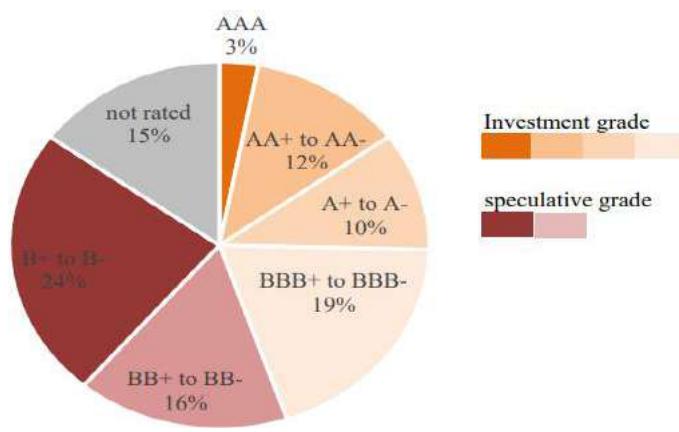
This graph is based on the long-term sovereign ratings from the three major credit rating agencies (S&P, Moody's, and Fitch) for countries participating in the Belt and Road Initiative (BRI). In cases where multiple rating agencies have assigned a rating[25].
1.5 A vector of expansion for China?
Even though economic factors remain at the core of the Belt and Road Initiative (BRI), it can also be analyzed from a geopolitical standpoint. Firstly, within China, the integration of the western regions of Xinjiang and Yunnan through increased trade facilitated by the BRI represents a key to the country's political stability. This is particularly relevant in light of the Uighur population, as the economic opportunities presented by the BRI could contribute to better integration. Similarly, as highlighted in an article by BSI Economics, China's desire to reduce its dependence on maritime supply routes, which are primarily secured by American military presence, also explains its massive investments in port infrastructure in the Asian region .
Externally, the BRI tends to be perceived as a means for China to expand its global influence, particularly vis-à-vis the United States, which sees the development of the AIIB and the NSRF as a way to compete with the institutions established under the Bretton Woods system, such as the World Bank and the IMF. The growth in the use of the renminbi in trade, investment, and other financial activities is also a goal for China through the BRI, with the inclusion of the currency in the IMF's basket of reserve currencies in 2015 serving as a promising first step in this direction [28].
The "pivot to Asia" policy pursued by President Obama has adapted to China's increasing power, leading to expanded American involvement in the region (diplomatically, militarily, and economically). This approach was also continued by the Trump administration with its "Free and Open Indo-Pacific" policy, which includes a project to develop alternative infrastructure in partnership with Japan, India, and Australia as a response to the BRI. The frequent comparison made between the BRI and the Marshall Plan reflects the prevailing skepticism towards the project, which is primarily seen as politically motivated by China to gain a dominant position regionally and globally.
One can also speculate that the BRI is a way for China to export its economic model. China has developed based on an infrastructure-driven growth model, with the belief that dedicating a significant portion of the budget to long-term assets (transportation, energy, social infrastructure) would enhance long-term economic performance (technological innovation, improved social inclusion, etc.) and create an environment conducive to private sector development. The World Pensions Council contrasts the rapid development of China and other Asian economies based on this model (such as Singapore and South Korea) with Latin American economies that adhere to the Washington Consensus and face obstacles to development due to insufficient infrastructure.
The potential for China to influence the finances of recipient countries is also a cause for concern, leading to the development of the term "debt trap diplomacy." The lack of transparency regarding the conditions and amounts of loans granted by China raises questions about its intention to extract economic and/or political concessions when debtor countries are unable to fulfill their debt obligations, particularly when the financing is tied to an asset. The example of the Sri Lankan port of Magampura Mahinda Rajapaksa, which was 85% financed by the Export-Import Bank of China at an annual interest rate of 6.3%, is indicative of this concern [29].
Indeed, when Sri Lanka was unable to finance its debt following the commercial failure of the port, it was leased to China for 99 years, reinforcing Indian and Western concerns that it could become a Chinese naval outpost in the Indian Ocean. Sri Lanka is not the only example of a "white elephant" project financed by China in a heavily indebted country. The Center for Global Development has identified several countries for which the risks of current debt unsustainability and increased dependence on Chinese debt were exacerbated, leading to a significant risk of default due to BRI projects. The case of African countries is also questionable, as data from the China-Africa Research Initiative shows that Chinese loans to all African countries increased from $130 million in 2000 to $30 billion in 2016. However, the same report demonstrates that Chinese loans are not (yet) the primary cause of over-indebtedness in these countries [30,31].
II. CONCLUSION
Effective coordination in BRI investment is paramount for the success of this ambitious initiative. Rooted in President Xi Jinping's foreign policy, the Belt and Road Initiative (BRI) aspires to elevate China's global stature by fostering a regional community with shared interests and destiny. For partner nations grappling with infrastructure deficiencies, increased trade and investments promise significant economic growth and inclusivity. However, concerns loom over the associated risks, particularly reliance on Chinese debt and the potential for political, security, social, and environmental vulnerabilities. These risks encompass political instability, corruption, and terrorism, casting doubts on the initiative's viability without complementary reforms to bolster institutions and the political framework.
Western nations view the BRI with apprehension, fearing it serves as a vehicle for China to extend its global influence. Massive investments without economic justification in financially and politically fragile countries could render the initiative a colossal "white elephant." However, amidst these challenges, there is a profound recognition: China, by engaging in the BRI, willingly assumes significant risks by investing in unstable economies. This underscores the critical need for strengthened partner coordination to ensure mutual benefits.
Acknowledging shared risks reinforces the notion of collective responsibility in driving the initiative's success. Navigating these uncertainties for the collective good is courageous on China's part, demonstrating a commitment to a common cause that merits recognition and applause. Therefore, fostering better coordination mitigates risks and underscores the collaborative spirit essential for realizing the BRI's transformative potential.
Conflict of Interest
The authors declare no conflict of interest.
Ethical Approval
Not applicable
Data Availability
The datasets used in this study are openly available at [repository link] and the source code is available on GitHub at [GitHub link].
Funding
This work did not receive any external funding.
References
Cite this article
Related Research


Special Issue
Launch a focused special issue to highlight research, emerging trends, and expert insights in your academic field.
