




IntelliPaper
Abstract
For several decades now, the landscape has been studied from multiple fields due to its complexity and the wide variety of aspects it encompasses. Each discipline approaches the landscape from a particular perspective, analyzing both its physical characteristics and its cultural, social, and symbolic dimensions. Research has emphasized the reuse of the landscape, taking into account the living societies of the past and their evolution. The megalithic phenomenon follows the same diachronic line. For years, megalithism has been treated as a prehistoric element without understanding its reuse by different contemporary communities around it. The use of these elements has been prevalent throughout history, and it has been varied. Local communities have used these elements for purposes ranging from quarries for the extraction of raw materials to other types of functions. Therefore, it is necessary to understand megalithism as an evolutionary phenomenon connected to the changes of local communities. Thus, the reuse of the landscape and its resources along with subsequent societies, basing the study on the understanding of these elements that have come down to us as heritage to the present day. For this, the bidirectional socialization of megalithic heritage must be considered and studied in future research
Explore Digital Article Text
I. INTRODUCTION
We have inherited from our ancestors the landscape we see today. It is not a new assertion that megaliths have been reused throughout history, both in prehistoric times when they continue to have their meaning (burials), and when they cease to have a burial meaning, through another function. The organization of these reuses is not a simple and easy thing, and there, are multiple parameters to be used to make this classification (Mañana-Borrazas, 2003). While passing from the nature of reapplying, through the doubts of chronology, to the presence of materiality, there can be questions of classification. Therefore, in this work, a division is proposed to analyze the different uses of megaliths in Gipuzkoa and its history.
The phrase "the past and the present in the present" often refers to how historical events and cultural heritage influence and coexist with contemporary life (Olivier, 2020). It underscores the idea that the past is not simply a series of events that happened long ago, but rather a continuous thread that shapes current identities, traditions, and societal structures. This perspective can be applied in various fields, such as archaeology, history, and cultural studies, emphasizing the ongoing relevance and impact of historical contexts on modern-day experiences and practices (Gomes, 2019).
This is why megalithism offers us a different perspective on the simple prehistoric analyses that have been conducted for decades. Megaliths, being reusable and repurposed elements, have come down to us with a notable overlay of materials. All of this allows us to understand the contemporary reuse of these landscape elements as manifestations of cultural continuity and an evident presence of social change.
II. GEOGRAPHICAL CONTEXT
At first glance, the territory of Gipuzkoa appears to be quite rugged. The region was formed around
40 million years ago due to the Alpine orogeny, influenced by the movements of the Iberian and Eurasian tectonic plates. The Bay of Biscay, along with the Basque Mountains and the Pyrenees, were created by the collisions between the Iberian plate and the southwestern part of France (Batzuen Artean, 1991).
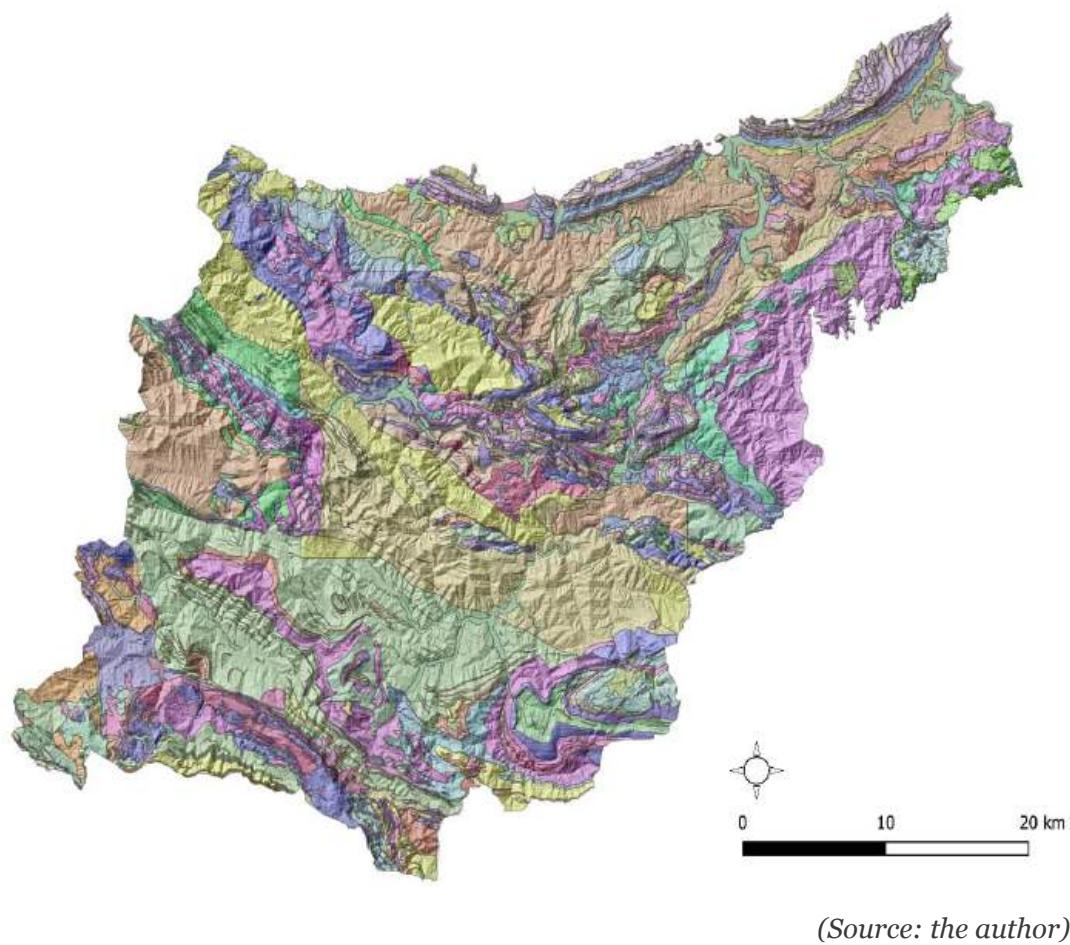 Image 1: Hillshade and lithology maps of Gipuzkoa
The area covers approximately 1980 km (Gipuzkoa Provincial Council, 2012). In terms of physical environment, three distinct geological zones can be identified: the Northeast, dominated by Paleozoic materials (slate, quartzite, and granite); the coastal zone, composed of materials from the Tertiary period (sandstone, limestone, slate, and clay); and the rest of the territory, characterized mainly by Mesozoic elements, particularly Cretaceous, with predominant limestone and structures (Batzuen Artean, 1991). The different densities and differential erosion of these materials have created a landscape with elevations ranging from 500 m to 1544 m. Various chains and corridors have formed in the area: the coastal chain, the pre-coastal corridor, parallel valleys between them intersected by transverse structural alignments, and the inner chain forming overall (Meaza et al., 1996) (Image 1).
Only about one-tenth of the surface has a slope of less than 15%. While 26% of the territory is located below 200 m, there is a noticeable 83% lies below 600 m. Only 3% is above 1000 m. As we will examine later, this will have a direct impact on the analysis of the site locations (Gipuzkoa Provincial Council, 2012). The rivers in Gipuzkoa run perpendicular to the coast and the fold axes, influenced by the proximity between the watershed and the sea. The river slopes are steep, with gradients of up to 25% in the upper
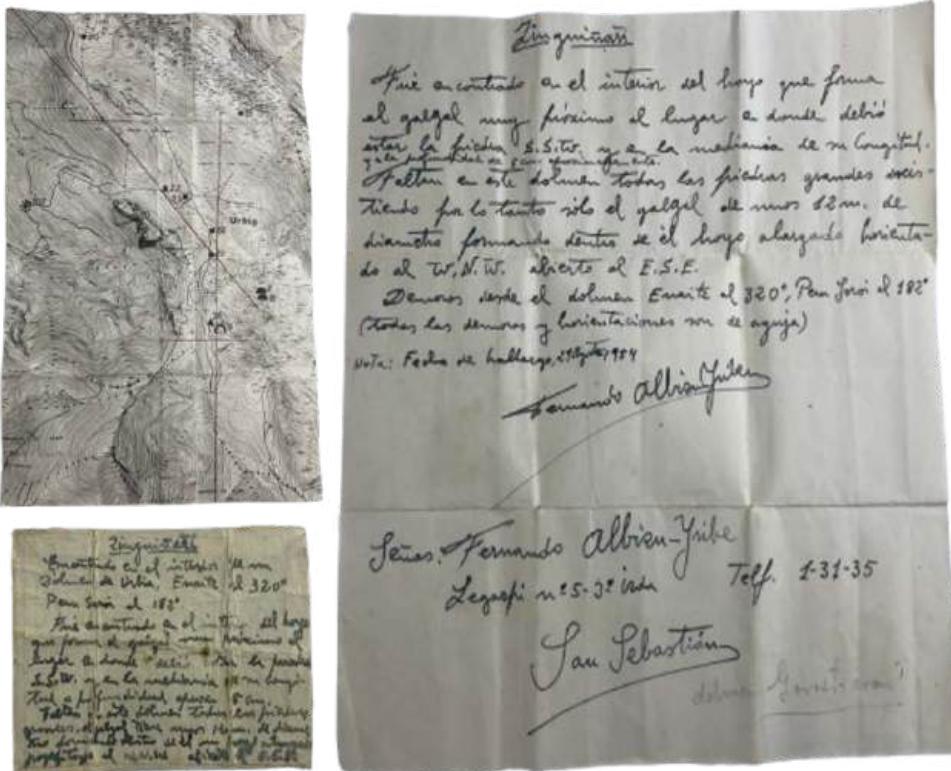 sections, resulting in significant erosion (Meaza et al., 1996). (Source: Gipuzkoako Gordailua)
Image 2: Field notes from some archaeologists during early 20th-century excavations in Gipuzkoa
Throughout history, and especially since the discovery of the first dolmens, there has been significant interest in these peculiar structures in Gipuzkoa and beyond its administrative boundaries. James Fergusson identified the concept that unified all these structures as megalithism. Given that they are burial monuments, the monumentality they exhibit and the remains found within them have allowed for the development of work related to this phenomenon. In Gipuzkoa, this is even more pronounced, as there are numerous traces of this phenomenon, and both Basque Country and Pyrenean megalithism have been the subjects of detailed research. The first dolmen found in Gipuzkoa was the Jentilarrikoa (Aralar) in 1879 (Altuna et al., 1990). At the beginning of the last century, significant discoveries of large monuments were made. The architecture and placement of these monuments followed a similar scheme to those found in France or England. In Gipuzkoa, T. Aranzadi, J. M. Barandiaran and E.
Eguren were the ones to initiate a scientific and systematic study of megalithism, starting with their group work around 1916 (Aranzadi et al., 1922; Aranzadi & Barandiaran 1924; Barandiaran, 1935; 1946; 1953; 1972; Apellaniz, 1973; Altuna et al., 1990). This does not mean that work on this subject was not already being carried out before (Image 2).
III. THEORETICAL FRAMEWORK
3.1 Multitemporality
In recent decades, debates within archaeology and its theoretical framework have set aside the affirmation that archaeology itself conducts research into the past. The epistemological aspects of archaeology have been neglected in favor of ontological aspects. Today, archaeology has become part of the elements and processes of the past that are maintained (Shanks, 2007). The past is an element that resurfaces through time. Identified as a trajectory, part of a process (Delporte, 1979). Establishing it at a specific date may be a mistake, as the past immerses in itself between those dates and also positions itself within the future. It does not end; through archaeology, we become part of this temporality, aligning with various societal processes, and everyone must be part of it. The past should not be identified as a datum but as a network of relationships. The ideas of linear, continuous, immutable, and chronometric time have long been set aside (Fasolt, 2004).
Bergson, however, proposes a different way of understanding time, based on experiences that are mnemonic and situated between matter and time. The present is filled with moments stored in memory. It is located on specific matters, which have unique possibilities for persistence. It encompasses different moments: origin, transformation, reorganization, and thus, moments that coexist are revealed (Deleuze, 1991:60).
Therefore, the present is not made up of events occurring at this moment but rather is a collection of all past time. The present must be understood as a instead deposit of the past (Olivier, 2013b), that is, a present created by the continuous accumulation of the past (Olsen, 2013). Thus, archaeology does not study the past but rather the material elements that have been preserved from that past (Hamillakis, 2015: 150-155; Olivier, 2013b: 121-122; Olsen, 2013:2). All changes and reconfigurations that occur in the present affect those preserved material elements; they have a direct impact. Therefore, each contemporary change in materiality should be considered part of that materiality (Olivier, 2013a; 2001). Hence, when humans conduct research based on changes made through different temporalities, the material cannot have a precise chronology. The past has been identified as the materiality of the present, as the material of the present is constantly reconstituted (Al-Saji, 2004).
3.2 Utilization of Megalithic Resources
The use of megaliths as quarries is an intriguing archaeological and historical phenomenon that illustrates how ancient societies not only constructed megalithic monuments but also repurposed these large stone blocks for other uses. This utilization can reveal important aspects of social organization, technology, and changes in cultural practices over time.
In some cases, stones from megalithic monuments, such as dolmens and menhirs, were repurposed to construct other buildings or structures. This practice often occurs when megaliths are no longer considered sacred or when communities change their ceremonial practices. Regarding resource exploitation, the quarrying of megaliths involves extracting stones from megalithic structures construction, which may reflect changes in the significance or functionality of these monuments.
"In historical terms, it is emphasized that "many of the blocks that are part of dolmens have long served as excellent quarries, providing local blacksmiths with abundant material from which they crafted sharpening stones for their workshops (Aranzadi et al., 1920:20)."
As religious and ceremonial practices evolved, societies might have stopped considering certain megalithic monuments important, leading to their dismantling or reuse. In some instances, the repurposing of megalithic stones may reflect changes in social organization or economic needs, where resource extraction becomes a priority. Additionally, there are practical needs in this aspect. The rocks from megaliths, being of considerable size and quality, were a valuable source for building homes and other structures. The different phases of use provided readily available, high-quality materials. In some cases, megaliths deteriorated naturally over time, and the stones were used for other purposes, especially if the monuments were no longer utilized or maintained.
The extraction of stones from megaliths can affect the integrity of archaeological sites, complicating the interpretation and preservation of these monuments. Studying how and why megaliths were reused provides valuable insights into cultural and economic transformations. The historical use of megaliths often leads to renewed interest in their preservation and protection. Recognizing their cultural and archaeological value has led to efforts to conserve and protect these sites.
IV. REUSE OF MEGALITHIC STRUCTURES
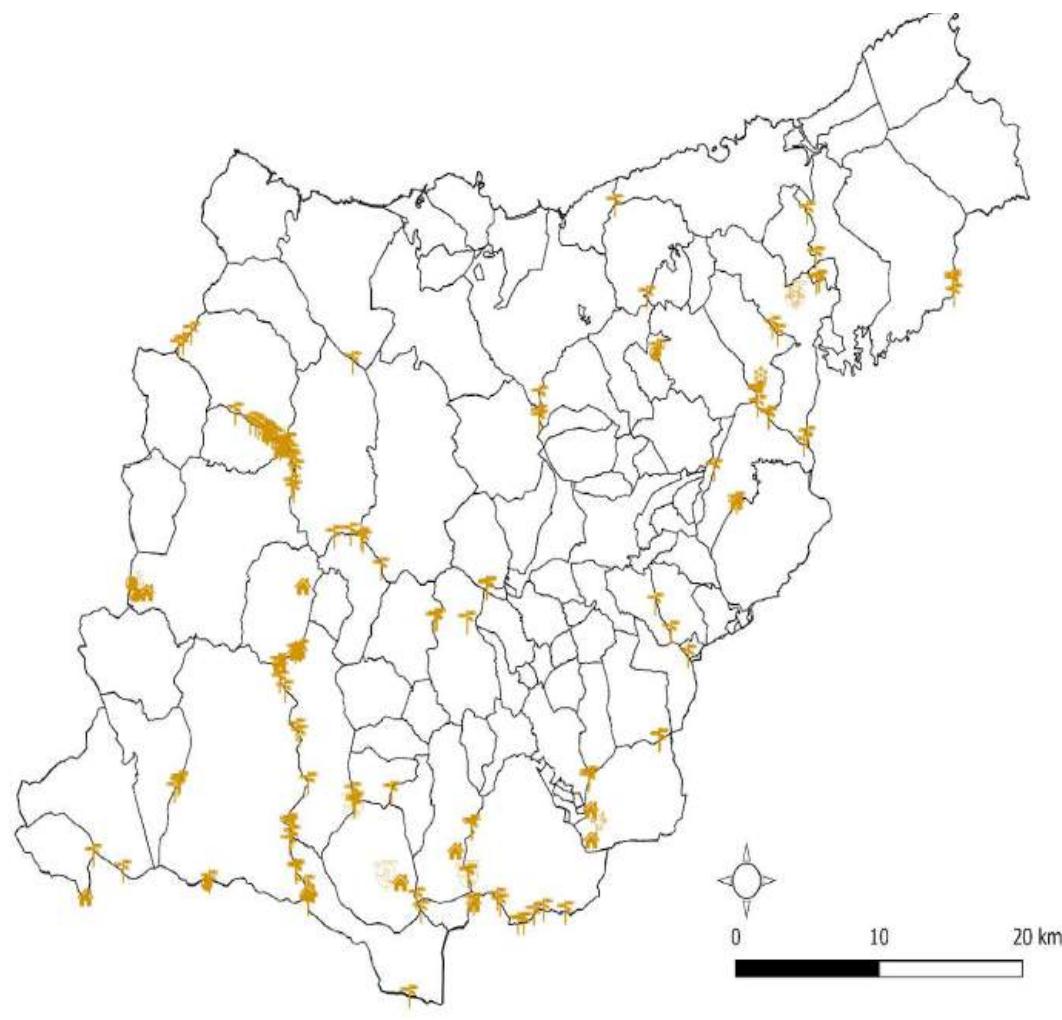
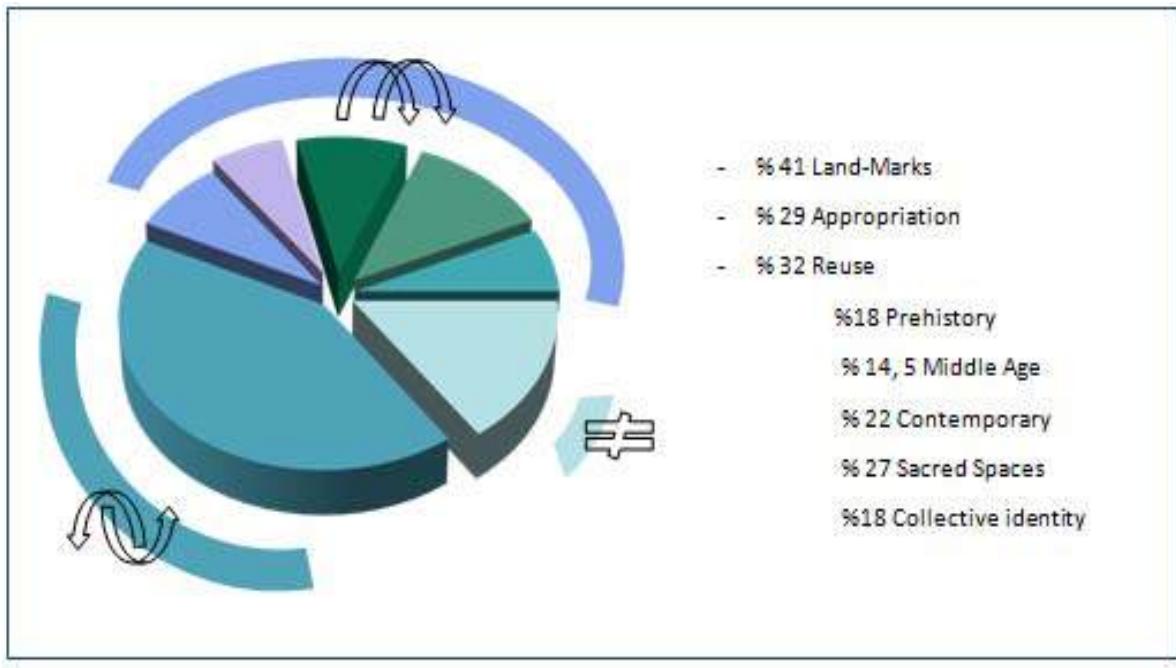
The information gathered from various sources leads us to the classification that we will examine later, which is divided into three main concepts. Among the 293 megalithic sites known in Gipuzkoa, 227 show signs of reuse. They are categorized as: A) First, the appropriation of megaliths. B) Next, there are changes in the meanings of the megaliths as land-marks. C) To conclude the classification, we will cover the reuse of megaliths (Images 3-4).
 ((Source: the author)
Image3: Reuse of the megaliths of Gipuzkoa
Among these three concepts, the Basque Language Academy (Euskaltzaindia) defines the term 'appropriation' with meanings such as 'to make one's own,' 'to adopt,' or 'to bring into one's possession.' Within the megalithic sites of Gipuzkoa, signs of appropriation and assimilation can be found throughout the Historical Territory. In the process of assimilating a megalith, its use can vary in each case, or it may have undergone different appropriations and assimilations at other times. However, a sub-classification can be made if we consider the different modes of appropriation. Among the 293 known megaliths in Gipuzkoa, 39 are recognized for having been given a various use due to the assimilation process. Among these, 13 have been used for building huts or farmhouses. Eight have been transformed into hunting posts, nine into spaces for warfare, eight into pastoral areas, and three have been assigned to various other uses.
Firstly, reuse for building huts, farmhouses, or shelters has been observed. A part of the 'Zorroztarri' standing stone from the Aizkorri megalithic site was used to construct a shepherd's hut in the vicinity. This occurred around 1950 (Mujika, 1989). It is described in the 1982 Gipuzkoan Archaeological Report as follows: 'According to L. Peña Santiago, B. Igartua, who participated in the construction of the Perusaroi shelter, the menhir was split in half, with one part used as a lintel for two small windows in the north wall of the shelter. The remaining fragment was set upright shortly afterwards, a few meters from its original location. This destruction seems to occurred between 1947 and 1948' (Altuna et al., 1982). In the Aralar megalithic site, the slabs of the 'Labeo' and 'Arraztarangaina' megaliths were used to build nearby shepherd's huts (Edeso & Mujika., 2012).
In the Satui-Arrolamendi megalithic site, the 'Arrolamendi I' and 'Arrolamendi II' dolmens were exploited for similar purposes. In the case of the first, it is described in the 1964 publication 'Excavación de la estación de «túmulos» de Satui – Arrolamendi. Legazpia (Guipuzkoa)' as follows (Altuna et al., 1964): 'The "tumulus," upon our arrival, had undergone extensive alterations, and part of its slabs had surely been used in the construction of a very nearby hut.' In the second case, the same publication describes it as: 'The slabs were used for the construction of the nearby hut of the Kosoro farmhouse'.
In Elosua-Plazentzian, 'Atxolin Txiki' is located, which is described as follows: 'We later observed that it did not contain slabs typical of the dolmen; they have undoubtedly been used in modern constructions, as has happened at other sites, and this suggests the proximity of a hut along the lower path in this part of the mountain.' As if that were not enough, within the same megalithic site, a hut known as Gazteluain was built in the space of the 'Trekutz' dolmen (Altuna et al., 1990): 'In 1973, it was almost entirely dismantled during the construction of the shelter association. Today, only a part of the tumulus remains, with a diameter of 19.50 m and a height of 1.75 m. The interior has been destroyed due to a trenches that crosses three-quarters of the structure' (Tapia, 2022).
In Ataun-Burunda, 'Balankaleku H' and 'Napalatza': "This monument, due to its exterior shape, resembles a somewhat irregular stone heap, having been dismantled by treasure hunters and those who used its mound as a quarry to build huts, the remains of which are still found beside it. For this reason, its dimensions cannot be precisely determined" (Aranzadi et al., 1920), and 'It is observed that the monument has suffered from human activity throughout history. Therefore, a substantial portion of its central region, particularly the southern half, has been utilized as a quarry for sourcing stone for the nearby structures (walls and a hut) (Mujika, 1991).
"In Udala Intxorta, 'Goinzari Zelaia': 'The eastern arch was reduced to 0.35 m in height (possibly due to the use of its stones in the nearby farmhouse)' (Altuna et al., 1990). In Belabieta, 'Moa': 'In the center, there is a large hole, undoubtedly due to the removal of material by some pigeon hunters who built a hut next to it' (Aranzadi et al., 1923). In Elgea-Artia, 'Egea I' dolmen: 'Likewise, the capstone disappeared from its place; probably, the charcoal burners used it as building material for one of the two huts they had just built' (San Martin, 1956).
Among other uses, megaliths have also been used as hunting posts. This means that the material of the megalith was used to build a hunting post. Examples include the 'Irumugarrieta' dolmen in Brinkola-Zegama: 'The hunters from the area have used stones from the dolmen to build an on-site strategic 'stand' for pigeon hunting' (Elosegi, 1952). In the Ataun-Burunda 'Praalata' dolmen: 'Furthermore, it should be added that for decades the existing crater was reused and adapted for use as a hunting post' (Mujika, 1993). In Igoin-Akolako, 'Sagastietako Lepua' dolmen: 'We noted that the enclosure, over the past few years, has served as a hunting post, chicken coop, and strategic hideout' (Atauri et al., 1951; Ceberio & Tapia, 2015). The 'Akolako Lepoa' dolmen is considered a hunting post by the Hernani Municipality: 'It has since been reused as a hunting post, and only 2 of the four capstones remain in situ' (Barrero & Millan, 2014). Hunting posts require specific protection zones, and the morphology of a dolmen can offer opportunities for such use. As noted by the Hernani Hunting Association in their 2022 minutes, the Akolako Lepoa II dolmen is identified as a hunting point (Hunting Federation of Hernani). In Altzania, 'Tartaloetxeta': 'Around the crater, a 0.60 m high wall was built on the tumulus for use as a hunting post' (Altuna et al., 1990). In Ataun-Burunda, 'Urrezuloko Amurea', used for preparing stakes: 'Later, the monument suffered damage from hunters who turned the crater into a hunting post' (Mujika, 1999).
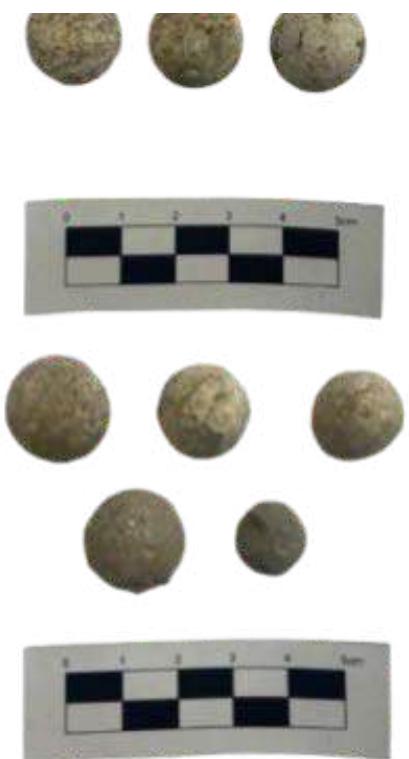
In the Elosua-Plazentzia megalithic site, lead bullets were found in the 'Keixetako Egiya' dolmen, indicating its use as a hunting post (Aranzadi et al., 1975). In the same site, lead bullets were also found in the 'Irukurutzeta', 'Keixeta', and 'Kurutzebakar' dolmens, indicating their use as defense positions (Altuna et al., 1990; Aranzadi et al., 1975). Lead bullets were also found in the 'Akolako Lepua' and 'Sagastietako Lepua' dolmens in Igoin-Akolako (Atauri et al., 1951).
Other megaliths have also had uses as shepherding areas. For example, the 'Sagasti Tako Lepa' dolmen in Igoin-Akolako: 'We noted that the enclosure, over the past few years, has served as a hunting post, chicken coop, and strategic hideout' (Atauri et al., 1951). In Aralar, 'Supitaitz': 'a circular structure attached to the monolith at its NE end seems to be the remains of a small corral, possibly intended to protect some livestock (breeding season...), with the floor covered with flat stones. Similar constructions are known in other places in this same mountain range' (Peñalver, 1984).
In the Aizkorri megalithic site, 'Gorostiaran M' and 'Gorostiaran E' megaliths contained metal nails and artifacts (Aranzadi et al., 1919). In Altzania, specifically in the 'Zorroztarri' dolmen, a ferrule indicating its use as a shepherding space was found (Altuna et al., 1964). In Aralar, the 'Ausokoi I' dolmen contained metal nails from a hut used as a shepherding space (Apellaniz & Altuna, 1966), and the 'Igaratza I' dolmen contained a ferrule (Millán & Lizarralde, 1982). In Belabieta, metal supports in the 'Belabieta Txiki' dolmen indicate its use as a shepherding space (Aranzadi et al., 1923).
In Ataun-Burunda, 'Urrezuloko Armurea' was used for preparing stakes: 'Later, some used the slabs from the monument to make stakes or shepherding tools, with blocks showing chisel marks' (Mujika, 1999). Additionally, the slabs from the Murumendi 'Larrarte' dolmen were used as boundary markers between plots: 'The stones from the dolmen might have been used to build a small wall that formerly served as a boundary marker for the plot' (Mujika & Armendariz, 1991). The 'Tximista' dolmen in Oindi-Mandoegi was used to build a nearby snow pit: 'Most of the missing landmarks have disappeared over the centuries due to erosion, and also because they were used to build the adjacent snow pit and auxiliary structures' (Altuna et al., 2002). We can confirm that the nature of the 'Ondarre' stones in Aralar has changed over history (Mujika et al., 2016; 2018). From being stones, they became a boundary marker for the Ondarre's grazing area in the Middle Ages. In Elosua-Plazentzia, the edge of the 'Aitzpuruako Zabala' dolmen was used to find the base of a Bronze Age hut (Tapia, 2019; 2020; Tapia, 2022).
 (Source: the author)
Image 4: Megaliths of different reuse in the province of Gipuzkoa
V. DISCUSSION
5.1 Livestock Spaces
Many megalithic monuments are found in areas suitable for livestock farming, such as fertile valleys, pastures, and areas near water sources. These locations allowed for efficient livestock management and the construction of monuments in visible and accessible sites. In summary, the relationship between megalithism and livestock spaces reflects the interdependence of economic practices and cultural expressions in prehistoric and later societies. Megalithic monuments not only had ritual and symbolic functions but also played a practical role in landscape organization and livestock resource management. It is undeniable that the reuse of megaliths as grazing spaces has modified the character and meaning of the megalithic element itself. The structures have been used as protection against the elements, providing a more comprehensive understanding of the interactions between culture, economy, and landscape.
The relationship between megalithism and adjacent livestock structures is a fascinating topic that illustrates how societies integrated their economic and cultural practices. The presence of livestock structures next to megalithic monuments suggests a close connection between the construction of these monuments and a livestock-based economy (Bueno-Ramirez et al., 2008). The continuity of livestock farming at megalithic sites reveals how ancient economic and cultural practices persisted and evolved. Megalithic monuments, initially built for ceremonial and symbolic reasons, often remained strategic location and cultural significance relevant to local communities due to their (Alvarez, 2011).
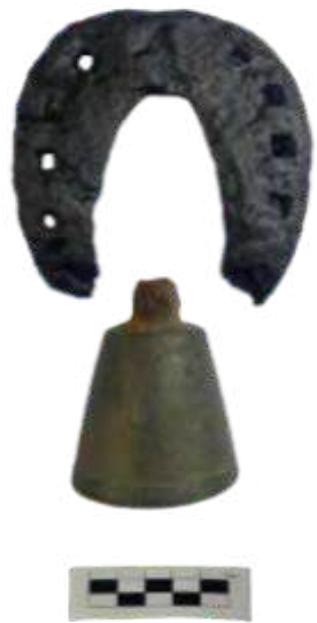 (Source: Gipuzkoako Gordailua) Image 5: Horseshoe and cowbell found in the dolmen of Mulisko Gaina, Urnieta (Gipuzkoa)
Dolmens and other megalithic monuments are often located in areas that are also suitable for livestock farming. This may reflect territorial planning where ceremonial importance was combined with economic needs (Agosto, 2023). The presence of megaliths in livestock-suitable landscapes suggests that these monuments had not only ritual significance but also formed part of a productive economic environment (Edeso & Mujika, 2011).
In several megalithic sites, remains of enclosures and pens have been identified, which would have been used for the containment and management of livestock. These pens, made from perishable materials like wood or stone, provide direct evidence of livestock activity near megalithic monuments (Agosto, 2023). Some excavations have revealed structures that might have served as stables or animal shelters, as previously noted. These can be found in areas adjacent to megalithic monuments, indicating that animals were an integral part of daily life and the ritual activities taking place at these sites (Agire et al., 2012). An example of this are the megaliths of 'Ausokoi' (Aralar), 'Belabieta Txiki' (Belabieta), 'Gorostiaren E' and 'Gorostiaren M' (Aizkorri), 'Zorroztarri' (Altania), 'Trikuaizti' (Murumendi), 'Mulisko Gaina' (Oindi-Mandoegi) (Image 5) and 'Keixeta' (Elosua-Plazentzia).
Livestock farming may have provided the necessary resources for the constructing of megalithic monuments. Animals would not only have served as food for workers but also as sources of materials like hides and tendons, used in the construction and transport of stones. It is possible that pens and other livestock structures were used in ritual contexts, such as animal sacrifices during ceremonies related to the megalithic monuments. This is supported by findings of animal remains in ritual contexts at some archaeological sites (Edeso & Mujika, 2012). Livestock structures near megalithic monuments could reflect a sophisticated organization of territory, where grazing areas and monumental construction zones were carefully planned and managed (Agirre-García et al., 2012).
Over time, the livestock structures near megalithic monuments may have been adapted or expanded to accommodate changes in livestock practices. This includes the construction of more permanent enclosures or the addition of adding new types of structures for livestock management.
The continuity of livestock activities at megalithic sites suggests that these places maintained their significance over time. This may have reinforced cultural memory and community identity, linking generations of herders and farmers to the ancient monuments. The evolution of livestock structures shows how societies adapted to environmental changes, technology, and economic practices. This adaptability is a testament to the resilience and innovative capacity of ancient communities. The continued presence of livestock activity at these sites contributed to the conservation and transformation of the landscape (Tilley, 1994). Megalithic monuments were not only preserved as historical sites but also formed part of a living, constantly used landscape.
Many megalithic sites are located in areas with good natural resources, such as fertile pastures and water sources, which make them ideal for livestock farming. This strategic location contributed to their continued use. These megalithic spaces often maintained a cultural and symbolic significance that persisted over the centuries (Criado-Boado, 1989; 1999; Mujika et al., 2023). This cultural connection encouraged their continued use and preservation by local communities. The livestock structures at these sites demonstrate how communities have been able to adapt and reuse the landscape effectively (Castillo, 2011). The evolution of livestock practices and the introduction of new technologies reflect these societies' adaptability and teach us about a current landscape that is readable and necessary to investigate.
The proximity of livestock structures to megalithic monuments would have facilitated livestock management and control, ensuring efficient use of the territory and protection of the monuments. The integration of livestock structures into the megalithic landscape would have helped protect the monuments from intrusion and damage while maintaining practical use of the space for livestock farming. The combination of megaliths and livestock structures reflects advanced territorial planning, where economic and ceremonial needs were integrated into landscape organization (Agosto, 2023).
The continued presence of livestock activity at megalithic sites has contributed to the conservation of these monuments. Livestock structures, by being used and maintained, have helped preserve the natural and cultural environment. The adaptation and evolution of livestock structures around megaliths reflect changes in agricultural and livestock practices, as well as the social and cultural needs of communities over time.
5.2 Hunting Spaces
This is a privileged place for pigeons and for bird migration in general. In autumn, numerous species of birds from northern and central Europe head south (Iberian Peninsula and Africa) (Saenz de Buruaga et al., 2012). They flee from polar cold and frozen, snow-covered ground, where it is difficult to find food, to spend the winter in much more welcoming areas, both in terms of climate and food availability. This migration phenomenon is an innate characteristic of birds; they react this way (Bea & Sanchez, 2001).
Megaliths are often located in strategic places that were also useful for hunting. For example, they might be situated in areas with good observation points or access to animal migration routes. The construction of megaliths in hunting areas suggests a landscape planning that took both ceremonial and economic aspects into account. In some cases, megalithic monuments might have served as observation points for hunting activities, providing a broad view of the surrounding terrain (Alvarez, 2011).
When pigeons head south, they encounter the Pyrenees mountain range, where bad weather is typical at this time of year. The southern wind we are used to causes large concentrations of clouds in the Pyrenees, which hinders their visibility (Bea & Sanchez, 2001). So, they seek the coast and lower areas with better weather. That's why this region is a common area for their passage and hunting, as they fly lower and can be seen. Pigeons have always been spotted here in the autumn. This tradition dates back to ancient times, with documents mentioning pigeon hunting from the late 1800s, in fixed posts or with nets (Saenz de Buruaga et al., 2012).
As described earlier, the bird migration routes in the Basque Country, especially in the provinces of Gipuzkoa and Araba, are strategically located. This has resulted in some cases where dolmens have been reused as hunting posts. However, as Álvarez describes in his publication: "although for the most part they have built shelters linked to bird hunting (especially pigeons), they have also played a role in the capture of mammals of different species, often wild boars "(Álvarez, 2011). An example of this are the megaliths of 'Irumugarrieta' (Brinkola Zegama), 'Praalata' (Ataun-Burunda), 'Sagastietako Lepua' and 'Akolako Lepua' (Igoin-Akola), 'Tartaloetxeta' (Altzania) (Image 6), 'Atxolin Txiki' and 'Keixetako Egiya' (Elosua-Plazentzia), and 'Urrezulko Armurea' (Ataun-Burunda).
glass bottles, or other contemporary debris (García San Juan, 2003; Álvares, 2011; Tapia, 2022). As we mentioned in the previous section "Reuse of megalithic structure - hunting posts," it is not only the archaeological evidence that defines these spaces as reused, but also various written evidence that supports this.
It should be emphasized that the effort required to adapt these structures as hunting shelters is minimal. This makes their reuse for this purpose quite common, especially in the province of Gipuzkoa. But that's not all; in some other cases, the dolmen chamber has been filled to create a shelter for hunters. Evidence of this can be found in the remains left behind, such as cartridges,
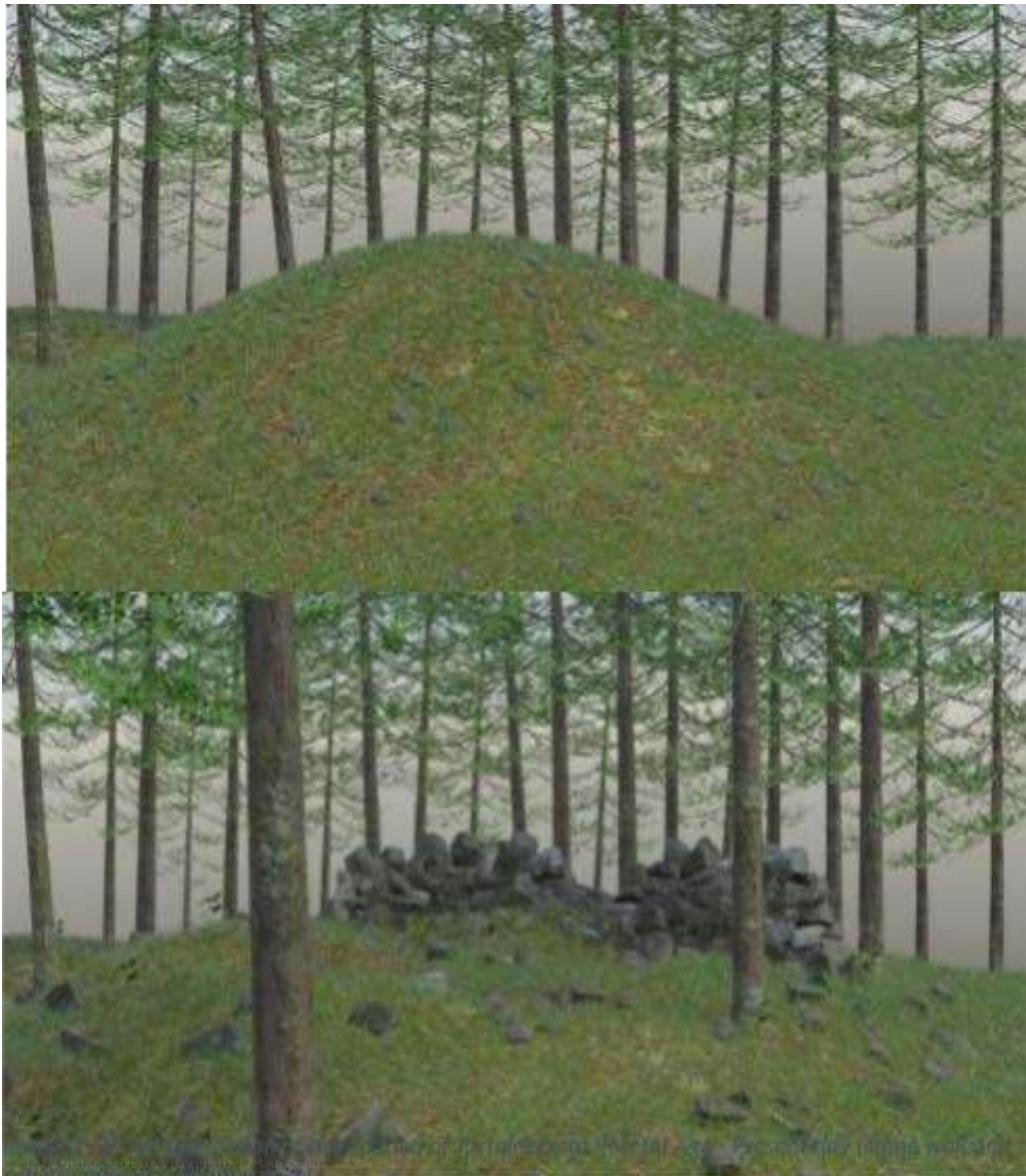 construction of a hunting post). (Source: the author)
Image 6: 3D reconstruction of the dolmen of Tartaloetxetal(Metal Age - Present day (stone wall and construction of a hunting post)
5.3 War Spaces
As we have previously analyzed, there are various megalithic monuments located in strategic places that might have had defensive value, such as hills or areas with wide views. This suggests that site selection could have considered ceremonial importance and defensive capability. In some cases, megaliths have been found in the regions that show signs of military activity or fortification, such as fences, trenches, or bullet impacts. Contemporary military material has even been found in their surroundings.
 (Source: Gipuzkoako Gordailua)
Image 7: Musket balls in the dolmens of Gorostiaran W (Aizkorri) and Irukurutzeta (Elosua-Plazentzia)
Some megaliths might have been used as landmarks or observation points in broader defensive systems. Their visibility and size could have provided strategic advantages in defending the territory. Occasionally, megaliths have been modified or repurposed in military contexts, such as the construction of fortifications or the creation of barricades. An example of this are the megaliths of 'Irukurutzeta' (Image 7), 'Keixeta' , and 'Kutzebakar' (Elosua-Plazentzia), 'Akolako-Lepua' and 'Segastietako Lepua' (Igoin-Akola), Gorostiaran W (Aizkorri) (Image 7) and 'Mulisko Gaina' (Oindi-Mandoegi).
Various military conflicts throughout history, especially in the 19th and 20th centuries across Europe, can be seen reflected in the remains found in the megaliths and their surroundings. Although contemporary archaeological practice does not place much emphasis on this type of artifact in megaliths, the use of these structures as hideouts and shelters was already highlighted the early research on funerary structures (Aranzadi & Barandiaran, 1953).
VI. CONCLUSIONS AND FUTURE OBJECTIVES
Reusing megalithic sites as livestock enclosures highlights a fascinating intersection of ancient and modern practices. Megalithic monuments, initially constructed for ceremonial or burial purposes, have been repurposed over the centuries for agricultural use. These structures, located in fertile valleys and grasslands, provided natural enclosures and vantage points for managing livestock. This adaptation reflects the practical and evolving relationship between humans and their landscape, where ancient cultural heritage continues to serve contemporary economic needs. These examples illustrate how ancient megalithic monuments have been integrated into rural and agricultural life, maintaining their relevance over the centuries and adapting to the needs of local communities (Edeso et al., 2010/ Edeso & Mujika, 2012). In any case, using megalithic structures has been the basis for their reuse (Beguiristain, 1999); Álvarez, 2011).
Burials have often acted as inscriptions in space. They mark sites of memory and are capable of surviving in space (Llorente, 2015). With the help of the monumentality they display (the size and structure of their form), they will be respected in subsequent times. It should be noted that within this logic, the deceased were the first to have a permanent place (Mumford, 1961). In this case, megalithism would mark their place, and communities of later periods would settle around the constructions that mark their testimony (Criado-Boado, 1999). They are based on a space-time relationship, offering monumentality outward from the Earth. From the moment space is considered sacred, it will continue to maintain that character in subsequent times (Sommer, 2017). We must consider that megaliths have had different values throughout history; at the very least, as analysed, they have symbolic, archaeological-historical, and territorial marker value (Martiñón Torres, 2001).
These locations, referred to as sites of memory, are expressed in society today as aspects of identity. However, it is undeniable that this memory has changed. In the context of the dynamism of history, the modes of communication have preserved the character of exploitation that this area once had as a model of what it was. On the other hand, the intangible heritage has been based on elements of oral literature, mythology, stories, and the imagination derived from the relationship with nature, which have all emerged from the traditional livestock farming in Gipuzkoa. Thus, as Aranguren says, 'There is no intangible heritage if there are no people' (Auzmendi et al., 2018).
It is necessary to discuss and understand, in the near and distant future, the socialization of megalithism and its multitemporality through its uses and materiality. It is essential to highlight the bidirectional socialization of megalithic heritage and its current uses. The object is a significant element that extends beyond its concrete and physical form; it is considered an element with its inherent meaning. However, it acquires excellent educational value, offering the possibility to establish abstract elements in fixed objects and to include objects in a process of inquiry from different perspectives within the social sciences. Furthermore, the aspect and its entire context become attractive when all social groups have worked with their objects, providing opportunities for investigation. Combined with megaliths, this offers a specific line of research that connects megalithism with the evolution of elements created for a particular function.
On the other hand, it should be noted that different analyses guiding the study of megalithism towards this concrete function confirm that megaliths have experienced different use phases. Those functions have been preserved through transformation to the present day. In the study of megalithism and megaliths, therefore, elements that have persisted to the present emerge. Each contemporary transformation is part of its materiality. This necessitates a modification of the abstraction generated about the social sciences and emphasizes the educational value of the object, projecting students towards a megalithic heritage as their own, addressing the multitemporality of the megalith itself as a reusable heritage element based on the authenticity of the object.
Conflict of Interest
The authors declare no conflict of interest.
Ethical Approval
Not applicable
Data Availability
The datasets used in this study are openly available at [repository link] and the source code is available on GitHub at [GitHub link].
Funding
This work did not receive any external funding.
References
Cite this article
Related Research



Special Issue
Launch a focused special issue to highlight research, emerging trends, and expert insights in your academic field.
