


Abstract
TThis study evaluated the agronomic performance and economic viability of watermelon (Citrullus lanatus) in Kenge, Kwango Province (DRC), using a 2 × 5 factorial split-plot design with NPK as the main factor and five organic amendments as subplots. Growth and yield traits were measured across 12-plant subplots. Integrated nutrient management significantly improved plant performance, with Neptune’s Harvest™ Fish Fertilizer + NPK producing the highest yield (24.4 t ha⁻¹). Organic amendments enhanced soil physico-chemical properties, increasing NPK retention and nutrient-use efficiency. Marketable yields ranged from 20.3 to 11.6 t ha⁻¹ depending on NPK supplementation. Economic analysis showed strong profitability for combined treatments, with Marginal Rate of Return values of 1.83 for Neptune’s Harvest™ Fish Fertilizer + NPK, 1.76 for biochar + NPK, and 1.70 for Tithonia + NPK, whereas treatments with MRR < 0.5 were not economically viable. Results demonstrate that watermelon production in Kenge is feasible and profitable under integrated nutrient management.
Explore Digital Article Text
I. INTRODUCTION
Kenge, located in Kwango Province, Democratic Republic of Congo, possesses considerable agricultural potential (Kisangani, 2021). However, local farming is predominantly focused on subsistence crops such as cassava, maize, and basic vegetables (Luyeye, 2020). Introducing crops like watermelon could diversify agriculture and enhance economic development (Mmbere, 2022).
Watermelon cultivation provides income in regions where it is practiced, yet in Kenge, it remains largely unfamiliar. Soils in the area are predominantly sandy, acidic, and low in organic matter, whereas watermelon thrives in sandy soils enriched with organic matter (Chambre Régionale d'Agriculture, 2017). Nearby regions with similar edaphic and climatic conditions, such as the Bateke Plateau, have achieved moderate yields, although fruit size and commercial value remain low. This highlights the agronomic challenge addressed in this study: optimizing watermelon production under local conditions.
The study aims to improve soil fertility and establish efficient production strategies. Developing sound agronomic practices in peri-urban Kenge could increase farmers' incomes and mitigate chronic food insecurity (Johnson and Lee, 2018). With favorable climate, appropriate rainfall, and temperatures (Ngoma, 2019; Mbuyi, 2021; Kamina, 2022), Kenge is suitable for watermelon cultivation, provided rational fertilization and technical support are applied (Kekulé, 2021; Mujinga and Kambale, 2022).
Watermelon, valued for its nutritional and commercial potential, can meet growing local and regional market demand, enhance farmer income, and contribute to crop diversification (Tshilombo, 2019; Kabongo, 2021; Tshibangu, 2020; Smith, 2020). Environmental sustainability and rational water management are essential to prevent soil degradation and ensure long-term productivity.
This study analyzes these factors to demonstrate how watermelon cultivation could serve as a strategic driver of economic growth in Kenge and to strengthen farmer capacity in addressing contemporary agricultural challenges (Mwamba, 2023).
II. MATERIALS AND METHODS
2.1 Study Area
The study was conducted at the experimental field of Congo Vert/Mangoy (figure 1) in Kenge ( 16^{\circ}59'04.8" E; 570 m above sea level). Kenge has a sub-equatorial (AW4, Köppen) climate with four alternating seasons: major rainy (15 Sep-15 Jan), short dry (15 Jan-15 Mar), short rainy (15 Mar-15 May), and major dry (15 May-15 Sep). Mean annual temperature is , and annual rainfall averages 1,507 mm.
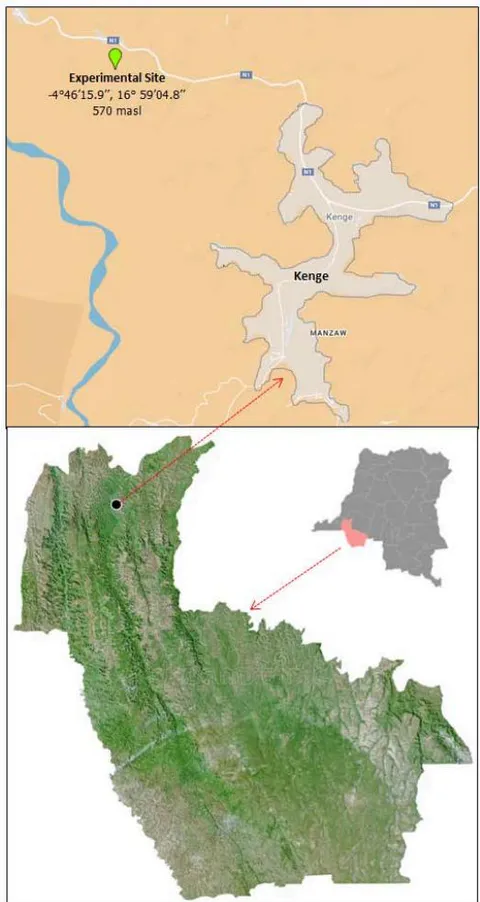
Figure 1: Experimental site, Congo Vert (Mangoy), Kenge, DRC.
Soils are predominantly sandy (sandy loam to sandy clay) with clay. They are light, weakly cohesive, with unstable aggregates, high porosity, and good infiltration but low water retention. Surface horizons are leached despite soil depth of several meters. Soils are acidic to highly acidic , typical ferralsols with low cation exchange capacity and poor chemical fertility. Organic matter is low due to rapid mineralization under hot, humid conditions. The soils are deficient in N, P, and K, but rich in Fe and Al, which may reach toxic levels. Calcium (Ca), magnesium (Mg), and exchangeable bases are low, with base saturation (Ndonda et al., 2025).
The physico-chemical properties of the soil prior to the establishment of the experimental trial are presented in Table 1.
| Parameter | pH (H2O) | Cation Exchange Capacity (CEC) cmol(+) kg-1 | % Total Nitrogen (N) | Available Phosphorus (P) - ppm | Exchangeable Potassium (K) cmol(+) kg-1 | Exchangeable Calcium (Ca) cmol(+) kg-1 | Exchangeable Magnesium (Mg) cmol(+) kg-1 | Exchangeable Sodium (Na) cmol(+) kg-1 | Clay | Silt | Sand |
| Value | 5 | 15 | 0.1 | 3.5 | 0.17 | 3.2 | 1.5 | 0.05 | 20 | 20 | 60 |
Source: Soil analyses conducted using the Agritech Insight digital kit in Kinshasa, 2025.
The dominant vegetation at the experimental site is herbaceous, mainly grasses, with perennial species such as Hyparrhenia diplandra, Imperata cylindrica, and Chromolaena odorata. Soils are generally sandy, with sandy-clay patches in Kolokoso and Dinga sectors. The experiment was conducted on relatively poor sandy soil covered by Hyparrhenia-type grasses with low vegetative vigor.
2.2 Materials
The study used watermelon (Citrullus lanatus, var. Congo watermelon; Cucurbitaceae). Soil amendment treatments included poultry manure, biochar, Tithonia diversifolia leaf biomass, and the commercial biofertilizer Neptune's Harvest™ Fish Fertilizer. Inferential statistical analyses were conducted in GenStat, multivariate procedures in PaST, and additional graphics in Microsoft Excel. Climatic parameters were estimated using New_LocClim Estimator, and daily temperatures were monitored with an integrated digital thermometer. Geographic coordinates were obtained via the "Mes coordonnées" mobile application, and geospatial visualization was performed using Google MyMaps.
2.3 Organic Fertilizers
(a) Neptune's Harvest™ Fish Fertilizer (figure 2): The Fish Fertilizer formulation was used in this study (Ndonda et al., 2024).
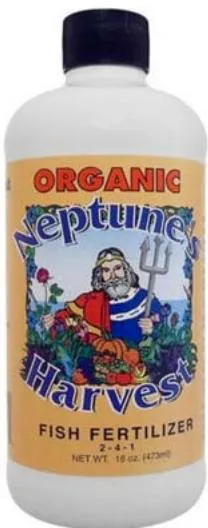
Source photo: https://mysmithland.com/neptunes-harvest-Fish-fertilizer-2-4-1-gallon/
2.4 Experimental Design
A factorial split-plot design with four replications was implemented. The main factor was NPK 17-17-17 application (10 g per plant), applied in furrows 10 cm from each plant when plants reached 15-20 cm height. The secondary factor consisted of five organic treatments:
- No organic fertilizer (T0)
- Neptune's Harvest™ Fish Fertilizer at 270 ml per plant (T1). Goat manure at 20 t·ha⁻¹ (T2)
- Poultry manure at (T3)
- Leaf biomass of Tithonia diversifolia at 20 t·ha⁻¹ (T4)
III. DATA COLLECTION
Measured parameters included sowing dates, flowering, vine growth (length and stem diameter), number of marketable fruits per plant, weight of marketable fruits, and marketable fruit yield.
IV. RESULTS AND DISCUSSION
4.1 Results
| Primary Factor (Mineral Fertilizer) | Secondary Factor (Organic Fertilizers) | Surviving Plants per Plot/12 | Stem Diameter at 3 DAS (cm) | Vine Length at 3 DAS (m) | Average Number of Marketable Fruits per Plant | Marketable Fruit Weight per Plot (kg) | Average Fruit Weight (kg) | Marketable Fruit Yield (t·ha-1) |
| Without NPK | Control | 9 | 0.38a | 0.74a | 6.8a | 5.1a | 3.8ab | 8.49a |
| Biochar | 11 | 0.53a | 1.43c | 7.7a | 7.3a | 2.9a | 12.23a | |
| Tithonia | 10 | 0.53a | 1.31c | 8.9b | 6.6a | 4ab | 10.99a | |
| Neptune's Harvest | 10 | 0.58a | 1.29c | 9.2b | 8.4a | 4ab | 13.93a | |
| Poultry Manure | 10 | 0.57a | 1.26bc | 8.8b | 7.3a | 5b | 12.11a | |
| Mean without NPK | 10 | 0.50a | 1.2ns | 8.3ns | 6.9ns | 4.06ns | 11.6a | |
| With NPK | Sole NPK | 9 | 0.65b | 0.92a | 6.4a | 8.4a | 4.1ab | 13.98a |
| Biochar | 11 | 0.80b | 1.37c | 9.2b | 12.6ab | 3.2a | 21.04b | |
| Tithonia | 11 | 0.75b | 1.40c | 9.2b | 13.4ab | 3.5a | 22.26b | |
| Neptune's Harvest | 10 | 0.86b | 1.45c | 9.7b | 14.6b | 4.2ab | 24.39bc | |
| Poultry Manure | 10 | 0.79b | 1.49c | 9.7b | 11.8ab | 4.7b | 19.60ab | |
| Mean with NPK | 10.3 | 0.80b | 1.3ns | 8.8ns | 12.2ns | 3.94ns | 20.3b | |
| Overall Mean | 10 | 0.63 | 1.26 | 8.5 | 9.3 | 4 | 15.5 | |
| LSD.05 | ||||||||
| Mineral Fertilizer (A) | 0.95ns | 0.26ns | 1.1ns | 7.6ns | 1.68ns | 8.6* | ||
| Organic Fertilizers (B) | 0.23* | 0.29* | 1.17* | 5.2* | 1.72* | 8.8** | ||
| A × B | 0.39* | 0.64* | 5.99ns | 12.0ns | 2.8ns | 14.38* | ||
| CV% | ||||||||
| Mineral Fertilizer (A) | 12.9 | 36.3 | 14.0 | 13.2 | 20.5 | 10.2 | ||
| Organic Fertilizers (B) | 13.6 | 22.4 | 15.4 | 21.0 | 31.2 | 21.0 | ||
| A × B | 5.7 | 9.4 | 6.6 | 9.2 | 15.1 | 9.2 |
4.2 Seedling Emergence
The number of emerged seedlings per plot was not significantly affected by either organic or mineral fertilizers. On average, 10 out of 12 sown seeds germinated across all treatments, and neither NPK 17-17-17 nor organic amendments influenced initial seedling establishment. No interaction effect between organic and mineral fertilizers was observed at this stage.
4.3 Stem Diameter at Collar - 3 Months after Sowing
Stem diameter varied significantly with fertilization. Organic fertilizers alone produced a mean diameter of , while combinations with NPK increased it to ( ; ). Non-NPK treatments ranged from in the control to with Neptune's Harvest™ Fish Fertilizer, whereas NPK-supplemented treatments ranged from to , all significantly higher than their non-NPK counterparts
4.4 Vine Length - 30 Days after Sowing
Significant differences were observed among organic treatments. The shortest vines were in the control (0.75 m without NPK; 0.92 m with NPK). Biochar increased vine length to 1.43 m without NPK and 1.37 m with NPK, while Tithonia diversifolia reached 1.31 m alone and 1.40 m with NPK. Neptune's Harvest™ Fish Fertilizer and poultry manure also improved vine length, particularly when combined with NPK (p < 0.05).
4.5 Number of Marketable Fruits per Plant
NPK alone did not significantly affect fruit number, whereas organic fertilizers increased it. Marketable fruits per plant ranged from 6 in control with NPK to 10 in Neptune's Harvest™ Fish Fertilizer + NPK and poultry manure + NPK (LSD_0.05 = 1.17 ; CV = 15.4). This highlights the positive effect of organic amendments, further enhanced by mineral fertilization.
4.5 Weight of Marketable Fruits per Plot
Commercial fruit weight differed significantly among treatments. Combined NPK + organic fertilizers produced the highest yields: Neptune's Harvest™ Fish Fertilizer + NPK (14.6 kg/plot), Tithonia + NPK (13.4 kg), biochar + NPK (12.6 kg), and poultry manure + NPK (11.8 kg). Organic amendments without NPK produced lower yields (5-8 kg/plot). These results indicate that integrated nutrient management, particularly Neptune's Harvest™ Fish Fertilizer + NPK, is the most effective strategy to optimize watermelon productivity under Kenge's agro-ecological conditions.
4.6 Marketable Fruit Yield Response to Organic Fertilizers and NPK Supplementation
Significant differences in marketable fruit yield were detected among nutrient management strategies . Application of organic fertilizers alone resulted in a mean yield of whereas the integration of NPK with biofertilizers increased yield by , reaching .
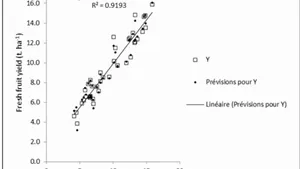
Yield responses varied markedly among the organic fertilizer sources. (i) Biochar: Yield increased from (without NPK) to (with NPK), representing a improvement. (ii) Tithonia diversifolia: Yield doubled from to when supplemented with NPK. (iii) Neptune's HarvestTM fish fertilizer: Produced the highest yield under NPK integration compared with without NPK. (iv) Poultry manure: Increased from alone to with NPK. Overall, the results demonstrate a consistent and substantial synergistic effect of combining NPK with organic fertilizers, with improvements ranging from to depending on the organic source. The analysis reveals a significant interdependence between the variables 'marketable fruit weight per plot' and overall yield, as well as between average fruit weight and yield (figure 4).
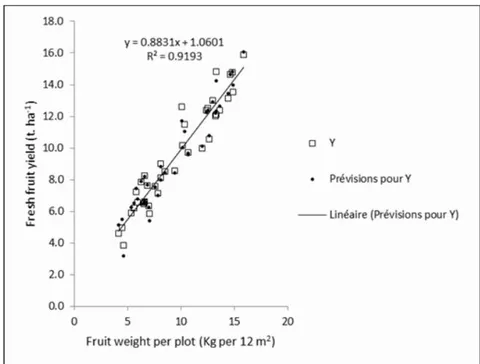
Figure 4: Regression curve between fruit weight per plot and yield (left) and between average fruit weight and yield (right) 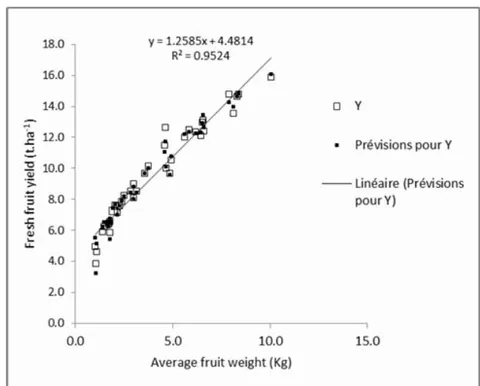
4.7 Economic Profitability of the Applied Practices
Low adoption of agricultural innovations is often linked to insufficient consideration of the agro-economic context and the practical relevance of tested technologies. Meaningful recommendations require a thorough understanding of farmers' production conditions, obtained through field diagnostics and farmer interviews. Such assessments help identify major constraints to productivity and determine feasible technological improvements.
Data from these evaluations inform on-farm experimental programs conducted under real farming conditions. Trials on representative farms generate essential information for planning future research and refining technologies in subsequent cropping seasons (CIMMYT, 1989).
4.8 Partial Budget Analysis
Partial budgeting organizes experimental data to clearly quantify the costs and benefits of different treatments. In this study, it was used to assess agronomic practices for improving the fertility of Kenge's poor soils for watermelon cultivation—a crop increasingly promoted as a cash crop in a region characterized by low purchasing power, traditional non-resilient farming, and speculative mono-cropping and poor-quality seeds.
| Without NPK | With NPK | |||||||||
| Control | Biochar | Neptune's HarvestTM | Poultry manure | Tithonia diversifolia | Sole NPK | Biochar | Neptune's HarvestTM | Poultry manure | Tithonia diversifolia | |
| Mean yield per hectare (kg ha-1) | 8488 | 12233 | 10988 | 13933 | 12113 | 13983 | 21042 | 22263 | 24388 | 19596 |
| Adjusted mean yield (-20%) (kg ha-1) | 6790 | 9787 | 8790 | 11147 | 9690 | 11187 | 16833 | 17810 | 19510 | 15677 |
| Gross field revenue (USD ha-1) | 2425 | 3495 | 3139 | 3981 | 3461 | 3995 | 6012 | 6361 | 6968 | 5599 |
| Seed expenditure (USD ha-1) | 40 | 40 | 40 | 40 | 40 | 40 | 40 | 40 | 40 | 40 |
| Expenditure for Tithonia diversifolia leaf biomass (USD ha-1) | 0 | 0 | 0 | 0 | 400 | 0 | 0 | 0 | 0 | 400 |
| Expenditure for mineral fertilizer and other soil amendments (USD ha-1) | 0 | 510 | 640 | 1200 | 0 | 600 | 1150 | 1240 | 1800 | 600 |
| General labor expenditure (USD ha-1) | 1000 | 1000 | 1000 | 1000 | 1000 | 1000 | 1000 | 1000 | 1000 | 1000 |
| Labor expenditure for the application of mineral and organic fertilizers (USD ha-1) | 0 | 100 | 100 | 100 | 0 | 100 | 150 | 150 | 150 | 50 |
| Labor expenditure for the application of Tithonia diversifolia leaf biomass (USD ha-1) | 0 | 0 | 0 | 0 | 125 | 0 | 0 | 0 | 0 | 125 |
| Total variable expenditures (USD ha-1) | 1040 | 1650 | 1780 | 2340 | 1565 | 1740 | 2340 | 2430 | 2990 | 2215 |
| Net economic returns (USD ha-1) | 1385 | 1845 | 1359 | 1641 | 1896 | 2255 | 3672 | 3931 | 3978 | 3384 |
Partial budget analysis revealed that combining organic fertilizers with NPK produced the highest net benefits: Neptune's Harvest™ Fish Fertilizer (3978 ha⁻¹), poultry manure (3931 ha⁻¹), biochar (3672 ha⁻¹), and Tithonia diversifolia (3384 ha⁻¹). When applied alone, net benefits ranged from 1350 to 2250 ha⁻¹, with the control yielding the lowest (1385 ha⁻¹).
4.9 Marginal Rate of Return (MRR) and Cost-Benefit Ratio (CBR)
The marginal rate of return indicates the average gain a farmer can expect from investing in a new practice or set of practices compared to the control (CIMMYT, 1989).
| Without NPK | With NPK | |||||||||
| Control | Biochar | Neptune's Harvest™ | Poultry manure | Tithonia | Sole NPK | Biochar | Neptune's Harvest™ | Poultry manure | Tithonia | |
| Marginal cost ($ ha-1) | 0 | 610 | 740 | 1300 | 525 | 700 | 1300 | 1390 | 1950 | 1175 |
| Marginal net benefit ($ ha-1) | 0 | 460 | -26 | 256 | 511 | 870 | 2287 | 2546 | 2593 | 1999 |
| Marginal Rate of Return (MRR) | 0 | 0.75 | -0.03 | 0.20 | 0.97 | 1.24 | 1.76 | 1.83 | 1.33 | 1.70 |
| Cost-Benefit Ratio (CBR) | 1.33 | 1.12 | 0.76 | 0.70 | 1.21 | 1.30 | 1.57 | 1.62 | 1.33 | 1.53 |
MRR quantifies the average gain from adopting a new practice relative to the control (CIMMYT, 1989). Treatments with MRR and CBR are considered economically viable. In this study, biochar alone , Tithonia diversifolia alone , and all organic + NPK combinations met this criterion. Single applications of Neptune's Harvest™ Fish Fertilizer or poultry manure were not recommended due to low MRR and CBR .
V. DISCUSSION
This study evaluated the effects of organic and mineral fertilizers on watermelon production in Kenge's sandy, acidic soils. Among the treatments, poultry manure, Neptune's Harvest™, Tithonia diversifolia, and biochar combined with NPK consistently produced the best outcomes. Beyond high seedling survival rates ( ), these treatments significantly improved fruit development and yield: average fruit weights ranged from to , fresh fruit yields from to , and net benefits reached up to for Neptune's Harvest™ combined with NPK. These results indicate tangible improvements in both horticultural performance and economic returns.
The superior performance of Neptune's and biochar on acidic ferralsol can be attributed to multiple mechanisms. Neptune's , rich in proteins, amino acids, and micronutrients, enhanced nutrient assimilation, early vigor, and microbial activity, while biochar contributed to soil pH buffering, water retention, and aggregate stabilization. Its high cation exchange capacity improved NPK retention, reducing nutrient losses and promoting sustained growth. Integrating organic and mineral fertilizers optimized vegetative and reproductive development, as evidenced by larger fruits, improved fresh yield, and enhanced marketable fruit quality.
These findings align with regional studies in nutrient-constrained horticultural systems, where integrated soil fertility management increased plant growth, fruit bulking, and soluble solids (°Brix) under acidic, sandy conditions (International Institute of Tropical Agriculture, 2022; FAO, 2021). Observed flowering windows and fruit mass further support the physiological benefits of combined organic-mineral fertilization, highlighting practical implications for farmers seeking both yield and quality improvements.
By synthesizing literature into thematic clusters—early vigor, nutrient retention, and reproductive yield—this study moves beyond confirmatory results, providing mechanistic insights into how fertilizer choice mediates watermelon performance in acidic, nutrient-poor soils. These findings offer actionable
guidance for the design of fertilization strategies and cooperative-based horticultural practices in Kenge and similar agroecological zones.
VI. CONCLUSION
Watermelon cultivation in Kenge is both agronomically feasible and economically profitable when supported by appropriate fertilization. Poultry manure, Neptune's Harvest™ Fish fertilizer, Tithonia diversifolia, and biochar produced the best results, with average fruit weights of 4.6 kg, 1.1 kg, 1.8 kg, and 1.0 kg per fruit, respectively, and fresh fruit yields of 12.6, 4.6, 6.6, and 5.0 t·ha^{-1}. Corresponding net benefits were highest with Neptune's Harvest™ Fish Fertilizer combined with NPK, reaching , compared to for the unfertilized control. From a socio-economic perspective, watermelon production provides opportunities for agricultural diversification, increased household incomes, and enhanced food security. Widespread adoption will depend on the formation of farmer cooperatives, site-specific fertilization strategies, improved market access, and the implementation of agroecological practices such as soil conservation and sustainable water management.
ACKNOWLEDGEMENTS
This research was made possible by the scientific and academic leadership of the University of Kwango. We sincerely thank the students, teaching assistants, and department heads of Plant Production for their dedication and contributions to advancing scientific quality.
Conflict of Interest
The authors declare no conflict of interest.
Ethical Approval
Not applicable
Data Availability
The datasets used in this study are openly available at [repository link] and the source code is available on GitHub at [GitHub link].
Funding
This work did not receive any external funding.
Cite this article
Related Research


Special Issue
Launch a focused special issue to highlight research, emerging trends, and expert insights in your academic field.