




IntelliPaper
Abstract
A systematic review and meta-analysis of research data on the effectiveness of the drug Wobenzym in the treatment of chronic bacterial prostatitis was performed. The aim of this study to evaluate the effectiveness of Wobenzym in the complex therapy of chronic bacterial prostatitis. The analysis included randomized and non-randomized controlled studies of the effectiveness of Wobenzim in the complex therapy of chronic bacterial prostatitis. The search was carried out in the databases CENTRAL, PubMed, ICTRP, eLibrary, ClinicalTrials.gov., Google Scholar, CyberLeninka, search engines. The meta-analysis was conducted using the recommendations of the Cochrane Handbook for Systematic Reviews of Interventions. Statistical heterogeneity was assessed using the Cochran test and visually when constructing forest plots. A random effects model and a fixed effect model were used. Works published over the entire period were analyzed, 712 publications were identified, of which 9 fully met the stated criteria, all studies were non-randomized controlled. The final analysis included the results of 1292 patients. Meta-analysis demonstrated the superiority of complex therapy including Wobenzym compared to therapy without Wobenzym in all studied parameters; eradication of the pathogen, decreased quality of life (QoL) scores, an increase in the linear speed of blood flow in the veins and peak systolic blood flow velocity in the arteries of the prostate gland, maximum urine flow rate, reduction in the number of points of the NIH-CPSI "Pain" subscale (difference 5 points) and NIH-CPSI "Quality of Life" subscale. The use of therapy including Wobenzym in patients with chronic prostatitis leads to a greater increase in the number of CDA+, CD8+ lymphocytes, phagocytic activity of lymphocytes, the level of complement CH-100 and immunoglobulins M, G, A. A systematic review/meta-analysis revealed an evident, significant, positive effect of the drug Wobenzym in the complex therapy of patients with chronic bacterial prostatitis, which is associated with its pathogenetic orientation in relation to this group of patients.
Explore Digital Article Text
I. INTRODUCTION
Chronic prostatitis is common in young and middle-aged men . The incidence of chronic prostatitis ranges from 2.2% to 9.7% worldwide . There has been a progressive increase in the disease incidence over the past years [4-6]. The origin and progression of chronic inflammatory process in the prostate gland is based on a complex of pathological reactions: anatomic and physiological peculiarities of the organ, the presence of a pathogenic microorganism, which has the ability to adhere and form biofilm; microcirculatory disorders, fibrosis formation [7, 8].
The main complaints of patients during exacerbation of chronic bacterial prostatitis (CBP) are pain, sexual dysfunction, urinary disorders, and psychoemotional disorders . Modern approaches to the treatment of CBP are based on complex therapy. First of all, the use of antibacterial drugs is indicated. The European Association of Urologists in 2023 recommended using fluoroquinolones despite the high level of uropathogen resistance to them.
Fluoroquinolones are recommended as first-line drugs in the empirical treatment of CBP because of their favourable pharmacokinetic properties, good safety profile as a whole and antibacterial activity against Gram-negative microorganisms . A combination of antibacterial drugs with various herbal extracts and alternative medicines with pathogenetic orientation is recommended . However, many patients still have complaints even after the end of treatment , which is often associated with the lack of eradication of the causative agent of CBP , disorders of the immune response and the course of the local inflammatory process with formation of connective tissue fibrous elements in the prostate tissue.
Thus, the high prevalence of CBP, recurrent or prolonged course of the inflammatory process, growth of uropathogen resistance are the basis for the search of drugs that could improve the outcome of treatment and provide the possibility of their long-term use in the combined therapy and subsequent prevention of recurrences of the disease.
To achieve success in the treatment of patients with CBP, drugs that either target individual components or comprehensively affect many links of pathogenesis are used as adjuvant/alternative therapy. Such drugs include Wobenzym, a combination of highly active enzymes of plant and animal origin. It includes pancreatin, papain, bromelain, trypsin, lipase, amylase, chymotrypsin, and rutoside trihydrate.
Wobenzym, as described in instructions for medical use, has anti-inflammatory, immunomodulatory, fibrinolytic, antiplatelet, anti-edema and secondary analgesic action . Combinations of enzymes potentiate the action of antibacterial drugs . This is achieved due to the ability of Wobenzym to improve the delivery of etiotropic drugs to the site of infection, increase the availability of the receptor apparatus of the host cell and pathogen, reduce the acidity of the environment in the site of inflammation, change the properties of microbial biofilms . Enzymes increase the phagocytic and cytotoxic activity of immunocytes (monocytes/macrophages, natural killer cells, T-lymphocytes). The therapeutic effect of Wobenzym is realized through the influence on the inflammatory process, immunity, vascular and platelet haemostasi . Determination of the efficacy of the drug in the therapy of CBP is a relevant issue that requires additional research.
II. RELEVANCE OF SYSTEMATIC REVIEW
To date, no meta-analysis findings on the efficacy of Wobenzym in CBP have been published. Therefore, important questions remain: how does it affect the frequency of pathogen eradication? What is the impact on symptoms and quality of life for patients with CBP? How do the blood flow status and urine flow rate change with its inclusion in the complex therapy of CBP?
The study aims to evaluate the efficacy of Wobenzym in the complex therapy of CBP.
We included in the review the randomized and non-randomized controlled trials on the efficacy of the drug in the complex therapy of CBP. The study included patients with CBP, regardless of age, race, or social status. We compared comprehensive therapy of CBP including Wobenzym and therapy not including Wobenzym. Endpoints have been identified.
Primary endpoint:
Frequency of pathogen eradication after therapy.
Secondary endpoints:
-
Change in Quality of Life (QoL) scores after treatment.
-
Change in prostate ultrasound data (peak systolic blood flow velocity in arteries, linear blood flow velocity in veins) after treatment. Change in maximum urine flow rate after treatment.
-
Change in National Institute of Health Chronic Prostatitis Symptom Index (NIH-CPSI) scores after therapy (Pain and Quality of Life subscales),
-
Changes in immunogram parameters after therapy.
2.1 Searching in Electronic Databases
Searching was carried out in the following databases: PubMed(https://www.nlm.nih.gov), using search words: "clinical trial," "humans," "Wobenzym," "prostatitis"; Cochrane Central Register of Controlled Trials (CENTRAL, in the Cochrane Library, https://www.cochranelibrary.com/central), National Institutes of Health Ongoing Trials Register Clinical Trials.gov (www.clinicaltri-als.gov), World Health Organization International Clinical Trials Registry Platform (ICTRP, https://www.who.int/ictrp/en/), using search words: 'Wobenzym'; Google Scholar (https://scholar.google.ru/), using search words: "clinical trial", "Wobenzym", "prostatitis", "study"; eLibrary.ru(http://elibrary.ru), using search words: "Wobenzym", "prostatitis"; Cyber Leninka (http://cyberleninka.ru), using search words: "clinical trial", "Wobenzym", "prostatitis", "study"; "Gray Zone" (search engine data), using search words: "clinical trial", "Wobenzym", "prostatitis", "study".
2.2 Assessment of Study Heterogeneity
The degree of heterogeneity was assessed visually by plotting "forest plots". In addition, the quantitative evaluation with calculation of chi-square criterion (p threshold <0.10), , was carried out. The following interpretation of the heterogeneity for values of was used: 0-25%, no heterogeneity; 25-50%, low; 50-75%, moderate; more than 75%, high.
2.3 Bias Assessment
The risk of bias was assessed using the guidelines of the Cochrane Handbook for Systematic Reviews of Interventions (Higgins J., 2021) [18] for randomized and non-randomized trials. The assessment was based on the recommendations of the Cochrane Community [19] using a validated questionnaire by O.Y. Rebrova et al. (2015) [20]. Data visualization was performed using the robvis application [21]. We categorized the risk of bias as "low," "high," or "unclear" for each study individually and for all studies. Any disagreements that arose at any stage were resolved through discussion.
2.4 Data Synthesis
For data synthesis, we used the conservative assumption that in all papers the authors provided data in SE format, with subsequent conversion for calculations into standard deviation (SD) using the formula , where n is the number of patients in the group. The analysis was performed using the R programming language and the RStudio development environment (R version).
2.5 Generalization and Interpretation of Results
We used the GRADE approach to interpret the results [22].
2.6 Search Results
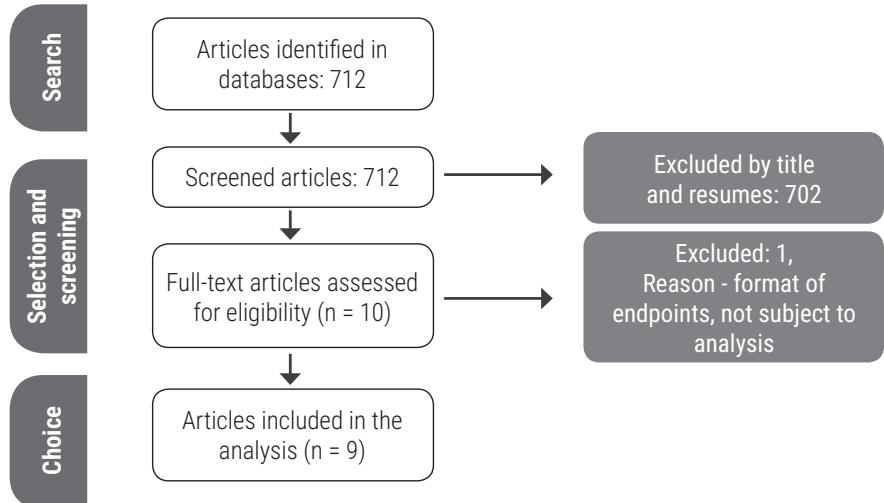
By searching and selecting studies that met the inclusion criteria, 9 out of 712 articles were selected for analysis (Figure 1).
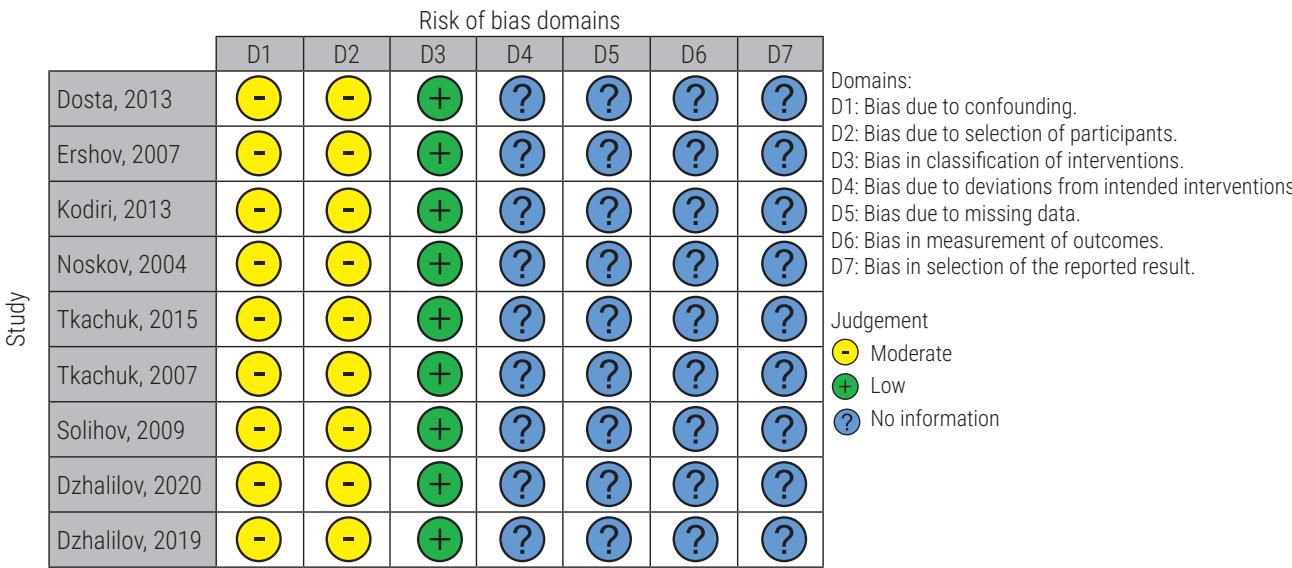
Fig. 1: Block diagram PRISMA [23] Figure 2: Estimation of bias by study. D1 - bias due to confounding; D2 - bias due to selection of participants; D3 - bias in classification of interventions; D4 - bias due to deviations from intended interventions; D5 - bias due to missing data; D6 - bias in measurement of outcomes; D7 - bias in selection of the reported outcome; Low; Moderate; No information available.
We did not rate any of the studies as being at high risk of bias in all areas (Figure 2). The characterization of the studies is given in Table 1.
III. RESULTS
The review included 9 non-randomized studies enrolling 1292 patients with CBP. The studies were published in Russian in the period from 2004 to 2020.
Frequency of pathogen eradication after therapy
The above parameter has been provided appropriately in the following articles: Dosta N.I.(2013) [15], Ershov E.V. (2007) [25], Noskov N.Yu. (2004) [27], Tkachuk V.N. (2015) [28], Tkachuk V.N. (2007) [29](Table 2). DOI: https://doi.org/10.17816/uroved626639
| Author, year | Disease | Randomization | Participants, n | Average age | Experimental group | Control group | ||
| n | therapy | n | therapy | |||||
| Dzhalilov H.N. (2020) [24] | CBP | no | 84 | 67.5 | 44 | Drugs that improve microcirculation and hemodynamics in the prostate gland, antibiotics, Polioxidonium, Wobenzym | 40 | Drugs that improve microcirculation and hemodynamics in the prostate gland, antibiotics |
| Dosta N.I. (2013)115] | CBP | no | 35 | 21.0 ±7.9 | 20 | Antibiotics, Wobenzym | 15 | Antibiotics |
| Ershov E.V. (2007) [25] | CBP | no | 239 | 25.6 ± 3.5 | 66 | Antibiotics, Wobenzym | 40 | Antibiotics |
| Kodiri T.R. (2013) [26] | CBP | no | 68 | - | 28 | Antibiotics, Wobenzym | 40 | Antibiotics |
| Noskov NYu. (2004) [27] | CBP | no | 110 | - | 70 | Antibiotics, Wobenzym | 40 | Antibiotics |
| Tkachuk V.N. (2015) [28] | CBP | no | 250 | 28.6 ± 4.5 | 210 | Antibiotics, Wobenzym | 40 | Antibiotics |
| Tkachuk V.N. (2007) [29] | CBP | no | 237 | 28.3 ± 2.9 | 70 | Antibiotics, Wobenzym | 65 | Antibiotics |
| Solihov D.N. (2009) [30] | CBP | no | 135 | 33.5 ± 4.6 | 70 | Antibiotics, Wobenzym | 65 | Antibiotics |
| Dzhalilov H.N. (2019) [31] | CBP | no | 134 | - | 67 | Antibiotics, Wobenzym | 67 | Antibiotics |
Table 2: Results of Studies on Eradication of Uropathogens
| Author, year | Experimental group | Control group | ||||
| n | uropathogen growth rate,% | n | uropathogen growth rate,% | |||
| before treatment | after treatment | before treatment | after treatment | |||
| Dosta N. I. (2013) [15] | 20 | 100 | 47 | 15 | 100 | 73.0 |
| Ershov E. V. (2007) [25] | 66 | 100 | 4.5 | 40 | 100 | 37.5 |
| Noskov N. Yu. (2004) [27] | 70 | 100 | 4.3 | 40 | 100 | 35 |
| Tkachuk V. N. (2015) [28] | 210 | 100 | 3.8 | 40 | 100 | 44.5 |
| Tkachuk V. N. (2007) [29] | 70 | 100 | 4.3 | 65 | 100 | 35.3 |
Table 3: Eradication Rates and Eradication Odds Ratios of Uropathogens for Each Study
| Study | Experimental group | Control group | OR | 95% CI | |||
| n | events | n | events | lower limit | upper limit | ||
| Dosta N. I. (2013) [15] | 20 | 11 | 15 | 4 | 3.36 | 0.79 | 14.25 |
| Ershov E. V. (2007) [25] | 66 | 63 | 40 | 25 | 12.60 | 3.35 | 47.32 |
| Noskov N. Yu. (2004) [27] | 70 | 67 | 40 | 26 | 12.03 | 3.19 | 45.32 |
| Tkachuk V. N. (2015) [28] | 210 | 202 | 40 | 23 | 18.66 | 7.26 | 48.00 |
| Tkachuk V. N. (2007) [29] | 70 | 67 | 65 | 42 | 12.23 | 3.46 | 43.27 |
{"image_source":{"path":"images/8c907b8b93c5bff2e44ee2e3c7b1e36bb4ba10a62e5276043b1818fd9d26735f.jpg"},"content":"","chart_caption":[],"chart_footnote":[{"type":"text","content":"Heterogeneity: "},{"type":"equation_inline","content":"I^{2} = 0\%"},{"type":"text","content":", "},{"type":"equation_inline","content":"\tau^{2} = 0.1810"},{"type":"text","content":", p = 0.43"}]}
Figure 3: Meta-Analysis of the Rate of Eradication of Pathogens after Therapy with Wobenzym
The results show no heterogeneity ( ), and 0.005, p > 0.10. Moreover, 95% confidence interval (CI) of the pooled odds ratio (OR) calculated for both the fixed effects model and the random effects model did not overlap the number 1 (Table 3, Figure 3).
Thus, the use of therapy including Wobenzym in patients with CBP, significantly more often leads to eradication of the pathogen compared to therapy without Wobenzym. The OR of the fixed effects model is 11.19 (95% CI 6.42-19.50; p = 0), the OR of the random effects model is 11.22 (95% CI 5.75-21.88; p = 0).
3.1 Change in QOL Scores after Treatment with Wobenzym
The above parameter has been provided appropriately in the following articles: Dosta N.I. (2013) [15], Dzhalilov H.N. (2020) [24], Dzhalilov H.N. (2019) [31](Table 4).
The results show low heterogeneity in the data ( ), , p > 0.10. At the same time, the 95% CI of the pooled difference of the mean values of QoL score reduction, calculated for both fixed and random effects models, does not overlap the zero value, which indicates a positive effect of treatment on the quality of life of patients (Fig. 4).
Thus, the use of therapy, including Wobenzym in patients with CBP, significantly reduces the QoL scores compared to therapy without Wobenzym, which means an improvement in the quality of life of these patients. Difference in mean values (MD) in the fixed effects model is -2.02 (95% CI -2.44... -1.59; p = 0); in the random effects model, it is -1.82 (95% CI -2.54... -1.11; p = 0).
3.2 Changes in Linear Blood Flow Velocity in Prostatic Veins after Treatment
| Study | Experimental | Control | Mean Difference | MD | 95%-CI | Weight (common) | Weight (random) | ||||
| Total | Mean | SD | Total | Mean | SD | ||||||
| Ershov, 2007 (2) | 66 | 4.92 | 1.5436 | 40 | 3.98 | 1.0119 | 0.94 | [0.45; 1.43] | 85.2% | 69.6% | |
| Tkachuk, 2015 (5) | 210 | 4.91 | 4.4923 | 40 | 3.12 | 3.2255 | 1.79 | [0.62; 2.96] | 14.8% | 30.4% | |
| Common effect model | 276 | 80 | 1.07 | [0.62; 1.51] | 100.0% | - | |||||
| Random effects model | 1.20 | [0.42; 1.98] | - | 100.0% | |||||||
| Heterogeneity: I2 = 42%, τ2 = 0.1675, p = 0.19 | -2 | -1 | 0 | 1 | 2 | ||||||
E.V. (2007) [25], Tkachuk V.N. (2015) [28](Table 5).
The results show low heterogeneity in the data ( = 42%), = 0.17, p > 0.10. In this case, the 95%
CI of the pooled mean difference calculated for both the fixed and random effects model does not overlap the zero value (Figure 5)
Table 4: Quality of Life Parameters on the QOL Score According to Study Data Note: Here and in Tables 5-9: M, mean value; SD, standard deviation; MD, mean difference; CI, confidence interval
| Study | Experimental group | Control group | MD | 95% CI | |||||
| n | M | SD | n | M | SD | lower limit | upper limit | ||
| Dzhalilov H.N. (2019) [31] | 44 | 1.8 | 1.33 | 40 | 4.0 | 0.89 | -2.2 | -2.68 | -1.72 |
| Dzhalilov H.N. (2020) [24] | 51 | 2.7 | 2.14 | 51 | 4.2 | 3.57 | -1.5 | -2.64 | -0.36 |
| Dosta N.I. (2013) [15] | 20 | 1.0 | 3.13 | 15 | 2.0 | 1.55 | -1.0 | -2.58 | 0.58 |
Table 5: Parameters of linear blood flow velocity in prostatic veins according to study data, cm/s
| Study | Experimental group | Control group | MD | 95% CI | |||||
| n | M | SD | n | M | SD | lower limit | |||
| Ershov E.V. (2007) [25] | 664.92 | 1.54 | 40 | 3.98 | 1.01 | 0.94 | 0.45 | 1.43 | |
| Tkachuk V.N. (2015) [28] | 210 | 4.91 | 4.49 | 40 | 3.12 | 3.23 | 1.79 | 0.62 | 2.96 |
| Study | Experimental | Control | ||||
| Total | Mean | SD | Total | Mean | SD | |
| Dzhalilov, 2019 (9) | 44 | 1.80 | 1.3266 | 40 | 4.00 | 0.8854 |
| Dzhalilov, 2020 (8) | 51 | 2.70 | 2.1424 | 51 | 4.20 | 3.5707 |
| Dosta, 2013 (1) | 20 | 1.00 | 3.1305 | 15 | 2.00 | 1.5492 |
| Common effect model | 115 | 106 | ||||
| Random effects model | ||||||
{"image_source":{"path":"images/de6c87d1a0b8c45145407e0f25b957791b1686b478023e86dc5be39d0ecab2a2.jpg"},"content":"","chart_caption":[{"type":"text","content":"Figure 4: Meta-Analysis of Changes in QOL Score after Treatment"}],"chart_footnote":[]} {"image_source":{"path":"images/b9774f0a04655b8204354eb507559e38faaef7a7fdd4b2ad0b9f1d39320c6213.jpg"},"content":"","chart_caption":[{"type":"text","content":"Figure 5: Meta-Analysis of Changes in the Linear Velocity of Blood Flow in the Prostatic Veins After Treatment"}],"chart_footnote":[]}
Thus, the use of therapy including Wobenzym in patients with CBP significantly increases linear blood flow velocity in prostatic veins by more than 1 cm/s compared to therapy without Wobenzym. Difference in mean values (MD) in the fixed effects model is 1.07 (95% CI 0.62-1.51; p = 0.00);
in the random effects model, it is 1.20 (95% CI 0.42-1.68; p = 0.00).
3.3 Changes in Peak Systolic Blood Flow Velocity in Prostatic Arteries after Treatment
The above parameter has been provided appropriately in the following articles: Ershov E.V. (2007) [25], Tkachuk V.N. (2007) [29], Tkachuk V.N. (2015) [28](Table 6).
According to the results obtained, there is no heterogeneity in the data ( ), , p > 0,10. In this case, the 95% CI of the pooled mean difference calculated both for the fixed and random effects models does not overlap the zero value (Figure 6).
Thus, the use of therapy including Wobenzym in patients with CBP significantly increases peak systolic blood flow velocity in the prostatic arteries compared to therapy without Wobenzym. The difference between the groups is 3.5 cm/s, i.e., in patients taking Wobenzym, the value of peak systolic velocity was almost 30% higher than in controls. Mean difference (MD) in the fixed effects model is 3.48 (95% CI 2.67-4.29; p = 0.00); in the random effects model, it is 3.48 (95% CI 2.62-4.34; p = 0.00).
3.4 Change In Maximum urine Flow Rate After Treatment
The above parameter has been provided appropriately in the following articles: Kodiri T.R. (2013) [28], Solihov D.N. (2009) [30], Dzhalilov H.N. (2019) [31](Table 7).
The results show no heterogeneity in the data ( ), , p > 0,10. In this case, the 95% CI of the pooled mean difference calculated for both the fixed and random effects models does not overlap the zero value (Figure 7).
Table 6: Parameters of Peak Systolic Blood Flow Velocity in The Prostatic Arteries According to The Study Data, Cm/S
| Study | Experimental group | Control group | MD | 95% CI | |||||
| n | M | SD | n | M | SD | lower limit | upper limit | ||
| Ershov E.V. (2007) [25] | 66 | 13.92 | 8.62 | 40 | 10.62 | 3.42 | 3.30 | 2.04 | 4.56 |
| Tkachuk V.N. (2007) [29] | 70 | 13.02 | 6.35 | 65 | 10.06 | 6.77 | 2.96 | 1.17 | 4.75 |
| Tkachuk V.N. (2015) [28] | 210 | 14.02 | 5.65 | 40 | 10.06 | 3.42 | 3.96 | 2.65 | 5.27 |
Table 7: Parameters of Maximum Urine Flow Rate According to Study Data
| Study | Experimental group | Control group | MD | 95% CI | ||||||
| n | M | SD | n | M | SD | lower limit | ||||
| Dzhalilov H.N. 44 (2019) [31] | 19.0 | 8.62 | 40 | 13.1 | 7.59 | 5.9 | 2.43 | 9.37 | ||
| Kodiri T.R. (2013) 28 [28] | 19.5 | 6.35 | 40 | 13.2 | 10.75 | 6.3 | 2.22 | 10.38 | ||
| Solihov D.N. 70 (2009) [30] | 19.0 | 10.88 | 65 | 13.1 | 9.67 | 5.9 | 2.43 | 9.37 | ||
| Study | Experimental | Control | Mean Difference | MD | 95%-CI | Weight (common) | Weight (random) | ||||
| Total | Mean | SD | Total | Mean | SD | ||||||
| Ershov, 2007 (2) | 66 | 13.92 | 2.8434 | 40 | 10.62 | 3.4153 | 3.30 | [2.04; 4.56] | 41.2% | 40.5% | |
| Tkachuk, 2007 (6) | 70 | 13.02 | 3.0120 | 65 | 10.06 | 6.7723 | 2.96 | [1.17; 4.75] | 20.4% | 21.4% | |
| Tkachuk, 2015 (5) | 210 | 14.02 | 5.6516 | 40 | 10.06 | 3.4153 | 3.96 | [2.65; 5.27] | 38.4% | 38.1% | |
| Common effect model | 346 | 145 | 3.48 | [2.67; 4.29] | 100.0% | - | |||||
| Random effects model | 3.48 | [2.62; 4.34] | - | 100.0% | |||||||
| Heterogeneity: $I^2 = 0\%, \tau^2 = 0.0601, p = 0.63$ | -4 | -2 | 0 | 2 | 1 | ||||||
Figure 6: Meta-Analysis of Changes in Peak Systolic Blood Flow Velocity in Prostatic Arteries After Treatment
| Study | Experimental | Control | ||||
| Total | Mean | SD | Total | Mean | SD | |
| Dzhalilov, 2019 (9) | 44 | 19.00 | 8.6232 | 40 | 13.10 | 7.5895 |
| Kodiri, 2013 (3) | 28 | 19.50 | 6.3498 | 40 | 13.20 | 10.7517 |
| Solihov, 2009 (7) | 70 | 19.00 | 10.8766 | 65 | 13.10 | 9.6747 |
| Common effect model | 142 | 145 | ||||
| Random effects model | ||||||
Thus, the use of therapy including Wobenzym in patients with CBP significantly increases the maximum urine flow rate compared to therapy without Wobenzym. Difference in mean values (MD) in the fixed effects model is 6.01 (95% CI 3.9-8.11; p = 0.00), in the random effects model is 6.01 (95% CI 3.9-8.11; p = 0.00).
3.5 Change in NIH-CPSI "Pain" Subscale Scores after Treatment
The above parameter has been provided appropriately in the following articles: Dosta N.I. (2013) [16], Tkachuk V.N. (2015) [28](Table 8).
The results show moderate heterogeneity in the data ( ), , p = 0.10. In this case, the 95% CI of the pooled mean difference calculated for both the fixed and random effects models does not overlap the zero value (Figure 8).
Thus, the use of therapy including Wobenzym in patients with CBP significantly reduces the number of scores of the "Pain" subscale of NIH-CPSI compared to therapy without Wobenzym. The difference between the groups is 5 points. Difference in mean values (MD) in the fixed effects model is -5.17 (95% CI -7.33 to -3.0; p = 0.00), in the random effects model is -6.60 (95% CI -8.65...-0.76; p = 0.02).
3.6 Change in NIH-CPSI "Quality of Life" Subscale Scores after Treatment
The above parameter has been provided appropriately in the following articles: Dosta N.I. (2013) [15], Tkachuk V.N. (2015) [28](Table 9).
According to the results obtained, there is moderate heterogeneity in the data ( ), , p < 0.10. In this case, the 95% CI of the pooled mean difference calculated for both the fixed model and the.
Table 8: NIH-CPSI "Pain" Subscale Scores According to Research Data
| Study | Experimental group | Control group | MD | 95% CI | |||||
| n | M | SD | n | M | SD | lower limit | upper limit | ||
| Dosta N.I. (2013) [16] | 20 | 5.9 | 8.50 | 15 | 8.1 | 3.69 | -2.2 | -6.32 | 1.92 |
| Tkachuk V.N. (2015) [28] | 210 | 2.1 | 7.25 | 60 | 8.6 | 7.59 | -6.3 | -8.85 | -3.75 |
Table 9: NIH-CPSI "Quality of Life" Subscale Scores According to Study Data
| Study | Experimental group | Control group | MD | 95% CI | |||||
| n | M | SD | n | M | SD | lower limit | upper limit | ||
| Dosta N.I. (2013) [15] | 20 | 2.0 | 6.02 | 15 | 3.0 | 1,.96 | -1.0 | -3.02 | 1.02 |
| Tkachuk V.N. (2015) [28] | 210 | 3.1 | 5.80 | 60 | 6.5 | 3.79 | -3.6 | -6.81 | -1.99 |
| Study | Experimental | Control | Mean Difference | MD | 95%-CI | Weight (common) | Weight (random) | ||||
| Total | Mean | SD | Total | Mean | SD | ||||||
| Dosta, 2013 (1) | 20 | 5.90 | 8.4971 | 15 | 8.10 | 3.4857 | -2.20 | [-6.32; 1.92] | 27.7% | 41.4% | |
| Tkachuk, 2015 (5) | 210 | 2.10 | 7.2457 | 40 | 8.40 | 7.5895 | -6.30 | [-8.85; -3.75] | 72.3% | 58.6% | |
| Common effect model | 230 | 55 | -5.17 | [-7.33; -3.00] | 100.0% | - | |||||
| Random effects model | -4.60 | [-8.45; -0.76] | - | 100.0% | |||||||
| Heterogeneity: $I^2 = 64\%, \tau^2 = 4.8670, p = 0.10$ | |||||||||||
Figure 8: Meta-Analysis of Change in NIH-CPSI "Pain" Subscale Scores after Treatment Figure 9: Meta-Analysis of Change in NIH-CPSI "Quality of Life" Subscale Scores after Treatment
| Study | Experimental | Control | MD | 95%-CI | Weight (common) | Weight (random) | ||||
| Total | Mean | SD | Total | Mean | SD | |||||
| Dosta, 2013 (1) | 20 | 2.00 | 4.0249 | 15 | 3.00 | 1.9365 | -1.00 | [-3.02; 1.02] | 32.9% | 44.9% |
| Tkachuk, 2015 (5) | 210 | 3.10 | 5.7966 | 40 | 6.50 | 3.7947 | -3.40 | [-4.81; -1.99] | 67.1% | 55.1% |
| Common effect model | 230 | 55 | -2.61 | [-3.77; -1.45] | 100.0% | - | ||||
| Random effects model | -2.32 | [-4.57; -0.08] | ~ | 100.0% | ||||||
| Heterogeneity: $I^2 = 73\%, \tau^2 = 1.8597, p = 0.06$ | ||||||||||
Table 10: Immunogram Parameters in Patients according to the Study by N.Yu. Noskov (2004) [27] Note. M, average value; SD, standard deviation; MD, mean difference; CI, confidence interval; PHA, phytohemagglutinin. of the random effects model, does not cross the zero value (Fig. 9).
| After treatment | |||||
| Immunologic parameters | Before treatment | Experimental group | Control group | ||
| M±SD | P | M±SD | P | ||
| $CD3^{+}$ -lymphocytes,% | 82.9 ±9.4 | 69.4 ±8.8 | <0.01 | 79.5 ±10.1 | 0.1 |
| $CD4^{+}$ -lymphocytes,% | 24.1 ±3.8 | 41.6 ±8.8 | <0.01 | 35.4 ±7.1 | <0.05 |
| $CD8^{+}$ -lymphocytes,% | 18.1 ±2.4 | 24.8 ± 3.5 | <0.01 | 20.5 ±1.7 | <0.05 |
| $CD22^{+}$ -lymphocytes,% | 14.3 ±0.9 | 23.6 ±2.4 | <0.01 | 19.4 ±3.3 | <0.05 |
| PHA-induced lymphocyte activity, imp/min | 4310 ±106 | 7231 ±80 | <0.01 | 4935 ±215 | <0.05 |
| Level of complement CH-100, arbitrary units. | 98.5 ±5.3 | 169.8 ±8.4 | <0.01 | 109.1 ±5.1 | <0.05 |
| Circulating immune complexes, arbitrary units. | 0.05 ±0.008 | 0.07 ±0.005 | <0.05 | 0.06 ±0.009 | <0.05 |
| CD4/CD8, arbitrary units. | 1.33 ± 0.3 | 1.68 ±0.5 | <0.01 | 1.73 ±0.4 | <0.01 |
| IgM, g/L | 0.5 ±0.1 | 0.9 ±0.3 | <0.01 | 0.6 ±0.3 | <0.05 |
| IgG, g/L | 6.0 ±0.4 | 10.3 ±0.4 | <0.01 | 8.3 ±1.1 | <0.05 |
| IgA, g/L | 2.2 ±0.6 | 3.4 ±0.7 | <0.01 | 2.6 ±0.5 | <0.05 |
Thus, the use of therapy including Wobenzym in number of scores of the subscale "Quality of Life" patients with CBP significantly reduces the of NIH-CPSI compared to therapy without
Wobenzym. The difference between the groups is 2 points. Difference in mean values (MD) in the fixed effects model is -2.61 (95% CI -3.77...-1.45; p = 0.00), in the random effects model is -2.32 (95% CI -4.57...-0.08; p = 0.04).
3.7 Change in Immunogram Parameters after Treatment
This parameter was provided appropriately only in the article by Noskov N.Yu. (2004) [27](Table 10).
After the treatment, significant improvement of immunogram parameters was found in both groups. However, a greater increase in the number of CD4 -was noted in the experimental group, DOI: https://doi.org/10.17816/uroved626639CD8 -lymphocytes, lymphocyte activity, complement CH-100 level and immunoglobulins M, G, A [29].
The study by V.N. Tkachuk et al. (2015) [28] also provided the findings of an immunologic study. In the experimental group, where complex treatment included Wobenzym, the improvement of all immunologic indices occurred significantly earlier. Before treatment, immunodeficiency states characterized by impaired T-cell immunity and decreased functional activity of phagocytes were revealed in patients with CBP. After treatment, the patients in the experimental group showed an increase in the number of T-lymphocytes with CD3+ phenotype from 35.6 ± 2.9 to 49.3 ± 2.7% (p < 0.01), the number of T-cells with CD4+ phenotype from 17.9 ± 2.1 to 32.4 ± 1.9% (p < 0.01), B-lymphocytes (CD22+) from 14.3 ± 0.9 to 20.5 ± 1.8% (p 0.01) (p < 0.05), the ratio of T-helper and T-suppressors increased from 1.1± 0.1 to 1.7 ± 0.3 (p < 0.05) and functional activity of lymphocytes increased from 4338 ± 209 to 7396 ± 346 imp/min (p < 0.001).
IV. FINDINGS
We found 9 non-randomized clinical trials on the efficacy of combined therapy including Wobenzym in patients with CBP compared with standard therapy without Wobenzym. Meta-analysis showed that:
- Most researchers in their works have shown that the use of therapy including Wobenzym in patients with CBP significantly more often leads to eradication of the pathogen compared to therapy without Wobenzym. The OR in the fixed effects model is 11.19 (95% CI 6.42-19.50; p = 0), while in the random effects model, it is 11.22 (95% CI 5.75-21.88; p = 0).
Therapy including Wobenzym in patients with CBP significantly reduces QoL scores compared to therapy without Wobenzym. The study demonstrated significant difference of 2 points between the groups. MD in the fixed effects model is -2.02 (95% CI -2.44 to -1.59; p = 0), while in the random effects model, it is -1.82 (95% CI -2.54..-1.11; p = 0).
Therapy including Wobenzym in patients with CBP significantly increases linear blood flow velocity in prostatic veins by more than 1 cm/s compared to therapy without Wobenzym. Studies have demonstrated significantly improved blood flow in the prostate gland. MD in the fixed effects model is 1.07 (95% CI 0.62-1.51; p = 0), while in the random effects model, it is 1.20 (95% CI 0.62-1.68; p = 0). The result is valid, indicating significant difference between groups. 4. Therapy including Wobenzym in patients with CBP significantly increases peak systolic blood flow velocity in prostatic arteries compared to therapy without Wobenzym. The difference between the groups is 3.5 cm/s. MD in the fixed effects model is 3.68 (95% CI 2.67-6.29; p = 0.00), while in the random effects model, it is 3.68 (95% CI 2.62-6.36; p = 0.00).
Therapy including Wobenzym in patients with CBP significantly increases the maximum urine flow rate compared to therapy without Wobenzym. MD in the fixed effects model is 6.01 (95% CI 3.9-8.11; p = 0.00), while in the random effects model, it is 6.01 (95% CI 3.9-8.11; p = 0.00);
-
Therapy including Wobenzym in patients with CBP significantly reduces the number of scores of the NIH-CPSI "Pain" subscale compared to therapy without Wobenzym. The difference between the groups is 5 points. MD in the fixed effects model is -5.17 (95% CI -7.33 to -3.0; p = 0.00), while in the random effects model, it is -4.60 (95% CI -8.45...-0.76; p = 0.02);
-
Therapy including Wobenzym in patients with CBP significantly reduces the scores of the NIH-CPSI "Quality of Life" subscale compared to therapy without Wobenzym. The result is statistically valid, but there is high heterogeneity in the data. The difference between the groups is 2 points. The high heterogeneity is explained by the small number of included studies. MD in the fixed effects model is -2.61 (95% CI -3.77 to -1.45 p = 0.00), while in the random effects model, it is 2.32 (95% CI -4.57...-0.08; p = 0.04);
-
Therapy including Wobenzym in patients with CBP leads to a greater increase in CD4 -, CD8 - lymphocyte counts, lymphocyte functional activity, CH-100 complement levels and immunoglobulins M, G, A.
4.1 Overall Completeness and Applicability of Evidence
All studies used the similar regimen of Wobenzym therapy and comparable duration of courses. The age of the study participants ranged widely (from young to old), allowing the results obtained in the studies to be extrapolated to the population receiving Wobenzym in real practice.
4.2 Quality of Evidence
We did not rate any of the studies as being at high risk of bias in all areas. For most areas of risk of bias, the risk was rated as "unclear".
4.3 Risk of Bias During Tte Review
We performed the data extraction without any constraints.
4.4 Consistency and Disagreement with Other Studies and Reviews
We found no other systematic reviews of the efficacy of Wobenzym in the complex therapy of CBP in open sources.
4.5 Commercial Impact
No conflicts of interest were declared in any of the studies.
V. CONCLUSION
A systematic review/meta-analysis found evidence of the beneficial effects of including Wobenzym in the complex therapy of CBP. Complex therapy including Wobenzym, compared to therapy without Wobenzym, increases the frequency of pathogen eradication by 11 times, which is important for the treatment of infectious and inflammatory processes in the prostate gland and is associated with pathogenetic anti-inflammatory effect, DOI https://doi.org/10.17816/uroved626639. antibiofilm effect of the drug and its influence on the mobility and adhesion of the pathogen. In addition, complex therapy with Wobenzym improves blood supply of the prostate gland, as evidenced by the improvement of microcirculation in the arterial and venous bed of the prostate tissue, which is probably due to the positive effect of the drug on the course of the inflammatory process, on the change, improvement of rheological properties of blood and vascular-thrombocyte homeostasis.
Inclusion of the Wobenzym in the therapy of chronic prostatitis contributes to an increase in the maximum rate of urine flow, improved urination, which is due to a decrease in edema of the prostate tissue. Therapy with Wobenzym reduces the severity of prostatitis symptoms, which is confirmed by a decrease in the number of scores on the "Pain" subscale and a decrease in the number of scores on the "Quality of Life" subscale of the NIH-CPSI and the QoL scale. These data indicate the control/reduction of symptoms of the disease and improvement of the quality of life of patients with CBP in the study group.
Inclusion of Wobenzym in the therapy of chronic prostatitis stimulates immune defense, which is confirmed by a large increase in CD4 -, Co8 -lymphocytes, functional activity of lymphocytes, the level of complement CH-100 and immunoglobulins M, G, A in comparison with the group of patients in whose treatment Wobenzym was not used.
Taking into account the above-mentioned, evident statistically reliable, positive effect of Wobenzym in complex therapy of patients with CBP is due to its pathogenetic orientation in relation to this group of patients.
In order to form an evidence base and obtain more reliable results, it is recommended to conduct randomized blinded trials with similar endpoints and timing of their control in groups of patients with CBP.
ACKNOWLEDGEMENTS
The authors would like to thank Sciencefiles for assistance in statistical data processing during the writing of the article.
Funding Source: This study was not supported by any external sources of funding.
Competing Interests: The authors declare no competing interests. DOI: https://doi.org/10.17816/urovecl626639.
Conflict of Interest
The authors declare no conflict of interest.
Ethical Approval
Not applicable
Data Availability
The datasets used in this study are openly available at [repository link] and the source code is available on GitHub at [GitHub link].
Funding
This work did not receive any external funding.
References
Cite this article
Related Research




Special Issue
Launch a focused special issue to highlight research, emerging trends, and expert insights in your academic field.
