



IntelliPaper
Abstract
Cellulite is a common aesthetic concern that may significantly impact on individuals' self-image and quality of life. Despite being a non-threatening condition, it may have a negative effect on the psychological well-being of affected individuals. This condition is multifactorial and involves several physiopathology pathways. The role of enzymes in the management of cellulite is a novel approach, particularly lipase and collagenase, which play key roles in adipocyte size reduction and collagen degradation, respectively. The potential of high-molecular-weight hyaluronic acid to promote tissue repair and regeneration is also highlighted. Our case report describes the effectiveness of an association of recombinant enzymes and high-molecular-weight hyaluronic acid by reducing cellulite manifestations in a patient, with a history of multiple unsuccessful treatments, showing visible improvements from the initial treatment session. The importance of understanding the complex physiopathology of cellulite and choosing a targeted approach is emphasized.
Explore Digital Article Text
I. INTRODUCTION
Beauty standards increasingly favor a healthy and youthful appearance . Both the shape and the contour of the chin play a relevant role in facial aesthetics, and fat accumulation in the submental area (FSA, commonly known as "double chin") has been associated with a negative impact on appearance and self-perception . While the accumulation of fat in this region is often associated with elevated body mass index (BMI) and lifestyle factors, genetic predisposition and age-related changes in soft tissue distribution can also contribute to its development. Moreover, FSA can be resistant to conventional weight loss strategies, such as caloric restriction and physical activity, due to the localized nature of fat deposits and the structural characteristics of submental fat pads . This resistance to reduction through lifestyle modification underscores the need for targeted therapeutic approaches aimed specifically at submental contouring.
Several therapeutic strategies have been developed to address localized fat deposits . These include pharmacologic treatment (e.g. local injection of deoxycholic acid) surgical rejuvenation techniques such as cervicoplasty , targeted liposuction and energy-based devices including laser and radiofrequency . These treatments focus on tightening the submental skin and improve contour. However, several of these strategies require surgical procedures, which carry inherent risks. By contrast, enzymatic therapy represents a novel and promising advancement in aesthetic medicine. It targets specific extracellular components with high affinity and specificity , enabled by advances in recombinant technology and genetic engineering . These enzymes are characterized by their high purity levels and can be produced in large quantities.
A combined approach involving high molecular weight (>400 kDa) hyaluronic acid (HMW-HA), collagenase, lipase and lyase has emerged as an attractive strategy for managing FSA. HMW-HA is a volumizing molecule that hydrates tissues, facilitates enzyme diffusion across the extracellular matrix, and acts as a physical barrier that helps modulate inflammatory responses [9]. Collagenase G/H degrades non-functional collagen fibers [10]. Lipase contributes by breaking down adipose tissue [11]. And lyase hydrolyzes proteoglycans and increase skin tissue permeability [12,13]. Each component plays a distinct role, but together, their actions are synergistic.
The main goal of our study was to evaluate the efficacy of Pbserum HA 1.5 Medium for the treatment of FSA in an outpatient clinical setting.
II. PATIENTS AND METHODS
2.1 Study Design
A prospective, quasi-experimental cohort study was performed in Colombia. Inclusion criteria were: (a) age between 18 and 70 years (b) proper understanding of the clinical study; (c) basal good clinical and mental health status, as determined by local main investigator; (d) availability to regular visits to the research center; (e) willing to participate in the study. Exclusion criteria were: (a) history of allergic reaction to HA, collagenases, lipases and/or lyases; (b) history of malignancies; (c) use of any treatment for fat accumulation; (d) current participation in another clinical trial; (e) history of comorbidities that could reduce treatment adherence; (f) pregnancy or breastfeeding.
Before entering the study, all patients underwent a complete history and physical examination.
They received detailed information regarding the study's objectives, potential risks and benefits, and their rights as subjects. They provided written informed consent, which included authorization for product application, photographic documentation, data processing, and the publication of collected data and images.
2.2 Product Characteristics
2.3 Application Protocol
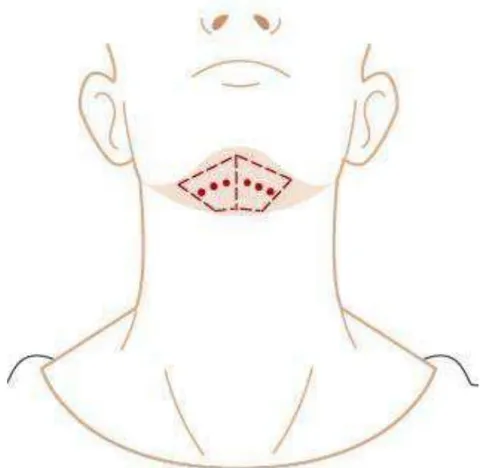
Visits were scheduled in Day 1 (visit 1), Day 8 (visit 2) and Day 22 (visit 3). Pbserum HA 1.5 Medium was administered according to the standard dose per area (1 mL/cm ) by deep infiltration with retro-injection in the adipose tissue in specific points (Figure 1) in Day 1 (visit 1) and Day 8 (visit 2). A final evaluation visit (visit 3) was scheduled on Day 22, fifteen days after the last application, to assess the final outcomes of the study. In all visits, FSA was quantified, and a photographic registry was obtained.
2.4 Study Outcomes
The primary objective of the study was to evaluate the efficacy of subcutaneous enzyme cocktail for the reduction of FSA in a controlled outpatient setting as measured by the variation of FSA severity assessed by the investigator at each visit using a validated grading scale ranging from 0 (no localized FSA) to 4 (extreme submental convexity due to FSA) (Table 1).
Secondary endpoints included (a) Patient satisfaction, quantified by 7-point Likert scales in a survey with two domains (global impression and organoleptic characteristics); (b) Patient's perception of efficacy, quantified by 5-point Likert scale covering three domains (subjective FSA reduction, flaccidity reduction and mandibular profile); and (c) safety and tolerability, evaluated through adverse event reporting and patient-reported outcomes.
| Scale | 0 | 1 | 2 | 3 | 4 |
| Submental convexity | Absent | Mild | Moderate | Severe | Extreme |
| Description | No evident localized FSA | Minimal localized FSA | Prominent localized FSA | Marked localized FSA | Extreme submental convexity |
2.5 Statistical Analysis
A sample size of 30 participants with a dropout rate of 10% was estimated. A descriptive analysis of the quantitative variables was performed, including parameters of central tendency and variation to define the variables distribution.
The Wilcoxon Signed-Ranks test was used to compare FSA scores variation in all time points.
Specific stats packages of R software (wilcox.test and lme functions) were used. The significance value established for all statistical tests was p < 0.05.
III. RESULTS
Thirty-three patients were evaluated at baseline (visit 1), and 87.8% (n = 29) completed the study.
Pbserum HA 1.5 Medium was administered at all prespecified injection sites in each participant without any protocol deviations. The median age of participants was 44 years (range: 21 to 72) and 79% were female.
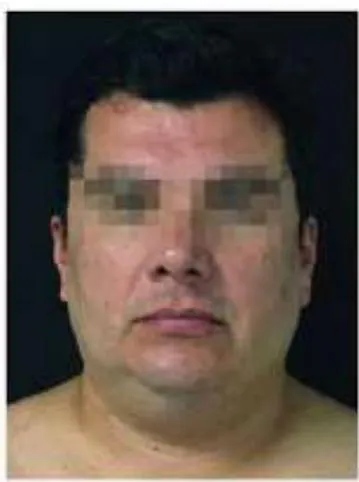
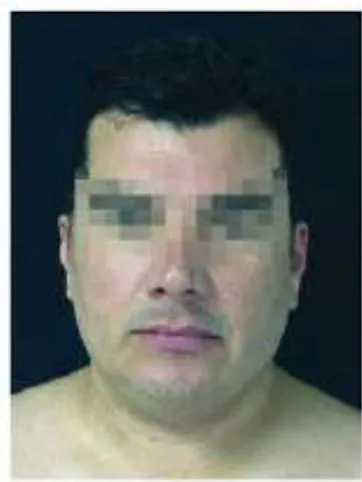
The primary efficacy endpoint was the change in excess FSA. During the first visit, an FSA score 2 was present in 53.3% of patients. After two treatment sessions, this proportion increased to 75.8% (Figure 2). The proportion of patients with a maximum FSA score of 4 was reduced from 26.67% at visit 1 to 6.9% at the final follow-up visit. Overall, FSA scale was significantly reduced from baseline to the end of the study (p < 0.05, Wilcoxon Signed-Rank test) (Figure 3).
{"image_source":{"path":"images/e804673b6eb6f51fa0c80596a6a679e26a8f012e0c98eb9ee1e3a848c6e29f0f.jpg"},"content":"","chart_caption":[],"chart_footnote":[]}
Regarding patient endpoint, 100% of participants felt satisfied with the combined enzymatic treatment (50%, 43% and 7% liked it "very much", "moderate" and "somewhat", respectively), in the "global impression" domain. Organoleptic properties were also assessed using Likert scales and are summarized in Figure 4. Patients were also asked if they would use the product again and 83% responded affirmatively. \ {"image_source":{"path":"images/0160b35449998010612e90602151633453fb8700d55784603ba922740b884862.jpg"},"content":"","chart_caption":[],"chart_footnote":[]}
{"image_source":{"path":"images/251bc906b22b84624fa5fed0a0e939b0f131235835d46624765d92344c445321.jpg"},"content":"","chart_caption":[],"chart_footnote":[]} {"image_source":{"path":"images/597e38ba2c55b2af2e56925279017beb90c2c142fa2b0790ef075b1b0ed8d87a.jpg"},"content":"","chart_caption":[],"chart_footnote":[]}
{"image_source":{"path":"images/80084e9252c93ea59ae7475c1388c67a070efb72c50003ccc1128709f399b18d.jpg"},"content":"","chart_caption":[{"type":"text","content":"Figure 4: Subjective Opinion about Organoleptic Properties of Ha 1.5 Medium"}],"chart_footnote":[]}
Patient's perceptions on efficacy revealed that of patients reported subjective improvement in FSA volume, reported reduced flaccidity, and noted improvement in mandibular contour.
Pbserum HA 1.5 Medium was well tolerated and 64% of participants did not refer any adverse event. The remaining patients described mild itching (23%), pain (23%), edema (15%), isolated rash (8%), dysphonia (8%) and discomfort (8%).
IV. DISCUSSION
Two sessions of Pbserum HA 1.5 Medium were associated with a significant reduction of excess FSA in a three-week period. This favorable outcome was accompanied by high patientreported satisfaction and a good tolerability profile. Our findings are consistent with those reported by Jabbour et al. (2024), who observed a submental fat reduction of more than 10% in 9 out of 10 patients treated with the recombinant enzyme cocktail. Furthermore, 9 out of 10 participants expressed overall satisfaction with the treatment, highlighting both its efficacy and patient acceptability [14]. This high level of patient satisfaction with the use of recombinant enzymes for the management of skin laxity and localized fat accumulation in facial and body areas has also been documented in a recent multicenter study involving 229 cases [15].
Neck rejuvenation strategies, including those targeting the chin area, are progressively evolving to address the clinical and esthetic consequences of aging. These include changes in skin quality, muscle tone, sun-induced damage, or fat accumulation resulting from weight fluctuations or hormonal changes . Specifically, interest in jowl and jawline rejuvenation procedures is increasing; according to a 2017 report of the American Society for Dermatologic Surgery, 73% of respondents of a consumer survey reported that they were somewhat to extremely bothered by excess of FSA .
FSA is located between the skin and the platysma muscle, and is invested by the superficial cervical fascia. FSA thickness may differ depending on the patient's body habits and weight, typically forming a triangular shape with the apex at the hyoid and base at the mandibular line [16]. It is worth noting that the superficial fat compartments of midface tend to descend, contributing to the loss of jawline definition [19]. The cocktail of recombinant enzymes acts on different specific targets in these patients. Lipase can address accumulated FSA by degrading triglycerides to smaller, easily diffusible molecules (glycerol and free fatty acids). Recombinant lipases activity is not modulated by cofactors and are associated with a broad substrate specificity [11,20]. Subcutaneous injections of collagenase in minipigs were also seen to induce a decrease in the thickness of adipose tissue [21]. In addition, collagenase G/H degrades collagen fibers and induces multiple scissions in the collagen triple helix, leading to an efficient collagenolysis process [22,10]. Lyase can hydrolyze local proteoglycans and facilitates the penetration and spread of collagenases G and H through dense extracellular structures [12]. Hyaluronic acid plays a key role in adipocyte differentiation. It has been shown that hyaluronic acid accumulates during adipocyte maturation and is associated with increased expression of adipogenic markers [23]. HMW-HA facilitates also enzyme diffusion across the extracellular matrix and could help with the chin contouring and modulating inflammatory processes.
This significant efficacy outcome in terms of FSA reduction was associated with benefits in most patient-related outcomes, including satisfaction and several subjective perceptions. The use and importance of patient-reported outcomes is increasing across all medical specialties, including aesthetic medicine; they will help clinicians better understand the goals and expectations of new patient segments . In our study, all patients felt satisfied with the treatment and most of them would use the product again and perceived a subjective reduction of flaccidity with improvement of mandibular profile. The latter is especially important, considered that anatomic transition of the lower third of the face to the neck (also known as "neck-face interface") is fundamental to the overall facial aesthetic .
A range of injectable therapies are employed in aesthetic medicine to address the accumulation of facial subcutaneous adipose tissue (FSA) [26]. Aminophylline is administered via subcutaneous injections to promote lipolysis by increasing intracellular cyclic adenosine monophosphate (cAMP) levels and antagonizing adenosine receptors [27]. Hypotonic pharmacological lipo-dissolution relies on the pressure-assisted injection of compounds to disrupt adipocytes [28]. Glycerophosphorylcholine, a precursor to choline, is proposed to stimulate lipid metabolism [29]. In contrast, the combination of phosphatidylcholine and deoxycholate, although commonly used, has some concerns about its safety and limited clinical evidence [30]. Deoxycholic acid is approved by the Food and Drug Administration (FDA) for FSA reduction and its mechanism of action is linked to focal adipocyte lysis. Nevertheless, such cell membrane lysis as main pharmacological action is associated with a local tissue response followed by macrophage infiltration in order to remove cellular debris [31]. According to data from a recent metanalysis including five randomized controlled trial (n = 1838), withdrawals due to adverse events in patients receiving local deoxycholic acid treatment ranged from 6.8% to 8.3%, without statistical differences related to the injected doses [4]. Among adverse events, pain (73.3% to 82.7%), anesthesia/numbness (46% to 60.8%) and swelling/edema (38.6% to 49.8%) were significantly more common than with placebo [4]. In our cohort of patients with excess FSA treated with Pbserum HA 1.5 Medium, adverse events were reported by 36% of participants and both pain and edema were less frequent, as reported by 23% and 15% of treated patients, respectively.
Our study has several limitations, including a small sample size and the possibility of bias related with inter-observer variability in the application of the FSA score. However, some important strengths are highlighted, including a low dropout rate and the consideration of both physician and patient-reported outcomes.
We conclude that Pbserum HA 1.5 Medium is an effective and well tolerated treatment for patients with excess FSA, with evident favorable short-term outcomes.
ACKNOWLEDGMENTS
The authors are deeply grateful to their patients for their trust and willingness, without whom this research would not have been possible. We are also grateful to Dr. Estefanía Hurtado Gómez on behalf of Biopress Ediciones Médicas for her work in reviewing the writing of the article.
Funding
Medical writing was supported by Proteos Biotech. The sponsor had no role in the bibliographic revision and the medical content.
Conflict of Interest
Jorge López Berroa is an employee of Proteos Biotech. Diana Forero, Carlos Lloreda, Ana Toro and María Cristina Cuello have no conflict of interest to disclose.
Conflict of Interest
The authors declare no conflict of interest.
Ethical Approval
Not applicable
Data Availability
The datasets used in this study are openly available at [repository link] and the source code is available on GitHub at [GitHub link].
Funding
This work did not receive any external funding.
References
Cite this article
Related Research


Special Issue
Launch a focused special issue to highlight research, emerging trends, and expert insights in your academic field.