




IntelliPaper
Abstract
The article deals with the role and features of the application of conceptual metaphor in the psychotherapeutic discourse (PD). I. Yalom’s stories "The Schopenhauer Cure" and "Mommy and the Meaning of Life" are the source of data.
Introduction: The purpose of this article is to analyze the metaphorical language of PD integrated into I. Yalom’s fiction. Metaphor is a safe way to verbalize forbidden topics with a client during the psychotherapeutic sets, to create a safe space, to achieve a good setting, to reduce the client’s resistance, to shift the conversation from unconsciousness to consciousness, etc. Conceptual metaphor is a tool to understanding the deepest layers of the communication between the client and his analyst. Russian linguist Vladimir Karasik refers PD to the medical discourse (MD); but the presence of conceptual metaphors as well as other features makes it possible to distinguish this discourse into an independent one. The relevance of linguistic analysis lies in the need to expand discourses of helping professions (DHP), as well as in the fact that at the present level of the functioning of MD requires using PD.
Methodology and sources: The article is based on the main provisions of the theory of conceptual metaphor (CM), proposed by J. Lakoff and M. Johnson. The methodological basis of the analysis carried out in the article are works discussed the PD and the metaphorical language of psychotherapy (I. V. Karasik, A. R. Markin, M. S. Grineva, E. V. Ermolaeva, etc.). The artistic texts by the American practitioner, psychotherapist, and the author of psychological tales Irwin Yalom are the date of the analysis of the PD included in fiction (PDIF).
Results and discussion: The article deals with the PD as an independent one, describes the types of CM implied in PD that based on text’s analysis. Among the main conceptual metaphors in the PD of this paper there are some CM, such as "dispute is a war", “dispute is a dance”, "time is money", “life is a cruise”, orientation metaphors, where the UP-position is associated with the concept of mental health, well-being, altruism, strength, high status, rationality, and the DOWN-position – with images of illness, failure, low social status and emotionality. The paper illustrates how the metaphors can help to understand a problem deeper, to improve the contact between the therapist and the client(s), and to facilitate the client’s transition from the conceptual "bottom" to the conceptual "top" in the therapeutic process. Along with the conceptual metaphors, there are some author's classical metaphors in the texts, which help to make artistic texts more fascinating for readers.
Explore Digital Article Text
I.
V. Shugaylo
I. INTRODUCTION
Researchers traditionally define classical metaphor as a poetic, expressive tool for making speech meaningful and deep. "The study of metaphor is traditional, but it would be wrong to think that it is supported only by the power of tradition. On the contrary, it is becoming more intense and rapidly expanding, capturing different fields of knowledge – philosophy, logic, psychology, psychoanalysis, hermeneutics, literary criticism, theory of fine arts, semiotics, rhetoric, linguistic philosophy, different schools of linguistics," supposes N.D. Arutyunova, highlights the metaphor as a kind of mediator between the text and the discourse, and between different discourses [1, p. 5].
Readers of American textbooks know that scientists and popularizers of science use metaphors to explain complicated physical and chemical phenomena, and a good teacher uses the reduction method in the classroom to explain the phenomenon in a few bullet points. Even though, abstractions are difficult to visualize, metaphors can be increasingly found in scientific texts. If people want to understand something new and complex, they invariably rely on what they already know. Today's scholars rely heavily on computer models to make predictions, and computer modelling is a highly sophisticated form of analogical reasoning. This makes the language of modern scientific discourse closer to the daily discourse and speech, which some scientists note [2]. This fact reflects this tendency of scientific discourse to the daily speech [3].
II. METHODOLOGY AND SOURCES
Classical metaphor considered to belong to natural language, but not to the realm of thought or action. Classical metaphor is a linguistic phenomenon based on comparing the properties of some objects with others. Representatives of the non-classical theory of metaphor, George Lakoff and Mark Johnson, argue that the conceptual metaphor permeates our entire daily life, manifesting itself in thinking and action [4, p. 387-416]. CM is an element of thinking that is determined by physical sensations and experience. Cognitivists believe that our conceptual system is predominantly unconscious (metaphorical) in nature, and experience and behaviour are primarily determined by metaphor. Since thinking is connected with language, studying of metaphors in language, structuring our perception, gives access to many unconscious aspects of human thinking. The intrinsically CM in psychotherapy lifts the veil over the destructive perception of the world. The saturation of metaphorical language, as well as specific communicative tactics and strategies using CM, allows us to distinguish the psychotherapeutic discourse (PD) as a separate one from the medical discourse (MD) [5; 6; 7].
According to the typology of constitutional discourses proposed by Russian philologist V.I. Karasik, PD is a type of MD. The medical and the psychotherapeutic discourses coincide to the greatest extent in terms of goal parameters, tonality and values, but they differ in language. Both include the elements of the religious discourse, so they both use suggestive techniques. "Medical discourse is one of the oldest, and the doctor, as the bearer of special knowledge, acts as a modified priest who was given the right to turn to the heavenly powers to heal the sick. The proximity of medical and religious types of discourse leads to a significant degree of suggestiveness of medical communication between a doctor and a patient", writes V. Karasik [5, p. 239]. Indeed, they have similar goals, but there is a significant difference: a psychotherapist cannot write medical prescriptions. Both professions have a sacred character, both of them belong to the helping professions, have an existential discourse in their genesis, in our opinion, and their agents have been perceived as sacred figures, "bearers of truth" [7]. Philosophers were the first self-therapists who integrated PD into fiction in their diaries and confessions, so the first examples of PD lie in the existential discourse, which includes religious one. The PD partly deals with the description of truth only indirectly through limiting and describing concepts and themes. Along with the general aspects of the practice of therapy as "self-care", which can be designated as strategies and tactics, a psychotherapist (as well as a philosopher) certainly possesses the art of irrational suggestive influence on clients. This creates a borderline phenomenon that is neither purely scientific nor an art that is born at the junction of discourses [8]. Both professions, medical and psychological, have their professional language and ethics, aimed at achieving a better understanding between communicating agents. The word therapy is essential in both [9].
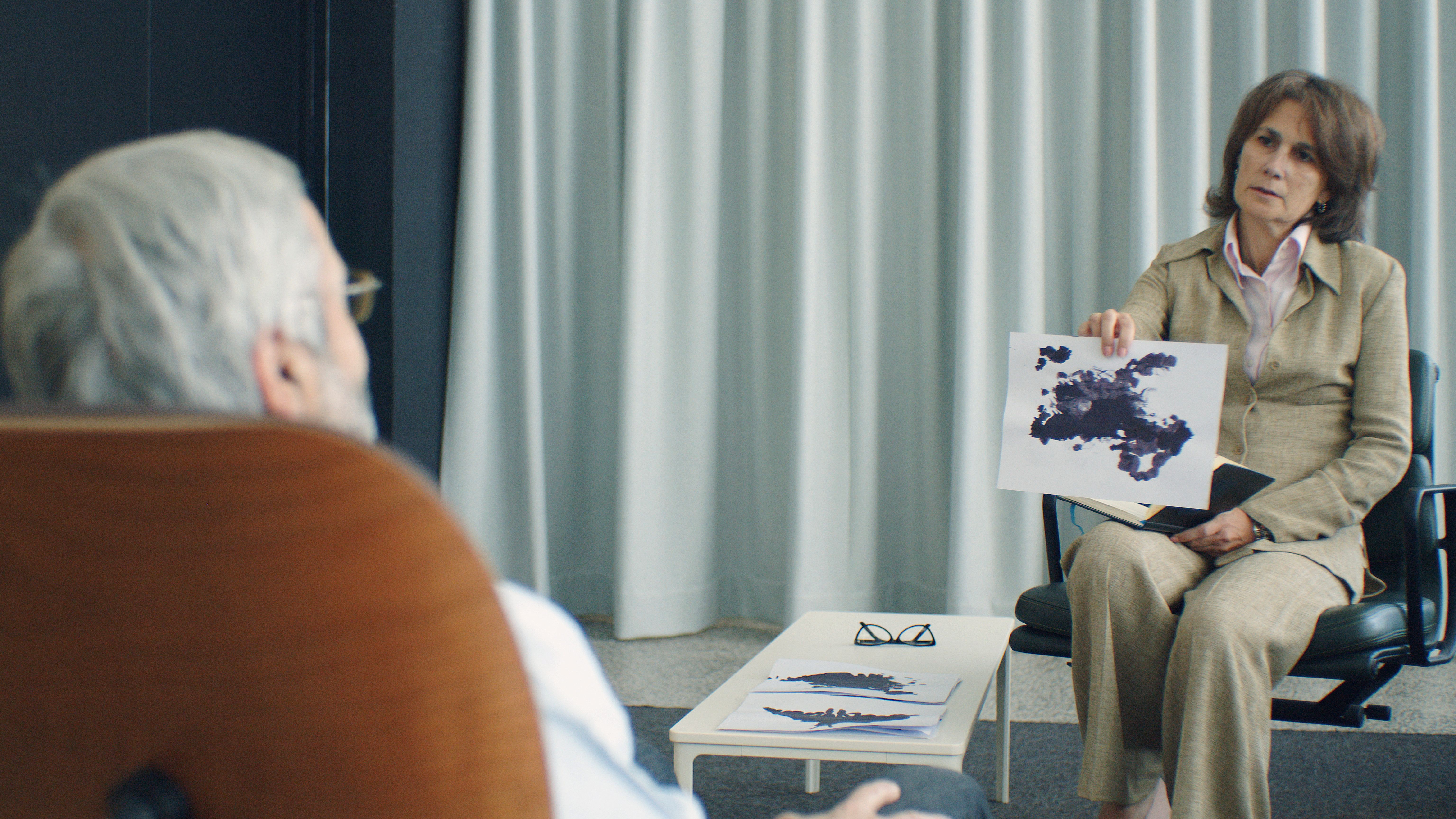
Despite the similarities, there are a number of significant differences between these discourses. The element of seriousness and unambiguity is essential in MD . In MD, there is a particular system of signs, like white coats, medical instruments, ambulances with a cross, etc. The psychotherapists have their specific system of signs like a couch and a tube, often black clothes, a half-empty, uninformative environment (for psychoanalysts), it can be a ward or a room, as well as an ordinary apartment, office or gym for training or sets.
The task of doctors is to correctly diagnose and prescribe treatment, while the task of a psychotherapist is to avoid making diagnoses. The goal of a doctor is to cure the patient, while the goal of a therapist is to raise a client's self-esteem and help him to adapt socially [5, p. 239]. For example, in the novel "The Curse of the Hungarian Cat", client Mr Halston reproaches his therapist Dr Lash for unprofessionalism, confusing the "rules of the game" of medical and psychotherapeutic treatment: "No offence, Doctor, but I'm accustomed to more professionalism when seeing a physician who offers a discrete diagnosis and prescribes a treatment" [I, p. 204]. The psychotherapeutic technique involves improvisation and a change of tactics to work out the problem with words, metaphors, dreams, reminiscences and fantasies, not medications.
Both professions are close in the secrecy of non-disclosure of a disease or problem, but with the written consent of clients, both doctors and psychotherapists sometimes describe their interesting cases in their books. There is a significant difference in the language of these discourses: for doctors of all countries, knowledge of Latin is mandatory, and psychotherapists use ordinary language, but its application requires knowledge of unique strategies and tactics (attachment, detachment, transference, countertransference, interpretation, etc.). "One of the features of the language of medicine is that, along with unique medical terms, there are commonly used words denoting synonymous concepts that are synonymous, for example, stomach and belly, variola and smallpox, morbilli and measles. The success of communication depends on the choice of a particular word (term or common)" [9, p. 17]. Psychotherapists do no use special terms in sessions at all, while doctors use them as a kind of sacred words that have a strong influence on the patient [8]. As we can see, there are strong reasons to separate these discourses. Many of their techniques are connected with only words. Kathleen Warden Ferrara explores the skilful and creative uses of language in the complicated speech event of psychotherapy. It shows personal experience and feelings narrative, jointly constructed metaphorical extensions, strategies of repetition, reconstruction, her paper emphasizes the interactive nature of PD and shows how language is mutually constructed the therapeutic process [10].
Moreover, in the modern practice, when reducing the time for medical examination in Russia, elements of psychoanalyst's language can play an important auxiliary role both for clarifying the causes of the disease and for stabilizing and maintaining the patient's health and behaviour. Therefore, the study of linguistic tactics of psychotherapeutic discourse seems relevant for the training of physicians .
An important difference between MD and PD could be mentioned in the asymmetry of the speech flow between the doctor and the patient and between the therapist and the client. The doctor's patient says little or nothing at all. The therapist expects a stream of consciousness, complaints, and requests from the analyzant. In a typical session, both in the individual set or in a group, the client's speech significantly exceeds that of the therapist. The client and the therapist should interpret the client's dreams, metaphors, and analyze nonverbal language as manifestations of the unconscious. Medicine, as a rule, does not work with the causes of the unconscious, but more often deals with the consequences of mental and physical injuries.
Based on a comparison of crucial elements of discourse, which V.I. Karasik defines as the basis for distinguishing an independent discourse, we can talk about the possibility of separating PD from MD. Analyzing the speech of a psychotherapist, researchers note the metaphorical nature of speech in PD [7], the predominance of emotionality over rationality [8], the high variability of the psychotherapist's speech practices [9], the presence of meditative elements in the speech and its proximity to magical and meditative practices [12; 13]. Using the methodology of analyzing conceptual metaphors, according to Lakoff and M. Johnson, we illustrate the use of a conceptual metaphor in PD integrated into fiction [14].
As mentioned above, the genesis of PD lies in existential discourse, so metaphors here can be both convoluted and expanded, allegorically replacing the client's existential problem (anxiety, fear of death, loss, fear of life, lack of existential meanings, etc.), receive a different emotional content as therapy progress. Since the primary speech genres of psychotherapy are a dialogue and a polylogue, the metaphor sounds, repeated, modified, supplemented and truncated due to its constant variable reproducibility from the mouth of the agent and client of psychotherapy. If we draw an analogy with music, a metaphor is like a leitmotiv, which varies, modulates, sounds in various settings, is polyphonically intertwined with other themes; fragments are cut off from it and begin to live an independent life, it turns into another theme, etc.
III. RESULTS AND DISCUSSIONS
One of the metaphorical concepts that permeates the PD sphere due to dialogue, as the primary genre, is "dispute is war". Starting from the dialogical practices of philosophizing in ancient Greek schools, the principle of dialogue permeates both philosophical and everyday speech. Agon (competition of representatives of different ideologies) is the primary principle of the composition of ancient Greek tragedies [15]. In ancient Greek tragedy, the maximum number of agonists was three: one expressed the views of the generic law themis, the other - the views of the personality nomos, the third was neutral or blind (like King Oedipus). In the agon, the participants exchanged their views. Daily dialogue involves tuning in to another person and talking about common topics that do not have serious ideological differences. Dialogue in PD presupposes the presence of two agonists: the "deluded" client and the therapist, the bearer of truth. During the dialogue, the client should find ways to achieve the truth by changing his perception of the situation. CM, which forms the composition of the dialogues, shows how this process is carried out.
In PD, in a dialogue, the main communicative tactic aim is ensuring the client(s) and the agent (psychotherapist) to exchange judgments, interpretations, description of feelings, thoughts "here and now". The author describes the events during the psychotherapy in "Seven Advanced Lessons in the Therapy of Grief", "That session was less like therapy than a wrestling match. It was the most serious fight we had had" [II, p.113]. "I am already sick of this walking through minefields," the psychotherapist tells the client, who cannot get out of the situation of loss and shows aggression towards him [I, p. 113]. In the psychotherapist's fantasies, a real fight arises when he describes their interaction, "By making contact, emotional contact, by wrestling with her (I speak figuratively, though there were times I felt we were on the brink of a physical struggle), I was proving again and again that the black ooze was a fiction that neither tarred, nor repelled, nor endangered me. Irene clung so firmly to the metaphor that she was convinced each time I approached her rage that I would either abandon her or die"[I, p.113].
In the epigraph to the first chapter of "The Schopenhauer Cure", the author presents the meaning of life by analogy with the struggle; "Every breath we draw wards the death that constantly impinges on us.... Ultimately, death must triumph, for by birth it has already become our lot and it plays with its prey only for a short while before swallowing it up. However, we continue our life with great interest and much solicitude as long as possible, just as we blow out a soap bubble as long and as large as possible, although with the perfect certainty that it will burst" [II, p. 9].
People in Western European culture are accustomed to competition and struggle; they strive to win in a dispute, where they aggressively defend their position, and they talk in disputes in terms of war. The person they are arguing with is perceived as an opponent, antagonist, and the rival. People expose someone's point of view and defend their own. Thus, such a dialogue can be considered as a battle rather than peaceful communication aimed at achieving the truth. A. R. Markin, speaking about Dr. Kurpatov's psychotherapeutic methods, gives an example of the personification of abstract anxiety with concrete images: the enemy, the offender, the Mongol-Tatar hordes [16, p. 104]. Something scary needs to tame, have a cup of tea with him, and talk. In Yalom's "The Curse of the Hungarian Cat", the therapist conducts a conversation session with a giant Cat, which is a metaphor for fear and appears either in patient's dreams or in hallucinations. This psychological novel, with a large amount of incomprehensible, fantastic, includes aspects of magical discourse with a description of elements of Erickson hypnosis, the technique of "reducing" the image of a colossal cat, which eventually becomes smaller and leaves. A Cat in the framework of psychotherapeutic discourse can act as a metaphor for fear, struggle with men [17].
The conceptual metaphor also presupposes the gradual seizure of enemy territory, in the terms of PD – a psychotherapist's territory. Describing the therapeutic process, practitioners use the phrases "to move forward", "to lose his/her rational defenses", "to show resistance". Thus, Irwin Yalom describes the client's behaviour at the end of the session in the novel "Seven Advanced Lessons in the Therapy of Grief", "Sometimes she sat there at the end of the hour glaring and refusing to budge" [I, p. 108].
When planning actions, the therapist uses specific strategies and tactics. Convinced of the weakness of one approach, he chooses another. Emotional intensity, the power of resistance, and aggression of clients contribute to changing the client's condition developing productive dynamics in therapy, reducing the resistance. Resistance is a kind of defense, when the client tries to deny prominent unconscious topics, at the beginning of the therapy, the psychotherapist acts as the leading parental figure, onto whom conflicts with loved ones (the father, first of all) are projected. Then the text of the "therapist = father" becomes the client's inner speech, which gives the last greater confidence in his actions.
J. Lakoff and M. Johnson say that the "dispute" can be much milder, as between two partners in a dance.
I. Yalom describes this process through the conceptual metaphor of "argument is dancing", where there is no winner, where the partners are performers, and the purpose of such interaction is a harmonious and beautiful dance performance. In such a culture, people will discuss their positions in a different, softer way, using different concepts and tactics of dialogue, that is, to think in terms about dance. The character of I.Yalom's novel "Seven Advanced Lessons in the Therapy of Grief" has a dream: "In another (dream – add by I. Sh.), she dances with a wiry young man, who suddenly leaves her on the dance floor. She turns to a mirror and recoils to see her face covered with sagging red skin pockmarked with hideous boils and blood blisters" [I, p. 132]. This conceptual metaphor indicates a good relationship that ended (the heroin's husband died), but simple metaphors "hideous boils" and "blood blisters" say about hidden from the women problems.
The second crucial conceptual metaphor, according to J. Lakoff and M. Johnson is "time is money". It permeates the entire market system of relations that exists in modern society and in psychotherapy. Money is the equivalent of a spent resource (time, effort, knowledge, strength, warmth). In PD, time experiences as productive, wasted, something calculated, invested wisely, saved, etc. Being asked by the therapist about what is happening now, in the story "Double Exposure", the client answers, "Frustrating! Another hundred-fifty-dollar pop and I don't feel better". – "So I failed again today. Took your money and didn't help." [I, p. 157].
In his reminiscences about Philip in "The Schopenhauer Cure", talking with a difficult client, the therapist reproaches himself for not solving the problem, despite the time and money spent on sessions, but his inner voice objects, "Why would Philip continue for three years if he had gotten nothing? Why would he continue to spend all that money for nothing? And God knows Philip hated to spend money?" [II, p. 24]. Arranging for the therapist Dr. Julius to give him a recommendation as a psychotherapist, Philip agrees to the offer to attend Julius' group therapy instead of paying, Philip offers to help the doctor by introducing him to Schopenhauer's philosophy, which should cure the dying therapist. A time resource in the existential therapy is a valuable thing, a short time of life before the news of an imminent death is a very valuable thing. Living in the moment "here and now" is the most useful thing, the goal of therapy and life.
The sequence by which a conceptual metaphor is organized and functions suggests that the mechanisms of one concept work to reveal the unconscious realm, while some aspects are necessarily hidden. People focus on one aspect of the concept (illuminate it), but do not notice, displace other aspects of this concept (obscure it). For example, Magnolia in I. Yalom's novel "Southern Comfort" considers her dream of becoming a teacher has not been fulfilled, although she practically became a teacher for many children of hers. Due to the dominant thought of early death, a person loses his taste for life, becomes depressed, feels that his life is dark, hopeless, that is, symbolically ceases to live. On the contrary, the minute-by-minute emphasis on a high quality of life, despite the verdict, increases the value of life. In the novel "Travels with Paula", Paula speaks of a thought that a priest once told her, "He who has a 'why' can put up with any 'how,'" the priest reframed her suffering. "Your cancer is your cross," he told her." Your suffering is your ministry" [I, p. 21]. By helping others, a person replaces some meanings with others.
I. Yalom also uses the author's metaphor of "life is a cruise." Even though that life will end, it is valuable because of what a person does every moment, that is, the quality of life. In loss therapy, the therapist uses this metaphor, "Don't take an ocean voyage," I advised, "Your reasoning would render the trip joyless. Why invest yourself in anything, why make friends, why take an interest in anyone, if the voyage is to end?" [I, p. 140]. Yalom also associates good relations between therapist and patient in "Double Exposure" with the excitement, "It requires a relationship that has to be well established, that will enable therapist and patient to weather the ensuing storm" [I, p. 196]. So, this metaphor helps as identifying the therapeutic session to a part of life.
Lakoff and Johnson also talk about another systemic quality of the conceptual metaphor as an orientation associated with such oppositions as "TOP – BOTTOM", "inside – outside", "obverse – reverse side", "deep – shallow", "central – peripheral". Such orientation oppositions stem from the physicality of our thinking. The concepts of well-being, happiness, and success are associated with the top, "I feel on top," "she perked up," "they were flying on the wings of joy." Sadness and illness are associated with the bottom: "he lost heart," "illness knocked him down," "the severity of the problems landed him." The indirect characterization of Philip, who came to group therapy for the first time, conveyed by such "low", "diminishing" epithets, elements of an expanded metaphor, "With his smoothly combed reddish hair, skin stretched taut over his cheekbones, wary eyes, and heavy footsteps, Philip looked like a convict being led to the scaffold" [II, p. 95]. Sadness and despondency depress a person, make him smaller, lower his head, and shrink him. Positive emotions straighten a person and make him raise his head, feel his importance, strength, and growth.
Consciousness is connected with the up and the outer world, the unconscious – with the down and the inner space. There is a physical basis under these symbolic meanings: all living things sleep lying down, the disease forces a person to lie down, sleep and healthy animal and a person are awake vertically: they are active, exploring a large territory. Death and illness are linguistically linked to the bottom and health and well-being are linked to the top. A person, who controls the situation, sets the tone, has great knowledge, has power, is on top, a subordinate, incompetent person is on the bottom. Julius recalls his arrogance: how many times he took on more than he could carry, how many times he demanded the impossible from clients, "he had been healer, doctor, priest, and shaman..." [II, p. 123]. The desire to do a lot speaks about the strength of a therapist: to be able to do a lot, you need to set challenging goals for yourself. The surge of energy after therapy is a consequence of improving the condition, raising self-esteem: "One of the major side benefits of leading a group – a fact never stated in the professional literature – is that a potent therapy group often heals the therapist as well as the patients. Though Julius had often experienced personal relief after a meeting, he never was certain of the precise mechanism. Was it simply a result of forgetting himself for ninety minutes, or of the altruistic act of therapy, or of enjoying his own expertise, feeling proud of his abilities, and enjoying the high regard of others? All of the above?" [II, p. 123].
The concept of more is oriented upwards, less – downwards. By the amount of things said during group psychotherapy, one can judge the status and mental health of a person in a group. An increase in income, a decrease in suicide attempts, increases in the number of friends is the top, a decrease is the bottom in "Travelling with Paula": "The number of our "flock," as Paula called this skyrocketed," Yalom writes about the successful therapy process. "New, terror-stricken faces appeared every week or two. Paula took the new members in hand, inviting them to lunch, teaching, charming, and spiritualizing them. Soon we were so large we had to split into two" [I, p. 29]. As you can see Paula here is endowed with the attributes of a guardian angel, with wings, comforting, inspiring, feeding, and making miracles. After the enthusiasm of electronic fans, "Her self-esteem surged. She read and reread her fan mail. She collected: praise, profiles, phone numbers, information" [I, p. 199]. The disclosure of the inner world, stories about oneself and an increase in the amount of information bring the group members closer to the therapist, and the story of a life event increases its significance and awareness, "Stewart has grown noticeably in recent months, more than in the previous three years" [II, p. 336].
From the perspective of society's assessment in Western European culture, people perceive the rational as the best (TOP), the emotional perceive as bad (BOTTON): "the discussion was emotional", "emotional dispute" – in these phrases, emphasizes the uncontrollability, bias of judgments, therefore, their assessment is low, biased. In Western European culture, people believe that they should follow by reason, not emotions, when discussing difficult situations, and rationalization in psychotherapy is considered one of the "mature" defenses. The work on interpreting metaphors in PD is developing of a mechanism for rationalizing complicated feelings, which the client gradually realizes, thanks to the therapist.
Initially, the interpretation of the metaphor of "black ooze" sounds in the psychotherapist's inner speech from the "Seven Advanced Lessons in the Therapy of Grief", "The black ooze metaphor was potent because it was overdetermined: it was a single image that satisfied and expressed several different unconscious dynamics. Grief rage was one important meaning. But there were others: for example, the belief that she was poisonous, contaminated, fatally jinxed." [I, p. 113]. The symbol of ooze also refers to the bottom and, thus, characterizes a negative attitude towards oneself as an unworthy, dangerous person, communication with whom "invites" death.
In I. Yalom's fiction, everything inexplicable is described by elements of magical discourse, which also actively uses metaphors [18]. Thus, most of the fundamental tactics in PD are organized in terms of orientation metaphors. Each spatial metaphor has an internal consistency. Consistency within the overall system allows you to identify the top and the size with the straightness of the body, uplift of mood, breadth of smile, etc., excess. Low, restraint is associated with DOWN, a disadvantage, the epithet "mundane" is a characteristic of low flight and a small-minded mind. Consequently, the author compares DOWN with disadvantage, high – with an excess. Sometimes, the incomprehensible, the intangible is associated with riding: a crane in the sky, a titmouse in the hands.
Conceptual metaphors authors also use as a place of events, actions, occupations (activities) and states. They consider occupation (activity) as a container for actions and other activities that are part of it. The lack of filling forms a space with a negative sign of emptiness. Depression, the lack of meaning that a person wants to fill his life with, is reflected in the metaphor of an empty place, lack of movement: "he fell into depression," "he felt nothing," "she fell into a state of stupor". Metaphors related to limited spaces show that a person perceives the world as outside of it. Each person is separated by the surface of the body from others with an "inside-outside" orientation. Obvious receptacles include rooms and houses. We also interpret the field of our vision as a container, and the visible as the contents of this container: "keep in sight", "is in the centre of my field of vision". Psychologists often identify vision as cognition, and interpret "to see" as "to understand".
It is obvious, that through dialogue, metaphor in therapy serves as the most important source and driving force of personal change. It allows the client to "appropriate" previously unknown meanings or join the understanding of the process. By choosing a metaphor, the patient can interpret it together with the psychotherapist. By transforming a metaphor by the patient, the client and the agent of the psychotherapy use to change the attitude towards it, see other, firstly hidden sides of the event symbolized by it, thereby changing the state. By transforming the patient's mind, the metaphor gains healing power. What may initially be a "dark" and painful for the patient, can transform into something "bright" and constructive, becoming a metaphor for personal rebirth.
The most common approaches used in therapy are working with a metaphor suggested by the patient himself, or working with a metaphor suggested by the therapist. The metaphor expands the boundaries of experience, is able to lead the patient in several directions at once and acquire the properties of reality. At the same time, metaphor is just one of the possible ways of therapy. Patients often express their fears, feelings and attitudes towards themselves and others using metaphorical language . The metaphor works as a bridge between the sense of a problem and reality; it can open access to those meanings that remain wholly closed when using traditional rational methods of helping professions.
Since psychoanalysts know about the connection between metaphorical language and emotional arousal, this activation can serve as an essential mechanism for overcoming a psychologically tricky situation, depression, and apathy. Therefore, in this regard, music and art therapy help clients to get out of a problematic condition more efficiently [19]. Since metaphors are based on synesthesia (separation of sensations), this helps to awaken sensuality and emotionality, which in turn leads to the activation of thinking and improved memory and the disappearance of depression. F. Mathieson, J. Jordan and M. Stubby consider it essential that the language of psychotherapy is built as a complex, self-organizing system that "smoothly unfolds" [20, p. 201]. It is influenced by extralinguistic factors, therefore, it is also vital to determine where, by whom, in what environment, and in what setting psychotherapy takes place.
The method of constructing the metaphors together in the psychotherapy by K. Hill and A. Regan was described with the following algorithm: 1) the primary relationship between the number of metaphors used by the psychotherapist and the patient; 2) repetition, the use of the exact words of the interlocutor during one session; 3) unfolding the content of the metaphor, i.e. the consistent use of different, but conceptually related, metaphors [21]. This algorithm is very similar to the composition of a classical piece of music. Naturally, this algorithm of the artwork helps to influence the client's unconscious movement towards catharsis, clarification of his problems, and a change in the minor key in assessing the situation.
IV. CONCLUSION
Thus, thanks to the analysis of the functioning of the conceptual metaphors in fiction that include PD, it is evident that PD can act as an independent one, since it differs from medical one in several parameters, the primary of which is the conceptual metaphor. In I. Yalom's fiction, along with the author's specific artistic techniques, conceptual metaphor acts as the essential compositional device that reveals the depth of the characters' experiences, feelings and the dynamics of their recovery. Fiction including PD due to inner speech of the author (therapist) can help us to catch some essential information with the help of CM, the signs of which the reader can read and reread.
Not only conceptual metaphors perform structuring thinking functions, but also classical metaphors provide psychotherapy with a number of essential services: changes in attitude to reality as brighter, more benevolent and interesting, help to find greater mutual understanding between the therapist and the client, aesthetic properties of metaphor help a person to become more essential, engaging and interesting for others, convince them of his position, to see all the colours of the world, illuminating the best in it. So, we can divide the functions of classical and CM in PD. The functions of a classical metaphor: 1) The classical metaphor acts as one of the most common ways to describe complex feelings in PD. 2) It performs a suggestive function, acting as an attractor for the therapist's PD techniques. 3) It performs a contact-fixing function, tabooing feelings, forcing the therapist to discuss them. 4) It performs a narrative-forming function, forcing us to look for analogues with other events and archetypes of culture. 5) Transformational: it stimulates positive changes in attitudes towards a taboo subject.
The functions of a conceptual metaphor: 1) CM is a way of conceptualizing and describing various technologies in PD – establishing a setting through an argument, building a constructive dialogue, reflecting the transfer in the relationship to the therapist. 2) It structures information about the patient's world, integrates disparate partial memories. It performs a suggestive function, acting as an attractor for the therapist's techniques. 3) CM performs an informative function: describes the patient's worldview, his values, and attitude towards people. 4) It performs a narrative-forming function, teaches the patient the flow of consciousness, freeing him from the clamps. 5) CM acts as a technique of a dialogue that promotes therapy.
Conflict of Interest
The authors declare no conflict of interest.
Ethical Approval
Not applicable
Data Availability
The datasets used in this study are openly available at [repository link] and the source code is available on GitHub at [GitHub link].
Funding
This work did not receive any external funding.
References
Cite this article
Related Research


Special Issue
Launch a focused special issue to highlight research, emerging trends, and expert insights in your academic field.
