




IntelliPaper
Abstract
This article investigates the roles of animality and forgetfulness in Nietzsche’s On the Uses and Disadvantages of History for Life, commonly known as the Second Untimely Meditation. Nietzsche poetically contrasts human historical consciousness with the unhistorical state of animals, which he associates with forgetfulness, immediacy, and happiness. The study explores how these unhistorical elements—especially forgetfulness—are not failures but active forces essential for life and action. It further examines how Nietzsche’s notions of the historical, unhistorical, and suprahistorical evolve in his later works, linking them to his critique of morality and the development of key concepts like the will to power and the overhuman.
Explore Digital Article Text
I. INTRODUCTION
Animality and forgetfulness are recurring themes in Nietzsche's works and give rise to major reflections: in his early works, animals and forgetfulness play a significant role in his critique of scientific culture, while in his later intellectual phases, these themes become central to his critique of morality. The forgetfulness associated with animals refers to a primordial state that Nietzsche emphasises in contrast to civilisation and modern culture.
In a passage from On the Uses and Disadvantages of History for Life, also known as the Second Untimely Meditation, forgetfulness and animality are portrayed together in a poetic way to characterise an unhistorical state. Here I present an investigation into this image of animals and forgetfulness and its consequences for Nietzsche's philosophy. The main objective is to show how animality and forgetfulness are present in Nietzsche's critiques of scientific culture and, later, morality. Firstly, I intend to highlight the potentialities of animality and forgetfulness, indicated as unhistorical aspects, in the work On the Uses and Disadvantages of History for Life, as well as the relationship between these elements and historical and suprahistorical aspects. Secondly, the study demonstrates how the unhistorical aspects of animality and forgetfulness, as well as the historical and suprahistorical aspects, are developed in Nietzsche's later works, particularly in relation to his criticisms of morality as found in Human, All Too Human, Thus Spoke Zarathustra, Beyond Good and Evil and On the Genealogy of Morals.
II. THE UNHISTORICAL ASPECTS IN ANIMALITY AND FORGETFULNESS AND THEIR RELATION WITH HISTORICAL AND SUPRAHISTORICAL ASPECTS IN THE SECOND UNTIMELY MEDITATION
After publishing The Birth of Tragedy, despite the polemics surrounding this book, Nietzsche planned to write other works. Initially, he intended to continue with the theme of the Greeks, more specifically, the pre-Socratic philosophers, which was the content of his unpublished book entitled Philosophy in the Tragic Age of the Greeks, which was sent to Cosima and Richard Wagner. However, Wagner himself persistently intervened so that this book would not be published and, instead, advised Nietzsche to devote himself to themes of his own time, as he had already begun to do in the text, also unpublished, called Prefaces To Unwritten Works; Nietzsche readily accepted this suggestion and began his plans to write his Untimely Meditations (Janz, 1978, I, p. 532). Nietzsche had initially planned to write thirteen Untimely Meditations (PF 29[163], 1873), but only four of them were actually published.
In the first two Untimely Meditations there is criticism of culture, mainly in David Strauss, Confessor and Writer, but also in On the Uses and Disadvantages of History for Life. The subject of the Second Untimely Meditation changed during his planning, as Nietzsche had initially intended to write a text about truth, but in September 1873 he changed its subject to history (Salaquarda, 1984, p. 5). These reflections on truth can be found in the unpublished book entitled On Truth and Lies in an Extra-Moral Sense, which, despite the change in its central theme, is very much connected with On the Uses and Disadvantages of History for Life, as Anthony Jensen (2016, p. 20) well observes.
Nietzsche was experiencing health problems when he wrote the Second Untimely Meditation, to the extent that a large part of this book was dictated to his friend Gersdoff, who helped him a lot during this difficult period. After the publication of this book, Nietzsche had further difficulties. Salaquarda (1984, p. 7-12) deduces that he went through a crisis in April 1874 and suspects that this crisis was triggered by the moderate criticism he received of this work, mainly from Cosima Wagner and Erwin Rohde. In fact, Nietzsche comments very little on the Second Untimely Meditation and later even takes a certain distance from this work (Brobje, 2004, p. 309-310), but this does not mean that he repudiated this book or that there is a break with the thought contained in it.
If Nietzsche's contemporaries received the Second Untimely Meditation with criticism, in the 20th century this work generated a great impact and influenced studies on various themes, placing it among Nietzsche's other great works. I would like to emphasize here the importance of On the Uses and Disadvantages of History for Life for the reflection on time that took place mainly in phenomenology. Martin Heidegger always maintained an ambiguous relationship with Nietzsche, and this was no different with the Second Untimely Meditation. On the one hand, in Being and Time the division between monumental, antiquarian and critical history is used in section 76 to understand the temporality of Dasein (Heidegger, 1996, p. 358-362/392-397); on the other hand, he criticizes the concept of suprahistorical of the Second Untimely Meditation in the conference The Concept of Time (1992) and other small conceptual issues in his course on this work by Nietzsche in 1938-39. I intend to approach this problem of time in a certain way, but through a reflection on the animality and forgetfulness contained in this work.
The title of the book itself reveals the problems that will be addressed and how the notions of life and time, which also include animality and forgetfulness, are central. In German, the title is: Vom Nutzen und Nachteil der Historie für das Leben. Hollingdale's translation is On the Uses and Disadvantages of History for Life. Some introductory aspects of this title should be highlighted. Firstly, history in the title does not refer to the sequence of events of a people (Geschichte), but to history as a science and discipline (Historie); of course, Nietzsche also addresses the problem of Geschichte in this work, but it is Historie that is taken as the object of analysis in order to know its use and disadvantage for life. It is, therefore, a question of clarifying the dangers that life may encounter as a result of the way history is constructed as a science, as Nietzsche himself recognises in Ecce Homo (EH, Untimely, 1). In this sense, the Second Untimely Meditation deepens his critical view already put forth in The Birth of Tragedy about the theoretical man, which is the fruit of Socratism (BT, 15).
Secondly, and of greater interest to the research proposed here, it is important to emphasise the word "life" present in the title of this work, as life will be the criterion for knowing to what extent history may be of use, and to what extent it may cause disadvantages. The concept of life in Nietzsche's thought has always been very profound, important and central; precisely for this reason, his understanding of life has changed and deepened over the years. However, despite not yet being defined as will to power, as one may see in Thus Spoke Zarathustra (Z II, On Self-Overcoming) and Beyond Good and Evil (BGE, 13), the concept of life encompasses a notion of strength and power that needs to be affirmed and even further strengthened.
In The Birth of Tragedy, the concept of life is addressed when Nietzsche seeks to understand the emergence of tragedy through the chorus. With both Dionysian and Apollonian drives, the chorus generates a psychological state in which the state, society and the difference between men give way to an overpowerful feeling of "unity which leads back to the heart of nature" (BT, 7). This makes the emergence of metaphysical consolation possible, a conception that is directly related to the notion of life: "the metaphysical consolation (...) that life at the bottom of things, in spite of the passing of phenomena, remains indestructibly powerful and pleasurable (...)" (BT, 7). In On the Uses and Disadvantages of History for Life, the conception of life is very close to the one in The Birth of Tragedy, which can be noted when Nietzsche asks who will be at the tribunal of critical history: "it is not justice which here sits in judgment; it is even less mercy which pronounces the verdict: it is life alone, that dark, driving power that insatiably thirsts for itself" (UM II, 3). In both passages, Nietzsche considers life as a power.
This conception of life is central to On the Uses and Disadvantages of History for Life. This is evident in the foreword, where Nietzsche states his objective for the book: "We need it [history], that is to say, for sake of life and action, not so as to turn comfortably away from life and action (...)" (UM II, Foreword). One may see here Nietzsche's affirmative character in the face of life, which clashes, already in his youth with Schopenhauer's thinking, given that the latter bases his ethics on the denial of the will to live. In addition, life is the criterion for knowing how to serve history: "We want to serve history only to the extent that history draw on life: for it is possible to value the study of history to such a degree that life becomes stunted and degenerate" (UM II, Foreword). It is against a degenerate life that Nietzsche aims to determine how history, as a science, should be exercised so that in the future there will be a life connected to culture, what he calls, in The Birth of Tragedy, tragic culture, related to the metaphysical consolation that affirms life (BT, 18).
Although history is a human phenomenon, the criterion for analysing the advantages and disadvantages of history is not humanity nor humanism, but life. One can also see that this reflection on history in this work does not only address human life, but also includes animals. The beginning of the first section of On the Uses and Disadvantages of History for Life describes herd animals in a poetic way. In this passage, the differences between animal and human are emphasised, but not as a way of valuing the human way of life. O the contrary, it shows how human beings suffer much more in the flow of time through their memory than animals, which live in forgetfulness in that same temporal flow:
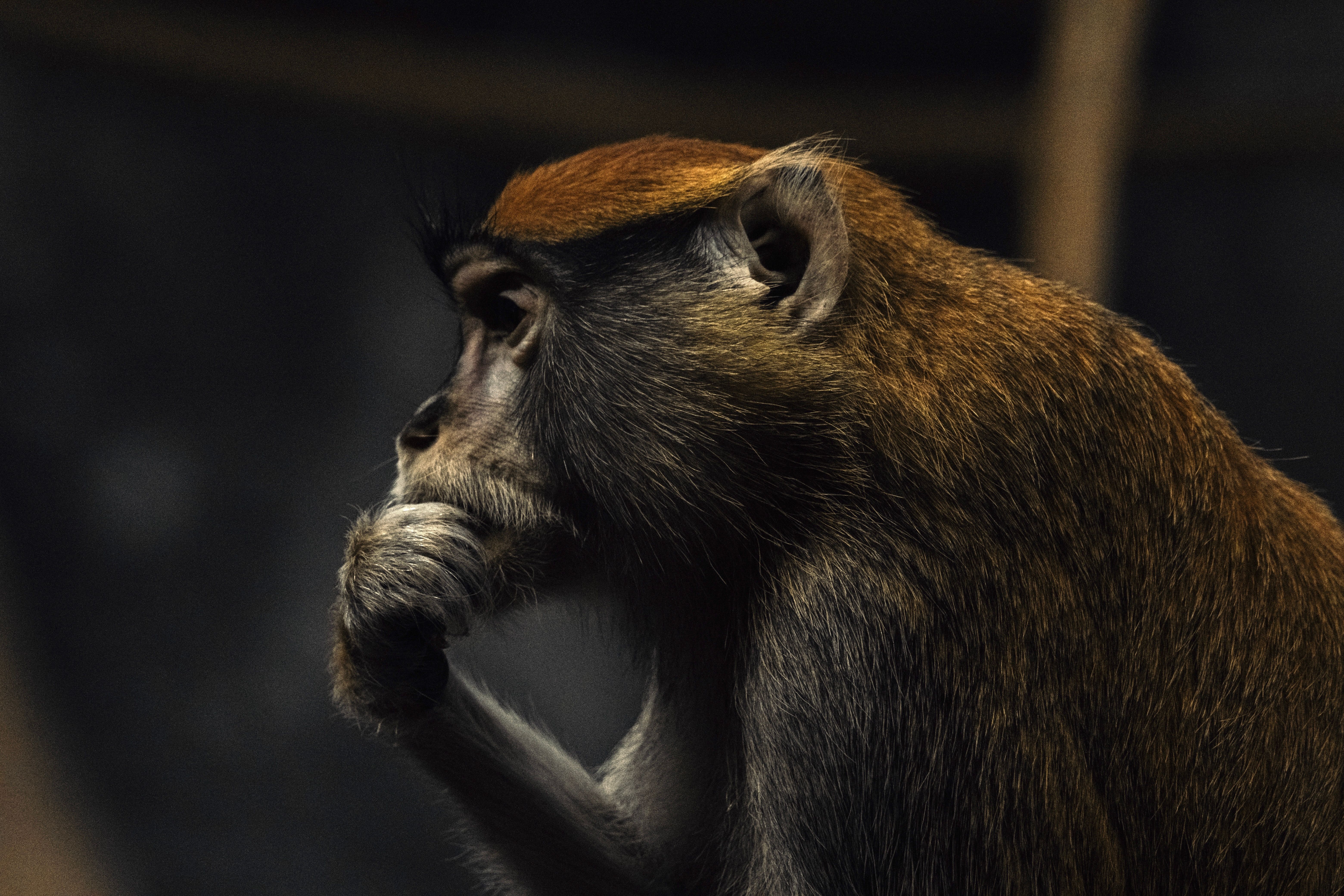
Consider the cattle, grazing as they pass you by: they do not know what is meant by yesterday or today, they leap about, eat, rest, digest, leap about again, and so from morn till night and from day to day, fettered to the moment and its pleasure or displeasure, and thus neither melancholy nor bored. This is a hard sight for man to see; for, though he thinks himself better than the animals because he is human, he cannot help envying them their happiness - what they have, a life neither bored nor painful, is precisely what he wants, yet he cannot have it because he refuses to be like an animal. A human being may well ask an animal: "Why do you not speak to me of your happiness but only stand and gaze at me?" Tha animal would like to answer, and say: "The reason is I always forget what I was going to say' - but then he forgot this answer too, and stayed silent: so that the human being was left wondering. (UM II, 1).
This passage describes the difference between animal and human in the face of time: the animal is in the moment, trapped inside its pleasure and displeasure, without getting bored; on the other hand, man, as much as he may boast of his humanity, looks with envy at this animal happiness that lives in the flow of the moment, because, unlike that, man has a memory that does not allow him to forget: "(...) he [man] also wonders at himself, that he cannot learn to forget but chings relentlessly to the past" (UM II, 1). Because man has memory, he envies animals: "A leaf flutters from the scroll of time, floats away - and suddenly floats back again and falls into the man's lap. Then the man says 'I remember' and envies the animal, who at once forgets and for whom every moment really dies (...)" (UM II, 1).
It is important to emphasise that this passage is a paraphrase of the poem Night Song of a Wandering Shepherd in Asia by Giacomo Leopardi, a pessimistic Italian poet whom Nietzsche knew, admired and read through Hamerling's translation (Bollnow, 1997, p.66-68 and Brusotti, 1997, p. 325). For Leopardi, human beings seek happiness, but nature does not seek to satisfy human beings; it simply preserves itself with a certain indifference towards anyone. Amidst of suffering and inevitable death, in Leopardi's poems, man complains to nature and, in the case of this particular poem, he envies the animals not only for being free from pain, but also for forgetting, for being in the moment and, above all, for the fact that boredom does not affect them. Human pleasure is in the past or the future and not in the present, so true pleasure cannot be attained because man has lost happiness in the present, only boredom and suffering remaining. Could there be a return to the happiness of the moment? This is something almost impossible, but which, to a certain extent, for both Nietzsche and Leopardi, is possible through philosophy; the latter by means of ultra-philosophy (Bini, 1997), while the former by means of a philosophy which will be deeply reflected on here.
The notion that animals are in the moment also appears in the great philosophical reference for Nietzsche at the time he wrote On the Uses and Disadvantages of History for Life, namely Schopenhauer. Some scholars (Brusotti, 1997, p.325, Müller-Lauter, 1999, p. 192, Salaquarda, 1984, p. 27) note that Nietzsche recovers a series of Schopenhauerian images of animals in this passage: in section 38 of the second volume of The World as Will and Representation, Schopenhauer considers that the animal is restricted to the present because it does not have knowledge by reflection and is limited to intuition (Schopenhauer, 1966, p. 439-446); and in section 153 of Parerga and Paralipomena, he also states that due to the lack of reflection, the animal does not feel pleasure and pain through memory, but it only feels these feelings in the present moment (Schopenhauer, 2000, p. 294), in such a way that the animal suffers less, although it also has less pleasure than the human being (Idem, p. 296). One notes a very strong relationship between Schopenhauer and Leopardi, especially in this last quote, which contributes to a better understanding of the image of the animals at the beginning of the Second Untimely Meditation.
This state of the animal that lives in the fluidity of the moment with its immediate pleasures and pains is characterized as forgetfulness by Nietzsche. The animal forgets and lives within this naive fluidity, whereas the human being has memory, so that it is no longer possible to live this happiness of the animal. However, it must be emphasised, as Jensen (2016, p. 50) rightly points out, that for Nietzsche forgetfulness is not a failure of memory, nor is it a lack thereof nor a weakness in an organism's ability to remember. Forgetfulness is an active force in the living organism, just like memory. Although Nietzsche explores this active aspect of forgetfulness in On the Genealogy of Morals (GM II, 1), in On the Uses and Disadvantages of History for Life it may be noted through the relationship between life and action: "Forgetting is essential to action of any kind, just as not only light but darkness too is essential for the life of everything organic" (UM II, 1). Only with forgetfulness is it possible to act and live, just as it is possible to be happy like the animals. However, it would be incorrect to consider that the animal has no memory and is only forgetfulness, just as it is problematic to consider that the human being is only memory and does not forget, because, as it says in this last quote, opposites (light and darkness) are necessary in life, so both forgetfulness and memory are necessary.
Thus, Nietzsche deepens the characterisation of this state of forgetfulness of the animal as unhistorical: "Thus the animal lives unhistorically: for it is contained in the present (...); it does not know how to dissimulate, it conceals nothing and at every instant appears wholly as what it is; it can therefore never be anything but honest" (UM II, 1). On the other hand, when man thinks, compares and discriminates, he makes it possible for historical meaning to emerge: "Thus only through the power of employing the past for the purposes of life and of again introducing into history that which has been done and is gone - did man become man" (UM II, 1). Because of this, the child who plays with the past and the future, "all too soon it will be called out of its state of forgetfulness. Then it will learn to understand the phrase 'it was': that password which gives conflict, suffering" (UM II, 1). This is a cultural construction of memory in man that separates him from the animal happiness present in forgetfulness. Therefore, the state of man is completely different from that of the animal, because he "braces himself against the great and ever greater pressure of what is past: it pushes him down or bends him sideways, it encumbers his steps as a dark, invisible burden (...). That is why it affects him like a vision of a lost paradise to see the herds grazing (...)" (UM II, 1). Man is a historical being, and the disadvantage thereof is the loss of happiness present in the forgetfulness of animals.
Nietzsche relates this happiness of the animal to cynicism: "If happiness, if reaching out for new happiness, is in any sense what fetters living creatures to life and make them go on living, then perhaps no philosopher is more justified than the
Cynic" (UM II, 1). In ancient Greece, the Cynics, whose main representative is Diogenes of Sinope, considered that happiness lies in living in accordance with nature and without the desires created by society such as wealth, power and fame; cynicism preaches a simple life and against social conventions. Because of this, one of the hypotheses for these philosophers being called Cynics (κυνικός) is related to the fact that the members of this school behaved like dogs (κύων). Diogenes himself agreed with this description of his school to the point of sometimes behaving as if he were a dog. Nietzsche knows about this relationship between cynicism and animality, which is why he then states: "For the happiness of the animal, as the perfect Cynic, is the living proof of the rightness of Cynicism" (UM II, 1).
In analysing animal happiness, Nietzsche distances himself from Schopenhauer's reflection in section 153 of Parerga and Paralipomena, as I briefly pointed out above, namely that the animal suffers less, but has less pleasure than man. This is because, according to Nietzsche, the animal not only has less pain, but is also happier than man, given that "the smallest happiness, if only it is present uninterruptedly and make happy, is incomparably more happiness than the greatest happiness that comes only as an episode, as it were a piece of waywardness or folly, in a continuum of joylessness, desire and privation" (UM II, 1). With regard to forgetfulness, happiness is not only greater among ones who forget, but forgetfulness itself is a condition for happiness:
In the case of the smallest or of the greatest happiness, however, it is always the same thing that makes happiness happiness: the ability to forget or, expressed in more scholarly fashion, the capacity to feel unhistorically during its duration. He who cannot sink down on the threshold of the moment and forget all the past who cannot stand balanced like a goddess of victory without growing dizzy and afraid, will never know what happiness is - worse, he will never do anything to make others happy (UM II, 1).
As I have already explained, forgetfulness is not an incapacity or failure in a faculty, but is an active force of life and action, so that, without forgetfulness it is not possible to act nor to live. Between memory and forgetfulness, Nietzsche prioritises the necessity of forgetting for life and happiness: "Thus: it is possible to live almost without memory, and to live happily moreover, as the animal demonstrates; but it is altogether impossible to live at all without forgetting" (UM II, 1).
It is from this perspective of forgetfulness, present in the animal's happiness, that Nietzsche poses the problem of his work: "Or, to express my theme even more simply: there is a degree of sleeplessness, of rumination, of the historical sense, which is harmful and ultimately fatal to the living thing, whether this living thing be a man or a people or a culture" (UM II, 1). This does not mean that Nietzsche advocates the end of memory in human beings or in any living being. In order for an individual or a people to be happy, it is as necessary "to forget at the right time as to remember at the right time" and "the possession of a powerful instinct for sensing when it is necessary to feel historically and when unhistorically" (UM II, 1). The balance between memory and forgetfulness, history and unhistory, is necessary for life and culture: "This, precisely, is the proposition the reader is invited to meditate upon: the unhistorical and historical are necessary in equal measure for the health of an individual, of a people and of a culture" (UM II, 1). This balance between forgetting and remembering contains a relationship of justice because, according to Vanessa Lemm (2010, p. 170), what characterises the order of justice by life is that it establishes a 'natural relationship' between knowledge (memory and history) and action (forgetfulness and the unhistorical).
Therefore, it is through forgetfulness, present in the happiness of the animal, that Nietzsche questions the excessive value given to history, in such a way that the unhistorical is also necessary for life and culture. In order to know how to forget and to remember to the right extent, Nietzsche considers it necessary to recognise "how great the plastic power of a man, a people, a culture is: I mean by plastic power the capacity to develop out of oneself in one's own way, to transform and incorporate into oneself what is past and foreign, to heal wounds, to replace what has been lost, to recreate broken moulds" (UM II, 1). This plastic force has an interrelationship with life because it is present in the ability to digest the past, allowing us to forget and remember at the same time. As Vanessa Lemm (2010, p. 170) observes, history in the service of life means history as a form of life. And, as I briefly noted, since The Birth of Tragedy, life and art have been linked, so that Nietzsche positions himself here against 'historical objectivity' and in favour of an artistic expression of history (see also Lemm, 2010, p. 173-174).
In addition to the concepts of history and unhistory, Nietzsche introduces a third concept: the suprahistory. However, with regard to this latter concept, two points need to be emphasised. Firstly, in the first drafts of the Second Untimely Meditation, Nietzsche does not use this term, introducing it only in the final version (Jensen, 2016, p. 54). Secondly, as Jensen also noted (2016, p. 53), there is ambivalence in the definition of the concept of suprahistory, and even inconsistencies (Idem, p. 57), given that the book contains two different definitions of this concept. In the first section, inspired by Niebuhr, Nietzsche associates the suprahistorical with the unhistorical: "If, in sufficient number of case, one could scent out and retrospectively breathe this unhistorical atmosphere within which every great historical event has taken place, he might, as a percipient being, raise himself to a suprahistorical vantage point (...)" (UM II, 1). In this way, the suprahistorical man considers the past and the present to be one and the same, eternally identical (UM II, 1). In the last section, Nietzsche separates the unhistorical from the suprahistorical, defining the former as "the art and power of forgetting and of enclosing oneself within a bounded horizon" (UM II, 10). On the other hand, the suprahistorical is defined as "the powers which lead the eye away from becoming towards that which bestows upon existence the character of the eternal and stable, towards art and religion" (UM II, 10). Thus, in the first section, the suprahistorical is associated with the unhistorical, while in the last section, the suprahistorical is characterised as a leading away of the eye from becoming with the aim of noticing eternity through art and religion.
Thus, both the suprahistorical and the unhistorical are considered antidotes to cure the historical disease: "the unhistorical and the suprahistorical are the natural antidotes to the stifling of life by the historical, by the malady of history" (UM II, 10). Nietzsche considers that the notion of the suprahistorical is a way of overcoming the excessive historical consideration of his time. What is not clear is how the suprahistorical is related to the unhistorical. However, regardless of this ambiguous and unclear relationship between the suprahistorical and the unhistorical, it is clear that Nietzsche uses the forgetfulness present in animal happiness, in other words, the unhistorical, as a form of 'remedy' against the 'historical disease'. The ability to forget, present in animals, is a unhistorical means of limiting the domains of historical meaning.
Later in the book, Nietzsche discusses the three species of history: the monumental history, in which the man of action sees in history the great men and deeds as examples to be reproduced; the antiquarian history, in which man cultivates through history facts of ancestors that need to be preserved; and the critical history, in which man, who wants liberation, uses history to dissolve and judge the past. I do not intend to delve into the studies and debates on these three species of history, but only to emphasise that I agree with Jensen's point of view (2016, p. 73-74) that there is no evidence that Nietzsche prefers one among these three species of history, given that all three forms of history contain uses and disadvantages. This becomes clear at the beginning of sections 4 and 5, in which he points out the uses (UM II, 4) and disadvantages (UM II, 5) of history, which may include these three species of history.
I want to emphasise here Nietzsche's thesis about the need for unhistorical elements in order to affirm life in the face of history, in other words, the state of forgetfulness and animal happiness.
This is not an anti-historical position, because Nietzsche points out the importance of history for life. He does not advocate doing away with historical memory and returning entirely to animal happiness, because human beings are historical beings. On the other hand, I do not think that the unhistorical elements is simply a regulatory ideal, and even less that Nietzsche leaves aside the temptation to return to nature, as Nasser thinks (2017, p. 82), since this possibility is also present in the experience of the tragic in The Birth of Tragedy (BT, 7).
However, how can the unhistorical aspects present in forgetfulness and animality of the beginning of the Second Untimely Meditation be used to affirm life? In this book, the problem posed by Nietzsche consists of the extent to which memory and historical science might harm life, since the fact that "science is beginning to dominate life" (UM II, 7) calls into question the extent to which this kind of life has value. Nietzsche posits the possibility of an unhistorical culture being rich and alive (UM II, 8), as it occurred in Ancient Greece, given that "(...) Greeks - during the period of their greatest strength kept a tenacious hold on their unhistorical sense" (UM II, 4). This period of great strength refers to the tragic age of the Greeks, when metaphysical consolation made it possible to affirm life in its strongest and most mysterious form (BT, 7). The possibility of using unhistorical and historical forces (forgetfulness and memory, respectively) at the same time to affirm life will become a horizon that Nietzsche will reflect on later, even if he does not use these exact concepts. So how does the problem of forgetfulness and animality present in the Second Untimely Meditation develop in Nietzschean philosophy?
III. ANIMALITY AND FORGETFULNESS IN THE DEVELOPMENT OF NIETZSCHE'S PHILOSOPHY
With regard to this question from the last topic, Müller-Lauter (1999, p. 30) points out that with the development of Nietzsche's philosophy, the suprahistorical aspect is abandoned due to his critique of metaphysics, and the unhistorical aspects, the force of forgetting of animal happiness, will be emphasised as useful to life. In fact, from a position opposed to metaphysics, it would not be possible to valorise the suprahistorical aspects, whose aim is a contemplation of eternity, whereas the unhistorical aspects are reinterpreted and positioned as a means of affirming life and instincts. However, as I pointed out above, there is an ambiguity in the concept of the suprahistorical, since it has both a metaphysical sense of contemplating the eternal, and another sense that is associated with a breath of unhistorical aspects that manages to equalise past and present. I will show here how the non-metaphysical sense of suprahistorical and unhistorical aspects may be noted in the development of Nietzsche's philosophy through his reflection on forgetfulness and animality.
In order to do this, it is important to first emphasise the changes in Nietzsche's philosophy over the course of his works. The Birth of Tragedy and Untimely Meditations are categorised as belonging to the first phase of his thought, marked by a strong influence from the metaphysical notions of Schopenhauer and Wagner. For this reason, in the Second Untimely Meditation, there is a metaphysical sense of the suprahistorical aspect. The second phase of his philosophy, which includes Human, All Too Human up to The Gay Science, is characterised by a break with Schopenhauer and Wagner, and begins to criticise metaphysics and morality. Therefore, a metaphysical conception of the suprahistorical is abandoned, and animality and forgetfulness (unhistorical aspects) are analysed within the context of the critique of morality. Finally, in the third phase of his thought, Nietzsche introduces new concepts for understanding life, morality and the possibilities of overcoming human beings, such as the will to power, the eternal recurrence, and the overhuman, and consequently animality and forgetfulness are understood through these new conceptions. The suprahistorical and unhistorical conceptions originally belong to the first phase of his thinking. However, my aim is to demonstrate how these conceptions can be noted in these two subsequent periods of Nietzsche's intellectual trajectory, by analysing the notions of animality and forgetfulness.
In Human, All Too Human, a work that marks a break with Wagner and Schopenhauer, Nietzsche criticises metaphysics in several passages. In one of these passages, he emphasises the lack of historical sense in philosophers because they take current man as an eternal truth (HH, 2). Therefore, it can be seen that, in this work, history is valorised in order to unmask the eternal truths of metaphysics, which discards that metaphysical sense of the suprahistorical aspect. Furthermore, the unhistorical aspects present in On the Uses and Disadvantages of History for Life may be seen in the critique of morality that Nietzsche begins to elaborate in Human, All Too Human. In analysing the origin of moral sentiments by means of the self-preservation of life, Nietzsche questions the distinction between freedom and necessity, as well as the moral judgement of human actions, which leads to the conclusion that human actions are unaccountable and innocent (HH, 107). This innocence is characterised as a state in which man is in nature without praise or censure (HH, 34), like a child (HH, 124), that is, similar to the unhistorical state of the Second Untimely Meditation. In an aphorism, Nietzsche asks himself about the animality of man: "Error has transformed animals into men; is truth perhaps capable of changing man back into an animal?" (HH, 519). There is, therefore, in the critique of morality, a reflection on the possibility of returning to an animal state, just as it is characterized in the unhistorical aspects present in the Second Untimely Meditation.
Later, in On the Genealogy of Morals, Nietzsche goes more deeply into these aspects of animality and forgetfulness and relates them to the problem of morality. In the second dissertation of this work, Nietzsche states: "To breed an animal with the prerogative to promise – is that not precisely the paradoxical task which nature has set herself with regard to humankind?" (GM II, 1). Therefore, in considering the human as an animal capable of making promises, he returns to the question of forgetfulness and of memory. The former is an active force that performs a "psychic digestion" that is necessary for having new experiences, and the latter is also an active force that transforms a passive inability to be rid of an impression into an active desire not let go, a desire to keep on desiring what has been. Humans, as animals that make promises, develop memory of will in order to become reliable and constant, which is necessary for being able to answer for themselves and for the future. With memory, meaning is given to the morality of customs (ordering action in a habitual way according to certain established norms) and conscience (Gewissen) is born. Along with this moralization of the human, a perspective of time is also formed through the quantification of the moment and the formation of the memory of the will.
However, "How do you give a memory to the animal, man?" (GM II, 3). The answer lies in mnemotechnics whose principle consists of "only something that continues to hurt stays in the memory" (GM II, 3). This memory formation occurs by means of an act of cruelty by humans towards their animality. In Beyond Good and Evil, he states: "Almost everything we call 'higher culture' is based on the spiritualization of cruelty, on its becoming more profound: this is my proposition. That 'savage animal' has not really been 'mortified'; it lives and flourishes, it has merely become - divine" (BGE, 229). Thus, humans are wild animals that have transformed themselves: they have been domesticated by means of repressing the most vital instincts of animality, thus generating a new reality. However, humans lose their connection with the moment and start to self-regulate through fixed and isolated aspects of the fluidity of time, so they distinguish past, present and future, but they lose the experience of the moment. Using concepts from On the Uses and Disadvantages of History for Life, it may be said that humans have become historical beings to the extent that a memory of the will has been formed in them, leading to a decline the unhistorical aspects, such as forgetfulness and animality, but these aspects are necessary for life.
The formation of the human being as a historical being is related to the memory of the will and, as a consequence, to the formation of morality in the human being. On the other hand, Nietzsche's critique of morality emphasises the importance of forgetfulness and animality, that is, of the unhistorical aspects, for the creation of a new form of life. In Thus Spoke Zarathustra, when approaching the transformations of values in On the Three Transformations, Nietzsche illustrates the last transformation through the child who, unlike the lion and the camel, is capable of creating and overcoming morality in a state of innocence and forgetting: "(...) what can the child yet do that even the lion could not do? Innocence the child is and forgetting, a beginning anew, a play, a self-propelling wheel, a first movement, a sacred Yea-saying" (AFZ I, On the Three Transformations). In On the Genealogy of Morals, Nietzsche notes that resentment does not poison the noble man because of his strong and full nature "that is the sign of strong, rounded natures with a superabundance of a power which is flexible, formative, healing and can make one forget" (GM I, 10). He also gives the example of Mirabeau "who had no recall for the insults and slights directed at him and who could not forgive, simply because he - forgot" (GM I, 10). In Beyond Good and Evil, there is the famous passage about forgetfulness quoted in the film Eternal Sunshine of the Spotless Mind: "Blessed are the forgetful: for they get over their stupidities, too" (BGE, 217).
Therefore, forgetfulness, a unhistorical aspect, is a force capable of avoiding resentment and even overcoming morality. In the same way, animal instincts are forces capable of expanding power: "Every animal, including the bête philosophe, instinctively strives for an optimum of favourable conditions in which to fully release his power and achieve his maximum of power-sensation" (GM III, 7). How does Nietzschean philosophy recover aspects of forgetfulness and animality? How does one recover unhistorical aspects in a historical human condition?
In the Second Untimely Meditation, the reinstatement of unhistorical aspects in the history means an overcoming of historical culture, maintaining a balance between historical and unhistorical aspects, which leads to one of the conceptualisations of what is suprahistorical: the breath of unhistorical aspects to bring past and present together. Through these concepts of the Second Untimely Meditation, it is also possible to interpret the place occupied by forgetfulness and animality in Nietzsche's critique of morality. Since it is not a case of returning completely to the state of forgetfulness and animality, but of being able to overcome the human and achieve the overhuman (Übermensch) through these potentialities present in this state.
It is through Zarathustra that Nietzsche teaches the overhuman: "I teach to you the Overhuman. The human is something that shall be overcome. What have you done to overcome it?" (Z I, prologue, 3). The overhuman is not an ideal, nor can it be a new evolved species of man, but is "the type that has turned out best, by contrast with 'modern' men, 'good' men, Christians and other nihilists" (EH, Why I Write Such Good Books, 1). In short, nihilism is the perception of meaninglessness, and morality was seen as an antidote through its assertion of absolute value (PF 5[71], 1886-1887). However, in Modernity, the perceived need for this antidote has diminished, reflecting a broader devaluation of all values (PF 9[35], 1887). The overcoming of nihilism by the overhuman means a new sense of the earth (Z I, prologue, 3). The overhuman is a projection of the possibility of the elevation of the human through the overcoming of morality. It is a new way of life that would emerge in a similar way to how the animal-human developed their culture, but in the opposite direction, because Nietzsche's philosophy questions cultural aspects in its critique of morality. The overcoming of the human being through the overhuman does not exclude animality, much less life, just as it is possible to interpret that a suprahistorical conception does not exclude the unhistorical aspects, that is, forgetfulness and animality.
For Nietzsche, culture and morality are within the very dynamics of life, and this includes animal life. From Thus Spoke Zarathustra onwards, life is conceptualised through the will to power (AFZ II, On Self-Overcoming). The will to power is not a subject or a substance, but a relation of force and domination that seeks to grow in the face of existence, to expand and dominate. In book V of
The Gay Science, Nietzsche questions self-conservation as the fundamental instinct and proposes that life, as will to power, is constituted by relations of struggle: "The struggle for survival is only an exception, a temporary restriction of the will to life; the great and small struggle revolves everywhere around preponderance, around growth and expansion, around power and in accordance with the will to power, which is simply the will to life" (GS, 349). Is there a strong relation between memory and forgetfulness in life? How are forgetfulness, memory, and the will to power connected?
Forgetfulness and memory are part of life, therefore, there is a relation between them that alludes to the connection between unhistorical and historical elements discussed in the Second Untimely Meditation. In her book Nietzsche's Animal Philosophy: culture, politics, and the animality of the human being, Vanessa Lemm investigates culture through life, but also moves away from an identification of will to power with memory. Instead, she argues that "the notion of the will to power reflects an antagonism between memory and forgetfulness and can be reformulated through this antagonism" (Lemm, 2009, p.2). With this, she investigates the antagonism between culture and animality by schematizing a relationship between the animal, the human and the overhuman: "speaking schematically, one can say that forgetfulness in Nietzsche's discourse belongs to the animal, memory to the human, and promise to the overhuman" (Idem, ibidem). Thus, it is possible to draw a parallel between the above scheme and the problem of history present in the Second Untimely Meditation as follows: unhistorical, forgetfulness and animal; historical, memory and human; suprahistorical, promise, overhuman. The suprahistorical aspect in this parallel should not be understood in the metaphysical sense of contemplating eternity , but rather in relation to unhistorical aspects. Just as the overhuman is not an ideal, but a re-signification of the vital forces of the human animal, the suprahistorical is also an overcoming of the historical culture that recovers to unhistorical aspects.
I distance myself from those who consider the animal in Nietzsche as something that has been overcome (Conant, 2001, p. 224-225; Conway, 1997, p. 13-17), but, on the other hand, I do not consider that there is a complete return to animality. As Vanessa Lemm thinks, this return to animality is more a cultivation of our animality (Idem, p. 4), because "the forgetfulness of the animal is indispensable to the promise of an overhuman future" (Lemm, 2004, p. 220). For Nietzsche, it is not about going back to being animals, but rather that overcoming the human implies overcoming morality and a change in the relationship with time which places the animal and forgetfulness as an opening horizon towards thinking and experiencing the overhuman.
Therefore, just as in the work On the Uses and Disadvantages of History for Life, the past keeps tormenting the human, so in Thus Spoke Zarathustra the will is disconnected from the past: "'It was': that is the will's gnashing of teeth and loneliest sorrow (...) Backwards the will is unable to will; that it cannot break time and time's desire – that is the will's loneliest sorrow" (Z II, On Redemption). Karl Löwith, when addressing the passage from On the Uses and Disadvantages of History for Life about animals and forgetfulness, notes that the human being is never in the present, because they anticipate each moment that will be remembered as one that has passed, so the human cannot forget, and therefore "what at first appears to be only a pre-human deficiency, the unhistorical life of the animal and child, proves itself – from the superhuman viewpoint of Zarathustra- to be positive perfection" (Löwith, 1996, p. 132). Therefore, the unhistorical aspects, which correspond to the pre-human life present in animality and forgetfulness, are a positive perfection from the point of view of the overhuman pointed out by Zarathustra.
The ability of the suprahistorical perspective to reinterpret and affirm unhistorical aspects becomes manifest in the overcoming of morality present in the conception of the overhuman developed in Nietzsche's works of maturity. He states in a fragment: "164. Even as animals we should be perfect – said Zarathustra" (PF 5 [1] de 1883). In another fragment, Nietzsche asks himself what transformations are to come from the teaching that there is no God and no moral law, and states: "dass wir thiere sind? dass unser Leben vorbeigeht? dass wir unverantwortlich sind? der Weise und das Thier werden sich nähern und einen neuen Typus ergeben!" (PF 11[54], 1881). This image of the wise man is related to the suprahistorical perspective that breathes unhistorical aspects (UM II, 1). It is about getting closer to the animal in order to form a new type: the overhuman. Animality and forgetfulness (unhistorical elements) are forces of life that are necessary both for overcoming historical culture through the suprahistorical point of view present in On the Uses and Disadvantages of History for Life, and also, from Thus Spoke Zarathustra onwards, for overcoming moralised human beings in order to reach the overhuman. One may, therefore, note a development of the reflection on animality and forgetfulness made in the Second Untimely Meditation.
IV. FINAL CONSIDERATIONS
The animals and forgetfulness poetically represented at the beginning of the Second Untimely Meditation form what Nietzsche understands as the unhistorical aspects necessary for life. Reflecting on the historical culture, Nietzsche notes the potentiality of the unhistorical aspects present in animality and forgetfulness, which are capable of strengthening life and culture. On the other hand, suprahistorical aspects are related both to metaphysical notions (contemplation of eternity) and to a resumption of what he characterised as unhistorical (breathing unhistorical aspects). Both unhistorical and suprahistorical aspects are considered antidotes to the historical disease present in modern culture. Thus, considerations about animality and forgetfulness are relevant to the cultural change designed by Nietzsche in this period of his intellectual development. The unhistorical aspects indicate a necessary condition for life, opposing the historical memory that is overvalued in modern scientific culture. In this first intellectual phase, Nietzsche already advocates for an affirmation of life in opposition to modern culture.
As I briefly emphasised earlier, for personal reasons, Nietzsche ended up moving away from the Second Untimely Meditation, which may explain why he did not later use terms such as historical culture and unhistorical and suprahistorical aspects. However, by analysing the reflections on animality and forgetfulness made after this work, it is possible to interpret the place where these terms would be in the development of Nietzsche's philosophy. Through the concept of the will to power, Nietzsche deepens the thesis that forgetfulness is an active force, just as animality forms the base of vital instincts that must be affirmed. Furthermore, the concept of the overhuman is linked to the thesis that forgetfulness is a force capable of overcoming resentment and morality, while animal instincts are forces capable of expanding power. In this sense, the concept of the overhuman proposes a new configuration of forgetfulness and animality - unhistorical aspects of life.
Nietzsche's critique of the historical culture is related to his later critique of morality, as animality and forgetfulness (unhistorical aspects) are potentialities for affirming life. With regard to the suprahistorical aspects, it is possible to affirm that, in the Second Untimely Meditation, they relate to the unhistorical (UM II, 1) and metaphysical (UM II, 10) aspects at the same time. Thus, in the development of Nietzsche's philosophy, the metaphysical sense of the suprahistorical aspects is left aside, but the suprahistorical aspects related to the unhistorical ones may be noticed in concepts and reflections on the overcoming morality, especially in the concept of overhuman. This study contributes to understanding the unhistorical, historical and suprahistorical aspects of animality and forgetfulness in On the Uses and Disadvantages of History for Life, as well as to pointing out how these concepts may be present later. In this sense, the thesis presented in this article shows the continuity of these concepts from the early phase of Nietzsche's thought into his later works, relating them to fundamental concepts formulated subsequently, such as the will to power and the overhuman.
Conflict of Interest
The authors declare no conflict of interest.
Ethical Approval
Not applicable
Data Availability
The datasets used in this study are openly available at [repository link] and the source code is available on GitHub at [GitHub link].
Funding
This work did not receive any external funding.
References
Cite this article
Related Research


Special Issue
Launch a focused special issue to highlight research, emerging trends, and expert insights in your academic field.
