



IntelliPaper
Abstract
On the 13th of November 2015, Dr Chris Sarra delivered a groundbreaking lecture to the Australian Senate on Indigenous policy. In that lecture, Sarra tells us how, the then Prime Minister, Malcom Turnbull had asked him to list three things the government could do to make a difference in the Indigenous policy space. Sarra admits here that he was somewhat distracted by the fact that it was the day of the NRL Grand Finals and his beloved Cowboys were playing the Broncos, but he did promise to get back to the PM, and he did so with the following three points, which have since become known as the ‘Sarra Trilogy’. They are
Acknowledge, embrace and celebrate the humanity of Indigenous Australians.
Bring us policy approaches that nurture hope and optimism rather than entrench despair.
Do things with us, not to us!
In what follows, we first give a short summary of our philosophical and methodological orientation. Then we will proceed with a commentary on each of the elements of Dr Sarra’s Trilogy, which we will argue constitutes a relational and policy manifesto that marks a vital and necessary departure from current policy settings.
Explore Digital Article Text
INTRODUCTION
On the 13th of November 2015, Dr Chris Sarra delivered a groundbreaking lecture to the Australian Senate on Indigenous policy. In that lecture, Sarra tells us how, the then Prime Minister, Malcom Turnbull had asked him to list three things the government could do to make a difference in the Indigenous policy space. Sarra admits here that he was somewhat distracted by the fact that it was the day of the NRL Grand Finals and his beloved Cowboys were playing the Broncos, but he did promise to get back to the PM, and he did so with the following three points, which have since become known as the ‘Sarra Trilogy’. They are
Acknowledge, embrace and celebrate the humanity of Indigenous Australians.\
Bring us policy approaches that nurture hope and optimism rather than entrench despair.
Do things with us, not to us!
In what follows, we first give a short summary of our philosophical and methodological orientation. Then we will proceed with a commentary on each of the elements of Dr Sarra’s Trilogy, which we will argue constitutes a relational and policy manifesto that marks a vital and necessary departure from current policy settings.
PHILOSOPHICAL ORIENTATION
Here, our commentary is guided by two principal paradigms Roy Bhaskar’s Critical Realism and the work of the neo-Spinozians. From Critical Realism, we get the necessary emphasis on ontology and ontological depth. We can come to know reality, but we will never know how much of reality we know (Bhaskar, 2008). From the neo-Spinozians we get the understanding of the importance of the affective dimension, which is described as a Triad consisting of Desire, Joy and Sadness. From this triad all other emotions are derived (Fisher, 2009; Lordon, 2014, 2024; Taylor, 2022).
We can regard humanity as desiring entities, machines if you like, and our task is to educate or inform desire, and thus to steer people away from sad passions, such as hatred and resentment and move them towards joyous passions, such as hope and loving kindness.
The essence of the education or informing of desire is captured in this quote from the French philosopher Miguel Abensour (1939-2017). He advocated the necessity of imagining the possibility of and, also, of working for a utopian society:
…we enter utopia’s proper and new-found space: the education of desire. This is not the same as a ‘moral education’ towards a given end: it is rather, to open a way to aspiration, to teach desire, to desire better, to desire more, and above all to desire in a different way (As cited in Playfair, 2015).
Our use of Spinoza here gives us a particular orientation. We believe that the current conjuncture is dominated by a crucial ontological absence and that is the absence of informed desire. This is increasingly seen, we believe, at the national level. We believe that decades of neoliberal policy making, when we went from being citizens to consumers (Streeck, 2012a, 2012b) has disoriented, and perhaps weakened, the drive to build the “humane and compassionate nation” (Smith, 1980): one that we can all be proud of. We also seek to express with a good deal of confidence that for us the Sarra Trilogy can be seen as a means of absenting the absence of informed desire and thus of contributing to the nation building that we wish to support.
We will now proceed to consider the elements of the Sarra Trilogy individually.
Acknowledge, Embrace and Celebrate the Humanity of Indigenous Australians.
Our approach to this part of the trilogy is to treat acknowledging, embracing and celebrating the humanity of Indigenous Australians as part of the process of recognition. We accept that the act of recognition is largely determined by the political and social paradigm within which the act of recognition takes place. That means that, in the case of Australia, the process of the recognition of Indigenous Australians has tended to be determined by the political and social paradigm of settler colonialism (Wolfe, 2010). It also means that the dominant thrust of policy, at least initially, has been to eliminate Indigeneity. This also helps us understand the struggles that have erupted around ceremonies like the need to change the wording of our National Anthem from ‘We are young and free’ to ‘We are one and free’, Welcome to Country and Acknowledgment of Elders, the status of the Aboriginal Flag, and the dating of Australia Day. These ceremonies and the campaign to change the date of Australia Day directly challenge the settler colonial imperative to eliminate Indigeneity.
What follows is an attempt to create a schema which helps us unpack the process of recognition.
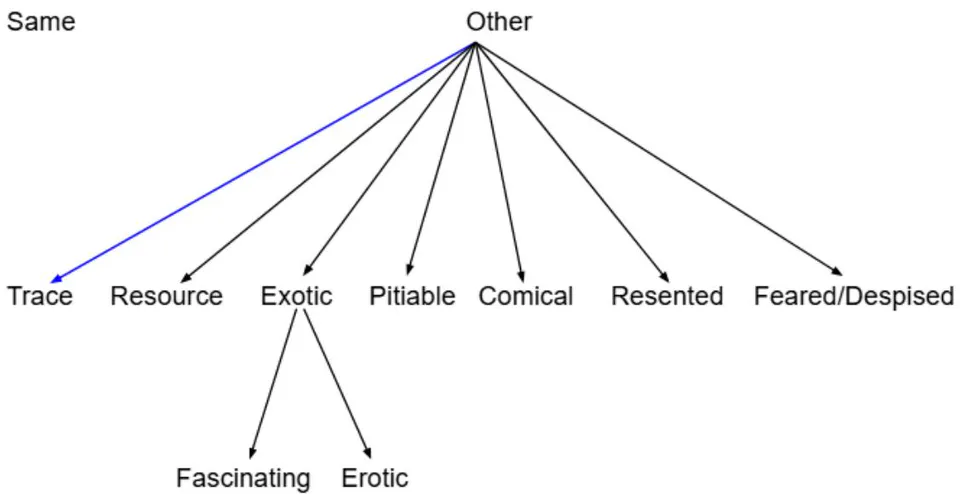
The Affective Frames of the Other (Smallwood, 2015)
There are seven major categories or affective frames from the most negative, Feared/Despised, to Trace, the most positive. The category of the Exotic is subdivided into Fascinating and Erotic.
The Feared/Despised Other is fairly easy to grasp, and it is the frame intrinsic to racism and the politics of conquest. It is less explicitly encountered today, but in informal settings as Sarra (2005, 2011) has demonstrated repeatedly this is still a major affective and interpretive frame (Butler, 2005; Huchet 2023; Rae, 2022) for inserting Indigenous Australians into. It is worth re-emphasising that one of the enduring contributions of Sarra’s (2005, 2011) research was to document the continuing power of racism in shaping the imaginary of mainstream Australians.
The frame of the Resented Other is a more recent addition (Smallwood, 2011, p.51). It is meant to convey the process where the Indigenous person is misrecognized and seen as privileged. This is a complex matter treated by Fraser (1995, pp.82-86), where she makes a distinction between affirmative and transformative remedies. She writes
By affirmative remedies for injustice, I mean remedies aimed at correcting inequitable outcomes of social arrangements without disturbing the underlying framework that generates them. By transformative remedies, in contrast, I mean remedies aimed at correcting inequitable outcomes precisely by restructuring the underlying generative framework (Fraser, 1995, p.82).
For Fraser, the problem is that the affirmative approach tends to result ‘in strongly cathected, antagonistic group differentiation’ (1995, p.85). In other words, affirmation can cause the creation of the Resented Other. A good deal of empirical research is needed here (and with the other categories) to quantify the existence of resentment. But for the present the frame is a useful approach not least to the kind of recognitions articulated in Pauline Hanson’s maiden speech (Smallwood, 2011, p.40), or in the kind of talk back program hosted by Howard Sattler
Sattler: Let’s take a call. Tony’s on the line. Hello Tony.
Caller: Hello Howard.
Sattler: Yes Tony.
Caller: I and thousands of other people are sick to death of whingeing Aboriginals … we’re also sick to death of the privileges available to Aboriginals that aren’t available to other Australians(as cited in Mickler, 1992, para.1).
The categories comical, pitiable and exotic are the sites, I would argue of considerable performative self-othering. It is quite obvious as MacLennan (2010) points out that the frame of Feared Desire Other and to a lesser extent Resented Other are perilous frames to occupy. As Smallwood puts it, ‘The feared Despised Other has no rights. They are lynched or murdered or set on fire or bullied endlessly’(2011, p.38). As Judith Butler (2005) argues even their deaths are not grievable. Understandably, there is an easily understood motivation to present oneself as pitiable, comical or exotic.
We will return to the question of self-othering, but for the moment let us consider the final two categories resource and trace. The other as resource would appear to be for MacLennan(2010), (Sarra, 2005, p.52), and Smallwood (2011, p.42) above all else an economic category. In this case, the Other is seen as of value to capital, or to put this in Marxist terms as a source of surplus value. We do not believe that having a job is equivalent to a fate worse than death. We are conscious, of course, of the need for human worth not to be reduced to a unit on a ledger. But for us, having a job is the beginning of the process of self-emancipation, so the Other as Resource cannot simply be understood in terms of being a resource for the boss. The worker is also a resource for herself, her family and her community.
What then of the category of the Other as Trace? Clearly here MacLennan (2010) was intending to incorporate the work of Levinas (1981, 1998, 2001). The latter is well known for the rigid demarcation he made between his religious writings and his philosophical work (Critchley, 2002, p.22). Though there would appear to be at least some slippage between the two domains, especially in the domain of ethics (Attridge, 2010). As (Critchley, 2002, pp.2-3) points out, Levinas’ work was first received and popularised in Catholic and Protestant universities. The matter of the relationship between religion and ethics is of some importance when it comes to the notion of the Other as Trace which MacLennan(2010) following Levinas defines as the trace of the Absolute Other that some call God. Arguably, what this frame indicates is an underlying tendency towards religious transcendence, a case, perhaps, of the God that dare not speak its name.
However we view the meaning of the Other as Trace, it is a frame that takes us away from the politics of the elimination of Indigeneity and towards the politics of respect. For that alone it is a framing worth preserving and putting into practice. It is also the interpretive frame that encourages empathy and, we believe, is closest to the politics of recognizing and celebrating the humanity of Australia’s First Nations.
We are anxious here to highlight that the process of recognition also contains the process of self-recognition. How Indigenous Australians recognize themselves has a serious impact on their lives. If they interiorize or absorb the negative interpretive framing that non-Indigenous Australians offer them, then that will have a poisonous impact on their lives. As Professor Gracelyn Smallwood points out self-respect is an existential matter for Indigenous Australians (2012).
Here, we turn to Dr Sarra’s acceptance speech at the NAIDOC AWARDS in 2016. There he made, as Walter Benjamin’s put it in Thesis XIV, ‘the tiger’s leap into that which has gone before’ (Benjamin, 1977) and there he found the courage and pride of the old people and the certainty that every Indigenous Australian is a product of their bravery. He said
For 50,000 history-making years, our old people lived like kings in lands where camels die of thirst. They stood as ironbark upright, strong, tall, standing and unbreakable. Their lessons, their songlines, their legacy and their dreamings. They are our true north. They are the truth not only of who we were, but who we can be again. My brothers, sisters, believe me when I say this. We are stronger than we believe. And smarter than we know. Solidly anchored by an honourable past, more than any other human beings on the planet, we can take our place in an honourable future. We have survived and now we must thrive (Sarra, 2016).
We too, the non-Indigenous people must essay our own leap into the past and there we must find the truth of who we were and seek for what we can be. We advocate here the moment of the Paul Keating Redfern Speech, where the then Prime Minister had the courage to speak truth to our past and say what the settler colonists did to the First Nations of Australia (Keating, 1992).
We might also follow in Bernard Smith’s footsteps and seek other moments of what he calls the development of a concerned conscience. In the third of his Boyer Lectures, Smith mentions the remarkable instance of the first visual representation of Indigenous Australians on the East Coast made by the non-Indigenous made the devout Quaker, Sydney Parkinson, who sailed with Cook (1768-1771).
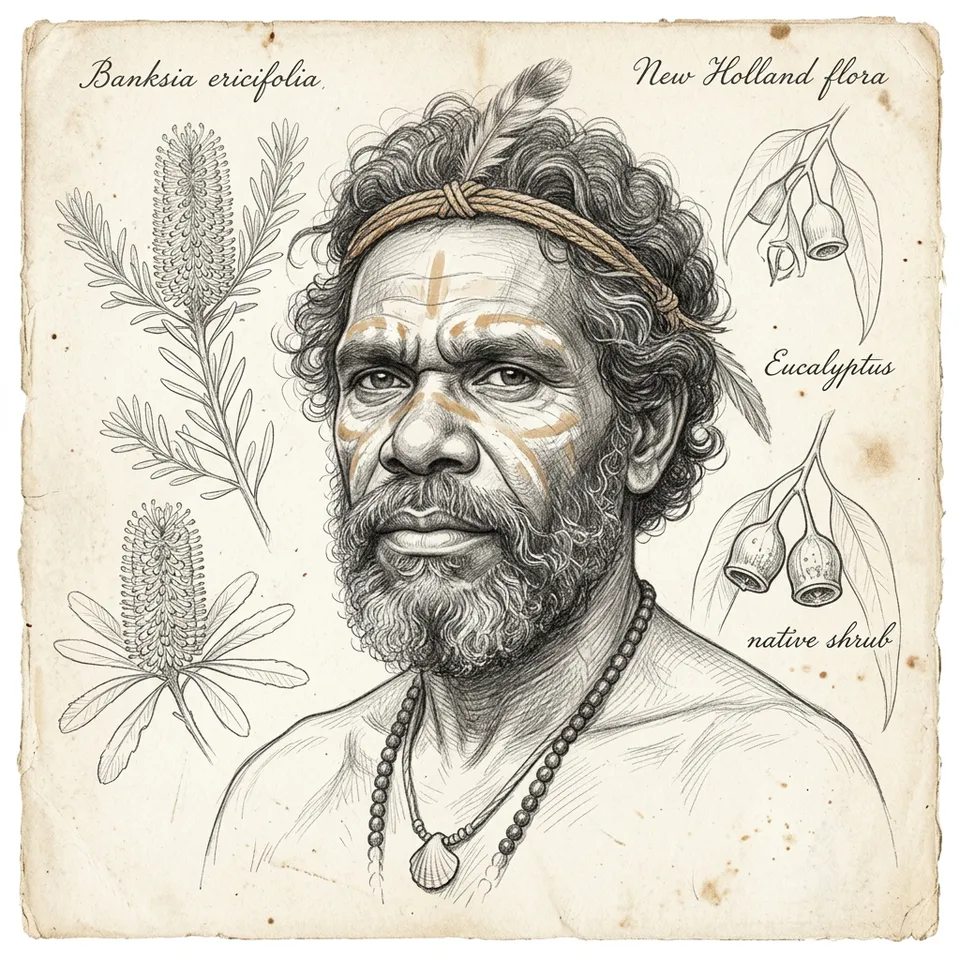
Sydney Parkinson: Endeavour Drawing
Smith writes
The Drawing on the left side of the page is a strange one. The men of the Botany Bay Tribe, now extinct, wore a characteristic body-paint design. Triangular in form, it stretched from both shoulders to the center of the chest, then down the center of the body to the waist. But Parkinson in making his drawing perceived these tribal markings in the form of a crucifixion, for reasons which I feel will never be fully explained. As a botanical draughtsman he was not given to fantasy. In no other drawing that he made, to my knowledge, does his Christian upbringing, for he was a devout young Quaker, impose itself so forcibly upon his perception. Was Parkinson subject, we might well ask to a visionary experience? Did he perceive that with Cook’s coming these ‘merry and facetious [playful] people’, as he himself described them, would be subjected by his own race to a prolonged humiliation and degradation best symbolized by the tortured body of the Man of Sorrows. We do not know. But the drawing is evidence that at the first moment of European contact on our eastern coast one conscience was at least troubled (Smith, 1980).
It is through knowing of and acknowledging instances like Keating’s Redfern Speech and Parkinson’s drawing that we might draw closer to what Smith called ‘the liberating power of sympathy’ (Smith, 1980). We might also be closer to an understanding of what it would mean to treat the Other as Trace of the ultimate Other that some call God.
We now proceed to considering the second item of the Sarra Trilogy
Bring us policy approaches that nurture hope and optimism rather than entrench despair Hope
As counter intuitive as it sounds, the demand for policies that foster hope may constitute the most complex and controversial element of the Sarra Trilogy. Our intent here is provide something of an explanation as to why hope should be controversial. Part of that controversy is, we believe, involved with the question of whether hope is a virtue or an emotion. Our intent is to treat hope as an emotion, but we are mindful of the theological tradition which sees hope as a virtue, especially the tradition influenced by the writings of Aquinas (Lamb, 2016; Metzler, 2022).
Our concentration on hope as an emotion will centre around the question of whether hope is a gift from something external to us or a property of the human condition. We will begin with the Nietzschean proposition that hope is an external gift, in this case a malevolent one. This will lead on to a critical engagement with the Indigenous intellectual, Dr Chelsea Watego, and her Fvck Hope orientation, which maintains that hope is external to us, in effect a curse laid upon First Nations people by the settler colonists. We will conclude this section with the affirmation that hope is an internal matter, a striving for a better future which is present on all humans and therefore in the people of the First Nations.
Nietzsche on Hope
Hope. Pandora brought the jar with the evils and opened it. It was the gods’ gift to man, on the outside a beautiful, enticing gift, called the “lucky jar.” Then all the evils, those lively, winged beings, flew out of it. Since that time, they roam around and do harm to men by day and night. One single evil had not yet slipped out of the jar. As Zeus had wished, Pandora slammed the top down, and it remained inside. So now man has the lucky jar in his house forever and thinks the world of the treasure. It is at his service; he reaches for it when he fancies it. For he does not know that that jar which Pandora brought was the jar of evils, and he takes the remaining evil for the greatest worldly good–it is hope, for Zeus did not want man to throw his life away, no matter how much the other evils might torment him, but rather to go on letting himself be tormented anew. To that end, he gives man hope. In truth, it is the most evil of evils because it prolongs man’s torment. (Nietzsche, 2022).

Pandora and the Box
We began with the famous Nietzschean aphorism from Human all too Human. We do so not because of its ‘visceral incarnations of …mythological wisdom’ (Thomas, 2005), rhetorical brilliance or even its well-practised Nietzschean manoeuvre of making the acceptance of what is, to appear to be the most radical choice. For make no mistake about this, for all his radical reputation, Nietzsche opted every time for a prolonging of the dominant power relations of his day (Losurdo, 2002). Rather, we chose Aphorism 71, because it makes a crucial error, which, as we will see, the fiery Indigenous academic Dr Chelsea Watego duplicates. The error that Nietzsche makes is to see hope as something external to us. For Nietzsche, hope is not a property of our humanity but rather something gifted from outside. In this case, it is a malevolent gift from Zeus, the chief of the gods.
We will return to this theme when we consider resources for hope but let us first address the thoughts of Dr Chelsea Watego.
Watego on Hope
For Watego, Hope is totally bound up in being with the non-Indigenous or the settler colonists. She does not recognize the multicultural moment, nor does she have anything to say about the day-to-day struggle against racism by Australians of Pacific Islander, Asian, African etc descent. Watego’s argument appears to be that “hope” is the process by which the colonised willingly interact in a passive manner with the coloniser. That interaction is fuelled by the assumption that the coloniser will act differently, and as such, Watego argues it is a betrayal of what it is to be Indigenous. It is also a refusal of the anger she feels is necessary for the movement towards Indigenous liberation. Thus, she expresses pride in Lydia Thorpe’s performance in the Australian Senate. We are sure Watego’s heart soared when Thorpe shouted “You are not our King” at Australia’s monarch, King Charles III (Crabb, 2024). Watego was not alone in that.
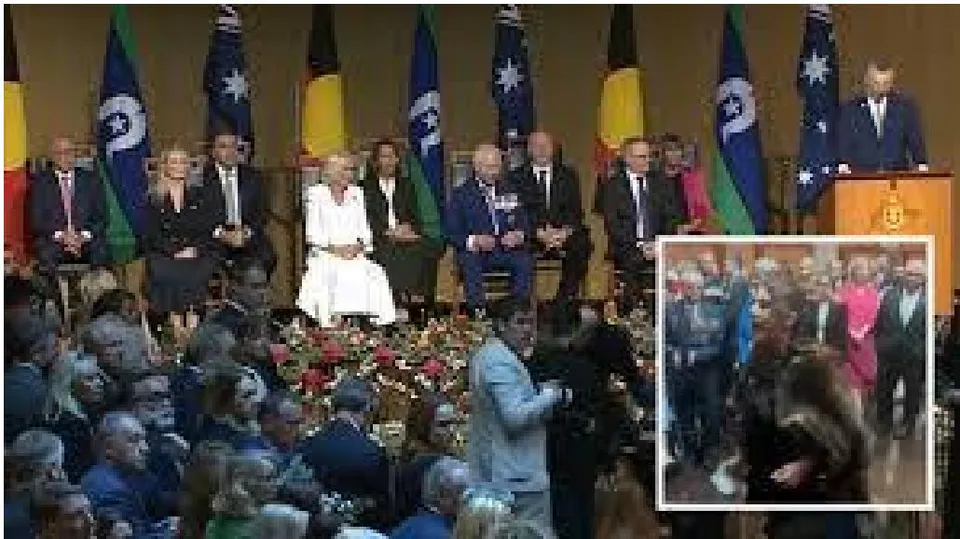
Senator Thorpe confronts the monarch.
As an alternative to hope, Watego advocates the philosophy of Black Nihilism based on the award winning African American novel Sell Out (Beatty, 2015). Beatty’s novel is an ingenious satire of contemporary United States. One of its chief targets is the existence of Blind to Color Racism. This is based on four tactics of mechanisms. These are Abstract Liberalism, Naturalization, Cultural Racism, and Minimization of Racism (Bonilla-Silva, 2013; Zamudio & Rios, 2006).
The joke at the heart of the novel is how the protagonist seeks to bring back overt racism including slavery. The novel concentrates its ire particularly on a character based on Supreme Court Justice Clarence Thomas, who has ruthlessly and routinely deployed the Fourteenth Amendment to destroy any attempt to reverse the impact of structural racism (Afflerbach, 2021; Leader-Picone, 2020).
There is much in Beatty’s novel which could enable one to cast a critical eye on racism in Australia. But Watego’s use of the book centres on the lead character FK Me’s outlining of a vision of blackness that has four categories. The first of these is the “neophyte Negro” who wants to be white. The second is the ‘Capital B Black’ who believe that black is deadly, but still takes its orientation from white people. The third type is that where race is transcended. ‘Serenity on the mountain top’ is achieved by a handful of charismatic individuals. Yet nothing has changed for Black people. There is a fourth vision and that is called Unmitigated Blackness. She describes this approach in the following quotation.
He [FK Me] says, ‘I’m not sure what Unmitigated Blackness is, but whatever it is, it doesn’t sell. On the surface Unmitigated Blackness is a seeming unwillingness to succeed. It’s the serious black actor. It’s a night in jail. Unmitigated Blackness is simply not giving a fuck.’ It’s the Tarneen Onus-Williams ‘burn it down’ kind of Blackness. Unmitigated Blackness, Beatty states, ’is coming to the realization that as fvcked up and meaningless as it all is, sometimes it’s the nihilism that makes life worth living (Beatty, 2015).
Watego explicitly endorses Unmitigated Blackness as a strategy and tells us that “it is the closest thing to an embodied sovereignty that I have heard articulated”.
The word sovereignty has central status for Watego. Her people have never conceded it. So, it exists as a rallying call in the struggle against the settler colonist, a struggle which must, and does, continue. There is though little or nothing programmatic that we could detect in Watego’s use of the term “sovereignty”. There does not appear for instance to be any consideration of the role of a Treaty process. We will consider, albeit very briefly, the question of a treaty when we discuss the third element in the Sarra trilogy: doing things with not to.
This absence of a political program around the restoration of sovereignty cannot be covered up with curse words. Something more is needed than the anger of Watego and the, admittedly comic, despair of FK Me (Beatty’s hero).We would note here the contrast between the political program of the Black Panthers, a program which was explicitly revolutionary and socialist, and which represented such a danger to the status quo in the US that the FBI devoted massive resources to crushing it (Harris, 2001). We also note that the Australian Black Panther, the late Hooper Coleman, came to work closely with Dr Sarra at Cherbourg State School (Sarra, 2012, pp. 165-168).
We would also like to draw attention to Dignity and Power Now (DPN), a contemporary grassroots movement that grew out of Black Lives Matter(Farrag, 2018). DPN is deeply spiritual and explicitly prefigurative in that it aims to anticipate in its organizational practice the kind of world it seeks to bring about. The focus is on acceptance and healing as well as resistance of the status quo. Farrag asks
How do those brutalized by a system gain the personal power to fight the same system that traumatizes them? How do they do so without replicating the same systems of oppression they are attempting to overcome? Black radical organizers have asked these questions for generations and for DPN and BLM, the answer is simple, heal the self, change basic relationships fundamentally, create just organizations built on equitable leadership, and give people opportunity and possibility to imagine and the future will emerge. When trauma, brutalization, denial of purpose, and loss of community are discussed, their container allows the target to move from state violence to member disputes to mindfulness practices, it allows the focus to move from outside, to within, from past to present, from history to future (Farrag, 2018, p.85).
We have no doubt that Watego intended her book as a manifesto for Resistance, and we respect that. In historical terms it could be seen as a rejection of Bennelong’s cooperative approach and a championing of Pemulwuy’s guerrilla-resistance approach (Wilmott, 2003). Watego is at war with the coloniser and sees Hope as Ulysses saw the Sirens. However, this is also a war to which Watego appears to see no end. There are only small acts of celebrating being different from the coloniser and also savouring moments of revenge over individual representatives of the colonisers. Here Watego is trapped at the level of tactics. There is no strategic vision at all of a reconciled nation nor a strategy for achieving one. Indeed, some of her deepest expressions of scorn are reserved for the very notion of a ‘reconciliation action plan’.
Here she repeats the Nietzschean error and sees hope as something alien to the indigenous experience. For Nietzsche, it is Zeus who peddles hope, while for Watego it is the settler coloniser. She tells us
Like role models, capacity-building agendas, reconciliation action plans and an Indigenousness derived from nowhere, hope offers up change without change. This is why colonisers are so insistent we have it -hope is not an enabler of our existence but of theirs (Watego, 2024, p.171).
It is worth repeating that strategically, Watego does not appear to have any vision of how to construct a genuinely non-racist Australia. Yet, the shameful heckling and abuse directed at Bunarong elder Mark Brown, as he delivered the Welcome to Country address at the Dawn Service in Melbourne is deeply disturbing (Wilson, 2025), and indicates we need to be serious about improving social relations within the Contact Zone (Pratt, 1992) between the non-Indigenous and First Nations Australians. Also disturbing was the earlier victorious state election campaign run by the ‘Queensland LNP with its focus on demonizing Indigenous youth and repeatedly labelling them as ’untouchables’(Smee, 2024). The state government’s subsequent expansion of its ‘adult crime, adult time’ legislative agenda shows that Indigenous Queenslanders are threatened with extremist policies that will work against the creation of a reconciled nation. As the Qld State government doubles down on the ‘Adult Crime, Adult Time’ legislation, it would appear we are on the cusp now of a renewed series of attacks on Indigenous youth. We would argue, frankly, that in this conjuncture “Nihilism” is a non-productive strategy.
Our pre-reading of the Fvck Hope chapter was that it would turn out to be an expression of resentment. Having read the chapter we hold ever more strongly to that view. However, our response is also modulated by our intent to operate at the level of assertoric solidarity with the First Nations of Australia. Our responses are guided throughout by the expressively veracious statement, “If we had to act in these circumstances, this is what we would act on” (Bhaskar, 2008, p.221). We do not seek to tell First Nations people what to do. Nor do we wish to play the role of masochist to someone else’s sadist. Sartre argued that the polarities of Sadist Masochist defined our relations with the Other (Sartre, 1976). We seek instead the High Expectations relationship that Sarra has talked about (Sarra, 2014; Sarra et al., 2018). For us, this means we will speak truth to power, and we expect the same from all Indigenous people we interact with.
How then can one reply in assertoric terms to the Fvck Hope chapter? To begin with the spectacle of a people without hope is a devastating one. Hope is one of the positive emotions that Spinoza derives from Joy. So, in Spinozian terms to be hopeful is to be stronger. Saying ‘no’ to hope is to embraces the ‘Sad Passions’ and with that a turn to a diminution of power and a life of servitude (Taylor, 2022, p.247).
Resources for Hope
Hope does not arrive like a gift. It is built—painfully, deliberately—through the work of communities who refuse to accept despair as their inheritance. Every time our people take each other’s hands, create a program, fight for a voice, challenge a policy, or insist on dignity, we manufacture hope. Hope is not soft; it is made of labour: Megan Davis, “Blackfellas Don’t Need Saving” (The Monthly, 2020).
Before proceeding to discuss the resources for hope we would like to put despair in context.
Despair in Context: The Paradigm of the Suffering Subject
Robbins (2013) plots the development of Anthropology as follows. First anthropology was devoted to the exploration of the Exotic Other/ (Noble) Savage.
No one talks about the Savage any more, and that is a good thing. Instead, anthropology became concerned with the universality of suffering. But as we moved away from the Savage paradigm we lost something. For Robbins, that something is the possibility of examining cultures which are different from ours and so potentially the source of a possible critical perspective on our own culture. Anthropology’s change to an engagement with the Suffering Subject also had the unintended consequence of weakening attempts to improve life. If we are all fated to suffer, what’s the point?
The suffering subject is still the dominant paradigm in the Indigenous Policy space, and it manifests itself in an exclusive preoccupation with domestic violence, child-abuse, intergenerational trauma, deaths in custody, Stolen Generations and the absence of family responsibility. These categories refer to real problems but the danger is that they have become the defining characteristics of the Indigenous lived experience. So suddenly the Indigenous People were no longer the Strong and Smart ones. We had nothing to learn from the oldest continuing living culture. They became the pitiful ones. It is understandable that some Indigenous people colluded with that paradigm because if they are feeling pity for you, then they are not killing you. And the killing fields were very real (Ryan et al., 2024).
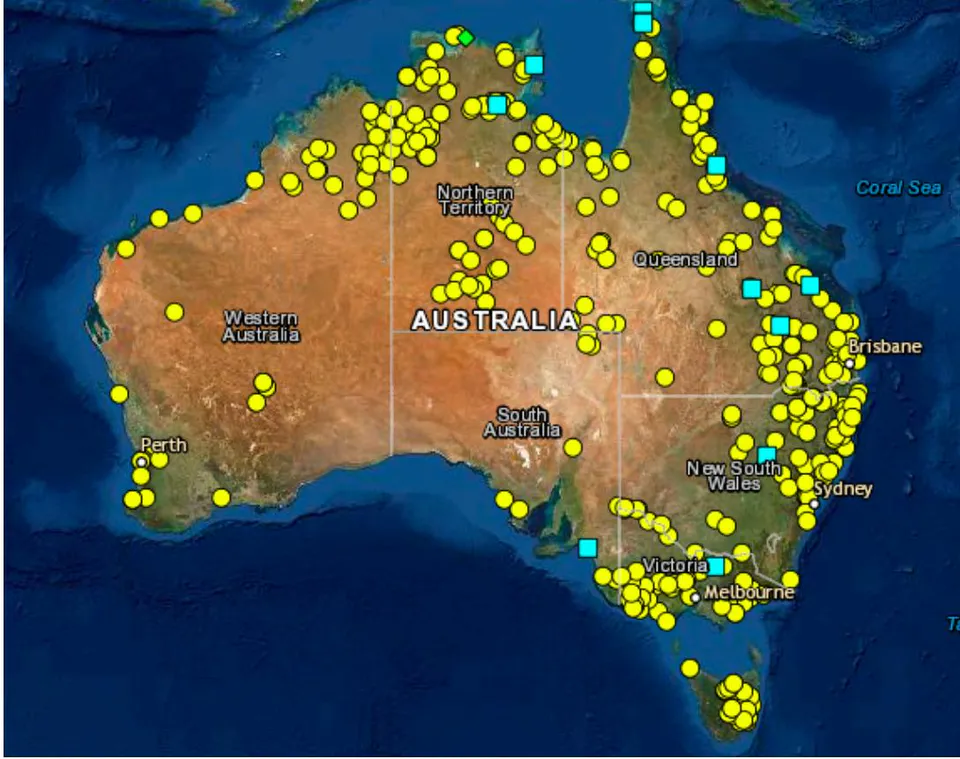
Map of the Massacres of First Nations People (Ryan et al., 2024).
Resources for Hope (Continued)
One of the exceptions to the prevailing adherence to the Suffering Subject paradigm was the Stronger Smarter philosophy, which is premised on an absolute belief in Indigenous strengths and a commitment to build a good life. In his NAIDOC Speech, Sarra addressed the Suffering Subject indirectly but insisted it did not represent the totality of what it meant to be Aboriginal. He said
We are more than victims and mere survivors. The scars we carry aren’t who we are. They aren’t signs of guilt or culpability. They are the not the truth about our potential or capacity.
They are a part of ourselves that still need healing. And healing cannot happen while ever we believe the lies that we are a weak, desperate people, devoid of humanity and incapable of helping ourselves (Sarra, 2016).
For us the truth is that every single Indigenous person in Australia is the ‘product of bravery’ (Dean, 2026) and that is what the Strong and Smart philosophy means. And that is what every Indigenous Child needs to hear.
Hope in Context: Generative Hope (Lempert, 2014)
A similar position to Dr Sarra’s Stronger Smarter philosophy was reached by the filmmaker and anthropologist, Wiliam Lempert. He made a series of films in the Kimberley that showed the people had lived through the apocalypse, but they had survived and still sought to build good lives.
Figure Six: Dunba
Lempert relates how he travelled with Dunba along the Indian Ocean coast near his community of Beagle Bay in North West Australia, delving into his life story as we visited sites from the iconic pearl-shell church that he helped construct to his favourite fishing spots along the beach. Over several days, Dunba’s quiet and humble personality gave way to intimate and expansive stories that expressed an enduring optimism despite unimaginable heartbreak and hardship, which began when he was removed from his mother, who had contracted leprosy, and was placed in the Beagle Bay
Mission far from his Walmajarri Country, family, and language.
Lempert’s film shows that Dunba, despite the suffering, is more than a survivor. He has fought the good fight and come through. As he tells us with justifiable pride “I grew up hard, me. I’ve been through hell. I’ve faced the worst, tough people in my time, but I stood my ground.”
Still from Dunba (Kimberley Aboriginal Media)
The Quadrant Approach — An Indigenous Community (Ross, 2022)
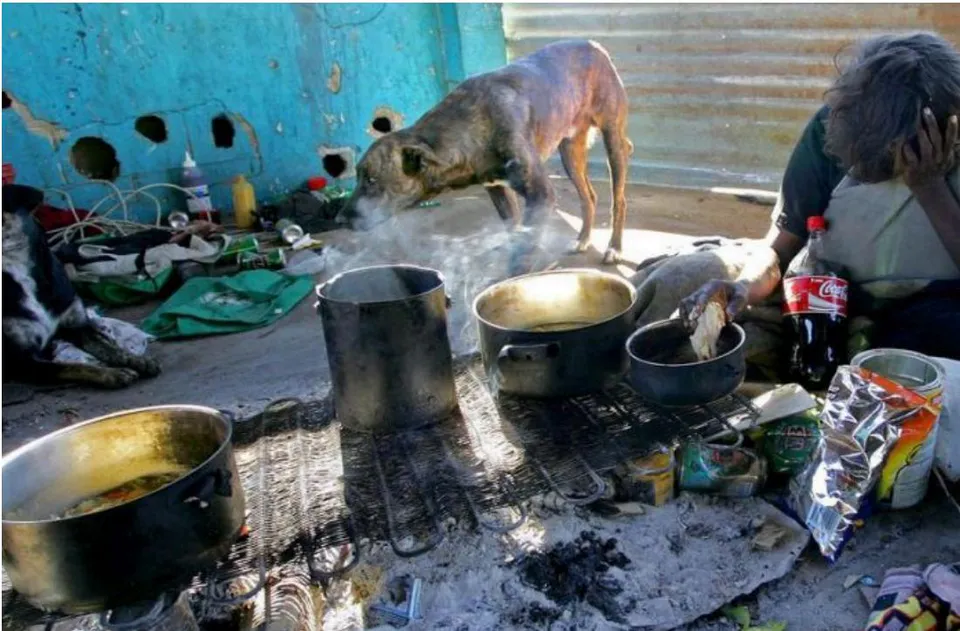
In Figure Seven we see a scene from an Indigenous community. The place looks like a disaster and the woman in the photograph seems sunk in despair. A dog picks through the detritus of lives that seem hopelessly marginalized. In Spinozian terms, we are in the domain of Tristitia (sadness) and the effect is to drain us all of power the power to change and to make a better life for ourselves.
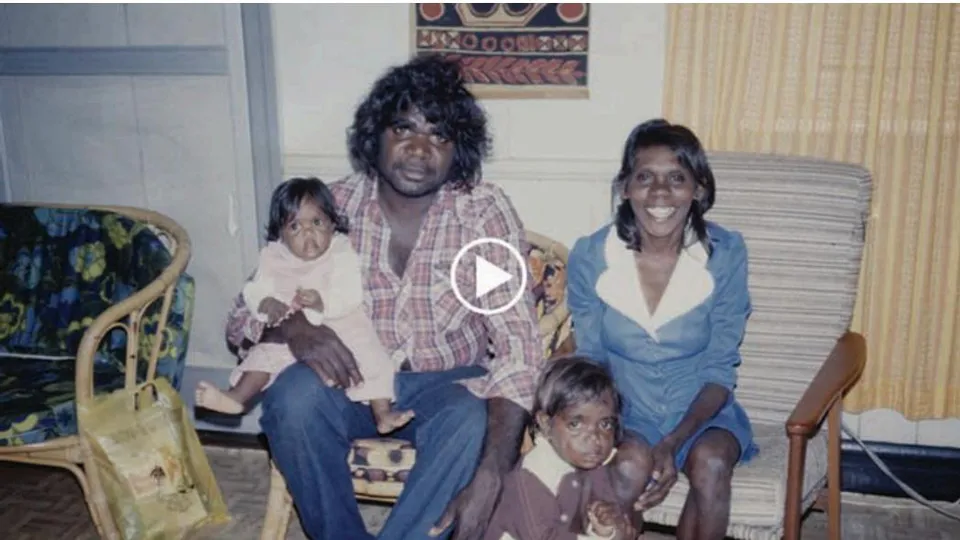
In Figure Eight we have a still from the Kimberly film Dunba. This series of films made by the Kimberly Aboriginal Media is designed to generate hope. The couple and their young family have done their best. There is no disguising that this is a poor family, but it is a family that is not defeated by despair. It is a family that has pride and dignity. In traditional Australia parlance this is a family of battlers, who are having a go.
Figure Seven comes from the Quadrant School, which is dedicated to pretending to care about First Nations People while it sows despair. Figure Eight is self-representation. It is how a group of Indigenous People like to see themselves, and also how they like others to see them. Figure Seven belongs to the discourse of despair, while Figure Eight belongs firmly to the discourse of hope.
De Beauvoir in Algeria-Sarra in Cherbourg: The face of the child
Consider the following quote from Simone De Beauvoir’s book on ethics. She is discussing the Arab children who lived under the oppression of French colonialism in Algeria. She would have seen the children one of her visits to Algeria during the War of Independence (1954-1962).
Yet, with all this sordid resignation, there were children who played and laughed; and their smile exposed the lie of their oppressors: it was an appeal and a promise; it projected a future before the child, a man’s future. If, in all oppressed countries, a child’s face is so moving, it is not that the child is more moving or that he has more of a right to happiness than the others: it is that he is the living affirmation of human transcendence: he is on the watch, he is an eager hand held out to the world, he is a hope, a project. The trick of tyrants is to enclose a man in the immanence of his facticity and to try to forget that man is always, as Heidegger puts it, “infinitely more than what he would be if he were reduced to being what he is;” man is a being of the distances, a movement toward the future, a project. (De Beauvoir, 1949, p.143)
The above was cited in abbreviated form by Jacques(Maritain, 1964, p.391). Maritain is generally scathing about De Beauvoir’s work, as one would expect from a leading Thomist philosopher, yet he does enjoin his readers to be grateful for the above insight(Maritain, 1964, p.391).
De Beauvoir is working with two notions, that of transcendence and that of immanence. The immanent is what is. The transcendent is what might be. In Bhaskar terms, that might be is a real possibility in process, and as such it forms the grounding of concrete rather than fantasy based utopianism(Bhaskar, 2008, p.294). Anyone who has visited a playground in an Indigenous community will have seen the same movement towards the future in the face of the children.
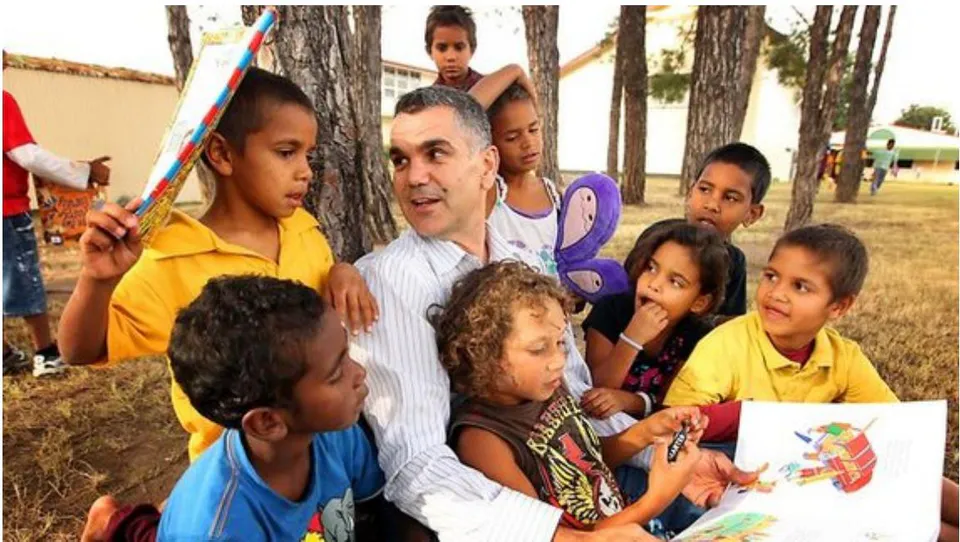
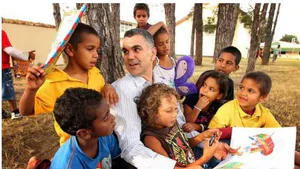
Chris Sarra reading to the children in Cherbourg
A final point on the challenge that Sarra made when he asked Turnbull to bring policies which entrenched hope rather than despair might be necessary here. What Sarra was doing was to challenge Turnbull to prove his own humanity for Sarra has never been in doubt about the humanity of his own people.
Fvck Hope, then, seems less likely to succeed than the strategy of forming alliances with empathic non-Indigenous Australians. Our firm belief is that the way forward for all of us is to take to heart and react positively to Krznaric’s claim that
We are in the midst of a great transition from the Cartesian age of I think therefore I am” to an empathic era of “You are, therefore I am”(Krznaric, 2014, loc.109).
To develop fully the notion of Krznaric we need to turn to the third element in the Sarra Trilogy
Do Things With Us Not to us
In this section we take three historic instances where the descendants of the Settlers undertook to do things with and not to the First Nations people. These are the support given to the Warlpiri Walkout, the eruption of spontaneous community support following the Floods in Bundaberg in 2013, and the Job Guarantee initiated at Western Cape College. However, before beginning our discussion of these three instances we wish to stress that doing things with requires a treaty process and we fully endorse the call for ‘a Makarrata Commission to supervise a process of agreement-making between governments and First Nations’ (First Nations National Constitutional Convention, 2017).
THE WAVE HILL WALKOUT
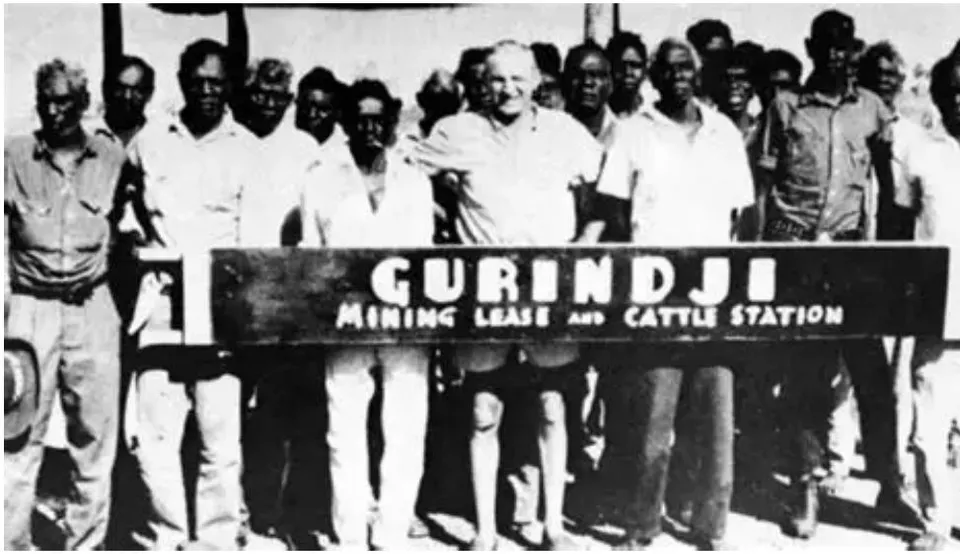
Frank Hardy and the Striking Stockmen
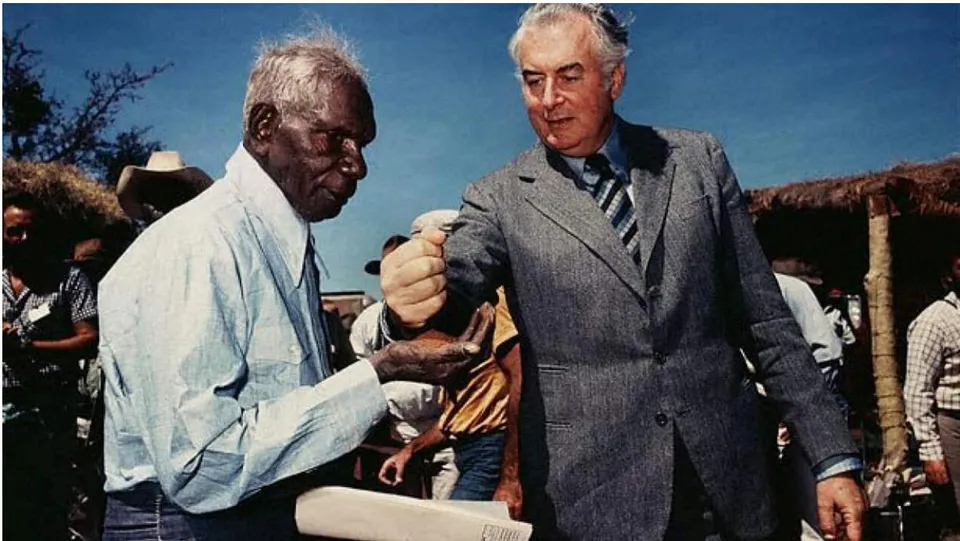
Lingiari and Gough Whitlam on the 16th of August 1975
Vince Lingiari (1919-1988) was an elder of the Gurindji people. He had led a strike/walk off at Wave Hill Station which run by the Vestey Corporation (Hardy, 1968). The strike began on August 23 1966. At issue were the pitiful wages, appalling conditions, and the mistreatment of Warlpiri women by white stockmen. The strike was to last for over nine years, and over the course of the struggle, it morphed into a demand for Land Rights. The strike attracted widespread support from Left wing intellectuals and unions, including the Waterside Workers Union and Actors Equity. The noted writer Frank Hardy (1917-1994) played a prominent role in coordinating that solidarity (1968). Hardy’s book on the Walk Off is also a record of a white man coming to understand something of the Indigenous experience through working with and for First Nations people. We, too, can glean something of that journey from the following extract from Hardy’s book.
I asked Vincent Lingiari what he had been thinking about down at the strike camp. He replied: ‘Well at first, I bin thinkin’ I’m right walkin’away.’ Then he made a remark that I did not take enough note of at the time. ‘And I bin thinkin’ this bin Gurindji country. We bin here longa time before them Bestey [Vestey] mob.’
Three worlds were meeting: the tribal Aborigine, the ‘assimilated’ Aborigine [Dexter Daniel] and the white man from the South and there was a feeling as of brothers between us under the sky full of stars.
I discovered that wages were not the only, perhaps not even the main issue for the Gurindji men. They were concerned about their women, about the children getting an education, about housing, about dignity and self-respect, about tribal identity- and there hovered vaguely behind every thought a desire to live alone in their own land (Hardy, 1968).
Lingiari and his people, with the aid of Dexter Daniels (1916-1999), the Indigenous union organiser, won the strike and in the aftermath the Whitlam Govt gave some of the land back to the Gurindji people. This was the first transfer of land back to the Indigenous people. As he poured the Red Earth into Lingiari’s hands, Whitlam said:
Vincent Lingiari, I solemnly hand to you these deeds as proof, in Australian law, that these lands belong to the Gurindji people, and I put into your hands part of the earth itself as a sign that this land will be the possession of you and your children forever.”
Let us live happily together as mates, let us not make it hard for each other… We want to live in a better way together, Aboriginals and white men, let us not fight over anything, let us be mates.
The Bundaberg Floods of 2013
We take the aftermath of the Bundaberg Floods of 2013 as an instance when a community spontaneously emerges, and things are done with and not to. What follows is a moving account by Dr Chris Sarra of how the community of Bundaberg rallied around his mother and his family and worked with them to alleviate the disaster that had struck the family home.
After the 2013 floods devastated my hometown of Bundaberg, I stood overwhelmed at our family home after it had been smashed and swallowed by water. My brother and I stood helplessly, unsure and wondering what to do next. I was even more overwhelmed by what happened next. People just turned up. Without being asked and without checking who we were. Without running some mental calculation about whether we looked like them, voted like them, or even prayed like them. They came with shovels, with food, and with quiet determination to help us in an hour of need.
That reflex that instinct to just show up is Australia at its most thriving and vibrant best (Sarra, 2026).
It is at moments like this that we can understand that the demand to do things with and not to is also a demand for a society which is fundamentally a moral community. A mateship emerges but this is a mateship purged of sexism and racism, and it is there for a mateship which we can all be proud of. We turn not to considering the example of the Job Guarantee that Dr Mackie initiated at Western Cape College. We give it as an example of how we can do things with and not to the young who are the future of Australia.

The Bundaberg Flood of 2013
The Job Guarantee
Dr Mackie organized a job guarantee when he was Principal of Western Cape College (2006-2010). Quite simply, he decided to declare war on unemployment and the precarity that was dominating the lives of his students. He was scandalized by the extent of youth unemployment, and he resolved that no graduate from his school would be sat home alone without hope. He refused to accept that it was ok for the school to produce NEETs, that is, graduates who were not employed, not in further education or not in training. Accordingly, he made a simple and direct promise to all the students. He told them that if they stayed at school and completed Year 12, He would personally guarantee them a job, if they chose not to go onto further training or tertiary education.
There was a great deal of incredulity not only on the part of the students but also of some staff members. There was, in addition, a feeling in some quarters that the school had no business guaranteeing anything never mind a job.
However, Dr Mackie took the view that we needed to adapt an expanded view of the school in terms of time, space and relationality. He understood that what happened to the students after they left school would have an impact on those who were still at school. The reason is that what happened to the graduates became the future in the present of those still at school. He was convinced that if the Year 9s, in particular, could see that those who stayed to year 12 really got a job, then schooling would begin to make sense to them. They would be able to see that staying on at school and acting properly would have a positive impact on their lives. They would be in control of what happened to them in the future.
As the guarantee rolled out two things happened with remarkable speed. When the first crop of year 12s got jobs, the year 12 program expanded very rapidly. Mackie was particularly gratified to see an unprecedented increase in year 12 enrolments by Indigenous students. Secondly, the Year 9s avoided the alienation trap that traditionally sets in around that year and knuckled down to the business of getting an education. What was a t work here was the movement from anticipation to expectation (Bryant & Knight, 2019). With anticipation the future, because it is unknown, can invade the present and become a source of great anxiety. Mackie replaced anticipation with the solid expectation of a safe and known future, and so the students could put the future to one side and enjoy an expanded present
As well as expanding the notion of the school along the dimension of time, he also expanded it in terms of space. He fought hard against the notion of the “Fortress School” surrounded by uncaring and even hostile forces. He thought instead of the school being everywhere. I insisted that the staff think of the school as spatially free. Like the Amazing Nightcrawler from the X-men, the school could turn up anywhere at any time. Like Mystique, the schools shape could change but it was still the school. When the graduates got jobs, they took the school with them. When Mackie went to a chamber of commerce meeting to plead for support the school was there with him. When he visited parents and sat down to congratulate them on how well their child was doing, he was bringing the school into their home.
The third dimension of school he added was that of relationality or connectedness. He sought to create a school that was the ‘centre of gravity’ (Clausewitz, 1832) of the communities it served. The ideal for Mackie was that he would insert the school into an ever-expanding network of relationships that would benefit the students. He sought sponsorships. He declared an open-door policy for parents and elders and community members and he meant it. He had conversations large and small with everyone he met or contacted. Always, he brought the subject around to how the school could help them, and how they could help the school. That meant that he personally contacted every employer or employer group. He set up a committee of parents, elders and employers that tracked every graduate, and made sure that the graduate was placed, and was provided with support as they entered the world of work. For the first time ever, the schooling system was doing things with every level of the community and not doing things to the community.
The project was so successful that it was taken up by the then federal government and became the Learn, Earn Legend program. Not the least of the achievements was the creation of intergenerational harmony. The students could see their elders going the extra mile to help them and that set off the chain reaction of reciprocity.
In summary to do things with and not to our students, we need to expand the notion of the school in time, spatial, and relational terms. For Mackie, the pivoting point for that mission was a job guarantee for every year 12 graduate.
One of the key lessons learned from the Job Guarantee program was that there are real benefits of a return to the time when we could say “The state’s your mate” and actually mean it. Such a change is required, because the present model is not working for far too many people, especially those in need many of whom are Indigenous. We have been through a period where the role of the state, especially in the Indigenous sphere, seems to have been to administer poverty with punishment, and to cover that up with rhetoric about “tough love”. There has been too much ideological talk about “welfare reform” and not enough thought about how we could get back to doing things with people to improve their lives. If we think of “welfare reform” as an end in itself, we end up approaching people as suspects not assets. The relationship between the state and so many people has been poisoned, and because we have been looking for compliance and obedience, we have unwittingly encouraged resistance and disobedience. That disobedience can even extend to self-harm. We need to shift towards co-operation and collaboration. An enabling state that is committed to doing things with people is both possible and necessary (Mitchell & Fazi, 2017). What is essential, especially in the Indigenous sphere, is that we reject the alternative paradigm of Punish to Rule (Wacquant, 2012, 2025).
CONCLUSION
In this paper we have discussed and openly advocated for the Sarra Trilogy as the necessary policy and relational setting to address the vexed relationship between the First Nations people and the rest of Australia. We have echoed and indeed applauded Sarra’s call for the Government to commit to
Acknowledging, embracing and celebrating the humanity of Indigenous Australians.\
Bringing the First Nations policy approaches that nurture hope and optimism rather than entrench despair.\
Do things with the First Nations, not to the First Nations
Conflict of Interest
The authors declare no conflict of interest.
Ethical Approval
Not applicable
Data Availability
The datasets used in this study are openly available at [repository link] and the source code is available on GitHub at [GitHub link].
Funding
This work did not receive any external funding.
References
Cite this article
Related Research

Special Issue
Launch a focused special issue to highlight research, emerging trends, and expert insights in your academic field.