





IntelliPaper
Abstract
In 1976 Edward Evarts "The languages of the brain introduction to neuropsychology" studied the behavior of certain neural mechanisms which are activated in the motor cortex and provide a mirror image of the force field external (orthostatism, variations of inertia in the actions). This type of neuron acts during muscle contraction. The confirmation came from the experiences made with monkeys who were trained to manipulate levers to which various weights were connected which opposed the pressure action. The recordings show that these brain areas are activated before the lever is pressed and that the electrical activity (electromyography) is proportional to the amount of force, pressure, necessary to overcome the resistance which, in the containers with the food, was greater.
The information on the pressure to be exerted (choice of the task and execution) is provided by the tension that arises from the adjustment, a kind of pre-regulation, which takes place in the agonist and antagonist muscles before the gesture (reaction), determining a state of cocontraction for effect of the Feed-forward control mechanism (in this phase the system oscillates like the needle of the balance, which subsequently stops on the exact weight). The aim is to contrast the weight with an adequate stiffness (consistency of the contractile structures) in times of the order of 0 milliseconds, to compensate for the delay of the proprioceptive feed-backs. It is probable, as Prof. Nikos Makris, that a kind of resonance is created between the oscillation frequencies of the peripheral structures with those of the brain areas.
From our study it emerges that a different approach to fatigue, considered as a signal, and not a value, has allowed us to modulate the work proposal, both at a sporting and rehabilitation level, in order to choose what to suggest, depending on a measurable and objective data obtained on resilience. This data allows you to choose whether to increase the load or reduce the tension, in order to reduce the entropy of the system, and therefore reduce energy expenditure in both the athlete and the neurological patient.
Explore Digital Article Text
I. INTRODUCTION
If our stomachs were distant from the heart pump, we would be subjected to particularly intense activity every day to get the blood necessary for digesting food and we might not have the resources to maintain 'service needs', such as getting blood to the brain. The brain immediately sends out alarm signals if it is forced to work below threshold. Certain areas of the body need more oxygen exchange in order to function. Chemical and physical factors come into play, such as carbon dioxide pressure, osmotic pressure and others. This is referred to as resilience, change of state. In our study, we evaluated the phenomenon of blood flow reflux and its consequences. Skeletal muscle blood flow is linked to contractile activity, and is controlled by nervous factors. From a muscular standpoint, many local factors need to be taken in account, related to blood pressure, tissue pressure, blood viscosity and muscle fibre type. In some cases, there can be an increase in flow of up to 15 to 20 times the normal value. [6] The local mechanism follows this pattern: following repeated contraction, there is a compression effect exerted by the muscle on the blood vessels in a continuous and progressive manner. During each contraction, usually intermittent, arterial flow is reduced and venous drainage may also stop. If the contractions are intense and prolonged, the vascular area is compressed and blood flow may temporarily stop.
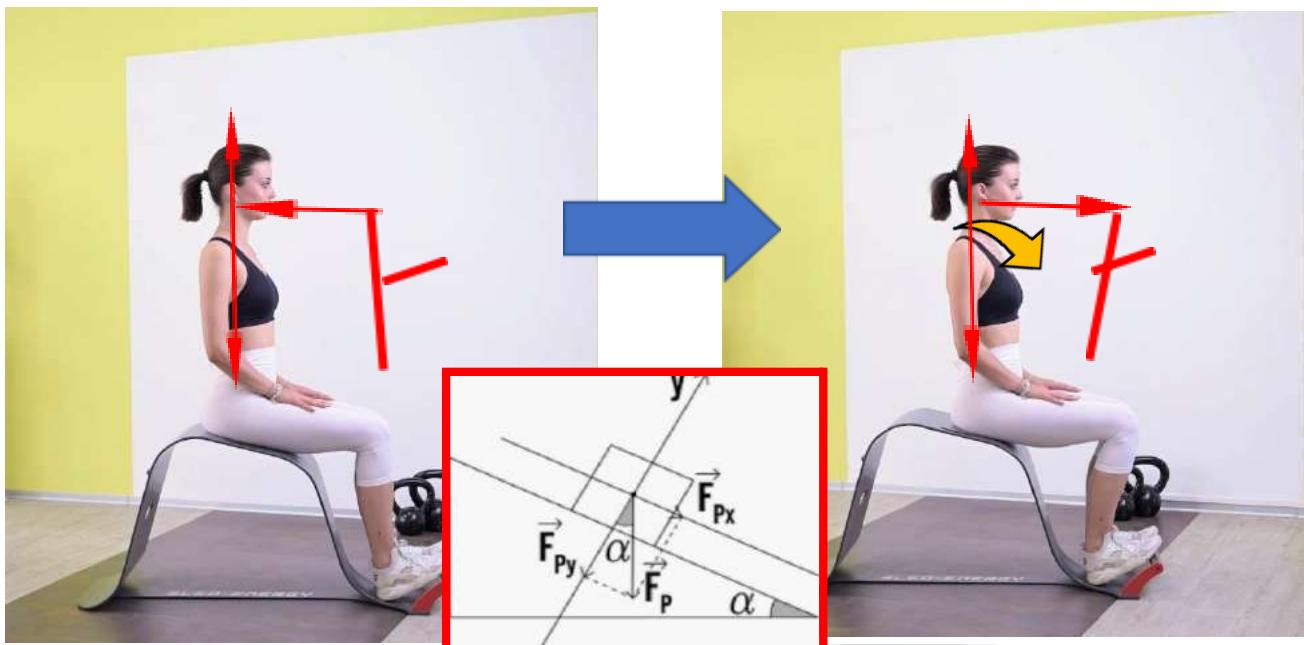
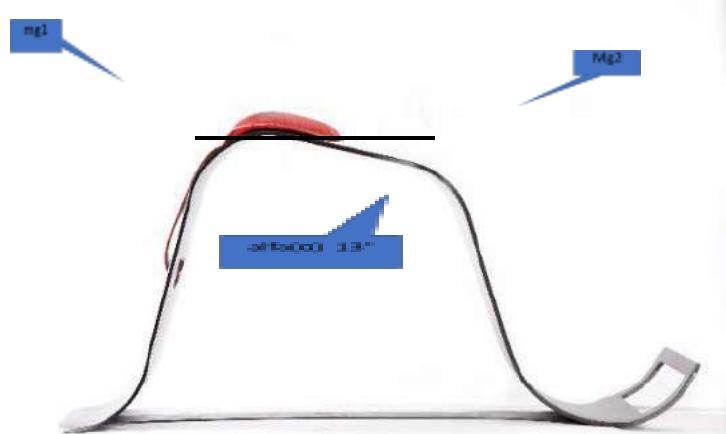
In the upright position, at rest, the venous valves are open and promote antigravity blood outflow. When the leg muscles (e.g., gastrocnemius) contract, they compress the vein and the pressure increment inside pushes the blood upwards through the upper valve, while the lower one closes. After the contraction, the muscle loosens its tension (pressure/tension mechanism) and the resulting drop in pressure allows the upper valve to close and the lower valve to open, so that the muscle segment once again is filled with blood. [15-16] This mechanism is typical in conditions where muscle tone is maintained (at rest in an upright position) or in the presence of moderate activity (walking on level ground). In these conditions, the sympathetic intervention is also superimposed, which requires a vasoconstrictive effect starting from a low frequency (1-2 impulses/second) up to a maximum of vasoconstriction, which is achieved with frequencies of 8-10 impulses/second. This is followed by the release of adrenalin at the nerve endings, which produces a vasodilatory effect at low doses. During skeletal muscle contraction, from a biochemical point of view, potassium and phosphates are released, osmolarity increases and contributes to active hyperaemia. Consequently, a temporary vasorelaxation is observed. Also, other critical mediators of vasodilation are lactic acid, carbon dioxide and hydrogen ions. [8] This rapid and incomplete examination of the mechanisms underlying vasodilator and vasoconstrictor phenomena, which alternate depending on certain balance and situations, has led us to reflect on fatigue through the concept of resilience. There is intent about the usefulness of looking at the various sciences as a whole, in order to provide a general framework that informs indistinctly the various fields of knowledge. As sport scientists, we investigate the movement in all its form, and in order to achieve our aim, we utilize every means and method. With this promises we planned and realized the SLED device. The SLED (Ergo-active Energy Tensor Chair) is an orthostatic tension simulator that creates different inertial moments.
The seating posture of this revolutionary chair tends to eliminate the drawbacks of a horizontal seating surface that induces a kyphotic posture. The purpose of this device is to encourage a body position with a theoretical lordosis. Through the inclination of the seating surface towards the feet, it's required a constant activation of the lower limbs to brake and prevent the body from sliding forwards and downward. This instrumental approach guaranteed a movement experience that takes into account variations in moments of inertia in a stable semi-orthostatic setting, and allows exercises such as stretching and core exercises to be performed in real life conditions. [2] The SLED is the magnifying glass through which we investigate how the human body creates muscular tension and manages loads. Thinking the human body as a spring, we could note that it is continuously deformed. In fact, the moments of inertia generated from the body position and the forces that act on it causes a continuous deformation to whom the musculoskeletal system reacts modulating the energy delivery in order to find a balance. Blood pressure represent the force exerted by the heart to pump blood through the cardiovascular system. The balance between diastole and systole determines a person's blood pressure. Specifically, systolic pressure is the maximum pressure exerted by the cardiac pump during systole, while diastolic pressure represents the minimum pressure in the arteries during diastole. The systolic pressure value minus the diastolic pressure is called pulse pressure and provides useful information about the blood vessels conditions. [7] Tension and pressure are both measured in Pascal (Pa) and are closely related. The study of vascular dynamics shows that a vessel that expands exerts pressure on the walls; conversely, when it narrows, it exerts pressure on the capillary vessels, actually increasing capillarisation, with all the associated benefits. Pulse pressure quantitatively denounces the blood volume that is created between systolic and diastolic pressure. Lowering the diastolic pressure has various benefits, not only increased capillarisation, but also improved lymphatic activity, increased fluid drainage and elimination of waste substances. [9] In order to investigate the peripheral vascular behaviours under load, we have defined as resilience, the relationship between the pulse and the diastolic pressure, measured both before and after inertial load changes. The level of resilience is representative of how the biomechanical system reacts to certain stimuli. The peculiarity of this model of investigation concerns the reduced influence of the subject's mental and motivational mechanisms, which are usually included in tests measuring physical condition as a function of strength, endurance or speed.
II. MATERIAL AND METHODS
2.1 Participants
During everyday clinical practice or specific intervention, every test here reported was carried out. The following were the different populations of subjects that were observed: subject over 45 years old with some physical impairment (brain stroke, Parkinson's disease, multiple sclerosis) and sport athletes. The latter were divided in tennis professional young athletes and other sport athletes. These two groups were necessary to compare different type of training. In fact, tennis players were tested before and after a tennis session, while other sport athletes performed a band resisted strength training (hypertensor training).
2.2 Study design
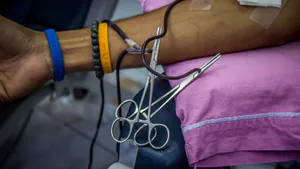
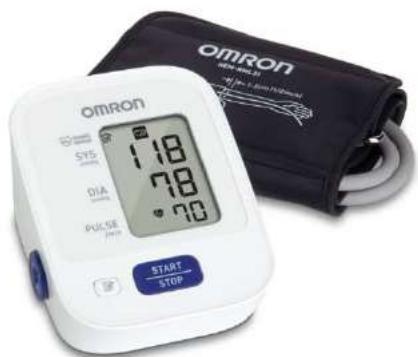
To study the phenomenon of blood flow in relation to the contractile behaviour of muscles, we located a sphygmomanometer on the gastrocnemius of the subjects. Asking the subjects to gently slide down and forward on the sled, we recreated a variation of the angular moments of inertia of the limbs, effectively reproducing in the laboratory a functional motor situation that resemble the gesture of standing up from a chair.
We used a simulator, which we called Sled, which allows the body to slide downwards, creating tension against gravity.
 Orthostatic Pressure, Vessel Pressure and Neurofunctional Changes: A Correlation Study
2.3 Equipment
Following, the material we used to configure the test.
1. Sled Device
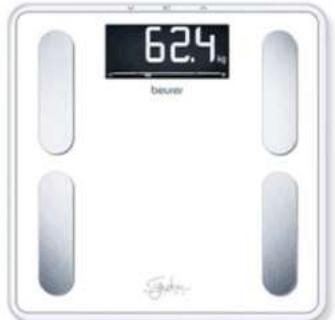
- Beurer precision electronic scale (digital measurement). To measure body weight of the subjects.
- Omron digital blood pressure monitor with clinical validation. To measure blood pression on the gastrocnemius site.
2.4 Test procedure
Following careful explanation of the procedure and anthropometric measurements, the subject was asked to seat on the tensor sled device (SLED). While seated on the top of the device (no sliding) the first digital blood pressure measurement was taken. Following, the subject was asked to gently slide forward until balance.
Here the tester had to express the subjective amount of force to the ground to prevent excessive sliding. As soon as the subject stopped his body and showed balance while constantly pressing against gravity, the second blood pressure measurement was detected.
2.5 Measurement Outcomes
From the digital blood pressure analyses, we looked at systolic pressure and diastolic pressure. The difference of the two is defined pulse pressure. Data were compared in various ways. First, for every subject we compared measurements "at rest" versus "active", to observe how the body modulates blood pressure in response to a change of inertia and therefore tension.
Among athletes, we compared tests before and after sports performance. Last, studying subjects with motor disturbances, we tried to investigate whether differences could be identified in the analysis between the lower limbs. Thus, we were able to assess the reliability of the test to monitor imbalances and track training progress over time.
III. RESULTS
In the graph we utilize the term rest for the static position seated on the sled, and active to identify the loading phase.
3.1 Rest vs Active
A total of 55 subjects (sport + pathologic) executed the test, two measurements of the blood pressure were taken for each participant, one at rest and one during the active phase. Within group analyses was performed for diastolic pressure, systolic pressure and resilience (pulse pressure/diastolic pressure).
Diastolic pressure
-
The diastolic pressure is lower in the active position.
-
The medium average decrease is 6%.
{"image_source":{"path":"images/5863341e7f2c6167d7b6c4be201f6a9e040be948b185e48a3ae721bad4bae293.jpg"},"content":"","chart_caption":[{"type":"text","content":"Table 1: Diastolic Pressure: Rest vs Active"}],"chart_footnote":[{"type":"text","content":"Systolic Pressure"}]}
-
No significant change between the two measurements.
-
An average decrease is observed; however, this corresponds to a tiny percentage (0.7%).
{"image_source":{"path":"images/a9dbb8c341f8d696be3fdb420a688d363b41094ee15eec06d47f7a33a7c1dc62.jpg"},"content":"","chart_caption":[],"chart_footnote":[]} {"image_source":{"path":"images/8fb5e77901c856d428e5e224071f3d65bb3a5f823da728388cc9b9c1b8231952.jpg"},"content":"","chart_caption":[{"type":"text","content":"Table 3: Avg. Resilience Rest Vs Active"}],"chart_footnote":[]}
{"image_source":{"path":"images/7dfba4d9cea20bd85bff824b2202c912779a67cb70e8809757159922a2bc84e3.jpg"},"content":"","chart_caption":[{"type":"text","content":"Orthostatic Pressure, Vessel Pressure and Neurofunctional Changes: A Correlation Study"}],"chart_footnote":[]}
3.2 Pathologic vs Healthy Limb
A total of 10 subject (> 45 yrs.) with different motor disturbances were examined in to identify lower limb imbalances. Indeed, all patients showed one healthy leg and one problematic leg, on which the various pathologies had a more obvious influence.
Diastolic Pressure
-
On the pathological leg the diastolic pressure is higher at rest than on the Sled, on the healthy leg there is the same trend although the difference between the two is smaller.
-
Comparing the two legs: on the Sled, the healthy leg shows a higher diastolic pressure than the pathological leg. At rest, however, the situation does not differ significantly between the two limbs.
{"image_source":{"path":"images/2f083d2cd72fbc5addd4361bf9800953c8af8d97c1df8de3e2aa0c7aad04b987.jpg"},"content":"","chart_caption":[],"chart_footnote":[]} {"image_source":{"path":"images/a0dec70dd0014389411cccf1c7cecb502492423ef3cb4bee14cca0337151f1ba.jpg"},"content":"","chart_caption":[],"chart_footnote":[]}
-
The sick leg has on average higher systolic pressures than the sane one.
-
Comparing the same leg between the position at rest and on sled, it can be seen that in both legs the systolic pressure drops by about 3% on sled and is higher at rest.
{"image_source":{"path":"images/f226e2faf70bb56dac4ab93712c970090d059e3a4945b7e5b3b4405c553ef9d4.jpg"},"content":"","chart_caption":[],"chart_footnote":[]} {"image_source":{"path":"images/607f2c51b5f4088d25d2dced3106142c16a6bae2c019f8add105b1c5a04d82e3.jpg"},"content":"","chart_caption":[],"chart_footnote":[]}
3.3 Athletes on Sled Pre vs Post Sport Performance Athletes on Sled Pre vs Post Sport Performance
Two different type of sport performance: Tennis session (90 min) and hypertensorial session (15 min).
The analysis was carried out by comparing only the measurements taken on SLED, before and after the activity.
Diastolic pressure
- Average diastolic pressure remains constant between pre and post tensor training, while it increases post tennis activity.
{"image_source":{"path":"images/69516db573b934821703daa35483a119403ddaa1d6f5c1d0281979371330156a.jpg"},"content":"","chart_caption":[],"chart_footnote":[]}
-
With reference to hypertensor training, diastolic pressure does not identify a precise pattern, the situation varied from subject to subject.
-
However, the trend in diastolic pressure before and after tennis showed a slight increase after activity for 4 out of 5 subjects.
{"image_source":{"path":"images/ac939e359cdc87f1a6c1438e8042e0c16c758cf5bdb439712cf66796f3e9049a.jpg"},"content":"","chart_caption":[],"chart_footnote":[]}
Systolic Pressure
Systolic blood pressure rises slightly post tensor activity. In contrast, there is a slight lowering post tennis session. It is important to note that the small test sample creates a special situation in which systolic blood pressure differs substantially in the two pre-activity groups.
{"image_source":{"path":"images/607caee828400e44cc2063974c74ab97a84c9fe39cdd89b4936b2a3afcdf89a8.jpg"},"content":"","chart_caption":[{"type":"text","content":"Table SEQ Table \* ARABIC 14 Avg. systolic pressure"}],"chart_footnote":[]} {"image_source":{"path":"images/1e130a7f2dcd0cb22d2c62de73120985c431a34303c1d19fd3fd1c7ce16897f0.jpg"},"content":"","chart_caption":[],"chart_footnote":[]}
{"image_source":{"path":"images/47cff49124acb68fc7ebfa50e171996add2f638a991b4a8f7b49a67acb20ff3a.jpg"},"content":"","chart_caption":[{"type":"text","content":"Table SEQ Table \* ARABIC 15 Systolic pressure hypertensor"}],"chart_footnote":[{"type":"text","content":"Table SEQ Table \* ARABIC 16 Systolic pressure tennis"}]}
Resilience
Resilience increases post tensor activity and decreases post tennis activity.
{"image_source":{"path":"images/979d2f9450c7c13a903ff697610d2bc9a8cd62550f92ccdfcb7160144f034dfa.jpg"},"content":"","chart_caption":[],"chart_footnote":[{"type":"text","content":"Orthostatic Pressure, Vessel Pressure and Neurofunctional Changes: A Correlation Study"}]}
- Looking at the subjects who performed elastic tensor work, it can be seen that only in subjects 3, 4 and 5, resilience decreased post-activity, while for the other 9 subjects, the trend was the opposite, showing an increase in resilience.
{"image_source":{"path":"images/2fe16af4b867081ddc46337f101e214a2c63e60c26ca3d3fa01bf5fdf13a7d20.jpg"},"content":"","chart_caption":[],"chart_footnote":[{"type":"text","content":"- Analysing the tennis session, it can be seen that subject 3 had a sharp resilience decrease post activity, while the other subjects show a less remarkable trend. For subjects 1 and 2, resilience increased, while for subjects 4 and 5, it decreases."}]}
{"image_source":{"path":"images/34cbc4e0e585b51af09d8d10a661771b3dcd5ed76c0e79b0c7eb226a07cab5f4.jpg"},"content":"","chart_caption":[],"chart_footnote":[]}
V. CONCLUSIONS
In our research we have shown that diastolic pressure is influenced by the variations in inertia to which our biomechanical system is subjected due to the force of gravity. With an inertial variation simulator, a session with an inclined plane, and a sphygmomanometer applied to the calf, we measured the blood pressure data during the normal session. We subsequently evaluated the pressure when the subject slides downwards, due to the effect of gravity, by varying his inertial state. In our experimentation we used an algorithm which, thanks to the variation in blood pressure data, measured the change. For this reason, we determined the Resilience in the physiological and functional motor fields (vascularization and variation in inertia), dividing the Pulse value by the Diastolic pressure value. In the experiment we collected data before and after physical activities both on subjects suffering from neurofunctional diseases (Cerebral Stroke, Parkinson's Disease, Multiple Sclerosis) and on athletes engaged in various sports. The numerical value of Resilience varied, depending on the more or less rigid state of the system, from a value of -1 to +2. In subjects with neurological pathologies, the system moves with difficulty due to muscle rigidity and uncertainty in movement, for which the recorded values ranged from 0.4 to 0.8. In athletes, however, the system assessed fatigue with less muscle stiffness and greater relaxation, for which the values fluctuated between 1.2 and 1.8. Finally, the Resilience values between 0.8 and 1.2 testified to a more or less entropic coordinated system, in which the tensor state (more or less rigid) made it more balanced. For example, in athletes who performed overload work, the system increased stiffness. For this reason, values around 1 correspond to a particular vasopressive state in which the value of the Diastolic pressure is equal to the Pulse. Furthermore, we had subjects suffering from Parkinsonism or Multiple Sclerosis carry out activities, such as walking, at a higher pace frequency. Due to the need for greater awareness of the gesture, more controlled by the brain areas, the subjects reduced, or even canceled, both the dragging of the limbs and the state of ataxia and uncertainty present. For this reason, we noticed that the Resilience value rose from 0.4/0.5 to 0.7/0.8, as evidence of a less rigid system. Therefore, from our study it emerges that a different approach to fatigue, considered as a signal, and not a value, has allowed us to modulate the work proposal, both at a sporting and rehabilitation level, in order to choose what to suggest, depending on a measurable and objective data obtained on resilience. This data allows you to choose whether to increase the load or reduce the tension, in order to reduce the entropy of the system, and therefore reduce energy expenditure in both the athlete and the neurological patient.
Conflict of Interest
The authors declare no conflict of interest.
Ethical Approval
Not applicable
Data Availability
The datasets used in this study are openly available at [repository link] and the source code is available on GitHub at [GitHub link].
Funding
This work did not receive any external funding.
References
Cite this article
Related Research


Special Issue
Launch a focused special issue to highlight research, emerging trends, and expert insights in your academic field.
