


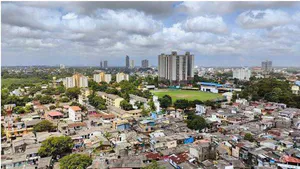

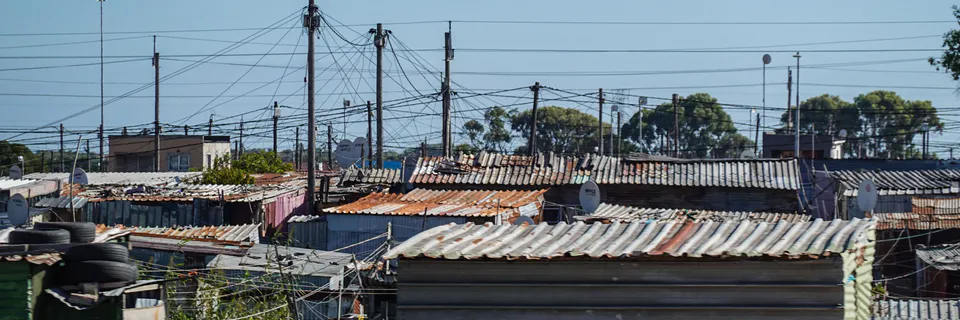

IntelliPaper
Abstract
Over the last decade there has been a growing emphasis on utilizing social protection as a policy framework to tackle poverty and vulnerability in developing nations. An increasing multitudeof governments in developing nations are formulating and embracing comprehensive national social protection strategies as part of their initiatives to alleviate poverty. The implementation of social protection policies and programs in developing nations is rapidly expanding both in quantity and coverage, marking a significant increase in their reach and impact. From a qualitative standpoint, this study emphasizes the critical role of public spaces in alleviating poverty-related feelings in Vision 2030 and social housing at the scale of urban form. Flourishing individuals is one of the domains of community well-being (VanderWeele, 2019).
Explore Digital Article Text
I. RESEARCH BACKGROUND
Over the last decade there has been a growing emphasis on utilizing social protection as a policy framework to tackle poverty and vulnerability in developing nations. An increasing multitude of governments in developing nations are formulating and embracing comprehensive national social protection strategies as part of their initiatives to alleviate poverty. The implementation of social protection policies and programs in developing nations is rapidly expanding both in quantity and coverage, marking a significant increase in their reach and impact. From a qualitative standpoint, this study emphasizes the critical role of public spaces in alleviating poverty-related feelings in Vision 2030 and social housing at the scale of urban form. Flourishing individuals is one of the domains of community well-being (VanderWeele, 2019). Poverty, well-being and social protection are not just temporary subsistence needs. According to the United Nations website, about a quarter of the world's urban residents live in slums or informal settlements. Space, especially in developing countries, is a public space with social, security, economic and political crises and problems. A variety of patterns of change can be identified in relation to the social protection and poverty of the people living in the slums and shanty dwellers in the urban space of the Asian region. The complexities of poverty in urban settings are frequently examined through lenses including access to food, food insecurity, economic development, human capital, and evaluating the role of agriculture concerning the process of urbanization (Jonah & May, 2020).
Yet, in examining poverty and social protection within urban landscapes, it becomes apparent that the exploration of variable relationships within this space is confined. The nature or shape of urban space is not simply a matter of geography or identity. It is an identity or combination of economic and political elements extending to a wide range. Social challenges emerge from the interplay of economic and political forces in operation within this context.
Various programs for social protection and poverty in Sri Lanka's urban space are implemented based on a number of criteria. But the problem is that social protection programs are structured into the urban space (especially slums, shanty dwellers and tenements) it cannot be categorized as political, economic, policy or social. Conceptually, the social protection programs intended for poverty alleviation often function with objectives rooted in insurance or managerial frameworks. Therefore, social protection in urban space is not only centered on the three main terms and concepts of urban poverty, social housing, and public space (Abusaada & Elshater, 2023). It can be recognized as a collection of mechanisms or systems entrenched within a broad economic, political, and social spatial context, operating in conjunction with these fundamental concepts.
Accordingly, why is the urban space, (including slums, shanties, or flats,) consistently excluded or marginalized from social protection schemes and poverty alleviation programs, despite the implementation of various social protection initiatives through the intervention of the Sri Lankan government? When considering about the research objectives, it is expected to study the space identity represented by the social protection programs operating in the urban space, as well as the political and economic relationship and bias within the social protection programs. And also, the extensive exploration is geared toward unraveling the political, economic, and social facets embedded within the structural framework of spatial organization.
II. RESEARCH METHODS AND METHODOLOGY
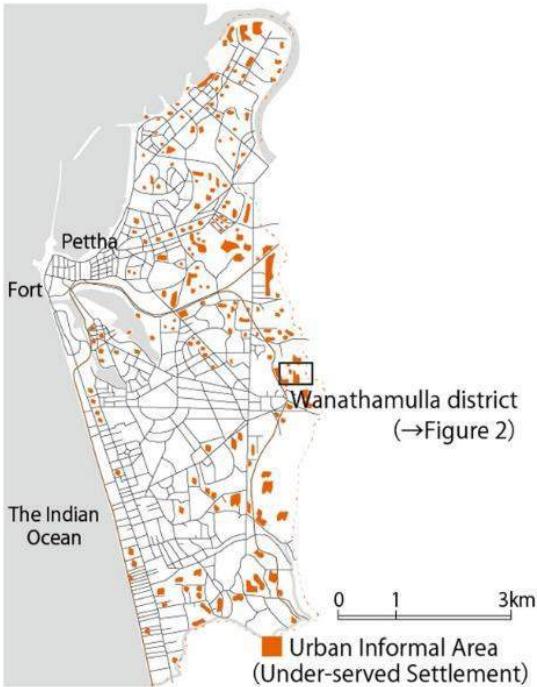
Data is anticipated to be gathered through both qualitative and quantitative methods, focusing on the main research areas: 'Mattakkuliya - 60 Watta' area, 'Dematagoda – Wanathamulla' in the Colombo district, representative of urban spaces. With the intention of conducting a comparative study of the social protection process, emphasis is also placed on rural areas, particularly the 'Okkampitiya' village in the Monaragala district. Nevertheless, the two major research areas are represented within the urban space. The research sample comprises 80 respondents selected through random sampling method. The sample is stratified based on age groups to ensure representation of both men and women.
| Research Field | 18 – 29 | 30 – 45 | 45 – 60 | 60 < | ||||
| Mattakkuliya – 60 Watta | 05 | 05 | 05 | 05 | 05 | 05 | 05 | 05 |
| Dematagoda- Wanathamulla | 05 | 05 | 05 | 05 | 05 | 05 | 05 | 05 |
Research methods such as participatory observations and focus group discussions (FGS) are utilized to gather data in the research areas. Regarding social protection and poverty, it is expected to collect data through the key informative interviews (KII) and discussions for the respondents who will be involved in the research, representing the government and various political parties (government officials, politicians, non-governmental organizations and officials of the Colombo Municipal council). The Secondary data has gathered from books, published research papers, academic journals, Central Bank reports, Colombo municipal council reports and newspapers. The researcher analyzed the dataset using the Statistical Package for the Social Sciences (SPSS) and Microsoft Office Excel. Theoretical approaches employed include concepts of abstract space and social space of Henry Lefebvre, Neo-liberalism, Capitalism, Concept of Social Sustainability, Patron-Client Relationship, Social – Contract Theory, and Hegemonic Discourse. A conceptual framework can be developed based on existing practical scenarios and theories.
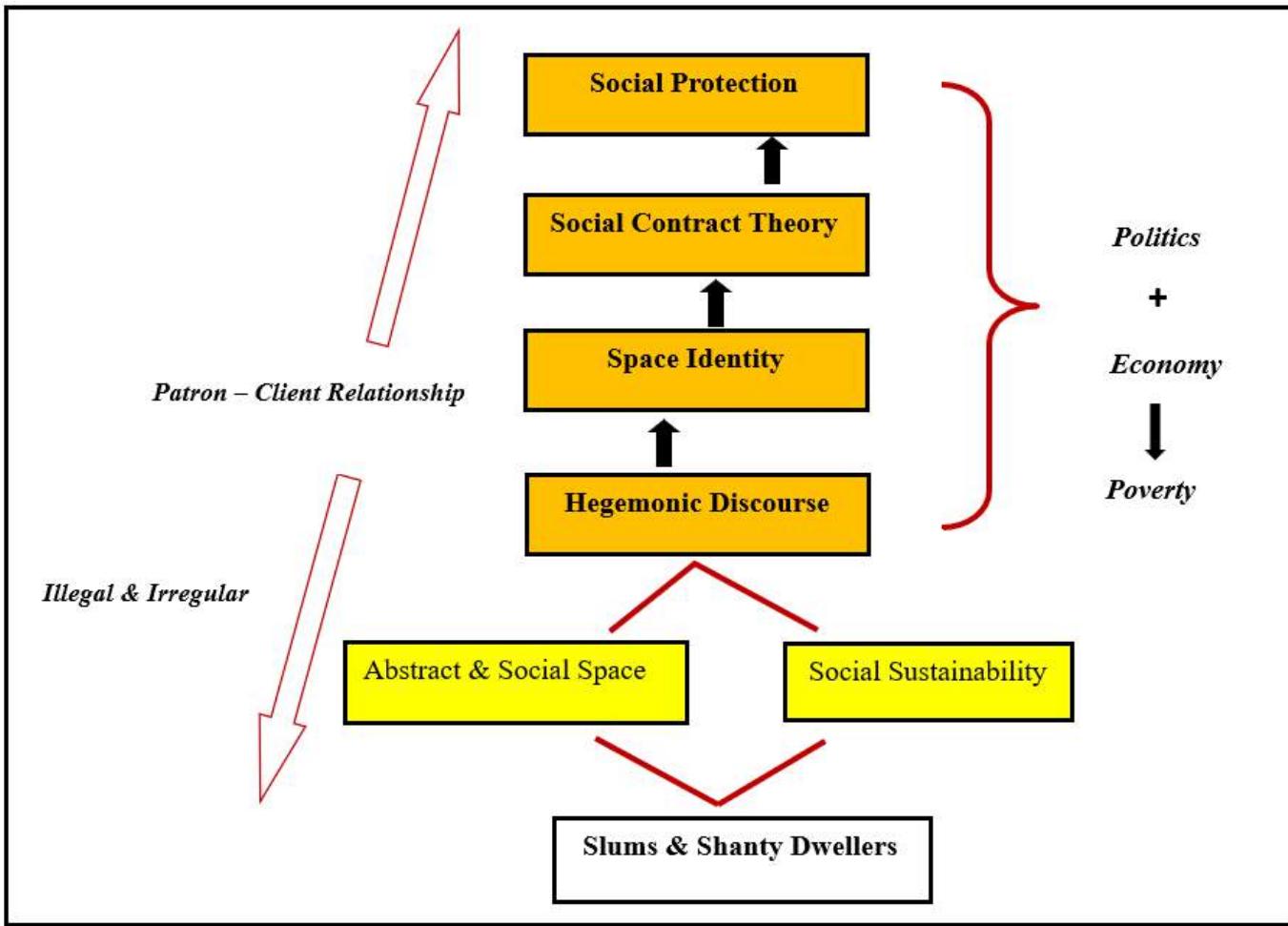
This conceptual framework is utilized to study the impact of space on the social protection and poverty of people living in slums and shanty dwellers in the urban space. That is, the effect (positive/negative) of space identity on inclusion or exclusion (marginalization) through social protection (social protection programs) is examined. It is also expected to investigate the impact of numerous political and economic variables on poverty. Ultimately, through the conceptual framework it is hoped to examine the spatial identity and the nature of patron-client relationship maintained in social protection and poverty.
III. RESULTS AND DISCUSSIONS
Social protection in urban space involves more than just offering solutions to poverty or providing temporary benefits. It is at times a complex and problematic social need, requiring consideration of multiple aspects of deprivation beyond low and variable income. including poor quality and overcrowded housing; inadequate water supply and sanitation; inadequate access to basic services such as health care and child-care; high prices for necessities such as food; voicelessness and powerlessness within local political and bureaucratic structures; and also 'limited or no safety nets for those with inadequate incomes' (Satterthwaite and Mitlin, 2013).
Through the concept of social sustainability, emphasis is placed on creating a background for individuals and communities to live healthily and contentedly (Rogers et al., 2012). Housing, health, education, services, etc. are interpreted in terms of creating a healthy environment that supports social relations among communities and ensuring the rights to satisfy basic needs in their living environments ((Woodcraft et al., 2011). Consequently, social protection can be interpreted not only as a fundamental element of social sustainability but also as a tool and measure of its success. Consistently, it is obvious that social protection has a wide impact on social, economic and sustainability in urban space, all of which can be realized in practice through physical spaces and built forms (Keivani, 2010).
(Chan and Lee, 2008) extracted six factors that extensively interpret the effect of urban form of social sustainability. These include satisfaction with welfare requirements, conservation of resources and the surroundings, creation of harmonious living environment, provision facilitating day life operations, form of development and availability of open space (Peiris,2022). Accordingly, it is important to conduct a comprehensive study regarding the factors such as the satisfaction of the welfare needs of the urban space as well as the form of development and the amount of open space in a study related to social protection. The two fields selected to represent the urban space of the Colombo district comprise spaces characterized by distinct physical, economic, and social variables. The only shared attribute between these two areas is that both have consistently experienced marginalization through social protection policies and programs. The Colombo district holds a distinctive role in the electoral politics in Sri Lanka, among them locations of slums and shanty dwellers are also distinctive.
There is a challenge in categorizing the residents of these slums and shanty dwellers as permanent residents of the area. As disclosed by the research field, a significant majority of the respondents face difficulties in providing proof of residence. In Sri Lanka's existing social security system and policies, the government's full intervention, partial intervention or even the social protection programs that are carried out through the intervention of non-governmental organizations, get the necessary support through the Sri Lankan government. Permanent residence is utilized as a main condition even in programs such as
Samurdhi beneficiary scheme, Janasaviya, Elderly Allowances, Kidney Allowances, World Aid, but also in Plan Sri Lanka which are implemented for the social protection of children (Samurdhi Beneficiary Scheme report, 1995 & Central Bank Report, 2019). If there are problems with permanent residence, consideration will be given to enrolling in such social protection programs using the Electoral roll. However, even though the widely recognized social protection program Samurdhi beneficiary scheme, the residents of urban space continue to face marginalization. Why are the urban people who do not have a permanent source of income or land, property, or vehicles to live on continuously excluded from social protection?
"We are settled down near the Modara river. I have three daughters. But there is no door to the house. And also, we have not received any protection from the government. Even though the officials come to collect details every year, they do not approve anything because we are not permanent residents. However, we have been living here for 16 years now. We will vote in every election for various political parties."1
This is the living condition and explanation of the vast majority living not only in 'Mattakkuliya' and 'Wanathamulla' but also in slums and shanty dwellers of urban space in the Colombo district. Space is the primary reason/factor for excluding them from social protection. Just as everyday life has been colonized by capitalism, as Henry Lefebvre explains through the concept of the production of space, so too has its location - social space (Lefebvre, 1997).
Theoretically and conceptually, social space is classified according to class structure. social space is allocated as demonstrated by class and social planning reproduces the class is structure, this is either on the basis of an abundance of space for the rich and two little for the poor, or because of uneven development in the quality of places, or indeed both, like all economies the political economy of space is based on the idea of scarcity (Forrest, Henderson & Williams, 1982). It is evident that the social space in which urban people live is a classified and marginalized (abstract) space. This is the marginalized (abstract) space of Colombo's urban social space, which contains very beautiful and orderly architectural designs. They also have no rights to social protection in the capitalist economic consumption system. This can be further analyzed through the field data;
{"image_source":{"path":"images/7cfac0c74def96d7b5dc791a60796198af0080bb7f3082d934bf050af959e8b8.jpg"},"content":"","chart_caption":[{"type":"text","content":"Figure 01: The Nature of Social Protection Programs in Urban Space (FDG, 2023)"}],"chart_footnote":[]} While researching social protection in urban areas, it becomes evident that respondents face marginalization even through fundamental and public social protection programs like Samurdhi beneficiary scheme. In the midst of the ongoing economic crisis, a majority of people have also experienced marginalization through a new social protection program called 'Aswasuma,' implemented based on the recommendations of the International Monetary Fund (IMF). Some degree of protection was afforded by non-governmental or voluntary organizations, with the 'Sarvodaya' movement being a prominent program/scheme among them. Additionally, it is apparent that even children receiving education did not receive any social protection (for examples; 'Plan Sri Lanka', 'Samurdhi – Diriya Daruwo').
According to the Central Bank Report (2022), there are 52 lakhs families in Sri Lanka, of which nearly 16 lakhs have participated in the 'Samurdhi' program. The number of beneficiaries in the 'Aswasuma' program is almost 20 lakh, surpassing Samurdhi program. More than 70% of the Samurdhi security system beneficiaries are covered by the insurance scheme (Presidential Secretariat Report, 2023). Nevertheless, from the opinions of the people in these two research fields, it is confirmed that very few people are included in the 'Aswasuma' program. During the discussion with the Grama Niladhari of the Mattakkuliya - 60 Watta area, it was revealed that the 'majority of the people in this area are residing here illegally, and information regarding social protection has been obtained from some families who have confirmed their residence.' However, it was clear from the discussions that the government officials also lack understanding regarding the real problems there.
Cities has always been "centers of conflict, change and transformation", cities can be crucibles where new politics can be constructed and emerge (Harvey, 2014). Consistently, cities can be identified as a space where even human relationships are recreated, and social protection is the main force for changing the lifestyles of the people in the marginalized (Abstract) space. Nevertheless, it is apparent that the social protection of the urban space is controlled by the electoral politics and the capitalist economic system in Sri Lanka.
Despite the fundamental issue of the permanent residence of people in this space, they participate in every election according to the electoral register/ electoral roll. As demonstrated by the responders, politicians representing different parties visit their area at the beginning of each election. Nonetheless, they experience marginalization (exclusion) through social protection programs because spatial identity becomes politicized through hegemonic dominance. It can be discussed more analytically with the data below;
{"image_source":{"path":"images/db72d42debe2c6ec153823c0760561f7cc41580fef6752089c148f3c1bbcd799.jpg"},"content":"","chart_caption":[],"chart_footnote":[]} {"image_source":{"path":"images/2e7969d3bcdff9aac0cf5f5683094a1a0166ae0b811808bbda1225d36a161052.jpg"},"content":"","chart_caption":[{"type":"text","content":"Figure 02: Environment of the settlements – Mattakkuliya Space (FDG, 2023)"}],"chart_footnote":[]}
Figure 03: Environment of the settlements – Wanathamulla Space (FDG, 2023)
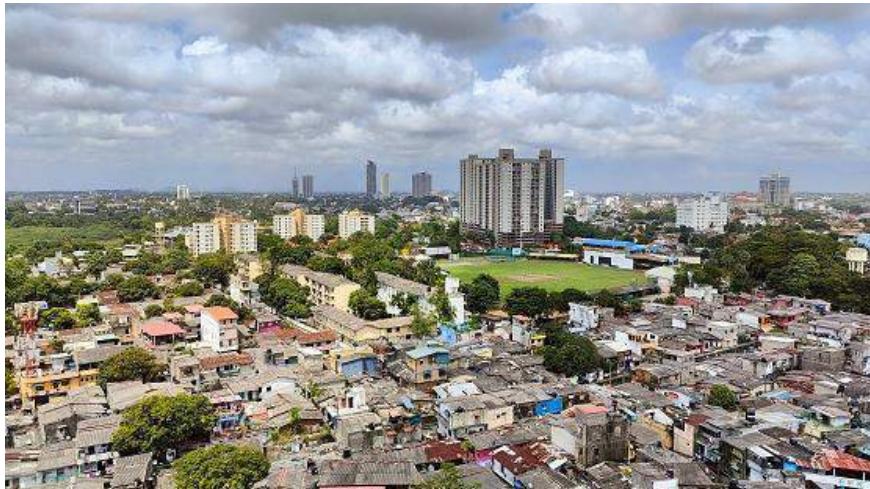
Different variables can be identified when studying the settlements in Mattakkuliya and Wanathamulla areas. There are slums and shanty dwellers in the 60 Watta area of Mattakkuliya, while there are more flats than slums and shanties in Wanathamulla area. But conceptually, the conditions here are similar. That is, their living space is arranged in such a way that the basic needs or rights are not confirmed in a limited space. Due to this problem, social sustainability is widely challenged because a number of social, political and economic challenges are structured in that space. In Sri Lankan capitalist economic system, the patron-client relationship is the chain that connects politics and the economy, and through the patron-client relationship spatial identity is determined and social protection is controlled through it. Nonetheless, space is the driving force in linking social protection to a positive background in rural space as compared to the urban space. That is, areas that show more criteria of poverty socially are classified as areas in need of social protection through spatial identity. The economic value of such areas is low compared to urban space.
In the face of an election, temporary benefits (money, packets of foods) instead of social security of social protection schemes in the urban space are provided by the political authority with the intervention of the capitalist economic system (businessmen). Capitalist economy gives it the full support it needs because of the intrinsic value of urban space. One of the reasons why capitalism has survived into the twentieth century is because of its flexibility in constructing and reconstructing the relations of space and Global space economy, in constructing the world market (Lefebvre, 1976). Consistently, there is a politics of space because space is political (Lefebvre, 1976). As a consequence, the relationships produced and reproduced through space are a crucial political issue. Accordingly, space is not only a social and political product (Lefebvre, 1976). An economic value is attributed through its existing social and political nature. Economic value is determined based on the patron-client relationship that exists in the capitalist economic system. It is obvious that they continue to be ostracized (marginalized) through social protection due to spatial identity, which is the strongest problem facing the people of the urban space.
One of the integral parts of sustainable development is eradicating poverty by increasing the social and economic well-being of people (Mustafa et al. 2021). Eradicating poverty is crucial for sustainable development as it ensures equal access to resources, opportunities, and fundamental human rights for all individuals. But it is apparent that space negatively affects the deprivation of social protection in Sri Lankan cities. If they are residing illegally or informally, it is the responsibility of the political authority to prepare a formal policy framework for it. In Sri Lankan ongoing electoral politics, no government that comes to power will try to introduce such a policy or develop existing policies.
Living in the church houses is the main reason why the people living in the houses provided by the church in Mattakuliya area are not enrolled in a social protection program. Respondents express the opinion that this situation even affects the provision of basic needs such as water to the homes (FGD,2023). The final result of basic social protection programs without governmental intervention is that it affects the people in a negative way. It can be mentioned that the categorization of social protection by classifying the spatial identity in terms of religion and ethnicity is a unique aspect of the current Sri Lankan electoral politics.
According to Lefebvre (2001), 'the right to the city' is the right to a transformed and renewed urban life. People living in the urban space have the right to escape the socially, politically and economically backward life. Nonetheless, the main challenge here is the existing patron-client relationship between Sri Lanka's electoral politics and capitalist (neoliberal) economic system. For that reason, social protection policies and programs are structured around that relationship. The current political system has managed to assess the voting base of the urban space by utilizing the commercial value of the space. Further, the people living in the urban space have the right to produce the city, the right to enjoy, what does it produce? And how? (Marcuse, 2012). It is evident that there is no right to decide about.
It can be stated that such rights are only conceptually and theoretically owned, but in practice, the urban spatial identity is controlled through the current political phenomenon/system.
Therefore, it is clear that these areas continue to be marginalized through social protection programs, which are the main force in establishing social sustainability in the urban space. It appears that the political authority controls these spaces in such a way that the issue of permanent residence is not relevant to elections. It is therefore apparent that social protection in the urban space is a key tool for controlling the patron-client relationships structured within the political and economic frameworks.
IV. CONCLUSION
Urban society or space is a bureaucratic society of sometimes controlled consumption (Lefebvre, 2003). Addressing the social, economic and political challenges and problems surrounding it is extremely important to develop the social sustainability in the urban space. This is because people living in slums and shanty dwellers in urban space face harsh experiences related to poverty and social protection.
Lefebvre (2003) names one area of the urban space as the areas that do not have a place and are looking for their own place in the urban space; "the non-place that has no place and seeks a place of its own" (U-topic). Consistently, slums and shanty dwellers has represented that sector. Slums and shanty dwellers are symbols of that 'U-topic' space. Exploring the abstraction of urban space from the process of social protection was done through the research, and thus it is obvious that the urban space is an area excluded from social protection.
It is evident that social protection in urban space is influenced by political and economic variables. In other words, social protection is regulated through various components of the capitalist economic system and the electoral politics and also hegemonic politics of the political system. It is clear that it is most practically done through the patron-client relationship maintained through this dual system.
Urban space, specifically slums and shanty dwellers, faces numerous problems and crises related to spatial identity. Although the spatial identity of the people in this space is a basic challenge/problem of social protection, it is confirmed that it is not a challenge for electoral politics. That is, because spatial identity is utilized to create the background needed for elections and voting base through a social contract. Formulation of systematic policies to address the problems of irregularity or informality in settlements is the need of the hour. Nevertheless, it is apparent that excluding a certain area of the social space from social protection by naming it as an excluded (abstracted) space is not only a serious challenge to the rights of the people but also to social sustainability.
Correspondingly, it can be finally concluded that informal or irregular settlements in the urban space influence the challenges of social sustainability. The intensity of that influence is determined through hegemonic forces controlling spatial identity. That is, it is clear that the process takes place through the numerous variables of the political system and the economic system. Social protection is a major practical tool for reducing poverty and implementing and increasing social sustainability, for which it is important to prepare a systematic and formal economic and political policy framework. Also, it can be concluded that in order to confirm the social protection of the people who represent the marginalized space in the urban space, it is a need of the time to prepare a systematic program or scheme in a way that ensures equality, not just structuring the spatial identity to political and capitalist consumption methods or system.
Reports
Annexure 01: 'Mattakkuliya – 60 Watta' Urban Space
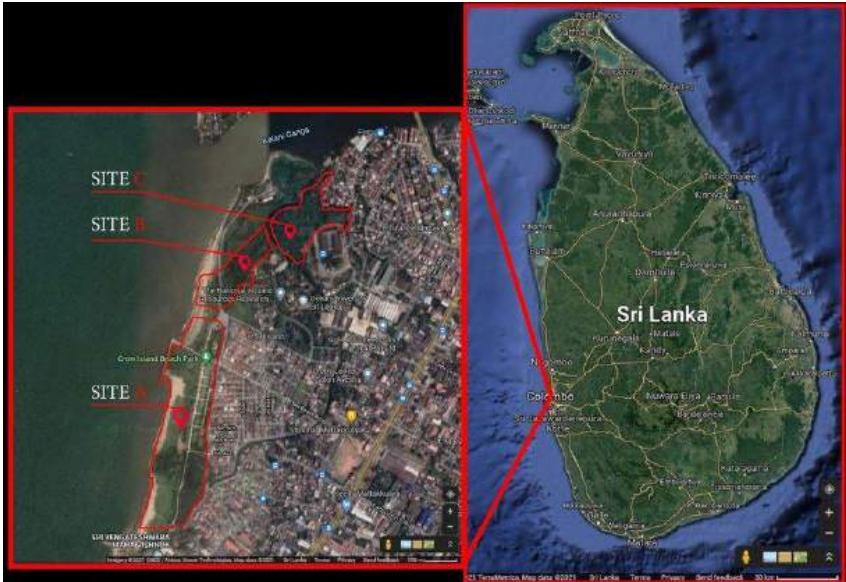
 Annexure 02: 'Dematagoda – Wanathamulla' Urban Space
 Discourse of the Space Identity of Poverty & Social Protection in Urban Space (As a Study of Urban Slums and Shanty Dwellers in Colombo District, Sri Lanka)
Conflict of Interest
The authors declare no conflict of interest.
Ethical Approval
Not applicable
Data Availability
The datasets used in this study are openly available at [repository link] and the source code is available on GitHub at [GitHub link].
Funding
This work did not receive any external funding.
References
Cite this article
Related Research



Special Issue
Launch a focused special issue to highlight research, emerging trends, and expert insights in your academic field.
