



IntelliPaper
Abstract
While studies on the vulnerability to slum environments have received significant attention, albeit limited emphasis on its gender perspective. Put succinctly, recent evidence on the variations in the level of vulnerability especially for women and children in slum environments are lacking. To contribute to address this, this paper investigates the vulnerability of the population in the Douala IV slums of Cameroon, to environmental stressors. The characterization of environmental stressors in Douala reveals a complex interplay of challenges that impact the city's urban environment. Key stressors include air and water pollution, deforestation, inadequate waste management, poor road network infrastructure, inadequate healthcare facility and services, inadequate social and economic infrastructure and services, and climate-related issues. These stressors are multifaceted, with implications for both human well-being and ecosystem health and the research Analyses variations in the level of vulnerability (exposure, sensitivity, adaptive capacity) to environmental stressors in Douala. A systematic sampling of 400 households was conducted in 8 neighborhoods in Douala. This was complemented by 15 key informant interviews and 15 focus group discussions Utilizing a double-layer sampling technique, the research focused on households in different neighborhoods, employing a systematic random sampling method. Questionnaires were administered, and the data were analyzed using SPSS Version 20 software. Results indicate that the women and childrenfaces moderate exposure to floods, with various frequencies reported. Additionally, the study reveals high exposure to other environmental stressors. Sensitivity to floods and water contamination is notable, with a significant portion of the population perceiving moderate to high sensitivity. Health vulnerability is exacerbated by challenges such as waste disposal in streams, standing water, and limited access to healthcare facilities. The findings underscore the interconnectedness of environmental factors and health vulnerability in slum environments. The study equally provides new insights on the relative vulnerability to environmental stressors from a gendered perspective
Explore Digital Article Text
I. INTRODUCTION
Urban informal settlements have increased dramatically over the last four decades throughout major cities in developing countries. Industrialization has increased economic opportunities and social facility options continue to increase rural-urban migration notwithstanding the challenging living conditions involved. These settlements are characterized by substandard housing conditions and a lack of essential services, because the governments of cities in developing countries do not have the necessary financial resources to provide better settlements (UN-Habitat, 2014), with replicating health effects. The 2016 World Cities Report, indicated that the population of slum dwellers in developing countries increased from 689 million to 880 million in 2014. To this effect, a quarter of the world's total urban population reside in slums, making them vulnerable to environmental and man-made hazards.
Slum hazards can threaten their lives, livelihoods, property, infrastructure, economic productivity, natural resources, and regional prosperity (Huq et al., 1999). Responses adopted to handle the risks can, in turn, have long-term implications for the sustainability of their communities. Both governmental and non-governmental organizations have a key role in managing vulnerability and responding to hazards whether natural or human induced. Historically, public policy related to hazard management has reflected early hazard research practice. Its focus was on mitigation, preparedness, response, and recovery (Jones and Preston, 2011).
In the rapidly urbanizing context of Douala IV, slum environments have become focal points for understanding the intricate vulnerabilities faced by women and children due to environmental stressors. The burgeoning population and inadequate urban planning in these areas contribute to substandard living conditions, exposing residents, particularly women and children, to a myriad of environmental challenges. Overcrowded and poorly constructed housing, limited access to clean water, and insufficient sanitation facilities heighten the risks associated with floods, waterborne diseases, and other environmental stressors (UN-Habitat, 2003). The socio-economic disparities and lack of infrastructure exacerbate the vulnerability of these marginalized populations (Smith et al., 2010). It is imperative to delve into the specific dynamics of vulnerability in the Douala IV slums to inform targeted interventions and policies that address the unique environmental stressors faced by women and children in these urban settings.
Exposure of a system to hazards is assessed in terms of the frequency, magnitude and duration of exposure. Hazards include any threats to the system, both sudden shocks (floods) and slow increases in stress on the system (IPCC, 2007). Sensitivity of a system to these hazards is determined by both the environmental and human characteristics that contribute to how a system responds to exposure, while resilience of a system refers to future actions that can improve its ability to cope with outside hazards. It is the capacity of systems, communities, households or individuals to prevent, mitigate or cope with risk and recover from shocks (IPCC, 2007). Slum environments offer difficult living conditions for its inhabitants. Men, women and children in slum environments face different challenges and opportunities living in such environments. This has created more problems. Women and children are considered more vulnerable based on their inability to face and withstand challenges. This has exposed them environmental and health challenges especially in slum environment like that of Bonaberi in Douala. The objective of this article is to investigate and analyze the gendered vulnerability to environmental stressors in the Douala IV slums of Cameroon. The study aims to fill a gap in existing research by specifically examining the variations in vulnerability levels, considering exposure, sensitivity, and adaptive capacity, with a focus on women and children. The research seeks to contribute to a better understanding of the complex interplay of environmental challenges in urban settings, emphasizing the implications for both human well-being and ecosystem health. The research is significant in its exploration of various environmental stressors, including air and water pollution, deforestation, inadequate waste management, and climate-related issues. By systematically sampling households and conducting key informant interviews and focus group discussions, the study provides valuable insights into the interconnectedness of environmental factors and health vulnerability in slum settings. The findings contribute to the broader discourse on urban environmental challenges and highlight the need for gender-specific considerations in vulnerability assessments.
II. STUDY AREA AND METHODOLOGY
Located in the inter-tropical zone in the Gulf of Guinea in the Wouri estuary between latitude and North and longitude and East, Douala IV has a tropical humid climate. The annual rainfall is more than 4000 mm with temperatures ranging between 24°C and 27°C hence, characterized by wet and dry seasons. Created by Decree No. 093-321 of 25th November 1993, Douala IV has an estimated surface area of 21,000 hectares with a population density of 145 persons/km2 (Douala city council 2019). It is the second largest Municipality after Douala III, bounded by the Nsape Drainage Basin to the North, Douala II and the Wouri River to the West and Douala III to the East and South (Figure 1).
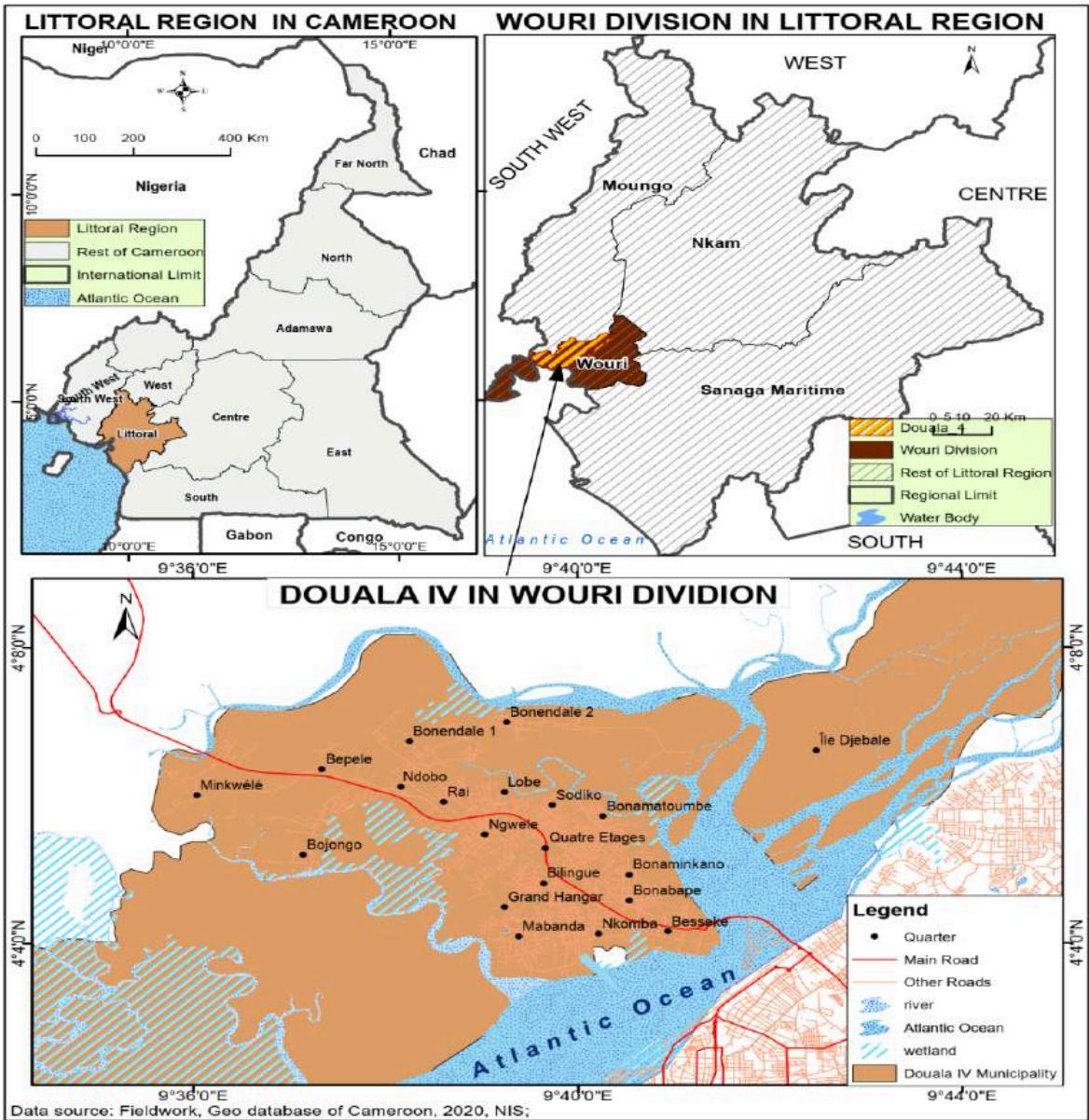 Figure 1: Location of Bonaberi
Douala IV features a tropical monsoon climate (Koppen climate classification), with relatively consistent temperatures throughout the course of the year. Though the city experiences colder temperatures in the months of July and August, the rest of the year is characterized by warm and humid conditions with an average annual temperature of C ( F) and an average humidity of 85. Douala IV records heavy rainfall during the course of the year, with an average of about 3000 millimeters per year. This area experiences its maximum dryness in the month of December when almost all punches and surface detentions are drying off. Douala IV climate favors floods and the spread of diseases due to high rainfall especially during the months of July and August which is a crucial moment for those who live in slum environment.
III. DATA COLLECTION AND ANALYSIS
The study employed a double-layered sampling approach to identify the target population, focusing on households across various neighborhoods in Bonaberi. The study implemented a double-layered sampling strategy to ensure a representative and diverse portrayal of the target population in Bonaberi. The research design included the division of the study area into four quadrants (North, South, East, and West), each containing three neighborhoods. Within each quadrant, two neighborhoods were randomly selected for inclusion in the study. To determine the sample population, the study took into account the total number of households in the Douala IV municipality and the average household size. According to statistics from the council and the Ministry of Housing and Urban
Development, the average household size ranged from 5 to 12 persons per household. Selecting eight persons per household as the median value, the study then divided the total population of the study area by the number of neighborhoods, resulting in an average of 25,000 persons per quarter. Considering the eight neighborhoods under investigation, the study worked with 25,000 inhabitants per quarter, multiplied by eight neighborhoods, estimating a population of approximately 200,000 inhabitants. Further division of the total population by the average household size of 8 yielded 25,000 households in the eight observed neighborhoods. A 5% sample of these households was then taken, resulting in a total of 1,250 households across the eight different neighborhoods under observation (refer to Table 1).
Table 1: Distribution of sampled population in slum areas
| Quadrants | Neighbourhoods | Population | % | Questionnaires administered | % |
| 1 | Ngwele | 55373 | 13.54 | 50 | 4.5 |
| Bojongo | 41972 | 10.26 | 242 | 21.7 | |
| 2 | Mambanda | 92849 | 22.70 | 302 | 27.0 |
| Grand Hangar | 35455 | 8.67 | 89 | 8.0 | |
| 3 | Bonandale | 64441 | 15.76 | 21 | 1.9 |
| Ndobo | 33481 | 8.19 | 315 | 28.3 | |
| 4 | Quatre Etages | 48397 | 11.83 | 40 | 3.6 |
| Sodiko | 37018 | 9.05 | 56 | 5.0 | |
| Total | 408986 | 100 | 1115 | 100 |
Upon systematically selecting the eight neighborhoods within the slum area for the study, houses were methodically labeled using assigned code numbers for households. The study employed a comprehensive data collection approach involving trained data collectors who conducted face-to-face interviews using structured questionnaires for households, women, men, and stakeholders in eight selected slum communities in Douala, Cameroon. The 1,250 questionnaires, representing 5% of total
Source: Researcher's Construct, August 2023 households, focused on slum characteristics, causes of slum growth, vulnerability of women and children, and health challenges in the slum environment. The Likert scale-based questionnaire comprised four sections addressing population demographics, slum characteristics, vulnerability assessment, and health challenges. Additionally, key informant interviews were conducted with administrative stakeholders, community representatives, and service providers. Focus group discussions were held with
men and women separately, exploring various aspects of health challenges and opportunities in slum life. The study applied a double-layered sampling method to ensure representativeness. Interviews were conducted in multiple languages, and participants were given the flexibility to respond in their preferred language. The research demonstrated a meticulous consideration of ethical guidelines, including informed consent, and thoughtful strategies to encourage participation, such as providing a safe space for discussions. The study's rigorous methodology, involving quantitative and qualitative data collection from various perspectives, enhances the credibility and depth of its findings, providing a robust foundation for understanding environmental stressors and vulnerabilities in the studied slum communities. The collected questionnaires underwent analysis using the Statistical Package for Social Sciences (SPSS) Version 20 software. Following this, frequencies were generated and exported to Microsoft Excel 16, where tables were created. The assessment of exposure, sensitivity, and adaptive capacity employed a five-point Likert scale (ranging from least to extreme). This paper delved into an examination of the health conditions of women and children in slum environments, emphasizing the extent of their vulnerability. The degree of vulnerability was gauged by considering exposure, sensitivity, adaptive capacity to the slum environment, and access to health services.
IV. RESULTS
4.1 Exposure to Floods
Exposure to floods not only leads to heightened anxiety but also results in the destruction of property, contamination of water sources, and the proliferation of water-borne diseases. Certain areas in the City of Douala, such as Mambanda, consistently grapple with flooding throughout the year due to their location below sea level. The prevalence of such persistent flooding is observed in 14% of the cases. In instances of moderate flooding, the frequencies are distributed as follows: 36.7% experiencing it once a year, 32% twice a year, 35.9% thrice a year, and 31.9% facing flooding throughout the entire year (refer to Table 2)
Table 2: Exposure to floods
| Flood frequency | Least | Low | Moderate | High | Extreme | |||||
| F | % | F | % | F | % | F | % | F | % | |
| Once a year | 190 | 17.0 | 308 | 27.6 | 409 | 36.7 | 179 | 16.1 | 29 | 2.6 |
| Twice a year | 157 | 14.1 | 396 | 35.5 | 357 | 32.0 | 173 | 15.5 | 32 | 2.9 |
| Thrice a year | 207 | 18.6 | 313 | 28.1 | 400 | 35.9 | 144 | 12.9 | 51 | 4.6 |
| All year round | 196 | 17.6 | 235 | 21.1 | 356 | 31.9 | 172 | 15.4 | 156 | 14.0 |
| Average | 16.8 | 28.1 | 34.1 | 15.0 | 6.0 | |||||
The prevailing perception of flooding in Bonaberi is characterized as moderate, holding a value of 0.34, followed by low (0.29), least (0.18), high (0.14), and extreme (0.05). The study delved into the impact of floods on the health of women and children, exploring the potential health challenges they may face due to flooding. Results indicated varying beliefs within the communities, with
Source: Fieldwork, November 2020
16.8% of the sampled population perceiving floods as least likely to expose them to health issues. Additionally, 28.1% believed the occurrence of floods was low, while 34.1% observed a moderate distribution throughout the rainy season. Fifteen percent (15%) of participants expressed the view that floods were higher in the area during the year, and 6% considered the situation extreme.
The nature and intensity of flooding are influenced by the physical and topographical features of the environment, as well as the built structures within it. The impacts of floods can be both direct and indirect, posing risks of physical and non-physical harm to the human population. For instance, when floods come into contact with water bodies utilized by people, they contaminate the water with waste transported from nearby disposal sites, affecting the water sources crucial for human reliance.
4.2 Exposure to Other Environmental Stressors
Other environmental stressors that the population are exposed to are: fires (mostly from electric circuits and dry season burning of waste), land subsidence, outbreak of epidemics like cholera, wind storms, excessive heat and heavy rainfall (Table 3).
Table 3: Exposure to other environmental stresses
| Environmental stresses | Least | Low | Moderate | High | Extreme | |||||
| F | % | F | % | F | % | F | % | F | % | |
| Fire | 199 | 17.8 | 263 | 23.6 | 249 | 22.3 | 308 | 27.6 | 96 | 8.6 |
| Land subsidence | 214 | 19.2 | 235 | 21.1 | 334 | 30.0 | 233 | 20.9 | 99 | 8.9 |
| Epidemics | 175 | 15.7 | 259 | 23.2 | 351 | 31.5 | 233 | 20.9 | 97 | 8.7 |
| Wind storms | 167 | 15.0 | 195 | 17.5 | 424 | 38.0 | 232 | 20.8 | 97 | 8.7 |
| Excessive heat | 177 | 15.9 | 168 | 15.1 | 199 | 17.8 | 444 | 39.8 | 127 | 11.4 |
| Heavy rainfall | 162 | 14.5 | 183 | 16.4 | 207 | 18.6 | 432 | 38.7 | 131 | 11.7 |
| Average | 16.4 | 19.5 | 26.4 | 28.1 | 9.7 | |||||
The data reveals that the community experiences extreme values of 11.4% for excessive heat and 11.7% for heavy rainfall. Fires are generally prevalent, accounting for 27.6% of incidents. Land subsidence is considered moderately problematic at 30%, while moderate windstorms are observed at 31.5%. Furthermore, excessive heat is perceived as high by 39.8% of the population, and heavy rainfall is considered high by 38.7%. Overall, the community perceives a high level of exposure to various environmental stressors, with a value of 0.28. This is followed by a perception of moderate exposure at 0.26, low exposure at 0.19, least exposure at 0.16, and extreme exposure at 0.10.
4.3 Population Sensitivity in Slum Environments
Flooding is a global phenomenon with varying impacts across continents, contingent upon the preparedness of populations to manage such incidents. Consequently, every nation should establish a proactive and predictable emergency relief plan for floods. The severity of flood effects differs from one continent to another, reflecting the diverse strategies implemented by countries to mitigate these impacts. For example, what might be deemed catastrophic flooding in one continent may not hold the same gravity in another due to differing levels of preparedness. In the case of Bonaberi, the adverse effects of floods extend beyond the general population, significantly impacting women and children, who are particularly vulnerable.
Table 4: Sensitivity to floods
| Effects of floods | Least | Low | Moderate | High | Extreme | |||||
| F | % | F | % | F | % | F | % | F | % | |
| Loss of household property | 192 | 17.2 | 165 | 14.8 | 335 | 30.0 | 402 | 36.1 | 21 | 1.9 |
| Damage of buildings | 108 | 9.7 | 210 | 18.8 | 364 | 32.6 | 397 | 35.6 | 36 | 3.2 |
| Loss of livestock | 204 | 18.3 | 252 | 22.6 | 274 | 24.6 | 362 | 32.5 | 23 | 2.1 |
| Loss of human life | 175 | 15.7 | 260 | 23.3 | 303 | 27.2 | 353 | 31.7 | 24 | 2.2 |
| In accessibility to work & school | 124 | 11.1 | 194 | 17.4 | 517 | 46.4 | 249 | 22.3 | 31 | 2.8 |
| Average | 14.4 | 19.4 | 32.2 | 31.6 | 2.4 | |||||
The sensitivity of women and children to the consequences of floods was notably evident, as evidenced by the fact that 32.2% of the population held a moderate perception of the impact of floods on the loss of household property, damage to buildings, livestock, and the loss of human life, along with disruptions to work and school accessibility during the rainy season. This indicates that a significant majority of households in this community have experienced one or more adverse consequences of floods. For this group, the effects of floods were perceived as neither excessively high nor low in the municipality, as recurring annual floods have become a norm over the past years, sometimes extending throughout the entire rainy season. In contrast, 31.6% of the population displayed a heightened sensitivity to the frequent occurrence of floods and their substantial effects on household property, damage to buildings, livestock, human lives, and the overall disruption of work and school during the rainy season. This group believed that floods exerted a profound impact on the community, lamenting significant losses in material possessions, human lives, income, social status, work productivity, and overall health. Another segment of the population adopted a different perspective, asserting that the effects of floods were low. In this context, 19.4% of the population acknowledged the impact of floods on household property, building structures, livestock, human lives, and the accessibility to work and school during the rainy season, but viewed these effects as relatively minimal.
There is a plausible likelihood that affluent and middle-income households, capable of affording quality housing, vehicles, and potentially securing a reliable water source for domestic activities, experience minimal impacts from floods compared to those with lower incomes. A segment comprising 14.4% of the population perceived the effects of floods as least significant concerning household property, building damage, loss of livestock, human lives, and disruptions to work and school accessibility. Notably, well-constructed homes in the area often disregard town planning principles, acting as impediments to stormwater and overland flow. The construction of substantial embankments and fences to shield homes from floodwaters contributes to a reduction in river channel capacity and alters drainage patterns, disproportionately affecting those who are less privileged. Consequently, the effects of floods are minimized and less acutely felt in these areas.
Contrastingly, 2.4% of the population held the view that the effects of floods were extreme concerning household property, building damage, livestock loss, human lives, and the hindrance of work and school accessibility. This minority perspective likely reflects the harsh reality faced by certain households, emphasizing the urgency of targeted interventions to address the disproportionate impact of floods on vulnerable communities.
4.4 Sensitivity to Water Contamination
The study delved into the sensitivity of the population regarding water sources and their implications for healthcare. The aim was to gauge the community's awareness and understanding of the quality of water utilized for domestic tasks and its potential impact on health. The findings indicated that a significant portion, comprising 34.6% of the population, expressed sensitivity to the prevalent issue of high-water contamination in the Bonaberi area. This heightened awareness extended to concerns about waterborne diseases and pollution, recognizing these as significant threats to the health of women and children in the locality. This indicates a substantial level of recognition among the community regarding the critical linkage between water quality and the well-being of vulnerable demographics, underscoring the need for targeted interventions in water management and health education programs.
Table 5: Sensitivity to water sources Source: Fieldwork, November 2023
| Water sources | Least | Low | Moderate | High | Extreme | |||||
| F | % | F | % | F | % | F | % | F | % | |
| Water contamination | 213 | 19.1 | 210 | 18.8 | 281 | 25.2 | 370 | 33.2 | 41 | 3.7 |
| Water borne diseases | 183 | 16.4 | 251 | 22.5 | 259 | 23.2 | 381 | 34.2 | 41 | 3.7 |
| Water pollution | 187 | 16.8 | 208 | 18.7 | 256 | 23.0 | 406 | 36.4 | 58 | 5.2 |
| Average | 17.4 | 20.0 | 23.8 | 34.6 | 4.2 | |||||
The prevailing sentiment among the majority of the population emphasized that prolonged and frequent hospital visits were attributed to the poor quality of water used for domestic tasks and as a source for drinking within the area. The respondents asserted that many, if not all, household members experienced hospitalization, with some instances leading to fatalities due to water-related challenges such as contamination, pollution, and waterborne diseases like cholera, typhoid, and scabies, among others. Those holding a moderate viewpoint on the impacts of water contamination, waterborne diseases, and pollution, constituting 23.8% of the population, indicated that some of their household members had fallen victim to one or more of these challenges. Additionally, 20% of the population expressed a low perception of the existence of water contamination, waterborne diseases, and water pollution in their residential area, considering it a minimal concern for their health or that of their household in the Bonaberi slum environment. A segment comprising 17.4% of research participants viewed sensitivity to water source contamination, pollution, and waterborne diseases as a lesser concern for their families, while only 4.2% perceived water contamination, pollution, and waterborne diseases to be at an extreme level within the municipality. This underscores the urgent need for targeted health education initiatives and interventions aimed at enhancing water quality in the Bonaberi community, given the varied perceptions and experiences regarding water-related health challenges.
4.5 Health Vulnerability
Field observations conducted in Bonaberi underscored the intricate interplay between the physical and social characteristics, demographic dynamics, and the health landscape within slum environments, collectively influencing the vulnerability of the area. Accordingly, any fluctuations in the social and physical structures across Bonaberi's slums may lead to corresponding variations in the closely intertwined relationship between vulnerability and slum conditions. The study identified five primary waste disposal methods prevalent in the region, including the disposal of waste in streams and springs, along road junctions and major streets, in garbage bins, in the surrounding bushes, and in gutters or water channels. These diverse waste disposal practices contribute significantly to the environmental challenges faced by the community, necessitating targeted interventions for sustainable waste management strategies and improved environmental health outcomes.
Table 6: Household waste disposal
| Waste disposal | Least | Low | Moderate | High | Extreme | |||||
| F | % | F | % | F | % | F | % | F | % | |
| In a stream | 189 | 17.0 | 233 | 20.9 | 379 | 34.0 | 260 | 23.3 | 54 | 4.8 |
| By roadside | 151 | 13.5 | 245 | 22.0 | 308 | 27.6 | 365 | 32.7 | 46 | 4.1 |
| In garbage cans | 100 | 9.0 | 190 | 17.0 | 403 | 36.1 | 378 | 33.9 | 44 | 3.9 |
| In a bush | 141 | 12.6 | 200 | 17.9 | 347 | 31.1 | 386 | 34.6 | 41 | 3.7 |
| In gutters | 115 | 10.3 | 186 | 16.7 | 325 | 29.1 | 422 | 37.8 | 67 | 6.0 |
| Average | 12.5 | 18.9 | 31.6 | 32.5 | 4.5 | |||||
The susceptibility of women and children to environmentally related diseases and infections is profoundly influenced by the prevailing waste disposal practices within the community and the perceptions held by its members regarding the consequences of such practices. According to the research participants, 32.5% affirmed the disposal of waste in streams and springs, while 31.6% perceived it to be of moderate occurrence. Additionally, 18.9% of the population indicated a low prevalence of waste disposal in these areas, with 12.5% considering it to be least common. A smaller proportion, 4.5%, acknowledged an extreme level of waste disposal in streams and springs within these communities. This highlights the urgent need for targeted interventions to address and rectify improper waste disposal practices, mitigating the associated health risks and fostering a healthier living environment for vulnerable populations.
4.6 Vulnerability to Standing Water
In the slum environments of Bonaberi, heavy storms have resulted in pervasive water accumulation around homes and streets, a condition that often persists until the dry season when temperatures rise. The health implications of this standing water cannot be underestimated. A significant portion of the research participants, 40.9%, expressed that the presence of standing water around their homes was extreme. Additionally, 21.1% perceived the frequency of standing water as low, while 16.5% reported a higher frequency. Another 15.9% believed the frequency was least, and 5.6% considered it to be moderate. This underscores the urgent need for targeted interventions to address the impact of standing water on the health of inhabitants, emphasizing the importance of comprehensive solutions to mitigate these environmental health risks in Bonaberi's slum areas.
| Standing water | Least | Low | Moderate | High | Extreme | |||||
| F | % | F | % | F | % | F | % | F | % | |
| Always | 209 | 18.7 | 173 | 15.5 | 58 | 5.2 | 276 | 24.8 | 399 | 35.8 |
| Frequently | 112 | 10.0 | 334 | 30.0 | 41 | 3.7 | 172 | 15.4 | 456 | 40.9 |
| Occasionally | 185 | 16.6 | 223 | 20.0 | 39 | 3.5 | 158 | 14.2 | 510 | 45.7 |
| Very rare | 163 | 14.6 | 276 | 24.8 | 50 | 4.5 | 169 | 15.2 | 457 | 41.0 |
| Not at all | 217 | 19.5 | 173 | 15.5 | 124 | 11.1 | 143 | 12.8 | 458 | 41.1 |
| Average | 15.9 | 21.1 | 5.6 | 16.5 | 40.9 | |||||
In poorly drained areas like Bonaberi, storm runoffs, particularly during floods, combine with sewage from overflowing latrines and sewer systems, leading to pollution and a myriad of health challenges associated with an increased risk of waterborne diseases. The runoff, along with water infiltration from surfaces laden with substantial waste deposits, results in contaminated groundwater, a critical resource for various domestic activities. If this contaminated water is directly consumed from wells, it poses a potential risk of gastrointestinal diseases. The presence of open drains carrying sludge water becomes a source of infection, especially for children who play in them. Flooded septic tanks and leach pits serve as breeding grounds for mosquitoes, contributing to the spread of diseases such as malaria. This complex interplay of environmental factors underscores the urgent need for comprehensive strategies to address the diverse health risks emanating from the environmental conditions in Bonaberi's poorly drained areas.
Table 8: Diseases associated with water
| Characteristics | Classification | Type |
| Water – borne: water acts as a passive vehicle for infectious agent | Bacterial | Salmonella (typhoid)Enterobacte Ndobo (E. coli)Campylobacter, Choleral Leptospirosi |
| Viral | Hepatitis A, Poliomyelitis Rotavir Enteroviruses | |
| Parasitic | Amoebiasis, Giardasis, Intes protozoa, Balantidium coli | |
| Enteric | E.g. a proportion of diarrheas gastroenteritis | |
| Water – Washed: infections that decrease as result of increasing the volume water available | Skin | Scabies, Ringworm, ulcers, Pyodermit |
| Louse-Borne | Typhus and related fevers | |
| Treponematoses | Yaws, Bejel, Pinta | |
| Eye & Ear | Otitis, Conjunctivitis Trachoma | |
| Water-Based: A necessary part of the life cycle of the infective agent takes place in an aquatic organism | Crustaceans | Guinea worm, paragonimiasis |
| Fish | Diphyllobothriasis Anisakasis, Flukes | |
| Shellfish | Flukes, schistosomiasis | |
| Water-Related: infections spread by insects that breed in water or bite near it | Mosquito | Malaria, Filariasis, Yellow fever, De hemorrhagic fever |
| Tsetse flies | Trypanosomiasis(Sleeping sickness) | |
| Blackflies | Onchocerciasis |
4.7 Vulnerability of Healthcare Delivery
The data analysis uncovered that 46.1% of the population perceived their vulnerability to the identified healthcare facilities as moderate. This suggests that they faced challenges such as encountering difficulties in accessing a doctor promptly, enduring long waiting times in health facilities, and experiencing inadequacies in the availability of necessary equipment when seeking assistance from these facilities. Another segment of the population, comprising 20.2%, acknowledged a low level of vulnerability to healthcare delivery. In contrast, 17% of the research participants expressed a belief that their vulnerability to healthcare delivery within the various facilities was high. This variation in perceptions highlights the multifaceted nature of challenges faced by the community in accessing and receiving adequate healthcare, emphasizing the need for targeted interventions to improve the overall healthcare delivery system.
Table 9: Vulnerability enhancement in healthcare delivery
| Health care | Least | Low | Moderate | High | Extreme | |||||
| F | % | F | % | F | % | F | % | F | % | |
| Health facility with doctor | 242 | 21.7 | 200 | 17.9 | 472 | 42.3 | 182 | 16.3 | 19 | 1.7 |
| Health centres | 161 | 14.4 | 276 | 24.8 | 406 | 36.4 | 237 | 21.3 | 35 | 3.1 |
| Clinic | 165 | 14.8 | 266 | 23.9 | 535 | 48.0 | 127 | 11.4 | 22 | 2.0 |
| Dispensary | 121 | 10.9 | 252 | 22.6 | 591 | 53.0 | 108 | 9.7 | 43 | 3.9 |
| Pharmacies | 97 | 8.7 | 184 | 16.5 | 557 | 50.0 | 231 | 20.7 | 46 | 4.1 |
| Medicine stores | 110 | 9.9 | 172 | 15.4 | 520 | 46.6 | 254 | 22.8 | 59 | 5.3 |
| Average | 13.4 | 20.2 | 46.1 | 17.0 | 3.3 | |||||
An additional 13% of the population held the perception that vulnerability to healthcare delivery was minimal in the Bonaberi slum environment, while 3.3% regarded it as extreme in the local context. The vulnerability of women and children to healthcare delivery in Bonaberi arises from the fact that there are more private and mission health facilities than public infrastructures, and the costs and quality of healthcare in these facilities vary significantly. The patient-healthcare provider relationship appears to be consistent across both private and public health facilities. The study further delved into the difference in the approximate distance an individual could cover to reach the nearest pharmacy, medicalized hospital, clinic, health center, and medicine store in both the enclaved communities and urban areas of Bonaberi (see Table 10). This exploration sheds light on the disparities in healthcare accessibility within the slum environment, emphasizing the need for targeted improvements to ensure equitable healthcare delivery.
Table 10: Differences in distances covered by households to the nearest facility between Rural and urban environments of Bonaberi DTN: Distance to Nearest. Source: Fieldwork, November 2023
| Quadrants | DTN medicalized hospital in km | DTN pharmacy in km | DTN clinic in km | DTN health center in km | DTN medicine store in km | |||||
| Urban | Rural | Urban | Rural | Urban | Rural | Urban | Rural | Urban | Rural | |
| Quadrants1 | 1 | 6+ | 1.5 | 4-5 | 1 | 4-5 | 3 | 6+ | 0.5 | 1.5 |
| Quadrants2 | 0.5 | 6+ | 3 | 6+ | 2 | 6+ | 2-3 | 6+ | 0.25 | 1 |
| Quadrants3 | 1 | 6+ | 2 | 6+ | 2 | 5 | 2 | 6+ | 0.25 | 1 |
| Quadrant 4 | 1 | 5 | 1 | 6+ | 1 | 6+ | 2 | 6+ | 1 | 1.5 |
Access to health centers and clinics in the rural areas of Bonaberi poses a significant challenge for community members, directly influencing household vulnerability. Limited pharmacies and hospitals with qualified doctors in these communities compel households to seek medical attention in clinics and medicine stores staffed with insufficiently qualified personnel. Equipped and standardized healthcare facilities are predominantly situated in the urban areas of Bonaberi, creating difficulties for the urban poor residing farther from these areas to readily access and afford healthcare. The study delves into various aspects of health vulnerability, including the presence of mosquito nets in homes, the source of water for domestic chores and cooking, the duration women and children spend at home in slum environments, and incidents of women and children falling victim to rape. Survey results indicate that 74.8% of the population affirmed having mosquito nets in all rooms of their homes, 21.8% expressed neutrality, and 6.4% disagreed with having mosquito nets in all rooms. This exploration sheds light on the multifaceted challenges faced by the community in terms of health access and vulnerability, emphasizing the need for targeted interventions to address these disparities.
Table 11: Other determinants of health vulnerability
| Determinants | SA | A | N | SD | D | |||||
| F | % | F | % | F | % | F | % | F | % | |
| Mosquito nets in all rooms | 393 | 35.2 | 441 | 39.6 | 210 | 18.8 | 33 | 3.0 | 38 | 3.4 |
| Streams water for domestic cleaning | 225 | 20.2 | 466 | 41.8 | 277 | 24.8 | 73 | 6.5 | 74 | 6.6 |
| Well water for cooking | 247 | 22.2 | 470 | 42.2 | 229 | 20.5 | 103 | 9.2 | 66 | 5.9 |
| Women and children spend more time at home | 303 | 27.2 | 426 | 38.2 | 217 | 19.5 | 56 | 5.0 | 113 | 10.1 |
| Women and girls as rape victims | 357 | 32.0 | 366 | 32.8 | 212 | 19.0 | 70 | 6.3 | 110 | 9.9 |
The survey results illustrate that 62% of the population acknowledged using water from streams and springs for domestic cleaning in their homes, with 24.8% expressing neutrality and 13.1% disagreeing with this practice. However, it's crucial to note that water from streams and wells contains runoff from industries and sewage, carrying harmful substances unsuitable for human health. As women and children utilize this water, the chemicals present contribute to an increased vulnerability to health challenges, exposing them to severe diseases such as scabies and respiratory disorders. The number of hours spent within slum environments also plays a significant role in residents' vulnerability. The research found that 65.4% of the population agreed that women and children spend a substantial amount of time at home, compared to men and youths. Meanwhile, 19.5% of the population remained neutral, and 15.1% disagreed with this assertion. The prolonged exposure of women and children to slum environments increases their vulnerability to diseases, as they engage in household activities and child-rearing, while men frequently venture outside for work. Children, in particular, study and play within the same environments, emphasizing why women and children are more vulnerable than men. Additionally, the text touches on the grave issue of rape, highlighting its prevalence in Cameroon and the severe psychosocial and health effects it inflicts on victims. Rape exposes women and girls to risks such as sexually transmitted infections, unwanted pregnancies, emotional trauma, fear, guilt, and depression. The vulnerability of slum inhabitants' hinges on various factors, including their proximity to factories and other facilities. This comprehensive examination underscores the multifaceted nature of health vulnerability in slum environments, emphasizing the need for targeted interventions to address these complex challenges.
Table 12: Approximate distances to facilities
| Facility | 0-1 km | 2-3 km | 4-5 km | 5 km+ | ||||
| F | % | F | % | F | % | F | % | |
| Distance to the nearest factory | 410 | 36.8 | 449 | 40.3 | 74 | 6.6 | 182 | 16.3 |
| Distance to the nearest waste bin | 411 | 36.9 | 414 | 37.1 | 189 | 17.0 | 101 | 9.1 |
| Distance to the nearest stream | 350 | 31.4 | 362 | 32.5 | 242 | 21.7 | 161 | 14.4 |
| Distance to the nearest hospital | 112 | 10.0 | 235 | 21.1 | 372 | 33.4 | 396 | 35.5 |
| Distance to the nearest school | 185 | 16.6 | 381 | 34.2 | 498 | 44.7 | 51 | 4.6 |
| <50m | 51-100m | 100-200m | >200m | |||||
| Distance to the nearest public tap | 216 | 19.4 | 392 | 35.2 | 398 | 35.7 | 109 | 9.8 |
| <5 m | 5-6 m | 6-9 m | 10 m+ | |||||
| Distance to external toilet | 611 | 54.8 | 259 | 23.2 | 169 | 15.2 | 76 | 6.8 |
40.3% of the population hold that the distance from their homes to the nearest factory is estimated at 2-3km, while those with distance between 0-1km made up 36.8% of the population, while 17% of the research participants estimated the distance between their home and the nearest factor of industry to be between 4-5km. Another 16.3% of the research participants estimated their actual distance from their homes to the nearest factory to be beyond 5km. The relationship between environment and health is of extreme relevance in Public Health.
V. DISCUSSION
As per the World Health Organization (WHO, 2020), 23% of global deaths are attributed to environmental factors, and numerous diseases could be preventable in healthier environments. Specifically, the European Environmental Agency reports that poor air quality results in 6.5 million premature deaths globally, with 620,000 occurring in the WHO European Region. The agency underscores that noise and air pollution persistently exert a severe impact on population health, with human activities, particularly in key sectors such as industry, energy, transport, and agriculture, contributing significantly to environmental stressors. The increasing recognition of health implications arising from alterations in environmental conditions due to anthropogenic activities, including industrial expansion in proximity to urban areas, atmospheric pollution, and climate change, plays a pivotal role in shaping perceptions and acceptance of risks associated with environmental challenges.
The examination of the estimated distance between homes and waste disposal sites contributes to understanding the waste disposal attitudes and effects of proximity on the vulnerability of women and children in Bonaberi's slum environments. The survey revealed that 37.1% of the population lives 2-3km away from waste disposal sites or bins, while 36.9% live within 0-1km, indicating closer proximity to dump sites. Additionally, 17% estimated the distance between their homes and waste bins to be 4-5km, and 9.1% live more than 5km away from waste disposal sites. Despite apparent distances, the impact of waste in the Bonaberi slum environment is widespread due to common flooding. Many households, living further from waste bins, experience waste scattered on the surface, transported by wind and water to nearby streams and springs, affecting the entire community. In Bonaberi, numerous streams flow within the area, some being enlarged river channels. An analysis of residential distance from streams showed 32.5% living about 2-3km away, 31.4% within 0-1km, 21.7% about 4-5km away, and 14.4% beyond 5km. Closer proximity to streams increases vulnerability to floods, vector infections, and contamination, as these water sources may carry chemicals and contaminants, posing health risks during heavy rains, particularly for those residing nearby.
Proximity to health facilities plays a crucial role in understanding the health vulnerability of a population, especially in marginalized communities like the Bonaberi slum, which lacks adequate infrastructure. The analysis revealed that the majority (35.5%) of the population lives more than 5km away from a health facility, while 33.4% are approximately 4-5km away, 21.1% between 2-3km, and only 10% live within 0-1km of a health facility. The poorly served roads, lack of street lighting, bridges, and emergency evacuation facilities make transportation challenging, particularly during emergencies. Access roads into these communities are difficult to navigate, relying mostly on motorcycles, contributing to increased vulnerability, especially in emergencies, and making timely healthcare access nearly impossible.
The community's challenges with pipe-borne water distribution force women and children to travel long distances for potable water. The findings showed that 35.7% travel between 100-200m, 35.2% between 51-100m, 19.4% within 0-50m, and 9.8% more than 200m to reach a public tap. The scarcity of potable water affects the quality of water used for cleaning and cooking, increasing vulnerability to waterborne diseases. Limited public taps lead to longer wait times, creating tension and potential violence, further increasing vulnerability to physical and emotional injuries.
Slum environments in Bonaberi rely on exposed pit toilets, presenting challenges. The shallow depth of these toilets, close to the water table, raises vulnerability to bacterial transport by wind and vectors like flies. The risk extends beyond toilet type, as flies can carry contaminants to various surfaces. Analyzing the distance between houses and pit toilets aims to assess household exposure to infections. The vulnerability lies not only in toilet usage but also in the shared living environment, impacting all residents.
VI. CONCLUSION
In conclusion, this study provides valuable insights into the complex relationship between environmental stressors and the vulnerability of women and children in the Douala IV slums, specifically Bonaberi, Cameroon. The findings highlight the multifaceted nature of the challenges faced by the population, ranging from exposure to floods and other environmental stressors to sensitivity and adaptive capacity. The data reveal a substantial impact of floods on the health and well-being of the community, with a nuanced perception of exposure and sensitivity among the residents. Environmental stressors such as fires, epidemics, and inadequate waste disposal contribute to the overall vulnerability of the population. Water contamination emerges as a significant concern, affecting health and leading to increased hospital visits. Moreover, the study emphasizes the importance of healthcare accessibility, with a notable proportion of the population facing challenges in reaching health facilities. The distance to key amenities further complicates the vulnerability scenario, especially in the context of limited infrastructure and difficult access roads. In light of these findings, holistic interventions are imperative to address the root causes of vulnerability in the Douala IV slums. Efforts should be directed toward improving waste management, ensuring clean water sources, enhancing healthcare infrastructure, and developing sustainable urban planning strategies. Such comprehensive measures can contribute to the resilience of the population in the face of environmental challenges, ultimately fostering better health outcomes for women and children in these vulnerable slum environments.
RECOMMENDATIONS
To enhance the overall health and well-being of women and children in slum environments, particularly in Bonaberi, a comprehensive set of recommendations is proposed. This includes advocating for improved urban planning and infrastructure development to mitigate exposure to environmental stressors. Concurrently, implementing community health education programs is crucial to raise awareness about health risks, emphasizing water contamination and other stressors, and empowering communities with knowledge for healthier practices. Prioritizing access to clean water through reliable water supply systems is vital, along with promoting proper waste management strategies to minimize health risks. Additionally, advocating for improved healthcare accessibility, empowering women and children through education and vocational training, and collaborating with governmental and non-governmental organizations for sustainable development projects are essential components. Incorporating disaster preparedness and response plans, ongoing research, data collection, and policy advocacy at various levels contribute to a holistic approach aimed at addressing the multifaceted challenges faced by vulnerable populations in slum areas like Bonaberi.
Conflict of Interest
The authors declare no conflict of interest.
Ethical Approval
Not applicable
Data Availability
The datasets used in this study are openly available at [repository link] and the source code is available on GitHub at [GitHub link].
Funding
This work did not receive any external funding.
References
Cite this article
Related Research



Special Issue
Launch a focused special issue to highlight research, emerging trends, and expert insights in your academic field.
