

IntelliPaper
Abstract
NHS’ employees in England are now under financial constraint due to the high cost of decent housing, as many of them are unable to afford suitable accommodation in their operational regions, particularly in London, the North East, and the North West. Therefore, the study examined the economic effect of rising housing cost on selected employees of National Health Service in England. The study sampled four-hundred (400) NHS employees by limiting the study areas to three areas of the nine in England, including London, the North East, and the North West, using the Taro Yamane approach (1967). Thereafter, logit regression analysis was applied. The descriptive analysis showed that 73.3% of sampled respondents were within an economic active age, while NHS has various unit of department and employees that ensures each residents in England receive comprehensive and universal health care services. The logit regression showed that housing cost as independent variable had an inverse effect on financial status and NHS retention, while utility charges, services charges and council tax showed direct effects. Also, house cost showed a direct effect on NHS recruitment. Implying that, when there is one-unit increases in housing cost, the employees is likely to see their income decrease by approximately 52.4%, while, rising housing cost among recruited employees of NHS is likely to reduce employee retention by 24.5%. The study concluded that rising housing cost among NHS employees worsen their financial status, as well as, reduced employees’ retention in the organisation. The study recommended that the NHS’ administration should embark on policies that provide housing options for its employees through provision of reasonable housing allowance that reflect economic reality or partnership with developers to provide moderate house for her employees.
Explore Digital Article Text
I. INTRODUCTION
Globally, healthcare services are often prioritised among various units of government in order to prevent disease, pandemic, and promote health. Considering this, the World Health Organization (WHO) states that "health is a fundamental human right, essential for the exercise of other rights and for social and economic development" (WHO, 2023). This shows that access to healthcare services is a fundamental human right, not privilege. In the United Kingdom (UK), this statement also holds true, as the government ensures accessibility to healthcare services through various initiatives and health schemes put in place.
One of the most common healthcare service schemes operating across the provinces in the UK is the NHS. The National Health Services (NHS) is tasked with both delivering these health care services to a sizable population and guaranteeing their accessibility across countries in the UK. Proper et al. (2021) state that the NHS makes sure that everyone, regardless of financial status, has complete and universal access to healthcare services. In light of this, research has demonstrated that the NHS's participation in UK's health care has improved health outcomes, including life expectancy and infant mortality rates (Roderick & Pollock, 2022). In addition, since the participation of NHS in UK's health sector from July , 1948, it has made it possible for a large number of the public to access health care, as well as, reduced the disparity that often occurred in health care services among different socioeconomic group in the UK. For instance, the NHS has improved patient outcomes and survival rates by tackling cancer through programs like the Cancer Treatment and Research Programme (NHS, 2020).
Meanwhile, the success of NHS in the UK without a doubt also depends on the quality of workforce present in the organisation. The workforce unit of the NHS may be classified into four that include healthcare professionals, healthcare support staff, managers and finance staff and other roles. According to Roderick and Pollock (2022), one of the primary responsibilities of healthcare professionals is to treat patients with medical care and support them medically in order to improve healthcare outcomes, save lives, and improve patients' quality of life through their knowledge, empathy, and utmost commitment. These staff make sure that duties are carried out efficiently in the unit, enabling patients to obtain quality healthcare services. Despite the contributions of various NHS workforce in the UK, many of them face housing challenges that affect their stability within the organisation.
However, when staff that ensure smooth running of the NHS' programmes have a good residence that are affordable, these personnel are likely to provide their optimal services to patients and healthcare seekers, which goes a long way in impacting productivity and performance. According to Chung et al. (2020), productivity within the context of healthcare services concentrates on increasing production while decreasing waste in the process of rendering healthcare services for patients. Once optimal productivity is achieved through ensuring that staff are well-accommodated, performance that include achieving targeted health outcomes and patient satisfaction is likely possible of attaining by NHS. Given this, Cribb et al. (2023) remark that one of the most important ways to guarantee that a business keeps its best brains is to ensure that they have access to low housing cost, as well as, suitable working conditions. Considering this, home assistance is essential to population and public health staff. Also, Grewal et al. (2024) discovered that homeownership is a key indicator of success. Given the significance of housing, research has looked at a variety of housing-related characteristics, such as homeownership, affordability, and the burden of housing costs, and their implications on health (Yi, 2023; Chung et al., 2020).
In the current century, the UK that comprise of four constituent countries of England, Scotland, Northern Ireland and Wales is facing high cost of housing, in which majority of her citizens with many professional individual, including NHS staff of England are no exempted. For instance, a study conducted by Cribb et al. (2023) supports the above claim and revealed that of the poorest income realised in 2021 was spent on housing, while a significant portion of the monthly income of many poor individuals in the UK was spent on housing. Given that the majority of NHS employees are members of the lower and middle classes, it is likely that a sizable portion of the workforce also faces these issue. In the case of NHS employees, the Housing Executive (2023) found in a survey that of the sampled NHS employees nationwide confirmed that they do not have access to affordable housing in their local communities, which also contributes to the organization's 154,000 staff shortfall. Since many employees find it difficult to afford quality housing closer to their places of employment, this problem is likely to have an impact on the organization's operations, especially on issues like low retention rate and frequent recruitment process to fill the vacancies; while, on the staff's part, will have bad financial status, as many of them spend exorbitantly on housing, which affect access to some essential needs. For instance, the high cost of housing is likely to lead to many alternatives forgotten, which results into unable to satisfy some other basic needs.
The UK government in her approach has rolled out some policies to tackle the high housing cost within the country, with England government taking such steps also. For example, the "Affordable Home Programme (AHP)," which runs from 2021 to 2026 has expended the sum of £4 billion to support its effective implementation of providing affordable housing (GOV.UK, 2025). Even with government support programmes in place throughout the UK, some average family cannot afford the high cost of decent house, which requires a significant amount of their yearly salary to adequately maintain. Considering this, Building Research Establishment (2025) discloses that the NHS needs the sum of £1.4 billion on annual basis to meet-up with poor-quality housing and staff housing needs.
The current study's justification is based on rising housing costs and their effects on NHS employees' financial indicators, hiring and retention, productivity, and performance. Meanwhile, England is considered being among the four countries that makes up the UK and due to its unique combination of a public funded healthcare system in the current study and a housing market characterised by significant affordability challenge, making it an important case study. As such, the aim of this paper is to examine the economic effect of rising housing cost on selected employees of National Health Service in England.
1.1 Statement of the problems
NHS employees in England are now under financial constraint due to the high cost of decent housing, as many of them are unable to afford suitable accommodation in their operational regions, particularly in London, and the South East of England. NHS employees' general quality of life has been impacted by the ongoing high cost, which has resulted in problems including high stress, anxiety, and lower job satisfaction (Propper et al., 2021; Chung et al., 2020). For instance, some of the organization's employees may live far away, requiring them to travel huge distances, that many affect the level of their daily contributions due to stress. As a result of this, problems such as reduced savings, higher debt for certain employees, the inability to satisfy other basic needs, and other issues are often reoccurring on a monthly basis.
According to available records, of NHS workforce do not have access to affordable housing, contributing to the organization's 154,000 staff shortfall (Housing Executive, 2023). Because of this, many of the organisation's members are having trouble affording accommodation near their places of employment, which is causing a rise in employees' turnover, and increment in the annual cost of recruitment. However, specialties like nursing and midwifery, where personnel shortages are already common, are particularly affected by this issue. For instance, a Royal College of Nursing research revealed that one of the main reasons nurses chose to quit the field or go elsewhere was the high cost of accommodation (Senek et al., 2020). As a result, the organization now needs to deal with high recruitment expenses and a decline in patient continuity of treatment. Aside this, the Health Foundation research indicated that a lack of employees and a heavy workload were the main causes of NHS employees' poor performance and productivity (Roy et al., 2020). These issues are being made worse by high housing prices, which makes it even harder for NHS employees to deliver high-quality treatment.
Furthermore, studies reviewed in this studies like Morrow and Lynch (2025), Meadows et al. (2024), Grewal et al. (2024), Broadbent et al. (2023) basically used a systematic review approach and simple percentage approach, while Gai et al. (2024) employed a panel two-way fixed effect approach. For instance, Meadows et al. (2024) employed a systematic review by reviewing studies from PubMed, Embase, MEDLINE, and HMIC, using a time frame of 2020 to 2023. Ali-Akbar et al. (2007) assert that a systematic review study is primarily dependent on high-quality resources, and that the lack of such materials may lead to biased conclusions and methodological gaps that make the findings unsuitable for the implementation of policies. This suggests that there is methodological gap. As such, the present study applies logit regression analysis, to analyse the economic effect of rising housing cost on the selected employees of the National Health Service in England. Logit regression is a binary response approach that allows a researcher to estimate the probability of an event occurring based on assigned predictor variables (Falade, 2020).
1.2 Objectives of the study
The broad objective is to examine the economic effect of rising housing cost on selected employees of National Health Service in England. Others include;
i. To identify the socio-economic characteristics of the selected employees of the National Health Service in England,
ii. To investigate how rising housing cost affects the financial status of the selected employees of the National Health Service in England,
iii. To determine the nexus between rising housing cost and recruitment and retention of the selected employees of the National Health Service in England.
II. LITERATURE REVIEW
2.1 Housing and Workforce Retention
Grewal et al. (2024) evaluated the relationship between home costs and inhabitants' health using a systematic review. According to reviewed research, housing price changes are not uniform across all regions and are also linked to physical and mental health outcomes, with renters and those with lower incomes in the economy suffering from the negative health effects of rising housing costs. Conversely, it was shown that homeowners and those with higher incomes benefited more from rising housing costs. The study came to the conclusion that different participants in the market do not fairly share in the possible health benefits linked to increased home prices.
Additionally, Bosque-Mercader and Siciliani (2023) investigated the relationship between hospital quality in the English National Health Service and bed occupancy rates. Multi-regression analysis as a regression technique was taken into consideration. Analysis revealed that, bed occupancy rates showed a negative correlation with patient-reported health gains and a positive and substantial impact on overall and surgical mortality. Implying that high bed occupancy rates are linked to poorer hospital quality, which has an impact on patient care services' performance and overall productivity.
Yi (2023) also looked into how homeownership and the burden of housing costs affected people's self-rated health in Chinese cities. Empirical investigation indicated that the discriminatory hukou system, which worsens migrants' access to social support and places them in a socioeconomically disadvantaged position, is largely to blame for the health decrease among migrants. Investigating the factors that contribute to nurses' work discontent in the UK was a major focus of Senek et al. (2020). A cross-sectional mixed-methods survey was used in the study. Using a simple percentage technique, it was demonstrated that two-thirds of the nurses who participated in the survey had to deal with high housing costs in their homes, which had an impact on their performance and productivity and increased employee turnover. It was determined that a significant percentage of nurses expressed feelings of discontent and discouragement. Additionally, Brimblecombe et al. (2020) looked at how unpaid care affected the health and employability of young people in England between the ages of 16 and 25. The study used a longitudinal method using a sample of households in the United Kingdom. The expenses of young adults providing care to the state are £1048 million a year, according to an empirical estimate. Therefore, it was concluded that the practice in the fields of health, social care, employment, and welfare benefits is determined by the high costs to the state and the significant individual consequences of providing unpaid care.
2.2 Financial Stress And Mental Health
Meadows et al. (2024) examined the UK's cost-of-living dilemma in light of its substantial effects on population health. Through empirical investigation, it was found that persistent increases in the cost of living had a negative impact on people's physical and mental health, especially for vulnerable groups including small children, the elderly, and those with chronic multi-morbidity. Therefore, it was determined that a high cost of living had a negative impact on all economic actors.
However, the study by Gai et al. (2024) examined the relationship between housing stress and healthcare expenses in China. Panel data analysis was used in the study. According to the estimates, there was a substantial positive association between home stress and medical expenses. Implying that healthcare expenses increase by 0.141 for every increase in housing stress. The study came to the conclusion that housing stress has a negative impact on healthcare expenses as well as the performance and productivity of Chinese healthcare personnel. Therefore, it is advised that the Chinese government take steps to reduce housing stress, increase family income, and improve the health of its citizens.
Broadbent et al. (2023) investigated how the cost-of-living issue affected health professionals' public health. The substantial effects on both physical and mental health were the primary focus of the investigation. The findings indicated that health professionals' financial well-being is impacted by the high cost of living problem, particularly when it comes to covering their basic needs and improving their performance and productivity.
Zhou et al. (2022) investigated the relationship between migrant workers' multifaceted poverty in China and public health services. The study's scope was restricted to 2018-2021. It was shown that the new generation of migrant female workers in the western area experience multidimensional poverty reduction most effectively when public health services are improved. Thus, the study came to the conclusion that migrant workers' poverty is decreased by public health services. Roy et al. (2020) also looked at how National Health Service (NHS) ambulance workers felt about the most recent increase in the NHS occupational pension age. To achieve this, 35 in-depth interviews with the chosen respondents were carried out. The findings indicated that ambulance workers want to leave their jobs well before they reach retirement age because they are more concerned about whether their work demands can be sustained and because their social support is eroding, both of which have a negative long-term impact on an organization's performance and productivity. Furthermore, the majority of the tested ambulance workers believe that their employers have deceived them by delaying their retirement because of the shift in the pensionable age, which has a negative impact on staff retention.
The impact of housing as a social predictor of health and wellness among healthcare professionals was examined by Steve et al. (2020). Tenants in west central Scotland were sampled for a longitudinal research in order to do this. The supply of housing services, the quality of the property, and neighbourhood characteristics were shown to be the main factors that were strongly connected with health and wellbeing measurements. Therefore, it was determined that including accessibility into housing policy and practice for employees helps to focus on housing as a public health priority.
McBride et al. (2023) investigated the relationship between financial status and depression risk among UK healthcare professionals. The study employed a longitudinal survey data technique, and the relationship between depression and financial status was evaluated using a logistic regression analysis. It was established that having financial status at baseline was associated with a greater likelihood of experiencing depression symptoms at follow-up. Additionally, among healthcare professionals, financial problems rose for and fell for . It was determined that healthcare personnel in the UK are at a higher risk of depression, which results in subpar service performance.
The effect of short-term financial aid on medical expenses for veterans who are homeless was examined by Richard et al. (2021). Over the years, it was experimentally confirmed that veterans who got short-term financial aid had 3.3%$ annually over the next 15 years.
Gender disparities in US healthcare professionals' pay and benefits were examined by Kathryn and Atheendar (2019). It has been shown that a large number of female healthcare professionals, especially women of colour, experience financial hardship and lack health insurance, which has an impact on their ability to satisfy their daily demands. Additionally, it has been found that increasing the minimum wage to $15 per hour lowers poverty rates among female healthcare workers by (27.1%) to (50.3%). It was concluded that substantial adjustments to the healthcare compensation system are necessary to promote gender equality and racial/ethnic justice as well as better economic success.
2.3 Systemic Healthcare and Performance
Morrow and Lynch (2025) studies the financial viability of home support in Ireland through exploring complex issues. By doing this, the research brought attention to the issues that act as threats when the economic support on rising housing cost are not adequately solved. As such, the studies discovered that inadequate home support worsen problems including low pay, job instability, and high staff turnover, all of which have a negative impact on service quality. Due to low performance and productivity, the study found that inadequate home support services for healthcare professionals had an impact on the provision of high-quality services. With the suggestions that addressing the issue requires boosting government investment, creating career pathways and professional development, and improving pay and working conditions.
Also, Rodgers et al. (2018) investigated the financial benefits and health effects of fulfilling housing quality criteria. When the authors examined data from a natural experiment of house modifications in Carmarthenshire, UK, they discovered that there was a correlation between fewer emergency hospital admissions and upgrades to electrical systems, windows and doors, wall insulation, gardens, and estates. The findings of the study imply that raising housing quality standards can have important positive effects on both the economy and human health. However, a research on the cost-benefit analysis of the lockdown in the UK during the COVID-19 pandemic was carried out by Miles et al. (2021). The outcome demonstrated that a quick relaxation of limits is now necessary since the costs of maintaining strong restrictions are so high in comparison to the potential benefits in terms of lives saved. According to the study's estimation, the biggest benefits of avoiding the worst fatality case scenario were greater than the lowest estimate of lockdown costs.
2.4 Gap to Fill
Despite various existing studies on NHS and housing affordability, there still remains a significant gap in understanding the specific effect of housing affordability and workforce stability in the NHS in England, while few available studies have individually explored the relationship between housing costs and health outcomes (Grewal et al., 2024; Zhou et al., 2022), housing stress and healthcare expenses (Gai et al., 2024), and housing affordability, employees' physical and emotional well-being (Chung et al., 2020). Aside this, majority of studies available basically use simple approach technique, hence, brings a need for further research using a robust technique (logit regression) that produces a more scientific inference.
2.5 Theoretical Framework and Methodology
The current study adopted the research onion model, which was proposed by Saunders et al. (2009) for the methodology section. The model has six layers that include research philosophy, research approach, research strategy, choice, time horizon and technique and procedure. In doing so, the study embraced positivism research philosophy, which holds that conclusions drawn from the study should primarily be based on facts rather than subjective opinions. Considering this, the study used Marshall's (1890) efficiency wage theory as the theoretical proposition in achieving the positivism research philosophy concept. The theory's assumption is that in order to boost productivity, lower turnover, and boost employee morale, businesses operating in a particular economy should make sure that workers' wages are higher than the market-clearing rate. According to the Housing Executive (2023), the NHS may need to pay higher wages in order to recruit workers, given that it is short of 154,000 employees to meet the needs of all UK people who require healthcare services. Nonetheless, research has demonstrated the applicability of the theory in comprehending the relationship between housing costs and employees' salaries and productivity levels in a company. For example, a research by Richard et al. (2021) demonstrated that companies that offer efficiency wages face lower turnover and increase productivity, particularly in high-skilled worker industries.
The deductive research approach was used to satisfy the second layer. Since the current investigation was predicated on the theoretical framework of applying efficiency wage theory, the use of deductive reasoning was justified. Yin (2014) asserts that the use of the deductive approach is predicated on a theoretical framework with the intention of expanding upon the body of current theory. The third layer is the research strategy, whereby the current study used a case study with the restriction of focusing on the National Health Service employees who work in England, by limiting the study areas to three areas of the nine in England, including London, the North East, and the North West. The reason for choosing these three is that they are the top three with the highest NHS' employees in England.
Choice is the subject of the concept's four layers. Both qualitative and quantitative data types, which may be mixed, mono, or multi-method are well-identified in literature. Mono (quantitative) was employed for this investigation. Utilising a single technique was the justification for its usage. The researcher created an online questionnaire to gather quantitative data in accordance with previous study on the subject. Considering this, the study's sample size consisted of four-hundred (400) NHS employees from three regions of England, including London, the North East, and the North West, while the Taro Yamane approach (1967) was employed to determine the sample size. The analysis of both the total population and sample size are given below in Table 1 and the equations (i).
| Region Use | NHS’ Staff |
| London | 192,891 |
| North East | 165,871 |
| North West | 152,222 |
| Total | 510,984 |
Source:https://digital.nhs.uk/data-and-information/publications/statistical/nhs-workforce-statistics
The Taro Yamane technique (1967) is stated below in equation i;
Where, n : sample size, N : the population and e : the margin error (it could be 0.10, 0.05 or 0.01)
Substituting the total population from the Taro Yamane technique (1967), we have equation ii below;
The respondents attended to the questionnaire via online, which served as the instrument for this investigation. The researcher distributed the surveys using the google form that was used to create it. Cronbach's alpha was utilised to evaluate the instrument's dependability (0.76). Given this, studies have demonstrated that a high Cronbach's alpha value ( ) indicates strong internal consistency (Patton, 2015; Yin, 2014). The instrument utilised was appropriate as the Cronbach's alpha value was deemed high. Additionally, the populations of the North East, North West, and London areas that were sampled varies; therefore, using the same sample for all of the areas would be biased. To achieve this, a proportionate statistical sample size was distributed across the three regions that were chosen using equation iii as used by Falade et al. (2020).
Where
Sample population, Population of each unit, Total population of the study area
Calculated sample for the total population; therefore, we have
| London = 192,891/510,984 × 400/1 = 151 | North West = 152,222/510,984 × 400/1 = 119 |
| North East = 165,871/510,984 × 400/1 = 130 |
Source: Self-developed (2025)
The fifth layer is time horizon that deals with time of data collection. The study used cross-sectional because the data used in the study were collected at a certain point in time. Furthermore, the six layer that deals with the technique and procedure was achieved using logit regression analysis. The rationale for considering the logit is due to binary response of the variable. According to Ayeomoni and Falade (2020), binary response is a type of data analysis that deals with two possible outcome values. Since the questionnaire outcome is in two categories of YES (1) and NO (0); hence, justified its usage.
The equations below expressed the models for the logit analysis.
Second Objective: To investigate how rising housing costs affect the financial status of the selected employees of the National Health Service in England,
In achieving the objective two, the model is stated mathematically below;
Where; HOS: Housing cost, UTIC: Utility charges, SERC: Services charges and COUN: Council tax
Putting equation (iv) in econometric form, we have equation (v)
Third Objective: For objective three, we have equation (vii)
Where; RECT: NHS recruitment and RETE: NHS retention
The econometric forms of equation (vii) and (viii) are given below
Lastly, ethnic consideration, especially the privacy of the respondents was strictly protected in order to obtain unbiased result.
| Variables | Question | Measurement |
| FINS | Weekly pay band | £500 – below (0), £500–above (1) |
| RECT | The high cost of housing has led to high turnover of NHS' employees, resulting in the need for regular recruitment of new employee by the organization | Yes (1), No (0) |
| RETE | The NHS' employees stay longer than expected in the organisation despite the rising housing cost. | Yes (1), No (0) |
| HOST | There is rising housing cost in England that NHS' employees are not exempt from. | Yes (1), No (0) |
| UTIC | As an NHS employee, paying your utility charges on a regular basis does not affect other essential payment(s) | Yes (1), No (0) |
| SERC | Payment services charges does not affect the fulfilment of other necessary payments at home. | Yes (1), No (0) |
| COUN | Council tax payments do not prevent the payment of others essential need. | Yes (1), No (0) |
Source: Self-developed (2025)
III. FINDINGS AND DISCUSSION
| Age Status | Freq. | Percent | Educational Status | Freq. | Percent |
| 16-30 years | 66 | 27.5 | GCSE-BTEC | 11 | 4.6 |
| 31-45 years | 110 | 45.8 | Post-16 EDU | 59 | 24.6 |
| 46years-60years | 51 | 21.3 | Graduate | 80 | 33.3 |
| 61years-above | 13 | 5.4 | Postgraduate | 90 | 37.5 |
| Total | 240 | 100.0 | Total | 240 | 100.0 |
Source: Field survey (2025)
The Table 4 above depicts the obtained socioeconomic characteristics data of the four-hundred respondents who are staff of NHS in the sampled areas. From the survey, it was discovered that larger percentage (16-45 years) of the sampled respondents were within an economic active age. Implying that NHS' employees within England were economically productive, judging from of the total percentage of sampled respondents. Also, educational level revealed that higher percentage of the NHS' employees are educated to graduate and postgraduate level .
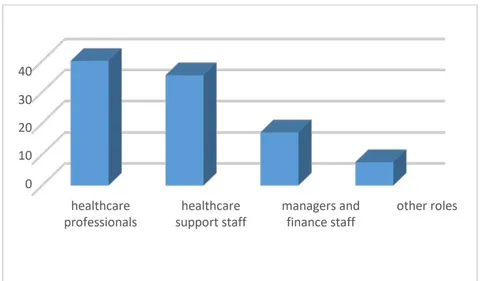
Source: Field survey (2025)
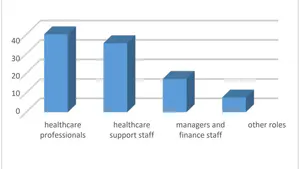
Figure 1: Employees Unit
The classification of employees' unit shows that health professional like doctors, physician, nurse, etc., within this unit had ninety-six respondents, indicates ; health support staff saddled with administration task, domestic and portering tasks, paramedics, ambulance and emergency response crew also had 85 respondents, indicates ; managers and financial staff that ensure smooth running of hospital, management, and other essential coordinate service had 41 respondents, represents ; and other roles also had the lowest value of 18, representing . The implication is that NHS has various unit of department and employees that ensures each residents in England receive comprehensive and universal health care services.
3.1 Logit Estimates
3.1.1 Rising Housing Cost and Financial Status
| Variable | Odds Ratio | Std. Err. | z-Statistic | P>|z| |
| HOS | -0.7417 | 0.05 | -5.962 | 0.001** |
| UTIC | 3.0741 | 0.11 | 11.22 | 0.000** |
| SERC | 1.9566 | 0.08 | 8.390 | 0.001** |
| COUN | 2.3871 | 0.12 | 7.251 | 0.001** |
| _cons | -0.1683 | 0.15 | -11.874 | 0.000** |
| Prob. > chi2= 0.0692; Pseudo R2 = 0.333 | ||||
| Note; odds ratio approximate to 4 decimal place; ** represents significance at 0.05 | ||||
Source: Stata Output (2025)
It was discovered as shown from the estimate that housing cost (HOS), utility charges (UTIC), services charges (SERC) and council tax (COUN) showed significant effects on financial status (FINS). Judging from the -value ( ) of the estimated model, the findings imply that the individual relationships that existed between the sampled variables were not unlikely due to chance, but rather occurrence.
3.2 Rising Housing Cost, Recruitment and Retention
| NHS recruitment | NHS retention | |||||||
| Variable | Coefficient | Std. Err. | z-Statistic | P>|z| | Coefficient | Std. Err. | z-Statistic | P>|z| |
| HOST | 0.6368 | 0.21 | 2.256 | 0.024** | -0.2817 | 0.2 | -6.339 | 0.001** |
| UTIC | 2.7431 | 0.31 | 3.363 | 0.011** | 2.4404 | 0.3 | 2.974 | 0.003** |
| SERC | 2.4381 | 0.11 | 8.912 | 0.000** | 1.7821 | 0.1 | 5.781 | 0.002** |
| COUN | 6.6994 | 0.47 | 4.753 | 0.011** | 1.3472 | 0.15 | 1.987 | 0.047** |
| _cons | 0.1706 | 0.16 | -11.931 | 0.000** | 2.1406 | 0.2 | 3.805 | 0.001** |
| Prob. > chi2= 0.0501; Pseudo R2 = 0.310 | Prob. > chi2= 0.0411; Pseudo R2 = 0.410 | |||||||
| Note; odd ratio approximate to 4 decimal place; ** represents significance at 0.05 | ||||||||
Source: Stata Output (2025)
It was discovered from the logit regression in Table 7 that housing cost had an inverse effect on financial status and NHS retention, while on the contrary, it showed a direct effect on NHS recruitment.
IV. DISCUSSION OF FINDINGS
It was discovered that housing cost (HOS) had an odds ratio coefficient of -0.7417. Judging from the relationship, house cost (HOS) showed a negative sign with the financial status (FINS). This indicates that as housing cost (HOS) of NHS employees in England increases, there is probability for employees to experience decline in financial status due to high cost of accessing house. However, the magnitude of the coefficient showed that for every one-unit increases in housing cost of NHS employees in England, they observe 0.7417 decrease in the log-odds having a better financial status; as such, or decrease is likely to be observe by NHS staff for every one-unit increase in housing cost. Considering this, Cribb et al. (2023) reveal that one of the best way in which an organization keeps its best brains is to ensure that they have access to low cost housing, as well as, suitable working conditions. This finding also supports the survey of the Housing Executive (2023) that found of the sampled NHS employees of not having access to affordable housing in their local communities, which also contributes to the organisation's 154,000 staff shortfall. Empirical studies (Morrow & Lynch, 2025; Meadows et al., 2024) found that persistent increase in the cost of housing had a negative impact on people's physical and mental health, with a conclusion that inadequate home support worsen problems including low pay, job instability, and high staff turnover, all of which have a negative impact on service quality.
It was showed from the Table 6 of the logit regression that housing cost (HOS) was significant with a -value (0.024). Judging from the odds ratio value, it implies that for every one-unit increase in housing cost witness by NHS' employees in England, increased NHS recruitment (1-0.6368) by . This shows that high housing cost increases recruitment process for the organisation. This finding supported Atheendar (2019) discovery with a conclusion that recruitment of health professional is basically a merit and professionalism driven. Also, housing cost (HOS) was significant and showed an inverse sign with NHS retention (RETE). The odd coefficient was 0.2817, with a -value of 0.0011. This shows that rising housing cost among recruited employees of NHS is likely to reduce employee retention by . The economic implication is that workers of NHS that face high housing relative to their wage are likely to experience financial strain, worsening their financial status and increasing the likelihood of employees' turnover as they seek better employment opportunities. Considering this, Morrow and Lynch (2025) and Richard et al. (2021) discovered that rising housing cost without support leads to job instability and high staff turnover.
Also, variables associated with housing cost in England that include utility charges (UTIC), service charges (SERC) and council tax (COUN) were independently studied. From the logit result in Table 6, finding showed that increase in utility charges, service charges and council tax are linked to a higher probability of witnessing increased financial status. For utility charges, this implies that rising cost on basic utilities like electricity and others supplied to NHS employees' house is likely to boost their financial status. Similar findings were established for service charges (SERC) and council tax (COUN), with the implications that rising in the cost of essential service and council tax promote workers' financial status. However, a positivity sign obtained from the coefficient values of utility charges, service charges and council tax negated the a priori expectation. The rationale for such is that both utility charges and service charges are essential for NHS' employees to live comfortably. Broadbent et al. (2023) and McBride et al. (2023) discoveries were contrary with the present study findings with the discoveries that the high cost of living, particularly when it comes to health professional covering their basic needs affect their financial status. However, Chung et al. (2020) findings supported the result and showed that housing affordability, as well as, access to basic house need promote Hong Kong's healthcare professionals' status. Furthermore, council tax payment is essential in ensuring citizens have access to essential public need.
V. CONCLUSION AND RECOMMENDATIONS
The study examined the economic effect of rising housing costs on selected employees of the National Health Service in England. Logit regression analysis was used. It was discovered that housing cost, as an independent variable, had an inverse effect on financial status and NHS retention, while a direct effect was established for NHS recruitment. Additionally, utility charges, service charges, and council tax showed direct effects. The study concluded that the NHS workforce faces high housing costs that worsen housing affordability and workforce stability in England.
i. It is recommended that the NHS administration should embark on policies that provide housing options for its employees through the provision of reasonable housing allowances that reflect economic reality, or through partnerships with developers to provide moderate housing for their employees. This can be strengthened by negotiating discounted rates with developers and offering interest‑free loans for housing deposits.
ii. It is advised that the NHS should offer retention incentives, especially for employees who provide essential health services to citizens. This can be achieved through loyalty bonuses, as well as retention payments to encourage employees who have been with the organization for a long period.
iii. The NHS should collaborate with government by promoting policies that assist affordable housing, such as expanding the supply of affordable housing, implementing rent controls, and providing housing subsidies.
Conflict of Interest
The authors declare no conflict of interest.
Ethical Approval
Not applicable
Data Availability
The datasets used in this study are openly available at [repository link] and the source code is available on GitHub at [GitHub link].
Funding
This work did not receive any external funding.
Cite this article
Related Research

Special Issue
Launch a focused special issue to highlight research, emerging trends, and expert insights in your academic field.