



IntelliPaper
Abstract
The paper is to compare two villages in Songak-myeon, Asan, Cnungnam Province in Korea. It tries to show how the joint village project, which began with the support of the same external organization, produces different results depending on the internal conditions and circumstances of the village. From the end of the 1990s, Pyeongchon-ri and Sugok-ri started developing villages under the influence of the environmentally friendly farming movement. And subsequent supports were provided by local organizations for the development of the village. However, the village project in Sugok-ri, which focused on economic performance, later turned out to be a failure, and the residents changed to pursue activities for their own economic interests individually. On the other hand, In Pyeongchon-ri, the cooperation among villagers was strengthened in implementing support projects by similar external agencies. In addition, community ties and identity have been strengthened as problems have been solved through cooperation among residents in the process of promoting the village project. Nevertheless, projects undertaken in Pyeongchon-ri for the purpose of increasing economic performance was all failed. Through these findings, the paper asserts that the neo- endogenous development approach utilizing external support based on internal cooperative network among villagers must be a very useful method for rural development in contemporary societies.
Explore Digital Article Text
I. INTRODUCTION
Rural development policy has been reshaped since the mid-2000s (Kim & Lowe, 2012). In particular, the OECD's declaration of "Farm Policy 3.0" (OECD, 2015) in 2015 can be said to be a manifestation that the rural development policy is shifting from an economic-oriented exogenous development policy to an endogenous one that focuses on improving the quality of life and well-being of rural residents. However, considering that the OECD announced changes in rural policy paradigm in 2006(OECD, 2006) and then held subsequent seven conferences worldwide over ten years before the release of rural policy 3.0 in 2015, it does not seem that the shift to an endogenous rural development policy was easy. In other words, a shift in rural policy can only occur when numerous stakeholders are persuaded through various theoretical frameworks that explain the changes in real circumstance, rather than solely relying on individual ideas from policymakers. Therefore, there is a need for a concept to encompass the various examples that may arise during these transitions, and what has emerged for this purpose is the concept of 'Neo-Endogenous Rural Development'. (Lowe et al., 1995; Ray, 2001; Kim & Lowe, 2012)
There are various studies (Ward et al., 2005; Kim, 2007; Shucksmith, 2009) that apply the concept of Neo-Endogenous Rural Development (NERD), but its actual application is primarily focused on rural areas in Western societies. In countries like South Korea, where exogenous development has historically dominated development policy, finding cases of NERD is challenging. However, Kim (2016) argues that NERD is a transitional policy that emerges during the shift from exogenous to endogenous development. Considering his argument, it is possible to identify cases of NERD in South Korea as well. Given that endogenous development is ultimately the most desirable policy direction for all countries worldwide, this suggests a pathway for transitioning from an exogenous development-oriented country like South Korea to an endogenous development policy.
From this point of view, this paper firstly examines the contents and characteristics of the NERD concept, and then applies it to the cases of two villages, Pyeongchon-ri and Sugok-ri, in Asan City in Chungnam Province. In fact, the development of both villages commenced with support from the same nationwide organization called Hansalim, which could have been considered a form of exogenous development in the initial stage. However, the communities of the two villages responded differently during the implementation processes, resulting in different consequences. To elucidate this development process, this paper ultimately seeks to demonstrate that NERD in South Korea can be explained in a similar way to those applied in Western studies.
II. THE CONCEPT OF NEO-ENDOGENOUS RURAL DEVELOPMENT AND THE CHARACTERISTICS
2.1 The Definition
The concept of Neo-Endogenous Rural Development emerged from the limitation of both the exogenous and endogenous development concepts, which struggled to explain the various forms of rural development in Europe since 1970s. Lowe et al. (1995) criticized the geographical dichotomy inherent in both exogenous and endogenous development concepts. Instead, they advocated for the application of a network paradigm, identifying the network relationships of local stakeholders as a key component of regional development. Ray (2001: 4) coined the term Neo-Endogenous Rural Development, defining it as 'an endogenous-based development in which extra-local factors are recognised and regarded as essential but which retains belief in the potential of local areas to shape their future'. In other words, the process of forming diverse and complex network relationships within and outside the region is integral to regional development. The process of forming and operating these networks has emerged as a valuable factor to evaluating the extent of development in rural areas where the network relationship between various entities have been relatively loose. As shown in <Table 1>, the characteristics of new endogenous development, centered on network formation, are compared to those of conventional exogenous and endogenous development.
Table 3: Features of Exogenous, Endogenous and Neo-Endogenous Rural Development
| Exogenous RD | Endogenous RD | Neo-Endogenous RD | |
| Key principle | - economies of scale and concentration | - Economies of scope- the specific resources of an area (natural, human and cultural) hold the key to its sustainable development | - Network.- Diverse drivers of development |
| Dynamic force | - urban growth poles (the main forces of development conceived as emanating from outside rural areas) | - local initiative and enterprise | - Interplay of local and extra-local resources |
| Function of rural areas | - food and other primary production for the expanding urban economy | - diverse service economies | - diverse productive and service economies |
| Major rural development problems | - low productivity and peripherality | - the limited capacity of areas and social groups to participate in economic and development activity | - Inequalities and asymmetries within network,- Imbalance local and extra-local control- Weak networks (under circuits, power, knowledge and capital) |
| Focus of rural development | - agricultural industrialisation and specialisation- encouragement of labour and capital mobility | - capacity-building (skills, institutions, local networks and infrastructure)- overcoming social exclusion | - Decentralisation- capacity-building of local actor to steer larger processes and actions- Valuing rural areas (and resources) within wider economic development (incubation and catalyst of growth) |
Unlike exogenous and endogenous developments, the NERD argues that rural development is actually driven by various factors and network relationships among stakeholders connected to internal and external factors of the region. In fact, economic performance, previously valued in the process of creating local networks, is explicitly excluded from the purpose of rural development itself. Economic performance is considered only as an implicit factor in the comprehensive goal of network formation and activation of various forces. Therefore, non-economic factors are chosen as explicit goals of development, while economic performance is treated as a sub-goal. These changes in basic objectives have significant impacts on the dynamic force of development, the function of rural areas, perspective on rural problems, and the identification of major development tasks. In essence, most existing economic performances are considered secondary, with the formation and utilization of social relationships emerging as the most important task for regional development, ultimately activating local network relationships. While exogenous development emphasized economic growth primarily based on modernization and neoclassical economic theory, empirical findings (Lowe and Kim, 2003) suggest that many cases of successful rural development were primarily achieved through networking based on the formation of various social relationships.
In the end, the aim of NERD is to create a sustainable productive and service economy in rural areas based on the networks and the utilisation of (extra) local resources. The obstacles to achieving these objectives are mainly the inequality and asymmetry of networks between internal and external region, imbalances between local and external controls, and the lack of circulation of resources within the region, weakening the network in terms of capabilities, knowledge, and capital of the region. Therefore, to pursue NERD, development must be directed toward the decentralization of power, strengthening the capacity of local actors, and increasing the value of local resources. In essence, NERD is a process that addresses these phenomena as they emerge.
2.2 Implementation of NERD
NERD essentially criticizes exogenous development for proceeding in a manner that undermines local internal capabilities and resources, even if it can enhance economic performance. Furthermore, NERD also critiques the lack of alternatives for internal development, despite the ideal values of pursuing regional industrial links and economic cycles through the development of diverse economic activities in the region. (Kim & Lowe, 2012) In essence, NERD acknowledges the value that endogenous development aims for but highlights that limitations that make it challenging to implement in reality. As argued by Lowe et al. (1995), 'development is not simply caused by in localities, but through the combination of local resources and labor.' Therefore, the implementation of NERD should prioritize establishing the proper utilization of local internal and external resources.
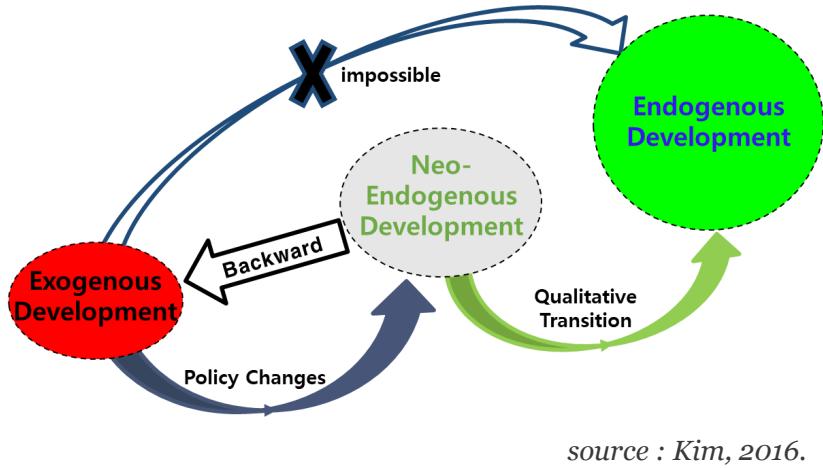 Fig. 1: The concept of NERD Implementation.
In NERD, development always occurs under the relationship between local internal resources and the external environment. Thus, creating a system that values local resources while considering external (positive or negative) forces and maintains their performance within the region is both a process and an objective of development. This cannot be achieved unless it adequately responds to external forces. In other words, developments utilizing local residents and resources could revert to an exogenous form at any time unless there is sufficient capability to establish an economic cycle within the region in response to government policy intervention and globalization (Kim and Lowe, 2012). Therefore, it is crucial to analyze the relationship between local resources and extra-local factors during the implementation of development and identify any emerging network imbalances in the process. Ultimately, if the influence of internal actors outweighs that of external factors, it can be considered 'endogenous development'. Conversely, if the impact of external factors exceeds the capacity of internal network, the development may not transition to endogenous development and may revert to the form of in the,process of promoting 'exogenous development'. These relationships are illustrated in \<Fig.1>.
III. VILLAGE OVERVIEW AND EARLY DEVELOPMENT PROCESS
3.1 Overview of Pyeongchon-ri
Songak-myeon in Asan City of Chungnam Province is a typical mountainous village located in the midst of South Korea, while Pyeongchon-ri features a relatively high percentage of plain area compared to other villages. The village has a history of over 400 years and is currently home to 45 households. Rice farming is the main agricultural production in the village, with approximately 70% of agricultural households and agricultural land dedicated to environmentally friendly farming practices. Moreover, opportunities for various non-agricultural economic activities are emerging, particularly with the nearby Oeam Historic Village becoming a nationwide tourist destination. Additionally, the opening of road links to Cheonan City and other areas is attracting more people to consider returning to the village. However, the rising land prices resulting from increased accessibility to cities pose challenges not only to agricultural activity but also to the expansion of various village projects.
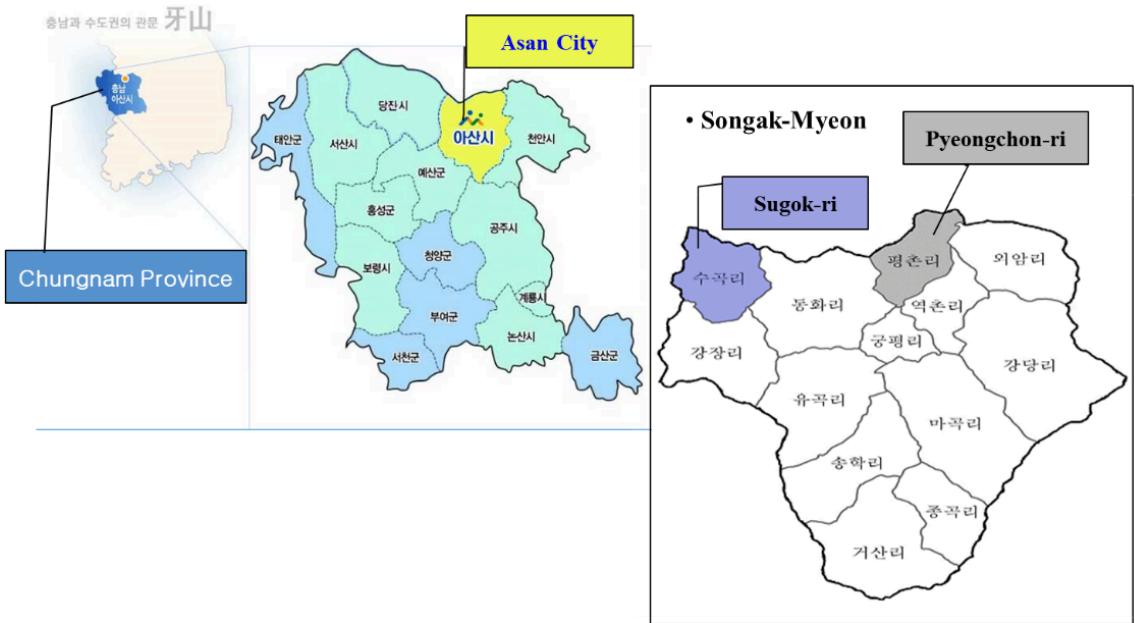 Fig. 2: Geographical location of the villages
3.2 Overview of Sugok-ri
Sugok-ri is a village located at the northeastern tip of Songak-myeon, divided into Sugok 1 and Sugok 2-ri. The focus here is on Sugok 2-ri, which comprised 26 households in 2014. Despite the total number of households remaining constant for over 30 years, with 20 households residing in the village for that duration, Sugok-ri faces a significant challenge of an aging population, as few newcomers settle in the village. Currently, the youngest farmer is 53 years old, with only 5 households in their 50s. Despite being a mountainous village, Sugok-ri has a higher proportion of rice paddies compared to crop fields. However, younger residents are increasingly turning to cultivating farm crops for higher income opportunities. Main crops cultivated include soybeans, pumpkins, sweet potatoes, tomatoes, and cucumbers. Additionally, there is one cattle-shed in the village.
3.3 The start of village projects
The development of the villages Pyeongchon-ri and Sugok-ri began with an emphasis on environmentally friendly farming practices. New changes have emerged in the existing farming methods as some farmers from these villages participated in the Hansalim Asan City Producers'
Association (Kim Tae-yeon, 2010), which was established in the mid-1990s. In particular, several village development projects have been launched in these villages since 2000, coinciding with the establishment of the Prundle Farming Cooperative corporation by farmers engaged in environmentally friendly farming in Asan. This cooperative aimed to promote regionally-based agriculture and the development of producer associations (Kim Tae-Yeon, 2010) In Pyeongchon-ri, 13 out of the total 45 households in the village engaged in environmentally friendly farming, while the remaining local residents participated in producer-consumer exchange events promoted by Hansalim. These events provided an opportunity to strengthen ties and cooperation between farmers and residents. Although most farmers were not directly involved with Hansalim, ordinary residents actively took part in village events organized with external organizations. Meanwhile, the development of the village was directly triggered by the establishment of the Songak Alley Farming Corporation in 2006. This corporation took on the production of bean sprouts to supply the Hansalim market, originating from the Prundle Farming Corporation. This initiative was part of the local agricultural movement of the Cheonan-Asan Hansalim, aiming to support self-reliant development through projects at the village level. Supplying bean sprouts to Hansalim laid the groundwork for the growth of the Prundle Farming Corporation, which was later allocated to the 'Songakgol Farming Corporation' in Pyongchon-ri. Additionally, as part of a collaborative event with Hansalim consumers, the corporation organized a milk vetch flower festival. These flowers were planted to prepare environmentally friendly manure, and during the spring season, they were used for various farming and rural experience activities for tourists. The festival, operated in collaboration with farmers and residents, naturally led to strengthened unity and cooperation among residents.
The development of Sugok-ri village also commenced with the participation in Hansalim's environmentally friendly farming campaign. In 2000, this initiative was introduced to the village when 12 out of the total 38 agricultural households joined the Asan City Producers' Association. The farmers viewed this movement as a promising opportunity to secure stable income through contract cultivation and supplying to Hansalim, particularly because they faced relatively lower income levels compared to those in other villages.
In the meantime, the Prundle Farming Corporation established a plan to develop Sugok-ri into a central village for environmentally friendly farming in Asan City. During this period, the large-scale relocation of Samsung Group's plants into Asan City was planned, exerting significant development pressure on rural areas and causing land prices to increase rapidly. Consequently, Prundle faced difficulties in maintaining environmentally friendly farming sites in the Asan region. In response to this situation and as part of a long-term plan to develop environmentally friendly farming in Asan City, Prundle internally devised a local agricultural development plan to nurture the rural areas of Sugok-ri as a model village community and create a self-reliant Hansalim community around the village unit. This plan was based on the belief that Sugok-ri, with its relatively small number of farming households compared to other villages and location in areas less affected by Samsung's development plans, would be relatively easier to garner cooperation and participation among villagers.
To advance this plan, Prundle initiated a project to supply Hansalim with salted cabbage, focusing on the village of Sugok-ri in 2006. This marked the first time that joint projects funded by external organizations were launched for residents of Sugok-ri, who had never voluntarily applied for support projects from central or local governments. During the kimchi-making season, Hansalim was required to produce and supply salted cabbage to consumers, assigning Sugok-ri to handle the business. This initiative provided an opportunity to raise basic village funds for revitalizing the village community, while also offering residents a chance to earn additional income compared to other villages.
IV. THE PROCESS OF THE VILLAGE DEVELOPMENT
4.1 Pyeongchon-ri Village Project: the start of external support projects
4.1.1 Expanding the village projects
The village project in Pyeongchon-ri, which originated from participation in Hansalim's environmentally friendly farming movement, was selected for 'The Project for Establishing Traditional Theme Village' funded by the Rural Development Administration (RDA) in 2008. This selection was made through cooperative efforts among the villagers during the application process, and it synergized with other joint projects planned for the village. Under this project, Pyeongchon-ri received a total of 200 million won in funds, primarily allocated for the construction of an experience center. The plan aimed to enhance visitor convenience during Chinese milk vetch festivals and provide a center for villagers to use regularly, offering accommodation and food services. However, as discussions about the existence and potential abolition of the RDA, the organization responsible for supporting the project budget, arose as a social issue, proper budget support for the traditional theme village project was not secured, resulting in delays for Pyeongchon-ri's project. Consequently, the delay in budgetary support caused fluctuations in building material prices, necessitating an additional 30 million won beyond the original budget plan.
To cover these additional expenses, the village head and residents convened a series of village council meetings and decided to support the project through residents' investments. After three village council meetings, it was decided to allow households to contribute up to 1 million won each and to provide an annual dividend of approximately 8%. Ultimately, 33 out of the total 45 households in Pyeongchon-ri contributed 30 million won to bridge the gap, effectively involving the entire village in the initiative, except for a few older households. This process of addressing the challenges stemming from the delayed financial support from the RDA further bolstered cooperation among residents, strengthening community bonds.
After the completion of the experience center, various rural experience projects were conducted, including the milk vetch festivals, attracting approximately 7,000 visitors annually. Moreover, the festival generated additional profits by covering various expenses and providing daily allowances for residents participating in the experience activities, as well as selling agricultural products grown in the village to visitors. Residents earned profits each year from these activities, consistent with the promised 8% dividend. For villagers who needed to sell farm products directly at the market, aside from supplying Hansalim, sales of agricultural products through experience activities proved highly beneficial. In particular, the significant percentage of visitors who experienced the festival returned to the area, enhancing the reliability of agricultural products grown in the village.
Throughout the promotion of the village project, residents discovered that deviations from the original plan served as a catalyst to overcome challenges through voluntary cooperation. Ultimately, navigating external influences via internal collaboration bolstered the self-esteem and identity of residents. Furthermore, the collaborative experience among residents significantly contributed to fostering amicable relations and cultivating a cooperative atmosphere throughout the entire village.
The traditional theme village project, initially funded with a total of 200 million won from the RDA, presented an opportunity for the economic and social development of Pyeongchon-ri. The experience center, equipped with dining facilities, offices, lecture rooms, and accommodations, served as a gathering place for villagers during periods without visitors' stays, facilitating mutual exchange among residents. Currently, the experience center can accommodate approximately 50 people at a time, and as a management principle, it does not exceed this capacity.
This operational approach deviates from the typical expansion of accommodations seen in most other experience centers, where the goal is to accommodate more visitors. However, Mr. Ahn, the center's manager, believed that accommodating a large number of people would not contribute to the village's long-term development, as it would inevitably hinder the establishment of deep interpersonal connections. Therefore, the policy of the Pyeongchon-ri Experience Center is to encourage visitors to return and engage in in-depth experiential activities and human interactions within a set number of participants.
Initially intended to receive funding for two years, the project has been continually monitored by the RDA, which provides additional support if necessary. Moreover, the RDA continues to cover all personnel expenses for the current operation of the experience center. This ongoing oversight and support from the RDA have greatly assisted Pyeongchon-ri in carrying out other necessary activities.
4.2 Expanding to operate village-run factory (2010 - 11)
With the successful operation of the traditional theme village project, a growing sense of confidence in expanding community initiatives emerged among the residents. Building on this newfound self-assurance, the village enterprise project was launched to create job opportunities, boost income for residents, tap into new markets for farm products, and increase value-added outputs. In 2010, the project applied for village enterprise support under a policy aimed at establishing a factory for making Jangahchi, specializing in sliced vegetables preserved in soy sauce or soybean paste, and received a total of 50 million won in support from the MAFF. Additionally, an additional 20 million won was raised from residents who had previously contributed to other community ventures, bringing the total funding for the factory to 70 million won.
The Jangahchi plant, a modest-sized facility spanning 80 square meters, focused on producing and selling side dishes primarily made from agricultural products sourced locally in the village. The project operated by supplying side dishes to visitors at the experience center and offering affordable options to households in the village. Due to its low initial investment and utilization of local labor, the project maintained continuous operation with minimal overhead costs.
The Jangahchi project encountered no significant challenges in sustaining the factory's operations, as its primary objective was to enable residents to earn supplementary income through their own efforts and boost their self-esteem in the process, rather than solely focusing on maximizing profits. In essence, the village's food-processing endeavors prioritized enhancing residents' self-esteem and fostering cooperation over pursuing high returns, and as long as the processed products were primarily accessible to residents, the operations could be sustained with modest revenue.
4.3 Package business and social enterprise for economic purpose (2012-13)
4.3.1 Management of Package Business
Building on the successful operations of the experience center and the Jangahchi factory, Pyeongchon-ri ventured into the package business starting in 2012. The establishment of the 'Darami Farming Corporation' within the village aimed to generate additional income for residents through the sale of agricultural products. Recognizing that the income generated from the experience center and the Jangahchi factory was limited, the package business was initiated with the expectation that direct sales of agricultural products produced by residents would yield higher returns. In contrast to many other projects focused on fostering cooperation, harmony, or enhancing the self-esteem and identity of residents, the package business prioritized economic objectives aimed at achieving higher income levels.
"First of all, we decided that the high percentage of visitors who visited Pyeongchon-ri as experienced visitors was highly reliable, so we carried out activities to register visitors to experience centers as pack members. In addition, we started membership registration for consumers connected to sales activities of other farming business in the village." (Interviewed with Mr. Ahn) In 2013, the project was initiated to deliver packages of agricultural products to registered members. Each package contained whole vegetables, tofu, dairy eggs and Jangahchi, along with other agricultural products produced in the village.
4.3.2 Starting up the social enterprise for vegetable cultivation
"In 2013, alongside the package business, Pyeongchon-ri established a vegetable park aimed at enhancing the income of villagers. This initiative was registered as a preliminary social enterprise in Chungnam Province to secure support for labor costs. Initially operating as a subsidiary of Songakgol Farming Corporation, Pyeongchon-ri constructed three vinyl greenhouses and employed a total of 10 vulnerable workers. With an annual labor cost of approximately 150 million won under social corporate certification, the project received significant subsidies from the MAFF to build the vinyl greenhouses. Given Pyeongchon-ri's primary focus on rice farming and the limited number of farms generating high incomes, the project was initiated to promote agricultural diversification at the village level.
4.4 Failure of package business and social enterprise (2014-15)
4.4.1 Suspension of social enterprise for vegetable cultivation
Pyeongchon-ri's village project, which had been expanding until 2013, encountered several setbacks upon entering 2014. Initially, problems arose in the vegetable park business, established as a social enterprise. Ten employees were hired with approximately 150 million won in annual labor costs supported by the government. However, in addition to the actual direct pay, there were additional expenses of about 6 million won per month, totaling around 70 million won per year. While this additional cost might not have been a significant issue if employees could be utilized continuously throughout the year like a regular company, the challenge arose due to the seasonal nature of agriculture. During the winter, there was a low stock of vegetables, leading to insufficient profits. Consequently, it was difficult to cover the additional 70 million won in labor costs annually, resulting in a deficit in business performance.
Furthermore, the revelation that employees of the social enterprise received their salaries from the county office rather than the corporation raised concerns regarding sincerity. During the process, a significant debate ensued regarding whether to continue operating the social enterprise, especially after the office manager inadvertently omitted documents in the project application, leading to a failure to secure support. Consequently, the village council of Pyeongchon-ri ceased operating the vegetable park as a social enterprise and transferred the business to Darami Village Farming Corporation. Currently, the vegetable park project continues to employ four workers in the village without government support, but its performance is comparable to when ten employees were employed previously.
4.4.2 The cessation of the package business
On the other hand, the package business failed to adhere to food-related laws and regulations, leading to its suspension. Various processed foods such as bean sprouts, tofu, and Jangahchi were included to cater to consumer preferences during the operation of the package business. However, delivering processed food by courier without proper authorization was deemed illegal. Additionally, consumer complaints increased when processed foods spoiled during the delivery process. Consequently, the village unit found it challenging to continue implementing the package business, which included various agricultural products and processed foods according to orders. As a result, the package business is currently on hold.
4.4.3 The Development of the Sugok-ri Project
1) The outcomes of salted cabbage business
Since 2006, when the salted cabbage project began in Sugok-ri, several significant changes have occurred. First, while village common facilities were previously limited, external assistance enabled the establishment of processing facilities for salted cabbage, serving the common interests of the villagers. Second, the village lacked special economic activities after the rice harvest, but the salted cabbage project provided villagers with opportunities for seasonal employment and additional income. Third, additional farming activities were introduced to cultivate cabbage for kimchi-making and other seasoned vegetables. Although the distribution of environmentally friendly agricultural products is restricted to members of the farming community, the unforeseen economic opportunities have encouraged more farmers to consider joining the community. Fourth, previously scarce cooperative activities among villagers have begun to emerge with the implementation of the salted cabbage project.
2) Discontinuation of the salted cabbage business
The salted cabbage project in Sugok-ri, previously supplied by Hansalim, has been highly controversial since 2007. Initially, salted cabbage was sourced from Sugok-ri and Asan City. However, with Hansalim's rapid expansion across the country, there was a significant increase in demand, leading to an absolute shortage of salted cabbage from Sugok-ri. Consequently, Hansalim began purchasing large quantities of salted cabbage nationwide, including from Haenam county in the southern coastal area of Korea. This, in turn, resulted in a sharp decline in profitability for the Sugok-ri business. Additionally, poor cabbage crop yields in Sugok-ri further exacerbated the deficit. This decline in economic feasibility also impacted the revenue of Prundle, responsible for supplying salted cabbage, ultimately leading to the suspension of the Sugok-ri project in 2010.
Another contributing factor was the lack of willingness to address the residents' issues in Sugok-ri. The salted cabbage project was chosen not through the efforts of the villagers, but by Prundle. Consequently, the residents of Sugok-ri became reliant on Prundle rather than taking initiative to resolve issues stemming from the project. Compounding this, since most residents were elderly, the need to hire external workers further compromised the business's viability. Additionally, during the promotion of Hansalim Organic Farming from 2008, Sugok-ri members attempted to collectively manage a livestock shed. However, conflicts among village members over work distribution led to the project's failure."
3) Other community activities (after 2011)
The joint project of Sugok-ri, intended to serve as a model for community development by Hansalim, rapidly disintegrated following the failure of both the salted cabbage project and the operation of the livestock shed. Subsequently, economic interaction between Hansalim members and other village residents nearly ceased, leading to a reduction in Hansalim households from 13 to 5 by 2001. One significant reason for this sharp decline was the difficulty experienced by elderly farmers in adhering to the production rules of agricultural practices, which demanded substantial labor. Consequently, there was an increase in the number of farming households leaving Hansalim.
Moreover, cooperative activities among farming households, even among Hansalim members, were rare due to the cultivation of different items. Consequently, limited cooperation among villagers made support from external organizations unfeasible. Shortages of labor during the farming season were addressed not through cooperation or assistance from residents, but by hiring external workers. Consequently, the sale of agricultural products primarily occurred through direct sales to local markets, except for the contracted amounts supplied to Hansalim. Consequently, residents of Sugok-ri began individually seeking ways to increase their own income.
V. PERFORMANCE AND LIMITATIONS
5.1 The Pyeongchon-ri Project
5.1.1 Performance of the village project
The greatest achievement of the Pyeongchon-ri project was the heightened awareness of pride and identity among villagers, as well as the recognition of the necessity for mutual cooperation through the village project. Preventing the formation of a community fund in the early years aimed to avoid creating a sense of prestige disparity between the rich and the poor in the village, fostering an atmosphere of mutual respect among all residents. This served as the foundation for residents to foster a spirit of unity in carrying out future joint projects. Additionally, the economic activities not only maximized profits for some residents but also provided opportunities for the elderly, in need of modest incomes at the level of pocket money, to earn from their own labor. This contributed to a relative boost in confidence and self-esteem, crucial in promoting various economic projects and encouraging residents to participate in the village project.
In Pyeongchon-ri, the experience center and the Jang Ah Chi factory project were maintained in the village through the voluntary investment and participation of residents. Thus, cooperative management among residents emerged as a crucial factor in the continuous maintenance and development of these projects. Any issues arising during the project's operation were addressed through a democratic process in village council meetings and made public to residents. This approach effectively prevented conflicts between residents during the project implementation process.
5.1.2 Implications of the village project
Some of the failed projects in Pyeongchon-ri provide valuable lessons. Primarily, the suspension of both the package business and the social enterprise vegetable complex underscores their shared goal of increasing economic income for residents. However, the failure of these projects can be attributed to their attempts to generate revenue without due consideration. In the case of the package business, efforts to meet consumer preferences and expectations led to challenges in maintaining the quality of agricultural products during delivery. Ultimately, the business not only violated food delivery laws but also failed to meet consumer expectations. Similarly, the failure of the social enterprise vegetable cultivation project stemmed from excessive investment and employment, driven by a desire to maximize profits through increased government subsidies and production. This approach neglected the unique characteristics of vegetable parks, resulting in misallocation of resources. The failure of these village projects in Pyeongchon-ri highlights the importance of prioritizing cooperation and community awareness over profit maximization in rural development initiatives. Fostering a communal spirit of cooperation can effectively address the various challenges that arise in business operations.
5.2 The Sugok-ri Project
Sugok-ri exemplifies a typical rural village in Korea, characterized by geographical disadvantages, an aging population, a shortage of young farmers, and low farming income. Reflecting on the failures of the village projects in Sugok-ri, it becomes evident that the fundamental issue lies in the projects not originating from the residents' requests. Essentially, residents participated in the salted cabbage project primarily to earn additional personal income, rather than to strengthen community ties or foster village growth. Similarly, conflicts arose in the proposed livestock shed project in Sugok-ri due to a lack of cooperation among villagers in accommodating each other's time and conditions. The joint projects in Sugok-ri serve as typical examples of how economically driven initiatives are prone to failure once they become financially unsustainable. Moreover, economically motivated relationships among villagers are easily dismantled. Consequently, fostering mutual trust and cooperation among villagers emerges as crucial for inducing fundamental changes in rural villages and ensuring their continuous maintenance. These relationships are essential components of villagers' self-esteem and identity. It's imperative to recognize that village projects supported by central or local governments may be hindered by the disruption of social relations within villages if they solely prioritize short-term economic gains.
VI. CONCLUSION
The comparison of the development processes of Pyeongchon-ri and Sugok-ri yields several implications. Firstly, even in countries like Korea, which have traditionally relied on exogenous developments, recent success stories in rural development primarily stem from non-economic initiatives. Policies aimed solely at enhancing economic performance often result in the success of specific business entities but fail to foster sustainable development within villages or communities.
Secondly, to cultivate a distinct identity and community consciousness in rural communities, it is imperative to implement policy-supported projects based on cooperative activities. These initiatives naturally encourage the establishment of activities that strengthen mutual cooperation and bonds among village residents. Leveraging the cooperative atmosphere of rural society, support for additional social and economic projects should be implemented to facilitate community development.
Thirdly, the case of village development in Pyeongchon-ri demonstrates the effectiveness of the neo-endogenous rural development approach in promoting successful village development. This suggests the need to reform rural development policies to prioritize internal organization within rural areas and utilize external support based on internal needs."
Conflict of Interest
The authors declare no conflict of interest.
Ethical Approval
Not applicable
Data Availability
The datasets used in this study are openly available at [repository link] and the source code is available on GitHub at [GitHub link].
Funding
This work did not receive any external funding.
References
Cite this article
Related Research


Special Issue
Launch a focused special issue to highlight research, emerging trends, and expert insights in your academic field.
