



IntelliPaper
Abstract
The history of Ethnomathematics is, in many ways, closely associated with the life and work of Ubiratan D’Ambrosio and, in particular, it is assumed that it is inseparable from its textual production. One of the objectives of this work is to highlight some aspects related to the ways in which this history of ethnomathematics was written and, later, inscribed in the world of D’Ambrosio's ethnomatmatic text. The methodology of analysis and interpretation is inspired by the narratology and hermeneutics of the French philosopher Paul Ricoeur. The guiding thread of the investigation is the composition of the intrigue (plot) of the narrative of the stories and, in this context, some elements were observed, such as, for example, the characters, the voices of the narrative, the scenarios and spaces of the action, the relationships among the characters, some speech functions (poetic and rhetorical) and the effects intended by the speech. The research showed that the history of ethnomathematics written by D’Ambrosio is based on intertextuality, rhetoric and fictional literature.
Explore Digital Article Text
I. INTRODUCTION
This text is the product of a research carried out during the doctoral period of the author of this article between the years 2014 and 2018. At that moment, the poetic and rhetorical aspects were investigated (Ricoeur, 2012a, 2012b, 2012c; Veyne, 1982; White, 2014; Rancière, 2014) of the textual production of Ubiratan D'Ambrosio (1932-2021) in the theoretical context of Ethnomathematics.
Some questions emerged in that period of investigation: (i) How did D'Ambrosio composed the intrigue (plot) of the historical narrative of Ethnomathematics within the field of Mathematics Education? (ii) How can the writing of D'Ambrosio's history of Ethnomathematics and his way of portraying the past have influenced other works in the field of Mathematics Education?
It was observed that despite the relative autonomy of the various researchers who focus on the themes explored by Ethnomathematics and, also, in view of the apparent plurality of perspectives that emerge from the studies and researches of this area, the histories of the emergence of ethnomathematics in the field of Mathematics Education seemed to gravitate around a single discursive field. The possibility of having a historical narrative of unidirectional, linear, static, almost fictional Ethnomathematics, guided almost exclusively by the focal lenses of the Discourse of ambrosiana pointed to the need to investigate more closely the writing of this history.
It was implicitly assumed in the original research that the theoretical production textualized and signed by D'Ambrosio (the author of the text) was reflected in the works of other socio-historical subjects in , which later proved to be true from the , but, nevertheless, it is also understood that such reflexes can be expanded to geographical spaces beyond national borders, such as those related to the communities of mathematical educators in Latin America (Colombia, Ecuador, Chile, Venezuela, etc.) also influenced by the performance of the illustrious mathematical educator.
Thus, based on what has been said up to this point, the writing of the History of Ethnomathematics in the field of Mathematics Education becomes our main object of investigation.
II. INITIAL CONSIDERATIONS
There is a historical narrative of Ethnomathematics that is written by itself, that is, there is a history written by researchers who identify with this field of studies and research, and especially, and especially by the creator of this area of interest, namely, Ubiratan D'Ambrosio (D'Ambrosio, 1985, 1986, 1990, 1993, 2011a, 2011b); this fact was evidenced in Marchon (2018). The writings pertaining to the textual production of Ethnomathematics narrate the emergence and historical paths of Ethnomathematics itself.
It can be said that we know a story of the history (Ricoeur, 2012a, 2012b, 2012c) of Ethnomathematics that is convergent with what was initially narrated by D'Ambrosio (see Annex 1). This perception is reinforced from the data collected in different historical sources (Anais, publications, books, articles, interviews, etc.) that indicate that the History of Ethnomathematics in the context of Mathematic Education had its first lines timidly woven during the 1970s and owe its birth to the figure of Ubiratan d'Ambrosio.
We know a history of Ethnomathematics that was being produced by itself while creating its own area of interest in the field of Mathematics Education. A story that is a product of the works of Ubiratan D'Ambrosio friends, mentors, researchers, (Conrado, 2005; Knijnik, 2004; Rosa & Orey, 2005, 2014; Brave, 2007; Miarka, 2011; D'Ambrosio, 1986; Domite, 2007).
Finally, it is observed that the historical narrative of Ethnomathematics follows, in many senses, the steps of its main creator and promoter: Ubiratan D'Ambrosio (Fantinato & Freitas, 2018; Marchon, 2018); and with this, the events and events cited, the time markers and the characters that appear in the story are retrospectively intertwined with the life of D'Ambrosio.
It should be noted that Ubiratan D'Ambrosio is presented to the reading public — by himself or his peers — as the creator of the Program for Ethnomathematics Studies and Research, or as its greatest representative and publicist in Brazil (and in the world), or also as the father of Ethnomathematics (D'Ambrosio, 1985, 1986, 1990, 2011b; Conrad, 2005; Domite, 2006; Brave, 2007; Rosa & Orey, 2014; 2012; Gerdes, 1996, 2010). There is, therefore, a kind of intellectual paternity not disputed and accepted by the community of mathematical educators that is enunciated in the historiography of Ethnomathematics in the field of Mathematics Education.
The political influence of D'Ambrosio's ethnomathematical discourse is captured in the predominance of his ideas inscribed in the different texts that propose to write a history of Ethnomathematics. In this aspect, it observes a tendency of reproduction of the historical text of the Etnomatthematic by other researchers in this area (Rosa & Orey, 2005, 2014; Steps 2017; Miarka, 2011; Conrad (2005); and, in this sense, it is assumed that there are, directly or indirectly, discursive elements that are appropriated by other researchers who focus on a historical writing of Ethnomathematics.
The previous assumption, together with the conclusions obtained by the research in Marchon(2018), added to the fact that d'Ambrosio's textual production is still one of the main theoretical references within Ethno mathematics (Fantinato & Freitas, 2018;
Marchon 2018; Meira, 2021, Breda, 2011, Valente 2007) justify the effort made in this article.
Some questions may guide the reader's gaze when entering this investigation, namely: (a) "What elements characterize the historical narrative of D'Ambrosio's Ethnomathematics?", (b) "What discursive strategies were employed by D'Ambrosio when writing a history of Ethnomathematics?". The objective of this work is, therefore, to highlight some of these discursive strategies and narratives used in the writing of the history of D'Ambrosio's Ethnomathematics and, in this movement, to exhibit some of the ways in which D'Ambrosio wrote this history of Ethnomathematics.
III. THEORETICAL-METHODOLOGICAL BASES
The object analyzed/interpreted in this work is the so-called world of text (Ricoeur 2012a; 2012b; 2012c) – "What is, in fact, interpreted in a text is a pro-post world (pro-posé), a world that I could inhabit and in which I could project my most own abilities" (Ricoeur, 2012C, p. 300). And, more precisely, the world of the ethnomathematical text of Ubiratan D'Ambrosio, his books (D'Ambrosio, 1985, 1986, 1990, 2011) and, in them, his writing of the History of Ethnomathematics. The notion of the text world (Ricoeur, 2012a, 2012b, 2012c) explores the idea that narratives that intend to tell a story present a possible world in which people can orient themselves, reflect and think, as well as think the other. We are led to agree with the philosopher and novelist Umberto Eco (1932-2016) when he states that "the narrative is, above all, a cosmological issue. To narrate something, we begin as a kind of demiur that creates a world—a world that must be as precise as possible" (Echo, 2018, 15).
The textualized thoughts, the ideas enunciated, the beliefs uttered, the values defended and, also, and no less significant, the knowledge enrenated in the textual plot of D'Ambrosio are part of this world. The notion of text, in particular, is related to that of discourse, the inscription of the discourse: "the text is a complex entity of discourse" (Ricoeur, 2015, p.336). It is worth highlighting, however, some conceptions and understandings that emanated from language studies, to know:
The term text, as also occurs with the term discourse, has been conceptualized in quite different ways. Basically, one can take it in two meanings: in a broad sense, to designate any manifestation of the textual capacity of the human being, whether it is a novel or a poem, or a song, a painting, a film, a sculpture, etc., that is, of any type of communication performed through a system of signs. When it comes to verbal language, there is discourse, communicative activity of an announcer, in a situation of determined communication, encompassing not only the set of utterances produced by him in such a situation - or his and those of his interlocutor, in the case of dialogue - but also the event of his enunciation. Discourse manifests itself linguistically through texts — in the strict sense — that consist of any spoken or written passage capable of forming a significant whole, regardless of its extent. It is, therefore, a semantic- pragmatic unit, a textual communicative continuum that is characterized, among other factors, by coherence and cohesion, a set of relations responsible for the tessitura of the text (Koch, 2011, pp. 19-20, griffins of the author)
Returning to the French philosopher, one has the idea that the text is a work of literary composition, that is, it is texture, tessitura: "By text I do not understand only nor especially the scripture [...] First of all, discourse is the place of compositional work" (Ricoeur, 2015, p. 336). For the philosopher, the literary work, the text, his writing, depend on specific rules that do not necessarily relate to the linguistics of the text, but rather to the poetics: "the problem of composition does not depend on linguistics, for which the last unit is the phrase, but of poetics" (Ricoeur, 2011, p. 30). Thus, it is understood that the manifestation of discourses, particularly in narratives, is part of an art: the art of comparing narratives; it highlights the artisan of the text, the one who weaves the text, produces discourses, inscribes words, argues and seeks to convince and/or persuade its listener/reader.
And, as Rancière (2014) tells us, the articulations of names and events in the narrative, despite the constraints of ontological indeterminacy that arise in science history, is the only appropriate way to maintain the historical character of history. The historical narrative performs an "ordering of a space of conjunction of the contradictory" (Rancière, 2014, p. 10) and which, according to the historian, "concerns a poetic elaboration of the object and the language of knowledge" (idem); from which he states that "the poetics of knowledge is interested in the rules, according to which, a knowledge is written and reads" (Rancière, 2014, p. 12).
The poetic aspect of the writing of history and the fictional character of historical narratives collaborate, in this sense, for this project (Ricoeur, 2012a, 2012c; Veyne, 1982; White, 2014; Rüssen, 2016; Lima, 2016; Topolski, 2016). Thus, unlike opposed to the specificities of literary writing to the rigors of scientific writing, in an almost mathematical sense, the historical narrative is based on literary procedures to inscribe in the text its stories, something that corresponds and approaches the Ricoeurian perspective adopted here.
The French hermeneuta points out that the narratives that emerge from the tracks of memories, although historical with real intentions, are still stories (Ricoeur, 2007). The stories of history create in their own worlds, in their world of text, the conditions of understanding the disordered, chaotic, scattered and not necessarily dependent events that depart from the world of human action. And in this context, they can be roughly understood as verbal fictions (Ricoeur, 2012a) in a possible world.
At the textual plane, many discourses emanated many voices and these, although plural (Cunha, 2011; Bakhtin, 2014), point to an enunciative origin — the author, the one who signs the text—. One can agree with Maingueneau (2015): "Speech is speech only if it is related to a subject, to an I"
(Maingueneau, 2015, p. 27) and, more than that, it "puts itself at the same time as a source of personal, time-sensitive, spatial references (Eu-AQUI-AGORA) and indicates what attitude he adopts towards what he says and its recipient" (Maingueneau, 2015, p. 27). Thus, with the sole purpose of locating the subject who signs a certain textual production, and who, in this production, creates his own world, his world fiction, he chooses to create an adjective; it is called "d'ambrosiana" when mentioning what is said by the author of the text in his discourses and, in general, the world expression of the ethnomathematical text d'ambrosiano is used. This author is distinguished from the character, the mathematician, the educator, or the narrator; it is the one who assumes for himself the responsibility of saying what he says in a given discourse and in a certain enunciative context.
It is observed that in the writing of this article there will be a constant movement of the names and figures that emerge in the analysis: the mathematician proposes something, the mathematical educator says something, the character stages a speech, the narrator tells a story, the author writes his text, and so on. Purely analytical separation.
On the relationship between fiction and history, the French philosopher says that "daily reality is metamorphosed in favor of what we might call imaginative variations that literature operates on the real" (Ricoeur, 1978, p. 57). And, in this context, the category of intrigue (plot), followed by the indications and clues left by Ricoeur (2012a, 2012b, 2012c; 2007), is the one that acts as a mediator of all other categories of analysis. Ricoeur (2007) states that "the composition of intrigue constitutes an authentic component of the historiographical operation" (Ricoeur, 2007, p. 250), because, according to this philosopher, "intrigue is the literary form of this coordination: it consists in conducting a complex action from an initial situation to a terminal situation through rule-made transformations" (Ricoeur, 2007, p. 255). Within this broad analytical category others collaborate, such as the characters, scenarios and spaces, the voice of the narrative and the narrative focus.
Focusing on the writing of the history of Ethnomathematics, then a part of the analysis made on the text — on the discourse of the text and on the narrative of history sought inspiration from other theoretical sources, such as Maingueneau (1996, 2008, 2015), Citelli (1989), Perelman and Olbrechts-Tyteca (2000), and, also, Reuter (2000).
IV. ANALYTICAL PATH
The narrative discourse allows the appearance of many voices that, when saying something to someone, tell or inform facts and events, and in this sense, the analytical movement, at the level of the text, is observed in the analytical movement, at the level of the text, the existence of many D'Ambrosios, that is:
The character D'Ambrosio (Candido et al., 1974; Eco, 2018; Ricoeur, 2014), distinct from the man of flesh and bone (the socio-historical and empirical subject), and who is the object of self-referencing (D'Ambrosio, 2011b, 1986); character who is confused with the "Ethnomathematics" itself — One could agree, in this case, with the Ricoeurian perspective that attests that the writer, in narrating his stories, projects himself in the text and creates a kind of character of himself in which he brings out a narrative identity (Ricoeur, 2014) that inhabits the discursive space of the text —; (ii) the narrator of the story who, in some cases, distances himself from both the character and the author/writer of the text to narrate a possible or factual story; (iii) the man of flesh and blood, writer of the text, the one who signs a printed production, the author; (iv) the mathematician, whose specific formation delimits his field of interest and discourse, (v) the mathematical educator, who, moving away from the figure of the mathematician, is dedicated to teaching, education, pedagogical debates and other social, cultural and political issues.
In addition to this proliferation of voices, there are also voices that are inscribed in the textuality of the narrative and that are appropriated by the writer/author to make up his plot; are other voices (Cunha, 2011; Bakhtin, 2014) who comes from other sources and authors and who are summoned to d'Ambrosio to help him say what he intends to say. The different characterizations and appointments exposed above can be observed both in the literature that is produced by Ethnomathematics (in its studies and researches) and in the historiography of Ethnomathematics that emerges in the field of Mathematics Education and also with regard to the stories related to the socio-historical subject (Miarka, 2011; Pellanda, 2008; Brave, 2007; Vianna, 2000; Muniz, 2013; Domite, 2007; Fantinato & Freitas, 2018; Conrad, 2005; Passos, 2017; Monteiro, 2006; Knijnik, 2004; Gerdes, 1996, 2010).
Obviously the many names, the different voices and the different classifications (character, narrator, author/writer, mathematician, educator, advisor, friend, etc.) are part of the methodological option of the investigation and concern only the analytical movement made in the research. It is not intended to propose a fragmentation of the Being of socio-historical man (understood here as totality in his own world).
It is observed that much of the written production analyzed in the research was initially elaborated and thought by for oral discourse; whether the books of D'Ambrosio (1985, 1986, 1990, 1999, 2011) or his interviews Miarka (2011), Pellanda (2008), Valente (2007), Vianna (2000), Muniz (2013), or, also, in presentations at events that were later textualized — such as In D'Ambrosio (2003; 2014) or, in the Annals of the National Meetings of Mathematics Education, or in the Brazilian Congresses of Ethnomathematics, etc.; the texts were initially written for oral discourse, for presentation in lectures and seminars, congresses and meetings of Mathematics Education. This production follows the path that goes from enunciation to utterance, from orality to textuality/scripture. Thus, it is understood that part of the textual work that reaches the reader was initially conceived for the presentation in front of an audience .
In the Anais of the National Meetings of Mathematical Education one sees the inscription of D'Ambrosio's words and the ways in which he operated the discourse in order to promote his proposals. In the opening lecture of the 1st National Meeting of Mathematics Education (I ENEM), in February 1987, there is a characterization of Mathematics Education (D'Ambrosio, 1987) that points to Ethnomathematics:
By examining the trends of Mathematics Education for the following decade we face challenges from the most diverse areas of knowledge. We begin with concerns of a historical and epistemological nature, aiming at a more adequate understanding of the very nature of mathematical and scientific knowledge, which now undergoes a profound revision, most over all as a result of the recognition of various forms of explanation so far considered marginal, such as ethnomathematics (D'Ambrosio, 1987, p. 4).
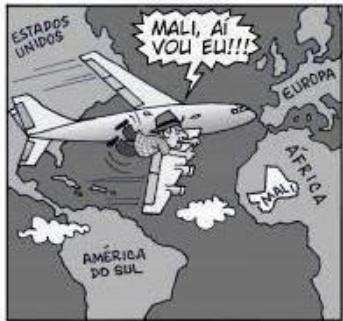
An emblematic example of the many D'Ambrosios of Ethnomathematics can be observed in the comic book produced by the Attached Ubiratan Group of Friends (GAU); the narrative features an iconic character, the D'Ambrosio of Ethnomathematics.
It is necessary to consider, therefore, for interpretative purposes, the distancing (Ricoeur, 2011) existing between what was said, spoken, pronounced by the socio-historical subject (empirical, flesh and blood) in a certain space-time, for a given public, with its specific/original intention, and what was later transcribed and/or textualized, directed to any potential reader, told by the voice of a character (who participates in the action or who only observes) and by the voice of a narrator (heterodiegetic or homodiegetic).
The historical narrative that emerges from D'Ambrosio's textual production, especially the one between the 1980s and 2000s, presents a world for its reader and, indoing so, enstills the reader within that same world. Together, character, narrator and reader, are part of the dense social structure woven in the text: (a) "Science, and in particular mathematics in rich countries, is impregnated with the smell of this glorious past!" (D'Ambrosio, 1985, p. 77); (b) "we see the future of elementary education turning into instrumentation subject..." (D'Ambrosio, 1985, p. 63); (c) "this concept of transgressing the limits, we are lead to the idea of breaking rules, overturning conventions and even abrogating laws and codes" (D'Ambrosio, 1985, p. 19).
The stories written by D'Ambrosio (1985, 1986, 1990, 1999, 2011) may, in many cases, refer us to the tragic — "An escape for the Indians has been the practice of suicide" (D'Ambrosio, 2011a, p. 79) — or to the sublime and, in general, it refers us to the proposition that Ethnomathematics presents itself as a kind of poetic solution to the challenge that emerges from the plot by him (Marchon, 2018). So, for example:
While matter is known in its most basic components and is capable of producing energy sources that are like mini Suns on Earth, these same energy sources are concentrated in military artifacts and used as an element of political pressure, terrorizing entire populations and effectively posing a threat to the very continuity of life, in all its forms, on our planet (D'Ambrosio, 1990, p.41).
And in this sense, having presented a world and its problematic, enunciating the deep and complex problems that require a resolution, the writer produces the scenes that enable the emergence of Ethnomathematics — "An educational systems around the world" (D'Ambrosio, 2011a, p. 62); and, more than that, "The approach to different ways of knowing is the essence of the Ethnomathematics Program" (D'Ambrosio, 2011a, p. 63); for, in its terms, "Our responsibilities as educators in a democracy go beyond reproducing the past and current models. We're worried about building a future... Better than the present" (D'Ambrosio, 1990, p. 24).
It is noted that the voice of the character D'Ambrosio can be considered the main voice of the historical narrative of Ethnomathematics, for Ethnomathematics, in the context of Mathematics Education (Passos, 2017; Brave, 2007; Domite, 2006; Muniz, 2013; D'Ambrosio 2011b, Rosa & Orey, 2014; Marchon, 2018). Even when the figure of the enunciator disappears—the I who says something—yet the voice that narrates the events of history remains present. And, time and time again, the author/writer allows himself to be captured from his discursive insertions in the content of the textualized utterance. And so many voices tell a story of the history of Ethno mathematics in the world of ethnomathematical text d'ambrosiano.
And, in the case of orality, it is worth borrowing the notion of scene and scenography as employed by Maingueneau (2015), because, for the discourse analyst, "to enunciate is not only to activate the norms of a prior speaking institution; is to build on this basis a singular staging of enunciation: a scenography" (Maingueneau, 2015, p. 122). Who says something, who says something, who enunciates, he tells us, "organizes the situation from which he intends to enunciate" (Maingueneau, 2015, p. 123), because it seeks to "arouse the adhering of the recipients by establishing a scenography that legitimizes it" (idem).
It could be said that the beginning of the story of the History of Ethnomathematics occurs due to the strangeness of the characters who divide the scene enunciated; the conflict arises from the performances of these actors in the narrated scene. By assuming an actancial model, the whole story progresses "from the possible relationships between actors towards the rich combination of actions, be they so-called contracts, tests, searches or struggles" (Ricoeur, 2014, p. 152). Actants are beings or things that actively or passively participate in the narrative process by changing the configuration of the scene, taking it from an initial state to a final state. In the actancial model, we speak of subject and antisubject, hero and villain, and the narrative is structured around a controversy, a dispute, an opposition between the characters around a common interest .
Thus, for example, it is read that the ideas expressed by D'Ambrosio represent "hope of redemption" (D'Ambrosio, 1986, p. 8) for some, but, on the other hand, are a threat to others; quite possibly for the group of its opponents — "I am led to believe that my educational proposal represents hope of redemption for some and a threat to others"(D'Ambrosio, 1986, 8) —. The writer appropriates the words "hope" and "redemption", making a shift of meaning in relation to these words.
The focus of the argumentation of ambrosiana, in his first texts, oriented to Ethnomathematics, seems to be the persuasion of the public (auditorium/reader) (Citelli, 1989). Now, much more is at stake than a story narrated, but also the figure of the man who narrates such a story; and as the rhetoric theory tells us, "The life of the speaker, to the extent that it is public, constitutes a long preamble to his discourse" (Perelman & Olbretchts-Tyteca, 2000, p. 364), that is, it contributes to compose the scenario of the discourse that is staged before the public.
Communicating his educational ideas about teaching mathematics to a real auditorium, resistant to his ideas, is something that should be considered by readers of the world of the ethnomathematical text of ambrosiano. The challenge of the mathematical educator was not exactly, and only, to inform something to someone, but, fundamentally, to win the sympathy and adhering of an audience hostile to the ideas enunciated — see, for example, the preface in D'Ambrosio, 1986; "those who reject it as a whole" (D'Ambrosio, 1986, p.8); "they gather on the more comfortable side of those who attack, and do so in an evil way" (idem) —. The I of the voice of the narrative summons us, readers of the text, into the argumentation. In the composition of the intrigue of d'Ambrosio's ethnomathematical text, a link effect is found; the reader is brought into the text — "The responsibility of mathematics educators in relation to the future is central and we need to understand our role in this complex network of divided responsibilities" (D'Ambrosio, 1990, p.25).
It is also noted that D'Ambrosio (1986), when dialoguing with the reader in his preface, narrates a story of struggle, dispute and tension when talking about the emergence of Ethnomathematics in Mathematics Education. The narrator tells a story in which he is an eyewitness to the events and protagonist of the action — author, character and narrator mingle in this scene.
A historical truth is presented to the reader, namely that "History teaches us that criticism and censorship have always been present in the REALITY in which innovative ACTION develops" (D'Ambrosio, 1986, p.8. griffin of the author). This story also speaks, in this context proper to his argumentation, of an obscure, addicted, mystical Mathematics — "I continue in the struggle against educational systems and repressive development models, including fighting its most effective discriminatory instrument, which is an addicted, obscurantist and mystified Mathematical Education (D'AMBROSIO, 1986, p. 8) —. Again, displacements of meanings from the use of words in order to create in the public/reader sympathy and/or revulsion. Value judgments appear in the text. What one reads is a story from the look of a character.
D'Ambrosio's ethnomathematical text also uses, at the level of the composition of intrigue, an apocalyptic poetics (Kermode, 2000). The crisis instituted by apocalyptic thought allows the narrative to be structured from a sequence of actions, until the moment before the emblematic end, so that it is possible to reverse the crisis enunciated. The narrative must therefore suffer an emblematic twist in the action. The time of the narrated story depends on the mythical end described and the crisis that precedes it and, therefore, inevitably, the story states that the present time is the time of transition, of transformation, it is the time of a being between. D'Ambrosio (1990) creates in his text world a story that tells a critical, disturbing and distressing moment for the human species. All men find themselves, in their history (history) of history, on the verge of extinction.
Are we reaching the end of a cognitive model in which, while allowing us to approach a totalizing truth, which unveils to us the small and the large, the interior and the outside, forces us to take the final step towards total sacrifice, and thus achieve the existential goal, extending to the whole species the goal of extinction towards which we inexorably walk as individuals? (D'Ambrosio, 1990, p. 44)
Change is necessary for the plot to have a non-apocalyptic outcome. It seeks to entangle the reader, to contain it ethically, to avoid the "total sacrifice" (idem) announced. But, one wonders, how to avoid the apocalyptic end? What can solve the crisis set out? Within the argumentation of Ambrosian mathematics and its teaching are the basis of all technological and scientific transformations that can for good or for evil transform humanity; change before a possible emblematic end, before the total catastrophe (Kermode, 2000).
A solution proposed by the mathematician is to act in the educational field and, more specifically, from the speech of the mathematical educator, to modify the teaching of school mathematics.
The author of the text defends the transformation of society from a new model of Mathematics Education: "Ethnomathematics emerges, in this case, as a poetic solution to the crisis instituted in history" (Marchon, 2018, p. 149). And in this context, the hope of redemption enunciated (D'Ambrosio, 1985) seems to make even more sense for readers of D'Ambrosio's text.
V. INTERTEXTUALITY
When investigating the literary and poetic aspect of the composition of the ethnomaemamatic text d'ambrosiano its transtextual character , in the discourse that composes its narrative, it was evidenced (Marchon, 2018). However, first, one may ask what is the role and value of literature for Ubiratan D'Ambrosio? In an interview in 2008, the mathematical educator provides some clues about the role that literature plays in its formation, in its way of seeing and understanding the world, and also in its own writing . According to him, as a teenager, his interest in historical readings and also in fiction literature - Shakespeare (in English), Cervantes (in Spanish), Balzac and Flaubert (in French) grew. He reveals to us that:
I didn't learn German — I'm sorry—and I didn't know Goethe, Thomas Mann, and so many other German writers, which I would only find a little later in translations. These authors have marked me a lot. At a time in my life, approaching my forties, I discovered another direction of reading, a greater intimacy with the author and the search for something he did not want to make explicit. It was a search for a mystical dimension, perhaps psychic, from spirituality intrinsic to work. I place the starting point for the redirection of my readings my access to the book of Rollo May: Love and Will. I learned to read my heart (D'Ambrosio apud Pellanda, 2008, p.20).
According to him, "Hence was a re-fascination with history and the re-reading of Greek classics" (D'Ambrosio, 2008, p.20), and, moreover, also "Freud, Jung and William Reich [...] Thomas Mann, Aldous Huxley, Hermann Hesse and the impressive Robert Musil" (D'Ambrosio, 2008, p.20). The mathematician continues:
I was also greatly influenced by post-war French critical thinking. Particularly Lacan, Derrida, Sartre, Merleau-Ponty, Foucault and so on. It was a way of finding me. German cinema, particularly Fassbinder and Herzog, as had already happened with Bergman, fit very well into my growing interest in the transdisciplinary and cross-cultural vision of the symbolic world. The popular readings about this symbolic world, then bestsellers among the younger ones, attracted me a lot. I read, with great interest, J.D.Salinger, and the very interesting Zen and the Art of Motorcycle Maintenance, by Pirsig. This approach to the East, characteristic of the beginning of the second half of the 20th century, was and continues to be, for me, very attractive. (D'Ambrosio apud Pellanda, 2008, p. 20)
At this point it could be assumed that the textual production of ambrosiana has an implicit literary/fictional dimension and, in certain explicit cases. Consciously or not, intentionally or unintentionally, he projects poetic, literary, fictional elements into his text. One hypothesis to be explored is that in the intertextuality of ambrosiana there is a multiplicity of voices that echo in its own world. It can be affirmed that "intertextuality, which supposes the co-presence of at least two texts (allusions, citations, plagiarism...), is the most visible relationship" (Maingueneau, 1996, p. 27) of transtextuality observed in the composition of narrative intrigue that emerges from the world of the ethnomathematical text of ambrosiano.
In the third chapter of D'Ambrosio (1985), between pages 51 and 56, the narrator of the story relies on a fragment of a literary work — The confusions of the young Törless (published in 1906), by Robert Musil (1880-1942) — to exemplify and reinforce his arguments in favor of a new posture in the face of school mathematics and, simultaneously, against a tradition of teaching school mathematics. The four pages display the dialogues of a fictional work. This is what Maingueneau (2008) calls external intertextuality: "a discourse defines, moreover, a certain relationship with other fields, according to whether it is cynical or not" (Maingueneau, 2008, p. 78); and thus Musil (2003) and his young Törless are both part of the intertext of the discourse that composes the world of the ethnomathematical text of ambrosiano — that is, a fragment cited by D'Ambrosio — and also, otherwise, establishes the co-presence of other characters.
They act as devices to raise public awareness (auditorium/ reader) and aim to reinforce the defense that is made of the need to change the historical reality described in their text. It can also be affirmed that the dialogues of the fictional characters of the literary work play a central role in their argumentation, because they reinforce the scenography of the staged discourse. Implicitly there is a correspondence between the socio-historical reality (world of human action) and the literary fictional reality (world of text).
The Törless case can be repeated. Although placed at the beginning of the century, where many profound questions were common concept — do not forget the challenge of industrial society through labor movements, the construction of the First World War, the appearance of psychoanalysis in the same Austria of Musil — the depth of questioning of our present day is similar (D'Ambrosio, 1985, p. 55). Free translation.
The author, by the voice of the narrator, offers the reader a summary of Musil's (2003) text.
The story of the story stated affirms the possibility of repetition in other scenarios and contexts, in other historical moments, of what happened to the young Austrian of Musil's text (2003). Repetition of fictional events in the real of socio- historical reality that reconfigures the scenes until then staged by D'Ambrosio's speech. The questions and experiences of the fictional character could be replicated to other students (real, empirical, flesh and blood) beyond the literary work.
D'Ambrosio (1985) also presents, in this context, a version of the experiences of adolescents, of all adolescents, around the world. Coordination of the heterogeneity of life in a homogeneous space, its historical narrative. In his novelversion, it will be poetic, he tells us: "the obvious identification of youth all over the world with their pairs" (D'Ambrosio, 1985, p. 55); in free translation, there is an "obvious identification of youth around the world with their peers" (D'Ambrosio, 1985, p. 55). The categorical statement induces readers to assume such obviede. This is a truth in your own world. Would it be an observable socio-historical fact? Would it be some kind of anthropological truth? It is up to the reader of the ethnomathematical text of the ethnomathe matical d'ambrosiano to ascertain.
The hypothesis accepted by D'Ambrosio is that the writer Robert Musil's view of mathematics and its teaching, an external view to mathematics and distinct from that shared by mathematicians and mathematics teachers, is totally passed on to the action staged by the characters of the fictional world and, in this case, it portrays reality as it really is.
D'Ambrosio, a skilled speaker and careful writer, builds his speech to inspire the trust and friendliness of his readers. Among the many rhetorical strategies employed by the author in an attempt to persuade his audience (Citelli, 1989) it is observed that the writer summons to the interior of his world of text the voices of characters of the fictional (literary) world. The writer uses the words of the "great master" (D'Ambrosio, 1986, P.8) Cervantes and borrows the speech of the knight of the sad figure, Don Quixote: "Perdoname, amigo, de La ocasion que te He given to seem loco like you, haciendote caer em El error in que yo He caído, que hubo y hay caballeros walking in El mundo" (D'Ambrosio, 1986, P.8). The quotation, in the context of Cervantes' work, is part of the final moments of the life of the anti-hero who, affected by a fever, apologizes to the loyal squire Sancho Pança. The mathematician then assumes something that, so far, has only been suggested, that "Science fiction literature, with scenarios of an imagined and fanciful future, has attracted me and incorporated into my courses and lectures" (D'Ambrosio, 2008).
The possible future, distinct from the present moment enunciated, seems to be especially important for the writing of this history of Ethnomathematics. Some of these characters are (or were) parts of socio-historical reality, are real beings identified by their names, are non-fictitious. Others inhabit only the pages of works of fiction.
Similarly, when the narrator-author attests that "ideology, implicit in dressing, housing, titles, so superbly demounced by Aimée Césaire in La Tragédie du Roi Christophe" (D'AMBROSIO, 1985, p. 77), there is a non-fictional character (Aimée Césaire) and a fictional character (King Christophe) who emerge in the plot composition to base reflections on ideology (Marchon, 2018, p. 180).
The text produced and signed by D'Ambrosio is inhabited by different characters. There is, in fact, a proliferation of characters. It has been, therefore, that a multiplicity of voices echo in their world of text. By comcomporting his intrigue D'Ambrosio also explores the dramatic aspect (in the theatrical sense), staging speeches and events (Maingueneau, 1996) for a virtual audience. And, as the history of Etomathematics in Brazil follows, in many moments, the life story of D'Ambrosio himself, many events emerge from his autobiographical narrative.
Cecconi needed an assistant; talked: do you have any colleagues? Oh! I have Ubiratan who is teaching at PUC there in Campinas and São Paulo. He teaches in a lot of places, but maybe he's interested, full-time—it had to be full-time. Then they called me, boy! I talked to my wife, my fiancée: what are we going to do? "The house ready Let's go? And she: come on, it's going to be good, living there in the country is good and for your career it's going to be good... (D'Ambrosio apud Vianna, 2000, p. 102).
Accepting the proposal requires the couple to make a decision that entails change. There's a staging, a dramatization of the narrative. Remember here what Ricoeur (2012c) says; for the French philosopher, "In the rich repertoire of forms adopted by the voice of the author involved, the narrator distinguishes himself from the author involved whenever he is dramatized by himself" (Ricoeur, 2012c p. 276). It is also noted that some of the characters are generic types – "Science, and in particular mathematics in rich countries, is impregnated with the smell of this glorious past" (D'Ambrosio, 1985, p.77) - They fill the narrative. It represents a collectivity, a group, an indistinct mass of beings; science, mathematics, Greeks, Western man, rich countries, third world countries, our species, literate people, middle class poor, teachers, Western thinking, etc. There is supposedly a shared identity in the text plane.
VI. FINAL CONSIDERATIONS
The plot woven into the ethnomatemático text is shown as a reflection of its own historical time. It is under the gaze of D'Ambrosio, protagonist and narrator of the stories, that many events are described and interpreted. It can be said that the textual work signed by the mathematical educator opened a new path within Mathematics Education by dialoguing with fictional literature, with film productions, with new digital media, and as a whole broad symbolic universe that goes beyond that of Mathematics and Mathematics Education of its time. It can even be said that D'Ambrosio's writings drew an escape line on the map until then existing in Mathematics Education. His work established an alternative route to researchers who sought new possibilities, to act and think about Mathematics Education. By creating a reality about the unreality of fiction (and vice versa), by narrating a story to come and enunciating a crisis, a moment of transition, and pointing to the probable apocalyptic end of the human being, the writer subverts and amplifies the facts of socio-historical reality to, in his argument, lead our thoughts and reflections toward another world, his own world materialized in his writings. Idealized, utopian, poetic world.
It is observed that orality and its rhetorical aspect mark the discourses inscribed in the narrative of the stories that emerge from the
Ethnomathematics of ambrosiana. It is also noted, in the composition of the intrigue of the historical narrative of the Ethnomathematics d'ambrosiana, that often a generic man, heir to a classical historical past, Greek, which grows in modernity and becomes a product of the technological advances that he himself creates is presented to the reader. The beautiful and the ugly, the destruction and the construction of the world, the good and the bad, dispute space in the plot of this story. Man must be ethically involved in this history of history and thus become the savior of man himself (traditional, obsolete, destructive, etc.). A technological-scientific man who is totally dependent on mathematics. It can also be said that the way the mathematician narrates his stories of history, listing real and unreal characters, describing probable scenarios and painting a present and a declining past, changing, in transition, contribute to the construction of new subjectivities in the context of research in Mathematics Education.
His work, finally, did not merely describe what was before his eyes, but rather exceeded the limits of the factual and launched into the fabulation of a probable new world, inspiring and moving the research.
ANEXO
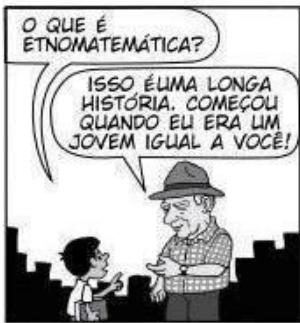


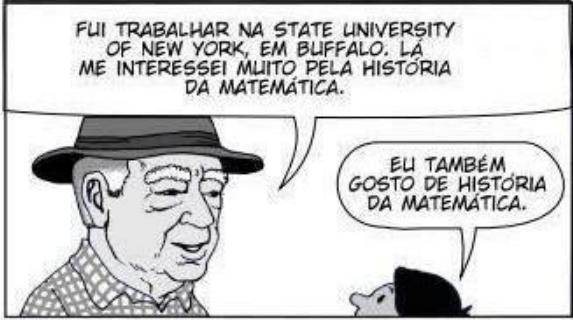 NOS ESTADOS
UNIDOS, PARTICIPEI DE UM CONVÊNIO ENTRE A UNIVERSIDADE DE NEW YORK E A LINESCO PARA REALIZAR UM PROGRAMA DE DOLTORADO NO MALI, NA ÁFRICA.
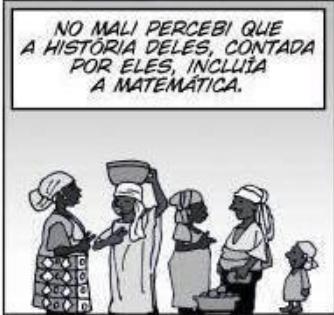
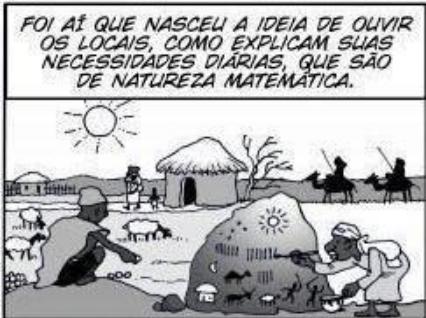 Edição Especial do GAU - Encontro 2015
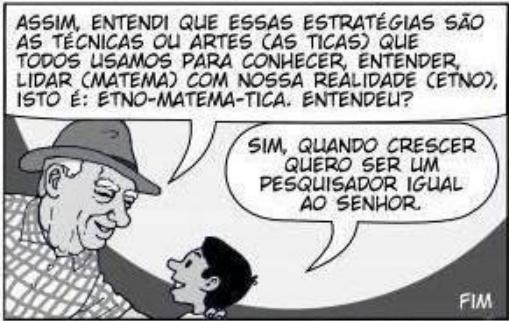 Copyright© - Grupo de Amigos do Ubiratan D'Ambrosio - GAU Fonte: Facebook do Grupo de Amigos de Ubiratan (GAU). Disponível em: https://www.facebook.com/grupodeamigosdoubi/photos/a.736089533150250.1073741827.736084856484051/918125501613318/?type=3&theater. Acesso em: 29/09/2022.
Conflict of Interest
The authors declare no conflict of interest.
Ethical Approval
Not applicable
Data Availability
The datasets used in this study are openly available at [repository link] and the source code is available on GitHub at [GitHub link].
Funding
This work did not receive any external funding.
References
Cite this article
Related Research



Special Issue
Launch a focused special issue to highlight research, emerging trends, and expert insights in your academic field.
