



IntelliPaper
Abstract
Different social groups construct the meanings of physical difference to fit competing ideologies and interests. In the case of deafness, there are two primary ways of understanding the condition. The first perspective is a cultural perspective, which understands deafness to be a difference, not a disability, and American Sign Language (ASL) is used as the language technology. The infirmity, or medicalized model, of deafness considers deafness to be a disability that advanced technology can cure or treat. Each of these two perspectives of deafness- the infirmity model and the cultural model- informs the kinds of technology that are developed and adopted for, by, and about deaf people. The infirmity model of deafness encourages technologies that correct the deaf body - to correct the deaf body to be hearing. The cultural model of deafness, on the other hand, encourages the development of technologies that allow deafness and hearing to co-exist.
Explore Digital Article Text
I. INTRODUCTION
The social shaping and definition of normality and abnormality, and disability and ability, involve considerations of morality, conformity, purity, and resistance. Different social groups construct the meanings of physical difference to fit competing ideologies and interests. When a condition or state is identified as abnormal or disabling, corrective procedures and technologies are often offered to the afflicted individual(s) to restore or gain normality, morality, and purity.
Alternately, a cultural understanding of deafness understands deafness to be a physiological difference around which a rich linguistic and cultural heritage has evolved (Cherney 1999; Lane 2005). The cultural model does not understand deafness as something to be corrected, but rather as a natural, healthy state. Deaf proponents of the cultural understanding of deafness identify as members of a linguistic minority and culture group, referred to as the Deaf-world (Lane 2005). This perspective is personified in the words of Deaf activist John Limnidis, "Deafness is not a handicap. It's a culture, a language, and I'm proud to be deaf. If there was (sic) a medication that could be given to deaf people to make them hear, I wouldn't take it. Never. Never till I die" (quoted in Cherney 1999).
Each of these two perspectives of deafness- the infirmity model and the cultural model- informs the kinds of technology that are developed and adopted for, by, and about deaf people. The infirmity model of deafness encourages technologies that aim to correct the deaf body and achieve normality- in other words, to correct the deaf body to be hearing. The cultural model of deafness, on the other hand, encourages the development of technologies that allow deafness and hearing to co-exist. These technologies support alternative ways of communicating other than speech and hearing and allow for a bridge between the Deaf and the hearing. Deaf people who adopt technologies informed by a cultural understanding of deafness use technology to resist a medicalized, disability understanding of their bodies.
In this paper, I explore the socio-technical history of technological devices for the deaf. I explore three different eras; I've chosen these time periods because these are time periods in which a major technological shift occurred. The first era, starting in the 1810's, began with Thomas Hopkins Gallaudet founding the first ASL school for the deaf in the US. In the second era, starting in the 1870's, early hearing assistance devices and surgeries were developed, later followed by in-ear hearing aids. The third era, beginning in the 1980's and reaching into the present, represents the increasing use of cochlear implants. I will first provide some background on Science & Technology Studies (STS), which is the academic tradition which I am following in this paper, and then will begin the review of the historical development of hearing technologies.
II. STS (SCIENCE & TECHNOLOGY STUDIES) SCHOLARSHIP OVERVIEW
- birthed the field of STS by stating that technological change was revolutionary in nature; later theorists have disputed this and have shown that technological change tends to be recursive, political, and glacial. Bijker demonstrates in his book, "Of Bicycles, Bakelite, and Bulbs" (1997) this recursiveness in the development of the bicycle. He emphasizes the development of the bicycle was a series of "detours." It was not a straight path from the hobby horse to today's $12,000 carbon fiber bikes. I see the same sort of detours in the development of hearing technology. In his book, Bijker (1997) shows how the development of the bicycle was recursive— early prototypes were developed, problems were found with them, sent back to the developers who made changes, sent the bike back to the public, who found more problems, who sent it back, and etc. (Bijker 1997). The same process can be seen in the development of the audiphones and dentaphones, as well as the cochlear implant.
Bijker maintains the role of power in the mutual shaping of technology and culture (1997). Technological decisions, including medical diagnoses such as a deafness diagnosis, are socially shaped under the broader social context (Kuiper et al., 2021). STS frameworks have been utilized in disability studies (Blume et al., 2014), and these studies have found that in industrialized societies, the medical profession has authority over the determination of who should count as disabled while “assistive technologies” enable “specific kinds of subject positions” (Blume et al., 2014). STS frameworks have been used specifically to study cochlear implants and other hearing technologies. Laura Mauldin (2019), whose research on parents of deaf children is described above, used an STS informed approach that placed the CI within a complex sociotechnical system and examined cochlear implant “failure.” Singleton et al. (2019) explored deaf technologies utilized by older deaf adults and concluded that this population should be included in the recursive process to refine and adapt technologies.
STS is a valuable framework from which to examine deafness and cochlear implants. Technological change is not the “revolution” that
Kuhn described (1962), but, rather, it is a circular process by which users use the device and find problems with it, the device goes back to the developers, who address the specific problem, users find different problems that garner different solutions, etc. My contribution to the STS literature on cochlear implants and deafness is that I consider issues of normality and medicalization and go beyond examining how specific technologies are iteratively co-constructed by developers and users. Instead, I show that this iterative process is driven by pressures to be normal and to medicalize previously non-medicalized conditions.
III. METHOD
I rely on the analysis of historical newspaper and magazine content, as well as utilizing primary sources that I initially located in secondary source material. To gather this material, I visited the Rutgers University library website, and accessed the database “Lexis Nexis” (now known as “Lexis Uni”). I chose this database for my search because it houses full-text newspaper and magazine articles, both historical and present-day. Using the search engine, I searched for “news + deaf” and “news + hearing aid.” Because I wanted to document the history of hearing loss technologies, I selected the date range for each search to be January 1, 1700 (which was the earliest available data), to December 31, 1910. I chose 1910 as the end date because battery-powered hearing aids were beginning to be made available by this time, and thus, the modern era of hearing aid technology was ushered in. The search “news + deaf” returned 28 articles from this timeframe, and the search “news + hearing aid” returned 34 articles, from sources such as the New York Times and The Youth’s Companion.
I specifically searched for popular articles, rather than peer-reviewed articles from sources such as JAMA (Journal of the American Medical Association), which first started publishing in 1883, or the New England Journal of Medicine, which first started publishing in 1811, because I wanted to capture the rise of the public perception and reception of deaf technology. Although the influence of powerful organs of medicine such as JAMA and NEJM are important to include, in this analysis I focused on popular conceptions of deafness and deaf technology only. Future research should include an analysis of the messages coming from these powerful institutions and how they framed and shaped the narrative and public discourse around deaf technology in these eras. Once I had the data compiled from the Lexis Nexis search I began the two-sort open coding process. I used an open coding approach (Strauss and Corbin 1998) that evolved into a more focused coding approach once codes emerged. Open coding allows the data to speak for itself (Strauss and Corbin 1998) and invites codes to emerge from the dataset. The two-sort approach first sorted the materials into broad categories, and then a more focused approach took those broad categories and made them more specific and narrower. These categorical and coding choices were enlivened by my knowledge of the literature, but, as the open-coding method demands, were primarily driven by the data itself. My information about the development of hearing aids and cochlear implants comes largely from peer-reviewed journal articles, as well as a personal interview I conducted with Dr. William House near the end of his life, who is widely considered one of the fathers of cochlear implants.
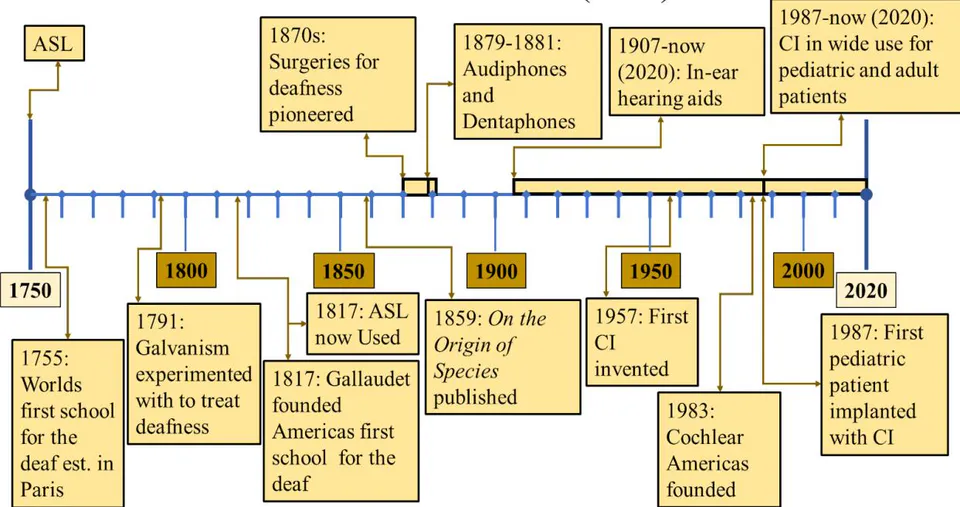
Figure 1 shows the global development of hearing technologies, beginning with the world's first school for the Deaf, in Paris, France, in 1755. This school became the foundation on which American ASL schools were based, although the first American school for the Deaf wouldn't be founded until nearly 70 years later.
4.1 First era: ASL as a Language Technology
De l'Epee utilized the manual language already used by French deaf people, and by 1790, the school, run by De l'Epee's successor Abbe' Sicard, was entirely a manual school (Winefield 1987). Manual teaching methods are poised as an alternative to oral methods of education, which teach speech to deaf children. In 1815, an American minister, Thomas Hopkins Gallaudet, visited a British school for the deaf and Sicard's French school in order to learn methods for teaching the deaf. The British school utilized oral methods of teaching the deaf, but the school refused to divulge the secrets of teaching the oral method to Gallaudet (Winefield, 1987). The manual French school was more welcoming, so Gallaudet learned the manual method of teaching deaf children (Baynton 1996; Winefield 1987). He returned to the states with a French teacher, Laurent Clerc, who became the first teacher of the deaf in the US at the American Asylum for the school . Edward Miner Gallaudet, Thomas Hopkins' son, formed Gallaudet University in 1864. I mark the 1810s, when ASL was first taught in the US at residential schools, as the beginning of the first era I explore, in which the problem of deafness was identified as a lack of connection to God and the technological solution was ASL.
As a testament to the perception that ASL was the accepted normal and natural way for deaf people to communicate, deaf residential schools, in which ASL was taught and used exclusively, were commonplace prior to the 1880s (Baynton 1996; Winefield 1987). These schools, while founded by ministers for religious purposes, served to nurture what later became a robust and unique Deaf culture. Within the residential schools, children learned not only how to communicate with each other, but also about Deaf culture, norms, and expectations. The earliest residential schools gave birth to Deaf art, Deaf theater, and a tradition of manual storytelling (Baynton 1996). Within the residential schools, children often met their spouses and lifetime friends (Lane 1999). The residential schools served as an important anchor for the nascent American Deaf culture, fomenting resistance to oral methods of deaf education, especially as medical options for deafness such as hearing aids and cochlear implants became widely available.
When the problem is speaking to God, key concepts associated with deafness are lost, pathetic, pitiful, damned, and doomed. These themes show up in the source documents that Baynton relies on, as well as in the primary sources I located. The technological goal in this case would be to achieve speaking, or communication, which could be achieved through education via ASL. Ministers and educators became the mediators between God and the deaf students, and ASL became the medium of communication. ASL came to be seen by Protestant evangelists (who ran the Deaf schools) as a means to connect otherwise heathen people to God, and indeed, saw ASL as a special gift from God to deaf people (Baynton 1996). Most important for Gallaudet was connecting deaf children to God. As he puts it, “They knew nothing of God and the promise of salvation, nor had they a firm basis for the development of a moral sense” (Baynton 1996).
As a technology, ASL accomplished the goal of connecting the deaf to God and to a Christian community. The use of ASL in the early 19 century did not offer a medicalized view of the deaf, instead it offered a solution to a spiritual problem. ASL was perceived by many as a beautiful, pure, emotional, and, above all, natural language provided by God for the deaf (Baynton 1996). Until the middle of the 19 century, ASL and the manual method of teaching children remained the preferred pedagogical and communication method for the profoundly deaf.
4.2 Second Era- Hearing assistance and hearing aids
By the beginning of the second era I explore, which began around 1870, with the technological “turning point” being when early hearing assistance devices and surgeries were developed, later followed by in-ear hearing aids, ASL was no longer seen as the “normal” method of communication for deaf people, as ASL was considered primitive and obsolete. With Charles Darwin’s publication of “On the Origin of Species,” (1859) people became concerned about developing “positive evolution” and promoting the reproduction of people who represented the “pure” and finely evolved human being. Since speech was seen as one of the primary attributes that delineated humans from animals (Baynton 1996), deaf people who used sign language were seen as not as evolved as hearing and speaking people. Sociologist Charles Cooley (1911) said, “the achievement of speech is commonly and properly regarded as the distinctive trait of man, as the gate by which he emerged from his pre-human state." From this perspective then, any technology that did not encourage speech, and secondarily, hearing, separated deaf persons from the preferred, evolved, and evolving species of human.
By the beginning of the 20 century, immigration into the US was a main concern among Americans. Immigrants were seen as inferior to native-born citizens, and immigrants were the object of prejudice and stereotyping. Deaf people, especially those who used ASL, were seen as foreigners in their land. With deaf people perceived as suspect, other, threatening to the nation, or as indicators of a fractured nation, ASL was no longer a sufficient technology to address these problems. Instead, the primary goals of the new correctional devices were to achieve speaking and hearing and eliminate difference. There was a wealth of hearing technologies used during this time frame— from audiphones, dentaphones, and, slightly later with the invention of the micro-battery, the in-ear hearing aid. Technological managers such as research scientists, inventors, and surgeons mediated between the alienated deaf and the rest of the nation. Next, I will explore the surgical and medical technologies that tried to address the problems of being deaf as they were understood in the late 19 century through the early part of the 21 century.
Some of the earliest external aids began their life in the early 19 century, when ASL was still the dominant technology and the problem of deafness was considered to be a spiritual problem. ASL was more commonly used for children with little or no prior language development (Baynton, 1996), whereas the earliest precursor to today's external aids, the ear trumpet, was used to assist those adults with prior language acquisition. The ear trumpet only helped people with minimal hearing loss and was generally used to cut out ambient noise during conversation. In 1812, the metronome inventor Johann Maelzel made four different ear trumpets for Beethoven (Ealy 1994). However, it soon became apparent that holding an ear trumpet is incompatible with playing the piano, so Maelzel invented a special hands-free headband for his ear trumpet (Ealy 1994). And voila'—the first no-hands hearing aid!
At approximately the same time as ear trumpets reached their peak usage, other types of hearing technologies were being experimented with. Like with the ear trumpet, most of these technologies were developed for post-lingual deaf adults, as no external amplification aid can help a congenitally deaf infant with no residual hearing. Small private experiments in 1815 and 1817 demonstrated that objects held between the teeth could send vibrations into the head and thus create a sense of “hearing” (Ealy 1994; New York Medical Magazine 1815). These discoveries were the precursors to a type of hearing aid that swept the US for about one very intense year in the 1880’s, even though they may have been completely useless in supporting hearing (Smith 1880). These devices, the audiphone and dentaphone, and their close cousins, eventually led to the behind-the-ear aids as we have today and were also consistent with oral methods of education which become predominant in this time period (Baynton 1996).
The first audiphone was invented in early 1879, by a man named Richard Rhodes (New York Times 1879). Rhodes was a deaf man in Chicago who had discovered the property of “hearing” through ones teeth accidentally when he placed his teeth next to his pocket watch and learned he could hear the tick of the watch through his teeth (The American Socialist 1879). The Rhodes audiphone consisted of a collector plate shaped like a large, vulcanized rubber fan that was curved to collect sound waves. The fan was attached to a handle that was placed against the teeth of the user (Scribner’s Monthly 1880). Soon after its release to the public, however, the first complaint about the Rhodes audiphones came in: it was difficult to be used by those with false teeth (Medical and Surgical Reporter 1880); Rhodes immediately responded and provided a modified mouth plate for false teeth. At the same time as Rhodes was making this adjustment however, denture makers had discovered that well-fitted vulcanite dentures were the best sound conductors and encouraged clients to purchase new dentures (Medical and Surgical Reporter 1880). Also, for patients with no teeth at all, false vulcanite teeth were fitted directly into the roots in such a way as to be conducive to using the Rhodes audiphone (Medical and Surgical Reporter 1880). In this way, the audiphone became connected to the denture industry, which was expected because in many cases the customers for both products were the same.
As quickly as audiphones flooded the hearing aid market, they were gone, and as early as February 1880 a new product, the dentaphone, came onto the market (Western Christian Advocate 1880b) and largely supplanted the audiphone. What explains the audiphone's rapid rise and fall? In addition to the denture issues mentioned above, there were other critical issues that ultimately led to its demise. First, with an audiphone in one's mouth, one cannot speak . Recall that by the early 1880's, the problem of deafness had become a problem of both hearing and speaking, so a technology that did not allow for speech did not sufficiently address the problem as it was conceptualized in that era. Also, the audiphones only worked, if at all, with patients who did not have a damaged auditory nerve (Philadelphia Medical Times 1880b; Scientific American 1879), severely limiting its consumer base. Also, like ear trumpets, audiphones were physically cumbersome and conspicuous (Medical and Surgical Reporter 1880). A year after their advent, medical opinion was suspicious that vibrations to the small bones in the head jarred the brain, causing brain damage (Philadelphia Medical Times 1880b). Additionally, audiphones were seen to be too expensive (about 1/10^{}$ of the price as the standard audiphone and that used pasteboard instead of rubber as the collection device (New York Times 1880). However, this last device, invented in Geneva, did not stop the decline of the audiphone, and by the middle of 1880 most hearing aid innovation focused on a different, but related product known as the dentaphone. The dentaphone suffered the same problems as the audiphone and disappeared from the hearing technology market almost as soon as it entered it. The same fate befell the Otocoustic fan, a device similar to the audiphones and dentaphones, and by the end of one frenzied year, audiphones, dentaphones, and Otocoustic fans were a thing of the distant past.
The most preferable methods to intervene in deafness during the late 19 century and early 20 century were interventions directly in the ear to enable hearing, and, by extension, speech. Successful technologies could actually eliminate deafness at its source. The surgical intervention of deafness has been recorded at least as early as the 1790's. In 1791, a deaf Versailles man experimented in surgery by blowing air and liquid into the tympanum through the Eustachian tubes; he claimed to cure his own deafness through this method (Lane 1999). Also, in 1791, Luigi Galvani experimented with Galvanism for the treatment of deafness, and at least one child was claimed cured with the use of an electrostatic generator (Ealy 1994). Both of these techniques were done with no anesthesia, no antibiotics, and no electric lights, and both had lots of complications (Ealy 1994; Lane 1999). By the 1870's, early versions of surgeries still performed today, including stapes and fenestration surgeries began to be performed (Lempert 1951). The first stapes surgery had the benefit of both anesthesia and electric lights, and eventually evolved into the modern fenestration surgery in the 1920's (Lempert 1951). Fenestration was expensive, invasive, and required at least 3 weeks recovery, however, for adult-onset deafness, it had an 80% success rate. However, the risks of fenestration meant that very old patients were not qualified for the surgery, and so by 1952, the first modern stapes surgery was performed by Dr. Samuel Rosen (Fowler 1981) although it was modified substantially in
1956 by Dr. John Shea (Shea Ear Clinic 2009). These newer, more relaxed stapes surgeries involved gentle, pulsing pressure to release the stapes bone, but they, like fenestration, only work for patients with hardening of the bones in the inner ear, or osteosclerosis. There are multiple factors that influence the changing techniques of the ear. First, as the causes of deafness change so does the technology. For example, only older adults with hardening of the stapes bone are candidates for either the stapes or fenestration surgeries, as childhood illness or inherited conditions tend to be less amendable to surgical interventions. Secondly, as the meaning of deafness changes so does technology. Although there were some attempts to surgically correct hearing in the 18 and early 19 centuries, these attempts became more concentrated during the time periods when deafness was seen as a threat to humankind and to the nation. Although when the meaning of deafness changes, the technology changes, it is also true that as technology changes, the meaning of deafness changes. For example, during the earliest attempts at hearing surgeries, there were no electric lights, antibiotics, or an understanding of germ theory and hygiene (Ealy 1994; Lane 1999; McCoy 2015). Once these scientific advances occurred, it became possible for more advanced surgeries to be developed. When stapes surgeries, and micro-battery behind-the-ear hearing aids became common place, the meaning of deafness changed from "connection with God," to "connection with the nation," This is because, as a language technology, ASL was able to address a perceived isolation from God, and since ASL presumably allowed communication with God, ASL was sufficient technology for the problem at hand. However, as the meanings of deafness expanded to include isolation from humankind and isolation from the nation, ASL was no longer a sufficient technology, and thus new technologies were invented to address these new problems of deafness. These changes happened in dialectic with each other—one did not lead the other. Lastly, as medical, and scientific knowledge of the ear and acoustics change, so does technology. For example, in 1863, the German physician Helmholtz "discovered" the middle ear bones required for hearing (Rosen
1958), of which knowledge led to both the stapes and fenestration surgeries.
In 1886, a full seven years after the release of the first audiphones, the Blodgett Microaudiphone was invented (Scientific American 1886). The microaudiphone looks like a modern in-ear hearing aid and was made of hard xylonite with a vibrating diaphragm (Scientific American 1886). By 1907, similar devices were being powered by small electric batteries (New York Times 1907); the age of the in-ear/behind the ear hearing aid had finally arrived. The first battery operated hearing aid was invented in 1898 by Miller Reese Hutchinson (Hearing Systems 2020), although an argument could be made that Alexander Graham Bell's invention of the telephone was actually the world's first hearing aid, as it included features such as controlling the loudness of the receiver (Winefield 1987). In 1913 the first mass marketed hearing aids were available; however, they were not very portable (Hearing Systems 2020). Vacuum tube hearing aids were produced in the '20s, and this was the main kind of hearing aid available until after WWII and the invention of the transistor. Transistors quickly replaced vacuum tubes as they were smaller, needed less battery power and had less distortion (Hearing Systems 2020; Healthy Hearing 2020). In the 1970s the transistor gave way to microprocessors and ushered in the use of digital technology (Hearing Systems 2020; Healthy Hearing 2020). At this point, hearing aids started evolving rapidly with the creation of high-speed processors in the 1980s, and the appearance of the first all-digital hearing aid in the 1990s. Today, hearing aids are paired with Bluetooth devices for even more flexibility.
4.3 Third Era: Cochlear Implants
As noted earlier, the meanings of deafness help shape the technologies that evolve to address it, and technologies, in turn, shape the meaning of deafness. As cochlear implants were in their infancy in the 1950s and 60s, so were the social ideals of white middle-class success (Ciciolla et al., 2017; Jamal 2020; Schaus 2018). These two artifacts from that era- middle-class success and cochlear implants, shaped each other into existence. When technology became available to provide near-normal hearing, the goal of having "normal" success became possible. I mark the 1980s and the founding of the first CI manufacturer in the US as a turning point where the problem of deafness shifted to success and the technological solution became CIs.
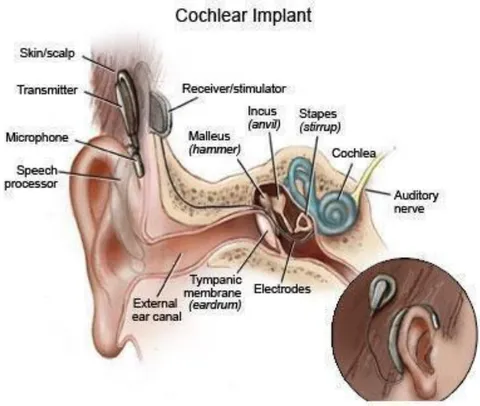
A cochlear implant is a small electronic device that provides a sense of sound to the wearer—it does not increase volume like a hearing aid does. The implant consists of an external portion that sits behind the ear and a device that is surgically placed under the skin. As shown in Figure 2, an implant has the following parts:
A microphone, which picks up sound from the environment.
A speech processor, which selects and arranges sounds picked up by the microphone.
A transmitter and receiver/stimulator, which receive signals from the speech processor and convert them into electric impulses.
An electrode array, which is a group of electrodes that collects the impulses from the stimulator and sends them to different regions of the auditory nerve (National Institute of Health 2017).
An implant does not restore normal hearing. Instead, it can give a deaf person a useful representation of sounds in the environment and help him or her to understand speech (National Institute of Health 2017).
The National Institute of Health (2017) explains hearing with a cochlear implant in this way:
A cochlear implant is very different from a hearing aid. Hearing aids amplify sounds so they may be detected by damaged ears. Cochlear implants bypass damaged portions of the ear and directly stimulate the auditory nerve. Signals generated by the implant are sent by way of the auditory nerve to the brain, which recognizes the signals as sound. Hearing through a cochlear implant is different from normal hearing and takes time to learn or relearn. However, it allows many people to recognize warning signals, understand other sounds in the environment, and understand speech in person or over the telephone.
House was originally a dentist and experimented with fenestration surgery, a surgery that opens a new hole in the bony labyrinth in the ear to correct certain types of hearing loss in older people (House, 2011). His interest in fenestration and hearing loss made a natural transition to cochlear implants. A colleague showed him the Djourno and Eyriès article and he "became excited" about it. He writes in his memoir (2011),
I became very excited about this. I had seen that deaf children with some residual hearing who could hear a degraded signal with a hearing aid could learn lip reading. It seemed possible that if an implant could give totally deaf children some hearing, they could learn lip reading, be successful in an oral school, understand the English language and learn to read.
House's first implants were of two adults in 1961. Things proceeded as expected, with the adults hearing ambient noise, but then they both developed infections and House ex-implanted both patients. House's influence on the development of cochlear implants can't be underestimated. He followed in the footsteps of his predecessors, Djourno and Eyriès, and made steps forward by implanting additional patients and advancing the technology. In 1964, Blair Simmons and Robert J. White implanted a six-channel electrode in a patient's cochlea at Stanford University (Mudry and Mills 2013). That implant had limited success in terms of hearing and speech results but was one of the first implants that didn't have complications requiring re-implantation.
Another crucial step in this period involved the independent evaluation of cochlear implants. The first such evaluation was published in 1977 by the audiologist and neurophysiologist Robert Bilger (Bilger & Black 1977) from Pittsburgh. Over the course of 5 days, Bilger's group evaluated 13 patients with implants (11 who had undergone implantation by William House with a single-channel electrode, and 2 by Michelson) and remarked that "[t]he implant surgical procedures were well-tolerated by the subjects and did not disrupt middle ear function" (Bilger and Black 1977) The patients "did score significantly higher on tests of lipreading and recognition of environmental sounds with their prostheses activated than without them" (Bilger and Black 1977). They concluded as follows: "To the extent that the effectiveness of single-channel auditory prostheses has been demonstrated here, the next step lies in the exploration of a multichannel prosthesis" (Bilger and Black 1977).
The modern multichannel cochlear implant was independently developed and commercialized by Graeme Clark, an independent inventor from Australia, and, independently from Clark, Ingeborg Hochmair and her future husband, Erwin Hochmair. The Hochmairs first implanted a person in December 1977 and Clark's was first implanted in August 1978. (Lasker Foundation 2013). Clark hypothesized that hearing might be reproduced in people with deafness if the damaged or underdeveloped ear were bypassed, and the auditory nerve were electrically stimulated to reproduce sound. Clark's first multi-channel cochlear implant operation was done at the Royal Victorian Eye and Ear Hospital in 1978 by Clark and Dr. Brian Pyman. (Lasker Foundation 2013) The first person to receive the implant was Rod Saunders who had lost his hearing at age 46 (Roche and Hansen 2015). Less than one year later, a second patient was implanted. In 1982 Clark supervised the initial clinical studies mandated by the Food and Drug Administration (Clark 2006). After a world trial in 1985 the FDA granted approval for his multi-channel cochlear implant for adults 18 and over who had hearing before going deaf (Clark 2006). It thus became the first multi-channel cochlear system to be approved as safe and effective by the FDA (Clark-2006). In 1990 after a detailed analysis of results the FDA announced that the 22-channel cochlear implant was safe and effective for congenitally deaf children from two to 17 years of age (Yawn, et al., 2015).
After Clark and the Hochmair's first implantations the challenge came to manufacture the implant en-mass and convince surgeons the devices were safe and effective. This was accomplished by the rise of three companies: Cochlear America in 1983 (Cochlear America 2018b), Advanced Bionics in 1993 (Advanced Bionics 2018), and Med-El, based in Europe, in 1990 (Med-El 2018).
In 1987 Holly McDonnell, at the age of four, was the first pediatric recipient of the commercial Nucleus (a Cochlear America product) cochlear implant. She still has her original implant and has had five sound processor upgrades since then. "With my cochlear implant, I was able to happily attend mainstream schools and successfully achieve my own personal and career goals" said Holly at age 26 (Cochlear America 2018).
The global cochlear implants market size was valued at USD 1.1 billion in 2015 and is projected to grow at a compound annual growth rate (CAGR) of 10.5% (Grand View Research 2018). This high growth can be attributed to the advancements in cochlear implants, growing penetration of implants due to expanded geographical reach of market players, and government support, such as the fact that Medicaid covers cochlear implants (Grand View Research 2018). Technological advancements, strategic initiatives by the industry players, and favorable insurance reimbursements for cochlear implantation surgery are the other key drivers of the market.
V. CONCLUSION
I have covered technological advancements in both hearing aids and cochlear implants. This technological analysis demonstrated that it takes an army to make a technological advancement—one person or group makes the original attempt, and then other people take that attempt and make it better. There is a feedback loop from user groups (such as the feedback that audiphones did not work well for people with false teeth, which then transferred the technology back to the developers to address the problem). This kind of discovery was apparent with the audiphone and dentaphone—competing inventors came up with over four different audiphones and dentaphones in the scope of one year! Simultaneous attempts on different continents are also possible, such as the cochlear implant advancements made by Graeme Clark in Australia and the Hochmairs in Europe.
The meaning of deafness is a socially constructed viewpoint of what deafness means, both to those who are deaf as well as those who are hearing. In the early 1800s, the meaning of deafness was the fear of being isolated from God. Minister-run residential schools that taught ASL were the solution to this problem. Residential schools became the cultural center of Deaf culture, where friendships and marriages were often begun. In later eras, the meaning of deafness was related back to other social problems, such as a growing awareness of evolution and struggles with immigration, and in these time periods, deafness meant isolation from humankind and from the nation. The idea of deaf people as being threatening is salient in this second era—in the 1880s, deaf people were considered evolutionarily "behind," and were seen as a threat to an advanced gene pool. With regards to immigration, deaf people were seen, much as Irish, Italian, or Jewish immigrants, as threatening to an intact nation. In the modern, or third, era, I identified "success" as the meaning of deafness. Success as the meaning of deafness is tied back to white, middle-class American ideals that emerged in the post-war period in the 1950's. Only cochlear implants, and not ASL or hearing aids, can offer hearing and speaking to congenitally deaf children in such a way that success, as it is typically defined, in terms of school, friendships, childhood sports, college, career, and marriage, can be achieved.
ACKNOWLEDGEMENT
The author is grateful for the encouragement and assistance in preparing this manuscript from Phaedra Daipha and Maura Kelly.
Declaration of Interest statement
The author has no conflicts of interest regarding the publication of this paper.
Conflict of Interest
The authors declare no conflict of interest.
Ethical Approval
Not applicable
Data Availability
The datasets used in this study are openly available at [repository link] and the source code is available on GitHub at [GitHub link].
Funding
This work did not receive any external funding.
References
Cite this article
Related Research


Special Issue
Launch a focused special issue to highlight research, emerging trends, and expert insights in your academic field.