

Abstract
The majority of infectious diseases are of bacterial in origin. With the discovery of laboratory methods to grow these microorganisms using an appropriate growth medium known as “culture,” determining the sensitivity and resistance of specific pathogens to a wide range of antimicrobial agents is necessary so clinicians can immediately institute proper treatment regimens. (Bayot& Bragg, 2024) This targeted approach of treatment is considered the gold standard however most clinicians use or opt for empiric antibiotic therapy as an approach to treat the suspected infection. This has resulted into irrational use of antibiotics in clinical practice hence and emerging antimicrobial resistance.
Antimicrobial resistance (AMR) has emerged as a major threat to public health globally. (Gajic et al 2022) An estimated 1.14 million deaths were directly caused by antimicrobial resistance (AMR) in 2021 worldwide, and it is projected that over 39 million people will die from AMR-related infections between 2025 and 2050 (GBD 2021).
This public health crisis has potential severe implications for resource-limited settings. However, accurate and rapid detection of resistance to antimicrobial drugs, and subsequent appropriate antimicrobial treatment, combined with antimicrobial stewardship, are essential for controlling the emergence and spread of antimicrobial resistance. (Gajic et al 2022).
Therefore, the purpose of this study is to: develop an antibiogram to empower doctors to make informed prescribing decisions in the clinic regarding use of antibiotics at Uganda martyrs’ hospital Lubaga and to generate data regarding the concept to bring greater clarity to this issue.
Explore Digital Article Text
INTRODUCTION
The majority of infectious diseases are of bacterial in origin. With the discovery of laboratory methods to grow these microorganisms using an appropriate growth medium known as "culture," determining the sensitivity and resistance of specific pathogens to a wide range of antimicrobial agents is necessary so clinicians can immediately institute proper treatment regimens. (Bayot & Bragg, 2024) This targeted approach of treatment is considered the gold standard however most clinicians use or opt for empiric antibiotic therapy as an approach to treat the suspected infection. This has resulted into irrational use of antibiotics in clinical practice hence and emerging antimicrobial resistance.
Antimicrobial resistance (AMR) has emerged as a major threat to public health globally. (Gajic et al 2022) An estimated 1.14 million deaths were directly caused by antimicrobial resistance (AMR) in 2021 worldwide, and it is projected that over 39 million people will die from AMR-related infections between 2025 and 2050 (GBD 2021)
This public health crisis has potential severe implications for resource-limited settings. However, accurate and rapid detection of resistance to antimicrobial drugs, and subsequent appropriate antimicrobial treatment, combined with antimicrobial stewardship, are essential for controlling the emergence and spread of antimicrobial resistance. (Gajic et al 2022)
Therefore, the purpose of this study is to: develop an antibiogram to empower doctors to make informed prescribing decisions in the clinic regarding use of antibiotics at Uganda martyrs' hospital Lubaga and to generate data regarding the concept to bring greater clarity to this issue.
II. METHODOLOGY
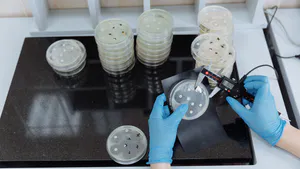
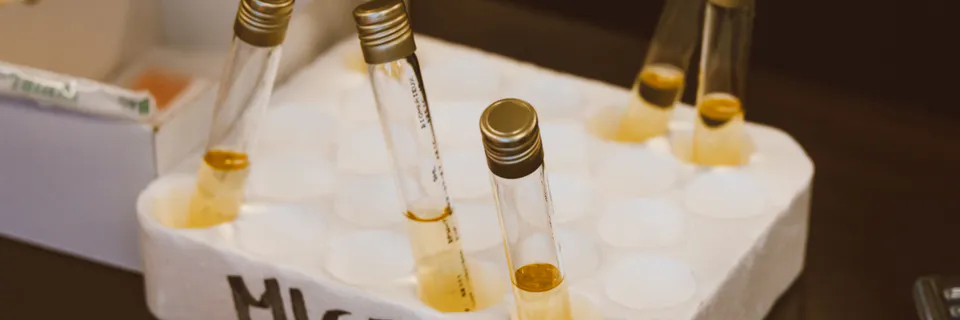
This study was a retrospective analysis conducted in the microbiology laboratory at Uganda Martyr's Hospital. The susceptibility data obtained from the Vitek 2 Compact, based on client samples for culture and sensitivity, were evaluated for the year 2024.
| Uganda Martyrs' Hospital Lubaga LaboratoryMicrobiology Laboratory 2024 | ||||||||||||||||
| Organism | Number of Isolates | Antibiotics | ||||||||||||||
| ce ftr iax one | C e f o t a x i me | A mo x i cil lin cl a v u l a n i c | A mp pic il lin/s u l b a c t a m | G e n t a m y c i n | C i p r o f l o x a c i n | T r i m e t h o p r i m s u l f a m e t h o x az ole | N i t r o f u r a n t o i n | C e f o x i t i n | A m i k a c i n | m e r o p e n e m | C e f e p i m e | C e f u r o x i m e | A z t r e o n a m | C e f t a z i d i m e | ||
| Klebsiella Pneumoniae | 57 | 05 | 11 | 44 | 09 | 55 | 43 | 13 | 30 | 98 | 93 | 99 | 06 | 05 | 33 | 05 |
| 95 | 89 | 56 | 91 | 45 | 57 | 87 | 70 | 02 | 07 | 01 | 94 | 95 | 67 | 95 | ||
| Escherichia Coli | 122 | 19 | 16 | 66 | 31 | 75 | 40 | 08 | 95 | 94 | 100 | 100 | 21 | 19 | 26 | 17 |
| 81 | 84 | 34 | 69 | 25 | 60 | 92 | 05 | 06 | 00 | 00 | 79 | 81 | 74 | 83 | ||
| Pseudomonas Aeruginosa | 12 | C e f e p i m e | Piperacillin Tazobactam | C e f t a z i d i m e | C i p r o f l o x a c i n | A m i k a c i n | M e r o p e n e m | A z t r e o n a m | ||||||||
| 80 | 83 | 50 | 75 | 80 | 90 | 41 | ||||||||||
| 20 | 17 | 50 | 25 | 20 | 10 | 59 | ||||||||||
| ORGANI SM | NUMBER OF ISOLAT ES | E ry th ro my c i n | Clinda mycin | T e t r a c y c l i n e | V a n c o m y c i n | T r i m e t h o p r i m s u l f a m e t h o x az ole | N i t r o f u r a n t o i n | L i n e z o l i d | C i p r o f l o x a c i n | L e v o f l o x a c i n | M o x i f l o x a c i n | G e n t a m y c i n | ||||
| Staphyloc occus Heamolyticus | 67 | 08 | 26 | 08 | 92 | 15 | 97 | 90 | 19 | 26 | 92 | 29 | ||||
| 92 | 74 | 92 | 08 | 85 | 03 | 10 | 81 | 74 | 08 | 71 | ||||||
| Staphyloc occus Aureus | 24 | 13 | 38 | 67 | 100 | 38 | 100 | 100 | 67 | 59 | 35 | |||||
| 87 | 62 | 33 | 00 | 62 | 00 | 00 | 33 | 41 | 65 | |||||||
| Percentage of the isolate resistant to the antibiotic | |
| Percentage of the isolate susceptible to the antibiotic | |
| The organism was not exposed to the antibiotic or not recommended | |
| Gram negative | |
| Gram positive |
Notes
Data from organisms with fewer than 30 isolates (n=30) may lead to interpretation errors. (CLSI 2024). However, Pseudomonas Aeruginosa and Staphylococcus Aureus were included for because of their medical implication and future reference this being a baseline Antimicrobial Susceptibility Profile.
Nitrofurantoin reported on urine isolates only. (CLSI 2024).
Antibiogram results are interpreted as percentages to determine the susceptibility of organisms to different antimicrobials. The percentage susceptible (%S) is used to guide treatment decisions.
Susceptibility Categories (The Sanford Guide, 2024)
Susceptible: If a high% of bacterial isolates(90% or more)are categorized as susceptible to an antibiotic, it is considered an effective choice for treatment.
Intermediate: susceptibility range(50 - 89%), it may still be effective in certain situations depending on factors like the site of infection and the patient's clinical condition.
Resistant: susceptibility range(<50%), is classified as resistant and alternative treatment options should be considered.
If the risk of morbidity and/or mortality is high, agents with 90-95% susceptibility should be selected. Agents with 80-85% susceptibility may be acceptable for treating infections in patients without a risk for morbidity and/or mortality in the next 24-48 hours. However, other factors need to be considered in conjunction with the antibiogram. (The Sanford Guide, 2024)
Conflict of Interest
The authors declare no conflict of interest.
Ethical Approval
Not applicable
Data Availability
The datasets used in this study are openly available at [repository link] and the source code is available on GitHub at [GitHub link].
Funding
This work did not receive any external funding.
References
Cite this article
Related Research

Special Issue
Launch a focused special issue to highlight research, emerging trends, and expert insights in your academic field.