




IntelliPaper
Abstract
The conversion disorder, today called functional neurological disorder is a highly disabling condition both physically and mentally, which affects children simulating various diseases of the nervous system in its motor, sensitive or sensory components, difficult to diagnose, due to different causes with a prolonged evolution and generally causes social isolation in children; the neurofunctional picture requires for diagnosis using numerous medical tests with a high cost and burden for the health system that was previously done by ruling out. Bullying or school bullying is characterized by violence between peers at school, in which there is one or more bullies against the victim, using various types of violence, whether physical, emotional, psychological, and more recently cyberbullying, causing various traumas in the victim, sometimes with serious consequences for their health. In the present case, we describe a girl who was hospitalized due to highly disabling pain in the spine and lower limbs, which prevented her from sitting and walking, to which paresthesias were later added, which began after a traumatic accident. After several studies that ruled out an organic cause of the symptoms and their improvement with a placebo, a diagnosis of functional neurological disorder was made, which was later proven to have been caused by the stress of the bullying of whisch she was a victim.
Explore Digital Article Text
El trastorno de conversión, hoy llamado trastorno neurológico funcional es una condición altamente discapacitante tanto física como mentalmente, que afecta a los niños simulando diversas enfermedades del sistema nervioso en sus componentes motores, sensitivos o sensoriales, de difícil diagnóstico, debido a diferentes causas con una evolución prolongada y que en general provoca aislamiento social en los niños; el cuadro neurofuncional requiere para su diagnóstico utilización de numerosos exámenes médicos con un alto costo y carga para el sistema sanitario que antes se hacía por descarte. El bullying o acoso escolar se caracteriza por la violencia entre pares en la escuela, en el cual existe uno o varios acosadores o bullies contra la víctima, que usando diversos tipos de violencia tanto sea física, emocional, psicológica y más recientemente el cyberbullying, causan variados traumas en la víctima a veces con graves consecuencias para su salud. En el presente caso describimos a una niña que fue internada por un cuadro de dolores en la columna y en los miembros inferiores, altamente incapacitante, que le impedía la sedestación y la deambulación al que posteriormente se agregan parestesias, que comenzaron posterior a un accidente traumático. Luego de varios estudios realizados que descartaron una causa orgánica de los síntomas y la mejoría de los mismos con placebo, se plantea el diagnóstico de trastorno neurológico funcional, que luego se comprobó haber sido causada por el estrés del bullying del cual fue víctima.
I. INTRODUCCIÓN
con cierta frecuencia los pediatras nos enfrentamos a cuadros clínicos complejos, de difícil diagnóstico y considerando al niño como un ser biopsicosocial, el encare holístico es de fundamental importancia para el diagnóstico final, sabiendo queningún niño es una isla ya que el mismo, su familia y la comunidad son un continuo sin fisuras, para lo cual se debe considerar la semiología y el contexto en que se desarrolla el cuadro clínico. El trastorno neurológico funcional TNF como es conocido actualmente el trastorno conversivo TC, cursa con una característica común de síntomas somáticos, sensitivos o motores que provocan deterioro significativo en la calidad de vida del paciente, no explicadas por una condición médica general y que puede deberse a factores estresantes psicológicos o por causas inexplicables; el diagnóstico no es un diagnóstico de exclusión como se hacía antes, sino que se basamenta en ciertas características clínicas que muestran incongruencia entre el movimiento voluntario alterado y el movimiento automático conservado y es el segundo motivo de consulta neurológica en la emergencia ((1).
Los síntomas son genuinos e incluyen trastornos motores como parálisis, temblor, distonía, trastornos del habla, convulsiones; alteraciones sensitivas como dolor, parestesias, anestesias o sensoriales como pérdida de visión, sordera; a los ya mencionados se puede agregar fatiga, problemas para dormir, de memoria, y síntomas disociativos. Las pseudoconvulsiones o crisis convulsivas no epilépticas CCNE son alteraciones paroxísticas en la conducta que simulan convulsiones epilépticas, pero sin una causa orgánica subyacente (2). Entre las varias causas del trastorno hay factores estresantes como el abuso sexual (3), siendo la comorbilidad alta en el trastorno de conversión, ya que se estima que el 85% de los pacientes tienen además otro trastorno psiquiátrico asociado como: depresión, ansiedad generalizada y neurastenia. La prevalencia ha aumentado en las últimas décadas y representa para el pediatra un desafío diagnóstico y terapéutico por su desconocimiento, ya que según un estudio reveló que sólo el 3% de los pediatras encuestados conocía el TC (4).
El bullying o acoso infantil es una conducta agresiva intencionada y perjudicial que se manifiesta entre escolares, no como unepisodio aislado, esporádico, sino persistente que puede durar semanas, meses e incluso años, en los cuales hay una agresión de parte del/os agresor/es a la víctima, con un abuso de poder e intención de intimidar y dominar, causándole daño que puede llevar a la víctima a la depresión o el suicidio (5). Existiendo varios tipos de bullying como maltrato físico, maltrato verbal, maltrato psicológico, maltrato indirecto y aunque es de vieja data se puede considerar al bullying como un trastorno emergente (6).
Creímos necesario presentar el caso de un trastorno neurológico funcional ocurrido a una niña, causado por bullying, cuyo diagnóstico se obtuvo por exclusión luego de que los estudios realizados fueron todos normales y debido al desconocimiento en general de los pediatras sobre el TFN, siempre desafiante y difícil por la variabilidad de los síntomas somatomorfos, para que pueda pensar en ese trastorno cuando se encuentre ante un cuadro neurológico inexplicable desde el punto de vista orgánico.
II. CASO CLÍNICO
MAC sexo femenino de 11 años de edad procedente de Caaguazú previamente sana, que fue traída e internada en el Servicio de Pediatría del Hospital Central del IPS el día 18/04/23 con el antecedente de dolor en la región lumbar posterior a traumatismo por caída de 2 metros de altura de un árbol en su escuela, de aproximadamente 48 horas de evolución que se fue acentuando con el correr de las horas, irradiándose luego a ambos miembros inferiores hasta llegar a impedirle la deambulación, no habiendo experimentado ninguna mejoría con la administración de varios analgésicos (ibuprofeno, paracetamol c/codeína, naproxeno), quele fueron dados en el Centro de salud de su comunidad (compañía de Caaguazú), ingresando con el diagnóstico de lumbociatalgia por traumatismo en región lumbar, se le realizó RMN que reveló leve hinchazón de los discos intervertebrales en C3 y C4, sin alteraciones en los forámenes y del canal medular, por lo cual se descartó cualquier tipo de intervención quirúrgica por el servicio de neurocirugía y traumatología; tratada con varios analgésicos y fisioterapia fue mejorando paulatinamente del cuadro clínico, siendo dada de alta 6 días después el 24/04. Fue internada de nuevo el día 18/08/23, 5 meses después de la primera internación por dolor intenso de 10 horas de evolución en la región lumbar y los miembros inferiores más del lado derecho que no cedió con medicación analgésica, acompañado de debilidad muscular que se fue incrementando en las horas siguientes hasta impedirle la bipedestación y la deambulación, vomitando en una oportunidad antes del ingreso.
Al examen físico presentaba dolor en la región lumbar y en ambos miembros inferiores, que era más acentuado del lado derecho con irradiación a la parte posterior del muslo y de la pierna derecha siendo positivo el signo de Lassegue, en el miembro inferior izquierdo también presentaba dolor pero de menor intensidad; la debilidad muscular de ambos miembros inferiores no impedía la movilidad, pero le dificultaba sostenerse en pie, siendo el resto del examen físico normal en cuanto al estado de salud y las medidas antropométricas por lo que fue internada con el diagnostico de Lumbociatalgia.
Fue medicada con diversos analgésicos (dipirona, paracetamol, ketorolac) a horario, requirió en varias oportunidadesla administración de morfina e/v, especialmente por las noches debido a los intensos dolores que le impedían conciliar el sueño; días después presentó parestesias en ambos miembros inferiores y anestesia en los dos tercios inferiores de la pierna derecha, conservando sin embargo la sensibilidad térmica y los reflejos osteo- musculares que eran normales en ambos MMII.
La analítica sanguínea realizada fue normal y la nueva RMN que le fue practicada reveló las mismas características que en el estudio anterior de 5 meses atrás, sin alteraciones a nivel del foramen ni del canal medular, por lo cual se descartó cualquier tipo de intervención quirúrgica; a pedido de los neurólogos también se le hizo electromiografía en el MID siendo su resultado normal. Durante su internación había días en que experimentaba cierta mejoría clínica del dolor y de la debilidad muscular, pudiendo en ocasiones permanecer en pie y hasta deambular, para posteriormente en los días siguientes agravarse la sintomatología con dolor intenso más acentuado en el miembro inferior derecho. El examen psiquiátrico reveló que tenía síntomas de ansiedad y ante esta situación confusa y cambiante en una ocasión de dolor intenso por la noche que no cedió con Ketorolac, se le administró como placebo una ampolla de 2 ml de suero fisiológico vía endovenosa, con la cual el "dolor" cedió rápidamente. Ante ésta situación se le comunicó a la madre ese hecho y se le dijo que era probable que el dolor sea somatizado ya que todos los estudios realizados fueron normales con los cuales se descartó una causa orgánica de los síntomas; fue entonces cuando la misma relató que su hija luego del alta de su primera internación presentó varios otros episodios de dolor en la columna y en miembros inferiores, causándole dificultad para mantenerse de pie y deambular, síntomas que motivaron varias internaciones por dos o tres días en el Centro de Salud de su comunidad donde recibía tratamiento analgésico, hecho que le obligaba a no asistir a la escuela de forma regular, lo que a ella no le preocupaba debido a que ya no quería más ir a la escuela porque era motivo de burla y chacota de parte de sus compañeros, inclusive de la propia maestra con quién la niña no tenía buenas relaciones ya desde el inicio de las clases. Cuando se le comunicó a la niña de común acuerdo con la madre que ella iba a mudarse de escuela y que ya no volvería a la anterior, se notó un cambio notable en su estado de ánimo y del cuadro clínico, con el cese total y rápido de la sintomatología clínica, siendo dada de alta el 01/09/23 con el diagnóstico de trastorno neurológico funcional causado por bullying de tipo verbal y se le indicó consulta ambulatoria con el psiquiatra infantil y psicoterapia.
IV. DISCUSIÓN
Pierre Janet ya en el siglo XIX se adelantó a su tiempo, enunciando conceptos de lo que hoy conocemos como las enfermedades psicosomáticas y definió a la histeria como era conocida entonces, como un conjunto de enfermedades por "representación" que es la "conversión", en que la idea fija que es un conjunto de pensamientos y recuerdos con una fuerte carga emocional (trauma), que al disociar la conciencia quedan relegados en el subconsciente donde al no ser elaborada se desarrolla y se representa (expresa) en un síntoma físico (7). En 1987 Carlos Gianantonio en una publicación se refería a una "nueva pediatría" al incluir a los problemas psicosomáticos entre las enfermedades, diciendo que se trata de una pediatría totalizadora, que, al comprender la multicausalidad de casi todos los estados de enfermedad y los factores múltiples de los que dependen la salud y el bienestar, incluye en mayor o menor equilibrio, a los parámetros somáticos, emocionales y sociales en todas las acciones (8). Los trastornos somatomorfos o psicosomáticos agrupan diversos cuadros clínicos que cursan con una característica común: la relevancia de los síntomas somáticos vinculados a un malestar psíquico y un deterioro significativo, presentándose tanto en niños y adolescentes, siendo que su frecuencia ha aumentado en las dos últimas décadas (9).
El trastorno conversivo TC, conocido actualmente como trastorno neurológico funcional TNF es un trastorno neuropsiquiátrico que implica interacciones complejas entre el cuerpo y la mente, en la que participan múltiples redes neuronales cerebrales que abarcan una amplia gama de síntomas neurológicos. Los niños con TNF se presentan con síntomas que pueden mimetizar enfermedades neurológicas, en que las más comunes son pseudoconvulsiones y síntomas de tipo motor como parálisis, debilidad muscular y movimientos anormales o también síntomas sensoriales que incluyen parestesias, anestesias, ceguera y sordera, asociados en muchos casos con comorbilidades como ansiedad, depresión, distimia y en varios estudios se encuentra que el componente ansioso es crucial en el desarrollo del TNF (10). La prevalencia del TNF es muy variable y puede ser del 5.4% de las consultas en la clínica neurológica, siendo más frecuentemente afectadas las niñas con una edad promedio de 11 años. En la casuística de 194 niños australianos estudiados por Kozlowska y col. la edad promedio fue de 11 años y las presentaciones más comunes fueron alteraciones de la función motora voluntaria en el 64%, síntomas sensoriales en el 24%, pseudoconvulsiones en el 23% y problemas respiratorios en 14%, requiriendo internación el 70% de los pacientes y que presentaban antecedentes estresores en el 62% de los casos; el estudio también reveló comorbilidad como ansiedad, depresión, siendo factores de estrés "comunes" los conflictos familiares y la pérdida de las figuras de apego (11).
De una revisión total de 85 estudios publicados sobre TNF desde el 2000 hasta setiembre del 2022, que fueron revisados por Radu Stefan Perjoc y col. (12) la incidencia estimada fue de 1.3/100.000 habitantes con un rango entre 1 a 17 casos por 100.000, con alta prevalencia en niñas; encontraron que los agentes estresores estaban presentes entre el 62% al 81%, que está muy por encima de lo que ocurre en la población general.
Aunque podría esperarse que el aumento de la ansiedad relacionada con la pandemia por COVID-19 agravase los síntomas de TNF, no se encontró una clara correlación; la etiología del TNF es compleja y no hay un único mecanismo causal encontrado y hoy la etiología es vista como una compleja combinación de múltiples factores predisponentes más comunes: trauma/síntomas psiquiátricos; síntomas somáticos y factores neurobiológicos (13).
En nuestro país existe poca literatura en niños al respecto, siendo la última publicada por Julio Torales y colaboradores en 2016 (14) El TNF siempre significó para los médicos un gran desafío diagnóstico (15) y el mismo que antes se realizaba por exclusión de otras enfermedades de base orgánica y la presencia de factores psicológicos de acuerdo al DMS-4, se hace ahora según los nuevos criterios del DSM-5 (16), en donde se establecen seis alteraciones que se categorizan como síntomas somáticos y trastornos asociativos, siendo uno de ellos el TNF y para determinar que el mismo es un trastorno neurológico funcional deben cumplirse las siguientes condiciones: 1) síntomas que alteran la función motora voluntaria o sensorial; 2) hallazgos clínicos incompatibles con una condición neurológica o médica; 3) síntomas que no se expliquen por otro trastorno médico o psiquiátrico y 4) síntomas que causen un significativo distres o dificultad en el funcionamiento social, ocupacional o de otras áreas de funcionamiento (17).
Los niños con el diagnóstico de trastorno neurológico funcional son fácilmente sugestionables y sus síntomas en algunos casos pueden modificarse o desaparecer mediante estímulos externos, describiéndose en algunos "la bella indiferencia" o sea la indiferencia con que son vividos emocionalmente los síntomas por el/a paciente (18).
Según Kozlowska (19) el primer paso en el proceso de evaluación y tratamiento es realizar la evaluación médica/neurológica y que el pediatra, neurólogo, neuropsiquiatra o médico de familia proporcione un diagnóstico positivo de TFN. Los principales avances en la última década han sido reconocer que el TFN es un diagnóstico positivo (en lugar de un diagnóstico de exclusión) y comprender que las interacciones clínicas durante el proceso de evaluación son, en sí mismas, una intervención terapéutica potencialmente valiosa.
En el caso de niños con síntomas motores o sensoriales, el diagnóstico clínico se basa en los signos físicos (positivos) obtenidos durante un examen neurológico. Ver tabla 1.
Tabla 1: Signos motores y sensoriales obtenidos del examen neurológico
| Síntoma neurológico | Signo neurológico que el neurólogo puede utilizar para respaldar el diagnóstico de TFN |
| A través de los síntomas | Los síntomas son más marcados cuando el niño les presta atención y menos marcados cuando la atención del niño se dirige a otra parte.Los síntomas varían según el contexto (por ejemplo, un niño que presenta pérdida visual puede usar su teléfono móvil pero no puede ver el texto que necesita leer). el aula; la dificultad para caminar del niño está presente cuando camina hacia adelante pero no cuando se da vuelta; el temblor en una |
| Síntoma neurológico | Signo neurológico que el neurólogo puede utilizar para respaldar el diagnóstico de TFNextremidad es menor cuando el niño está distraído por el neurólogo) |
| dificultad para caminar | Una marcha tambaleante o pérdida aparente del equilibrio con una marcha de base estrechaCada pie se levanta del suelo como si requiriera un gran esfuerzo y se vuelve a bajar como si requiriera un gran esfuerzo El niño camina con las rodillas dobladas (lo que requiere más fuerza que caminar normalmente) |
| Debilidad (generalizada o parcial) | Discordancia entre la fuerza o la capacidad funcional de la parte del cuerpo afectada del niño en un examen formal y durante las tareas de rutina (p. ej., moverse en la cama del hospital)Debilidad de las extremidades que no se ajusta a una distribución anatómica (p. ej., debilidad de brazos y piernas en lados opuestos del cuerpo) |
| Temblor | Distribución o frecuencia variable del temblor del niño cuando se examina en diferentes momentosEl temblor del niño cambia con los movimientos corporales contralaterales (arrastre) |
| Síntomas sensoriales (dolor excluido) | Síntomas sensoriales que no se ajustan a una distribución dermatomal.Pérdida hemisensorial con una distribución marcada en la línea media. |
| Pérdida visual | Visión de túnelRespuesta preservada a un "reflejo de amenaza" (el acercamiento rápido de un objeto) |
Los niños con TNF se presentan con un amplio abanico de síntomas diversos que muchas veces son incapacitantes para los pacientes y altamente prevalentes que pueden ser hasta el 14% en la consulta neurológica (20), al inicio se presentan en que las más comunes son convulsiones y síntomas de tipo motor. El tratamiento del TNF en el enfoque biopsicosocial, considerando los factores biológicos, psicológicos, relacionales y escolares que contribuyen a la presentación clínica del niño, con terapia de reentrenamiento y control, terapia cognitivo-conductual y rehabilitación multidisciplinaria (21).
Dada la amplia heterogeneidad de los factores encontrados en los pacientes con TFN, múltiples modelos etiológicos que integran factores psicológicos, físicos y neurobiológicos fueron publicados en los últimos años. Desde el punto de vista neurobiológico se ha descrito un aumento de la conectividad entre los circuitos límbico y motor en los pacientes que afecta los procesos emocionales, la atención, agencia y procesos predictivos.
Los estudios de neuroimagen según D. Pérez y col. (22) indican alteraciones en 4 regiones cerebrales que median la expresión emocional, la regulación y la conciencia (corteza del cíngulo anterior pregenual y corteza prefrontal ventromedial, ínsula, amígdala y vermis), el control cognitivo e inhibición motora (corteza prefrontal dorsolateral, corteza del cíngulo anterior dorsal, giro frontal inferior), el autocontrol, procesamiento autorreferencial y conciencia perceptiva (unión temporoparietal, corteza parietal posterior) y la planificación y coordinación (área motora suplementaria). Ver figura 1.
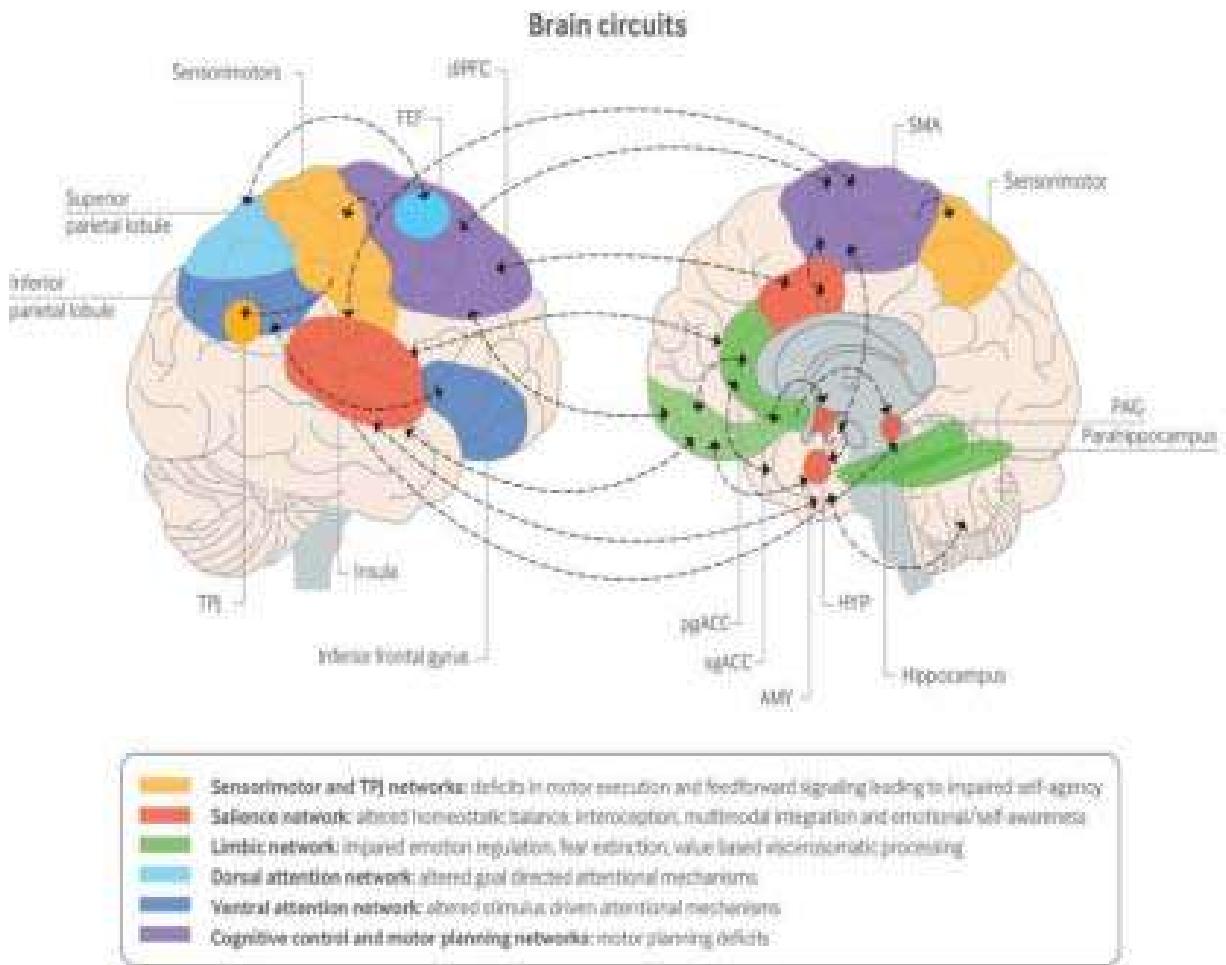 Figura 1: Conexiones neuronales de regiones implicadas en los TFN
Por otra parte el bullying o acoso escolar, que ha sido descrito por primera vez por el psicólogo noruego Dan Olwens en la década del setenta del siglo pasado con una definición sobre el acoso escolar: Un alumno está siendo maltratado o victimizado cuando él o ella está expuesto repetidamente y a lo largo del tiempo a acciones negativas de otro o un grupo de estudiantes, cuyas características son 3: intencionalidad, persistencia en el tiempo y abuso de poder (23). El término bullying proviene del vocablo inglés "bull" que significa toro, por lo que bullying es una actitud de actuar como un toro en el sentido de pasar por sobre el otro u otros, sin ningún tipo de contemplación y se caracteriza por un abuso de poder sistematizado que se puede manifestar a través de distintos tipos de violencia ya sea de forma física, verbal, psicológica, sexual o social, perpetradas en la escuela por uno o más estudiantes contra otro, con los cuales tiene una desventaja en términos de poder y con el claro objetivo de dañarlo, acoso que sólo tiene sentido para el acosador si tiene una audiencia que las aplauda; el bullying físico es el tipo más común, utilizado frecuentemente por el sexo masculino e implica contacto físico manifestado en forma de golpes, empujones o palizas y es considerado la forma más grave; el bullying verbal se caracteriza por el uso de palabras ofensivas como insultos, calumnias, rumores falsos, sarcasmos, apodos despectivos, humillaciones, ridiculizaciones, rumores falsos, injurias, burlas, resaltando diferencias físicas o diferencias sociales y es el tipo de acoso más utilizado por el sexo femenino; el bullying psicológico es el más difícil de detectar y es muy efectivo para dominar con amenazas, intimidación, marginación o exclusión; el bullying social consiste en el rechazo que margina en forma deliberada a la víctima de las actividades en diversas acciones tales como impedir su participación en el aula, en el patio o en la cancha deportiva, éste tipo de acoso ignora a la víctima como si no existiera; el bullying sexual se manifiesta en forma de asedio involucrando comentarios o actos de naturaleza sexual, tales como referencias malintencionadas a partes íntimas del cuerpo de la víctima o con difusión de rumores de carácter sexual; agregándose en la actualidad una nueva forma de bullying a través de la tecnología, el cyberbullying o también ciberacoso, con las mismas características del bullying tradicional (24); en una reciente encuesta realizada en nuestro país reveló que 25.5% de los adolescentes de 12 a 18 años reveló haber sido víctima de cyberbullying (25). Se ha descrito un caso de TNF que se presentó como migraña y diplopía causado por cyberbullying (26), Ji Wang y col. han informado que el 20.8% de los adolescentes estadounidenses sufrieron acoso físico, el 53.6% acoso verbal y el 13.6% cyberbullying (27). Estudios longitudinales que abarca desde los años 1960 a 2015, revelaron que a largo plazo el bullying puede ser el causante de tendencia suicida, psicopatología o criminalidad en la edad adulta (28). Muchos hermanos experimentan algún conflicto ocasional en la familia, sin embargo hasta un 40% están expuestos al acoso entre hermanos cada semana, una forma repetida y dañina de agresión en que la calidad y el comportamiento de los padres son los factores intrafamiliares más fuertemente asociados a ese tipo de acoso, que aumenta el riesgo de verse involucrados en acoso entre pares y se asocia con problemas emocionales como angustia y depresión en la edad adulta (29). El KiVa que viene del acrónimo Kiusaamista Vastaan es un programa anti-bullying exitoso que ha sido desarrollado por la universidad de Turku en Finlandia desde el 2006, creado a propuesta del gobierno finlandés y la comunidad educativa, que previene y afronta el bullying con un programa educativo en que los niños "aprendan a vivir juntos", que permitió a los 9 meses de su implementación, los consistentes beneficios de la intervención, gracias a un aprendizaje significativo mediante el respeto entre pares, el cuidado personal y de los demás, que permitió el descenso en 80% el acoso escolar (30). Su éxito es tal, que se ha exportado a otros países europeos e incluso en América latina, siendo el Paraguay uno de los pioneros en algunos colegios de la región,
En el caso relatado la niña cumplía clínicamente los criterios de TNF, ya que los síntomas motores caracterizados por debilidad muscular de miembros inferiores que impedían la bipedestación y la deambulación, conjuntamente con el dolor que inicialmente aparentó ser de tipo lumbociático del miembro inferior derecho de gran intensidad que requirió incluso el uso de morfina en varias ocasiones, acompañándose luego de sensaciones parestesicas en ambos miembros, llegando un día a presentar anestesia en la pierna derecha, síntomas que fueron descartados ser de causa orgánica a través de los estudios analíticos y de imagen realizados que no guardaban relación con el traumatismo anterior. Las alteraciones del cuadro clínico y sus fluctuaciones, caracterizadas por mejoría parcial o empeoramiento alternante de los síntomas en forma inexplicable y la mejoría rápida del dolor en una ocasión con la administración de placebo, hicieron levantar la sospecha de tratarse de un TNF; luego que se pudo determinar que fue víctima de bullying de tipo verbal en su escuela y que ante la promesa de que ya no volvería a la misma donde sufrió el acoso, su mejoría fue completa con la cesación total de los síntomas lo que permitió el alta luego de 11 días de internación.
Conflict of Interest
The authors declare no conflict of interest.
Ethical Approval
Not applicable
Data Availability
The datasets used in this study are openly available at [repository link] and the source code is available on GitHub at [GitHub link].
Funding
This work did not receive any external funding.
References
Cite this article
Related Research



Special Issue
Launch a focused special issue to highlight research, emerging trends, and expert insights in your academic field.
