





IntelliPaper
Abstract
This research investigation addresses the utilization of intercultural management strategies within culturally diverse organizational contexts. Its primary objective is to examine the impact of four distinct dimensions-namely, metacognitive, cognitive, motivational, and behavioral-on work performance, which collectively elucidate the influence of cultural diversity. The data, sourced from a questionnaire distributed among Tunisian enterprises (N = 100), have been subjected to analysis using SPSS 25. The findings of our study contribute to a nuanced understanding of the significance of intercultural management agents in driving performance outcomes. Notably, the innovation of our research lies in its emphasis on recognizing the advantages of cultural diversity within an increasingly globalized world, where the capacity to navigate various cultural scenarios stands as a pivotal skill for adaptation.
Explore Digital Article Text
I. INTRODUCTION
The management of cultural diversity issues is becoming increasingly worrying, especially with the advent of globalization and the rapid and growing evolution of technology. The opening of the economy of countries in the world promotes the mixing of cultures, the creation within internationalized organizations of new managerial strategies, and, therefore, the implementation of adequate tools to deal with cultural complexity. Thus, any organization that has to promote innovation must deal with the resolution of problems related to the management of cultural diversity.
Indeed, "the diversification of teams can constitute a message addressed to the stakeholders likely to increase the legitimacy of the company, improve its reputation and its confidence, and by extension, increase its attractiveness and therefore its performance" (Bruna & Chauvet, 2011) and further "Another interesting argument for using cultural diversity is that it creates systemic flexibility.
In addition to complexity, the pace of environmental change requires the ability to live with and even take advantage of ambiguity to achieve maximum flexibility and adaptability. Multicultural organizations encourage various perspectives and the practice of managing ambiguity (Shneider & Barsoux, 2003).
Companies that establish themselves face day-to-day problems related to the management of cultural diversity because of the inevitable multiculturalism that prevails within them (Shneider & Barsoux, 2003). It is, therefore, in this margin of reflection that our research idea is inspired by an analysis of the impact of the management of cultural diversity on the performance of companies.
Culture, since ancient times, has been conceived as a paradigm relating to the human and socio-cultural sciences. But with globalization, the development of transport, and the collapse of barriers at the state level, migratory movements have increased considerably in all countries. Indeed, these migratory movements are explained by: the rural exodus of people to industrialized areas in search of employment, the search for good-quality training institutions, exile, and international mobility.
All these moves have caused a specific diversity in the workforce, leading the human resources manager to think about how to make his staff more efficient by implementing management policies following the new management strategies. Thus, to respond to the diverse clientele, the manager must rely on the lever of diversity.
So, the question relating to the management of cultural diversity is of great importance given the cultural diversity - of the personnel, - but also of the communication, which is today an essential factor of any development within the organizations.
To this end, managers are pretty embarrassed to define management policies that will allow the company to improve its internal atmosphere and performance (effectiveness and efficiency) by making the most of the diversity of the workforce. Works available in their employment pool. Moreover, for some, managing diversity is associated with an investment that does not, however, have a positive impact on the company; or downright ignores it or neglects its existence. It is this order of ideas that stems from the object of our research, which is the impact of cultural diversity on the performance of companies.
In this same context, Stahl and Voigt (2008) consider that "Intercultural management is a distinctive organizational skill that is exercised at each stage of the process: the consideration of cultural duality in due diligence serves as the basis for the formulation of an appropriate cultural strategy implemented in the integration of people and tasks and evaluated in the quality control process of integration. It is a set of systems that result from an enlightened approach to enriched management capable of creating value from a formalized consideration of cultural diversity".
On the contrary, several empirical studies have even shown that cultural diversity could hurt the effectiveness of work teams by generating a lot of conflict, to the point of threatening the implementation of the expected synergy, or even the sustainability of projects (Snow et al., 1996; Di Stefano & Maznevski, 2000; Govindarajan & Gupta, 2001) Cited by (Désiré, 2009).
The management of intercultural work teams and the ability to manage diversity will probably be critical skills to develop for tomorrow's management. This research is part of this current concern for multicultural group work. It attempts to shed light on the conditions for improving the performance of intercultural work teams by highlighting and analyzing the impact of cultural diversity on organizational performance.
In this study, we aim to answer the following question:
1.1 What is the impact of cultural diversity practices on work performance?
To try to answer this question, we based research on a literature review, in which we will expose concepts relating to cultural diversity and organizational performance. Then, we aimed to validate a research proposal developed in the theoretical part, through which we will present the research methodology adopted in the context of this article as well as the discussion of the results found to test our hypotheses.
1.2 Cultural Diversity is a lever for performance at work
Cultural diversity can indeed be a lever for performance at work. Embracing and promoting cultural diversity within a workplace can bring about several benefits that contribute to overall organizational success. Here are some ways in which cultural diversity can enhance performance at work (Aoun, 2004); Innovation and Creativity, Broader Skill Set, Enhanced Decision-Making, Adaptability and Flexibility, Global Market Understanding, Employee Engagement and Retention, Better Problem Solving, Expanded Customer Base.
However, it's important to note that realizing the benefits of cultural diversity requires more than just having people from different backgrounds on the team (Popescu, 2014). Organizations must also create an inclusive and respectful work environment where diverse voices are genuinely heard and valued. This involves implementing diversity and inclusion initiatives, providing cultural competency training, and addressing potential challenges or conflicts that may arise due to cultural differences (Malek & Budhwar, 2013).
Overall, when managed effectively, cultural diversity can contribute significantly to improved performance, innovation, and success in the workplace (Lee & Kartika, 2014).
Multicultural competence encompasses a collection of analytical and strategic abilities that broaden individuals' capacities for understanding and engaging with individuals from alternative cultures in interpersonal scenarios. These proficiencies contain a fundamental grasp of diverse cultures, leading to shifts in attitudes and behaviors. Moreover, individuals attuned to multicultural competence are conscious of the manifold advantages of such skills.
To delve further into this, the components of multicultural competence, as outlined by Dinges and Baldwin (1996), encompass the following aspects:
a. Emotional Attitudes: The foundation of intercultural competence lies predominantly in social competence, impacting personality traits and the inclination to express genuine interest in others. It's worth noting that this skill is pertinent not only within cross-cultural scenarios but also holds relevance in mono-cultural contexts.
b. Cognitive Knowledge: Multicultural competence entails possessing precise knowledge about culture, history and value orientations, as well as the structure and operation of economic, social, and organizational systems in partner cultures.
c. Behavioral Skills: The effectiveness of cognitive and affective skills hinges on their integration during multicultural interactions. Demonstrating intercultural competence necessitates applying this acquired knowledge while adeptly adapting to foreign cultural situations. This involves:
-
Raising Awareness and Encouraging Assessment and Behaviors: The individual needs to be mindful of cultural differences, prompting reflection and guiding appropriate actions.
-
Assimilating and Systematizing Knowledge: Assimilation of information is vital, leading to a systematic understanding of diverse cultural facets.
-
Developing and Practicing Skills: Proficiency is honed through practice, enabling seamless navigation of multicultural scenarios (Popescu, 2014).
In essence, multicultural competence amalgamates emotional, cognitive, and behavioral dimensions, fostering effective intercultural interactions by encompassing sensitivity, knowledge, and practical application.
Reports on organizational practices related to expatriation (Livermore, 2011) point out that few organizations have structured and targeted procedures for selecting, training, and supporting expatriates. In contrast, employees are expected to have an exemplary level of performance. Most often, future expatriates are identified informally or based on their performance in the task in the domestic organizational context.
The integration issues into the new cultural context are not systematically addressed (Aycan et al., 2014). However, poor cultural adjustment is at the origin of the poor performance of expatriates and an early return to international assignment. Several authors highlight the positive link between cultural adjustment and intercultural teamwork performance (Malek & Budhwar, 2013; Bhaskar-Shrinivas et al., 2005; Hechanova, Beehr, & Christiansen, 2003; Lu, 2012; Nunes, Felix, & Prates 2017; Wu & Ang, 2011). This effect is nuanced in two studies (Malek & Budhwar, 2013; Wu & Ang, 2011). According to this, the general and interactional facets of cultural fit contribute to contextual performance. However, the relationship between cultural adjustment and work performance must be clarified (Malek & Budhwar, 2013; Tucker, Bonial & Lathi, 2004).
In general, performance at work is like the set of behaviors or actions consistent with organizational objectives (Campbell, 1990), or like the total value expected by the organization of the episodes of discrete behaviors an individual exercises during a given period at work (Motowidlo, 2003). In the literature linking cultural adjustment and performance, the latter is often operationalized through two aspects (Burakova & Filbien, 2019):
-
Task performance, which refers to success in carrying out assigned tasks and achieving the objectives set by the organization;
-
Contextual performance, which indicates effectiveness in establishing and maintaining good relations with local employees (Motowidlo & Van Scatter, 1994; Shaffer, Harrison, Gregersen, Black, & Ferzandi, 2006; Sonnentag & Frese, 2001 Sonnentag, Volmer, & Spychala, 2008).
Such an approach seems simplistic to us. It seems important to be interested in aspects relating to the interaction between the expatriate and his local entourage. The model developed by Sonnentag et al. (Sonnentag & Frese, 2001; Sonnentag et al., 2008) and operationalized by Lee and Donohue, (2012) to study work performance more specifically in expatriation comes as a relevant solution concerning this questioning. These are eight skill categories responsible for cross-cultural team performance:
-
Skills in job-specific tasks;
-
Skills in tasks not specific to the job;
-
Written and oral communication;
-
Effort in the activity;
-
Maintenance of personal discipline;
-
Contribution to the performance of the team and colleagues;
-
Oversight;
-
Management and administration (Lee & Donohue, 2012; Sonnentag & Frese, 2001; Sonnentag et al., 2008).
Based on these theoretical frameworks, we have formulated our research problem, which is stated as follows: "What is the impact of Cultural diversity on Job performance? » To this problem, we can attach the following expected hypotheses:
Hypothesis 1 (H1): Cultural diversity has a positive impact on job performance.
H1-1: Metacognitive has a positive effect on job performance
H1-2: Cognitive has a positive effect on job performance
H1-3: Motivational has a positive effect on job performance
H1-4: Behavioral has a positive effect on job performance
II. METHOD
For our present research, we will try to test and verify the possible relationship between Cultural diversity and work performance. In other words, the different relationships that may exist between Cultural diversity practices and job performance.
Based on our research being grounded in a positivist paradigm, we have opted for the questionnaire as our data collection method. To develop our questionnaire, we reviewed existing literature and identified relevant measurement scales used in previous studies. By utilizing established measurement scales, we can ensure the reliability and validity of our data. We have also outlined our statistical methodology for analyzing the data collected, which is crucial for transparency and the ability to reproduce our results.
2.1 Population, Sample, and Data Collection
We stopped at 100 companies, given the constraints of time, means, and refusal to answer the questionnaires.
Our study is based on the non-probability sample method. According to O.Aktouf (1987), "This method is said to be common sense, insofar as it is content to ensure at the level of the sample a transposition as exact as possible of the specific characteristics and proportions present in the basic population" (Aktouf 1987:74).
2.2 Measures
The questionnaire used in this study consisted of 52 items adapted from previous studies. —adaptation of the questionnaire of earlier studies aimed to ensure its validity and reliability.
The establishment of questionnaire was composed of two scales: the scale of the cultural quotient (CQS) (Ang et al., 2007) was used to measure Cultural diversity; the performance scale (Lee & Donohue, 2012) was chosen to measure work performance, as well as questions relating to the signage of the Tunisian company surveyed. (Sector of activity, size, multicultural dimension, and concept of interculturality);
"The Cultural Quotient Scale (CQS)" by Ang et al. (2007) (French version validated during the study) was used to measure Cultural diversity. The scale has 20 items and consists of 4 facets: metacognitive, MC (4 items), cognitive, COG (6 items), motivational, MOT (5 items), behavioral, and BEH (5 items). The response scale is a 7-point Likert scale ranging from (1) strongly disagree to (7) strongly agree. Example of object: "I am aware of the cultural knowledge on which I rely during my intercultural exchanges."
The Lee and Donohue scale (2012) was chosen to measure expatriate job performance for two reasons. First, it is based on Campbell's work performance model (1990). Second, it is specific to the situation of intercultural exchanges. The scale includes 32 items and is composed of 6 dimensions: performance in the task, TP (7 items); performance in communication, CP (4 items); demonstration of effort, DE (2 items); maintenance of discipline, MD (5 items), teamwork and leadership TL (8 items), performance in administrative and managerial tasks MA (6 items). Responses are recorded on a 5-point scale, from (1) very poor to (5) excellent. Sample item: "Encourage subordinates to achieve set goals."
The questionnaire was pilot tested before mass distribution. Therefore, feedback from respondents was collected, and changes were made to improve the questionnaire.
Data processing via SPSS 25 (descriptive statistics, reliability indices, correlations, and regression).
III. RESULTS
3.1 The Description of the Sample
The choice of companies to be surveyed was made on the basis of criteria such as the sector of activity, the workforce, the multicultural dimension and also the concept of interculturality within the company.
Table 1: Sample Description
| Categories | Percentage | |
| Sector of activity | secondary sector tertiary sector | 62.5%37.5% |
| Size | Small business (1 to 49 employees)Medium-sized company (50 to 300 employees)big company (more than 300 employees) | 15%52.5%32.5% |
| multicultural dimension | Presence of different cultures within the same teamManaging subsidiary teams remotelyJoint-ventureInternational group promoting mobility between countriesOther | 62,5%25,0%10,0%2,5%0,0% |
| Intercultural concept | YesNo and it is not necessaryNo, but she shouldYes, but could do better | 52,5%17,5%10,0%20,0% |
For this research, we have selected two sectors of activity, namely the secondary sector (industrial) and the tertiary sector (service sector). Indeed, the sample chosen is distributed as follows: 62.5% of companies belonging to the industrial sector and 37.5% of companies belonging to the service sector.
About company size, the sample is structured as follows: 15% small companies, 52.5% medium-sized companies, and 32.5% large companies.
For the statistical analysis of the "multicultural" dimension in companies, we note that most of the companies in our sample verify this dimension: different cultures within the same team (62.5%), management of remote subsidiary teams (25%) and the rest is in the form of a joint venture and international group promoting mobility between countries.
Is interculturality taken into account in the managerial actions of your company? For this question we have, more than half of the companies questioned (52.5%) affirm that interculturalism is taken into account in the managerial actions of their company. This rate explains the importance of this term. Similarly, we note that a non-negligible rate (17.5%) of the companies questioned do not take this concept into account. Subsequently, 10% of the companies surveyed do not take this concept into account, but they should. However, a significant percentage (20% of companies) consider the idea of interculturality, but could do better. We note that these results demonstrate the interest of Tunisian companies in this new concept.
Table 2: ACP of the measurement scale «(CQS)».
| Variables | Number of items | KMO index | Chi-square index | Bartlett's sphericity test | Total variance explained | Cronbach's Alpha |
| Metacognitive (MC) | 2 | ,500 | 43,186 | ,000 | 79,910 | ,742 |
| Cognitive (COG) | 3 | ,560 | 48,413 | ,000 | 58,983 | ,620 |
| Motivational (MOT) | 2 | ,500 | 46,091 | ,014 | 62,305 | ,782 |
| behavioral (BEH) | 3 | ,660 | 44,505 | ,000 | 60,564 | ,657 |
The exploratory factor analysis under SPSS confirmed the four-dimensional structure of cultural diversity. "Assessment of the fit indices of the competing models tested allowed us to conclude that the four-factor model is the one that best explains the CI construct" (Burakova & Filbien, 2019).
Indeed, the KMO test indicates a more significant or an equal value to 0.5, the Chi-square value is relatively high, and the Bartlett sphericity test is significant because the risk threshold obtained from this test is less than 0.05. The PCA revealed four factors; for the first factor, which represents "Metacognitive" 79.910%. The second factor, which means "Cognitive" 58.983%, the "Motivational" dimension 62.305% and finally, 60.564% for the last element, which means "Behavioral.".
Cronbach's Alpha, which ranges between 0.7 and 0.6, exceeding the value of 0.6, shows a good level of reliability for each dimension and good internal consistency of the cultural Cultural diversity scale.
Table 3: ACP of the measurement scale «job performance».
| Variables | Number of items | KMO index | Chi-square index | Bartlett's sphericity test | Total variance explained | Cronbach's Alpha |
| performance in the task (TP) | 3 | ,750 | 181,143 | ,000 | 83,292 | ,898 |
| performance in communication (CP) | 4 | ,767 | 102,460 | ,000 | 60,002 | ,772 |
| demonstration of effort (DE) | 2 | ,500 | 13,011 | ,000 | 67,672 | ,622 |
| maintenance of discipline (MD) | 3 | ,507 | 75,523 | ,000 | 63,070 | ,685 |
| teamwork and leadership (TL) | 4 | ,674 | 147,036 | ,000 | 63,202 | ,786 |
| performance in administrative and managerial tasks (MA) | 5 | ,660 | 275,535 | ,000 | 63,449 | ,851 |
To evaluate the effectiveness of the work performance measurement scale, we conducted an initial principal component analysis (PCA) using the items presented in Table 3. Our study revealed a Kaiser-Meyer-Olkin (KMO) test value ranging between 0.7 and 0.5, which is greater than the acceptable threshold of 0.5. The chi-square value was also quite large, and the
Bartlett sphericity test was significant for all dimensions of performance, indicating a risk threshold of less than 0.05. Concerning the factors on which the performance depends, we can retain six axes which represent; 83.292% (TP), 60.002% (CP), 67.672% (DE), 63.070% (MD), 63.202% (TL), and 63.449% (MA), the "work performance" variable is thus multidimensional.
Our work performance measurement scale demonstrated good reliability, as indicated by
3.3 Validation of the Analytical Model
Cronbach's Alpha coefficient, which ranged from 0.8 to 0.6 and exceeded the acceptable value of 0.6. This initial indication of construct validity was further supported by our exploratory factor analysis, which revealed that the number of factors aligned with the number of supposed dimensions or constructs. Additionally, the items associated with each size contributed homogeneously to represent that dimension. However, to validate the construct of our scale, further confirmatory analyses are necessary.
Table 4: Study Results
| Impact | job performance | ||||||
| Relationship between variables | performance in the task (TP) | performance in communication (CP) | demonstration of effort (DE) | maintenance of discipline (MD) | teamwork and leadership (TL) | performance in administrative and managerial tasks (MA) | |
| CULTURAL | Metacognitive (MC) | $R_2 = ,056$ $R_2$ ajusté $= ,046$ $F = 5,761$ $\beta = ,236$ $T = 2,400$ $sig = ,018$ | $R_2 = ,104$ $R_2$ ajusté $= ,095$ $F = 11,359$ $\beta = ,322$ $T = 3,370$ $sig = ,001$ | $R_2 = ,000$ $R_2$ ajusté $= -,010$ $F = ,023$ $\beta = -,015$ $T = -,152$ $sig = ,879$ | $R_2 = ,041$ $R_2$ ajusté $= ,031$ $F = 4,201$ $\beta = ,203$ $T = 2,050$ $sig = ,043$ | $R_2 = ,057$ $R_2$ ajusté $= ,047$ $F = 5,902$ $\beta = -,238$ $T = -2,429$ $sig = ,017$ | $R_2 = ,025$ $R_2$ ajusté $= ,015$ $F = 2,531$ $\beta = ,159$ $T = 1,591$ $sig = ,115$ |
| Cognitive (COG) | $R_2 = ,233$ $R_2$ ajusté $= ,225$ $F = 29,695$ $\beta = ,482$ $T = 5,449$ $sig = ,000$ | $R_2 = ,218$ $R_2$ ajusté $= ,210$ $F = 27,241$ $\beta = ,466$ $T = 5,219$ $sig = ,000$ | $R_2 = ,052$ $R_2$ ajusté $= ,043$ $F = 5,409$ $\beta = ,229$ $T = 2,326$ $sig = ,022$ | $R_2 = ,098$ $R_2$ ajusté $= ,089$ $F = 10,659$ $\beta = ,313$ $T = 3,265$ $sig = ,002$ | $R_2 = ,041$ $R_2$ ajusté $= ,031$ $F = 4,150$ $\beta = -,202$ $T = -2,037$ $sig = ,044$ | $R_2 = ,012$ $R_2$ ajusté $= ,002$ $F = 1,206$ $\beta = ,110$ $T = 1,098$ $sig = ,275$ | |
| Motivational (MOT) | $R_2 = ,278$ $R_2$ ajusté $= ,271$ $F = 37,766$ $\beta = ,527$ $T = 6,145$ $sig = ,000$ | $R_2 = ,240$ $R_2$ ajusté $= ,232$ $F = 30,947$ $\beta = ,490$ $T = 5,563$ $sig = ,000$ | $R_2 = ,203$ $R_2$ ajusté $= ,195$ $F = 24,954$ $\beta = ,451$ $T = 4,995$ $sig = ,000$ | $R_2 = ,048$ $R_2$ ajusté $= ,038$ $F = 4,914$ $\beta = ,219$ $T = 2,217$ $sig = ,029$ | $R_2 = ,013$ $R_2$ ajusté $= ,003$ $F = 1,258$ $\beta = -,113$ $T = -1,122$ $sig = ,265$ | $R_2 = ,008$ $R_2$ ajusté $= -,002$ $F = ,791$ $\beta = -,089$ $T = -,889$ $sig = ,376$ | |
| behavioral (BEH) | $R_2 = ,001$ $R_2$ ajusté $= -,009$ $F = ,141$ $\beta = -,038$ $T = -,375$ $sig = ,708$ | $R_2 = ,014$ $R_2$ ajusté $= ,004$ $F = 1,366$ $\beta = ,117$ $T = 1,169$ $sig = ,245$ | $R_2 = ,114$ $R_2$ ajusté $= ,105$ $F = 12,561$ $\beta = ,337$ $T = 3,544$ $sig = ,001$ | $R_2 = ,005$ $R_2$ ajusté $= -,005$ $F = ,532$ $\beta = -,073$ $T = -,729$ $sig = ,468$ | $R_2 = ,142$ $R_2$ ajusté $= ,133$ $F = 16,217$ $\beta = ,377$ $T = 4,027$ $sig = ,000$ | $R_2 = ,003$ $R_2$ ajusté $= -,007$ $F = ,315$ $\beta = -,057$ $T = -,561$ $sig = ,576$ | |
A multiple linear regression analysis was appropriately used to determine the influence of Cultural diversity on job performance and to test the developed hypotheses.
Based on the results of table N°4, the dimension (MA) of job performance was excluded from the analysis, because no significant correlation between this variable and the dimensions of Cultural diversity was obtained in this study. From this table, we can see that the data matched the model statistically well. Thus, the relationship between Cultural diversity and job performance was statistically significant (H1). The results also showed that on the four dimensions of Cultural diversity, the Cognitive factor (statistic F greatly exceeds the critical value threeread in the table of Fisher's law and for a significance level of 5%) had a positive influence and significance on all job performance variables. Cognitiveness was a more critical factor.
However, the Metacognitive, Motivational and Behavioral factor has a mixed impact on job performance. Indeed MC has a significant influence on TP, CP, MD, and TL is not substantial for the DE dimension (F=.023; sig=.879). For the third factor of intercultural management, MOT admits a positive relationship with TP, CP, DE, MD (F= 37.766; sig =.000/F = 30.947; sig =.000/F= 24.954; sig =.000/F = 4.914; sig =.029) and not significant with TL. Finally, the Behavioral dimension has a positive relationship with DE and TL and has no impact on TP, CP, or MD (sig > 5%).
Based on these results, Cultural diversity had a positive and significant influence on work performance, all hypotheses (H1-1, H1-2, H1-3, and H1-4) are validated.
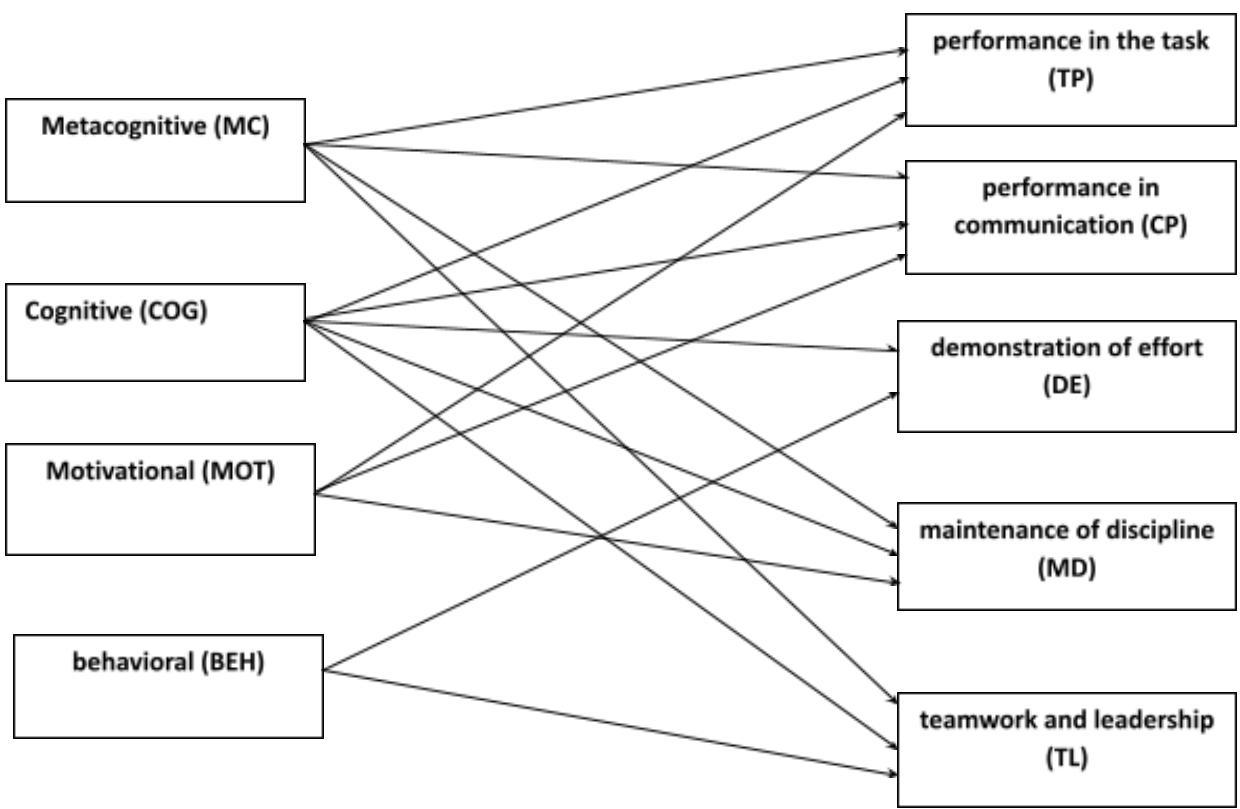 V. DISCUSSION Figure 1: Effects of Cultural Diversity on Job Performance.
The model resulting from our study (Figure 1) confirms the hypothesis formulated in a general way and which does not specify the effects relating to the different facets of the constructs examined about the absence of consensus in the empirical literature. This model also highlights several specific effects of Cultural diversity on job performance. Given the lack of impact of the dimension (MA) of performance. On the other hand, we differentiate the effects of four sizes of Cultural diversity: Metacognitive, cognitive, motivational, and behavioral. Thus, the impact of cognitive Cultural diversity on performance relative to TP, CP, DE, MD, and TL.
As for the Metacognitive dimension of Cultural diversity, it directly predicts all performance dimensions except demonstration of effort (DE). The motivational facet affects three forms of performance: performance in the task, communication, and maintenance of discipline. In the end, the behavioral dimension positively affects only two forms of performance, which are: demonstration of effort and teamwork and leadership (Figure 1).
We have demonstrated that all the facets of the cultural quotient adopted to measure intercultural management do not have the same degree of importance for work performance. This is contrary to the postulate of Ang et al. (2007) and Burakova, Filbien (2019). We put forward a general hypothesis of the positive effect of intercultural management on work performance. For this hypothesis, four facets of the cultural quotient (metacognitive, cognitive, motivational, and behavioral) directly affect five facets of performance (related to the task, maintenance of discipline, communication, maintenance of effort and leadership). The performance facet in administrative and managerial tasks is unimportant in the confirmed empirical model (Table 4). The other four aspects of cultural intelligence seem to diverge in terms of their ability to explain different forms of performance, contrary to some findings (Ang et al., 2007; Duff et al., 2012; Burakova & Filbien, 2019).
Generally, our results align with the model of the effects of Cultural diversity on performance (Jyoti & Kour, 2015; Lee & Sukoco, 2010; Lu, 2012; Sri Ramalu et al., 2012). Beyond this observation, they offer a nuanced look at the effect of different cultural facets on various aspects of performance. In this sense, our results confirm a specification of hypothesis H1 according to which "Cultural diversity has a positive impact on the performance at work." In this context Ott, and Michailova (2016) point out in their systematic review, cultural intelligence has more effects on aspects of expatriation experience that do not have direct links with technical expertise at work. As for the specificity of cultural intelligence, some researchers consider the behavioral dimension as resulting from the three other facets of cultural intelligence (Gooden, Creque, & Chin-Loy, 2017; Ott & Michailova, 2016). It would therefore be more proximal to work performance.
According to our study, performance depends more on the Metacognitive, cognitive, motivational and behavioral facets of Cultural diversity. This means that the interest in other cultures, the manager's ability to direct his efforts towards the acquisition of new culturally specific knowledge, the marriage system of other cultures, patterns of consumption in a different culture, as well as his ability to implement behavior (non-verbal language, oral expression, dress code) appropriate to the cultural context in which he operates will enable him to be effective in establishing, and managing work relationships, communicating his expectations and orientation of his team towards the achievement of the formulated objectives.
This conclusion would have repercussions on the selection, training and support of managers and intercultural teams. The evaluation criteria should be less about technical skills and previous work experience and more about the (motivational) willingness and ability of the manager to acquire new (behavioral) patterns of interaction. To discriminate between employees, the cultural quotient scale could be used during selection (Burakova & Filbien, 2019). As for training, its different modalities also need to be re-examined. Pre-departure movement, which aims to develop the metacognitive and cognitive facets of Cultural diversity, is not very practical compared to on-site training, which reinforces behavioral intercultural management and, therefore, performance (Wurtz, 2014).
We hope that the question of the success of Cultural diversity practice will be of a great interest to national and multinational companies and that we will be able not only to study the effects of cultural diversity from the temporal perspective, but also, to test the effectiveness of different training devices on the reinforcement of Cultural diversity; hence, improving cultural fit and job performance.
Our study, although it contributes to the nuanced understanding of the effects of Cultural diversity on performance and makes it possible to compare this knowledge with the results obtained from Tunisian companies, is not without limits.
Indeed, it is also necessary to underline its transversal and non-probabilistic character. Unfortunately, we could not obtain an agreement to carry out a longitudinal study with a company. Data collection was possible thanks to the benevolence of the groups of Tunisian leaders to whom the questionnaire was distributed. Collecting data via an electronic questionnaire is now considered a method in its own right, with its advantages and limitations (Callegaro, Lozar Manfreda, & Vehovar, 2015). Research with specific target populations whose structure remains unknown, and difficult to access requires accepting several biases and limits (idem).
IV. CONCLUSION
Initially, our statistical examination enables us to characterize the study's sample through a univariate analysis, explicitly focusing on 100 companies. The majority of these companies fall within the medium-sized category, with workforces ranging from 50 to 300 employees, predominantly situated in the industrial sector—subsequently, a secondary step involved assessing the overall significance of the model using linear regression techniques. However, our investigation primarily centered on comprehensively exploring the influence of Cultural diversity practices on job performance categorizations. From this vantage point, we can assert that Cultural diversity practices wield a favorable impact on work performance.
Globalization, being considered as the opening of the economic barriers of countries to the world, has brought about a sudden change on all fronts. So at the socio-cultural level, this change has not only generated a cultural mix but also a new way of viewing things. A new way of life is taking hold with new management strategies that managers must refer to for long-term performance. Thus, the management of cultural diversity to which managers are always trying to find an answer within their organizations, constitutes an essential subject for dealing with the cultural complexity presented by their workforce. It is in the same logic as our study, the general objective of which is to highlight the reality of cultural differences and their implications for business performance.
The presence of multiculturalism within an organization can be a determinant of success, given that it fosters an environment conducive to the cultivation of cultural diversity. Intercultural conflicts typically arise in human organizations where biases have tainted the foundational structure. Consequently, upcoming managers need to excel in communication and motivation compared to the past, employing a fresh approach that adapts to diverse global cultures and emerging technologies (Aoun, 2004).
Taking a more pragmatic perspective, this study introduces a novel approach for indirectly assessing intercultural skills. Furthermore, it can potentially enhance leadership qualities within heterogeneous groups, addressing specific challenges. For instance, it facilitates improved alignment between prevalent emotional and cognitive profiles, irrespective of individual peculiarities. However, quantifying multicultural skills presents a challenge. The intricacy of intercultural proficiency stems from the reality that each participant in these interactions embodies distinct personal attributes, primarily rooted in their personality and subsequently shaped by their cultural background and experiences up to the present (Popescu, 2014).
Conflict of Interest
The authors declare no conflict of interest.
Ethical Approval
Not applicable
Data Availability
The datasets used in this study are openly available at [repository link] and the source code is available on GitHub at [GitHub link].
Funding
This work did not receive any external funding.
References
Cite this article
Related Research



Special Issue
Launch a focused special issue to highlight research, emerging trends, and expert insights in your academic field.
