


IntelliPaper
Abstract
These days, nanotechnology has provided an enormous benefit to the aviation and aerospace industries for improved manufacturing, spacecraft, fuels, health, and more. The objective of this paper is to review and propose a higher level of nanotechnology development in the aviation industry. While space exploration and tourism have brought about an appreciation for Earth's environmental changes from space, numerous criticisms have indicated the large negative impact space travel has made on the environment. Here,
nanotechnology is offered as a field that can both improve space tourism and decrease its impact on the Earth’s environment. Specifically, this paper starts with a review of what material properties are needed for space exploration and then suggests the use of nanotechnology in the development of improved composite materials for jet engines, propulsion, and durability, considering aeronautical standards and aerospace developments, introducing the implementation of artificial intelligence (AI). This research includes aerospace and aeronautical industry
manufacturers, their new nanotechnological strategies and breakthroughs, as well as failed attempts during manufacturing or operations. Addressing the failures, this research indicates possible future steps for developing nanotechnology in unmanned and manned aircraft to reduce harm to the environment while still achieving space exploration.
Explore Digital Article Text
I. THE MOST EFFICIENT, FASTEST, AND IDEAL TRANSPORTATION OF HUMANS OR GOODS AROUND THE GLOBE:
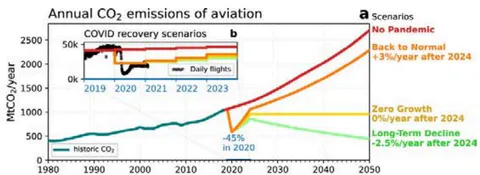
The most efficient, fastest, and ideal transportation of humans or goods around the globe is when using aircraft, which are operated by ideal engines. Similarly, current technologies provide spacecraft with thrusters to enable transportation to space; however, such approaches can significantly harm the environment. For instance, aircraft emitted approximately 1000Mt CO2 per year in 2023 and are estimated to emit more according to future global development, as seen in Graph 1. However, rockets transmit an outsized amount of pollution compared to airplanes, with rockets transmitting of CO2 per dispatch. As of 2022, NOAA evaluated that rockets radiate of dark carbon into the environment each year (1). In large part, the enormous amount of energy needed to get into the upper atmosphere and/or space lies in the aircraft and spacecraft materials available to us today, which are heavy due to strength, thermal, radiation opacity, and other requirements. New lighter materials meeting such properties would decrease energy needs. In addition to lighter, more energy-efficient materials, the quest for new materials has risen in part because the melting point of superalloys that are already in use is only about . This presents a problem in terms of discovering materials that can tolerate higher temperatures. A probe visiting Jupiter, for example, would require a conductive surface with high heat resistance to ward off electrical jolts from Jovian charged-particle belts. An example of such a superalloy is Dunmore (2). Metals like tungsten, molybdenum, niobium, and tantalum possess high melting points. They are applicable for extreme heat conditions like furnaces, jet engines, and aerospace components (3). A major factor driving demand for these new materials is the introduction of lean-burn engines, which have temperature potentials as high as (4). Further, engines need to be lighter without sacrificing thrust to attain higher efficiency. Higher operating temperatures also need to be simultaneously reached. However, such materials (such as the heavy metals mentioned above) are not environmentally friendly, and in addition population caused by their use, they also present high carbon footprints during manufacturing. New material families that are lighter with higher melting points and higher inherent strengths that don't harm the environment during manufacturing need to be developed.
The above implies that heavy materials can be replaced with light materials or novel surface treatments of light materials to provide optimal properties. For instance, Kernite plasma electrolytic oxidation (PEO) also protects components from their aggressive surroundings. The investigation and inception of how the current materials used in outer space are evolving, and the use of light materials as coatings, is paving the way for more ambitious undertakings (5). The secret to increasing lighter coating alloys may not be new to space, but the innovations that enhance them are becoming ever more capable. Transformation coatings, like PEO, can provide erosion protection, passive thermal control, and reflectivity control needed in space, in addition to: security against cold welding, galling, and physical impacts; great attachment to avoid molecule generation, which can reduce the lifetime of optical assemblies in space; radiation resistance in its many forms, including AO, , E-, and optical; resistant to extreme temperatures and thermal shocks; materials with extreme temperature resistance of up to and cryogenic temperatures as low as ; and corrosion resistance during time spent in operation.
The viability of space travel that does not harm the environment may lie in nanotechnology, and more specifically, nanomaterials. Nanotechnology is the use of materials with at least one dimension in the nanometer range. Nanotechnology not only creates improved lightweight and strong materials with more fuel efficiency, better control systems, and automated AI, but it can also create materials able to withstand the high temperatures of aircraft and spacecraft engines. Fundamentally, compared to conventional materials, due to their greater surface area to volume ratio, nanomaterials are stronger, more temperature resistant, more conductive, possess greater radioactivity, are lighter, and more. One of the ideal options for jet engine manufacturing or rocket booster manufacturing is nanotechnology: a promising technology that promotes efficiency, durability, compatibility, and an advanced approach for future aviation and aerospace needs. The objective of this paper is to review what has been accomplished in the search for new materials, specifically nanomaterials, for simultaneously traveling to space without significantly harming the environment in the process.
II. METHODS
2.1 Data Source and Participants
The research was completed for this study by using literature searches on the Web of Science over the past 2 years. The Brown University Pre-College and Undergraduate Program course entitled "Space Tourism" provided crucial additional information to conduct research and develop an analytical understanding of aerospace composites and sustainable engineering, and how nanotechnology can be beneficial. Additionally, this research used the Sustainable Development Goals (SDGs) of the United Nations, specifically addressing all clauses and aerospace nanotechnological advancements and developments according to SDG-9, SDG-12, SDG-13, and SDG-17 which are calling upon all for "Industry, innovations and infrastructure", "Responsible consumption and production", "Climate action" and "Partnerships for the goals" accordingly (19). Lastly, this manuscript references the United Nations Office for Outer Space Affairs (UNOOSA) and over 40 acknowledgments and papers signed for the future development of space affairs (20).
III. RESULTS AND ANALYSIS
3.1 Overall
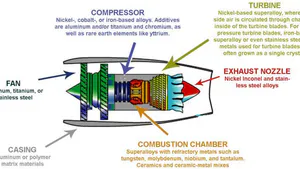
Results from the study demonstrate that nanomaterials have a strong future outlook for space travel. For example, to reduce the negative impact of aircraft and spacecraft on the environment, jet engines can be made of sustainable, efficient, malleable, and versatile composite materials, as seen in Figure 1. Moreover, there are numerous promising applications of nanomaterials in aircraft and spacecraft, as highlighted in Table 1 and grouped according to their promising properties below.
3.2 Thermal stability
Materials requiring a high degree of wear resistance and thermal stability can be made with silicon carbide (SiC) nanoparticles. Because of these characteristics, nano SiC is a perfect material for parts found in spacecraft high-temperature areas like jet engines, where it helps to sustain performance under harsh circumstances. Boron nitride nanotubes (BNNTs) also stand out for having excellent electrical insulation and thermal stability (8). Their application lies in spaceship thermal protection systems, where they offer superior heat resistance while reentering Earth's atmosphere. In the extreme heat experienced during space missions, this material guarantees the structural integrity of the spaceship. Structural composites of jet engines should also employ carbon nanotubes (CNTs) for their incomparable strength and flexibility, making them the best choice for aircraft frames and jet engine manufacturing (9). Airbus and Boeing implemented CNTs in fuselage composites and wing manufacturing for aircraft to minimize weight, prove the flexibility of the structure, and increase the fuel efficiency of the aircraft. Looking ahead, the progressive integration of nanotechnology in aviation holds the guarantee of assisting headways in fabrication, empowering the advancement of lighter, more effective airplanes, and clearing the way for advancements that may revolutionize air travel (10). A large number of nanomaterials, particularly inorganic materials and some organic materials like graphene, have high-temperature resistance, meaning they can survive extremely high temperatures without degrading. These substances add fire-retardant qualities to other substances when they are combined with them, for example, in the various polymers used in aircraft or the textiles used for the upholstery. The addition of nanoparticles to other materials can not only increase their fire resistance but also lessen the number of harmful gases that are emitted if they catch fire. Vibrations that enter an aircraft's cabin can also be reduced by adding nanomaterials to the airframe and other structural parts. This might lessen the outside noise that enters the cabin (11). Nanotechnology improves the aero arena, proving the newest technology for the development of jet engines, and elements such as lithium, Kevlar, carbon, silicon, iron, and aluminum are reinforced to composite nanomaterials for the manufacture of aircraft and spacecraft. For instance, nano lithium batteries are used in the aerospace industry and, despite not being very popular, are an incredible source of sustainable power and energy for spacecraft and aircraft.
3.3 Electrical properties
Additionally, nanomaterials have improved electrical properties. Depending on the kind and quantity of nanoparticles utilized, nanomaterials might give composite electrical conductivity or insulating qualities. This characteristic may be useful for aircraft parts that need electrical features or protection against electromagnetic interference (EMI). As seen in Table 2, we present the temperatures for melting superalloys, a characteristic used as protection from EMI, and we provide several perfect composite materials for space and aircraft manufacturing, such as Nano-Li, nano silicon carbide, nano nickel, nanofibers, and nano titanium, that should be further investigated for this purpose.
3.4 Mechanical properties
Furthermore, some nanomaterials possess the ability to cure or fix themselves mechanically when failing, allowing for matching nanocomposites to self-heal minor damages.
Aerospace structures exposed to hostile environments may have a longer lifespan and be safer because of this trait (12). The casing and fan should be manufactured out of aluminum oxide nanoparticles, the combustion chamber out of nanotechnologically developed tungsten and tantalum/ceramic mixes, the exhaust nozzle and turbine out of nickel nanoparticles, and the compressor out of cobalt/nickel nanoparticles.
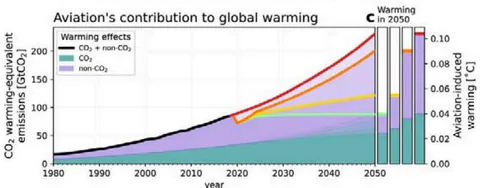
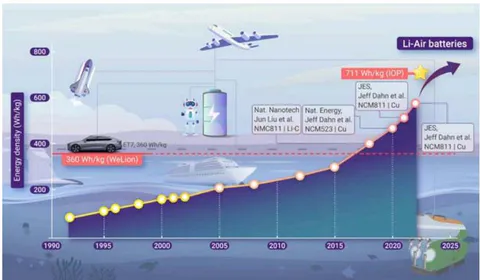
Moreover, because nanocomposites can alter surface characteristics and lower drag, their application in the design of aeronautical surfaces can result in enhanced aerodynamics and stealth qualities. Considering lowered drag and air resistance and the result of enhancements in aerodynamics, aircraft require less fuel and can have a higher operational range, allowing the aircraft to operate longer-haul flights, widening the benefits for the airline operator. Also, aircraft have greater endurance and higher speeds due to enhancements. As depicted in Graph 2, nanotechnology has been and should continue to be applied to the transportation industry on the road towards high-energy-density batteries (13).
3.5 Solar Sails
Nanomaterials have advanced to the point that lightweight solar Sails (a method of spacecraft propulsion using radiation pressure exerted by sunlight on large surfaces). Employing carbon nanotubes creates solar sails that are lightweight and drive spaceships by harnessing the pressure of light reflected from the sun onto a solar cell that resembles a mirror. This eliminates the need to launch enough fuel into orbit to sustain spacecraft on interplanetary voyages. These developments could drastically reduce the cost of entering orbit and space travel by lowering the amount of rocket fuel needed. Furthermore, novel materials in conjunction with nano sensors and nanorobots may enhance the functionality of spacecraft, spacesuits, and other tools used for planet and moon exploration. Using carbon nanotube-based composites to minimize weight while maintaining or even improving structural strength in spacecraft is a promising future direction.
3.6 Space Elevators
A space elevator (a proposed type of planet-to-space transportation system) cable is now feasible. In the traditional conception of a space elevator, a cable would be anchored in the ground and reach around 42,000 kilometers (26,098 miles) above Earth, beyond geosynchronous orbit. A cable like that would be quite heavy. It would therefore need to be balanced at the opposite end by a comparable orbital mass to prevent it from falling. Centrifugal forces would subsequently be used to support the elevator. The scale of these forces has long fascinated scientists, science fiction authors, and visionaries, but the results have unfortunately discouraged them. Not even the strongest contemporary carbon fiber polymers, nor spider silk, Kevlar, or any other material, are strong enough to withstand these forces (14).
Constructing the space elevator's required cables out of carbon nanotubes is a method that might significantly lower the cost of lifting cargo into orbit. including spacesuit layers with bio-nano robots. The outermost layer of bio-nano robots would react to spacesuit damage by sealing holes, for example. In the event of an astronaut emergency, an inner layer of bio-nano robots may react by supplying medication (15). This decreases the thruster system weight and complexity when employed on interplanetary journeys. Rather than designing and fabricating separate engines for different-sized spacecraft, these thrusters can draw on more or less of the Micro-Electromechanical Systems (MEMS) devices, depending on the size and thrust needs of the spacecraft. This feature helps to save costs. Further, by monitoring the performance of the life support systems on board, a spacecraft using nano sensors can track the amounts of trace substances. Given the small size of nanowires, nanoparticles, and nanotubes, it only takes a few gas molecules to alter the electrical characteristics of the sensing elements. This makes it possible to detect chemical vapors at extremely low concentrations. The idea is to have cheap, tiny sensors that can detect chemicals in the same way that dogs are used in airports to detect the smell of drugs or bombs (15). The faster, better, and cheaper space transportation incorporates nanotechnology and depiction of the size of the discussed tiny sensors and nanotubes, as seen in Figure 2.
3.7 Sterility
In spacecraft, sterility is largely attributed to the engine and operating parts of the machine (6). Hence, sterility and durability of the engine are merits of nanotechnology, allowing for the prevention of bacterial growth around the spacecraft and aircraft, which also provides a safe environment for the crew and passengers onboard. Further, many additional nanochemistries can be used in space tourism and space exploration, as seen in Table 3. For example, since silver nanoparticles have strong antibacterial qualities [7], they should be employed as coatings and filters to sanitize craft surfaces, space suits, and air in cramped areas of spaceships and aircraft. Moreover, our research showed that not only can nanomaterials help in space travel based on improved thermal, electrical, mechanical, solar, etc. properties, but those same materials have enhanced biological properties to prevent, diagnose, and treat diseases. Clearly, when one is in space, new materials are not available for treating unexpected health problems, and nanomaterials may then be transferred from other functions to improving health.
Improved properties while reducing harm to the environment: As discussed, the results from the study found that nanomaterials have numerous attractive properties for space travel, including thermal, electrical, mechanical, solar, biological, and more. Impressively, it has been demonstrated that fewer nanomaterials can achieve similar and even better properties than larger-scale conventional materials. This provides for less material usage, manufacturing, and less harm to the environment. Moreover, due to these attractive properties, nanomaterials foster new, less environmentally harmful ways to get into space, such as the aforementioned solar sails and space elevator. Thus, this study found that nanomaterials possess the ability for more efficient space travel with less harm to the environment.
IV. DISCUSSION, LIMITATIONS, AND IMPLICATIONS
4.1 Nanotechnology's Impact on Aerospace Innovation
A business analysis earlier this year estimated the value of the aerospace nanotechnology sector at US 5.6 billion by 2022. The market would develop at a compound annual growth rate (CAGR) of \(4.6\%\) and reach US8.1 billion by 2030, according to the analysis. According to a report by Infinium Global Research, the aerospace nanotechnology market is primarily driven by the growing use of carbon nanotube nanocomposites in the manufacturing of airframes. The strength and durability of a material are increased when carbon nanotubes are reinforced into it (16). NASA spacecraft components and missions like Chandrayaan-3 are utilizing nanotechnology's enormous potential. They are setting the stage for historically significant advancements in space exploration by utilizing nanomaterials and nanoscale sensors. Through these breakthroughs, the space industry is increasing the potential for extraterrestrial exploration while also stretching the bounds of human knowledge (17). Spacecraft components are becoming stronger and lighter because of the usage of nanomaterials like carbon nanotubes, which enable one to build and develop more sophisticated and effective spacecraft. Our comprehension of the universe is improved using nanoscale sensors, which are essential for gathering information and keeping an eye on the space environment. The effects of nanotechnology don't end there. With features like UV protection, self-cleaning capabilities, and ideal thermal management, it has completely changed the space suit industry.
This expansion in materials enabled by nanotechnology indicates the possibility for further breakthroughs in material science, fuel economy, aerospace technology, and overall industry sustainability, in addition to providing economic opportunities. The reduction of the weight of nanomaterials in aerospace causes greater fuel efficiency and lower release of carbon dioxide gas, as well as toxic gases such as methane. Aircraft components can break in high-stress locations due to the varied stresses they experience during flight. A structure may collapse and people may die if structural components are not routinely inspected and fixed. Cracks may also worsen with time. Nevertheless, airlines must pay for the examination and maintenance of aircraft. The necessity for increased fuel efficiency has also been highlighted by rising fuel prices and global climate change initiatives. Rapid, inexpensive manufacturing of dependable, effective, and easily maintained aircraft with greater load and range is encouraged by the intensifying global rivalry. To put it briefly, the issue facing the aerospace sector is to create innovative materials that are at the same time safer, lighter, stronger, and more economical (18). Now is the time might be able to produce almost ideal materials with nanotechnology for space exploration and tourism, improving performance and passenger safety while saving a substantial amount of money and the environment.
In conclusion, research on the development of nanotechnology in the fields of aerospace and aeronautics has substantially enhanced.
The understanding of the effect of nanomaterials on the fuselage of spacecraft and aircraft, green development of fuels, sustainable implementation of nanotechnological advancements to jet engines, and analysis of the aerospace market for sustainable and friendly advancements. The paper highlights spacecraft components and nanomaterials, which are composite materials for the manufacturing of future spacecraft and aircraft. Furthermore, research specifies a faster, cheaper, and more efficient way of space transportation, which is by using carbon nanotubes and specific launch advances that need to be accounted for before takeoff. The study also demonstrates the future of nano sensors and scenarios for astronaut or pilot emergencies, and how sensors and AI can react in such situations. MEMS systems are discussed from a broader view and understanding. Research considers using thrusters and adjusting more or less of the MEMS unique function for different spacecraft, rather than designing and manufacturing separate engines and motors for spacecraft. In short, nanotechnology has opened the door for the use of numerous lighter, yet more effective, materials for aircraft and spacecraft, which would reduce the environmental impact of space tourism.
4.2. Occupational and In-flight Health Risks
Airborne particles with a diameter of less than are thought to be very harmful to human health, and air pollution is one of the most serious environmental health risks. For reasons that are still unclear, their origin, among other factors, influences their inherent toxicity. They are created by a variety of sources, including internal combustion engines, burning wood and biomass, and burning fuel and natural gas. The aerosol fraction contains gaseous pollutants, including NOx, SO2, and ozone, and many of the nanoparticles' constituents are toxic or at least dangerous, such as heavy metal compounds and polycyclic aromatic hydrocarbons (PAHs). These substances can all lead to oxidative stress, mitochondrial damage, lung and other tissue inflammation, and damage to cellular organelles. Airborne pollution may have an impact on the neurological, cardiovascular, and respiratory systems, according to epidemiological studies. Furthermore, the cellular inflammatory response to the pollutants, in which the release of cytokines encourages the multiplication of pre-existing mutant cancer cells, has been connected to particulate matter's increased risk of lung cancer. This carcinogenic effect is not related to DNA damage. Using animal models or cell cultures, the mechanisms underlying toxicity can be empirically examined. Although several approaches to collecting particulate matter have been investigated, consistent procedures are required to guarantee that the samples correctly reflect chemical combinations found in the environment. Nanoparticle toxic components can be investigated in cellular and animal models; however, it might be difficult to provide realistic exposure conditions. By simulating the intake of particles into the lungs, the air-liquid interface (ALI) device exposes cells directly. To comprehend the effects of nanoparticles and other air-borne pollutants and to create proactive measures to reduce the hazards they pose to human and environmental health, ongoing study and monitoring are crucial (26).
The number of people living in urban regions has doubled worldwide between 1950 and 2018, and by 2023, 4.4 billion people—or of the world's population—will be urban dwellers. By 2050, the UN predicts that the tendency will have increased to . As the urban population continues to rise, Urban Air Mobility (UAM) is one of the key technologies that is anticipated to help develop solutions. Either hybridized or fully zapped control makes the propellers more energetic. Unmanned Aerial Systems are currently being used extensively for observation and recording, and their importance in the context of UAM is growing. Given their operational requirement to vertically take off and arrive within "vertiports" established in densely populated cities, future UAM systems will unavoidably be accompanied by innovative impetus design, such as a cluster of distributed drive frameworks (DPS), multi-rotor arrangements, as well as AI and nanotechnology. Nanotechnology is and will be widely used in the manufacturing of aerial vehicles and UAM systems, such as civil tiltrotor. Nanomaterials such as carbon-polymer nanocomposites and CNTs for sensing and actuation in unmanned systems, and chitosan-based nanoparticles may be applied in the delivery systems. Additionally, nanotechnology plays a vital role in enhancing the performance of the communication and digitalization systems used for navigation, tracking, and data services, such as vision-based navigation in UAM and 6G networks. Permissioned blockchains and smart contracts are used to enhance the data security of aerial vehicles and UAM (27).
4.3. Future Pathways in the Implementation of AI and Nanotechnology
The growing intersection of AI and nanotechnology presents several difficulties as well as new research opportunities. This convergence relies heavily on interdisciplinary collaboration, which brings together specialists from a variety of disciplines, including computer science, medicine, and materials science. Although it can be extremely difficult, closing the knowledge gap between these fields is crucial to the effective creation of novel solutions. The quantity and quality of the data present a significant obstacle in this convergence. Large, high-quality datasets are essential for AI systems to flourish. Getting enough data can be a problem in many uses of nanotechnology. For reliable AI-driven solutions, it is essential to guarantee data accessibility, diversity, and accuracy. The quantity and quality of the data present a significant obstacle in this convergence. Large, high-quality datasets are essential for AI systems to flourish. Getting enough data can be a problem in many uses of nanotechnology. For reliable AI-driven solutions, it is essential to guarantee data accessibility, diversity, and accuracy. Data privacy, intellectual property rights, and fair access to AI-driven inventions are among the ethical issues brought up by the responsible application of AI in nanotechnology. In addition to fostering public trust, addressing these ethical concerns is crucial to ensuring the equitable and responsible use of developing technology. Regulations frequently find it difficult to keep up with the quick advancements in nanotechnology and artificial intelligence. To maintain safety, security, and moral standards in these developing industries, governments and international organizations must adjust and enact rules. AI-driven nanomanufacturing procedures and nanodevices can be expensive and difficult to scale up for real-world uses. A constant issue is achieving scalability without sacrificing accuracy and effectiveness. Hence, security and privacy issues become increasingly pressing. It is essential to mitigate security flaws and protect data privacy to stop abuse and online threats. Future developments in science and technology will continue to be influenced by the convergence of AI and nanotechnology. To traverse this changing world, ethical principles, standards, and best practices for responsible AI use will be crucial. AI-driven materials will also enable the development of new nanomaterials with specialized features, which will help various fields (28).
SUMMARY
These days, nanotechnology has provided an enormous benefit to the aviation and aerospace industries for improved manufacturing, spacecraft, fuels, health, and more. The objective of this paper is to review and propose a higher level of nanotechnology development in the aviation industry. While space exploration and tourism have sparked an appreciation for Earth's environmental changes from space, numerous criticisms have highlighted the significant negative impact that space travel has had on the environment. Here, nanotechnology is offered as a field that can both improve space tourism and decrease its impact on the Earth's environment. Specifically, this paper starts with a review of what material properties are needed for space exploration and then suggests the use of nanotechnology in the development of improved composite materials for jet engines, propulsion, and durability, considering the aeronautical standards and aerospace developments, introducing the implementation of artificial intelligence (AI). This research includes aerospace and aeronautical industry manufacturers, their new nanotechnological strategies and breakthroughs, as well as failed attempts during manufacturing or operations. Addressing the failures, this research indicates possible future steps for developing nanotechnology in unmanned and manned aircraft to reduce harm to the environment while still achieving space exploration. Future ethical guidelines, standards, and best practices should direct the responsible application of AI in nanotechnology. Nanotechnology will be crucial in determining the direction of healthcare, environmental sustainability, and energy solutions in the future, while AI-driven materials discovery will continue to provide amazing breakthroughs. AI-driven quantum computing has the potential to completely transform various sectors and areas of research. In conclusion, human ingenuity and inventiveness are demonstrated by the merging of AI and nanotechnology. This convergence can easily change our world by tackling difficulties and moral dilemmas while pursuing state-of-the-art research and development. It could solve some of the most important problems of our day and open new horizons in knowledge, digitalization, innovation, and technology.
| Use of Nanotechnology in Aircraft | Aircraft parts and structures |
| Lightweight materials | Fuselage and fuel efficiency systems |
| Improved structural integrity | Aircraft construction (tensile strength) |
| Enhanced thermal protection | Sensitive electronic equipment |
| Anti-corrosion coatings | Paints, coatings, and resistance to oxidation & environmental degradation |
| Sensing and repair nanotechnology | Cracks, corrosion, and excessive heat |
| Aerospace equipment | Applications of the equipment in Aerospace | Composite materials | Future composite nanomaterials |
| Booster rockets | Space explorations | Titanium | Nano-titanium |
| Space balloon | Space travel | Carbon | Carbon nanotubes |
| Elevator physics | Space travel | Graphite | Graphene |
| Aircraft | Aeronautical transportation travel | Aluminum | Aluminum nanoparticles |
| Virgin Galactic | Space travel | Carbon | Carbon fiber |
| Spacesuit | Space travel operations | Nylon/Carbon | Nano Silicon Carbide |
| Space sensors | Spacecraft operations | Wires | Nanowires |
| Jet engines | Aircraft operations | Nickel | Nano Nickel |
| Chemistry | Application in Space Exploration |
| Interfacial chemistries | Stabilize the interfacial bonding between nanomaterials |
| Improved CNT nanocomposites | Crew habitats, space suits, scaled-up fabrication of CNT nanocomposites, and developing Silicon Carbide nanotubes |
| Biologically inspired materials | Discover novel biological materials and mimic desired properties |
| High-throughput methodology for nanomaterial design | Generate a wide variety of candidate nanomaterials and high-throughput screening |
| Bioinspired and self-reliable materials | Damage tolerance and sensing characteristics |
V. FIGURE DEPICTIONS AND ANALYSIS
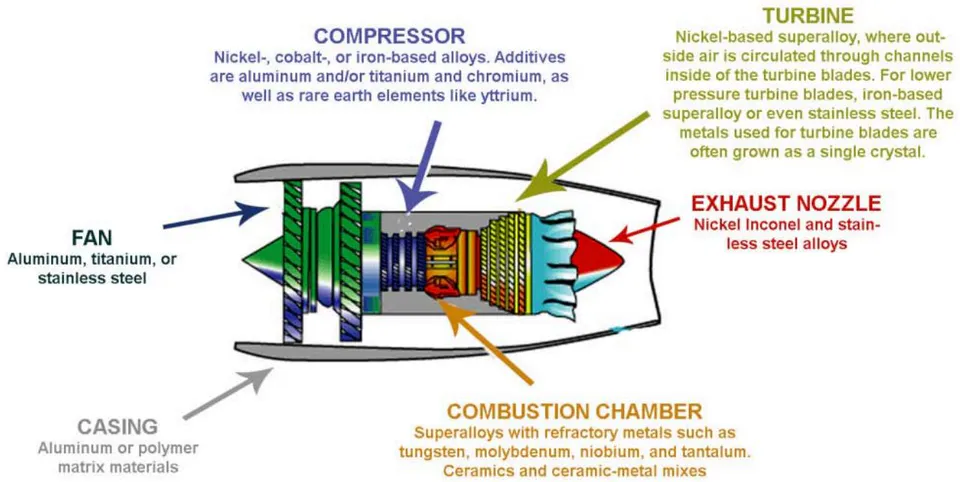
Figure 1: Proposed composite materials of a jet engine and areas of nanotechnological incorporation to reduce the impact on the environment. Reprinted with permission of the "PreScouter." (22)(23)
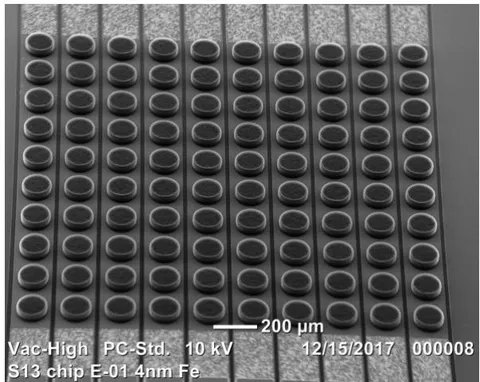
Figure 2: Electron microscope images showing patterned nanotubes that would operate as an electron emitter in a new instrument now being developed for analyzing extraterrestrial samples. The right image is a close-up of one of the bumps. To create these highly versatile structures, technicians place a silicon wafer or some other substrate inside a furnace. As the oven heats, they bathe the substrate with a carbon feedstock gas to produce the thin coating of nearly invisible hair-like structures.
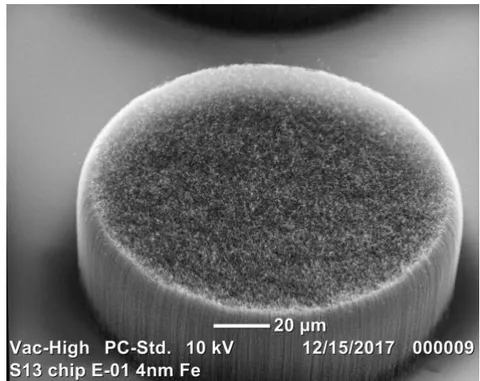
Credits: NASA (24)
VI. GRAPHICAL AND TABLE ANALYSIS
(a) Annual historic and future annual carbon dioxide (CO2) emissions of aviation following four scenarios: No pandemic, back to normal, zero long-term growth, and long-term decline. (b) Daily flights of selected airports globally between 2019 and November 2020 and annual averages for all scenarios. (c) Cumulative warming-equivalent emissions of CO2 and non-CO2 effects of aviation since 1940 and the corresponding aviation-induced global warming. Scenarios are color-coded as in (a) (21).
Reprinted with permission of "The Innovation Energy" Journal. (13)
ACKNOWLEDGEMENTS
The authors of the present study would like to express their gratitude and extreme appreciation to the Division of Pre-College and Undergraduate Programs of Brown University for providing a venue and platform for networking and conducting efficient and successful research.
Conflict of Interest
The authors declare no conflict of interest.
Ethical Approval
Not applicable
Data Availability
The datasets used in this study are openly available at [repository link] and the source code is available on GitHub at [GitHub link].
Funding
This work did not receive any external funding.
Cite this article
Related Research


Special Issue
Launch a focused special issue to highlight research, emerging trends, and expert insights in your academic field.