


IntelliPaper
Abstract
The integration of Generative Artificial Intelligence (GenAI) into educational pedagogy represents a transformative shift in the dynamics of teaching and learning. To guide this transition, this paper introduces the Ped-AI-gogy Informed Model (PIM), which combines established educational frameworks: the Technology Acceptance Model (TAM), the SAMR model, and Technological Pedagogical Content Knowledge (TPACK), into a cohesive approach for GenAI integration. This model provides a progressive pathway for educators, moving from initial awareness to active advocacy, while addressing the complexities of technology adoption, pedagogical change, and shifting educator-learner relationships.
In addition, this paper develops the theoretical foundation of “ped-AI-gogy”, a concept that fuses pedagogy with AI to reimagine teaching practices in an increasingly digital landscape. By situating this integration within a posthumanist perspective, the authors advocate for a collaborative, symbiotic relationship among educators, students and GenAI tools. Finally, the paper critiques traditional human-centred educational paradigms and calls for adaptive learning models that harness GenAI potential to enhance both teaching and learner agency
Explore Digital Article Text
AI IN EDUCATION: CONTEXTUAL BACKGROUND
Artificial Intelligence (AI) has been studied and applied for several decades, including within educational contexts (Holmes & Tuomi, 2022). Recent rapid progress in machine learning has prompted a re-evaluation of traditional definitions of AI originally formulated in the 1950s (Antonenko and Abramowitz, 2023). Antonenko and Abramowitz (2023, p.64) define AI as a 'process that includes how a system perceives data, analyses data, uses data, and improves its intelligence based on the data'. Within this broader field, Generative Artificial Intelligence (GenAI) is a subset of AI that has become popularised since the release of ChatGPT, a free, web-based GenAI tool, in 2022. Miao and Holmes (2023) define GenAI as a form of 'artificial intelligence technology that automatically generates content in response to prompts written in natural-language conversational interfaces'. Given the expanding scope of AI applications, this paper focuses specifically on how GenAI technologies afford new possibilities for pedagogical practice and educational design.
Modern societies are currently experiencing what Lee (2018) terms the 'age of AI implementation,' in which long-established AI techniques are now applied across diverse fields such as finance, healthcare, climate science, and education. In education, there has been a concerted shift toward integrating technology to enhance learning outcomes and alleviate teacher workload. The impact of freely accessible GenAI tools on both learning and teaching processes is particularly significant (Felix & Webb, 2024). At the turn of the century, Prensky (2001) introduced the categories of 'digital natives' and 'digital immigrants' to describe differing levels of digital competency. However, more recent scholarship has challenged this binary distinction, noting that even those who grow up surrounded by technology often lack fundamental digital literacy skills and require explicit instruction and support to develop them (Muller & Goldenberg, 2021). In a review of computing education, Ofsted (2022) argues that the persistence of "digital native" thinking hinders the advancement of genuine digital competence. Despite these critiques, the terminology continues to circulate within popular media and educational discourse (Mertala et al., 2024). The recent coining of the term "AI natives" (Parmenter, 2019; Eliot, 2022), derived from the digital native framework, risks reinforcing similar misconceptions and may hinder efforts to support educators and learners in effectively adopting GenAI technologies.
GenAI offers an opportunity to rethink the nature of knowledge and its role in the learning process. It has been argued GenAI is poised to become a driving force for the future, with significant implications for both education and learning (Rajakishore & Riya, 2023). The rapid advancement of GenAI not only promises to enhance educational outcomes but may also transform human cognition itself. With knowledge readily accessible and regenerated through GenAI tools, educators are encouraged to reconsider their pedagogy and classroom practices. This technology has the potential to redefine traditional educational roles, shifting the teacher-student dynamic toward a human-AI collaborative model, in which both teachers and students leverage GenAI to support and enrich learning.
The Department for Education (2023) highlights the potential of GenAI to positively influence both teacher workload and pedagogical practice. Their policy document suggests that, when applied ethically and strategically, GenAI tools can create opportunities to enhance teaching quality and learning outcomes. Kehoe (2023) outlines three distinct benefits of using GenAI: personalised learning, creativity enhancement and time efficiency. When effectively leveraged by educators, these affordances can strengthen classroom interactions and support more responsive teaching. To realise this potential, a conceptual shift is needed: from viewing GenAI merely as a functional tool, to recognising it as an extension of human cognition. This aligns with posthumanist thought, which posits that human and technologies can exist in symbiotic relationships (Tegmark, 2018), enabling AI to augment teachers' capabilities beyond administrative efficiency toward the co-creation of new forms of intelligence and pedagogy.
II. PURPOSE AND SCOPE
The only fence against the world is a thorough knowledge of it.
- John Locke (1693)
In November 2024, Neil Lawrence, the Inaugural Google DeepMind Professor of Machine Learning and author of Atomic Human, delivered a talk to a small group of founders at Downing College, University of Cambridge. In his talk, he drew a distinction between human and machine intelligence. Human brains possess remarkably efficient computational abilities but limited bandwidth; our capacity to communicate internal thought processes remains comparatively slow. Machines, by contrast, are far less efficient in cognitive processing but exhibit immense bandwidth, enabling near-instantaneous communication between systems. Machines exist in networks deeply interconnected with one another yet remain detached from the lived world, whereas humans are embedded in the world but experience a form of isolation from one another (Lawrence, 2024). While this observation offers valuable insight, it overlooks a critical dimension of human-machine interdependence. Machines are ingrained in the lives of the many, they are ingrained in our economy; they are not isolated from the world. Human subjectivity itself is increasingly co-constructed through human-machine interfaces, and we may or may not feel more authentic or real in cyberspaces as one has been seduced by technology into its generation (Zylinska & Zylinska, 2002).
As Generative Artificial Intelligence (GenAI) technologies continue to reconfigure human identity (and, by extension, multiple social, cultural, and professional domains) education remains at the forefront of this transformation. The contemporary moment, defined by the dual forces of generativism and individualism, necessitates that educators cultivate a careful equilibrium between innovation, sustainability, and interdependence in pedagogical practice. Within this context, Education 4.0 functions as a critical response to the exigencies of Industry 4.0, wherein human and machine learning are increasingly interwoven to produce new epistemic formations and expanded possibilities for knowledge creation (Laskova, 2021). Situated within a posthumanist framework, the paper advocates rethinking education to accommodate the possibilities of GenAI-driven adaptive learning. It also examines the implications of GenAI-mediated education, in which the boundaries between humans and machines blur, creating opportunities for symbiotic learning ecosystems. The central purpose of this paper is to examine the theoretical foundations that support the integration of GenAI tools into pedagogy, conceptualising this integration as ped-AI-gogy. The term reflects the convergence of pedagogy and AI, emphasising the transformative role GAI can play in creating innovative, adaptive, and inclusive educational environments. We put the ped-AI-gogy forward through the posthumanist lens, where GenAI is considered a modern, more complex incarnation of an 'object' in object-centred pedagogy theory.
The literature reviewed in this theoretical paper has been carefully selected to provide current definitions, key research insights, and conceptual grounding for the proposed Ped-AI-gogy Model. This model seeks to examine how Generative AI (GenAI) tools can be meaningfully integrated into existing pedagogical practices, offering a structured theoretical foundation for future application and study. In doing so, the paper extends beyond definition and synthesis to critically challenge traditional human-centred paradigms of teaching and learning. It encourages educators, policymakers, and researchers to re-evaluate established assumptions about the teacher-student relationship, envisioning an educational ecosystem in which educators function as facilitators and co-learners alongside AI systems. Finally, we propose the development of new pedagogical approaches that cultivate alternative knowledge systems and support non-anthropocentric ways of engaging with GenAI.
2.1 Rethinking Human-Centred Education and Pedagogies
Rethinking human-centred education and pedagogy necessitates a critical engagement with the problematic nature of the categories of the human and the human-centred, approached here through a Braidotti lens. In contemporary discourse, the very notion of what it means to be human has become an open and contested field and questions arise here whether there has ever existed a coherent or universally accepted understanding of the human (Braidotti, 2013), arguing that the term has always been entangled in dynamics of power, inclusion, and exclusion. As she observes, “it has never been a neutral or inclusive term,” underscoring the need to interrogate the historical and philosophical foundations upon which human-centred frameworks, educational or otherwise, are built (Braidotti, 2013). Humanism, a term first coined by the Bavarian reformer and educator Friedrich Immanuel Niethammer in 1808, refers to a human-or man-centred educational philosophy whose origins can be traced to classical Athens, ancient Rome, and later the Renaissance, traditions that placed the human subject at the centre of all intellectual and moral inquiry. According to humanist thinkers such as Socrates and later Dewey (2004), humanity represents the pinnacle of species being, and education serves as the process through which one becomes fully human, ‘aided in the development of one’s innate talents and capacities’ (p. 102). This conception of education foregrounds the realisation of human potential, envisioning learners as evolving toward a state of self-actualisation and ethical citizenship within a shared human community. Yet, while this ideal carries a certain moral nobility, it cannot be understood or realised in isolation from the broader material, social, and technological contexts in which human development unfolds. Generative Artificial Intelligence (GenAI), however, fundamentally challenges traditional humanist pedagogical models, which typically prioritise human-centred education and maintain clearly defined roles for teachers and students. In alignment with the concept of “The New Hybrid” (Pratschke, 2024), this paper reconceptualises pedagogy through a posthumanist lens, positioning GenAI as a creative and collaborative participant within the educational process. By enabling adaptive, AI-driven learning, GenAI opens the possibility for posthuman pedagogical models that accommodate highly individualised and potentially non-human, forms of intelligence, ranging from AI-assisted learners to hybrid human-machine students, thereby expanding the conceptual boundaries of teaching and learning. By embracing GenAI-driven adaptive learning, educators can evolve beyond conventional methods to address diverse learning needs, including a) highly individualised learning, such as creating personalised pathways that cater to individual student needs and offer tailored instruction, assessment, and feedback (Hew et al., 2022); b) posthuman opportunities of enabling new forms of intelligence, such as GenAI learners or students augmented by GenAI tools. These possibilities align with a future where education accommodates both human and non-human intelligence (Knox, 2021; Mertala et al., 2024).
By interrogating and moving beyond traditional human-centred paradigms, we enter the discourse of posthumanism, prompting us to re-examine what it means to be human; as teachers, learners, and creators of knowledge. Through this lens, we can critically and imaginatively consider contemporary developments such as gene editing, cyborg embodiment, intelligent robotic educators, and GenAI without being constrained by anthropocentric notions of identity and capability. Within this framework, the human is understood as embedded, embodied and relational-inseparable from the technologies that shape and extend cognition. This situates us firmly in the age of implementation and augmentation, where educators must adopt flexible and adaptive pedagogical models that position GenAI as a co-educator rather than a passive tool. Ultimately, this perspective calls on educators, regardless of their technological expertise, to shift from viewing GenAI as an instrument of instruction to co‑designing posthuman "ped-AI-gogies" that embrace collaboration between human and artificial intelligence.
2.2 Technological Mediation and Posthuman Experience in Education
As the integration of Generative AI (GenAI) in education progresses, scholars have increasingly distinguished between GenAI-enhanced pedagogy and GenAI-mediated pedagogy within pedagogical discourse. Careful attention to these distinctions is essential for clarifying the diverse roles GenAI may assume in educational contexts. GenAI-enhanced pedagogy refers to scenarios in which AI supports and augments human-led teaching practices, such as automating routine administrative tasks or providing supplementary learning resources. In contrast, GenAI-mediated pedagogy entails a more profound integration, wherein AI actively participates in the learning process and shapes pedagogical strategies, student engagement and educational outcomes. Recognising these distinctions is critical for enabling educators and researchers to adopt precise terminology that accurately reflects the depth and nature of GenAI's integration into contemporary educational practice. Aligned with the posthumanist notion, we believe that GenAI tools do more than supplement existing pedagogical methods - they actively mediate the posthuman experience in education. This means that the posthumanist perspective encourages us to view these digital 'tools' not as mere extensions of human capabilities but as agentic entities that shape and redefine educational interactions. This section of the paper invites the reader to contemplate mediation through three critical lenses: 1) blurred boundaries, 2) facilitation over authority, and 3) symbiotic ecosystems.
Under the blurred boundaries lens, GenAI technologies erode the distinction between humans and machines, creating hybrid learning environments where both entities collaborate to co-create knowledge (Bayne, 2020). The concept of facilitation over authority positions teachers not as authoritative figures, but as guides who mediate interactions between students and GenAI tools. This shift challenges traditional hierarchies and promotes collaborative learning (Latour, 2020). Integrating GenAI into existing pedagogical frameworks, in addition, creates ecosystems in which humans and AI co-adapt, fostering new teaching practices that emphasise responsiveness and personalisation within a symbiotic ecosystem (Holmes et al., 2022). This mediated relationship highlights GenAI's transformative potential in education, moving beyond mere automation toward active and participatory engagement.
2.3 The Importance of Understanding Teacher Perceptions
The extent of GenAI's active involvement in educational settings, pedagogical practices, and implementation will largely depend on teachers' perceptions and attitudes toward it. As gate-keepers of knowledge within formal education, teachers play a central role in shaping how educational innovations are adopted and enacted, regardless of underlying pedagogical frameworks (Oh & Ahn, 2024; Casal-Otero et al., 2023). Teachers occupy multiple roles within these settings, but as the primary agents of knowledge acquisition through direct interaction with students, they are pivotal in determining the degree to which GenAI becomes integrated into educational practices (Oh & Ahn, 2024; Casal-Otero et al., 2023). While this may appear straightforward in theory, the practical challenge of ensuring teachers attain sufficient 'GenAI literacy' to confidently incorporate these tools into their pedagogy is significant, particularly given the minimal, or often absent, training provided during initial teacher education (Sanusi, et al., 2022).
It is therefore crucial to examine the barriers to GenAI adoption that may arise from the perspectives of existing qualified teachers (Cooper, 2023). By identifying and understanding teachers' attitudes and perceptions toward GenAI, researchers can better inform strategies to optimise its adoption and development within formal educational settings (Woodruff et al., 2023). While successful integration of GenAI will require coordinated engagement from all stakeholders involved in educational planning, development, and implementation (Littmann et al., 2021; Wolf, 2022; Ramirez & Yu, 2023), teachers will play a central and determining role in shaping the extent of its success (Matthews, et al., 2022; Cooper, 2023).
Teachers' perceptions, adoption and implementation of GenAI are critical to its successful integration (Lee et al., 2021), however, the manner in which this occurs will vary depending on the age of the students they teach (Lim, 2015; Breakstone et al., 2018; Ali et al., 2021; Woodruff et al., 2023). In primary and secondary education, where self-directed learning and the integration of assistive technologies are already promoted, GenAI's adoption may face relatively little resistance (Breakstone et al., 2018). This potential has been further supported by the shift toward asynchronous e-learning during the COVID-19 pandemic, as most students now possess a level of technological literacy conducive to GenAI integration (Breakstone et al., 2018; Ali et al., 2021). However, this perspective presents a simplistic view of the teacher's role, overlooking the multimodal capacities required of educators—who are expected to function as instructors, guides, psychologists, community liaisons, administrators and more (Oh & Ahn, 2024; Bidwell, 2013)—as well as the diverse factors that may shape their perceptions of GenAI.
In early childhood settings, learning remains largely structured around child-initiated, playcentred pedagogy, with a strong emphasis on physical and social interactions rather than technology-based materials (Vygotsky, 1978). Consequently, teachers in these contexts are likely to perceive GenAI as beneficial, and thus worthy of integration into their pedagogy, only if it aligns with constructivist principles (Miettinen, 2006; Kress, 2010; Lim, 2015). This perspective highlights that teacher perceptions are not universal, and careful investigation is necessary for researchers to identify potential barriers to GenAI adoption and to realize its theoretical learning benefits (Woodruff, et al., 2023).
Despite the anticipated impact of GenAI on education and its purported theoretical benefits, the extent to which these advantages are realised is contingent upon teachers' perceptions and their intentional integration of the technology into pedagogical practice. While GenAI possesses significant potential, its implementation in learning environments remains fundamentally mediated by the human factor (Mercader & Gairín, 2020); technological deployment alone does not inherently ensure enhanced educational quality. Existing scholarship has predominantly addressed either the use of GenAI in classroom contexts (Kim & Kim, 2022) or the professional roles of educators (Felix, 2020; Woodruff, et al., 2023), yet there remains a notable gap concerning the interplay between teacher perception and the overall efficacy of GenAI in education. In this regard, further examination of the human-GenAI collaborative model, as conceptualized by Timms (2016) within the domain of Artificial Intelligence in Education (AIED), is warranted. A nuanced understanding of teachers' perceptions of GenAI may prove decisive in determining whether the technology constitutes a transient trend or a sustainable component of contemporary educational practice.
2.4 Fear of Technology
The uncertainty surrounding the potential longevity of GenAI is grounded in the observation that teachers, along with other stakeholders, often exhibit an inherent apprehension toward technological change (Urlaub & Dessein, 2022; Zimotti, et al., 2024). This apprehension reflects a broader, instinctive human response to novel phenomena, which are frequently perceived as threats to established ways of operating or existing (Urlaub & Dessein, 2022). Within the educational context, such fear of emerging technologies is rooted in the recognition that latest innovations necessitate adaptations to established pedagogical practices, an undertaking that can appear daunting or overwhelming (Zimotti, et al., 2024). Consequently, educators may question both the necessity and the effectiveness of implementing such changes.
To overcome this fear, individuals move through a process known as 'technological normalisation' (Bax, 2003:23) where they move from a state of apprehension, to acceptance, to hardly noticing the technology is present and it becomes just another aspect of what the individual perceives as their 'everyday life' (Bax, 2003:23). Such a process is not simple, and an individual may go through various stages of early adoption, followed by scepticism and disillusionment. This in turn may lead to follow-up attempts of adopting a new technology which will be accompanied simultaneously by feelings of anxiety, awe, fear, until eventually the new technology becomes integrated (Zimotti, et al., 2024). In the realm of teacher pedagogy, the notion of proper integration occurs when any given material such as a textbook, pen, interactive whiteboard (Cutrim Schmid, 2008), remote/distance learning (O'Dowd, 2007) or even GenAI has become seamlessly employed within a teacher's numerous pedagogical approaches to content delivery and everyday language (Bax, 2011).
Within contemporary education, there remains a pervasive concern that GenAI, which is still largely in its conceptual phase, may exert potentially adverse effects on the learning experiences of young people (Gentner, et al., 2001; Grindle et al., 2013; Niemi, 2021). This highlights that many educators are engaged in the process of normalizing this emerging technological innovation, a process that involves developing a comprehensive understanding of the technology, exploring how it can support pedagogical practice and determining ways in which it can function effectively alongside educators (Levy & Stockwell, 2006). Successful normalization is anticipated to yield positive educational outcomes (Bax, 2003; Cutrim Schmid, 2008; Bax, 2011). This perspective, however, has been contested (Hubbard & Levy, 2006), as the process of technological normalisation may, in certain contexts, produce unintended negative consequences. There also remains insufficient empirical evidence to definitively ascertain whether the integration of GenAI into teaching practice will ultimately result in beneficial or detrimental outcomes.
III. POSTHUMANISM AND TECHNOLOGY ACCEPTANCE
Technology is not neutral. We're inside of what we make and it's inside of us. We're living in a world of connections - and it matters which ones get made and unmade.
Donna Haraway (1997)
3.1 Posthumanist Philosophy in Education
Advancing existing theoretical frameworks for GenAI in teaching pedagogies from a posthumanist perspective necessitates a rigorous understanding of critical philosophical posthumanism and its applicability within the scope of this theoretical analysis. Posthumanism provides educators with a conceptual lens to reconsider traditional humanist paradigms by challenging the notion of 'Man' as the ultimate measure of all and by questioning anthropocentric assumptions. It emphasizes the interdependence of humans, nonhumans (e.g., plants and animals), and technology, while reconceptualizing the roles of both human and nonhuman actors within systems of knowledge creation and dissemination. In educational contexts, this perspective encourages a reimagining of how learners interact with their environments, drawing attention to the influence of ecological factors and technological developments on shaping human understanding and agency (Ferrando, 2013).
Particularly relevant to this study is a specific subset of technological posthumanism, which examines how emerging technologies, such as GenAI, redefine human identity and potential while acknowledging the agency of both human and nonhuman actors, including the technology itself. By challenging human exceptionalism, this paradigm provides educators with an analytical lens to explore how technology can augment learning capacities and transform pedagogical practices, encouraging practitioners to move beyond perceiving technology as a passive instrument toward recognising its active role in shaping educational outcomes (Bayne, 2020). It also raises critical ethical and philosophical questions regarding the integration of such technologies in teaching and learning, prompting educators to consider how these innovations may redefine the roles and responsibilities of both teachers and learners (Braidotti, 2013).
According to Knox, posthumanist philosophy redefines the human-machine relationship as a collaborative partnership. It blurs the boundaries between humans and technology, proposing that both entities can co-create knowledge and transform learning environments. This approach underscores the symbiotic interactions between teachers, students, and GenAI, emphasising the transformative potential of GenAI to augment human cognition and encourage new pedagogical practices (Knox, 2021). By decentring the human subject, this onto-epistemic stance encourages educators to explore collaborative, interdisciplinary approaches that reflect the complexities of modern learning ecosystems.
3.2 Object-Centred Pedagogy Under the Posthumanist Perspective
Selwyn suggests that while in most formal modes of education, "the teacher" holds a professional and prestigious role, the relationship between teachers and technology remains a "contentious area of education discussion and debate" (Selwyn, 2020:100). This complexity can be further understood through the lens of Heidegger's influential thoughts on human and nonhuman agency, which raise questions about whether we use tools for our own purposes or whether they, in turn, shape our actions (Wegerif & Major, 2023: 93). In this context, the integration of GenAI into educational practices introduces concerns about its potential negative impacts. The emerging framework of object-centred pedagogy (Prown, 1982; Peirce, 1991; Ryan, 2009) offers a promising lens through which to examine the dynamic relationships between technology, educators and learners (Barton & Willcocks, 2017), with the potential to transform the educational landscape. This approach emphasises the interplay between human and nonhuman actors within learning environments (Engeström, 1999; Parton et al., 2017), resonating closely with posthumanist theories that challenge traditional hierarchies and advocate for a more inclusive understanding of agency in educational contexts (Beck, 2013). By investigating how object-centred pedagogy reconceptualises the roles of students, teachers, and artificial intelligence (AI), this framework facilitates the creation of dynamic interactions that reshape the learning experience, while also accommodating critical perspectives and opposing viewpoints to offer a comprehensive understanding of this pedagogical shift.
3.3 AI as an Evolving Actor
At the heart of object-centred pedagogy lies the recognition of AI as an evolving actor within the educational process. Traditionally viewed as static tools, AI technologies such as adaptive learning systems and intelligent tutoring systems are now understood as co-participants in learning (Zhang & Aslan, 2021; Barnes & Hutson, 2024). This shift in perception encourages educators to reflect on the implications of AI's influence on learning outcomes, learner engagement, and instructional strategies (Abdelghani, et al., 2023; Xu, 2024).
AI's role extends beyond the mere facilitation of knowledge transfer. For example, adaptive learning systems can analyse students' interactions and performance in real time, enabling personalised learning pathways that address individual needs (Almusaed et al., 2023; Dumirtu, 2024). This capability not only enhances learner engagement but also fosters a more profound understanding of the subject matter. In interacting with AI, students are not simply passive recipients of knowledge; instead, they become active participants in a collaborative learning process, with AI adapting continuously to their evolving needs (Tynjälä, 1999; White, 2020). All of which underscores the significance of adaptive learning environments in promoting more profound learning experiences (Billingsley, et al., 2018), and such systems can contribute to improved academic performance.
However, this view is not without criticism. Some scholars argue that relying heavily on AI could lead to a devaluation of human interaction in learning. Critics such as Selwyn (2021) suggests that overdependence on technology may undermine the development of critical thinking and interpersonal skills, as students may become overly reliant on AI for answers and guidance. This concern raises important questions about the balance between technological integration and the maintenance of essential human elements in education. Although AI can enhance learning experiences, it is essential to ensure that it supports rather than replaces human interaction, thereby preserving the social aspects of learning (Poçan, et al., 2023).
3.4 Fluid and Decentralised Learning Ecosystems
The integration of AI within educational settings promotes fluid and decentralised learning ecosystems, where knowledge production and dissemination become collaborative and multifaceted. By facilitating real-time interaction, personalised feedback, and access to diverse perspectives, AI supports a more dynamic and participatory learning environment. Such an environment contrasts sharply with traditional models that often position the teacher as the primary source of knowledge. In a posthumanist framework, the classroom transforms into a dynamic space where students, educators, and AI collectively contribute to knowledge construction (Young, 2008; Aydin and Karaarslan, 2023).
For example, in classrooms that utilise project-based learning and experiential activities, students engage with both physical and digital objects, allowing them to connect theoretical concepts to real-world applications (Trahan et al., 2020; Ambarwati, 2021). Researchers from University College London (UCL) observed that children participating in experiential learning experiences demonstrated enhanced retention of ideas and made meaningful connections to their perceptions of the world (Ranken et al., 2024). These findings suggest that hands-on, immersive experiences can deepen understanding and make learning more relevant and engaging for young learners. Such research highlights the potential of object-centred pedagogy to create learning environments that are not only engaging but also deeply relevant to students' lives and experiential learning can serve as a form of public pedagogy that resonates with learners' lived experiences (Bengtsson & Van Poeck, 2021).
In these decentralised ecosystems, knowledge is not merely transmitted from teacher to student; instead, it emerges through collaboration and interaction among all participants. Students draw from their unique experiences, insights, and perspectives, while AI systems provide data-driven insights that inform the learning process (Bax, 2011; Urlaub & Dessein, 2022). This shared agency cultivates a sense of ownership and empowerment among learners, as they actively contribute to their educational journeys.
Yet, while the potential benefits of decentralised learning ecosystems are numerous, there are challenges that must be addressed. One major issue is the digital divide that persists in many educational contexts. Not all students have equal access to technology, which can create disparities in learning opportunities. Additionally, the reliance on digital platforms raises concerns about data privacy and the ethical implications of using student data to inform AI systems (Cohen et al., 2007). These challenges underscore the need for thoughtful implementation of object-centred pedagogy that considers equity and inclusivity in the educational landscape.
3.5 Teacher-Student-AI Interactions
The interactions among teachers, students and AI objects are central to understanding the evolution of educational relationships in a posthumanist context. These interactions are not static; they evolve over time, influenced by the changing dynamics of the classroom environment (Wilson & Rutherford, 1989). As AI technologies become more integrated into teaching practices, the roles of educators and learners are reshaped, fostering new forms of collaboration (Venkatesh, et al., 2007; Allen, et al., 2017). Educators increasingly act as facilitators and co-creators of knowledge rather than sole providers, while learners engage more actively in personalised, self-directed, and collaborative learning experiences. Such a transformation possesses the potential for the development of critical thinking, problem-solving skills and adaptive expertise, as both teachers and students navigate an evolving, technology-mediated educational landscape.
Teachers are no longer the sole gatekeepers of knowledge; they become facilitators who guide students in their exploration of content (Williams, 2018; Alvesson & Skoldberg, 2018). This shift allows for a more personalised approach to learning, as AI can provide real-time feedback and insights into student performance. For instance, intelligent tutoring systems can assess a student's understanding of a topic and offer targeted resources to address knowledge gaps (Wolf, 2022; Alharbi, 2023). This supportive role of AI enables teachers to focus on fostering critical thinking and creativity rather than simply delivering content (Wood, et al., 2019).
The nature of teacher-student interactions is therefore transformed as AI becomes a part of the learning ecosystem. Students can engage with AI systems in ways that encourage curiosity and exploration. For example, a student might ask an AI-powered educational tool a question that sparks further investigation, leading to a deeper understanding of the subject matter (Venkatesh & Davis, 1996; Araújo & Casais, 2020). By providing immediate feedback and diverse perspectives, AI supports both independent inquiry and collaborative discussion, enhancing the overall learning process. This collaborative dynamic reinforces the idea that learning is a shared endeavour, where all actors (human and non-human) contribute to the educational experience.
However, this evolving relationship does not come without its challenges. The effectiveness of AI in education relies heavily on the teachers' ability to integrate these technologies thoughtfully into their pedagogical practices. Critics argue that without adequate training and support, teachers may struggle to adapt to these new roles, potentially resulting in frustration and ineffective use of AI tools (Ertmer & Ottenbreit-Leftwich, 2010). Furthermore, concerns about the potential dehumanisation of education arise when AI systems take on more prominent roles in the learning process. Scholars like Postman (1993) warns that over-reliance on technology can lead to a disconnection from the human aspects of teaching and learning, emphasising the importance of maintaining the emotional and relational components of education. To address this, it is crucial to integrate AI in ways that complement, rather than replace, human interaction, ensuring that empathy, mentorship and social engagement remain central to the educational experience.
3.6 The Role of Physical and Digital Objects
Object-centred pedagogy also highlights the importance of both physical and digital objects in the learning process. In this framework, objects are not mere tools but active participants in knowledge construction (Barton & Willcocks, 2017; Parton, et al., 2017). The interplay between tangible materials and digital technologies creates rich learning opportunities (Parton et al., 2017) that engage students on multiple levels. For instance, in STEM education, students can manipulate physical objects (like building blocks or scientific instruments) while using technology to deepen their understanding of complex concepts (Sydon & Phuntsho, 2022). This combination of hands-on and digital experiences allows learners to experiment, visualise abstract ideas and make connections between theory and practice, fostering deeper comprehension and long-term retention.
This dual engagement encourages a holistic learning experience where students can visualise abstract ideas (Arnheim, 1969; Yenawine, 1999; Houson, 2002) and apply theoretical knowledge to real-world situations. Such an approach aligns with constructivist theories of learning, which advocate for hands-on interaction with materials to promote deeper understanding (Piaget, 1976; Vygotsky, 1978; Engestrom, 1999). In environments that leverage both physical and digital tools, students are encouraged to experiment, iterate and collaborate, fostering creativity and innovation.
Nevertheless, the integration of physical and digital objects raises questions regarding the balance of experiences students engage with. Some educators argue that an overemphasis on digital tools might detract from the benefits of hands-on, experiential learning (Kirkwood & Price, 2014). Additionally, the potential for distraction in digital environments poses a risk to focused learning. For instance, as with any object that has multiple meanings (Hooper-Greenhill, 2002), when a student interacts with an educational app, they may be tempted to engage with unrelated content, leading to fragmented attention and reduced retention of knowledge. Therefore, it is critical for educators to thoughtfully curate learning experiences that leverage both physical and digital objects to ensure a balanced approach that maximises engagement and understanding. By incorporating clear objectives, interactive prompts, and reflective tasks, educators can channel students' curiosity productively, transforming potential distractions into opportunities for deeper engagement and meaningful learning.
3.7 Mapping Technology Acceptance Through Models
Taking all these factors into consideration, it is pertinent to understand this new form of thinking around the acceptance and greater incorporation of GenAI technologies into existing teacher pedagogy through technology acceptance models. Specifically, the Technology Acceptance Model (TAM), SAMR (Substitution, Augmentation, Modification, Redefinition) and TPACK (Technological Pedagogical Content Knowledge) framework.
IV. TAM AND SAMR
The TAM and the SAMR model represent two distinct approaches to understanding and integrating technology in educational contexts. TAM, developed to explain how users come to accept and use technology, is predicated on the perceptions of technology's usefulness and ease of use. It emphasises extrinsic motivators, such as the practical benefits technology provides to its users (Bulut, et al., 2020). It explains a little about technology itself, but a lot about what people believe or how they perceive technology. In other words, the usefulness or ease of use of a technology is determined not by the technology itself, but by people's perceptions of it. These perceptions can vary based on factors such as prior experience with technology, age or gender. Its simplicity and emphasis on user perceptions have made this framework widely adopted for studying technology adoption.
However, critics argue that TAM's focus is too narrow, overlooking the complex, multifaceted nature of technology adoption, which involves cognitive, social, and behavioural dimensions (Al-Adwan et al., 2023). For instance, when introducing a new AI platform, despite the platform being user-friendly and functional, adoption rates were unexpectedly low. This discrepancy revealed TAM's limitations, as it failed to account for faculty reluctance to shift away from traditional teaching methods and the lack of organisational support for the technological transition. In previous research regarding this critique of the mode, many faculty members in a HE institution expressed concerns about the time required to learn the new system and the absence of training sessions or technical support provided by the university (Dorfsman & Horenczyk, 2022).
Both models offer valuable insights, yet have their limitations. TAM's adaptability and focus on user perceptions are essential for understanding the factors that drive technology adoption. However, it may benefit from incorporating a more comprehensive view of how technology impacts learning. SAMR's strength lies in its potential to enhance educational practices through technology, though it could be enriched by considering the factors that influence technology acceptance and use among educators and learners. Together, these models highlight the complex relationship between technology, pedagogy and the user, underscoring the need for a holistic approach to technology integration in education. By combining the strengths of both frameworks, educators and researchers can gain a more nuanced understanding of how technology can effectively support teaching and learning. This integrated perspective can guide the design, implementation and evaluation of educational technologies to maximise both engagement and learning outcomes.
4.1 SAMR Model and Perceived Usefulness (PU)
This section explores how the SAMR (Substitution, Augmentation, Modification, Redefinition) model underpins teachers' acceptance of GenAI, highlighting its value in enhancing modern pedagogy. The SAMR model offers a framework for evaluating the depth of AI integration into teaching and learning processes. Developed by Puentedura (2006), it categorises technology use into four levels: Substitution, Augmentation, Modification, and Redefinition. This model not only assesses how AI is used but also aims to transform and enhance learning experiences.
At the Substitution level, AI tools serve as direct replacements for traditional methods, performing tasks without altering their fundamental nature. For example, students using ChatGPT to retrieve and cross-verify information replicate the process of consulting textbooks or static web searches. The AI does not change the underlying goal of gathering accurate information; rather, it streamlines the process by providing faster access, more organised responses, and the ability to quickly cross-reference multiple sources. Although the core objectives of the task remain unchanged, AI enhances both the efficiency and accessibility of these processes, reducing the cognitive and time burden on learners. This stage represents a crucial foundational step in AI integration, establishing familiarity with technology-mediated workflows and paving the way for more transformative applications at higher levels of adoption.
Moving to Augmentation, AI introduces functional improvements that elevate the quality and depth of learning activities. For instance, a teacher might use generative AI to produce a news article on climate change that deliberately incorporates key vocabulary such as reduce, mitigate and adapt. This material can then serve as the foundation for reading comprehension exercises, seamlessly linking vocabulary development to meaningful, real-world issues. Beyond language instruction, teachers can leverage AI to generate debate prompts, scaffold complex tasks or provide structured guidance for simulations like Model UN, thereby enhancing both engagement and the authenticity of the learning experience. By augmenting traditional methods rather than replacing them, AI empowers educators to create richer, more targeted and personalised learning opportunities that actively support student understanding and critical thinking.
The Modification level represents a significant shift in pedagogy, as AI facilitates the redesign of traditional activities. For instance, teachers can input lesson objectives into AI tools to generate differentiated questions tailored to students' proficiency levels, transforming lesson planning into a personalised, dynamic process. AI also enables collaborative analysis by organising complex data, such as regional climate change impacts, for students to compare. It prompts critical thinking by encouraging them to assess data accuracy and biases and promotes synthesis as they combine AI insights with their own understanding to conclude which transforms learning into a deeper, more innovative process.
At the highest level, Redefinition, AI allows for entirely new learning experiences that were previously unimaginable. For example, a teacher might utilise ChatGPT to role-play historical figures, such as Abraham Lincoln, enabling students to engage in immersive, interactive Q&A sessions. Alternatively, students could design multimedia projects using AI-generated content tailored to their individual preferences and learning styles, creating personalised, adaptive assessments. These applications illustrate the transformative potential of AI, redefining traditional pedagogical boundaries and fostering dynamic, learner-centred environments.
4.2 Perceived Usefulness (PU) in AI Adoption
Perceived Usefulness (PU), a core concept from the Technology Acceptance Model (TAM), refers to the extent to which individuals believe that a technology enhances their efficiency and performance (Al-Adwan et al., 2023). In educational contexts, PU is a critical determinant of whether teachers integrate AI tools into their practices. When educators perceive clear, measurable benefits—such as saving time, improving instructional quality, or enhancing student outcomes - they are more inclined to adopt AI as an integral component of their teaching strategies. The subsequent section explores the dimensions of PU in education, illustrating its significance with practical applications of AI technologies.
4.3 Dimensions of Perceived Usefulness in AI Integration
One of the most immediate and impactful dimensions of PU is efficiency and time-saving. AI tools excel at automating repetitive tasks, allowing teachers to redirect their efforts toward more strategic instructional activities. For example, GenAI can quickly produce lesson plans, quizzes, or learning resources based on specific inputs. A teacher planning a lesson on environmental science, for instance, might input objectives into an AI system to generate customised teaching materials, such as reading passages or group activity prompts. Similarly, tools like Gradescope automate grading for multiple-choice and even essay-based assessments, providing detailed analytics that save teachers substantial time while offering insights into student performance.
Another critical dimension is AI's capacity for personalised learning pathways. By analysing individual learner data, AI tools adapt educational content to meet diverse needs and preferences. For instance, adaptive platforms like DreamBox or Duolingo assess a student's strengths and weaknesses in real-time, delivering targeted exercises to reinforce specific skills. In a classroom, a teacher might use AI to provide differentiated comprehension tasks for students with varying proficiency levels, ensuring equitable access to meaningful learning experiences. Such applications highlight AI's utility in creating tailored learning opportunities that are responsive to individual progress.
A third dimension is the enhancement of learning outcomes through AI-driven support for complex cognitive tasks. For example, AI can facilitate inquiry-based learning by guiding students in formulating research questions or simulating real-world scenarios. A history teacher might leverage AI to help students explore counterfactual historical events, such as "What if the American Civil War had ended differently?" This encourages critical thinking by allowing students to analyse alternative outcomes. By providing immediate feedback and adaptive prompts, AI helps students navigate challenging problems more independently while maintaining academic rigor. Similarly, AI tools that scaffold creative projects, such as generating multimedia content or refining argumentative essays, promote higher-order skills like synthesis and evaluation.
4.4 Challenges and Critiques of SAMR
Despite its structured approach, the SAMR model has faced criticism for potentially overemphasising technology use without adequately addressing pedagogical and content considerations (Ertmer et al., 2015). Deeper AI integration does not inherently lead to higher-order thinking skills, as the effectiveness of these tools depends on their alignment with well-defined learning objectives and the educator's motivation for change (Carrington, 2016). Furthermore, SAMR's hierarchical structure may oversimplify the complexities of integrating AI into diverse educational contexts, leading to inconsistent applications.
V. TPACK FRAMEWORK
The Technological Pedagogical Content Knowledge (TPACK) framework, developed by Mishra and Koehler (2006), highlights the interplay between Content Knowledge (CK), Pedagogical Knowledge (PK), and Technological Knowledge (TK) in fostering effective teaching practices (Figure 1). Unlike models such as SAMR, which focus on the stages of technology integration, TPACK emphasises a holistic approach where these three domains dynamically interact to create meaningful educational experiences (Harmer & Smith, 2021). This interaction underscores that effective teaching with technology depends not merely on using digital tools, but on integrating them in ways that align with both subject matter and pedagogy. In the context of emerging technologies like GenAI, the TPACK framework requires a reimagination to address the challenges and opportunities posed by such tools (Mishra et al., 2023).
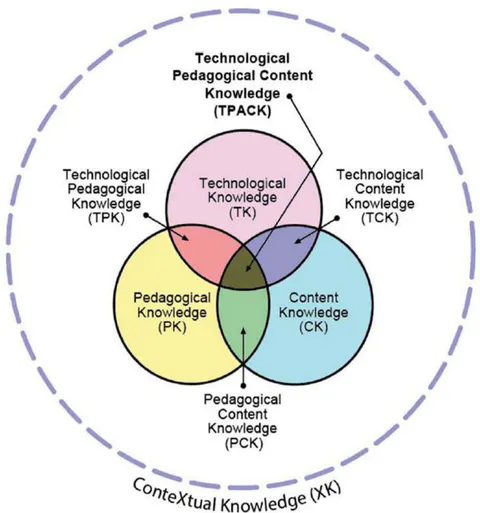
Figure 1: TPACK Model (Mishra et al., 2023, p.241)
However, the TPACK framework has long been critiqued for the difficulty teachers face in balancing its knowledge domains (Archambault & Barnett, 2010). Integrating new technologies into subject-specific pedagogy often requires significant professional development and reflective practice. The complexity increases with tools like GenAI, which demand a deeper understanding of both the technology's capabilities and its implications for teaching and learning (Ning et al., 2024).
5.1 Technological Pedagogical Knowledge (TPK)
To effectively harness Generative AI (GenAI) in the classroom, educators must reconceptualise their pedagogical strategies to align with the affordances and challenges of these emerging technologies (Mishra, et al., 2023). GenAI's capacity to produce real-time, context-specific outputs enables new forms of creative inquiry, supporting activities such as brainstorming, prototyping and iterative problem-solving. Rather than serving merely as a content generator, GenAI can act as a cognitive partner that stimulates curiosity and extends students' zones of proximal development. At the same time, its integration calls for rethinking assessment practices to move beyond static evaluations of student work. For instance, educators might assess the process of interaction with AI — such as how students prompt, critique and refine AI-generated drafts to cultivate metacognitive awareness and critical engagement with technology. This shift emphasises not only what students produce, but also how they think, question and learn in collaboration with intelligent systems.
Educators, however, must also address the ethical and practical concerns that accompany the integration of Generative AI (GenAI) into learning environments. These include issues such as algorithmic bias, data privacy and the propensity of AI systems to generate inaccurate or misleading information. As such, teaching students to critically evaluate and verify AI-generated outputs becomes a core digital literacy skill, enabling them to question the reliability, source and ethical implications of the information they encounter. Within this context, Technological Pedagogical Knowledge (TPK) extends beyond technical proficiency to encompass the ability to guide learners in the responsible and reflective use of GenAI tools. Educators are thus challenged to design learning experiences that not only leverage GenAI's creative and cognitive potential but also cultivate discernment, transparency, and ethical reasoning. Balancing these opportunities and limitations ensures that GenAI serves as a catalyst for deeper learning rather than a shortcut that undermines intellectual integrity.
5.2 Technological Content Knowledge (TCK)
The integration of GenAI profoundly affects how content is taught and learned (Mishra, et al., 2023). GenAI automates routine tasks, pushing educators to focus on higher-order skills such as analysis, creativity, and strategic decision-making. For instance, in fields like journalism and data analysis, journalists may move from basic reporting to in-depth analysis, in contrast, data analysts rely on AI-generated visualisations to explore complex scenarios.
Generative AI's (GenAI) versatility fosters interdisciplinary learning by generating multimodal outputs (such as text, code, images, and sound) that bridge traditionally separate domains such as art, computer science, and design. By integrating these capabilities into projects, students can engage in both creative expression and computational thinking, reflecting the hybrid skills demanded in contemporary problem-solving. To capitalise on this potential, educators must adapt curricular goals to emphasise transferable competencies over disciplinary silos. This includes developing critical, creative, and adaptive capacities such as prompt engineering, ethical reasoning, and iterative collaboration with AI tools. Through such approaches, GenAI becomes not merely a technological aid but a catalyst for reimagining how knowledge is produced and connected across fields, preparing students to navigate and contribute meaningfully to an AI-driven, interdisciplinary workforce.
5.3 Contextual Knowledge (XK)
Effective technology integration extends beyond individual classrooms and is shaped by broader systemic, institutional, and cultural factors (Mishra, et al., 2023). Educators must navigate complex issues such as academic integrity policies, institutional restrictions on AI use, and evolving societal perceptions of Generative AI (GenAI). These external factors significantly influence how teachers adopt and adapt GenAI in their pedagogical practice, underscoring the importance of Contextual Knowledge (XK), the understanding of how local environments, policies and values shape technology use. Addressing these contextual dimensions is essential for promoting equitable access, ensuring ethical implementation and supporting inclusive participation in AI-enhanced learning. Furthermore, as GenAI continues to transform social and professional structures, educators have a critical role in preparing students to engage with these technologies thoughtfully and responsibly in both their personal and civic lives.
5.4 Reimagining TPACK for the Age of Generative AI
As GenAI transforms education, the TPACK framework must evolve to remain relevant (Mishra, et al., 2023). Educators need to see TPACK's domains not as static silos but as dynamic and adaptable to rapidly changing technologies. The philosophical shift GenAI introduces—where AI acts not merely as a tool but as a collaborator in the learning process—requires teachers to rethink their roles. They are no longer just content experts but facilitators of critical thinking, creativity and ethical reasoning.
Successful teaching with AI, however, requires integrating all these elements-content knowledge, pedagogical strategies, and AI technology (Ning et al., 2024). To achieve this, teachers need focused training that equips them to use AI tools effectively, enabling them to bridge the gap between traditional teaching methods and innovative AI-driven approaches. Societal implications of GenAI extend beyond classroom practices. Educators must address long-term challenges, such as how AI blurs the boundaries between human and machine-generated content, potentially eroding trust and reshaping students' sense of identity. Preparing learners for an AI-driven future necessitates a broader view of TPACK, one that accounts for both immediate teaching strategies and the larger societal changes AI brings. This means that effective AI integration is not only a matter of classroom technique but also of fostering ethical awareness, critical thinking, and adaptive skills in students, ensuring they can navigate and contribute responsibly to an AI-mediated society.
5.5 Toward a New Model for AI Integration: The Ped-AI-gogy Informed Model (PIM)
As AI technologies continue to evolve, there is a growing need for comprehensive adoption models that reflect the dynamic interplay between technology, pedagogy, and user behaviour. Future frameworks should incorporate constructs such as perceived usefulness and ease of use, external influencing factors and an appreciation of the fluctuating state of acceptance to provide a nuanced understanding of AI integration into an educator's pedagogy. It is on this foundation that this paper proposes a New Model (Figure 2) of how GenAI becomes integrated into a teacher's existing pedagogical practices: the Ped-AI-gogy Informed Model (PIM). Our Ped-AI-gogy Informed Model (PIM) was conceptualised as a mental model to illuminate better the process of integrating Generative Artificial Intelligence (GenAI) into an educator's existing pedagogical practices. This model emerged from a comprehensive examination of various precursor theoretical perspectives and pedagogical frameworks explored throughout the paper. The creation of the model can be articulated through several key dimensions: theoretical foundations, integration of precursor models, focus on teacher perception, stages of integration, and emphasis on collaborative education.
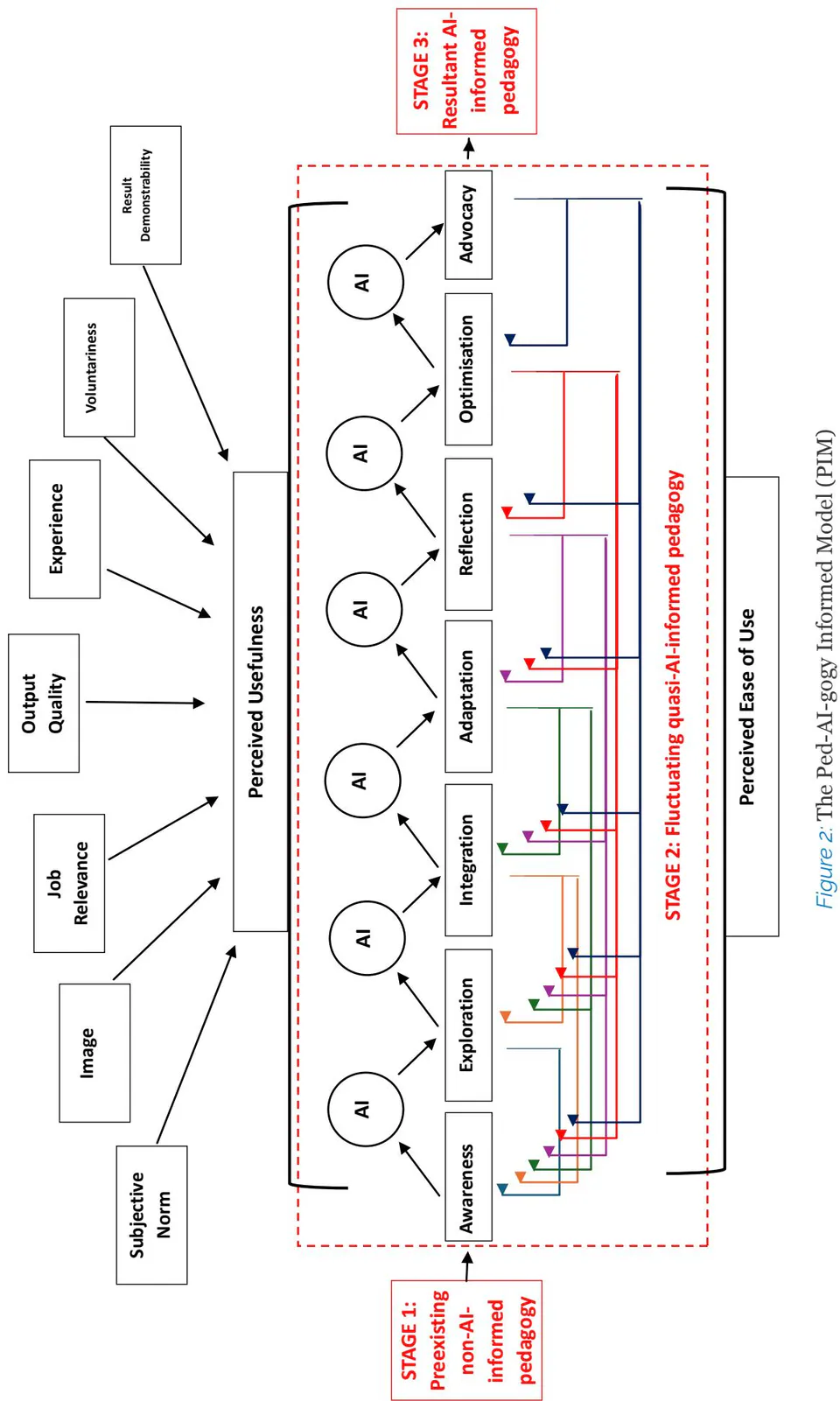
STAGE 2: Fluctuating quasi-AI-informed pedagogy steps:
1. Awareness
Description: The teacher becomes aware of the AI tool's existence and its potential applications in education.
Key Actions:
- Researching AI tools through articles, workshops, or peer recommendations.
- Understanding the specific functionalities and benefits of the tool.
2. Exploration
Description: The teacher explores the AI tool's features and capabilities to see how it can fit into their teaching practices.
Key Actions:
- Navigating the tool's interface and experimenting with its functionalities.
- Reviewing tutorials or demos to learn how the AI can assist in lesson planning, grading, or personalised learning.
3. Integration
Description: The teacher begins to incorporate the AI tool into their teaching workflow.
Key Actions:
Using the tool to create lesson plans or educational content.
- Implementing AI-driven assessments or feedback mechanisms in the classroom.
4. Adaptation
Description: The teacher adapts their teaching methods based on insights gained from using the AI tool.
Key Actions:
- Analysing student performance data provided by the AI to tailor instruction.
- Modifying lesson plans and teaching strategies based on AI recommendations.
5. Reflection
Description: The teacher reflects on the impact of the AI tool on their teaching and student outcomes.
Key Actions:
- Evaluating the effectiveness of the AI tool in enhancing learning experiences.
- Gathering feedback from students about their experiences with AI-assisted learning.
6. Optimisation
Description: The teacher seeks ways to optimise the use of the AI tool for ongoing improvement.
Key Actions:
- Staying updated with new features and updates of the AI tool.
- Attending professional development sessions to learn advanced strategies for integrating AI in the classroom.
7. Advocacy
Description: The teacher becomes an advocate for the use or rejection of AI in education, sharing their experiences and promoting its benefits or pitfalls.
Key Actions:
- Sharing success or cautionary stories with colleagues and participating in discussions about AI in education.
- Contributing to workshops or training sessions to help other educators integrate AI tools effectively or reject their usage.
VI. THEORETICAL FOUNDATIONS
PIM is firmly rooted in posthumanist philosophy, which challenges conventional human-centred educational paradigms (Braidotti, 2013; Zylinska, 2002). This theoretical lens reconceptualises the roles of teachers, students, and technology, emphasising a collaborative relationship among these separate yet interlinked "entities". By acknowledging the agency of both human and non-human actors-including Generative Artificial Intelligence (GenAI)-the PIM promotes a more inclusive understanding of GenAI integration into existing pedagogy that highlights the dynamic interactions and interdependencies present between an educator, the "object" (in this case, GenAI) and external influencing factors. In doing so, it encourages educators to move beyond viewing technology as a passive instrument, instead recognising it as an active participant in knowledge creation and learning processes. = Such an approach facilitates a shift from traditional, fixed human-centred models to a more fluid, object-informed understanding of pedagogical development over time, enabling teaching strategies that are adaptive, responsive and cognisant of the evolving educational ecosystem.
Incorporating insights from posthumanist philosophy, the PIM frames knowledge construction as a collective endeavour. The concept of "The New Hybrid" (Pratschke, 2024) complements this perspective by highlighting the potential of Generative AI (GenAI) to function as an active collaborator in the educational process. Integrating GenAI into pedagogical frameworks enables educators to develop more individualised learning pathways that accommodate diverse student needs. From a posthumanist standpoint, GenAI is not merely a tool but a co-educator that participates in shaping learning experiences, fostering collaboration, creativity and adaptive problem-solving. By reconceptualising the teacher-student-technology relationship in this way, the PIM encourages a more dynamic and responsive approach to curriculum design that reflects the evolving possibilities of AI-enhanced education.
The PIM's reliance on posthumanist principles allows for a critical examination of traditional roles in education. For instance, the transition of teachers from authoritative figures to facilitators who guide interactions between students and GenAI tools embodies the principle of "facilitation over authority" (Latour, 2020). In this model, the educator's role shifts from delivering knowledge to orchestrating learning experiences, mediating interactions, and supporting students in leveraging AI as an active partner. This transformation is essential in creating hybrid pedagogical practices where both human and GenAI collaborate to co-create knowledge. Such collaboration requires educators to be attuned not only to student needs but also to the affordances and limitations of AI, ensuring that learning is meaningful, ethical, and contextually grounded. As GenAI technologies blur the boundaries between humans and machines, educators must cultivate pedagogical practices that prioritise responsiveness and personalisation, thereby fostering the establishment of symbiotic ecosystems (Holmes et al., 2022).
By decentring the human subject and exploring the collaborative partnerships between humans and technology, the PIM encourages a reimagining of learning ecosystems that reflect the complexities of our interconnected world. Such a perspective aligns with the assertion by Knox (2021) that the human-machine relationship can be seen as a collaborative partnership, where both entities co-create knowledge and transform learning environments. In this context, the PIM serves as a framework for rethinking and reconstructing pedagogical approaches in the AI age, fostering a more interconnected and symbiotic educational landscape. By integrating GenAI within a posthumanist framework, PIM also promotes a critical engagement with the ever-evolving nature of knowledge construction in the age of technology, which invites educators to embrace the potential of GenAI as an active participant in the educational process, redefining the boundaries of teaching and learning in an increasingly interconnected and technologically advanced world.
6.1 Integration of Precursor Models
The development of PIM was informed by established educational frameworks, such as the Technology Acceptance Model/2 (TAM/2) (Davis, 1989; Venkatesh & Davis, 2000), the Technological Pedagogical Content Knowledge (TPACK) framework (Mishra & Koehler, 2006) and the SAMR (Substitution, Augmentation, Modification, Redefinition) model (Puentedura, 2006). By recognising the interplay between content, pedagogical, and technological knowledge, PIM aimed to provide a holistic view of how GenAI could be theoretically integrated into existing pedagogical practices. It highlights not only the potential of AI to enhance instructional strategies but also the need for educators to critically evaluate when and how technology is applied to support meaningful learning outcomes. This integration aligns with the insights discussed in the various pedagogical strategies outlined in the paper, emphasising the importance of educators' understanding of technology in relation to their subject matter and pedagogical approaches. Ultimately, PIM seeks to bridge theoretical frameworks and practical implementation, offering a roadmap for educators to navigate the complexities of AI-enhanced teaching while maintaining pedagogical integrity and responsiveness to student needs.
PIM incorporates insights from the Technology Acceptance Model/2 (TAM/2) (Davis, 1989; Venkatesh & Davis, 2000), which emphasises the significance of perceived usefulness (PU) in technology adoption (Al-Adwan et al., 2023). The recognition that educators need to see tangible benefits from using GenAI, such as improved efficiency, personalised learning pathways, and enhanced student engagement, reinforces the necessity of aligning technological integration with clear educational outcomes. By foregrounding perceived usefulness, PIM encourages educators to critically evaluate how AI tools contribute to pedagogical goals, rather than adopting technology for its own sake. Understanding and demonstrating these benefits, furthermore, can increase teacher confidence and willingness to experiment with AI-driven approaches, creating a more sustainable and meaningful integration of technology into the curriculum.
PIM builds upon the foundational principles of TPACK, which highlight the necessity for educators to navigate the complex relationships between their technological knowledge, pedagogical strategies, and content expertise (Mishra & Koehler, 2006). This framework highlights how teachers progress and regress through fluctuating states of how their knowledge domains intersect with an external object (GenAI) that gradually becomes more of a co-creator of their practices. Through emphasising these dynamic interactions, PIM provides a nuanced understanding of how technology can shift from a peripheral tool to an active participant in teaching and learning. By doing so, PIM highlights how an educator might deepen their engagement with technology, theoretically reaching a point where they are not merely experimenting with GenAI or using its capabilities as an add-on, but thoughtfully integrating it into their teaching practices. In this sense, PIM serves both as a conceptual guide and a practical roadmap, helping educators to align AI integration with pedagogical goals while remaining responsive to students' learning needs. Consequently, PIM integrates the stages principles within the SAMR model, which categorises the use of technology into four levels, providing a pathway for educators to progress from simple substitution to the redefinition of learning experiences (Puentedura, 2006).
6.2 Focus on Teacher Perceptions
Understanding teacher perceptions is crucial for the successful integration of Generative Artificial Intelligence (GenAI) tools in educational settings. PIM addresses the diverse attitudes, fears, and motivations of educators, highlighting that the successful adoption of GenAI is significantly influenced by teachers' beliefs regarding the usefulness and applicability of these tools in their classrooms (Cooper, 2023; Venkatesh & Davis, 1996). As the primary agents of knowledge acquisition, teachers hold a pivotal role in determining the extent to which GenAI becomes embedded in pedagogical practices (Oh & Ahn, 2024; Casal-Otero et al., 2023).
The PIM posits that fostering a positive mindset towards technology adoption is essential for overcoming resistance to GenAI integration. This aligns with the broader implications of the Technology Acceptance Model 2, which emphasises the importance of perceived ease of use and perceived usefulness in influencing teachers' attitudes towards new technology (Venkatesh & Davis, 1996). By considering these factors, educators can be encouraged to explore and engage with GenAI, which ultimately enhances their confidence and competence in utilising these innovative tools (Woodruff et al., 2023). PIM also takes into consideration the external context surrounding teachers' perceptions. As highlighted, teachers operate in multifaceted roles that extend beyond mere knowledge delivery; they are guides, psychologists and community leaders (Bidwell, 2013; Oh & Ahn, 2024). Such complexity considers that an educator's perception of GenAI will be shaped not only by their professional experiences but also by their individual beliefs and the educational context in which they work (Lim, 2015; Breakstone et al., 2018).
6.3 Stages of Integration
Addressing the inherent fear of technology among educators is essential in this discourse. Many teachers fear that the introduction of GenAI may disrupt their established practices or diminish their role in the educational process (Urlaub & Dessein, 2022; Zimotti et al., 2024). The process of 'technological normalisation' (Bax, 2003) can help educators transition from apprehension to acceptance, enabling them to integrate GenAI seamlessly into their pedagogical approaches. This normalisation process is not linear; it often involves navigating through stages of scepticism and anxiety before achieving a state of comfort with the technology (Zimotti et al., 2024). PIM acknowledges this process by stating that stage 2 of GenAI's integration into an educator's existing pedagogical practices, is not a linear process, but rather, a fluctuating quasi-AI-informed version of their pedagogy. In this stage, an educator may progress and regress between the different stages of complete integration of GenAI into their pedagogy, as they navigate the complexities of technological normalisation (Bax, 2003). Recognising this iterative process highlights the importance of professional development, peer support, and reflective practice, which can help educators build confidence and agency in using GenAI. Understanding that uncertainty and adjustment are natural parts of technology adoption can empower educators to experiment, adapt and gradually incorporate AI into their teaching without fear of failure.
PIM, therefore, combines insights from the SAMR model and the concept of technological normalisation when proposing the fluctuating stages of GenAI integration into pedagogical practices. This approach begins with recognising the stages of fluctuating quasi-AI-informed pedagogy, which outline the typical progression educators experience when adopting AI technologies. These stages-awareness, exploration, integration, adaptation, reflection, optimisation, and advocacy provide a structured pathway for meaningful engagement with Generative AI (GenAI), helping teachers to navigate both the opportunities and challenges of AI-enhanced instruction. By articulating these stages, PIM acknowledges that adoption is not linear; educators may move forward or backward through stages as they gain experience, encounter obstacles or reassess the role of AI in their teaching. The SAMR model, with its four levels of substitution, augmentation, modification, and redefinition (Puentedura, 2006), served as a foundational framework for organising the steps within stage 2 of PIM. Integrating SAMR in this way allows educators to visualise how incremental changes in technology use can evolve into transformative practices, ultimately supporting the thoughtful and reflective incorporation of GenAI into pedagogy.
6.4 Emphasis on GenAI as a Co-Creator
The integration of Generative AI (GenAI) into educational frameworks has prompted a paradigm shift in how we conceptualise the roles of technology, educators, and learners. Rather than merely being viewed as tools, GenAI systems have emerged as co-educators, participating actively in the learning process. This perspective aligns with the object-centred pedagogy framework, which emphasises the dynamic relationships between human and non-human actors within educational settings (Barton and Willcocks, 2017; Parton et al., 2017). By recognising the agency of AI alongside educators and students, this framework encourages a reconceptualisation of teaching practices that integrates technological capabilities into the core of pedagogical decision-making. As Selwyn (2020) points out, the relationship between teachers and technology is inherently contentious, yet PIM demonstrates theoretically how GenAI may come to play an integral part of the educational ecosystem. This highlights the potential for GenAI not only to augment existing teaching strategies but also to facilitate innovative, collaborative, and reflective learning experiences that reshape traditional classroom dynamics.
The notion of symbiotic ecosystems, as highlighted in the previous discussion, captures the essence of how GenAI interacts with teachers and students in a mutually beneficial manner. This dynamic relationship enables a more fluid understanding of education, in which GenAI contributes actively to the co-construction of knowledge alongside educators and learners. By positioning GenAI not merely as an "external other" but as a collaborative participant in the pedagogical process, educators can navigate the nuanced and often fluctuating stages of technology integration, adapting their practices to leverage AI's affordances effectively (Wegerif & Major, 2023:93). Such symbiotic ecosystems foster fluid and decentralised learning environments, where authority and agency are distributed across human and non-human actors. This contrasts sharply with traditional models in which the teacher serves as the sole knowledge source, highlighting the potential for AI to reshape classroom dynamics, promote collaborative problem-solving and support more personalised and responsive learning experiences.
VII. CONCLUSION
In conclusion, the proposed Pedagogy Informed Model (PIM) represents a significant and novel contribution to the burgeoning field of Generative Artificial Intelligence (GenAI) and education theory. By synthesising established educational frameworks such as the Technology Acceptance Model (TAM), the SAMR model, and Technological Pedagogical Content Knowledge (TPACK), the PIM provides a comprehensive, structured approach to understanding how educators can effectively integrate GenAI into their pedagogical practices. This model goes beyond mere technological implementation, advocating for a fundamental rethinking of the roles and relationships between educators, students and GenAI within the classroom ecosystem.
The PIM's emphasis on the dynamic interplay between human and non-human agents reflects a posthumanist perspective that challenges traditional human-centred academic paradigms. By positioning GenAI not merely as a tool but as a collaborative partner in the learning process, the model encourages educators to adopt adaptive learning approaches that leverage AI's unique capabilities to enhance educational outcomes. Recognising GenAI as an active participant opens new avenues for pedagogical strategies that foster creativity, critical thinking, and personalised learning experiences. The incorporation of teacher perceptions as a central element of PIM underscores the importance of understanding the human dimension in technology integration. Teachers, as primary agents of educational change, play a crucial role in determining the effectiveness of GenAI adoption in classrooms. By addressing educators' concerns, motivations, and apprehensions, PIM provides a structured framework for supporting a thoughtful and informed transition to AI-enhanced teaching practices. This focus on teacher agency not only empowers educators but also aligns with contemporary pedagogical principles that prioritise collaboration, inclusivity and responsiveness in learning environments.
PIM lays the theoretical foundations for future research in GenAI-informed teacher pedagogy by providing a nuanced understanding of how GenAI can be woven into the fabric of academic practices. It invites researchers to explore the complexities of integrating AI into various educational contexts, examining the implications for curriculum design, assessment, and teacher training. In particular, it encourages investigations into how AI can support personalised learning, enhance student engagement and facilitate adaptive teaching strategies. As the academic landscape continues to evolve in response to rapid technological advancements, PIM serves as a critical touchstone for scholars seeking to investigate the pedagogical possibilities and challenges posed by GenAI. This model encourages interdisciplinary dialogue among educators, technologists and policymakers, fostering collaborative efforts to shape the future of education in an increasingly AI-driven world. Through this novel structured conceptual lens, PIM also helps guide empirical studies, ensuring that research is grounded in both theoretical insight and practical relevance. By advocating for a shared understanding of GenAI's role in education, PIM promotes the development of innovative educational practices that are responsive to the diverse needs of learners.
Conflict of Interest
The authors declare no conflict of interest.
Ethical Approval
Not applicable
Data Availability
The datasets used in this study are openly available at [repository link] and the source code is available on GitHub at [GitHub link].
Funding
This work did not receive any external funding.
Cite this article
Related Research

Special Issue
Launch a focused special issue to highlight research, emerging trends, and expert insights in your academic field.