



IntelliPaper
Abstract
The Maternal and Perinatal Death Surveillance and Response (MPDSR) is a system to identify, report and create mechanisms for reducing preventable maternal and neonatal deaths, and stillbirth. MPDSR has been implemented in Bangladesh in the last decade. This study was conducted to identify the factors including the barriers and enablers influencing the implementation of MPDSR within the existing health system in Bangladesh.
We conducted a scoping review for literature published between 1999 to 2019. Two reviewers selected the articles based on a scoping review technique usingthe Prisma flow checklist and diagram. The articles were collected from search enginessuch as PubMed and Google scholar, and also from websites of public andprivate organizations, and United Nations (UN) Agencies.We synthesized the available evidence on barriers and facilitators of the current MPDSR process in Bangladesh.
The search process identified 890 journal articles, 100 different guidelines and reports; 11 of them met the inclusion criteria for enablers and barriers of MPDSR implementation in Bangladesh. The enablers included interdisciplinary teamwork with good communication, capacity development, evidence from MPDSR review meetings leading to improvements in health services, coordination, and organized supervision and monitoring. The barriers included difficultiesincollecting data from hard-to-reach areas, ensuring the quality of data, limitationsinrecord keeping, social barriers, lack of effective coordination and planning for a timely response, limited human resources capacity, lack ofmotivation among the staff, varying levels of training and competence to identify complications, lack of supervision and poor implementation of guideline.
The findings from this scoping review can guide policy makers in addressing and overcoming the barriers of MPDSR implementation in Bangladesh.
Explore Digital Article Text
I. INTRODUCTION
Bangladesh has been implementing MPDSR program through government health system to notify and subsequently investigate the causes of maternal and perinatal deaths occur both in the community and in the health facilities (1). Verbal autopsies and facility death reviews are conducted for those deaths identified for causal analysis. The data from MPDSR are entered into government District Health Information System-2 (DHIS-2).
MPDSR data, available through DHIS-2, offers the opportunity to calculate rates/ratio of maternal and neonatal death while verbal autopsies allows the understanding of socio-demographic factors, care-seeking pattern and causes of deaths (2).
The MPDSR program in Bangladesh was first piloted in 2010 and then expanded to ten districts in 2015 (3). The program was later updated by adapting country experience and the MPDSR guidelines of World Health Organization (WHO) (4). The government of Bangladesh then incorporated it in the national health sector program. UNICEF Bangladesh with other partners is providing technical assistance to the government for implementation of MPDSR countrywide (5).
The MPDSR cycle starts with notification of maternal and neonatal deaths including stillbirths at the community and health facility by the community-level health and family planning workers and nurses in the health facilities (6). For identifying causes of deaths, verbal autopsies at the household level and facility death reviews at facilities are conducted. Social autopsies are conducted in the community to look into the social causes of deaths. The causes of deaths are assigned and validated in regional workshops by obstetricians, pediatricians and program experts using data from verbal and social autopsies. On the other hand, the maternal and neonatal deaths, and stillbirths that occur at district and upazila (administrative sub-unit of district in Bangladesh) level facilities are notified by nurses/Family Welfare Visitors (FWVs) and the death review and cause analysis is done by the doctors, obstetricians, pediatricians and managers using facility based death review guideline and tools (7).
The MPDSR data is entered into the DHIS-2 that allows real-time access and utilization of data (6) by MPDSR committees at district and upazila level to formulate responses: action plans for implementation- a data-driven decision-making process at both national and subnational levels (8). The program has enabled decision-making in terms of allocation of resources, capacity-building of health workers for improvement of existing service delivery and quality of care and introducing new services for reducing preventable maternal and perinatal deaths (7).
Evidence from low- and middle-income countries (LMICs) shows that availability of healthcare data can support decision-making (9). MPDSR implementation in LMICs aims to ensure that all maternal, neonatal deaths and stillbirths are reported and compel healthcare administrators to take actions to reducematernal and neonatal deaths effectively (9). In Sub-Saharan Africa (SSA), the reduction of maternal and neonatal deaths has been found to be strongly correlated with the presence of a national Health Management Information System (HMIS) (10,11).
As an LMIC, Bangladesh has made remarkable progress in implementing MPDSR while experiencing certain challenges and facilitators. Understanding these enablers and barriers in MPDSR implementation can help in improving the process and overcoming the gaps in implementation. In this scoping review, we explored the factors including the barriers and enablers influencing the MPDSR implementation in Bangladesh.
II. METHODOLOGY
A scoping review was conducted to meet the objective of the study (11). The scoping review addressed the following research question: What factors influence the implementation of MPDSR in Bangladesh?
We prepared a comprehensive list of articles and documents of potentially relevant topics using electronic search. Those included original peer-reviewed journal articles, grey literature, relevant guidelines, policy papers, conference proceedings, unpublished studies, and program reports. We used keywords for the electronic search [Table 1] and kept records of documents with the dates of inclusion for each database searched. A reference management tool was used for bibliography, citation and elimination of duplicate records. The databases were last searched on February 28, 2022.
Table 1: Sources of Documents (Grey literatures and the journal articles)
| Search Engines | Grey Materials | Keywords |
| Google ScholarPubMedGoogle | DHIS-2Government websites: Directorate General of Health Services (DGHS), Directorate General of Family Planning (DGFP), Ministry of Health and Family Welfare (MoH&FW)Website of relevant non-government organizations (NGOs), International NGOs (INGOs) and UN Agencies: WHO, UNICEF, UNFPA, Save the Children etc. | Maternal Death Surveillance System, Maternal and neonatal death review system,Bangladesh,MPDR,MPDSR,Barriers of MPDSR implementation,Enablers of MPDSR implementation, |
After eliminating duplicates, we screened titles and abstracts based on inclusion criteria set for the selection process. Selected full text articles were obtained for second stage screening. The inclusion criteria of this scoping review are as follows:
-
Documents relevant to MPDSR.
-
Settings: Bangladesh.
-
Published between 1999 and 2019.
-
Published both in English and Bangla languages.
-
Guidelines, policy briefs, evaluation reports, training manuals, pocketbooks, abstracts, grey literatures and peer-reviewed journal articles.
-
Study conducted in Bangladesh (to identify MPDSR implementation programs, enablers, barriers, recommendations).
The following four steps were followed using a PRISMA (Preferred Reporting Items for Systematic Reviews and Meta-Analyses) flow (Figure 1).
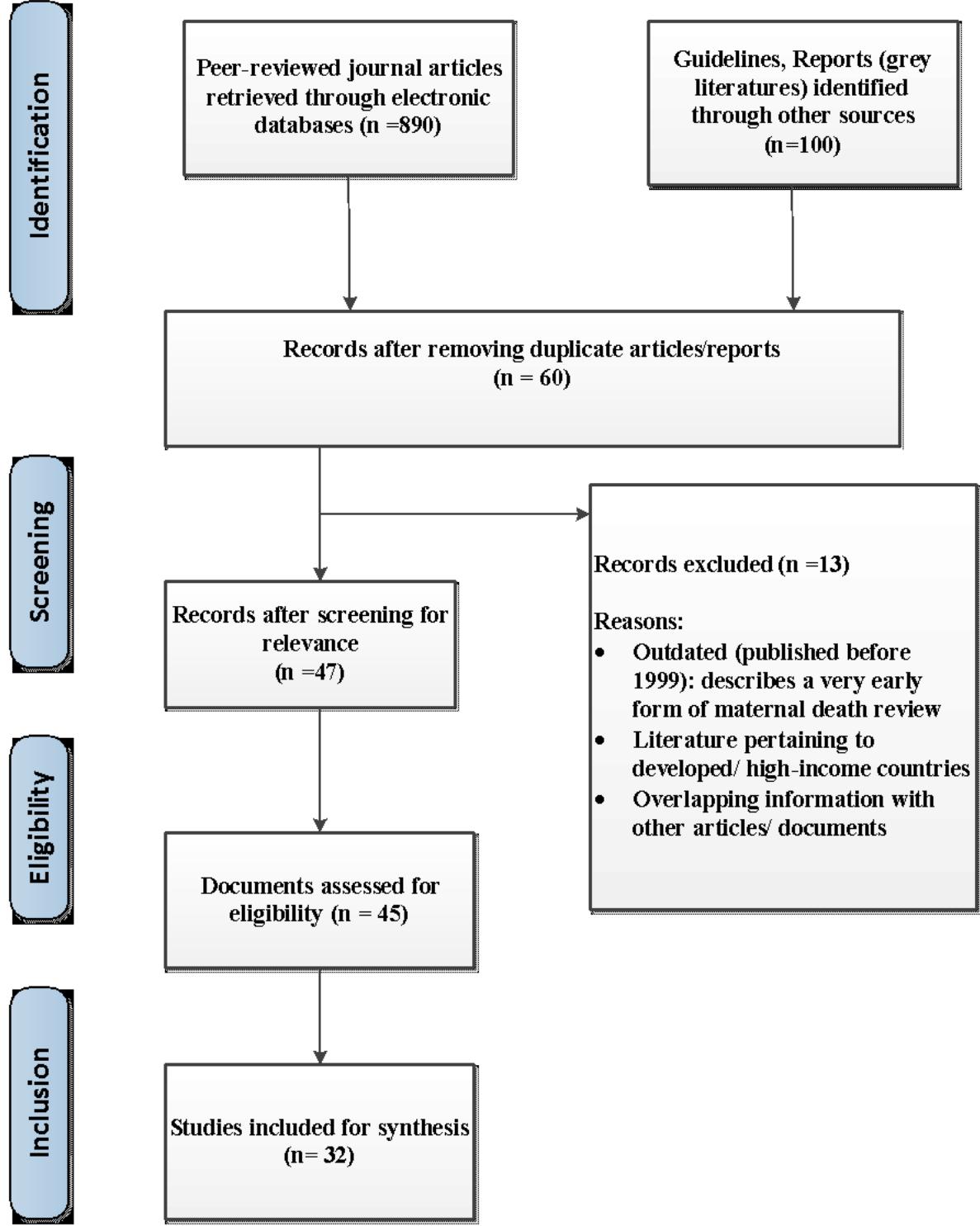 Figure 1: PRISMA Flow Diagram for Review of Articles and Reports
Steps of selecting documents for scoping review Step 1
Based on the inclusion criteria, the scoping review was conducted to understand enablers and barriers of MPDSR in Bangladesh.
Our exclusion criteria included documents published before 1998, studies conducted in high income countries (HICs), published in languages other than English and Bangla and documents with overlapping findings.
Step 2
Through Google Scholar, PubMed and Google, we searched for documents using keywords: ["Maternal and Perinatal Death Surveillance and Review (MPDSR)" OR "Maternal, Perinatal Death Review (MPDR)" OR "Maternal and neonatal death review system" OR "Facility Death Review" OR "Maternal Death Surveillance System" OR "Verbal Autopsies" OR "Social Autopsies] AND ["Implementation factors" OR "enablers, barriers" OR "facilitators, challenges"] AND ["Bangladesh"] Step 3
The search initially identified 990 documents. Screening of the documents were done for duplication and 930 articles and documents were omitted. Additional screening was done to verify whether the remaining documents meet the inclusion criteria or not. Finally, 32 documents were found eligible for review during the study.
Step 4
All documents selected were read thoroughly to understand the enablers and barriers of MPDSR implementation. The review looked into the enablers and barriers of implementation of MPDSR. The findings in terms of search engine, the type of the documents, year of publications and place of study or program, the enablers or facilitators were recorded in an excel sheet.
A study quality checklist was developed to determine the relevancy of conducted studies to MPDSR in Bangladesh and other countries with similar context along with enablers and barriers and recommendation for implementing MPDSR. The results were analysed and presented in the form of tables using MS Excel. Based on the analysis of results, relevant findings like barriers, enablers of MPDSR implementation were gathered.
Ethics approval: This project was approved by the Ethical Review Committee of CIPRB (approval number CIPRB/ERC/2020/08). Though this paper is a review of existing literature and includes no primary data collection from study subjects, we obtained ethical approval as this study was part of a larger implementation research.
III. RESULTS
3.1 Selection of Records
The initial search revealed 890 articles and 100 guidelines. The articles were screened by two reviewers. After removing the duplicates, 60 distinct potential articles/ reports were identified.
Then 47 were identified after screening for relevance and then screened through assessing eligibility. Articles pertaining to other LMICs were excluded (n=32). Finally, 15 articles/ reports that were relevant to Bangladesh only were included through proper synthesis for this study [Figure 1; Table 2]. The selected studies were published between 1999 and 2019 [Table 2]. The findings were synthesized for exploring the enablers and barriers in implementation of MPDSR in Bangladesh.
London Journal of Medical & Health Research Table 2: Summary of Key Studies with MPDSR Enabler and Barrier Domains
| Author | Type | Year | Country | Study design | Enabler domain | Barrier domain | ||||||||
| Community engagement | Availability of guideline, Action Plan | Monitoring & supervision | Engagement of focal person | MPD SR data in DHIS-2 | Delay in death notification | Poor causal analysis | Lack of local level action | Lack of HR/logistics | Lack of coordination | |||||
| Adams A et al (9) | Journal Article | 2015 | Bangladesh | Realist Evaluation | √ | √ | √ | √ | ||||||
| Ministry of Health and Family Welfare (1) | Guide line | 2016 | Bangladesh | Participatory approach to create standardized guidelines and tools | √ | √ | √ | |||||||
| Biswas A et al (15) | Journal Article | 2016 | Bangladesh | Qualitative assessment of documents, observations, focus group discussions, group discussions and in-depth interviews by content and thematic analyses. | √ | √ | √ | |||||||
| World Health Organization (17) | Regional Meeting Report | 2016 | South-East Asia Region | Review of relevant documents, Proceeds from regional meeting | √ | √ | √ | |||||||
| Halim A et al (7) | Journal Article | 2014 | Bangladesh | Mixed method study on cause and factors of maternal mortality in Bangladesh | √ | √ | √ | |||||||
| Biswas A et al (5) | Journal Article | 2015 | Bangladesh | Qualitative study with healthcare providers involved in Facility Death Review: FGDs, IDIs, document review | √ | √ | √ | |||||||
| Biswas A(22) | Book: Doctoral Dissertation | 2015 | Bangladesh | Both quantitative and qualitative methods | √ | √ | √ | √ | ||||||
| Biswas A et al (4) | Journal Article | 2017 | Bangladesh | Progress of MPDR system in Bangladesh, review of existing evidence of maternal and perinatal death review in Bangladesh | √ | √ | √ | √ | ||||||
| Khanam RA et al (21) | Journal Article | 2009 | Bangladesh | Descriptive Study with cross-sectional design | √ | √ | √ | √ | ||||||
| Halim, Biswas A,(24) | Program Report | 2016 | Bangladesh | Progress report on MPDSR implementation and scale-up in Bangladesh | √ | √ | √ | √ | √ | |||||
| Ministry of Health and Family Welfare (30) | Pocket book | 2017 | Bangladesh | Instructions to the frontline healthcare provider for MPDSR implementation steps | √ | √ | √ | √ | √ | |||||
| Biswas A et al. (31) | Journal Article | 2016 | Bangladesh | Economic cost evaluation of death review system in Bangladesh | √ | √ | ||||||||
| Biswas A et al. (3) | Journal Article | 2014 | Bangladesh | Mixed methods study to identify the effects of Maternal and Neonatal Death Review at the community level in Bangladesh. | √ | √ | √ | √ | ||||||
| National Institute of Population Research and Training (NIPORT), International Centre for Diarrhoeal Disease Research, Bangladesh (icddr, b), and MEASURE Evaluation (32) | Survey Report | 2017 | Bangladesh | Survey to assess maternal mortality rates in Bangladesh | √ | √ | ||||||||
| Biswas A et al. (6) | Journal Article | 2018 | Bangladesh | Descriptive review of social autopsy and its role in MPDSR | √ | √ | √ |
3.2 Factors Influencing the Implementation of MPDSR
Based on the evidence available on MPDSR in Bangladesh (Table 2), the scoping review identified important factors (enablers and barriers) of implementation. The major enablers and barriers have been summarized under different levels: community, facility, data flow, both facility and community and national in the following sections:
3.3 Enablers of MPDSR in Bangladesh
Community level: The major enablers included the involvement of the community people (10), high level of commitment from the Community Health Workers (CHWs), support from community-based organizations/ local NGOs (10) and good infrastructure development in previously hard-to-reach areas. To involve the people in the community, awareness was built through social autopsy (SA) – a community meeting discussing on social reasons of maternal and perinatal deaths and ways to prevent them. Moreover, the CHWs acted as important MPDSR has also been implemented in previously hard-to-reach areas like teagardens. A success story involves 35 intervention teagardens of Sylhet Division of Bangladesh. For all maternal deaths in 2019, social autopsies were conducted successfully where 232 participants (105 males and 127 females) attended. Teachers, community leaders, religious leaders, pregnant women and eligible couples participated in these social autopsies. They discussed the social causes of deaths and prepared an action plan to prevent future preventable maternal and neonatal deaths in their community. The local leaders showed their supportin taking steps to reduce maternal and neonatal mortality in the community. The UN agency funding MPDSR in those areas, along with other supporting local NGOs helped in enabling the process with cooperation from the government-assigned focal person in that particular community (7). [Table 3]
Facility level: At the facility level, trained and skilled staff (10) and involvement of interdisciplinary teams (13) supported successful implementation of MPDSR activities. Involvement of nurses, physicians, statisticians helped in accurate reporting of facility deaths among mothers and newborns.
Data flow: MPDSR data has been integrated within the DHIS-2 platform, which helps in informed decision-making and creating action plans by healthcare managers (27) (14). The government has conducted a series of training and motivational programs for capacity building and team work to support all activities starting from death notification followed by entry into DHIS-2; verbal autopsies at household level, social autopsy at community level, facility death review, followed by causal analysis and MPDSR review meetings at upazila and district level for preparing remedial action plan or responses.
Both facility and community: Successful implementation of MPDSR involved a culture of trust and coordination, use and follow-up of Action Plan (1), active engagement of focal person (10) (13) and organized supervision and monitoring(10). One of the key factors that helped in the progress of MPDSR was active engagement of the MPDSR focal person (10), who took the initiative to work in close collaboration with UN agencies and NGOs that provided technical and financial support for local level implementation of MPDSR (13) [Table 3].
National level: Overall, at the national level, the presence of a robust national MPDSR framework and guideline (1), regular monitoring and supervision through video surveillance by QIS(1), regular implementation of national-level TOTs(1) and incorporating MPDSR into national maternal and neonatal health-related policies and Operations Plans (OP) (1), laws-in-progress to ensure death notification (29) and high level of commitment from the government (1). Since the government was highly committed to the SDGs for reducing maternal and neonatal deaths, the MPDSR program was integrated into the Bangladesh national health sector program in 2016 (1). Since then, MPDSR has been widely accepted by national and sub-national level health and family planning policy makers, managers and health care providers as one of the key interventions for reduction of maternal and perinatal mortality. The development partners provided technical support in organizing and developing a system with a robust guideline and framework, those were approved by the government (1). Monitoring and supervision played important role to support and sustain the implementation of MPDSR (1). The Government established a Quality improvement system (QIS) to monitor and assure the quality of MPDSR activities (1). The QIS supported the improvement of MPDSR activities and the outcomes.
3.4 Barriers of MPDSR in Bangladesh
Community level: There were several barriers within the community including underreporting of deaths (15), delay in death notification (DN) (16), delay in conducting VA and inadequacy in identifying the cause of death (4), misinformation (25), lack of cause analysis at the local level (11), no allocation of transportation costs for health workers (17), lack of social action in the community (4) and predominantly male community health workers in the MPDSR steps (16). Ideally, death notification should occur within three days but in hard-to-reach pocket areas this can take up to a month, which increases the chances of error(18). The shortage of manpower at community level and other priority works of the community health workers led to under-reporting and delayed reporting. Moreover, a majority of male health workers being involved in collecting data on maternal health issues often poses a social and cultural barrier (16).
Facility level: At the facility level, review meetings were not conducted as scheduled (26) and staff assigned to MPDSR were overworked (13). Since MPDSR is integrated within the existing health system, it was challenging for the healthcare providers and other staff assigned in the process, to accommodate additional work in their routine.
Data flow: Barriers related to the flow of data included: server issues/ difficulties in data entry (4), lack of separate database for MPDSR (4), error in data entry (4)(11), inadequate use of ICD-10 coding (28), lack of coordination between the national Civil Registration and Vital Statistics and the MPDSR data (23). Another significant challenge identified in Bangladesh, was ensuring the quality of MPDSR data in the DHIS-2. Though the HMIS in Bangladesh made good progressover the years, there remains some gaps in the data. Health workers could not cover his/her catchment area within the stipulated time for death notification or verbal autopsies. MPDSR data was often collected at the field level by the supporting agencies and then entered into DHIS2 by the government-assigned frontline health workers.
Some discrepancies were reported in the number of maternal deaths notified in the field reports of supporting agencies and that entered into the DHIS2 in the year 2019 (18). Technological difficulties related to the DHIS-2 server, computers and internet connections caused difficulty in data entry at periphery by health workers (4).
The quality of the data was also an issue in the process of individual reporting of events. For example, a data retrvied from DHIS reported 0-28 days as the "Age at death" for a maternal death, erroneously reported from a possibleneonatal death. The death analyses data reflected errors. In some cases, causes of maternal deaths were attributed to road traffic accident, violence, chronic respiratory disease, cardiovascular disease or senility, which are not within the definition or scope for maternal death. Review meetings for cause analysis identified deficit in data that results in difficulty in assigning cause of death and inadequate use of ICD-10 coding (28). There were missing data related to verbal and social autopsies. These activities include a travel cost while there is no provision of conveyance allowances for health workers involved in the MPDSR program (17).
Both facility and community: At the level of both community and facility, barriers included inadequate supply of logistics (11), tendency of blaming healthcare providers present during the maternal and perinatal deaths) (12), lack of HR capacity (15) (11), deficiencies in local level action plan (19), lack of refresher training (17), high turnover of human resources (11) and divisional cause-analysis workshops not being conducted as per schedule (26). Moreover, action plans were neither developed nor implemented at local level (19). Therefore, local level strategies and responses to mitigate maternal and perinatal deaths were not adequate (4).
National level: At the national level, national MPDSR committee meeting not held at a regular basis (26), limited monitoring and supervision of the program (10) and inadequate coordination between health and family planning department swere the note worthy barriers.
Table 3: The enablers and barriers of MPDSR implementation in Bangladesh
| Level | Key Enablers | Key Barriers |
| Community level | Aware and engaged community (engaged grassroots)High level of commitment of Community Health WorkersSupport from community organizations/ local NGOsGood infrastructure development in previously hard-to-reach areas | Underreporting of deathsDelay in death notification (DN)Delay in conducting VA and inadequacy in identifying the cause of deathMisinformationLack of cause analysis at the local levelNo provision for conveyance allowances for health workersLack of social action in the communityGender issues (predominantly male community health workers) in the MPDSR steps |
| Facility level | Trained and skilled staffInvolvement of interdisciplinary teams | Review meetings not conducted as scheduledStaff assigned to MPDSR are overworked |
| Data flow | MPDSR data available in DHIS-2 platform helps in informed decision-making and action plans by healthcare managers | Server issues/ difficulties in data entryLack of separate database for MPDSRError in data entryInadequate use of ICD-10 codingNo coordination between the national Civil Registration and Vital Statistics and the MPDSR data |
| Both facility and community | Culture of trust and coordinationUse and follow-up of Action PlanActive engagement of focal personOrganized supervision and monitoring | Inadequate supply of logisticsBlame-game (Tendency of blaming healthcare providers present during the maternal and perinatal deaths)Lack of HR capacityDeficiencies in local level Action PlanLack of refresher trainingHigh turnover of human resourcesDivisional cause-analysis workshop not conducted at a regular basis |
| National level | Presence of a robust national MPDSR framework and guidelineRegular monitoring and supervision through video surveillance by QISRegular implementation of national-level TOTs organizedIncorporating MPDSR into national maternal and neonatal health-related policies and OPLaws-in-progress to ensure death notificationHigh level of commitment from the government | National MPDSR committee meeting not held at a regular basisLimited monitoring and supervision of the programLack of coordination between health and family planning departments |
IV. DISCUSSION
The current scoping review identified the successes in developing an evidence-based framework with well-defined guidelines for implementation of MPDSR as a national program since 2016 till date in Bangladesh. The evidence gathered included successes as well as challenges in implementation. The enablers and barriers in program implementation were also identified and summarized for informing the program improvement activities. Thereview identified a number of challenges in implementation. The maternal and neonatal deaths were not reported properly, timely or sometimes death notification was delayed; health workers working at the field level were not provided financial support for conveyance required during the various stepsof MPDSR implementation. There were inadequate human resources and logistics, irregularity in conducting review meetings for cause analysis, lack of monitoring and supervision of program activities. We have discussed the barriers and enablers of MPDSR in this review paper. The goal was to understand the strengths of the current program to overcome the existing barriers of MPDSR scale-up in Bangladesh.
Despite the reduction in maternal and neonatal deaths over the last two decades, disparities still remain between the high-income and low-and-middle income countries with 99% of maternal deaths occurred in LMICs (17, 32). To reduce this high burden of maternal mortality, most countries with context similar to Bangladesh have implemented a system for reporting and responding to maternal and perinatal deaths, though the nomenclatures and terminologies may slightly differ.
Based on the successful experience of piloting MPDSR in Thakurgaon in 2010, and subsequent expansion in 10 districts of Bangladesh between 2011 and 2015, the acceptability of the program to the community, healthcare providers, and other stakeholders were high (1, 24). Evidence of reduced maternal and neonatal deaths at the local level compelled the government to go forth with a nationwide scale-up starting in 2016. In 2019, DGHS included 16 districts for implementation and 22 districts in the year 2020. MPDSR is now covering 50 districts. UNICEF, UNFPA, Save the Children, WHO and other development partners are supporting the implementation (1, 24).
A study conducted in five South East Asian countries reported that Sri Lanka has an well-structured MPDSR system (17). The mainstay in success was the strength of the health system, coordination and leadership at local level.
In Sri Lanka, maternal deaths has been made notifiable since 1985 within a nation-wide surveillance system and data is shared with CRVS in order to avoid duplication and ensure the accuracy of the data (17). Similarly, Bangladesh has taken the initiative to coordinate MPDSR with CRVS to ensure death registration.
Despite robust guidelines, several barriers were seen at the level of implementation, such as limited number and capacity of human resources and a lack of motivation among staff. An assessment on MPDSR implementation in four sub-Saharan countries: Nigeria, Rwanda, Tanzania and Zimbabwe also identified similar barriers and enablers in implementation (12).
Some of the enablers identified in sub-Saharan countries include interdisciplinary teamwork, good communication among staff and support at both national and subnational levels(10, 11, 12) which have been documented in the current review regarding MPDSR in Bangladesh.
Causal analysis is difficult if data from death review is deficit as documented in implementation experiences in Bangladesh (24). Similar factors were reported in a field action study in Kenya (14). The report further identified that in Kenya underreporting of maternal deaths led to a lower than actual estimate of maternal mortality ration. Only half of the deaths identified were reviewed and the reviewers had difficulties assessing the cause of death, due to lack of proper documentation. Moreover, the resulting actions or responses were limited (14).
Although Bangladesh has made remarkable progress in reducing maternal and neonatal deaths, there are lessons to be learned from countries with a similar context. Bangladesh can learn from the program experiences of Sri Lanka, where maternal death reporting system is linked to the CRVS (17). Moreover, the coordinated effort to report facility deaths and community deaths along with mandatory death review meetings and wide dissemination of causes of death, has reinforced the success of the program in Sri Lanka (17). Based on the findings of our study, policymakers and stakeholders can make informed decisions for supporting the scale-up of MPDSR in Bangladesh.
To our knowledge, this is the first scoping review on MPDSR conducted in Bangladesh. Our scoping review is comprehensive in the inclusion of guidelines, program reports and grey literature through consultation with experts of MPDSR implementation in Bangladesh. However, our study has few limitations: despite our attempt to capture all relevant information related to MPDSR in Bangladesh, some relevant literature may have been missed in the search. Our inclusion criteria excluded obstetric inquiries, confidential inquires and maternal near-miss reviews. The majority of MPDSR-related literature report the outcomes of the intervention rather than documenting the enablers and barriers of the implementation process. Future scoping reviews could look into the outcomes of MPDSR implementation in both developed and developing countries. Further, it would be useful to analyze and program data with outcomes of MPDSR implementation in Bangladesh to understand the progress of the program.
V. CONCLUSION
The current scoping review generated evidence to understand the process of MPDSR implementation in Bangladesh, the current barriers and enablers of the program. Robust national guideline, central and community-level data entry allows death reporting at the field level and informed action at the policy level. The details of the steps involved in the process of implementation are crucial in understanding where bottlenecks exist and what can be done for overcoming them. These steps will be effective in sensitizing policymakers about the current obstacles in the MPDSR process and suggest recommendations for future improvement.
Declarations
Ethics approval and consent to participate
Not applicable.
Consent for publication
All authors have provided consent for publication of this article.
Availability of data and materials:
The data we used in this manuscript can be made available upon request to researchers via Abu Sayeed Abdullah ([email protected]) Competing interests: The authors have no conflicts of interest to declare. The donors did not have any influence on study design, data collection, data analysis or reporting.
Funding: This study was funded by UNICEF.
Authors' contributions
ACKNOWLEDGEMENTS
Not applicable
Conflict of Interest
The authors declare no conflict of interest.
Ethical Approval
Not applicable
Data Availability
The datasets used in this study are openly available at [repository link] and the source code is available on GitHub at [GitHub link].
Funding
This work did not receive any external funding.
References
Cite this article
Related Research


Special Issue
Launch a focused special issue to highlight research, emerging trends, and expert insights in your academic field.
