




IntelliPaper
Abstract
In this paper, we attempt to clarify the concept of open school and to highlight relevant actions and main characteristics. A school can be described as open when a culture of cooperation and mutual trust prevails among students, teachers and parents. Hereby, a pedagogical practice is presented that was implemented in two sections of the 1st class at the 1st Lyceum of Spata, with the aim of a) preventing intra-school violence cases, b) fostering the integration and inclusion of foreign students by looking at common adolescent concerns and problems, and c) strengthening the institution of the family. The action, which took place at the beginning of the 2023-2024 school year and is expected to be completed at the end of January, was accompanied by a sample survey using questionnaires answered by 47 students, 28 teachers and 36 parents. The students were given a questionnaire before and after the action to identify the effects of the pedagogical practice. Of particular interest are the answers to the questionnaire given to the students after the action.
Α part of the action was presented on January 20 at the International conference "learning from the extremes"
Explore Digital Article Text
I. INTRODUCTION
In all the schools I have served so far as a teacher, I observed the behavior of the teenagers and I was particularly troubled by the aggression they display in their relationships with each other and the conflicts they reported having with their parents. The school unit operates interaction with the social environment. It constitutes an open social system with its own members, its social subsystems – the school classes and its own culture (Pasiardis & Pasiardi, 2006, Saitis, 2002). Therefore, the operation of a school unit is affected by the school environment and the relationships that develop among those involved in the educational process.
The school, as an institution of society, aims at the all-round development and formation of the student's personality and his integration into the social system. The open school seeks to develop the humanitarian values and the equality of all people along with solidarity, understanding, acceptance and respect for diversity, the cultivation and development of empathy and emotional intelligence, the sense of individual responsibility and the awareness of people's same problems. The open school educates students through experiential actions and programs in personal and social development skills and functions as a community in which students, teachers and parents are actively involved. The most essential characteristics of the open school are experiential learning, innovative educational actions, creativity, collegiality, cooperation, decision-making, the cultivation of critical thinking and the ability to solve problems effectively.
The culture of the open school aims at the all-round cultivation and development of the students' personality in the context of emotional security, self-esteem, self-respect and respect for fellow human beings. The positive school environment is enhanced through the development, cultivation and strengthening of the school's relationships with parents and the wider local community. A key parameter for strengthening relationships is cultivating a culture of cooperation and mutual trust among students, teachers and parents. We believe that open schools should be seen as catalysts for integrating all elements of schooling into an educational ecosystem fit for the 21st century. (Daniel Ferreira, 2009).
In this work, we present an action/project that took place in two sections of the 1st class of Lyceum, to approach the students and cultivate empathy, acceptance and improvement of their relationships with their family and classmates. Before the start of the activity, a questionnaire was given to the students, to detect any problems with their peers on the one hand, and with their family environment on the other.
Afterwards, in the A3 section, the role of the mother was taught during the first four months of the Literature course through literary texts (prose and poetry), while in the A4 section, respectively, the role of the father. After the teaching phase was completed, the students collaboratively created PowerPoint presentations on the vital elements concerning each person's role. Then, in the context of the Modern Greek Language course, the problems that teenagers face with their parents were discussed and recorded. The school became a meeting place for teachers and children on Friday afternoons. There, the children of the two sections exchanged views on the problems with their parents. Opinions of refugee children were also heard. Gradually, the students began to bond with each other, discovering common concerns that led to a reduction and elimination of conflicts between them. In addition, the students, cultivating their empathy and understanding the most significant difficulties of the refugee children, embraced them with love and fully accepted them. Friday afternoons became a favorite habit for the students. Then, with the consent of the students, we organized an event in which the school psychologist talked and advised parents on the relationship changes of their children during adolescence. The children, with the guidance of the psychologist, listened to the concerns and fears of the parents and understood their parents' perspectives. After the completion of the action questionnaires were given to the students, parents and teachers to detect the results of the action.
Afterwards students enriched the PowerPoint presentations they had initially created in Literature class with experiential elements and interviews of children and parents. At the end of the school year, there was a drastic reduction in intra-school violence and conflicts among the students of the two sections, acceptance and inclusion of refugee students, improvement of family relations, strengthening of family ties and development of friendship among students.
II. THEORETICAL REVIEW
2.1 Intra-School Violence - School Bullying
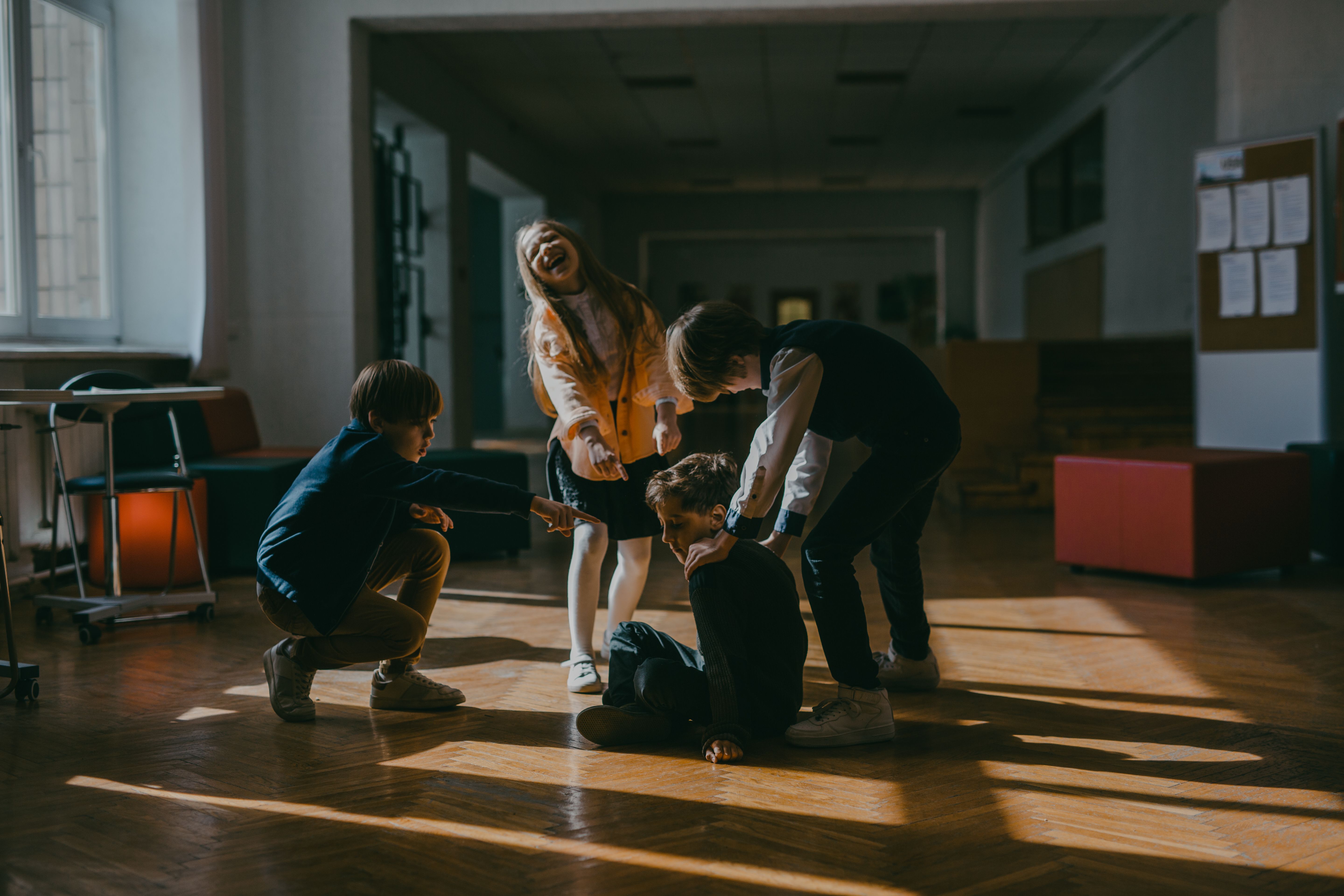
"Gender, racism, xenophobia, family environment, low academic performance, the education system, the origin of students (socially excluded groups, or minorities) are some parameters that lead to the appearance of violence and delinquency" (Artinopoulou, 2001, p. 9). With the terms "intra-school bullying" and "intra-school violence" we describe a repeated situation of abuse of a person within the school (Kourkoutas & Kokkiadis, 2015, p.60). The forms of violence and bullying observed in the school environment are physical violence, verbal violence, social bullying and electronic bullying.
Attendees of violent incidents that can occur within a school unit are student observers and adult observers. The role of those people who are present or have knowledge of the existence of the problem is significant, as their indifference and lack of response strengthens and encourages the abuser. On the contrary, their reaction and mobilization can significantly help in dealing with such situations (Estebanet et al., 2020).
In recent years, there has been an alarming increase in incidents of school violence and delinquency (Karakatsani, 2023). These incidents not only endanger the safety and well-being of students but also create a psychological discomfort (fear and anxiety) hindering the learning and development of students (Bravo-Sanzana, M., Bangdiwala, S. I., & Miranda, R. (2022); Ferrara et al., 2019). The phenomena of school violence and delinquency have severe effects on the physical and mental health of children and for this reason the need to immediately recognize the problem and take appropriate measures to prevent and deal with it becomes imperative.
2.2 Marginalization of Foreign Students - Racist Attitudes
Racism and xenophobia are social phenomena that significantly affect all aspects of social life. Also, in school life, these two phenomena appeared in school classrooms, affecting both the outcome of the educational process and the formed perceptions of the students (Kardamilioti, 2019). The continuous integration of foreign students into school classes leads to integration problems that favor social segregation. In the vast majority of schools in Greece, some children are "different" in terms of origin, color, language, morals and customs, values and ideas, etc. It is those children who primarily fall victim to direct or indirect racism and marginalization. (Maniatis, Nikolaou, Papadopoulos, 2010). In several cases, this racism is expressed through physical violence, threats, abusive comments, or verbal violence. Racism, however it appears, affects psychologically and without exception, the perpetrator, the victim, witnesses and society as a whole. Especially in the case of the victim, intense discomfort, stress, and a feeling of inferiority are created, which have devastating consequences both for the person himself and for his family and school environment.
The constant changes and otherness that characterize modern society highlight acceptance, inclusion, respect and "education for all", critical characteristics of the open school, as the primary pursuit of the school. As the student population in Greek schools shows heterogeneity and shows a wide range of differences, it is essential to create a positive school atmosphere, which provides a safe environment and allows all students to express themselves and make use of their unique abilities, skills, experiences and their cultural capital.
The educational system, each school unit, and each teacher must make every possible effort to alleviate social discrimination and combat exclusions.
2.3 Adolescent-Family Relationships
Adolescence is a period of significant changes and challenges for the individual, mainly accompanied by the search for autonomy and identity. It is the developmental stage characterized by alternating and possibly dysfunctional transitions (Cook, T. D., & Furstenberg, F. F., Jr. (2002)). During children's adolescence, roles in the family are redefined, teenagers become independent, and parents have to accept this fact. Adolescents mature, acquire their thinking, reflect, have their ideas and opinions and want to make their decisions about their lives. Often parents are hurt, worried, anxious, upset or confused because they don't know how to behave. Parents are not always ready to accept that their child is growing up. They worry about their child's school performance and socialization, the dangers the child might encounter while it prefers to stay away from their protection, and they refuse to give enough freedom.
The behavior of parents is directly influenced by the behavior of teenagers. Parents, not knowing how to manage the adolescent's behavioral changes, want to gain control. To do this, they shout, criticize, and command the teenager. The result of this behavior is an increase in tension between parents and teenagers. Frictions and conflicts are created and this has as a result that teenagers feel alone and parents excluded from their child's life. The lack of communication leads to unpleasant feelings on both sides, and a vicious circle is created. The more the teenager closes in on himself, the more the parents react, and the more they react and shout, the more they withdraw.
2.4 The Open School
The open school can be the rallying pole of the social fabric. It is an essential point of reference for the student for the development of a coherent identity, taking care of his concerns, aspirations and interests, his relationship with his peers, his parents, teachers, the world, and the local community (Anttila & Vaananen, 2013).
The open school responds to modern social challenges, aims to instill in students' humanitarian values, the value of participation, cooperation, respect, acceptance of diversity, empathy, solidarity and democracy. Mulford and Silius (2001) state that the opening of the school to the local community contributes to a large extent to the strengthening of the ties of the school with the environment to which it belongs. This is achieved through educational activities that are implemented within the standard curriculum through interdisciplinary creative projects, but also beyond that, with semi-formal and informal school practices through innovative programs (Cultural, Environmental Education, Health Education, Career Education, etc.) and other activities, such as meetings, speeches, exchange of views, etc. The open school is a local versatile center, a center of knowledge and culture, utilizing its infrastructure not only for the educational needs of students, but also for cultivating their communication and social skills, inclinations and talents. However, it is worth mentioning that the creation of long-term and close relationships among schools, families, and the local community is an area of research that has been of great concern to researchers, mainly because no guide provides instructions and guidelines regarding forging bonds for these relationships.
The open school educates its students through experiential actions and programs in personal and social development skills, such as respect, adaptability, the ability to communicate effectively and resolve disputes peacefully. It is the school that functions as a community in which students, teachers and parents are actively involved. In the open school, through experiential actions, equality and trust, dropout, marginalization, exclusion, and violence are combated.
Learning in an open school is not limited to the development of skills related only to the typical school environment, but also extends to those related to everyday life experience (life skills). Elements of personal development are integrated into the school program and teaching methodology, which strengthening the student's self-awareness and awareness of the school and broader social environment. In particular, the development of skills such as the ability of planning and plan actions, the ability to process alternative solutions, creative participation in a group and the use of multiple sources of information is pursued. Overall, what is aimed for is the development of skills related to communication and interpersonal relationships, as well as practical problem management.
In this direction, the school is open to the society, the theoretical courses are matched with experiential intra-school and extra-curricular activities integrated as a natural course into the whole of school life.
III. RESEARCH METHODOLOGY
The aim of the present action was to mitigate incidents of violence at school, to promote the inclusion and assimilation of foreign students into the student community and to strengthen family ties.
-
At the beginning of the activity, a questionnaire was given to the students of the two sections, in order to detect their relationship with their peers and their relationship with their parents.
-
Afterward, poems and short stories by Greek and foreign Poets and Writers were taught within the timetable, which related to the role of the mother, and the father.
-
The mother, George Vizyinos (A3)
-
And God made the mother, Paolo Coelho (A3)
-
My house, Dido Sotiriou (A3)
-
The father, Maria Kentrou- Agathopoulou (A4)
- Following the completion of the teaching process, meetings were organized at the school every Friday afternoon with the teachers who participated in the activity in question and the students of the two sections.
In these meetings, the students exchanged opinions, listened carefully to the problems and concerns of their classmates, and tried together-with the guidance and encouragement of the teachers - to find solutions to their everyday problems. During this process, the children's relationships were strengthened and improved. Furthermore, the assimilation of foreign students into the student community and the "friendship" of their peers began.
-
Considering that six meetings had taken place, the school psychologist was invited to help the students further, to improve their relationships with each other, but also to discuss what concerns them about their relationships with their parents.
-
At the urging of the psychologist and with the consent of the students, the parents were also invited to the Friday meetings. Fruitful dialogues occurred among the students, parents, teachers, and psychologist in a positive atmosphere. Parents were also allowed to express their anxieties, concerns, and worries about their relationship with their children.
-
Following the completion of the meetings, which amounted to 12, a questionnaire was given to the students, the teachers of the two sections and the parents, to determine whether the objectives of the action were achieved.
In the questionnaires, the collected data were statistically processed using Excel.
3.1 The Survey Sample
-
47 students of the 1st Grade of Lyceum, recisely 23 students of section A3 and 24 students of section A4
-
28 teachers who teach in the two sections and
-
Thirty-six parents who attended the in-school meetings on Fridays.
3.2 Presentation - Analysis - Discussion of the Results
Since the action is to be completed at the end of February 2024, i.e. in three weeks from the moment this paper is being written, the questionnaires have not been fully processed, the demographic data of the teachers and parents have not yet been processed, nor the gender and the students' country of origin. In this paper, only the quantitative data of the students', teachers' and parents' responses will be presented, and interpreted.
Student questionnaire (before the action)
| NOT AT ALL | MODERATE | VERY MUCH | ||
| 1 | Do you like your classmates who come from another country? | 25% | 32% | 43% |
| 2 | Have you noticed incidents of violence at school? | 4% | 45% | 51% |
| 3 | Have you been a victim of violence at school? | 34% | 26% | 40% |
| 4 | Do you feel marginalized? | 34% | 21% | 45% |
| 5 | Are there students who are marginalized? | 21% | 21% | 58% |
| 6 | Do you ever think that some of your classmates might feel really bad at school? | 40% | 32% | 28% |
| 7 | Do you enjoy coming to school? | 64% | 25% | 11% |
| 8 | Do you often clash with your parents? | 0 | 17% | 83% |
| 9 | Do you think your parents are overreacting? | 0 | 11% | 89% |
| 10 | Do you think you can improve your behavior towards your parents? | 64% | 36% | 0 |
{"image_source":{"path":"images/3afea67f29edd10677908c8a01c5f88986411785524d0399c8a23e4fab15066e.jpg"},"content":"","chart_caption":[],"chart_footnote":[{"type":"text","content":"Before the beginning of the action - based on the principles of the open school - a questionnaire was given to the students of sections A3 and A4, to detect the relationships among them and the relationships with their parents. More than half of the students (57%) answered that they do not like at all or like a little their classmates from other countries. A significant concern was caused by the fact that 96% of students have witnessed violent incidents at school, while 66% have themselves been victims of verbal or physical violence. Most"},{"type":"text","content":"students in both sections feel marginalized, whereas 40% do not care how their classmates think. It is worth emphasizing that only 11% of students come to school with a feeling of enjoyment. Regarding their relationship with their parents, they all stated that they often clash and that they consider them to be excessive in their reactions. Finally, 64% of the students claimed they cannot change their behavior towards their parents."}]}
Student questionnaire (after the action)
| NOT AT ALL | MODERATE | Very much | ||
| 1 | Do you like your classmates who come from another country? | 4% | 11% | 85% |
| 2 | Has school violence decreased? | 4% | 21% | 75% |
| 3 | Do you feel marginalized? | 77% | 17% | 6% |
| 4 | Did you feel closer to your classmates when you found out that you have common problems and concerns? | 4% | 17% | 79% |
| 5 | Do you enjoy coming to school? | 4% | 21% | 75% |
| 6 | Were you moved by the poems and texts you were taught? | 4% | 13% | 83% |
| 7 | Have you ever wondered about the role of your parents in your life? | 4% | 11% | 85% |
| 8 | Did you justify their reactions? | 0 | 26% | 74% |
| 9 | Do you think your relationship with your parents has improved? | 2% | 23% | 75% |
| 10 | Would you participate in a similar action again? | 4% | 4% | 92% |
{"image_source":{"path":"images/3d34f0105416992a3ec1fef0aa79a52d7ef8effe6aae590ae818fd0b19df0c29.jpg"},"content":"","chart_caption":[],"chart_footnote":[]}
Through this activity, the students raised awareness by discussing and exchanging opinions, concerns, and worries. The children who reacted violently understood the impact their behavior had on those who were victims of their anger, resentment, or frustration, and all together found out that they faced common problems and concerns.
Understanding the common problems and also the effects that has an expression of violent behavior, mitigated the differences of the students and almost eliminated the incidents of violence in the school area. Moreover, the cultivation of a spirit of cooperation among students with an emphasis on the value of acceptance of diversity, dialogue, and the peaceful resolution of differences in daily intra-school and extra-curricular life helped, on one hand, to eliminate the phenomena of violence, on the other hand to accept the diversity, inclusion and the assimilation of foreign students into the school community.
The students realized that they must coexist harmoniously with people of different nationalities, different races, different economic possibilities, etc. They became familiar with diversity and showed respect towards all their classmates and fellow human beings. Through this specific action, which was based on the principles of the open school, an environment of sincere acceptance and respect was created. In this atmosphere, we hope to build real friendships and shape people receptive to diversity. It is worth emphasizing that now 96% of students come to school with a feeling of enjoyment.
Through the teaching of poems and texts, through the discussion with their peers and with the help of the teachers and the psychologist, the teenage students, developed their empathy, which resulted in understanding the anxiety and concerns of their parents about the desire for absolute independence. On the other hand, the parents realized that their children had grown up and it was time to use everything they had been taught with love and hope for many years. This realization helped parents to cope better with the fact that their children are now on the route to becoming self-sufficient and well-rounded adults. According to the results of the questionnaires, healthy emotional communication was established in the parent-adolescent relationship with active listening, empathy, and the avoidance of criticism from both sides. The vast majority of parent-adolescent relationships are now governed by elements of respect, trust and acceptance, because any tension and challenges that characterize the teenage period are now dealt with directly and through dialogue. It is worth mentioning that the psychologist's contribution was particularly important as the students found significant help and guidance during the intense conflict situations they experienced.
Teachers' questionnaire (after the action)
| NOT AT ALL | MODERATE | VERY MUCH | ||
| 1 | Have you noticed tension in the relationships of the students of sections A3 and A4? | 7% | 7% | 86% |
| 2 | Have you found foreign students to be marginalized? | 0 | 36% | 64% |
| 3 | Have you used time of your class to resolve differences and conflicts that have arisen among students? | 21% | 0 | 79% |
| 4 | Have you witnessed incidents of violence at school? | 4% | 39% | 57% |
| 5 | Do you know the action that took place at school? | 4% | 18% | 78% |
| 6 | (During the action) Did you notice an improvement in the relationship among the students of the two sections? | 7% | 21% | 72% |
| 7 | (During the action) When they entered the classroom after recess, were they upset over the dispute they had among them? | 68% | 25% | 7% |
| 8 | (During the activity) Did you find integration of the foreign students into the company of their classmates? | 4% | 25% | 71% |
| 9 | (During the action) Did you see a reduction of incidents of violence at school? | 4% | 21% | 75% |
| 10 | Do you think that the action contributed to improving the school environment? | 7% | 11% | 82% |
TEACHERS' QUESTIONNAIRE AFTER THE ACTION
{"image_source":{"path":"images/a6d03b6a1a2ccf5c472ba58047ff3a18734645f92571f3726219e2e7debd2d93.jpg"},"content":"","chart_caption":[],"chart_footnote":[]} In the questionnaire given to the teachers after the completion of the action, most (96%) reported that they had witnessed incidents of violence at school, and that they had seen many times (86%) tension among the students of the two sections. In addition, many teachers responded that they had taken several teaching hours from their course to try to appease students' conflicts. 96% of the teachers were aware of the action that took place in the school and claimed that it contributed to the improvement of student relations, the improvement of the school environment, the drastic reduction of incidents of violence and the inclusion of foreign students in the student community.
Parents' questionnaire (after the action)
| NOT AT ALL | MODERATE | Very much | ||
| 1 | Has your child reported an incident of violence at school? | 5% | 64% | 31% |
| 2 | Do you think your child is marginalized at school? | 28% | 28% | 44% |
| 3 | Have you ever spoken to a teacher about an incident or delinquency in which your child was involved? | 22% | 72% | 6% |
| 4 | Do you feel safe sending your child to school? | 5% | 39% | 56% |
| 5 | Do you know the action that took place at school? | 0 | 33% | 67% |
| 6 | Has your child reported an improvement in the school environment? | 6% | 22% | 72% |
| 7 | Did you benefit from your participation in the action? | 0 | 14% | 86% |
| 8 | Have you noticed milder reactions in your child? | 5% | 28% | 67% |
| 9 | Has your relationship with your child improved? | 6% | 22% | 72% |
| 10 | Do you think that the activity helped to improve your relationship with your child? | 6% | 22% | 72% |
PARENTS' QUESTIONNAIRE AFTER THE ACTION
{"image_source":{"path":"images/b6c4d4c0717badd7711b29712ea61a16bc86f850ea5332b56fd9c8fd68abdb6e.jpg"},"content":"","chart_caption":[],"chart_footnote":[]}
A questionnaire was also given to the parents at the end of the action, from which exciting information was gathered. Most parents (95%) reported that they had heard from their children about incidents of violence at school, while 72% of parents considered their children to be marginalized. On a favorable site, 95% of parents felt safe sending their child to school. Regarding the action, within the framework of the principles of the open school, on one hand, all parents were informed from the beginning of the school year, on the other hand, they actively participated in it. 94% of parents responded that their children reported an improvement in the school environment and the relationships with their classmates. All parents also reported that they gained many benefits from their active involvement and participation in this activity. Finally, most parents (90%) answered that their relationships with their children improved, because of milder reactions and considered this change to be due to their participation in the open school project.
IV. EXTENSION OF THE RESEARCH
The implementation of the principles of the open school and the opening of the school on Friday afternoons made the students treat the school as a place familiar and pleasant and not as a place stressful and unfriendly.
The action was considered quite successful, having achieved the initial goals set, namely reducing violence at school, including foreign students, and strengthening family ties. For these reasons, it is proposed to implement similar programs, based on the principles of the open school, in all classes and sections. A small part of the action that concerns only the texts taught and the relationships of the teenagers with their parents, will be presented at the 1st student conference of the Secondary Education of Eastern Attica on April 12-14, 2024, giving a step this way to the students to express their views on the action. Finally, the action aroused the interest of the Local Government and the Municipal Authorities, and it was proposed to be implemented in other schools in the area.
APPENDIX
Questionnaires
Questionnaire for the students of sections A3 and A4 (before the action) (47 students)
Gender
(Answer by putting one in the corresponding box)
| Boy | |
| Girl |
Part II: Opinion Questions
| 1= Not at all2= Moderate3 = Very much | Not at all | Moderate | Very much _ | |
| 1 | Do you like your classmates who come from another country? | 1 | 2 | 3 |
| 2 | Has school violence decreased? | 1 | 2 | 3 |
| 3 | Do you feel marginalized? | 1 | 2 | 3 |
| 4 | Did you feel closer to your classmates when you found that you have common problems and concerns? | 1 | 2 | 3 |
| 5 | Do you enjoy coming to school? | 1 | 2 | 3 |
| 6 | Were you moved by the poems and texts you were taught? | 1 | 2 | 3 |
| 7 | Have you ever wondered about the role of your parents in your life? | 1 | 2 | 3 |
| 8 | Did you justify their reactions? | |||
| 9 | Do you think your relationship with your parents has improved? | 1 | 2 | 3 |
| 10 | Would you participate in a similar action again? | 1 | 2 | 3 |
Questionnaire for the students of sections A3 and A4 (after the action) (47 students)
Gender:
(Answer by putting one X in the corresponding box)
| Boy | |
| Girl |
Part II: Opinion Questions
| 1= Not at all2= Moderate3 = Very much | Not at all | Moderate | Very much- | |
| 1 | Do you like your classmates who come from another country? | 1 | 2 | 3 |
| 2 | Has school violence decreased? | 1 | 2 | 3 |
| 3 | Do you feel marginalized? | 1 | 2 | 3 |
| 4 | Did you feel closer to your classmates when you found that you have common problems and concerns? | 1 | 2 | 3 |
| 5 | Do you enjoy coming to school? | 1 | 2 | 3 |
| 6 | Were you moved by the poems and texts you were taught? | 1 | 2 | 3 |
| 7 | Have you ever wondered about the role of your parents in your life? | 1 | 2 | 3 |
| 8 | Did you justify their reactions? | |||
| 9 | Do you think your relationship with your parents has improved? | 1 | 2 | 3 |
| 10 | Would you participate in a similar action again? | 1 | 2 | 3 |
Questionnaire for the teachers of classes A3 and A4 (after the action) (28 people)
A. Demographics
Please mark a √ in the information that concerns you:
1. GENDER: Male Female
2. AGE: ____
3. YEARS OF SERVICE: ____
4. EMPLOYMENT RELATIONSHIP:
Permanent Substitute Hourly
5. SPECIALTY: ____
6. LEVEL OF EDUCATION:
Basic degree Postgraduate Ph.D
B: Questions Expression of Opinion
| 1= Not at all2= Moderate3 = Very much | Not at all | Moderate | Very much | |
| 1 | Have you noticed tension in the relationships of the students of sections A3 and A4? | 1 | 2 | 3 |
| 2 | Have you found foreign students to be marginalized? | 1 | 2 | 3 |
| 3 | Have you taken hours of your class to resolve differences and conflicts that have arisen among students? | 1 | 2 | 3 |
| 4 | Have you witnessed incidents of violence at school? | 1 | 2 | 3 |
| 5 | Do you know the action that took place at school? | 1 | 2 | 3 |
| 6 | (During the action) Did you notice an improvement in the relations among the students of the two sections? | 1 | 2 | 3 |
| 7 | (During the action) When they entered the classroom after recess, were they upset over the dispute they had among them? | 1 | 2 | 3 |
| 8 | (During the activity) Did you find integration of the foreign students into the company of their classmates? | 1 | 2 | 3 |
| 9 | (During the action) Did you see a reduction of incidents of violence at school? | 1 | 2 | 3 |
| 10 | Do you think that the action contributed to improving the school environment? | 1 | 2 | 3 |
Questionnaire for the parents of sections A3 and A4 (after the action) (36 parents)
A. Demographics
Please mark a √ in the information that concerns you:
1. GENDER: Male Female
2. AGE: ____
3. EDUCATION:
Municipal High School High School University
4. WORK:
Unemployed Private sector Public sector
Self-employed
5. GENDER OF YOUR CHILD: Boy Girl
B. Questions Expression of Opinion
| 1= Not at all2= Moderate3 = Very much | Not at all | Moderate a | Very much _ | |
| 1 | Has your child reported an incident of violence at school? | 1 | 2 | 3 |
| 2 | Do you think your child is marginalized at school? | 1 | 2 | 3 |
| 3 | Have you ever spoken to a teacher about an incident or delinquency in which your child was involved? | 1 | 2 | 3 |
| 4 | Do you feel safe sending your child to school? | 1 | 2 | 3 |
| 5 | Do you know the action that took place at school? | 1 | 2 | 3 |
| 6 | Has your child reported an improvement in the school environment? | 1 | 2 | 3 |
| 7 | Did you benefit from your participation in the action? | 1 | 2 | 3 |
| 8 | Have you noticed milder reactions in your child? | 1 | 2 | 3 |
| 9 | Has your relationship with your child improved? | 1 | 2 | 3 |
| 10 | Do you think that the activity helped to improve your relationship with your child? | 1 | 2 | 3 |
Conflict of Interest
The authors declare no conflict of interest.
Ethical Approval
Not applicable
Data Availability
The datasets used in this study are openly available at [repository link] and the source code is available on GitHub at [GitHub link].
Funding
This work did not receive any external funding.
References
Cite this article
Related Research



Special Issue
Launch a focused special issue to highlight research, emerging trends, and expert insights in your academic field.
