




IntelliPaper
Abstract
Evangelical activism has used moral repertoires to legitimize or delegitimize nationwide political processes, capitalizing on conservatism anchored in all social strata. The gender approach, the recognition of diverse sexualities and the democratization of rights to marginalized groups have become major annoyances for leaders of the largest Pentecostal and Neo-Pentecostal churches, who see in these issues a great risk for the maintenance of the traditional family, but at the same time, one of the resources to be used in electoral environments, with greater or lesser adherence, according to the interests of the moment. The Colombian plebiscite for peace became one of the scenarios that made the intersectionality between politics, religion, and gender widely visible as one of the cases, among many, in Latin America.
Explore Digital Article Text
I. INTRODUÇÃO
No século XXI, abordar o fenômeno religioso na América Latina, desde vários campos sociais, torna-se além de necessário um desafio constante, pela heterogeneidade tanto dos agentes, das pautas e das repercussões no âmbito público. Paulatinamente, nesta região, as instituições religiosas e mesmo as práticas individuais têm mostrado que a modernidade se desenvolve junto com o pluralismo religioso, e que crenças e doutrinas ao invés de se confinar meramente ao espaço privado, cada vez ocupam um lugar mais destacado na tomada de decisões que abrangem a sociedade toda.
O cristianismo é a religião com maior filiação na América Latina. Nas últimas décadas, o segmento evangélico disputou os privilégios da Igreja Católica e até conseguiu se posicionar como uma força política, especialmente, em entornos eleitorais e no desenho de políticas públicas relativas à moralidade normativa. Muito tem se passado desde a chegada das primeiras missões pentecostais estadunidenses no século XIX, até a instauração de igrejas locais nos anos 1980, dirigidas por pastores nacionais, que apesar de iniciarem como pequenos locais austeros localizados nas periferias, pouco a pouco foram construindo capital simbólico, financeiro e político.
Vários desses reduzidos lugares de congregação, além de produzir sujeitos religiosos, formaram sujeitos políticos, com o intuito de conquistar espaços considerados seculares. Com o tempo, essas igrejas conseguiram se tornar não apenas lugares de ampla reunião, com custosas infraestruturas, mas também em instituições religiosas de influência transnacional. Alguns dos aspectos que ajudaram nessa empreitada de crescimento econômico foram a doutrina baseada na Teologia da Prosperidade, que salienta a benção de bens materiais, pelo esforço individual, os dízimos e os benefícios concedidos por parte do Estado, como o não pagamento de impostos, bem como o corporativismo e a venda de bens simbólicos. No campo político, alguns dos pastores mais ativistas, mediante acordos programáticos partidários, ativa participação em entornos eleitorais e campanhas morais, pouco a pouco, conseguiram poder de negociação com a política tradicional e as barganhas necessárias para ocupar instâncias governamentais. É preciso lembrar que segmentos de diversas correntes religiosas são ativos politicamente e que, inclusive, alguns defendem pautas progressistas, porém os mais visíveis e com maior destaque são as lideranças conservadoras de cunho evangélico, pentecostal e neopentecostal.
O conservadorismo ancorado na sociedade, as crises políticas e de representação, bem como os perversos efeitos da avançada neoliberal nas classes menos favorecidas, configuraram cenários propícios para o auge do ativismo político evangélico conservador. A mobilização desses grupos afiançou a ponte entre política e instituições religiosas, através da difusão de repertórios morais, tais como a defesa da família tradicional, a rejeição à ampliação de direitos para grupos populacionais não normativos, a recusa do enfoque de gênero e das liberdades sexuais. Esses quesitos são alguns dentre muitos outros, promovidos num contexto de avanço progressista, por parte de movimentos sociais, que favorecem a democratização de direitos a comunidades marginalizadas, o que incomodou a segmentos conservadores.
As lideranças conservadoras das maiores igrejas evangélicas, ora como independentes, ora através de suas organizações políticas ou em aliança com partidos tradicionais, têm influenciado na correlação de forças estatais e inclusive ajudado a definir contendas eleitorais. Um dos casos que representa esse panorama, com semelhanças e diferenças aos já vistos na América Latina, possui como denominador comum a interseccionalidade entre religião, política e moralidade. O plebiscito pela paz na Colômbia, em 2016, evidenciou o impacto dos repertórios morais nesse processo político de abrangência nacional e internacional.
A pergunta inicial que suscita essa questão é de que forma se associou moralidade, enfoque de gênero e o processo de paz colombiano. O que pareceria em princípio difícil de compreender pela aparente distância entre um assunto e outro, foi o que precisamente se tornou o mecanismo de proselitismo para deslegitimar a consulta popular que visava ratificar os acordos de paz perante a sociedade.
Claramente, as circunstâncias, os agentes e os interesses envolvidos nesse processo foram variados, porém destaca-se neste texto as campanhas que empreenderam grupos evangélicos em oposição ao processo de paz. Essa perspectiva permite encontrar contrastes e analisar os contrapontos da agenda programática desse segmento e a forma como se mobilizam de acordo com o contexto e com os interesses do momento.
A controvérsia e consequente problema público gerado a partir de visões de mundo transcendentes nos antagonismos políticos, referenciam um dos temas estruturais da política contemporânea que envolve religião, moralidade, sexualidade, gênero e política. Este texto tem como intuito se aproximar a essa discussão a partir da mobilização evangélica durante o plebiscito pela paz, que pautou o gênero, a família e a diversidade sexual, como temas contrários ao bem-estar da sociedade, deixando os acordos como apenas uma estratégia para introduzir um regime sexual na sociedade, considerado adverso às leis naturais. Em decorrência disso, organizaram-se campanhas espalhadas por todo o território nacional, como contraparte às manifestações nacionais convocadas pelos movimentos sociais que apoiavam o plebiscito.
II. O PLEBISCITO PELA PAZ
Colômbia é o país sul-americano com as guerrilhas mais antigas do continente, tornando essa presença insurgente um dos problemas estruturais tanto local quanto regionalmente. Certas tentativas de aproximação aos diálogos de paz por parte de alguns governos com esses grupos não tiveram uma boa resolução pela multiplicidade de interesses envolvidos. Depois de duas décadas de guerra contrainsurgente, estimulada pelo ex-presidente Álvaro Uribe Vélez, o governo de Juan Manuel Santos, em 2012, decidiu conversar com as Forças Armadas Revolucionárias de Colômbia, FARC.
Os diálogos de paz tiveram seus altos e baixos, mas avançaram num contexto de incertezas e de oposição. Depois de 4 anos de conversações e feitos os acordos, em 2016, o presidente Santos determinou levar esses acordos para serem ratificados e legitimados mediante consulta popular, através de um plebiscito. Era a primeira vez que essas aproximações chegavam até esse nível de proximidade para uma saída negociada ao conflito interno.
Apesar de que a sociedade pedia viver em um país em paz, paradoxalmente, os resultados do plebiscito foram contrários a essa vontade. Esse mecanismo de participação cidadã, que pretendia impulsionar os acordos de paz pela via democrática foi derrotado nas urnas com uma pequena porcentagem de diferença entre o sim e o não, mas suficiente para deslegitimá-los.
O plebiscito considera-se um instituto democrático e participativo, consistindo na consulta ao povo para decidir sobre matéria relevante a ser legislada. A questão é que algumas vezes o plebiscito torna-se uma ferramenta utilizada para legitimar decisões, cujo custo político não quer ser administrado pelos detentores de cargos eletivos, e optam pela consulta para calcular perdas futuras, em caso de insucesso ou de resultados prejudiciais a determinados temas.
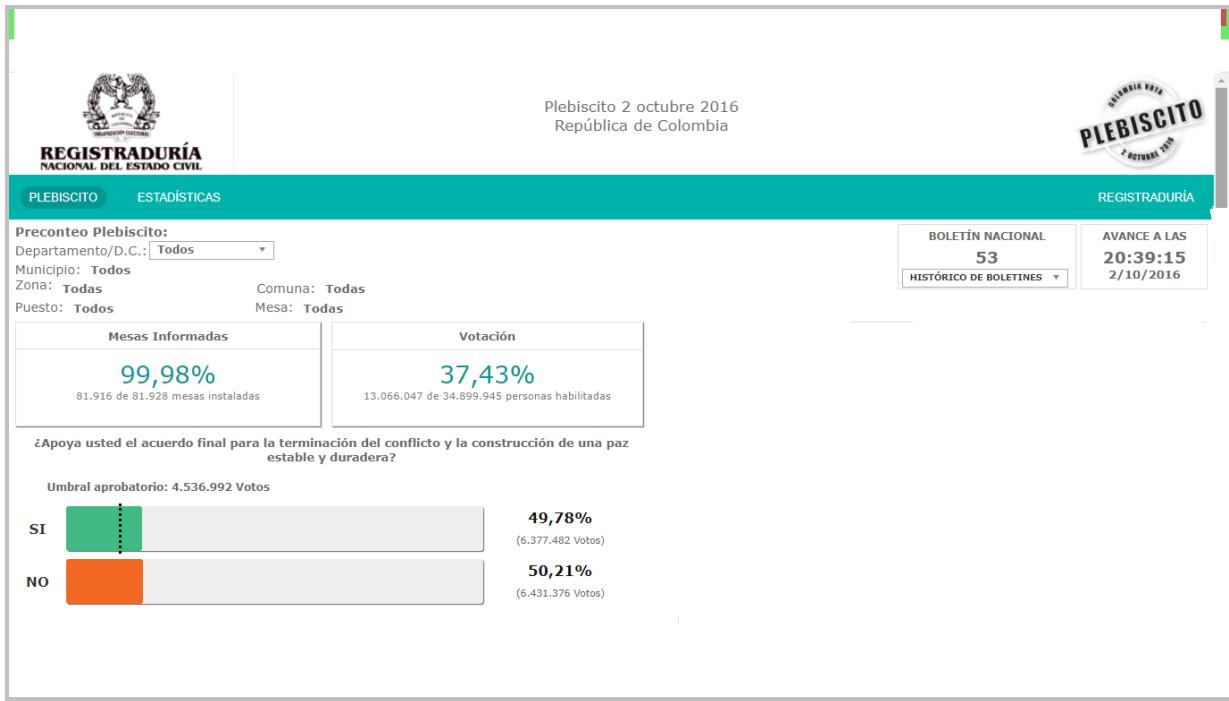 Resultados das votações Fonte: Registraduría Nacional del Estado Civil
Não obstante, perante a importância do que estava em jogo, o presidente da época decidiu buscar essa aprovação via legislativa, aproveitando o apoio que tinha nessa instância.
Essa aprovação indignou ainda mais aos segmentos populacionais que votaram contra o plebiscito, levando-os a prosseguir seus discursos de rejeição até o dia de hoje.
 Material de campanha contra o plebiscito Fonte: MUELLE, 2017, p.188 As negociações de paz suscitaram amploativismo pelos interesses que envolviam, e se agudizaram quando esse processo se vinculou à chamada "ideologia de gênero". Essa relação que em princípio parecia totalmente desconectada, os segmentos conservadores religiosos conseguiram articulá-la com retóricas atreladas à ameaça comunista, ao desaparecimento da família e à deturpação da sociedade pelo fato dessas negociações incluírem a perspectiva de gênero, que, no fundo, tinha como finalidade reconhecer as diversas vítimas do conflito que sofreram violências devido a uma guerra sem limites em todo o território colombiano.
Se gestou uma ampla campanha pelo não aos acordos e ao plebiscito liderada pelo ex-presidente de direita Álvaro Uribe Vélez, à qual se somaram empresários, religiosos e diversas camadas sociais. As lideranças evangélicas juntaram-se com maior afinco quando foi contemplado o enfoque de gênero no texto dos acordos, com a finalidade de ter uma via mais democrática. Não obstante, clivagens partidárias tradicionais se uniram junto com partidos confessionais e legislativos evangélicos ou meramente conservadores para frear os acordos. Inclusive, as camadas que votaram contra o plebiscito ainda hoje negam reconhecer sua legitimidade.
III. ATIVISMO EVANGÉLICO CONSERVADOR
No processo político de paz, de longo alcance, intervieram muitos interesses, instituições, tanto domésticas quanto internacionais, bem como diversos agentes. Lideranças das maiores igrejas colombianas como Claudia Rodríguez de Castellanos, senadora e pastora da Misión Carismática Internacional, MCI, bem como John Milton Rodríguez pastor e presidente do atual partido cristão Colombia Justa Libres, CJL, e Marco Fidel Ramírez, senador que se auto nomeia defensor da família tradicional, entre outros, aderiram e atiçaram a campanha de deslegitimação dos acordos já empreendida pelas camadas conservadoras e apoiadoras do ex-presidente Uribe.
Essas lideranças participaram ativamente dos diálogos de paz, especialmente, quando foi inserido o enfoque de gênero nos textos dos acordos. Esses acordos buscavam a inclusão das múltiplas vítimas como princípio para uma transformação democrática. A pastora Claudia
Rodríguez foi das primeiras a exigir que de inserir esse enfoque, este deveria contemplar apenas às mulheres que sofreram no conflito armado, mas de jeito nenhum à população LGBTQIA +.
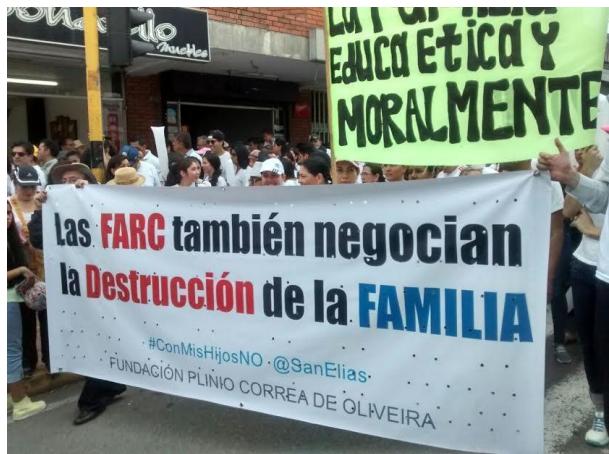 Tradição, família e propriedade Fonte: MUELLE, 2017, p.188
A iniciativa de incluir o enfoque de gênero nos diálogos de paz criou tanto desconforto e pânico nos segmentos evangélicos conservadores, que o estenderam mediante mobilizações em todo o território nacional, até o ponto que a pauta moral terminou sendo o elo mais forte entre o plebiscito pela paz e as camadas conservadoras. Uma pauta que, perante a importância dos diálogos de paz, pareceria não ser protagonista, o segmento conservador conseguiu que aquilo tomara sentido para quem aderiu a esses repertórios, que foi a esmagadora maioria da população. O contexto regional também auxiliou na aderência da pauta moral, porque em países como Peru e Brasil a chamada "ideologia de gênero" já gerava amplo proselitismo.
O enfoque de gênero facilmente se tornou "ideologia de gênero" para os grupos evangélicos, por conta do perigo que para eles representavam os diálogos com a guerrilha, o qual mostrou no fundo a recusa para falar com grupos insurgentes, o desprezo pelas esquerdas e a negativa a Santos como presidente, além do intuito de ocupar espaços decisivos nessas contendas e, de passo, atiçar a moralidade, como recurso de propaganda inesgotável até agora.
Nas mobilizações identitárias, o gênero se tornou fundamental para pensar a produção de políticas públicas e questões de Estado relacionadas a direitos. O conceito está atrelado, em certa medida, às ondas do feminismo, à emergência do reconhecimento dos direitos da mulher e às noções de patriarcado e dominação. O gênero se desagrega do conceito de sexo; o primeiro para pensar uma dimensão cultural e o segundo uma dimensão biológica a partir de padrões sexuais. Essa desagregação permite o reconhecimento de identidades, que apenas desde o conceito sexo não permitiria esse alargamento, o que tornou-se foco de disputa de direitos.
A partir do ano 1990 o gênero mobiliza questões de políticas internacionais, mas no começo do século XXI passa a ser entendido na ideia de ideologia de gênero, que nega o reconhecimento das políticas públicas em prol da diversidade. Essa agitação se gesta no Vaticano apontando seus riscos para a família, como uma ameaça para as estruturas sociais, o que acabou criando pânico moral, mas não entre sujeitos religiosos "despreparados", mas como uma ideia que reforça o apelo e as convicções morais também de não religiosos.
Desde aquela época se mobilizaram preceitos morais religiosos contra um Estado, acusado de "ideologizar" os filhos, isto como uma ideia contrária à inclusão de temas como igualdade de gênero e combate à homofobia nos currículos escolares.
Diversos países da América Latina vêm experimentando a ascensão de lideranças políticas sustentadas em pautas conservadoras nos costumes e ultraliberais na economia, com discursos que combinam uma agenda de recrudescimento do neoliberalismo com a mobilização de valores morais de cunho religioso em uma retórica de defesa da vida, inocência das crianças e integridade da família.
Por exemplo, o movimento Con Mis Hijos No Te Metas (CMHNTM) foi criado no Peru em dezembro de 2016, a fim de organizar a oposição contra a implementação do enfoque de gênero na educação, por meio do Currículo Nacional, que entraria em vigor em 2017, questão que logo se foi estendendo a América Latina.
O ambiente político colombiano de 2016 foi atiçado pela proposta governamental de criar ambientes escolares libres de discriminación, para evitar assédio contra estudantes com identidades sexuais diversas. A partir daí surgiu a concepção de que se pretendia distribuir uma cartilha com conteúdo sexual para confundir as crianças. A comoção foi causada pela ideia de que existia uma doutrina sexual nas escolas, dirigida pela ministra de educação da época, Gina Parody. Esse fato somado às previas reclamações de descontentamento popular por ela ser lésbica e estar na frente de uma das pastas mais importantes, causou sua pronta demissão. A questão das cartilhas também teve eco no Brasil, antes do impeachment de 2016, e na França no ano 2010, que apesar de ter tido características particulares, geraram campanhas em torno à defesa das crianças "no contexto de uma direita cristã mobilizada e cada vez mais globalizada" (VIGOYA, 2017, p. 227, tradução nossa).
Esse nervosismo na Colômbia vinha crescendo desde que o Tribunal Constitucional aprovou o casamento e adoção de casais do mesmo sexo. Este fato deixou incomodadas as lideranças evangélicas, que decidiram promover um referendo encaminhado à adoção de crianças apenas por famílias heterossexuais. Essa iniciativa da advogada e política evangélica Vivian Morales só passou no primeiro debate, mas não nas instâncias posteriores.
No meio desse contexto álgido, continuaram se somando as rejeições aos acordos, por parte de diversas figuras públicas como jogadores de futebol, que vieram nas negociações, entre o governo e a guerrilha, fatos opostos à religião e a Deus. Tudo isso incentivou ainda mais às lideranças evangélicas a conformar o Pacto cristão pela paz, como contraparte aos acordos, para levar suas preocupações sobre o que estava se negociando e, ao mesmo tempo, elencar a exigência de se reunir diretamente com as FARC e com os grupos LGBTQIA+, com o intuito de que eles não comprometeram pontos sensíveis para grupos religiosos tais como a família e a educação das crianças.
Participación en Pacto Cristiano por la Paz
Misión Paz a las Naciones
12 de octubre de 2016
Nuestro Apóstol Jhon Milton Rodríguez estuvo hoy, miércoles 12 de octubre, en la primera reunión del Pacto Cristiano Por la Paz, ¡somos uno por Colombia! Reunión que fue organizada por las Iglesias Cristianas Misión Carismática Internacional, Manantial, Tabernáculo de la Fe, Centro Misionero Bethesda, Ríos de Vida y Misión Paz a las Naciones en unión con todos los Pastores cristianos.
El Pacto Cristiano Por La Paz representa la unidad de las iglesias cristianas en Colombia quienes se han venido pronunciando para manifestar sus profundas preocupaciones y diferencias frente a los «acuerdos de paz» entre el presidente Juan Manuel Santos y el grupo armado FARC-EP desde el año 2010.
Fonte: https://misionpaz.org/
A sua vez os grupos LGBTQIA+ pediram manter o enfoque de gênero nos acordos, ao qual os evangélicos responderam com um texto exigindo ao governo quesitos, tais como o respeito da família tradicional; o direito de educar as crianças de acordo com seus valores; a liberdade de culto e a não estigmatização; a consideração de contemplar o perdão do cristianismo dentro da justiça de transição que beneficiou às FARC; o respeito à propriedade privada; a eliminação do termo gênero nos acordos; e a participação política em condições iguais tanto para guerrilheiros quanto para evangélicos. Essas exigências e a pressão em torno disso fizeram com que o presidente da época se comprometesse publicamente afirmando que as famílias, as igrejas e os crentes não sairiam prejudicadas com os acordos.
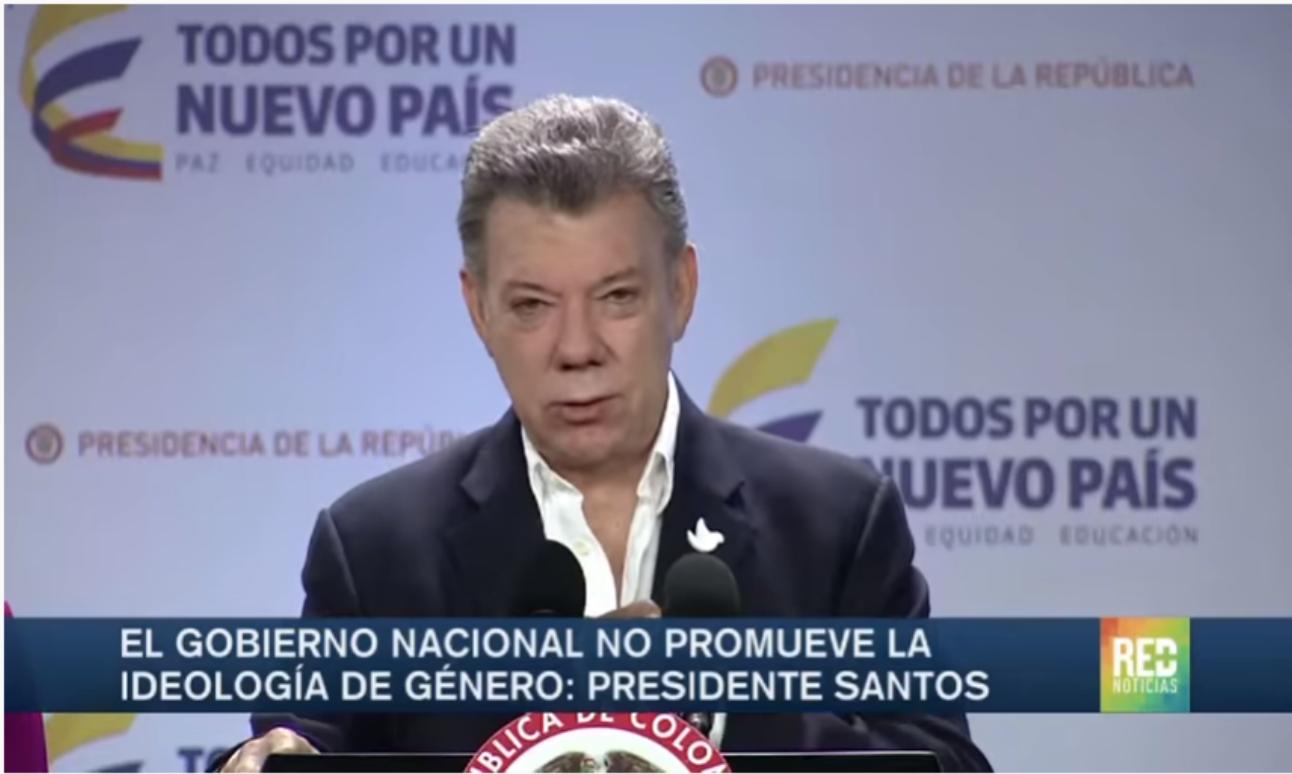 Fonte: Red+noticias
Cabe lembrar que na época a Iglesia de Dios Ministerial de Jesucristo Internacional IDMJI, uma das maiores organizações religiosas colombianas, mediante seu partido político Movimento Independiente de Renovación Abosoluta, MIRA, se posicionou a favor dos acordos e até fez uma campanha de esclarecimento sobre a diferença entre enfoque de gênero e a chamada ideologia de gênero. Porém, nas posteriores eleições presidenciais de 2018, esta igreja e seu partido aderiram ao Centro Democrático que, previamente, fez campanha contra os acordos. Essa posição que parece ambivalente por parte do MIRA foi sustentada com a afirmação que tanto em 2016 quanto em 2018 a defesa da democracia foi o mais importante, independente do partido ao qual se aliaram.
Tirando essa exceção daquele momento por parte do MIRA, houve outras mobilizações como a de "famílias pela verdade", como contraparte ao reconhecimento da diversidade, que vieram as negociações de paz como instrumento de fragilização de princípios cristãos. Somado a isso, se reforçaram as alianças político-religiosas com partidos tradicionais da direita partidária. Até fundações internacionais como a brasileira Plínio Corrêa de Oliveira, que tem como mote Tradição Família e Propriedade, ajudaram a propagar a mensagem de rejeição aos acordos atrelando-os ao marxismo, ao comunismo e ao risco para a propriedade privada.
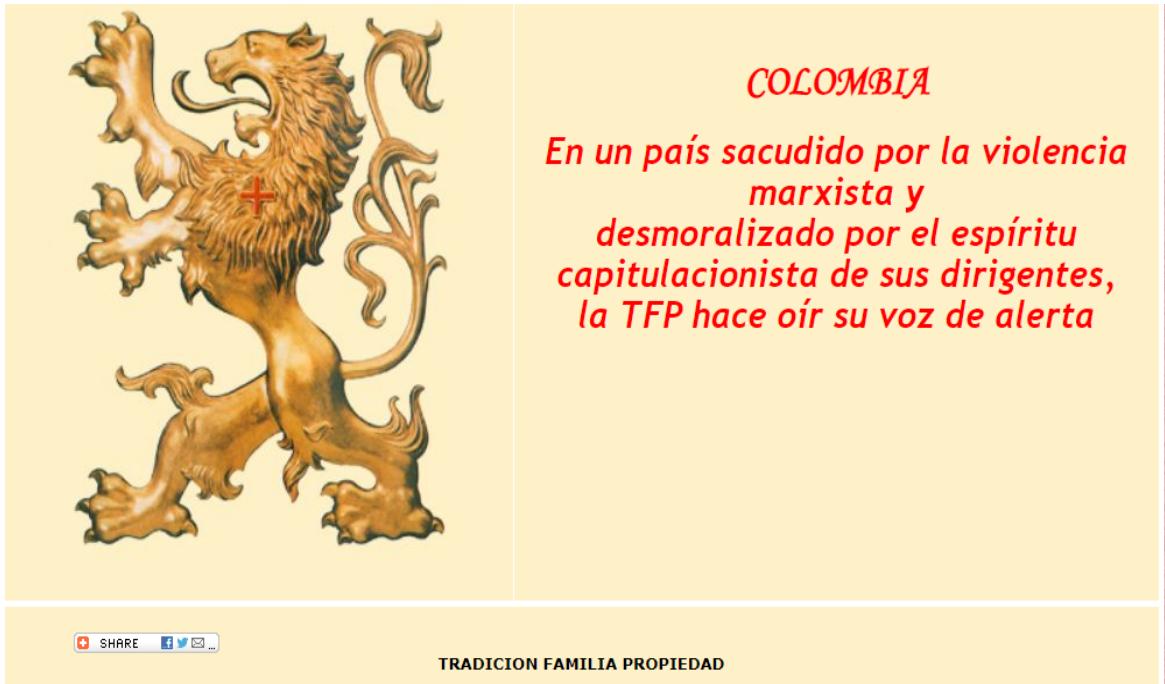
En un país sacudido por la violencia marxista y desmoralizado por el espíritu capitulacionista de sus dirigentes, la TFP hace oír su voz de alerta
IV. Gênero
O enfoque de gênero nos acordos provocou tanta tensão, que o termo começou a ser um dos mais buscados na internet. Amaya (2017) destacou que o interesse nas buscas foi especificamente sobre a chamada ideologia de gênero, que para o período 2012 e parte de 2016 se manteve em 1%, mas entre julho e agosto de 2016 passou a 100%, momento que coincidiu com toda a controvérsia das cartilhas e o contexto do plebiscito pela paz. "A ideologia de gênero, no caso colombiano, marcou antagonismos políticos e posicionou um novo ator político no debate: o público vigilante [em prol das crianças]" (AMAYA, 2017, p. 155, tradução nossa). Esse confronto supera o simples reducionismo de enquadrar o enfrentamento apenas entre setores "modernos e ilustrados" e setores "atrasados e intolerantes", já que mais do que um afeto secular ou um desdém pelo religioso, isso mostra como a partir dessas tensões se lida com a coexistência das diferenças na política contemporânea.
Teoricamente a categoria gênero tem sido trabalhada há décadas. Vigoya e Rondón (2017) destacam as contribuições que em termos temporais e de reconhecimento de direitos se gestaram no marco das conferências
Fonte: Pliniocorreadeoliveira internacionais do Cairo e do Pequim na década dos 90, ecoando de forma positiva nas agendas da ONU, da U.E. e da OEA no que tange a quesitos jurídicos e institucionais para enfrentar temas de gênero, sexismo e homofobia. Essas transformações, apesar de moderadas, produziram reações nos segmentos conservadores e religiosos, argumentando leis naturais, que segundo a Igreja Católica, regem o modo correto de ser e fazer de indivíduos e famílias.
Os dois movimentos de reivindicação, tanto de movimentos sociais quanto de instituições religiosas, decorreram de instâncias locais a outras de nível global, para projetar seu acionar político. "Esta "politização reativa" também envolve uma mudança na gramática desses discursos eativismos, que foge da oposição tradicional entre o religioso e o secular, na medida em que se aproveita de mecanismos democráticos e argumentos seculares para posicionar suas demandas [...] através da formação de "cidadanias religiosas"' (VIGOYA; RONDÓN, 2017, p. 120, tradução nossa).
A emergência da "ideologia de gênero" ou a ideologia contra o gênero, como sugere Judith Butler, surgiu como produto do ativismo católico, se espalhando com ampla recepção e efetividade.
O impacto e a incontestabilidade dessa retórica reverberaram em várias parcelas da sociedade, o que terminou influenciando entornos eleitorais, na medida que agitou sensibilidades e medos existenciais que foram atrelados a políticas públicas, a decisões governamentais e ao futuro de processos políticos. Esse tipo de conexões entre política, moralidade e ativismo religioso atingiu diversos contextos e regiões, pela potência que ainda possuem os discursos conservadores e a administração dos pânicos sociais para capitalizar as crises, além de servir como recurso para legitimar ou deslegitimar comícios de votação. Esse ativismo se enquadra na tradicional construção de amigo-inimigo, cujo antagonismo é exacerbado por agentes que presumivelmente procuram desestabilizar a ordem e as estruturas já desenhadas como rígidas e binárias, pretendendo acabar com a família como núcleo da sociedade e sustento da nação.
Os gêneros e as sexualidades, como conjunto de escalas que vão do global ao local e vice-versa, exploram questões tais como: as intersecções entre o dogmatismo religioso e segmentos conservadores; as periferias não contempladas na política sexual; e as heterotopias como aqueles lugares que desafiam o ordenamento hierárquico do gênero e da sexualidade e, nesse sentido, a chamada "ideologia de gênero" representa uma retórica conservadora instrumentalizada politicamente, que produz intersecções étnico-raciais, nacionais e de faixa etária, envolvendo questões democráticas e de cidadania (VIGOYA, 2017).
Desse modo, o gênero está intrinsecamente ligado ao político, este último como antagonismo inerente às sociedades, cuja relação produz heterotopias perante formas antidemocráticas e resistência às mudanças. Essa divergência na sociedade, de certa forma, tem a ver com a confluência do "antigo" e do "novo" regime no que tange a direitos sexuais na medida que cada um está acompanhado de suas racionalidades e moralidades, que operam de forma conjunta e convivem tensamente nas diversas formas de articulação e, em consequência, nos processos de cidadanização dos sujeitos na luta por políticas sexuais democráticas (CARRARA, 2015). Essa análise dialoga com a abordagem de Rubin (1984), quando adverte das consequências dos paradoxos morais herdados do século XIX e, a sua vez,, conversa com a análise de Vigoya em torno à influência ideológica da direita conservadora, cada vez que associa o sexo fora do âmbito familiar ao comunismo e à debilidade política. "Boa parte da tradição cristã, seguindo São Paulo, sustenta que o sexo é em essência pecaminoso. Ele pode ser redimido se praticado no casamento, só para a procriação e longe do prazer" (RUBIN, 1984, p. 20).
Nessa mesma perspectiva a abordagem de Preciado (2013) afirma que essas campanhas nomeadas contra a ideologia de gênero procuram uma ideologia naturalista e religiosa, com princípios comuns, com o intuito de oprimir minorias sexuais conduzindo às próprias crianças que tanto defendem a herdar o fardo patriarcal. "Os defensores da infância e da família apelam para a figura política de uma criança que constroem privada de qualquer força de resistência [...] A criança é um artefato biopolítico que garante a normalização do adulto." (PRECIADO, 2013, tradução nossa).
Por sua parte, já Wittig desde 1980 chamou a atenção sobre a arquitetura da sociedade heterossexual em termos de uma necessidade ontológica do diferente e do outro, que se traduz no dominado, conceito sem o qual a sociedade não funciona econômica, simbólica, linguística nem politicamente. E para Butler (2003), especificamente, o debate contemporâneo sobre gênero é circular quando enquadrado como construção cultural, já que esse construto está nos limiares do livre-arbítrio ou do determinismo, em razão que esses limites se estabelecem desde um discurso cultural hegemônico baseado em estruturas binárias.
Mas, o que está em jogo quando o gênero é invocado para explicar ou justificar uma posição política? Esta pergunta elencada por Vigoya é chave para introduzir não apenas o enquadramento desta questão como problema público, mas também para analisar as repercussões e os custos políticos dessa intersecção. Um exemplo disso, foram as eleições presidenciais de 2018 na Colômbia, já que o contexto do processo de paz deixou o terreno cimentado, daquilo que previamente já estava fermentando, para que a direita conservadora tomasse novamente o poder. Nesse sentido, uma das reflexões sobre o crescente ativismo cristão, especificamente de matriz católica e evangélica, se explica, em parte, pela emergência no reconhecimento de múltiplas sexualidades e identificações de gêneros vinculado "à crescente autonomização da sexualidade como um plano relevante de exercício de direitos, em que se constituem novos atores políticos, cujas identidades coletivas são forjadas em torno de formas específicas de desejos, de práticas sexuais e de performances ou "expressões" de gênero (SIMÕES; CARRARA, 2014, p. 74). Essa emergência está atrelada à reivindicação dos direitos sexuais como parte dos direitos humanos, cuja desconsideração histórica tem deixado sem legitimidade política a diversos grupos sociais não normativos.
E, apesar que os discursos repressivos não provenham unicamente pela via institucional, os Estados têm se engajado nesses confrontos com diferenças substanciais entre o passado e o presente, já que as relações entre Estados e instituições religiosas têm mudado, bem como os graduais processos de laicidade, secularização, descentralização e transnacionalização de demandas sociais que pressionam os espaços de condensação política no que tange a gêneros e sexualidades (CORRÊA 2009).
Pórem, diferencial mais significativo, entretanto, é que a interseção entre "sexo" e política na cena contemporânea já não decorre exclusivamente de ações e discursos repressivos e punitivos implementados pelos Estados. Ela também se nutre das demandas por direitos articuladas por nós – as atrizes e os atores da política sexual –, das leis e normas propostas e adotadas para proteger e respeitar a pluralidade sexual e dos discursos de respeito ou tolerância expressos por atores estatais relevantes. O debate sobre sexualidade e direitos humanos – que vem transcorrendo na ONU e outras arenas globais – é disso uma ilustração exemplar (CORRÊA, 2009, p.20).
Como foi referenciado anteriormente, o uso do gênero como recurso político por parte de agentes religiosos, especificamente em instâncias eleitorais, mostra a resistência no reconhecimento da diversidade sexual e na democratização de direitos nas políticas públicas, que se usa como dispositivo de mobilização, já que acionam sensibilidades, medos, imaginários e representações sobre estruturas binárias do corpo e seu controle, adaptadas através de narrativas políticas estratégicas para ganhar votos, aproveitando o solo fértil do conservadorismo. Assim, a religião e a construção de sistemas morais constituem vários sistemas de inclusão-exclusão nos quais há posições diferenciadas, neste caso, dependendo da identidade sexual e do gênero (BÁRCENAS, 2014, p. 39, tradução nossa).
V. REACOMODAÇÃO DE FORÇAS
Os ganhos conseguidos durante a campanha contra os acordos pelas lideranças evangélicas deixaram cimentado o terreno para a criação do partido Colombia Justa Libres e, em boa parte, para a eleição presidencial de 2018, que levou o candidato uribista Ivan Duque ao poder. Durante seu governo os evangélicos alcançaram vaga no Executivo e se mantiveram no Legislativo.
Um ponto interessante na reacomodação de forças é o duplo movimento que para lideranças evangélicas conservadoras adquire o Estado. Este, por uma parte, se torna o palco de conquista programática e a instituição a defender de forças progressistas e, ao mesmo tempo, vira um concorrente a ser desmistificado de qualquer característica benfeitora ou messiânica, que o coloque no mesmo patamar que o Deus cristão.
Embora as lideranças evangélicas no Legislativo colombiano não configurem um grupo coeso, dadas suas diferenças e posicionamentos tanto doutrinários quanto políticos, conseguiram reacomodar forças e ocupar mais espaços, maior capacidade e tamanho, através de coalizões governistas, como foi o caso do partido MIRA, cuja visão independente terminou se inclinando à direita partidária com o Centro Democrático.
Não obstante, em termos comparados, apesar do acirramento de pautas morais durante os acordos de paz, as correlações de força e as mudanças em políticas públicas não chegaram aos níveis de países como Brasil, com medidas regressivas em diversas pastas ministeriais e a nomeação de lideranças extremamente conservadoras como foi o caso da evangélica Damares Alves no Ministério da Família.
No caso colombiano, esse Ministério ainda segue como um projeto muito desejado por grupos religiosos, mas não consegue se materializar. A pastora evangélica e advogada Claudia Rodríguez de Castellanos foi uma das porta-vozes do projeto de criação dessa pasta ministerial, o que gerou diversas controvérsias em torno da sua importância e necessidade. As polêmicas passavam desde a discussão da sua viabilidade até a alerta de criar uma instituição operando como pauta moral e religiosa sob a visão de um único conceito de família.
VI. CONSIDERAÇÕES FINAIS
As constantes tensões entre os referentes comportamentais de cunho religioso e outras formas de existência, bem como a reivindicação pelo reconhecimento, continua sendo o horizonte das controvérsias morais contemporâneas, embora tenham se registrado mudanças significativas em matéria de direitos via jurídica. Mas, muitas dessas controvérsias tornam-se recursos políticos dada sua ferrenha tensão, na qual se reproduz a noção tradicional de diferença a partir do confronto amigo-inimigo, onde busca-se o apagamento deste último valendo-se paradoxalmente de instâncias democráticas.
A moralidade normativa religiosa como propulsora discursiva na esfera política torna-se problema público, enquanto envolve e mobiliza vários agentes, interesses, gera e participa de ferrenhos embates nos espaços democráticos.
Um dos quesitos em torno do uso da moralidade religiosa tange a sua agitação quando se trata de políticas de reconhecimento, que funciona a grande escala, dado o solo fértil do conservadorismo na sociedade e, por vezes, como articuladora do segmento religioso, tão diverso e heterogêneo. Não obstante, quando se trata de pautas de redistribuição, a moralidade religiosa passa a um segundo plano para dar atenção a outros problemas sociais. Desse modo, dependendo da funcionalidade do que está em jogo, ativam-se pautas morais não apenas porque lideranças religiosas de alguma maneira acreditam nelas, mas também porque são dispositivos de agitação e contenda eleitoral.
A campanha contra a assinatura dos acordos, em 2016, entre a guerrilha das FARC e o governo Santos, na qual participaram diversos segmentos, entre eles camadas de evangélicos, arrastou os ganhos alcançados para a candidatura de Ivan Duque nas presidenciais de 2018, consolidando o triunfo do candidato de direita, herdeiro do ex-presidente Álvaro Uribe Vélez do partido Centro Democrático, o que levou à reacomodação de forças evangélicas.
Mas, de acordo com a última contenda presidencial colombiana, em 2022, observa-se que a modulação da potência de repertórios conservadores muda e, em certas conjunturas, não alcança para impulsionar a chegada no poder de determinados interesses e visões de mundo. Porém, cabe lembrar que o ativismo evangélico conservador em termos globais coadjuva no crescimento do extremismo da direita no poder.
Conflict of Interest
The authors declare no conflict of interest.
Ethical Approval
Not applicable
Data Availability
The datasets used in this study are openly available at [repository link] and the source code is available on GitHub at [GitHub link].
Funding
This work did not receive any external funding.
References
Cite this article
Related Research



Special Issue
Launch a focused special issue to highlight research, emerging trends, and expert insights in your academic field.
