


IntelliPaper
Abstract
The article discusses the linguistic sign and proposes a definition that is based on a usage-based view of language and includes all communication systems, also closed ones like the traffic lights. Content, expression and signs as wholes are discussed separately, and the linguistic sign is compared to “semiotic” signs. The main claims are: 1) Reference is primarily mental and part of the content. 2) A mentalistic definition of signs is incompatible with a usage-based view. The expression isphysical, in language as in usage.3) Neither arbitrariness, linearitynor double articulation are necessary qualities of signs. 4) Spoken, written and gestural languages are sign systems of their own, not manifestations of an abstract language with no particular expression. 5) Only minimal signs (morphemes) consist of expression and content. Complex signs consist of (smaller)signs. 6) The linguistic sign isa category of its own, not a subtype of “semiotic” signs.
Explore Digital Article Text
I. INTRODUCTION
1.1 A Unilateral or a Bilateral Sign?
The subject here is the linguistic sign as introduced by Saussure: a bilateral unit consisting of an expression and a content. However, there are also other concepts called «sign», such as the senses of the word in everyday speech, e.g. in expressions like a sign of weakness or disease. Here sign denotes a non-linguistic phenomenon (e.g. stumbling) which is an index of or indicates something else (such as weakness or disease). This sign is unilateral and corresponds to the expression in the bilateral sign.
A wide, unilateral sign concept which comprises such indices as well as icons (representations of something) and symbols like the cross or the flag is also used in semiotics (semiology), e.g. by the American philosopher Peirce (see e.g. Deledalle 1978, 121 or Johansen 1993, part II) and in the book The Meaning of Meaning by Ogden & Richards from 1923 (here cited from the 8th edition, Ogden et al. 1946). For "...those signs which men use to communicate one with another and as instruments of thought" (Ogden et al. 1946, 23), i.e. linguistic signs, the word symbol is used, by both Peirce and Ogden et al. But symbols – also called words, the prototype of a linguistic sign – do not include meaning, as we can see from the well-known triangle in Ogden et al. (1946, 11) of the three factors symbol, thought/reference and referent. Thus it does not correspond to Saussure's linguistic sign. Also Saussure suggests such a broader sign concept in the subsection about semiology (1967, 32 f) without defining it, with examples like rituals, dress fashions and writing, and regards the linguistic sign as a subtype of «semiological» signs.
My own view is that it's misleading to equate dress fashions and writing (as in this article). Writing consists of linguistic signs, e.g. words and sentences with a precise meaning, and a unilateral sign cannot explain communication. How can we understand words if they are nothing more than expressions, e.g. sounds or letters? We must also know their meaning, which presupposes that they have a meaning, described in dictionaries. Sørensen (1963, 13) thinks that «in practice the two views are completely identical», because also the unilateral sign accepts that the sign must be «meaning-bearing». But they are not. The «meaning» of a unilateral sign can be anything, including physical objects, whereas the expression of the bilateral sign is connected to ideas – meaning proper – making certain ideas part of language, not something external. Therefore, bilateral signs are used for communication, exchange of ideas, while the unilateral signs normally are not. To communicate precisely, we need ideas, not objects.
According to Ogden et al. (1946, 9–10), words have meaning only in usage: "Words, as every one now knows, 'mean' nothing by themselves [...]. It is only when a thinker makes use of them that they stand for anything or, in a sense, have 'meaning'." Words are just instruments. Croft (2000, 111) makes the same point: «...linguistic expressions do not contain meanings. Meaning is something that occurs in the interlocutors' heads at the point of language use (speaker's meaning)...». This could be called «usage fundamentalism»: One sees only the use of language, where words are just expressions produced by the sender (like the letters on this page). Still, the receivers understand them if they know the words from before. Not only must words have a meaning; the meaning must be known by both parties in communication. Using an instrument presupposes that the instrument exists, independently of use. The point of a word or a language is to exist, ready for use when needed, words with meanings, and in usage we choose words with the meaning that we want to express. If we want to talk about cats in English, we have to use the word cat. People usually agree about what expressions mean – which is why they usually understand each other – and even when they disagree, they agree that they mean something. «Meanings are what makes sounds or sound sequences linguistic...» (Sørensen 1963, 15).
According to Croft (2000, 111) «...thoughts or feelings cannot 'go' anywhere outside the minds of humans», e.g. into words, so words cannot contain meanings. Well, words cannot contain meanings in any literal sense, because ideas are not a substance one can contain. But certain ideas can be connected to certain expressions by convention or custom (see Lewis 1974 or Croft 2000, 95 f), a usually tacit agreement in practice in a group of people that communicate regularly – a speech community – that such expression has such meaning, e.g. that the letter sequence CAT in English-speaking communities is connected to the idea of cats. Where does meaning come from when a sign is used? The answer must be that it comes from the expression plus knowledge of what the expression means in the actual language. In this text meaning comes from written characters – primarily letters – and the conventions of English writing that connect them to certain meanings and hopefully are known by the readers.
So expressions do have meanings by themselves, and we have to do with a complex unit. As every dictionary takes for granted, words have constant conventional meanings – usually several – and they are used rightly when they are used with these meanings. Croft (2000, 105) himself mentions «signal meaning», the meaning that is generally and conventionally connected to the expression, independently of individual speakers, which is part of the word, described in dictionaries. Otherwise linguistic communication would be inexplicable. So let's turn to the bilateral or linguistic sign.
1.2 Historical Background
The bilateral sign has roots in antiquity, especially the stoics, and was also known in Middle Ages linguistics (see Jakobson 1971, 345; Malmberg 1973, 42: Eco 1984, 29 f; Gullichsen 1990, 65 f). The greek terms semeion, semainon og semainómenon were translated into latin as signum, signans and signatum or significatum, which Saussure translated into French as signe, signifiant and signifié, i.e. sign, expression and content (meaning). Another embarrassing ambiguity of sign is that it is used not only of both non-linguistic (unilateral) and linguistic (bilateral) signs, but also more specifically of the signs of «sign languages», i.e. a specific kind of linguistic signs. Compare the title of Stokoe & Marschark (1999): «Signs, gestures and signs».
This is obviously not a good terminology. All types of language consist of signs. Therefore I call such signs «gestures» or «gestural signs» and the languages «gestural languages», and reserve sign for the general concept.
According to Koerner (1972, 11) the linguistic sign is the most debated of all of Saussure's concepts. The reason must be that it provides a basis for a general definition of languages as sign systems, explaining both what language is and how it is used in linguistic communication, i.e. communication by bilateral signs. If so, the sign ought to be the fundamental concept in any linguistic theory. However, that is not the case: "Most post-Saussurian linguists have not adopted the sign as their theoretical and methodological unit of analysis..." (Tobin 1990, 15). This is primarily the case in American linguistics – neither structuralists nor generativists have used the concept. Garvin (1954, 76) calls the linguistic sign «a fundamentally different conception from that of a number of American linguists», and Martinet (1976, 66) says that Saussure's sign «...has mostly never been understood by, and is explicitly rejected by, certain Americans». An example is Chomsky (1986, 19), who describes Saussure's «langue» as «...a system of sounds and an associated system of concepts» instead of a system of signs. And he rejects the whole concept as a «platonic» conception, belonging to the world of ideas only. However, today Saussure's sign has at last been accepted also in USA, with cognitive grammar where the sign is a basic concept, under the term symbol, however. Langacker (1991a, 537) calls "the reduction of grammar to symbolic relationships between semantic and phonological structures" for "the central feature of cognitive grammar", and says that "Such a model directly and straightforwardly manifests the basic semiological function of language".
Also Ogden et al. (1946, 5, note 2) reject Saussure's sign because «...the process of interpretation is included by definition in the sign» (by regarding the content as part of the sign) and because it does not consider «...the things for which signs stand», i.e. the referent (1946, 6). The last statement is true, and this could be considered as a serious flaw in Saussure's sign theory. Therefore, I will include a discussion of reference and its relation to content and meaning.
1.3 Plan of the Article
I take Saussure's and Langacker's definition of the sign/symbol as a point of departure (Section 2.1), discuss some problematic aspects and propose several revisions, treating content (2.2), expression (2.3) and signs as wholes (2.4) separately.
In the section about the content, both reference and meaning are discussed. As to the expression, one major problem is that both Saussure's and Langacker's sign concepts are mentalistic, supposing the expression – and the sign as a whole – to be mental. I propose a non-mentalistic sign that is compatible with a functionalistic, usage-based view of language. I will show that this view implies that signs and languages include physical entities and therefore cannot be entirely mental. Instead, they but must be social – institutions or systems of conventions (2.3.1), as especially Saussure has underlined. Another major problem with Saussure's definition of the expression is that it is too narrow, limited to spoken language. We have linguistic signs with expression and content in all communication systems, also written and gestural languages, and even in minor or delimited communication systems like the traffic lights. Therefore, I propose a general linguistic sign that can explain all communication by signs, with whatever expression (2.3.2). Arbitrariness, linearity and double articulation have been proposed as defining qualities of signs and language. They all concern the expression and are discussed under that heading (2.3.3-2.3.5). I will show that none of them are valid for all signs.
As to signs as wholes, I distinguish between open and closed signs systems (2.4.1) and discuss if signs with different expression, e.g. speech and writing, can be seen as different realisations of the same sign system with no specific expression (2.4.2), if signs exist between expression and content (2.4.3), and complex signs, i.e. grammar (2.4.4). Finally, I take up the relation between linguistic and semiotic signs (2.4.5).
II. THE LINGUISTIC SIGN
2.1 Saussure and Langacker
Saussure (1967, 97 f) defines a sign («signe») as a connection of an expression («signifiant») and a content («signifié»), namely a sound image (image acoustique) and a concept (also called sens and idée). Both are mental and «connected in our brain through association» (my translation, here and in other citations in other languages than English). The sign is the basic unit of language, and language is a sign system (1967, 33). Compare Saussure (2002, 20): «A language exists if an idea is attached to m + e + r» (meaning the sounds). And for one who knows French an idea is attached to the sound or letter sequence mer, namely 'ocean' (in speech also 'mother' and 'mayor'). As Hjelmslev (1973, 126) points out: "For purely logical reasons it seems obvious that any conceivable language involves two things: an expression and something expressed. [...] These two things taken together are fundamental to all languages". So we have three entities: the sign, usually marked by italics for written signs, e.g. the word and morpheme cat in English writing, the expression, here marked by capitals for writing (CAT) and the content, marked by single quotes ('cat').
Making meaning part of the sign makes certain meanings or ideas part of language: As Saussure (1967, 97) points out, languages comprise concepts, and learning a language includes learning the concepts of the language. Some languages include ideas like the devil and werewolves, others do not. That's why also the concepts of languages may differ and exact translation becomes difficult. But Saussure underlines (1967, 32, 98, 99) that also the expression is mental: The sound image is not the sound itself, but «the mental imprint of it» (p.
98). Consequently, Saussure's sign is mentalistic: Expression and content are connected through association, not by convention, and the sign is mental as a whole (in other contexts, Saussure underlines conventions). Secondly it exists only in spoken language, which Saussure (1967, 45) like many other structuralists considers as the only form of language: The expression is images of sounds.
Also for Langacker the expression is mental and phonic, i.e. sound images. Signs (usually called symbols) are said (1987, 11) to consist of a semantic and a phonological «representation». And Langacker states (1987, 78–79) that "...sounds (at least for many linguistic purposes) are really concepts", so that "phonological space should [...] be regarded as a subregion of semantic space". But in Langacker (2013, 15) the «phonological representation» is said to include gestures and written characters. Langacker's sign is therefore broader than Saussure's, and includes also written and gestural signs.
Why do we have signs? Neither Saussure nor Langacker says explicitly what signs are for or what is the function of a sign (system). Maybe because the answer is obvious: to express ideas to others, i.e. communicate one's thoughts. Signs and languages are instruments or means, something one may use for a certain purpose, which must be what we normally use them for, namely communication. As thoughts cannot be communicated directly because they are unobservable, they must be connected to something that is observable, e.g written characters (as in this text). That's why signs must have both a content and an expression. And when we know the sign, i.e. which content is connected to which expression, e.g. what CAT means in English, we can use this knowledge to use the sign both as a sender to express our thoughts about cats by producing the expression, and as a receiver to understand what other people mean when they produce the expression.
2.2 The Content
2.2.1 Content, Meaning and Reference
• Content consists of reference and meaning
The content is described by Saussure as a concept, i.e. a general conception of a specific type (class) of objects, actions etc., like 'horse', 'city' or 'planet'. Langacker uses the term «semantic representation», which is broader than «concept». In most words, like horse, city or planet, the content can be said to be a concept, and this is what is usually called meaning and described in dictionaries. But there are words like Sleipner (Odin's horse), Oslo and Venus, which denote an individual horse, city and planet. Also such words denote or refer to something and are signs with a content, although a highly specific one – the conception of specific individuals – and also these ideas belong to the language and may lack in languages that lack these words. It is first and foremost proper nouns that denote individuals. But also noun phrases like my horse or that horse, which are complex signs, denote individuals and not general concepts. So the content should be described as a conception, a mental representation or simply an idea, whether of individuals or a class.
Since proper nouns denote individuals, they need not have, and usually don't have, any descriptive or classifying meaning (like the examples above), and usually don't figure in dictionaries (but in encyclopaedias). Nor can they be translated to other languages. As Teleman et al. (1999, 116) point out, typical proper names don't have any meaning. Both planet and Venus can be used to refer to Venus, but planet in addition describes or classifies Venus as a planet, with the qualities that define the class (such as circling a star). So it has both a classifying meaning ('planet') and a reference (Venus and 'Venus', the idea of Venus), and can be translated to synonymous words in other languages. Venus just refers to the planet without classifying it, and therefore is not translatable. Reference is the only content of such words, while most words have meaning in addition. So we must distinguish between reference and meaning as two parts of the content. Let's take a closer look at these two content factors.
2.2.2 Reference
- Reference is primarily mental and linguistic, and the basis of meaning
Most signs refer to something, mainly phenomena in the world, e.g. objects – the referents, including languages or parts of them, from sounds to sentences. So a word can refer to itself, so-called «meta-language». This is a basic function of signs, which enables us to talk of the world we live in, and the reason why reference is usually regarded as non-linguistic. Reference can be both possible or potential (in the language) and actual (in usage). Kleiber (1981, 13) says that referring presupposes that the signs used have an immanent or possible reference, and distinguishes (1981, 19) between «virtual» and «actual» reference, often called respectively denotation and reference or extension (see Lyons 1977, 177 f). Venus can refer to a Roman goddess as well as a planet and thus has two possible referents, but in usage one of them is intended. The possible reference of I is the class of senders, the actual reference is the sender of the actual text. Words like teacher or student can denote persons of both sexes, but in usage they will refer to either a man or a woman (if one is not speaking generally), and one has to use different pronouns.
However, not all words refer. Content can also be purely relational or functional, especially in grammatical words like and, or, if or formal subjects. Sørensen (1963, 14) points out that words like the, a, this, very do not denote independently of other words because there are no such things. They still have meaning. In It's raining, it has neither reference nor meaning, but just a grammatical function – to fill the subject position, which must be filled in English sentences. Also syntactic functions like modifier and head or subject and object, e.g. the semantic difference between I and me, must be regarded as functional meanings. They are definitely part of sentence meanings.
According to Lyons (1977, 209), both potential and actual reference depend on "the axiom of existence: whatever is denoted by a lexeme must exist". Also Sørensen (1963, 14) says that words like centaur do not denote. But e.g. Peter does not have to exist for us to refer to him – he might be imaginary as well. Words like Tarzan or werewolf don't have any physical referent, but still can be used for referring to these fictional objects and making statements about them. When Tarzan speaks, I refers to Tarzan, who is just an idea. Kleiber (1981, 138) underlines that reference is not limited to the physical world. As Algeo (1973, 44) puts it: «For the linguist, Xanadu has as good a referent as Canada». The names refer to two places, and whether both, one or none of them exist in the physical world, is irrelevant (and unknown to many). They both exist in our minds – if we know these words. We disagree on whether God refers to something «real» or non-linguistic or not, but that is not a linguistic problem. The word can be used by anyone who knows its content, whether a believer or not. All you need is an idea you can refer to, whether it corresponds to a non-linguistic entity or not.
In cases like Tarzan or werewolf, the referent is obviously mental and linguistic, a part of language. But what about Venus or cat, which refer to things in the world? Well, there is a mental referent for these words too, namely the idea of Venus and cats. According to Kleiber (1981, 15), referring presupposes a mental referent («un référent conceptuel»). Hudson & Langendonck (1991, 331) underline that "The referent of a word is a concept, and not an object in the world, contrary to the standard use of this term", and Langendonck (2007, 21) points out that "...extensions and referents are in the first place of a mental nature. For linguistic purposes it is of secondary importance whether any real world entities are designated or not". Also Dik (1997, 129) says that the «entities» we refer to, «...are not 'things in reality', but 'things in the mind'.»
Referring to or talking about things in the physical, so-called «real» world – the mental world is just as real – is a central use of language, perhaps the most central. But we have to do so indirectly, through of our conceptions of those things. Fitch (2010: 122) points out that «...concepts occupy an irreducible intervening role between language and external meaning in the real world», and Dik (1997, 129) that «...we can refer to 'real' things only to the extent that we have some mental representation of them». That's why we can't speak of things we don't know; e.g., we couldn't refer to black holes before we discovered them. So some linguistic concepts correspond to something in the non-linguistic world and some do not. The difference is essential in the natural sciences, but not in linguistics. Fortunately, we can also conceive of and refer to things that don't exist in the non-linguistic world, as in superstition, fairy-tales, novels and science fiction. Which is a prerequisite for changing the world by imagining and creating novel things.
So reference is primarily a semantic concept, which is why it usually is treated in semantics. And we must distinguish between mental referents – the ideas connected to a sign, e.g. the idea of Venus or Tarzan, and physical referents, the non-linguistic objects of the ideas, e.g. the planet Venus, which words like Tarzan lack. And these mental referents or ideas are collective and belong to the language: All Norwegians have heard of trolls, Peer Gynt and Terje Vigen, objects that exist only in the mental and linguistic worlds, in fairy-tales, dramas and poems. And such ideas, e.g. in religions or political ideologies, can have profound effects in society, so they are definitely a part of «reality».
The possible reference of planet is the class of celestial bodies that it can be used rightly of, the actual reference when used is particular bodies of the class (or the whole class). But planet also has a meaning which describes the referent and delimits the potential reference: If we know the meaning, we know which bodies belong to the class and can be called planets. In other words, meaning determines the potential reference (Sørensen 1958, 50), and synonymous words (like bull and ox) have the same reference (Sørensen 1963, 16). For Venus there is no description and no class and we have to know which individual(s) the word refers to or is the name of. On the other hand, the potential reference is the basis of meaning (Haiman 1980, 336). Words that have two potential classes of referents, like man in English, also have two potential meanings: 'human' and 'male human', one of which is actualised in usage. Therefore, we can use a physical referent to illustrate the meaning of a word, e.g. point to a cat and say «That is (called) a cat». And dictionaries can describe the meaning of words by delimiting the potential reference, sometimes by technical terms unknown to most speakers, e.g. chimpanzee explained as Pan troglodytes – a kind of shortcut to save space.
2.2.3 Meaning
- Meaning is common knowledge of the referent
The meaning of a word is an abstraction from the potential referents – a simplified mental image of the actual class where only essential common qualities are relevant, for man sex and age, for planet circling a star (and a certain mass), but not size or composition. So meaning must be our knowledge of the referent, whether it exists in the world (like horses) or just in our imagination (like centaurs). And these meanings are collective and known by (almost) everybody because they are connected to an expression which is used in the same way and with the same meaning by the members of the actual community. This means that they exist in society, not in the users' heads – like the rest of language. In English, beech and elm have different meanings (and potential referents), although many people don't know the difference. But some people do and therefore society and language distinguish them.
So we have to express our individual thoughts through collective linguistic categories, including thought categories or meanings. As Linell (1982, 222) points out, we must distinguish between the general or conventional meaning in language (Croft's signal meaning), which is independent of situation and context and the actual or communicated meaning in usage (Croft's speaker's meaning), what the speaker intends to express, which is not (we also have receiver's meaning, how the receiver understands the sign). This is the basis for the distinction semantics/pragmatics. When signs are used, the speaker's thoughts, often more specific than the general meaning(s) of the sign, are conveyed by the fixed linguistic meaning, with a little help from (especially the previous) context and situation (e.g. who's speaking). In language, as a type, the pronoun I denotes the sender in general, as a class; in usage, as a token, it denotes a particular sender, the one who utters it. The general concept 'sender' (speaker, writer, signer) is part of English because it has an expression (normally I), the conception of particular senders is not. Here, meaning usually refers to the general meaning.
This meaning cannot be individual knowledge of the referents, which varies while the meaning has to be constant to function in communication: Some people (e.g. astronomers) know a lot about planets while others know next to nothing, but planet means the same to both, if they know the word. So experts and laymen can talk about planets, e.g. as teacher and student. Nor can (general) meaning be identical to collective («encyclopaedic») knowledge or science: Encyclopaedias describe what is known of the referents, not the collective conception of the referents in the actual language and community. That's why they usually come in several volumes. Fortunately, we don't have to know the chemical composition (and even less the formula) of salt to understand the word salt, just what it looks like, tastes and is used for and it did not change meaning when the chemical composition was discovered. If meaning were encyclopaedic, so that the meaning of planet were all that is collectively known of planets, dictionaries would be impossible.
Besides, linguistic knowledge (competence) must be based on individual knowledge, not science. Even if individual knowledge varies, some of it is common knowledge – what everybody or at least most people know of the referent, especially the things that surround us and we experience every day. Even that planets orbit a star and that the earth is a planet, is probably common knowledge in most societies today. If you know this, you know the meaning of planet, what the possible referents have in common.
2.3 The Expression
2.3.1 Is the Expression Mental or Physical?
- The expression must be physical to function in communication
According to both Saussure and Langacker the expression is mental, respectively a «sound image» and a «phonological representation», which must be the same thing. This means that signs and languages are mental as a whole and exist only in the minds of the users as individual knowledge or competence, and that languages are reduced to idiolects or individual systems: «The only scientifically genuine entities are individual grammars situated in the heads of individual speakers» (Pinker and Bloom 1990, 721). This «mentalistic» view of language is the usual view in both generative and cognitive grammar, but is also found in Saussure's description of the sign.
But how can a mental expression, e.g. a sound image, express something and be used to communicate? A sound image cannot explain communication, because nobody can hear it. An expression must be physical and observable to communicate and be learned. Atkinson et al. (1991, 59) rightly point out that "...if language is to have public status it must be encoded in a medium accessible to the senses". If so, signs cannot be entirely mental objects, even if a part of them – the content – is, but must be social or conventional. Saussure is better known for this alternative view: that signs are «social by nature» (1967, p. 34) and that language («langue») is conventional and collective (p. 34, 108), «outside the individual» (p. 31), «exists fully only in the collectivity» (p. 30), and presupposes «a speaking group» (p. 112). Namely a system of conventions (p. 25) or an institution (p. 33). Also cognitive grammar accepts that language is conventional – «a structured inventory of conventional linguistic units" (Langacker 2013, 222).
Of course one also needs a mental representation of these units in order to use them. Like other conventions, signs must be known and learned: To follow a convention one has to know it and be competent in using it, which may require practice, e.g. in producing the sound types of the language. But a mental representation is individual, not conventional. What exists in the mind must be individual ideas, since there are only individual minds. Conventional implies collective – one cannot make an agreement with oneself. Harder (2010, 294) points out that «...social entities depend on individual minds without being reducible to them». For something to be collective, it must also exist outside the mind, as an agreement in practice between a group of people, realized by the same behaviour, e.g. calling a cat a CAT: «...there must, of course, be agreement between producers and receivers if people are to understand each other» (Corballis 2002, 112). So Saussure contradicts himself by saying that signs are wholly mental.
Knowledge of signs must be common knowledge, known by all or at least many in the community to function in communication. Individual signs, i.e. signs that are known by only one, would be useless, because nobody else would understand them. But in large communities no individual knowledge equals the whole language, especially the words. A dictionary lists all words that are in regular use in a language community and can contain hundreds of thousands of words, but each person knows and uses only a part of these words. So conventional or collective does not mean that all signs are known by every member of the collective, only by most of them. Children start life without any linguistic knowledge, and many words, e.g. technical words like modifier or fricative, are known by only a section of society. Each user's knowledge usually differs somewhat from others', but not more than that they can communicate. Even collective knowledge, i.e. science, like a dictionary, is partial: We don't know all about language, not even all words that are used in a speech community.
As agreements between people who communicate regularly, signs are cultural products – probably one of our very first – in language communities (Armstrong et al. 1995, 147) that may consist of millions of individuals. That's why there are only about 6 000 «languages» on Earth, not 8 billion. This makes linguistics a cultural science, usually placed in the Humanities faculty – not a cognitive or psychological one, and still less a natural science, as Generative Grammar claims (Åfarli 2000, 138–139). And that's why signs usually differ between language communities, a matter of historical accident. For the meaning 'ox' the English happened to agree on the expression ox (or bull), the French on bœuf, and both function equally well as long as there is agreement on the matter in each community. And the convention is an objective fact which is independent of what individuals think: You may dislike it, but you can't do anything about it. You may even be wrong about it and think that ox means 'cow', but that does not change the meaning of the word. Signs are common property, not private. Nobody decides over language, because everybody depends on the cooperation of others – unless you are a dictator and can force people to comply.
- A mental expression is incompatible with a usage-based view of language
Cognitive grammar is usage-based, which means that it regards usage, the regular or conventional use of language, as basic and of the same kind as language: «...structure [...] is not independent of usage or radically different in nature. Rather, structure emerges from usage, is immanent in usage, and is influenced by usage on an ongoing basis" (Langacker 2010, 109). Language and usage are closely connected and influence one another: «Usage feeds into the creation of grammar just as much as grammar determines the shape of usage» (Bybee 2006, 730). Saussure (1967, 37) says the same thing when he says that language («langue») and usage («parole») presuppose each other and calls language both the instrument in and the product of usage.
According to Bybee (2006, 711), «A usage-based view takes grammar to be the cognitive organization of one's experience with language», and according to Croft (2000, 109) grammar is «...an individual's knowledge of the conventions of the speech community» (my emphasis in both quotes). But individual knowledge varies and can be both incomplete and wrong (e.g. in children), resulting in faulty usage, and there is no «perfect competence». If we don't all have the same knowledge of language, whose is the right one? A usage-based view of grammar should take grammar to be the (grammatical) conventions themselves, i.e. the linguistic categories that are used in the actual speech community: the units (e.g. the words) and the (e.g. syntactic) rules that occur in usage as general types (classes) instead of individual tokens. E.g. that the many occurrences of the word the in English usage count as one in the English language, including its two expressions in speech.
Kemmer & Barlow (2000, VIII) think that a usage-based theory is compatible with a view of language both as «...structures derived by the analyst from observation of linguistic data...» (the «external» linguistic system) and as «...structures posited by the analyst as a claim about mental structure and operation» (the «internal» linguistic system). But what occurs in usage, is physical units or actions like sounds, written characters or gestures. This is what we hear or see and recognise as expressions of signs (e.g. words) that we know, associated with a content. And if the expression is physical (sounds, letters etc.) in usage, but mental (sound images etc.) in language, language and usage would be «radically different in nature», and language could not be «the product of usage» – which it clearly is, as we can see from language change: «Nothing comes into language without having been tried in usage» (Saussure 1967, 231). So if we take the usage-based claim seriously, these physical entities should also be recognised in the language that is used, as general types that can be used by various speakers on various occasions. Usage consists of individual tokens or uses of the types in the language, else it is ungrammatical.
Therefore, it is natural that cognitive linguists now lay more stress on the social aspect of language, which Harder (2009, 15) regards as «...one of the most promising developments in current cognitive linguistics». Croft (2009, 395) criticises cognitive grammar for being too «solipsistic» and «inside the head» and argues for «a social cognitive linguistics» (p. 412). Geeraerts (2016, 527) calls language «an intersubjective [...] tool» and thinks that «the social turn» in cognitive linguistics follows naturally from other features of the theory. Rather, it follows necessarily from the feature «usage-based», for if language is «immanent in usage» and «...not independent of usage or radically different in nature», a consistent usage-based view cannot escape the conclusion that language is something external, namely conventions manifested in usage as grammatical utterances – utterances that follow the conventions.
Usage thus shows what the actual language consists of, the units of the language, from sound types to sentence types. Speech, for example, shows that a spoken language includes a sound system consisting of certain sound types, as it is usually described in phonology. And they are certainly not mental objects. It is not the representation of the famous «thick /l/» in Norwegian and Swedish that is part of these languages, but the sound type (an apico-postalveolar flap) itself. That's why phonetics is usually not regarded as part of linguistics. The speakers of course need a mental «image» of the sound – how it sounds and is made – before they can pronounce it, built from previous encounters with the sound. But a sound image and what it is an image of, i.e. a sound type or the sign expressions that include it (words with «thick /l/»), are quite different things, respectively knowledge and the object of knowledge: parts of language. As Jackendoff (2002, 298, note 4) points out, the expression knowledge of language implies «an external entity, 'language', that is known». A representation presupposes something represented and knowledge presupposes something known. The mentalist view of language confuses these two objects, one social and collective (language) and one mental and individual (knowledge of language).
A language consists of the linguistic units that are used regularly by various persons – once or twice does not make a convention. That's why we can learn language from usage and reconstruct a language from texts. As Kemmer og Barlow (2000, IX) point out, units that don't occur in usage, simply don't exist. Compare Langacker's (1987, 53–54) «content requirement»: that the only linguistic units are «phonological, semantic, and symbolic structures that actually occur in linguistic expressions». As Langacker (1991 b, 289–290) points out, this excludes «arbitrary descriptive devices» that lack expression and content. It also means that grammatical utterances, i.e. those that follow the conventions of the language and are accepted by the users as «right», are the decisive data of linguistics: «Any sound linguistic theory must be based on concrete utterances of speech» (Vachek 1989, 2). This makes linguistics an empirical science with an observable basis that can falsify any theory.
A usage-based linguistics, then, must define expression as physical, which makes the sign as a whole a psycho-physical entity. A general definition of a sign must be a conventional combination of ideas and physical objects – sounds, letters, lights etc. – or actions, e.g. gestures, which are known and used in communication by a group of people. According to Shaumyan (1987, XI), language has «a unique ontological status». It is neither mental nor physical, but belongs to «a special world, [...] the world of signs systems». But the world of signs is not a world of its own, just a combination of two well-known worlds, the mental and the physical, so it is both mental and physical. The whole point of a sign must be to connect something mental (ideas), which cannot be observed, to something physical, which can be observed. Then we get a combination of an expression and a content, which presuppose each other and always occur together, so that the speakers associate them and one of them calls forth the idea of the other. This allows us to «hear» or «see» an idea, a statement and even a whole story or (in writing) a linguistic treatise. That is the wonder of language, a cultural edifice far greater than the pyramids, refined by countless persons over millions of years.
2.3.2 A Phonic Expression or any Expression?
- Signs can have any expression, and there are many types of sign systems
Saussure's definition of the expression as a sound image implies that signs exist only in spoken language. This Saussure elaborates in the chapter «The representation of language in writing»: Writing is not language, but just represents or renders (spoken) language like a photograph renders a person. The same view is expressed by Bloomfield (1933, 21) and other American structuralists: One of Hockett's (1960, 90) «design features» of language is «vocal-auditory channel». And in generative grammar the «mental grammar» comprises a phonological component (Nordgård and Åfarli 1990, 17), so it has accepted the structuralist view. But cognitive grammar accepts that the «phonological representation» includes written characters and gestures. One may comment that if so, phonological is misleading – a survival of the structuralist view of language as exclusively spoken.
As Vachek (1989, 106) points out, Saussure's definition of the sign expression as phonic – a «sound image» – does not agree with his statement that language is «form» (1967, 157), where «there are only differences without positive terms» (1967, 166) and where the expression is «not constituted by its material substance, but only by the difference between it and other sound images» (1967, 164). Sound is a material substance and a sound image is the corresponding mental substance. Nor does it accord with his statement (1967, 26) that Whitney is right to say that the nature of the sign is inessential and that what is specific to man is «...the ability to create a language, i.e. a system of distinct signs corresponding to distinct concepts».
And Whitney is right. It is evident that at least written and gestural language consist of signs with expression and content just like spoken language, only with other types of expression, and that Saussure's limitation to phonic expression is too narrow. Even if speech is our oldest and most important sign system and the basis for our language centers and linguistic faculty, we have later developed also other sign systems with other expressions. We can now choose sign system depending on the situation: If people can't hear, are far away or we want to reach a large number of people or «speak to the future», we can use gestures or writing instead of speech if we have the competence to do so.
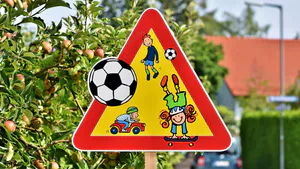
Thus we have several sign systems that differ with respect to «modality», «medium» or expression. That gestural languages are sign systems of their own, is perhaps obvious, but the same goes for written language: Unlike transciptions, ordinary, orthographic writing does not render speech, but expresses a message, follows its own rules and may use words that we can't pronounce (e.g. exotic names) and characters that have no correspondence in speech (e.g. quotes or parentheses). Therefore we need a general sign concept which is neutral as to type of expression and can use any expression that can be perceived – also drawings on toilet doors, traffic signs, light signals or whatever. As long as there is a definite expression with a definite content, both conventional, i.e. known and used in a group of people, we can use the expression to communicate within that group. And therefore we should not describe expression in general as phonological, even if it is usual to speak of «phonology» also in gestural language. A sign in general just has an expression, which must be specified in each type of sign system.
And each type of expression has different potentials for the structuring of usage and texts. In speech we can use prosody, in writing we can use capitals or italics, or logograms like 5 or @, and gestural language can use mimicry and the space in front of the sender, and point to intended referents in different places. Written language has developed conventions for text structuring that we now cannot do without: spaces to delimit words, capitals on the first word and punctuation marks to delimit and specify utterances, and the division of large texts in parts like chapters or sections with headings, paragraphs etc., thus making a written text far more structured than a spoken one. Writing is normally edited, speech is normally improvised. Even if one tries to plan a speech, it is next to impossible to plan it in detail without the use of writing.
However, written and especially spoken language have a special status: Spoken language is our first language, both phylo- and ontogenetically, and is the only truly universal language, used by all normal members of all societies. Also written language is rapidly becoming more or less universal, at least passively, as receiver (reader). Moreover, they are parallel systems, especially in alphabetic writing, where also the expression (the pronunciation and the spelling) and the expression systems (the sound system and the alphabet) are more or less parallel. Lexico-grammatically, standard speech and writing can be practically identical, with mainly quantitative differences: Certain words and constructions are more common in one or the other and may be «literary» or «colloquial», but all of them can be used in both systems. Almost anything that can be said, can also be written (with exceptions like tonemes in Scandinavian), and vice versa (with exceptions such as parentheses, quotes and capital letters). The reason is that speech has been the model for writing, i.e. that writing has been heavily influenced by speech. Pizzuto et al. (2007, 1) use verbal (language) as a common term for both. Since most people – including myself and my honoured readers – are competent in both, «verbal» signs, mainly written ones, are used as examples here.
2.3.3 Arbitrariness and Iconicity
• Motivation is unnecessary, but advantageous
Saussure underlines (1967, 100) that the connection between expression and content is arbitrary or unmotivated: The expression is not «iconic» or motivated by the content, and any expression can have any content and vice versa. Whitney states the same: The link between expression and content is «a mental association as artificial as connects, for example, the sign 5 with the number it stands for" (Silverstein 1971, 115).
Langacker (1987, 12), however, says that the principle is «easily overstated», and that it is not arbitrary that English stapler means what it means (being a combination of the stem staple and the agentive suffix -er). Saussure (1967, 181) makes the same point when he compares French vingt (20) and dix-neuf (19, literally ten-nine), og says that the first word is unmotivated while the last one is relationally motivated «because it evokes the thought of the words it consists of». But both examples concern the relationship between parts (constituents) and the whole in complex signs, respectively a derivation and a compound, not between expression and content. That the meaning of a complex sign is a product of the constituents – «the compositional principle» (Lyons 1995, 204) – is of course not arbitrary. The examples are therefore not arguments against the claim that the expression is unmotivated in most simple signs in spoken (and written) language.
But that cannot be an essential quality of signs. In pictorial writing all signs are iconic – just as the pictorial signs we still use on toilet doors and traffic signs. In gestural language iconic signs are typical, according to Bergman (1978, 10–12) and Armstrong et al. (1995, 191–192), and gestures may also be motivated «indexically», by pointing to (something that is connected with) the referent. In Swedish gesture language 'red' is expressed by pointing to the lips (Bergman), and in American gesture language both 'chinese' and 'onion' is expressed by pointing to the eye (Jackendoff 1993, 87–88). Corballis (2002, 112) says there is a tendency for iconic signs in gesture languages to become arbitrary by simplification, and the same thing happened in pictorial writing.
Lyons (1977, 103) points out that motivation is «medium-dependent»: In English cuckoo is motivated in speech, but not in writing. The arbitrariness in spoken language is due to the fact that it is almost impossible to imitate concepts with sounds. The only thing one can imitate by sounds, is other sounds, e.g. what animals «say». Here visual systems like writing or gestural language have a big advantage. However, emphatic stress (and italization in writing), which has a content and must be regarded as a sign, could be regarded as iconic: One emphasizes the content of a word by emphasizing the expression.
Corballis (2002, 112) underlines that what is decisive, is that the relation between expression and content is conventional, corresponding to Hockett's (1960, 90) design feature «traditional transmission». That goes for gestural language as well (Schröder 2006, 99). Meier (2002, 15) says that the language faculty "...does not demand that all words and signs be strictly arbitrary. Instead what is key in both speech and sign is that form-meaning pairs are conventionalized". Meier also points out that arbitrary expression is necessary for concepts that are not «imageable», such as abstract concepts, and Hockett (1960, 90) that arbitrariness has the advantage that «...there is no limit to what can be communicated about».
According to Corballis (2002, 112), «the switch from iconic to arbitrary signs» is conventionalization, but that is not the case. Also onomatopoetic words are conventional, as already Whitney pointed out (Koerner 1972, 15). English pigs say oink, but Norwegian ones say nøff. Both imitate grunting, but in different ways. Also gestures may be motivated in different ways in different gestural languages, e.g. the sign for 'tree' in American, Danish and Chinese gestural language (Meier et al. 2002, 172). Johansen (1993, 121) points out that the signs on toilet doors are conventional although they are iconic: One has to know that they denote toilets, not ladies and gentlemen. Lyons (1977, 100–101) at first uses arbitrariness and conventionality synonymously, but then adds that "...it has become clear that arbitrary and conventional are not equivalent».
The conclusion is that all linguistic signs are conventional, whether arbitrary or motivated. But motivation is an advantage. The Roman numbers I, II, III are motivated, while IV and V are not. Therefore the first are easier to learn than the last – we can see what they mean. One might decide that I should mean '2' and II should mean '1', but that would obviously not be smart. However, motivation is neither necessary nor always possible. Writing everywhere has lost its original iconicity because people found they didn't need it and were better off simplifying the characters.
Guiraud (1975, 31) says that «...motivation frees the sign from convention, and [...] purely representational signs can function without any preceding convention». But it's rather the other way round: Signs cannot be freed from convention, and as Saussure (1967, 108) points out, they can be arbitrary because they are founded on tradition, i.e. tradition or convention frees the sign from motivation: Linguistic conventions may be unmotivated because they connect a certain expression to a certain content by agreement, so that the users don't depend on a similarity between them to associate them with each other. But if it is possible to let the expression suggest the content, the sign is easier to learn and remember.
2.3.4 Linearity
- Expression units and signs do not have to be linear
Saussure (1967, 103) also underlines that the expression is linear, which means that the spoken expression units – speech sounds and syllables – and consequently the signs they express, form a chain in a specific order in time. Writing is also linear, but in space instead of time, and the direction of the chain may vary: The segments may be ordered in either lines or columns and go from left to right or vice versa. According to Henry (1970, 89), linearity only applies to usage: It is when we utter («actualisons») the units of spoken language that we enter into time. In language there is no chain, and everything exists simultaneously. Likewise Spang-Hanssen (1954, 100). However, there is linearity and order also in language, as there are syntagmatic rules that govern the order of e.g. sounds or letters in words or constituents in sentences. The order in usage is a reflection of these conventions.
Sounds and letters are necessarily linear. But some expressions may be simultaneous. In gestural language several signs may be expressed simultaneously (Armstrong et al. 1995, 90). With an example from Norwegian gestural language (from Store norske leksikon): 'Are you hungry?' can be expressed with three simultaneous signs, one for 'hungry', one for 'you' and one for 'question' (apparently none for 'are'). Also the expression units of gestures: motion, configuration and location, are produced simultaneously and not sequentially (Armstrong et al. 1995, 69). And if we regard emphasis as a sign (a suprasegmental morpheme) in speech, we have simultaneous signs also in speech and writing, e.g. the word form you and the italics in Are you hungry? Also expression units like word tones and distinctive stress, e.g. in English conduct and conduct, are simultaneous with the syllables they belong to. So exclusively linear expression is not a necessary quality of signs in general. Both expression units and signs may be simultaneous when made with different articulators.
2.3.5 Expression Systems: the «Double Articulation»
- Double articulation is advantageous, but not necessary
Double articulation (Martinet 1965, 2) or duality of patterning (Hockett 1960, 90) means that the expression normally is «articulated» or complex, consisting of meaningless expression units (occasionally one, as in the English article allomorph a) selected from an expression system, in spoken language syllables and speech sounds forming a sound system. An example of duality from Langacker (1987, 298) is the spoken word form written picnics, consisting phonologically of the syllables /pik/ and /niks/, which can be further analysed in phonemes, but grammatically of the stem /piknik-/ and the inflectional suffix /-s/, which are signs with a meaning. Syllables and sounds have no meaning by themselves, but can combine according to certain rules to form expressions (pronunciations) with meanings, e.g. /pik-nik/ or /p-i-t/. Thereby, they also distinguish (the expression of) different signs from each other, e.g. /pit/ from /bit/ or /pin/ (distinctive function). With a small number of sounds plus rules for combinations of these into syllables, allowing /p-i-t/ but not */p-t-i/, the expression system makes a large number of expressions possible, of which only some – such as /p-i-t/ or /t-i-p/, but not /p-i-m/ or /d-i-t/ – are assigned meaning and are actual expressions.
And the expression system is independent of the sign system and can thus consist of far fewer units than there are signs. As Lyons (1981, 61) puts it, «... the phonological structure of a language is not determined by its syntactic structure and its syntactic structure is not determined by its phonological structure». Hence, there can be a conflict between phonological and grammatical rules. A well-known example in Norwegian is the imperative form of verb stems ending in a consonant + /r, l, n/: What is the imperative of verbs like ofre (sacrifice), sykle (cycle) and åpne (open)? Here, speakers usually are at a loss. According to the grammatical rule that imperatives consist of the stem, the imperative of ofre should be ofr but is usually pronounced as ofre, i.e. the infinitive is used instead. It seems easier to break a grammatical rule than a phonological one: that syllables may not end in a consonant + /r, l, n/.
A parallel expression system is the alphabet, so alphabetical writing, both phonemic and syllabic, has double articulation as well. The letters correspond to expression units in speech, either phonemes or syllables. Also sign languages are assumed to have expression units, which according to Stokoe (1960, 40) are position, configuration (i.e. the shape of the active hand), and motion. Like speech sounds or letters, these features have no meaning by themselves, only in certain combinations. Stokoe (1960, 33, 43) uses the term cheremes for these gestural expression units, and Hjelmslev (1966, 43) calls expression units in general figures. Here, I simply use expression units as a common term for speech sounds, letters and the features that gestures are composed of.
Double articulation is usually considered as a necessary quality of signs systems or languages.
According to Armstrong et al. (1995, 37) duality has been put forth as «the very essence of language». But there are writing systems without expression units, where the characters are meaningful (logograms) and thus constitute signs – words or morphemes – by themselves, like chinese characters or our own logograms, e.g.?, +, =, §,%, &, $, @ and the number symbols o-9, which may be combined to form complex signs for larger numbers, such as 90. Each character is a complete sign expression and normally corresponds to a word or morpheme in speech. In English, the number ‘9’ may be written either alphabetically as nine, with an English spelling consisting of 4 letters which correspond to sounds and may be pronounced as /nain/, or logogrammatically as 9, which has the same meaning but is international and may be pronounced in any language that has a word for ‘9’. Also closed signs systems like traffic lights or gestures like nodding (see next section) lack expression units.
This shows that an expression system and double articulation is not a necessary quality of signs systems, not even open ones like writing. They can do without, but at a price: Without an expression system one needs as many sign expressions, i.e. characters, as there are signs, which is a big load on memory. According to Wikipedia the largest chinese dictionaries have 85 000 characters, but to read a newspaper about 3 000 is enough. In spoken language something corresponding is impossible, as we can only produce a finite number of sounds. There we need a complex sign expression, normally composed of different combinations of a small number of expression units (sounds). In writing we can do without.
2.4 Signs
2.4.1 Open and Closed Sign Systems
If the expression may be anything observable, also traffic signs and lights must be sign systems (see the analysis of traffic lights in Hjelmslev 1973, 123 f or Johansen 1993, part III). They communicate a message, either information (e.g. ‘a sharp turn in front’) or a command (e.g. ‘Stop here’): «the traffic lights speak to the road users in words or in sentences, or even in imperatives...» (Hjelmslev
1973, 124). Red light tells us to stop, and there is punishment for ignoring the command.
The difference between the traffic lights and spoken, written or gestural language – in addition to type of expression – is that the traffic lights are an extremely small and simple sign system or language with neither double articulation nor grammar: a closed or limited system with a special purpose – to express a few messages to drivers at a crossing. It is limited because it consists of four signs that can’t be combined, making four messages possible: red light = ‘stop’, red and yellow light = ‘prepare to go’, green light = ‘go’ and yellow light = ‘prepare to stop’. Ordinary languages are open or unlimited sign systems for communication in general, where minimal signs (morphemes) can be combined into complex signs that can express any message. Hjelmslev (1973, 122) distinguishes between «...restricted languages, which can only serve definite purposes» and «...unrestricted or pass-key languages, which can serve any linguistic purpose». Also Hockett (1960, 90) distinguishes between closed and open systems, under the heading of «productivity». Such closed sign systems are used by some animals, which «...typically have a small, closed set of signals for conveying particular, biologically critical meanings» (Fitch 2010, 173). An example is a set of warning alarms for various kinds of predators among vervet monkeys (Seyfarth et al. 1980).
Also the few gestures that we all use instead of or together with speech – pointing, waving, nodding, shaking the head, ‘thumbs up’, ‘give the finger’ etc. – can be said to constitute a limited system of signs without double articulation and grammar, while gestural languages are open systems with double articulation and grammar. According to Tomasello (2008, 62–63) these everyday gestures are either «attention-directing» or iconic. An attention-directing or perhaps demonstrative gesture is pointing, meaning ‘Look at that’ (i.e. what I am pointing at) or ‘There (i.e. where I am pointing) it is’. Iconic gestures might be waving towards yourself to make someone come closer or holding a raised hand in front of you (like an obstacle) to make someone stop. Iconic gestures can also be improvised – pantomime. An example from Tomasello (pp. 67–68) is a security guard at an airport making a circular movement with his hand to make you turn around. But gestures like nodding (usually for 'yes') or shaking one's head (usually for 'no') are neither demonstrative nor iconic.
2.4.2 Signs without a Specific Expression?
- Spoken, written and gestural languages are sign systems of their own
Unlike Saussure himself, Hjelmslev and some other linguists have taken the consequence of Saussure's claim that language is «form», i.e. relations or functions, not «substance» or qualities and consists of only differences (Saussure 1967, 166–169). Namely by saying that the expression is neither phonic nor graphic (nor has any other material substance), but may be realized in any substance (Hjelmslev 1966, 93, see also Gullichsen 1990, 28). This view seems to be quite widespread today. According to Bouchard (2013, 146), the sign is «modality-independent». Bolhuis et al. (2014) regard speech and gesture as different «externalizations» of language, and Hurford (2014, 106) says that «...underlying the medium in which language is expressed, whether signed or spoken, is a system which is independent of the medium».
Here both written and gestural language are accepted as language – but not proper, independent languages, just as «modalities» or expressions of the same language, which is neither spoken nor written nor gestural. This means that we have an abstract language, consisting of signs without a specific expression. Such a language is difficult to conceive, especially if also gestural language is a realisation of it, because it has a quite different structure from «verbal» languages, which are parallel and therefore more easily seen as the same system. It is not only the type of expression that separates the three «modalities»; also the signs may differ. For example, there are no signs in speech that correspond to parentheses or quotes in writing. These are exclusively written signs.
The claim that language is «form» and does not have any qualities, is untenable. Spang-Hanssen (1954, 102) points out that «any difference [...] presupposes a similarity», and differences can only mean ‘different qualities’. Nothing can consist of functions or relations without qualities – there must be something, with specific qualities, that has a function and relations between entities with specific qualities. Harder (1996, 26) is right in saying that “Extreme structuralism [...] will not do: substance matters, and structure presupposes substance” (see also the critique of Hjelmslev’s view in Garvin 1954, 91 f, Eco 1984, 23, Vachek 1989, 109 f and Johansen 1993, 49).⁷ In addition, the view that speech, writing and gestures represent the same sign system implies a favouring of the content, which is of the same kind (conceptions) in all «modalities» while the expression varies. But that is of no consequence for the identity of the sign and the language: It is the content which is constant and defines the sign and the language. But signs are defined by both expression and content, and have a specific expression as well as a specific content – not any expression. That’s why synonyms are different words though they have the same content.
If so, also signs with different types of expression such as sounds and letters must be different signs. The alternative to Hjelmslev's view, which especially the Prague structuralist Vachek (1989) has argued for, is to regard spoken and written language (and even more gestural language) as different signs systems instead of different realisations of the same one. For example, the spoken word /bit/ and the written word bit in English must be different, but semantically corresponding words, just like German Ochs and French bœuf (with expressions of the same type), and spoken and written English are different sign systems. Even if they represent the same national language (i.e. English) – a sociolinguistic concept and the usual meaning of language in everyday speech – they are not the same language in the basic sense of ‘sign system’. And unlike Ochs and bœuf /bit/ and bit have expressions of different types – speech (pronunciation) and writing (spelling) – which correspond to each other: Each sound corresponds to a letter (a rather unusual case in English), so spoken and written words and texts can be translated to the other system according to grapho-phonological rules (which can be rather complicated in English). In other words, to read aloud a written text or write down a spoken one is a translation, as Haas (1970) underlines. And not all units can be translated: Very useful written signs like quotes are untranslatable to speech, although people sometimes try to mimic them by gesturing with the fingertips. But that is not speech.
2.4.3 Words and Grammar BETWEEN Expression and Content?
There's hardly a linguist who does not speak of expression and content (or meaning), but not all linguists think that they are directly connected as parts of a sign. One example is Gil (2000, 176), who says that there is «...a crucial difference between human language and most other semiotic systems, such as, for example, traffic lights [...], where red means ‘stop’ and green means ‘go’.» Namely that “...the relationship between sounds and meaning is not direct [...]. Instead, the relationship is mediated by various intervening entities: the linguistic forms [...] which constitute the basic building blocks of linguistic analysis”. From this follows «the autonomy of syntax», i.e. that syntax is a totally abstract system between expression and content, where the units have neither an expression nor a content (see Faarlund 2005, 41, or Teleman et al. 1999, vol. 1, 41).
Such entities certainly don't occur in usage and, in a usage-based account, not in the language that is used either. Between expression and content there is nothing, and linguistic forms, i.e. lexical and grammatical units, do not intervene between sounds and meaning, they consist of sounds (or other expressions) and meaning, so they can be observed and understood. In other words, they are signs, either minimal signs like Stop! or complex signs like Stop here! And traffic lights are an exact parallel to morphemes or word forms: Stop! means ‘stop’ exactly like red light, and the connection is just as direct. In both cases we have a conventional (and unmotivated) combination of an expression and a content, and instead of the red light one could have had a screen that showed Stop! Neither the red light nor the morpheme, word form and sentence Stop! exist between expression and content – both have or consist of an expression (a spelling) and a content or meaning. The greatest difference between closed sign systems like the traffic lights and open systems like spoken, written or gestural languages is that the open systems have a grammar that makes it possible to combine smaller signs into larger signs according to certain rules, so that we get complex, grammatical signs and as many signs as we need to express any thought. Let’s turn to such signs.
2.4.4 Complex Signs: Grammar
- Complex signs consist of signs, not expression and content
Because signs can be combined into larger signs according to grammatical rules, it is essential to distinguish between minimal and complex signs. In my view, only minimal signs consist of expression and content. Complex signs consist of smaller signs – the constituents, as they are usually analysed in grammatical analysis. The minimal sign and the smallest unit of grammar is well-known: the morpheme, e.g. stop (a lexical morpheme) or -s (a grammatical morpheme – plural, genitive or present, 3. person singular). Such signs can only be analysed in expression and content (which may be further analysed). But morphemes may be combined according to morphological rules into complex word forms such as stop-s (present, 3. person singular), composed of a stem and an inflectional suffix that is relevant for such (verbal) stems. And word forms may be combined to syntagms according to syntactic rules, e.g. sentences like Stop here, composed of a verbal, i.e. a verbal word form, and an adverbial. Now stops of course may be analysed in the expression S-T-O-P-S and the content 'stop + present 3. person singular', but they don't make one sign – they make two, a stem and a suffix, each with expression and content. We should distinguish between combinations of expression and content (minimal signs) and combinations of signs (complex signs).
Furthermore, the combination of signs is recursive: Signs may be combined into larger signs, of the same or a different type, which may be combined into still larger signs etc. This way we may have a compound (as a constituent) in a larger compound or a sentence in a larger sentence. Therefore, complex sign must often be analysed on multiple levels, as syntactic «trees» show. Stop at the first crossing must be analysed on three levels, because it consists of three syntagms of different types: a sentence, a prepositional syntagm and a nominal hypotagm (usually called «phrases», but phrases may consist of a single word form, so syntagm and hypotagm are more precise for phrases consisting of several word forms).
What is the maximal sign of language? Probably sentence types or, more generally, utterance types, which are the maximal units of grammar. Texts (e.g. this one) cannot be called signs because they are not conventional, but individual products. So are sentences, but they realize constitutive or structural – lexical and grammatical – conventions and a conventional sentence type like statements or passives, or an other utterance type (e.g Yes or utterances of the type You fool!), and can therefore be full of mistakes (breach of rules). Constitutive rules must be followed. Sentence types (and other constructions) belong to a language, texts do not, although they follow regulative or functional conventions, i.e. pragmatic and stilistic norms that govern the use of language, like Grice's maxims (see Searle 1969, 33 f or Dyvik 1995, 24 for these two types of conventions). You can break everyone of them and still speak or write grammatically (but perhaps not very comprehensibly or sensibly). Texts consist of signs, but are not signs themselves. That's why sentence types are the object of grammar and texts of text linguistics, rhetorics, conversation analysis etc.
2.4.5 The Linguistic and the Semiotic Sign
- The linguistic sign is a category of its own, not a subtype of semiotic signs
The linguistic sign is usually considered as a subtype of the broader, «semiotic» sign category, which is everything that «stands for» or is connected to something else, called their «object». They are usually divided into three categories: indices, which are natural, and icons and symbols, which are artificial (Liszka 1996, 34, Leira 1971, 12, J. Martinet 1976, 51 f). Indices are naturally connected to their object and indicate – show or suggest – something, e.g. smoke as a sign of fire or yellow leaves as a sign of autumn. They include symptoms, i.e. physical conditions that indicate an illness or a mental state, e.g. fever as a sign of certain illnesses or trembling as a sign of fear or excitement. The connection is natural and thus necessary, namely cause and effect: Fire is the cause of smoke and illness the cause of the fever. We can infer from the effect to the cause, but that is not communication and does not presuppose any sign system. As Mounin (1985, 30) points out, «...there is no a priori code for the interpretation of indices». Indices do not express ideas: Blushing does not express the concept 'shame' like the letter sequence shame does, but is associated with the feeling of shame, i.e. the non-linguistic referent of shame.
Therefore, blushing is not communication or a linguistic sign, although it can reveal a lot about the blushing person. It's not a conventional expression and doesn't have any meaning in the linguistic sense. Communication presupposes the sender's intention to communicate, as Guiraud (1975, 27–28) and Mounin (1985, 23) point out. The sender has to produce at least one utterance, and one does not do so without a purpose, even if the purpose is not always communication, as when swearing. Also Johansen (1993, 336–337) mentions «purposiveness» and «communicative intent» as defining qualities for traffic lights and other sign systems. And one doesn't blush intentionally to convey something. But physical factors that one can control can be used in communication. J. Martinet (1976, 47 f) contrasts coughing as a symptom (of e.g. a cold) with coughing as a «signal» or sign used in communication, such as warning someone that somebody that is being talked about, is approaching. A similar case is smoke as an index of fire versus smoke signals, e.g. when a new pope is elected. Both instances are informative, but only in one case is there an intent to communicate and a conventional sign – we have to learn that coughing or clearing one's throat can function as a warning in situations where we cannot speak.
Icons are representations of their object – photographs, pictures, sculptures, maps, models etc. – and usually resemble it (except non-figurative paintings). Like indices, icons do not represent concepts, but things – people, objects, places etc. – or events (e.g. a battle). The difference between a picture of a house and a depicting written sign for 'house' (as a simplified drawing of a prototypical house) is that the picture represents the house while the written character represents the idea of a house, the concept 'house'. It has a precise, conventional expression as well as content: We cannot draw the house as we wish and we're not depicting any specific house, but the idea of houses in general. Therefore, we can communicate precisely with the written sign, but not with the picture.
Symbols are connected to their object by convention, e.g. the cross as symbol of Christianity, the flag as symbol of the nation or red as symbol for socialism. Also linguistic signs are often called symbols by American linguists. According to Peirce, words are symbols, and their object seems to be the referent, not the meaning (Liszka 1996, 34, 39). But we should distinguish between linguistic signs and symbols in the everyday sense, as Saussure (1967, 101) does, using the scale as a symbol of justice as example. Saussure seems to think that the difference is that symbols are more or less motivated, and also Guiraud (1975, 32) says that symbols are «analogical» or «iconographic». They often are – it's not accidental that the cross is a symbol of Christianity and green a symbol of conservation of nature. The scale as a symbol of legal justice is a metaphor: Legal justice is like a scale where one considers the evidence both for and against the defendant's guilt and sees which «weighs» the most. So the scale is motivated. But many flags are unmotivated, and why is red a symbol of socialism? And as we have seen, also linguistic signs can be motivated, so motivation cannot be the defining difference between signs and symbols.
The crucial difference is again that symbols like indices and icons are not connected to ideas but to things, usually abstract social phenomena – religions, ideologies, nations etc. The cross does not represent the idea of Christianity, but the religion itself, i.e. the non-linguistic referent of the word Christianity. Therefore, symbols are not normally used to communicate, but to visualise the (invisible) referent. We can communicate with them, e.g. by using the cross to communicate 'Christian' or 'Christianity' in a rebus. But that is non-linguistic communication and there is no precise content. If we want to express or communicate ideas, the expression must be connected to ideas, not to objects.
Mounin (1985, 53–54) warns against using the same word (i.e. mean) for «the interpretation of indices» and «the comprehension of signals», and Bickerton (1995, 13) distinguishes between meaning which «...can be inferred by an observer», e.g. in That cloud means rain, and meaning which «...is intended by an agent», e.g. in kindly leave means 'get the hell out'. In the interpretation of «signals» or signs we have to do with intended or communicated meaning. But also intended meaning is inferred from the expression, based partly on the conventional content of the sign and partly on the situation (including the context): What does the sender mean by the sign here and now? No convention can tell us who I refers to in a particular text; instead we must know who's speaking or writing. That is, we have to infer the reference from the signs the sender has used plus knowledge of the situation and the world in general. So in usage meaning is both intended by the sender and inferred by the receiver.
Thus, both indices, icons and symbols in the everyday sense differ from linguistic signs both structurally and functionally. Structurally, they are unilateral units and comprise natural phenomena. As physical entities, they correspond to the expression in the linguistic sign. However, they are not related to ideas but to physical, mental or social phenomena – the non-linguistic referents of the corresponding linguistic signs. In other words, they have no content and are not expressions. A fever or a flag does not mean illness or a nation in the same sense as CAT means 'cat'. We can infer something from both fever and words, but we infer different things, respectively a state of a person (a certain illness) and ideas. Functionally, linguistic signs are primarily instruments of communication, while the other «signs» are not. Linguistics should not accept the broad and imprecise use of words like sign and mean(ing) in everyday speech and semiotics. Both Peirce and Saussure are trying to unite phenomena that don't constitute a uniform category. Although linguistic signs may have iconic and indexical qualities (e.g. in metaphors and metonyms), they don't have much in common with «semiotic signs» and should not be considered a subtype of such signs, but as a category of their own.
Conflict of Interest
The authors declare no conflict of interest.
Ethical Approval
Not applicable
Data Availability
The datasets used in this study are openly available at [repository link] and the source code is available on GitHub at [GitHub link].
Funding
This work did not receive any external funding.
References
Cite this article
Related Research

Special Issue
Launch a focused special issue to highlight research, emerging trends, and expert insights in your academic field.