




IntelliPaper
Abstract
Local energy community (LEC) is a vertically nested system in energy supply and an ecosystem with joint values and objectives. On-site integrated hydrogen-based systems connected to the grid, consisting of electrolyzer, hydrogen storage and fuel cell system - hydrogen prosumers - provide efficient balancing of local energy consumption and local production of renewable energy that can be extended over annual cycles. There is no transport of hydrogen needed. Thus, H2LEC – Local energy community with integrated hydrogen systems - represents the carrier of dispersed energy and hydrogen production as a complement of concentrated energy and hydrogen production: on average, H2LEC will predictably achieve at least 75% self-supply. Additionally, with Combined Heat-and-Power systems, coupling to thermal system adds to energy efficiency.
H2LEC represents a virtual socio-economic system based on community values and thus engaging initiative, innovation and capital of local actors, new technology start-ups and local industry; and represents opportunity for new disruptive business models. It brings into the energy supply system new players – prosumers, who actively trade their flexibilities among themselves and on the external markets, and stimulates new enabling technologies, notably automated close-to-real time trading, boosting end-to-end automated solutions.
The H2LEC create the need and the market for smaller integrated hydrogen-based systems ranging from a few kWe for residential homes to a few MWe units for larger industrial companies or local districts, with complete range of capacities in between, needed for public or tertiary buildings and smaller enterprises. Thus, they provide an opening for participation of SMEs in local and international value chains and will create a strong complementary energy bottom-up pillar and hydrogen supply system locally and in Europe.
Explore Digital Article Text
I. THE DUAL NATURE OF LOCAL ENERGY COMMUNITY
Local energy community (LEC) exhibits a dual nature: it is a subsystem in energy supply, a socio-economic ecosystem.
1.1 LEC as a Subsystem in the Energy Supply
In fully harmonized electricity supply system , LEC is a vertically nested subsystem, following the concept of system of systems: each subsystem has similar functions as its parental system and is fully nested in it. As further explained in Section 4, this concept is applied to all the levels of the electricity supply system, including the prosumer level.
Consequently, LEC is defined so that it can optimize its operation: It contains all the processes and roles that participate in a segment of the electricity supply system, and it interacts with other parts of the electricity system:
-
It contains electricity production, consumption and storage
-
It exchanges flexible energy products – energy flexibilities internally and externally.
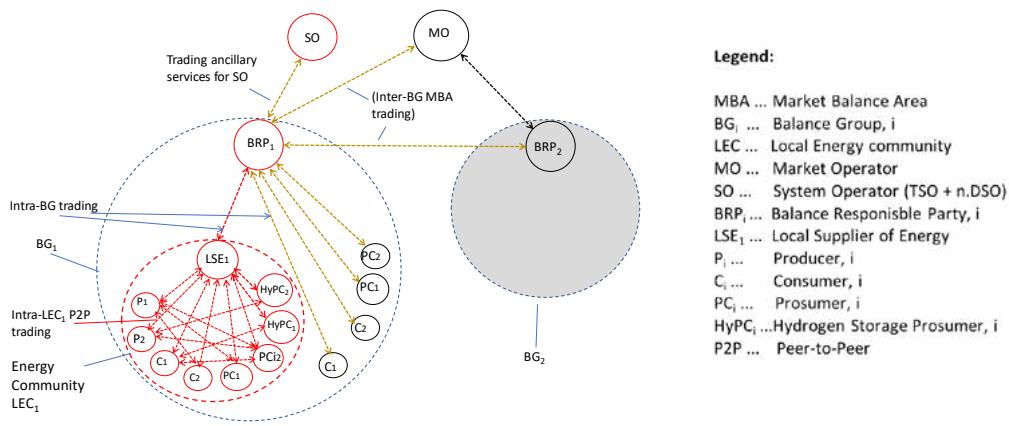 Figure 1: Connected LEC as a subsystem in energy supply
Local energy Community consists of active consumers, producers and prosumers (in this paper all also collectively termed as prosumers) of different size and character: residential homes, tertiary buildings, public buildings, RES producers, industrial companies of various size and technology - they are all connected to the electricity grid.
Prosumers of all categories, members of LEC, become active participants in energy trading: they exchange their energy flexibilities internally in LEC among themselves and trade collectively as a virtual business system on the external markets with traders or system operators. Using their energy reservoirs, virtual or explicit, they can trade in both positive and negative flexibilities, by augmenting or reducing their electricity consumption or production.
In current classification of energy communities, evolved in interaction of H2020 IA projects within Bridge initiative, there are two types of local energy communities – Citizens' energy community (CEC) and Renewable energy community (REC) [2]. CEC is composed of citizens only, while Renewable Energy Community can be composed of prosumers from all categories, including companies. In authors opinion, only this latter type of energy community has adequate characteristics and attributes to act as a subsystem in energy supply. In this paper, we discuss exclusively this type of energy community.
1.2 LEC as a Socio-Economic Ecosystem
The members of the LEC are local inhabitants, institutions and businesses. They share local values and derived joint community objectives. LEC thus represents a socio-economic ecosystem and a virtual business system with joint values and joint objectives: it engages initiative and capital of local actors – inhabitants, new technology start-ups and locally established businesses.
II. LEC AS A SMALL HYDROGEN VALLEY - H2LEC
Hydrogen valleys as defined by Hydrogen Europe represent integrated hydrogen ecosystems. There are two types of valleys – Large and Small. Large Valley combines multiple applications (ports, airports, industrial hubs, cities, energy communities,...).
Small Valley can focus on sector integration in specific problem domain, for concrete use cases or targeted segments of market and users. It must integrate all the technologies participating in it.
With integrated hydrogen systems as described below, LEC becomes also a Small Hydrogen valley – H2LEC. In it, hydrogen systems play a vital role in green energy storage, balancing electricity consumption and production, whereas smart grid trading system valorises the flexibility from such a system to provide services to the energy sector.
The essential building blocks of H2LEC are:
-
HyPro – Integrated hydrogen system
-
Local production of renewables
-
Cross-sector coupling
2.1 Hypro - Integrated Hydrogen System
A fully integrated hydrogen system in H2LEC is Hydrogen Prosumer – termed HyPro. It consists of the following main building blocks:
-
Electrolyser
-
Hydrogen storage
-
Hydrogen fuel cell (HFC) system with or without CHP
-
Energy management system (EMS) with an Intelligent trading interface for purchasing and selling flexible energy on the grid.
Green hydrogen prosumer in the smart grid: i) consumes green electrical energy from the grid for producing hydrogen in electrolyser; ii) provides energy storage in hydrogen until needed; iii) produces green electricity and thermal energy in HFC system; and iv) purchases and sells flexible energy through automated trading platform.
A reduced version of the HyPro system can be either i) Hydrogen Consumer (without HFC system), with produced hydrogen utilized off-community, or ii) Hydrogen Producer (without electrolyser), with hydrogen produced elsewhere, off-community. Either version lacks some of the advantages of the complete HyPro system.
HyPro systems are installed on-site as part of a prosumer energy system or at a community location as part of the H2LEC energy system.
On-site integrated hydrogen systems bring to H2LEC some important advantages: no transport of hydrogen from a central production location is needed; and cross-sector coupling with other energy vectors and sectors is enabled: in particular, thermal energy for heating, but also biomass, and transport. They thus successfully replace conventional non-green power plants in local energy supply.
2.2 Local Production Of RES
Locally produced renewables (RES) are any available sources and installations: PV, windmill, biomass, hydroelectric.
RES systems are installed on-site as part of a prosumer energy system or at a community location, as part of the H2LEC energy system.
2.3 Cross-Sector Coupling
One of the key challenges of the present hydrogen-based solutions is the end-to-end efficiency. Each transformation step introduces certain costs, which are usually expressed as losses in the system. The electrolysis and fuel cell operation typically produce heat, which, if not exploited coherently, represents loss – waste heat.
In the H2LEC, coupling with local subsystems is of crucial importance for sustainable operation on a competitive basis. Sector coupling shall be addressed at the planning phase, when dimensioning the systems – the use of side products has to be implemented techno-economically. Besides the explicit side products from the processes (heat, oxygen), there are also implicit coupling considerations. One such aspect is the compression of hydrogen, particularly related to hydrogen transport at high pressure versus its local use on low pressure. The latter use case has potential for significantly better efficiency and must as such be considered in real-time techno-economic optimization.
In Section 6, we provide some insights into an evolving H2LEC with concrete examples of sector coupling in place. The electrolyser utilized is of PEM type, reaching an efficiency of around 79% (power-to-gas, without heat recuperation).
Typically, PEM electrolysers would reach power-to-gas efficiency between 70% and 80% [4]. In order to exploit the waste heat from the electrolysis process, heat exchanger coupled with heat pump can be integrated with the electrolyser. Heat exchanger efficiency and additional electricity consumption from the heat pump must be considered in the overall efficiency. For a PEM electrolyser such as the one in Section 6, the model [5] yields potential overall efficiency of up to 94.7%, with most of the losses attributed to the heat exchanger. Similar analysis can be made for the fuel cell part of the integrated system. Additionally, oxygen produced as part of the electrolysis process can be exploited if there is a relevant consuming system within the H2LEC. One example of such a system is wastewater treatment, which consumes both heat and oxygen side products. Overall efficiency is further increased while additional income can be secured for locally produced clean oxygen and heat.
Convergence from theoretical cross-sector coupling to practical implementation requires consideration of the dynamics on the consuming side. To exploit the available heat and oxygen potential, a consumption process must be available within the H2LEC, it must not be saturated (able to consume the produced goods), and it must be able to follow the dynamics of production (which is dictated by the volatile RES supply, demand response, explicit and implicit storage). As the multi-dimensional optimum of the complex subsystems, such as H2LEC, is not apparent, automated heuristics and optimization tools - H2LEC Enablers (Section 3), must be employed. This way, the entire local subsystem can cater to fast transients, further increasing the economic benefits.
2.4 How Important is H2LEC
Local energy community is one of the most relevant ecosystems in terms of green transition. With the advent of hydrogen-based systems in the energy supply, H2LEC represents an energy supply subsystem that, additionally to the LEC attributes already identified in Section 1:
-
Boosts local production of renewables,
-
Supports the inclusion of the cost of degradation of the environment into total CAPEX and OPEX functions
-
Links different energy carriers, thus providing cross-sector optimum.
It represents the important building block in the pillar of dispersed energy production (c.f. Discussion in Section 7).
III. H2LEC ENABLEERS
3.1 Enabling technologies
To realize H2LEC potential, several technologies are important enablers:
-
Integrated hydrogen production, storage and consumption
-
Automated trading of energy flexibilities
-
Techno-economic symbiosis between integrated hydrogen production, storage and consumption and in-LEC RES production; and
-
Coupling of electricity production with the production of thermal energy for heating.
There may be an additional enabler, depending on the character of the resident industry. Such a case represents the case of energy-intensive industries, within their objective of replacing existing energy carriers with hydrogen and enhancing energy efficiency of both energy and production processes.
Integrated hydrogen production, storage and consumption technologies as implemented in HyPro systems (Section 2.1) are tailored to the type and size of the prosumer or the size of the H2LEC. H2LEC can range in size from a small town or industrial zone to a medium-size city; the limiting parameter is the ability to formulate relevant joint values and objectives shared by sufficient number of resident entities - a threshold representative aggregate of prosumers on its territory.
Consequently, typical sizes of HyPro systems for a medium-size community range from a few kWe to a few MWe. In an internal analysis we looked at the sizes and types of the prosumers (asset types) and their distribution, and the indicated Use case. The results are presented in the following Table 1. The important Use case for various asset types is coupling with thermal energy supply system through Combined Heat and Power unit (CHP) as part of the HyPro. The subcase indicates its interaction with the energy system in H2LEC.
Table 1: Typical HyPro sizes for representative Asset types and Use cases in H2LEC
| Size HyPro | Asset type | UC description | Subcase |
| 3-5 kW | Domestic individual | HyPro with CHP | individual |
| HyPro w/o CHP | individual or link to district heating | ||
| 30-50 kW | Larger buildings, schools | HyPro with CHP | individual |
| HyPro w/o CHP | link to district heating | ||
| 100-400 kW | Tertiary buildings, smaller companies | HyPro with CHP | will contribute to flex energy trading with environment |
| HyPro w/o CHP | link to district heating | ||
| 1-4 MW | Larger companies | HyPro with CHP | will contribute to flex energy trading with LEC environment |
| HyPro Consumer (electrolyser only) | will contribute to flex energy trading with LEC environment | ||
| 1-4 MW | H2LEC as a system | HyPro Consumer (electrolyser only) | will contribute to flex energy trading with LEC environment |
| >4 MW | H2LEC as a system or larger companies | HyPro Consumer (electrolyser only) | production of H2 as energy carrier for external markets |
The sizes of HyPro at various prosumers are based on the concept that each prosumer is a subsystem with its own business objectives nested into the community system. The size of its energy systems is designed to service its needs in techno-economic sense optimally; and it exchanges surpluses and deficiencies of energy in flexibility trading. Larger electrolyser units (i.e. large HyPro Consumers), exceeding the techno-economic needs of the community use case, whether installed by a prosumer or by LEC as a system, target competitive production of hydrogen for off-community usage. In this case, hydrogen has to be transported to the place of use and the comparative advantage of on-the-site usage is forsaken.
Automated trading of energy flexibilities.
Prosumers – members of the H2LEC exchange their energy flexibilities. Energy flexibilities are exchanged using automated trading technology. Automated trading is carried out close to real time on automated trading platform, with trading intervals of 15 min or less, depending on the requirements of the Use case (c.f. Section 5).
The platforms for automated trading of energy flexibility beyond state-of-the-art include the possibility for implicit trading of energy transfer capacity between the location of production (generation) and the location of need [6].
Standardized protocol FlexOffer is used, enabling coupling of any EMS or storage management system. The protocol is parametric with provisions for structuring the flexibility offer in time slices with different energies & power and prices; it includes time-ahead and acceptance-before provisions, and others. A complete description of FlexOffer can be found at .
In intra-LEC trading, prosumers exchange energy flexibility among themselves, in peer-to-peer trading process.
They can institute a multi-category trading, based on formulated community objectives, in which fiscal currency value is used only as the common value denominator and value reference for trading on external markets ("pseudo-currency") but in intra-LEC trading it can be replaced - structured into several categories, including e.g. joint investments [8].
In communities with sector-coupled energy system, the trading can be formed in parallel in different energy vectors - a multi-dimensional trading, (c.f. Section 2.3). In such systems, the optimization of the complete energy supply system is targeted.
Techno-economic symbiosis between integrated hydrogen production, storage and consumption and in-LEC RES production.
The local production of electricity is predominantly volatile; what is more, the production dynamic is out of phase with consumption dynamics. Integrated hydrogen systems HyPro can provide balance between the two in all time ranges. While in the short-term range they can be successfully complemented by batteries, in the medium term and long term, batteries are no competitor.
The important H2LEC enabler is an integrated energy supply system composed of HyPros and RES production systems including batteries - if installed, and designed, financed and operated in techno-economic symbiosis, i.e. sharing the same business case. Similarly to HyPro systems, these systems are installed both at individual prosumers and at H2LEC as a system, and similar indications apply.
The enabling technology is optimized integration and joint business model; an instantiation of the concept of the H2LEC itself.
Coupling of electricity production with the production of thermal energy for heating.
This cross-sector coupling builds on the concept of total energy efficiency of primary energy and represents the other dominant enabler of H2LEC: it integrates complete energy system of the prosumer and of the community as a system. The design sizes of CHP units are based on requirements for thermal energy; this represents also a parameter in designing the size of the HyPro system: the excessive capacity for energy trading has to be economically justified by the envisaged trading revenues.
3.2 Systemic non-technical enablers
There are several systemic non-technical enablers that go hand in hand with enabling technologies:
Integration of Virtual business system.
LEC and H2LEC are virtual business systems, consisting of hundreds, possibly thousands and tens of thousands of prosumers, linked together by a business operator. The business operator operates the system and has several essential functions, inter alia:
-
Manages the entity of the business operator
-
Connects, directs and coordinates the H2LEC virtual business system:
-
Current operations
-
Business models
-
Joint activities and investments
-
Operates the automated flexibility trading system:
-
Supervises internal flexibility trading and represents H2LEC in trading on external markets.
Consequently, the selection of appropriate business operator to fit best the specific social, cultural and industrial specifics of a community can represent an important enabler (c.f. Section 4).
Harmonization of the electricity supply system.
The concept of H2LEc is based on fully harmonized electricity supply system . In actual circumstances, the national systems are only partially harmonized.
The actual structure of the electricity supply system will influence the techno-economic impacts of the H2LEC operation.
The enabling parameters that depend on the scope of harmonization of the system are:
-
Energy transfer costs: in a fully harmonized system, the costs of energy transfer along the distribution grid, from the location of production to the location of use of energy are included in the total cost of energy; the indicated method based on inter-MBA transactions is implicit trading of energy transfer capacity. Inclusion of energy transfer costs in the total energy cost equation makes possible objective comparison of cost of flexibility anywhere in the MBA territory and thus enables optimization of complete MBA system. It also activates in economic terms the advantage of H2LEC as a subsystem in energy supply: for all locally produced energy, no transfer costs are incurred. Similar applies to the emerging production of hydrogen.
-
Dynamic pricing of both energy and network fee based on actual costs: the typical tariff systems for energy and network fee are based on averages over large geographical territory and over long periods. To enable system-wide optimization of energy production, dynamic pricing of both energy and network fee is necessary. This will provide the condition and criterion needed for properly positioning the concentrated energy production as opposed to the dispersed energy production, and the costs of baseload energy transfer as opposed to the cost of congestions. The enabling parameter is in particular the network fee as it influences the size and the place of investments in the grid.
-
The system for partitioning the network fee between TSO and responsible DSO (or sub-DSO): Partitioning the network fee between TSO and DSO to properly reflect the investment and the operation of different segments of the grid according to voltage level enables the scope of dispersed energy production in local energy communities. Growth of this segment of energy supply needs reinforcement in grids up to 20 kV.
IV. H2LEC BUSINESS MODELS AND BUSINESS RELATIONSHIPS AMONG LEC MEMBERS
4.1 Conceptual Background
The optimal form of cooperation between members and the business operator could be a contractual form of collaboration. Ideally, the business operator should operate on a non-profit basis to fulfill this role. It is crucial that resources and profits are equitably distributed among all parties with whom the business operator has a contractual agreement.
If the role of the business operator is assigned to an independent aggregator, it is expected that the aggregator would retain some portion of the profit. However, beyond that, the goal is for the aggregator to cover its costs and any surplus to be transferred back to the H2LEC community for realizing their benefits from participating in the community of joint investment, which will be defined as essential for optimizing the LEC system. This surplus does not represent profit for the aggregator but rather serves as a means of enhancing the community and its systems.
It is vital that the business model also encourages joint investments for further system improvement. Although costs must be covered, surplus capital should not be paid out as profit to members or the aggregator but must be reinvested in system improvement. This is easiest served by the contractual model mentioned.
In such a system, many nested sub-systems are formed: Each member, whether a business entity or residential prosumer, becomes a sub-system with its own goals, business policy, and investments, nested into joint community goals, business policy, and investments. The prosumers will contribute with their investments to optimize their own system in line with the objectives of the overall system.
Derived from emerging cases, there are several business models - attributes for the H2LEC business operator:
-
Business operator is a company owned by the local commune (city)
-
Business operator is a company in public-private partnership (PPP)
-
Business operator is the company responsible for energy supply in the territory of the H2LEC – Local supplier of energy (LSE)
-
Business operator is an ESCO company
-
Business operator is a BRP or an FSP.
Some of these attributes can be combined. The selection of the type of the business operator will largely influence the business model of a community.
Integrated business model for local supply of energy.
It is stipulated that the H2LEC is a connected – nested subsystem in energy supply (c.f. Section 1 and Section 5). The H2LEC business models must all service this concept. The distinction parameter between them is the level of community self-supply attainable on criteria of techno-economic competitiveness.
The business models that foster high level of self-supply are those in which the systems of all energy supply vectors are treated as subsystems in the complete energy supply system in the community – a sector-coupling case and one with highest social acceptance. This is best attained in a combined business model of Local supplier of energy with business operator as a publicly owned or a PPP company.
Detailed discussion of H2LEC business models is out of scope of this paper.
V. CONNECTED H2LEC USE CASES
As mentioned in the previous sections, the systemic assumption is that H2LEC is a connected vertically nested subsystem in energy supply. The complete portfolio of H2LEC Use cases can include islanded operation, in which H2LEC is self-sufficient and there is no exchange with the external environment. However, this is a borderline – "asymptotic" case that lacks reference to provide economically competitive operation on a sustainable basis.
The range of connected H2LEC Use cases can be classified into several categories:
-
Local flexibility markets for DSO (ancillary services for DSO)
-
Regional markets for DSOs
-
MBA energy exchange markets
-
Flexibility market for TSO (ancillary services for TSO)
In the harmonized structure of the electricity supply, the systemic Use cases do not overlap. They represent segments of the market and can be combined. In Figure 1 in Section 1, the presented Connected Local energy community combines 3 systemic Use cases:
-
DN congestion avoidance & energy balancing (ancillary services for DSO)
-
TN congestion avoidance & energy balancing (Ancillary services for TSO)
-
Flexible energy trading on established energy markets in MBA
A complete list of local and regional markets can be inspected in [1].
The trading revenues are associated with the different Use cases and are based on the pricing levels established on the various markets. In principle, the markets with greatest potential for H2LEC trading are the local and regional markets for DSOs as they have the advantage to help solve the local congestion and disbalance problems locally or regionally. This generates additional synergy in objectives and leads to symbiotic relationships between H2LEC and responsible DSO or sub-DSO.
The H2LEC ability and advantage are two-fold: i) the ability to adapt its services to a transient need (congestion management, disbalance between supply and demand on the grid), and ii) the ability to service the transient locally, without transporting the energy from another location along the higher voltage network, be it on distribution or on transmission levels.
The first characteristics enables H2LEC to supply competitive flexibility for tertiary and minutes reserves of system operators, for contractual flexibility market, and for continuous markets for flexibilities; here the dominant price component is the power made available at the needed time interval rather than the energy supplied, or the demand reduced. The conventional approach and competitive solution to servicing these transients are peaker power plants, designed and built to operate only around 200 hours per year.
The second ability lowers the necessary capacity of the grid for transferring the energy at peak loading; consequently, it reduces both the investment and operational costs for the grids at higher voltage levels, typically above 20 kV. This contributes to optimizing the energy supply within MBA (TSO territory). However, it still needs to be adequately implemented in the network fee methodologies, which reside on average and not on actually incurred costs, and in properly partitioning the fee between TSO and involved DSOs, which presently does not reside on avoided costs principle. Proper implementation is a necessary condition for establishing a system-wide optimum.
To participate in established markets (e.g., in day-ahead market in MBA or in the market for ancillary services for TSO), the bidder must fulfill two criteria:
-
It has to qualify as a BRP (or in some cases also as a FSP)
-
It has to offer the form and the quantity of flexible energy that respects the form traded on the market and the threshold quantity prescribed.
These requirements and constraints necessitate trading through the intermediary of a BRP or FSP. The H2LEC business operator may also become a Balance Responsible Party if it exceeds a certain threshold, as permitted by regulations or as requested by the Market operator or the party issuing the call.
In local DSO flexibility market both the qualification requirements and the threshold bidding quantity is substantially lower due to smaller quantities of energy transferred on the territorial grid; also, there are some emerging systemic use cases which permit direct trading of energy flexibility between H2LEC business operator and the responsible DSO without the intermediary of a BRP. Detailed discussion of these issues is beyond the scope of this paper.
VI. CASE OF H2LEC IN THE MAKING
In the north-eastern corner of Bavaria, the small town of Wunsiedel is located. Starting in the year of 2000, the municipality and SWW Wunsiedel GmbH (SWW) have tested and invested into renewable energy sources to create local business cases to integrate local and regional stakeholders. The instrument of choice for all-over integration of stakeholders on all levels is Public Private Partnership Company (PPP).
6.1 Past
In 2011, the first version of a joint strategy document called "Wunsiedel Way of Energy 1.0" was created and published to combine all existing activities of SWW in grid operations for electricity, natural gas, water, heat and fibre optics as well as energy trading. Over the years, SWW realized the substantial opportunities arising from sector-coupling assets and approaches (e.g. combined heat and power generation CHP) and formed a local RES valley. To date, SWW has issued the version 4.0 of the strategy document and is on the way to becoming a Small hydrogen valley [9].
The focus of the activities had to be shifted from initial renewable energy sources (RES) to storage assets and technologies, to energy efficiency and flexibility considerations and tools, to Internet of
Things (IoT) for monitoring and steering purposes, to modified grid requirements, large-scale assets, market and regulation design considerations and to a very challenging new approach to create an ultimate, "all-in local integration for everybody" setup (termed Zukunftskraftwerk).
Figure 2 sums up the evolution of SWW activities and their present status.
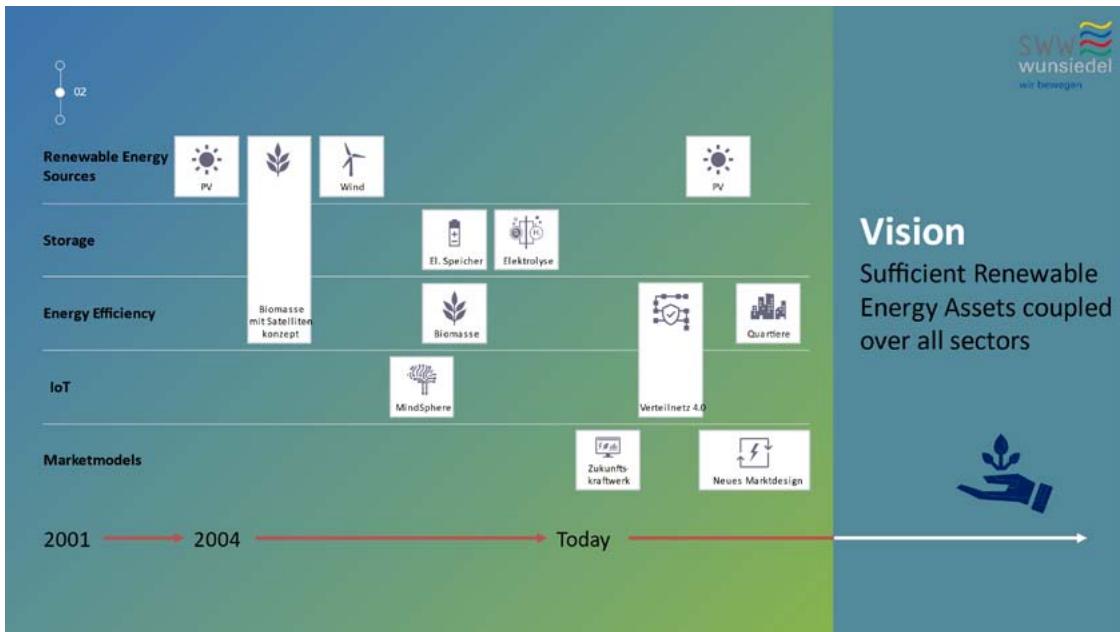 Figure 2: History of activities in SWW [9]
6.2 Present
The core piece of the activities is called "Energy Park Wunsiedel" and is located in the village of Holenbrunn on the eastern outskirts of Wunsiedel. The Energy Park consists of several CHPs of different sizes and with various energy carriers, a large battery energy storage system (BESS), production facilities for wooden pellets and – as the latest asset - a large PEM-electrolyzing unit; some detail of the facility is described in Figure 3. The system for renewable energy generation is completed with a multitude of PV arrays, windmills and CHPs of different sizes feeding district heating systems in three remote villages. The CHP operation is based on automated use of wooden pellets produced in the Energy park.
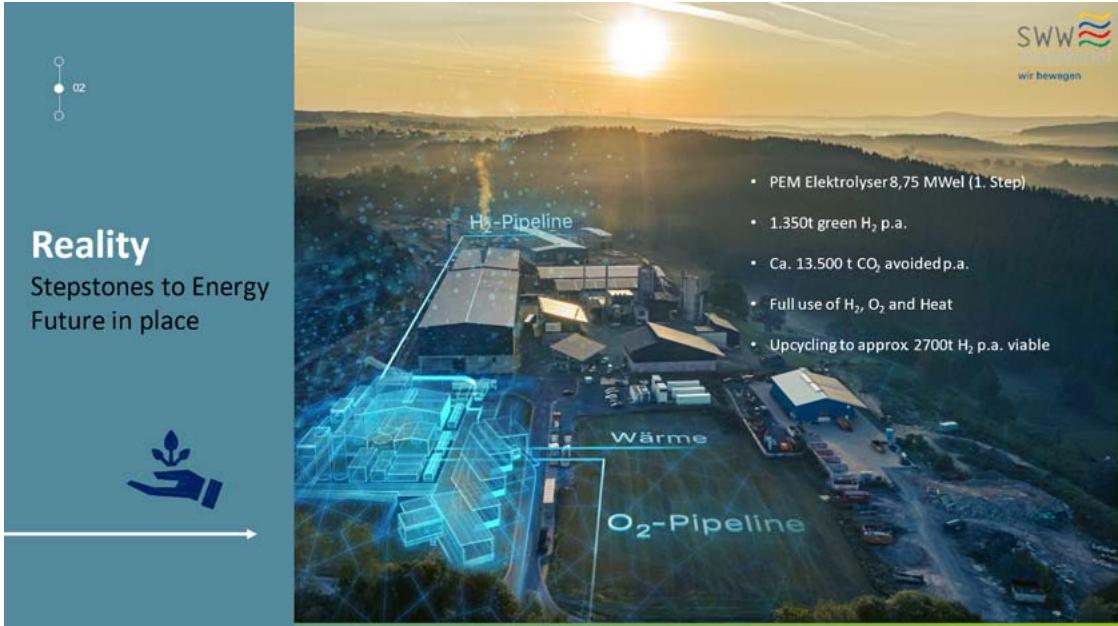 Figure 3: Aerial view of Energy Park Wunsiedel [9]
The electrolyser unit is now up and operating. In combination with sector-coupling activities and a very large-scale generation of green electricity in photovoltaic arrays of all sizes and windmills, a permanent production of green hydrogen is viable, possible and affordable.
For SWW, hydrogen is a gamechanger which takes it to a higher level of business with additional stakeholders and new fields of use, such as industry (energy and process use), storage on local level, mobility use and domestic use in individual households.
6.3 Future
After reaching nearly every goal in the WUNway Energy 4.0 in Wunsiedel and thinking about a multiplication of the local success, the decision was taken to invite all municipalities in the region to join forces and combine efforts to make maximum use of RES in each municipality. The process includes the maximum use of lessons learned in SWW to reduce lead times for the new partners.
SWW is generating a vision of the future energy community (called "Zukunftskraftwerk"): buildings become generation and storage facilities (no matter what size), enabling integration of mobility tools (even bi-directional), distribution grid for natural gas becomes storage and distribution grid for hydrogen giving maximum choice to building owners, electricity grids become balancing grids for residual loads. In addition, a large selection of new hydrogen-based business models for a large selection of stakeholders on all levels will materialize.
In summary, in Wunsiedel an initial RES valley is evolving into a local hydrogen valley with the potential to be developed into a regional hydrogen valley.
VII. DISCUSSION: CONCENTRATED (CENTRALIZED) VS. DISPERSED PRODUCTION OF ELECTRICITY AND HYDROGEN
There are two basic paradigms in the electricity supply system, which can be formulated as:
-
Share of concentrated electricity and hydrogen production vs. dispersed electricity and hydrogen production, supported by the following triangulators:
-
Concentrated baseload production vs. dispersed flexible production
-
Transport of electricity and hydrogen vs. local production of electricity and hydrogen
-
Energy production in the "energy sector" vs. energy production in prosumers and energy communities.
Evaluation of both paradigms should include the following elements:
-
(Techno-economic optimization of the supply system) The importance of integrated hydrogen systems for the absorption of inflexible renewable energy sources in the electricity grid
-
(Techno-economic optimization of the energy supply system) The degree of self-sufficiency and the techno-economic optimum of the system and subsystems
-
(Hydrogen strategy) Synergy between local hydrogen production and local renewable energy production
-
(Hydrogen strategy) Hydrogen as a market end product vs. hydrogen systems in energy supply ecosystems
-
(Objectives of the green transition) Decarbonization of energy production, decarbonization of industry, decarbonization of other areas in society
-
Separately by segments or in synergy between segments (indicative example: an energy-intensive company as a member of a Local energy community)
-
(Distributed energy production) Prosumers – residential customers, public and tertiary buildings, companies – as producers and co-investors within the Local Energy Community
-
(Green transition and industrial strategy) Overseas purchase of RES and hydrogen decarbonisation systems/facilities vs. developing and producing new products, services and systems in the field of renewables and hydrogen technologies and engaging in the construction of domestic infrastructure for the green transition and in international supply chains of value in new technology markets.
-
(Security of supply) Transmission of centrally sourced energy vs. a combination of central energy transmission + local energy production.
To properly evaluate and compare the elements of the two paradigms, they have to be put on an equal base, relative to the system at carbon neutrality state. Total cost functions must be defined and applied to all building blocks involved in energy production, transfer and consumption. This is a lengthy process as it includes both technology-based and economic but also political decisions, and it will progress in phases. For electricity and hydrogen, the first step is to include energy transfer costs and calculate energy and network fee prices based on the avoided costs principle, as described in Section 5. For a company in energy intensive sectors, this will involve the costs of replacing the energy carrier with hydrogen or electricity from an external source or the costs of own production of hydrogen generated from own renewables production, coupled with the costs of upgrading energy efficiency of its energy system and of its production processes.
LEC is a facilitator, stimulator and additional enabler of these endeavours. H2LEC - LEC with integrated hydrogen systems HyPro - adds an additional raison d'etre to it, by substantially and sustainably increasing the level of self-supply of local energy community as a subsystem in the energy supply.
7.1 LEC Market Size and Benefits (Impact)
The share of the Local energy communities in the energy supply will depend on the region of Europe and the boundary conditions that favour either concentrated or dispersed/distributed production of renewable energy. Territories with big industrial complexes requiring high power and quantities of energy have to be supplied from large power plants using transmission grid; in contrast, regions with small industries and dispersed rural districts are supplied on low voltage distribution grid and a large share of needed energy from small local renewable energy installations. Large power plants are designed to operate continuously, with availability and load factors above 90% and are severely limited in adapting to flexible consumption; the H2LECs can thus competitively supply flexible energy products; taking into account the discussion in Section 5, it can on its territory cover all flexible part above base loading; and in connection with sector coupling also some of its continued energy requirements. The share of baseload supply is country- and region-specific. Figure 4 shows schematically the segmentation of grid loading diagramme; with continued loading/baseload supply around 30% - 40% of peak loading.
The diagramme is indicative of the share that the H2LEC ecosystems can attain in total energy supply due to their characteristics and advantages described in Sections 1, 2 and 3. They enable sustainable multi-dimensional and multi-category integration and optimization in techno-economic terms, a property which cannot be paralleled by concentrated energy production.
To target the goal of techno-economic optimum, H2LEC must be a connected subsystem; autarchy – islanded operation cannot be optimal on a sustained basis and can only be considered as an asymptotic and transient operational state.
The authors estimate that at least 75% of green energy will be produced and used locally. A rough guestimate is that LEC will account for half of the total energy use in the distribution grids below 110 kV.
{"image_source":{"path":"images/7b3619976a1ce9280007fafe10bc76cf447bb048fde47caadeba59868e75c9bc.jpg"},"content":"","chart_caption":[{"type":"text","content":"Segmentation of grid loading and type of supply dynamics"},{"type":"text","content":"Figure 4: Segmentation of grid loading: base load supply and flexible supply"}],"chart_footnote":[]}
This will constitute a significant contribution to the dispersed energy supply, but it will also generate a substantial new market, which will foster specific products and services, and new disruptive business models.
H2LEC can be declared as a key enabler of the dispersed electricity and hydrogen production.
In the introduction roadmap of hydrogen in the energy supply system, it is necessary to highlight and compare the two complementary strategies indicated above: hydrogen as energy vector and final product on the market vs. integrated hydrogen systems as building blocks in energy supply ecosystems.
VIII. CONCLUSIONS
The introduction of hydrogen as an energy source is essential for decarbonisation and the internal energy market; the introduction of hydrogen systems as building blocks in electricity supply ecosystems is essential for the creation of a balanced system of electricity production and consumption and for the techno-economic development of the energy sector. This is particularly relevant for and in harmony with small economies. H2LEC ecosystem – Local energy community as a small hydrogen valley represents a facilitator, stimulator and additional enabler of dispersed energy (electricity and hydrogen) production as the pillar complementary to concentrated energy supply.
Any national scenario but also EU-wide concept should include an explicit strategy for the deployment of hydrogen systems in concentrated (central) and in dispersed (distributed) generation.
8.1 Data Availability Statement
ACKNOWLEDGMENTS
The work reported is a continuation of and to a large extent based on and derived from authors' participation in several EU funded projects, in particular Mirabel (Grant Agreement No. 248195 (FP7), GOFLEX (Grant Agreement No. 731232 (H2020)), FEVER (Grant Agreement No. 864537 (H2020)), and GIFT (Grant Agreement no. 824410 (H2020)).
Conflicts of Interest: The authors declare no conflicts of interest.
List of Abbreviations and Acronyms Used in the Paper
BG Balance Group BRP Balance Responsible Party CHP Combined Heat and Power DSO Distribution System Operator FSP Flexibility Service Provider HEMR Harmonized Electricity Market M Role Model H2LEC Local Energy Community as a Small Hydrogen Valley Hydrogen Prosumer (Also: HyPro Integrated hydrogen system, or: Hydrogen Storage prosumer) LEC Local Energy Community LSE Local Supplier of Energy MBA Market Balance Area MO Market Operator P2P Peer-to-peer RES Renewable Energy Source
SGB Sub-Balance Group Sub-DSO Sub-Distribution System Operator TSO Transmission System Operator UC Use Case
Conflict of Interest
The authors declare no conflict of interest.
Ethical Approval
Not applicable
Data Availability
The datasets used in this study are openly available at [repository link] and the source code is available on GitHub at [GitHub link].
Funding
This work did not receive any external funding.
References
Cite this article
Related Research



Special Issue
Launch a focused special issue to highlight research, emerging trends, and expert insights in your academic field.
