


Abstract
Objective: To determine efficacy and tolerability of a long-acting intramuscular formulation of Vanoxerine (Vanoxerine Consta 394.2 mg) for treatment of Amphetamine-Type Stimulant (ATS) dependent patients.
Design, Setting, And Participants: A 12 weeks, A multicenter, randomized, placebo-controlled trial conducted between November 2022--- December 2023, at 16 Hospital-based drug clinics, in the 15 countries. Participants were 18 years or older, had Diagnostic and Statistical Manual of Mental Disorders-5 Stimulant Use Disorder Amphetamine-Type (ATS). Of the 4000 individuals screened, 3300 (82.5%) adults were randomized, 1650 participants to receive injections of Long-acting depot formulations of Vanoxerine (Vanoxerine Consta 394.2 mg) given intramuscularly once in 12 weeks and 1650 participants to receive Placebo injections, given intramuscularly once in 12 weeks.
Explore Digital Article Text
Conclusions And Relevance: Long-acting depot formulations of Vanoxerine (Vanoxerine Consta 394.2 mg) was more effective then Placebo injection in maintaining short-term abstinence from ATS and should be considered as a treatment option ATS-dependent individuals.
I. INTRODUCTION
In the last decades, an ever-growing prevalence of people who use ATS has been reported in various regions of the world . According to the World Drug Report 2022, 34 million people used amphetamines in the year 2020 alone . ATS use disorder (ATSUD) has turned into a major health issue globally, with an estimated age-standardized prevalence of 64.7 cases per 100 000 people in 2016 . An estimated 52 million people worldwide used ATS such as amphetamine, methamphetamine and MDMA in the past year for non-medical purposes, second only to marijuana and more than heroin and cocaine combined . In the United States and Europe, admissions to publicly-funded treatment programs for ATS-related problems showed an overall increase from 5.7% to 7.7% between 2010 and 2020 .
ATS (Methamphetamine (crystal meth, crank, speed, tweek, glass, etc.) are a psychostimulants that is highly addictive and affects monoamine neurotransmitter systems . Methamphetamine and related stimulants are the second most frequently used illicit drugs worldwide. It is estimated that more than 35 million people around the world use this class of substance . ATS dependence is associated with a number of psychiatric disorders including depression and psychosis . Furthermore, ATS use is accompanied with various medical consequences such as myocardial infarction, renal failure, cerebral hemorrhage, muscle damage, nasal and sinus damage and sudden death .
ATS abuse and dependence have become a major health problem imposing a great burden on the society . In recent years, a dramatic rise in ATS use has occurred in many countries .
Despite the alarming prevalence and severe socio-medical consequences, there is still no established pharmacotherapy recommendation for the treatment of ATSUD. Although proven pharmacotherapies are available for alcohol and heroin dependence none exist for ATS dependence despite two decades of clinical trials primarily involving antidepressants, anticonvulsants, and dopaminergic medications. Clinicians rely mainly upon psychosocial-based interventions, which are found to offer short-term efficacy and are accompanied by difficulties in implementation . As current modalities have limited efficacy, recent studies indicate that more than 60% of the population receiving treatment for ATSUD relapse within the first 12 months with a small percentage in remission after 5 years .
Multiple groups have tried to establish a pharmacological treatment framework to improve the standard of care for ATSUD based on the available evidence . In most cases, however, the varying quality of primary studies, the heterogeneity of reported results and insufficient sample size have prevented authors from conducting a meta-analysis or issuing any official recommendations . Nonetheless, in most of these studies, agonist therapy using prescription psychostimulants (PPs) possessed the strongest evidence of efficacy and has been discussed as the most likely class to have the potential for the treatment of ATSUD .
It has been argued that agonist therapy using PPs could potentially be a viable strategy in this population and reduce harms associated with ATSUD, with limited adverse events . Of note, agonist therapy for opioid use disorder is a standard of care that has led to significant harm and mortality reduction. Such a widespread strategy for the treatment of ATSUD has not been established due to limited evidence and should be properly assessed; given many differences between stimulant and opioid use disorders, for example, there are often periods of stimulant high-dose binge use followed by cessation and withdrawal, while opioid users frequently try to maintain a desired level of opioid effect which is targeted by agonist therapy .
In the last decade, many medications have been used for treatment of methamphetamine dependence including modafinil, antidepressants, ondansetron, risperidone, aripiprazole, baclofen, topiramate, N-acetyl cysteine, naltrexone, and gabapentin, but none demonstrated consistent efficacy . Some studies suggested sustained-release dextroamphetamine and methylphenidate as effective pharmacotherapy for methamphetamine (MA) dependence [34–38]. Given that methylphenidate antagonizes the effects of methamphetamine in vitro, some researchers have tried it as a potential candidate for treatment of methamphetamine dependence [39,40]. Some studies questioned the notion of replacement therapy for amphetamine dependence (a cochrane review) [44].
Prior clinical trials have investigated medications that target dysregulation among the various neurotransmitter systems affected by chronic MA use. Early studies documented some promise for bupropion as a treatment for MA dependence, (45-47) given its ability to increase intrasynaptic dopamine and possibly ameliorate MA induced DA dysregulation. However, later studies failed to replicate these findings, although bupropion reduced MA use in those with mild to moderate levels of MA use. (45-48) Other antidepressants, including fluoxetine, paroxetine, mirtazapine and sertraline, have also been investigated. (49-52) Of these, only mirtazapine significantly reduced MA use. (50) Antipsychotics (aripiprazole, risperidone), antiepileptics (topiramate, vigabatrin, gabapentin), and other agents (dextroamphetamine, odansetron, varenicline, baclofen, modafinil, N-acetyl cysteine+naltrexone, and the proprietary approach Prometa®) either failed to demonstrate efficacy or have yet to be studied in large placebo controlled clinical trials. (53-66). Although many compounds have been evaluated for the treatment of cocaine dependence, none has been approved for this indication. Psychosocial and behavioral therapy are currently the treatments of choice for ATS dependence [67].
An effective pharmacotherapy has long been sought to improve treatment outcomes, particularly since this disorder has a significant neurobiological basis. Effective pharmacotherapy to improve treatment outcomes has long been sought, especially since this disorder has a significant neurobiological basis. Mesolimbic dopamine is a key neurochemical mediator of rewarding behaviors, for example, eating and sex [68]. In vivo microdialysis studies have shown that extracellular dopamine levels increase in the nucleus accumbens of humans who engage in rewarding behaviors, such as self-administration of ATS. The drug's ability to raise mesolimbic extracellular dopamine levels is believed to be critical to its abuse, and those drugs that inhibit dopamine reuptake, resulting in addictive and euphorogenic effects, are classified as "type 1 blockers" [69]. There is a constant and growing need for pharmacotherapies that allow for the treatment of more drug addicts than would otherwise be possible with non-pharmacological treatment modalities and that can be linked to more traditional treatment approaches, such as counseling and rehabilitation [70]. One pharmacotherapeutic approach is the development of a competitive antagonist of the ATS, i.e. a drug that will bind to the dopamine transporter, but will not inhibit dopamine reuptake [71]. Such an ATS antagonist would be expected to block the stimulus from increasing extracellular dopamine levels. However, the patient could overcome the inhibitory effect of the competitive antagonist of the stimulus by self-administering more of the stimulus. Another pharmacotherapeutic approach is the development of a noncompetitive antagonist of ATS. A noncompetitive antagonist of an ATS would be one that binds to the dopamine transporter with high affinity and slowly dissociates [72]. A non-competitive antagonist of an ATS would then allow for a sustained increase in extracellular dopamine levels, thus providing the addict with relief from dopamine-deficient stimulant cravings, while also inhibiting the stimulant from further elevating extracellular dopamine levels and increasing the likelihood of increased toxic side effects [7]. One such noncompetitive antagonist of ATS is the compound 1-[2-[bis(4-fluorophenyl) methoxy]ethyl]-4-[3-phenylpropyl] piperazine, otherwise known as Vanoxerine. Vanoxerine is a selective dopamine reuptake inhibitor and is about 700 times more potent than cocaine in inhibiting dopamine reuptake in vitro. However, unlike cocaine, Vanoxerine inhibition of dopamine reuptake does not lead to addictive and euphorogenic effects and thus Vanoxerine is considered a "type II blocker". In addition, although cocaine and Vanoxerine produce equivalent motor stimulant effects, Vanoxerine must occupy the dopamine transporter to a greater extent than cocaine to produce equivalent behavioral effects. Similarly, although cocaine and Vanoxerine cause dose-dependent increases in extracellular dopamine when administered alone, cocaine causes a rapid and short-lived increase in dopamine, whereas Vanoxerine causes a low and sustained increase in dopamine [73].
There are currently no drugs available that effectively block the acute effects of ATS. We have shown that (1- [2- [bis (4-fluorophenyl) methoxy] ethyl] -4- [3-phenylpropyl] piperazine, known as Vanoxerine, acts as an ATS antagonist. The study presented here provides means that it blocks the acute effects ATS: ^]ethyl]-4-[3-phenylpropyl] piperazine (Vanoxerine) acts as an ATS antagonist [74] Vanoxerine has been used as a dopamine antagonist for the treatment of cocaine addiction and as a dopamine agonist for parkinsonism. acromegaly, hyperprolactinemia and diseases arising from a hypofunction of the dopaminergic system [75].
However, the method of the study using Vanoxerine and analogs thereof as cocaine antagonists was previously known. Methods are disclosed for treating cocaine addiction, acute effects of cocaine, and cocaine craving.
However, the use of Vanoxerine and its analogs as ATS antagonists was not known. Treatment methods can prevent intoxication with ATS and prevent relapse during and after treatment. Safe and effective means of counteracting drug abuse are needed. The studies disclosed herein provides a means for blocking the acute effects of such drugs . By decreasing or limiting the "high" effect of dosing with euphoria producing drugs, the method of treatment can counteract ATS intoxication and prevent relapse into drug use during and after treatment. Although drug treatments for ATS craving are available, there are currently no drugs available which will effectively block the acute effects of ATS. The drug, Vanoxerine Consta , presented in this study acts as a ATS antagonist. We believe that the ability of Vanoxerine Consta to bind tightly to, and dissociate slowly from, the dopamine reuptake complex, is the underlying mechanism responsible for its ATS antagonist activity. It has been demonstrated that Vanoxerine Consta® act as a cocaine antagonist for extended intervals, ranging from a few weeks to 3 months [77]. The present study provides sustained-release derivatives of hydroxylated analogs of substituted 1[2[bis(aryl)methoxy]ethyl]-piperazines known as Vanoxerine, pharmaceutical compositions comprising the same, and a method of using such sustained-release derivatives to bind the dopamine transporter to achieve a desired effect, such as antagonism of dopamine reuptake inhibitors, such as amphetamine and cocaine, or dopamine releasers or norepinephrine and/or serotonin reuptake inhibitors, such as ATS ((methamphetamine (crystal meth, crank, speed, tweek, glass, etc.)) [78]. Since it is believed that the inhibition of DA reuptake is thought to be the major neurochemical mechanism responsible for the addictive properties of cocaine, PCP, amphetamine and methamphetamine, these agents also interact with the reuptake carriers for serotonin and norepinephrine. The treatment of these addictions is also within the scope of our research wherein treatment effects the DA reuptake complex, since these drugs also bind tightly (reversibly or irreversibly) to the serotonin or norepinephrine reuptake carriers [79].
Vanoxerine Consta® is supplied as a microsphere formulation of Vanoxerine[80]. The active ingredient in Vanoxerine Consta ®—Vanoxerine is an antagonist of dopamine transporter (DAT1) with Ki value of 16.9nM. Vanoxerine, is a potent and selective dopamine reuptake inhibitor (DRI). Vanoxerine binds to the target site on the dopamine transporter (DAT) ~ 50 times more strongly than cocaine, but simultaneously inhibits the release of dopamine[81]. This combined effect only slightly elevates dopamine levels and block the rewarding effects of ATS. Vanoxerine is one of the most potent inhibitors of dopamine (DA) reuptake, binds persistently to the DA transporter, resulting in a modest increase in the extracellular levels of DA (ECDA) in the caudate nucleus, as well as an attenuation of the ability of ATS to elevate ECDA levels[82]. Vanoxerine blocker' the acute effects of ATS, and the effect occurs immediately after drug administration.Vanoxerine is chemically designated 1-[2-[bis(4-fluorophenyl)methoxy]ethyl]-4-(3-phenylpropyl)piperazine [83].
Long-Acting Injection Vanoxerine Consta ® is a combination of extended-release microspheres Vanoxerine for injection. Vanoxerine is microencapsulated in 7011-18819 polylactide-co-glycolide (PLG). Over the years, several polymers have been evaluated for development of controlled release injectable formulations [84]. Of these polymers, one class of polymers has achieved significant commercial success in the pharmaceutical market. The polylactide (PLA) and polylactide-co-glycolide (PLGA) class of polymers are biodegradable, biocompatible, and nontoxic and have a long history of use[85]. In vivo, they are hydrolyzed into metabolic products that are easily eliminated from the body. Initially approved for surgical use in humans they have since been used to formulate a wide range of therapeutic agents. PLGA polymers are well suited for controlled delivery of drugs via the parenteral route as they exhibit good mechanical properties and demonstrate predictable degradation kinetics. Notably, polymeric microspheres prepared using PLGA have been successful in ensuring sustained release of therapeutic agents for various drugs [86]. Several examples in literature discuss their effectiveness in providing targeted drug levels in vivo, for long periods of time. For this reason, they are popular as delivery vehicles for drugs where sustained release is desired for extended intervals, ranging from a few weeks to 12 months[87]. The success of PLGA polymers as delivery systems is due to the fact that polymer properties are well understood and can be customized to afford sustained drug release. For instance, selection of copolymers of various lactide: glycolide with variable molecular weights is an effective way to control polymer degradation rate and drug release. By changing the composition of lactide or glycolide in the copolymer, a wide range of degradation rates can be obtained. An increase in the more hydrophobic lactide moiety ensures a slower degradation rate of the PLGA polymer leading to extended duration of drug release[88].
Similarly, utilization of a higher molecular weight copolymer increases degradation times leading to prolonged drug release. Additional properties that can be varied include polymer crystallinity and glass transition temperature. These physical and chemical properties have been well studied and characterized leading to predictable degradation kinetics of the PLGA polymer, in vitro and/or in vivo[89]. Upon in vivo administration of a PLGA based injectable depot, water interacts with the polymer and hydrolysis of the ester bonds commences. As the polymer degrades, its hydrophobicity decreases and the number of hydrophilic hydroxyl and carboxylic acid end groups in the matrix increases. An accumulation of hydrophilic acidic end groups has a two fold effect: (1) it increases the amount of water incursion into the polymer and (2) initiates autocatalysis of the polymer matrix. Therefore, polymer degradation and, consequently, drug release from PLGA is a very complex and dynamic process. The studie presented a report of the results of a 3-month double-blind phase in terms of the effectiveness and safety of Vanoxerine Consta® for the treatment of ATS dependence.
The results showed efficacy through an adequate and well-controlled study conducted at several locations in Austria, Bulgaria, Canada, Czech Republic, Germany, Portugal, Romania, Russian Federation, Republic of Angola, Republic of Korea, Republic of Serbia, Spain, Switzerland, Ukraine, UK and United States, with supportive evidence from their clinical pharmacology program.
During treatment with Vanoxerine Consta, ATS desire is reduced, abstinence is supported, and relapses and ATS consumption decreased. Also, supportive pharmacological studies have demonstrated the blocking of ATS effect over 84 days. The depot formulation of Vanoxerine used in the current study provided a safe, effective and long-lasting antagonism of the effects of cocaine.
Pharmacokinetic: Concentrations of Vanoxerine and 17-hydroxyl Vanoxerinein plasma.
Analyses were made of 300 study sample. The plasma concentration of Vanoxerine were 70.4 and 94.3 ng/ml and concentrations of 17-hydroxyl Vanoxerine were 10.5 and 13.2 ng/ml, respectively. Blood samples for pharmacokinetic analyses were collected at day 1, 4, 8, 12, 16, 20,
24, 28–32, 36, 40, 44, 48, 52, 56, 60, 64, 68, 72, 76, 80 and 84 after the doses. Concentrations of the drug and its metabolite in plasma indicate the stability of intact analytes in analytical conditions, including hydrolysis. 84 days after the administration of Vanoxerine, the plasma concentration of Vanoxerine was at the lower limit of quantification. The maximum plasma concentration of the drug (Cmax) was 12 h after dosing Vanoxerine Consta 394.2 mg. There was no statistically significant difference between plasma concentrations of Vanoxerine and Central Dopamine transporter receptor occupancy by Vanoxerine between days 1 and 84 (medium limit of quantification).
The depot formulation of Vanoxerine used in the current study provided a safe, effective and long-lasting antagonism of the effects of cocaines.
II. METHODS
This randomized clinical trial received 3300 patients in a clinical setting for treatment with long-acting injection of Vanoxerine (Vanoxerine Consta 394.2 mg) given intramuscularly once in 12 weeks compared to Placebo injection given intramuscularly once in 12 weeks. The inclusion was discontinued on January 30, 2022, and the last patient monitoring was carried out on December 18, 2023. The study was approved by the State Committee for Medical and Health Ethics, State Medicines Agency and research ethics committees in the participating countries and hospitals. The monitoring study was conducted by publicly funded supervisory authorities in accordance with good clinical practice standards. The participants gave a written informed consent.
A 12 weeks, A multicenter, randomized, placebo-controlled trial conducted between November 2022--- December 2023, at 15 Hospital-based drug clinics, in the 16 countries.
Participants were 18 years or older, had Diagnostic and Statistical Manual of Mental Disorders-5 Stimulant Use Disorder Amphetamine-Type Substance. Of the 4000 individuals screened, 3300 (82.5%) adults were randomized 1650 participants to receive injections of
Long-acting depot formulations of Vanoxerine (Vanoxerine Consta 394.2 mg) given intramuscularly once in 12 weeks and 1650 participants to receive Placebo injections, given intramuscularly once in 12 weeks.
Of 1650 participants Vanoxerine Group (N=1650), mean (SD) age was 38.7 (9.8) years and 300 (18.2%) were women. Of 1650 participants Placebo Group (N=1650), mean (SD) age was 39.5 (10.4) years and 300 (18.2%) were women. 1650 individuals were randomized to receive injections of Long-acting depot formulations of Vanoxerine (Vanoxerine Consta 394.2 mg) and 1650 to receive injections of Placebo. 1749 participants (53.0%) completed the trial.
2.1 Participants and Setting
Patients were recruited from January 25, 2021 to January 30, 2022 by research staff from 16 hospital clinics and detoxification units in 15 countries. Eligible participants were ATS-dependent (according to DSM-IV criteria) men or women aged 18 to 50 years. Exclusion criteria were dependence on other drugs or alcohol or a history of seizures or brain injury, a sensitivity or previous adverse reaction to Vanoxerine, any medical, neurological, or psychiatric disorder that would make study compliance difficult or unsafe, first-degree relatives with early cardiovascular morbidity or mortality, and being pregnant or nursing. Participants were also excluded if they were prescribed medications that could interact with the study medication. (Table 1)
| Ages Eligible for Study: | 18 Years to 50 Years (Adult, Older Adult) |
| Sexes Eligible for Study: | All |
| Accepts Healthy Volunteers: | No |
| Inclusion Criteria: | Exclusion Criteria: |
| Written, informed consent | Current or history of a major psychiatric illness, other than drug dependence or disorders secondary to drug abuse |
| 18 years of age or older | Meets DSM-IV criteria for dependence on any drugs other than amphetamine-type stimulants, |
| Meets DSM-IV criteria for current cocaine dependence | Physiologically dependent on alcohol and requires medical detoxification |
| Currently seeking treatment for cocaine dependence | Use of prescription drugs within 14 days prior to study entry |
| Currently Not uses cocaine, as determined by a self-report and a negative urine test for cocaine, within 30 days prior to study entry | Use of non-prescription drugs within 7 days prior to study entry |
| Good general health | If female, used an oral contraceptive, Depo-Provera, Norplant, or intrauterine progesterone contraceptive system, within 30 days prior to study entry |
| Normal electrocardiogram | Pregnant or breastfeeding |
| Noncustodial, stable residence and phone, plus 1 contact with verifiable address and phone | History of liver disease and evidence of hepatic failure |
| Significant other (eg, spouse, relative) willing to supervise compliance with the study visit schedule and procedures | Current elevated aspartate aminotransferase or alanine aminotransferase levels |
| Completing or recently completed up to 30 days of inpatient treatment for cocaine detoxification for at least 7 days | Participated in any other clinical investigation within 4 weeks prior to study entry |
| Able to provide written informed consent | History of any illness or behavior that, in the opinion of the investigator, might interfere with the study |
| Able to speak English sufficiently to understand the study procedures and provide written informed consent to participate in the study | Family history of early significant cardiovascular disease or mortality |
| Clinically significant medical condition or observed abnormalities (eg: physical exam, electrocardiogram (ECG), lab and/or urinalysis findings) | |
| Current major depression with suicidal ideation, psychosis, bipolar disorder, or any psychiatric disorder that would compromise ability to complete the study | |
| Known intolerance and/or hypersensitivity to Vanoxerine or polylactide-co-glycolide (PLG) |
Women in reproductive age could not be pregnant or breast-feeding and agreed to use effective birth control. Participants were screened for psychiatric disorders and examined for severe somatic illness. Routine blood tests (complete blood cell counts, electrolytes, and levels of ALT/AST) and urinalysis were completed as part of usual treatment before study enrollment. Assessments added for the study included a detailed history of drug use and psychiatric interview to confirm current ATSdependence; urine testing for ATSand alcohol breath test; Addiction Severity Index; pregnancy test; monthly measurements of ALT and AST levels while receiving medication;
cocaine craving (visual analog scale); Global Assessment of Functioning; Brief Psychiatric Rating Scale; and visual inspection of the site 5 to 7 days after implantation(Table 2). Urine drug testing was performed at biweekly counseling sessions.
Eligible participants were referred to the detoxification unit after examination and inclusion. The study took place at the hospital facility, and all participants were discharged from the detoxification unit and are in the process of hospital treatment. Ethnicity is defined by the participants.
| long-acting Vanoxerine (Vanoxerine Consta 394.2 mg) (n=1650) | Placebo (n=1650) | |
| Age in years | 38.7 (±5.5) | 39.5 (±4.6) |
| Men | 1350 (81.8%) | 1350 (81.8%) |
| Female | 300 (18.2%) | 300 (18.2%) |
| Marital status | No. (%) | No. (%) |
| Never married | 841 (51%) | 874 (53%) |
| Married/de facto | 495 (30%) | 511 (31%) |
| Divorced/separated | 313 (19%) | 264 (16%) |
| Race | No. (%) | No. (%) |
| White | 1031(62,5%) | 1047(63,5%) |
| Black | 379(23%) | 379(23%) |
| Others | 239 (14,5%) | 305 (18,5%) |
| Employment status | No. (%) | No. (%) |
| Student | 396 (24%) | 478 (29%) |
| Employed (full/part time) | 709 (43%) | 660 (40%) |
| Unemployed/pension | 495 (30%) | 495 (30%) |
| Duration of ATS dependence in years | 10.8 (7.8) | 11.9 (9.9) |
| Distribution of Duration of ATSDependence | No. (%) | No. (%) |
| <2 years | 165 (10%) | 165 (10%) |
| 2-4 years | 214 (13%) | 231 (14%) |
| 4-6 years | 363 (22%) | 379 (23%) |
| >5 years | 907 (55%) | 858 (52%) |
| ATScraving scale | 20 (±2) | 20 (±2) |
| Hepatitis C positive | 214 (13%) | 239 (14.5%) |
2.2 Procedure and Outcomes
After detoxification, participants were randomly assigned (1:1) to commence either administration of injections of Long-acting depot formulations of Vanoxerine (Vanoxerine Consta 394.2 mg) given intramuscularly once in 12 weeks or administration of injections of Placebo given intramuscularly once in 12 weeks. Allocation to treatment group was computerized using a permuted block algorithm provided by the state monitoring authority and not stratified for site or sex. Following induction into either medication regimen, participants were asked to attend standard drug counseling, but no behavioral interventions could be initiated. At baseline (inclusion) and every 4 weeks thereafter, patients underwent a structured interview using the European version of the Addiction Severity Index covering drug use, physical and mental health, work, education, and criminal activity.
Primary outcome variables Confirmed ATS abstinence (percentage ie. the number of patients who achieved complete abstinence during week 12) or "ATS-free" was defined as a negative urine drug test for ATS and no self-reported ATS use. The twice a week UDTs were analyzed using specific chromatographic methods and calculated as the number of ATS-negative urine drug screens divided by the total number of attended tests (group proportion) in accordance with recently revised Cochrane guidelines. Missing UDTs were considered as testing positive for ATS in all participants. Secondary outcome variables were comparison of retention in the study, number of days in treatment, the degree of ATS craving (Minnesota Cocaine Craving Scale (MCCS): Composed of five items which correspond to intensity, frequency, duration of craving, changes in relation to previous week and craving response to medication), and mental health (Hopkins Symptom Checklist-25 of anxiety and depression, 25-100, with 25 indicating very low; 100, very high). Retention in treatment was defined as the number of days until dropout from study medication and by the number of patients completing the study at week 12.
Pharmacokinetic studies: The plasma concentration of Vanoxerine and plasma concentrations of Vanoxerine-3-O-glucuronide.
Analyses were made of 275 study sample. Blood samples for pharmacokinetic analyses were collected at day 1, 4, 8, 12, 16, 20, 24, 28, 32, 36, 40, 44, 48, 52, 56, 60, 64, 68, 72, 76, 80 and 84 after the doses.
2.3 Pharmacokinetic Studies Protocol
Blood samples were collected through an indwelling plastic cannula, inserted into a superficial upper arm vein, into tubes containing anticoagulant Li-heparin. They were drawn at given time points, centrifuged, and plasma was separated within 1 h of sampling. The plasma specimens were frozen at -20°C or colder until analyzed. Vanoxerine and 17-hydroxyl Vanoxerine were extracted from plasma with ethyl acetate. The organic layer was transferred to clean tubes and evaporated to dryness. The residue was reconstituted in mobile phase and aliquots were injected into a high-pressure liquid chromatography–mass spectrometry system. Two analyses were made of each study sample: determination of intact Vanoxerine and Vanoxerine-3-O-glucuronide, and determination of total concentration of the analytes. A set of plasma standards containing 40–120 ng/ml of Vanoxerine and 17-hydroxyl Vanoxerine in drug-free plasma was used to construct a calibration curve for each batch of plasma samples. Four quality control samples containing 40, 60, 80, and 120 ng/ml of Vanoxerine and 17-hydroxyl Vanoxerine were analyzed in duplicate in each batch of study samples. The interbatch precision (CV%) for Vanoxerine was from 4.3 to 7.3% and for 17-hydroxyl Vanoxerine from 4.3 to 10.8%. Total concentration was analyzed with calibration range from 25 to 150 ng/ml. Two spiked and two pooled control samples were analyzed in duplicate in each sample batch. The spiked control samples (40 and 120 ng/ml) were made by spiking drug-free plasma with Vanoxerine and 17-hydroxyl Vanoxerine solutions to contain known concentrations of the analytes. The pooled controls were made by pooling plasma of previously analyzed study samples. Concentrations of Vanoxerine in plasma pools were 71 and 94 ng/ml and concentrations of 17-hydroxyl Vanoxerine 10.5 and 13.2 ng/ml, respectively. The spiked plasma controls indicated stability of intact analytes under analytical conditions. The interbatch precision (CV%) was from 2.8 to 6.8% for Vanoxerine and from 4.2 to 6.6% for Vanoxerine-3-O-glucuronide. Pharmacokinetic variables of Vanoxerine and 17-hydroxyl Vanoxerine were determined from the concentration-time data by the PCNONLIN software using noncompartmental methods. Peak concentration (Cmax), taken as the maximum observed concentration in plasma, and time to peak concentration (tmax) were observed. After injection of Vanoxerine Consta 394.2 mg, area under the plasma concentration-time curve from time zero to infinity (AUC) was calculated by the trapezoidal rule to the last observed concentration with extrapolation to infinity by dividing the last observed concentration by the elimination rate constant. The effect of minor deviations from the planned blood sampling times in the pharmacokinetic analysis was cancelled out by using actual sampling times in calculations.
2.4 Statistical Analysis
The target sample size was based on the width of the 95% CI for the hazard ratio (HR) of the difference between treatments (Vanoxerine vs Placebo), projecting relapse-free survival of about 50% for each medication after induction. On the basis of simulation results, the 95% CI width for HR decreases as the sample size increases by 120 per group to 720 per group (from a base of 400 per group) by 31%, 19%, 14%, and 11%, respectively. A preplanned interim analysis increased the overall target sample size from an initial 1000 participants to about 3300 participants to achieve a minimum sample of 1950 participants in the late randomisation group.
Sample size calculations indicated that 1950 participants would yield a similar (only slightly wider) 95% CI to the original sample size target of 1000 participants, and preserved the aim to achieve a precise estimate of the difference in relapses between groups. We analysed endpoints according to the intention-to-treat principle as part of the primary analysis and additionally among a per-protocol population.
The per-protocol population consisted of only those participants who were successfully inducted onto an initial dose of study medication. The primary outcome analysis was the construction of the asymptotic 95% CI for the HR of the difference between the treatment groups among the intention-to-treat population in the time-to-event (relapse) distribution with the earliest relapse day assessed at day 21. We administratively censored participants at week 12.
The binary baseline covariate of early versus late randomisation was examined for an interaction with treatment; this covariate was not significant (p>0·10), and thus dropped from the final model. Unadjusted Kaplan-Meier survival curves and the extended Cox model HRs compared relapse by group. We examined the proportional hazard assumption via the interaction of treatment and time. Logistic regression yielding odds ratios contrasted induction success and overall 12 week ATS relapse by group. We used Pearson's or Fisher's exact tests, and logistic regression for analyses of dichotomous secondary outcomes. We used Cox models for time-to-event secondary outcomes and Wilcoxon rank-sum tests and mixed effects models for continuous outcomes. We considered missing urine samples to be ATS positive and contributed to the definition of a relapse event. Thus, treatment dropouts (who stopped contributing data) were scored as having relapsed, an assumption which is likely in this population. Adverse events were compared using Fisher exact test. Retention in treatment was assessed by a logrank test. The results at P<0.05 were considered significant in all superiority analyses. The noninferiority analyses were assessed by 1-sided test at the same significance level. Statistical analyses were conducted by a study-independent statistician blinded to the names of the study medications. The analyses were performed in SPSS, version 24 (SPSS Corp) and SAS, version 9.4 (SAS Institute).
Pharmacokinetic parameters were analyzed using repeated measures analysis of variance. Natural logarithm transformation was used for these variables in order to achieve normality, if needed. No additional covariates were used in the statistical model. Time to peak concentration ( ) of each period was analyzed using a Wilcoxon signed-ranks test. Terminal half-life ( ) was analyzed using repeated measures analysis of variance or Wilcoxon signed-ranks test, depending on the distribution. The limit of statistical significance for all analyses was set at p<0.05, and 90% confidence intervals for the ratios of geometric means (Vanoxerine Consta 394.2 mg/Placebo, Placebo380 mg) were calculated. Safety variables were analyzed by descriptive statistics. Statistical analyses were performed with the SAS for Windows version 9.4 (SAS Institute).
3.1 Patient Characteristics
Men and women displayed similar age distributions, 38.7 (9.8) and 39.5 (10.4) years, respectively), years of heavy ATS use (mean, 3.5 (±2.5) and 2.0 (±0.9) respectively and other social characteristics. 63% (±1) of the participants were white. 13% (±1.5) participants tested seropositive for hepatitis C. (Table 1, Table 2)
3.2 Retention in Treatment
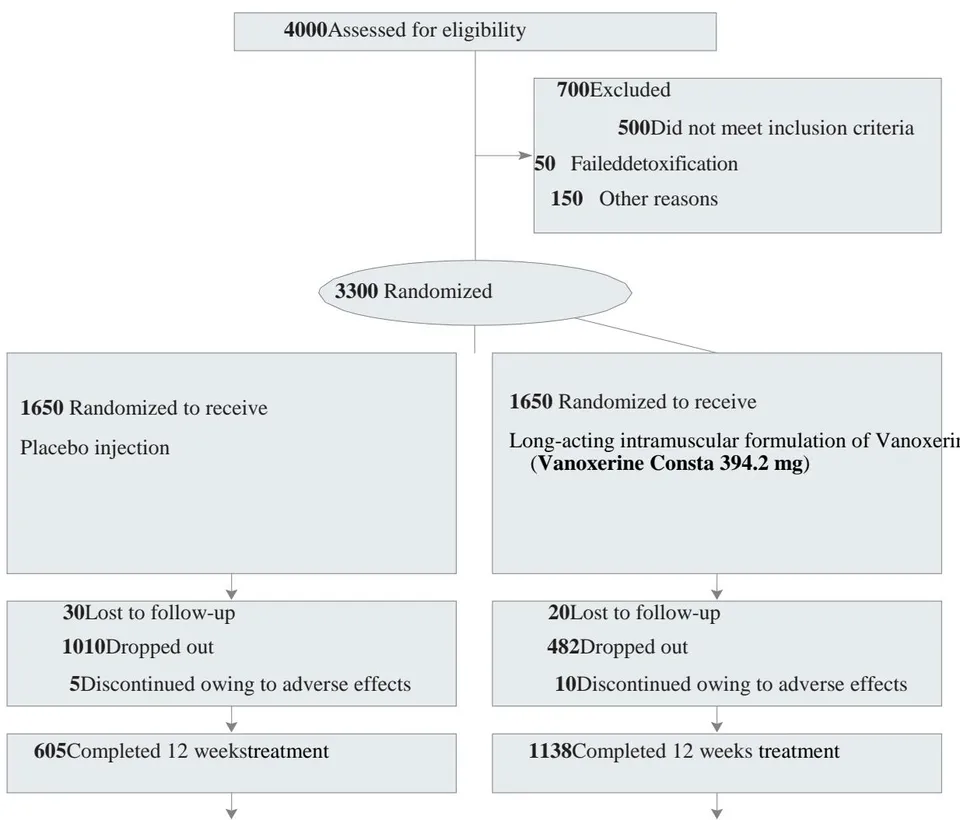
Among the 4000 participants assessed for eligibility, 3300 were included in the study and 1650 were randomized to treatment with Long-acting intramuscular formulation of Vanoxerine (Vanoxerine Consta 394.2 mg) (n=1650, 50%) or Placebo (n=1650, 50%) (Figure 1).
Reasons for exclusion of 700 individuals were not meeting inclusion criteria (500 [71%]), failed detoxification (50 [7.1%]) and other reasons (150 [21%]). Among the randomized participants, 3300 agreed to commence their medication: 1650 (50%) in the Long-acting intramuscular formulation of Vanoxerine group and 1650 (50%) in the Placebo group. Long-acting intramuscular formulation of Vanoxerine (Vanoxerine Consta 394.2 mg) helped significantly more patients complete 12 weeks treatment (n=1138, 68.9%) compared with Placebo (n=605, 36.6%) ( = 635.53, P <.0001) (Figure 2). Of the Vanoxerine Consta 394.2 mg group that began the study, 68.9% (1138 /1650) completed the full 12 weeks of treatment compared to Placebo group where 36.6% (605 /1650) completed the full 12 weeks of treatment. Patients on long-acting intramuscular formulation of Vanoxerine (Vanoxerine Consta 394.2 mg) had longer treatment retention than patients on Placebo (Figure 3).
{"image_source":{"path":"images/e729d15e6e029dbe81f3596006a2362d68b53ded711760e7a5a888b24126b64e.jpg"},"content":"","chart_caption":[{"type":"text","content":"Figure 1: Flowchart for Inclusion of Participants"}],"chart_footnote":[]} {"image_source":{"path":"images/2db95634cb9f17201ba102496b1f8cdd41c29ab67c2161d30308197e09cbe9dc.jpg"},"content":"","chart_caption":[{"type":"text","content":"*number of participants in the treatment"}],"chart_footnote":[]}
{"image_source":{"path":"images/abf32a94ebf1db487163fd0ff56e7159f065e0a5e3c57d8dad029f291ed287ad.jpg"},"content":"","chart_caption":[{"type":"text","content":"Figure 2: Retention in Treatment"},{"type":"text","content":"*percentage of participants through the number of days in the treatment"},{"type":"text","content":"Figure 3: Survival Curves for Retention in Treatment"}],"chart_footnote":[]}
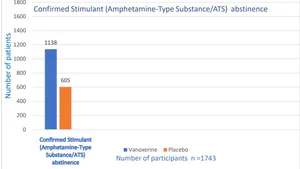
Primary endpoints: Confirmed ATS abstinence Complete abstinence was sustained by 68.9% (n=1138) of Vanoxerine patients (patients treated with Vanoxerine Consta 394.2 mg, long-acting depot formulations) compared with 36.6% (n=605) of patients treated with Placebo, during weeks 5–12. The difference was significant as evaluated using a Chi-square test ( , P
<.0001) (Figure 4). * (Percentage of cocaine-free patients through weeks 5-12). Confirmed abstinence or "ATS -free" was defined as a negative urine drug test for ATS and no self-reported ATS use. Assessing superiority of Vanoxerine Consta 394.2 mg treatment over the Placebo showed significant differences between the treatment groups in the proportion of negative UDTs (P <.0001). Treatment with Placebo was inferior to Vanoxerine long-acting depot formulations (Vanoxerine Consta 394.2 mg) regarding the group proportion of the total number of ATS -negative UDTs.
{"image_source":{"path":"images/3f66be9a73f30643b50542702ee363eaa6ff507d71414bce8aef4114efb86de5.jpg"},"content":"","chart_caption":[{"type":"text","content":"Figure 4: Confirmed Stimulant (Amphetamine-Type Substance/ATS) abstinence Secondary endpoint: Craving"}],"chart_footnote":[]}
Craving was reported weekly according to a Minnesota Cocaine Craving Scale (MCCS), composed of five items which correspond to intensity, frequency, duration of craving, changes in relation to previous week and craving response to medication (we used the first three items of the scale (none 0 to 10 maximum visual score analogue scale)).
Reduction in craving intensity was observed in baseline and every week to final evaluation, week 12. A statistically significant finding in this study was a decrease in craving intensity, frequency and duration of craving. A statistically and clinically significant reduction in cocaine craving was observed with Vanoxerine (Vanoxerine Consta 394.2 mg, long-acting depot formulations) vs. Placebo by week 4 (P=0.0048), which persisted every week through 12 (P<0.0001). At all time points, participants receiving long-acting depot formulations of Vanoxerine (Vanoxerine Consta 394.2 mg) reported significantly a decrease in craving intensity, frequency and duration of craving for cocaine than Placebo participants.
Patients given Vanoxerine (Vanoxerine Consta 394.2 mg, long-acting depot formulations) had a 85% decrease in craving intensity, 70% decrease in frequency and 85% in duration from baseline to week 12. Patients given a Placebo injection had a 2% increase in craving from baseline to week 12.
Satisfaction with treatment was significantly higher among Vanoxerine Consta 394.2 mg, long-acting depot formulations) participants and they would also recommend their treatment to others to a higher extent compared with Placebo participants. The main clinical implication of this result is that Vanoxerine Consta seems to reduce craving, which is one of the main factors related to relapses in drug dependence.
Pharmacokinetic Assessments: Concentrations of Vanoxerine and 17-hydroxyl Vanoxerine in plasma.
Analyses were made of 300 study sample. Concentrations of the drug and its metabolite in plasma indicate the stability of intact analytes in analytical conditions, including hydrolysis, 84 days after the administration long-acting depot injection of Vanoxerine (Vanoxerine Consta 394.2 mg). There was no statistically significant difference for plasma Vanoxerine concentrations between days 2 and 84 (p=0.416). The plasma concentration of Vanoxerine were 70.4 and 94.3 ng/ml and concentrations of 17-hydroxyl Vanoxerine were 10.5 and 13.2 ng/ml, respectively (Figure 5). Plasma levels of Vanoxerine remained above 70 ng/ml for approximately 12 weeks after administration long-acting depot injection of Vanoxerine (Vanoxerine Consta 394.2 mg).
{"image_source":{"path":"images/57c2b1cb1bcc652a8a0dd9519c1159de89d6b9ee62133cbfd873db1db20feedd.jpg"},"content":"","chart_caption":[{"type":"text","content":"Figure 5. Plasma Concentration of Vanoxerine and Vanoxerine-3-O-glucuronide"}],"chart_footnote":[]}
IV. ADVERSE REACTIONS
Adverse events were similar in ATS -dependent patients treated with long-acting intramuscular formulation of Vanoxerine (Vanoxerine Consta 394.2 mg) vs. patients treated with Placebo (difference, 0.1 with 95% CI, -0.04 to 0.2; P <.001) (Figure 7, Table 3).
Discontinuation rates due to adverse events were similar in ATS -dependent patients treated with Placebo vs. patients treated with Long-acting depot formulations of Vanoxerine (Vanoxerine Consta 394.2 mg, (2%). Long-acting depot formulations of Vanoxerine (Vanoxerine Consta 394.2 mg) was generally well tolerated. It was not associated with increased levels of ALT or AST.
{"image_source":{"path":"images/fb7b84198df2e0dc39e26500a3149baa8b717ce78f74c4f763ecc5c8942a5578.jpg"},"content":"","chart_caption":[{"type":"text","content":"Figure 7: Adverse Events"}],"chart_footnote":[]}
There were no deaths, but 25 (1.51%) Placebo participants and 24 (1.45%) Vanoxerine Consta 394.2 mg participants reported a serious adverse event. All made a full recovery but did not continue to participate in the study. Adverse reactions equally occurred in patients with Stimulants ATS dependence treated with Placebo and with Long-acting depot formulations of Vanoxerine (Vanoxerine Consta 394.2 mg) group.
| long-acting Vanoxerine (Vanoxerine Consta 394.2 mg) (n=1650) | Placebo (n=1650) | |
| Alanine aminotransferase increased | 3 (0.18%) | 3 (0.18%) |
| Aspartate aminotransferase increased | 3 (0.18%) | 3 (0.18%) |
| Gamma-glutamyltransferase increased | 2 (0.12%) | 2 (0.12%) |
| Back pain | 110 (6.6%) | 90 (5.45%) |
| Insomnia | 115 (6.96%) | 80 (4.84%) |
| Diarrhea | 83 (5%) | 66 (4%) |
| Hypertension | 66 (4%) | 50 (3%) |
| Injection site pain | 132 (8%) | 132 (8%) |
| Dizziness | 66 (4%) | 50 (3%) |
| Headache | 50 (3%) | 33 (2%) |
| Nervousness | 50 (3%) | 90 (5.45%) |
| Runny nose | 0 (3%) | 132 (8%) |
V. DISCUSSION
To our knowledge, this is the first study comparing the effectiveness of long-acting depot formulations of Vanoxerine (Vanoxerine Consta
394.2 mg) with Placebo injections (Placebo 380 mg,), the newest treatment for ATS dependent patients in many countries. Treatment with long-acting depot formulations of Vanoxerine (Vanoxerine Consta 394.2 mg) was more effective then with Placebo in maintaining retention in treatment and craving for ATS. The main clinical implication of these findings is that long-acting depot formulations of Vanoxerine (Vanoxerine Consta 394.2 mg) seems to be safe and effective then Placebo treatment for maintaining short-term abstinence from ATS in ATS-dependent individuals newly detoxified and/or discharged from inpatient treatment. Because we did not differentiate between ATS and other ATS-like formulations, our data appear to be clinically relevant to the growing number of individuals dependent on amphetamine-type stimulants.
Induction into treatment with long-acting depot formulations of Vanoxerine (Vanoxerine Consta 394.2 mg) required full detoxification to a greater extent than into Placebo treatment. The modern instruction and guidelines for detoxification of ATS users turned out to be insufficient for study detoxification and frequently produced adverse effects related to withdrawal symptoms on induction of Vanoxerine Consta 394.2 mg, (long-acting depot formulations of Vanoxerine) and, to some extent Placebo. We therefore changed our detoxification strategy during the first year of the study in accordance with the most recent literature at the time of our study which reduced the number of new adverse events related to induction of treatment. Serious adverse events were equally distributed between the groups and were not directly related to the given treatment, which explains why there were no dropouts among participants reporting a serious adverse event.
Satisfaction with treatment and willingness to recommend their treatment to others were significantly higher among Vanoxerine Consta 394.2 mg, (long-acting depot formulations of Vanoxerine).
A clinically significant reduction in ATS craving was observed with Vanoxerine (Vanoxerine Consta 394.2 mg, long-acting depot formulations) vs. Placebo. At all time points, participants receiving long-acting depot injection of Vanoxerine (Vanoxerine Consta 394.2 mg) reported significantly less ATS craving and thoughts about ATS than did Placebo participants.
This finding makes it likely that the majority of participants were mainly motivated to receive the novel long-acting depot injection of Vanoxerine (Vanoxerine Consta 394.2 mg). A treatment with long-acting depot formulations of Vanoxerine (Vanoxerine Consta 394.2 mg) would be very effective in individuals with lower motivation for ATS abstinence.
There was no reported overdose in the study. This low rate may reflect the high motivation for treatment and good response to regular follow-up by the same study worker in this group of participants. In the present study, several participants used ATS after receiving the depot injections, but there was no evidence that attempts to override the blockade were successful, and no accidental or intentional ATS over-doses occurred. It is possible that the gradual dissipation of Vanoxerine from these long-acting injectable formulation (Vanoxerine Consta 394.2 mg) protected these patients from experiencing ATS overdose.
The results of the study also show consistency of release of Vanoxerine and on average level of Vanoxerine between 70.4 and 94.3 ng/mL over the 12, weeks life of the Vanoxerine Consta 394.2 mg. After the administration of long-acting depot formulations of Vanoxerine (Vanoxerine Consta 394.2 mg), mean Vanoxerine plasma levels ranged from 77 and 94 ng/mL. Across the 12-week study, plasma Vanoxerine levels tended to be fairly constant, with perhaps a slight decline during the twelfth week after drug administration. In general, many investigators agree that doses that maintain Vanoxerine plasma levels of approximately 70 ng/mL are sufficient for antagonizing the effects of high doses of cocaine agonists.
Long-acting depot formulations of Vanoxerine (Vanoxerine Consta 394.2 mg) was more effective then Placebo in maintaining short-term abstinence from ATS and should be considered as a treatment option for ATS -dependent individuals.
This study demonstrated that a long-acting injectable formulation of Vanoxerine (Vanoxerine Consta 394.2 mg) in conjunction with psychosocial treatment significantly reduced ATS use in a large geographically varied sample of treatment-seeking patients with ATS dependence. Long-acting injectable formulation of Vanoxerine (Vanoxerine Consta 394.2 mg) were well tolerated, few serious adverse events were reported, and there was no evidence of hepatotoxicity. Regarding tissue reactions around the site of injections, the formulation of depot Vanoxerine (Vanoxerine Consta 394.2 mg) used in the present study was well tolerated. In the 50 patients with injection site reactions, the severity was considered to be moderate, and all reactions resolved spontaneously over time.
In summary, the results from this trial, with one of the largest samples ever treated with a medication for ATS dependence, indicate that long-acting injectable formulation of Vanoxerine (Vanoxerine Consta 394.2 mg) is well tolerated and is associated with a significant reduction in cocaine use in ATS -dependent population. The long-acting formulation has the potential to improve intervention strategies for ATS dependence by providing a predictable pharmacological foundation for treatment. In addition to their utility for ATS dependence, long-acting formulations may prove to be an important treatment strategy for a variety of addictive disorders. The present results demonstrate that this long-acting injectable formulation of Vanoxerine (Vanoxerine Consta 394.2 mg) is safe, well tolerated, and effective in retaining patients in treatment. An increase in treatment retention is particularly important because it will allow clinicians sufficient time to engage patients in psychotherapy so that they can learn to make other psychological and social adjustments that support a life without amphetamine-type stimulants.
| Treatment outcomes | long-acting Vanoxerine (Vanoxerine Consta 394.2mg) (n=1650) | Placebo (n=1650) | Treatment effect |
| 4000 Assessed for eligibility 3300 Randomized | 1650 Randomized to receive Long-acting intramuscular formulation of Vanoxerine (Vanoxerine Consta 394.2mg) | 1650 Randomized to receive Placebo | 1743 Completed 12 weeks treatment |
| ATS relapse patients weeks 4-12 | 31.1% (n=512) | 63.4% (n=1046) | (P <.0001) |
| ATS -free patients weeks 4-12 | 68.9% (n=1138) | 36.6% (n=605) | (P <.0001) |
| Retention in treatment | 68.9% (n=1138) | 36.6% (n=605) | (P <.0001). |
| Adverse reaction and adverse events | 41.2% (n=680) | 44.3% (n=731) | (P =.04) |
Contributors
Academic Research Department of AURUM Group, Ludgate Hill, London City, UK designed the study and wrote the protocol. All authors implemented the study protocol and contributed to data collection. Emmes Corporation coordinated the Data Safety Monitoring Board and study monitoring. Emmes Corporation had access to study data, and statistically analysed and interpreted the data. Sead Kadric wrote the first draft of the manuscript. All authors contributed to and approved the final manuscript.
Declaration of interests
All authors report grant or contract funding from the Aurum Charitable Trust. The main staff (doctors, nurses, laboratory assistants), participants in research, as well as their assistants received other research support from the National Institute for Drug Abuse of their country for this study. Hanns Mohler received other research support from Aurum Pharmaceuticals, and consulting fees from Aurum Pharmaceuticals. All authors declare no competing interests.
This study was sponsored the Aurum Charitable Trust. We thank all the site research teams, clinical staff, and most importantly the study participants for their effort and time. This research was supported by grants from the National Institute for Drug Abuse of 15 country. Austria, Bulgaria, Czech Republic, Germany, Portugal, Romania, Russian Federation, Republic of Angola, Republic of Korea, Republic of Serbia, Spain, Switzerland, Ukraine, UK and United States we thank all for understanding and support.
Role of the Funder/Sponsor
The funding organizations had no role in the design and conduct of the study; collection, management, analysis, and interpretation of the data; preparation, review, or approval of the manuscript; and decision to submit the manuscript for publication; however, Aurum Pharmaceuticals was allowed to comment on the manuscript before submission for publication.
Vanoxerine Consta 394.2 mg injection (long-acting intramuscular formulation of Vanoxerine) were donated free of charge by Aurum Pharmaceuticals.
The trial was conducted in hospital units at:
Dianova Portugal International Addiction
Treatment Centre, Portugal, Clinica ALIAT, Addiction Treatment Center, Romania, Drug Addiction Treatment Center (Narcology), Russian Federation, Specialized treatment services for drug and alcohol addiction, Republic of Angola, Boramae Medical Center, Republic of Korea, Special Hospital for Alcohol and Drug Dependence, Republic of Serbia, The Narconon Center, Ukraine, Priory Addiction Treatment Centers, United Kingdom, Priory Clinic
Canterbury, Priory Hospital North London, Drug and alcohol addiction treatment center Betty Ford, United States, Mayo Clinic drug and alcohol addiction, United States.
We thank all study site personnel for their efforts, as well as all participating patients.
Conflict of Interest
The authors declare no conflict of interest.
Ethical Approval
Not applicable
Data Availability
The datasets used in this study are openly available at [repository link] and the source code is available on GitHub at [GitHub link].
Funding
This work did not receive any external funding.
References
Cite this article
Related Research

Special Issue
Launch a focused special issue to highlight research, emerging trends, and expert insights in your academic field.