




IntelliPaper
Abstract
Introduction: Coalescence of the labia minora, also called coalescence of the nymphs, is an acquired pathology of prepubescent little girls. It is relatively common but poorly understood by practitioners. The objective of this study is to report the management of this pathology in our African social conditions. Patients and methods : We carried out a retrospective descriptive study of the files of child patients aged less than 15 years treated for coalescence of the labia minora in the pediatric surgery department over a period of 5 years. The epidemiology, diagnosis, therapeutic and evolutionary aspects were studied. Results: We collected 28 files of coalescence of the labia minora and the annual incidence was 5.6 cases per year. The average age of our patients was 13 months with a range of 4 months and 2 years 9 months. Twenty-four (85.72%) were less than 2 years old. The circumstances of discovery were made by the mother at home by chance in 24%. The main reason for consultation was spontaneous vaginal closure. In the history we noted a case of perineal erythema and a urinary infection. In this study there were 20 cases of total form coalescence and 8 cases of partial form. All patients were asymptomatic. Surgical detachment was done with the Halsted forceps (22 cases) and by the thermometer (6 cases). Local antiseptic care and 72 hours of oral antibiotic therapy were prescribed for all patients. Five patients were given an adjunct to a prescription for estrogen-based colpotrophin ointment. The postoperative course was simple. After a 1-year follow-up, no recurrence was found in our study. Conclusion: Coalescence of the labia minora remains an acquired and benign pathology in little girls. Surgical detachment under local anesthesia in a single attempt in our social context remains the only effective treatment.
Explore Digital Article Text
I. INTRODUCTION
The coalescence of the labia minora or nymphs is a fusion on the midline, of the free edges of the two labia minora of the vulva: the vaginal opening is then invisible. It is one of the least common and asymptomatic benign pediatric gynecological pathologies; it is always acquired . It would be due to a lack of maternal hormones and a hygiene problem in the little girl . Its diagnosis is clinical but often poorly understood by medical personnel and a source of anxiety for parents . Its management differs in the literature . In this study, we report the experience of the Pediatric Surgery Department of the Donka National Hospital (HND) of the Conakry University Hospital by studying the aspects: epidemiology, diagnosis, therapeutic and evolution of this anomaly.
II. PATIENTS AND METHODS
This was a retrospective descriptive study carried out in the pediatric surgery department of the Donka national hospital of the Conakry University Hospital from January 1, 2017 to December 31, 2021 (i.e. a period of 5 years). All files of patients under the age of 15, seen in outpatient clinics and treated in outpatient settings for coalescence of the labia minora, were included in this study.
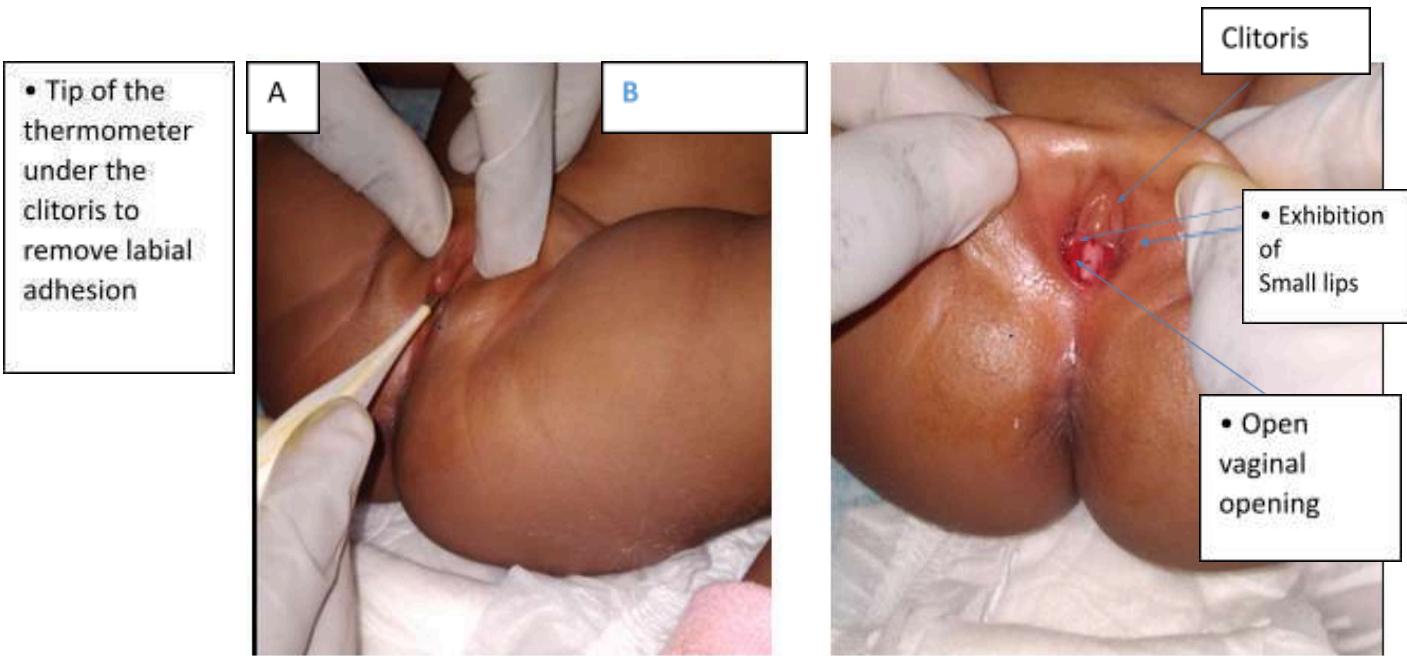
Incomplete files, other gynecological anomalies such as: congenital absence of the vagina, hymenal imperforation were excluded from this study. Data collection was done from patient consultation files and analysis was done using SPSS statistical software. The anonymity of the patients and the confidentiality of the data collected were guaranteed in this study. The aim of this was to report the epidemiological aspect, namely: the annual incidence, the circumstances of discovery, the age at consultation (age of diagnosis), the referent, the antecedents; - the diagnostic aspect: the character total or partial joining of the labia minora, the associated signs and the therapeutic and progressive aspect, that is to say the treatment and the results of the treatment. All patients were taken on an outpatient basis. The girls were placed in the gynecologist position. Exploration of the perineum revealed a vulva appearing flat without relief; we could not see the labia minora, the urethra or the vaginal opening. Traction of the labia majora showed the adjoining of the labia minora on the midline in the form of a translucent, avascular line from the vulvar frog to the clitoris. Treatment by the surgeon consisted in all cases of detachment (adhesiolysis) using curved Halsted forceps or the soft-tipped electronic thermometer under local anesthesia with EMLA cream or aqueous xylocaine gel 2%; after asepsis of the vulva, the tip of the instrument was introduced, either into the opening if it was a partial form, or through the translucent median membrane of the labial adhesion in the case of a total form; the jaws of the pliers were then spread gently and quickly until completely opened. For the thermometer we slide it up to the opening of the vagina. We see the reappearance of the labia minora, the vaginal orifice and the hymen as well as the urethral meatus. This procedure is painless and successful in a single attempt. Usually there is no bleeding or very minimal bloody oozing that resolves quickly. After the separation, a compress soaked in Betadine was introduced into the separation area for a few hours until the first urination or toilet. Post-operative care consisted of analgesics and antiseptics for local hygiene.
This treatment was associated in certain cases according to the surgeon with local hormonal treatment based on natural estrogen applied locally. A clinical appointment was given to the child for a clinical check-up.
III. RESULTS
We identified 28 cases of coalescence of the labia minora in our study over a period of 5 years (January 2017-December 2021). The annual incidence was 5.6 cases per year. The average age of our patients was 13 months with a range of 4 months and 2 years 9 months. Twenty-five patients (89.29%) of the 28 patients were less than 2 years old. The circumstances of discovery were accidental by the parents at home (28 cases) during baths or when the girls' mother was wearing a diaper. Twenty-one patients were referred directly by the mother to the pediatric surgery consultation; seven out of 28 patients were referred by medical personnel. Two patients had a history of perineal erythema and a urinary infection respectively. The epidemiological profile of coalescence of the labia minora of our patients is recorded in Table 1.
All patients were seen in outpatient clinics. We noted in the consultation files 20 coalescences (71.43%) of total form and 8 cases (28.57%) of partial form (figure 1). Surgical undermining was the therapeutic procedure performed in all patients. This separation was done using the Halsted forceps (22 cases) and the thermometer (8 cases) under local anesthesia (figure 2). Oral antibiotic therapy and local antiseptic treatments were prescribed to the child. Five patients were prescribed colpotrophin (estrogen) ointment postoperatively. The postoperative course was simple and after a 12-month follow-up, no recurrence was found in our study. Table 2 summarizes the diagnostic, therapeutic and evolutionary aspects.
IV. DISCUSSION
The coalescence of the labia minora results in complete or partial adhesion of the labia minora to the median raphe in pre-pubertal girls, making the hymen invisible [7]. Labial adhesion is uncommon according to several studies, it occurs in 0.6 -3.3 of prepubescent girls with an average of of girls [5]. Its annual incidence varies depending on the studies. In our study the annual incidence was 5.6 cases and lower than that found in the literature (table 3). This difference could be explained by the type of study. Our study was not multicenter with a long study period like the study by Dieth et al [1]. The average age of discovery in our study was 13 months with extremes of 4 months and 2 years 9 months. Twenty-five patients of our 28 patients had an average age of less than 24 months. This situation is found in most studies with an average age of 12 months-23 months [1.5]. Late discovery is rare, as some authors point out [1, 2,4]. The discovery of the anomaly was made by chance by the parents and with the main reason for consultation: a spontaneous closure of the vagina noted by the girls' mothers. Some authors have mentioned the absence of a vagina as a reason for consultations [4]. Total labial adhesion was the most common (20 cases) in our study compared to 8 partial cases as in most studies [1, 2,3]. All patients were asymptomatic. We did not note any associated signs or genitourinary malformations in the files. One patient had a history of perineal erythema and a second patient had been treated for a urinary infection. This antecedent situation is mentioned in the literature as a factor favoring the coalescence of the labia minora [1, 2,3]. It is anxiety about the sexual future of young girls that pushes parents to consult in our African context.
The management of coalescence of the labia minora is a subject of controversy. Most Western authors are in favor of therapeutic abstention, especially for asymptomatic children .
Therapeutic abstention is based on the impregnation of the vulva by the rise of estrogen hormones in the hope of spontaneous resorption (80%) [4,5]. On the other hand, other authors recommend treating the child as soon as the diagnosis is made in order to avoid complications such as urinary infection [1]. Hormone therapy would be the safest first-line treatment according to Scholer reported by Dieth et al [1], but this treatment takes 3 - 4 months on average without forgetting the side effects. Cases of recurrence and persistence of labial adhesion treated with hormonal therapy are reported in the literature and which subsequently required surgical release [6]. In our study, all the girls underwent surgical adhesiolysis under local anesthesia in a single attempt and hygiene measures with simple follow-ups. Our results are comparable to all reviews in our regions [1, 2, 3]. The arguments put forward in favor of our surgical treatment are that in our African context the long-term follow-up of patients is uncertain and many patients are lost to follow-up; on the other hand, conditions that affect the sex are poorly tolerated by our populations and the desire for an immediate result is almost required, at the risk of seeing these patients in the hands of traditional practitioners or unqualified medical personnel [1,2].
V. CONCLUSION
Coalescence of the labia minora is a relatively common benign condition in pre-pubescent girls, often overlooked by practitioners. Its diagnosis is clinical. There is no consensus in its therapeutic management. In our context, simple surgical removal of the labial coalescence of small children by a specialist would avoid genital mutilation by a non-specialist with psychological consequences for the child and his family.
APPENDICES
Table 1: Epidemiological Aspect of Our Patients
| Characteristics | N=28 | n (%) |
| Age groups (in months) | ||
| [4months-9months [ | 13(46.43) | |
| [10 months-15 months [ | 6(21.43) | |
| [16months-21months [ | 5(17.86) | |
| [22-month-27month [ | 3(10.71) | |
| [28 months-33 months] | 1((3.57) | |
| Total 28(100) | ||
| Circumstances of discovery | ||
| The mother 28 | (100) | |
| Reference mode | ||
| Mother of girls | 21(75) | |
| Medical staff | 7(0.25) | |
Table 2: Diagnostic, Therapeutic and Evolutionary Aspects
| Features | N=28 | n (%) |
| Reason for consultation | ||
| Spontaneous closure of the vagina | 28(100) | |
| Type of abnormality | ||
| Total form | 20(71.43) | |
| Partial form | 8(28.57) | |
| Therapeutics gesture | ||
| Adhesiolysis using Halsted forceps | 22(78.57) | |
| Adhesiolysis with the thermometer | 6(21.43) | |
| Post-operative care | ||
| Antiseptic room | 28(100) | |
| Estrogen ointment | 5(17.86) | |
| Aftermath of surgery | ||
| Simple | 28(100) | |
Table 3: Annual Incidence According to the Authors
| Authors | annual incidence |
| E. Thibaud [4] | 40 cases/ year |
| Lahourou Grah Franck et al [2] | 12 cases/ year |
| Dieth et al [1] | 8 cases/ year |
| Coulibaly MB et al [3] | 6 cases/ year |
| • Our study | 5.6 cases/ year |
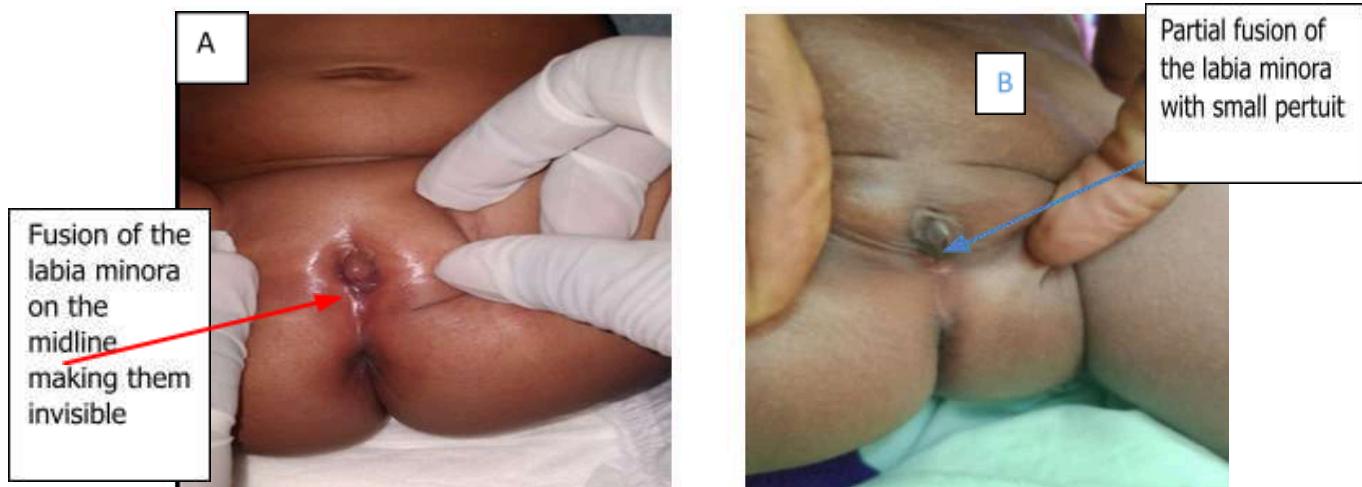 Figure 1: Distribution according to clinical form:
 : Complete Form (infant 4 months); : Partial Form (6 months old infant) Figure 2: 7 month old girl with coalescence of the labia minora
Conflict of Interest
The authors declare no conflict of interest.
Ethical Approval
Not applicable
Data Availability
The datasets used in this study are openly available at [repository link] and the source code is available on GitHub at [GitHub link].
Funding
This work did not receive any external funding.
References
Cite this article
Related Research



Special Issue
Launch a focused special issue to highlight research, emerging trends, and expert insights in your academic field.
