




IntelliPaper
Abstract
The Dja Biosphere Reserve is home to immense natural resources. Increasing poaching and other human activities like shifting cultivation and industrial agriculture are major problems in this area. This study addresses the need to explore attitude and perception of local residents toward wildlife and conservation. Questionnaires surveys and field observations were used in data collection. A total of 400 people was conveniently selected in 16 villages from October to December 2015. Data analysis relied mainly on factor analysis and structural equation modelling in SPSS 21 and Smart-PLS software. The main findings indicate a significant positive relationship between wildlife education, community wildlife sensitization and the local attitude on community involvement in conservation, which in turn have a strong and positive significant impact on the perception of the local people towards wildlife and conservation. Moreover, the perception of local people has a significant positive impact on the level of discipline towards wildlife and conservation. The results also suggest that local people perception index is not one-dimensional but can be considered as a three-dimensional construct affected by intention, wildlife threat and community involvement. Strategies aiming to change the perception of local people toward wildlife and conservation therefore need integrated approaches. This research points the involvement of local communities in wildlife management as an essential strategy to shape positive perception toward wildlife. Anti-poaching strategies will be easier if local people had a good perception towards wildlife and conservation. Wildlife education and sensitization are also essential in any conservation strategy, as they are key drivers of positive perception toward wildlife and conservation.
Explore Digital Article Text
I. INTRODUCTION
African wildlife conservation has long reclined on protected areas (Gueneau and Jacobe, 2005; Duan et al., 2022). They were imposed by governments with the view of effectively protecting, developing and maintaining representative samples of various biotopes in the area where they were installed (vodouhê et al., 2010). Communities had restricted access to their livelihood resources, and they were sometimes relocated elsewhere without any appropriate compensation and suffered from crop damage by wildlife (Kumssa and Bekele, 2014). Interventions to counteract poaching principally relied on law enforcement patrolling to deter, detect and punish poachers (Steinmetz et al., 2014). The army was deployed to prevent people from exploiting wildlife resources. All these created negative perceptions among locals and promoted bad attitudes toward protected areas. Conflicts therefore emerged between protected areas and surrounding communities (Infield and Namara, 2001). Today, there is a considerable debate on the extent to which protected areas delivers conservation outcomes in terms of habitat and species protection (Geldmann et al., 2013). Many conservationists now think that local people's participation is a major factor in the success or failure of any conservation project (Baloda et al., 2011). In response, new strategies, often referred to as community-based conservation (CBC), have evolved over the past two decades (Infield and Namara, 2001). CBC aims to simultaneously achieve development and conservation goals, therefore meeting the objectives of both local communities and conservationists (Nilsson et al., 2016). This strategy is inclusive rather than exclusive and seeks to provide more participation to local communities. People are therefore at the centre of all conservation practices (Tichaawa and Mhlanga, 2015) and assessment of their perceptions towards conservation has become an important aspect in designing conservation interventions (Ebua et al., 2011). Indeed, local communities' perception of protected areas influences the interactions that people have with them and therefore the effectiveness of conservation efforts (Vodouhê et al., 2010).
To date, many studies have focused on examining perceptions and attitudes of local communities toward protected areas (Vodouhê et al., 2010; Ebua et al., 2011; Kumssa and Bekele, 2014; Tichaawa and Mhlanga, 2015, infield and Namara, 2001; Gemeda et al., 2016). Their interest was mainly on accessing general knowledge, perceptions and attitudes of locals toward conservation and the factors associated with them. However, little research has been focused on the specific status of the Dja Biosphere Reserve and little is known about the perception of local residents toward this protected area. The Dja Biosphere Reserve has been established as a faunal reserve in 1950 and a UNESCO World Heritage site in 1981. Since the creation of this protected area, there has been many interventions in attempts to deter poaching from local communities. Although the government along with national and international organisations have spent billions of US dollars, the level of poaching in this protected area continue to threaten threatened and endangered species (Nasi et al., 2008). Some species populations are drastically declining and other are on the brink of extinction. In recent years, understanding that militarised and exclusionary approaches were not successful, conservationists now integrate local communities to try to accommodate their aspirations in hopes they form a better perception of biodiversity and conservation.
This study, therefore, aims to examine to what extent education, sensitization and attitude of the local people through community involvement influence their perceptions toward wildlife and conservation; to investigate the impact of their perceptions on community discipline toward wildlife and conservation; and to construct and validate the psychometric properties of the measurement scale on the perceptions of local people toward wildlife and its conservation.
Based on the results from previous studies, we formulated 3 hypotheses (1) there is a relationship between education, sensitization and attitude of local people to their perceptions toward wildlife and conservation; (2) the perception of local people is intimately linked to their discipline toward it; (3) the perception of local people toward wildlife and conservation is not one-dimensional.
II. MATERIAL AND METHODS
1.1. The Study Area
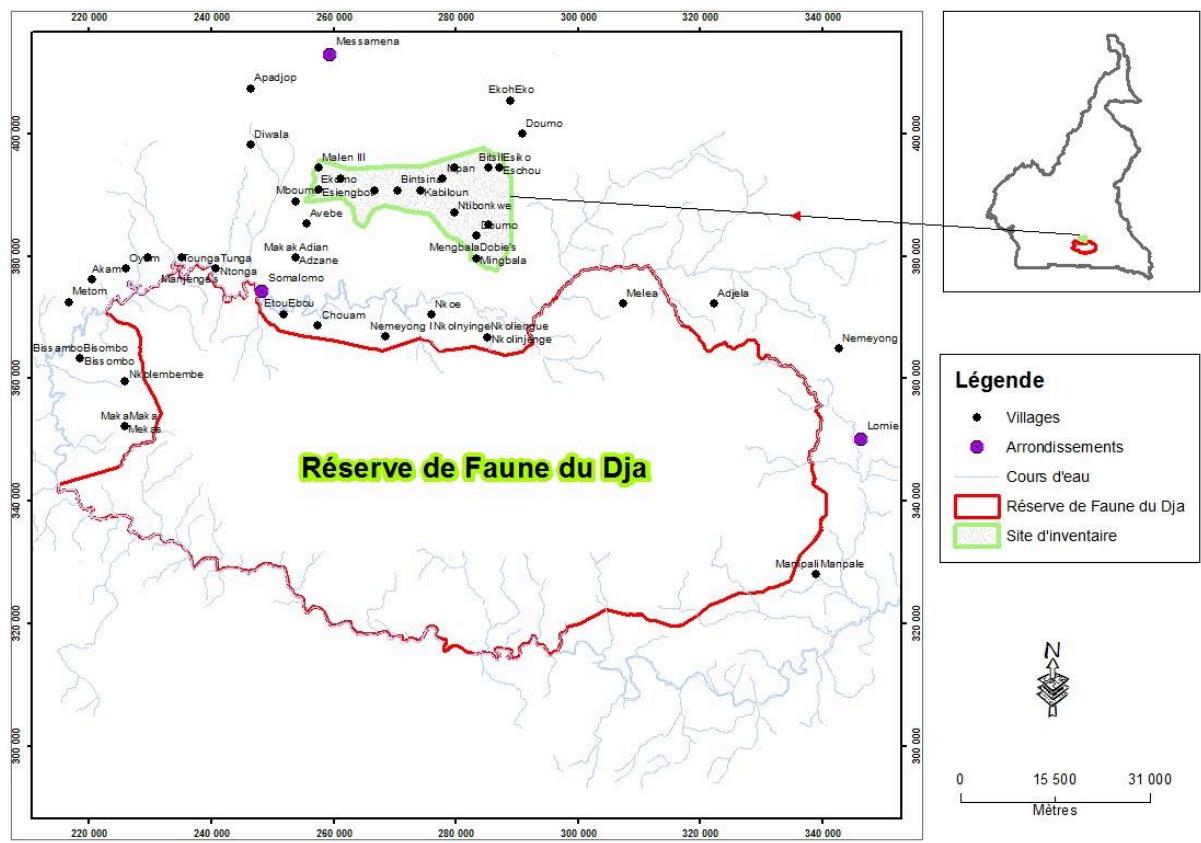
The study was conducted at the northern periphery of the Dja Biosphere Reserve (Fig 1) in the Messamena Sub-division, Upper Nyong Division of the East Region of Cameroon. The Dja Biosphere
Reserve is located in the East and South regions of Cameroon, between 2°50 and 3°30 latitude North, and 12°20 and 13°40 longitude East. This protected area is a vital home for critically endangered great apes and is one of the most emblematic and endangered landscape in the world. Apart from the critically endangered Western Lowland Gorilla (Gorilla gorilla) and endangered chimpanzee (Pan Troglodytes troglodytes), other flagship species in this UNESCO World Heritage Site include the forest elephant (Loxondonta africana cyclotis), grey parrot (Psithacus erithacus), giant pangolin (Loxondonta africana cyclotis), and leopard (Panthera pardus). This forested reserve which encompasses 5,260 sq. km is classified among the largest protected areas of the Guinea-Congolian tropical rain forests and designated an important bird area. It was created on the 26 June 1950 by decree No. 319 of the French High commissioner for Cameroon, and in 1981, at the instigation of the Cameroon branch of UNESCO's Man and Biosphere program, it became a UNESCO biosphere reserve. The UNESCO world heritage sites scheme was extended to the Dja Biosphere Reserve in 1987. The study area has an altitude ranging from 600 to 700 m above the sea level. The population of the Messamena Sub-division is estimated at 26 153 inhabitants including 13 441 males and 12 712 females (BUCREP, 2005). The population density is not high, including about 1.5 inhabitants/ sq. km. The major ethnic groups, the Badjoue and the Baka people live side by side in and outside the reserve. The climate is of the humid equatorial type with 4 seasons: a long-wet season from August to November, a long dry season from November to March, a short-wet season from March to June and a short dry season from June to August (Epanda, 2004). The average annual rainfall is 1563 mm and the average temperature vary between 19, 8°C and 27°C (Willie et al., 2012). The hydrography is dominated by the Dja River which form a natural boundary to the reserve from the south, west and north. As in many rural areas in Cameroon, the livelihood of local people relies on a mixture of activities such as agriculture, livestock keeping, hunting, fishing, Non-Timber Forest Products (NTFP) valorisation and handicraft. The main crops grown in the area are cassava (Manihot esculenta), cocoa (Theobroma cacao), coffee (Coffeeae spp.), cocoyam (Xanthosoma sagittifolium), groundnut (Arachis hypogaea) and plantain (Mussa spp.). The poor condition of roads is not favourable to the commercialisation of agricultural products. As a result, a high proportion of the harvest is mainly for consumption and the remaining part is sold as a very low price (Mukam, 2017). Bushmeat is hunted mainly for subsistence; only a small proportion is sold (Avila et al., 2017). Commercial logging, mining, poaching, industrial agriculture and infrastructure development are among the most important threats to the reserve and are the main contributing factors to habitat loss and fragmentation. Recent human population growth has increased deforestation and also exacerbated the impacts of poaching and the illegal bush meat trade.
Since 2010 the population of the study area has been involved through the NGO Tropical Forest and Rural Development (TF-RD) in a community-centred conservation program that aimed to improve local people's livelihood and perception and therefore divert them from poaching. Actions to reduce poaching were based on the creation of alternative income sources, groups training and structuring and awareness rising through education and sensitization. Alternative sources of income were introduced through the valorization of cocoa-based agroforest enriched with plantain and other local fruit trees and the valorization of non-timber forest products. Local people engaged in these activities were trained in sustainable agricultural practices, provided support in the creation of community enterprises and given access to high-value markets that would otherwise be inaccessible.
{"image_source":{"path":"images/7d86ebd7f84e2a34126aaf9c1505c20581036749d31317bc026247206fabdaa4.jpg"},"content":"","chart_caption":[{"type":"text","content":"Figure 1: Localization of the study area at the Northern Buffer zone of the Dja biosphere reserve"}],"chart_footnote":[]}
1.2. Methods
A questionnaire survey was carried out from October to December 2015 in 16 villages around the northern periphery of the Dja Biosphere Reserve. The total population of the study area was estimated at 3655 inhabitants using information of the 2005 national census (BUCREP, 2005) which was actualised using the population rate of increment, which was 15, 6% between 2005 and 2017 (BUCREP, 2011). Four hundred people were surveyed yielding a sampling intensity of 10,94%. Out of the 400 participants, only 334 properly responded to the entire questionnaire. The other 66 were excluded from the analysis. Convenience sampling was found adequate and reasonable to be used because the members of the population were difficult to reach, given that they are mostly farmers and hunters (Knapp & al, 2017). The advantages of the use of this technique of non-probabilistic sampling are that it is easy and convenient to rely upon the judgement of the experts to draw the sample. The population were divided into clusters of villages, and a purposive sampling was applied in selecting each element within the sample frame. The villages included in the sample frame were: Bintsina, Bitsil, Doumo Mama, Doumo Pierre, Echou, Kabilone II, Kompia, Madjuh II, Malen II, Malen V, Medjoh, Mimpalla, Nemeyong, Nglouminanga, Ntibonkeuh and Djassa. Interviews were conducted in French since it is the second language spoken by the population after the local language (Bajoue). To avoid misinterpretation problems, interviewers were accompanied by a person native of the area who served as interpreter when necessary. Respondents were asked questions about household demographics, education, employment, income generating activities and their perception toward wildlife and its conservation. To capture information on perceptions and attitude toward wildlife conservation, we used a five points liker-scale (from strongly disagree to strongly agree). Collecting information on sensitive topics like wildlife conservation is enormously challenging (wilfed & Maccoll, 2010) not only because of the illegal nature of hunting activities, but also because people do not always want to reveal real information concerning them. Since people commonly fear social rejection from other in the village, they choose to withhold truthful information. Data collected in such situations are therefore biased. To avoid such bias, the purpose of the study was introduced to the participants and they were insured of full anonymity for any incriminating information they may disclose. In addition, participant observation was carried out to triangulate information collected. The first author has been working with the communities of the study area since 2003 and have earned their trust. With respect to that, no payment of any kind was given to the respondents, and all were willing to answer the questionnaire. Moreover, since there is no law enforcement organisation in the study area, and the communities have been involved in a community-centred conservation approach, none of the respondents were afraid of being arrested. Therefore, they talked freely about wildlife and hunting activities and their perception toward conservation.
III. DATA ANALYSIS
All the analysis were performed in SPSS 21 and Smart PLS software. The former was used to conduct structural equation modelling while SPSS 21 was used to calculate frequencies and to run principal component analysis (PCA). We used partial least square approach to structural equation modelling (SEM -PLS) otherwise known as soft modelling. This method has several advantages which include the normality of data distribution not assumed. In addition, this approach of data analysis can include a larger number of indicator variables even higher than 50 items. It is used when dealing with weak theory, and it is a more robust and relax modelling approach (Afthanorhan, 2013). This method was accompanied by covariance-based approach of structural equation model (CB –SEM) which is well known for its accurate measurement of goodness-of-fit indices.
Before modelling with smart PLS, the 49 items of the questionnaire on perceptions of local people towards wildlife and conservation scale were subjected to principal component analysis (PCA) to gather information on the interrelationship of the variables. Prior to performing PCA, the suitability of the data for factor analysis was assessed by inspecting the correlation matrix, Bartlett's test of sphericity and Kaiser-Meyer-Oklin (KMO) value. These finding revealed the presence of many correlation coefficients above 0.5, confirming the theoretical expectation. Additionally, the KMO value was 0.77 exceeding the cut-off criteria, while Bartlett's test of sphericity reached statistical significance (P = 0.000), supporting the factorability of the correlation matrix. The 49 items were reduced into 16 components (or factor), with the associated Eigen value greater than 1. Only items with a loading factor of 0.5 or more were returned in this study for further analysis. The validity and reliability of the scale were also accessed. Convergent validity refers to the degree of agreement in two or more indicators of the same construct. Evidence of convergent validity was assessed by inspecting the average variance extracted (AVE) for each factor. According to Fornell and Larcker (1981), convergent validity is established, if the variance-extracted value exceeds 0.50. The results from this study (Table 1) revealed that the variance extracted for six constructs (or variables) ranged from 0.45 to 0.79. The variance extracted of measure of local people perception was the only variable below 0.5, though it can be approximated to 0.5. The individual construct Cronbach Alpha reliability score, considered as the lower bound for all the constructs, was found to be sufficiently significant for all the constructs, loading extremely high for community discipline ( ) and low on wildlife knowledge ( ). The composite reliability which is considered as the upper bound and more robust was found to be significantly higher than Cronbach alpha for all the constructs.
To verify if the perception index of local people is a one-dimensional construct or not, factors extracted using PCA were subjected to a second order confirmatory factor analysis (Structural Equation Modelling). However, to determine if the model will be accepted or rejected, at least 3 to 4 tests are recommended (Hair et al., 2010). In this study, we used both absolute fit indices and adjusted goodness-of-fit indices (Table 2). These measures are direct measures of how well the model of perception index specified by the researcher reproduced the observed data. Result in table 2 show that all measures of absolute fit indices are significant, meaning that the measurement model proposed by the researcher fit the data. All the measures of incremental indices were also found to be significant except normed fit index, which fails to meet with the cut-off criteria.
Table 1: Average Variance Extracted and reliability indexes
| Variables | AVE | Composite Reliability | Cronbach's Alpha |
| Community Discipline | 0.56 | 0.83 | 0.75 |
| Intention | 0.56 | 0.81 | 0.70 |
| Local People Attitude | 0.79 | 0.88 | 0.73 |
| Local People Perception | 0.45 | 0.69 | 0.68 |
| Wildlife Sensitization | 0.58 | 0.62 | 0.64 |
| Wildlife knowledge | 0.56 | 0.77 | 0.63 |
| Community Involvement | 0.55 | 0.78 | 0.59 |
Table 2: Goodness of fit indices IV. RESULTS
| Model fit Statistics | Result | Recommended value | Decision |
| P | 0.004 | P < 0.05 | Accepted |
| RMSEA (rms) | 0.053 (0.030 - 0.076) | RMSEA < 0.08, rms <0.05 | Accepted |
| GFI | 0.97 | GFI >0.90 | Accepted |
| AGFI | 0.95 | AGFI >0.90 | Accepted |
| CFI | 0.94 | CFI >0.90 | Accepted |
| NFI | 0.89 | NFI >0.90 | Rejected |
4.1 Socio demographic characteristics of the respondents
The socio demographic data of the respondents (Table3) indicate that 61.1% were male while 38.9% were female. Most (32.2%) of the participants were young adults aged between 26 and 30 years. The participants were all Christians with the majority of them affiliated to the Catholic Church. Most of the respondents (97.6%) were literate. Eighty-four percent of them had acquired primary education while only 12.9% of them achieved secondary school. This high level of education may be explained by the presence of many primary and secondary schools in the area. Monthly income was low as 87.1% of the respondents earned under 75 000 FCFA (150 U.S $) per month. Agriculture was the main occupation of the respondents (80.2 %) followed by hunting (6.9%). The findings regarding income are not surprising because the majority of the respondents rely on subsistence farming as the main way of generating income activity, and only a small proportion of the production is sold.
Table 3: Socio demographic characteristics of respondents
| Variables | N | % | Variables | N | % |
| Gender | Monthly income (FCFA) | ||||
| Male | 204 | 61.1 | Less than 30 000 | 129 | 38.6 |
| Female | 130 | 38.9 | 31000-75000 | 162 | 48.5 |
| 76000-150000 | 38 | 11.4 | |||
| 151000-200000More than 200000 | 32 | 0.90.6 | |||
| Age | Main occupation | ||||
| 18-25 years | 48 | 14.4 | Farmer | 268 | 80.2 |
| 26-30 years | 111 | 33.2 | Non timber forest product | 10 | 3.0 |
| 31-35 years | 60 | 18.0 | exploiter | 23 | 6.9 |
| 36-40 years | 36 | 10.8 | Hunter | 9 | 2.7 |
| 41-45 years | 25 | 7.5 | Fisher | 9 | 2.7 |
| 46 and above | 54 | 16.2 | Village head | 12 | 3.6 |
| Bush meat business man or woman | 3 | 0.9 | |||
| Forest guard | |||||
| Religion | Main source of income | ||||
| Catholic | 328 | 98.2 | Sale of farm products | 261 | 78.1 |
| Presbyterian | 4 | 1.2 | Sale of household labour | 24 | 7.2 |
| Protestant | 2 | 0.6 | Hunting | 25 | 7.5 |
| Petty trade | 24 | 7.2 | |||
| Level of formal education | 8 | 2.4 | |||
| No formal education | 280 | 83.8 | |||
| Primary | 43 | 12.9 | |||
| Secondary University | 3 | 0.9 |
The results from the model estimation (Table 4) reveal a significant positive relationship between wildlife education, community wildlife sensitization, attitude of local people toward wildlife and community involvement in conservation activities. In other words, for a percent improvement on wildlife knowledge, wildlife sensitization and attitude of local people toward wildlife and conservation, community involvement will be enhanced by 14.8 percent, 18 percent and 14.6 percent, respectively. The results further reveal that community involvement has a strong and positive significant impact on the perception of local people towards wildlife and its conservation. The inner and the outer models were all found to be significant at 1%.
Table 4: T-values for the measurement and structural model estimate
| Original Sample (O) | Sample Mean (M) | Standard Deviation (STDEV) | Standard Error (STERR) | T Statistics (|O/STERR|) | |
| Community Involvement -> Local People Perception | 0.267116 | 0.270507** | 0.011971 | 0.011971 | 22.313786 |
| Local People Attitude -> Community Involvement | 0.146514 | 0.148397** | 0.009621 | 0.009621 | 15.228777 |
| Wildlife Sensitization -> Community Involvement | 0.189280 | 0.190536** | 0.010493 | 0.010493 | 18.038105 |
| Wildlife knowledge -> Community Involvement | 0.148333 | 0.148537** | 0.013009 | 0.013009 | 11.402364 |
4.3 Impact of local people perceptions on community discipline towards wildlife and conservation
The result shows that the perception of local people has a significant positive impact on the level of discipline toward wildlife and conservation. All the indicators that proxy perceptions and discipline were significant. The result in table 5 can be interpreted to mean that with a unit positive change in the measure of the perception of local people toward wildlife and conservation, the level of discipline toward it will be improved by 29 % (t = 28.16; p = 0.000).
Table 5: t-value of the measurement model: local people perceptions -> community discipline toward wildlife and conservation 4.4 Is perception of the local people index toward wildlife and its conservation uni-dimensional construct?
| Original Sample (O) | Sample Mean (M) | Standard Deviation (STDEV) | Standard Error (STERR) | T Statistics (|O/STERR|) | |
| LPP-> Community Discipline | 0.292934 | 0.294829*** | 0.010402 | 0.010402 | 28.161522 |
The results from the regression weight (Table 6) indicate that the perception index of local people is predicted by perceived wildlife threats, intention and community involvement. Their regression weight was significantly different from zero at 0.1 % (two-tailed). To verify if the local people perception index is one-dimensional suffice at this stage to test the constructs of evident of discriminant validity. Discriminant validity refers to the extent to which a construct is truly distinct from other constructs. The average variance extracted (AVE) of perceived wildlife threat is AVE = 0.40, while for intention is closed to the cut-off criteria (AVE = 0.63) and for community involvement, average variance extracted is 0.66. The correlation (r) between perceived wildlife threat and intention is 0.47; by comparing the average variance extracted of both constructs with the correlation square ( ), the results indicate that the two constructs intention and wildlife threat exhibit sufficient discriminant validity. This is because both AVEs fall above the square of the correlation coefficient between them (Fornell and Larcker, 1981). Although two out of the 4 indicators predicting wildlife threat had a low and insignificant factor loading. Both AVEs of intention and community involvement are greater than the correlation coefficient between them ( ). There is evidence of discriminant validity between these two constructs as well. This is interpreted to mean that local people perception index is not a one-dimensional construct but rather can be considered as three-dimensional constructs. As can be visualised from the Figure 3, intention is loading high (FL = 0.80) in the prediction model perception index of local people, followed by community involvement in conservation (FL=0.76) and perceived wildlife threat (FL=0.59).
V. DISCUSSION
Our results indicate that the perception of local people toward wildlife and conservation is strongly influenced by their involvement in conservation activities, which in turn is influenced by education, wildlife sensitization and the attitude of local people. The perception of local people is therefore influenced by wildlife knowledge, attitude and community sensitization on wildlife and conservation. Similar results were reported by Vodouhê et al (2010), who concluded that the perception of local communities was strongly related to the management strategy of the park where local communities were effectively involved. Their results also pointed to education as the main factor in shaping positive perception toward wildlife among local communities. Wildlife sensitization was also reported by Steinmetz et al (2014) as one of the main factors leading to positive perception toward wildlife and conservation. According to this research, outreach can build trust, raise awareness, motivate, offer opportunities for action, increase perceived behavioural control of villagers and generate social pressure against poaching. Our results reveal the importance of involving people in conservation. Strategies that aim to counteract, detect and punish poachers lead to loss of wildlife and money since interventions are almost always after animals are death. Educating people and raising awareness through sensitization can help prevent the loss of wildlife.
Rocha and Fortes (2015) also pointed to the role of education in determining the perception of local peoples toward wildlife and conservation. Their findings reveal that school-aged children had a positive perception toward monkeys. Many of them showed a strong understanding of the ecological importance of the monkeys. This understanding may be due to the environmental education they received at school. In the case of our study area, local people have been subjected to a multi-year education and sensitization through the intervention of local NGOs working in that area. Three conservation organisation work and have an established presence in the study area: Tropical Forest and Rural Development, the "Projet grands singes" and the Association Apes Assistance through its centre of agricultural training. All these organisations have been sensitizing local communities on the importance of preserving wildlife communities for their benefit and that of future generations for more than ten years. TF-RD, through its environmental education component, has been working on improving the perception of young students and school teachers. This was done by organising field trip with students in order to bring them in contact to animals in the National Park of Mefou. Children of the study area used to see animals after they have been killed. This environmental education program at the Mefou National Park allowed the children to meet and interact with the animals that are subject to conservation efforts to improve their perception toward wildlife and conservation.
Results also suggest that the perception of local people toward wildlife has a significant effect on their discipline toward it. People who have a positive perception toward wildlife are more likely to respect the conservation efforts and protected area agreements. Different results were reported by Nepal and Spiteri (2011) who concluded that despite their positive attitudes and perception, people did not necessarily behave in a way compatible with conservation. This was because positive attitude was derived by a perceived livelihood dependence on natural resources, but there was not a clear linkage to conservation. In the case of our study, local people are brought in a community-centred conservation strategy that place humans at the centre of conservation. Helping local people to meet livelihood requirements through cocoa farming and NTFP valorisation and building their capacities contribute to build good attitudes that produce good intentions to conserve wildlife and a good perception of wildlife and conservation. However, to create a clear linkage with conservation, communities were brought through this community-based conservation approach, to sign quid-pro-quo participatory agreement (Reciprocal Environmental Agreement, REA) for poaching reduction. Agreements specify that local communities will refrain from commercial hunting; cease hunting within the reserve; and support the Service de Conservation to stop outsider poaching (e.g., vigilance committees/intelligence through information on poachers). Indeed, local people whose perception is improved are not only more disciplined toward wildlife, but they also engage themselves in sensitizing their peers to refrain from poaching. This can be illustrated by many people in the study area who were very active in wildlife trafficking, but after their engagement in the project, some started to reduce their poaching activities; others stopped it and started to convince their fellow villagers to abandon poaching and rather engage in agriculture.
Result further reveal that the perception index of local people is not one dimensional but can be rather considered as a three-dimensional construct affected by intention to conserve, wildlife threat and community involvement. The perception of local people is therefore the result of combination of many factors that should be taken into consideration while designing conservation interventions. If local people think that wildlife is meat given by God and there is no alternative meat available, that the government cares for wildlife more than the wellbeing of local people, that local people are not involved in conservation and that wildlife attacks livestock and destroys farms, then they will have a very bad perception toward wildlife. But if they understand that the main threat to wildlife is poaching and wildlife extinction is bad for ecosystem and for future generations, they will be more favourable to conservation. Knowing that should guide conservationists toward more integrated strategies that will act on all determinants of the perception of local people.
Table 6: regression weights from the measurement model of local people's perception index
| Estimate | S.E. | C.R. | P | |||
| Perceived Wildlife threat | <--- | LPP_Index | 0.299 | 0.066 | 4.54 | 0.000 |
| Intention | <--- | LPP_Index | 0.667 | 0.097 | 6.859 | 0.000 |
| Community Involvement | <--- | LPP_Index | 0.717 | 0.109 | 6.584 | 0.000 |
| ILP1 | <--- | Intention | 0.92 | 0.12 | 7.685 | 0.000 |
| ILP2 | <--- | Intention | 1.00 | |||
| ILP3 | <--- | Intention | 0.747 | 0.097 | 7.732 | 0.000 |
| CI2 | <--- | Community Involvement | 0.936 | 0.16 | 5.859 | 0.000 |
| CI3 | <--- | Community Involvement | 1.00 | |||
| LPP2 | <--- | PWLT | 1.00 | |||
| LPP3 | <--- | WLT | 1.154 | 0.261 | 4.418 | 0.000 |
| Q32 | <--- | WLT | 0.49 | 0.172 | 2.849 | 0,004 |
| Q34 | <--- | WLT | 0.347 | 0.105 | 3.314 | 0.000 |
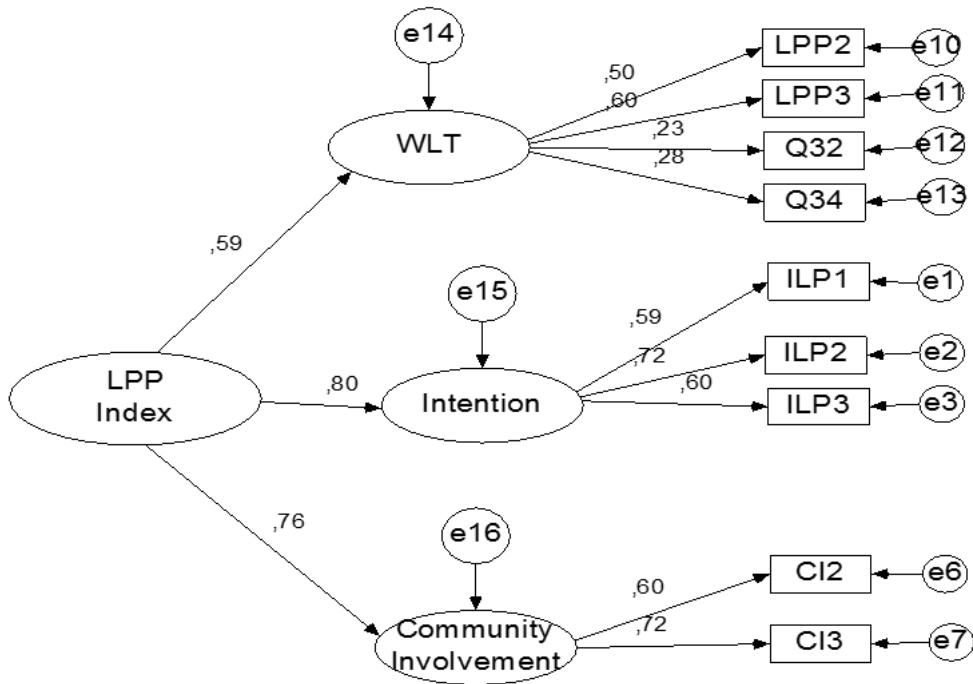 Figure 3: Predictive model of Local people Perception index
VI. CONCLUSION
This study assessed the perception of local people toward wildlife and conservation and the factors that can influence it. Overall, the study demonstrated that education, sensitisation and attitude of local people are very important factors that can influence the perception of local people which in turn can influence the discipline toward wildlife. Taking this into account benefits for conservation because this can help to save wildlife and money. We always intervene when animals are dead. This study also demonstrated that the implication of local people in wildlife management is crucial as it will lead to the improvement of their perception of wildlife and conservation and finally improve the discipline toward conservation rules. Anti-poaching strategies will be easier if local people had a good perception toward wildlife and its conservation. This study finally demonstrated that the perception of local people toward wildlife and conservation is not a one-dimensional construct, suggesting that issues concerning poaching need integrated responses. Working alongside with law enforcement to educate people, sensitising them on the importance of wildlife conservation, shaping bottom-up conservation strategies with local people, and improving their livelihoods through cocoa-based agroforestry and non-timber forest products valorisation will bring more successful conservation outcomes around the Dja Biosphere Reserve.
ACKNOWLEDGEMENTS
We are very thankful to the Small Initiative Program of the French Fund for the World Environment (PPI/FFEM) who provided fund for this research. We also Thank Thomas Bacha for constructive comments during the elaboration of this work. We also acknowledge the participation of the local population during data collection.
ABSTRACT
Vibrations of the sprayer field boom in the transverse-vertical plane result in a decrease in the quality of the technological operation. This is especially true in relation to the operation of small-sized single-support wheelbarrow-type sprayers. One of the possible solutions to compensate for the effect of transverse vibrations of the boom on the quality of spraying is the use of adaptive sprayers with a variable root angle of the spray torch, responding to the position occupied by the sprayer in relation to the surface being treated. The purpose of the work is to optimize the current values of the frontal spray angles of the nozzles of the adaptive distribution system of a small boom sprayer. The novelty of the study lies in the fact that, unlike industrial agricultural machinery, insufficient attention is paid to the implementation of technologies using small-scale mechanization tools. A prototype of a single-support boom motor sprayer was used as the object of study. The field experiment was carried out at the experimental sites of the Oryol State Agrarian University. Registration of data on the deviation of the sprayer from the vertical axis was carried out using a specially developed mathematical processing of the decrypted experimental data was carried out by a spreadsheet processor in the Microsoft Excel environment.
Classification: DCC Code: 631.3
Language: English
 Great Britain Journals Press
Conflict of Interest
The authors declare no conflict of interest.
Ethical Approval
Not applicable
Data Availability
The datasets used in this study are openly available at [repository link] and the source code is available on GitHub at [GitHub link].
Funding
This work did not receive any external funding.
References
Cite this article
Related Research



Special Issue
Launch a focused special issue to highlight research, emerging trends, and expert insights in your academic field.
