



IntelliPaper
Abstract
In recent years, various scholars have worked on employee turnover, but this study examined offboarding and employees’ performance among health workers in Ondo State. The objectives of the study are to determine the impact of offboarding mindset and employee retention strategies on employee performance among health workers in Ondo State. The study used the survey design method. The population of the study was 842, and the sample size was 271. A stratified random sampling technique was used to distribute the questionnaires among the professionals that make up the health workers. Multiple-regression data analysis was used. The model exhibits a good fit with the data. The value of R-Square for multiple regression shows that up to 97.6% of changes in employee performance are the result of offboarding mindsets and employee retention strategies. The findings revealed that offboarding mindset and employee retention strategies have a high effect on employee’s performance among health workers in Ondo State. The study concluded that offboarding has a high effect on the performance of employees among health workers in Ondo State. The study also recommended that there should be a cordial relationship between management and employees; in addition, regular onboarding and training of the new staff should be highly upheld. Also, to improve the employee retention strategy to aid employee performance, good compensation packages, a better condition of service, and career growth for health workers must be put into place.
Explore Digital Article Text
I. INTRODUCTION
Employee offboarding is the process by which an organization handles a departing employee. This process involves transfer of knowledge and the securing of organization property and data. Offboarding of any staff is done legitimately in developed countries like United Kingdom, Canada and United State of America because of better condition of service, good environment to work with and job satisfaction (Wilson, 2016). The contrary case is what is obtainable in Africa where an employee can decide to leave at any time he or she wishes without proper notice or the employers disengage their employees irrationally (Han, 2020).
Health organizations in Nigeria keep investing ample amount of capital and time on their employees in terms of induction, development, training and retraining and many others (Ibitomi & Adeleke, 2020). Despite this huge investment, it is quiet unfortunate that staff retention among the health specialist are not sustained (Engetou, 2017). Off boarding in our hospitals is now a common phenomenon, when an employee leaves, he goes with a great deal of human capital in the form of knowledge and skills developed on the job. Patients visiting hospitals in Ondo state and in Owo particularly spend hours waiting before being attended to due lack of sufficient health workers lost to improper offboarding. Therefore, strategies to maintain and retain work force is necessary, there is need to develop a fuller understanding of the employee offboarding, more especially, what determines employee offboarding, effects and policies that the medical directors can put in place in order to minimize offboarding (Mosebeck & Mobasher, 2021).
Health workers are extremely very important to the health sectors since their contribution to the organization is essentially invaluable and not easily replicated (Okpiabhele, et al., 2022). Therefore, the medical directors must recognize that employee's performance has a major contribution to the efficient achievement of the hospital's success. Health managers should control employee offboarding for the benefit of the organizational productivity (Obiekwe et al., 2019).
Employee offboarding is very costly to health organizations, with replacement costs estimated to range from 32% to 114% of an individual's annual salary (Collins et al, 2015). The cost of employee offboarding extends beyond the actual cost of replacing the employee, having a negative impact on employee performance and customer service (Park & Shaw, 2013). Voluntary offboarding occurs when the individual chooses to leave the organization of his or her own volition (Hom et al, 2013). Offboarding among frontline support employees within a hospital can affect the organization's ability to deliver safe and quality care.
Employee offboarding is a challenging issue in health sector where the employees have a direct impact on the quality of patient care. Nigeria health sector is witnessing an ever-increasing rise of brain drain on daily basis due to offboarding of health workers in the country. The developed nations such as the United States of America, Canada, United Kingdom, China and many others offer competitive salaries and benefits to entice competent healthcare professionals from all over the developing world to their own country. This "JAPA SYDROME" particularly in Nigeria causes the majority of health personnel moving to developed nation in search of greener pastures.
The costs accrue to replace an employee, which include recruiting and training, also, it extends to weak performance of remaining employees, as replaced employees are slower and require additional training (Park & Shaw, 2013).
Therefore proper disengagement is an essential part needed to maintaining organization's reputation, optimizing current employees' working experience, and preserving networking opportunities that are currently not available in our health sectors.
Disengagement via voluntary resignation is most rampant in our health sectors, majority of the already trained health worker are withdrawing their services on daily basis to relocate to advanced countries. In addition, at the opening ceremony of 2022 Abia Physicians' Week, the Nigeria Medical Association (NMA) president, Dr Rowland Ojinmah, decried the wave of brain drain that has hit the health sector, lamenting that no fewer than 50 medical doctors leave Nigeria weekly searching for better condition of service abroad (Nigerian Tracker 2022). He also reported that Nigeria has only 24,000-trained medical Doctors to cater for over 200 million Nigerians which in turn has adverse effect on the performance of the remaining employees. This improper disengagement process in Nigeria health sectors has immensely contributed to the decline rate of performance among employees in our hospitals. According to Sunday Punch of 19th of March, 2023, Nigeria has been faced with worrying brain drain in recent times, with many professionals, including doctors leaving the country for greener pastures, also from the register of the General Medical Council (GMC) of the UK website, number of Nigerian – trained medical doctors rose from 10,824 to 11,001 within 45 days (Sunday Punch, 2023). It implies from this report that at least three Nigerian- trained doctors are licensed per day.
The following research questions were formulated from the specific objectives to stimulate responses.
-
How does an offboarding mindset have an effect on employee performance among health workers in Owo metropolis, Ondo State?
-
To what extent does an employee retention strategy have an effect on employee performance among health workers in Owo metropolis, Ondo State?
-
The following research hypotheses were stated in null form for the purpose of providing answers to the research questions:
: There is no significant effect of offboarding mindset on employee performance among health workers in Owo metropolis, Ondo state.
: There is no significant effect of employee retention strategy on employee performance among health workers in Owo metropolis, Ondo state.
On completion of this research, it is expected to solve the challenges pose by attrition at various hospitals and to reduce and if possible eliminate the stress and time wasted by the citizen of the society visiting the hospital for medical treatment. This will no doubt reduce the drudgery effect caused on the medical personnel in the health sector for a sizeable number of patients to be attended to will drastically reduce and optimum performance achieved by the government and the incoming researchers will leverage on this for a future productive researches. Therefore, medical directors of health institutions must take measures to arrest attrition as a lot of investment in terms of time, money, and energy are expended to attract, train, and place a talent in the hospitals.
The cost goes beyond merely placing an advertisement in a newspaper. It includes training a new employee, staff time for selecting a new employee, productivity loss while the position is still open and until the new employee gets up to the same level of previous employee. Previous research addressed turnover in food industries, the hotel industry and other production sectors. (Djajasinga et al, 2020). No tangible research has focused on strategies to reduce if possible eliminate offboarding of health workers to determine their effects on employee productivity.
The scope of this study is to research on effect of offboarding on employees' performance among health workers in Ondo State, Nigeria. Geographically, Ondo State was chosen being the host to both federal, state and private hospitals. The variables used for this study are offboarding mindset and Employee retention strategies. The reason for the usage is due to the fact that they are the major determinant of offboarding that can help to check the performance of employees in relation. Multiple regression was used in analyzing the data because it deals with the effect of one variable to another.
II. LITERATURE REVIEW
2.1 Offboarding
Offboarding is the process that leads to the formal separation between an employee and an establishment through resignation or withdrawal of service, termination, absconding and retirement (Cunningham & Reilly, 2021). Offboarding can also be described as a process of disengaging an employee from their position within a company, it is a phenomenon use to describe both people who choose to leave and for those who are laid off by their organization (Dwesini, 2019). Lynn & Sellai, (2022) asserted that employee offboarding is the process by which a company handles a departing employee. This process involves any number of steps to guarantee a harmonious separation, a transfer of knowledge and the securing of company property and data.
In general, offboarding is the process during which an employee parts ways with the people and the organization they worked for. It encompasses all the decisions and processes that take place when an employee leaves. According to Sengupta et al, (2018), offboarding can be in the following dimensions:
i. Transferring that employee's job responsibilities: Transferring employee's job responsibilities involves the new onboarded staff taken over the duty of the off boarded counterpart.
ii. Documenting the employee's knowledge, duties and responsibility.
iii. Deactivating access rights and passwords: The employer ensures that the offboarded staff has no access to the organization system.
iv. Turning in equipment: The employer ensures proper hand over of any equipment under the possession of the offboarded staff and to also ensure that the offboarded sign exit form.
v. Conducting exit interviews to gather feedback: The employer conducts exit interview to determine the likely cause of offboarding so as to prevent other staff (Sangita, 2019).
When an employee leaves, he or she becomes either an advocate or an antagonist to the organization. Advocates will speak highly of the organization and can send potential new employees to the same organization. Antagonists will not recommend the business to anyone, and that can hurt in the long run. An effective offboarding process helps reduce the chance that misunderstandings will persist after the employee moves on. When employers take time to get a clear understanding of the employee's experience, the duo can part ways with additional opportunities for networking, development, and growth. (Sengupta et al, 2018).
2.2 Offboarding Mindset
Offboarding mindset is a general attitudes and the way employees typically think about offboarding. It is habitual or characteristic mental attitude that determines how employee will interpret and respond to offboarding situations. Offboarding mindset is a complex mental state involving beliefs and feelings and values and dispositions to offboardings in certain ways. Offboarding mindset is a collection of thoughts and beliefs that shape offboarding habits. This affect how employees think, what they feel, and what they do concerning offboarding. (Collins et al, 2015).
2.3 Employee Retention Strategies
According to Sangita (2019), employee Retention strategies is a challenging issue in organizations and particular the health sectors. Employees are the assets of any organization so as to keep the organization going. The health Managers must do everything possible to retain skillful and committed employees in the organization, management should take care of employee satisfaction. Find out the reasons of employee offboarding and also to overcome this. Employee Retention is defined as an organization's ability to retain its employees. It can also be called as a process, in which the employees are motivated and encouraged to stay in an organization for a longer period of time for the sustainability of the organization. (Mathimaran & Kumar 2017).
2.4 Employee Performance
This is defined as how an employee fulfills his duties and executes his required task. It refers to the effectiveness, quality and efficiency of his output. Performance also contribute to employees' assessment of how valuable an employee is to the organization. Employee performance refers to how workers behave in the workplace and how well they perform the job duties assigned to them (Ugoani, 2016). The employer typically sets performance targets for individual employee and the company as a whole believing that the organization offers good value to customers, minimizes waste and operates efficiently.
According to Ibitomi et al (2022), in an organizational context, employee performance is defined as the degree to which an organizational member contributes to achieving the goals of the organization. Employee performance is very important to all organization as it plays an imperative mechanism that contributed to the feat attained by an organization.
Individual performance has impact on both the team and organizational performance. In a situation where employees cannot measure up, then other workers have to pick up the slack. Poor employee performance has negative effect on customer's satisfaction and thus negative impacts on profits, company reputation and sales. (Dwesini, 2019).
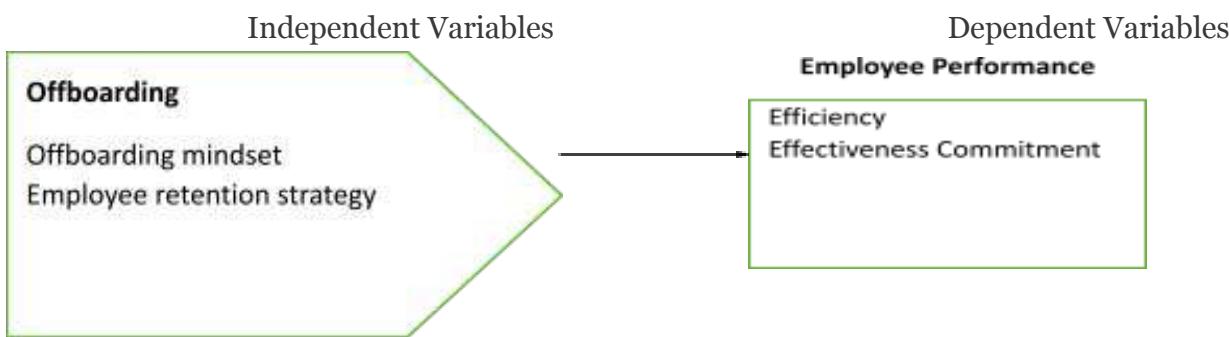 Figure 1: Conceptual framework (source: adapted from Mudor & Tookson (2011))
The independent variable is offboarding while the dependent variable is employee performance as shown in Figure 1. The variables under offboarding are offboarding mindset, employee retention strategies. The study is to know the impact of how the aforementioned variables of offboarding affect employee performance in terms of efficiency, effectiveness and commitment.
2.4 Theoretical Review
2.4.1 Expectancy Theory
The theory was proposed by Victor Vroom in 1960. The theory introduced one of the most widely accepted explanations of motivation. The expectancy theory stated that an employee will be motivated to put forth a high level of effort when he or she believes that:
i. Effort will lead to a good performance appraisal.
ii. A good appraisal will lead to organizational rewards.
i. The organizational rewards will satisfy his or her personal goals.
The key to the expectancy theory is to understanding individual's goals and the relationships between effort and performance, between performance and rewards, and finally, between the rewards and individual goal satisfaction. Motivation is usually high when an employee has a high level of expectancy and the reward is attractive, (Holston-Okae & Mush, 2018).
The expectancy theory of motivation explains the behavioral process and the reasons individuals choose one behavioral option over the other. This theory explains that individuals can be motivated towards goals if they believe that there is a positive correlation between efforts and performance, the outcome of a favorable performance will result in a desirable reward, a reward from a performance will satisfy an important need, and/or the outcome satisfies their need enough to make the effort worthwhile. The implication of expectancy theory to this work is that whenever the efforts of the health workers commensurate with their reward from the hospital management, it will discourage offboarding, but encourages offboarding if otherwise.
2.4.2 Goal-Setting Theory
The goal-setting theory, introduced in the late 1960s by Edwin Locke, proposed that intentions to work toward a goal are major source of work motivation. Goals, in essence, tell employees what needs to be done and how much effort should be expended. In general, the more difficult the goal, the higher the level of performance expected. (Onday, 2016).
Managers can set the goals for their employees, or employees and managers can develop goals together. One advantage of employees participating in goal setting is that they may be more likely to work toward a goal they helped in developing.
No matter who sets the goal, however, employees do better when they get feedback on their progress. In addition to feedback, factors influencing the goals-performance relationship are: the employee committed to the goal, employee believe that he is capable of performing the task, tasks involved in achieving the goal should be simple, familiar, and independent. The goal-setting theory is culture bound and is popular in North American cultures. If the goal-setting theory is followed, managers need to work with their employees in determining goal objectives in order to provide targets for motivation. In addition, the goals that are established should be specific rather than general in nature, and managers must provide feedback on performance. To reduce attrition rate in our hospitals, the management needs to work with their staff in set a goal and working towards the goal, this will enhance inclusive working condition and will no doubt discourage offboading and promote staff retention. (Onday, 2016)
2.4.3 Empirical Review
Holston-Okae and Mush, (2018) worked on employee turnover in the hospitality industry using herzberg's two-factor motivation-hygiene theory. The duo assessed the relationship between employee turnover intention and job satisfaction, employee compensation, employee engagement, employee motivation, and work environment. A convenience sample of 156 hospitality employee from Western Georgia; Central Mississippi; and North Central Texas completed an online survey. The data was analyzed using multiple linear regression statistical technique. In the final model, the 5 predictors accounted for approximately of the variance in turnover intention, and the result was statistically significant, .
it was discovered that motivation was not a significant predictor of employee's turnover intentions. Ultimately, hospitality leaders' ability to implemented strategies and policies into their business practice to reduce high turnover is vital for organizational to retain skilled worker while maintaining profitability. The study underscores the importance of job satisfaction, employee compensation, employee engagement, and work environment to reduce employee turnover in the hospitality industry. The fact that motivation was not a significant predictor of turnover intentions, this study opens avenues for further research on turnover intentions and motivation.
Narkhede, (2014) researched on employee turnover in hospitality industries a study of service staff. The author discovered the causes of turnover in hotels serving food to customers, and discover suitable measures to overcome the problems. Data was collected from selected hotels in Jalgaon City through schedules particularly from member of staff serving at table. The results provided significant evidence to justify increased emphasis on staff retention strategies and the creation of healthy work environments for serving staff.
Sengupta, et. al, (2018) wrote an article on unravelling employee off-boarding: the magic of exit interview. In his work, he proposed that organizations need to understand the reasons for voluntary disengagement. He suggested exit interview for the off-boarding staff in his last working days. The exit interview helps the organization to capture and analyze genuine reasons and work on the shortcomings, so that, it gains a competitive advantage in terms of minimum turnover and enhanced organizational commitment.
Bauer, (2015) worked on best practices for maximizing off-boarding success. He highlighted do's and don'ts in off-boarding process, according to him successful off-boarding makes employee feels good about his departure and also enhances the employment brand and future recruitment and client source for organizations. Organizations able to off-board employees effectively set themselves up for future success.
Wilson, (2016) researched on employee turnover in frontline hospital staff. According to him, turnover is disruptive to the operations of any organization. The employee engagement provides a connection between the strategies leaders have developed and implemented to the goal of reducing frontline support employee turnover. The leaders in this study provided four areas of focus in addressing employee turnover, which include leadership, hiring and onboarding strategies, pay and compensation, and organization-related factors.
Ongori (2007) worked on a review of the literature on employee turnover. According to him, most of the researchers focus on the causes of employee turnover but little has been done on the examining the sources of employee turnover, effects and advising various strategies which can be used by managers in various organizations to ensure that there is employee continuity in their organizations and also to enhance organizational competitiveness. This paper examines the sources of employee turnover, effects and forwards some strategies on how to minimize employee turnover in organizations.
Dwesini, (2019) wrote on causes and prevention of high employee turnover within the hospitality industry. This article investigated the causes of high employee turnover in the hospitality industry with the intention of recommending strategies for the retention of employees. The researcher adopted a desktop approach to identify causes of high employee turnover and consequently discussed strategies that hospitality managers can apply to reduce employee turnover in their establishments. A wide range of secondary sources of data was used to obtain an in-depth appreciation of the problem being investigated.
AlBattat and Som, (2013) worked on employee dissatisfaction and turnover crises in the Malaysian hospitality industry. According to the duo, studies have been done on employee turnover, but further investigation is needed as labor intensive employees are part of the hospitality product. This study reviews the literature relevant to turnover crises and provides a theoretical review of the Mobley model (1977). The purpose of this study is to give an overview of the causes of job dissatisfaction which force an employee to quit their current job and consider other job opportunities. Case of dissatisfaction from a poor working environment and considers leaving his current job.
Djajasinga et al, (2020) researched on practices in human resources and employee turnover in the hospitality industry. According to the authors, attrition of employees is a big global concern in the hospitality sector. The management of shifting working ties is one of the daunting challenges facing hospitality organizations. The hotel sector uses its human capital to gain its strategic edge in the consumer services market. Experts stress that the hospitality industry is a highly guest-based market that determines the enterprise's performance through meetings between staff and visitors. This analysis uses qualitative literature studies in the collection of the related data.
Jung, (2020) worked on a review of antecedents of employee turnover in the hospitality industry on individual, team and organizational levels. The article reviewed recent literature studies of employee turnover to identify antecedents of employee turnover in the hospitality sector to reduce the literature gaps and present a wider scope of turnover factor and understanding of employee motivational factors in their job decision.
Obaze et al., (2023) researched on predictors of turnover intention among entry-level employees of commercial banks in Nigeria. According to the authors, previous studies examined the possible predictors of turnover intention but some of them ignored the critical roles of entry level employees in the profitability of commercial banks. While managerial cadre is important in providing needed leadership bulk of the critical functions such as customer relationship, marketing, accounting and operations are largely performed by the entry level employees of banks. Obaze et al., 2023 investigated the predictors of turnover intention among entry level employees in Nigeria banking industry and also designed an effective and proper managerial intervention to achieve reduction in turnover intention in Nigeria banking industry.
Also, Ugoani, (2016) worked on employee turnover and productivity among small business entities in Nigeria. He evaluated the problems of employee turnover on productivity among small business entities in Nigeria, and recommended remedial actions. According to him, productive manpower is a critical element for the economic survival of any small business entity. The survey research design was used for the study. The sample comprised of 320 respondents. Data generated were analyzed by using descriptive and Z-test statistical techniques. He discovered that employee turnover adversely affects productivity in small business entities in Nigeria.
Chukwuezi et al, (2021), worked on causes and effects of employee turnover. The authors described turnover as an issue for contemporary research. The objective is to analyze the possible causes of employee turnover in organizations and to ascertain the effects of employee turnover in organizations. The variable used include job satisfaction, pay satisfaction, alternative employment opportunity and career progression. The methodology adopted is literature review approach and distribution of questionnaires to staff of some selected organizations. Their responses were tabulated and analyzed using simple percentages. In their findings, the researchers discovered factors such as pay satisfaction, lack of career progression, job satisfaction, employer-employee relationship, alternative employment opportunity amongst others causes high rate of turnover which has resulted into decreased in productivity and profit, loss of training cost and increased workload.
Chukwu, (2019) examined the influence of staff promotion on employee turnover intention in food and beverage industry in Nigeria. The objectives of the work are to ascertain whether employees will intend to leave when promoted as at when due, determine whether employees will intend to leave when promotion is regular, examine whether employees will intend to leave when promotion criteria is transparent and examine whether employees will intend to leave when satisfied with promotion. The variables used include staff promotion, cost and profitability
This research adopted a survey research instrument through the administration of questionnaires to staff of the sampled firms. The data for the research was analyzed using descriptive statistics and chi-square. The empirical results from the chi-square analysis showed that promotion as at when due, regular promotion, transparent promotion and when employees are satisfied with promotion has significant influence on employee turnover intention at 5 percent level of significance.
2.4.4 Gap in the Literature
The previous researches addressed turnover in food industries, hotel, banking sectors, and other production sectors. Djajasinga et al, (2020), Holston-Okae & Mush, (2018), Fernandez & Worasuwan, (2017), Dwesini, (2019) and many others, few researches are available in Nigeria in relation to hospitals. Those available were majorly carried out in the developed countries of the world. The ones carried out in Nigeria reflected the opinion in major cities without concentration on local government areas in the country. This research focuses mainly in a local government that has presence of both federal and state hospitals in Nigeria. Couple with current high attrition rate of already trained health workers in our various hospitals, no tangible research has focused on strategies to reduce and if possible eliminate turnover of health workers to determine their effects on employee productivity. This work focuses on impact of offboarding on employee performance among health workers in Ondo State, Nigeria.
III. METHODOLOGY
Survey research method was used in this research work. This entails collection of data from specific population or sample through questionnaire instrument. Survey research method was chosen because the goal was to sample the opinions of the people on issues concerning effect of offboarding on employee performance among health workers in Ondo State. The population of this research comprises staff of Federal, state and private hospitals in Ondo State. A stratified random sampling technique was used to distribute the questionnaires. This sampling technique was considered most appropriate because it gives everybody in the population equal chance of being selected.
Copies of questionnaires in which questions pertaining to age, gender, level of education, occupation and issues affecting offboarding were asked to accomplish the objectives of the study and analyzed by scoring the responses using Five levels scale, which are; strongly agree, Agree, Neutral, strongly disagree and disagree. The levels scale is awarded grades from (5) to (1), with a decrease from strongly agreed to disagree.
The entire permanent staff of the Federal, State and Private Hospitals were considered for the population of this study. The population of staff therefore is 842 employee across Ondo State.
The sample size was selected using Taro Yamane statistical formulae. The sample size formula according to Yamane (1973) is given by:
Where:
n signifies the sample size
N signifies the population under study e signifies the margin error = 0.05(5% significant)
The researcher employed the use of questionnaires as the instruments for collecting data from the sample population. The questionnaire for the collection of data was divided into two sections. The first section captured data on offboarding mindset, employee retention strategies and employee performance to establish the link between offboarding and employee performance. The second section covered the bio-data, educational level and job description of the respondents.
In order to carry out proper analysis of the data collected, a model is stated to determine the relationship between the variables of the study as:
Where OB = Offboarding, EP = Employee Performance, OBM = Offboarding mindset, ERS = Employee Retention Strategies = Alpha, = Beta, e = error
The study used multiple regression analysis, the reason for this choice was due to the dimensions of dependent and independent variables. The tools of analysis was statistical packages for social sciences (SPSS) which is more conducive for carrying out analysis.
IV. RESULTS AND DISCUSSION
A total of 286 respondents were served with the questionnaire, with the number of respondents evenly distributed on gender basis within the age ranges from 18 -60 years. 273 respondents which included 140 male and 133 female returned the questionnaire as shown in table 2. Information was presented using tables to aid easy understanding. Bio-social information of the respondents and the descriptive statistics of the respondents were analyzed
Table 1: Information on the Questionnaire
| No of questionnaire administered | No questionnaire returned | No of not retrieve |
| 286 | 273 | 13 |
It shows from table 1 that 273 copies of questionnaire were returned representing 95.45% success rate, which is considered sufficient and employed in the study.
Table 2: Demographic Variables Source: Calculation through SPSS 17.0 from Field Survey (2023)
| Age | Sex | Job Designation | ||||||
| Years | N | % | Gender | n | % | Type | N | % |
| 18-30 | 75 | 27.47 | Male | 140 | 51.28 | Medical Doctor | 65 | 23.81 |
| 31-40 | 79 | 28.94 | Female | 133 | 48.72 | Nurse | 73 | 26.74 |
| 41-50 | 68 | 24.91 | Medical Lab Scientist | 20 | 7.33 | |||
| >50 | 51 | 18.68 | Pharmacist | 25 | 9.16 | |||
| Physiotherapist | 15 | 5.49 | ||||||
| Radiographer | 10 | 3.66 | ||||||
| Medical Record | 32 | 11.72 | ||||||
| Engineer | 6 | 2.19 | ||||||
| Finance/Accounting | 9 | 3.30 | ||||||
| Admin Staff | 8 | 2.93 | ||||||
| Porter/Health Attendance | 10 | 3.66 | ||||||
| Total | 273 | 100.00 | 273 | 100.00 | 273 | 100.00 | ||
The results from table 2 shows that majority of the health workers administered with questionnaire are in their active age to function maximally. Also, most of the health workers are professionals in the medical field. Gender distribution of respondents shows that 51.28% of our respondents were males while 48.72% of the respondents are however their females counterpart, the total respondents observed in the study was 273 (100%).
Table 3: Demographic Variables Source: Calculation through SPSS 17.0 from Field Survey (2023)
| Experience | Education | ||||
| Years | N | % | Class | N | % |
| 1-5 | 20 | 7.33 | SSCE | 10 | 3.67 |
| 6-10 | 58 | 21.24 | ND/NCE | 35 | 12.82 |
| 11-15 | 56 | 20.51 | Bachelor Degree/HND | 156 | 57.14 |
| 16-20 | 35 | 12.82 | MBBS | 65 | 23.81 |
| 21-25 | 45 | 16.48 | Master level | 5 | 1.83 |
| >26 | 59 | 21.61 | PhD level | 2 | 0.73 |
| Others | |||||
| Total | 273 | 273 | |||
The results from table 3 shows that majority of the respondents have qualification of first degree or its equivalent and those that have good working experience were the ones served with the questionnaires. Majority of the health workers are in senior staff cadre with low population of junior staff.
Table 4: Employee Performance (EP)
| Employee Performance (EP) | SA | A | N | SD | D |
| Inappropriate employee mindset has negative effect on employee performance | 79 | 88 | 40 | 21 | 45 |
| Poor employee retention strategies has adverse effect on performance among Health workers | 87 | 72 | 50 | 27 | 37 |
| Voluntary resignation of appointment by health workers has adverse effect on employee performance | 64 | 69 | 11 | 66 | 63 |
| Outright dismissal has adverse effect on employee performance | 78 | 75 | 43 | 27 | 50 |
| Termination of appointment of health workers has adverse effect on employee performance | 69 | 70 | 45 | 41 | 48 |
| Inadequate replacement of retired staff has negative effect on employee performance | 78 | 68 | 51 | 45 | 31 |
The results from table 4 shows that good numbers of the respondents strongly agreed and agreed to the fact that inappropriate employee mindset, poor employee retention strategies, outright dismissal, termination of appointment of health workers and inadequate replacement of retired staff have adverse effect on performance among Health workers. Also, almost equal number of the respondents strongly agreed and strongly disagreed to the fact that voluntary resignation of appointment by health workers has adverse effect on employee performance.
Table 5: Determine Off-Boarding Mindset (OBM) on employee performance among health workers in Owo, Ondo State N=273
| Strongly Agree (SA) | Agree (A) | Neutral (N) | Strongly Disagree(S D) | Disagree(D) | |||||||
| S/N | Research Questions | N | % | N | % | N | % | N | % | N | % |
| 1 | I frequently think of quitting my job to better one outside the country | 102 | 37.36 | 96 | 35.16 | 31 | 11.36 | 19 | 6.96 | 25 | 9.16 |
| 2 | I will be actively looking for a new job within the next one year due to dissatisfaction on my present job | 91 | 33.33 | 85 | 31.14 | 45 | 16.48 | 24 | 8.79 | 28 | 10.25 |
| 3 | Management practices of treating health workers allow offboarding at all time in my hospital. | 71 | 26.00 | 66 | 24.17 | 65 | 23.81 | 31 | 11.36 | 40 | 14.65 |
| 4 | Insufficient employees in the organization slows down the effectiveness and efficiency of our operations and offboarding of workers in our hospital. | 48 | 17.58 | 49 | 17.99 | 41 | 15.02 | 67 | 24.54 | 68 | 24.91 |
| 5 | Inability to work with modern tools and equipment in any hospital prepare me for offboarding | 55 | 20.15 | 45 | 16.48 | 20 | 7.33 | 78 | 28.57 | 75 | 27.47 |
The results from table 5 shows that good numbers of the respondents strongly agreed and agreed to the fact that they are think of quitting their current job to better one outside the country, actively looking for a new job within the next one year due to dissatisfaction on their present job and also believe that management practices of treating health workers allow offboarding at all time in hospital. Also, good numbers of the respondents strongly disagreed and disagreed that insufficient employees in hospitals slow down the effectiveness and efficiency of operations in hospitals and inability to work with modern tools and equipment prepare health workers for offboarding.
Table 6: Examine Employee Retention Strategies (ERS) on employee performance among Health workers in Owo, Ondo State N=273
| Strongly Agree(SA) | Agree (A) | Neutral(N) | Strongly Disagree(SD) | Disagree(D) | |||||||
| S/N | Research Questions | N | % | N | % | N | % | N | % | N | % |
| 6 | Good relationship among health workers can retain them in the country | 49 | 17.95 | 49 | 17.95 | 45 | 16.48 | 61 | 22.34 | 69 | 25.27 |
| 7 | Good compensation packages can retain health workers in the country | 71 | 26.00 | 76 | 27.84 | 40 | 14.65 | 45 | 16.48 | 41 | 15.02 |
| 8 | Career growth of health workers can retain them in the country | 65 | 23.81 | 62 | 22.71 | 31 | 11.36 | 51 | 18.68 | 64 | 23.44 |
| 9 | Work life Programs for health workers can allow them to stay for a long time in their hospitals | 49 | 17.95 | 51 | 18.68 | 75 | 27.47 | 48 | 17.58 | 50 | 18.32 |
| 10 | Good Work Environment is a determine factor to retain health workers in hospitals | 40 | 14.65 | 54 | 19.78 | 43 | 15.75 | 71 | 26.00 | 65 | 23.81 |
| 11 | Good condition of work in linewith that of the developed countries can retain health workers. | 85 | 31.14 | 76 | 27.84 | 20 | 7.33 | 52 | 19.05 | 40 | 14.65 |
| 12 | Appropriate exposure to overseas training among health workers can retain them at work and improve their performance at work | 95 | 34.80 | 85 | 31.14 | 40 | 14.65 | 25 | 9.16 | 28 | 10.26 |
| 13 | Culture of health practitioner can retain health workers | 55 | 20.15 | 60 | 21.98 | 39 | 14.29 | 52 | 19.05 | 67 | 24.54 |
| 14 | Leadership style employed to treat health workers will play good roles to retain health workers | 64 | 23.44 | 60 | 21.98 | 25 | 9.16 | 61 | 22.34 | 63 | 23.08 |
| 15 | Benefits Programmes to health workers will retain their service in the country | 59 | 21.61 | 60 | 21.98 | 45 | 16.48 | 50 | 18.32 | 59 | 21.61 |
The results from table 6 shows that good numbers of the respondents strongly agreed and agreed to the fact that good compensation packages can retain health workers in the country, good condition of work in line with that of the developed countries can retain health workers and appropriate exposure to overseas training among health workers can also discourage offboarding. Also, good numbers of the respondents strongly disagreed and disagreed that good relationship among health workers and good work environment can discourage offboarding. Also, approximate equal number of respondents strongly agreed, agreed, strongly disagreed and disagreed that career growth of health workers, work life programs for health workers, culture of health practitioner, leadership style employed to treat health workers and benefits programmes to health workers will play good roles to retain health workers in the country.
V. RESULTS ANALYSIS
5.1 Likert Scale
5 = Strongly Agree (SA), 4 = Agree (A), 3 = Neutral, 2 = Strongly Disagree (SD) and 1 = Disagree (D)
Dependent Variable: Employee Performance (EP)
Independent Variables: Off-Boarding Mindset (OBM) and Employee Retention Strategies (ERS)
Table 7: Multiple Regression Analysis Result
| Hypothesis | Regression Weight | Beta Coefficient | $R^2$ | F | t-value | p-value | Hypothesis Supported |
| $HO_1$ | →OBM EP | .417 | .976 | 5444.844 | 6.367 | .000 | Yes |
| $HO_2$ | →ERS EP | .591 | .976 | 5444.844 | 9.418 | .000 | Yes |
VI. RESULTS FROM ANALYSIS
The hypotheses test to study the effect of offboarding mindset on employee performance among health workers in Owo, Ondo State. The dependent variable EP was regressed on predicting variable OBM to test the hypothesis . OBM significantly predicted EP, , p < 0.001, which indicates that the OBM can have significant effect on EP (b =.417, p < 0.001). These results clearly direct the positive effect of EP. Moreover, the depicts that the model predicts 97.6% of the variance in EP.
The hypothesis tests to study the effect of employee retention strategy on employee performance among health workers in Owo, Ondo State. The dependent variable EP was regressed on predicting variable ERS to test the hypothesis . ERS significantly predicted EP, , p < 0.001, which indicates that the ERS can have significant effect on EP (b =.591, p < 0.001). These results clearly direct the positive effect of EP. Moreover, the depicts that the model predicts 97.6% of the variance in EP.
Table 8: Model Summary a. Predictors: (Constant), EMS, OBM
| Model | R | R Square | Adjusted R Square | Std. Error of the Estimate |
| 1 | $.988^a$ | .976 | .976 | .21228 |
The table 8 shows the R-square of the estimated model. The R-square 0.976 indicate that 97.6% variation in employee performance is caused by off boarding mindset and employee retention strategies. The R-square shows that the model has an overall goodness of fit and such is suitable for determining the effect of employee performance.
Table 9: Analysis of variance of estimated model ANOVA
| Model | Sum of Squares | df | Mean Square | F | Sig. | |
| 1 | Regression | 490.714 | 2 | 245.357 | 5444.844 | $.000^b$ |
| Residual | 12.167 | 270 | .045 | |||
| Total | 502.881 | 272 | ||||
The table 9 shows that the estimated model has high overall significance which means that the joint effects of off boarding mindset and employee retention strategy on employee performance is high and it is significant. This also show that the f-statistic (502.882) and its probability (0.000 < 0.05), indicating that the estimate is significant at 5% level of significance.
Table 10: Regression coefficients
| Model | Unstandardized Coefficients | Standardized Coefficients Beta | t | Sig. | ||
| B | Std. Error | |||||
| 1 | (Constant) | -.179 | .030 | -6.008 | .000 | |
| OBM | .417 | .066 | .400 | 6.367 | .000 | |
| EMS | .579 | .061 | .591 | 9.418 | .000 | |
a. Dependent Variable
Table 10 shows the regression coefficients. The standardized beta coefficient 0.400 shows that off boarding mindset has a significant effect on employee's performance. It also shows that the estimate is significant at 5% level of significance. As a result, we reject the null hypothesis that 'there is no significant effect of offboarding mindset on employee's performance amongst health workers in Owo.
The standardized beta coefficient 0.591 shows that employee retention strategy has a significant effect on employee's performance. It also shows that the estimate is significant at level of significance. As a result, we reject the null hypothesis that there is no significant effect of employee retention strategy on employee's performance amongst health workers in Owo.
6.1 Discussion of Findings
The first hypothesis states that there is no significant effect of offboarding mindset on employee's performance amongst health workers in Owo. The standardized beta coefficient (0.400) and probability (0.001 < 0.05) indicated that offboarding mindset is statistically significant with employees' performance. This means that the offboarding mindset increases employee performance among health worker in Owo. The second hypothesis states that 'there is no significant effect of employee retention strategy on employee's performance among health workers in Owo. However, the estimated standardized coefficient (0.591) and p-value (0.000) shows that the effect of employee retention strategy on employee's performance amongst health workers is positive and significant. This implies that when there is more focus on retaining employee permanently in the hospital sector, helps to increase the performance of employees.
The result showed that offboarding mindset (OBM) and employee retention strategies (ERS) is a significant positive predictor on employee performance. This was in agreement with the result of Holston- Okae and Mush (2018) that there is relationship between employee turnover intention and job satisfaction, employee compensation, employee motivation and work environment using Herzberg's two factor motivation hygiene theory. Also, the result was also in contract with Dwesini (2019) that explored factors leading to high labour turnover and further highlighted employee retention strategies that management in the hospitality industry can use to reduce this problem.
VII. CONCLUSION AND RECOMMENDATIONS
Analysis was conducted using multiple regression. From the various results obtained, it was evident that the model fit the data well and are statistically significant for the research. Also from the analysis, we found out that p < 0.001 indicates that the result is significant for the test. Beta coefficient shows that employee performance (EP) is affected by 41.7% and 59.1% offboarding mindset (OBM) and employee retention strategies (ERS) respectively. The model predicts that 97.6% changes in the employee performance is due to the offboarding variables. This means that most of the factors affecting employee performance among health workers in Owo metropolis, Ondo State is caused by these factors that has been taken into consideration.
Based on first objective, the study recommends that there should be cordial relationship between management and employees, modern tools and equipment should be made available to hospitals, also regular onboarding and training of the new staff should be highly upheld.
Also, employee retention strategies, good compensation packages, better condition of service, career growth of health workers, good working environment, appropriate exposure to overseas training, and some benefited programs to health workers must be on ground to achieve the second objective.
Conflict of Interest
The authors declare no conflict of interest.
Ethical Approval
Not applicable
Data Availability
The datasets used in this study are openly available at [repository link] and the source code is available on GitHub at [GitHub link].
Funding
This work did not receive any external funding.
References
Cite this article
Related Research



Special Issue
Launch a focused special issue to highlight research, emerging trends, and expert insights in your academic field.
