




Abstract
The innovation of the Internet facility, no doubt has significantly transformed the manner in which individuals, organisations and groups collect, create and share messages. Social media as one of the Internet-related platforms has become important in the practice of public relations. Therefore, the crux of this study is to assess the adoption and use of social media for engagement by public relations professionals in broadcasting organisations in Plateau State, Nigeria. The study collected data from 58 respondents through the employment of the quantitative research design. Technological determinism theory is used to explain the thrust of the study. The research found among others that social media has great influence in the practice of public relations in the broadcasting organisations studied. The study recommends among others that public relations professionals in media organisations should continue to take advantage of social media for better engagement with their clients.
Explore Digital Article Text
I. INTRODUCTION
The emergence of internet and technology especially the advent of the 21 century is in no small measure changing the way people live their lives, relates with one another and also carry out some schedules or tasks be it privately or publicly. The drift from what we used to know to what it is now "the in thing", coupled with the role of gadgets and technologies in the mix, is calling for an encompassing discourse in academic.
The rising fame of social media is becoming obvious among users of the online facilities (Kim & Johnson, 2011 cited in Andoh-Quainoo & Annor-Antwi, 2015). McCorkindale and DiStaso (2014) posit that social media has evolved a great deal, and more consumers of the platform are using it to communicate and engage than ever before. Dunbar, Arnaboldi, Conti, and Passarella (2015) also argue that the use of social media globally has gained an upward trend in the world of communication, and organisations have gained mileage by using it to communicate in a much more effective and fast way with their customers about their businesses as wellU as responding to queries and questions (Coombs & Holladay, 2018; Carroll & Buchholtz, 2022).
According to Kaplan and Haenlein (2010) "data from the Forrester Research, 7 revealed that 5% of internet surfers around the world used 'social media' in the second quarter of 2008 by joining social networks" (p. 59). From then to 2023, information from Search Engine Journal (2023) revealed that there are about 4.8 billion social media users across the globe. This suggests that social media use has become a global phenomenon. Rahman (2018) concurs that there is a commonly acceptable presumption that the Internet's importance as a medium for communication has grown progressively and has increased regarding corporate communication, which public relations belongs.
According to the Pew Research Internet Project (2014), 74% of online adults in the United States of America (USA) use social networking sites, which include a wide range of ages, education levels, and socioeconomic statuses. The researchers found that Facebook is one of the most popular sites (71% of online adults in the U.S. use this site); fewer respondents used LinkedIn (22%), Pinterest (21%), Twitter (19%), and Instagram (17%). As of July 26, 2023, the statistics of social media users in the USA was put at 302.35 million, representing 90% of the total population in the country (DemandSage, 2023). Thanks to the popularity of multiple platforms across a wide range of audiences, social media has become one of the most popular topics in public relations.
In France, social media penetration statistics shows that France has more than 66 million of its population using social media for both personal and organisational engagements as of August 29, 2023 (Statista, 2023). In Britain, information from Statista (2023) indicates that as of 2022, there were a total of 61.67 million social network users in the United Kingdom, who use the platforms for the personal and corporate duties while that of China and South Africa were 1.02 million and 28 million respectively (Kepios, 2023 & McInnes, 2023).
In Nigeria, social media has become a powerful political platform. Records show that as of January 2021, the country has about 33 million social media users, with the percentage put at over 40%. Another statistics indicate that there are more than 90 million Nigerians with mobile phones, with over 48% and internet access of 36% (Premium Times, 2022). From this, it can be deduced that majority of staff of organisations including broadcasting corporations in Nigeria have access to social media platforms, implying that social and internet-related tools have nearly supplanted the combined mix of traditional media as essential routes of communication in both public and private organisations.
Social media, its uses in public relations and domains as well as its general effects has become the reigning thing in the society. The uses of these social media in public relations engagements, its impact including the internet as well as other associated gadgets of technologies has been subsumed into the daily activities and relationships of people all over the world. It is not only connected with passing information to the public but with keeping up with friends, clients, relatives and loved ones through chats, videos or voice calls, also accessing news at the fingertips, or surfing the internet to get information about virtually everything.
Social media are increasingly used in public relations by practitioners (Dimovski, 2022). Allagui and Breslow (2016) further submit that public relations scholars and practitioners alike agree that social media are changing the PR industry and increasingly playing an important role in the business planning process. DiStaso and McCorkindale (2012) suggest that the significance of social media to public relations practice cannot be underscored, and PR is necessary for the operations and success of many firms. Valentini and Kruckberg (2012) contend that social media is heart of public relations activities due to the fact social media platforms are used to boost organisational relationships with their various publics.
Public relations engagements are proponent factors of human development which is not restricted to material well-being of a person or group of people or society in general, rather it has to do with other areas of human growth meant to sustain the society as well as advance its mode of operation. Public relations engagement is a communication with the public through different communication platforms (such as social media) aimed at building a positive image for an organisation or a person, or brand (SendPulse, 2023). Public relations engagement is a very important planning process for influencing public opinion, i.e., for mutually satisfactory two-way communication, argues Smith (2013). Public relations engagement contributes to creating and projecting the perfect image of an institution to the public. It is a two-way process in which the message is transmitted to the audience, but there must be feedback, due to the practicality of the work (Dimovski, 2022). This implies that through public relations, engagement, a positive reputation is acquired and the image of each organisation is being built.
There is no doubt that broadcasting corporations like other organisations in Nigeria have embedded PR ideas into their operations since the inception of public relations in the country. Also, it is safe to say that social media have become vital tools for PR practice in broadcasting organisations in Nigeria just as obtainable in other countries. Thus, the crux of this study is to assess the adoption and use of social media for engagement by public relations professionals in broadcasting organisations in Plateau State, Nigeria.
II. ESTABLISHING THE RESEARCH PROBLEM
The field of public relations has encountered remarkable alterations in the last two decades as a result of the introduction of new communication technology, which has paved way for communicating with international and external publics of an organisation. Facts suggest that the major reason for the changes in the public relations industry is linked to the emergence of social media networking which enable public relations practitioners to quickly and easily engage with their clients and vice-versa (Moustakas, 2015). The coming on board of social media and its use across the globe has made it to be embraced by PR specialists including those in broadcast organisations.
There is no doubt that social media is dominating practices in organisations due to its fast growing nature. It's therefore, becomes imperative to assess the impact that social media have had on the public relations practice, as well as how the public relations practitioners in broadcast organisations in Plateau State, Nigeria are incorporating this new media into their communication strategies.
Scholars have researched on the use of social media on public relations practice in organisations (Barbara, 2021; Djabanor, 2019; Dornyo, 2014; Olayinka & Ewuola 2019; and Nchabeleng, Botha Bisschoff, 2018 & Ende et al, 2020). For instance, the study of Barbara (2021) focused on the role of social media in public relations practice – a study of security agencies in Ghana. That of Djabanor (2019) was on social media as a public relations tool: a study of MTN Ghana and Vodafone Ghana. Dornyo (2014) researched dwelled o the use of Facebook in organizational public relations practice: a study of selected organizations in Ghana. The crux of Ende et al, (2020) was on the appraisal of the use of social media as tools for public relations practice in tertiary institutions in Federal University of Technology, Minna and Niger State College of Education, Minna. While the thrust of Olayinka and Ewuola (2019) was on the impact of social media on public relations practice. That of Nchabeleng, Botha and Bisschoff (2018) dwelled on the uses, benefits and limitations of social media for public relations in South African non-governmental organisations.
While these authors have contributed significant literature on the use of social media and PR practice in organisations, the adoption and use of social media for engagement by public professionals in Nigerian Television Authority, Jos, Plateau State, Plateau Radio Television Corporation (PRTVC), Jos, Highland FM, Jos, Unity FM, Jos, Plateau State, Jay FM, Jos, TinCity FM, Jos, Rhythm FM, Jos, and Dr. Fish Radio, Jos, Plateau State, Nigeria remains an interesting area to investigate. This is, therefore, the gap in knowledge that this study bridged.
III. OBJECTIVES OF THE STUDY
To find out the types of social media platforms use for PR engagements by the PR practitioners.
To assess the factors that determine the preference of social media tools employed in public relations practice by PR specialists in these broadcast organisations.
To determine how the use of social media has enhanced the achievement of public relations objectives of these broadcast organisations.
To ascertain the extent to which these broadcast organisations PR professionals are deploying the social media to communicate with their publics.
To investigate the challenges that public relations practitioners in these broadcast organisations encounter while using social media for their practice.
IV. REVIEW OF EMPIRICAL LITERATURE AND IDENTIFICATION OF GAP
Scholars have conducted studies on PR relations and organisational improvement. Komodromus (2015) in a study conducted on public relations professionals' use of social media platforms in Cyprus. The researched adopted the survey strategy and established PR practitioners in Cyprus prefer to have interactive specialists and groups responsible for communicating to their stakeholders through social media and the Internet. The study also found that organisations of all types have increasingly been adopting new communication strategies, incorporating social media tools in their communication strategies, both when planning online activities and when evaluating the outcomes of these activities. Findings of the research equally revealed that most of the practitioners reported the use of the Internet and social media tools in organisations will inevitably grow with the passage of time. The study, thus, concluded that social media was having great impact on public relations practice. It was recommended that PR specialists should continue to make positive use of the social media for engagement with their clients. The relevance of this study to the current study is that both studies seek to understand the potency of public relations in organisational management. Similarly both studies adopt same methodology to arrive at findings. It is however in sector wise and subject scope that both studies differ. While the current study dwelled on the use of social media for public relations engagement in select broadcasting organisations in north central Nigeria. This under review however focused on use of social media for PR practice in Cyprus.
Adopting the survey research design, Olayinka and Ewuola (2019) examined the influence of social media on public relations practice in Osun State Broadcasting Corporation (OSBC), Osogbo. The study made use of the technological determinism theory and found that social media platforms such as instant messaging, social bookmarking, photo-sharing, wikis, Facebook, etc. have had an immense impact on how public relations specialists communicate as it makes it possible for people and media organisations to have faultless exchanges. The study also discovered that social media has enhanced the achievement of public relations goals by impacting on public relations knowledge, enhancing relationships with people, sharing information on the latest innovations on the tools and methods of public relations, and also helps in shaping the attitude of those in public relations practice. It was concluded that social media was having positive impact on PR practice. Also, Oneya (2010) stated that PR practitioners interviewed admitted to social media having highly impacted or influenced communication, especially in the way in which their organisations handled external communication. He further stated that social media provides a cost-free forum for the expression of ideas, information and opinion. Wright and Hinson (2009) also highlighted that blogs and social media has also impacted massive public relations thus promoting instant feedback, thereby agreeing with Oneya (2010). Social media increases the immediacy of communication and offer platforms for public view on various issues, and enables reaching new younger audience that traditional media could not have Wright and Hinson (2009).
It is recommended that public relations practitioners tap into these resources and begin taking appropriate measure of their social media efforts. It was further suggested that higher institutions of learning in Nigeria should implement stronger curriculum that better prepares future public relations professionals to use, implement and measure social media.
Both studies have bearing on each other giving that social media is one of the core strategies of reaching publics by public relations practitioners. By adopting this important strategy the study has strong bearing on the current study which seeks to ascertain how public relations strategies can be adopted in the management of broadcast organisations in Plateau State, Nigeria. Both studies adopted survey research method. However, while the current study has Nigerian Television Authority, Jos, Plateau State, Plateau Radio Television Corporation (PRTVC), Jos, Highland FM, Jos, Unity FM, Jos, Plateau State, Jay FM, Jos, TinCity FM, Jos, Rhythm FM, Jos, and Dr. Fish Radio, Jos, Plateau State as its focus, the study under review dwelled on Osun State Broadcasting Corporation (OSBC), Osogbo.
Rahman (2018) assessed the use of new media in online public relations activities among the public relations practitioners. Content analysis research approach was employed. Findings of the study showed that, a PR practitioner utilises online PR because the Internet is valuable to people, and PR is a competitive field. It was also discovered that there are many advantages of the utilisation of online PR, which include message accuracy, precision, low cost, improving the positive image of the institution, maintaining relations with the public and crisis management, etc. More finding equally revealed that a PR practitioner who does not communicate effectively with online communities can no longer shape or maintain the desired public image effectively results from many factors, including fear of taking responsibility, official reprimands, and criticism from the public and the inability to deal with rapid developments in the social media. Also, organisational policy organisation, which is often the reflection of state policy, plays an essential role in allowing freedom to expression and participation. The study concluded that online media was proving effective for the practice of PR. The study, therefore, recommended that good use of new media for public relations practice among PR personnel.
The relationship between both studies is that both the current study and the one under review have as core objective to explore the role of new media in public relations engagements. However, the study under review adopted the content analysis research strategy, while the present study employed the survey research method. Also, both studies differ because the while the current study seek to ascertain the applicability of social media for public relations engagement in select broadcasting organisations in Plateau State, Nigeria, the study under review focused on somewhere else.
Nchabeleng, Botha and Bisschoff (2018) concentrated their study on the uses, benefits and limitations of social media for public relations in South African non-governmental organisations.
The authors employed qualitative research using in-depth, semi-structured interviews to collect data from the target population. The study found that the main benefits of using social media include increasing public relations interactions with audience, improving the accessibility of public relations communication, increasing the speed for feedback and input. Others are social/peer and emotional support, potential to influence the public, improving the long-term cost effective relationship of public relations communication, reaching youth and other audiences on specific issues. It was concluded that social media is a powerful tool, which offers collaboration between users and is a social interaction channel for a range of individuals. The study recommended that information needed to be monitored for quality and reliability for user's confidentiality and privacy to be maintained. It was further suggested that organisations should recognise and understand the social media landscape and develop strategies that are suitable and be aware of what others are doing online and act accordingly.
The connection between both studies is that both the current study and the one under review examined the impact of social media on organisational performance. However, the reviewed study employed qualitative research using in-depth, semi-structured interviews to collect data from the target population, the present study adopted survey research methodology. Also, while the study differs from the current study in the sense that the present study centred on the broadcast organisations, namely, Nigerian Television Authority, Jos, Plateau State, Plateau Radio Television Corporation (PRTVC), Jos, Highland FM, Jos, Unity FM, Jos, Plateau State, Jay FM, Jos, TinCity FM, Jos, Rhythm FM, Jos, and Dr. Fish Radio, Jos, Plateau State. The study under review dwelled on non-governmental organisations in South Africa.
In a related study, Andoh-Quainoo & Annor-Antwi (2015) explored the use of social media in public relations: A Case of Facebook in the Ghanaian Financial Services Industry. The authors used content analysis method to conduct the study. The study found that all the selected companies use Facebook most as a public relations tool to increase relationship and foster closer relationship between the organization and its publics. The researchers further observed that despite the fact that companies are cognizant of the interactive opportunities that Facebook offer, most companies are still under-utilizing the platform to its full capacity. The study posited that the interaction is prevalent from the organisation to the customers and the public with few responses from the customers. It was concluded that social media was vital in Ghanaian financial sector. The study recommended that there is utmost need for two-way interaction between the organisations and their publics.
The relevance of this study to the present study is that both studies have as core objective to gain understanding of the role of social media public relations activities. However, Andoh-Quainoo & Annor-Antwi (2015) used content analysis method to conduct their study, while the current study adopted the survey method. Another difference is that while the present study assessed the use of public the relations in Nigerian Television Authority, Jos, Plateau State, Plateau Radio Television Corporation (PRTVC), Jos, Highland FM, Jos, Unity FM, Jos, Plateau State, Jay FM, Jos, TinCity FM, Jos, Rhythm FM, Jos, and Dr. Fish Radio, Jos, Plateau State, this under review examined the use of Facebook by PR practitioners in the Ghanaian Financial Services Industry.
Achor, Nwachukwu & Nkwocha (2015) evaluated the impact of social media on information management in public relations practice. The study adopted the survey research design. The study found that the use of Facebook by public relations practitioners ranked first, followed by Twitter, blogs, and Myspace. The researchers disclosed that information gathering, processing and delivering are now fastened as noted by the speed and information flow in social media platforms because majority of the respondents sampled used social media to communicate not only in crisis situation but in all ramifications of organisational communications and information management. The study concluded that public relations professionals used the various social media platforms to monitor events that are related to their organisations and scanning for potential crisis, detect misperceptions about the organisation. The research recommended the need for proper adoption and use of social media by PR professionals in meeting the needs of their various firms.
The connection of this study to the present study is that both studies focused on the use of social media by PR practitioners in enhancing their practice. Equally, Survey research methodology is adopted for both studies. The point of departure is that the present study explored the use of social media for public relations engagement in select broadcasting organisations in north central Nigeria. The study of Achor, Nwachukwu & Nkwocha (2015) evaluated the impact of Facebook information management in public relations practice.
Wright and Hinson (2017) study focused on tracking how social and other digital media are being used in public relations practice within the past twelve years. The authors used trend-analysis method combined with an extensive web-based questionnaire to conduct the study. The researchers disclosed that the use of social and other digital communication media in public relations practice has continued to increase each year. The authors stated that the trend has given huge opportunities not only for those who practice public relations but also for a wide variety of strategic publics who have been given dynamic new communication vehicles. The study discovered that Facebook still remain the major platform used by public relations practitioners to communicate with their publics with Twitter as the second most used social medium in the public relations industry. The authors concluded that public relations professionals have agreed that social and other digital media are changing the way public relations is practiced in contemporary era in view of the inherent potentials of social media. The study then advocated the continued use of online communication platforms for good PR practice.
The relationship between both studies is that both aim at evaluating how the use of social media by public relations professionals can be used to position the image of organisations. On the other hand, the study under review adopted the trend-analysis method combined with an extensive web-based questionnaire to arrive at findings, the current study made use of survey research. Another point of divergence is while the current study evaluated the applicability and efficacy of social media by PR practitioners in some broadcast stations in North Central Nigeria, the study under review examined how social and other digital media are being used in public relations practice within the past twelve years.
Ende et al (2020) appraised the use of social media as platforms for public relations activities higher institutions of learning in Niger State, Nigeria. The dialogic theory of public relations was used as theoretical underpinning, while survey design was employed to collect data from the respondents. It was established that investigated institutions have adopted the various social media platforms as a channel of communication between the institutions and their publics. Data further showed that both institutions mostly used Facebook to communicate with their internal and external publics. The study concluded that social media was being used for PR practice in the institutions. The study suggested that public relations practitioners should be well trained on the use of various social media tools for the purpose of information dissemination between their establishments and target audience/publics.
The relationship between this work and the current study stems from the fact that both studies aim at evaluating how social media is affecting the practice of public relations in organisations. Also both studies adopt survey research method to arrive at findings. The point of divergent though is that while the current study sought to understand how public relations practitioners are using social media in the management of Nigerian Television Authority, Jos, Plateau State, Plateau Radio Television Corporation (PRTVC), Jos, Highland FM, Jos, Unity FM, Jos, Plateau State, Jay FM, Jos, TinCity
FM, Jos, Rhythm FM, Jos, and Dr. Fish Radio, Jos, Plateau State, the study under review did evaluate social media contributions to PR practice in Federal University of Technology, Minna and Niger State College of Education, Minna.
Gordon (2010) investigated the use, value and impact of social media on public relations practitioners in the FOX Cities". The researcher used survey method to conduct the study. The study found that people and organizations valued social media more than its usage. The study showed that preponderance of the respondents sampled for the study, believed that social media have changed their organizations communication pattern. The study found that most firms are not measuring the impact of social media practice even though most of the respondents agreed that public relations practitioners should measure who is talking about their organizations or their clients' organisations in these outlets. Another finding from the study showed that the data elicited from the universities have no formal social media curriculum, however, most of the departments are moving in that direction. It concluded that social media was being used by the universities for students engagements. The study recommended that the data obtained from the universities, when properly implemented, the data can aid universities in preparing their communications students for their careers.
The study by Gordon (2010) like the others is relevant to this work in that it centred on the role of social media for public relations practice in elevated organisational output. Several findings of the study also have relevance to this work since this current study is to ascertain the use of social media by PR practitioners in select broadcast establishments. Equally, both studies used survey method. However, while that study was a case study of FOX Cities, the present study is to determine the adoption use of social media in public relations in Nigerian Television Authority, Jos, Plateau State, Plateau Radio Television Corporation (PRTVC), Jos, Highland FM, Jos, Unity FM, Jos, Plateau State, Jay FM, Jos, TinCity FM, Jos, Rhythm FM, Jos, and Dr. Fish Radio, Jos, Plateau State.
V. THEORETICAL UNDERPINNING
The study is situated within the thrust of the Technological Determinism Theory. The theory is associated with investigations conducted by Marshall McLuhan who posits that the world is presently experiencing an extraordinary era of technology, especially as it relates to creating and dissemination of information. While studying media and culture in England, McLuhan endeavoured to understand the mass media environment that around him. Individuals who witnessed the innovations and advent of the phonetic alphabet, the printing press, and the telegraph experienced noteworthy enhancements in communication methods. Often called the "Oracle of the Electronic Age," Marshall McLuhan stated that emerging electronic media is transforming human thought, behaviour, and emotions. He theorised that the current technological environment will sooner or later be recognised as an important moment in the discourse of packaging and dissemination messages. The theory explains that the mass media serves as a fundamental component in sending messages to large number of people, which sparked considerable debate during the 1960s, largely due to Marshall McLuhan's findings. He contended that each medium of communication reshapes our physical surroundings, imposing specific patterns of perception, thought and influence on us in ways we may not fully realise (Emery, et al 1991). The technological determinism theory, is therefore, considered relevant in this study because it helps to explain how the practice of PR specialists in broadcasting organisations in Plateau State, Nigeria is now on the social media as a new communication and information sharing platforms.
VI. METHODOLOGY
In carrying out this study, the researcher adopted quantitative research approach. According to Coghlan and Brydon-Miller (2014), quantitative research is a set of strategies, techniques and assumptions adopted to study a particular phenomenon through the use of numerical numbers. Phandari (2020) concurs that quantitative research is the method of gathering, examining and scrutinising statistical numbers to explain, forecast or organise variables. The researcher found the quantitative research technique suitable because the technique covers vast populations, the method is more factual, as well as it can be conducted in secret, meaning without knowing the person that is giving you the information and the respondent may not know the researcher as well. The quantitative research strategy is also relevant to the study due to the argument that it is one of the best methods in obtaining data quickly and it can be used to reproduce results.
The population of the study covered the entire staff of the PR departments of Nigerian Television Authority, Jos, Plateau State, Plateau Radio Television Corporation (PRTVC), Jos, Highland FM, Jos, Unity FM, Jos, Plateau State, Jay FM, Jos, TinCity FM, Jos, Rhythm FM, Jos, and Dr. Fish Radio, Jos, Plateau State. The sum total population is 58, according to information obtained from the administrative departments of these broadcasting organisations. Census sampling technique was adopted due to the small number of the population, while data was collected through the use of questionnaire.
Furthermore, descriptive statistics using tables, charts, figures, frequencies, percentages and mean deviation of five-point likert scale of Strongly Agree (SA), Agree (A), Undecided (U), Disagree (D) and Strongly Disagree (SD), which the criterion mean was put at 3 point and above is accepted result, while 2 point and below is rejected result were used to present the data. The reason for the adoption of this data presentation and analysis method was for easy understanding by anyone that may stumble on the study.
VII. DATA PRESENTATION AND ANALYSIS
A total of fifty-eight (58) copies of questionnaire were distributed, out of which 53 (representing 91%) were retuned and found valid for analysis. Graphical representation of the retrieved and not retrieved copies of questionnaire is as shown in the Chart below:
Figure 1: Analysis of Response Rate Table 1: Respondents' Use of Social Media for Public Relations Practice in their Organisations
| Option | Frequency | Percentage |
| Yes | 53 | 100 |
| No | 0 | 0 |
| Total | 53 | 100 |
The data contained in the Table above signifies that social media has become important in PR discipline to enable broadcast organisations attain set-communication objectives of enhancing mutual and two-way beneficial relationships with their varying publics online.
{"image_source":{"path":"images/c6034c9779548ea7ddcbc8fbe3bef4bcac87b8ce1b944b20fd7732cfe9ddc4d3.jpg"},"content":"","chart_caption":[],"chart_footnote":[{"type":"text","content":"Source: Field Survey, 2024"}]}
Figure 2: Types of Social Media Platforms That Are Employed By the Respondents for Public Relations Practice in their Organisations
The finding suggest that social media, especially Facebook, WhatsApp and X have emerged as a primary means for PR professionals to convey their messages to the various publics of their organisations. The finding also is not unconnected with the fact that large number of Facebook, WhatsApp and X users across the world compared to other social media platforms.
| Response Option | Frequency | (%) |
| Daily | 49 | 92.4 |
| Once in every two days | 4 | 7.5 |
| Weekly | 0 | 0 |
| Thrice a week | 0 | 0 |
| Once a month | 0 | 0 |
| Twice a month | 0 | 0 |
| Total | 53 | 100 |
It therefore implies, based on the data contained in Table above that PR practitioners of the studied broadcasting organisations make use of social media on a regular basis to reach out both the internal and external publics of their organisations. In fact, according to the data in the table, it could be inferred that the PR practitioners embarked on the use of social media for public engagements more on a daily basis.
| Options | SA | A | SD | D | UD | Total | Mean Rating | Decision |
| To handle internal communication | 53 | 0 | 0 | 0 | 0 | 53 | 5 | Accepted |
| To handle external communication | 53 | 0 | 0 | 0 | 0 | 53 | 5 | Accepted |
| All of the above | 53 | 0 | 0 | 0 | 0 | 53 | 5 | Accepted |
| None of the above | 0 | 0 | 0 | 0 | 0 | 53 | 0 | Rejected |
It could be deduced from the data above that due to the wide and fast reach of social media, the PR practitioners in the studied broadcasting organisations saw the need to use social media.
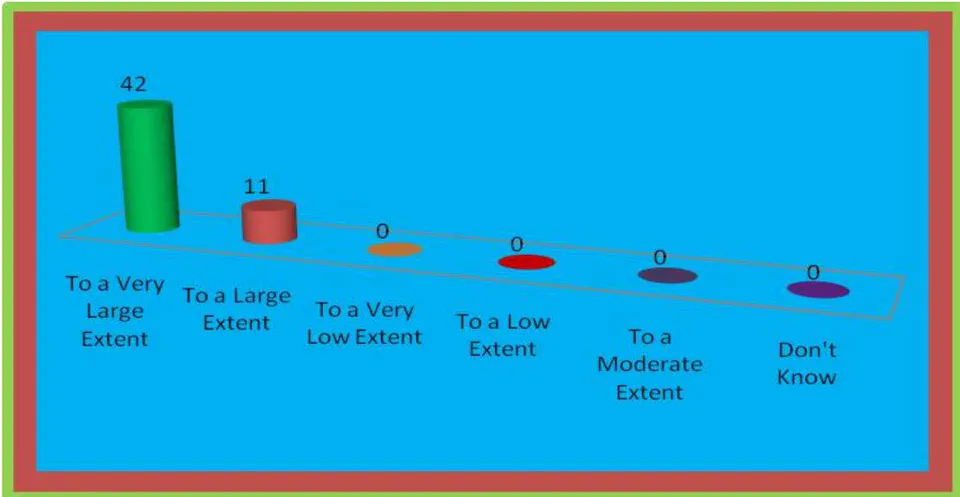
Figure 3: Extent to which the Respondents Use Social Media for Public Relations Practice
It could be deduced from the results in Figure 3 media for PR engagements in the investigated that there is very high employment of social broadcasting media organisations.
| Scale | Frequency | (%) |
| Strongly Agree | 29 | 54.7 |
| Agree | 21 | 39.6 |
| Undecided | 3 | 5.6 |
| Strongly Disagree | 0 | 0 |
| Disagree | 0 | 0 |
| Total | 53 | 100 |
The data presented in Table 4 highlights the significant role that social media plays in effective management of both internal and external publics of the investigated broadcast organisations.
| Options | SA | A | SD | D | UD | Total | Mean Rating | Decision |
| Provide knowledge to the publics on my organisation's services | 45 | 8 | 0 | 0 | 0 | 53 | 4.8 | Accepted |
| Educate the publics on how to access my organisation's services | 39 | 14 | 0 | 0 | 0 | 53 | 4.7 | Accepted |
| Social media has become strategic in the image management of my organisation | 42 | 11 | 0 | 0 | 0 | 53 | 4.7 | Accepted |
| It has changed the way PR campaigns are carried out in my organisation | 44 | 9 | 0 | 0 | 0 | 53 | 4.8 | Accepted |
| Social media puts a face to my organisation we the PR practitioners can interact with our clients any time, any day | 32 | 21 | 0 | 0 | 0 | 53 | 4.6 | Accepted |
| Social media reduces the social gap between my organisation and its publics | 47 | 6 | 0 | 0 | 0 | 53 | 4.8 | Accepted |
| Social media has enhanced the practice of PR in my organisation | 43 | 10 | 0 | 0 | 0 | 53 | 4.8 | Accepted |
| All of the above | 44 | 9 | 0 | 0 | 0 | 53 | 4.8 | Accepted |
| None of the above | 0 | 0 | 0 | 0 | 0 | 53 | 0 | Rejected |
The data presented in Table above suggests that social media influences the practice of PR in many ways such as putting a new face to PR practice, enhancing organisations social relations, gives fast access to the broadcasting organisations' services, among others. This underscores social media continued importance as powerful communication platforms for PR professionals to engage with their publics.
| Options | SA | A | SD | D | UD | Total | Mean Rating | Decision |
| Inadequate funds to purchase and management social media tools | 21 | 9 | 12 | 8 | 3 | 53 | 3.6 | Accepted |
| Challenge of fake news and misinformation | 26 | 11 | 3 | 5 | 8 | 53 | 3.7 | Accepted |
| Challenge of how to eliminate time-intensive, repetitive tasks such as stuffing envelopes with press releases or faxing them to hundreds of media outlets one at a time | 13 | 18 | 11 | 7 | 4 | 53 | 3.5 | Accepted |
| Inadequate PR professionals who know how to use social media for organizational engagements | 2 | 2 | 24 | 22 | 3 | 53 | 2.1 | Rejected |
| Inadequate social media tools that support PR practice | 17 | 25 | 8 | 3 | 0 | 53 | 4.0 | Accepted |
| Too much information to handle | 33 | 12 | 2 | 0 | 0 | 53 | 4.1 | Accepted |
| Challenges like credibility, multiple channels, measuring the impact of social media and two-way communications | 35 | 14 | 0 | 4 | 0 | 53 | 4.5 | Accepted |
| Nonchalant attitude of management to the use of social media for PR practice | 3 | 5 | 15 | 23 | 7 | 53 | 2.3 | Rejected |
{"image_source":{"path":"images/9c404eb527b12a1ca46dc5937855f51654fb128b0057c2981e9362469d9d64c6.jpg"},"content":"","chart_caption":[{"type":"text","content":"Data in the above implies that there are some challenges that tend to affect the use of social media for public relations practice."}],"chart_footnote":[{"type":"text","content":"Source: Field Survey, 2024"}]}
Figure 4: Extent to which the challenges above affect the Use of Social Media for PR Engagements
It implies from the data in the Chart above that PR practitioners in the investigated broadcasting organisations that encounter challenges in the use of social media for publics' engagements on a minimal scale.
VIII. DISCUSSION OF FINDINGS
This section of chapter four provides the required answers to the research questions earlier raised in chapter one of this study.
Research Objective One: To find out the types of social media platforms that are employed for engagement by public relations practitioners. Data found in Figure 1 provide the needed answer to Research Objective One. The study indicates that social media such as Facebook 11 respondents, representing 21%; WhatsApp, 19 participants, accounting for 36%; X, 7 respondents, representing 13%; Blog, 5 respondents, representing 7%; while YouTube and TikTok had 4 respondents accounting for 7% respectively. It is implied, based on the data that Facebook, WhatsApp and X have emerged as a primary means for PR professionals in broadcasting organisations to convey their messages to the various publics of their organisations. The finding here agrees with an earlier one by Ende et al (2020) who found Facebook has become a dominant communication platform by RP practitioners to reach out to their internal and external publics. Wright and Hinson (2017) also corroborate in a study that Facebook, Twitter now X and WhatsApp are major platform used by public relations practitioners to communicate with their different publics. Consequently, Research Question One has been answered to the effect that PR professionals in the investigated broadcasting organisations adopt and use social media platforms to expand the scope of their organisations activities. The study finding here also justifies the adoption of the media richness theory, which assumes that the purpose of any communication is to resolve ambiguity and reduce uncertainty. It states that different types of social media differ in the degree of richness they possess and based on capacity to convey multiple verbal and nonverbal signals, ability to allow immediate feedback, usage of natural language, and presence of personal focus.
Research Objective Two: To find out the factors that determine the preference of social media tools employed in public relations practice by PR specialists in these broadcast organisations. Answer to Objectives Two is addressed using the data on Table 3. The finding signifies that a number of actors affect the choice of social media employment for RP practice among the respondents. These factors include to deal with internal and external communications. This is as attested by all the respondents representing (5 point mean score). It is also signified by the data that the respondents employed the use of social media in their practice on a frequent basis. The finding is in consonant with that of Wigley and Zhang (2011), who established that PR professionals do make use of the social media to communicate with most of their clients on daily people. Achor, Nwachukwu & Nkwocha (2015) further affirmed in a study that some of the factors that influence the use of social media for PR engagements fast and easily communication flow and to solve crisis with minimal stress. Thus, it could be deduced from this finding that due to the wide and fast reach of social media, the PR practitioners in the studied broadcasting organisations saw the need to use social media. Deduction is further made that based on the results PR practitioners of the studied broadcasting organisations make use of social media on a regular basis to reach out both the internal and external publics of their organisations. In fact, according to the results, it could be inferred that the PR practitioners embarked on the use of social media for public engagements more on a daily basis.
Research Objectives Three and Four: Extent and how has the use of social media enhanced the achievement of public relations objectives of these broadcast organisations. Answer to Research objective three is provided using the data on Table 5 and Figure 3. Data in Figure 4.3 above implies that the use of social media for public relations activities by the respondents is on a very high degree. This is as attested by a significant number of 42 respondents representing (79%). Further, the use of social media for public relations practice has influence on the effective managing of the studied broadcasting organisations. This signifies that public relations engagements by the broadcasting organisations through the deployment of social media have overtime provided knowledge on their organisations' services, educated the people on how to access their organisations' services, enhanced publics knowledge on the importance of their organisations' services, and provided knowledge to their organisations' management on the services' needs of their various publics. Baruah (2012) corroborated in a study that engaging with organisations publics through the instrument of online mode becomes easy as it facilitates fast and quick understanding of organisations' services and products. Andoh-Quainoo & Annor-Antwi (2015) equally affirmed in a study that social media was vital to PR practitioners in Ghanaian financial sector. This finding here is also linked to the dialogic theory of public relations, which posits that the Internet communication platforms such as social media offer opportunities for organisations to develop genuine, legitimate and authentic interaction with their publics.
Further question was asked on the areas in which social media use influence public relations engagements in the investigated broadcasting organisations. Findings revealed these to providing knowledge to the publics on the organisations services; educating the publics on how to access their organisations' services; and that social media has become strategic in the image management of their organisations. Others are, social media has changed the way PR campaigns are carried out in their organisations; social media puts a face to their organisations which enable the PR practitioners to interact with our clients any time, any day; social media reduces the social gap between their organisations and publics; as well as social media has enhanced the practice of PR in my organisation (Table 5).
Research Objective Five: What are the challenges that public relations practitioners in these broadcasting organisations face while using social media for their practice? In answering this research question, data on Table 6 showed the findings. Results revealed the challenges to include: Inadequate funds to purchase and management social media tools (mean score of 3.6); challenge of fake news and misinformation (3.7 mean rating); challenge of how to eliminate time-intensive, repetitive tasks such as stuffing envelopes with press releases or faxing them to hundreds of media outlets one at a time (3.5 mean score); inadequate social media tools that support PR practice (mean rating of 4.0); Too much information to handle (mean score of 4.1); and challenges like credibility, multiple channels, measuring the impact of social media and two-way communications (mean score of 4.5). An earlier study by Christ (2019) stated that the first challenge of utilising social media communication platforms for PR practice was discovering how to eliminate time-intensive, repetitive tasks such as stuffing envelopes with press releases or faxing them to hundreds of media outlets one at a time. Karim and Ghareb (2021) also found these challenges to include circulation of unsubstantiated information on social media by dubious people who claim to be representing organisations that are not theirs, issues of dealing with plenty clients online and the challenge of knowing what you as a PR practitioner is doing online for your organisation is actually yielding the desired results. However, finding in Figure 4.5 further indicated the effects of the challenges on a minimal level. Little wonder, the extent of adoption and use of social media for PR engagements in the investigated broadcasting stations by PR professionals is found to be on a high degree.
IX. CONCLUSIONS
The study was set out to investigate the adoption and use of social media for engagement by public relations professionals in broadcasting organisations in Plateau State, Nigeria. From the findings of the study, it is concluded that WhatsApp, Facebook and X are the dominant social media platforms used by the respondents to achieve their goals of engaging with both an external publics of their organisations. The study also concludes that two main factors are responsible for the use of social media for PR activities by the respondents. These factors include handling communications issues within and outside their organisations. Conclusion is further drawn that the use of social media for public relations activities by the respondents is on a very high degree and has effective influence on the broadcasting organisations investigated. Lastly, the study concludes that there have been some obstacles to the use of social media for PR engagements among the respondents. These challenges are insufficient financial resources to buy and maintain social media equipments, high rate of false information circulation on social media, time consumption, and challenge of handling large volume of information on social media.
RECOMMENDATIONS
From the conclusions of the study, the following recommendations are put forwards:
Public relations professionals in media organisations should continue to take advantage of social media for better engagement with their clients.
Public relations units of broadcasting organisations should set up teams that will regularly monitors social media to ensure that information falsifications are curtailed.
PR units of broadcasting organisations should set up effective channels through which the their organisations' social media efforts can be measured so that challenges, inconsistencies and/or inefficiencies as concern social media use can easily be recognised and work on.
Broadcast media owners should increase the funding of PR units to enable them take care of their challenges of using social media to improve the image of their organisations.
Conflict of Interest
The authors declare no conflict of interest.
Ethical Approval
Not applicable
Data Availability
The datasets used in this study are openly available at [repository link] and the source code is available on GitHub at [GitHub link].
Funding
This work did not receive any external funding.
References
Cite this article
Related Research


Special Issue
Launch a focused special issue to highlight research, emerging trends, and expert insights in your academic field.

