






IntelliPaper
Abstract
Among English teaching methodologies and approaches, task-based approach has an important role in EFL classrooms. It provides learners chances to practise the target language which can be applied into real-life situations. In addition, this approach appreciates the role of learners in performing learning tasks and brings more positive results than traditional methods (Amer & Demirel, 2020). In reality, this approach has been gaining popularity among Vietnamese language teachers and learners. As such, this study aims to investigate English majors’ perceptions towards the use of task-based approach in learning English vocabulary. 150 respondents were randomly selected from five classes at Nong Lam University (NLU), Vietnam. The research instrument employed in this study was the questionnaire and interview. The findings showed that a vast number of students were positively taking part in classroom activities and felt motivated to learn English vocabulary by using this approach. Based on the findings, some implications are made to English teachers and students at NLU.
Explore Digital Article Text
I. INTRODUCTION
The most important function of language is to help people to communicate with each other and use the target language in effective ways (Hassan,
2014). Abdallah and Mansour (2015) reconfirmed that the priority of learning a foreign language is knowing how to use the target language and put it into appropriate contexts. It is why foreign language teachers always make efforts to employ a variety of teaching methods in order to aid learners to use the target language in most situations. Among language teaching methods, task - based approach (TBA) has been proven to be effective in teaching English language and facilitating language learning (Leaver & Willis, 2004). In fact, TBA emphasizes that learning is the active process of transmission of knowledge from teachers to learners. Besides, it also appreciates the roles of students in autonomy learning. Recent studies demonstrate basic foundations of TBA in the learning process: (1) it dignifies the philosophy that learners are considered the centre of the learning process (Richards & Rodgers, 2001), (2) it clearly identifies the elements of learning process such as goal, procedures and learning outcomes (Johnson, 2003), and (3) it supports task-based activities which help to improve learners' problem-solving skills (Careless, 2003; Littlewood, 2004). Other practitioners have applied TBA for instructing learners solving real-life issues (Prabhu, 1987; Leaver & Willis, 2004). They believed that inside-class activities can be transferred to real-world issues thanks to the application of TBA (Brown et al, 1989). Meanwhile, a majority of the teachers completely rely on text books and traditional methods. They do not have good ways to attract and encourage their students in the process of acquiring foreign language (Chomsky, 1959). Therefore, the emergence of TBA has given teachers clear and meaningful insights of language teaching.
It is observed at Nong Lam University (NLU); many students are still surprised with TBA in learning English vocabulary. In addition, some students are good at English; however, they often have problems with using the target language in solving outside-class activities. Therefore, this study aims at discovering English majors' perceptions towards the use of task-based approach in English vocabulary learning at Nong Lam University by addressing the following research question:
II. LITERATURE REVIEW
Richards and Rodgers (2001) said that TBA bases on the use of tasks to plan and instruct the language teaching. It is also considered a teaching method in which the meaning of a task is the most important. In addition, Willis and Willis (2007) claimed that the priority of TBA is the completion of learning tasks which are evaluated in terms of learning outcome. Nunan (2004) claimed that task is a principle element in designing syllabus, teaching and assessing learners' language learners. In terms of task, Willis (1996) emphasised that learning tasks must be activities which help the learners use the target language for communicative purposes to achieve an outcome. Skehan (1998) stated that learning language is the process in which learners can build their characters by using language naturally and efficiently. In fact, tasks provide learners the input and output processing which is essential for language acquisition (Richard & Rodgers, 2001). Achieving the outcomes of solving tasks encourages learners' motivation in learning. There is no doubt that motivation is considered a need for learners' language learning. Learners will be successful in learning a second language if they have the proper motivation.
Different researches (e.g., Ruso, 2007; Sinatra, 2009; Badalyan, 2014; Hanh & Tuan, 2018; Chua & Lin, 2020) have confirmed that TBA has positive effects on the learning process, especially foreign languages. What is more, these studies confirmed that TBA helps to develop positive motivation during the learning process. According to Dörnyei (2002), task-based activities motivate learners to deal with problems in learning easier. Therefore, it is essential to get students to take part in various tasks that are meaningful and interesting. Pintrich et al. (1993) also claimed that positive motivation during the learning process can enhance students' energy and participation level. In fact, students who are motivated by learning tasks perform better than their classmates (Harmer, 1991). Therefore, it is very essential to maintain students' motivation while learning. Many language researchers have suggested different learning motivation models (Gardner & Lambet, 1959; Spolky, 1969; Macnamara, 1973). Whatever the model of motivation is, it is always used to accelerate language learning. The TBA model is also used to motivate learners' language learning. By illustrating each duty in the model, learners find it easy to follow and reach the achievement.
In terms of vocabulary teaching model, Willis's (1996) TBA framework is adopted and discussed as follows:
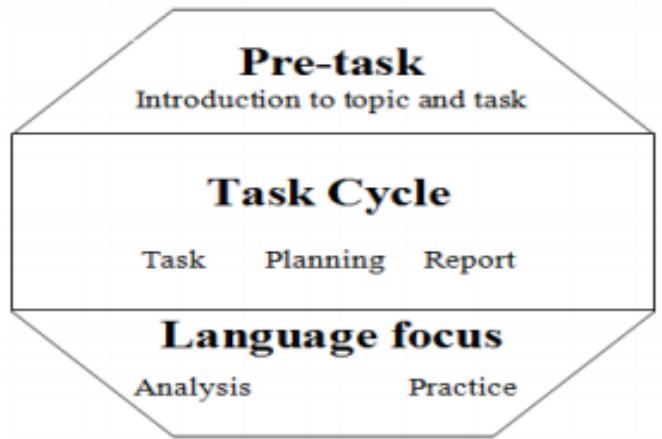 Figure 1: Task-based approach framework (Willis, 1996)
-
Pre-task: The teacher introduces the topic and task to students.
-
Task cycle: This phase is divided into three stages, including: task stage, planning stage and report stage. The task cycle is the most important phase in which students have chances to use the target language to complete tasks to reach objectives of lessons.
-
Language focus: In this phase, the teacher, based on what learners have completed, assists learners to learn more about linguistic items and practice to be more fluent in the language use.
Related to the trends in vocabulary teaching and learning, using tasks to learn vocabulary has been widely mentioned in the literature. Ellis (2003) claimed that "task plays an important role in second language acquisition research and language pedagogy" (p.1). In recent years, TBA has been used in many countries in teaching English skills, especially English vocabulary. Nevertheless, it is not widely applied and practised in Vietnam. It is the reason why TBA is completely new to Vietnamese students who are learning English as a second language. Some attempts to study TBA in English vocabulary learning in Vietnam is that of Huan and An (2018). The study focuses on task-based vocabulary instruction at a Vietnamese high school. However, this research related to students' perception in high school; whereas, the university students' beliefs have an undeniable impact on language acquisition. Due to this gap, the study aims to examine NLU students' perceptions toward the use of task-based approach in English vocabulary learning.?
III. METHODS
3.1 Research Context and Research Participants
This study was carried out at Nong Lam University in Thu Duc City, Vietnam in the second semester of 2020-2021 academic year. By the time of conducting the research, English majors have the course of vocabulary 2 in their first year at the University. The course has 3 credits with the participation of Vietnamese teachers.
There were 150 participants recruited from 300 English majors to complete the questionnaire. These students were chosen because they completed the first course of vocabulary in the first semester. They were familiar with the teacher's teaching methods at the university. As can be seen in Table 1, the male participants were 68, accounting for 45.3% and the female participants were 54.7%. The average age ranged from 18-20 (80.7%), the rest of them were over 20 years old (19.3%). In terms of the result of the vocabulary course 2, the number of students with the scores of 7-8 was 76, accounting for 50.7%. The second group with the scores of 6-7 was 48, accounting for 32%. There were 17 students with a score of 5 (11.3%) and 9 students with a score of 10 (6%).
Table 1: Participants' background information
| No. | Information | N=150 | ||
| 1 | Gender | Male | 68 | 45.3% |
| Female | 82 | 54.7% | ||
| 2 | Age | 18-20 | 121 | 80.7% |
| Over 20 | 29 | 19.3% | ||
| 3 | Scores of vocabulary course 1 | 5 | 17 | 11.3% |
| 6-7 | 48 | 32% | ||
| 7-8 | 76 | 50.6% | ||
| 10 | 9 | 6% | ||
In terms of semi-structured interview, there were 7 participants (4 females; 3 males) selected by purposive sampling in three classes.
3.2 Research Instruments
The questionnaire and semi-structured interview were employed to collect data. The questionnaire included two parts: Part A was about general information of participants and Part B consisted of 11 items which investigated English majors' perception towards the use of TBA in English vocabulary learning. The design of the questionnaire was based on the five-point Likert scale with '5' for Strongly Agree, '4' for Agree, '3' for Neutral, '2' for Disagree and '1' for Strongly Disagree.
The questionnaire was conducted by Vietnamese in order that all participants could understand the meaning of each item and had no difficulty in answering. The reliability of the whole questionnaire, Cronbach's Alpha was.86 for 11 items. It means that the questionnaire was very reliable.
The semi-structured interview was used to discover more about participants' viewpoints of applying TBA in learning English vocabulary. This instrument helped the researcher to save time and focus on researched matter (Cohen et al., 2000). There were five questions for the interview. The interview was also conducted in Vietnamese so that the participants found it easy to express their opinions. Then the responses from the interview were translated to English.
3.3 Data Collection & Analysis Procedures
The researcher conducted the questionnaire in 6 days. In terms of the questionnaire, the students were explained the research purpose and interpreted how to finish the questionnaire in advance. The questionnaire took them around 15 minutes to complete. In addition, to ensure the freedom of students, the researcher did not discuss with them the answers. In terms of the interview, 7 students took part in the interview. Each interview took 10 minutes in total. The interview took place in classrooms to ensure quietness.
Quantitative data from the questionnaire were analysed by SPSS software in terms of descriptive statistics. The 5-point Liker scale was interpreted as follows 1.00-1.80: Strongly disagree/ Never; 1.81-2.60: Disagree/ Rarely; 2.61-3.40: Neutral/Sometimes; 3.41-4.20: Agree/ Often; 4.21-5.00: Strongly agree/Always.
Qualitative data from the semi-structured data were recorded and translated into English. The students were coded as S1, S2, S3, S4, S5, S6 and S7. The content analysis was used to analyse the data.
IV. RESULTS
As seen in Table 2 the total mean score of English majors' perceptions towards the use of TBA in English vocabulary learning was 4.49 (SD=.62). Specifically, students strongly agreed that TBA helped them feel more confident to use English vocabulary in speaking (item 3: M=4.70; SD=.56). Besides, most of them admitted that TBA helped them increase English vocabulary and played an important in learning English vocabulary (item 5 & 1: M=4.66 & 4.65; SD=.59 &.48). Furthermore, they also strongly agreed that they felt more motivated to join vocabulary-based activities in task-based classrooms (item 9: M=4.62; SD=.77). In addition, they found it easy to express their ideas in English by practicing vocabulary with TBA (item 8: M=4.60; SD=.63). Besides, the results showed that TBA helped students understand each word in conversation easily (item 6: M=4.58; SD=.72). What is more, students admitted that they had positive learning habits of English vocabulary thanks to TBA (item 4:
M=4.47; SD=.62). In addition, most of students agreed that they felt more fun and less stress when they learned English vocabulary with TBA (item 7: M=4.42; SD=.71). Moreover, they often studied using words of other classmates when they joined task-based classrooms (item 11: M=4.31; SD=.68). They also showed their strong agreement that they had their own ways to learn English vocabulary with TBA (item 10: M=4.21; SD=.59). Last but not least, students strongly agreed that taking advantage of TBA could enhance their language acquisition (item 2: M=4.20; SD=.46). In a word, students viewed TBA as an important role in learning English vocabulary. TBA also positively affected English language acquisition and learning habits of English majors. Additionally, students showed that TBA was useful to enhance their positive feelings when using English vocabulary in communication as well as inside-class activities. Besides, English majors found it confident to express their ideas in English easily.
Table 2: English majors' perceptions towards the use of TBA in English vocabulary learning
| Items | N=150 | |
| M | S.D. | |
| 1. TBA plays an important role in learning English vocabulary. | 4.65 | .48 |
| 2. Taking advantage of TBA can enhance learners' language acquisition | 4.20 | .46 |
| 3. TBA helps students feel more confident to use English vocabulary in speaking. | 4.70 | .56 |
| 4. TBA helps students develop positive learning habits of English vocabulary. | 4.47 | .62 |
| 5. TBA helps students increase English vocabulary | 4.66 | .59 |
| 6. TBA helps students understand each word in conversation easily. | 4.58 | .72 |
| 7. Using TBA to learn English vocabulary, I feel more fun and less stressed. | 4.42 | .71 |
| 8. I find it easy to express my ideas in English by practising vocabulary with TBA. | 4.60 | .63 |
| 9. I feel more motivated to join vocabulary-based activities in task-based classrooms. | 4.62 | .77 |
| 10. I have my own ways to learn English vocabulary with TBA. | 4.21 | .59 |
| 11. I study using words of other classmates when we join task-based classrooms. | 4.31 | .68 |
| Total | 4.49 | .62 |
Regarding the findings from the interview, it was found that students showed a positive attitude towards the use of TBA in English vocabulary learning. In particular, many students admitted that TBA was very important because of the following reasons:
"I can use English vocabulary in most situations thanks to practising task-based learning activities. I also feel more confident speaking with foreigners." (S1)
"At first, I was not confident with my English vocabulary and did not have any specific strategies to enhance my vocabulary. However, by taking part in task-based lessons, I became familiar with learning vocabulary. Moreover, I am more confident to use English vocabulary for other language skills."(S2)
"Organising ideas in English was one of the most tiresome activities for me. However, I find it easy to organise English vocabulary into my spoken messages efficiently when my teacher helps me to learn with a task-based approach." (S3)
"I felt stressed during most of my English vocabulary periods. Besides, I could not remember any words for a long time. Right now, I am changing the way of learning English vocabulary with TBA. Of course, I can enhance and remember my English words." (S4)
"My teachers explain the task-based lessons carefully and clearly. I am becoming professional in using lexical structures." (S5)
"I am interested in phases of learning English vocabulary in the TBA framework. It is because I never feel tired and stressed." (S6)
"It is becoming more fun to learn the English language. My classmates and I always actively take part in task-based activities to enhance English vocabulary." (S7)
V. DISCUSSION AND CONCLUSION
The study has divulged some important results. English majors at Nong Lam university strongly believed that task-based approach had positive effects on learning English vocabulary. Particularly, students thought that TBA was important in learning English vocabulary. One of the explanations for this finding may be that English majors were aware that TBA could assist them to increase their English vocabulary and feel more confident to use English vocabulary in most situations. Students found it easy to express ideas in English and develop positive learning habits of English vocabulary. More surprisingly, students became active in task-based lessons and imitating other classmates' use of English words. These findings were partially consistent with Sarani & Sahebi, 2012; Jurčenko, 2015; Huan & An, 2018 who highlighted that the appropriate use of task-based approach could enhance students' vocabulary learning in foreign language classrooms. Besides, the findings of the study were also confirmed by Khaneghah et al. (2016) who emphasised students were able to have better English vocabulary gains thanks to taking part in task-based activities in class.
The findings from the interview also revealed that students had positive views on the use of task-based approach. They realised the importance of TBA to English vocabulary learning. It is essential to note that the use of TBA in learning English vocabulary is promising although this approach is considered a new approach to NLU students.
VI. IMPLICATIONS AND LIMITATIONS
The findings of this study have some implications for English teachers and English majors at NLU. For the English teachers at NLU, they should spend more time considering the procedures of task-based lessons in order that they can give students more chances to enhance their English vocabulary. In addition, teachers should carefully prepare various tasks so that students can have more interesting opportunities to increase their motivation of learning English vocabulary. Moreover, teachers should encourage students to practise learning vocabulary through the application of a task-based approach. To English majors at NLU, they should be aware of the importance and usefulness of TBA to English vocabulary learning so that they will make great efforts to practise and enhance their vocabulary. Last but not least, students need to be more active and confident to take part in task-based activities at the class so that they can accumulate meaningful lessons for their English vocabulary.
There were some limitations in this study. Firstly, the sample size was not large enough, so the finding could not represent the whole situation in NLU. Secondly, the study only employed the questionnaire and semi-structured interview. It should be better for the researcher to use pre-test and post-test to have clear insights into the use of TBA for English vocabulary learning. Finally, some of the students in the interview were not willing to share their opinions. Therefore, the data from the interview was not enough.
Conflict of Interest
The authors declare no conflict of interest.
Ethical Approval
Not applicable
Data Availability
The datasets used in this study are openly available at [repository link] and the source code is available on GitHub at [GitHub link].
Funding
This work did not receive any external funding.
References
Cite this article
Related Research


Special Issue
Launch a focused special issue to highlight research, emerging trends, and expert insights in your academic field.
