



IntelliPaper
Abstract
In a world progressively identified by the interplay of power and innovation, this research paper permeates diverse fragments of the subject to intricately explore the profound geopolitical ripples generated by emerging technologies. The most perspicacious and inevitable stems from the history, till date, and, for the most part, the future; hence we might be pondering over all of that, starting from the steam engines of the Industrial Revolution, incessantly forward-looking to today’s artificial intelligence, blockchain, and quantum computing breakthroughs; technology has always been both a beacon of progress and a Pandora’s box of challenges.
Needless to allude to anything further, these innovations now most certainly act as the architects of a new global order, reshaping alliances, disrupting traditional power dynamics, and carving fresh battlegrounds in cyberspace and beyond. As the U.S. and China lock horns in a digital arms race, competing for technological hegemony, the stakes rise beyond mere dominance in silicon and code. This contest represents a seismic shift in international relations, where data becomes the new oil, and innovation, the currency of influence. Against this backdrop, ethical quandaries proliferate, from the erosion of privacy and the specter of mass surveillance to the widening chasm of technological inequality. These tensions highlight a critical question: Can the rapid march of technological advancement be steered to unify rather than divide?
Scanning through a historical lens, this paper, nonetheless, intends to revisit transformative eras; most obviously, from the Industrial Age to the Digital Revolution - scrupulously endeavouring to draw parallels to the current landscape. The analyses are about the tug-of-war between state sovereignty and global governance, where emerging technologies concurrently empower nations and create vulnerabilities. The chronicled evaluation unto the present age of digitisation underscores the urgency for robust frameworks to ensure that the digital age reflects humanity's collective aspirations rather than amplifies its divisions.
Ultimately, this study serves as both a clarion call and a roadmap, advocating for a harmonious convergence of innovation, ethics, and governance. It invites policymakers, technologists, and global citizens to weave a future where the threads of progress are not frayed by the pressures of competition but united by the shared pursuit of stability, equity, and sustainability.
Explore Digital Article Text
I. INTRODUCTION
The complex relationship between technological advances and geopolitical changes reveals a detailed area of study that goes beyond typical power structures. As countries increasingly depend on new technologies like artificial intelligence, quantum computing, and blockchain, it is crucial to understand how these developments are changing the global political scene. This analysis is especially important regarding rising powers like China, which has established itself as a serious competitor through smart investments in technology. By looking into the effects of this technological surge, we enhance our grasp of how innovation can serve as a means of empowerment and a trigger for geopolitical competition, significantly impacting the global balance of power. A key part of this discussion involves examining the historical background of technology's influence on geopolitical changes, offering insights into modern interactions. From the Industrial Revolution, which fueled Western colonial growth via improvements in transport and communication, to the Digital Age, where the internet has enabled globalization, each technological advancement has changed power structures. During the Cold War, the introduction of nuclear technology highlighted the link between technological strength and national security, a crucial topic for understanding today's geopolitical landscape. This historical perspective not only sheds light on past power shifts but also hints at future changes driven by new technologies, indicating that today's innovations might signal major global adjustments. Current global tensions, particularly the rivalry between the U.S. and China, highlight the need to explore how new technologies affect international relations. The competition for technological dominance shows up in numerous key areas, including artificial intelligence and cybersecurity, where government-backed efforts aim to gain advantages and control over data. Such rivalries often connect with larger themes of economic power and security, making technological innovation central to the challenges of global governance. Therefore, this essay plans to detail the complicated connection between emerging technologies and geopolitics, ultimately aiming to suggest recommendations for ethical uses of technology while dealing with the complexities of a swiftly changing global order.
1.1 Definition and Scope of Emerging Technologies in Geopolitics
Technological progress has historically been key in shaping global politics, with each major innovation leading to changes in power structures. For instance, the Industrial Revolution transformed the capabilities of nations, facilitating colonial expansion through advancements such as railroads and telegraphs. These tools allowed for better control over lands and faster communication, tying technology closely to the geopolitics of the time. Later, nuclear technology during the Cold War not only heightened military rivalries but also introduced deterrence theory, changing the international relations landscape. As we move further into the modern era, it is important to see this ongoing trend, as new technologies like AI, quantum computing, and biotechnology are set to change the geopolitical issues again, highlighting the need to understand how these developments are affecting policies and power structures worldwide. In today's geopolitical context, technologies like artificial intelligence and blockchain are not just for economic progress; they are also crucial for national security and competition among world powers. The rivalry between the United States and China illustrates this shift, where advancements in semiconductors and 5G networks are now considered vital for keeping technological leadership. Additionally, cyberattacks backed by states reveal the darker aspects of new technologies, merging spying with debated views on national security. The idea that advancements in new technologies could change society, create new industries, build new dependencies, and change the nature of warfare reflects the mixed-use nature of such innovations. The tension between gaining an advantage and security concerns necessitates a thorough examination of how new technologies impact global governance and international relations. Furthermore, the growth of new technologies brings complicated ethical and regulatory issues that connect with geopolitical factors, requiring a comprehensive governance strategy. Technologies like AI and biotechnology introduce a rapidly changing world that traditional systems often struggle to handle, particularly when it comes to data privacy, surveillance, and potential authoritarian misuse. As nations find their way through these challenges, international organizations like the UN play a crucial role in setting norms and regulations to prevent abuses while encouraging innovation. This ongoing discussion highlights the critical importance of global collaboration, as individual actions in technology can lead to instability. Therefore, while the opportunities for technological advancement are vast, there is also a critical need for frameworks that ensure fair access, ethical use, and cooperative governance in a world that is more interconnected than ever.
1.2 Importance of Studying Geopolitics in the Age of Technological Advancements
The connection between big technology moments in history and today's geopolitical issues requires careful study of how new technologies affect international relations. Previous revolutions, like the Industrial and Digital Ages, showed how inventions such as railroads and telecommunication changed power dynamics and colonial growth. These technologies played an essential role in shifting global power, affecting economic rivalry, military tactics, and diplomatic relations. Now, new technologies like artificial intelligence, quantum computing, and biotechnology signal a new era, as they reshape national security and economic power. The historical backdrop highlights the importance of examining these technologies to predict how they might disrupt current power structures and influence global governance, making it crucial to manage the balance between innovation and ethical concerns. In today's geopolitical scenario, the competition between nations, especially between the United States and China, shows the need to grasp the effects of technological progress. This rivalry is not only about economics but also involves aspects like cybersecurity, military deterrence, and international governance. Additionally, state-backed cyberattacks could exploit weaknesses created by technologies like 5G and AI, posing risks to geopolitical stability. This situation highlights the complex impact of technology, illustrated by the major risks tied to new advancements. For example, widespread surveillance technologies may support authoritarian governments, as seen with China's social credit system. China is the only country that effectively connects both developed and developing countries, highlighting the significant influence such technology can have. "Right now, there is no other country on Earth with as much data as China, as many people as China, and as many electronics per capita. No other country is positioned to have a bigger economy than America's within our lifetimes. No other country has more potential to influence our planet's ecosystem, climate, and weather patterns – leading to survival or catastrophe – than China. No other country bridges both the developed and developing world like China does." (Amy Webb). Therefore, understanding these dynamics is crucial for creating relevant policies that address both security issues and global ethical standards. Regulating new technologies has become a key topic in global governance discussions, where teamwork is essential to build the frameworks needed to manage these advancements. International bodies like the United Nations and the International Telecommunication Union are vital in tackling the governance issues brought on by technology changes, especially concerning ethical dilemmas and cybersecurity threats. However, differing opinions make it challenging to create consistent guidelines, revealing weaknesses in digital infrastructure and data protection. Furthermore, differences in access to technology lead to economic inequalities that heighten geopolitical conflicts. Addressing these issues requires developing international agreements that encourage collaboration among nations, ensuring that technological progress benefits international relations instead of leading to conflict and instability. The need for cooperative frameworks becomes even clearer with the potential for technological convergence, emphasizing the significance of a global approach to effectively regulate the use of emerging technologies.
1.3 Research Objectives and Key Questions
Understanding new technologies and their global effects is key for nations today, especially regarding the advantages they offer. Technologies like Artificial Intelligence and blockchain are increasingly deciding how strong economies and military forces can be, making it crucial to study how these changes impact international relations. The global stage is highly competitive, particularly between countries like the United States and China, raising important issues about the ethical use of these technologies. How do government-backed projects shape worldwide technology regulations? Also, it's vital to consider the effects of technology gaps between nations, as unequal access can greatly affect national security and economic development. It's important to address these issues to create effective policies that balance innovation with ethics and support fair technology growth globally. Recent events highlight the need for global governance systems that tackle the distinct challenges brought on by new technologies. Organizations like the United Nations and the International Telecommunication Union are important for facilitating discussions about technology rules. However, deep-rooted political biases often obstruct agreement on necessary guidelines to manage technologies like AI and quantum computing. This raises a crucial research question: how can we establish multilateral agreements that effectively address the challenges posed by emerging technologies? Additionally, it's important to think about how these technological needs are changing existing partnerships and forming new alliances among nations. By exploring these interactions, we can gain insight into how technological progress relates to geopolitical power, which can help develop better international regulations that address the complexities of modern tech (National Intelligence Council). As countries adjust to changes from advancements in biotechnology, cybersecurity, and space technologies, ethical dilemmas become more urgent.
The ethical aspects of technology, such as surveillance, data protection, and potential oppressive use, pose critical questions that are central to ongoing research. In an era where new technologies often advance faster than regulatory measures, how can we make sure ethical issues influence technological development? Moreover, how can we structure cooperative initiatives to lessen the risks linked to technology-driven authoritarianism? Researchers can enhance our understanding of responsible governance in new technologies and promote global stability by addressing these significant questions. This combined approach is crucial for formulating practical recommendations that prioritize ethical accountability and national interests in the realm of emerging technologies, as stated by the National Intelligence Council.
II. HISTORICAL CONTEXT
Throughout history, big changes in technology have reshaped global power, highlighting the importance of the Industrial Revolution. This major transformation involved the joining of steam engines, railroads, and telegraphs, which supported colonial goals and land expansion through greater movement and communication. These advancements were not just about improving logistics; they significantly changed the political landscape, allowing European powers to build vast empires. This shift solidified the idea of technology as an important tool for national strength, influencing how countries interact and setting the stage for future technological changes. Additionally, the development of nuclear technology during the Cold War showcased the dual nature of technological progress—serving as both a deterrent and a source of geopolitical tension—illustrating the complex relationship between technology and global governance. The rise of the internet in the Digital Age has further intensified these relationships, transforming the organization of societies and the interactions between countries. The internet not only made information more accessible but also led to the creation of large tech companies, which, unlike traditional governments, have significant geopolitical power. These companies function in a contested environment where technological control is important, especially as nations use new technologies to deal with globalization's challenges. This changing situation has created new geopolitical conflicts, such as the competition between the United States and China for technological leadership. As these countries compete in areas like artificial intelligence and quantum computing, the effects reach beyond economic rivalry; they affect diplomatic relations and security setups, complicating international partnerships and shifting established power structures. Looking back at this historical path highlights the current significance of new technologies in geopolitical plans. Technology-driven politics, where state and non-state players interact, reveal a complex environment where ethical issues, regulatory problems, and security threats interlink with larger power struggles. The cultural, economic, and political impacts of digital progress deepen existing inequalities and create new conflicts. This historical perspective calls for a careful examination of technology's role in global governance, urging the development of proactive approaches that address both technological ethics and the crucial geopolitical needs for security, diplomacy, and economic cooperation in an increasingly connected world.
2.1 Overview of Historical Technological Revolutions
In history, technology changes have greatly influenced economies and the political scenes of countries. The Industrial Revolution was a key time, with inventions like the steam engine promoting rapid growth in transportation and production. This time set the stage for later revolutions; railroads made it simple to move goods and soldiers, boosting imperial goals and changing global power structures. Additionally, the telegraph changed communication for the better, connecting the world and aiding colonial endeavors. The idea that "each revolution includes new cheap inputs, new products, and new processes" highlights how the link between technology and politics has become clearer over time, leading to a deeper understanding of today's tech situation that requires thorough examination. ("The historical origin of the digital revolution itself can be traced, according to many experts, to the birth of the transistor in 1947. Such was the importance of this invention that its creators – physicists John Bardeen, Walter Houser Brattain and William Bradford Shockley – were awarded the 1956 Nobel Prize in Physics 'for their research on semiconductors and their discovery of the transistor effect'." (Telefónica)). The Digital Revolution of the late twentieth century changed global relations in a major way. The internet sparked increased globalization, removing the geographical limits that once defined trade and communication. This tech shift not only changed economic connections but also led to the rise of large tech companies that are now key players in geopolitical matters. Companies like Google and Facebook play vital roles in shaping public views, affecting elections, and even questioning state authority through sharing information. With these companies gaining power, it is important to critically assess their impact on the political scene, particularly regarding how they contribute to economic inequality and increase tensions between national interests that aim for tech advancement. As new technologies continue to progress, their effects on politics and state functions are crucial. The rise of artificial intelligence, quantum computing, and biotechnology indicates the start of a new phase that requires strong rules and regulations. Looking back, technology history shows a cycle where new innovations reshape societies and power structures. Today, the competition among major nations like the United States and China reflects past technological revolutions. Indeed, as discussed in scholarly circles regarding our tech age, the beginning of the digital revolution can be traced back to the invention of the transistor in 1947 ("The historical origin of the digital revolution itself can be traced, according to many experts, to the birth of the transistor in 1947. Such was the importance of this invention that its creators – physicists John Bardeen, Walter Houser Brattain and William Bradford Shockley – were awarded the 1956 Nobel Prize in Physics 'for their research on semiconductors and their discovery of the transistor effect'." (Telefónica)). This idea illustrates that each revolutionary stage sets the foundation for the next, prompting policymakers to adapt to changes to ensure global governance meets the new challenges presented in the geopolitical context.
| Revolution | Period | Key Technologies | Impact |
| Industrial Revolution | 1760 - 1840 | Steam Jenny Engine, Spinning | Mass production, Urbanization, Economic Growth |
| Electric Revolution | Late 19th - Early 20th Century | Electric Power, Telegraph, Radio | Global Communication, Industrial Efficiency, Emergence of Mass Media |
| Computer Revolution | Mid 20th Century-Early 21st | Transistors, Personal Computers, Internet | Digital Communication, Information Age, Global Connectivity |
| AI and Machine Learning Revolution | 21st Century | Artificial Intelligence, Machine Learning, Big Data | Automation,Enhanced Decision Making, Societal Transformation |
2.2 Impact of Technology on Global Power Dynamics
In today's complex geopolitical landscape, technology plays a dual role, altering the power dynamics between nations. New technologies, especially artificial intelligence (AI) and blockchain, have sparked competition, particularly between the United States and China. These technologies can give a country an edge, boosting its economic and military strength and changing traditional power structures. As stated, the rise of the Internet of Things and other new technologies is altering global power relationships by creating fresh pathways for economic and technological competition [extractedKnowledge1]. This ongoing race for technological superiority not only raises geopolitical tensions but also forces countries to rethink how they form alliances, shape economic policies, and secure their nations. As nations compete for dominance in these areas, the stakes have become higher, leading to a reconsideration of what power and influence mean in the 21st century. Technological competition significantly shapes current geopolitical struggles, impacting both the global market and the strategic decisions made by governments. The growing digital landscape has created varying levels of access to technological
Historical Technological Revolutions
tools, resulting in disparities that impact the economic and political capabilities of nations. For example, as developing economies attempt to use advanced technologies to advance their growth, they often face significant obstacles set by established powers. While AI is useful for tasks like automation and customization, the National Intelligence Council highlights that applying ethics and showing empathy are still human abilities, creating a divided global atmosphere. In this context, technology presents both opportunities and concerns, as countries wrestle with issues of sovereignty in a world increasingly reliant on technology and faced with digital colonialism. Looking ahead, the relationship between technology and geopolitics can lead to either collaboration or conflict. The development of international guidelines for technology use has become crucial in addressing ethical issues and ensuring fair access. The potential for technology to converge suggests that partnerships across different sectors could stimulate innovation while reducing risks tied to conflicting interests. With the chance to create regional tech alliances, nations could use shared resources to boost their collective power. This situation calls for responsible global governance, as technological advancements often outpace regulations and ethical standards. Conversations about finding a balanced way to advance technology clearly demonstrate the necessity for proactive cooperation, ensuring that new innovations promote global stability rather than exacerbate existing rivalries or inequalities.
{"image_source":{"path":"images/ee37bece69b7cad7aa46e5e6ca906e93cd9767ebf148d3e19cc485ee6047a5cc.jpg"},"content":"","chart_caption":[],"chart_footnote":[]}
The chart depicts the investments in artificial intelligence and blockchain technologies by various countries. Each country is represented on the horizontal axis, while the vertical axis shows the amount of investment in billions of dollars. The blue bars represent artificial intelligence investments, whereas the green bars represent blockchain investments. This visualization clearly illustrates the differences in funding priorities among the countries examined, highlighting the United States and China as the leading investors in AI technologies.
2.3 Lessons from Past Technological Shifts
The growth of technology has many lessons that can help shape current and future strategies in international relations. Historical events, like the Industrial Revolution, offer insights into how technological progress can unexpectedly change power balances. The use of steam engines and the growth of railroads boosted economic output while also reforming military logistics and colonial goals, reinforcing a country's geopolitical power. It has been observed that "the realization that the world is often quite different from what is presented in our leading newspapers and magazines is not an easy conclusion for most educated Americans to accept." This points out how shifts in technology can change public views and policies in often unrecognized ways, highlighting the need for thorough analysis of the effects of new technologies in today's geopolitical context. Past technological revolutions have typically caused shifts in global power structures, especially during key moments like the rise of the internet. Digital communication tools greatly impacted globalization, allowing the exchange not only of goods and services but also of ideas and beliefs. Currently, the rapid embrace of AI, blockchain, and other new technologies reflects this historic trend, where innovations disrupt the existing order. However, to prevent the escalation of geopolitical conflicts, we must address the serious ethical issues and regulatory hurdles these changes raise. As new technologies become measures of national power, it is crucial to examine their historical pathways to predict future effects and highlight the ethical responsibilities linked to these technological innovations. To predict the impacts of technological changes, it is also important to recognize previous errors and miscalculations. The geopolitical arena is familiar with the dangers that come with uncontrolled technological development, as demonstrated by the arms race during the Cold War, which fostered fear and mistrust among nations. Today, countries face comparable challenges with developments in autonomous weapons and cyber capabilities. The mistakes of the past guide current governance and show the urgent need for collaborative approaches to regulate emerging technologies. As global actors navigate these complex issues, they should see history not just as a record of past events but as a crucial resource for developing policies that ensure stability and uphold ethical standards amid rapid changes (Tarun Chhabra et al.).
Comparison of Key Metrics by Country {"image_source":{"path":"images/dbe7ef5134de5f88ce0ef8b46c8b9ce7e83a3ec8b12b4fc5116671dc5e0c4810.jpg"},"content":"","chart_caption":[],"chart_footnote":[]}
{"image_source":{"path":"images/2e011e2a0eee002d7573ac6f14012382a74dc60b27f44ca6a5f189ffef50b319.jpg"},"content":"","chart_caption":[],"chart_footnote":[]} {"image_source":{"path":"images/462d4b58dde91eeeb151f61e72797eaa36631f41df926cb99530bfb22f8f5663.jpg"},"content":"","chart_caption":[{"type":"text","content":"The chart provides a comparison of key metrics among six countries, including the Digital Communication Adoption Rate, Globalization Index, Ethical Technology Score, and Military Logistics Improvement Index. Each metric is represented in separate bar plots for clarity, allowing for easy visualization of how these countries perform in each category. The layout is organized to ensure that all elements are well-spaced and easily readable."}],"chart_footnote":[]}
III. THE DIGITAL REVOLUTION
Looking at the changes brought by the Digital Revolution to geopolitics, it is important to see how technologies like the internet have changed traditional power dynamics. The internet has enabled new levels of connectivity and transformed the ways countries interact economically and politically on a global scale. Multinational technology companies, operating outside the control of any single country, mark this change by becoming major players in the global political arena. These companies have influence that goes beyond economic power; they also play a key role in shaping public opinion, influencing elections, and changing social interactions across different cultures. Therefore, the Digital Revolution acts as both a driver of innovation and a battleground for governments and non-governmental groups aiming to assert their influence in a more connected world. The rise of the digital era has created specific geopolitical tensions, particularly in the competition between the United States and China. Central to this rivalry is the fight not just for technological dominance but also to set global rules and standards for future tech developments. The U.S. has traditionally supported an open internet model, valuing innovation and entrepreneurship as key parts of its economy and strategy. In contrast, China takes a more controlled approach, using government oversight over technologies such as telecommunications and artificial intelligence to create a version of technological independence. This difference in strategies highlights a wider ideological conflict over governance styles, which will likely influence the future stages of the Digital Revolution. As nations deal with these tensions, the outcomes for international cooperation or division show the urgent need to consider how technology might either increase geopolitical conflicts or help create common solutions (Amy Myers Jaffe). Given these changing circumstances, the significance of new technologies in shaping geopolitical relationships and power balances is crucial. The Digital Revolution has changed the nature of warfare through cyber capabilities and information control while also raising ethical and regulatory challenges for countries today. For instance, the military uses of artificial intelligence and autonomous weapon systems bring up concerns about responsibility and the ethics of allowing machines to make life-and-death decisions (Amy Myers Jaffe). Additionally, unequal access to technology can lead to economic disparities, heighten social tensions both domestically and internationally, and potentially fuel conflicts due to unequal resource distribution (Amy Myers Jaffe). Therefore, addressing these issues will need a comprehensive strategy that encourages global collaboration and ethical governance while still promoting innovation suited to an interconnected world.
{"image_source":{"path":"images/aed8c6c99b1b8d1d5d758ed1c11273ca52f04b319c3355eeb010618f0259367e.jpg"},"content":"","chart_caption":[],"chart_footnote":[]}
3.1 Development of the Internet and its Geopolitical Implications
The internet's growth has dramatically changed global politics, showing how technology affects power between countries. Initially serving as a neutral platform for information sharing, nations now use it as a strategic tool to achieve various objectives such as political control and economic influence. State-sponsored cyber activities, where countries use their online frameworks to enhance national safety or weaken rivals, clearly demonstrate this shift. For example, the U.S. and China are in a digital arms race, employing sophisticated cyber tools for spying and asserting power. This competitive interaction has made the internet a key area for information warfare, where managing data flow is linked to political influence. This situation highlights the need to grasp how digital communication can strengthen or shake up global power structures. The effects of the internet's growth go beyond just land disputes or economic competition; they lead to wider debates about ideological impact and governance in our digital world. As governments use advanced methods for monitoring and spreading information, there are serious consequences for democratic values. Authoritarian governments, particularly China, utilize internet technologies to create extensive social credit systems that track and control citizens' actions, chilling dissent. This situation raises important moral questions about how technology can empower states while jeopardizing personal freedoms. One viewpoint suggests, "Right now, there is no other country on Earth with as much data as China... No other country has more potential to influence our planet's ecosystem..." ("Right now, there is no other country on Earth with as much data as China, as many people as China, and as many electronics per capita. No other country is positioned to have a bigger economy than America's within our lifetimes. No other country has more potential to influence our planet's ecosystem, climate, and weather patterns – leading to survival or catastrophe – than China. No other country bridges both the developed and developing world like China does." (Amy Webb)). Such claims point to the concerning truth that access to digital tools alters political situations, making it essential to build strong protections for democratic values as authoritarian tendencies grow. Additionally, the uneven access to and control of the internet keeps existing geopolitical gaps alive while creating new ones. Nations with advanced tech resources can utilize advanced cyber tools, shifting power in their favor. On the flip side, developing countries often depend on those who control digital processes, limiting their involvement in global issues. The digital gap not only showcases economic inequalities but also gives rise to new dependencies, as nations that rely on external technology become vulnerable to political games. In this setting, the introduction of new technologies into global governance requires collaboration and a reassessment of current systems. It is crucial to tackle these challenges to ensure that the internet can act as a space for worldwide cooperation instead of a source of division and conflict.
{"image_source":{"path":"images/4a5f2834821a167d891854234052c8a3d27e292cb63e78b047aeb4b8aac8f177.jpg"},"content":"","chart_caption":[],"chart_footnote":[]}
The chart displays various cyber capabilities and related indices for different countries, including the Cyber Capabilities Index, Internet Freedom Score, Surveillance Index, and Propaganda Influence Scale. Each index is represented by distinct bars, allowing for easy comparison between countries. The layout is balanced to ensure all labels and legends are clear and readable.
3.2 Globalization and Technology-Driven Economic Shifts
The interplay between globalization and technology has significantly transformed the global economy, leading to notable shifts in power and economic systems. New technologies such as artificial intelligence, blockchain, and 5G closely link to this change, altering business operations and intensifying existing geopolitical issues. Looking back at history, we see that the move from industrial economies to digital ones has allowed multinational corporations to become major players, often having more power than some countries. As these companies navigate a highly interconnected global market, the effects of technological growth manifest in economic inequalities and competition, exemplified by the ongoing tech conflict between the US and China. This rivalry reflects a broader trend in which countries are vying for technological leadership as they recognize the greater connection between economic progress and technology. In addition, the impact of new technologies goes beyond just economic competition; they can change societal systems and international relationships. It is important to understand that technology acts as a link for globalization and can also create divisions between countries. For instance, blockchain technology facilitates seamless cross-border transactions, yet it also enables the circumvention of economic sanctions and the manipulation of digital currencies. This highlights the need for regulations that can keep up with rapid tech changes while also considering ethical issues. Recent studies show that the growth of the Internet has greatly increased the information available to us, making geopolitical issues more complex due to a constant flow of data and misinformation. Therefore, managing technology is crucial for promoting cooperative global relations while protecting national interests. Globalization and technology-driven economic changes pose unique challenges across various regions and industries, resulting in a complex web of geopolitical effects. For example, the militarization of space technologies brings ethical and regulatory challenges, even as countries seek technological progress and strategic advantage. Emerging economies, especially in Africa and Latin America, face big obstacles as they try to access and use these technologies while being dependent on foreign technology. Technology-driven complexity in the global economy necessitates a meticulous reassessment of international partnerships and power structures. Policymakers need to approach these changes with a deep understanding of both the advantages and dangers of a tech-focused global economy. As we see in the ongoing technology race, it is essential to have a balanced view on innovation; this approach would promote sustainable economic growth and also improve international stability, leading to a fairer global situation.
{"image_source":{"path":"images/9bd0eb3d7fd27e85e34b0957968e03a259fe012591c9500c10c0bea09aedee4e.jpg"},"content":"","chart_caption":[{"type":"text","content":"The chart displays various technological indices for countries, including the AI Development Index, Blockchain Readiness Score, 5G Implementation Level, and Technological Supremacy Index. Each country is represented by a group of bars, allowing for easy comparison across the different indices. The United States leads in most indices, while Nigeria shows lower scores across the board."}],"chart_footnote":[]}
3.3 Rise of Multinational Tech Corporations as Geopolitical Actors
The rise of big tech companies has changed global power dynamics, making these firms significant players in geopolitics. Previously, state actions mostly directed technological advancements, but the growth of digital tech means private companies can now have major impacts on international relations. This change is part of a wider pattern where corporations with strong capabilities in areas like artificial intelligence, blockchain, and 5G influence both market behavior and government security policies. Ian Bremmer points out that while government size may not have reduced, its influence has declined, creating a gap that private firms are filling. This demonstrates how tech giants are increasingly taking on responsibilities previously managed by governments, thereby altering traditional power structures. Many international corporations have begun to connect their operations with national goals, resulting in complex relationships that enhance their geopolitical power. The collaborations between governments and tech firms represent a form of neo-corporatism where these companies act as key non-state players. For instance, partnerships like the U.S. Department of Defense's work with Silicon Valley companies to improve national security highlight this change. Additionally, these firms implement surveillance tools and data analytics, areas once reserved for government agencies, raising concerns about privacy and government overreach. Therefore, understanding the role of these corporations in shaping international diplomacy and security is essential in current geopolitics (Satish Nambisan et al.). The growing clout of multinational tech companies has serious effects on international relations and state sovereignty. The merging of corporate interests with national policies creates a new power dynamic where governments often feel pressured to align with the goals of these corporations to stay economically competitive and maintain technological leadership. This dynamic can lead to competitive actions between countries, especially in technology-related arms races, as seen in the ongoing U.S.-China competition in AI and 5G. Thus, the rise of multinational tech companies as major geopolitical players demands a reassessment of global governance systems, as traditional international relations must adjust to include entities that work outside normal state control. Developing cooperative regulatory frameworks will be vital for effectively addressing the impact of these strong players in the changing geopolitical environment (Satish Nambisan et al.).
{"image_source":{"path":"images/656391be54e8c30fe66127dbd205bdadc15879559894eb3a96aa2017ef96dc05.jpg"},"content":"","chart_caption":[],"chart_footnote":[]}
The chart depicts various technological influence and collaboration scores for different countries. It compares the Tech Influence Score, National Security Collaboration Factor, AI and 5G Race Position, and Geopolitical Business Alignment Score on a scale from 0 to 10. Each country is represented with multiple bars, each indicating a different score. The United States leads in most categories, followed closely by China, while Russia exhibits the lowest scores across all dimensions. This visualization effectively highlights the competitive landscape in technology influence among these nations.
IV. CURRENT STATE OF EMERGING TECHNOLOGIES
New technologies that are coming up could change how power works around the world, creating new paths and changes in geopolitics. Technologies like artificial intelligence (AI), quantum computing, blockchain, and biotechnology are leading the way and bringing both opportunities and difficulties for countries. For example, AI and quantum computing can give countries an edge, allowing them to improve their national security and economic strength. This change in technology mirrors past situations where new innovations have changed international relations, indicating a need to closely analyze current trends in this light. It is very important to understand how these technologies interact with current power structures since it raises vital questions about fairness, access, and strategic positioning in a quickly changing digital world. At the same time, these developments lead to increased competition, especially between major global powers like the United States and China. This tech rivalry manifests itself in areas such as AI advancements and internet infrastructure, as evidenced by the competition for 5G leadership. As a result, the consequences go beyond just economic rivalry, affecting trade policies and national security measures as countries deal with cybersecurity threats and attacks backed by states. Furthermore, the use of new technologies often shapes political relationships, where technological strength equals geopolitical influence. Policymakers must acknowledge these dynamics to formulate strategies that address potential vulnerabilities and safeguard national interests in a world characterized by digital conflicts and geopolitical tensions (National Intelligence Council). The current situation with new technologies calls for careful discussions about ethical and regulatory rules. Without solid international standards, the risk of misuse—like data privacy violations and surveillance by authoritarian regimes—worsens existing inequalities and power disparities. Problems like digital colonization and unequal access to technology further complicate the global picture, as wealthy countries innovate while others lag behind. The global community should focus on creating regulatory standards and collaborative approaches to ensure that technology benefits everyone, recognizing its ability to serve both security needs and oppression. This comprehensive approach underscores the necessity of global frameworks that link technological advancement with ethical leadership, guaranteeing that innovations contribute to, rather than undermine, geopolitical stability (National Intelligence Council).
4.1 Key Emerging Technologies Shaping Geopolitics
The connections made within cyberspace and physical domains demonstrate the complex link between new technologies and global power. The merging of artificial intelligence (AI), quantum computing, and blockchain technology is changing traditional geopolitical views, bringing new problems as well. These innovations promote economic growth but are also key to national security plans, helping nations improve their defense and intelligence abilities. As the world changes, countries must rethink their strategic approaches, understanding that "China's rise in open-source software has become a major force in global technology." "China's embrace of open source software has evolved into a powerful force in the global technology landscape, driving innovations in cloud computing, artificial intelligence and other areas." Anonymous (Computer Weekly) This shift underscores the importance of meticulous geopolitical analysis, as we must not solely focus on the competitiveness of new technologies, but also comprehend their impact on alliances, power dynamics, and global international relations. In terms of national identity and governance, new technologies act as both chances and risks. The increased militarization of space adds complicated layers to geopolitical relations, as countries compete for power both on Earth and in orbit. Furthermore, the spread of 5G networks and advanced communication technologies has altered the balance, affecting communication systems and data control. The fight for dominance over technological innovations heavily impacts trade discussions and economic strategies, leading to conflicts like those observed in U.S.-China trade relations and tech sanctions. Clearly, the competitive environment is now filled with instances of government-backed cyberattacks and spying, requiring a rethinking of risk management for both national governments and global companies alike (SET Vakfı İktisadi İşletmesi). As these technologies develop, ethical issues and regulatory obstacles become crucial matters that nations must address. Harmful actors or authoritarian governments may exploit the vulnerabilities created by the rapid pace of new technology integration, which can outpace current legal systems. Surveillance technologies used in various nations demonstrate the risky potential of technology to boost state power and limit personal freedoms. Thus, it is vital for international organizations and local governments to work together on creating rules for the growth and use of emerging technologies. This collaborative method can support a balanced technological advancement that emphasizes ethical issues while tackling increased risks related to national security (SET Vakfı İktisadi İşletmesi). The connection between technology and geopolitical power calls for a comprehensive review to navigate this changing landscape securely and fairly.
| Technology | Global Market Size (2023, in billion USD) | Major Players | Geopolitical Impact |
| Artificial Intelligence | 157.9 | Google, Microsoft, Amazon, IBM | Influences military strategy, economic competitiveness and cybersecurity |
| 5G Technology | 51.2 | Huawei, Ericsson, Nokia, Qualcomm | Enables faster communications, impacts international trade, and influences military operations |
| Internet of Things (IoT) | 382.3 | Cisco, IBM, GE, Siemens | Affects urban infrastructure, defense and national security strategies |
| Quantum Computing | 1.8 | IBM, Google, D-Wave, Rigetti | Potential to break encryption, challenges current security frameworks |
| Blockchain | 7.6 | Ethereum, IBM, R3, Hyperledger | Influences supply chain integrity, financial systems and regulatory frameworks |
4.2 Technological Competition Among Global Powers
The competition for technological leadership among major nations has become complex in the current geopolitical environment. This competition centers on the United States and China, who view technologies such as artificial intelligence (AI), quantum computing, and 5G networks not only as tools for economic growth but also as crucial components for national security and global power. This blend of technology and politics emphasizes a race to gain technological control, as having advanced technologies directly impacts a country's ability to exert influence internationally. Therefore, investments in these areas bring strategic benefits, making it essential to examine how this rivalry affects global peace and stability. Looking at the current technological arms race shows a complicated relationship between innovation and the regulatory issues nations face. Creating rules for new technologies is crucial, especially since progress is happening faster than existing laws can manage. The lack of global regulation leads to opportunities for state-sponsored cyberattacks and spreading false information, which can threaten entire regions. Additionally, the ethical questions around new technologies, like data privacy and surveillance, add more pressure on
Key Emerging Technologies Shaping Geopolitics
the fragile balance between security and personal freedoms. Hence, the main task lies with the international community to create agreements that reduce risks while encouraging positive technological sharing (National Intelligence Council). At the same time, these changing dynamics not only alter the competition between global powers but also reshape the alliances and partnerships typically seen in politics. Non-state actors, especially large technology companies, are becoming important influencers capable of guiding policies and framing public opinion on tech issues. This change highlights the need for democratic nations to evolve their strategies, ensuring that technology-driven governance stays true to democratic principles. As countries work to keep or gain technological independence, the resulting divisions could create a split global order, making it vital to establish collaborative spaces that bridge differing interests and support cooperative tech governance (National Intelligence Council).
| Country | Global Innovation Index Score | Investment in R & D (Billion USD) | Number of AI Startups |
| United States | 87.3 | 645 | 2305 |
| China | 74.9 | 524 | 1430 |
| European Union | 69 | 432 | 1100 |
| India | 61.2 | 55 | 600 |
| Japan | 88 | 173 | 250 |
Global Technological Competition by Country (2023)
4.2 The Role of Technology in Global Governance
In a world that is more digital, the blend of technology and global governance has become key to understanding current geopolitical trends. New technologies like artificial intelligence and blockchain are not just helpful tools; they are major forces changing how international power works. For example, with digital sovereignty and cyber governance becoming more important, countries must rethink their rules to address both competition and security issues. Recent analyses show that legal structures, as seen in the European Union's digital sovereignty initiatives, indicate a significant move towards a more hands-on approach in tech governance, aiming to protect interests and values in a digital world (Luuk Schmitz et al.). This change highlights the need to examine how technology relates to state power and international relations, ultimately reshaping global governance processes. As countries seek an edge with new technologies, the challenges of global governance become even more complicated. A significant result of this tech race is the rise of cyber sovereignty, where countries aim to regain control over their digital spaces. This shift in thinking means that nations do not consider cyberspace to be a completely borderless area; instead, they are investing in sovereign capabilities to protect their national interests. Experts note several reasons behind this trend, including security issues, desires for economic benefits, and political goals, as well as a commitment to human rights (Chien- Huei Wu, p. 651-676). The effects on global governance systems are significant, prompting a review of current international agreements and norms in response to these new methods of state control and tech governance. Additionally, the influence of technology on global governance comes with ethical and social challenges that need careful consideration. The growth of surveillance technology, for example, leads to serious concerns about civil liberties and the power dynamic between governments and citizens. In this light, the claim that AI should make this the most exciting and creative time for governance highlights technology's potential to foster innovative governance models that, if used responsibly, could improve public services. "AI 'should make today the most exciting and creative time to govern.'" We both also see the potential prize for the UK, which should have its own ambitions to position itself at the forefront on AI and provide leadership on governing in this new era. And when both of us survey the operations of governments from our different perspectives, we see the same opportunity: almost everywhere AI can help us reimagine the state." (Tony Blair and Marc Warner). However, the dangers of tech-driven authoritarianism and digital colonialism are also serious. Addressing these ethical issues is crucial to establish robust guidelines for the responsible governance of new technologies, ensuring equitable distribution of benefits among global populations in a rapidly evolving tech landscape.
{"image_source":{"path":"images/d3d54773637ebc757a51e3b26f4ac27fac086aabdaa1b584b7486568c3051ed3.jpg"},"content":"","chart_caption":[{"type":"text","content":"The chart displays the scores for various categories related to digital governance among different countries. Each bar group represents a country, while the individual bars within each group signify the scores in the categories: Digital Sovereignty Score, Cybersecurity Strategy Alignment, Ethical Governance Index, and Emerging Tech Investment Level. The visual format allows for easy comparison of these scores across countries, highlighting the strengths and weaknesses in digital policies and strategies."}],"chart_footnote":[]}
V. KEY EMERGING TECHNOLOGIES
In today's world, key technologies are impacting not just economic strength but also how countries strategize. The growth of artificial intelligence (AI), blockchain, quantum computing, and biotechnology opens new chances and challenges that change global relations. For example, AI applications improve national defense and economic output, giving a competitive edge to nations that use these technologies well. However, the risk of misuse raises ethical questions and highlights the need for strong regulations. The race to lead in these new technologies has become a major focus of national strategy, as seen in policies aiming to boost innovation while limiting foreign control. As countries compete for leadership in these important areas, grasping how tech advancements affect geopolitical power is increasingly critical. Looking at the history of technology shows a clear trend where innovations change power balances. From the role of steam engines in colonial growth to the internet's effect on global trade, each round of technological change has significantly reshaped international ties. Recent developments, especially in quantum computing and blockchain, provoke similar shifts, questioning existing rules and governance. For instance, quantum computing poses serious threats to national security, as its ability to break existing encryption could jeopardize sensitive communications worldwide. Learning from these historical insights helps forecast how future technologies might alter global hierarchies, requiring a reassessment of alliances, strategies, and regulations to keep peace in the changing international system. The clash of new technologies and current geopolitical tensions, mainly between superpowers like the United States and China, highlights the need to closely analyze these factors. The current tech competition shows how AI and 5G have turned into fronts for economic and military dominance, affecting everything from trade deals to diplomatic ties. Building on discussions about decolonial theories and ethical practices, it's essential to confront the diverse risks brought by technological progress, including cybersecurity issues, economic inequalities, and the digital exploitation of weaker countries. Therefore, policy recommendations that focus on global teamwork, fair access, and ethical progress are crucial for navigating the complexities of technological geopolitics in today's digital world.
5.1 Artificial Intelligence (AI) and its Implications
The capabilities and applications of artificial intelligence (AI) significantly influence the shifting power dynamics in the digital world. New technologies like AI are becoming key players in geopolitical strategies as countries compete for military, economic, and technological power. This competition involves the United States and China in a significant race to control various aspects of AI, such as research, skilled workforce, and manufacturing. The importance of AI goes beyond just technology; it also affects national security and economic policies, shaping how countries engage with each other globally. If there is no clear international regulatory framework, the rapid growth and use of AI might create ethical issues and worsen existing geopolitical conflicts, with nations possibly misusing these technologies for things like surveillance, spreading misinformation, or even cyber warfare. Additionally, AI deeply influences international relations, altering alliances and rivalries in surprising ways. For instance, advancements in AI technologies like autonomous systems and data analysis not only change defense industries but also impact economic policies that define global trade. Countries that invest heavily in AI are likely to dominate important sectors for future growth, altering both regional and global partnerships. As seen in the strategies of various nations, the push for AI capabilities shows a trend toward technological nationalism, where countries focus on their own technological independence rather than working together. This situation could lead to a divided global order with competing technological groups, which may strengthen power and increase tensions between nations, similar to historical conflicts over resources and land. When looking at the geopolitical effects of AI, it is vital to consider the ethical issues that arise from its quick progress. As technology develops at an extraordinary rate, the ethical implications of AI usage become more important, especially in military and public monitoring settings that could threaten democratic principles and human rights. The possibility that authoritarian governments might use AI for social control raises serious concerns about how international governance can help reduce these dangers. Without joint efforts to create universal standards and regulations, there is a substantial risk of a technological arms race, which could lead to destabilizing consequences across the global landscape. Therefore, understanding the implications of AI requires an approach that balances technological progress with ethical considerations, promoting a geopolitical climate where innovation and responsibility work together instead of conflicting against each other.
| Year | Global AI Market Size (USD Billion) | Investment in AI Startups (USD Billion) | Percentage Growth from Previous Year (%) |
| 2021 | 62.35 | 33 | 20 |
| 2022 | 98.99 | 45 | 58 |
| 2023 | 142.37 | 55 | 43 |
5.2 Quantum Computing and National Security
The changes from quantum computing can have big effects on national security as powerful countries compete for dominance in this new technology. Quantum algorithms are getting better at handling data quickly, which could weaken current encryption methods essential for secure communication and data protection in
AI Market Growth and Investment Trends
both civilian and military settings. This change could expose sensitive national security information to enemies, leading to a tech race where countries focus on quantum computing research to protect their interests. The unpredictability of quantum technology requires a thorough reevaluation of current cybersecurity strategies to deal with the new risks that come with these advancements. Ignoring these issues could put global security at serious risk, influencing future geopolitical power relationships. As quantum computing develops, the global political environment is also changing as nations look to gain and keep technological dominance. The United States and China are leading this competition, each investing significantly in quantum research to enhance their national defense and intelligence operations. The U.S. is mobilizing its private companies and universities, while China is using government-backed initiatives to speed up its quantum progress. This tech rivalry is not just about national pride; it risks serious consequences as countries seek quantum superiority for better intelligence gathering and defense. As a result, this competition urges policymakers to focus on creating teamwork among allies to share progress and counter threats from opponents. Working together internationally on quantum technology could help countries set standards that encourage stability and peace amid these changes (Greg Austin). Also, the link between quantum computing and global political issues highlights the necessity for a proactive global governance method. As quantum technologies grow, their impacts reach beyond just encryption and cybersecurity to important areas like finance, infrastructure, and public health. Countries need to comprehend those new technologies, like quantum computing, can have both positive and negative effects on national security. It is crucial to develop shared rules on the ethical use of quantum technologies. International discussions and partnerships are vital to reduce risks related to technology misuse and to promote joint research efforts that aim to use quantum advancements for peaceful ends. These agreements should have strong measures to control how technologies spread, preventing the worsening of current geopolitical issues or creating new conflicts. (Greg Austin) (Greg Austin). By encouraging global cooperation focused on responsible quantum technology advancement, nations can better address the challenges of this changing landscape and work towards a safer global future.
Quantum Computing Impact on National Security
| Country | Investment in Quantum Computing (USD Billion) | Number of Quantum Startups | Quantum Research Publications (2021-2022) |
| United States | 1.2 | 100 | 475 |
| China | 2.8 | 150 | 620 |
| European Union | 1 | 80 | 350 |
| Russia | 0.5 | 40 | 150 |
| Canada | 0.9 | 30 | 200 |
5.3 Blockchain and its Geopolitical Significance
New technologies that are coming up have caused big changes in the global political scene, with blockchain technology becoming very important. At first, blockchain was mainly known for its use in cryptocurrency, but it has moved beyond just finance. Now, it plays an important role in improving trust and transparency in many areas, such as governance and supply chains. By allowing decentralized networks, blockchain reduces the influence of traditional middlemen and offers solutions for problems like corruption and inefficiency, which are vital for both rich and poor countries. Its ability to change power dynamics is clear, as nations consider how this technology affects their political strategies (Henry Ejiga Adama et al., p. 265-271). As countries adjust to these new technologies, blockchain could change how nations relate to one another, creating new partnerships and rivalries based on tech skills and governance styles. The effects of blockchain technology go beyond just tech use; they include major political consequences that challenge the current world order. An important part of this change is its ability to disrupt existing power structures, creating an environment where decentralized systems hold more power.
Countries eager to counter the dominance of bigger nations with blockchains demonstrate this. The possibility for blockchain to help avoid economic sanctions gives lesser nations a strategic edge, allowing them to find alternative ways to engage internationally. As noted in the analysis, "blockchain technology has the potential to disrupt traditional power structures and create new geopolitical dynamics." It can enable decentralized decision-making, enhance transparency, and reduce the need for intermediaries, which could challenge the dominance of existing global powers." (Chad Whitacre). These dynamics might lead to a change in global trade and finance, as countries use blockchain to adjust their roles on the world stage. Moreover, the political importance of blockchain lies in its ability to create systems that do not need centralized control to function. This raises concerns about the future of governance and compliance on the global level. As countries face challenges such as cybersecurity risks and the desire to dominate technology, blockchain offers a chance for international cooperation among countries with similar goals aimed at balancing out authoritarian powers. The capacity of blockchain to promote accountability and minimize fraud could spark discussions about ethical guidelines and regulatory policies among involved nations as they work together in the changing tech environment. With its potential for collaborative efforts, blockchain could change the rules of trust and security in global relationships, prompting a reevaluation of established engagement patterns and the dynamics of technological sovereignty (Philip Olaseni Shoetan et al., p. 1211-1235).
| Country | Blockchain Adoption Rate (%) | Geopolitical Influence | Investment in Blockchain (in million $) |
| United States | 40 | High | 3000 |
| China | 65 | Very High | 10000 |
| European Union | 30 | High | 2000 |
| India | 25 | Medium | 500 |
| Russia | 20 | Medium | 300 |
VI. TECHNOLOGICAL COMPETITION AND GEOPOLITICAL TENSIONS
Amid the complex situation of current global politics, new technologies have become an important area for competition among nations. The growing tensions between the United States and China underscore this trend, particularly in areas such as artificial intelligence, quantum computing, and telecommunications, exemplified by the introduction of 5G. Many reports show that countries using advanced technologies can achieve major advantages in military strength and economic development, leading to a competitive race in technological advancement. Additionally, conversations about regulating these technologies reveal a crucial intersection of power, as nations strive to establish international standards. Therefore, the struggle for technological supremacy not only emphasizes national interests
Geopolitical Significance of Blockchain Adoption
but also reshapes global alliances and endangers the current balance of power, indicating an urgent need to carefully consider the geopolitical impacts of these developments. The rising occurrence of cyber warfare and espionage makes the situation of technological competition even more difficult. State-sponsored cyberattacks have become key tools for diplomatic and aggressive actions, challenging traditional ideas of conflict. Reports show that these cyber activities increasingly focus on critical infrastructure and sensitive data, demonstrating both the benefits and risks associated with technological abilities. Existing international systems, struggling to effectively handle the complexities of cybersecurity and digital sovereignty, exacerbate this unrest. Moreover, ethical questions arise around the use of emerging technologies like AI and blockchain, which can serve both positive and harmful purposes. As these technologies change national security strategies, governments must find a way to foster innovation while protecting against a race for technological weapons that might lead to larger geopolitical conflicts. Given these changes, there is a pressing need for global governance that responds to the new competitive behaviors stemming from technological progress. The interaction between nations and businesses in this competitive setting requires unified multilateral frameworks to promote fair access to technology and ensure compliance with ethical standards. However, the lack of a consistent international approach has resulted in a divided environment, where technological gaps between countries create economic and political weaknesses. To reduce these threats, collaborative efforts are crucial to create strong guidelines for the ethical use of emerging technologies, especially in areas such as biotechnology, AI, and cybersecurity. World powers can navigate the complex landscape of technological rivalry and ultimately achieve a more stable geopolitical situation in this digital age by prioritizing cooperation over competition.
6.1 The US-China Tech Rivalry
Technological progress acts as both a force that drives change and a source of potential instability in international relations, especially highlighting the ongoing competition between the United States and China. This rivalry goes beyond simple economic interests, enhancing national stories that depict technology as a key element of global power. As new technologies—particularly artificial intelligence, semiconductors, and 5G communications—become important in economic and military strategies, both countries are racing to achieve not just tech dominance but also to set the global standards through regulatory frameworks for these innovations. This situation reminds us of past episodes, such as the Cold War arms race, where technological power translated into geopolitical strength. Understanding these tech pursuits within a wider historical context is important to grasp their current relevance in global politics. The clear division along technological lines has major impacts on international relations and global governance. As the U.S. and China strengthen their individual tech ecosystems, the risk of a separated tech landscape increases, causing more instability in economic and security areas. This tech Cold War features rising cybersecurity risks, trade conflicts, and strategic plans to protect domestic tech markets from outside influence. In this environment, countries everywhere must manage a complex network of alliances and dependencies, often based on technology-driven interactions. The trend towards authoritarianism, particularly seen in China's distribution of surveillance technologies, raises ethical issues in the global arena and creates divides in international cooperation. This situation calls for a thorough investigation of how these technological advancements, sometimes dangerously, reinforce existing power structures and heighten global political tensions. Given these complexities, the overlap between technological innovation and foreign policy highlights the pressing need for global frameworks to regulate emerging technologies. The growing awareness of the ethical issues surrounding AI, biotechnology, and blockchain adds to the complexity as nations strive to promote innovation while addressing related risks. Efforts like the European Union's General Data Protection Regulation showcase proactive measures aimed at reconciling technological progress with societal effects. However, distrust and competition affect the general sentiment among policymakers, obstructing collaborative governance. If the developing tech landscape proceeds without thorough international agreements, the gap between the U.S. and China could widen, leading to fractured global alliances based on differing technological frameworks. A united, cooperative effort is critical to managing the complex challenges created by the interplay of power, technology, and politics in today's digital world.
| Year | US R & D Spending (Billion USD) | China R & D Spending (Billion USD) | Number of AI Startups (US) | Number of AI Startups (China) | 5G Patent Applications (US) | 5G Patent Applications (China) | Global Technology Index Rank (US) | Global Technology Index Rank (China) |
| 2021 | 624 | 529 | 2 | 1 | 1 | 2 | 1 | 14 |
| 2022 | 640 | 591 | 2.5 | 1.2 | 2 | 3 | 1 | 16 |
| 2023 | 663 | 637 | 3 | 1.5 | 3 | 4 | 1 | 15 |
6.2 Cybersecurity Threats and State-Sponsored Attacks
The details of cyber warfare are quickly becoming a key element of today's geopolitical conflicts. Countries are increasingly using cyber tools to achieve their goals, which may involve disruption, spying, and influencing public opinion. The anonymity in cyber actions allows nations to operate without the immediate consequences that typical warfare brings, creating a space filled with uncertainty and denial. This weakening of traditional military practices makes global security more complicated, as shown by many high-profile attacks linked to state-sponsored groups, such as the infamous SolarWinds incident. These occurrences not only threaten national security but also damage public confidence in institutions and foster an environment where misinformation spreads easily. With the lines between state and non-state actors becoming unclear, the rise of cyber threats challenges established norms about warfare and law, requiring new rules to manage this changing situation. Cyberattacks by state actors are not just tools of aggression but also ways to communicate plans without direct conflict. The geopolitical tactics of nations like Russia, China, and North Korea show how these countries utilize cyber capabilities to exert power and influence globally. They often attack important infrastructure to weaken their enemies' economic stability and public safety. Moreover, this trend showcases the use of new technologies, particularly advanced AI, to gather, scrutinize, and utilize vast data sets for cyber operations (Tim Maurer). According to cybersecurity professionals, "A more thoughtful approach is needed to balance the individual freedom and creativity of open source with more rigorous security practice," highlighting the urgent need for governance amid increasing threats. The merging of technological growth with state-sponsored cyber tactics demands strong oversight and international cooperation to effectively manage the risks involved. The effects of these state-driven cyber activities go beyond immediate security issues; they influence the dynamics of international alliances and rivalries. As more countries adopt cyber capabilities, the risk of miscalculations rises, which could lead to unintended escalations or responses similar to the destruction seen in traditional warfare. This digital arms race is not just a concern for states, as non-state actors also take advantage of the same technologies to pressure governments, corporations, and society. Such situations require a unified international response, where norms about behavior in cyberspace can be created and maintained together. Additionally, grasping the social and political consequences of these state actions will be vital for building resilient societies that can tackle misinformation and cyber threats. Without a concerted worldwide effort to define acceptable cyber practices, the notion of technology sparking new conflicts will become increasingly important in discussions about the future of global interactions.
| Year | Number_of_Cyber_Attacks | Notable_Sponsors | Major_Victims | Cost_of_Attacks_Billion_USD |
| 2021 | 1090 | China, Russia, North Korea | CISA, Solar Winds,Colonial Pipeline | 6.9 |
| 2022 | 1360 | Iran, Russia, China | Microsoft Exchange, JBS Foods | 8.1 |
| 2023 | 1450 | Russia, China | LastPass, MOVEit | 9.3 |
Cybersecurity Threats and State-Sponsored Attacks Data
6.3 Economic Sanctions and Trade Wars Driven by Technology
The overlap of economic sanctions and technology changes plays a key role in modern geopolitics, affecting global trade and power shifts. Countries often use sanctions to counter threats from competing nations as they strive to surpass each other in technology. Targeting access to advanced technologies such as semiconductors and AI, these sanctions demonstrate the weaponization of economic ties. This shows a change where economic actions are not just punitive but also strategic, aimed at hindering innovation and competition in countries considered adversaries. The impact of this trend is significant, as countries look for ways to bypass sanctions through new tech partnerships and shift global trade and alliances. Here, technology is not just an economic tool but a key part of international strategy and political influence. A recent analysis points out China's growing role in trade relative to its GDP, revealing the complex pressures that affect global economic relations amid sanctions and technology. "China's rise is demonstrated by its ballooning share of trade in its gross domestic product. China's consultative style has allowed it to develop political and economic ties with many countries including those viewed as rogue states by western diplomacies." (Parag Khanna). The United States has applied strict measures on Chinese tech companies due to national security worries. These actions increase tensions between the superpowers and encourage a technological split, leading nations to rethink their reliance on foreign technologies. As countries adjust their tech frameworks, this results in a divided global market that aligns with geopolitical divisions—a situation with significant economic consequences. Thus, the relationship between economic sanctions and tech-driven trade conflicts reveals a broader shift in the digital age's perception of power, as economic factors closely align with tech and geopolitical strategies (National Intelligence Council). Moreover, the effects of this tech race go beyond financial aspects, impacting global collaboration and governance systems. In an environment filled with distrust and competition, innovation networks are becoming more divided, creating barriers that hamper collective efforts on issues like cybersecurity and climate change. New technologies, such as AI and blockchain, without proper cooperative agreements, could increase risks related to authoritarian or military uses. It has become essential to establish norms and cooperative frameworks; lacking these, the environment will remain divided, reducing the chances for peaceful international relations and joint tech progress. Therefore, the relationship between economic sanctions and trade wars is more than just a dispute over present capabilities; it is a battle that will shape the future of global governance and collaboration in the digital age (National Intelligence Council).
Economic Sanctions and Trade Wars Impact on Technology Sector
| Year | Total Global Technology Exports (USD Billion) | Countries Affected by Sanctions | Impact on Affected Countries GDP (%) |
| 2020 | 2350 | 5 | -2.5 |
| 2021 | 2500 | 6 | -3 |
| 2022 | 2700 | 8 | -4.1 |
| 2023 | 2900 | 7 | -2.8 |
VII. EMERGING TECHNOLOGY AND GLOBAL GOVERNANCE
The rapidly evolving field of new technologies significantly impacts global governance systems, as countries grapple with the challenges of utilizing innovation while simultaneously managing associated risks. One main worry is how countries can balance national security needs with the ethical issues tied to technology growth, especially in the areas of artificial intelligence and biotechnology. In the race for advantages, countries like the United States and China compete intensely to outdo each other technologically, often ignoring vital ethical issues. Geopolitical experts point out that this competition has the potential to widen existing gaps and create a divide between technologically advanced nations that can set standards and those that fall behind due to lack of resources, thereby impacting global stability (World Economic Forum). To fix these issues, a complete approach to international cooperation is needed, one that highlights inclusivity in technology governance. Finding agreement on successful global governance systems is fraught with challenges, as differing national desires often lead to uneven regulatory environments. Organizations like the United Nations and the International Telecommunication Union play significant roles in fostering discussions, but their attempts to create unified standards for new technologies face major hurdles in reaching agreement (Mainwaring et al.). The lack of unified agreements, especially on artificial intelligence and cybersecurity standards, can result in a risky situation where one-sided actions cause reactions that further disturb global relations. In addition, advancements in technology often rely on digital frameworks that cross borders, thus requiring combined approaches that honor both national independence and shared global goals. These collaborative structures are crucial for avoiding a digital arms race in which nations focus on increasing technology at the expense of ethical rules and shared progress. As new technologies keep reshaping geopolitical settings, their impact goes beyond simple competition; it affects international partnerships and social structures. Countries that successfully use innovation can obtain economic and diplomatic benefits but may also deepen divisions in global ties. The current tech revolution has brought forth challenging ethical questions like surveillance, data privacy, and digital rights, which governments need to address through governance models that value both citizen welfare and national security. Crafting thorough strategies that align strategic goals with ethical duties presents a chance to reshape global governance in today's digital world. Working together on policies that include various viewpoints—from civil groups to tech companies—will better reveal methods for a balanced approach to technology governance, turning potential conflicts into partnership efforts focused on enhancing global stability and cooperation.
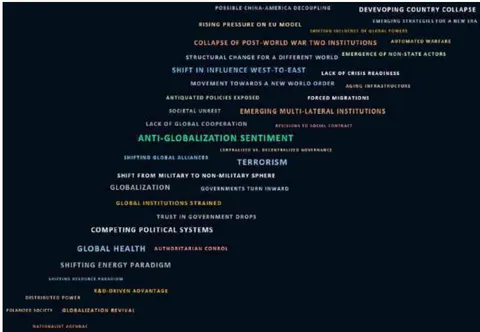
7.1 Role of International Organizations in Technology Regulation
Emerging technologies are now part of geopolitical discussions. This requires international organizations to get involved, as they are vital in setting rules and frameworks to manage technology use across countries. Since technological progress is moving faster than current governance systems, organizations like the United Nations and the International Telecommunication Union play a key role in tackling the various risks and ethical issues related to these advancements. Their involvement is especially important in areas like AI and cybersecurity, where different approaches to regulation can deeply affect international relations and collaboration. By encouraging discussions between multiple countries and creating new agreements, international organizations can help formulate a united global approach to technology regulation. They also provide a space for transparency, allowing nations to share successful strategies and hold each other accountable regarding technologies that can strengthen or threaten security, sovereignty, and privacy. As technology evolves quickly, the rules governing it must constantly change to keep up with new trends and challenges. While older regulatory frameworks might not keep pace, entities like the World Trade
Organization (WTO) have begun to factor technology into trade agreements. This change indicates an urgent need for proactive regulation around issues such as intellectual property rights, data privacy, and compliance as they relate to new technologies. Recent academic discussions emphasize that AI is making this the most dynamic and creative time for governance, underscoring the necessity of infusing technological progress into policymaking. "AI should make today the most exciting and creative time to govern. We both also see the potential prize for the UK, which should have its own ambitions to position itself at the forefront on AI and provide leadership on governing in this new era." (Tony Blair and Marc Warner). The coordinated efforts of international organizations ensure a unified strategy that helps states manage the intricacies of technology while balancing innovation, security, and ethical standards. Moreover, international organizations are increasingly important as they try to narrow the digital gap and ensure fair access to technology across different regions. By promoting inclusive approaches, these organizations can lessen the tech-driven inequalities that heighten current geopolitical frictions. The differences in technological abilities among countries often result in power imbalances, with advanced technologies allowing some nations to exert
greater influence over global discussions. This situation calls for a collaborative strategy where international organizations assist member states in building up their infrastructure and know-how so that new technologies support global stability instead of increasing competition. The focus on cooperation should go beyond just regulatory frameworks; it should also encourage innovation while maintaining crucial ethical considerations in technology governance, aligning geopolitical goals with a dedication to human rights and sustainability.
| Organization | Established | Primary Focus | Recent Initiative | Website |
| International Tele-communication Union (ITU) | 1865 | Global telecommunications standards and regulations | Global Cybersecurity Agenda | https://www.itu.int |
| World Trade Organization (WTO) | 1995 | Regulating international trade, including digital trade | Joint Statement Initiative on e-Commerce | https://www.wto.org |
| Organisation for Economic Cooperation and Development (OECD) | 1961 | Promoting policies for economic and social well-being | AI Policy Observatory | https://www.oecd.org |
| European Union (EU) | 1993 | Political and economic union promoting techno logy regulation among member states | DigitalServices Act | https://europa.eu |
| United Nations (UN) | 1945 | International cooperation and diplomacy, including technology impacts | Global Digital Compact | https://www.un.org |
7.2 Multilateral Agreements for Tech Governance
The complex interactions of technology growth worldwide have led to a need to rethink current governance structures. As new technologies like artificial intelligence (AI), blockchain, and quantum computing reshape international relations, multilateral agreements are becoming more important to tackle the issues that arise from their rapid pace of change. These agreements can create a space for countries to come together to set shared rules and standards, which can help lessen the likelihood of technological competition and support global stability. Historical examples of international teamwork, like the creation of nuclear non-proliferation treaties, show how such agreements
International Organizations and Technology Regulation
can effectively handle conflicting interests while improving diplomatic ties. Therefore, putting multilateral frameworks into practice in technology governance can encourage a sense of joint responsibility among countries, leading to creative solutions for complicated global challenges. As countries face the outcomes of uncontrolled technology growth, the need for organized governance is becoming more pressing. Lacking widely accepted standards can result in unilateral actions that worsen international tensions, particularly seen in the ongoing competition between the U.S. and China in tech fields like AI and 5G communications. These disputes highlight the need for joint governance strategies that can encourage innovation while also addressing risks related to cybersecurity and digital dominance. Such multilateral frameworks would set ethical standards for using new technologies and ensure fair access, thus tackling the inequalities in technology abilities between developed and developing nations. As noted, "[the] OECD maintains a list of developing countries and territories; only aid to these countries counts as ODA," which points to the challenges of aid distribution and technology access that multilateral agreements can help address. "The OECD maintains a list of developing countries and territories; only aid to these countries counts as ODA. The list is periodically updated and currently contains over 150 countries or territories." (OECD Development Assistance Committee (DAC)). Beyond economic and ethical issues, multilateral agreements also impact technology governance with regard to environmental and security concerns. The growth of advanced technologies related to climate efforts calls for joint actions to create guidelines that focus on both sustainability and security. International cooperation can promote knowledge exchange, allowing nations to implement green technologies while protecting their interests against potential abuse or weaponization. Additionally, as different technologies, like AI-based climate solutions, come together, the complexity of governing these new tools requires a collaborative approach that includes insights from various sectors. By addressing these connections, a well-structured international framework could be crucial in ensuring that new technologies contribute to both development goals and international stability. This underscores the importance of cooperative governance in maintaining global peace in our increasingly digital world.
7.3 Challenges in Establishing Global Norms
Efforts to create global standards for new technologies face many obstacles, such as varied technologies, geopolitical competition, and differing interests among nations. Each new technology, like artificial intelligence, blockchain, or biotechnology, brings specific issues that make it challenging for countries to find agreement. Some countries want strict rules to ensure safety and ethics, while others focus on innovation and economic growth, resulting in different regulatory systems. As a result, the lack of a unified global governance system allows for practices without accountability. This fragmentation increases uncertainties about technology's effects and leads to lower ethical standards. As Johnson points out, the growth of new technologies, especially in artificial intelligence and cybersecurity, creates significant difficulties in establishing global norms, highlighting the urgent need for a collective regulatory approach. Additionally, the interaction between technological progress and geopolitical power makes it even harder to set global standards. The competition between superpowers, particularly the U.S. and China, tends to encourage a more competitive approach to technology governance instead of collaborative efforts. Each country aims to use its technological strengths to gain an edge in global affairs, complicating the establishment of comprehensive regulatory systems. For instance, the export of surveillance technology from authoritarian nations reveals the dangers of technology worsening human rights abuses while also escalating geopolitical tensions. In this environment, the lack of shared views on technology risks makes it difficult to form norms, as nations may prioritize their own interests over collective security concerns. This situation creates a setting where new technologies are both tools for innovation and means of competition. Finally, the fast-changing nature of technology exceeds the ability to develop adequate global policies, resulting in a situation prone to conflict. Unlike more stable areas, like military or environmental policy, technology evolves rapidly and unpredictably. As countries deal with the consequences of advancements in AI and cybersecurity, the rapid pace of these changes poses challenges for existing diplomatic and regulatory systems. Thus, current international organizations may have difficulty adjusting to these quick developments, leading to delayed actions and incomplete policies. Without timely and united efforts, the risk of misuse of technology by both state and non-state actors increases, severely hindering attempts to create effective global norms. Acknowledging these intricate challenges facilitates conversations that could enhance international cooperation in handling the complexities of emerging technologies and their geopolitical consequences.
| Year | Country | Challenges in Establishing Norms | Data Source |
| 2023 | United States | Cybersecurity policy alignment | Pew Research Center |
| 2023 | China | AI governance frameworks | Chinese Academy of Sciences |
| 2023 | European Union | Data protection regulations | European Commission |
| 2023 | India | Digital infrastructure disparity | NASSCOM |
| 2023 | Russia | Internet sovereignty debates | Russian Ministry of Digital Development |
Global Norms and Technology Challenges
VIII. ETHICAL AND SOCIAL CHALLENGES
As new technologies continue to evolve rapidly, the ethical and social issues they raise become increasingly significant. More and more, discussions around artificial intelligence (AI), biotechnology, and blockchain are raising worries about data privacy, biases in algorithms, and surveillance. These issues affect society and individual rights in real ways. For example, using AI in law enforcement brings up serious concerns about discrimination, since algorithms based on past data might unfairly affect marginalized groups. Additionally, the growth of social credit systems, especially in authoritarian states, shows how technology can be a means of oppression instead of empowerment. Thus, there needs to be a thoughtful approach that considers ethical consequences to make sure new technologies help people instead of worsening current inequalities (Hannes Werthner et al.). The uneven spread of technological skills, which heightens differences between countries, further complicates the global situation. Nations that lead in tech development and use, like the United States and China, often do so at the cost of others, creating a digital divide. This gap not only poses a technical challenge, but also prompts significant ethical concerns about global governance. New technologies often suggest a one-sided economic and political dominance, where advanced countries set the rules that less developed nations must conform to, continuing a kind of digital colonialism. As these technologies change traditional power relations, it is crucial to engage in global conversations that ensure fair access and promote joint governance strategies to tackle these worldwide disparities (M. A. Сучков, р. 138-157). Further, the ethical questions raised by technological growth require timely regulatory actions to protect democratic ideals and human rights. Lack of governance increases the likelihood of misuse, allowing authoritarian governments to exploit technology for extensive surveillance and control. This creates a contradiction where the same technologies that could boost democratic involvement—by improving connectivity and sharing information—can also lead to widespread manipulation and misinformation. The challenge is to find a middle ground between innovation and ethical responsibilities, which means that governments and technology experts need to work together to create strong ethical guidelines. Therefore, building an ethical framework for emerging technologies is not just a moral duty; it is crucial for maintaining a stable and just world in the digital era, addressing both opportunities and dangers of tech advancement.
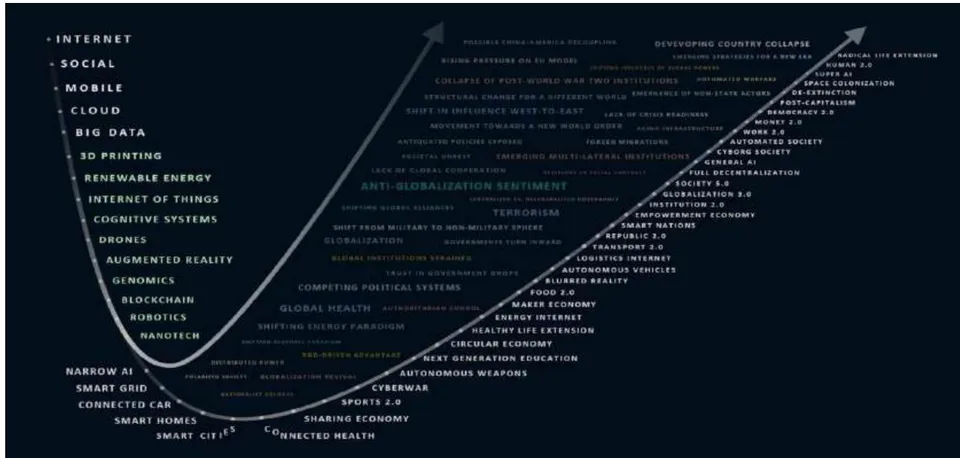
8.1 Data Privacy and Surveillance Concerns
The rise of new technologies has led to strong talks about data privacy and surveillance, especially regarding national security and individual rights. As countries use advanced tools like artificial intelligence (AI) and the Internet of Things (IoT) for monitoring, the chances of privacy violations increase. IoT devices' connected nature increases their vulnerability to exploitation, leading to confusion over data ownership and jurisdiction. The complexity of this situation increases when one considers the competition among global powers, particularly between authoritarian and democratic nations. Regulations such as the General Data Protection Regulation (GDPR) raise critical issues about how to balance progress with privacy worries, indicating that ethical governance is essential as society deals with these complicated digital issues. [citeX]. Technology-shaped power dynamics exacerbate concerns about data privacy. Governments and companies eager to collect user information for profit are also using surveillance tools these days. The push toward data-driven economies shows a shift that often treats data as a product, rather than a personal right. This view complicates matters, as state actors use technological tools for intelligence and control, mixing up protective actions with invasive monitoring. The growth of tech-enabled authoritarianism poses significant ethical consequences, potentially severely affecting privacy rights. Thus, the different technological strategies of nations reflect contrasting ideas that can either safeguard or infringe on individual freedoms, highlighting the need for global cooperation in setting common data privacy standards. [extractedKnowledge1]. The conversation about data privacy and surveillance inevitably connects with ethical standards and broader geopolitical concerns about technology use. While new advancements offer potential improvements in security and data handling, they also introduce risks that can threaten civil liberties, as seen with widespread monitoring in authoritarian regimes. The idea that worries over data protection could limit the sharing and use of data needed for efficient AI systems illustrates the conflict between operational security and ethical duty. This context calls for a new approach to policies that balance technological growth with protecting privacy rights. Going forward, discussions must also address the impact of new biometric surveillance technologies, which might deepen inequalities in global governance. As nations wrestle with these challenges, creating universal data privacy principles will be vital to ensure that technological developments support democratic values and human rights [extractedKnowledge2].
8.2 Tech-Enabled Authoritarianism and its Implications
In a world where technology shapes power relations, the rise of tech-driven authoritarianism is a major worry. Authoritarian governments increasingly use digital tools to strengthen their grip, monitor opposition, and control information, harming personal freedoms and disrupting democratic processes. Authorities misuse tools like artificial intelligence and advanced surveillance, marking a shift in government operations. These technologies turn the media into a misleading instrument for enforcing ideological dominance. "In a system in which the media has become merely a totally dishonest tool for administering ideological control, important information that is missing or removed sometimes tells us more about reality than does the supposedly factual news being presented." (Ron Unz). Thus, the blend of governance and technology has serious effects on global politics, prompting troubling questions about how well democratic institutions can withstand such manipulative practices. Authoritarian methods have significant global implications, as state-led technological oppression fosters distrust among nations. The spread of surveillance tech by authoritarian states, especially from places like China, increases geopolitical tensions and promotes similar repressive actions in other nations. By relying on these controlling technologies, authoritarian regimes undermine freedom and independence. This growing trend complicates international relationships, as these regimes use their technological strengths not just to keep power at home but also to influence other nations, shaping global norms that favor centralized authority. In the end, these dynamics lead to a divided global environment where democratic principles face serious threats from skilled authoritarianism. The impacts of tech-driven authoritarianism go beyond just political control; they raise important ethical issues concerning data privacy, civil rights, and social equity. Governments continually compromise individual rights in the name of national safety and public security as they use digital means for widespread surveillance and social credit systems. This situation prompts critical discussions about the ethical guidelines and regulations needed to use emerging technologies wisely. A thoughtful strategy is crucial, focusing on both punishing abuses and creating an environment where technology empowers citizens and supports democratic principles. Therefore, calls for frameworks that can align innovation with ethical practices are crucial, as they seek to tackle the challenges posed by technologies that, while having the potential to benefit society, also carry significant dangers when misused by authoritarian powers.
8.3 Impact of Technology on Democratic Processes
As the digital age advances, technological advancements increasingly pose challenges to democratic processes. New technologies can both facilitate citizen engagement and pose challenges to democratic norms.
For instance, social media has transformed political discussions by amplifying diverse voices, yet it also expedites the spread of misinformation and fosters echo chambers that can distort public discourse. This situation calls for careful examination of how technology affects participation and influence in political systems. As pointed out in a noteworthy comment, “...technology has amplified extremists on left and right” (“Technology has amplified extremists on left and right. They have become louder, and intimidate moderates. But they are making the statements of the fringe, they don’t represent ‘the other side,’ which hasn’t endorsed them, and they have been sent to you by algorithms which chose them for their offensiveness. All this has created ‘a political optical illusion.’ We are better and steadier than we think.” (Peggy Noonan), highlighting that digital platforms can alter public views and weaken the core principles of democracy. Policymakers must comprehend this intricate impact to safeguard democratic integrity in an increasingly digital world. Furthermore, the governance issues presented by technology require a reassessment of regulatory structures. As technologies such as artificial intelligence, blockchain, and advanced surveillance continue to grow, there is an increasing risk of their misuse for authoritarian purposes. Tools initially meant to boost democratic participation—such as online voting—can also serve to disenfranchise users if not properly managed. There must be a balance between using technological advancements to improve democratic processes and ensuring these tools do not violate civil liberties or privacy. Unequal access to technology exacerbates existing inequalities, making it more challenging for marginalized groups to participate in democratic processes. The global impact of these challenges is significant, requiring collaboration among nations to develop regulatory frameworks that support both technological governance and democratic resilience. Finally, the link between technology and democracy raises important questions about the responsibilities of digital platforms and their effect on public opinion. These platforms, being key players in political communication, wield significant power to shape and disseminate information. The algorithms that manage content can deepen social divides and shape political messages, focusing public attention on sensationalism instead of meaningful discussion. An analysis of these issues indicates that “A democracy may provide voters with a choice, but that choice is largely determined by the information citizens receive from their media.” ("Technology has amplified extremists on left and right. They have become louder, and intimidate moderates. But they are making the statements of the fringe, they don’t represent ‘the other side,’ which hasn’t endorsed them, and they have been sent to you by algorithms which chose them for their offensiveness. All this has created ‘a political optical illusion.’ We are better and steadier than we think." (Peggy Noonan)). Therefore, there is an urgent need for transparency in how algorithms are managed, promoting a democratic culture where informed citizens can succeed despite the challenges of the digital environment. Involving stakeholders from different areas will be crucial to creating ethical practices that uphold democratic values, ensuring technology serves to support— rather than hinder—democratic processes.
IX. THEORETICAL FRAMEWORKS
In the changing conversation about the geopolitics of new technologies, it is important to grasp various theoretical frameworks. Different frameworks, like realism, liberalism, and constructivism, play a key role in explaining how technology affects power relations globally. Realism sees technology primarily as a means to project power, focusing on national interests and competition among countries. This view highlights the intense drive for technological dominance, especially evident in the rivalry between the U.S. and China. In contrast, liberalism argues that technology encourages cooperation between nations, supporting global governance and agreements that improve collective safety and economic stability. Both of these frameworks provide useful perspectives but do not fully address the complex relationships of identities and norms that constructivism emphasizes, where technology impacts social ideas of power, identity, and international relations. Security frameworks play a crucial role in examining theoretical frameworks in the context of emerging technologies. The landscape of national security has greatly changed due to breakthroughs like artificial intelligence and cybersecurity systems, requiring a fresh look at old defense strategies. The effects extend beyond military applications to human security, further complicating the geopolitical landscape. In this context, vulnerability and resilience gain new significance as states face threats from non-state actors through cyberattacks and misinformation campaigns. Real-world examples, such as the rise in state-backed hacking and the weaponization of technology, suggest a need to rethink our understanding of security in the modern digital world. The challenge is not just to safeguard state interests but to protect individuals from risks associated with technology, prompting researchers and policymakers to create a diverse security framework that aligns with current realities (Deborah P. Dixon et al.). To fully understand the various theoretical frameworks concerning technological advancements, one must also explore the ethical concerns that come with them. The ethical issues related to the use of new technologies question traditional norms of responsible governance, demanding a reassessment of individual rights and shared responsibilities. For example, the rise of surveillance technologies and algorithm-based decision-making raises serious worries about civil liberties, data privacy, and social justice. The problem of unequal access to technology worsens global disparities, forcing countries to address inequalities that could lead to geopolitical conflicts. Tackling these ethical challenges is not just theoretical; it is vital for developing regulatory systems that control the overlap of technology, power, and ethics. By weaving ethical aspects into theoretical discussions, researchers can offer views that enhance the conversation about responsible innovation, ultimately leading to a fairer digital world (Deborah P. Dixon et al.).
9.1 Geopolitical Theories Related to Technology
In current talks about geopolitics, it is important to see how new technologies are changing international relations. Technologies like artificial intelligence, blockchain, and biotechnology are more than just innovative tools; they are reshaping power dynamics. For example, countries that lead in tech advancements can gain more influence over their geopolitical environment, reflecting a realist view that sees technology as a means of showing power. The present situation shows how nations, especially in the competition between the U.S. and China, use tech capabilities as tools of influence and control, affecting global governance. As these rivals focus more on technological sovereignty, the resulting tensions stress the need to rethink traditional methods of diplomacy and security in the context of technology. These new technologies profoundly impact national and human security concepts, surpassing mere competition. Cyberattacks and espionage have the potential to turn technologies into weapons, raising important ethical questions. For instance, the emergence of autonomous weapons ushers in a new era in warfare, where rapid technological advancements are associated with existential risks. The mix of technology with security concepts calls for a deeper understanding of how new technologies not only enhance military power but also affect civil liberties and citizen safety. As discussed in geopolitical theory, how nations react to these challenges will shape their global position. Therefore, a strong commitment to responsible tech governance is essential to lessen the risks in this changing landscape. Furthermore, the geopolitical discourse surrounding technology necessitates an examination of the ethical principles that guide its application in international relations. As the world increasingly depends on digital solutions for governance, economies, and social order, the dangers of tech-driven authoritarianism come to the forefront. Issues around data privacy, surveillance, and the risk of technology worsening existing inequalities need careful examination. Current research highlights that the countries controlling key technologies like AI and quantum computing have significant power over global decisions. For example, “the countries that own the technologies Washington needs will be the most susceptible in terms of confrontation with the US.” The list includes Germany, France, and the Netherlands." (Yekaterina Novikova). This point underscores the importance of ethical considerations in creating technocratic policies. Moving forward means not just regulating these technologies but also creating an environment that upholds democratic governance and individual rights—key elements for a fair international order in a fast-evolving tech world.
9.2 Security Paradigms Influenced by Emerging Technologies
As new technologies continue to change global interactions, the resulting changes in security approaches need careful review. The link between technology development and security tactics is stronger than ever, as nations face challenges from artificial intelligence, cybersecurity, and data handling. Old security models, based on physical borders and military strength, are giving way to new frameworks that focus on flexibility and adaptability against unconventional threats. In this setting, using zero trust security models, which follow the principle of trust no one, verify everyone, shows a key change in how countries shield their interests in the digital space. "Traditional networks with a defined perimeter are easier to defend than perimeter-less distributed cloud networks. Today's networks commonly employ zero trust models which assume you trust nothing and verify everything. Zero trust bases security on identity not perimeter and restricts any lateral network movement." (Keysight). These models help create defenses against cyber attacks and data leaks, highlighting a greater reliance on identity-based controls rather than geographic borders in today's security discussions. The rise of machine learning and predictive analytics adds complexity to the security scene, as they provide new tools for spotting threats and managing risks. These technologies help organizations evaluate large datasets to find unusual patterns and foresee potential security breaches before they happen. For example, using these analytical tools in cybersecurity strategies allows not only anticipating future threats but also real-time tracking and response, significantly boosting organizational flexibility and resilience (Abeer Aljohani, p. 15088–15088). This change signifies a shift from reactive methods to proactive risk management, stressing the need for agility in responding to fast-changing technological threats. As countries adjust their security strategies to include these approaches, the consequences for global stability and international relations become more important. Additionally, the ethical issues that arise with these technological developments need thorough examination. The spread of surveillance technologies, aided by advances in AI and blockchain, raises concerns about privacy, civil rights, and possible authoritarian tendencies. In various political situations, countries using these technologies might misuse them for social control rather than public safety, creating a conflict between state interests and individual freedoms. This dual-use aspect of new technologies complicates international relations, leading to calls for regulatory measures that can tackle both security and ethical dilemmas (Zakaria A. Mani et al., p. 14279-14279). As these technologies keep advancing, the need to set up strong governance frameworks will be vital in reducing the risks they present, ensuring that security strategies can adjust effectively while upholding basic human rights.
9.3 Constructivist Perspectives on Technology and Identity
Today, in the world of new technologies, the connection between technology and identity is very clear, especially when viewed through a constructivist perspective. This viewpoint suggests that technology is more than just a tool; it actively shapes identities in today's society. As people use technologies like social media, artificial intelligence, and biotechnology, their identities are always changing, influenced by cultural and social contexts, along with existing power dynamics. The consequences are significant; technologies help in negotiating personal and group identities, often challenging traditional ideas about self and agency. In a global context, the formation of technological identity could strengthen existing power structures, especially concerning digital surveillance and data collection, which frequently relate to geopolitical interests. Thus, to understand how technology and identity connect, we must recognize these complexities and their social and political effects in our increasingly connected digital world. Examining constructivist viewpoints more closely shows how technology not only shapes individual identities but also collective identities on a global scale. For example, countries use technology more and more to promote identities tied to their political beliefs and cultural stories. States can connect their identities with progress and innovation through the creation and use of artificial intelligence and blockchain, thereby shaping national narratives both at home and abroad. Moreover, new technologies allow countries to project their power and compete globally, which changes alliances and rivalries based on technological strength. These technological frameworks shape the very foundation of society and, by extension, international relations, creating feelings of belonging or exclusion that transcend borders (Johan Eriksson et al.). The engagement of a nation with technology shapes its identity, just as it shapes the identity of an individual. Furthermore, the implications of constructivism also cover ethical issues related to technology and identity creation. With technology influencing community perceptions and individual rights, it raises complex questions about control, surveillance, and identity politics. Constructivism encourages critical assessment of the ethical standards governing technology that impact identity, as some groups might use advancements to reinforce dominance over others. This situation brings about concerns regarding fairness, access, and moral governance, especially as marginalized communities often face targeting or exclusion in broader discussions about technology-influenced identities (Johan Eriksson et al.). Therefore, the constructivist viewpoint acts as a basis for examining the ethical challenges introduced by new technologies, challenging us to integrate innovation and ethics in shaping identities in a growing digital landscape (Johan Eriksson et al.).
X. REGIONAL PERSPECTIVES: UNITED STATES
When looking at how geopolitics is changing in the United States, it is clear that technology plays a key role in national strategy. The investment in new technologies like artificial intelligence (AI), quantum computing, and biotechnology shows a goal not just for economic gain but also to keep a powerful position in the world. Past events, such as the Cold War and the Space Race, illustrate how technological advancements have shaped geopolitical influence. Silicon Valley and large tech companies are central to these federal goals, creating a partnership that drives innovation and strengthens national interests. These interactions highlight the idea that being a leader in technology is crucial for protecting democratic values and achieving advantages in a globally connected environment. The global tech competition creates both hurdles and chances that the United States needs to handle carefully. As geopolitical tensions rise, especially with the U.S.-China competition, using technologies like 5G and blockchain effectively is vital. The emphasis on protecting against adversarial threats, through cybersecurity efforts and economic sanctions, aims to gain technological independence and resilience. To improve its global standing, the U.S. not only wants to be at the forefront of tech innovation but also to build alliances that respond collectively to authoritarian behavior and spying threats from other countries. This complex mixture of competition and teamwork shows the need for a strong, varied approach to re-establish the U.S. as a leading force in shaping global technology standards. New technologies not only impact economic factors but also transform societal governance and individual rights. The American perspective hinges on the ethical application of technology, which raises concerns about privacy, surveillance, and civil liberties. Technologies that connect AI and machine learning raise important issues about biases in algorithms and accountability, potentially threatening democratic values. Additionally, the chance for technology to increase social inequalities demands attention to fair access for different communities. Balancing innovation with ethical governance is a significant challenge; therefore, the United States must develop thorough regulatory systems that support technological growth while protecting human rights and democratic principles. Such regulations are crucial to ensuring that technological advances empower people rather than lead to social or political conflict.
10.1 Strategies for Maintaining Technological Leadership
In the digital age, keeping technological leadership is essential for countries wanting to have global influence. The United States, facing strong competition, needs to focus on making strong investments in new technologies like artificial intelligence and quantum computing. A key part of this approach will be to create public-private partnerships, working with leading tech companies from Silicon Valley to quickly develop innovative solutions that serve national interests. A recent statement about governance noted that “AI should make today the most exciting and creative time to govern,” highlighting the important link between technology and leadership. By connecting national security needs with economic goals, the U.S. can strengthen its competitive position in the rapidly changing tech environment, ensuring its geopolitical status and economic health. Additionally, building international collaborations will also be essential for maintaining technological dominance. As global problems increasingly cross borders, multilateral agreements can improve how leading nations work together to tackle challenges like cybersecurity and the ethical use of technology. Rethinking partnerships to focus on cooperation can help set guidelines that control new technologies while reducing risks tied to their spread. By fostering inclusive discussions among nations and private entities, countries can use shared knowledge to manage the challenges in tech governance. For example, as geopolitical tensions escalate, a united effort against digital authoritarianism through cooperative technologies can help not only maintain but also expand a country's influence worldwide, creating a space where innovation and ethical concerns coexist. Finally, tackling the inequalities in technological access is critical for continuing to lead in this changing sector. The division of the digital landscape poses issues, as nations lacking equal access to emerging technologies may find it difficult to compete. To address this gap, a unified effort must be made to promote fair access to technology, allowing more people to participate in innovation. This includes supporting education that provides people with the skills needed for the digital economy, which helps lessen economic inequalities and encourages an inclusive growth model. As new technologies shift global power dynamics, ensuring all countries can engage in and benefit from technological progress will be essential for building a stable and thriving geopolitical setting.
10.2 Investments in Key Technologies
Investments in new technologies have big effects, not just on national security and economic health, but also on global power dynamics. As countries increase spending on technologies like artificial intelligence (AI), quantum computing, and blockchain, the balance of power globally increasingly relies on tech skills. The U.S.-China tech competition is a prime example, where progress in technology is viewed not only as financial gain but as a way to gain political power. In this world, using AI can shape military strength and surveillance tools, making it essential for governments to invest in order to stay ahead. OpenShift AI and RHEL AI, as Matt
Hicks points out, can collaborate to reduce training and inferencing costs, demonstrating the importance of combining technologies for countries seeking innovation-driven success in this tech-heavy political environment. Red Hat CEO Matt Hicks talks up how OpenShift AI and RHEL AI can work together to lower the cost of training and inferencing to drive AI adoption and the company's traction with customers looking to move away from VMware." (Unknown Author). Simultaneously, these investments raise significant ethical and regulatory issues. Countries are struggling with the fallout from their tech goals, which include risks to data privacy and the increase of authoritarian monitoring systems. For example, while blockchain in governance can enhance transparency, it also brings up concerns about data control and manipulation. Additionally, the push for advancements in biotechnology, though beneficial for fields like healthcare, raises concerns about bioweapons and ethical research standards. The linked nature of these technologies heightens the stakes, as their effects stretch across both local and global politics. This complex web of tech investments shows why it's crucial to think ahead; ignoring the possible consequences of such advancements could lead to more chaos instead of stability in an already unpredictable geopolitical setting. In the end, the worldwide scene of investments in emerging technologies will influence international partnerships and collaborations in the future. As countries see the value of combining tech expertise, we observe the creation of strategic alliances focused on mutual tech goals. The European Union's efforts to develop regulations like GDPR highlight a forward-thinking approach to uphold digital independence while tackling the issues from U.S. and Chinese tech leadership. Furthermore, nations like India and Israel are becoming major contributors to tech sectors, impacting the global geopolitical landscape. The path of tech investment will affect not only economic results but will also strengthen or alter current power structures, emphasizing the need for strong international governance to reduce risks and promote cooperative growth. Thus, the quest for technological progress stands as a core factor on which future geopolitical stability relies.
| Year | Global Investment (in Billion USD) | Top Sector | Region |
| 2021 | 500 | Artificial Intelligence | North America |
| 2022 | 600 | Cybersecurity | Asia-Pacific |
| 2023 | 750 | Quantum Computing | Europe |
| 2023 | 800 | 5G Technology | North America |
| 2022 | 700 | Cloud Computing | Asia-Pacific |
10.3 Role of Silicon Valley in Geopolitics
As the digital world keeps changing, Silicon Valley is at the center of global politics, influencing not just technology but also the power dynamics that follow. This area is a special spot where new ideas meet economic power and political sway. Major companies like Google, Apple, and Facebook have become so powerful that they can rival whole nations. Their skills in data analysis, communication, and artificial intelligence give them a chance for both collaboration and conflict worldwide. An expert once said, "You can't spend a lot of time hiring grown-ups and then treat them like children." "You can't spend a lot of time hiring grown-ups and then treat them like children." (Katarina Berg), highlighting the necessity of accountability when managing this kind of power. Thus, we cannot overlook Silicon Valley's influence on global political strains and tech competition. Furthermore, as global tensions grow, especially between the United States and China, the innovations from Silicon Valley are crucial in shaping national policies. The competition for technology, particularly in the areas of artificial intelligence, 5G, and other emerging technologies, has intensified, leading to a shift in traditional power dynamics. Nations are heavily investing in their local tech sectors while trying to partner with Silicon Valley firms to boost their tech capabilities. For example, China's ambitious Made in China 2025 plan seeks to lead in advanced manufacturing and new technologies, directly challenging U.S. interests in the area (National Intelligence Council). The outcomes go beyond just economic rivalry; they emphasize the politics of technology itself, where advancements can create or reduce global
Investments in Key Technologies
leadership as countries compete for tech dominance in a world with multiple powers. Lastly, Silicon Valley's rapid innovation raises ethical and regulatory issues that require serious attention, given the potential for both positive and negative uses of these technologies. The combination of privacy, data security, and authoritarian regimes creates a complex environment where Silicon Valley's technologies could potentially undermine personal freedoms. Technologies like AI and facial recognition could enhance government surveillance in authoritarian states, threatening democratic values and freedoms. Therefore, the ethical issues linked to these technologies should be a key topic in political and academic discussions. This leads to important questions about global governance, sparking talks on how to regulate such technologies to support democratic values while still encouraging innovation (National Intelligence Council). Consequently, Silicon Valley's role in geopolitics goes beyond just leading in technology; it requires a thoughtful approach that looks at ethical concerns along with strategic benefits.
{"image_source":{"path":"images/e513981993ae82ad5856706db2e32ceb1dc335a135df391b48909b148b18fe63.jpg"},"content":"","chart_caption":[{"type":"text","content":"This chart compares various tech industry metrics across countries, including Tech Industry Influence Score, Geopolitical Strategy Engagement, Investment in Innovation as a percentage of GDP, and Technological Competition Index. Each metric is represented by different colored bars for clear visual distinction. The chart allows for easy comparison of these metrics between the United States, China, the European Union, India, Canada, Russia, and South Korea."}],"chart_footnote":[]}
XI. REGIONAL PERSPECTIVES: CHINA
The interaction between technology and geopolitics increasingly shows the complex forces shaping global relations today. Specifically, China has become an important player in emerging technologies, using policies like "Made in China 2025" to aim for leadership in critical fields such as AI, aerospace, and biotechnology. This broad strategy intends to achieve technological self-sufficiency while boosting China's impact on global supply chains and development efforts. Moreover, state-backed initiatives that concentrate on exporting Chinese technologies, particularly in surveillance, underscore a broader strategy of leveraging technology to enhance China's political and economic sway. Therefore, looking at China's tech development shows how new technologies act as both instruments and representations of national power, greatly affecting geopolitical situations and power balances. Technology also plays a vital role in China's Belt and Road Initiative (BRI), which includes digital infrastructure as a way to extend geopolitical influence. By putting money into large digital projects in Asia, Africa, and Europe, China seeks to be a key player in global connectivity and digital reliance. This method not only displays the variety of its tech solutions but also helps create favorable conditions for building economic relationships and political partnerships. Furthermore, by providing advanced communication networks, China can boost its soft power and improve its image among the countries involved, especially in areas where there is hesitation about Western dominance. In the end, the BRI shows how digital infrastructure, and technology can act as tools of influence, allowing China to alter regional and international connections (Shazeda Ahmed). While China's focus on emerging technologies offers prospects for global infrastructure progress, it also raises issues regarding ethics, governance, and human rights. The spread of surveillance technology from China has sparked worldwide discussions about privacy and government oversight, raising concerns about the potential for authoritarian practices in other countries, similar to those used within China's own borders. Often, these technologies carry conditions that may lead recipient nations to align more closely with Chinese governance, which could jeopardize democratic institutions. As these technological exports challenge typical power dynamics, it is vital to create global standards and regulations that address the ethical issues of tech transfer. The ability to handle these complex realities will greatly influence both China's future as a tech leader and the wider geopolitical environment in the digital era. (Shazeda Ahmed) (Shazeda Ahmed).
11.1 The "Made in China 2025" Initiative
In today's geopolitical situation, the relationship between tech growth and national strategy is clear in China's “Made in China 2025” plan. China's ambitious plan aims to shift the country's focus from manufacturing to becoming a leader in high-tech fields like semiconductors and artificial intelligence. By promoting self-reliance in essential technologies, China seeks to lessen its reliance on imports and improve its competitive edge worldwide. This policy, however, has attracted international attention as it shows China's aim for tech supremacy, which many Western countries view as a direct threat to their global influence. Thus, the effects of this initiative go beyond economic goals and intensify the already existing tensions in the U.S.-China trade conflict. "China's Made in China 2025 initiative aims to elevate the country's high-tech industries, including semiconductors, to achieve self-sufficiency in critical technologies. China aims to meet a significant portion of its semiconductor needs domestically within the next decade by setting ambitious targets for reducing reliance on imported technology, further complicating the geopolitical landscape in the Digital Age. The effects of the “Made in China 2025” initiative are especially noticeable in technology competition, where the United States has reacted with various restrictions on Chinese tech firms. The U.S. uses laws and economic measures, like export limits and investment bans, to slow down China's tech growth. These actions are part of a larger strategy that focuses on keeping its technological lead while protecting national security. Increased funding for local semiconductor production and artificial intelligence development aims to establish a strong, independent tech industry. "China's Made in China 2025 initiative aims to elevate the country's high-tech industries, including semiconductors, to achieve self-sufficiency in critical technologies. By setting ambitious targets for reducing reliance on imported technology, China seeks to ensure that a significant portion of its semiconductor needs are met domestically within the coming decade.". However, this back-and-forth dynamic highlights the unstable nature of international relations impacted by tech competition, where cooperation may give way to rivalry, further complicating the geopolitical environment of the 21st century. Additionally, the "Made in China 2025" initiative symbolizes a wider trend of state-driven tech growth that shows not just economic goals but also social and political aspects. The Chinese government's backing of high-tech sectors, combined with its geopolitical aims, raises important ethical issues about the consequences of such progress. As the notion of technological independence grows to be a key element of national policy, countries might increasingly compete for tech leadership. There is a possibility that China's state-oriented approach could spark similar movements around the world, resulting in a divided global landscape where tech standards take on political significance. This might worsen inequality in access to new technologies among countries and contribute to a new hierarchy of tech capabilities, affecting global governance and cooperation in the digital era.
11.2 Technological Statecraft and Global Ambitions
Technology growth and geopolitical competition have combined to create a changing world characterized by both strategic goals and ethical issues. Key nations, especially the United States and China, are using new technologies like artificial intelligence (AI) and quantum computing as tools of political influence to boost their global power. This tech race goes beyond just military strength; it is also about economic power and geopolitical standing. China has solidified its position as a superpower alongside the European Union and the United States by forging large trade and investment agreements with Latin America and Africa. "By making massive trade and investment deals with Latin America and Africa, China established its presence as a superpower along with the
European Union and the United States. China's rise is demonstrated by its ballooning share of trade in its gross domestic product. Khanna believes that China's consultative style has allowed it to develop political and economic ties with many countries including those viewed as rogue states by western diplomacies." (Parag Khanna). These efforts show how nations use technology to create economic ties and form strategic partnerships, suggesting that tech advances are vital tools for geopolitical actions in today's world. The effects of this technology-driven statecraft touch various areas of governance and diplomacy. Nations are now involved in what seems to be a race for prestige, where a country's standing and global influence are closely related to its tech skills. In the past, instances such as the Space Race demonstrated how a country's identity and international standing could be shaped by its technological achievements. In this scenario, modern technologies promote a new kind of global competition that moves away from the usual military-focused views. It has transformed into a complex battleground that includes trade, investment, and digital power. Traditional ways of understanding power dynamics need to shift to consider these changes, recognizing how crucial technology is in influencing both state actions and international relations (Joslyn Barnhart). Additionally, as countries engage in technology-based state actions, ethical issues emerge that demand attention. The quest for advanced technologies raises urgent questions about cybersecurity, surveillance, and the risks of authoritarianism. Nations might use tech advances to tighten control over their citizens, threatening democratic systems. Furthermore, gaps in access to these technologies worsen existing global inequalities. International cooperation is necessary to address these challenges by governing emerging technologies and ensuring equitable access. The significant challenge is making sure that tech progress adds positively to global governance instead of becoming tools for division and power struggles, ultimately working towards a more stable and cooperative international atmosphere.
Technology Development Insights by Country
{"image_source":{"path":"images/14b2a955bc07be79ed04c894428622b2b4538ebb24612bc64eadd50bec1b6910.jpg"},"content":"","chart_caption":[{"type":"text","content":"11.3 Export of Surveillance Technology"}],"chart_footnote":[]}
The chart presents an overview of technology development metrics by country, illustrating the scores for Tech Development, Global Influence, Investment in Emerging Technologies, and Technological Prestige. Each metric is depicted in separate bar graphs for easy comparison among the United States, China, the European Union, India, Brazil, Russia, and Japan.
In today's world, the trade of surveillance technology has become a key method for countries wanting to grow their influence and maintain internal order. This situation underscores how technological growth connects with power strategies, as nations use advanced
tracking systems for both local control and broader influence. The spread of these technologies allows for authoritarian rule through extensive monitoring and also helps countries exert power abroad, often undermining democratic ideals. For example, the rising use of AI-powered surveillance systems raises ethical issues and concerns about privacy violations, increasing tensions among rival nations. As discussed in conversations about technology's role in promoting democracy, "the export of surveillance technology has become a significant aspect of geopolitical maneuvering, as countries seek to expand their influence and control through the dissemination of advanced monitoring tools." "The export of surveillance technology has become a significant aspect of geopolitical maneuvering, as countries seek to expand their influence and control through the dissemination of advanced monitoring tools." (Sam Altman). This complicates discussions about human rights and technology management on a global scale. Additionally, the competition over surveillance technology represents a larger contest for technological leadership, especially between the United States and China. Each country has different ideologies regarding technology; while the U.S. promotes democratic principles and innovation, China has effectively used surveillance technologies to strengthen its authoritarian governance. China's efforts, especially through initiatives like Made in China 2025, show a desire to lead in the global tech arena, focusing on surveillance systems that serve both its domestic goals and exports to other nations. This situation increases pressure on international partnerships, making it difficult for other governments to adopt these technologies while maintaining their values and governance styles. As these issues develop, the potential abuse of surveillance tools may lead to diminished trust in global relations and local political systems. Importantly, the worldwide export of surveillance technology brings up crucial ethical and regulatory challenges that go beyond borders. As new technologies become essential to national security and economic strategies, their consequences require a new look at international governance frameworks that have not kept up with rapid tech changes. The ethical concerns of mass surveillance, especially in terms of data privacy and personal freedoms, test current regulatory systems. There is a clear need for international agreements that can effectively control the use of surveillance technology, setting boundaries for acceptable uses while protecting civil liberties. Failure to take action could lead to a global environment characterized by technological inequality and unrestrained authoritarian rule, potentially leading to instability and conflict. Therefore, actively working to create global standards for technology governance is crucial to address the twin dangers of digital inequity and political oppression linked to unrestricted surveillance technology exports.
| Country | Exports (in millions USD) | Main Recipients | Notable Technologies |
| United States | 1000 | Saudi Arabia, UAE | Facial recognition, drones |
| China | 1200 | Pakistan, Venezuela | CCTV monitoring systems, AI |
| Russia | 300 | Belarus, Iran | Surveillance drones, communication interception |
| United Kingdom | 450 | India, Australia | Data analytics, biometric systems |
| Israel | 500 | Brazil, Mexico | Cybersecurity tools, surveillance software |
XII. REGIONAL PERSPECTIVES: EUROPEAN UNION
The European Union (EU) is aware of the challenges that come with the rapid changes in new technologies. It looks at not just the economic and security issues but also the ethical concerns that these advancements bring. As the EU deals with the ups and downs of tech competition, especially with big countries like the United States and China, it aims to be a leader in setting regulations. One important example is the General Data Protection Regulation (GDPR), which shows the EU's dedication to privacy and data security. This regulation sets an example for ethical practices in tech management. By taking charge of regulations for AI and digital platforms, the EU tries to find a balance between innovation and social values, making sure that new technologies respect democratic ideals and human rights. Therefore, the EU's actions towards emerging technologies underscore its influence as a powerful entity striving to establish standards that extend beyond mere market efficiency. To gain digital independence, the EU is also working to reduce its reliance on outside tech, especially from the U.S. and China. This strategic shift is clear in its efforts to build a unified tech landscape that focuses on self-reliance and collaborative European innovation. Investments in green tech and support for local tech businesses demonstrate the EU's emphasis on self-sufficiency as global competition intensifies, bolstering its economy. The push for environmental sustainability shows the EU's awareness of how new technologies relate to global climate issues. By creating smart policies, the EU aims to make sure that tech advancements not only promote economic growth but also positively impact global sustainability initiatives, representing a complex strategy for digital leadership in a swiftly changing global environment (Behnam Zakeri et al., p. 6114-6114). At the same time, new technologies bring various challenges and risks that the EU must closely monitor. The rapid speed of tech development creates risks related to cybersecurity, misinformation, and the possible rise of authoritarian control through tech-driven surveillance. In light of recent geopolitical conflicts linked to tech competition, the EU understands that ethical standards must change as quickly as technology does to reduce risks. Spaces for discussion and cooperation are essential to creating guidelines for the use of technologies such as AI and biotechnology. As the EU tackles these diverse challenges, its commitment to ethical governance and regulatory leadership strengthens its role as a key player in the global tech scene, promoting responsible actions in the quest for innovation (Behnam Zakeri et al., p. 6114-6114).
12.1 Regulatory Leadership in Technology
In today's digital world, maintaining geopolitical stability requires a blend of regulatory guidance and new technology. A key part of this situation is that countries need to create solid rules to oversee new technologies like artificial intelligence and biotechnology. Regulatory guidance goes beyond just following the rules; it is about influencing the ethical environment where these technologies develop. This is critical because technological growth often happens faster than current regulations can keep up with, resulting in significant ethical and social consequences. For example, without strong oversight, technologies might maintain biases or violate privacy rights, which can threaten democratic values and social unity. Strong regulatory guidance can help lower these risks by encouraging transparency and cooperation among affected parties, ensuring that technological progress benefits everyone instead of worsening inequalities or geopolitical issues. Additionally, as countries such as the United States and China compete for technological dominance, regulatory frameworks become a key area for global influence and soft power. Differences in regulatory methods can provide competitive advantages and generate conflicts concerning standards and norms. For instance, the European Union's General Data Protection Regulation (GDPR) has made Europe a leader in data privacy, influencing how other countries regulate. However, differing regulatory systems can lead to fragmentation in the global tech scene, making international collaboration more complicated. This geopolitical competition has significant effects on global governance, requiring
multilateral efforts that balance different national priorities while fostering a shared commitment to ethical technology use. Thus, regulatory guidance can either increase or reduce geopolitical tensions, influencing future technological partnerships and rivalries (National Intelligence Council). Finally, looking at the interplay between regulatory structures and new technologies requires a serious look at global governance systems. Given the rapid pace of technological change, international organizations and alliances need to adapt to tackle not just regulatory issues but also ethical questions linked to these technologies. If they don't adapt, it could worsen existing gaps in technology access and capability across the world. Moreover, as new technologies such as AI and blockchain disrupt established power dynamics, countries must actively engage in discussions to establish norms that ensure their responsible use. This includes addressing concerns such as accountability in algorithmic decision-making and the military use of new technologies. A united effort towards a consistent regulatory framework can greatly influence global discussions about technology, transforming it from a source of conflict to a platform for collaborative advancement (National Intelligence Council).
{"image_source":{"path":"images/4be65901949cfbe35c49a9e9e56f94b913b5cb3042913005bc0ce874984147e7.jpg"},"content":"","chart_caption":[],"chart_footnote":[]}
This chart displays various regulatory and governance metrics across different countries. The bar sections represent the Regulatory Effectiveness Score and Ethical Governance Index, while the lines indicate the Stakeholder Collaboration Rate and Preparedness for AI Regulations. By comparing these metrics, viewers can assess how each country performs in regulatory effectiveness and governance.
12.2 Efforts to Reduce Dependence on External Technologies
As countries strive for technological independence, they are closely examining their reliance on external technologies, as this can lead to strategic vulnerabilities. This shift represents a larger global situation where dependence on foreign developments, especially from major nations like the U.S. and China, raises important issues related to national security and sovereignty. Around the world, nations are working hard to create their own technologies that increase self-reliance and lessen the dangers connected to foreign control. Dealing with competing technologies, countries are solidifying their tech environments through efforts like the European Union's focus on digital sovereignty, which stresses local innovation rather than outside dependence. By investing in new technologies, countries show a strong commitment to gaining control over important
tech areas that are vital for keeping their economic edge and global importance. The tech advances aimed at decreasing dependencies are not just about lowering risks; they are also about taking advantage of unique chances for economic growth. National plans increasingly prioritize the development of local skills, fostering a thriving ecosystem capable of connecting both domestically and internationally. Technologies such as artificial intelligence (AI), quantum computing, and blockchain are key players in this push, with countries actively promoting their skills to boost both domestic industries and global partnerships. For example, AI initiatives are cutting down on the need for external data processing systems, while quantum navigation tools limit reliance on outside signals, making autonomous systems stronger in unpredictable situations. "Quantum navigation tools reduce reliance on external signals, making autonomous systems more robust in unpredictable environments." (AZoRobotics). As countries focus on these technologies, they contribute to not just national strength but also the building of new global alliances based on shared tech interests. Nonetheless, the shift toward technological self-sufficiency brings ethical and regulatory issues that countries must address. As they move toward independence, governments must balance the need for technological progress with the risk of unintended negative outcomes, like increasing inequalities or threatening civil rights. Regulatory systems need to adapt alongside technological innovations to stop the potential misuse of new technologies for oppressive aims or for taking advantage of vulnerable groups. Furthermore, pursuing independence may result in competitive disadvantages if nations fail to effectively collaborate or share knowledge. Therefore, while aiming for autonomy, the broader strategy to lessen reliance on external technologies must include ethical considerations and international collaboration to create a balanced technological ecosystem that promotes both safety and fairness.
Global Efforts to Reduce Dependence on External Technologies
| Country | Initiative | Year Established | Goal | Budget (in billions USD) |
| United States | Manufacturing USA Program | 2014 | Strengthen domestic manufacturing and reduce reliance on foreign tech supply chains | 1 |
| China | Made in China 2025 | 2015 | Increase self- sufficiency in key technology sectors | 300 |
| European Union | Digital Compass 2030 | 2021 | Achieve technological sovereignty and reduce dependency on non-EU technologies | 150 |
| India | Atmanirbhar Bharat (Self-Reliant India) | 2020 | Promote local manu-facturing and innovation to reduce import reliance | 20 |
| Japan | Growth Strategy 2021 | 2021 | Enhance domestic production of semi-conductor technologies | 2 |
12.3 Investments in green technology and digital sovereignty
In the changing digital world, putting a lot of money into green technology is an important step for improving national digital independence. These investments help countries lead in sustainability and build their own technology. As a few large companies increasingly influence the world, reliance on foreign technology can
threaten economic health and national security, making this dual focus essential. As noted, “this textbook aims to engage readers with digital humanism—a rich landscape of digitalization, examined as a socioeconomic, sociotechnical, and cultural process” (Hannes Werthner et al.). By using green technologies, countries can lessen their dependence on foreign energy while encouraging local innovation, which helps create a self-reliant digital space that supports a nation’s political independence and freedom. With rising tensions in global relations, especially between rival nations, the critical role of digital independence becomes clear. For example, the European Union understands that a strong green technology framework not only helps meet environmental targets but also serves to lessen reliance on large foreign tech companies. As expressed in discussions related to digital policy, “this manifesto calls for a comprehensive, consistent digital policy agenda centered on digital sovereignty, aiming to enhance European competitiveness and reduce dependence on foreign technologies” (Axel Voss). By investing in green technologies, the EU positions itself to compete with other powers while nurturing innovation ecosystems that address both economic and environmental needs, thus transforming its position in the global political landscape. The connection between green technology investments and digital independence shows a larger trend in shifts of power in the digital era. Planning for technological self-sufficiency through sustainable methods enables countries to effectively navigate the complex global environment characterized by competition and mutual reliance. Trends suggest that those who lead in technology advancements, especially in renewable energy and digital frameworks, will change global power dynamics. Ultimately, linking investments in green technologies to the goal of digital independence is not just a policy decision but essential for maintaining autonomy in a more connected world. This strategic insight will allow nations to gain advantages in emerging markets while reducing risks tied to technology reliance and global competition.
Investments in Green Technology and Digital Sovereignty
| Year | Global Green Technology Investment (Billions USD) | Digital Sovereignty Initiatives (Number) | Countries Focusing on Digital Sovereignty |
| 2021 | 501 | 150 | 30 |
| 2022 | 600 | 200 | 35 |
| 2023 | 750 | 250 | 40 |
XIII. REGIONAL PERSPECTIVES: OTHER REGIONS
The rise of tech hubs in places like India, Israel, and South Korea shows changes in the global digital environment. These nations have quickly embraced new technologies, improving their status worldwide. For example, India's growing tech sector, which focuses on software development and a digital-first mindset, offers major chances for economic growth and partnerships with other nations. Yet, the issue of unequal access to these technologies can worsen existing socio-economic gaps. On the other hand, Israel's emphasis on cybersecurity technology reflects its strategic plan to use innovations to strengthen national security and establish global ties. Thus, while these emerging tech centers indicate regional strength, they also require careful analysis of the socio-political issues that arise with their growth in global affairs, balancing local benefits with ethical concerns about fair technology access. African countries present a different picture in the digital change narrative, where possibilities for technology growth face considerable obstacles. Even though internet access and digital tech usage are improving, they still lag behind the global average, limiting the continent's ability to effectively use new technologies. The African Continental Free Trade Area (AfCFTA) promises improved economic prospects through digital means, but its realization hinges on resolving regulatory and infrastructure issues. Furthermore, Africa's reliance on foreign technologies shows a key part of digital colonization, where outside powers maintain considerable influence over local digital markets. These aspects indicate that while Africa is on the verge of a digital rebirth, the decisions made in policy and governance will ultimately determine if this growth leads to lasting development or deeper ties to global structures controlled by tech-forward nations. In Latin America, difficulties in implementing and managing emerging technologies showcase the challenges of regional integration in a digital world. The slow adoption of advanced technologies, affected by economic problems and political uncertainty, raises doubts about the region's ability to engage fully in the global digital economy. Also, weak regulatory systems and limited public investment can hinder innovation and lessen potential economic gains. There are concerns about the power of foreign tech firms, which often set rules that may conflict with local interests. As Latin America aims to establish its role globally, it must develop strategies not just to improve tech adoption but also to build local skills and regulatory frameworks that serve its citizens' needs. Thus, regional collaboration and sustainable governance will be crucial in effectively addressing these technology-related issues.
13.1 Emerging Tech Hubs in India and Israel
The relationship between technology and global power shows clearly in the new tech hubs of India and Israel. Both countries have created spaces that promote innovation, helped by government support, skilled workers, and active start-up ecosystems. Projects such as Digital India demonstrate India's growing digital economy, aiming to establish it as a global leader in technology and service outsourcing. On the other hand, Israel, known as the Start-Up Nation, has used its special geopolitical situation and military background to promote research and development in advanced areas like cybersecurity and artificial intelligence. This approach to technology is part of a larger geopolitical picture, where both countries aim to gain influence, build strategic partnerships, and reduce weaknesses in a competitive global environment, highlighting how geography shapes technological skills. Cultural, historical, and political elements play a big role in how these tech hubs develop, shaping their global strategies. For India, a large and diverse country, making technology inclusive is essential. Recent discussions have pointed out that “AI can improve data management and coordination, supporting India's ambition to be a developed nation by 2047.” AI can help tackle these by improving data handling and coordination, supporting India's vision for a developed nation by 2047. AI-Driven Decision Support: AI systems, such as decision support models, can assess the impacts of policy decisions (e.g., zoning changes) by simulating various outcomes. This aids urban planning by providing insights into environmental and economic effects." (CivilsDaily)." In contrast, Israel takes a proactive approach, often guided by national security needs. The country's strong military technology growth has led to impactful civilian uses, allowing Israel to deliver innovative solutions to world markets while staying ahead. The ongoing collaboration and funding in these technology areas demonstrate the important link between tech skills and national security results for both nations. The strengths of India's and Israel's tech ecosystems represent a larger change in global power, where emerging tech-driven economies are challenging established power dynamics. As both nations become major players in the global tech market, they are changing international relations through tech-focused diplomacy and strategic partnerships. For example, India and Israel are working together in fields like cybersecurity, agricultural technology, and space exploration, fostering shared growth and innovation (National Intelligence Council). As new technologies such as AI and blockchain create fresh economic opportunities, India's and Israel's flexibility and responsiveness in these sectors could redefine global market norms. This shift not only highlights the significance of technology in shaping national identity, but also underscores the necessity for a multifaceted approach to geopolitics, as countries increasingly gain recognition for their technological innovations in international relations.
| Country | City | Established | Number of Startups | Investment in Tech (2023) |
| India | Bangalore | Late 1980s | 10000 | $15 billion |
| India | Hyderabad | 2000 | 7000 | $12 billion |
| Israel | Tel Aviv | 1990s | 6000 | $10 billion |
| Israel | Herzliya | 2000 | 3000 | $4 billion |
Emerging Tech Hubs in India and Israel
13.2 Africa's Digital Transformation Challenges
African countries, in their pursuit of digital transformation, encounter numerous challenges stemming from historical and contemporary global issues. The concept of digital neocolonialism encapsulates these challenges, as external powers wield significant influence over technology systems and services in Africa. This creates dependency and limits local control. As mentioned in (Tyler Stevenson), the mix of tech progress with past colonial actions worsens issues related to governance and authority, which results in unequal economic power. Digital gaps across Africa, revealing significant differences in tech access and skills, exacerbate the situation. If these deep-rooted weaknesses are not tackled, Africa could stay on the margins of the world digital economy, depending on outside players who focus on their own benefits rather than true sustainable growth. The lack of clear rules to navigate the complex issues posed by new technologies is a key part of Africa's digital transformation challenges. Different groups in the digital world have competing interests, each with different ideas about how to manage technology. As reported in (Badriyya Yusuf), creating stable data governance rules is very important to address the regulatory challenges African countries face. However, the current efforts to align policies are insufficient, as various nations follow different paths, potentially leading to disorganized cross-border tech management. This chaos allows for external exploitation, undermining the credibility of African institutions and hindering the development of a robust technological future. Strengthening cooperative regional rules could be crucial as African countries work to claim their digital independence while encouraging fair involvement in the global digital economy. Additionally, the effects of social and economic gaps in digital resource access are evident across Africa, affecting chances for local creativity and business growth. These existing differences make it challenging for new tech industries to succeed, as uneven access to rapid internet, education, and funding hampers the growth of a competitive tech economy. This unjust situation can block the ability of technological improvements to help entire communities, keeping cycles of poverty and dependency alive. As new technologies continue to change global economic frameworks, it is essential for African countries to develop inclusive policies that close the digital gap and empower underserved groups. By focusing on fair access and supporting local talent, Africa can use its special status in the digital era to encourage innovation that is culturally relevant and economically advantageous.
| Country | Internet Penetration (%) | Mobile Connectivity (%) | Challenges |
| Nigeria | 50 | 75 | Infrastructure deficits, electricity access, regulatory issues |
| South Africa | 62 | 90 | High costs of access, digital divide |
| Kenya | 43 | 88 | Limited infrastructure in rural areas |
| Ethiopia | 18 | 60 | Government control, low connectivity |
| Ghana | 48 | 83 | Inconsistent service quality, affordability |
| Egypt | 57 | 80 | Regulatory hurdles, content censorship |
Africa Digital Transformation Challenges
13.3 Latin America's Technology Adoption Issues
Examining technology and geopolitics in Latin America reveals numerous challenges that impede the region's technological advancement. Historical inequalities in digital infrastructure access are a major hurdle for numerous Latin American countries. Despite the potential of new technologies to boost economic growth and enhance public safety, as demonstrated by Argentina's successful application of Byrnes innovations, there remain significant challenges in resource allocation, regulatory frameworks, and education that require comprehensive attention. Byrna LATAM's significant progress demonstrates the region's need for effective, less-lethal alternatives, highlighting a broader demand for innovations that have the potential to transform social dynamics and public policies across various countries. If these challenges are not addressed, the full potential of technology in Latin America may not be reached. Furthermore, the structures governing technology use in Latin America often lack the flexibility and vision to keep up with the fast-paced changes in the digital landscape. The relationship between different tech systems in the area shows gaps that worsen socio-economic inequalities, leading to a scenario where only a small part of the population benefits from technological advancements. For example, the Central Reserve Bank's plan in Peru to create an instant payment system is praiseworthy, but the need for systems like PLIN and Yape to work together underscores the challenges of building a unified digital approach in a divided regulatory environment. These efforts point to an urgent need for well-thought-out policies that focus on digital equity and inclusivity, allowing greater access to technology for marginalized groups. This situation illustrates the geopolitical aspects of technology use, where regional teamwork and strategic partnerships are vital for promoting stability. Finally, the changing technology scene in Latin America highlights the need for a forward-thinking approach to reduce the risks of digital colonization and abuse by authoritarian regimes. New advancements bring both opportunities and dangers; emerging technologies can encourage democratic participation or increase control by authoritarian powers, creating a tricky balance in governance. The region's regulatory measures often fall behind technological changes, which can lead to data privacy issues, security risks, and weak systems to address state-sponsored surveillance. Hence, creating strong governance models that include ethical concerns and community involvement is crucial. A comprehensive approach to technology use, learning from both local and global experiences, will greatly help improve Latin America's position in the geopolitical field. This all-encompassing strategy should align with wider global efforts to develop cooperative, regulatory, and innovative strategies in the swiftly changing digital environment.
| Country | Internet Penetration Rate (%) | Smartphone Penetration Rate (%) | Percentage of Population Using Digital Payments (%) |
| Brazil | 78 | 96 | 50 |
| Mexico | 77 | 85 | 36 |
| Argentina | 81 | 90 | 60 |
| Colombia | 68 | 75 | 30 |
| Chile | 85 | 92 | 45 |
Technology Adoption Issues in Latin America
XIV. SECTOR-SPECIFIC ANALYSIS: ARTIFICIAL INTELLIGENCE
Technological progress has continually changed the geopolitical scene, especially with the rise of artificial intelligence (AI). AI not only aims to improve national security but also brings up strict issues for governance and moral concerns. The United States recognizes AI's importance as a way to boost economic growth and military strength. Research like that in (Gbenga OLOTU et al.) shows that by putting a lot of money into AI technologies, the U.S. wants to stay a global leader against new rivals like China. However, developing AI comes with ethical challenges, especially around surveillance and data privacy. These issues call for strong rules to ensure responsible AI use, which could help prevent misuse that may worsen geopolitical tensions and endanger democratic principles. In international relations, the competition between the U.S. and China highlights AI's broader effects on global power structures. China's strong investment in AI technologies, noted in the Made in China 2025 plan, reflects its goal to lead in areas important for future economic and military growth. The consequences of this focus are not just economic but also extend to international spying and cyber operations, where advanced AI can enable new levels of hidden intelligence gathering. This rivalry raises alarms about a possible arms race in AI, similar to what happened with nuclear weapons during the Cold War. As seen in talks about global tech governance, the lack of clear international rules and the risk of AI misuse show that there is a critical need for countries to work together and create systems for managing these technologies fairly and responsibly, reflecting both past lessons and recent global events. The impact of AI goes beyond simple rivalry; it also affects important areas like civil rights and ethical leadership. Countries using advanced AI might increase authoritarian control and surveillance, which can harm personal freedoms and democratic values. There is a real concern that AI could boost government power to manipulate public opinion and silence opposition. The rise of nationalism and distrust in globalization, as observed in regions struggling with public trust, further complicates the situation, as noted by Paolo Bellini et al. Given these challenges, it is essential for countries to have cooperative discussions and develop strong ethical rules regarding AI development. By taking these actions, we can strike a balance that optimizes the benefits of AI for society, minimizes its risks, and fosters a climate of respect and trust across nations.
14.1 Strategic Advantages of AI in Various Sectors
In today's world of international relations, the use of artificial intelligence (AI) notably changes power dynamics in many areas. By using AI abilities, countries can improve their advantages in defense, healthcare, and economic management. For example, AI in defense helps process data in real-time and provides predictive analytics, which allows quick decision-making during combat. In healthcare, AI systems enhance patient care through predictive models, leading to greater efficiency and lower costs. According to Alice Pannier, “AI should make today the most exciting and creative time to govern.” This shift highlights AI's strong potential to change governance and strengthen resilience against global challenges, contributing to statecraft that others may want to mimic. Also, including AI in economic plans can boost productivity and innovation, impacting a nation's standing in the world. Industries that embrace AI can optimize supply chains, improve product development, and analyze market data faster than ever. The combination of AI creates a competitive space where businesses can quickly react to consumer demands and adjust to market changes that used
to take a long time to evaluate. Countries must invest in AI to secure a strong position, as effective use of these technologies is likely to shape future economic power. Therefore, the competition for AI leadership affects not just national economic strength but also international alliances and trade relationships, with tech-savvy countries steering global commerce. Finally, new technologies like AI are vital in changing cybersecurity capabilities. As countries depend more on digital systems, the need for strong cybersecurity grows significantly. AI can improve the detection of threats and how quickly responses can happen, reducing risks from cyberattacks that threaten national security. Furthermore, AI-based risk assessments can foresee and address possible threats early, enhancing the security of nations on the world stage. These developments require international collaboration to create rules that tackle the ethical and legal issues brought by AI, making sure its use is responsible and fits broader global goals. The ability of AI to change key areas underscores its strategic benefits, prompting a reconsideration of global power dynamics in the digital era.
| Sector | Advantage | Market Size (2023) | Growth Rate (2023-2028) |
| Healthcare | Improved diagnostics and personalized medicine | $11 billion | 44% |
| Finance | Algorithmic trading and fraud detection | $8 billion | 34% |
| Manufacturing | Predictive maintenance and automation | $6 billion | 30% |
| Retail | Enhanced customer experiences through personalization | $5 billion | 32% |
| Transportation | Autonomous vehicles and traffic management | $4 billion | 40% |
14.2 Role of AI in International Espionage
The mixing of artificial intelligence (AI) with international spying shows a big change in how countries use tactics and strategies in the world. In the past, spying depended on human intelligence (HUMINT) and old-fashioned surveillance methods. But now, with AI, these methods have changed, allowing for better and quicker intelligence-gathering. Using machine learning and data analysis, countries can handle large amounts of data, spotting patterns that human analysts might miss. AI not only automates spying tasks but also helps predict the actions of opponents, changing the strategic thinking in international relations. This added use of AI in sensitive spying actions raises important questions about ethics, legality, and possible misuse in both intelligence and warfare (Rosalie L. Tung et al., p. 102195-102195). With
Strategic Advantages of AI Across Sectors
ongoing geopolitical tensions, especially between major nations like the United States and China, the role of AI in spying becomes even more complicated in the race for technological dominance. The competition for leadership in AI technologies creates situations where espionage is not only about gathering intelligence but also gaining economic and political benefits. Tools such as facial recognition and natural language processing have become essential for surveillance, monitoring potential threats both domestically and internationally (Hanane Allioui et al., p.8015-8015). Additionally, sharing AI technologies between countries brings both chances and challenges as nations engage in cyber espionage to get sensitive information or to hinder their rivals' technological progress. This ongoing change is reshaping the geopolitical scene, highlighting the need for regulations to handle the ethical issues and risks tied to AI-based espionage. In summary, the growing reliance on AI in global espionage calls for a fresh look at current security systems and strong international cooperation and governance. While AI has the potential to make intelligence-gathering easier for smaller nations and non-state actors, it also raises the chances of cyber conflicts and misinformation efforts. To address these issues, we need to develop global standards and rules that encourage transparency and responsibility in the use of AI for intelligence work. By promoting discussions among nations, all parties can work to lessen the disruptive impacts of AI on global security while also using its transformative power for national defense and intelligence operations.
14.3 Ethical Dilemmas Surrounding AI
The rapid spread of artificial intelligence (AI) into many areas of society creates a complicated set of ethical issues that need careful thought. As new technologies change how countries and non-governmental groups interact, AI's ability to improve efficiency while also increasing surveillance raises tensions regarding civil rights and privacy. The blend of AI technology with global governance presents serious challenges, especially as authoritarian governments use AI for social control. The ethical issue is clear: while advancements can improve national security, they can also hurt democratic freedoms. This situation highlights the need for detailed frameworks that support innovation and protect democratic values and human rights, emphasizing that it is essential to assess AI responses instead of just trusting the technology blindly "When interacting with an AI, avoid overly broad or vague questions. The AI works best when you give it clear, specific prompts. AI systems may reflect bias, or generate text that seems right but has errors. Just because the content came from an AI doesn't mean it's necessarily accurate. Reviewing AI responses rather than blindly trusting the technology is critical." (Dummies.com). Additionally, the economic effects of AI bring up ethical concerns about equality and access. AI's powerful potential could exacerbate current inequalities, particularly between technologically advanced countries and those lagging behind in digital infrastructure. Discussions around AI progress often ignore the inputs of marginalized groups, continuing cycles of exclusion and unfairness. In this light, the ethical duty goes beyond just advancing technology; it includes a moral obligation to make AI technologies accessible to everyone. Tackling these issues demands a combined effort from global organizations to create policies that promote fairness in technological access. These policies should focus on inclusive practices and fair economic chances, as the effects of AI will inevitably influence global power relations and reflect the geopolitical themes of the digital age. Finally, the regulatory and governance issues that come with using AI require a multi-disciplinary approach to ethics and international law. Existing frameworks find it challenging to deal with the complex ethical questions raised by quickly changing technologies, leading to regulatory gaps that jeopardize accountability. Governments and businesses need to engage in open discussions about AI ethics to develop thorough policies that tackle these new challenges. The complexities of AI in modern warfare, cybersecurity, and surveillance call for strong international agreements and norms to prevent misuse and ensure responsible use. By building a culture of ethical innovation, society can harness AI's abilities while reducing its risks, ultimately creating a global environment that supports peace and cooperation in a more interconnected world (Broeders et al.).
XV. SECTOR-SPECIFIC ANALYSIS: QUANTUM COMPUTING
The power of quantum computing shows its rising significance in global politics, especially as countries compete for tech leadership. By using quantum mechanics, governments and businesses expect big gains in computing strength, making current encryption techniques outdated and changing the basics of cybersecurity. This change calls for strategic adjustment among nations, affecting national security and economic strength. The push for quantum supremacy, where one country has superior quantum computing skills, is increasing tensions, particularly between the U.S. and China. This competition resembles previous technological competitions, as quantum computing emerges as a new frontier, shaping the current power landscape and international relations (Dustin Carmack). The effects reach beyond individual national goals, possibly altering global governance as nations deal with this new tech challenge. As quantum computing evolves, the effects on international cooperation and rivalry grow complex. Attempts to create global standards and shared rules for quantum technologies are inconsistent, worsening existing geopolitical conflicts. Nations in the quantum race understand that strategic benefits come from tech advancements and forming partnerships. Joint projects might arise, similar to previous collaborations in areas like space exploration; however, the competitive nature of this tech field may lead to fragmentation and unilateral military actions. The appeal of quantum computing for enhanced data handling and simulation complicates matters further, raising ethical concerns about its use in warfare and monitoring. This mix of collaboration and competition creates a tricky situation that requires careful management (Dustin Carmack), where countries must handle risks while pushing for quantum advancements. In terms of cybersecurity, the risks of quantum computing are particularly evident, as its potential can disrupt current information security systems. Established cryptographic methods that secure most of today's communications face threats from powerful quantum algorithms, leading to urgent calls for new quantum-resistant encryption. This scenario raises not just technical challenges but also geopolitical worries about tech reliance and vulnerabilities among nations. The ability to break into sensitive data could shift the balance in international spying and conventional warfare, changing the nature of security alliances and deterrence strategies. For countries falling behind in quantum tech, the risk of a significant security gap grows, reinforcing uneven power dynamics in a tech-driven global order. If nations do not take proactive steps to create strong cybersecurity defenses, they risk facing instability amid new quantum threats (Dustin Carmack).
15.1 Disruption of Global Encryption and Cybersecurity
The impact of rapid technological advancements on global encryption and cybersecurity is crucial, particularly in this era of increased digital connectivity. As influential groups hurry to show their tech strength, we see disruptions not only in markets but also in international relations. A key issue is the emergence of quantum computing, which threatens current encryption methods. As old security approaches struggle against quantum systems, a new competition starts where countries rush to create quantum-resistant encryption. Given these changes, researchers like Shull and Hilt point out that critical infrastructure is increasingly at risk from advanced cyberattacks, which show the trust issues between nations and the urgent need for a robust global cyber governance system (Aaron Shull et al.). These pressures put national security in danger and highlight the importance of international collaboration and regulation. The mixed environment of Internet of Things (IoT) devices and cybersecurity rules further complicates the situation, exposing serious weaknesses in today's networks. With devices connecting wirelessly, the lack of distinct regulatory guidelines leads to confusing jurisdiction issues, increasing the chances of data leaks and unauthorized access. The claim that "traditional networks with a defined perimeter are easier to defend than perimeter-less distributed cloud networks" captures the necessary shift caused by quick digital changes."Traditional networks with a defined perimeter are easier to defend than perimeter-less distributed cloud networks. Today's networks commonly employ zero trust models that assume you trust nothing and verify everything. Zero trust bases security on identity not perimeter and restricts any lateral network movement." (Keysight). This context favors zero trust models, emphasizing strict verification processes over earlier assumptions of inherent trust. These changes show a growing understanding that effective cybersecurity solutions must evolve along with technology to address risks properly. The global aspects of these new tech threats stem from a complex network of competing interests, creating an environment prone to tension and instability. The race among countries for tech leadership not only drives innovation but also leads to significant consequences for worldwide cybersecurity guidelines. The rise of cyber warfare tactics adds more urgency, as state-sponsored attacks increasingly focus on critical infrastructure, changing the traditional boundaries of warfare. Experts in cybersecurity state that as countries expand their cyber offensive abilities, there is a crucial need for unified international strategies. This situation emphasizes a larger trend where cybersecurity is not just a technical issue but also a growing area for geopolitical strategies, requiring comprehensive tactics and frameworks that go beyond national borders and enhance collective strength against common threats.
Global Cybersecurity Breaches and their Impact (2021-2023)
| Year | Total Breaches | Records Exposed | Cost of Breach (in million USD) | Major Incidents |
| 2021 | 900 | 22300000 | 4.24 | Colonial Pipeline, Facebook Data Leak |
| 2022 | 1200 | 26800000 | 4.35 | Uber, LastPass |
| 2023 | 1500 | 30500000 | 4.45 | Microsoft, GoDaddy |
15.2 Quantum Supremacy and National Power Dynamics
The complicated link between quantum supremacy and national power is growing more important in today's global politics. As countries compete for technological leadership, the use of quantum computing is expected to not only impact current industries but also change national security views. The rise of quantum technology could lead to major advancements in areas like pharmaceuticals, materials science, and information security. A recent report stated, "Quantum computing will change pharmaceuticals, healthcare and longevity, and material science with new types of materials. The uses are almost endless." These potential highlights the socio-economic effects connected to national investment in technology and international partnerships, especially between major players like the United States and China, with both seeing quantum computing as a key tool for gaining influence globally. Importantly, the race for quantum supremacy fits into a larger geopolitical story marked by rising tensions and rivalry. The United States has urgently increased its funding for quantum projects after noticing China's efforts to incorporate advanced computing into its Belt and Road Initiative, which poses a silent challenge to Western dominance. Experts are asking whether quantum computing is the next big market chance. Investors believe so, showing the financial importance linked to acquiring and controlling this technology. As a result, national governments must balance a mix of economic, regulatory, and ethical issues while dealing with the new risks that quantum technology brings. Nations should not ignore the impact of quantum tech on military plans, surveillance systems, and propaganda, as it strengthens national security. Moreover, the rise of quantum computing is changing the limits of global power structures. As nations speed up their efforts to gain quantum skills, the consequences are not just about economic rivalry; they also involve issues of sovereignty, security, and governance ethics. The ability of quantum technology to improve encryption systems, potentially bolstering or threatening national security, is a key aspect of these changes. Overall, moving toward a quantum-focused world helps countries that can effectively use this tech while sidelining those that can't adapt quickly. This changing environment calls for a reassessment of international partnerships and power dynamics, pushing involved parties to work together on governance strategies that tackle the ethical concerns of technology use while protecting essential national interests in this fast-evolving geopolitical landscape.
15.3 International Collaborations in Quantum Research
The connection between international teamwork in quantum research and bigger geopolitical issues is becoming more important in the digital era. As countries see the big changes that quantum technologies can bring in fields like encryption, computing, and communication, forming strategic partnerships is key to staying competitive. The ongoing competition between major nations, especially the United States and China, shows how urgent these collaborations are. By sharing resources, knowledge, and infrastructure, countries can boost their joint abilities in quantum research and lessen the threats that come with technology control and spying. These partnerships also encourage global innovation, creating spaces where important scientific advances can happen together and reducing the chances of conflicts caused by differences in technology. Working together on international projects in quantum research is also crucial for shaping global standards and ethical guidelines for new technologies. As pointed out in talks about the so-called quantum divide among countries (Gercek et al.), differences in access to funding and resources for quantum research can create major geopolitical issues. By launching inclusive research projects that go beyond borders, countries can collaborate to ensure fair access to quantum technologies. These joint efforts can promote knowledge sharing that not only makes technology accessible to more people but also builds trust and understanding among nations. This is crucial in a world where the pursuit of technological superiority can become a one-sided game, potentially escalating tensions and competition. Therefore, building international partnerships in quantum research helps counter potential conflicts that come from technology rivalry. Lastly, cooperation is key for tackling the ethical and regulatory challenges that quantum technologies present. Advancements in quantum computing raise significant concerns about cybersecurity, particularly in relation to encryption standards and data privacy. Through cooperative initiatives, international organizations can create strong regulatory guidelines for the use of quantum technologies across different countries. Cyber diplomacy becomes a vital part of this discussion, as countries need to handle the technical details of quantum advancements as well as the implications for both cybersecurity and national security. Recent studies on cyber diplomacy highlight that a positive multi-stakeholder approach, involving academia, industry, and governments, is essential to responsibly deal with the challenges of new technologies (Radanliev et al.). Hence, international collaborations in quantum research not only drive technological advancement but also foster a cooperative response to shared global issues.
XVI. SECTOR-SPECIFIC ANALYSIS: BLOCKCHAIN AND CRYPTOCURRENCIES
The rise of blockchain technology and cryptocurrencies has significantly changed the global situation, challenged old economic ideas and increased geopolitical tensions. By allowing decentralized finance, these technologies give countries and individuals new ways to conduct transactions without relying on centralized financial institutions, which often act as extensions of state power and economic growth. For example, countries facing strict economic sanctions, like Iran and Venezuela, are turning to cryptocurrencies to avoid these limitations, effectively altering their economic plans in response to international pressure. This trend directly challenges the dominance of established economic powers, especially the United States, which has traditionally used its financial system to exert global influence. Therefore, comprehending the intersection of blockchain technology and geopolitical strategies is crucial, given the dual nature of decentralized currencies in the evolving landscape of international relations. Moreover, the growth of blockchain solutions is reshaping the ideas of transparency and trust in governance. The fundamental traits of blockchain—transparency, immutability, and decentralization—allow civil society and marginalized groups to combat deep-rooted corruption in authoritarian governments. For instance, countries using blockchain for land registration or public contracts have seen notable decreases in corruption, increasing accountability and promoting economic development in disadvantaged regions. This change opens up new possibilities for resisting oppressive regimes, encouraging a culture where citizen involvement is essential. However, as nations deal with the disruptive effects of blockchain technology, they must find ways to create regulatory frameworks that do not hinder innovation or allow for authoritarian exploitation. Blockchain's capacity to foster transparency and empower communities provides a crucial viewpoint for examining the new geopolitical landscape these technologies have shaped. Finally, as countries recognize the need to adapt to the digital currency movement while maintaining control over monetary policy, they should consider the concept of Central Bank Digital Currencies (CBDCs). CBDCs function as a practical tool for national governments to leverage technological progress to maintain monetary sovereignty, thereby reducing the risks associated with decentralized cryptocurrencies. By introducing a digital version of their national currency, central banks can not only contend with private cryptocurrencies but also improve the efficiency of payment systems and enhance financial inclusion. Additionally, by facilitating smoother cross-border transactions, CBDCs can enhance geopolitical relationships and foster economic partnerships. The strategic role of CBDCs within the broader blockchain context highlights their importance in the ongoing power dynamics among major economic nations. The geopolitical consequences of this change require careful examination as countries navigate the world of digital currencies and strive to use them for both security and influence on the international stage.
16.1 Cryptocurrencies and Economic Sanctions
The emergence of cryptocurrencies has transformed the financial landscape, presenting both opportunities and challenges in relation to economic sanctions. While standard financial systems have ways to enforce these sanctions, the decentralized aspect of cryptocurrencies makes this harder. For instance, countries such as Russia have turned to digital currencies to lessen the effects of Western sanctions due to geopolitical tensions, especially after the invasion of Ukraine (Alexandra Heidsiek). The ability to transfer assets outside regular banking routes enables sanctioned nations to avoid economic restrictions. This situation indicates a pressing need for governments to change their tactics in imposing and defending against these sanctions, as cryptocurrencies provide alternative financial routes that challenge traditional state authority and the effectiveness of geopolitical power. The use of cryptocurrencies by sanctioned countries raises significant questions about the regulations pertaining to digital finance. Sanctioned governments utilize cryptocurrencies to strengthen their economies, essentially questioning the current financial system (Megan Moore). The effects of this extend beyond mere financial activities; they impact global power and economic relations. As these countries gain access to blockchain technology, they improve their ability to conduct trade that bypasses punitive actions. Finally, policymakers must consider blockchain's importance in politics and international relations as well as financial transactions. The growing complexity of these technologies calls for a reassessment of current regulatory methods and international cooperation in enforcement against the backdrop of shifting geopolitical strategies. In conclusion, the relationship between cryptocurrencies and economic sanctions clearly shows the challenges present in today's geopolitical interactions. Nations increasingly question the concept of state authority and governance as they utilize new technologies to contest existing economic barriers. The capacity of sanctioned nations to use cryptocurrencies weakens traditional diplomatic solutions, thereby altering the landscape of global relations. The effects are serious: as the geopolitical environment evolves with technological progress, a unified global solution is urgently needed to address the issues raised by the growing use of cryptocurrencies to evade economic sanctions. Only through joint regulatory actions and innovative policy approaches can the international community successfully manage this new area of economic exchange.
Cryptocurrency Market Data and Economic Sanctions Impact
| Year | Global Crypto Market Cap (USD Billion) | Countries Under Economic Sanctions | Number of Crypto Users (Million) |
| 2020 | 130 | 23 | 50 |
| 2021 | 2 | 65 | |
| 2022 | 850 | 30 | 300 |
| 2023 | 1 | 70 | |
| 2024 | 1 | 80 |
16.2 Blockchain's Role in Transparency and Corruption
In a time when people trust institutions less, the need for new ways to improve transparency and reduce corruption is very important. People are increasingly utilizing new technologies to address these issues, with blockchain emerging as a pioneer in promoting accountability in various domains. By offering a decentralized and unchangeable ledger for transactions, blockchain lets all parties see and confirm actions in real time, which helps build trust and transparency. Research underscores this potential, with one study asserting that Blockchain technology can enhance transparency and reduce corruption by providing a secure, decentralized, and unchangeable transaction record. "Blockchain technology has the potential to increase transparency and reduce corruption by providing a secure, decentralized, and immutable ledger for transactions." (David Yermack). Additionally, blockchain's capability to create a clear audit trail lessens chances for illegal activities, making it a key tool in the battle against corruption in both public and private sectors. Corruption damages social trust and economic health, especially in less developed or developing nations where government monitoring might not be reliable. Blockchain technology can revolutionize the approach to address these enduring problems. By digitizing records and making them secure yet simple to access, blockchain brings a new level of oversight to financial dealings and public spending. Numerous pilot projects have demonstrated its efficacy, such as the implementation of blockchain in land registries, which has effectively reduced fraudulent claims and conflicts. By ensuring clear and wise distribution of resources, blockchain not only enhances governance but also contributes to economic strength. This ability for real-time tracking and checking makes blockchain an essential partner in efforts to uphold human rights and reinforce the rule of law in countries struggling with corruption. Even with the strong potential that blockchain presents, there are still challenges to putting it into practice. Major obstacles include access to technology, varying regulations, and the need for broad support from all stakeholders to encourage blockchain adoption. The decentralized features of blockchain technology complicate the application of traditional regulatory methods, leading to ongoing debates on governance issues. Policymakers and technology experts need to work together to tackle these issues, creating environments where blockchain can succeed. Additionally, we need to establish clear frameworks that integrate ethical considerations with technological advancements, fostering sustainability and responsibility. In dealing with this complex environment, cooperation among governments, businesses, and community groups will be vital to unleashing blockchain's complete potential for improving transparency and fighting corruption in this changing digital world.
16.3 Central Bank Digital Currencies (CBDCs) Implications
The growth of Central Bank Digital Currencies (CBDCs) offers a new and changing path in the global political scene, challenging old ideas about money and national authority. As central banks around the world think about creating CBDCs, their goal is to strengthen economic stability and improve state oversight of money systems. This effort is especially important given the changing global monetary order, where countries like China are pushing the digital yuan to gain financial power and challenge Western dominance in digital finance. The rollout of CBDCs can provide countries a new tool to fight illegal financial activities, helping them to improve their regulatory systems and tackle worries about financial safety. Additionally, these digital currencies could serve as tools of state capitalism, encouraging partnerships between governments and financial institutions, as seen in the cases of the digital yuan and digital ruble, which aim at a range of domestic and international goals (Roxana Ehlke et al.). The effects of CBDCs go further than just financial changes, significantly altering global power structures. Unlike cryptocurrencies that often work without government control, CBDCs allow states to track transactions and exert strong control over economic activities. This ability raises big concerns about surveillance and privacy, as state-supported initiatives in digital currencies could create environments ripe for digital authoritarianism. From a geopolitical viewpoint, countries might use CBDCs to reinforce sanctions, steer economic behaviors, or weaken opposing nations by cutting off their access to financial services. As various countries face the risk of destabilizing established currencies and new non-state players, strategically using CBDCs might become a key tool for asserting national power and maintaining economic independence in a time of rising technological competition (p. 1-1). The rollout of CBDCs further complicates the international economic scene by introducing more layers of competition and collaboration among nations. The benefits these currencies offer may shape international economic relations as countries strive to create their own digital currencies. To gain an edge in the changing digital financial landscape, nations might form alliances or partnerships focused on CBDC technology, sharing knowledge and competing for influence in the global economy. Moreover, the widespread use of CBDCs could create a split financial system where different digital currencies become embedded in rival geopolitical groups. This situation might lead to increased tensions, prompting a reassessment of global monetary policies and the need for cooperative strategies to manage the challenges of integrating digital currencies into the world economy (Roxana Ehlke et al.).
XVII. SECTOR-SPECIFIC ANALYSIS: SPACE TECHNOLOGY
Space technology is transforming the understanding of power and security in today's global politics. Investments from national governments, especially the U.S. and China, show that space is not only for exploration but also a critical area for gaining global influence. Countries like China are launching many missions through their ambitious space programs, while the U.S. is taking steps to keep its leading position in space. This competitive environment grows as both nations strive for advantages in satellite communications and surveillance technology, which are vital for national security and geopolitical information. These technological efforts illustrate how science and national interests connect, making space technology an important tool for shaping international relations and regional stability in an age where technology impacts reach far across borders. New technologies in the space sector also have important effects on economic interests and resource management. As asteroid mining and business opportunities in low Earth orbit become more viable, new economic chances emerge that could change global resource distribution and trade. Companies like SpaceX are leading this change, challenging conventional government-led space projects and creating new paths for private sector participation. The geopolitical situation is poised for change as countries must deal with new laws and frameworks governing resource extraction in space. The idea of space ownership is changing, requiring international agreements on usage rights and ethical issues regarding space resource use. This change not only increases competition among countries with space capabilities but also brings up concerns about fair access to space's advantages, sparking discussions about global inequality amid rapid technological progress. The military use of space is another important area in the discussion of space technology and international relations. With the formation of the U.S. Space Force and similar actions in China, the competition for military capabilities beyond Earth's atmosphere is becoming more visible. This new area of warfare presents unique challenges, as the complex nature of space operations mixes with traditional military tactics, complicating existing security issues. As technologies move forward, deterrence strategies must also change to consider threats from space, like satellite warfare and anti-satellite weapons, which could interfere with crucial communication and navigation services. In this environment, international regulations and cooperative agreements are essential to prevent conflicts and support stability. Recognizing the strategic value of space technology is crucial for understanding its role within the larger geopolitical story, emphasizing the urgent need for proactive strategies to tackle challenges specific to this area.
17.1 Resurgence of the Space Race Among Nations
In a time of rapid technology growth, there is new interest in exploring space, which has become a major issue in global power politics. This new space race is not just about learning and discovery; it involves competition for power and influence, especially among the United States, China, and Russia. Countries now see space as a key area for national security and essential resources. Studies indicate that the military use of space and improvements in satellite technologies are changing how countries interact, as they try to dominate in areas like satellite communication, spying, and military presence (Hannes Werthner et al.). This mix of technology and global strategy shows how vital outer space is in today's power struggles. In this renewed race, private companies play an increasing role, linking business goals with government plans. Firms such as SpaceX and Blue Origin represent a shift in which private innovation supports national space efforts, changing the traditional focus on state-led space programs. These private companies often align with government aims, blending economic goals with strategic needs, highlighting space as a new economic region. The competition for technological leadership in space operations not only reflects national goals but also raises ethical issues around the commercialization and control of space resources. Recent discussions emphasize that equitable access to space technology and addressing regulations are essential for a collaborative global approach that reduces conflict (US Department of State & IE University). This complex relationship between national goals and private advancements in space technology raises crucial questions about how to manage and sustain outer space. Furthermore, the new space race tests whether countries will cooperate or conflict in today's tech-driven political arena. The intense focus on strategic interests can overshadow opportunities for joint exploration, which might enhance global stability and scientific progress. Countries engaging in aggressive actions, driven by the desire for control, risk creating more tensions and a divided geopolitical landscape. This situation highlights the challenges of regulating new technologies amid rapid global changes. As countries compete for leadership in space, there is an urgent need for broad multilateral agreements to tackle the issues raised by competition while encouraging collaboration and ethical practices. Ultimately, the future of space geopolitics depends on finding a balance between ambition and diplomacy, turning the motivations of the space race into chances for cooperation and shared growth.
| Country | Launches | Budget (Billion USD) | Key Programs | Milestones Achieved |
| United States | 73 | 25.6 | Artemis, Mars Perseverance, James Webb Space Telescope | 5 |
| China | 62 | 11.2 | Tianwen-1, Chang'e 5, Tiangong Space Station | 4 |
| Russia | 19 | 5.1 | Soyuz, Luna 25, Vostok 2 | 2 |
| India | 9 | 2.5 | Chandrayaan-2, Gaganyaan | 3 |
| United Arab Emirates | 3 | 0.6 | Hope Mars Mission, Rashid Rover | 2 |
17.2 Militarization of Space and Geopolitical Implications
The growing dependence on space for military strategic aims marks a new phase in global affairs, as countries seek ways to show strength beyond their land borders. This outer space environment has become a main area for geopolitical disputes, with nations pouring resources into many technologies, from satellites to missile defense systems. As these technological advancements contribute to national security, they also influence the ways in which countries collaborate or engage in conflict. A central issue at hand is the understanding that space is not just a space for science but may also be a place for military conflict. One analysis points out that the militarization of space is a complicated issue
Space Race Developments by Country (2020-2023)
involving various technological, strategic, and diplomatic factors. "The militarization of space is a complex and multifaceted issue that involves a range of technological, strategic, and diplomatic considerations. As space becomes increasingly important for national security, the risk of conflict in space also grows." (John J. Hamre). Therefore, it is crucial to fully understand these changes in order to see the larger effects on global power dynamics and international relations, as countries compete to gain key advantages in space. In the past, major advances have shaped political scenarios, influencing how states interact and the results of those interactions. The militarization of space mirrors this historical trend, akin to earlier technological breakthroughs that transformed warfare and international relations, such as the introduction of nuclear power during the Cold
War. Today's setting features heightened competition to create space technologies, signifying that old rivalries are spreading into this newly contested area. As countries see opportunities for offensive and defensive actions in space, the stakes have risen, leading to a new arms race echoing Cold War-era politics. The need for international rules becomes clear as the chances for conflict increase, especially when opposing forces develop anti-satellite weaponry and other dangers. These advancements pose not only risks to national integrity but also affect international security frameworks, challenging long-standing diplomatic standards in a more multipolar world. The geopolitical effects of militarizing space go beyond immediate national security worries, impacting global economies and alliances. Nations with advanced space capabilities gain power over developing countries, growing their influence and creating uneven dependencies. At the same time, the growth of space technologies raises serious ethical questions, especially regarding surveillance, privacy, and the dual use of many technologies. Strong international laws are necessary to not only regulate space use but also address the numerous risks associated with these advancements. Not establishing a unified strategy could lead to rising tensions and conflicting interests among global players, potentially resulting in negative consequences. Thus, as nations explore this new domain, it is vital that cooperative spirit guides discussions about space policies and governance to lessen conflict and encourage joint progress.
17.3 Legal and Ethical Concerns in Space Exploration
In the changing world of space exploration, the question of legality is becoming more important as countries make territorial claims and seek to mine resources. The United Nations Outer Space Treaty from 1967 says that outer space belongs to all people, but disputes over resource extraction create major legal issues. For example, countries like the United States and China are actively looking to mine celestial bodies, leading to ethical questions about the ownership and exploitation of resources that seem to have no owner. Current laws do not handle these problems well, raising worries about sovereignty and the chance of conflict between nations and private companies involved in space activities. To ensure fair access and reduce the risk of territorial militarization and conflict in outer space, regulations need to adapt to handle the complexities of interplanetary resources. The ethical issues related to artificial intelligence (AI) and other new technologies in space exploration add more complexity to the discussion. The aerospace industry needs to carefully investigate the moral implications of using autonomous technologies, particularly when it comes to navigation decisions, human safety, and potential weapon use. For instance, developing systems capable of operating spacecraft without human input prompts ethical questions about accountability and the appropriate level of machine decision-making. The lack of global agreement on ethical standards and governance, which is necessary to ensure that space technology grows in ways that respect human rights and moral values, exacerbates these issues (National Intelligence Council). Therefore, it is crucial to engage in ethical discussions on technology with global stakeholders, highlighting the need for binding agreements to manage these advancements in space. Furthermore, the complex link between technological advancement and international law in space highlights even more ethical challenges. As private companies increasingly engage in space exploration, the clear lines between government authority and corporate duty become less distinct, leading to new governance challenges. The rise of private players might result in profit-focused activities that ignore the needs of global communities, causing an uneven distribution of benefits from space resources (National Intelligence Council). This could lead to a form of digital colonization, where wealthy countries and corporations dominate celestial resources, worsening existing inequalities on Earth (National Intelligence Council). Achieving a balanced approach requires creating strong international legal frameworks that consider both commercial and humanitarian issues, ensuring that progress in space technology benefits all people instead of just a few elites.
XVIII. GEOPOLITICAL IMPLICATIONS: SHIFTS IN GLOBAL POWER DYNAMICS
The changing role of new technologies is reshaping global power and pushing countries to rethink their strategies. Advancements in artificial intelligence and biotechnology are challenging old power structures. History shows that technological changes have led to significant power shifts, like during the Industrial Revolution when innovations led to quick economic and military growth in Western nations. Today, the competition for technological leadership, particularly between the United States and China, emphasizes the need to grasp how technology impacts national power and influence in our digital world. This new situation requires careful study of the strategic benefits these technologies provide to understand their effects on international relations and global governance. Additionally, the rise of non-state actors like major tech companies adds complexity to geopolitics. People view firms like Google and Alibaba not only as businesses, but also as significant players in international affairs, leveraging their innovations to shape economic policies and national security. Their extensive reach and resources can surpass those of many countries, challenging traditional ideas of sovereignty and governance. This change suggests that countries must rethink their diplomatic strategies, considering the effects of a digital economy that crosses borders and affects standard diplomatic practices. The mix of technology and global power highlights the need for states to come up with new ways to engage in diplomacy and cooperation, ensuring they remain relevant amidst rapid technological change (National Intelligence Council). Furthermore, to maintain global stability, we must address the serious ethical and regulatory issues these changes bring. The spread of advanced technologies poses significant risks, such as cybersecurity issues, misuse of surveillance, and increased economic inequality. Governments may use authoritarian approaches to control citizens through technology, which can weaken democratic principles and stability. This scenario highlights the need for strong international governance frameworks to effectively oversee the growth and use of new technologies, addressing not just security issues but also the ethical challenges associated with technological progress (National Intelligence Council). As the digital landscape evolves, finding a balanced approach to technological development that merges innovation with ethical practices will be crucial for navigating the complex global situation.
18.1 Redefining Global Hierarchies through Technology
The rapid pace of technology change is changing how global power works, indicating a shift in not just abilities but also political influence. New technologies like artificial intelligence (AI), quantum computing, and blockchain offer new strategic tools that change traditional power structures, often benefiting countries with stronger tech resources. For example, the competition between the United States and China illustrates this change, with both countries aiming to use technology for national security and economic strength. This competition shows a move away from simple ideas of power based only on military strength; it highlights the role of technology in forming soft power and global influence. Recent studies suggest that the ongoing changes in internet governance will affect this relationship (Giovanni De Gregorio et al., p. 68-87), stressing the need for a deeper understanding of how these technologies influence global strategies and organizations. The effects of this tech competition are clear not only at the government level but also within societies, where gaps in access to technology worsen existing inequalities. Areas and countries without the necessary infrastructure and resources to use advanced technologies might find themselves excluded from important global discussions. This has led to a kind of digital colonialism, where technological power equals control over economic, social, and political spaces. The rise of authoritarian governments using technology for surveillance and control adds to this issue, posing threats to democratic values and individual rights. As highlighted in talks about this digital evolution, it's crucial to examine how new technologies are changing global hierarchies, creating a political landscape where access to technology determines power and sway. Looking forward, the link between technology and global politics presents both chances and obstacles that require active global governance. The disjointed nature of internet governance and different regulatory methods points to a pressing need for collaborative systems that deal with the ethical and strategic effects of new technologies. Possible future scenarios might swing between enhancing global teamwork or sparking tech-related conflicts that raise geopolitical tensions. Ethical issues about data privacy, security, and fair access must be at the forefront of policy talks, as ignoring these concerns could lead to a troubling future marked by technological divides. Therefore, it is crucial for policymakers to focus on creating norms and frameworks that make sure new technologies act as tools for global peace rather than sources of discord, ultimately reshaping the global power structure into a more just system.
18.2 Decline of Traditional Industries
As the digital world changes, old industries are facing huge problems because of new technologies. The rise of automation, artificial intelligence, and big data has made many traditional methods outdated, causing a major shift in job markets and economies. This change has created a strong need for companies to adapt, or they might disappear; indeed, as mentioned, "vertical industries and enterprises are undertaking Industry 4.0 initiatives mainly to save money and to be more competitive by making things better, faster & cheaper." Traditional industries often find themselves in a tough position: they must either spend money on new technology or deal with the ongoing pressures of becoming outdated and competing in the market. The decline of traditional industries is not solely due to technological advancements; it also reflects the evolving consumer habits and interests. Industries that rely on traditional methods are facing disruption as digital experiences gain importance. For example, the entertainment industry has shifted to a digital model, forcing traditional media to change or risk going out of business. This has also impacted local economies that depend on manufacturing and agriculture, as the move to automated processes reduces the need for workers. The shrinking market share of traditional companies contributes to wider economic inequality, with areas that do not adapt facing higher unemployment and social issues. The growth of digital industries highlights the need for strategies focusing on innovation and retraining workers (National Intelligence Council). Additionally, the global effects of this decline are significant, as countries try to change their roles in a digital world economy. Power is shifting from old industries, especially manufacturing, to sectors focused on technology and innovation. Countries that delayed embracing technology often struggled with economic weakness, unable to keep their previous power. Therefore, the challenge is not only to adapt economically but also to deal with the complexities of a quickly changing geopolitical environment. Understanding this decline means considering the complicated relationships between local industries, job changes, and global power dynamics that reward those adapting to the digital age. The effects on stability, governance, and economic division need thorough analysis and prompt action.
{"image_source":{"path":"images/afe741e3f8348a5b3ff6c5e39081d5df661a78abda08b449b8a3d10bdfffdfe1.jpg"},"content":"","chart_caption":[],"chart_footnote":[]} {"image_source":{"path":"images/117d479cdd2c09f30a2e82acca85efbf33357ebb1b0aff0f97485a13d3ac47f9.jpg"},"content":"","chart_caption":[],"chart_footnote":[]}
{"image_source":{"path":"images/6d86a1a87b2fe406424f334f17fee1f10c70cce56c4fd23174209f4dfbd3b882.jpg"},"content":"","chart_caption":[],"chart_footnote":[]}
The chart presents a comparative analysis of various industries, depicting key metrics such as job losses, automation adoption rates, and changes in wages or revenues. Each industry is represented with distinct color-coded bars that indicate the percentage change, facilitating an understanding of the impact of automation and market shifts within manufacturing, entertainment, agriculture, and retail sectors.
18.3 Rise of Digital Economies and their Impact
The rise of digital economies has changed how the world works, putting technology in the center of economic and geopolitical rivalry. This change highlights the idea that countries with better technology have a lot of control over economic and political discussions. The COVID-19 pandemic showed clear gaps in digital access and technology skills, especially between rich and poor countries, raising worries about digital colonialism and reliance on tech. Moreover, plans to keep data local and boost digital independence, as mentioned in new policy papers, are now key for countries wanting to show their independence in a world that is more connected (Folashadé Soulé). As countries deal with this new situation, the role of digital economies affects not just financial numbers but also encourages stronger geopolitical stances and changes in global power dynamics. In the relationship between tech growth and global governance, the expansion of digital economies presents several challenges that exacerbate existing inequalities. The gaps in tech skills are not just numbers; they create serious issues in national security, economic progress, and data control. Recent reports emphasize the importance of considering the effects of COVID-19 and economic recovery when looking at how nations adjust to these changes (Klaus Schwab et al.). Therefore, today's geopolitical environment requires a look into ethical issues related to data privacy and surveillance as countries compete for tech leadership. These gaps show not only in tech readiness but also in the impact on social unity and political stability, raising urgent questions about who gains from these advancements and how inclusive these economic changes really are. As countries link their futures with digital economies, the impact of this shift goes beyond simple economic measures. The discussions around new technologies, especially regarding their management and ethical issues, are crucial. There is a need for effective collaboration and regulatory frameworks to ensure fair access to technological resources, so the benefits of digital economies are shared broadly instead of being limited to a small group. The challenges from tech competition push lawmakers to create international partnerships and agreements about governance standards that reach beyond borders. When we think about the idea that "there's an opportunity to work together to educate," we see the need for joint efforts to navigate the challenges of digital economies in a split geopolitical context: "I think there's an opportunity to work together to educate and realize how disruptive these incidents are on content providers and institutions." (Matthew Ragucci). In the end, how emerging technologies develop will depend on our ability to align innovation with ethical needs and global cooperation, addressing the various risks and benefits of digital economies.
{"image_source":{"path":"images/f1bf740f28e5e9c1c717e5eb1d1942c050fa5ed220eeb8784137582ef28892d1.jpg"},"content":"","chart_caption":[],"chart_footnote":[]}
The chart presents a comparison of digital access rates, technological sophistication scores, and societal cohesion indices across various countries. Each bar group represents a different country, showcasing three distinct metrics: the digital access rate as a percentage, the technological sophistication score, and the societal cohesion index. This visualization highlights the differences in technological and societal metrics among the selected nations, making it easy to analyze the relative standings of each country in these critical areas.
XIX. GEOPOLITICAL IMPLICATIONS: TECHNOLOGY AND WARFARE
The combination of new technologies and geopolitical issues has initiated a significant shift, impacting not only warfare but also the power dynamics between nations. Past events, like the nuclear arms race during the Cold War, show how technological growth can greatly impact international relations and military tactics. Contemporary advancements in artificial intelligence, cybersecurity, and autonomous systems are transforming state behavior and conflict resolution strategies. The current conflicts among major powers, particularly between the United States and China, underscore the urgency of understanding the use of these technologies in both attacks and defenses. The changing nature of warfare requires a thorough look at these new technologies as countries aim to use them for advantages while dealing with the risks they pose to current geopolitical balances. A key part of modern warfare is cyber warfare, which shows how technology affects conflict in various ways. Through state-backed cyberattacks and misinformation, countries are looking to meet military and political goals without traditional fighting. This shift represents a move from physical warfare to digital strategies, where combat zones extend into cyberspace, impacting vital infrastructure and civilians. Additionally, the growth of autonomous weapon systems raises ethical questions and worries about accountability in combat, starting discussions about international humanitarian law. The incorporation of artificial intelligence into military operations adds to this complexity, offering chances for quick, accurate strikes but also raising concerns about misjudgments or unintended escalations. Therefore, comprehending these factors requires a meticulous examination that takes into account technological advancements, while also considering the ethical implications of their application. New technologies play a big role not just in military tactics but also in the larger geopolitical scene, resulting in changes in global power structures. Countries aim not only for technological leadership but also engage in a strategic struggle for control and regulation of these technologies. This has many consequences, influencing national security, economic health, and international collaboration. As dependence on technology increases, so do the dangers of technological isolation and separation, where countries seek to be self-sufficient or form exclusive tech partnerships that could make existing divides worse. Therefore, policymakers need to create systems that both control technology and encourage cooperation among nations. These systems must tackle the dual-use nature of many new technologies, finding a balance between innovation and ethical concerns with the urgent need for security, especially in a time of fierce geopolitical competition.
19.1 Autonomous Weapons and Future Warfare
The rise of autonomous weapons changes how modern warfare works, bringing both new opportunities and serious challenges. These technologies can operate without needing direct human control, leading to better efficiency and quicker decisions on the battlefield. However, these advancements raise ethical and legal issues that could jeopardize established guidelines in international humanitarian law. Some critics express concern that the use of these autonomous systems could potentially lead to an increase in civilian deaths, as machines may struggle to distinguish between fighters and non-fighters during conflicts. As military strategies adapt to these technologies, the chance for misuse and intensification of conflicts grows, highlighting a need to reassess the rules that guide warfare in a world increasingly influenced by artificial intelligence. Additionally, the incorporation of autonomous weapons into military plans necessitates a rigorous examination of accountability and control. The unpredictable nature of machine decision-making raises important questions about who is responsible when machines take actions in conflict situations. For example, if an unmanned drone mistakenly strikes a target, figuring out who is to blame becomes tricky—a problem that goes against the accountability principles that military actions should follow (Paul Scharre). The lack of clear legal responsibility could lead to greater risks, such as countries responding to perceived threats, which could result in dangerous escalations. Strong international discussions are necessary to tackle these issues, developing binding agreements that specify allowable uses, operational guidelines, and responsibility measures, thereby ensuring transparency in the development and use of these technologies. Given these challenges, the global community faces urgent issues that require proactive management of new technologies in warfare. World leaders must prioritize collaboration over rivalry to effectively manage the growth and use of autonomous weapon systems, given the potential arms race they may cause. As nations strive to add these advanced technologies to their military capabilities, it is essential to ensure that humanitarian interests and global peace come first, preventing technological advancements from increasing conflicts or causing human harm. Ultimately, the discussion surrounding autonomous weapons and the future of warfare stands at a crucial intersection of ethics, law, and technology, necessitating careful consideration to strike a balance between innovation, societal values, and international warfare laws.
| Year | Global Military Expenditure (USD Trillions) | Percentage of Expenditure on Autonomous Weapons | Estimated Investment in Autonomous Weapons (USD Billion) | Countries Involved |
| 2021 | 2.11 | 3.5 | 74 | USA, China, Russia, Israel, UK |
| 2022 | 2.12 | 4.2 | 89 | USA, China, Russia, Israel, UK |
| 2023 | 2.24 | 5 | 112 | USA, China, Russia, Israel, UK |
19.2 Cyber Warfare and State-Sponsored Hacking
The mix of technology and warfare has changed traditional ideas of conflict, especially through cyber warfare and state-backed hacking. Countries have started using these digital tactics to reach geopolitical goals without the obvious results usually seen in traditional military actions. For example, using cyber efforts can damage the infrastructure of rival nations while avoiding global attention. This skill poses a significant challenge to established international rules of engagement, as the distinction between attack and defense blurs in the digital realm. As previously mentioned, The Linux Foundation's decision to exclude Russian maintainers has the potential to negatively impact the global cooperation model of open source, illustrating how political tensions can manifest in digital governance and collaboration. In this situation, state-sponsored hacking is not merely a spying tool but a way to influence global power dynamics, highlighting the need to understand these modern techniques in international relations. The historical growth of cyber warfare sheds light on the strategic reasons behind state-sponsored hacking efforts. From spying during the Cold War to current threats from nation-state actors, cyber tools have become crucial for modern military forces. Countries like Russia, China, and the United States have invested heavily in cyber abilities not just for defense but also for economic spying, political control, and creating instability for opponents. Specific examples reveal that using digital platforms can cause major disruptions, fostering instability among nations. Such tactics highlight
Autonomous Weapons in Military Expenditures
the strategic decisions of states in the digital era, where cyber warfare provides a way to engage in conflict at a lower cost than traditional military actions while also avoiding the complex networks of international accountability and retaliation. Viewing state-sponsored hacking closely reveals a dual nature where technology fosters both teamwork and division. While cyberspace facilitates unique connectivity and information sharing among nations, it also creates opportunities for misuse and aggression. The rise of state-sponsored cyber activities reveals this contradiction, where digital systems meant for working together can be misused for harmful purposes. Cybercrime, including state-organized initiatives, is constantly changing, increasing the complexity and reach of cyberattacks. As indicated in the literature, state-related cybercrimes, which involve illegal or damaging cyber activities for the benefit of a state or its agencies, point out the urgent need for comprehensive governance systems to tackle these threats. Growing awareness of this connection calls for international teamwork to establish norms and rules that can balance state security with collaborative tech progress. This requires serious discussions on ethical guidelines surrounding new technologies to ensure global stability while maintaining fair access and usage.
{"image_source":{"path":"images/0ad47b61bebf532e3af7cba066e624ced458fe3c9341579c33f78fc7735a1913.jpg"},"content":"","chart_caption":[],"chart_footnote":[]}
The chart illustrates the relationship between Cyber Warfare Capability Scores and State-Sponsored Hacking Incidents for various countries in 2022. The blue bars represent the number of hacking incidents, while the red line indicates the cyber warfare capability scores of each country. This visualization highlights how higher hacking incidents correlate with varying capability scores among the countries listed.
19.3 Dual-Use Technologies and Global Stability
In the fast-changing world of global power, dual-use technologies come up as a major concern. Both civilian and military uses of these technologies create a complex mix of benefits and risks. Past examples show that dual-use technologies can often create an arms race mentality, making geopolitical tensions worse instead of promoting international cooperation. For example, progress in artificial intelligence (AI) and biotechnology may bring significant advantages, such as better medical care or self-operating systems for disaster response. However, if these technologies become weapons, they have the potential to disrupt global peace and security by providing state and non-state actors with new methods of manipulation and control, thereby complicating traditional deterrence approaches. This reality necessitates a detailed understanding of how these technologies impact international relations and global stability in today's digital world. Moreover, national security issues closely link to the economic aspects of dual-use technologies. Nations that invest in these technologies often do so out of a competitive urge to keep or strengthen their strategic positions internationally. The competition, especially between the United States and China, illustrates this trend as both countries engage in a technological arms race. People view advancements in AI, quantum computing, and other dual-use technologies as crucial for attaining economic and military dominance. This competition heightens the risks to national security and increases the likelihood of mistakes and misunderstandings that could spark conflict. The possibility of these technologies being used for harmful purposes, like surveillance or bioweapons, makes interactions between countries more difficult, with nations becoming more hesitant to share technology or work together on projects (National Intelligence Council). Therefore, addressing the economic effects of dual-use technologies is essential for creating a more stable international setting. Finally, the growing presence of dual-use technologies in everyday life highlights the urgent need for well-defined governance frameworks. Existing regulations do not adequately address the quick pace of technological change and its associated risks. While some international talks seek to set guidelines for the responsible use of these technologies, reaching an agreement is still challenging. Additionally, the ability of technology to maintain existing power imbalances raises ethical issues that go beyond simple practical or security concerns (National Intelligence Council). If global cooperation fails, we risk a situation where authoritarian governments use dual-use technologies for monitoring and oppression, further adding to global instability (National Intelligence Council). Therefore, creating international agreements and cooperative policies is crucial not only to reduce risks but also to leverage the positive possibilities of these emerging technologies for a fairer and more secure global order.
{"image_source":{"path":"images/3e47f21ea82076a2a54d21efb3d742059f01783650e3b79ed558bb20ba258046.jpg"},"content":"","chart_caption":[{"type":"text","content":"Investment in Dual-Use Technologies and Application Scores by Country (2023)"}],"chart_footnote":[]}
This chart visualizes the investment in dual-use technologies and the corresponding military and civilian applications scores for various countries in 2023. The blue bars represent the investment amount (in billion dollars), while the red line indicates military applications scores, and the orange line shows civilian applications scores. This allows for a comparative analysis of both financial investment and application effectiveness across the represented countries.
XX. GEOPOLITICAL IMPLICATIONS: ECONOMIC IMPACTS
Rapid technological advancements have a significant impact on the political landscape. Countries are increasingly cognizant of the close connection between their technological capabilities and their economic security. This increasing reliance leads to a competitive atmosphere, especially visible in the ongoing disputes between the United States and China. As both superpowers compete for control in areas like artificial intelligence and quantum computing, they also affect the world's economy. The political consequences go beyond simple rivalry; they change economic relationships and trade patterns. Countries with advanced technologies can impose sanctions or use their innovations to create economic dependencies. This situation alters the traditional power dynamics in the economy, positioning tech-driven nations at the forefront and placing those less advanced in technology at a disadvantage. Consequently, this environment contributes to increased global economic disparities. Recognizing these technology gaps has led countries to reconsider their economic plans, focusing on gaining technological independence. The push for self-sufficiency in critical tech, especially in key areas like telecommunications and data management, drives nations to heavily invest in their own capabilities. In Europe, for example, rules like the General Data Protection Regulation (GDPR) show a focused effort to protect digital independence while staying competitive. In the same way, projects like China's Made in China 2025 aim to develop local technology skills to lower dependence on Western tech. This strategic behavior demonstrates the increasing importance of technology in influencing not just economic results but also political order. As countries face this challenging landscape, the drive for tech independence may increase international tensions, especially as nations deal with the reality of tech interdependence and competition in a more digital economy. The growth of new frameworks like blockchain and cryptocurrencies, which disrupt traditional economic controls and offer decentralized options, also highlights the economic effects of politics. These groundbreaking technologies have the power to shake up current financial systems, moving control away from established financial institutions and state actors. By providing ways to evade economic sanctions, cryptocurrencies serve as tools for building economic strength during geopolitical conflicts. This decentralized approach presents both opportunities for innovation and challenges for regulation. Furthermore, the spread of these technologies encourages new partnerships and economic alliances, complicating the political landscape even more. As countries grapple with the consequences of these changes, inequality may intensify, as only a select few will effectively utilize these technologies. Ultimately, understanding the economic effects of political actions in the frame of new technologies is crucial for managing future global relationships and informing policies that aim to balance innovation and fairness.
20.1 Tech-Driven Economies and Global Inequality
In modern times, the link between new technologies and economic inequality is very clear, creating divided environments. This issue is especially noticeable in economies driven by technology, where access to important technologies separates social classes and economic chances. Countries leading in technological innovation, like the United States and China, are gaining significant economic advantages while also strengthening their geopolitical influence. On the other hand, areas lacking proper infrastructure, skilled workers, and investment face ongoing stagnation and decline, worsening global inequality. According to (Mara Ferreri et al., p. 1035-1053), the rise of digital informalization, through platforms managing housing and economic access, exemplifies how technology can reinforce existing inequalities instead of reducing them. The uneven distribution of technological resources creates a cycle where only a privileged few can access opportunities, thereby harming socio-economic mobility for many individuals. Additionally, the growth of multinational tech companies, often operating outside traditional government oversight, exacerbates power and influence gaps. As key participants in the global market, these companies have considerable control over information and economic resources, leading to a digital elite. Their ability to engage in practices like algorithmic redlining and biased profiling highlights the ethical and regulatory challenges arising from new technologies. The digital economy's growing dependence on data analytics worsens inequalities, especially concerning housing and service access, effectively sorting individuals based on economic status. The effects go beyond just economic disenfranchisement; they also involve issues of agency and representation in a rapidly digitizing world, as shown by the move toward digital governance systems that prioritize easy access over fairness and inclusion. Finally, tackling these inequalities requires smart policy actions aimed at promoting inclusivity in tech-driven economies. Global strategies must focus on fair access to new technologies so that the advantages of technological progress do not mostly benefit already privileged groups. International cooperation and regulatory frameworks will be crucial in ensuring that technological advancements promote shared prosperity rather than deepening existing gaps. This highlights the critical need to scrutinize the management and implementation of technological progress across societies to prevent the risks of digital colonization and exclusion. The research objectives of The Geopolitics of Emerging Technologies emphasize the urgent need to strike a balance between innovation and ethical concerns, paving the way for a future where technology serves not only as a powerful tool but also enhances collective human welfare.
| Country | GDP Growth Rate (%) | Digital Economy Size (Billion USD) | Global Digital Economy Share (%) | Income Inequality (Gini Index) |
| United States | 5.7 | 2 | 25.6 | 41.4 |
| China | 8.1 | 7 | 36.2 | 38.5 |
| India | 8.7 | 200 | 9.3 | 35.7 |
| Germany | 2.9 | 550 | 4.4 | 31.1 |
| Brazil | 4.5 | 150 | 2.5 | 53.4 |
| Nigeria | 3.4 | 40 | 0.9 | 43 |
Tech-Driven Economies and Global Inequality
20.2 Role of Intellectual Property in Trade
Intellectual property (IP) rights heavily shape the current state of international trade, particularly with new technologies like artificial intelligence (AI) and biotechnology. The complex connection between IP rules and trade policies has triggered significant discussions about innovation, economic safety, and competition around the globe. Countries frequently use IP protections to shield their inventions from online exploitation as they compete for technological leadership. This is especially evident in the ongoing technological conflict between the U.S. and China, where claims of IP theft and forced technology exchanges have increased economic strains. The claim that "protecting intellectual property rights is vital for encouraging innovation and economic growth" underscores the mixed nature of IP—while it can boost innovation, it also creates tricky geopolitical challenges in international trade settings (Luuk Schmitz et al.). So, managing this sensitive balance is important to support both economic cooperation and technological progress. The concept of economic sovereignty adds a new dimension to the debate on intellectual property and trade. Countries are realizing that strong IP protections can be a key advantage in showing their competitiveness worldwide. For example, the European Union has put in place strict rules about data protection and privacy, which not only protect consumer rights but also increase the EU's negotiation power internationally. On the other hand, some countries' hesitance to adopt IP standards has led to claims of unfair practices and trade gaps. As noted, "the growing significance of intellectual property in international trade has resulted in more trade tensions and conflicts," indicating that while IP protection should encourage innovation, it can also become a source of friction in global relations (Luuk Schmitz et al.). Thus, intellectual property's role in trade involves not just legal aspects but also influences national identity and strategy in a tightly woven world. Moreover, the effects of intellectual property on trade go beyond economic issues; they raise ethical questions and human rights matters. Countries that focus on technological growth often encounter challenges about how to share technological advantages and possible monopolization of innovation. New technologies, while offering excellent economic prospects, also spur ethical questions regarding surveillance and data protection. The intricacy of these topics calls for strong global guidelines that ensure fair IP protections while promoting innovation. Therefore, intellectual property's role in trade needs to be viewed in a broad context, acknowledging its dual potential as a driver of growth and a possible hindrance to fair economic development. This duality is particularly important as nations aim to reshape their positions and alliances amid rising digital economies and the geopolitical realities they influence.
20.3 Decoupling of Supply Chains Due to Rivalries
Geopolitical conflicts, especially the strong competition between the US and China, are causing major changes in global supply chains. This separation reflects a growing trend in which countries are closely examining their dependence on foreign technologies and the potential threats they pose to their national security. As stress levels rise, nations are emphasizing technological independence, leading to strategic efforts to build local capacities in vital areas like semiconductors and artificial intelligence. This rivalry drives countries to support domestic industries, thus speeding up the breakdown of once-connected supply networks. Examples include initiatives like the United States CHIPS Act, which seeks to increase domestic semiconductor production in response to the growing understanding that depending on foreign technology carries considerable risks for both the economy and national security. The digital era is transforming global trade frameworks through the complex relationship between competition and supply chain changes. As countries face the challenges posed by new technologies, the effects of supply chain separation become clearer. Policies focusing on self-sufficiency and resilience now confront the connections fostered by globalization. For example, the European Union is working to lessen its dependence on both US and Chinese technologies by investing in key sectors and encouraging digital independence. This approach reflects a wider acknowledgment that geopolitical rivalries require a reassessment of current economic dependencies. The separation of supply chains illustrates that technology is increasingly a battlefield for control, raising important issues about the future of multilateral agreements in the face of growing nationalism. In this context, it's crucial to examine how these changes could impact global partnerships and competition, as escalating rivalries obstruct potential collaboration (Rainer Quitzow). Moreover, this trend of separation brings significant ethical and regulatory issues, highlighting the complexities involved in managing advanced technologies. The push for national supply chains raises questions about the ethical aspects of technology use and the risk of greater surveillance and authoritarian governance as governments shift towards more control over technologies. As nations emphasize compliance with local standards, conflicts around data privacy and cybersecurity may rise, especially with emerging technologies that often go beyond borders. The fallout from this separation could result in a divided technological environment with inconsistent standards and practices. Rising tensions between powerful nations and the growing significance of technological independence fuel the major geopolitical trend of decoupling global supply chains. "The decoupling of global supply chains is a significant geopolitical trend, driven by rising tensions between major powers and the increasing importance of technological sovereignty." (Anja Manuel). Therefore, the ongoing discussion around separation highlights the pressing need for thorough international policy frameworks to skillfully manage global trade in the context of competitive tensions.
XXI. CHALLENGES AND FUTURE OUTLOOK: GLOBAL GOVERNANCE
The relationship between new technologies and global governance shows a situation filled with problems that highlight the urgent need for a solid regulatory framework. As countries increasingly adopt technologies such as artificial intelligence, quantum computing, and blockchain, different views about national security and tech dominance arise, making teamwork more difficult. The growing focus on digital sovereignty, particularly among major powers, leads to a divisive approach that weakens the possibility of a global governance system (Luuk Schmitz et al.). The rapid advancement of technology exacerbates this issue, frequently surpassing the capacity of international organizations to execute comprehensive regulatory measures. The lack of such adaptable frameworks creates openings that authoritarian governments can take advantage of, raising worries about privacy and civil liberties in the digital era. Therefore, tackling these issues is crucial for building a collaborative global governance environment. Additionally, the ethical issues tied to new technologies call for a shift in how global governance systems function. In the past, technological changes have significantly changed power balances, but the current situation introduces unique challenges like algorithmic bias, data privacy, and state surveillance enabled by technologies like artificial intelligence (Luuk
Schmitz et al.). Unequal access to technology among countries intensifies these ethical problems, creating a digital gap that can escalate geopolitical tensions. As a result, it is essential for global governance bodies to focus on creating ethical frameworks that not only regulate technology but also promote fair access and inclusivity. This strategy supports the broader aim of achieving a stable international order, which is vital for collaborative efforts needed to tackle modern global issues like climate change and public health emergencies. The future outlook for global governance in relation to emerging technologies encompasses a range of scenarios, ranging from optimistic to concerning. On one side, the possibility of cooperative international frameworks that use technology to foster peace and development provides an optimistic perspective for the world community. On the flip side, competition in technology could lead to conflicts and worsen current geopolitical splits if nations do not effectively manage their internal differences and security issues. A mixed scenario appears most likely, with regional alliances transforming the global order and addressing the challenges arising from technological convergence (Chien-Huei Wu, p.651-676). This trend toward division necessitates the development of new policy ideas that foster collaboration among states, international organizations, and non-state actors, ensuring that technological progress benefits everyone, rather than exacerbating existing divides.
21.1 Need for Multilateral Frameworks for Technology
In a world that's more connected, not having a strong international system for governing technology puts countries at risk of serious geopolitical problems. Countries like the United States and China are in a struggle to be the best in technology, which leads to competition and could disrupt global peace. This fight creates different standards and rules that can increase tensions, as shown by inconsistent national policies on AI and cybersecurity. If there aren't coordinated agreements and shared ethical guidelines, technological progress may worsen conflicts instead of promoting cooperation. Thus, creating an international framework that emphasizes discussion, and joint action is crucial for reducing risks, ensuring fair access to technologies, and stabilizing relations among the world's major nations (Brittain-Hale et al.). Looking at history, technological revolutions highlight the immediate need for multilateral frameworks. Previous advancements, from the Industrial Revolution to the Digital Age, caused changes in power that often led to conflicts and uncoordinated actions. For instance, when nuclear technology emerged, countries worked together to form arms control treaties to stop proliferation and promote stability. Today's new technologies exist in a similarly risky environment, but the current lack of unified governance increases existing inequalities and brings about ethics, security, and economic concerns. By creating multilateral technology frameworks, nations can learn from the past, engage in meaningful discussions on shared problems, and align their efforts to tackle the challenges posed by advancements in areas like AI, biotechnology, and quantum computing (World Economic Forum). Additionally, the advantages of a well-balanced multilateral framework go beyond just regional peace and tackle urgent global issues. To effectively deal with problems, including digital colonization, cybersecurity risks, and technology-driven authoritarianism, a collaborative global strategy is essential. This framework should focus on fair access to new technologies so that both wealthy and developing countries can join the digital economy without becoming dependent or excluded. These talks should prioritize ethical concerns to prevent potential power misuse resulting from unchecked technology growth. Ultimately, these initiatives could lead to an international order that appreciates innovation while upholding ethical responsibility, creating a more sustainable and fair technological future despite geopolitical tensions.
Image 4: Global Connectivity and Networking Representation
| Country/Region | Initiative | Year | Key Features |
| United States | National Cyber Strategy | 2023 | Focus on public-private partnerships, cybersecurity standards and international collaboration. |
| European Union | Digital Services Act | 2022 | Regulations on online platforms, user safety, and content moderation. |
| China | Cybersecurity Law | 2017 | Emphasis on data localization, cybersecurity standards, and state control over technology. |
| India | Digital India Programme | 2020 | Promotion of digital infrastructure, e-governance, and digital literacy. |
| G7 Nations | G7 Digital Policy | 2021 | Commitment to open and inclusive digital economies, democracy and cybersecurity. |
21.2 Addressing the Digital Divide
Unequal access to new technologies creates big problems for reaching sustainable development goals, especially in developing areas. Digital infrastructure is lacking in many places, keeping people from fully joining the digital economy and making existing gaps worse. This situation shows the urgent need for solid investment plans that aim to close the technology gap. As discussed in recent talks about the Sustainable Development Goals, achieving the SDGs and Agenda 2030 will only be possible through a continuous effort by various involved parties. "Achieving the SDGs and Agenda 2030 will only be possible through a sustained effort by multiple stakeholders, including governments, NGOs, companies, and civil society. Progress is being made, though, and this should be celebrated. But, as the UN's report highlights, this will only be ensured by comprehensive cooperation, investment, and effective international partnerships that work in the interests of all stakeholders." (Reginald Davey). Recognizing technology as a key factor for growth and fairness emphasizes the crucial role of governments, NGOs and businesses in promoting inclusive access, ensuring that technology benefits more than just the lucky few. Addressing the digital divide improves chances for individuals and also boosts global economies and social unity. To solve the digital divide, a varied strategy is necessary, including building infrastructure, education, and engaging communities. Governments need to focus on funding broadband and vital communication networks to provide universal connectivity, especially in rural and underserved urban regions. Equally important is adding technology education to school programs, giving future generations the skills they need for success in a tech-driven world. Encouraging local innovation centers and tech start-ups in marginalized areas can empower people and promote entrepreneurial activities. By forming partnerships with educational institutions and businesses, stakeholders can tap into local knowledge and customize tech solutions to meet community needs. These kinds of initiatives will improve the socioeconomic positions of disadvantaged groups, leading to a fairer tech environment. Furthermore, the global effects of the digital divide require a careful look at international standards and teamwork policies in technology management. In a more connected world, differences in technological access can cause geopolitical tensions as countries compete for resources and influence related to advancements in AI, quantum computing, and blockchain technologies. Developing nations often find themselves at a disadvantage, depending on outside help instead of building their own tech strengths. Focusing on ethical standards and regulations in new technologies should be part of a unified effort to tackle the digital divide. Only through collaborative efforts can countries hope to manage the complex issues of modern geopolitics while striving for fair tech access—which is essential for global stability and democratic strength (Giulia Neaher et al.).
21.3 Ethical Frameworks for Emerging Technologies
In today's changing world, as new technologies emerge, the ethical issues associated with these advancements are becoming increasingly significant. Technologies like artificial intelligence and biotechnology are not just changing economies; they are also altering social norms and political systems. The ethical guidelines that guide the creation and use of these technologies must be carefully considered in light of this shift. Without these guidelines, the likelihood of misuse increases, which is further exacerbated by global competition and varying cultural values regarding ethics. The focus should be on creating a discussion about ethics that goes beyond just following regulations; it needs to consider how technology interacts with society and how it can either widen gaps or promote equal progress toward global goals. At the heart of the ethical discussion about new technologies is the conflict between innovation and oversight. Policymakers often face the challenge of encouraging technological growth to keep an edge while also ensuring safety and ethical standards. The rules often react to changes instead of anticipating them, causing them to fall behind rapid advancements in technology. A positive ethical framework should guide the responsible creation and use of technology while including ways to ensure accountability and involve the public. These frameworks could help reduce risks, especially regarding data privacy, security, and the effects of algorithm-driven choices. This requires a move from isolated, national governance to teamwork on an international level that respects different cultural views on ethics and technology (Kieron O'Hara et al.). New technologies also pose unique ethical challenges that can vary greatly depending on different social and economic situations. Concerns like digital colonization and unequal access to technology based on gender highlight the complex factors that ethical frameworks must address. Understanding the historical context is essential, as past technological changes have often pushed vulnerable groups to the sidelines while primarily benefiting the already powerful. Therefore, any ethical framework needs to tackle current power imbalances in global technology governance to guarantee fair access and shared benefits. This involves not only rethinking regulations but also initiating global conversations that amplify the voices of marginalized groups in tech matters. As new technologies continue to shape international politics, ethical considerations are crucial in managing the complex effects of these developments (Kieron O'Hara et al.).
XXII. CHALLENGES AND FUTURE OUTLOOK: TECHNOLOGICAL CONVERGENCE
In the conversation about technological convergence, a major issue arises: the mixing of different new technologies can cause unexpected outcomes that worsen geopolitical tensions. As fields like artificial intelligence, biotechnology, and quantum computing become more interconnected, their combined effects on governance, security, and economic systems grow complicated. This blending creates an opportunity for regulatory voids, which countries must navigate to protect their interests while encouraging innovation. The challenge is to create clear frameworks that keep up with fast-moving technology changes, especially when rival nations have different strategic goals. Without strong international cooperation and oversight, the risk of conflict over resources, market control, and technological leadership remains high, making it crucial to address these issues thoroughly in policy talks and international discussions. Looking to the future, the situation around technological convergence raises serious worries about ethics and societal effects, especially in a time of rising authoritarianism and surveillance. The combination of advanced technologies can enable unprecedented levels of government control and social manipulation, which could pose threats to democratic values and individual rights. For example, using AI for surveillance and using biotechnology to monitor populations present ethical challenges that urgently need attention. Additionally, the uneven spread of these technologies may worsen existing socio-economic gaps, pushing less developed countries to the sidelines while giving an advantage to advanced nations. Therefore, it is vital to create ethical standards and regulatory policies that foresee the risks tied to converging technologies, ensuring advancements lead to global stability rather than increasing vulnerabilities (National Intelligence Council). In the future, the situation surrounding technological convergence could go in different directions, potentially leading to either collaborative governance or isolated tech conflicts. On one side, a scenario of global cooperation could arise, where countries work together to form strong norms for the ethical use of these technologies for humanitarian and development goals. On the other side, ongoing geopolitical tensions could result in divided alliances based on technological advancements, fostering an atmosphere of distrust and rivalry. The effects of these dynamics could greatly impact global stability, with technological capabilities influencing both national strengths and the core of international relations. Therefore, comprehending the dual nature of future technological convergence underscores the necessity for proactive policy discussions that foster positive international dialogues and mitigate the risks associated with a rapidly evolving landscape (National Intelligence Council).
{"image_source":{"path":"images/350fed2bf88417c134503adf181e5ced21f42a96a8182bba32867805f3680fed.jpg"},"content":"","chart_caption":[],"chart_footnote":[{"type":"text","content":"The chart displays scores for various technology sectors across three categories: Ethical Concerns Score, Impact on Democratic Norms Score, and Potential for State Control Score. Each sector is represented by grouped bars, allowing for easy comparison of the scores among the different technologies."}]}
22.1 Interplay between Different Emerging Technologies
The interaction of new technologies affects not just individual fields but also global politics overall. By looking at how artificial intelligence (AI), biotechnology, and blockchain connect, one can understand their overall effect on geopolitical systems. For example, when AI improves how we predict agricultural outcomes through biotechnology, it can boost food security, which is crucial for national stability. It has been pointed out that "[IoT] devices will dominate the next era of information technology." "The next era of information technology will be dominated by [IoT] devices, and networked devices will ultimately gain in popularity and significance to the extent that they will far exceed the number of networked computers and workstations." (Cornelius 'Pete' Peterson), suggesting that having more connected devices will increase the power of these technologies across various areas. This merging of technologies is not merely a theoretical concept; it plays a crucial role in altering economic competition and diplomatic ties, propelling emerging powers to the forefront as they leverage their combined technological strengths to gain global influence. The intricacies of this interaction are evident in cybersecurity, rendering it a crucial domain for nations grappling with the intricate challenges posed by emerging technologies. In this context, blockchain enhances cybersecurity by safeguarding sensitive information from alteration or misuse, thereby promoting trust in online communications. Furthermore, AI tools can strengthen real-time threat detection, enabling nations to develop a proactive defense strategy. Such enhanced systems not only improve national security but also encourage partnerships as countries work together to address shared risks emerging from technological growth. The increasing focus on online spaces for political discussions highlights this trend: Virtual platforms allow crucial cooperation among international communities (Svetlana Lobastova, p. 97-108). Therefore, the merging of these technologies' changes not only security strategies but also the basic principles of diplomacy as nations seek to maximize their collective capabilities. Additionally, understanding how these technologies interact can clarify the various ethical and regulatory challenges that arise as they progress. Consider the integration of AI and blockchain technology in the context of supply chain management. AI boosts efficiency and transparency, while blockchain offers traceability and responsibility. However, this connection also brings up issues regarding data privacy, surveillance, and the ethical application of AI algorithms. Such issues require policymakers to foresee potential challenges while promoting innovation. Moreover, as global governance systems struggle to keep up with quick technological changes, the risk of creating unequal power relations among nations becomes clearer. Eventually, the risk of tech monopolies may worsen existing geopolitical disagreements, showing that the interaction of these technologies can drive progress but also create tension in the global landscape. By tackling these intertwined challenges, we can imagine a fairer and more just digital future.
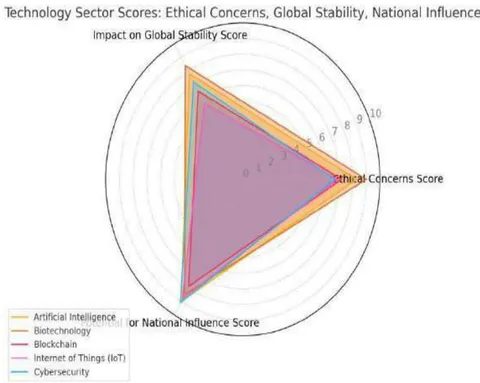
The radar chart displays scores for five technology sectors concerning ethical concerns, impact on global stability, and potential for national influence. Each axis represents a different metric, allowing for a visual comparison of how each sector performs across these categories. The chart illustrates that Artificial Intelligence scores highest in potential national influence, while Blockchain scores lower in ethical concerns and global stability.
22.2 Impacts of Convergence on Governance
As new technologies keep changing and spreading, they create a complex mix of chances and problems for governance systems around the world. The merging of technologies like artificial intelligence, blockchain, and biotechnology causes a significant change in how governments and organizations create and apply policies. This mix not only complicates regulatory systems but also necessitates a reexamination of older governance models that may no longer be applicable in today's digital world. For example, the quick growth of technology puts pressure on regulations, making it challenging to create timely and effective policies that balance risk management with innovation promotion. Therefore, governance must adapt to these technological changes, highlighting the need for global cooperation and a more flexible regulatory system to effectively manage the outcomes of this technology integration. The widespread use of digital technologies in a connected world raises important issues about power imbalances among nations and non-state actors. As technologies combine, they open new paths for state action and governance, potentially changing global power structures. For example, the competition between the United States and China over technology leadership is reshaping international relations. This rivalry often shows up through tactics like technological nationalism, impacting alliances and economic rivalries. Additionally, the rise of tech companies as near-sovereign entities further complicates governance, as they have considerable power over data, infrastructure, and public discussions. These developments highlight the need for updated governance systems that can balance state needs, corporate influence, and individual rights in an increasingly digital political landscape. Given these dynamics, the effects on global governance are becoming clearer, appearing in both cooperative and confrontational interactions. The effort to create international rules about new technologies faces major challenges, particularly with different national priorities and regulatory views. As shown in the European Union's strategies for data protection and ethics, there is a need for a multilateral approach to technology governance that is both flexible and responsible. This is especially relevant when looking at concerns such as cybersecurity, surveillance, and the ethical use of artificial intelligence. The overlap of these issues requires an urgent reassessment of governance systems, calling for teamwork across nations to develop unified strategies that can effectively handle the risks of technological merging while encouraging a stable and fair global order.
22.3 Ethical Considerations in Technology Convergence
In the changing world of technology, combining new systems raises important ethical issues that need to be dealt with in order to handle the complexities of the digital era. As artificial intelligence (AI), quantum computing, and biotechnology become more mixed, the chance for significant societal effects grows. This combination not only heightens existing ethical problems but also brings new challenges related to data privacy, bias, and accountability. For example, using AI in healthcare can greatly enhance patient outcomes, but it also carries risks, such as misdiagnosis from algorithmic bias and worse health inequalities from unequal technology access. As noted, "AI should be rationally guided, function transparently, and produce impartial results," highlighting the need for ethical frameworks that emphasize human dignity while encouraging innovation in these combined fields. "AI should be rationally guided, function transparently, and produce impartial results. It should assist human healthcare professionals collaboratively. This kind of AI will permit fairer, more innovative healthcare that benefits patients and society whilst preserving human dignity." (Authors of the study (no single author specified, but the article is from a reputable academic journal)). The overlap of these technologies requires a careful regulatory environment that adequately considers the ethical effects of their use. Adding to this difficulty is the rapid pace of technological progress, which often exceeds current legal and ethical frameworks. Particularly, the merging of AI and biotechnology could change public health strategies while also raising ethical issues related to genetic privacy and consent. Furthermore, the rise of digital surveillance through these technologies could lead to authoritarian governance if not properly managed. Therefore, it is essential to develop strong governance systems that not only aim for technological progress but also uphold ethical standards based on human rights and civil liberties. The shared duty of all stakeholders, including governments, tech experts, and civil society, is vital to ensure the ethical use of these merged technologies in an increasingly connected world. As new technologies continue to alter the global power dynamics, we cannot ignore the ethical aspects of technology convergence. The geopolitical effects of technological growth require a reassessment of traditional power dynamics as nations contend with the link between technology and security. In this context, creating international norms and ethical guidelines becomes more urgent. Multilateral frameworks aimed at addressing ethical concerns and regulating the development and use of these technologies could achieve global collaboration. In doing this, countries can reduce possible conflicts and promote a teamwork model that highlights the ethical aspects of technological advancements while protecting individual rights and ensuring fair access. Ultimately, discussions about technology convergence must prioritize ethical issues to guarantee that innovations benefit society as a whole rather than creating inequalities and disputes.
XXIII. CHALLENGES AND FUTURE OUTLOOK: FUTURE SCENARIOS
The complex relationship between new ideas and government power is increasingly shaping global politics in a time of abundant new technology. One big challenge is that rules and regulations need to change to properly manage these new technologies. The absence of clear international standards makes differences between countries worse, especially since nations with advanced tech skills often hold too much power in global decision-making. Consequently, the growing gap between rich and poor countries exposes less developed nations to financial and political control. Moreover, as countries like the U.S. and China compete for tech leadership, the chance of conflicts increases, highlighting the urgent need for international talks that can promote fair access to technology and reduce political stress. In the end, dealing with these problems is essential to ensuring technology helps create global stability instead of causing it. Looking ahead to future situations, different outcomes—good, bad, and mixed—have major effects on global governance. On the bright side, there is a chance for better international teamwork, where shared tech progress leads to peace and development worldwide. This hopeful scenario needs the setup of shared rules that focus on ethics in technology use, possibly lowering risks linked to military uses or authoritarian overreach. On the other hand, a darker view sees growing tech competition that leads to conflicts over leadership in areas like artificial intelligence, cybersecurity, and space exploration. This could create a split world, with different regions forming separate tech paths that deepen inequalities. Therefore, the future of global stability depends on how well international players can manage these tricky dynamics and create cooperative structures that help bridge divides. As we consider these possible futures, the matter of technological convergence is also important to look at closely. The way emerging technologies like AI, quantum computing, and biotechnology interact presents both chances for innovation and difficult ethical questions. This convergence could improve global governance systems but might also make traditional rules harder to apply, as the rapid progress in these areas moves faster than current laws and ethical standards. Policymakers need to think about what these connections mean, as they could lead to improvements in fields like healthcare and cybersecurity but also to greater risks of cyberattacks and the spread of dual-use technologies. A mixed future, where some countries work together and others compete, highlights the need for strong conversations and partnerships across borders. Creating settings that support addressing ethical questions and promoting technology fairness will be crucial for building a more stable global future in the face of these changing challenges.
{"image_source":{"path":"images/a3606731691ed520e477e6f7a90f65e8536db3bbe969b8d7eb33c9f132e9b854.jpg"},"content":"","chart_caption":[],"chart_footnote":[]}
The chart displays two sets of data: the scores across various technology sectors and the scores associated with different global scenarios. The first section shows scores related to Ethical Concerns, Impact on Global Stability, and Potential for National Influence for technologies like Quantum Computing, 5G Technology, and Space Technology. The second section depicts scores for scenarios such as Optimistic Collaboration, Fragmented World Order, and Mixed Cooperation and Competition, focusing on Prospective Stability, Collaboration Potential, and Risk of Malintent.
23.1 Optimistic Scenarios for Global Cooperation
The digital world has changed how countries interact, pushing them to rethink their collaborative strategies amid geopolitical tensions. New technologies, especially AI, quantum computing, and blockchain, provide unique chances for international teamwork by creating shared spaces for innovation and governance. For example, AI's ability to analyze and forecast trends can support agreements that tackle urgent global challenges like climate change and public health, showing how technology can help nations work together. Additionally, blockchain improves transparency and accountability in international transactions, helping to build trust among countries. These advancements suggest that while there may be competition, the collaborative potential of these technologies can create strong frameworks for global governance, ultimately reshaping geopolitics into a more cooperative and connected system. Together, these new technologies can set the stage for initiatives that focus on both economic progress and ethical issues, ensuring fair access. Technological advancements can enable the global community to bridge the gap between developed and developing countries, establishing systems that ensure the widespread distribution of technology's benefits. For example, ensuring equal access to AI and blockchain can help create innovation environments that support underprivileged regions, resulting in a fairer global power balance. Moreover, cooperation on regulatory matters—like data privacy and cybersecurity—can further bond countries, fostering a sense of global responsibility for technological progress. Thus, technology and geopolitics can connect positively, promoting a unified vision of global development that values inclusion and ethics. Additionally, the ability of new technologies to tackle security challenges strengthens hopeful scenarios for global collaboration, promoting peace and stability. Joint efforts in cybersecurity, for instance, can lead to shared methods and defense plans against common dangers, reducing the chances of conflict due to misunderstandings or technological errors. Initiatives like collaborative research and development projects in biotechnology can also lead to advances in health security, especially in fighting pandemics that ignore borders. As countries join forces to share resources and knowledge in addressing global threats, emerging technologies will increasingly act as links of collaboration instead of sources of division. From this perspective, the combination of technological growth and cooperative political will offers a pathway to reshape international relations into a more peaceful and constructive framework.
| Year | Initiative | Participants | Focus Area |
| 2021 | G20 Digital Economy Working Group | G20 Member Countries | Developing international frameworks for digital technologies |
| 2022 | Global Partnership on Artificial Intelligence (GPAI) | Countries including USA, Canada, EU Member States | Promoting responsible AI practices and collaboration |
| 2023 | United Nations Internet Governance Forum | Member States, Private Sector, Civil Society | Fostering global dialogue on digital policies and technologies |
| 2023 | International Telecommunication Union (ITU) Focus Group | ITU Member States, Industry Experts | Addressing emerging technologies' impact on sustainable development |
| 2024 | AI for Good Global Summit | Global stakeholders including UN agencies and tech companies | Harnessing AI for social good and addressing global challenges |
23.2 Pessimistic Scenarios of Tech-Driven Conflicts
The increasing dependence on new technologies is changing international relations and creating many uncertainties that could lead to negative outcomes for global stability. As countries use advanced tools like artificial intelligence (AI) and quantum computing for competitive edges, the chance for mistakes and conflicts rises sharply. The speed of technological growth is faster than current governance systems can effectively manage. As a result, we face risks such as state-sponsored cyberattacks, the emergence of autonomous weapons, and the misuse of information systems, which create hostile environments characterized by mistrust and hostility. Fearing technological outmatch, countries may feel compelled to take preemptive measures in this unstable environment, heightening tensions and potentially sparking cross-border conflicts that could undermine the foundations of international cooperation and peace. Alongside this tech race, ethical issues related to data privacy and surveillance present serious challenges to democratic governance and social unity. The growing use of surveillance tools not only helps authoritarian governments but also chills civil rights in more democratic areas. As countries and companies invest in tools for internal security, the difference between public safety and intrusive monitoring becomes less clear, leading to significant societal impacts. The digital divide also worsens inequalities, making less developed countries vulnerable to exploitative tech practices from more powerful states and non-state actors. This erosion of trust in government institutions, together with social unrest due to perceived unfairness, creates an environment ripe for conflict both within and between countries, worsening the geopolitical tensions already heightened by technology competition (National Intelligence Council). Exploring possible tech-driven conflict scenarios requires acknowledgment of the complexities in global politics and emerging technologies. The interconnected nature of technological progress creates both rivalries and alliances that can change quickly in response to perceived threats or chances. These dynamics could lead to the division of global systems, with regional groups aligning technologically to counterbalance larger powers, a situation reminiscent of the Cold War. Policymakers need to tackle these issues urgently, promoting international collaboration and creating norms to govern emerging technologies. Without early action, the grim possibility of a more dangerous geopolitical landscape, fueled by fierce competition for technology power, remains a serious concern (National Intelligence Council)(National Intelligence Council).
Tech-Driven Conflicts Data
| Year | Conflict | Technology Involved | Impacted Regions | Casualties |
| 2020 | U.S.-China Trade War | 5G, Artificial Intelligence | Global | Economic estimated at $600 billion |
| 2021 | Cyberattacks on Colonial Pipeline | Ransomware | United States | Fuel shortages across Southeastern U.S. |
| 2022 | Russian Cyber Offensive against Ukraine | Cyber Warfare | Eastern Europe | Infrastructure damage, economic disruptions |
| 2023 | Tensions in the South China Sea | Surveillance Drones, Military AI | Southeast Asia | Escalating military presence and skirmishes |
23.3 Mixed Scenarios of Regional Blocs and Alliances
In today's digital world, regional blocs and alliances create a complicated web of geopolitical relations made more complex by technology. The mix of local interests and global tech capabilities leads to competitive situations, where countries compete for control in new technologies like artificial intelligence, quantum computing, and biotechnology. For instance, China uses its resources to change its regional influence through initiatives such as the Belt and Road Initiative, which aims to connect and stabilize nearby countries economically and politically. This reflects former Foreign Minister Wang Yi's statement that China seeks to use Xinjiang as an economic base to boost security and trade in the area. "China, Pakistan, and Afghanistan have coordinated to increase regional stability. Former Foreign Minister Wang Yi has said that China intends to use Xinjiang as a base of economic development for the region, increasing security and facilitating trade." (Wikipedia Contributors). This shows how new technologies in regional alliances can play a key role in shaping national security strategies and economic policies while also leading to new power inequalities worldwide. Moreover, despite rising tensions between major powers, the current geopolitical situation reveals an increasing use of regional blocs as venues for tech cooperation and innovation. Creating structures for technology sharing and joint projects can greatly improve national infrastructures and capabilities, often to the detriment of countries with less technology. As technologies like 5G and blockchain rapidly develop and spread, partnerships between nations can strengthen their positions in global markets. Still, these alliances are fragile due to conflicting national interests and ideological divides. As seen in the current geopolitical climate, regional collaborations face instability due to changing member countries' goals, highlighting the difficulty of building lasting alliances in a competitive global and technological environment. Lastly, the mixed situations within regional blocs and alliances suggest a possible breakdown of global governance in the area of technology. As countries seek to strengthen their strategic positions through local partnerships, this trend points to an ongoing division in technological standards, ethical guidelines, and regulatory policies, making international cooperation more difficult. This fragmentation not only serves as a backdrop but also actively shapes the management of new technologies. The current scenario brings to light issues of unequal access and control over technological resources. Acknowledging that effective governance needs global cooperation, the international community must focus on creating comprehensive structures that balance various national interests while ensuring fair access to the advantages offered by technological progress. As competition grows, it is crucial to approach this landscape carefully to prevent worsening existing global disparities.
XXIV. POLICY RECOMMENDATIONS: GLOBAL NORMS
As the digital world keeps changing, the global community faces increasing pressure to set up clear governance for new technologies. Disjointed regulations make it hard to effectively tackle the problems that come with fast technological progress, especially in areas like artificial intelligence and cybersecurity. To fill these governance holes, policies should focus on creating strong global standards that support teamwork among countries. These collaborations can provide shared guidelines that direct the ethical creation and use of technology, helping nations deal with the complex geopolitical issues caused by tech competition. The geopolitical struggles between major powers like the U.S. and China, which could worsen existing splits and slow down joint efforts on important global issues like data privacy and digital sovereignty, highlight the need for this cooperation (Robert Fay). When setting out these global standards, it's important to build inclusive discussions that take into account different views from around the world. This engagement makes sure that the regulatory systems for industries like biotechnology and quantum computing consider the different levels of technological development and ethical matters that exist in various areas. This collaborative method can promote a sense of shared responsibility and adherence to the accepted standards, thus improving their effectiveness in dealing with both strategic and ethical issues. Particularly, as countries deal with the effects of technology on their national security and economic health, cooperative strategies, such as public-private partnerships, can be vital in aligning innovation with shared security needs (John Seaman). Sectors like AI and cybersecurity, where technology serves multiple purposes and poses risks to both national safety and global relationships, particularly value these collaborations. In the end, creating global standards for tech governance is crucial for reducing risks while still encouraging innovation. Without these systems in place, the chance of regulatory mismatches can lead to social and economic gaps, further straining geopolitical relationships. By ensuring fair access to advanced technologies and focusing on ethical issues in their development, countries can effectively manage the complex relationship between technology and international politics. A future with balanced technological growth and governance can lead to positive international relations, lowering the chances of conflict and encouraging collaborative advancements. This hopeful outlook strengthens the need for immediate efforts in forming thorough policy suggestions that connect technological progress with wider global goals focused on sustainable development and security.
24.1 Establishing Norms for Emerging Technologies
The current situation with new technologies presents unique challenges that require regulations for their proper use. As technologies like artificial intelligence, blockchain, and biotechnology develop quickly, a lack of strong governance can increase global tensions. For example, the tech rivalry between the U.S. and China—especially regarding AI and 5G—shows a pressing need for common guidelines to stop actions that could hurt international relationships. Furthermore, the current regulations frequently respond to issues rather than proactively addressing them, thereby neglecting the challenges associated with emerging technology. This reactive approach could potentially trigger a technology arms race, where countries prioritize competing technological advancements over ethical considerations and collaborative efforts, thereby impeding the potential benefits of emerging technologies for global stability and prosperity. Past experiences show that disruptive technologies have changed global power dynamics in significant ways, with each era altering how countries compete. The Industrial Revolution and the Digital Age demonstrate the challenges that arise when technology progresses faster than the regulations designed to regulate it. These unfair effects favored those with the technological edge. A similar situation is currently unfolding, where both government and non-government groups are harnessing new technologies for their own geopolitical advantages. Establishing international standards for the development and use of technology is crucial to mitigate these inequalities. These standards can address ethical issues—like data protection and privacy—and also encourage fair access to technology, leading to better cooperation and less chance for exploitation. To properly manage emerging technologies, it's necessary to combine ethical thinking with practical policymaking because of their significant impact on national security and global relations. The contributions of international organizations like the UN and ITU in setting up cooperative agreements are crucial, but there needs to be a change from simply giving advice to taking on active regulatory roles. Current efforts for global agreements often don't succeed due to different national ambitions and views on technology. Therefore, fostering a unified and inclusive conversation among global players can improve the trustworthiness and effectiveness of these efforts. For this to work, countries must see that cooperative governance is not just a hopeful idea but a practical need to ensure that technological progress benefits everyone rather than worsening existing power differences.
| Initiative | Year Established | Participants | Core Focus |
| OECD Principles on Artificial Intelligence | 2019 | 42 | Promoting AI that is innovative and trustworthy and compatible with human rights and democratic values. |
| UN's AI for Good Global Summit | 2017 | 120 | Harnessing AI to advance the UN Sustainable Development Goals. |
| G20 AI Principles | 2019 | 19 | Ensuring human-centered AI and fostering innovation while addressing ethical implications. |
| European Commission's Coordinated Plan on AI | 2021 | 27 | Ensuring that AI is developed by European companies in a manner that respects European values. |
| IEEE Global Initiative on Ethical Considerations in AI and Autonomous Systems | 2016 | Over 2000 members worldwide | Establishing ethical guidelines and standards for AI and autonomous systems |
24.2 Encouraging Public-Private Partnerships
In the changing world of global politics, the need for new technology brings both chances and challenges that require teamwork. A key method to deal with this complex situation is to promote public-private partnerships (PPPs). These partnerships use the advantages of both sectors—where government provides rules and oversight, while private companies offer tech skills and flexibility. Such teamwork is clearly essential for tackling complex problems like cybersecurity and digital governance, which need a deeper understanding that traditional government bodies often lack. The mix of industry insights with regulatory planning can help build strong systems that promote trust and resilience as countries deal with new threats and opportunities.(Tobias Woll) Another important benefit of public-private partnerships is their ability to boost innovation and support the growth of new technologies. By combining the private sector's energy with the public sector's steadiness, PPPs can promote research and development projects that serve national goals and stimulate economic growth. For example, in the context of climate change, a private company like CarbonClick can play a vital role in pushing for more ambitious goals by offering scalable solutions that help businesses and governments
Global Initiatives on Technology Norms
achieve their climate targets. "Companies and individuals can confidently offset with credits that will contribute to fairly mitigating climate change, with clear guidance around who will claim those benefits and how to cancel those benefits from one country's NDCs when transferring to a private organization or another country As a private-sector company, CarbonClick can be essential in encouraging greater ambition by providing scalable solutions that help businesses and governments meet their climate goals." (Dave Rouse). This shows how public-private partnerships can go beyond sector boundaries, fostering society-wide efforts in technology use and environmental care. Ultimately, getting both sectors to work together helps ensure that everyone has fair access to technology and key resources, which is increasingly important as gaps in tech abilities grow. Furthermore, public-private partnerships are also vital in shaping positive governance in a time of technological growth. Histories of new technologies highlight the critical need for joint governance to create ethical standards and laws that promote innovation. As governments face the issues of digital change, they need to include insights and practical strategies from the private sector to create forward-thinking policies. Building multilateral cooperation and strong discussions between public entities and private firms can align different interests and improve defenses against cyber risks or the misuse of technology. This partnership between government and industry not only strengthens national security but also encourages a complete understanding of the geopolitical setting in which technology serves as both an empowerment tool and a possible source of conflict.
24.3 Balancing Innovation with Security Considerations
Technological advancements are pushing countries toward new innovation, but this quest for progress raises important questions about security. New technologies like artificial intelligence and biotechnology are empowered to improve society or create serious threats to national and global security. The mix of innovation and security needs careful handling, as countries want to protect their interests while still encouraging technological progress. For example, AI can boost economic productivity, but its use in surveillance and autonomous weapons brings up worries about misuse and ethical issues. Therefore, finding a way to balance innovation with security is not just a regulatory issue but a key part of geopolitical strategy, where countries must manage the complex relationship between using technology for progress and protecting against its risks. In the setting of international competition, how countries use new technologies greatly affects global power dynamics. Countries like the United States and China are spending heavily on AI and quantum computing to gain a technological advantage, which escalates the competition. Recent studies show, including analyses of how East Asian countries negotiate supply chains amid geopolitical competition, that there is an increased understanding of how multilateral alliances can improve control over global production networks (Aoyama et al.). Such alliances could create a situation where innovation thrives while also dealing with security risks. By promoting teamwork among allied nations, it is possible to build systems that oversee technological advances, ensuring that innovation enhances national security rather than jeopardizing it, while also strengthening resilience through cooperation. Additionally, as the digital world changes, ethical issues in technology governance become key factors in balancing innovation and security. Growth in digital surveillance and data-driven choices presents new ways for authorities to control citizens, often violating privacy and civil rights. The use of technology for authoritarian agendas, seen in several government projects globally, undermines democratic values and accountability (Brittain-Hale et al.). Therefore, it is crucial for lawmakers to not only promote innovation but also create solid ethical frameworks for governing new technologies. This dual focus—supporting advancements while upholding ethical standards—can reduce the dangers of technology misuse and ensure that innovation contributes to progress rather than conflict, ultimately shaping a sustainable geopolitical future.
XXV. POLICY RECOMMENDATIONS: ETHICAL DEVELOPMENT
Navigating the complex world of new technologies requires strong ethical policies that can change with quick advancements while dealing with risks. There is a crucial need for rules to manage artificial intelligence (AI) and other technologies, especially to reduce issues like algorithmic bias, privacy problems, and misinformation. For example, recent studies indicate that without proper oversight, we may see greater socio-economic inequalities and a drop in public trust in technology (Krzysztof Wach et al., p. 7-30). Creating regulatory agencies focused on ethical standards can promote innovation and help ensure that these technologies benefit society rather than enable exploitation. Therefore, ethical development needs a forward-thinking approach that incorporates input from various stakeholders, resulting in a more equitable tech environment. At the core of solid policy recommendations is the need for international collaboration and unified standards among countries. In a world where technology greatly shapes geopolitics, developing global frameworks is essential to avoid a competition for technological superiority that increases global tensions, especially between major powers like the U.S. and China. Working together can help fill the regulatory gaps currently seen in overseeing new technologies like blockchain and biotechnology. By including different stakeholders—like academia, industry leaders, and government agencies—countries can create consistent strategies that focus on ethical concerns while boosting their technological development. This cooperative method aids in standardizing practices and promotes the sharing of successful approaches, leading to a more secure and fair global environment for tech growth. Besides establishing international standards, policies should encourage public and private partnerships to promote ethical technology development while balancing innovation with security. These partnerships can facilitate the integration of ethical principles throughout the entire lifecycle of technology projects. As private companies play a larger role in fields like AI and quantum computing, it's increasingly important for tech firms to align with societal values to counter threats like digital authoritarianism and intrusive surveillance (Krzysztof Wach et al., p.7-30). Involving the public in these partnerships enhances transparency and makes companies accountable. In the end, by fostering collaborative projects that highlight ethical issues and fair access, policymakers can help create an environment where technology empowers democracy instead of suppressing it.
25.1 Promoting Ethical Tech Development
The overlap of ethics and technology growth becomes an important topic in today's world, especially as new technologies influence global relationships. Encouraging ethical tech growth is not just a moral duty but also a vital strategy to ensure that innovation does not worsen current inequalities or create new forms of oppression. By adding ethical standards into the tech development process, involved parties can build a culture of accountability that emphasizes transparency and fairness. This is especially crucial when looking at the effects of technologies like artificial intelligence and biotechnology, which have enormous potential but also significant risks. Therefore, ethical tech growth serves as both a safeguard and a guiding principle, enabling societies to utilize these innovations while mitigating potential harms, ensuring that technological progress benefits the global community rather than exacerbating disparities or promoting oppressive practices. Although we often perceive tech advancement as progress, it's crucial to scrutinize its impact on societal values and norms. The digitization of personal information, the rise of surveillance technology, and information manipulation present an ethical dilemma that needs urgent attention. Advocating for ethical tech development requires teamwork among governments, businesses, and the community to create guidelines that focus on individual rights and community well-being. The role of international bodies, like the United Nations, is crucial because they can promote cooperation among countries to set consistent ethical standards for emerging technologies. Collaborative efforts can mitigate the risks associated with technological competition, particularly in geopolitical rivalries where strategic advantage may override ethical considerations. Therefore, actively promoting ethics in technology not only helps protect individual rights but also improves global safety and stability. The ethical dimension of technology development unavoidably intersects with urgent geopolitical issues, as countries deal with the complexities of new technologies and their effects on global power. The changing relationship between tech innovation and ethical governance stresses the need for countries to take a proactive approach in tackling ethical challenges that arise. For instance, the use of blockchain technology presents an opportunity to enhance governance transparency and combat corruption, but it is crucial to harness this potential ethically to avoid its misuse. Additionally, exploring quantum computing and artificial intelligence requires strong regulatory frameworks designed to stop abuse and build trust in these technologies. As noted in recent studies, including ethical concerns in the design and implementation of such technologies is crucial for reducing risks related to cybersecurity and bolstering collaboration among nations (Marianne A. Azer et al., p. 1459-1468). Thus, a commitment to ethical tech growth can play a crucial role in international technologies but also the future of global partnerships, shaping not only the use of geopolitical stability.
{"image_source":{"path":"images/2e3b971f961a0e6a52d4896aa94e85cc9a824672592982a241fffc95c60f3c76.jpg"},"content":"","chart_caption":[],"chart_footnote":[]}
The chart provides an overview of various technology sectors, displaying three key scores: Ethical Concerns Score, Impact on Global Stability Score, and Potential for National Influence Score. Each bar represents a different technology sector, allowing for a comparative analysis of these important aspects across sectors such as Artificial Intelligence, Biotechnology, Cybersecurity, Blockchain, and Surveillance Technology.
25.2 Addressing Privacy Concerns in Technology
In a time when technology is advancing quickly, the link between innovation and privacy is becoming more noticeable. Governments and companies are using technologies like artificial intelligence (AI) and big data to improve efficiency and competition, which raises concerns about misuse and the invasion of personal privacy. This issue is not just a theoretical one; using technology without proper privacy protections can change society in ways that threaten democratic values and personal freedoms. Furthermore, superpowers like the United States and China show us that countries are using new technologies not only for economic benefits but also for surveillance and control, raising serious ethical questions about balancing security with privacy. Tackling these issues in the midst of global competition is vital for creating a secure digital environment that honors human rights while fostering technological growth. New technological breakthroughs allow for extensive surveillance and data gathering, alarming privacy advocates and civil organizations. The growth of technologies like facial recognition and social credit systems illustrates how governments can misuse digital tools to track citizens, stifle dissent, and promote authoritarian practices. The effects of these technologies are significant, eroding personal privacy and worsening social and political inequalities, especially for marginalized groups. A thorough review of these situations indicates a pressing need for strong frameworks that prioritize privacy rights while supporting technology advancements. As past technological revolutions have changed power relations, the current digital era must learn from those experiences to set ethical limits that reduce the dangers of surveillance and data misuse, ensuring that human rights remain a priority. Creating effective privacy regulations must consider the complicated nature of international politics, where different approaches to technology create conflicting national interests. The European Union, for instance, has put in place strict data protection laws, highlighted by the General Data Protection Regulation (GDPR), which stresses the need for individual consent and data security. On the other hand, countries focused on aggressive technology-driven strategies may ignore these regulations in favor of boosting surveillance efforts. Building a global agreement on privacy standards can help tackle challenges posed by new technologies, as international cooperation may help reduce risks linked to data misuse and privacy breaches. This idea is particularly relevant in the context of geopolitical rivalry, where competing nations recognize that technology is not just an economic tool but also a means of influence and control. Therefore, establishing international partnerships to support privacy rights can strengthen a global framework that aims to align technological progress with the protection of personal privacy.
25.3 Ensuring Equitable Access to Technology
Balancing new technology with fair access is a big challenge in the fast-changing world of emerging tech. The digital divide, made worse by differences in money, infrastructure, and education, shows a pressing need for reforms aimed at inclusivity. Countries like the United States and China are quickly advancing in artificial intelligence and quantum computing, while poorer regions risk falling behind, creating a new type of digital neocolonialism. This situation limits growth opportunities and hinders social progress, highlighting the need for current global powers to tackle these inequalities through policies that ensure technology access for everyone, not just the elite (Hannes Werthner et al.). Only through open discussions and international teamwork can we hope for a fairer technological future that empowers all populations instead of marginalizing them. Looking at how new technologies can maintain power imbalances requires us to consider their global effects. In the past, technological changes have altered economies and reshaped global power structures, often benefiting certain nations over others. For instance, the monopolistic behavior of tech companies has hindered the internet's promise to democratize access, significantly affecting developing countries that seek to leverage these technologies. Consequently, emerging technologies can sometimes serve as tools of exploitation instead of empowerment (Hannes Werthner et al.). It is essential for professionals and policymakers to push for rules that ensure fair access to technology so that the benefits reach a broad audience. This approach can help reduce digital inequality and allow more people to participate in the global economy, fostering sustainable growth. Ensuring fair access to technology involves more than just providing it; it requires significant educational reforms to improve digital skills, especially in underserved communities. Programs that promote STEM education, along with investments in local infrastructure, are vital for lowering barriers caused by educational gaps. The involvement of governments and international organizations is crucial for supplying resources and establishing frameworks that support technological skill development. Moreover, partnerships between the public and private sectors can play a key role in ensuring broad access to advanced technologies, allowing communities worldwide to participate in the digital economy. By doing this, such efforts can empower individuals and local businesses, turning technology from a tool of the powerful into a shared asset for social and economic growth (Tyler Stevenson). The responsibility now lies with global leaders to collaborate in building a future where technology acts as a bridge instead of a barrier.
XXVI. POLICY RECOMMENDATIONS: INTERNATIONAL COOPERATION
Global politics are undergoing significant change in the rapidly evolving world of new technologies, characterized by increased competition and cooperation among countries. This change requires a stronger policy approach to international cooperation that goes beyond normal diplomatic practices. It is important to create multilateral governance systems that can manage the ethical use and development of technologies like artificial intelligence and quantum computing while tackling cybersecurity and misinformation issues (M. A. Сучков, р. 138-157). These systems would help reduce conflicts from technological competition, such as the rivalry between the U.S. and China, and would encourage innovation and fair access to technology for all countries. By promoting discussions among global participants like governments, international bodies, and private companies, a more stable geopolitical environment can arise that focuses on shared human values instead of divisive technology nationalism. Successful international cooperation relies on creating a new social contract among countries that recognizes how technology is becoming a bigger part of daily life (M. A. Сучков, p. 138-157). History shows how past technological changes have shifted power dynamics, highlighting the need for nations to coordinate their tech goals with global interests. For example, dealing with environmental problems caused by tech misuse calls for joint agreements aimed at avoiding worsening existing inequalities. Also, developing cybersecurity standards can help prevent the harmful impacts of state-backed cyberattacks. Encouraging partnerships that include various experts, such as tech developers and ethicists, can create a unified approach to policymaking. This new model promotes cooperative innovation and strengthens nations' abilities to tackle the complex challenges posed by emerging technologies. Furthermore, ensuring fair access to new technologies is crucial for international stability. The digital divide, which shows gaps in tech availability and knowledge, is a major barrier to effective global governance (Nehme Khawly et al., p. 541-544). The risk of conflict rises when countries feel overlooked or taken advantage of in technology matters. Creating systems that focus on technology sharing and skill-building, especially in developing nations, not only advances global fairness but also guarantees shared advantages from technological progress. This collaborative approach to tech governance can contribute to a more balanced geopolitical landscape by fostering trust and teamwork among nations, rather than inciting competition and conflict. In the end, by embedding the principles of inclusivity and shared responsibility in global tech discussions, the international community can effectively use emerging technologies for everyone's benefit while reducing the related risks.
26.1 Fostering International Collaboration on Tech Issues
Global tech advancements have changed international relations a lot, making it necessary for countries to work together to tackle common problems. In this scenario, promoting global cooperation on tech matters is crucial because one-sided methods can increase geopolitical tensions and create disparities in access to technology. Many countries use nationalist tactics to maintain their technological advantages, which may unintentionally create a fragmented global tech environment. For example, the European Union's Digital Strategy seeks to build a shared digital market, enhancing collaboration among member states while aiming to make Europe a leader in tech regulation. A united effort can lead to significant advantages; sharing knowledge, best practices, and resources can help lessen the negative impacts of tech competition, stressing the vital need for multilateral partnerships to build effective governance structures around new technologies. Tackling the challenges of new technologies demands more than collaboration; it requires a shift in how countries view technological rivalry. Historical trends show that tech revolutions often lead to geopolitical changes, similar to past industrial phases. For instance, the Digital Revolution has given rise to powerful non-state players that influence global politics, blurring traditional notions of state sovereignty. In today's context, the United States and China highlight the need for balance in tech endeavors, where cooperative arrangements might decrease tensions from technological spying and rivalry. The idea that "AI should make today the most exciting and creative time to govern" emphasizes the potential for digital diplomacy to encourage shared regulatory standards that enhance global stability. "AI should make today the most exciting and creative time to govern. We both also see the potential prize for the UK, which should have its own ambitions to position itself at the forefront on AI and provide leadership on governing in this new era." (Tony Blair and Marc Warner). Therefore, collaborative tech governance could pave the way for success in the digital era by fostering friendlier international relations. Moreover, the pressing need to create unified governance structures relies on acknowledging the ethical and regulatory issues that come with rapid tech progress. The division of current governance systems, as pointed out in recent studies, makes it harder to respond globally to problems like data privacy, cybersecurity, and the ethical impacts of artificial intelligence (Robert Fay). The rising role of international organizations like the United Nations in fostering discussions on tech regulation highlights the significance of a global approach. By promoting international cooperation, countries can fill governance gaps that worsen inequalities in technology access and provide marginalized communities with chances for tech progress. Therefore, a coordinated global push to create standardized and ethical guidelines could enhance collaboration, lessen geopolitical divides, and ultimately help nations utilize the potential of new technologies for the collective good.
26.2 Developing Frameworks for Tech Governance
In today's world, rapid tech changes make it essential to set up strong rules for tech governance. New technologies, like artificial intelligence, blockchain, and quantum computing, are changing industries and the balance of power worldwide. As countries depend more on these technologies for advantages, the lack of solid governance can lead to risks like poor management and misuse. For instance, the conflict between key players like the U.S. and China shows how crucial these technologies are in gaining economic and military strength. Therefore, it's essential for policymakers to create governance frameworks that encourage cooperation, focus on transparency, and ensure fair access, which can help with ongoing ethical issues and possible monopolistic actions. As stated, to make sure that AI governance is clear, responsible, and fair, we need to create frameworks that involve governments, communities, and smaller companies. "To ensure that AI governance is transparent, accountable, and equitable, we need to create multi-stakeholder frameworks involving governments, communities, and smaller players.
This approach safeguards against monopolistic practices and ensures that AI resources are accessible to all." (Joëlle Pineau). These frameworks need to go beyond national boundaries to tackle the complex problems caused by tech advancements. The digital age has created unprecedented connections, with tech impacts felt globally, influencing everything from economic strategies to social structures. Working together internationally in tech governance is crucial to reducing risks and promoting global stability. Although organizations like the United Nations and the International Telecommunication Union have progressed with technology regulations, there are still big gaps in building consensus and enforcing rules. Aligning international standards around new technologies can boost collective security and create a fair tech environment that reduces the digital gap. Given the challenges in each tech area, thoughtful discussions among various stakeholders are essential for forming a governance system that is flexible, effective, and reflects different values. Furthermore, addressing the ethical concerns of emerging technologies necessitates the inclusion of diverse groups in the governance process. The link between technology and social values is clear as issues like algorithmic bias and privacy invasion increase. Thus, the governing framework should promote active involvement from different social sectors, like civil society, academia, and the private sector. This comprehensive approach will guarantee the development of new technologies that prioritize ethical standards and the public interest. Plus, fostering a culture of responsibility will keep stakeholders attentive to societal needs and expectations. Future governance models should focus on education that boosts digital knowledge and ethical awareness, leading to a more informed public able to discuss technology's role in society. Ultimately, adopting a participatory approach to tech governance can open up ways for transparency and trust, encouraging collaboration among all involved in this tech-driven time.
26.3 Engaging Stakeholders in Policy Discussions
Dealing with the challenges of new technologies needs a team effort that includes a wide variety of stakeholders in policy talks. This involvement is crucial to make sure that policies reflect the many effects of technologies like artificial intelligence, blockchain, and biotechnology. As global political situations change, the interactions between different groups become more complex, needing viewpoints from a range of sources. It is especially important to include local voices from Global South communities to create a fair framework that recognizes past inequalities in technology use and creation. Examples like AfriCHI and ArabHCI show a shift towards inclusive practices that uplift local knowledge and question Western-focused views in technology discussions. Such frameworks help create a fair technological environment where policy talks can develop in a climate of shared duty and respect, ultimately leading to more complete solutions for global issues (Zakaria A. Mani et al., p. 14279-14279). Furthermore, it is crucial to address the ethical concerns brought about by new technologies. Those involved in policy development must confront ethical issues that arise from the use of technologies for spying and economic influence. A key example is how blockchain can help bypass economic sanctions, raising important questions about its impact on international relations and the economy.
By encouraging inclusive participation, policymakers can better manage these challenges and focus on ethical standards that protect democratic principles while utilizing technology for societal good. Thoughtful discussion among stakeholders can result in strong frameworks that foresee and lessen the dangers of adopting new technologies. This strategy improves transparency and accountability and encourages shared governance in the tech field, impacting global power dynamics as countries aim for tech leadership (Zakaria A. Mani et al., p. 14279-14279). Finally, engaging stakeholders in policy talks needs to center on the future impacts of new technologies within political contexts. As countries understand the need for global governance in tech regulation, policies should tackle the existing gaps in access to advanced technologies, especially between developed and developing countries. This calls for cooperative efforts that promote conversations among various stakeholders, creating an atmosphere that supports fair technology access and usage. By bringing together different perspectives and expertise, policies can be made that reflect the realities of global connections, where technology significantly influences international partnerships and power relations. Although issues like digital colonization and ethical tech use remain challenges, a truly collaborative policy-making process can lead to comprehensive strategies to foster sustainable, inventive, and inclusive futures in the digital world (Shaimaa Lazem et al., p. 159-196).
{"image_source":{"path":"images/d01cc1f0b59ee622dd13cba0345244dcda5907a32de4bc32a523c03805bf181a.jpg"},"content":"","chart_caption":[],"chart_footnote":[]}
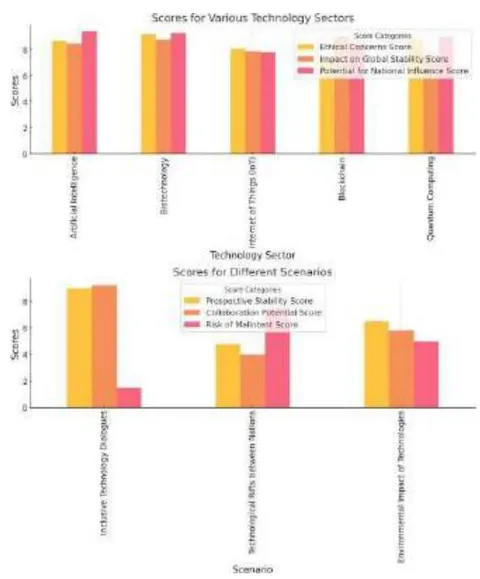
The chart provides a comparative analysis of scores for various technology sectors and different scenarios. The top section displays scores for sectors such as Artificial Intelligence, Biotechnology, and Blockchain across three categories: Ethical Concerns, Impact on Global Stability, and Potential for National Influence. The bottom section evaluates different scenarios, including Inclusive Technology Dialogues and Technological Rifts between Nations, based on Prospective Stability, Collaboration Potential, and Risk of Malintent. The visual representation effectively highlights the strengths and potential risks associated with each technology and scenario.
XXVII. CONCLUSION
As the discussion about new technologies comes to a peak, it is clear that their global influence is deep and complex. Countries have to deal with a competitive environment, where tech progress not only affects economic strength but also shapes international relationships. Powerful nations such as the United States and China, in particular, demonstrate the need for careful planning in the use of technology. Research indicates that the current tensions due to tech rivalry have effects that go beyond simple economic concerns; they also strengthen national security and alter global power balances. Therefore, to effectively tackle issues related to cyber threats, economic sanctions, and the ethical aspects of tech use, a full understanding of these factors is essential (Xiaoqing Guo et al., p.178-180). Recognizing the powerful impact of emerging technologies requires a reassessment of current systems for global governance. The relationship between regulation and innovation creates a need for both: to effectively use technological progress.
27.1 Summary of Findings and Implications
The study of new technologies shows how they interact with current global power issues. Past examples, like the Industrial Revolution and the Cold War, show that technological progress has changed political landscapes over time. Today, advancements in areas like artificial intelligence, quantum computing, and biotechnology are not just improvements in technology; they also change power structures worldwide. These technologies are especially important for national security and economic plans, creating competition mainly between major powers such as the United States and China. As international relations change due to these technologies, countries are starting to see that their global power comes not only from military strength but also from technological independence and innovation, thus changing power dynamics in significant ways. Considering the implications of these observations, it is clear that the ethical and regulatory issues surrounding new technologies require a rethink of global governance systems. The absence of agreement on standards for artificial intelligence, cybersecurity, and space technology prevents effective global cooperation and raises the risk of conflict. Additionally, the increase of non-state players in technology has introduced more challenges, making it necessary to establish multinational agreements that tackle security threats and the fair sharing of technological benefits. As countries strive to gain the strategic benefits from these technologies, the threat of cyber warfare, digital colonialism, and authoritarianism—especially through misuse of surveillance and violations of data privacy—is becoming more serious. These issues create a need for a strong framework for global technology governance. Looking ahead, the future involves a combination of hopeful and worrisome scenarios for global stability, shaped by the choices made today. On the hopeful side, global collaboration might use technology for peace, prosperity, and progress; on the other hand, uncontrolled competition could increase tensions and lead to conflicts based on technological differences. The emerging patterns clearly show that nations must engage in forward-thinking discussions and policymaking not only to deal with existing technological gaps but also to prepare for upcoming changes. Policy advice should aim to create global standards, support collaboration between public and private sectors, and balance technological advancement with moral considerations, creating an environment where technology helps global governance instead of worsening existing problems. The findings call for a reevaluation of how technological advancements will shape the growth of geopolitical strategies in a digital world.
27.2 Emphasizing the Need for a Balanced Approach
In a time of rapid tech changes, keeping a beneficial mix between new ideas and rules is very important. New technologies like artificial intelligence and blockchain are changing power connections globally. This shift raises ethical and security concerns that require careful consideration. The rising tensions between powerful nations, especially the U.S. and China, highlight the need for shared systems to manage these technologies. These systems should aim for openness and accountability, making it easier for countries to work together while reducing risks from cyber threats and technological influence. Without a balanced strategy, the competition for tech leadership could spiral into a perpetual cycle of distrust and conflict, jeopardizing the current power structures essential for global peace and security. Looking back at past tech revolutions shows us that there are consistent patterns of change and adjustment in global power. Innovations such as the steam engine and the internet have changed economies and caused political changes, often needing strong regulations and international teamwork to deal with the new issues that arise. A similar method for today's new technologies is essential since they affect areas like surveillance, data security, and military use. Recent studies highlight that the idea of "ecological trauma" can help us understand the effects of tech disruption, giving insight into how progress and possible harm relate to each other (p. 112-149). Therefore, a balanced approach must consider lessons from historical revolutions to develop policies that enhance the gains of innovation while protecting human rights and ensuring fair access. Furthermore, acknowledging the potential benefits and drawbacks of numerous new technologies underscores the necessity for intelligent regulatory strategies that foster responsible innovation. The connection between tech progress and security issues demands a change in how countries participate in tech competition. For example, systems that promote joint research and development along with strong cybersecurity measures can foster both innovation and stability. Establishing global agreements, as suggested by experts, could help prevent technology misuse, particularly in military settings (John Braithwaite, p. 217-265). Advocating for a balanced method does not mean hindering innovation; rather, it supports a forward-thinking approach that appreciates how new technologies can improve global rules and collaborations. These actions are crucial for effectively dealing with the challenges of the digital age.
27.3 Future Research Directions
Tech advancements have caused a big change in the geopolitical scene, making it important to look closely at how innovation connects with power relations. Future studies should look at how new technologies, like artificial intelligence and blockchain, can help clarify the shifting structures of international relations. As these technologies create competition among world powers, researchers can explore how they affect national security and economic strength. This study should provide examples of how countries invest in technology to gain competitive advantages in global markets. Additionally, looking at the ethical issues of these innovations—especially regarding privacy, surveillance, and the possibility of authoritarian rule—provides an important area for exploration, which is crucial for shaping policy recommendations that find a balance between innovation and human rights in a fast-evolving digital world. The growing role of international organizations in managing new technologies is another important topic for future research. As countries face issues from tech companies and the quick spread of disruptive innovations, institutional systems need to change to deal with ethical concerns and unequal power. Future research can look at how groups like the United Nations and the International Telecommunication Union can promote international teamwork and set standards for technology use, governance, and security. Furthermore, examining how effective multilateral agreements are at reducing risks linked to technology growth, such as cybersecurity threats and misinformation, could improve understanding of global governance problems. By studying these frameworks, researchers can find ways to enhance collaboration between countries, encouraging a united approach to technology's geopolitical effects. Given technology's widespread impact on global dynamics, it is crucial to think about possible scenarios for the future of the geopolitical order. Research should examine the possibility of technological convergence—how advancements in artificial intelligence, quantum computing, and biotechnology may work together to change power structures and social norms. Considering different future scenarios, including hopeful views of global cooperation and more negative outcomes filled with conflict and division, can assist policymakers and scholars in grasping the many potential paths forward. Such studies can lay the groundwork for developing proactive policy suggestions that encourage fair technology access and ethical governance practices, ensuring that technological growth positively affects global stability and human welfare rather than worsening current tensions.
27.4 Call to Action for Policymakers and Stakeholders
The way global power is changing because of new technologies means that policymakers and stakeholders need to act quickly. The complex relationship between technology and geopolitics requires a strategic plan that focuses on working together rather than fighting against each other. Decision-makers should create settings that promote research and development while also paying attention to ethical issues. This means not just encouraging innovation but also tackling the potential misuse of technology and the inequalities that can increase geopolitical tensions. Joining in multilateral talks can help find common ground on regulating new technologies, which can set limits that stop tech advancements from worsening current issues or starting new conflicts. Additionally, recognizing how technologies like artificial intelligence and quantum computing could change military and economic strategies should unify responses from international actors. Policymakers have to engage in discussions that go beyond national borders and create frameworks for responsible governance and ethical standards that reflect shared interests. Possible actions could involve creating common ethical rules for technology use and improving cybersecurity to reduce the risk of state-backed cyber threats. Working with private companies will be essential since these entities often play key roles in tech development and use, highlighting the need for collaborative oversight and regulation. The urgent need for a global, unified approach is clear, especially when looking at past technological revolutions. History has shown that technology can either connect people or create bigger gaps, thereby affecting societies in various ways. Policymakers must learn from this and get actively involved in the geopolitical discussions about new technologies. By finding a balance between innovation and the public good, they can prevent possible crises and create an environment where technology leads to progress instead of conflict. Therefore, a call to action is not just a recommendation, but a necessity that requires immediate focus and commitment from everyone involved in geopolitics and new technologies.
{"image_source":{"path":"images/5f053809baf83245935054d3775e5212effa38ea58acde2a1b726bc40b264466.jpg"},"content":"","chart_caption":[],"chart_footnote":[]}
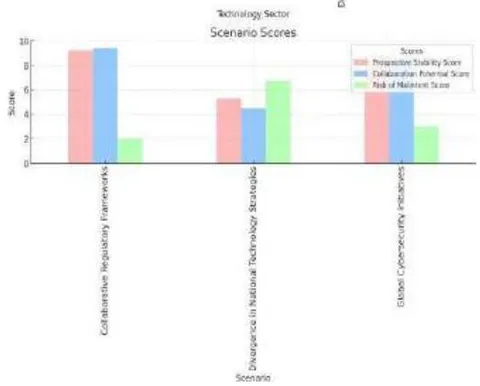
The chart presents two sets of scores related to technology sectors and scenarios. The top section displays scores for various technology sectors, including ethical concerns, impact on global stability, and potential for national influence. The bottom section illustrates scores for different scenarios measuring prospective stability, collaboration potential, and risk of malintent. This visualization provides an insightful comparison of the scores, highlighting the relative strengths and weaknesses associated with each technology sector and scenario.
8. Postgraduate School, 2024, https://core.ac.uk/download/618458559.pdf.
Conflict of Interest
The authors declare no conflict of interest.
Ethical Approval
Not applicable
Data Availability
The datasets used in this study are openly available at [repository link] and the source code is available on GitHub at [GitHub link].
Funding
This work did not receive any external funding.
References
Cite this article
Related Research


Special Issue
Launch a focused special issue to highlight research, emerging trends, and expert insights in your academic field.