


Abstract
This study explores the Stop Bullying theatre initiative, implemented as part of a summer camp program designed to promote literacy and social cohesion through participatory drama. Grounded in a Design-Based Research framework, the project engaged 13 children (aged 8–12) in reading, rehearsing, and staging Claudia Kumpfe’s play Alone! School as a Crime Scene!, which addresses bullying and peer dynamics between childrenin schools. A variety of methods were employed, including pre- and post-intervention surveys on bullying and social cohesion, daily field diaries from theatre coaches, and qualitative feedback from children and parents. The results demonstrate statistically significant improvements in the participants’ sense of equality, comfort, and group belonging, supported by qualitative accounts of empathy, cooperation, and new friendships. Coaches’ observations indicated increased fluency, motivation, and expressive oral reading. The findings highlight theatre pedagogy’s potential to foster inclusion, solidarity, and democratic participation while also offering low-threshold entry points for literacy engagement. This study underscores the value of integrating socially relevant themes into participatory arts projects to cultivate both cognitive and socio-emotional development in inclusive educational settings.
Explore Digital Article Text
I. INTRODUCTION
"They affirm the role of education not only in fostering individual development, but also in promoting democratic participation, social justice, and cohesive community life—objectives that are central to the vision and implementation of inclusive learning practices" (Giera, in press).
In contemporary educational and social contexts, inclusion functions both as an aspirational ideal and a guiding principle for fostering justice, belonging, and participation for all members of society (UN, 2023). While complete inclusion may never be fully realised, it provides a conceptual and ethical orientation for communities committed to equitable participation. Insights from education, special needs pedagogy, and social work are central to shaping inclusive practices that address structural barriers and promote shared learning opportunities. At the policy level, the European Union underscores literacy as a cornerstone for advancing equity, social inclusion, and future-oriented learning—priorities embedded within the European Education Area and the Council Recommendation on Pathways to School Success (European Commission, 2022; European Agency, 2021). These frameworks are designed to reduce early school leaving to below 9%; strengthen core competencies—particularly reading—among multilingual, disadvantaged, and migrant learners; and integrate inclusive principles across education systems (Giera, in press).
Against this backdrop, the theatre project Stopp Mobbing! represents a cyclical, long-term intervention that has been implemented since 2021 with multiple learning groups in both formal and informal educational settings. Between 2016 and 2022, the project was carried out in three iterative DBR cycles involving students aged 11–13 from youth centres and inclusive secondary schools in Germany, with each cycle adapted to its particular setting (Giera, 2025):
Cycle o served as a school-based pilot with 24 participants, including learners with dyslexia and other special educational needs. Over weekly 90-minute sessions, students read and staged Alone! School as a Crime Scene! (Kumpfe, 2013, translated in English), focusing on developing both reading fluency and group cohesion (Giera, in press).
Cycle 1 took place as a one-week workshop in a youth club with 13 girls from varied linguistic and cultural backgrounds. The programme blended reading activities with theatrical performance, supported by structured elements such as reading corners and collaborative scene work to foster confidence (Giera, in press).
Cycle 2 was conducted as a controlled intervention in a comprehensive school with 75 students, divided into a theatre group and a non-theatre control group. Reading performance was assessed before, immediately after, and three months following the intervention using the LGVT 5-12 test (Schneider et al., 2017). While standardised improvements in reading were limited, observations pointed to significant gains in motivation, active participation, and social interaction (Giera, in press).
Across all cycles, the approach incorporated structured reflection, peer feedback, and public performances to strengthen engagement, while safeguarding anonymity and avoiding explicitly identifying students with special educational needs to ensure a stigma-free learning environment (Giera, in press).
Across the first three DBR cycles, several challenges emerged. Logistical issues included fluctuating attendance in extracurricular settings, scheduling constraints, and inconsistent data collection methods. Methodologically, standardised reading assessments proved limited in capturing the prosodic, emotional and interactive dimensions of reading central to theatre-based work. In Cycle 0, irregular participation and the constraints of weekly sessions reduced continuity, while in Cycle 1, the short workshop format limited sustained reading development. Cycle 2, despite its controlled design, faced difficulties ensuring equal engagement across intervention and control groups (Giera, in press).
Despite these constraints, the project demonstrated considerable potential. Qualitative findings consistently showed improvements in motivation, group cohesion and performative comprehension. The theatre framework provided low-threshold access to literacy activities, particularly supporting learners with reading difficulties or low self-confidence. Embodied, cooperative learning environments encouraged active role creation, peer support, and opportunities for success. Flexible session structures and co-constructed performances enabled differentiated instruction and inclusive participation. Collectively, the cycles highlight the capacity of arts-integrated approaches to link literacy development with social-emotional growth, suggesting that evaluative tools should be expanded to capture performance-based and collaborative competencies alongside conventional reading measures (Giera, in press).
The project is based on the premise that, within newly formed groups, norms and rituals drawn from theatre pedagogy can foster social cohesion through the collaborative process of creating and performing a theatrical production. The first exploratory implementation with scientific supervision was carried out as a week-long holiday programme at a youth centre. Two university theatre coaches maintained a field diary, documenting and evaluating the applied methods for reading and dramatic play, as well as their impact on group social interaction. The project included multilingual children and adolescents, some of whom were highly engaged in the process but expressed little interest in public performance or reading activities. Notably, the project brought together young people who had previously only encountered each other casually in their neighbourhood, leading to the formation of new friendships within the week.
The play at the centre of the project addresses the theme of bullying, depicting the experiences and emotions of a child excluded by their classmates. In contrast to conventional prevention programmes—often delivered by experts through discussions, role-play, films, or awareness sessions—this approach engages participants as producers rather than mere recipients of content. Through embodying multiple roles, such as bully, victim, bystander, or helper, students can experientially simulate the dynamics of bullying. This aesthetic mode of engagement allows participants to enter and exit roles, reflect on role-specific behaviours, and discuss critical scenes during structured breaks. Such reflective intervals are integral to processing the emotional and social content of the play.
Theatre production also requires the development of organisational and collaborative competencies, ranging from planning rehearsals to managing related tasks such as creating invitations for the performance. This process-oriented work fosters project management skills alongside artistic expression. Methodologically, the project is situated within the Design-Based Research (DBR) framework, which seeks to address real-world problems in close collaboration with practitioners from the outset. In educational research, DBR enables researchers, practitioners and other stakeholders to jointly develop, implement and refine interventions in authentic learning environments.
This study addresses the following research question: How can a university theatre project in a summer camp setting promote social cohesion and contribute to the prevention of bullying among children?
Following this introduction, Section 2 outlines the theoretical framework, focusing on social cohesion, theatre pedagogy for promoting social interaction and reading theatre as a tool for fostering group literacy. Section 3 details the design and methods, including sample recruitment, the summer camp schedule, the theatre play, and this study's methodological approach. Section 4 presents the results and is followed by Section 5, which discusses the findings in light of research on social cohesion, anti-bullying strategies, and inclusive education. Section 6 concludes with key insights and implications for future theatre-based and inclusive educational initiatives.
This study addresses researchers, educators, theatre practitioners, and policymakers interested in creative, evidence-based approaches to fostering social cohesion and preventing bullying among children.
II. THEORETICAL FRAMEWORK
This section outlines the theoretical foundations underpinning this study. It begins by examining the concept of social cohesion (2.1) as a key element in fostering inclusive and supportive group dynamics. It then considers theatre pedagogy as a means of promoting social interaction and collaborative learning (2.2). Finally, it explores the method of reading theatre as a pedagogical approach for enhancing literacy skills within a group context (2.3). Together, these perspectives provide the conceptual basis for designing and implementing the theatre project investigated in this study.
2.1 Social Cohesion
Chan, To and Chan (2006) provide a refined and operational definition of social cohesion, emphasising its character as a state of affairs rather than a process. They define it as follows:
"Social cohesion is a state of affairs concerning both the vertical and the horizontal interactions among members of society as characterized by a set of attitudes and norms that includes trust, a sense of belonging and the willingness to participate and help, as well as their behavioural manifestations" (p. 289).
The authors (Chan et al., 2006) highlight several key elements: Trust, help, and cooperation are fundamental, as these are immediate implications of cohesiveness (pp. 288–289). A sense of belonging or shared identity is indispensable for cohesion, since it links individuals to society beyond short-term interactions (p. 289). Cohesion requires both subjective attitudes (trust, belonging, willingness to help) and their objective manifestations in behaviour, such as participation and cooperation (p. 289). It encompasses both horizontal interactions (between individuals and groups in civil society) and vertical interactions (between state institutions and citizens) (p. 289). The concept is distinguished from social capital, which refers to individual or group-level networks and benefits, whereas social cohesion is a holistic societal attribute (p. 291). Importantly, their minimalist definition excludes values such as tolerance, equality, or pluralism from being constitutive elements of cohesion; these may be conditions or correlates but not the core of the concept itself (p. 290).
Schiefer and Noll (2017) pointed out that social cohesion has different historical and area-related roots. The literature on social cohesion reflects two main discourses (Schiefer & Noll, 2017: 582-582):
The academic discourse, situated within disciplines such as sociology, political science and psychology, focuses on conceptual and analytical clarity (e.g., Bollen & Hoyle, 1990; Putnam, 2000; Chan et al., 2006). In contrast, the policy discourse is problem-oriented, employing the term as a broad "catchword" for diverse societal challenges (Chan et al., 2006, p. 277). Policy-driven research is largely initiated by governments, think tanks, and transnational organisations, with Canada, the European Union, the Council of Europe, Australia and the UK being leading actors (Schiefer & Noll, 2017: 582-582).
A major challenge in reaching consensus on the concept stems from the politicised nature of the policy discourse, where interpretations of social cohesion differ by institutional and ideological context. For instance, the World Bank links it to economic development and poverty reduction, while the EU and Council of Europe stress responses to economic instability. In the UK, debates emphasise cultural diversity. National political actors often use social cohesion to support divergent agendas, ranging from advocating homogeneity, nationalism or traditional values to promoting diversity, equality and solidarity. Ideological perspectives, thus, shape its meaning: social-democratic views highlight equality and solidarity, nationalist views stress shared history and traditional values and liberal views emphasise equal individual opportunities. (Schiefer & Noll, 2017: 582-583). To sum up, Schiefer and van der Noll (2017) define social cohesion as a descriptive attribute of a collective, highlighting three essential dimensions:
Social relations—encompassing rich social networks, interpersonal and institutional trust, and civic engagement (pp. 585–587));
Identification—the emotional attachment individuals feel toward their social or geographical unit (pp. 587–588);
Orientation towards the common good—a sense of responsibility, solidarity, and adherence to social order (pp. 588–589).
They emphasise that while shared values, inequality and quality of life frequently appear in discourse, these should be treated as determinants or consequences of social cohesion, not its core elements (pp. 589–593).
Social Cohesion could include structural, relational and cultural dimensions. Fonseca, Lukosch and Brazier (2019) propose an updated definition:
"The ongoing process of developing well-being, sense of belonging, and voluntary social participation of the members of society, while developing communities that tolerate and promote a multiplicity of values and cultures, and granting at the same time equal rights and opportunities in society." (p. 246)
They conceptualise social cohesion as a dynamic and multidimensional process that unfolds across three interrelated levels:
Community level-characterised by networks, trust, reciprocity, solidarity, shared norms and values and the social environment (pp. 241–242);
Individual level-includes belonging, participation, recognition and legitimacy (p. 242);
Institutional/societal level-encompasses governance, human rights, reducing inequality and exclusion, social stability and multiculturalism (pp. 243–244).
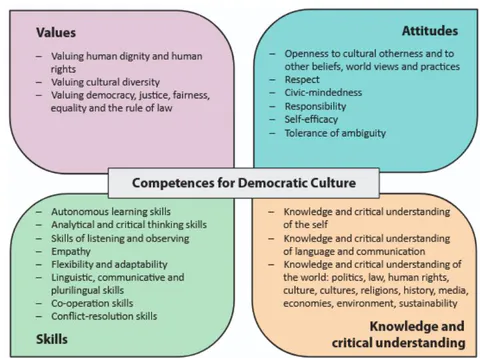
Importantly, cohesion is said to emerge at the intersection of these three levels, illustrating its integrative and relational nature (p. 244). Their framework explicitly emphasises the roles of multiculturalism, tolerance, diversity and voluntary participation as central to fostering resilient and inclusive societies (pp. 245–246). The Council of Europe (2024) and the United Nations (2023) see social coherence as a relevant aspect in education and for global society. The Council of Europe (2024) frames social coherence as democratic culture: "The participation of learners in all pertinent areas of decision making remains a key principle in the endeavors to educate active citizens who engage and take responsibility both in democratic processes in society and in the workplace" (Council of Europe, 2022, p. 13). In their model of competences for democratic culture, they include the categories of values, attitudes, skills, knowledge and critical understanding (see Fig. 1).
Moreover, the United Nations (2023) emphasises that social cohesion is a multidimensional construct, relevant both as a societal condition and as an outcome of social, political and economic processes: "The strength of relationships and the sense of solidarity among members of a society, characterized by trust, belonging, participation and inclusiveness." (UNESCO, 2023, p. 6) In sum, the concept of social cohesion has evolved from minimalist definitions stressing trust, belonging and cooperation (Chan et al., 2006), through multidimensional frameworks distinguishing social relations, identification, and commitment to the common good (Schiefer & van der Noll, 2017), to more dynamic models that highlight multiculturalism, diversity and voluntary participation across the individual, community and institutional levels (Fonseca et al., 2019). Recent perspectives by the Council of Europe (2022) and the United Nations (2023) further underscore its importance for education and global society, framing cohesion as both a democratic competence and a multidimensional societal attribute rooted in solidarity, participation, and inclusiveness. Taken together, these perspectives show that social cohesion is not only a key analytical concept but also a normative and practical orientation for building inclusive, resilient, and democratic communities, thus providing a valuable foundation for exploring its role in the field of education and beyond.
2.2 Theatre Pedagogy for Promoting Social Cohesion
Arts education boosts creativity, self-expression, social skills and academic motivation. It fosters cultural inclusion and dialogue and can inspire social change, ultimately enriching lives by enhancing meaning and well-being (Jónsdóttir & Thorkelsdóttir (2024, p. 23, 24). Jónsdóttir and Thorkelsdóttir (2025) conducted a qualitative case study on Skrekkur (a stage competition in Reykjavik), a youth theatre-based competition for lower secondary schools in Reykjavík. Data were gathered through observations and focus group interviews with 40 students from five schools (pp. 26–27).
The findings show that participation strengthened students' self-esteem and well-being, as they reported greater confidence, trust and a sense of belonging. Students described Skrekkur as an empowering experience that fostered solidarity and created lasting memories (pp. 28–29). The collaborative playbuilding process emphasised cooperation and democratic dialogue, with participants learning to listen, respect different opinions and make collective decisions (pp. 30–31).
The study concludes that Skrekkur provides a meaningful context for youth to explore creativity, identity, and social relations. It enhances peer connections across school years, promotes empathy and supports personal growth. At the same time, the competitive format raises questions about inclusivity, since only a limited number of students per school can participate (pp. 32–33). Skrekkur demonstrates how youth theatre can positively impact students' well-being and self-esteem by combining artistic expression with cooperation, creativity and collective problem-solving. Discussions in the ensemble helped to promote democratic participation and social cohesion.
Theatre pedagogy has long been recognised as a powerful approach for fostering social cohesion, enabling individuals and groups to engage in processes of dialogue, collaboration and collective meaning-making. At its core, theatre pedagogy emphasises participation, creativity and reflection, making it well suited to address issues of social fragmentation, exclusion and inequality.
One of the most influential figures in this field is Augusto Boal (2002). Augusto Boal's Forum Theatre invites audiences to become spect-actors, intervening in scenes of oppression by stepping into the protagonist's role and trying new strategies (Boal, 2002). Instead of prescribing solutions, it encourages dialogue and reflection, using theatre as "rehearsal for reality" (p. 251). Actors and observers (spect-actors) maintain tension to allow critical exploration, fostering empathy, democratic exchange, and collective problem-solving—key aspects of socially engaged theatre. So, for Boal, social cohesion is part of his Forum Theatre because his purpose is to foster communication with actors and non-actors to design together real-life scenes to solve a collective problem. This group work on stage enables growth in social cohesion.
In educational contexts, drama pedagogy has been shown to strengthen communication, empathy, and social understanding. Giera (2025) highlights its role in developing both language skills and interpersonal competence in inclusive learning settings, while Nicholson (2011) points to its capacity to foster cooperation, respect, and critical awareness. Taken together, these perspectives illustrate that theatre pedagogy not only enriches artistic and educational practices but also functions as a practical tool for promoting social cohesion. By foregrounding participation, empathy and collaboration, drama creates opportunities for learners and communities to rehearse democratic life, negotiate diversity, and strengthen the bonds that hold societies together.
2.3 Reading Theatre for Fostering Group Literacy
Readers' Theatre, which integrates repeated oral reading with performative elements, has been shown to enhance reading fluency in inclusive educational contexts. Hautala et al. (2022, p. 674) report gains not only in speed and accuracy but also in prosody and learner motivation. Likewise, Quezada (2021, p. 586) highlights the method's adaptability to diverse learning environments, including online and hybrid formats, underscoring its relevance in global and resource-limited settings. By emphasising intonation, rhythm, and role embodiment, Readers' Theatre supports second language learners in developing pronunciation, expression and comprehension without the pressure of memorisation or grammatical precision.
Reading theatre, commonly implemented through Readers' Theatre approaches, has been widely recognised as an effective strategy for promoting literacy development, particularly in fostering fluency, comprehension and motivation. Unlike traditional reading practices, reading theatre situates literacy as a performative and collaborative act, where repeated oral reading, expression and prosody are central to group-based meaning-making.
Research demonstrates that Readers' Theatre is especially beneficial for struggling readers. Rinehart (1999) showed that integrating performance-based reading into tutorials enhances reading fluency and motivation among children with reading difficulties. Similarly, Corcoran and Davis (2005) found that second- and third-grade special education students experienced both fluency gains and greater reading confidence when engaged in Readers' Theatre.
In classroom settings, Readers' Theatre contributes to literacy by embedding fluency instruction into the reading curriculum. Griffith and Rasinski (2004) describe how teachers can foster automaticity, expression and comprehension through performance reading, while Young and Rasinski (2009) provide evidence that repeated oral performance improves fluency, comprehension, and student engagement. Complementary findings are reported by Keehn (2003), whose experimental study documented significant oral reading fluency improvements through guided practice and theatrical performance.
Beyond fluency, Readers' Theatre has been shown to enhance self-confidence and motivation. Martinez, Roser, and Strecker (1999) highlight how the format empowers diverse learners, giving them the opportunity to experience reading success and "be a star." In addition, Rasinski and Hoffman (2003) underscore the importance of oral reading for prosody and comprehension, framing performance-based reading as a bridge between technical fluency and deeper literacy engagement.
Synthesising these findings, Griffith and Rasinski (2004) argue that Readers' Theatre constitutes a research-based best practice for building fluency in classrooms. It combines repeated oral reading with authentic performance, thereby supporting both individual literacy development and group cohesion through collaborative practice.
Taken together, the evidence positions reading theatre not only as an instructional method for literacy but also as a social practice that cultivates confidence, participation and shared achievement. By transforming reading into a communal, performative experience, Readers' Theatre fosters group literacy, strengthens social bonds and makes reading a meaningful, collective endeavour.
Inclusive reading initiatives begin with the learner, fostering a personalised reader identity (Rosebrock & Nix, 2020; Venegas, 2018; Hall, 2012; see Fig. 2). An individual's reading profile is shaped by a combination of process-level skills, such as word and phrase recognition, local and global coherence building, identifying text superstructures, and recognising presentation strategies, together with subject-level aspects such as knowledge, participation, motivation, self-reflection and self-concept as a (non-) reader. These are further embedded within the social level, encompassing communicative contexts, family, school, peer and cultural influences, as well as opportunities for action. Factors such as socio-economic status, migration background, prior literary experience, access to linguistic and material resources and varying degrees of self-regulation and motivation in classroom contexts must be reconciled with the needs of the learning community. Inclusive schools work to overcome these barriers (Prengel, 2022) and critically assess possible biases in text selection, accessibility and task design. The Multi-Level
Model of Reading (Rosebrock & Nix, 2020) outlines three interconnected levels:
Social level—reading as a collective and interactive activity;
Individual reader level—shaped by personal interests and cognitive abilities;
Reading process level—determines how texts are understood, processed, and internalised.
During the first years of schooling (and beyond), reading should be for pleasure and not seen as a task. The reading for pleasure literature studies this area in schools and outside of schools. The reasons are related to the construct of motivation. A reader with internal motivation is reading with pleasure. This can motivate them to read more. The effectiveness of reading for pleasure in supporting long-term literacy development depends on the interaction between the reading levels illustrated in Figure 2.
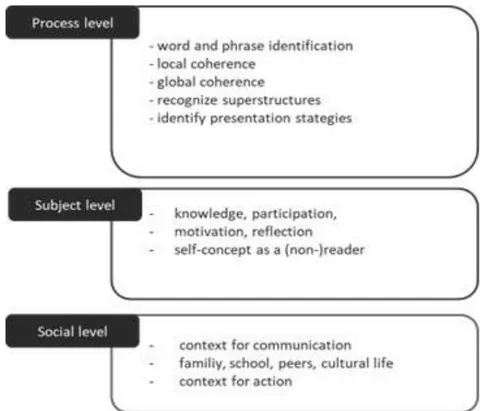
In this model, reading is understood as a social activity at the societal level, embedded in communication with family members, school communities, peers, friends, and the broader cultural environment. When art is combined with reading, it provides a space for creative expression that reflects the reading context within a social or community setting. A theatre context using a drama text offers an opportunity to engage all summer school participants in the reading process, reflecting, discussing, rereading, acting, and performing on stage as part of a community project. Every reader's voice can be represented on stage, as each individual interprets the drama text in a unique way. The complex aim of a theatre project is to integrate these diverse perspectives through discussion and performance, ultimately bringing to the stage a shared interpretation that reflects the collective vision of all summer camp participants. Achieving this requires fostering social coherence, enabling the inclusion of different perspectives in performance, and managing these collaboratively in a democratic manner.
III. DESIGN AND METHODS
This section describes the design and methodological approach of this study. It first outlines the sample and recruitment process (3.1), detailing how participants were selected and informed about the project. It then presents the structure and activities of the summer camp (3.2), followed by a description of the play that formed the core of the intervention (3.3). Finally, it explains the overall study design and methods (3.4), including data collection and analysis procedures. Together, these subsections provide a comprehensive account of how the project was implemented and investigated.
3.1 Sample - Recruitment
The initiative was implemented as a cooperation between the Family Service Office of the University of Potsdam and the Chair of Inclusive German Didactics/Specialisation in Language and Communication at the University of Potsdam. The project was primarily designed for children aged 7 to 11 who expressed an interest in theatre. 13 children were interested in this theatre project. They did not know each other. No prior experience was required, as all aspects of performance were introduced in a playful, step-by-step approach throughout the project.
The Uni Camp was held on the Neues Palais campus, specifically on the lawn and playground, taking place in a large tent. The camp ran from 13 to 21 July 2023 (without weekend), with supervision provided daily from 09:00 to 15:00. Drop-off was possible from 08:30 and pick-up was available until 15:30.
The daily programme was designed to combine enjoyment of play and creative collaboration with a varied set of activities. These included a daily sports session organised by the University Sports Centre; opportunities for physical play, painting, and crafting; and a communal lunch in the university canteen and healthy snacks throughout the day. A total of 15 places were available in the project. The participation fee was set at EUR 60 per child for university employees and EUR 40 per child for students, with a EUR 10 reduction for each additional child from the same family. The following flyer was used as part of the recruitment strategy to inform and attract potential participants to the project (see Fig. 3).
Consent from the legal guardians of all participants was obtained. In addition, the intervention within the drama text, the questionnaire on social coherence, and the procedure of the intervention were reviewed and approved by the Ethics Committee of the University of Potsdam.
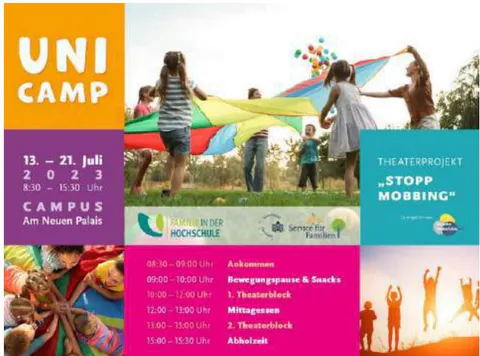
3.2 The Uni Camp—Daily Schedule and Procedures
Each day followed a structured programme designed to balance creative theatre work with opportunities for movement, social interaction, and rest. The daily routine began at 8:00 a.m. with the setup of the theatre space. Children typically arrived between 8:30 and 9:00 a.m., during which time registration was recorded and any relevant information from parents or guardians was communicated. Each child received a name badge, and between 9:00 and 10:00 a.m., guided games focusing on movement and attentive listening were carried out, accompanied by healthy snacks.
At 10:00 a.m., the theatre block commenced with a check-in, a warm-up, an explanation of the day's schedule, and practice sessions interspersed with feedback and reflection. At 12:00 p.m., the group walked together in a "locomotive" formation to the cafeteria, where time was allocated for eating, drinking, free play in a designated play area, and conversation at the table. A communal lunch was served in the campus facilities from 12:00 to 13:00, fostering informal interaction among participants. Project facilitators joined the children for meals, providing additional opportunities for informal exchange.
By 12:45 p.m., the group returned to the theatre tent, located on the university lawns near the playground and sports fields. The afternoon session from 13:00 to 15:00 comprised the second theatre block, enabling participants to deepen their engagement with the play and refine their performance skills. A short period of free play followed, after which, at 1:00 p.m., the children engaged in a check-in ("How am I feeling right now?") and a warm-up exercise thematically aligned with the day's plan. Practice sessions then resumed, with regular opportunities for participants to present their work to the group. Feedback was provided by both children and facilitators, in adherence to the camp's agreed rules:
We listen to one another;
Food is for eating and is shared;
Everyone participates actively;
No hitting or abusive language.
Shortly before 3:00 p.m., the final reflection phase began. This daily segment was documented, and both the schedule and individual progress were acknowledged and recorded in each child's learning diary. This was followed by free play until parents or guardians arrived for pick-up, at which point the name badge was returned. For the project facilitators, the day concluded with tidying up and dismantling equipment, as well as reflecting on the day's activities. This reflection incorporated the children's documented feedback and the facilitators' own observations, and any necessary adaptations for the next day—either for the whole group or for individual participants— were discussed. The program day ended shortly after 4:00 p.m.
As part of the theatre project, participating children were given the opportunity to immerse themselves in the world of theatrical performance, taking on a variety of roles and characters. Beyond developing artistic skills, the project aimed to encourage children to engage with the topical issue of bullying in a playful yet reflective manner. Through the dramatic process, they explored different behavioural strategies and response options that could be applied in potential bullying situations within both school and social environments (Giera, in press).
The Stop Bullying! theatre project employed an educational approach that combined principles of inclusive pedagogy with targeted literacy development. Implemented within a Design-Based Research (DBR) framework, the initiative merged drama-based methods with structured reading activities to strengthen reading skills in children both with and without special educational needs (SENs) (Giera, 2025). Its conceptual basis was informed by Rosebrock and Nix's Multi-Level Model of Reading (2020), which considers the process, subject, and social dimensions of literacy (Giera, in press).
On the process dimension, the project incorporated strategies such as paired reading, choral reading, and repeated rehearsal to improve reading fluency, coherence, and comprehension. The subject dimension was addressed through activities designed to cultivate intrinsic motivation, shape reader identity, and enhance self-concept via embodied, performative learning experiences. At the social dimension, the collaborative processes inherent in theatre-making fostered inclusive group relationships and strengthened a sense of community (Giera, 2025, Giera, in press).
Instructional scaffolding was provided through dedicated reading spaces, individualised feedback, and differentiated learning materials. The intervention also drew on Vygotsky's sociocultural perspective, highlighting the role of social interaction and guided participation in cognitive growth. Overall, the pedagogical design integrated literacy instruction, arts-based learning, and the cultivation of an inclusive classroom culture (Giera, in press).
3.3 The Play
The project was based on the play Allein! Tatort Schule/ Alone! School as a Crime Scene by Claudia Kumpfe (2013), a production that addresses the phenomenon of bullying in schools. The narrative centres on Lotta, a student subjected to systematic exclusion and harassment, thereby giving voice to the emotional and psychological consequences of peer victimisation. However, the play goes beyond the individual case: it reveals how peer pressure and clique loyalty operate as mechanisms that reinforce bullying, compelling students to choose between complicity and resistance. In doing so, Kumpfe highlights the precarious nature of adolescent friendships, raising critical questions about what constitutes "true" or "false" loyalty within social groups.
Used in an educational context, the play functions not only as a dramatic text but also as a pedagogical tool that invites reflection, dialogue, and perspective-taking. By engaging with the characters and their conflicts, students are encouraged to critically analyse the dynamics of inclusion and exclusion and to explore alternative responses to bullying. This pedagogical potential resonates strongly with Boal's (2002) forum theatre methods, which transform audiences into "spect-actors" who can rehearse strategies for change, and with Nicholson's (2011) work on applied drama, which emphasises theatre's ability to cultivate empathy, cooperation, and mutual respect. The play provided the project with a shared narrative framework that was both relatable and transformative, bridging personal experiences of school life with the wider educational aims of promoting social cohesion and democratic participation.
3.4 The Study—Design and Methods
At the beginning and end of the project, an anonymous survey on social coherence was administered, consisting of 11 items. The questionnaire, originally published by the Federal Agency for Civic Education in Germany (Bundeszentrale für politische Bildung), was slightly adapted linguistically for this study. It began with an explanatory text box introducing the topic of bullying:
"The following questions concern bullying. Bullying is different from normal disagreements or conflicts. Bullying occurs when a student is repeatedly harassed or attacked over a longer period of time. It usually also involves a power imbalance between the victim and the perpetrator."
The survey items were as follows: Item 1: "Do you know someone in your school who bullies others?" (response options: yes or no). Item 2: "Do you know a bullying victim in your school?" (response options: yes or no). Item 3: "Have you ever been bullied yourself?" (response options: yes or no). Item 4: "If you have been a victim of bullying yourself, in what form did the bullying attacks against you occur?" Respondents could specify the type of behaviour (e.g., verbal, via mobile phone, physical, online via TikTok or Instagram, etc.). Item 5: "In your opinion, what is the main reason that students bully others?" Multiple responses could be selected from a list including money, appearance, body shape, rivalry, clothing, behaviour, dislike, skin colour, religion, nationality, or origin. Item 6: "How do you react when you see or learn that a student is being bullied by other students?" (multiple responses possible) Item 7: "Do you think you might participate in bullying if a student you like is being bullied?" (Likert scale from yes to absolutely not). Item 8: "How often have you taken part in bullying one or more other students at your school in the past few months?" (response options ranged from never to several times a week). Item 9: "How often are you afraid of being bullied by other students at your school?" (response options ranged from never to very often). Item 10: "Do you know whom you can turn to in your school and who can help you if you are bullied?" (response options: yes or no). Item 11: "Whom would you turn to if you were or became a victim of bullying?" (multiple responses possible, including friends, police, teachers, parents, etc.).
A second questionnaire, administered at the end of the project, was used to assess the quality of the program from the children's perspective and gather feedback. The survey instrument comprised 20 items designed to evaluate participant engagement, perceived learning outcomes, group dynamics, and overall satisfaction with the youth theatre project. Items on active participation included "I actively participated in the theatre project" (Item 1) and "I actively participated in the theatre group" (Item 14). Organisational quality was assessed with "The project was well organized overall" (Item 2), while enjoyment was captured through "Each day was fun" (Item 3). The adequacy of the project duration was measured with "The length of the project was sufficient" (Item 4). Personal development, particularly self-assessment, was evaluated with "Through the project, I learned to better assess myself and others" (Item 5).
The quality of supervision was explored through "My questions were always answered by the supervisors" (Item 6) and "I always received help from the supervisors" (Item 7). Thematic interest in project topics was assessed with "I was interested in the topic of bullying in the project" (Item 8) and "I was interested in acting in the project" (Item 10). Opportunities for social integration were addressed by "Through the project, I was able to get to know (new) children/young people" (Item 9). Learning experiences were further captured with "Through the project, I learned many new ways/methods to read better" (Item 12), supported by open-ended prompts such as "I can list the following" (Items 11, 13).
Items addressing group dynamics included "I felt comfortable in the group" (Item 15), "I felt like an equal member of the group" (Item 16), and willingness to recommend the project, measured by "I can recommend this project to other children and young people" (Item 17). Reflective prompts at the end of the survey captured suggestions for improvement ("If the project is repeated with young people – what would you change?", Item 18), peak enthusiasm ("This moment excited me the most", Item 19), and any additional comments that participants wished to share ("I would like to add the following", Item 20).
In addition, the two university theatre coaches maintained field diaries to document and reflect on the methods employed, the progress achieved, and any obstacles encountered during the work process. Drama Coaches A and B kept five diaries of the first days, including comments such as "That was good" and "That was challenging," reflecting observations of the whole group. Open and frank feedback from all participants regarding the five drama days in the summer camp was also recorded in Coach A's diary. The sixth and seventh day were the last exercise and final performance on stage.
Furthermore, a roundtable discussion was held at the end of the project, involving the project coordinators, facilitators, parents and participating children. This meeting took place six months after the intervention, providing an opportunity to reflect on the project with the benefit of hindsight.
IV. RESULTS
This section presents the key findings from the summer camp theatre project. It begins with an account of the final performance (4.1). Also, the development of social cohesion within the group is examined in detail (4.2, 4.3), drawing on pre- and post-test questionnaire data, as well as qualitative observations. Finally, reflections from theatre coaches (4.4), parents, and participants (4.5) provide additional insights into the perceived value, challenges, and long-term impact of the project.
4.1 Performance
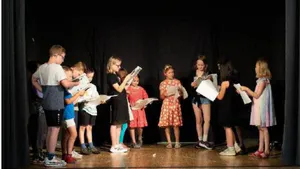
The ensemble consisted exclusively of children from the summer camp (n = 13). The theatre performance was held on the final day of the holiday programme, Friday, 21 July 2023, from 10:30 to 12:00. Parents and other interested guests were invited to attend the play, which was staged in the university canteen auditorium. The event was open to all members of the university community, as well as external visitors. The children participating in the summer camp and the entire project team were encouraged by the large audience in attendance. A promotional poster for the performance (see Fig. 4), designed and distributed by the children and project staff across all three university campuses, helped to publicise the event and attract visitors.

4.2 Participation and Social Coherence
A survey with 13 participants was conducted at the end of the project, after the stage performance. Table 1 presents the post-test means (Ms) and standard deviations (SDs) for 17 questionnaire items evaluating students' perceptions of the "Stop Bullying" theatre project. The response scale ranged from 1 ("applies completely") to 4 ("does not apply at all"), meaning that lower scores indicate more positive evaluations.
| PosttestM (SD) | |
| IG(n = 13) | |
| Item 1 I actively participated in the theatre project. | 1,6 (0,96) |
| Item 2 The project was well organized overall. | 1,2 (0,44) |
| Item 3 The individual days were fun. | 1,3 (0,63) |
| Item 4 The length of the project was sufficient. | 1,5 (0,78) |
| Item 5 Through the project, I learned to assess myself and others better. | 1,5 (0,66) |
| Item 6 My questions were always answered by the supervisors. | 1,3 (0,73) |
| Item 7 I always received help from the supervisors. | 1 (0) |
| Item 8 The topic of bullying interested me in the project. | 1,5 (0,66) |
| Item 9 Through the project, I was able to meet (new) children/young people. | 1 (0) |
| Item 10 Acting in the theatre interested me in the project. | 1,4 (0,51) |
| Item 12 Through the project, I learned many new ways/methods for reading better. | 1,5 (0,88) |
| Item 14 I actively participated in the theatre group. | 1,5 (0,88) |
| Item 15 I felt comfortable in the group. | 1,1 (0,28) |
| Item 16 I felt like an equal member of the group. | 1,4 (0,87) |
| Item 17 I can recommend this project to other children and young people. | 1,2 (0,38) |
Overall, the results demonstrate high levels of agreement with nearly all statements, reflecting the positive reception of the project. Several items received the lowest possible mean score of 1.0, indicating unanimous strong agreement among participants. This includes Item 7 ("I always received help from the supervisors") and Item 9 ("Through the project, I was able to meet (new) children/young people"), both of which had no variability (SD = 0). These findings suggest that the project was highly successful in fostering social connections and providing consistent supervisory support.
Other highly rated aspects include Item 15 ("I felt comfortable in the group"; M = 1.1, SD = 0.28) and Item 2 ("The project was well organized overall"; M = 1.2, SD = 0.44). Enjoyment of the activities was also evident, with Item 3 ("The individual days were fun") achieving a mean of 1.3 (SD = 0.63).
Slightly higher—but still positive—mean values were observed for Item 4 ("The length of the project was sufficient"; M = 1.5, SD = 0.78), Item 5 ("I learned to assess myself and others better"; M = 1.5, SD = 0.66), and Item 8 ("The topic of bullying interested me"; M = 1.5, SD = 0.66). These slightly higher scores may suggest small differences in how strongly students perceived these specific benefits.
Importantly, the recommendation rate was very high, with Item 17 ("I can recommend this project to other children and young people") scoring M = 1.2 (SD = 0.38). This indicates that the majority of participants viewed the project as worth sharing with peers.
So, the quantitative evaluation (see Table 1) shows that participants in the intervention group (n = 13) evaluated the "Stop Bullying" theatre project very positively, with mean scores close to 1 ("applies completely") across nearly all items. Particularly high agreement was found for Item 7 ("I always received help from the supervisors") and Item 9 ("Through the project, I was able to meet (new) children/young people"), with both receiving a mean of 1.0 and having no variability, suggesting unanimous positive experiences.
Similarly, students reported feeling comfortable in the group (Item 15, M = 1.1, SD = 0.28) and considered the project well organised (Item 2, M = 1.2, SD = 0.44). The majority would recommend the project to others (Item 17, M = 1.2, SD = 0.38).
The open-ended responses provide additional insights. For Item 11 ("I can list the following"), participants mentioned enjoying the games ("the games were great"), wanting the experience to last ("forever"), and appreciating the fun ("that I enjoyed it"). Under Item 13, students reflected on their reading skills and personal feelings ("I was happy," "I was able to read well afterwards," "because you read the role"), indicating both emotional and skill-related benefits.
When asked what they would change if the project were repeated (Item 18), five respondents said "nothing," while others suggested a longer duration, more lines for certain roles, fewer speaking parts and more games. Opinions on project length varied, with some finding that the project took up too much time in one day, while others wished it lasted longer overall.
The moments that excited students the most (Item 19) were largely related to performing: multiple responses (nine time) mentioned the final performance ("the performance," "when we performed!"), specific scenes ("the bullying scenes") and active participation ("when it was my turn"). Games and the entire experience ("everything") were also highlighted.
Additional comments (Item 20) reaffirmed the positive reception, including "I enjoyed it," "keep it up," and "it was really nice!"—with some stating "nothing," indicating no further remarks. Overall, the qualitative feedback reinforces the quantitative findings, suggesting that the project was both enjoyable and meaningful, with only minor suggestions for structural adjustments.
The following Table 2 displays the mean scores (M) and standard deviations (SD) for the intervention group (IG; n = 13) on four items assessing social coherence in the theatre group, measured at pre-test and post-test only with four items for the feedback survey.
Scores ranged from 1 ("applies completely") to 4 ("does not apply at all"), with lower scores indicating stronger agreement. At pre-test, mean values for Items 14, 15 and 17 were uniformly 2.0 (SD = 0), suggesting moderate agreement, while Item 16 ("I feel like an equal member of the theatre group") had the highest possible score of 4.0 (SD = 0), indicating no perceived equality in membership at the outset.
Post-test results reveal marked improvements across all items. Participation in group work (Item
- improved from M = 2.0 to M = 1.5 (SD = 0.88), , p = 0.167. Comfort during group work (Item 15) increased from M = 2.0 to M = 1.2 (SD = 0.44), , p < 0.001, and feelings of equality in the group (Item 16) showed the most substantial change, decreasing from M = 4.0 to M = 1.2 (SD = 0.60), , p < 0.001. General comfort in the theatre group (Item 17) also improved, increasing from M = 2.0 to M = 1.1 (SD = 0.28), , p < 0.001.
| PretestM (SD) | PosttestM (SD) | |
| IG(n = 13) | IG(n = 13) | |
| Item 14 In my theatre group, I actively participate in group work. | 2 (0) | 1,5 (0,88) |
| Item 15 In my theatre group, I feel comfortable during group work. | 2 (0) | 1,2 (0,44) |
| Item 16 In my theatre group, I feel like an equal member of the theatre group. | 4 (0) | 1,2 (0,60) |
| Item 17 In my theatre group, I feel comfortable. | 2 (0) | 1,1(0,28) |
Overall, the data indicate that following participation in the project, students reported higher levels of active participation, comfort, equality and belonging within the theatre group, with particularly notable gains in perceived equality (Item 16). Based on the Wilcoxon signed-rank tests, all four items show highly significant improvements from pre-test to post-test. Since all p-values are far below 0.001, the probability that these changes occurred by chance is extremely small. This confirms that the intervention produced a statistically significant increase in active participation, comfort, equality and overall well-being in the theatre group.
In summary, the intervention group's feedback reflects overwhelmingly positive experiences across the organisational, educational, and social dimensions of the project. The consistently low means and small standard deviations highlight strong consensus among participants, suggesting that the "Stop Bullying" theatre project was both engaging and effective at meeting its intended goals.
4.3 Development of Social Cohesion
The means and standard deviations for the four social coherence (bullying) items are presented in Table 3.
| Pre testM (SD) | Post testM (SD) | |
| IG(n = 13) | IG(n = 13) | |
| Item 1 Do you know someone in your school who bullies others? | 1,4 (0,51) | 1,5 (0,52) |
| Item 2 Do you know a bullying victim in your school? | 1,5 (0,52) | 1,5 (0,52) |
| Item 3 Have you ever been bullied yourself? | 1,8 (0,44) | 1,8 (0,44) |
| Item 10 Do you know whom you can turn to in your school and who can help you if you are bullied? | 1 (0) | 1,25 (0,45) |
Across the intervention group , mean values were generally closer to 1 (yes) than to 2 (no) at both pre-test and post-test, indicating a higher frequency of affirmative responses to the bullying-related statements. Paired-samples t-tests showed no statistically significant differences from pre-test to post-test for any item. Item 1 ("Do you know someone in your school who bullies others?") increased slightly from 1.40 (SD = 0.51) to 1.50 (SD = 0.52), , p =.059. Item 2 ("Do you know a bullying victim in your school?") remained unchanged, , p = 0.640, as did Item 3 ("Have you ever been bullied yourself?"), , p = 0.500. Item 12 ("Do you know whom you can turn to...") showed a small, non-significant increase from 1.00 (SD = 0.00) to 1.25 (SD = 0.45), , p = 0.293.
Overall, the data of Table 3 suggest relatively stable patterns in students' reports of bullying experiences and awareness of available support.
In the next step of the analysis, the author organised all questionnaire items into five thematic categories based on their content. The reason for this was to combine the closed and Likert-scale questions with the open-ended questions. The first category, Personal Involvement with Bullying, included Items 1, 2, and 4, which addressed direct experiences and awareness of bullying incidents. The second category, Sensitivity to Bullying, comprised Items 3, 5, 10, and 11, focusing on personal experiences as a victim, perceived reasons for bullying, and awareness of individuals involved. The third category, Reflective Behaviour in Bullying, encompassed Items 6, 7, and 8, which examined participants' responses to bullying and their self-reflection on potential involvement. The fourth category, Fear of Bullying, was represented by Item 9, assessing the frequency of bullying-related fear. The final category, Social Interaction about Bullying, consisted of Items 12 and 13, which explored knowledge of and access to support networks in bullying situations.
- Personal Involvement with Bullying with Items 1, 2 and 4
Item 1 ("Do you know someone in your school who bullies others?"; response options: yes or no) indicates that the number of students who reported knowing a bully remained largely unchanged.
Item 2 ("Do you know a bullying victim in your school?"; response options: yes or no) shows a decrease in the reported number of known bullying victims (from 1.50 to 1.53; higher scores indicate fewer reported victims).
Item 4 ("If you have been a victim of bullying yourself, in what form did the bullying attacks against you occur?") yielded the following result: in both assessments, the response options "via mobile phone," "other," and "via the internet" were never selected. This may be explained by factors such as the participants' age and limited access to social media. At a younger age, bullying is more likely to occur in person, such as through verbal insults (two students who reported no change and already had direct bullying experience) or physical aggression (one student reporting bullying experience out of three students—two with direct and one with indirect experience). The number of students stating that they had no direct experience with bullying increased from four to five.
• Sensitivity of Bullying with Items 3 and 5
Item 3 ("Have you ever been bullied yourself?") indicates that the proportion of respondents who reported having experienced bullying themselves remained unchanged (M = 1.77). Item 5 ("In your opinion, what is the main reason that students bully others?") shows minimal change between pre-test and post-test. The total number of responses increased slightly (from 37 to 40), with some participants altering their choices. This shift caused a minor redistribution among categories, but the overall pattern remained largely stable. In the pre-test, the most frequently selected reasons for bullying were appearance/body shape, skin colour/religion/origin, and dislike. In the post-test, these categories were still among the most common, except that dislike decreased by four mentions and was replaced by clothing—this was possibly influenced by the theatre performance, in which a character is bullied because of their clothing.
- Reflective Behaviour in Bullying with Items 6, 7 and 8
Item 6 ("How do you react when you see or learn that a student is being bullied by other students?") shows the following pattern: Positively, none of the students reported being bullies themselves (at least in their own perception) or being in agreement with bullying. On the other hand, more students acknowledged that they only observed bullying without intervening (increasing from 1 to 3) or walked away because they believed the victim could resolve the situation independently (increasing from 0 to 2). Unfortunately, the proportion of students recognising that victims should be helped decreased (from 5 to 3), particularly among those who had previously reported doing nothing. A majority of students attempted to help victims in some way or sought assistance from an adult. In the post-test, two students who had not previously sought help from an adult reported doing so; however, two others lost trust in adults as a source of help. A similar pattern was observed for personal initiative: the number of students who took action dropped from 12 to 7. Overall, responses in the post-test were more varied and dispersed than those in the pre-test.
For Item 7 ("Do you think you might participate in bullying if a student you like is being bullied?"), results in both the pre-test and post-test show that almost all students agreed that they would never participate in bullying, although uncertainty about their own potential involvement increased in the post-test. This may reflect a heightened awareness of the boundaries between acceptable behaviour and bullying. The small increase in "active" participation should not necessarily be interpreted as an endorsement of bullying but rather as an indication that students reflected more critically on their own actions and considered them in relation to bullying.
In pre-test, Item 8 ("How often have you taken part in bullying one or more other students at your school in the past few months?") revealed that only three students admitted to having been bullied. The known victims of bullying reported being targeted physically or verbally. Four other respondents indicated that they had never been bullied. In the post-test for Item 8, the number of bullying victims remained unchanged, as did the types of bullying reported (verbal or physical). Only one student reported not being a victim but still indicated knowledge of physical bullying. Several explanations are possible. The student may have misunderstood the question (e.g., interpreting it as "What types of bullying do you know?" rather than "How have you personally been bullied?"). Alternatively, the student may know about bullying incidents through another person, without being directly affected, but still be knowledgeable about the topic (indeed, this participant reported knowing both a bully and a victim in Items 1 and 2). Another possibility is that the student experienced physical bullying but did not perceive it to be severe, particularly when compared to other known cases, or preferred to classify it merely as teasing rather than as bullying, thereby avoiding identification as a "bullying victim."
• Fear of Bullying with Item 9 In the pre-test for Item 9 ("How often are you afraid of being bullied by other students at your school?"), only one participant—who also reported being a victim of bullying—indicated experiencing fear more than "rarely." The two other identified bullying victims did not report being affected by fear. In the post-test, the overall pattern shifted. While six participants still reported having no fear of bullying (although the composition of this group changed), more students indicated feeling afraid "sometimes" or "fairly often." Notably, the student who had reported being "often" afraid in the pre-test now rated their fear level as only "fairly often."
- Social Interaction about Bullying with Items 10 and 11
All students responded to Items 10 ("Do you know whom you can turn to in your school and who can help you if you are bullied?") and 11 ("Whom would you turn to if you were or became a victim of bullying?"). Parents and teachers were the most frequently named sources of support, followed by friends, pastoral care teachers, and other relatives. Neither the police nor internet forums were mentioned as potential contacts, which may be explained by the participants' age. Importantly, all respondents indicated at least one person they could turn to in case of problems.
Post-test: Responses to bullying in the post-test were more varied, but—as in the pre-test—no participant reported participating in or approving of bullying. The majority stated that they would seek help from an adult or intervene directly. Other options were selected by only one or two participants, suggesting greater individual reflection on the issue. Notably, one participant who previously reported never having witnessed bullying changed their answer, indicating improved recognition of bullying situations. While more participants answered Item 10 in the post-test, three students now reported not knowing whom they could ask for help. Nevertheless, all respondents named at least one contact person they could approach if they were affected by bullying. As in the pre-test, teachers and parents were mentioned most frequently. Other sources of help declined in frequency, and the police and online contacts continued not to be named as potential sources of support.
4.4 Field Diaries from Coaches
The coaches' diaries are presented here in a condensed form. Day 6 was dedicated to final rehearsals on stage, with emphasis on refining performance elements and consolidating learning from previous sessions. Day 7 was the performance day, during which the complete play was staged before an audience, representing the successful culmination of the project.
4.4.1 Shortened Diary of Drama Coach A
Day 1: The group displayed high heterogeneity in both age and reading ability, with approximately 75% reading non-fluently. Warm-up games, particularly those involving music, were well received. Several children shared personal accounts of bullying, which were met with openness and empathy. Role allocation was based on the children's preferences, followed by a read-through of the first scenes. In the daily reflection, the children expressed fears about the upcoming performance. As rehearsals took place outdoors, a wish for more shaded areas was voiced, which also remained an issue during the afternoon session due to the heat. Nevertheless, all agreed—by a unanimous show of hands—that the performance should be their shared goal. All participants felt they had "earned a crown" for the day, as everyone had read and acted extensively. The rehearsals proceeded well, with many children already identifying with their assigned roles and planning to bring costumes and props the next day. Coach A also observed an improvement in reading fluency from morning to afternoon.
Day 2: Parents received resource materials on bullying prevention from the police. Role preferences were finalised through child-led decisions, using discussions, drawing lots, or games, which in some cases led to double casting. Rehearsals progressed to Scene 5, with each group receiving feedback and expressing satisfaction with their roles. Both Coach A and the children considered the rehearsals to be highly successful. Once again, all awarded themselves a "crown" for their efforts. A student playing the main role was singled out for praise due to their dedicated practice. Some students could recite lines from memory. Warm-up games continued to be popular. One child experienced mild stomach pain, which delayed rehearsals slightly, but the group responded with care and empathy.
Day 3: Several children reported practising their lines over the weekend, with notable increases in reading motivation and engagement. One participant withdrew from the project, while others took initiative in developing their roles, including incorporating musical elements. Warm-up routines became established, and rehearsals continued with some double-cast roles. Small practice groups were formed, which proved more effective for reading and text comprehension than working in the full group. Before lunch and again in the afternoon, scenes were presented and feedback was provided, allowing coaches to make better progress with rehearsals. On this day, a different child was crowned by the group in recognition of exceptional effort and marked improvement in reading and acting. According to the group, there were "no stupid moments" during the day. All scenes were run through once, except for the bullying scenes, which were postponed. Some children expressed a dislike for the two songs included in the play and were unsure whether they could master them with piano accompaniment by the end of the week. Overall, the day was considered successful.
Day 4: Morning games and rituals continued to provide structure. Focus shifted to the second half of the play, with rehearsals held on stage for the first time, generating excitement. Challenges arose with stage positioning in group scenes. The first song was rehearsed with piano accompaniment, and all scenes were read through once. During rehearsals, frustration and minor conflicts emerged but were resolved through immediate group discussion. The bullying scenes were practised several times. Coach A found the follow-up discussions on bullying emotionally intense for the group, as many shared deeply personal experiences, and some were moved to tears. Afterwards, both the songs and acting scenes went very well. Occasional fooling around occurred, and during the second rehearsal block, another child was injured during play, delaying the afternoon session.
Day 5: The day began with games, followed by self-reflection and character-strength activities. A second song was introduced, accompanied by percussion. Rehearsals progressed efficiently, covering multiple scenes. In the afternoon, overexcitement and minor disputes disrupted the session, but these were resolved via a group discussion. Reflection rounds revealed mixed feelings due to conflicts and fatigue, though overall rehearsal progress was positive. The children were already highly excited about the performance. At the end of the day, all expressed feelings of happiness mixed with anticipation. Encouragingly, all scenes and songs were rehearsed smoothly. Compared to the previous day, this was considered a particularly productive session.
Day 6: Final rehearsals were held on stage, with a focus on refining performance details and consolidating learning from previous sessions.
Day 7: Performance day—The complete play was staged before an audience, marking the successful culmination of the project.
4.4.2 Shorten Diary of Drama Coach B
Day 1: The group was highly heterogeneous in terms of both age and reading ability. Approximately 75% of the children did not yet read fluently; only a few—mainly older participants and the youngest—were able to read with fluency and expression, demonstrating comprehension and active engagement in discussions on bullying. While most children expressed excitement about the play, one child showed little interest in reading or acting, appeared tired, and participated minimally in warm-up activities. Warm-up games were generally well received, especially when accompanied by music. The role of "theatre child," who read instructions aloud and made optional content choices, was particularly popular. In movement-based games, children increasingly performed their roles with energy and creativity. Before casting, the group shared personal experiences with bullying. Several accounts revealed serious incidents, including daily physical aggression and persistent verbal harassment. These disclosures were met with attentiveness and empathy from peers. Role allocation involved reading character descriptions aloud, allowing each child to select and note two preferred roles. The first three scenes were then read in distributed roles, after which children took their scripts home to consider their choices further.
Day 2: On the second day of the intervention, parents and guardians received an information sheet containing recommendations for non-fiction books, lectures, and educational websites on the topic of bullying. This was received with appreciation. We made a point of noting that the subject might arise over the weekend and emphasised our openness to further discussion. Some children expressed the same preferences for particular roles. Small groups formed based on role preference discussed among themselves who should take on the part. Decisions were reached either through discussion, by drawing lots, or—in one case—by racing each other. It was important to us that these decisions were made by the children themselves rather than by the facilitators. This process resulted in a few double castings but otherwise a balanced distribution of roles. Two children who did not receive a "main" role were assigned to read either the female or male parts of the monologues. While this was accepted somewhat hesitantly, the significance of these roles was reinforced. After the lunch break, the first rehearsal of the opening scenes began. Within 60 minutes of rehearsal, performances had progressed to Scene 5. All groups received applause and constructive feedback. Everyone expressed satisfaction with their role, and many were already thinking about costumes. At the end of the day, we ensured that all role name tags were returned so that the characters could be completely set aside over the weekend.
Day 3: After the weekend break, the third day of the intervention began. During the drop-off, it became clear that many children had spent the weekend reading their lines, rehearsing, highlighting their scripts and even considering possible costumes. One case in particular was especially moving. A mother reported that her daughter had always found rehearsing, especially for poetry, difficult, and was generally reluctant to memorise texts. In contrast, within the project, she wanted to practise reading at home to perform her role well. She also felt confident enough to deliver a monologue in front of an audience. I asked the mother whether her daughter enjoyed singing, to which she replied "no". However, I see potential here, as singing allows text to be learned in combination with melody. The mother was unsure whether this would work but expressed happiness that her daughter looked forward to attending the theatre project each morning. In another case, it became apparent that one child would not continue participating in the project. The child had shown little interest during the first two days and did not wish to integrate into the group. A third case involved a child who had strong reading skills but, despite various family efforts, rarely visited the library and was generally reluctant to read. In his peer group and grammar school class, book reading was not common. His mother reported that one evening he read the entire play because he wanted to know how his character developed. He was proud to have such an appealing role and even considered how the music could be arranged. He plays the piano and selected a song from the piece to use both for scene-setting and as a short interlude during set changes. He received considerable feedback from the group because he already knew most of his lines by heart. Initially, this boy did not want to perform on stage, but he became proud to have a role with extensive dialogue. Overall, the theatre sessions had already become ritualised. The children enjoyed the warm-up games at the start of the day and participated actively. All rehearsed their parts, with some roles being double cast.
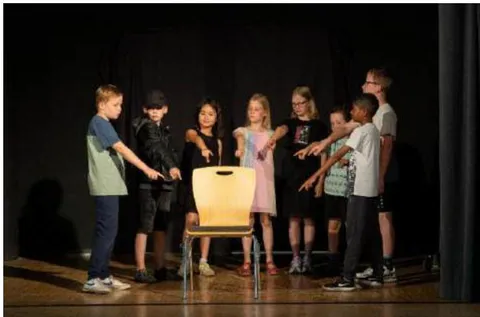
Day 4: The pre-theatre warm-up games were movement-based and well received, with all participants joining in and laughing together (e.g., a relay game). The theatre session began, as always, with the greeting, "It's nice that you are here." Picking up the cards from the floor had already become a ritual, and the children were increasingly confident in using expressive gestures. The morning discussion was used to outline the day's schedule, providing structure for the children, who could refer back to the plan displayed on the wall at any time. They also used the morning circle to share personal wishes, which were then integrated into the day's activities. On the fourth day, the children were particularly eager to know how the play continued, as before the weekend and on Monday, only the first half had been read and rehearsed. The day's focus was, therefore, on reading and performing the second half of the play. This was challenging for everyone and required patience and concentration, but it also offered the opportunity for them to physically position themselves fully in the performance space. For the first time, we could step onto the stage and rehearse several scenes there. This was a special moment for the children, as they could now envision the actual performance space. Some spectators were present, as people eating in the canteen could also watch from the stage area. Initially, the children found this unfamiliar; even the pianist preferred to rehearse with the curtain closed. However, this hesitation gradually eased after a few minutes, though not entirely. The main challenge for the children was not reading the unfamiliar text but positioning themselves correctly on stage, particularly in Scene 20, where all characters appear together. We also rehearsed the first song with piano accompaniment, played by one of the children. As this child could not yet coordinate the cue for singing, another boy from the group, who plays an instrument, stepped in to signal the entry for the whole group. This created an exciting moment when the curtain opened to reveal Lotta standing on a chair, surrounded by the other children, singing together with the piano. In the afternoon, rehearsals moved to the outdoor theatre space, focusing especially on scenes that were still new. By the end of the day, all scenes had been read through once; the first half of the play had been rehearsed again, and the second half was performed for the first time. It became clear that the duo David and Wethmal were not yet well coordinated, with Child 1 feeling overruled by David—something that even caused tears at home. The next day was scheduled for bringing in costumes and props as agreed.
Day 5: The morning began with a movement-based activity—a traditional egg-and-spoon race—followed by a snack break. The theatre session then commenced, following the established ritual of the greeting "It's nice that you are here," after which one of the children led the group in a game. The children expressed a wish to rehearse more and spend additional time on stage. After a short morning meeting, during which each child was asked to name two or three strengths of themselves and of their character, the second song was introduced. First, it was sung for the group, then the refrain was practised with the addition of rhythm using a jingle bell. Each child selected a percussion instrument of their choice. Once the rhythm was rehearsed, the singing was added. The combination proved enjoyable and the group quickly engaged in the singing. On the way to the stage—a short five-minute walk—the children used the time to sing both songs several times, which provided additional rehearsal. Upon arrival, stage markings were placed, and the child pianist played the opening song as a cue for the start of the performance. The 60-minute rehearsal session before lunch was used effectively, allowing seven scenes to be performed. At the end of this session, the children voted democratically to continue rehearsing. As a result, the first two scenes and Scene 3 (the bullying scene) were performed again. Lunchtime was calm, with growing friendships evident as certain children consistently chose to sit together. After lunch, the children enjoyed free play in the games area. Following repeated requests, the group returned to the stage earlier than planned to practise the first song with piano accompaniment, which went smoothly. However, the subsequent scene rehearsals were more challenging. Many children were overly excited, engaging in playful mischief, and a few accidental falls occurred. As a result, the stage rehearsal was concluded early, and the children were rewarded with ice cream on the lawn, where they then played freely for about 20 minutes. Additional movement-based games (e.g., "Fire, Water, Storm") were offered, which the boys in particular enjoyed. Meanwhile, the girls took care of the youngest child present—a nearly three-year-old—by building a castle out of cardboard boxes and blankets. This activity, however, led to a disagreement. The conflict was addressed in the full group circle, with both parties sharing their perspectives, recognising that they had hurt the other, and offering mutual apologies. They then exchanged compliments, with guidance from one of the theatre facilitators. As on every day, the session concluded with a reflection round. Children drew "reflection cards" with sentence starters such as "If today were a weather forecast, it would be...". In the next step, a talking ball was passed around, allowing each child to share something that had gone well and something that had not. The ball could also be passed on without speaking. In this reflection, it emerged that some children did not enjoy the day as much due to the earlier disputes and an accident involving one child's hand. Additionally, several reported having slept poorly the night before and felt tired during the day. Despite this, the rehearsals were generally well received by the group and unlike the previous day, no one requested small-group rehearsals.
4.5 Reflections from Coaches, Parents and Participants
The follow-up meeting for the Summer Camp took place on April 9, 2024, with six parents, five children, and the project leaders participating. The session, recorded by Sara Hauser, began with a 30-minute screening of selected video excerpts from the final performance. This was followed by an open discussion guided by the central question "What remains?".
From the students' perspective, reflections were predominantly positive. The musical elements, particularly the songs, were highlighted as especially enjoyable. The project as a whole was perceived as a source of joy, with both the rehearsal process and the final performance described as rewarding experiences. The nervousness felt prior to the performance was remembered as intense yet ultimately positive. The collective participation of all involved was considered a valuable aspect of the project. Students reported sharing their experiences at school and in their classes, where reactions were described as "cool" and the class teacher expressed delight and offered praise. When asked about possible changes in reading and presentation skills, the students generally reported no significant developments. One student indicated that they had already enjoyed presenting before the project and continued to do so.
Parents' feedback further underscored the positive impact of the project. One parent observed that a previously introverted child had become more outgoing. Another parent emphasised the project's importance for supporting language development.
V. DISCUSSION
The evaluation of the Stop Bullying theatre project demonstrates that the intervention was highly effective in fostering social cohesion, promoting inclusive group processes through theatre pedagogy and engaging participants in literacy-related practices via reading theatre. The combined quantitative survey data, qualitative student feedback, observational notes from Coaches A and B, and reflections from parents and children at the follow-up meeting provide a robust, triangulated evidence base for these conclusions.
5.1 Social Cohesion
Across all data sources, substantial gains in social cohesion were observed. Quantitative measures revealed statistically significant improvements in active participation, comfort, equality, and group belonging, with the largest change in perceived equality (Item 16: M = 4.0 to M = 1.2, p <.001). At the outset, participants did not perceive equal membership in the theatre group; by the project's end, they reported strong agreement that they were equal members. These findings were reinforced by qualitative feedback, in which children described enjoying shared activities, valued "everyone being involved," and identified the final performance as a collective highlight. Coaches observed the emergence of supportive behaviours, such as caring for peers in moments of difficulty, resolving conflicts through group dialogue and celebrating achievements collectively (e.g., "earning a crown" in Coach A's notes). Coach B provided further detail on the development of friendships, the establishment of group rituals and structured peer-led conflict resolution. Parents corroborated these observations, noting marked increases in confidence among introverted children and the inclusive nature of the group dynamic. Together, these findings suggest that the project did not merely facilitate social interaction but actively transformed the group into a cohesive, mutually supportive community.
The findings of the "Stopp Mobbing!" summer camp can be meaningfully interpreted through the three-dimensional model of social cohesion proposed by Chan et al. (2006), which distinguishes structural, relational and cultural components. This framework is further supported by Schiefer and van der Noll's (2017) synthesis of the concept and Fonseca et al.'s (2019) emphasis on multidimensional integration processes.
The project created clear, equitable structures for participation, exemplified by democratic role allocation processes and the use of group rituals to ensure that all children—regardless of age, reading ability or prior experience—could contribute meaningfully. Quantitative results show a marked increase in perceived equality within the group (Item 16: pre-test M = 4.0, SD = 0 → post-test M = 1.2, SD = 0.60, p < 0.001). This gain reflects the successful operationalisation of structural cohesion, as described by the United Nations (2023) and the Council of Europe (2022, see Fig. 1), where fairness in group processes and opportunities for active involvement foster a sense of equal standing among participants.
Relational cohesion, which involves the development of trust, social bonds and reciprocity (Fonseca et al., 2019), was strongly evident in both the quantitative and qualitative findings. All participants agreed that they had met new peers through the project (Item 9: M = 1.0, SD = 0), and parents noted that some previously withdrawn children had become more open and communicative. Group rituals such as the "crown of the day" and collective reflection circles helped to reinforce mutual recognition and empathy. These processes mirror the UN DESA (2023) conceptualisation of cohesion as sustained interpersonal solidarity built through repeated shared experiences.
The cultural aspect of cohesion—shared values, norms and identity (Schiefer & van der Noll, 2017)—was cultivated through the common goal of staging the final performance and the unifying theme of anti-bullying. The narrative allowed participants to embody multiple perspectives (victim, perpetrator, bystander, helper), encouraging moral reflection and empathy. Post-test data showed significant improvement in comfort within the group (Item 17: M = 2.0 → M = 1.1, p < 0.001), suggesting that the performance process not only reinforced collective identity but also deepened emotional bonds.
Overall, the project exemplifies how arts-based, socially grounded interventions can strengthen all three dimensions of social cohesion in a short time frame. The structured yet flexible rehearsal process provided the structural foundation, the collaborative creative work and peer support fostered relational trust, and the shared thematic and performative journey reinforced cultural belonging. These outcomes are consistent with the Council of Europe (2022) assertion that participatory arts can be powerful tools for building cohesive, democratic communities.
5.2 Theatre Pedagogy for Promoting Social Cohesion
Theatre pedagogy played a central role in achieving these social outcomes. The structured, participatory design—combining daily warm-up games, collaborative role allocation, rehearsals, and the shared goal of a public performance—created an environment in which all members had a voice and a stake in the outcome. Quantitative ratings indicated that acting in the theatre was interesting (M = 1.4), the project was well organised (M = 1.2), and supervisory support was consistent (M = 1.0). The thematic focus on bullying was also well received (M = 1.5), prompting both collective discussion and personal reflection, as noted by both coaches. Coach A highlighted the motivational power of shared goals and group recognition, while Coach B emphasised the role of rituals and participatory decision-making in reinforcing cohesion. Parents saw the theatre process as providing a safe, creative space in which children could take social risks and express themselves confidently. The evidence suggests that the pedagogical approach did more than structure learning; it embedded social inclusion into the creative process itself, making collaboration and mutual respect integral to the project's functioning.
The "Stopp Mobbing!" summer camp illustrates how theatre pedagogy can serve as both a methodological framework and a social catalyst for fostering cohesion. Drawing on the principles of process-oriented theatre (Boal, 2002) and inclusive arts education (Giera, 2025), the project embedded pedagogical strategies that promoted collaboration, empathy, and a sense of belonging.
Role allocation was negotiated through child-led discussions, lotteries, or playful competitions, ensuring that the process was participatory rather than imposed. This reflects the theatre-pedagogical principle of co-authorship (Neelands, 2009), in which learners actively shape the creative process, thereby reinforcing their agency and investment in the group's success. Such shared decision-making processes contributed directly to the increases in perceived equality noted in the quantitative findings.
The project's warm-up games, improvisation exercises and role-switching activities leveraged theatre's capacity to integrate physicality, voice and emotional expression. This aligns with the idea of embodied pedagogy (Perry & Medina, 2011), where learning is grounded in bodily experience, allowing participants to connect cognitively and emotionally with both content and peers. The anti-bullying theme particularly benefitted from this approach, as students could explore sensitive social dynamics within a safe, fictional frame, thereby promoting empathy and perspective-taking—key elements in building relational cohesion.
Daily group rituals, such as the greeting "It's nice that you are here," the "crown of the day," and structured reflection rounds, provided predictable interaction patterns that fostered trust and stability (Schiefer & Noll, 2017). Reflection sessions encouraged meta-cognitive awareness of group dynamics and individual contributions, aligning with the social–pedagogical emphasis on guided self-evaluation (Prengel, 2022). Parents' observations of increased openness in introverted children suggest that this ritualised, supportive environment contributed to the children's willingness to engage socially.
By linking the artistic aim (a public performance) with the social aim (building a cohesive group), the project exemplifies the dual focus of contemporary theatre pedagogy (Boal, 2002). The final performance acted as a collective achievement, reinforcing cultural cohesion and group identity. This echoes Nicholson's (2011) argument that theatre's communal, time-bound nature inherently strengthens social bonds.
In sum, the project's theatre-pedagogical strategies not only facilitated artistic expression but also actively generated conditions for social cohesion. These methods—co-construction, embodied engagement, ritualised interaction, and integrating aesthetic with social objectives—can be considered transferable elements for other educational and community contexts seeking to promote inclusion and solidarity.
5.3 Reading Theatre for Fostering Group Literacy
Although explicit self-reported improvements in reading skills were modest, the data indicate that the project fostered conditions conducive to literacy engagement. Quantitative responses showed agreement that new ways of reading were learned (M = 1.5) and qualitative feedback referenced being "able to read well afterwards" and connecting reading ability with role preparation. Coaches observed notable changes in reading engagement: Coach A reported immediate improvements in fluency within the same day and identified small-group rehearsals as particularly effective, while Coach B described reluctant readers who practised scripts at home, memorised lines and used musical elements to aid text learning. Parents also linked the project to language development and improved verbal confidence, even if children themselves did not perceive dramatic changes in reading ability.
By participating in multi-layered activities that combined group reading, theatrical staging and public performance, students developed both cognitive and socio-emotional skills within an inclusive and non-stigmatising setting. Although improvements in standardised reading measures were limited, notable progress was observed in levels of engagement, self-confidence and cooperative learning. These findings highlight the promise of arts-integrated, socially grounded interventions in promoting inclusive literacy practices and tackling bullying by fostering empowerment and empathy (Giera, in press). It is plausible that the significant gains in group comfort and equality observed under 2.1 enhanced students' willingness to engage with reading aloud and performance-based literacy tasks, thereby indirectly supporting literacy development.
Integrating reading theatre into the "Stopp Mobbing!" project provided a structured yet creative pathway for developing literacy skills in a socially embedded context. Unlike isolated reading exercises, the theatrical format required participants to engage with text as a living script, combining decoding skills with prosody, comprehension, and emotional expression. This aligns with research on reader's theatre (Martinez, Roser & Strecker, 1998), which emphasises repeated oral reading in a performance context as a means to improve fluency and motivation.
Scenes were rehearsed in pairs, small groups and as a whole ensemble, fostering peer-supported learning. Participants assisted each other with pronunciation, timing, and interpretation, thereby enacting a form of reciprocal teaching within the theatrical frame. The quantitative data, particularly the high ratings for receiving help from supervisors and meeting new peers, suggest that this collaborative ethos was a core driver of both literacy engagement and social connection.
The public performance created an authentic communicative purpose for repeated reading. As research on performance-based literacy interventions shows (Young & Rasinski, 2009), preparing for an audience motivates students to attend not only to accuracy but also to pacing, tone, and emotional nuance. The children's reported excitement about the performance and their voluntary practice at home reflect this intrinsic motivational boost.
By linking spoken text to movement, gesture and stage blocking, participants engaged in multimodal literacy (Rosebrock & Nix, 2020), which supports meaning-making through multiple semiotic channels. This approach is particularly beneficial for multilingual learners and those with reading difficulties, as it allows comprehension to be scaffolded through physical and visual cues rather than relying solely on linguistic decoding.
While students' self-reports in the follow-up meeting indicated no major perceived change in reading skills, parental feedback suggested improvements in oral confidence and willingness to present publicly. This discrepancy points to the possibility that gains in expressive and performative reading may not be fully captured by traditional literacy self-assessment or standardised testing—a limitation echoed in other arts-based literacy studies.
In reading theatre, literacy development is not pursued in isolation but intertwined with social objectives. The children's sense of belonging, reinforced through shared rehearsal and performance, likely contributed to their persistence with challenging text. As Cummins (2009) argues, when literacy practices are embedded in identity-affirming, collaborative projects, learners are more likely to invest effort and take risks in their language use.
Overall, the reading theatre component of the project served as a low-stakes, high-engagement literacy practice that blended technical skill development with social cohesion. By situating reading within a communal artistic process, the project leveraged the motivational and interpretive affordances of theatre to foster group literacy in an inclusive, participatory manner.
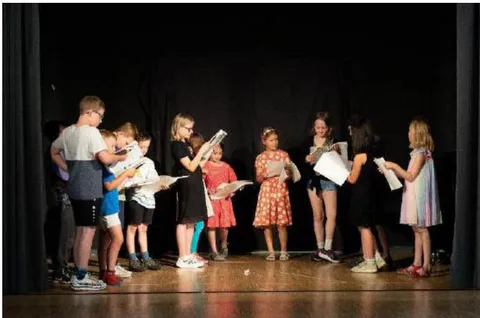
5.4 Limitations
While the results are promising, several limitations should be acknowledged. First, the small sample size limits the statistical power of the quantitative findings and restricts their generalisability to other populations. Second, the absence of a control group prevents definitive attribution of the observed gains to the theatre intervention alone; improvements in cohesion and confidence could also stem from natural group bonding or other concurrent experiences. Third, much of the evidence relies on self-reporting by children and parents, which is subject to social desirability bias and may overstate positive effects. Fourth, reading outcomes were not assessed using standardised pre-post literacy tests, meaning that improvements are based on self-perception and coach observation rather than objective measurement. Fifth, the short project duration (one week) raises questions about the sustainability of the observed social and literacy benefits over time. Sixth, the results may be context-specific, influenced by the skill of the facilitators, the physical setting, and the particular mixture of participants.
Finally, potential researcher–facilitator bias must be considered, as coaches who implemented the programme also contributed observational data, which could inadvertently emphasise positive outcomes.
5.5 Implications and Future Directions
Taken together, these findings support the conclusion that the Stop Bullying theatre project achieved its dual aims of fostering social cohesion and providing an inclusive, engaging context for literacy-related skill use. The triangulation of quantitative and qualitative evidence strengthens the validity of the results: numerical gains in equality, participation and comfort were mirrored in rich descriptions of supportive peer interaction, inclusive decision-making and shared pride in performance. The project's success appears to be rooted in its pedagogical approach—combining structured creative work, a socially relevant theme and meaningful public performance—which effectively engaged diverse learners in both social and literacy practices.
The most striking outcome was the dramatic improvement in perceived equality within the group, suggesting that theatre-based interventions can address initial disparities in social inclusion within a short time frame. Moreover, the high levels of enjoyment and willingness to recommend the project indicate strong acceptability, which is critical for sustaining engagement in similar initiatives.
These results align with the broader literature on applied theatre as a tool for social and educational development, demonstrating its potential to create safe spaces for self-expression, collaborative learning and social change. For future implementations, attention might be given to expanding the duration of the programme, as some children expressed a desire for more time, and to exploring targeted literacy assessments to capture potential gains in reading skills more directly. Given the observed gains in equality and confidence, replicating this approach in other settings, particularly with groups facing social exclusion or literacy challenges, is recommended.
VI. CONCLUSION
Stop Bullying—A University Theatre Project in a Summer Camp for Children to Promote Social
Cohesion was designed to foster social participation by engaging children in a creative, collaborative exploration of the socially relevant issue of bullying. This study further demonstrates how social cohesion can develop within a few weeks among children who had no prior acquaintance, offering valuable insights for classroom teachers who welcome new pupils into their classes, where theatre performance may serve as a powerful catalyst for building inclusive group dynamics. In the introduction, the research question was "How can a university theatre project in a summer camp setting promote social cohesion and contribute to the prevention of bullying among children?"
This pilot study provides compelling evidence that a university-led theatre project in a summer camp setting can promote social cohesion and contribute to bullying prevention by combining inclusive theatre pedagogy with a socially relevant theme. The results demonstrate that collaborative theatrical production, integrating group reading, staging and public performance, can build a supportive group climate, strengthen peer relationships, and foster empathy, all key for reducing bullying behaviours.
Quantitative findings showed statistically significant gains in active participation, comfort and perceived equality within the group, with the most pronounced improvement in feelings of equal membership. Qualitative feedback from children, parents, and coaches confirmed these outcomes, describing increased social confidence, the formation of new friendships and the establishment of group rituals that reinforced trust and belonging. Through shared creative work and role exploration, participants engaged directly with the dynamics of bullying from multiple perspectives, allowing them to develop understanding and strategies for both empathy and intervention.
Theatre pedagogy emerged as the enabling framework for these results. Structured warm-ups, collaborative role allocation, reflective discussions and a shared performance goal ensured that all participants had meaningful opportunities to contribute. This inclusive approach allowed children to practise cooperative decision-making, mutual respect, and emotional expression in a safe, supportive environment. By embedding anti-bullying content within a creative process, the project moved beyond awareness-raising to create lived experiences of inclusion and equality.
Although improvements in standardised reading measures were limited, the project enhanced conditions for literacy engagement, as frequent oral reading, role memorisation, and performance preparation fostered fluency, prosody, and expressive communication. The gains in social comfort and equality likely reduced barriers to reading aloud, particularly for hesitant readers. As Giera (in press) notes, by participating in multilayered activities that combine cognitive and socio-emotional demands within an inclusive, non-stigmatising setting, students develop skills that extend beyond literacy to broader life competencies.
The limitations include the small sample size, lack of a control group, reliance on self-reported outcomes, short intervention duration and absence of standardised literacy assessment in this cycle. The findings are also context-dependent, shaped by the facilitators' expertise and group dynamics.
Despite these constraints, the triangulated evidence suggests that the Stopp Mobbing! model is an effective way to use theatre for promoting social cohesion and addressing bullying. It operates by creating an inclusive community through artistic collaboration, fostering empathy through embodied role-play and reinforcing these gains with structured reflection and public recognition of the group's achievements.
The implications for practice include adapting the model to diverse educational contexts, particularly those serving multilingual or socially marginalised groups and extending the intervention over a longer period to reinforce and sustain gains. Future research should track long-term social and behavioural outcomes, integrate rigorous literacy assessments and examine scalability while preserving the participatory, inclusive ethos. In doing so, arts-integrated, socially grounded approaches such as Stopp Bullying! can contribute meaningfully to the broader goals of educational equity, democratic participation, and social justice.
Funding
This research was funded by the University of Potsdam (Human Resources, Family Affairs Office), with the grants received the author for 2023 covering snacks and beverages for the children, prints (drama text, flyer), and working hours for research assistants during the summer camp.
Institutional Review Board Statement
This study was conducted in accordance with the ethical guidelines outlined by the University of Potsdam's ethics committee in accordance with the Declaration of Helsinki. Informed consent was obtained from all participants, and confidentiality was maintained throughout this study. The Ethic Commission University of Potsdam (Link: https://www.uni-potsdam.de/de/senat/kommissionen-des-senats/ek), Approval Code: 54/2021 (Name: "Stopp Mobbing! Ein Theaterprojekt", Responsibility: Prof. Dr. Winnie-Karen Giera), Approval Date: 5 October 2021.
Informed Consent Statement
Informed consent was obtained from all subjects involved in this study. Moreover, written informed consent was obtained from the patients to publish this paper.
Data Availability Statement
Conflicts of Interest
The author declares that there are no conflicts of interest regarding the publication of this paper.
Conflict of Interest
The authors declare no conflict of interest.
Ethical Approval
Not applicable
Data Availability
The datasets used in this study are openly available at [repository link] and the source code is available on GitHub at [GitHub link].
Funding
This work did not receive any external funding.
References
Cite this article
Related Research


Special Issue
Launch a focused special issue to highlight research, emerging trends, and expert insights in your academic field.