




IntelliPaper
Abstract
This study aims to explore the factors influencing the adoption of Online Hospital Services (OHS) among rural residents in China, utilizing the Technology Acceptance Model (TAM) framework. A Structural Equation Model (SEM) was employed to analyze data collected from 422 participants with Internet hospital experience, selected through random sampling. Data collection involved online questionnaires distributed over 45 days, resulting in effective samples. The survey was divided into six sections, focusing on various aspects of user perceptions and intentions regarding OHS. The results indicate that perceived usefulness (PU) and perceived ease of use (PEOU) positively affect attitudes towards OHS, with trust acting as a crucial mediator between these variables and usage intentions. The studys theoretical contributions include extending TAM by highlighting the central role of trust in digital health adoption, particularly in rural contexts. Practically, the findings suggest that policymakers and technology developers should focus on enhancing trust and user-friendliness to promote OHS adoption, thereby bridging the urban-rural healthcare divide and improving healthcare accessibility.
Explore Digital Article Text
I. INTRODUCTION
Online Hospital Services (OHS) leverage internet and information communication technologies to offer comprehensive medical services such as online consultations, remote diagnostics, electronic prescriptions, and health monitoring (Seale et al., 2023). OHS solves the problem of shortage of medical resources in rural areas by allowing residents to obtain diagnostic advice from urban hospitals and experts, thereby improving the accessibility and quality of medical services. OHS also extend high-quality medical resources to remote and underserved areas, promote equality in medical services, and narrow the urban-rural gap (H. Zhang et al., 2023). At the same time, OHS improves the efficiency of medical services through online appointments, remote consultations, and electronic health records, reduce patients' waiting time, optimize resource allocation, and promote long-term health monitoring and management, which helps prevent diseases and promote a healthy lifestyle (Guo et al., 2024). OHS represent an innovative medical model that plays a vital role in improving China's rural medical services by improving accessibility, promoting equity, and improving efficiency (Zhao et al., 2024).
China's OHS has developed rapidly. Since 2020, there have been more than 1,100 Internet hospitals in China, and 7,700 hospitals provide online services ("The Development of E-government," 2023). The online appointment rate of hospitals has reached more than , and 3,300 hospitals have made appointments for treatment in different time periods accurate to 30 minutes. More than 90% of tertiary public hospitals have achieved information sharing within the hospital. The telemedicine collaboration network covers more than 24,000 medical institutions in all prefecture-level cities. 30 provinces have established Internet medical service supervision platforms.
China's OHS have changed the traditional medical methods and patterns, especially bringing new opportunities for the development of medical care in rural China (Wu et al., 2022). However, due to the digital divide and the technological inequality of Internet hospital platforms, the development of rural China is relatively lagging behind (Li & Kostka, 2024). Their understanding and use of Internet hospitals are not mature, and they are not clear about the development trend. On the other hand, due to the large number of medical accidents and medical problems, the trust of residents in rural China in Internet hospitals needs to be solved (Chen et al., 2022).
The using of OHS is beneficial to improve the accessibility and quality of medical services for residents in rural areas, reduce the time and cost of diagnosis and treatment, and achieve more comprehensive health monitoring (Jiang et al., 2022). However, due to the influence of social environment including policies, social media, economic conditions and technical means, their intention to use online hospital services (OHS) needs to be further promoted to promote the digital development of rural medical care and narrow the gap between urban and rural medical digitalization (Pham et al., 2023). On the other hand, the promotion of OHS in rural areas of China obviously faces pressure in terms of publicity and concept shaping (Q. Zhang et al., 2023). Many rural residents lack understanding of the concept and advantages of OHS, believe that face-to-face medical services are more reliable, and have low trust in emerging medical services (Li et al., 2022). This concept is particularly deep-rooted in rural areas
At present, the research on OHS has gradually matured and has achieved some results in health services, drug use and platform construction. However, few studies have focused on the intention of rural residents to use Internet hospitals and narrow the urban-rural medical gap by improving their intention. Therefore, this paper aims to explore the factors that affect the intention of rural residents to use OHS. Specifically, (1) discuss the impact of the usefulness and ease of use of OHS on the attitude and intention to use; (2) explore the mediating role of trust and attitude in the model; (3) provide strategies for the development of rural OHS, encourage villagers to use OHS, and narrow the urban-rural medical gap.
After the introduction, the study introduces relevant theories and concepts and constructs hypotheses. The third part discusses the research methods, followed by the research results. Finally, the study discusses the results, reflecting the theoretical significance and practical value, while also paying attention to the limitations of the study and future research directions.
II. LITERATURE REVIEW
The Technology Acceptance Model (TAM) focuses on the perceived usefulness (PU) and perceived ease of use (PEOU) influencing users' acceptance and adoption of technology (Ge et al., 2023). In the era of digital healthcare, TAM effectively explains patient and healthcare professionals' acceptance behaviors towards Online Hospital Services (OHS) (Li et al., 2023). For patients, PU reflects their perception that using OHS enhances health management efficiency and effectiveness, while PEOU indicates their view that OHS is user-friendly and reduces barriers and cognitive load. From the perspective of healthcare providers, PU manifests in whether systems improve diagnostic and treatment efficiency, and PEOU influences their willingness to adopt new technologies (Al-Momani et al., 2024). In the context of healthcare services and technology, PU refers to whether OHS enhances service quality and efficiency, and PEOU concerns the user-friendliness of platform interfaces and ease of operation. These factors directly impact user trust and intention to continue using the platform (Qin et al., 2023). Therefore, the research hypothesis is:
H1: Perceiving the usefulness of online hospital services can positively influence attitudes towards using OHS.
H2: Perceived ease of use of online hospital services will positively affect attitudes towards using OHS.
H3: The attitude towards using OHS will positively affect the intention to use OHS.
Trust is crucial for users of digital healthcare platforms, facilitating their engagement and acceptance. Consumer trust theories emphasize that trust develops from perceptions of reliability, integrity, and benevolence of the platform provider (Chameroy et al., 2024). Perceived ease of use and usefulness refer to how intuitive and beneficial the platform is perceived to be, influencing trust in the platform during consumer decision-making processes (Le et al., 2022). Consumer trust in Online Hospital Services (OHS) mirrors trust in corporate brands, affecting users' willingness to rely on the platform for sensitive healthcare needs (Qin & Jiang, 2024). In the context of healthcare services, patient trust in hospitals and healthcare providers is paramount (Qin & Jiang, 2024). The usability and utility of digital platforms often shape user trust perceptions, influencing their willingness to share personal health information and engage in telemedicine consultations.
Moreover, trust is multifaceted, encompassing dimensions of competence, integrity, and benevolence. In rural China, shaping trust in medical technology among residents necessitates platform initiatives that promote transparency and reliability (Ye et al., 2022). Enhancing consumer trust in digital healthcare platforms can be achieved through initiatives that foster transparency and reliability in medical service delivery. Therefore, the research hypothesis is:
H4: Perceived the usefulness of online hospital services will positively affect trust in OHS.
H5: Perceived ease of use of online hospital services positively impacts trust in OHS.
Trust often serves as a mediating variable in consumer research because it is fundamental to establishing a sense of security and reliability. For platforms, external factors such as transparency, security measures, and the reputation of service providers drive the construction of trust, influencing users' intentions to adopt technology (Trabucchi et al., 2023). In the context of patient acceptance of medical technology, trust plays a critical role, often cultivated through interactions that shape perceptions and behaviors towards online hospital services (OHS) (Giallanza et al., 2024). Similar to consumer behavior on e-commerce platforms, where trust in social media is fostered through information and system quality, trust in OHS is crucially influenced by factors like data security, healthcare provider credibility, and service reliability. The current challenges of trust in internet hospitals primarily manifest in concerns about data privacy and the competence of virtual healthcare delivery, impacting users' willingness to engage with these technologies (Biancone et al., 2023). Therefore, the study proposes:
H6: Trust in OHS mediates the relationship between perceived usefulness and usage intention of online hospital services.
H7: Trust in OHS mediates the relationship between perceived ease of use and intention to use online hospital services.
H8: Trust in OHS mediates the relationship between perceived usefulness and usage attitude of online hospital services.
H9: Trust in OHS mediates the relationship between perceived ease of use and attitude towards online hospital services.
The consumer trust theory focuses on the role of trust in attitudes and usage intentions. Specifically, trust can reduce the perceived risk of users towards the platform and increase their positive attitudes and usage intentions towards the platform (Nguyen & Llosa, 2023). From the perspective of technological use, trust in new platforms enhances users' sense of security and reliability, promoting their positive attitude and intention towards using the platform (Fu et al., 2021). In the field of medical services, trust is crucial for the attitude and intention of users to use the platform. For example, in the fields of online consultation payment and online health management, trust can increase user acceptance and willingness to continue using the platform (Liu et al., 2023). Therefore, the study proposes:
H10: Trust in OHS can positively affect attitudes towards using OHS.
H11: Trust in OHS will positively affect the intention to use OHS.
Attitude as an intermediary has been validated in the Technology Acceptance Model (TAM), and from the perspective of technology acceptance, attitude indirectly affects users' intention to use by influencing their perceived usefulness and ease of use (Liesa-Orús et al., 2023). Numerous examples indicate that attitude plays a crucial role in the process of technology adoption (Irimia-Diéguez et al., 2023). In the field of education, students' attitudes towards online learning platforms influence their willingness to use them; In the business field, consumer attitudes towards e-commerce platforms influence their purchasing behavior; In the medical field, the attitude of patients towards online medical platforms affects their intention to use them; In the economic field, investors' attitudes towards financial technology influence their willingness to adopt it. Therefore, the study proposes:
H12: Attitude toward using OHS mediates the relationship between trust and intention to use OHS.
H13: Attitude toward using OHS as a mediator to perceive the relationship between the usefulness of online hospital services and usage intention.
H14: Attitude toward using OHS as a mediator to perceive the relationship between ease of use and intention to use online hospital services.
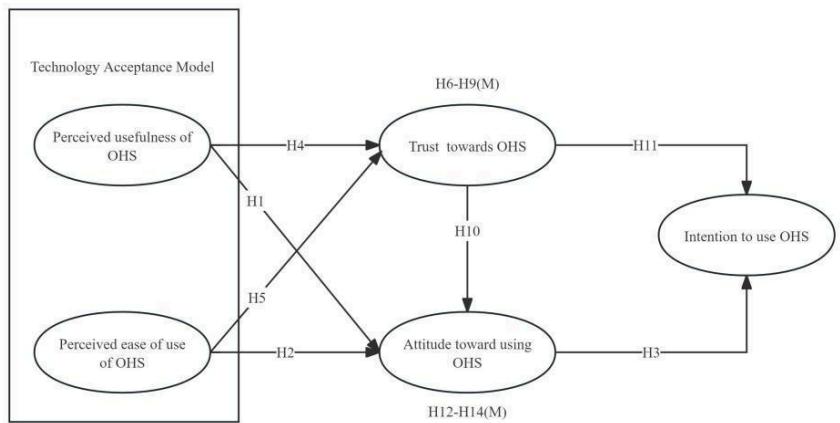 Figure 1: Research model of intention to use online hospital service
III. METHOD
In this study, 422 participants with Internet hospital experience from rural areas in China were investigated by means of online questionnaires. After about 45 days of questionnaire recovery, effective samples were obtained by random sampling.
The survey was divided into six distinct sections, focusing on different aspects of user perceptions and intentions regarding Online Hospital Services (OHS).
The first section is basic information, including gender, age, annual family income (less than 20000, 2-5000, 5-10000, 10-20000, over
200000), education level (without degree, undergraduate degree, undergraduate degree or above, mainly without degree), geographical location (southeast, northwest, central China); Age (18-25, 26-35, 36-45, 46-55, above 55; note that the majority are aged 46 and above, indicating a serious trend of aging in rural areas.)
The second and third sections of the survey investigated perceived usefulness and perceived ease of use, drawing from the foundational studies by Qin et al. (2023) and Venkatesh and Davis (2000). These sections incorporated four items each, designed to explore the constructs across multiple dimensions. This approach aimed to reflect the complexity and multi-faceted nature of user perceptions towards OHS, capturing elements such as utility, accessibility, user-friendliness, and interface clarity. The fourth section addressed Trust, utilizing scales from Yang et al. (2022) and Fu et al. (2021). It comprised eight items that provided a multidimensional exploration of Trust within the OHS context. This section highlighted specific attributes such as confidentiality, reliability, competence of healthcare providers, and security of medical information, which are crucial for establishing trust in online healthcare platforms. Section five and six explored the Attitude towards and Intention to use OHS, respectively. The items for these sections were inspired by Venkatesh and Davis (2000), structured to assess various dimensions of user attitudes and intentions through a detailed itemized approach. The Attitude section included three items across various dimensions such as satisfaction, perceived benefits, and overall sentiment towards using OHS. Similarly, the Intention section also featured three items, designed to assess the likelihood of continued use, recommendation to others, and trust in the service's efficacy.
All items were structured using a 5-point Likert scale to ensure nuanced data capture. The questionnaire's validity and reliability were confirmed through an Item-Objective Congruence (IOC) process to ensure the professionalism and relevance of the content. Upon data collection, descriptive statistics and basic reliability and validity tests were conducted using statistical software to prepare the data for further analysis. Structural Equation Modeling (SEM) was subsequently employed to perform confirmatory factor analysis and path analysis, which included both direct and indirect effects, providing a robust examination of the hypothesized relationships within the model.
| Variables | Items |
| Perceived Ease of Use | PEU1. I find online hospital services easy to use.PEU2. Learning to operate online hospital services is easy for me.PEU3. I can effectively complete my tasks using online hospital services.PEU4. I believe that interacting with online hospital services is clear and understandable. |
| Perceived Usefulness | PU1. Using online hospital services enhances my medical management.PU2. Online hospital services improve the results of my medical care.PU3. I find online hospital services to be useful in managing my health.PU4.The information provided by online hospital services is precise and valuable. |
| Attitude | ATT1. I have a positive attitude towards using online hospital services.ATT2. Using online hospital services is a wise choice for me.ATT3. I feel comfortable using online hospital services. |
| Intention | INT1. I intend to continue using online hospital services in the future.INT2. I will recommend online hospital services to others.INT3. The probability that I would use online hospital services is high. |
| Trust towards OHS | TRU1. I believe that the online hospital service provides reliable health information.TRU2. I trust the online hospital service to keep my personal health information secure. |
| TRU3. I feel confident in the competency of healthcare professionals available through the online hospital service. TRU4. I am comfortable using the online hospital service for discussing sensitive health issues. TRU5. I trust the online hospital service to offer advice that is in my best interest. TRU6. The privacy policies of the online hospital service are trustworthy. TRU7. I would rely on the online hospital service for urgent health-related advice. TRU8. I believe the online hospital service is consistent in the quality of care it provides. |
VI. RESULTS
Table 2 presents the basic demographic information of the sample using online hospital services (OHS) in rural China. 422 balanced rural respondents from all over China, including South China and Central China (21.3%, n=90), East China (20.6%, n=87), West China (18.5%, n=78) and North China (18.2%, n=77). Among them, women accounted for a slightly higher proportion of 53.6% (n=226) and men 46.4% (n=196). The proportion of elderly people in rural areas is very high, with 34.6% (n=146) over 55 years old, and fewer young people staying in the village, with
11.6% (n=49) aged 18-25. Due to the poor education level in rural areas, 64.5% of the population have no degree, only 18.7% (n=79) have a bachelor's degree and 16.8% (n=71) have a degree above the bachelor's level. This also results in their generally low annual family income and a large gap between the rich and the poor, with 20.6% (n=87) earning less than 20,000 yuan. The 20,000-50,000 class has the highest proportion (22.0%, n=93), while the 100,000-200,000 class and the class above 200,000 have the lowest proportions (18.2%, n=77).
Table 2: Essential Information
| Frequency | Percent | ||
| Gender | Male | 196 | 46.4 |
| Female | 226 | 53.6 | |
| Age | 18-25 | 49 | 11.6 |
| 26-35 | 36 | 8.5 | |
| 36-45 | 39 | 9.2 | |
| 46-55 | 152 | 36.0 | |
| Greater than 55 | 146 | 34.6 | |
| Education level | No degree | 272 | 64.5 |
| Undergraduate degree | 79 | 18.7 | |
| Undergraduate or above | 71 | 16.8 | |
| Annual household income | Less than 2w | 87 | 20.6 |
| 2-5w | 93 | 22.0 | |
| 5-10w | 88 | 20.9 | |
| 10-20w | 77 | 18.2 | |
| Above 200000 | 77 | 18.2 | |
| Geographical position | Eastern ChinaSouth of China | 8790 | 20.621.3 |
| Western China | 78 | 18.5 | |
| Northern China | 77 | 18.2 | |
| Central China | 90 | 21.3 | |
Table 3 provides the descriptive statistics of the study variables. The respondents' perceptions of ease of use were generally positive. The mean scores for the PEU items ranged from 3.59 to 3.65, with a standard deviation (SD) close to 1. The skewness values were all negative, ranging from -0.865 to -0.753, with the data distribution slightly skewed to the left, while the kurtosis value was close to zero, indicating a relatively normal distribution. Meanwhile, the perceptions of perceived usefulness were favorable, with mean scores ranging from 3.57 to 3.66, and the SD value was again approximately 1, with the participants' responses being consistent, with skewness values from -0.885 to -0.760, and the kurtosis value close to zero, indicating a slightly leftward skewness, also normally distributed. The attitudes toward using OHS also showed positive mean scores, between 3.59 and 3.66, with similar standard deviation and skewness values, indicating positive attitudes and a normal distribution of the data. The mean scores for intention to use OHS ranged between 3.61 and 3.67, with skewness and kurtosis values showing consistent patterns with the other variables. The mean scores for trust in OHS ranged from 3.57 to 3.69, with slightly smaller skewness values and some kurtosis values indicating a light-tailed distribution.
Table 3: Descriptive Statistics Results
| Study variables | Measurement items | Mean | Std. Deviation | Skewness | Kurtosis |
| Perceived ease of Use of OHS | PEU1 | 3.630 | 1.044 | -0.834 | -0.137 |
| PEU2 | 3.650 | 0.994 | -0.753 | -0.250 | |
| PEU3 | 3.590 | 0.989 | -0.865 | -0.014 | |
| PEU4 | 3.640 | 1.003 | -0.828 | 0.011 | |
| Perceived usefulness of OHS | PU1 | 3.640 | 0.979 | -0.824 | -0.033 |
| PU2 | 3.570 | 1.056 | -0.760 | -0.267 | |
| PU3 | 3.660 | 0.969 | -0.762 | -0.101 | |
| PU4 | 3.630 | 0.992 | -0.885 | 0.141 | |
| Attitude toward using OHS | ATT1 | 3.660 | 1.075 | -0.844 | -0.089 |
| ATT2 | 3.590 | 0.958 | -0.838 | 0.101 | |
| ATT3 | 3.610 | 0.973 | -0.892 | 0.026 | |
| Intention to use OHS | INT1 | 3.610 | 0.956 | -0.815 | 0.087 |
| INT2 | 3.670 | 0.988 | -0.882 | 0.099 | |
| INT3 | 3.660 | 0.990 | -0.852 | 0.032 | |
| TRU1 | 3.620 | 0.977 | -0.804 | -0.076 | |
| TRU2 | 3.600 | 1.019 | -0.772 | -0.237 | |
| TRU3 | 3.690 | 1.013 | -0.759 | -0.094 | |
| Trust towards OHS | TRU4 | 3.630 | 1.001 | -0.768 | -0.080 |
| TRU5 | 3.650 | 1.020 | -0.712 | -0.343 | |
| TRU6 | 3.600 | 1.005 | -0.606 | -0.530 | |
| TRU7 | 3.570 | 1.003 | -0.828 | -0.110 | |
| TRU8 | 3.610 | 1.018 | -0.752 | -0.172 |
Table 4 presents the reliability statistics for the measurement items of various variables in online study variables which showed that the hospital services (OHS) had good internal consistency. Specifically, the Cronbach's coefficients for perceived ease of use and perceived usefulness are 0.834 and 0.840(>0.7), respectively, indicating good internal consistency in the measurement terms of these two variables. The attitude towards using OHS' Cronbach's , although slightly lower than 0.8, it is still within an acceptable range, indicating that its measurement items have acceptable internal consistency. The intention to use OHS' Cronbach's , indicating good internal consistency in its measurement terms. The trust in OHS' Cronbach's , indicating excellent internal consistency in the measurement of this variable. The measurement items of each variable in the questionnaire have a high level of reliability in evaluating relevant concepts, ensuring data consistency and credibility.
Table 4: Reliability Statistics
| Study variables | Number of questions | Cronbach's α |
| Perceived ease of Use of OHS | 4 | 0.834 |
| Perceived usefulness of OHS | 4 | 0.840 |
| Attitude toward using OHS | 3 | 0.787 |
| Intention to use OHS | 3 | 0.800 |
| Trust towards OHS | 8 | 0.900 |
Table 5 presents the results of the Kaiser-Meyer-Olkin (KMO) measure of sampling adequacy and Bartlett's test of sphericity, both indicate that the research data on online hospital services (OHS) usage intentions are very suitable for factor analysis. The KMO measure is 0.900, indicating that the sampling is highly suitable for factor analysis. The sample size and correlations among variables are appropriate for conducting a reliable factor analysis. Bartlett's test of sphericity further supports the suitability of the data, with an approximate Chi-Square value of 4131.650, degrees of freedom df =231, and a significance level Sig.=0.000(p < 0.001) confirms that the correlation matrix is not an identity matrix, indicating significant relationships among variables.Through these tests, researchers can confidently conduct in-depth factor analysis to explore the underlying factors and constructs of online hospital services (OHS) usage intentions.
Table 5: KMO and Bartlett's Test
| Kaiser-Meyer-Olkin Measure of Sampling Adequacy. | .900 | |
| Bartlett's Test of Sphericity | Approx. Chi-Square | 4131.650 |
| df | 231 | |
| Sig. | .000 | |
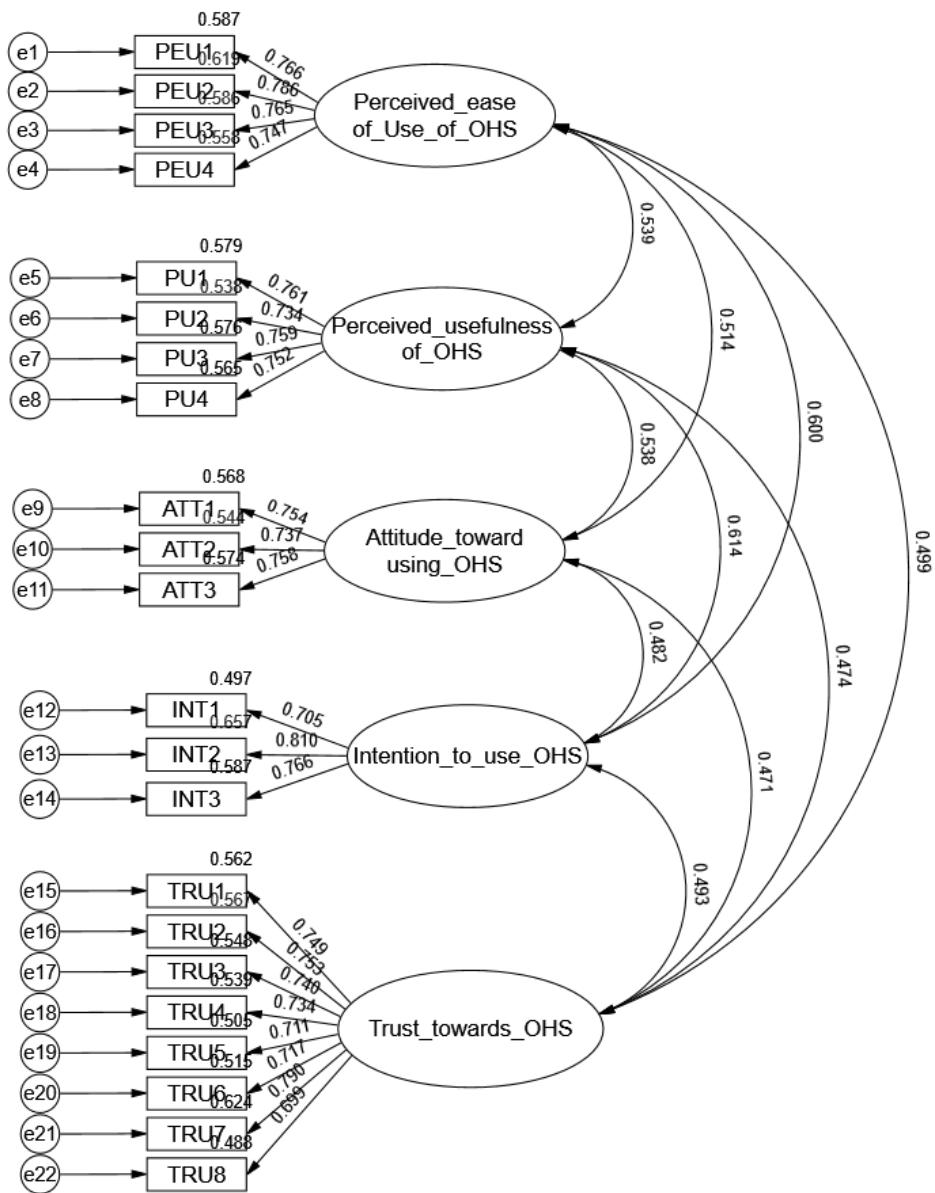
 Figure 3: Measurement Model
Table 6 presents the fit metrics for the measurement model that showed good model fit, which verified the validity of the online hospital service (OHS) usage intention model. The chi-square to degrees of freedom ratio , indicating a good model fit. The Root Mean Square Error of Approximation (RMSEA) , suggesting a close fit of the model to the data. The Goodness of Fit Index (GFI) and the Adjusted Goodness of Fit Index (AGFI) are 0.962 and 0.952, respectively, both exceeding their respective benchmarks of 0.9 and 0.85, which further confirms the model's adequacy. Additionally, the Normed Fit Index (NFI), Tucker-Lewis Index (TLI), and Comparative Fit Index (CFI) all surpass the 0.9 standard, with values of 0.959, 0.988, and 0.990, respectively. Table 6 provides a solid foundation for further exploring users' intention to use OHS in rural areas, and supports the application of the model in understanding relevant factors and structures. Table 6: Measure Model Fit Metrics
| Fit index | $\chi^2/df$ | RMSEA | GFI | AGFI | NFI | TLI | CFI |
| Reference standards | <3 | <0.08 | >0.9 | >0.85 | >0.9 | >0.9 | >0.9 |
| Result | 1.329 | 0.023 | 0.962 | 0.952 | 0.959 | 0.988 | 0.990 |
Table 7 examines the convergence validity of the measurement model using factor loadings, composite reliability (CR), and average variance extracted (AVE) for each latent variable that evaluated the reliability of the online hospital service (OHS) usage intention model. The factor loadings for all observation indicators exceed the threshold of 0.7, indicating strong individual item reliability. For perceived ease of use (PEU), the factor loadings range from 0.747(>0.7) to 0.786(>0.7), with CR=0.850(>0.7) and AVE=0.587(>0.5), confirming good convergence validity. Similarly, perceived usefulness (PU) exhibits factor loadings between 0.734 and 0.761, CR=0.839, and AVE=0.565, all of which validate the convergence of this construct. The attitude toward using OHS (ATT) has factor loadings from 0.737 to 0.758, CR=0.794, AVE=0.562, demonstrating satisfactory convergence validity. The intention to use OHS (INT) also meets the criteria, with factor loadings from 0.705 to 0.810, CR=0.805, AVE=0.580. Trust towards OHS (TRU) is measured with eight items, showing factor loadings between 0.699 and 0.790, CR=0.905, AVE=0.544, indicating excellent convergence validity. The results indicate that each latent variable has good convergent validity, verifying the internal consistency and reliability of the model, thereby supporting further research on the potential factors and structure of rural users' intention to use OHS.
Table 7: Convergence Validity
| Latent variables | Observation indicators | Factor loading | CR | AVE |
| PEU1 | 0.766 | |||
| Perceived ease of Use of OHS | PEU2 | 0.786 | 0.850 | 0.587 |
| PEU3 | 0.765 | |||
| PEU4 | 0.747 | |||
| PU1 | 0.761 | |||
| Perceived usefulness of OHS | PU2 | 0.734 | 0.839 | 0.565 |
| PU3 | 0.759 | |||
| PU4 | 0.752 | |||
| ATT1 | 0.754 | |||
| Attitude toward using OHS | ATT2 | 0.737 | 0.794 | 0.562 |
| ATT3 | 0.758 | |||
| INT1 | 0.705 | |||
| Intention to use OHS | INT2 | 0.810 | 0.805 | 0.580 |
| INT3 | 0.766 | |||
| TRU1 | 0.749 | |||
| TRU2 | 0.753 | |||
| TRU3 | 0.740 | |||
| Trust towards OHS | TRU4 | 0.734 | 0.905 | 0.544 |
| TRU5 | 0.711 | |||
| TRU6 | 0.717 | |||
| TRU7 | 0.790 | |||
| TRU8 | 0.699 |
Table 8 evaluates the discriminant validity of the measurement model in the intention model of online hospital services (OHS) usage using the Fornell-Larcker criterion through discriminant validity testing, where the diagonal elements represent the square root of the Average Variance Extracted (AVE) for each latent variable, and the off-diagonal elements represent the correlations between the constructs. The square roots of perceived ease of use, perceived usefulness, usage attitude, usage intention, and trust were 0.766, 0.752, 0.750, 0.762, and 0.738, respectively, which were higher than the correlation coefficients between the variables, indicating good discriminant validity among the potential variables. These correlation coefficients are 0.539 between perceived ease of use and perceived usefulness, 0.514 between perceived ease of use and usage attitude, 0.538 between perceived usefulness and usage attitude, 0.614 between perceived usefulness and usage intention, 0.474 between perceived usefulness and trust, 0.482 between usage attitude and usage intention, 0.471 between usage attitude and trust, and 0.493 between usage intention and trust, all of them are significant at the p\<0.001. This indicates that the latent variables in the model constructed in this study are significantly different in statistics, verifying the discriminant validity of the model and supporting the reliability and accuracy of the research results on the intention of rural users to use OHS. This further confirms the effectiveness of the model, ensures an understanding of relevant factors and structures, and promotes in-depth exploration of the intention to use online hospital services in rural areas.
Table 8: Discriminant Validity Test Note: The diagonal is the square root of the corresponding dimension AVE ***: p\<0.001
| Latent variables | 1 | 2 | 3 | 4 | 5 |
| Perceived ease of Use of OHS | 0.766 | ||||
| Perceived usefulness of OHS | 0.539*** | 0.752 | |||
| Attitude toward using OHS | 0.514*** | 0.538*** | 0.750 | ||
| Intention to use OHS | 0.600*** | 0.614*** | 0.482*** | 0.762 | |
| Trust towards OHS | 0.499*** | 0.474*** | 0.471*** | 0.493*** | 0.738 |
Table 9 outlines the model fit metrics for the structural equation model, which are verified the effectiveness of the intention model for rural users to use online hospital services (OHS). The chi-square to degrees of freedom ratio (\<3), indicating a good fit. The Root Mean Square Error of Approximation RMSEA=0.036 (\<0.08), further confirming the model's excellent fit to the data. Additional fit indices include the Goodness of Fit Index GFI=0.950 (>0.9) and the Adjusted
Goodness of Fit Index AGFI= 0.937(>0.85), which indicated strong model adequacy. Furthermore, the Normed Fit Index NFI=0.945(>0.9), Tucker-Lewis Index TLI=0.971(>0.9), and Comparative Fit Index CFI =0.975(>0.9). These demonstrate excellent fit across all indices, affirming that the structural equation model robustly represents the underlying data structure.
Table 9: Model Fit Metrics
| Fit index | $\chi^2/df$ | RMSEA | GFI | AGFI | NFI | TLI | CFI |
| Reference standards | <3 | <0.08 | >0.9 | >0.85 | >0.9 | >0.9 | >0.9 |
| Result | 1.783 | 0.036 | 0.950 | 0.937 | 0.945 | 0.971 | 0.975 |
Table 10 presents the results of the structural equation model path analysis, verified various hypothetical paths in the intention model for online hospital services (OHS) usage. All the hypothesis are supported, as indicated by the critical ratios C.R.>0.96 and p\<0.05, confirming their statistical significance within the 95% confidence interval. PU has a significant positive effect on ATT ( , C.R. = 5.965, p < 0.001), supporting H1. Similarly, PEU positively influences ATT ( , C.R. = 4.867, p < 0.001), validating H2. The path from ATT to INT is also significant ( , C.R. = 6.909, p < 0.001), confirming H3. Furthermore, both PU (
= 0.295, C.R. = 5.584, p < 0.001) and PEU ( = 0.348, C.R. = 6.543, p < 0.001) significantly influence TRU, supporting H4 and H5. Trust towards OHS (TRU) significantly affects both ATT ( = 0.164, C.R. = 3.189, p = 0.001) and INT ( = 0.325, C.R. = 6.291, p < 0.001), validating H10 and H11. They affirm the robustness of the proposed model in explaining the factors influencing the intention to use online hospital services in rural China, highlighting the critical roles of perceived ease of use, perceived usefulness, and trust in shaping attitudes and intentions.
Table 10: Structural Equation Model Path Test Note: PEU: Perceived ease of Use of OHS; PU: Perceived usefulness of OHS; ATT: Attitude toward using OHS; INT: Intention to use OHS; TRU: Trust towards OHS.
| Hypothesis | Path | Estimate | β | S.E. | C.R. | P | Results |
| H1 | PU→ATT | 0.368 | 0.343 | 0.062 | 5.965 | *** | Supported |
| H2 | PEU→ATT | 0.278 | 0.278 | 0.057 | 4.867 | *** | Supported |
| H3 | ATT→INT | 0.325 | 0.387 | 0.047 | 6.909 | *** | Supported |
| H4 | PU→TRU | 0.294 | 0.295 | 0.053 | 5.584 | *** | Supported |
| H5 | PEU→TRU | 0.323 | 0.348 | 0.049 | 6.543 | *** | Supported |
| H10 | TRU→ATT | 0.177 | 0.164 | 0.055 | 3.189 | 0.001 | Supported |
| H11 | TRU→INT | 0.295 | 0.325 | 0.047 | 6.291 | *** | Supported |
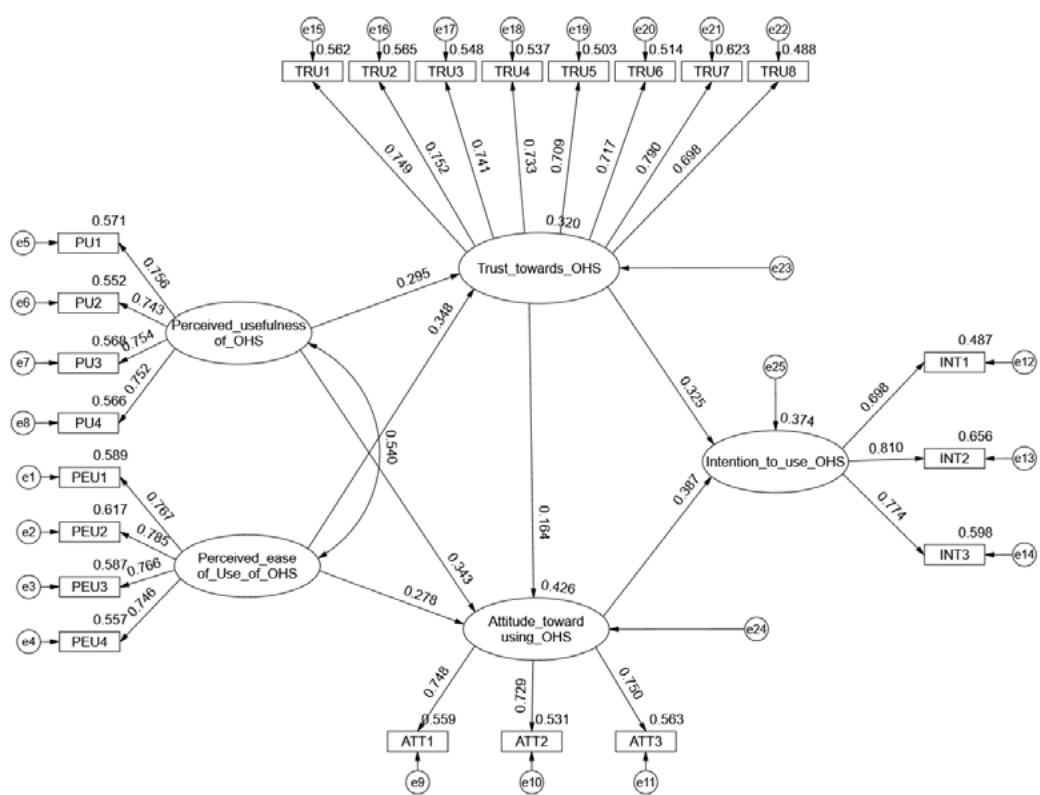 Figure 4: Path Diagram for the Structural Equation Model
Table 11 examines the mediation effects within the structural equation model using a bootstrap test to validate various hypothesized pathways and mediation effects influencing the intention of rural users to use online hospital services (OHS).
H6 posits that the effect of PU on INT is mediated by TRU, is supported with an Effect Size = 0.087, SE = 0.030, and a 95% CI between 0.037 and 0.155. H7 suggests PEU's influence on INT is mediated by TRU, showing an Effect Size = 0.095,
SE= 0.028, and a 95% CI between 0.053 and 0.166. H8 and H9 test the mediation of TRU on the relationship between PU and ATT, and PEU and ATT. Both paths are supported, with H8 showing an Effect Size =0.052, SE = 0.025, and a 95% CI of 0.005 to 0.110, while H9 has an Effect Size=0.057, SE =0.028, and a 95% CI between 0.006 and 0.122.
Further, H12, examining the mediation effect of ATT on the relationship between TRU and INT, is supported with an Effect Size =0.057, SE =0.027, and a 95% CI of 0.006 to 0.112. H13 and H14 propose that ATT mediates the relationships between PU and INT, and PEU and INT, respectively, are also supported. H13 shows an
Effect Size=0.120, SE= 0.040, and a 95% CI of 0.059 to 0.216, while H14 has an Effect Size= 0.090, SE= 0.034, and a 95% CI of 0.034 to 0.171. The bias-corrected confidence intervals for all hypotheses do not include zero, confirming that the mediation effects are statistically significant, thus Tsupport all hypothesized pathways and emphasize the crucial role of trust and usage attitude in the process of users accepting OHS, which provides important theoretical basis for improving the user acceptance and promotion of OHS in rural areas, and also provides empirical support for the formulation and implementation of relevant policies.
Table 11: Mediation Effect Bootstrap Test Note: PEU: Perceived ease of Use of OHS; PU: Perceived usefulness of OHS; ATT: Attitude toward using OHS; INT: Intention to use OHS; TRU: Trust towards OHS.
| Hypothesis | Mediation path | Effect size | SE | Bias-Corrected | Results | |
| 95%CI | ||||||
| H6 | PU→TRU→INT | 0.087 | 0.030 | 0.037 | 0.155 | Supported |
| H7 | PEU→TRU→INT | 0.095 | 0.028 | 0.053 | 0.166 | Supported |
| H8 | PU→TRU→ATT | 0.052 | 0.025 | 0.005 | 0.110 | Supported |
| H9 | PEU→TRU→ATT | 0.057 | 0.028 | 0.006 | 0.122 | Supported |
| H12 | TRU→ATT→INT | 0.057 | 0.027 | 0.006 | 0.112 | Supported |
| H13 | PU→ATT→INT | 0.120 | 0.040 | 0.059 | 0.216 | Supported |
| H14 | PEU→ATT→INT | 0.090 | 0.034 | 0.034 | 0.171 | Supported |
Table 12 details the total effects of various predictor variables on the intention to use Online Hospital Services (OHS), providing a comprehensive overview of the direct and indirect impacts within the structural model. The effect sizes, standard errors (SE), and bias-corrected 95% confidence intervals (CI) are presented for each path. The effect of perceived ease of use (PEU) on intention to use OHS (INT) has an Effect Size=0.204, SE=0.035, and a 95% CI from 0.144 to 0.289, indicating a significant positive impact. The effect of perceived usefulness (PU) on INT is significant, with an Effect Size=0.223, SE=0.039, and a 95% CI between 0.153 and 0.315. Trust towards OHS (TRU) demonstrates the strongest effect on INT, with an Effect Size=0.352, SE=0.060, and a 95% CI from 0.235 to 0.479, underscoring the critical role of trust in shaping users' intentions. The attitude toward using OHS (ATT) also significantly influences INT, with an Effect Size=0.325, SE=0.066, and a 95% CI from 0.213 to 0.481. These results collectively highlight the importance of ease of use, usefulness, trust, and positive attitude in fostering the intention to use online hospital services. The significant total effects, with confidence intervals not including zero, confirm the robustness of the structural model in explaining users' behavioral intentions in the context of rural China's online healthcare services.
Table 12: Total Effect Note: PEU: Perceived ease of Use of OHS; PU: Perceived usefulness of OHS; ATT: Attitude toward using OHS; INT: Intention to use OHS; TRU: Trust towards OHS.
| Effect path | Effect size | SE | Bias-Corrected | |
| 95%CI | ||||
| PEU→INT | 0.204 | 0.035 | 0.144 | 0.289 |
| PU→INT | 0.223 | 0.039 | 0.153 | 0.315 |
| TRU→INT | 0.352 | 0.06 | 0.235 | 0.479 |
| ATT→INT | 0.325 | 0.066 | 0.213 | 0.481 |
V. DISCUSSION AND CONCLUSION
The study uses a Structural Equation Model to examine the factors influencing rural residents' intentions to use Online Hospital Services (OHS) in China. Utilizing the Technology Acceptance Model (TAM), it investigates how perceived usefulness (PU) and perceived ease of use (PEOU) affect attitudes and trust, subsequently shaping usage intentions. The study reveals that PU and PEOU positively influence attitudes toward OHS, with trust serving as a mediating variable. Trust also mediates the relationship between PU, PEOU, and both attitudes and usage intentions. The research highlights the crucial role of enhancing user trust and optimizing platform usability to promote OHS adoption in rural areas, aiming to bridge the urban-rural healthcare divide and improve overall healthcare accessibility and efficiency. The findings emphasize the need for targeted strategies to boost rural residents' understanding and acceptance of OHS, addressing technological inequalities and fostering a more equitable healthcare system.
5.1 Theoretical Implication
The theoretical contributions of this study to the Technology Acceptance Model (TAM) and the broader field of digital healthcare adoption are significant. Firstly, this research extends TAM by empirically validating the role of trust as a critical mediator between perceived usefulness (PU), perceived ease of use (PEOU), and both attitude and intention to use Online Hospital Services (OHS) among rural residents in China. Previous studies have recognized the importance of PU and PEOU in technology adoption, but this study highlights the indispensable role of trust, which has been less explored in rural healthcare contexts.
By demonstrating that trust mediates the effects of PU and PEOU on attitudes and usage intentions, this research underscores the necessity of fostering trust to enhance the acceptance of digital health platforms. This finding aligns with and expands upon existing literature, which suggests that trust is pivotal in reducing perceived risks and increasing user confidence in technology (Roh et al., 2024). Additionally, the study's context-specific insights into rural healthcare bridge a critical gap in the literature, providing actionable strategies to address technological inequalities and promote equitable healthcare access. The empirical support for these relationships offers a robust framework for policymakers and developers to design and implement more user-centric OHS, ultimately contributing to a more inclusive digital health landscape.
5.2 Practical Implication
The practical implications of this study are multifaceted and relevant for various stakeholders in the digital healthcare ecosystem. For healthcare policymakers, the findings emphasize the importance of fostering trust to increase the adoption of Online Hospital Services (OHS) among rural residents. This can be achieved through rigorous regulations ensuring the security and reliability of these services. Policymakers should focus on creating transparent policies and communication strategies that emphasize the safety and benefits of OHS. Educational campaigns aimed at increasing awareness about the advantages of OHS, such as reduced travel time and access to specialized care, can significantly alter perceptions and increase trust among rural populations. Additionally, integrating community leaders and healthcare professionals in these campaigns can help bridge the trust gap, as these figures often hold significant influence in rural areas.
For technology developers and healthcare providers, the study highlights the need to design user-friendly and intuitively designed platforms that cater to the specific needs of rural users. Given that perceived ease of use directly impacts trust and adoption intentions, developers should prioritize simplicity in interface design and ensure that the platforms are accessible even to those with limited digital literacy. Training programs for healthcare providers on how to effectively use OHS can further enhance the service delivery, ensuring that the technology is used to its full potential. Moreover, incorporating feedback mechanisms where users can report issues or provide suggestions can help in continually improving the service and maintaining user trust. Ensuring high-quality, consistent care and protecting patient data are crucial steps towards building a trustworthy digital healthcare environment. Overall, these actions can lead to a more inclusive and efficient healthcare system that bridges the urban-rural healthcare divide.
5.3 Conclusion
This study provides significant theoretical and practical insights into the adoption of Online Hospital Services (OHS) among rural residents in China by extending the Technology Acceptance Model (TAM). The research confirms that perceived usefulness (PU) and perceived ease of use (PEOU) positively influence attitudes toward OHS, with trust playing a crucial mediating role. This highlights the necessity of enhancing user trust to promote the acceptance of digital health platforms. The findings emphasize the importance of creating user-friendly interfaces and fostering trust through transparent policies and robust security measures. These insights are crucial for policymakers and technology developers aiming to bridge the urban-rural healthcare divide and promote equitable healthcare access.
However, this study has certain limitations that provide avenues for future research. The sample is restricted to rural residents in China, which may limit the generalizability of the findings to other contexts or countries. Future research could expand the demographic scope to include diverse populations and settings. Additionally, while the study highlights trust as a mediating factor, it does not explore other potential mediators or moderators such as cultural factors, socioeconomic status, or prior experiences with digital technology. Further investigation into these aspects could provide a more comprehensive understanding of OHS adoption. Longitudinal studies could also be conducted to assess how attitudes and trust in OHS evolve over time, providing deeper insights into the long-term impacts of digital healthcare interventions.
Conflict of Interest
The authors declare no conflict of interest.
Ethical Approval
Not applicable
Data Availability
The datasets used in this study are openly available at [repository link] and the source code is available on GitHub at [GitHub link].
Funding
This work did not receive any external funding.
References
Cite this article
Related Research


Special Issue
Launch a focused special issue to highlight research, emerging trends, and expert insights in your academic field.
