



IntelliPaper
Abstract
Background: Dengue fever is an alarming viral public health issue in a large endemic population in the tropical and sub-tropical areas of the world. Recently it has been reported that about 50 million dengue infections occur annually and approximately 2.5 billion people live in dengue endemic countries. As epidemiological factors and presentations of dengue fever varies; hence, laboratory diagnosis and analysis is extremely essential.
Objective: This study aims to analyze the biochemical parameters in adult patients diagnosed with dengue at a tertiary care hospital on their day of admission and discharge. Materials and Methods: A cross-sectional laboratory-based study was conducted in Green Life Hospital in Dhaka from June 2023 to December 2023. About 126 seropositive (Dengue NS1 Antigen and IgG and IgM Antibodies) patients were included in the study. After taking informed written consent, blood samples were collected from the subjects for biochemical tests that include serum albumin, AST,ALT, creatinine, urea and electrolyte profile. Data were cleaned, entered and analyzed by Statistical Package for the Social Sciences (SPSS) software version 26.0.
Results: Serum albumin, ALT, AST, creatinine , sodium level and urea were found to be elevated among dengue patients on day of admission and all became normal on day of discharge. This study also found that serum albumin was negatively correlated with serum ALT and creatinine on both admission and discharge days.
Conclusion: Since dengue does not have specific medical therapy, awareness of altered biochemical parameters will facilitate the clinician in prompt yet appropriate management leading to a good prognosis of the disease.
Explore Digital Article Text
I. INTRODUCTION
Globally the incidence of dengue is increasing dramatically in recent decades. Approximately, 100 to 400 million dengue virus infections are found each year, and the regions of Southeast Asia, the Western Pacific and the Americas are the places most affected. It is expanding in almost 125 countries situated in tropical and subtropical regions of the world where climatic condition and rapid growth of population supports their expansion. According to the data from the National Center for Vector Borne Disease Control, India reported 233,251 dengue cases and 303 deaths from dengue in 2022. A report of Pakistan showed total dengue cases 48,906 with 183 deaths from January 01 to November 25, 2021 and total
47,120 cases of dengue including 75 deaths in 2020. Reports from different regions of the world suggest a changing pattern in the incidence of dengue infections and associated organ involvement which includes respiratory, cardiac, gastrointestinal, hepatic, renal and neurological systems. Dengue causes major economic loss to not only the patient and their family but also to the government in terms of diagnosis, treatment, and vector control strategies.
Dengue is one of the most important mosquito-borne viral infections caused by serotypes DENV-1-5 that are transmitted through the bite of female mosquitoes of genus Aedes, specially Aedes aegypti and Aedes albopictus species. The diagnosis of dengue singly by clinical presentation often becomes quite challenging due to its nonspecific presentation, for this reason laboratory parameters in conjunction is essential for the early diagnosis, monitoring of disease progression, and appropriate treatment of these patients. Therefore, now a days dengue is usually diagnosed by both clinical features and laboratory data that mainly includes positive NS1 antigen with decreased platelet count. A variety of laboratory tests including serology, liver and renal function tests are used for monitoring progression of the disease condition.
Laboratory parameters for dengue patients have widely been studied in the past. however, this study stands out by being one of the studies, specific to an endemic population within Bangladesh. It aims to enlighten biochemical parameters to describe the most important alterations in confirmed cases of dengue in the specified population.
II. MATERIALS AND METHODS
This is a cross-sectional laboratory-based study at Green Life Hospital in Dhaka from June 2023 to December 2023. About 126 seropositive (Dengue NS1 Antigen and IgG and IgM Antibodies) patients were included in the study. The protocol, methodology, and analytical modalities employed in this study were approved by the Institutional Ethics Committee.
Patients that were excluded from the study were all seronegative patients for dengue (negative for IgM/ IgG antibody ELISA test and NS1 antigen test). All positive patients harboring comorbid or secondary active infections such as (diabetes mellitus, chronic kidney disease, hypertension, malaria, and typhoid fever) and cases of age <18 years due to variation in the normal range of hematological and biochemical parameters were included in the study.
After taking informed written consent, blood samples of patients suspected of dengue fever were collected with all aseptic precautions in a dipotassium ethylenediaminetetraacetic acid anticoagulant vacutainer. Biochemical tests (Aspertate transaminase [AST] and alanine transaminase [ALT], Albumin for liver function, serum creatinine and urea for renal function, electrolyte profile) were done using automated biochemistry analyzers (Architect plus C8000 and Siemens Dimension EXL 200).
Data were cleaned, entered and analyzed by Statistical Package for the Social Sciences (SPSS) software version 26.0. Continuous variables of normal distribution were expressed as mean±SD. Pearson correlation test was done for normal distribution of data to show the association between different biochemical markers among dengue patients. P value ≤0.05 was considered as statistically significant.
III. RESULTS
This was across sectional study. About 126 adult aged between 21 to 60 years febrile patients who were suspected to have dengue viral infection were selected from admitted patient of department of Medicine, Green Life Medical College and Hospital, Dhaka.
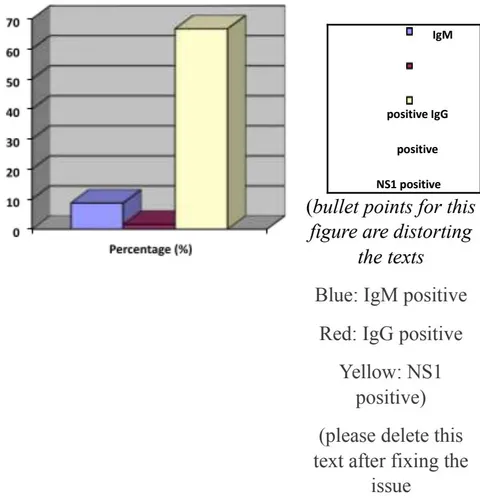
Table I: Alteration of Ast, Alt and Serum Albumin of Dengue Patients During Admission and Discharge
| Biochemical Parameters | Day of admission, mean (SD) | Day of Discharge, Mean (SD) | p-value |
| S. albumin (gm/dl) | 29.159 (4.13) | 33.571 (4.64) | 0.002 |
| S. ALT (U/L) | 167.960 (351.34) | 145.651 (355.74) | 0.000 |
| S. AST (U/L) | 153.881 (476.88) | 134.698 (411.47) | 0.28 |
Table II: Alteration of Serum Creatinine and Serum Albumin of Dengue Patients During Admission and Discharge
| Biochemical Parameters | Day of admission, mean (SD) | Day of Discharge, Mean (SD) | p-value |
| S. creatinine (mg/dl) | 1.294 (0.66) | 1.062 (0.51) | 0.001 |
| Blood urea (mg/dl) | 67.767 (58.75) | 59.330 (46.41) | 0.000 |
Table III: Alteration of Serum Electrolytes of Dengue Patients During Admission and Discharge
| Biochemical Parameters | Day of admission, mean (SD) | Day of discharge, Mean (SD) | p-value |
| S. Na (mmol/L) | 136.29 (4.87) | 138.23 (3.46) | 0.001 |
| S. K (mmol/L) | 4.01 (0.58) | 4.03 (0.49) | 0.06 |
| S. Cl (mmol/L) | 100.19 (4.86) | 99.76 (4.12) | 0.07 |
| S. HCO3 (mmol/L) | 57.27(276.27) | 56.53 (265.59) | 0.55 |
Table IV: Association of Serum Creatinine and Urea with Serum Albumin, Alt And Ast among Dengue Patients During Admission
| Parameters | Correlation coefficient | p value | |
| Creatinine | urea | 0.443 | 0.000 |
| albumin | -0.323 | 0.000 | |
| ALT | 0.116 | 0.197 | |
| AST | 0.029 | 0.749 | |
| Albumin | urea | -0.100 | 0.264 |
| ALT | -0.176 | 0.05 | |
| AST | -0.034 | 0.702 | |
| Urea | ALT | -0.028 | 0.755 |
| AST | -0.021 | 0.812 | |
| ALT | AST | 0.778 | 0.000 |
Table V: Association of Serum Creatinine and Urea with Serum Albumin, Alt And Ast among Dengue Patients During Discharge
| Parameters | Correlation Coefficient | p value | |
| Creatinine | urea | 0.512 | 0.000 |
| albumin | -0.236 | 0.008 | |
| ALT | 0.127 | 0.156 | |
| AST | 0.123 | 0.356 | |
| Albumin | urea | -0.112 | 0.213 |
| ALT | -0.179 | 0.05 | |
| AST | -0.234 | 0.402 | |
| Urea | ALT | -0.024 | 0.709 |
| AST | -0.086 | 0.512 | |
| ALT | AST | 0.398 | 0.000 |
IV. DISCUSSION
In this study, about 126 adult febrile patients who were suspected to have dengue viral infection were selected from admitted patient of department of Medicine, Green Life Medical College and Hospital, Dhaka. Among them 70% patients were confirmed by positive NS1 antigen as it is detectable during very early stages of dengue infection, usually from first day to ninth day after onset of fever. It is also responsible for the pathogenesis of the disease and hence usually used primarily for routine check up of patients suspected of dengue fever. Saeed et al found similar finding in his study.
Our study showed that on admission day serum albumin level was found low. This was found due to plasma leakage and leaking albumin out into the surrounding tissue. Ayyadevara and Nikhat observed decreased albumin level in dengue patients. On day of discharge, the level of albumin was found to be normal. This is may be due to reversal of inflammatory response caused by dengue virus which triggered the plasma leakage. We found increased level of ALT and AST among dengue patients on day of admission. The reason behind it may be due to hepatic damage caused by dengue virus. Ferede et al. found elevation of AST and ALT in dengue cases. On day of discharge ALT and AST level became normal. It is may be due to correction of inflammatory response of dengue virus which caused release of ALT and AST into blood.
Our study showed on day of admission serum creatinine and blood urea level were increased in dengue patients. Due to dengue virus mediated inflammatory response, renal tissues are damaged for which kidney fails to filter effectively the waste products of blood. As a result serum creatinine and blood urea were found to be raised on the day of admission. This statement is supported by a study carried out by Lim et al. We found the level of serum creatinine and urea level became normal which was may be due to correction and management of inflammatory response caused by dengue virus.
This study showed significant low level of sodium in dengue patients on day of admission which may be due to plasma leakage caused by dengue virus. This finding is supported by a study carried out by Mekmullica et al. and Lumpaopong et al. On day of discharge, sodium level became normal due to correction of dengue virus induced inflammatory response.
Our study have found that on day of admission there was a significant negative correlation of serum albumin with serum ALT. This finding was caused by dengue virus induced liver infection that leads to decreased albumin production and release of ALT into blood. A significant negative correlation was also found between serum albumin and serum creatinine on admission day. This was may be due to both hepatic and renal tissue inflammation by dengue virus. Serum ALT and AST was found to have positive correlation on day of admission due to hepatic inflammation by dengue virus. On day of discharge, all alterations were found to be corrected due to reversal of inflammatory response caused by dengue virus.
V. CONCLUSION
Dengue fever is the most common presentation of dengue. It affects the biochemical parameters significantly and can be used to monitor the progress during the management of cases. Since dengue does not have specific medical therapy, awareness of altered laboratory findings such as hematological and biochemical parameters will facilitate the clinician in prompt yet appropriate management leading to a good prognosis of the disease. Screening and monitoring of these parameters will help in identifying the progression of the diseases into fatal forms thereby alerting the clinician and aiding relevant therapy.
Ethical considerations
Institution ethics committee permission was obtained. Informed consent was obtained from all eligible cases of dengue.
Financial support and sponsorship
Nil
Conflicts of interest
There are no conflicts of interest.
Conflict of Interest
The authors declare no conflict of interest.
Ethical Approval
Not applicable
Data Availability
The datasets used in this study are openly available at [repository link] and the source code is available on GitHub at [GitHub link].
Funding
This work did not receive any external funding.
References
Cite this article
Related Research


Special Issue
Launch a focused special issue to highlight research, emerging trends, and expert insights in your academic field.