




IntelliPaper
Abstract
Based on the study of the current-voltage dependences during the joint electroreduction of rhenium and molybdenum ions from sulfate electrolytes on the nickel electrode, the conditions for the deposition of alloy nanocoatings in the Re-Mo system were established. The influence of various factors on the composition and quality of coatingswas studied: the content of components in the electrolyte, current density, temperature, acidity of solutions, etc., It has been established that, with an increase in the content of rhenium in the electrolyte and current density, the content of rhenium in the alloy increases. Based on the experimental data, the following electrolyte composition (mol/l) is recommended to obtain semiconductor rhenium-molybdenum alloys containing 35-50% Re: electrolyte (mol/l): 1.5 10-3 Na2MoO4 + 3.5 10-3 KReO4 + 2.0 H2SO4 ; pH=0.4; Ev=0.005 Vs-1 t=75ºC, electrode – Pt.
Explore Digital Article Text
I. INTRODUCTION
Recently, rhenium alloys, which are used in aviation and space technology, have shown great interest all over the world .
The combination of unique physical and chemical properties of rhenium makes this metal promising for use in high-tech industries such as aviation, rocket engine manufacturing, nuclear power engineering, electronics, biomedicine, and heterogeneous catalysis.
Because both molybdenum and rhenium are refractory metals, the mixing of the two elements as alloys provides the double advantage of both the high temperature physical properties of rhenium and the excellent mechanical properties of molybdenum; thus, the overall characteristics of the alloy are markedly improved. Rhenium is a strong, ductile, refractory metal with a hexagonal close-packed crystal structure. It has the second highest melting point of all metals. Compared to other refractory metals, Re has a higher ultimate tensile strength. Molybdenum, in turn, is a very versatile refractory metal that is easy to machine, has a high melting point, high heat resistance, high thermal conductivity, and reduced neutron swelling.
Being in an alloy with other metals, Mo can impart various properties to the resulting coating. As you know, molybdenum is a refractory metal with low ductility. The addition of the rare earth element rhenium (8-47%) significantly increases ductility and makes it possible to create alloys with properties such as refractoriness, heat resistance, high corrosion resistance, and good electromotive force.
Molybdenum-rhenium alloy is one of the advanced developments of the metallurgical industry, which was introduced to the world quite recently. Due to the presence of rhenium in the alloy, molybdenum becomes ductile. This, in turn, allows it to be used to obtain alloys endowed with such unique qualities as: resistance to high temperatures; resistance to corrosion; infusibility.
The electrodeposition of alloys is one of the effective methods for improving the quality of metal coatings. Alloy coatings often have high anti-corrosion properties, greater hardness, wear resistance and heat resistance compared to individual metal coatings.
The purpose of this work is the electrochemical synthesis of new nanomaterials based on Re-Mo alloys on nickel substrate. For this purpose, we studied the cathodic processes during the reduction of molybdenum with rhenium in a sulfate electrolyte on a Ni electrode. This work was carried out to determine the possibility of obtaining thin coatings of molybdenum with rhenium by the electrochemical method by electrolysis from a sulfate electrolyte. The studies were carried out in solutions of composition (mol/l): Electrolyte composition (mol/l): ; pH=0,4; Ev=0,005Vs t=75°C.
II. EXPERIMENTAL
Nickel electrode with a visible surface of is used as the working electrode. The three-electrode cell contained the electrode under study, an auxiliary platinum electrode with an area of , and a silver chloride reference electrode. To study the structure and composition film deposition was carried out on Ni substrate with an area of . Working temperature during electrodeposition , deposition time 60 min. The kinetics of the processes was controlled using measurements by the method of cyclic voltammetry on IVIUMSTAT. To study the morphology of films nickel substrate, the electrode surface was examined on a JEOL JSM7600F scanning electron microscope at various magnifications, and, accordingly, was subjected to elemental analysis using an Oxford X-MAX 50 detector. X-ray diffraction analysis of the obtained films was carried out on a DRON-5 with Cu K α-radiation. The films were obtained in the galvanostatic mode without electrolyte stirring. For analysis, the cathode deposit was dissolved on heating in concentrated acid. The amount of rhenium and molybdenum was also determined separately by the thiourea complex by the colorimetric method on a SPECORD 50 PLUS instrument.
III. RESULTS AND DISCUSSION
This work was carried out with the aim of finding the possibility of obtaining nanocoatings based on Re-Mo alloys from sulfate electrolyte. The research was carried out in the following main stages:
electrodeposition of molybdenum and rhenium separately.
joint electrodeposition of the molybdenum rhenium alloy.
Molybdenum and rhenium in pure form at the cathode can only be obtained with a low current efficiency [12-19]
Rhenium has a unique effect on lowering the transition temperature of tungsten and molybdenum in a brittle state. The mechanism of action of rhenium on these metals has not yet been fully elucidated. Alloys of rhenium with molybdenum and tungsten are of great practical interest, since rhenium has an exceptional effect on their deformability and mechanical properties. A sharp increase in the plasticity of tungsten and molybdenum occurs when they are alloyed with rhenium. We have studied the kinetics of cathodic reactions in sulfate solutions proposed for the electrodeposition of metallic molybdenum. By taking cyclic polarization curves using the potentiodynamic method on Pt and Ni electrodes, the mechanism, kinetics of the process and the potential range of joint electrodeposition of these components are determined. It has been established that the reduction of molybdenum compounds in the +6 oxidation state proceeds stepwise according to the scheme ; observed on the polarization curves. The reduction of molybdenum to the metallic state is possible only at very negative cathode potentials. The deposit formed on the surface of a solid cathode under cathodic polarization ( ) contains both molybdenum in the metallic state and molybdenum oxides.
In this work, the choice of sulfate electrolyte is due to the fact that it is possible to obtain high-quality deposits of molybdenum and rhenium from this electrolyte, while it is not always possible to obtain high-quality rhenium films from an alkaline electrolyte. Also, it was established by preliminary experiments that high-quality films can be obtained from sulfate electrolyte even at very low concentrations of molybdenum in the electrolyte. This is very important in the co-deposition of molybdenum with more electronegative metals, such as bismuth, antimony, cadmium, and rhenium. At low concentrations of molybdenum in the electrolyte, its deposition is accompanied by high polarization, which causes a shift in the deposition potential of molybdenum to the deposition potentials of a more electronegative metal and, at the same time, favorable conditions are created for the joint deposition of these metals.
As is known, the standard electrode potential of molybdenum is +0.56 V, and that of rhenium is +0.36 V. Usually, the joint deposition of rhenium with molybdenum occurs under the conditions of the limiting current of the more noble metal. However, it is known that the convergence of the deposition potentials can be achieved by changing the activity of ions in the solution. Therefore, in this case, when studying the kinetics and mechanism of molybdenum deposition, the main attention was paid to those factors that contribute not only to obtaining high-quality deposits, but also significantly shift the potential of more noble metal in the negative direction (or the deposition of a more noble metal is accompanied by high polarization). Therefore, a more detailed study of the patterns of molybdenum electrodeposition from the selected electrolyte was necessary, the knowledge of which would help to choose the optimal conditions for the joint deposition of molybdenum with rhenium. For this purpose, a study of cathodic processes during the reduction of molybdenite ions in sulfate electrolyte on Pt and Mo electrodes was performed. Taking into account the fact that during the deposition of molybdenum and rhenium from sulfate solutions on the cathode, benign deposits are obtained, in this work, a sulfate electrolyte is used. Figure 1 shows the cyclic polarization curves of molybdenum taken from sulfate solutions. As can be seen from Fig. 1, the forward and reverse polarization curves differ significantly. Since with an increase in cathodic polarization, a gradual reduction of oxide compounds of molybdenum occurs. As a result, the discharge of molybdenum ions at the cathode becomes more difficult, the rate of the process drops sharply, and the polarization curve shifts towards negative potentials. Later, in order to identify the reasons hindering the electrode process of molybdenum deposition in the studied electrolytes, the effect of temperature on the cathode process was studied.
{"image_source":{"path":"images/f5bf09dd57b7b8feeaf1f4783d8c029bec9f52a09adae584b1844841f7eeddeb.jpg"},"content":"","chart_caption":[{"type":"text","content":"Figure 1: Polarization curves of molybdenum from sulfate electrolytes on a nickel electrode. Electrolyte composition (mol./l): "},{"type":"equation_inline","content":"1,5 \cdot 10^{-3} Na_{2} MoO_{4} + 2,0 H_{2} SO_{4}"},{"type":"text","content":"; pH=0,4; Ev=0,005 Vs "},{"type":"equation_inline","content":"^{-1}"},{"type":"text","content":" t=75°C."}],"chart_footnote":[]}
Figure 2 shows the polarization curves of the rhenium reduction on a nikel cathode, The recording of polarization curves during the reduction of rhenium in the absence of molybdenum showed that the reduction of rhenium in acidic electrolytes occurs stepwise, through the formation of rhenium oxides and is accompanied by the reduction of hydrogen, which is in good agreement with the literature data [5-8] {"image_source":{"path":"images/1bf3911a3c1de3c1e74418ce1833b553c0361b7b20b827fa3959311fa04b2506.jpg"},"content":"","chart_caption":[{"type":"text","content":"Figure 2: Polarization curves of rhenium from sulfate electrolytes on a nickel electrode. Electrolyte composition (mol./l): "},{"type":"equation_inline","content":"3.5 \times 10^{-3} K ReO_{4} + 2.0 H_{2}SO_{4}"},{"type":"text","content":"; pH=0.4; Ev=0.005 Vs "},{"type":"equation_inline","content":"^{-1}"},{"type":"text","content":" t=75°C."}],"chart_footnote":[]}
On the polarization curves of rhenium, one clear wave is observed: at a potential of +0.45 V. The presence of these waves can be explained by the stepwise mechanism of perrhenate ion reduction, with intermediate stages of the rhenium oxides formation and their further reduction by evolving hydrogen to metallic. We believe that the cathode process is described as the reduction of the perrhenate ion to metallic rhenium through the stages of formation of and , as evidenced by the presence of red and blue precipitates in the resulting film.
{"image_source":{"path":"images/6806c81d794ee6d2e1417759eadebde5fec608ade3bce4a27ac45f55463b5f19.jpg"},"content":"","chart_caption":[{"type":"text","content":"Figure 3: Polarization curves of molybdenum-rhenium alloy from sulfate electrolytes on a nickel electrode. Electrolyte composition (mol/l) Electrolyte composition (mol./l): "},{"type":"equation_inline","content":"1,5 \cdot 10^{-3} Na_{2} MoO_{4} + 3,5 \cdot 10^{-3} KReO_{4} + 2,0 H_{2} SO_{4}"},{"type":"text","content":"; pH=0,4; Ev=0,005 Vs "},{"type":"equation_inline","content":"^{-1}"},{"type":"text","content":" t=75°C"}],"chart_footnote":[]}
The polarization curves of Re–Mo alloys are presented in fig 3. As can be seen from the figure, the cathodic reduction of the Re–Mo alloy is located in the region of more positive potentials than the potentials of deposition of individual elements. With the shift of the cathode curve to the region of more positive potentials, the value of the limiting current increases. A similar effect is explained by the release of energy during the formation of a chemical compound. Chemical and X-ray diffraction analysis established that at a potential of -0.1 V, an alloy is obtained on the cathode, the composition of which corresponds to the . The electrochemical process of its formation is described by the equation:
The effect of temperature on the co-deposition of rhenium with molybdenum from a sulfate electrolyte was also studied. Figure 4 shows the cyclic current-voltage dependencies of the cathodic polarization on temperature. As can be seen from figure 4, the cathodic polarization strongly depends on the temperature of the electrolyte. As the temperature increases, the polarization curves shift in the positive direction, i.e. cathodic polarization decreases. Polarization curves are characterized by limiting currents, which increase with increasing temperature and concentration. On the polarization curves obtained at temperatures of 60 and 80°C, the anodic oxidation waves decrease, and the rhenium oxidation wave increases. High-quality coatings of the rhenium-molybdenum alloy are obtained at a temperature of 75 °C. Therefore, further experiments were studied at a temperature of 75 °C. The potential region was also found at which high-quality coatings of rhenium molybdenum alloys are obtained.
{"image_source":{"path":"images/a0dbbb372e10f51469f0ff3a78f76f1d0a95949a762f38830fe2a96e7f053951.jpg"},"content":"","chart_caption":[{"type":"text","content":"Figure 4: Effect of temperature on the co-deposition of molybdenum-rhenium alloy from sulfate electrolytes on a nickel electrode. Electrolyte composition (mol/l): "},{"type":"equation_inline","content":"1.5 \times 10^{-3} {2} {4} + 3.5 \times 10^{-3} {4}"},{"type":"equation_inline","content":"2.0 {2} "},{"type":"text","content":"; pH=0.4; Ev=0.005 Vs "},{"type":"equation_inline","content":"^{-1}"},{"type":"text","content":", t "},{"type":"equation_inline","content":"^{\circ}C"},{"type":"text","content":"-1-25, 2-45, 3-65,4-85."}],"chart_footnote":[]}
The effect of the substrate on the co-deposition of molybdenum with rhenium was studied. The cyclic polarization curves of the rhenium-molybdenum alloy from a sulfate electrolyte on a nickel electrode were presented in fig 3.
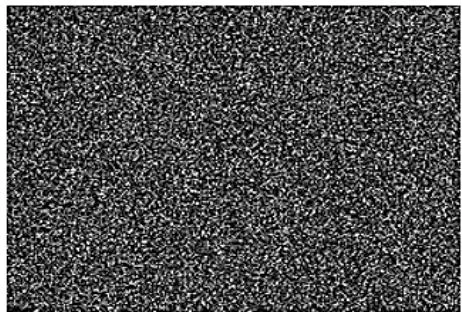
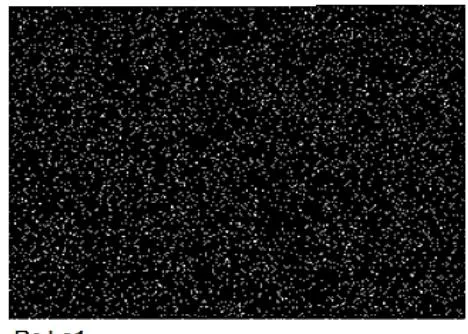
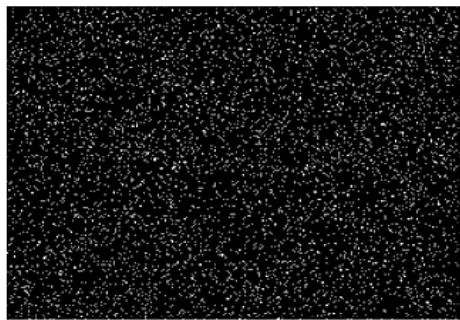
The composition and morphology of thin Re-Mo films electrodeposited on a platinum electrode were analyzed. The phase composition of the obtained films was determined by XRF on a diffractometer (Fig. 5). The study of the morphology of Re-Mo films on platinum and nickel substrates was performed on a scanning electron microscope. It follows from the SEM data that the film consists of 76.9% at, Re, 23.1% at. Mo (Fig. 6).
Thus, on the basis of experimental data, the following electrolyte composition (mol/l) is recommended for obtaining thin coatings of molybdenum with rhenium: ; pH=0.4; Ev=0.005 t=75°C.
{"image_source":{"path":"images/9f66532af98b9a0d2337ccd3de8a5a119951716abad92bb7adca1a0f81c579bb.jpg"},"content":"","chart_caption":[{"type":"text","content":"Figure 5: X-ray diffraction analysis of thin Re-Mo coatings obtained by electrochemical method from sulfate electrolyte"}],"chart_footnote":[]}
Mo La1
| Element | Weight% | Atomic% |
| Ni K | 76.62 | 90.66 |
| Mo L | 1.77 | 1.28 |
| Re M | 21.62 | 8.06 |
| Results | 100.00 |
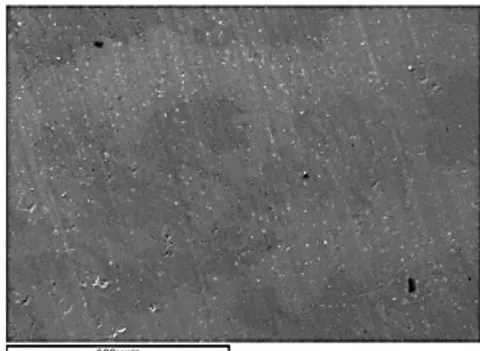
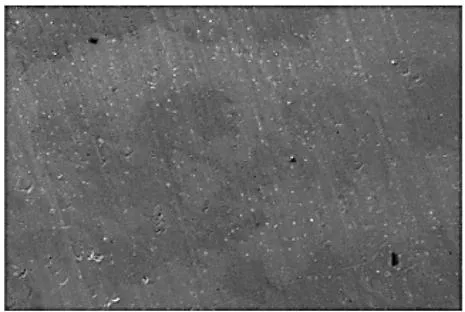
Electronic image 1
IV. CONCLUSION
Analysis of the results of measurements of the cathode and anodic polarization curves during the joint electrodeposition of rhenium with molybdenum shows that the process of joint deposition is accompanied by depolarization, which proves the formation of a chemical compound or a solid solution based on these compounds, and the potential range at which compounds of stoichiometric composition are formed on the cathode is determined.
Based on experimental data, the optimal composition of the electrolyte and the electrolysis mode were developed to obtain high-quality semiconductor coatings of molybdenum with rhenium from sulfate electrolyte.
Conflict of Interest
The authors declare no conflict of interest.
Ethical Approval
Not applicable
Data Availability
The datasets used in this study are openly available at [repository link] and the source code is available on GitHub at [GitHub link].
Funding
This work did not receive any external funding.
References
Cite this article
Related Research


Special Issue
Launch a focused special issue to highlight research, emerging trends, and expert insights in your academic field.