




IntelliPaper
Abstract
This paper provides an updated analysis of cork production and its relationship to forest decline in Andalusia, southern Spain. It examines the ecological, economic, and environmental importance of cork oak forests, while evaluating the impacts of climate change, prolonged drought, wildfires, and pathogens on productivity. Based on literature reviews, historical archives, and cork extraction data from 1998 to 2023, the study identifies a sustained decrease in yields, highlighting a moderate correlation between environmental stress factors and the decline in production, indicating that socioeconomic factors modulate cork extraction and trade. Results underscore the urgent need for innovative management strategies, ecological restoration, and international cooperation to safeguard these Mediterranean ecosystems and their socio-economic benefits.
Explore Digital Article Text
I. INTRODUCTION
European forests constitute one of Europe's most important renewable natural resources, occupying more than 43.5% of the EU's land area and generating a vast array of ecological, economic, and environmental functions, making them essential for the health and well-being of European citizens (European Commission, 2021). Sustainable forest management is key tools for sustainably maintaining this multiplicity of functions, which are also demanded by an increasingly environmentally conscious European citizenry.
There is no Community forestry policy as such, but a series of forestry implementation measures are included in the current CAP (2023-2027) related to forest fires, reforestation, and species conservation. Some Directorates-General of the European Commission generate Directives and Regulations that affect and modulate the forestry sector itself, which accounts for an average of approximately 2.5% of EU GDP (European Commission, 2021). It should be noted that the forestry sector in a broad sense, including livestock activities related to forest uses, constitutes an important source of employment throughout Europe and tends to diversify over time.
Much of the Iberian Peninsula, including part of Portugal, is subject to the Mediterranean climate, whose environmental constraints (mainly the limited availability of water during the period of highest temperatures) prevent the high profitability of forest products. The forest landscape It is characterized by a great diversity due to different ecological, edaphic and tectonic factors (Quézel, 1985; Ibáñez et. al., 1997; Blondel et al., 2010) including the variety of land uses that have been exploited for millennia by human communities. The configuration of the current Mediterranean landscape derives from the dynamics of the plant communities themselves, from biotic interactions as well as from climatic influence (abrupt climate changes during the last 1.8 million years) and from human activities in the organization of the territory. Intense disturbances such as grazing, fire and scrub clearing have led to evolutionary adaptations in relation to the regeneration capacity of Mediterranean species (Pons and Quézel, 1985; Ibañez et. al., 1997; Pausas & Keeley, 2009).
In the Mediterranean Basin, human activities in the territory (at least during the last millennia) together with the movement of livestock and the use of fire have constituted a potential agent transforming the composition and cover of Mediterranean vegetation (García Novo, 1984; Blondel and Aronson, 1995; Valladares et. al., 2004; Blondel et al., 2010). The forest history of much of the territories of the Iberian Peninsula differs little from other Mediterranean countries such as Italy or Greece (MaB, 1977).
Slow-growing species (holm oaks, cork oaks, gall oaks, junipers, etc.) native to the Mediterranean Basin do not usually offer very high economic returns compared to other European forest species. However, they do generate other non-timber resources of great importance for maintaining populations in rural areas, such as cork, pastures and livestock, honey from beehives, mushrooms, and hunting. Maintaining these Mediterranean ecosystems, well adapted to the climate and soil, also has clear positive impacts on the physical environment, human health, and socioeconomic structures. The Mediterranean Basin is considered a hotspot for climate change due to the decrease in precipitation and the expected increasing occurrence of extreme events (Giorgi and Lionello, 2008; Costa et al., 2020). However, in the case of the Iberian Peninsula, the scenarios predicted by climate change are expected to have a serious impact on the dynamics of forest ecosystems (especially in the center and south of the Peninsula) and a probable increase in the intensity and severity of forest fires in the natural environment with all the enormous associated economic and social losses.
One of the objectives of this article is to present an updated overview of the cork oak forest, a plant formation characteristic of the western Mediterranean Basin that offers notable ecological and economic value. It also analyzes the cork sector in Andalusia in general and in the Los Alcornocales Natural Park in particular and attempts to correlate the loss of this resource with tree death (forest decline) due to both biotic factors (presence of pathogenic microorganisms in the soil, attack by defoliating insects) and abiotic factors such as prolonged droughts in relation to climate change and socioeconomic crises.
II. METHODOLOGY
We have basically used one approach: obtaining theoretical information from research articles and reports on cork oak forests and cork in Andalusia (from the last 25-30 years). In addition, we reviewed data from various archives dating back to the mid-20th century and consulted the Annual Reports on Resource Management of the Los Alcornocales Natural Park since its establishment in 1990. We focused on the period 1985-2015 because we had a long series of data (30 years) at the local level on several climatological factors that we believe are important in cork production. Specific climatological data for certain towns are difficult to obtain because automated weather stations are unavailable. Finally, we organized and analyzed cork extraction data in Andalusia for the period 1998-2023, a sufficient time window to understand the cork production process and the current difficulties it faces. The statistical analysis and graphs were produced using Python, a programming language with artificial intelligence capabilities for data analysis.
Study area
The Aljibe and Campo de Gibraltar mountain ranges
Under the prism of the repercussions of current Climate Change, which is causing long periods of drought and intense heat waves like the one that much of Europe is experiencing this summer of 2025, we have focused on the province of Cádiz (southern Spain), where there are areas largely dominated by a mixture of Quercus species, mainly holm oaks (Quercus rotundifolia) and cork oaks (Quercus suber), forming pure stands and/or mixed with conifers and subject to a greater or lesser extent to a process of forest decline that has not yet been well evaluated scientifically.
The Aljibe and Campo de Gibraltar mountain ranges cover a large part of the province of Cádiz and part of the border area of the province of Málaga. They are protected as the Los Alcornocales Natural Park, with an area of 1,750 km2 (Figure 1). From a geological perspective, the Los Alcornocales Natural Park consists of a group of mountain ranges consisting primarily of the so-called Aljibe sandstones, of Oligocene-Miocene age, resting on clayey materials. The geological structure is complex, and these mountain ranges constitute rugged reliefs with steep slopes (despite not exceeding 1,092 meters in altitude), giving the area a distinctly rugged feel that stands out from the surrounding gentle hills and plains. The resulting soils are acidic and poor in nutrients, acting as a limiting factor for plant formations.
This extensive rural area is located in the Campo de Gibraltar region, just 14 km from the African continent. It has high rainfall (1,000–1,300 l/m2 ) and great soil and biological diversity (Marañón et al., 1999) with a dense forest appearance quite distinct from the rest of the dehesa landscapes of Andalusia. Here, cork oak forests are the predominant forest formation, covering over 72,000 ha (720 km2), making it the most important vegetation formation of this species in Europe and, along with the Mamora Forest in Morocco, in the world (Figure 2).
{"image_source":{"path":"images/56babceb742953748684bffb507da742a4582c24e804044a805e7e3776dcebb4.jpg"},"content":"","chart_caption":[{"type":"text","content":"Fig. 1: General location map of the Sierras del Aljibe and Campo de Gibraltar (next to the Strait of Gibraltar, Andalusia, Spain)."}],"chart_footnote":[]}
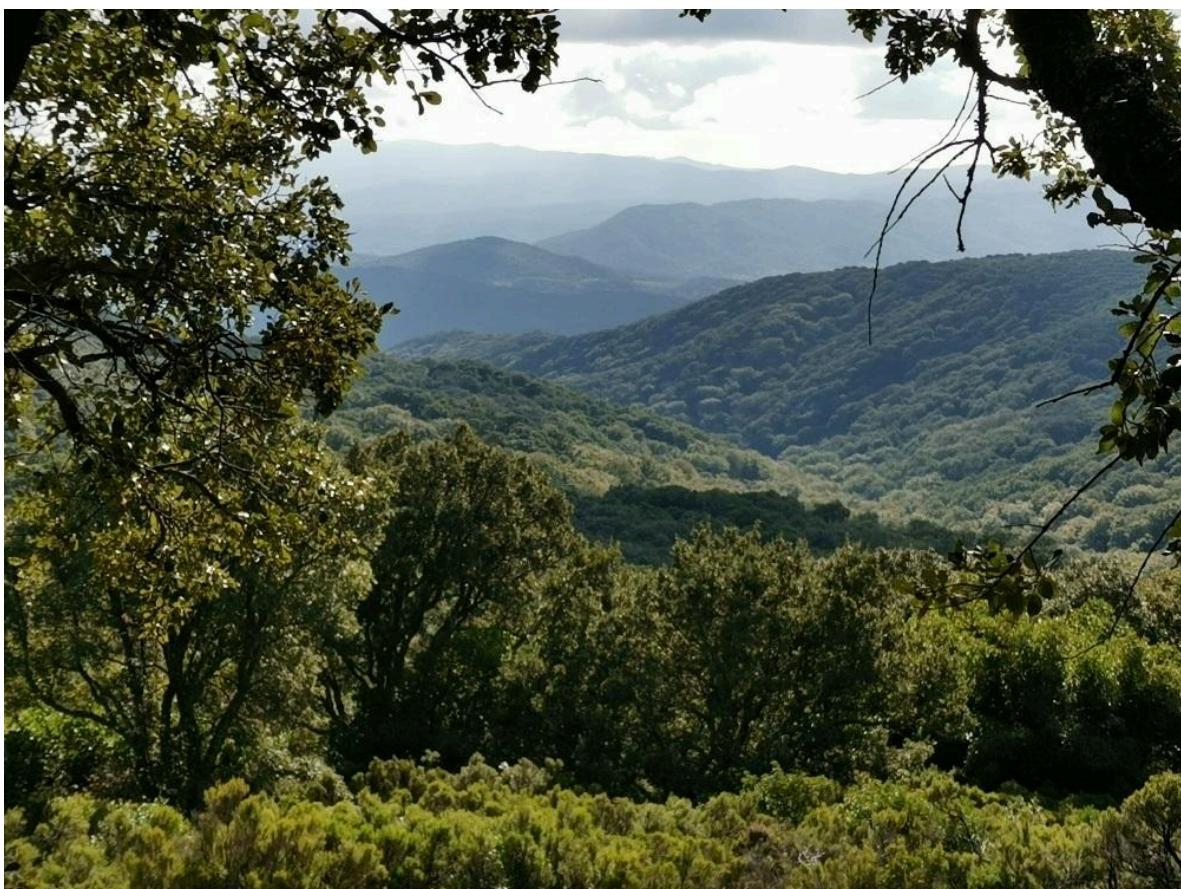 Fig. 2: Panoramic view of the Sierras del Aljibe and Campo de Gibraltar where cork oaks (Quercus suber) predominate.
The cork oak forest as a forest community
The cork oak forest is a highly humanized Mediterranean ecosystem whose wise exploitation has allowed for centuries the maintenance of rural economies closely dependent on forest resources. The predominant tree is the cork oak (Quercus suber) which belongs to the Fagaceae family, which is an important family of hardwood trees and some shrubs, widespread in both temperate and tropical regions. This family also includes the holm oak (Quercus rotundifolia), oaks (Quercus sp.), beeches (Fagus sylvatica) and chestnut trees (Castanea sativa). It comprises about 800 species grouped into 7 genera that have deciduous, evergreen or marcescent leaves.
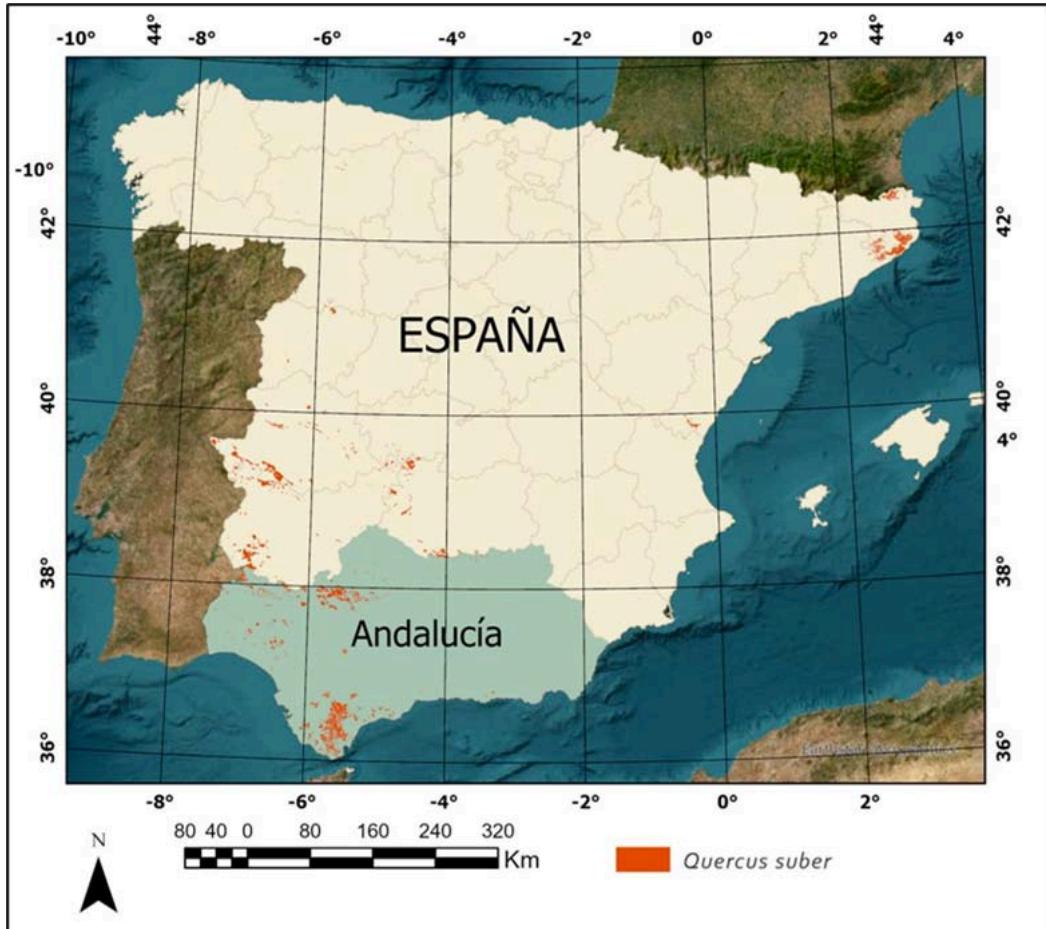
The cork oak in Andalusia generally occurs mixed in masses with holm oaks and gall oaks (Quercus faginea and Quercus canariensis), but in the study area it usually forms notable monospecific stands and in humid enclaves it forms mixed forests with the Andalusian gall oak (Quercus canariensis). It is distributed exclusively in the western Mediterranean: Portugal, Spain, France, Italy, Morocco, Algeria and Tunisia (Pérez-Latorre et al., 1993). However, its wide potential range has been reduced in recent centuries, mainly due to human action: logging, extraction of tannins for the leather tanning industry and overgrazing (Jurado Doña, 2002; Kim et al., 2017). Along with the physical environmental factors (precipitation, temperature and soil), human intervention should also be considered as a limiting and determining factor in its current distribution (Jurado Doña, 2002, Figure 3). The ecological niche of the cork oak has been expanded at the expense of the Andalusian gall oak, which supports the evidence that humans have induced strong changes in the composition of Quercus forests in the Mediterranean basin (Urbieta et al., 2008).
 Fig. 3: Current distribution of the cork oak (Quercus suber) in Spain (in red).
At the end of the 20th century, cork oak forests occupied around 1,157,000 ha in the Iberian Peninsula, of which approximately 488,000 ha corresponded to Spain and 669,000 ha to Portugal. According to the II National Forest Inventory (1998), it would occupy 503,000 ha and currently covers an area of approximately 574,248 ha, after Portugal where there are 736,775 ha of cork oak forests.
The surface area of both countries represents nearly half of the world's estimated area of approximately 2.5 million hectares. This figure would represent only 28% of the 8.4 million hectares that cork oak forests appear to have reached in modern times, according to FAO data. Table 1 shows the cork oak forest area of the four largest countries in the world from 1956 to 1991. In the case of Andalusia, the area is estimated to be between 183,000 and 205,000 hectares, most of which is privately owned. In all these mountain ranges of the Los Alcornocales Natural Park, as in other areas of Andalusia, the main body of cork oak forest has been dedicated primarily to the extraction of cork. This logging, carried out every 9-10 years, has modified the natural forest, favoring the cork oak to the detriment of other species (Jurado Doña, 2002).
Table 1: Evolution of the cork oak forest area between 1956 and 1991
| COUNTRY | 1956(1) | 1964(1) | 1971(1) | 1989(2) | 1991(3) |
| Portugal | 800,000 | 740,000 | 600,000 | 669,000 | 750,000 |
| Spain | 500,000 | 330,000 | 330,000 | 488,000 | 500,000 |
| Morocco | 400,000 | 320,000 | 300,000 | 350,000 | 340,000 |
| Algeria | 440,000 | 440,000 | 200,000 | - | 410,000 |
{"image_source":{"path":"images/f11158542fe9cc4877809849cf43837b0b179628e03cb73027115269016d0946.jpg"},"content":"","chart_caption":[],"chart_footnote":[{"type":"text","content":"Fig. 4: Job creation in the cork sector at national level (2002-2003)."}]}
{"image_source":{"path":"images/a632a5e737bd18530c913189d3e93061ede3471480aafd5d4661bcd4158ab425.jpg"},"content":"","chart_caption":[{"type":"text","content":"Figure 5: Permanent jobs in the cork sector in 2017."}],"chart_footnote":[]} forest fires and also partially protects it from fungal and insect attacks. The exploitation of these forests in Andalusia dates to the beginning of the 19th century, although it had already begun previously in Catalonia (NE Spain) and in France (Jurado Doña and Benítez, 2008).
Cork quality varies, even within a single geographic region, and is a very important aspect to produce good corks. Maintaining good prices for the product currently depends on the buoyant demand from the cork industry derived from the large production of sparkling wines (cava/champagne) and other quality wines, since no better substitute has been found for closing bottles, once the problem of TCA, which caused some organoleptic alterations in the wine, was resolved (TCA, or trichloroanisole, is a molecule that can contaminate wine and cause the well-known "cork flavor" or "cork taint and reduces its quality). The wine industry is a great ally for the permanence of this Mediterranean ecosystem.
The economic and social profitability of the cork oak forest has not, however, promoted its regeneration, demonstrating that the market alone does not allow the conservation of the resource but that it is necessary for public administrations (regional and national) to subsidize reforestation with cork oaks on public land and also on private property in common agreement with the owners.
Currently, global cork production is estimated at around 400,000 tons per year, of which Portugal accounts for around 50% and Spain for just over 20%. At the end of the 20th century, there were 285 cork processing companies in Spain, dedicated to the preparation of planks and agglomerates, which together processed between 60,000 and 80,000 tons of cork annually. Andalusia has 49% of the cork oak forest area, produces 56% of the raw material, but only houses 19% of the cork industries, which occupy 15% of the total jobs generated by this industry in Spain (2002-2003), although these data must be taken with caution because there is great volatility in terms of the cork industries and jobs, given that these small companies dedicated to the transformation of cork can suffer sudden changes due to the current economic situation and the monopoly situation of some companies in Portugal specially Amorim.
The decline of the trees
The main forestry problems affecting cork oak and holm oak forests in much of Andalusia are the worrying lack of regeneration and the obvious degree of damage caused by the "Quercus drought," which has been causing tree death since at least the 1980s (both in groups and scattered trees). The holm oaks in the El Andévalo region of Huelva are currently severely affected. We have also seen tree death in southern Portugal, as well as damage to some shrub species.
The most important parasite that contributes to the development of this disease is the oomycete Phytophthora cinnamoni a species introduced into Europe probably from the Papua New Guinea-Celebes Islands and detected in Spain in the late 1980s (Brasier et al., 1993; Sánchez et al., 2002).
However, mortality due to "the Quercus drought" is not a new phenomenon (there are outbreaks in several Andalusian provinces, with varying degrees of affectation) but it appears and disappears and its evolution involves predisposing factors, which are permanent and gradually diminish the health and vigor of the trees (their old age, wounds and scars from bark stripping) and triggering factors such as forest fires, the attack of insect pests such as Lymantria dispar (Lepidoptera) and Periclista andrei (Hymenoptera) and climate change, which has been causing long periods of drought in recent decades, interspersed with short periods of waterlogged soil that encourage infections of tree roots by fungi and oomycetes, causing intense physiological imbalances in the trees and their death (de Sampaio et al., 2013; Serrano et al., 2021; Camarero et al., 2024; Jurado Doña et al., 2025).
Currently, data confirm that the pathogen Phythopthora cinnamomi It is spreading throughout both Portugal and Andalusia (Brasier et al., 1993; Tuset, 2004; Caetano et al., 2007; Gómez-Aparicio et al., 2012; Gutiérrez-Hernández et al., 2017) causing severe water stress in trees. The microorganism itself produces certain molecules called elicitins that evade the tree's defense system (Coelho et al., 2021). Along with the presence of various oomycetes in the soil, the disease is probably due to several interrelated factors, (Navarro Cerrillo, 2025) including the loss of tree vigor in previous centuries due to the ancient extraction of tannins, which is fatal to trees, and the extraction of cork in adverse weather conditions, which can damage the producing mother layer (Jurado Doña et al. 2022). Cork harvesting on Quercus suber trees leads to phellogen destruction and regeneration, but the relationship between harvesting intensities and tree resilience remains unclear (Oliveira and Costa, 2012).
The sometimes-sudden mortality of adult cork oaks and holm oaks will likely have a cascading impact on the plant and microbial communities in the soil and the implications for the regeneration of trees (Ávila et al., 2018) and will lead to a slow replacement of species such as cork oaks and holm oaks with more xerophilous ones such as wild olives and mastic trees. Furthermore, it is highly likely that the death of thousands of cork oaks in recent decades is compounded by a lack of recruitment of young individuals due to various factors, including the high herbivory pressure in the Park Natural (Rodríguez-Sánchez et al., 2018).
The accelerated loss of our cork oak and holm oak forests represents a major setback for the livestock farming associated with them and has serious far-reaching economic repercussions for the products associated with the dehesa and cork oak forests.
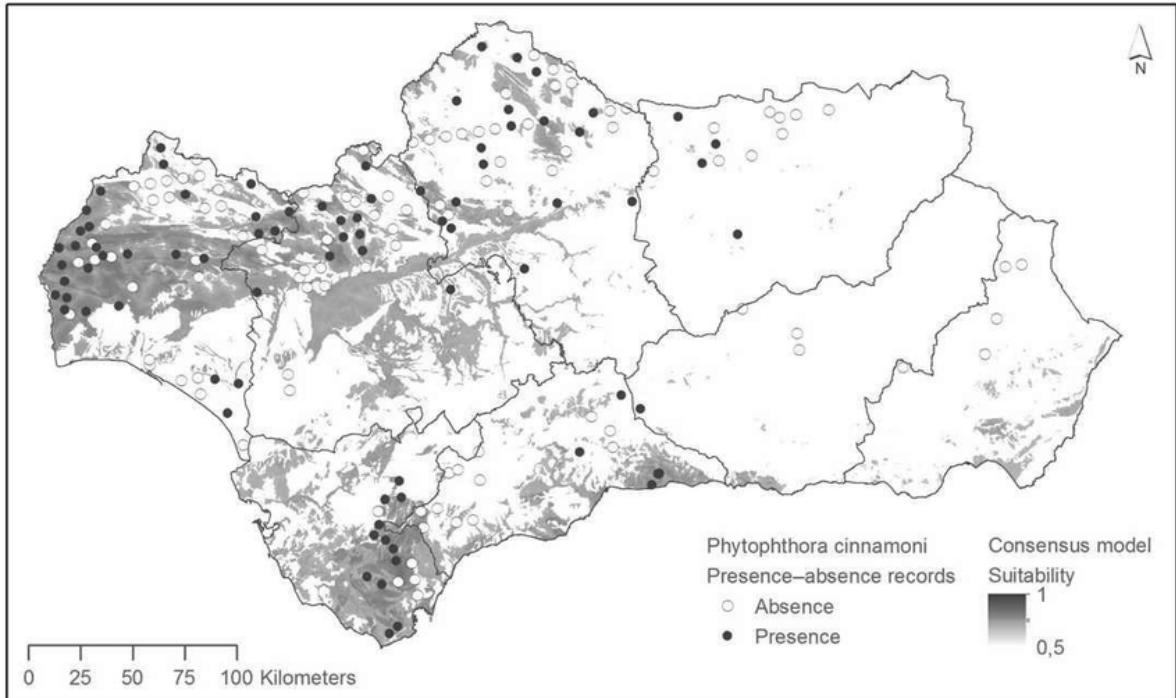 Figure 6: Presence-absence map of Phytophthora cinnamomi in Andalusia (Oliver-Hernández et al., 2017)
We cannot overlook the importance of forest ecosystems such as net carbon sinks and, therefore, their essential role in mitigating the rise of greenhouse gases at this crucial time in the fight against climate change. The Paris Agreement of December 2015, signed by 195 countries and the European Union, the first binding global climate agreement, expressly refers to the need to protect and enhance forests in line with their role in combating global warming.
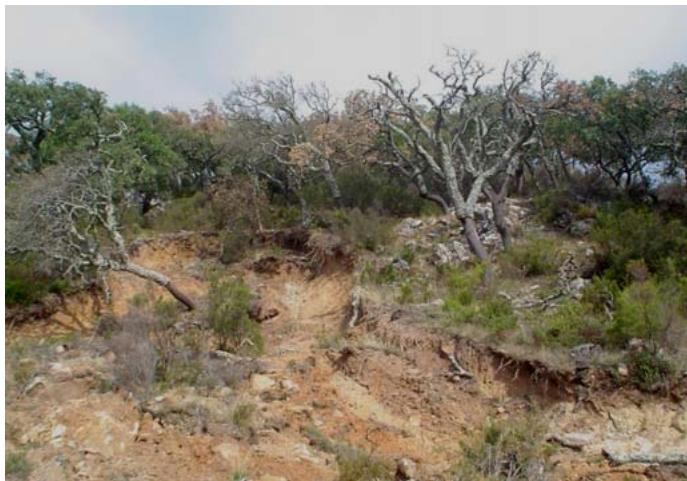
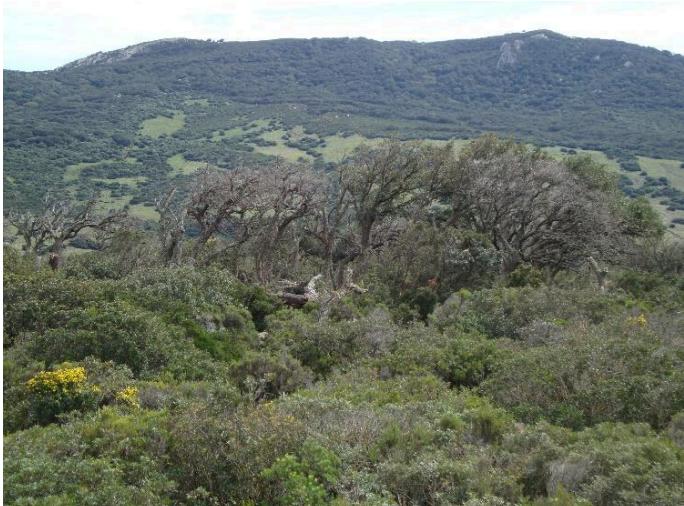 Fig. 7: Stand of trees (Quercus suber) affected by drought in the Montes de Propios de Los Barrios (Cádiz) (top) and Tarifa (Cádiz) (bottom)
III. RESULTS AND DISCUSSION
Los Alcornocales Natural Park
In all these mountain ranges of the Los Alcornocales Natural Park, the main cork oak forest has been used primarily for cork production since the late 19th century. This logging carried out every 9–10 years, has modified the natural forest, promoting cork oaks to the detriment of other species such as Andalusian gall oaks (Quercus canariensis) (Jurado Doña, 2002; 2006; Urbieta et al., 2008).
In this study, we analyzed the relationship between annual cork production and certain climatic variables (average annual temperature, March precipitation, and total annual precipitation) in two very important cork-producing municipalities in Los Alcornocales Natural Park: Alcalá de los Gazules and Los Barrios. In the first municipality (Alcalá de los Gazules), the multiple regression model shows a statistically significant relationship : The average annual temperature shows a positive and significant correlation , March precipitation presents a moderate negative correlation , and the total annual precipitation is not significant . For Los Barrios, the model is not significant , and none of the climatic variables show statistical significance, the closest being March rainfall . These results suggest greater sensitivity of production to climatic factors in Alcalá. In Los Barrios, other factors not included in this analysis could play a role.
We have also used the Thornthwaite method to estimate potential evapotranspiration (PET) and calculated an annual aridity index (precipitation/PET) for each municipality and year. Including the aridity index in the regression models improved explanatory power slightly:
-
In Alcalá, increased from 0.297 to 0.334. The model remained significant (p = 0.027), although the aridity index itself was not statistically significant.
-
In Los Barrios, increased from 0.148 to 0.239. While the overall model was still not statistically significant (p = 0.117), the aridity index came close to significance (p = 0.089). These results suggest that the aridity index may play a relevant role in cork production variability and deserve further investigation, especially in areas with more extreme climate patterns or limited water availability.
Our results show that for the chosen period (1985-2015) production has suffered significant fluctuations (graph 8). The observed decline in cork production correlates strongly with ecological stress events, particularly drought and economic crisis. The aridity index and, ultimately, the limited availability of water during long periods of drought appear to play a moderately significant role not only in the physiological decline of trees (Allen et al., 2010; Gentilesca et al., 2017) but also in the loss of cork production (Jurado Doña et al., 2022).
These pressures weaken the trees, reduce growth rates, and increase susceptibility to pests. In turn, this has led to reduced bark quality and lower harvest volumes (Jurado Doña et al., 2018; Camarero et al., 2024).
These events appear to coincide with significant declines in production, suggesting a possible relationship between climatic and biotic factors and cork production. Added to this are the unique characteristics of the business process of selling and distributing the product (socioeconomic factors).
{"image_source":{"path":"images/a51dfe1fd82c3eefbe26986f4f37d35ca2a939be4f9682a7654eba3ee2b66811.jpg"},"content":"","chart_caption":[{"type":"text","content":"Figure 8: Relationship between cork production and specific events in two municipalities in Los Alcornocales Park for the period (1985-2015)."}],"chart_footnote":[]}
Andalusia As seen in Figure 9, there is a downward trend in cork production in Andalusia, with years of decline likely due to the combined action of the aforementioned factors: prolonged drought, lack of vigor and tree death, and also commercial fluctuations.
{"image_source":{"path":"images/1aa7f7c3512de12afbc661843ed3ae4ecd2dd90848ca3503ad96ad2e27d612aa.jpg"},"content":"","chart_caption":[{"type":"text","content":"Figure 9: Correlation between cork production in Andalusia and certain biotic and socioeconomic events."}],"chart_footnote":[]} From 1998 to 2004, cork production in Andalusia remained relatively stable around 70,000–73,000 tons. Beginning in 2005, a steady decline became evident, falling to approximately 44,000 tons by 2023. This drop aligns with intensifying climate stress and biological threats to cork oak ecosystems. Recurring drought episodes, particularly in 2005 and 2022, resulted in significant water stress for cork oaks, reducing bark growth and increasing tree vulnerability.
Mass mortality events and weakening of cork oak populations have been documented due to a combination of drought and soil degradation, leading to loss of productive trees (2010, 2017 and 2021).
Outbreaks of pests such as the ambrosia beetle and defoliating caterpillars have become more frequent and intense, (2007, 2013 and 2018) often following drought years, damaging cork quality and tree health.
Large fires during these years caused direct loss of cork oak stands and long-term ecosystem disruption, particularly in areas of Cádiz, Huelva, and Málaga (2004, 2012 and 2022). The 2004 forest fire devastated more than 34,000 hectares in the provinces of Huelva and Seville and significantly affected cork and holm oak forests in several regions, causing a significant impact on cork production in small industries located in the area.
IV. FINAL CONCLUSIONS
The cork sector is going through difficult times. The synergy of biotic and abiotic factors is very worrying and is seriously affecting part of the trees in the southern Iberian Peninsula. For all these reasons, we urgently need to implement a Plan to Combat Forest Decline that, using appropriate technologies and the most up-to-date ecological and forestry models, establishes an innovative work program that addresses the precise inventory of trees, the taking of soil samples in plots distributed throughout the selected areas, and establishes future lines of research. It is important to implement these measures in collaboration with citizen, scientific, and environmental associations, who are highly knowledgeable about territorial issues. The economic value of cork in some autonomous communities, such as Andalusia and Extremadura, as a natural product with a clear economic and social component should be highlighted. Other associated sources of income include livestock farming, honey, mushrooms, and hunting. Furthermore, cork oak forests perform various environmental services (protection against forest fires, control of soil erosion, safeguarding biodiversity, etc.) that cannot be ignored, acting as a shield against the undeniable advance of desertification. Cork production in Andalusia has suffered a sustained decline over the last two decades. This trend reflects increasing climate stress, insect damage, and forest degradation. Active forest management and ecological restoration are critical to reversing this decline and protecting the region's cork industry.
Finally, it seems advisable to interact and share the studies being carried out by universities and research centers, and ultimately, to launch joint actions between Spain and Portugal (and also other countries in the Mediterranean region such as Italy, France, and Turkey) to support and safeguard our Mediterranean forests and dehesas.
Conflict of Interest
The authors declare no conflict of interest.
Ethical Approval
Not applicable
Data Availability
The datasets used in this study are openly available at [repository link] and the source code is available on GitHub at [GitHub link].
Funding
This work did not receive any external funding.
References
Cite this article
Related Research


Special Issue
Launch a focused special issue to highlight research, emerging trends, and expert insights in your academic field.
