




IntelliPaper
Abstract
Body flaccidity is one of the most significant physical concerns today. Flaccidity manifests as weakened, rough skin with a noticeable loss of tone and elasticity, deviating from the aesthetic ideal. The causative factors are both intrinsic, such as the natural aging process, and extrinsic, including stress, alcohol, and sun exposure, among others. Women are the gender most prone to flaccidity and are more vulnerable to societal and media messages, leading these physiological changes to have a negative impact on their body image perception and psychological well-being. Here, we present a clinical, open-label study, involving 18 patients, who were treated for their flaccidity areas with Low 1.5 HA pbserum, a cocktail of recombinant enzymes, collagenase, lipase, and lyase, together with high molecular weight hyaluronic acid (HA). Our study showed that Low HA 1.5 pbserum significantly improved body flaccidity after 36 days of treatment. It was effective against skin flaccidity in 92 % of patients. It also improved firmness in 92 % of women and reduced fat in 84 %. We also measured the patient satisfaction and 93% of women were satisfied with the treatment. The product was well tolerated, permitting a good quality of life.
Explore Digital Article Text
I. INTRODUCTION
Body flaccidity stands out among physical concerns for individuals. This condition manifests as weakened, rough, and sagging skin, marked by a noticeable loss of tone and elasticity, deviating from the aesthetic ideal. It is particularly prevalent in areas such as the buttocks, thighs, inner legs, and arms.
The main cause of skin flaccidity is the natural aging process. Intrinsic genetic programming leads to a chronological decline in collagen and elastin production, muscle mass, and hydration[1]. Additionally, extrinsic elements accelerate cellular deterioration and aging, even among young people, by generating free radicals. Such conditions manifest in stress, smoking, and sun exposure. Ultraviolet A and B radiation specifically harm collagen and elastin fibers in the dermis, causing weakening and contributing to photoaging. Reactive oxygen species, resulting from oxidative cell metabolism, significantly influence both intrinsic and extrinsic processes [2]. Other factors preceding sagging include sedentary lifestyles, resulting in muscle mass loss; protein-deficient or sugar-rich diets that glycosylate and stiffen collagen; rapid weight loss; and prolonged exposure to hot water, which induces relaxation of skin tissues [3-5].
Women are the gender most prone to flaccidity. Apart from the inherent thinness of women's skin compared to men's, they often encounter various life situations that compromise the integrity of dermal fibers. For example, during pregnancy, the skin undergoes significant stretching, leading to postpartum abdominal flaccidity. Hormonal fluctuations serve as additional triggers for sagging, including changes during menstruation, pregnancy, and menopause. It is well-established that hormonal deficiencies, specifically in estrogen and androgen levels along menopause, contribute to collagen degradation, dryness, reduced elasticity, epidermal atrophy, and skin wrinkling [6].
Women are also more vulnerable to societal and media messages, experiencing strong expectations to maintain youth and thinness, especially during middle age, between 30 and 60 years old, and aging woman [7,8]. The physiological changes accompanying normal aging can distance these women from the perceived 'ideal' image, potentially increasing body dissatisfaction [7,9]. Flaccid skinmay prompt significant rejection. This can lead to a reassessment of body image and, more critically, contribute to severe emotional disorders such as depression or associated anxiety disorders [7,10].
In aesthetic practice, there are limited therapeutic alternatives for addressing skin flaccidity. Our study aims to assess the clinical efficacy of a novel product, Low HA 1.5 pbserum intradermal injection, for the treatment of sagging body skin. Additionally, we evaluate the clinical tolerance and safety of the product, together with patient satisfaction.
II. MATERIALS AND METHODS
2.1 Study design
This study was conducted as a clinical, open-label and interventional trial, carried out in 5 Colombian medical centers, with a sample of 18 patients, who were their own control. Subjects could be of either sex, aged between 18 and 80 years, and with body flaccidity. In the patient information sheet, they were warned of the possible adverse or unpleasant reactions of the product and their reversibility.
2.2 Product and Administration Schedule
The product studied was Low HA1.5 pbserum (supplied by pbserum Proteos Biotech S.L.) which consists of a 1.5 ml syringe of 0.1% sodium hyaluronate, obtained from Streptococcus equi subsp. zooepidemicus. A vial contains 3 recombinant bacterial enzymes: collagenase PB220, lipase PB500 and lyase PB72K; lyophilised and in different proportions. There is a vial of saline solution. The enzymes were reconstituted with the sodium hyaluronate, and the amount of saline solution required for the area to be treated. Once the enzymes are completely dissolved, they are collected with the syringe and injected into the flaccid body skin zone.
The product was administered intradermally with superficial and deep injections, according to the standard dose per area of 1ml in every 2 cm. The assessment of skin flaccidity was carried out using the Flaccidity Scale (Table 1)
Patients were administered Low HA1.5 pbserum once a week for 3 weeks: V1 Basal (day 0), V2 (day 7) and V3 (day 14). The degree of flaccidity was assessed before each injection. A final evaluation of the flaccidity was carried out15 days after the last injection: V4 (day 29).
2.3 Patient Satisfaction
Patient satisfaction measured at the last visit (V4), using a survey composed by three parts: (I) Overall appreciation and organoleptic characteristics, with a numerical scale from 1 to 7, where 1 is "I strongly dislike" and 7 is "I really like". (II) Efficacy, with a numerical scale from 1 to 5, where 1 is "Strongly disagree" and 5 is "Strongly agree". And (III) Quality of life and dermatology, with the Dermatology Life Quality Index (DLQI) scale.
Table 1: Flaccidity Scale Depending on the Body Area
| Area | Scale | Definition |
| Arms | 0 | Normal |
| 1 | Adiposity with good skin tone | |
| 2 | Loose, hanging skin without severe adiposity | |
| 3 | Loose, hanging skin with severe adiposity | |
| Breasts | 0 | Normal |
| 1 | Ptosis grade 1 or 2 or severe macromastia | |
| 2 | Ptosis grade 3, or moderate volume loss, o constricted | |
| 3 | Severe lateral roll and/or severe volume lo with laxity | |
| Back | 0 | Normal |
| 1 | Single fat roll or adiposity | |
| 2 | Multiple skin and fat rolls | |
| 3 | Ptosis of rolls | |
| Abdomen | 0 | Normal |
| 1 | Redundant skin with rhytides or moderate adiposity without overhang | |
| 2 | Overhanging pannus | |
| 3 | Multiple rolls or epigastric fullness | |
| Flank | 0 | Normal |
| 1 | Adiposity | |
| 2 | Rolls without ptosis | |
| 3 | Rolls with ptosis | |
| Buttocks | 0 | Normal |
| 1 | Mild to moderate adiposity and/or mild to moderate cellulite | |
| 2 | Severe adiposity and/or severe cellulite | |
| 3 | Skin folds | |
| Mons | 0 | Normal |
| 1 | Excessive adiposity | |
| 2 | Ptosis | |
| 3 | Significant overhanging below symphysis | |
| Hips/lateral thigh | 0 | Normal |
| 1 | Mild to moderate adiposity and/or mild to moderate cellulite | |
| 2 | Severe adiposity and/or severe cellulite | |
| 3 | Skin folds |
III. STATISTICAL ANALYSIS
A descriptive statistical analysis of the results of the quantitative biometric variables at different experimental times was performed, including basic descriptive parameters (central tendency and variation) that reliably exposed the distribution of the main variable at each time. The Wilcoxon Signed Rank test was used for the evaluation of the response variable Flaccidity Scale, with the aim of evaluating the clinical response of the product throughout the experimental times (V1 Basal, V2, V3, V4). The effect of the product on the values of the main variables in the statistical analyses is interpreted with reference to the initial time (V1 Basal). The Wilcoxon Signed Rank Test used in the study for data analysis are present in the wilcox. test function of the stats package of the R software. For multiple biometric measurements over time, random effects at the level of each individual have been taken into account, allowing the intercept of the models to vary randomly between individuals in the trial. The significance value established for all statistical tests in the study was p\<0.05.
IV. RESULTS
All patients who participated in the study were women aged between 26 and 59 years, with a mean age of years, a mean weight of kg and a mean height of cm. Of the 18 women who started the study, 13 completed it. The demographic data are shown in table 2.
Table 2: Demographic Data of the Sample
| Patient | Demographic data | |||
| Sex | Age | Weight (kg) | Height (cm) | |
| 1 | Woman | 26 | 57,0 | 153 |
| 2 | Woman | 61 | 76,0 | 167 |
| 3 | Woman | 28 | 75,0 | 172 |
| 4 | Woman | 45 | 63,0 | 172 |
| 5 | Woman | 56 | 66,0 | 152 |
| 6 | Woman | 56 | 51,0 | 162 |
| 7 | Woman | 52 | 73,0 | 173 |
| 8 | Woman | 34 | 62,0 | 154 |
| 9 | Woman | 36 | 67,0 | 178 |
| 10 | Woman | 52 | 53,0 | 159 |
| 11 | Woman | 52 | 55,0 | 159 |
| 12 | Woman | 36 | 60,0 | 160 |
| 13 | Woman | 42 | 52,0 | 158 |
| 14 | Woman | 53 | 58,0 | 163 |
| 15 | Woman | 42 | 71,0 | 167 |
| 16 | Woman | 44 | 59,0 | 158 |
| 17 | Woman | 58 | 55,0 | 156 |
| 18 | Woman | 59 | 57,0 | 162 |
| Average (SD) | 100% Woman | 46,22(±10,84) | 61,67(±7,99) | 162,5(±7,51) |
4.1 Flaccidity Scale
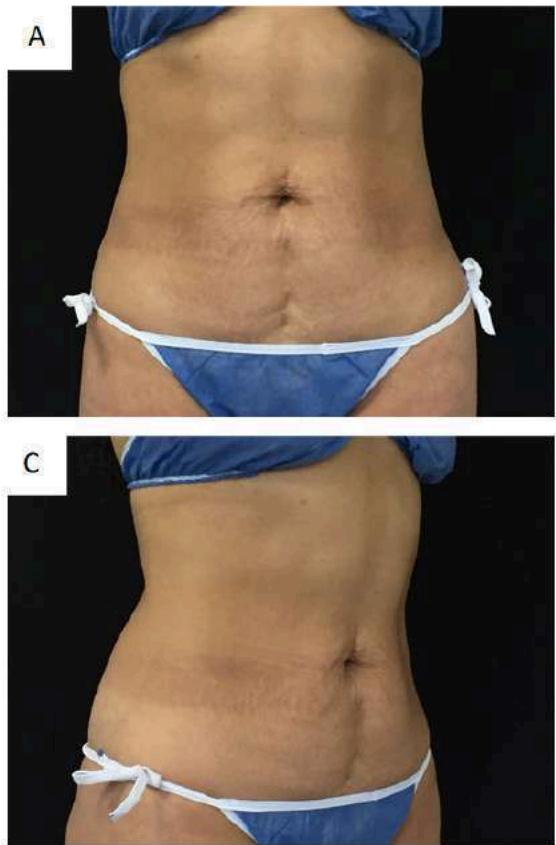
Throughout the treatment, the higher flaccidity categories decreased, and the lower categories increased, from 6 patients in scale 3 at V1 to 2 patients at the end of the treatment (V4) (Table 3). As a percentage, the scale 1 was 17% at V1 and became 46% at V4 (Fig. 1). The statistical analysis showed that Flaccidity Scale changed significantly at the last visit compared to previous visits. The confidence interval established was 95% and the counter statistic was less than 0.05 (Table 4). In figure 2 and 3 we see the visual changes in the abdominal part in two of the patients.
Table 3: Sum of the Patients with the Same Punctuation in the Flaccidity Scale along the Visits
| Flaccidity Scale | ||||
| . | V1 Basal | V2 | V3 | V4 |
| Grade 1 | 3 | 4 | 7 | 6 |
| Grade 2 | 9 | 12 | 10 | 5 |
| Grade 3 | 6 | 2 | 1 | 2 |
| TOTAL | 18 | 18 | 18 | 13 |
{"image_source":{"path":"images/7961963e2f496bc9725c2954e675f7351ef79121809269b4600b9493217e5c96.jpg"},"content":"","chart_caption":[{"type":"text","content":"Figure 1: Percentage of Patients in each Scale along the Visits"}],"chart_footnote":[]}
Table 4: Wilcoxon Signed Rank Test Calculated in each Visit
| WILCOXON SIGNED RANK TEST(Flaccidity Scale) | ||||
| . | V1 Basal | V2 | V3 | V4 |
| V | - | 10 | 15 | 21 |
| p Value | - | 0,07 | 0,053 | 0,03 |
| Significance | - | NS | NS | S |
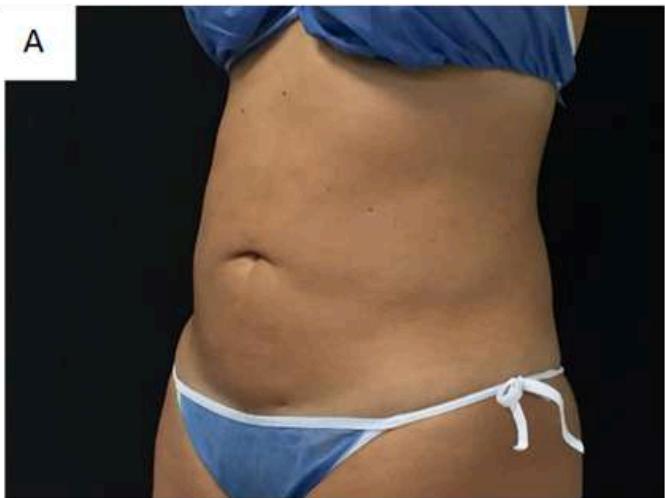
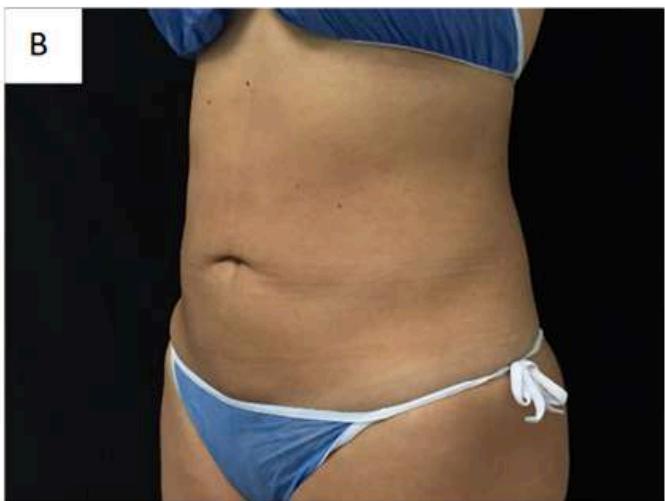
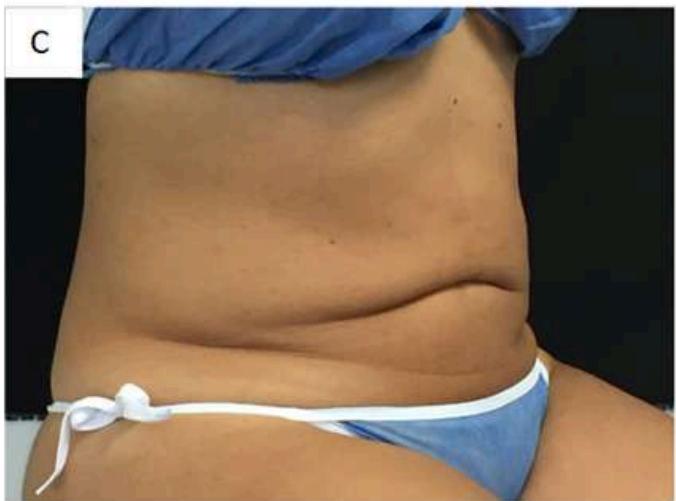
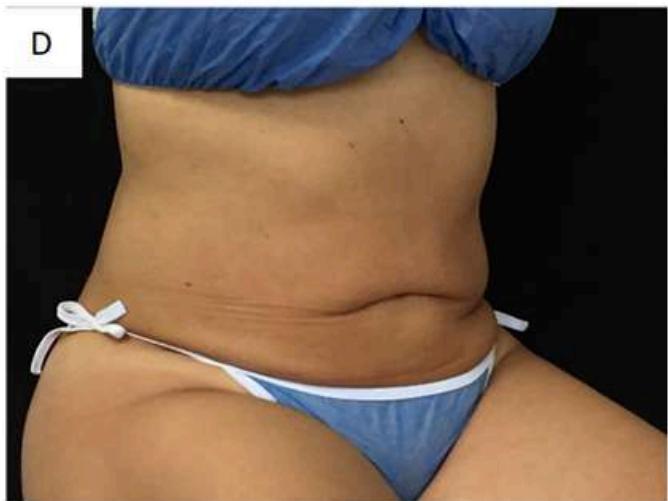 Figure 2: Patient with Abdominal Flaccidity Treated with Low 1.5 HA Pbserum. A and C Before, and B and D after the Treatment
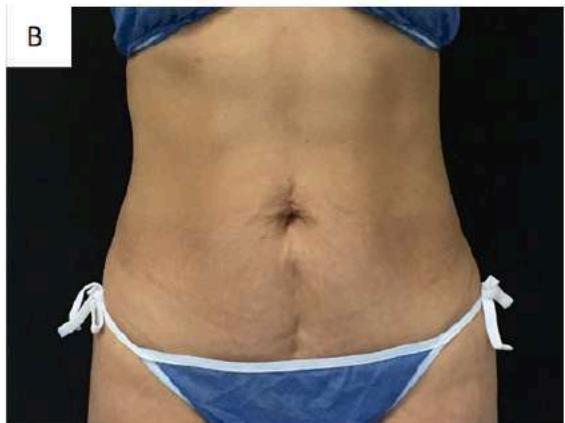
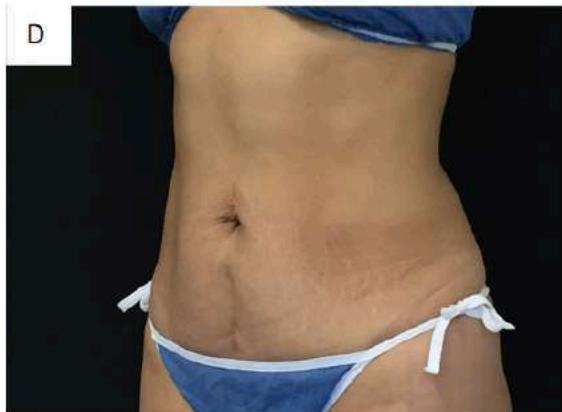 Figure 3: Patient with Abdominal Flaccidity Treated with Low 1.5 HA Pbserum. A and C Before, and B and D after the Treatment
V. PATIENT SATISFACTION
5.1 Overall Appreciation and Organoleptic Characteristics
Sixty-seven percent of patients liked the treatment very much compared to 33% who liked it moderately.
Regarding the organoleptic characteristics, 69% of the patients liked the appearance of the treatment (Fig. 4 A) very much. Twenty-two percent liked the aroma of the product very much and 67% neither liked nor disliked it (Fig. 4 B). Forty-five percent of the patients liked the extensibility of the product on the treated area very much and 36% liked it moderately (Fig. 4C). Regarding the sensation of the product on the skin:9% liked it very much, 18% liked it moderately, 9% neither liked nor disliked it and 27% disliked it moderately (Fig. 4 D).
{"image_source":{"path":"images/9451d7e0987923494a399a507bede14b1967228bd7cde41b3fe4fbb633f69495.jpg"},"content":"","chart_caption":[],"chart_footnote":[]} {"image_source":{"path":"images/3b63fb3dee5e911c750f8b4952d72ae304a9d47794e8a285b5d53d8d73b6a765.jpg"},"content":"","chart_caption":[],"chart_footnote":[]}
{"image_source":{"path":"images/df548f9fb40cebe4d76bb1177a2d759eb07287897c722e0e199ec25a1888d159.jpg"},"content":"","chart_caption":[],"chart_footnote":[]} {"image_source":{"path":"images/c33d35d7285da473f75cb8328c598fe97a1147a708bd2e0558c924536a1e73d6.jpg"},"content":"","chart_caption":[{"type":"text","content":"Figure 4: Organoleptic Characteristics Appreciated by the Patients. A) Appearance. B) Aroma. C) Consistency. and D) Feeling Over the Zone"}],"chart_footnote":[]}
5.2 Efficacy
Regarding the product's efficacy in reducing the degree of flaccidity, have seen their flaccidity reduced and of the patients totally agree with the reduction (Fig. 5 A). About the statement "The use of the product caused fat loss", 46% agree with it and 38% of the patients strongly agree with it (Fig 5 B). And with respect to the improvement of the degree of firmness, 54% agree with this statement and 38% strongly agree (Fig 5C).
{"image_source":{"path":"images/1977271fc141919aff42cf466aae82b963012b29298aafcb76928d4893177192.jpg"},"content":"","chart_caption":[],"chart_footnote":[]} {"image_source":{"path":"images/dd20c99fd170c25073f07b1aa2022dbe0152434a63f00577d605725d851dfbce.jpg"},"content":"","chart_caption":[],"chart_footnote":[]}
{"image_source":{"path":"images/fda97afc144e52fc1a14c3ae89dc555b9788ee6728a0d6badfb0b5345a1fd985.jpg"},"content":"","chart_caption":[{"type":"text","content":"c"},{"type":"text","content":"Figure 5: Patient Perception of the Product Efficacy in terms of: A) Flaccidity Improvement \nB) Loss of fat. C) Firmness Improvement"}],"chart_footnote":[]}
Overall, 62% rate the product as satisfactory and 31% as very satisfactory. And 67% of patients would use the product again and 17% are likely to use it again.
5.3 Quality of life and Dermatology
Eighty-five percent of patients did not show any unpleasant symptoms and those who did show a symptom, this was mild and transient burning at the time of application. Regarding whether patients had experienced itching, pain, or stinging, 100% had not experienced any of these symptoms in the last 7 days.
We wanted to assess whether the treatment could have influenced certain day-to-day activities and how they had felt their skin during the last 7 days using the DLQI scale. Sixty-two percent of patients had not felt uncomfortable or self-conscious because of their skin, the rest had felt only a little uncomfortable. Seventy-seven percent of the patients had no problems with shopping or housework and 15% saw no relationship between the treatment and this activity. For choice of clothes, the treatment had no influence at all for 85% of the patients but had a lot of influence for 8% of the patients. For social or recreational activities, 69% of the patients had no problems at all and 8% of the patients considered that they had a lot of problems. For sport, 85% said they had no difficulty at all, 8% had quite a lot of difficulty and 8%did not see a link between treatment and sport.
VI. DISCUSSION
Concerns related to body flaccidity rank among the primary aesthetic worries prompting individuals to seek improvement through aesthetic clinics, aiming to enhance their physical appearance and emotional well-being. Nevertheless, it remains a challenging approach, given the limited availability of effective non-invasive therapies. Various techniques, including radiofrequency systems, lasers, infrared treatments, and specific collagen stimulators, have been explored . However, their outcomes are at times statistically insignificant or require an extended period to see results. The quest for more therapeutic alternatives is crucial to strive for optimal and timely outcomes.
Sagging is a process in which different components of the skin can be affected. One of them is loss of skin moisture. This phenomenon is evident in skin aging, driven by hormonal changes . HA emerges as a pivotal molecule that significantly influences skin moisturization. This is a glycosaminoglycan with the property to bind and retain water molecules . This capacity confers the functions of hydration, lubrication, space filling and the vehicle to cell migration . It has been reported that, over time, one of the most dramatic changes that occurs in the skin is the progressive reduction of HA and its polymers . Due to all these aspects, there are currently on the market different HA fillers indicated to fill space and eliminate wrinkles on the face and neck.
Another manifestation of skin flaccidity may arise from the potential accumulation of fat. It is widely recognized that hormonal changes can result in alterations in adipocyte deposits . In addition, accelerated weight loss increases the ratio of fat to protein in the skin . Consequently, this fat is not adequately supported and, as a result, we observe sagging skin with loss of tone.
The most significant characteristic defining chronologically aged skin and photoaging is the reduction of fibrillar proteins, specifically types I and III collagen . On one hand, collagen-degrading matrix metalloproteinases are up-regulated. And on the other hand, a sustained down-regulation in collagen synthesis appears in photodamaged and chronological skin aged. Mechanisms underlying the loss of collagen synthesis are still under research. Some studies demonstrated that in severely photodamaged skin, the presence of fragmented or damaged collagen in the dermis inhibited collagen synthesis .
Our study showed that Low HA 1.5 pbserum significantly improved body flaccidity after 36 days of treatment. It was effective against skin flaccidity in 92% of patients. It also improved firmness in 92% of women and reduced fat in 84%. As for the overall sensation of the product in the skin, 54% expressed dissatisfaction. It is understandable because the administration is through several intradermal injections. In general, ninety-three of women were satisfied with the treatment. The product was well tolerated and permitted to have a good quality of life in terms of DLQI scale.
One of the main components of Low HA 1.5 pbserum is high molecular weight HA. The superficial injections of high molecular weight HA helped to reconstitute the water level of sagging skin and to fill space to provide firmness and thus improve the appearance of the affected area. In addition, Low HA 1.5 pbserum has recombinant enzyme technology; it is composed of collagenase, lipase and lyase in different proportions. The lipase is an enzyme that helps to eliminate fat through metabolic processes[28]. In our study, the lipase could help to reduce excess sebum and localized fat but also would be a stimulator of lipid metabolism inside the adipocyte. Lipase and lyase improve the delivery of the other ingredients inside the skin. Collagenase is an enzyme inside the extracellular matrix, which has the function of regenerating collagen fibers in the dermis[29]. This fact could be promoted by degrading the damaged collagen. The result would be the production of new elastin and collagen, which would help to improve the appearance and texture of the skin, giving a firming effect.
We found some limitations in our study. Firstable, we had a small sample, which limits the treatment of the data and the statistical analysis. We currently only possess pictures of the abdominal region; it would be valuable to obtain images from other areas of the body. We only have treated women; it would be interesting to see the behaviour of the product in men skin. The study was carried out in one country, Colombia, thus the patients were Latin-Americans, which could skew the results according to race. While considering these aspects, through this study we offer a new efficacious and safety alternative based on high molecular weight HA together with recombinant enzymes technology for the treatment of sagging skin.
VII. CONCLUSIONS
Low HA1.5 pbserum, HA and recombinant enzymes technology, could be a good alternative therapy to the skin flaccidity. More studies should be done to get more rigorous data.
ACKNOWLEDGMENT
We want to express our gratitude to the patients for trusting our medical criteria. We also thank people involved in developing the recombinant enzymes. Likewise, we also want to express our gratitude to Dr. Valeria Kopytina for her support. And lastly, we thank Dr. Estefanía Hurtado Gómez for writing the article.
Conflict of Interest
Dr. Toro, Dr. Lloreda, Dr. Cuello and Dr. Forero have no conflict of interest to declare. Dr. López Berroa is an employee of the company Proteos Biotech S. L. and he receives a salary for this purpose.
Funding
The authors did not receive any funding.
Author Contribution
Dra. Paris contributed to the management and treatment of the patient, and the writing of the article. Dr. López Berroa contributed by advising on the indications for the treatment with the enzymes and supervising the manuscript.
Conflict of Interest
The authors declare no conflict of interest.
Ethical Approval
Not applicable
Data Availability
The datasets used in this study are openly available at [repository link] and the source code is available on GitHub at [GitHub link].
Funding
This work did not receive any external funding.
References
Cite this article
Related Research




Special Issue
Launch a focused special issue to highlight research, emerging trends, and expert insights in your academic field.
