




IntelliPaper
Abstract
This study examined the engineering, microstructural, and elemental properties of compressed earth blocks (CEBs) stabilised with eggshells and lime. Experiments were conducted on 140 × 100 x 100 mm earth blocks stabilised with 10% constant lime and 0, 0.25, 0.5, 0.75, 1% eggshell contents. CEBs were tested for density, water absorption, tensile strength, compressive strength, erosion, chemical composition, and microstructural on 7, 14, 21, and 28 curing days. At 28 days of curing, the 1% eggshell and 10% lime-stabilised compressed earth blocks recorded compressive and tensile strengths of 1.33 and 0.173 N/mm2, respectively compared with the unstabilised compressed earth blocks’ strength of 1.01 and 0.14 N/mm2. The eggshell and lime-stabilised compressed earth blocks also exhibited reduced water absorption of 3.32% compared to unstabilised blocks of 4.62%. SEM and EDS analyses further confirmed the microstructural properties and contribution of key elements like calcium to enhanced mechanical properties. The study concludes that the presence of eggshells and lime in the earth matrix enhanced the properties of the compressed earth blocks. It is recommended that block manufacturers enhance the properties of the compressed earth blocks should with 1% eggshell and 10% lime.
Explore Digital Article Text
I. INTRODUCTION
Affordable housing is a critical issue in developing countries, where land and construction costs surpass the financial means of many citizens . Adopting alternative and cost-effective construction methods is necessary to address the affordable housing issue. One promising approach is utilizing readily available, eco-friendly materials like compressed earth blocks . Compressed earth blocks (CEBs) are building blocks that are produced by compacting soil/earth in an electrical or hydraulic block-making machine, in which a control static or dynamic pressure is applied . CEBs are not only cost-effective but also environmentally friendly, as they do not require the burning of coal or other fuels in their production, unlike conventional fire-burnt clay bricks . CEBs are also aligned with green building principles because they can be sourced on-site, and minimise transportation costs . Additionally, the thermal mass of earth-based materials helps regulate indoor temperature, reducing reliance on energy-intensive heating and cooling systems .
CEBs offer a sustainable alternative to conventional building materials, yet their vulnerability to water-induced erosion poses a significant challenge, particularly in regions with heavy rainfall and high humidity . While studies show that adding natural fibres can improve their water resistance, they are not a perfect solution . Current research on stabilizing earth blocks explores various materials including rice husk ash, fly ash, and cement . While cement is effective, it is expensive and not environmentally friendly . Although several studies have used waste and binders to stabilize CEBs, as far as the researchers are concerned, no study has used eggshell waste and lime to stabilize CEBs. There is a gap in the research on using crushed eggshells and lime as stabilisers for CEBs, which requires a study to explore the potential of using crushed eggshells and lime in building materials for construction applications. This study, therefore, explores the potential of using crushed eggshells and lime as stabilisers for CEBs. Eggshells, a common industrial and household waste, are rich in calcium, a valuable element for enhancing the strength and durability of construction materials . Lime, another eco-friendly binder, further contributes to improved performance.
This approach aligns with the goals of sustainable construction by utilizing waste materials and minimizing environmental impact. By investigating the properties of CEBs stabilised with eggshells and lime, this study aims to address the critical need for improved durability and strength in sustainable construction materials. The use of eggshells and lime in CEBs is expected to overcome the limitations such as water-induced erosion, and strength deficiencies in the use of natural fibres in CEBs. Through comprehensive laboratory testing, the study specifically examines the physical properties (density and water absorption) of CEBs stabilised with eggshells and lime; mechanical properties (compressive and tensile strengths) of CEBs stabilised with eggshells and lime; durability properties (erosion resistance) of CEBs stabilised with eggshells and lime; and microstructural and chemical composition (SEM and EDS) of CEBs stabilised with eggshells and lime. The findings have the potential to inform the development of affordable and eco-friendly housing solutions for low-income communities, paving the way for a more sustainable construction industry.
II. LITERATURE REVIEW
2.1 Benefits of Building Houses with Earth
Earth construction is one of the oldest building techniques known to humanity, with a history that spans thousands of years and encompasses a variety of methods adapted to different environmental and climatic conditions . Techniques such as rammed earth and adobe have been integral to vernacular architecture, reflecting a harmonious coexistence between human settlements and the natural environment . Rammed earth, for instance, involves the compaction of natural mineral soils in layers within formwork, creating structures that are durable and have a low environmental impact . The adaptability of earth construction is evident in its global presence, from the Neolithic architecture sites to modern buildings that incorporate green technologies . This adaptability is also highlighted by the diversity of materials and techniques used in different regions, such as cob, sod, thatch, bamboo, and straw bales, each with its characteristics and suitability to specific climates and locales .
The ancient methods of earthen construction have evolved to the modern sustainable practices and techniques. In contemporary times, the significance of earth construction has been reinvigorated by the sustainable development movement, which values the use of natural and recycled resources . The low embodied energy of materials like rammed earth, when compared to conventional construction materials, and the potential for these materials to be wholly recyclable, contribute to their eco-efficiency and appeal in the context of sustainable development .
Furthermore, the cultural heritage of earth construction is being preserved and studied not only for its historical value but also for its relevance to modern sustainable building practices . The renewed interest in earth construction is driven by its environmental benefits, such as the use of local materials, low energy requirements for production, and recyclability, as well as its thermal and hygroscopic properties . Earth construction embodies a rich history of human ingenuity and environmental stewardship. Its resurgence in the context of sustainable architecture demonstrates a continued appreciation for its cultural significance and a recognition of its potential to contribute to eco-friendly building practices in the 21st century .
2.2 Earth Construction Techniques
There are several techniques for earth construction such as rammed earth (RE), compressed earth blocks (CEBs), adobe blocks, cob, Atakpame, wattle and daub among others. RE is a construction technique that involves the dynamic compaction of soil within temporary forms to create monolithic walls, which are structurally sound and have good thermal mass . CEBs are made by mechanically pressing soil particles into a mould, producing a uniform shape and size for construction purposes, and can be stabilised with a small number of binders or fibres to improve their properties . Adobe blocks are a traditional form of earth construction, where clayey soil is mixed with organic matter, often dung, to enhance bonding and reduce shrinkage, then moulded and dried in the sun .
Cob construction is an ancient technique that uses a mixture of earth and straw, similar to adobe, but the material is stacked and lightly compacted by hand or tools to form walls . The Atakpame technique employs threads and pegs to create rectangular walls by methodically applying mud balls, though this technique is less documented in the provided papers. Wattle and daub is a method where woven wooden strands, known as "wattle," are covered with a mixture of soil and straw, known as "daub," to form walls that provide both structural support and insulation [35].
Each of these techniques has its own set of advantages and challenges. For instance, RE is known for its energy efficiency and thermal properties , while CEBs offer a cost-effective and sustainable building solution, especially in developing countries . Adobe provides a traditional aesthetic and has been widely used historically, but may require more maintenance . Cob is praised for its shear behaviour and flexibility under load , and wattle and daub are recognized for their high thermal insulation capacity . These earth construction techniques offer sustainable alternatives to conventional building materials, with each having unique characteristics that make them suitable for different environmental conditions and cultural contexts. The choice of a particular technique can be influenced by factors such as local soil properties, climate, and the availability of natural fibres or stabilisers. Table 1 provides summary information about the process and characteristics of earth construction techniques.
| Earth construction technique | Process | Characteristics |
| Rammed Earth (RE) | Involves compacting a damp mixture of earth (often with stabilisers like cement or lime) into a formwork to create dense, sturdy walls. | Known for its thermal mass, durability, and unique aesthetic. |
| Compressed Earth Blocks (CEBs) | Made by compressing a mixture of soil, sand, and sometimes stabilisers into blocks using a hydraulic or mechanical press. | Strong, uniform, and can be produced quickly. They require less energy to produce compared to traditional bricks. |
| Adobe Blocks | Created by mixing earth (clay, sand, silt) with water and sometimes organic materials like straw. The mixture is then poured into molds and sun-dried. | Adobe bricks are known for their thermal properties and are often used in hot, dry climates. |
| Cob | Made by mixing earth (clay, sand, straw) and water to create a thick, malleable material that is hand-shaped into walls. | Cob structures are highly durable and have excellent thermal mass. They are also very labor-intensive to build. |
| Atakpame | A traditional West African technique involving the layering of moist earth mixed with organic materials like straw or palm fronds. | Known for its simplicity and use of locally available materials. It provides good thermal insulation. |
| Wattle and Daub | Involves weaving a lattice of wooden strips (wattle) and then daubing it with a sticky mixture of soil, clay, sand, and straw. | Provides good insulation and is often used for infill in timber-framed buildings. |
2.3 Durability of Earth Construction
The durability of earth construction materials is a critical aspect of their performance, especially given their inherent susceptibility to water and other degrading agents. Earthen materials are known for their hygroscopic nature, which can lead to durability issues rather than strength concerns . The exposure to water, through rain, floods, or capillary absorption, is a significant factor affecting the service life of earthen structures . To address these concerns, it is essential to assess the durability of earthen materials based on their likely exposure to water and to specify tests that safeguard the construction and environmental conditions . Research has shown that traditional and ancestral building techniques, such as the incorporation of biopolymers and the stabilization with lime, have contributed to the enhanced durability of earthen buildings . These techniques have been used to protect the earth's material from water action, allowing old earthen buildings to be preserved over centuries despite harsh weather conditions . Similarly, the addition of lime has been found to increase compressive strength and reduce erosion in accelerated erosion tests, suggesting its effectiveness in improving the water resistance of compressed soil .
Contemporary studies have also explored the use of natural additives to improve the engineering properties of earthen-based composites. For instance, the incorporation of short sisal fibres and chitosan has been shown to have a significant influence on the strength and durability properties of earthen-based composites for 3D printing applications [37]. While the specific use of eggshells as an additive is not directly addressed in the provided studies, the general principle of using natural and eco-friendly additives to enhance the durability of earthen materials is supported by research. The durability of earth construction materials can be significantly improved through the use of appropriate additives and techniques. The use of lime and biopolymers, as well as other natural additives, has been demonstrated to enhance the resistance of earthen materials to water and erosion, thereby extending their service life . It is imperative to continue exploring and adapting these ancient and modern methods to ensure the longevity and sustainability of earth construction in the face of environmental challenges.
2.4 Eggshell Powder Development in Construction
The utilization of eggshell powder (ESP) in building materials has gained interest due to its prospect of enhancing the mechanical properties of concrete and its role as an eco-friendly alternative to traditional materials. Studies have indicated that incorporating ESP into concrete can lead to an increase in both compressive and flexural strength . This improvement is attributed to the calcium oxide content in eggshells, which enhances the strength and durability of the concrete . Moreover, the addition of ESP has been shown to lessen the water absorption of concrete, suggesting an increase in density and impermeability .
This reduction in porosity is beneficial for the longevity and structural integrity of concrete structures. The optimal replacement level of ordinary Portland cement with ESP is often cited as 15% by volume, which balances the benefits of added strength with the potential decrease in compressive strength at higher replacement levels .
In terms of environmental impact, the partial cement replacement with ESP in concrete production is a promising strategy for reducing carbon dioxide emissions associated with cement manufacturing . This approach not only mitigates the environmental footprint of construction activities but also addresses waste management concerns by repurposing eggshell waste. Eggshells have not been explored for their soil stabilization properties. While the literature does not directly address this application, the calcium-rich composition of eggshells suggests potential benefits in improving soil plasticity and reducing shrinkage. The incorporation of eggshell in CEBs production presents a multifaceted advantage, enhancing the strength properties of the blocks while offering a sustainable solution to environmental challenges in the construction industry. However, further research into the soil stabilization properties of eggshells would be beneficial to fully understand their potential in this domain .
Eggshells can have a positive impact on the physical, mechanical, and thermal properties of CEBs. Eggshell powder has been found to increase the compressive strength, hardness, and thermal insulation properties of CEBs . Additionally, eggshell ash has been shown to improve the durability of sandcrete blocks against water and weathering . A study on the utilization of various agricultural wastes, including eggshell powder, sawdust powder, and rice husk ash, found that eggshell powder improved the physico-mechanical and durability properties of CEBs . Another study reviewed the influence of eggshell powder on the mechanical properties of expansive soil and found that it improved compressive strength and reduced the soil's swelling potential . Furthermore, a study evaluated the mechanical and microstructural properties of eggshell powder-reinforced concrete and found that it improved the compressive strength and reduced the porosity of the concrete . These findings suggest that eggshells can be a valuable additive in CEB production to improve their physical, mechanical, and thermal properties and enhance their durability.
III. EXPERIMENTAL MATERIALS AND METHODS
3.1 Materials
Earth, waste crushed eggshell, lime, and water were the primary materials used for making the CEBs' specimens used in this study. The earth sample was conveniently sourced from a site at the Akenten Appiah-Menka University of Skills Training and Entrepreneurial Development (AAMUSTED), Kumasi campus, Ghana. The topsoil was scraped off, and the earth was dug out. The earth was packed into sacks and transported from the site to the Construction Laboratory of AAMUSTED. The earth sample (Fig. 1a) was sun-dried at an average temperature of 27 °C and relative humidity of 72% for two weeks and was sieved through a 19 mm sieve filter to ensure the removal of cobblers and stones before the grading test was conducted, which conformed to BS 1377 [50]. Larger sizes of cobblers and stones in the earth can affect the composition of the CEBs, which will result in the formation of weaker composite materials.
The waste eggshells, the reinforcing material used, were conveniently obtained from the abundant deposits of fried and poached egg vendors in Cape Coast, Ghana. Raw eggshells were boiled, air-dried, and then added to the prepared eggshells, and were sun-dried at an average temperature of and relative humidity of 72%. Subsequently, the dried eggshells were crushed and sieved through a BS 14 mm sieve (Fig. 1b).
Calcium hydroxide (Ca (OH) ) lime with 95% CaO was conveniently obtained from the market at Kumasi, Ghana. The hydrated lime sample used is shown in Fig. 1c. Danso and Manu [39] and Karthik and Ramachandraiah [51] identified that the addition of 10% lime to laterite soil considerably increases compressive strength and durability. Water for mixing was obtained directly from the tap in the Construction Laboratory of AAMUSTED, where the experiment was performed. Tap water used was for drinking purposes with a pH value of 6.8.
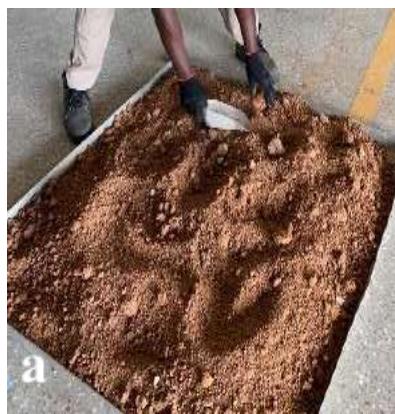
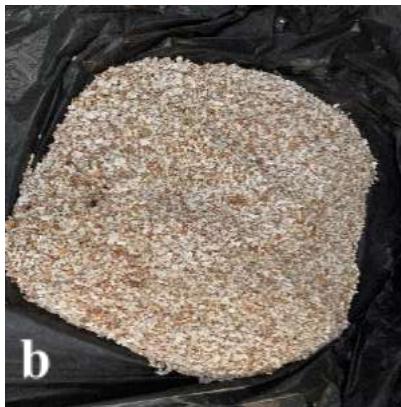
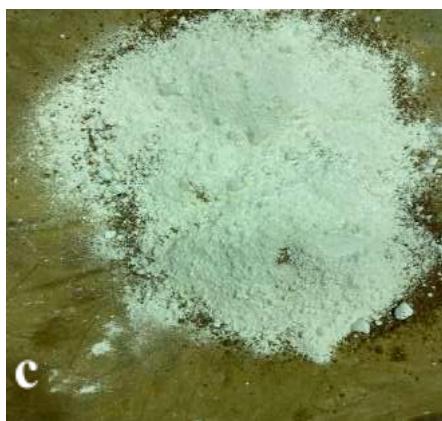 Fig. 1: Sample raw materials: (a) earth sample, (b) crushed eggshell samples, (c) lime sample
3.2 Experimental Procedure
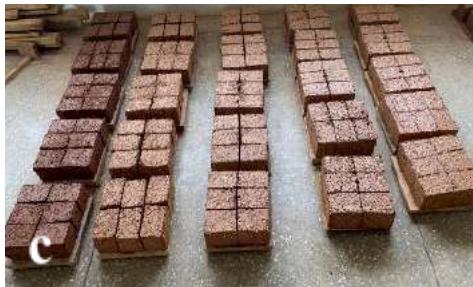
The crushed eggshells of 0, 0.25, 0.5, 0.75, and 1% by weight of earth and 10% constant lime were added to the earth sample for making the CEBs. The mix design and quantity of materials are presented in Table 2. The required quantity of earth was batched and spread on the mixing pan. The quantity of lime was batched and spread over the earth and was manually mixed thoroughly after which the crushed eggshells were also batched, spread on the earth-lime mixture, and mixed. Water at an optimum moisture content (OMC) of 12% of the weight of the earth was gradually spread on the mixture while mixing until a reasonable uniform consistency was obtained as shown in Fig. 2a. The control mixture was prepared with earth and water without lime and eggshells as was in the study by Danso and Manu [39]. The different mix batches were used to prepare a total of 150 blocks of size mm which were moulded with a compressed block-making machine (see Fig. 2b) with 50 kPa compressed pressure. The blocks were kept under a shed and cured by sprinkling water daily (see Fig. 2c) at an average temperature of and relative humidity of . Three block replicates were tested on 7, 14, 21, and 28 days for each mix design and curing day for their properties to be determined.
Table 2: Mix design and quantity of materials
| Mix design (%) | Quantity of materials (kg) | |||
| Earth | Eggshell | Lime | Water | |
| 0 | 75.6 | - | - | 9.072 |
| 0.25 | 75.6 | 0.189 | 7.56 | 9.072 |
| 0.5 | 75.6 | 0.378 | 7.56 | 9.072 |
| 0.75 | 75.6 | 0.567 | 7.56 | 9.072 |
| 1 | 75.6 | 0.756 | 7.56 | 9.072 |
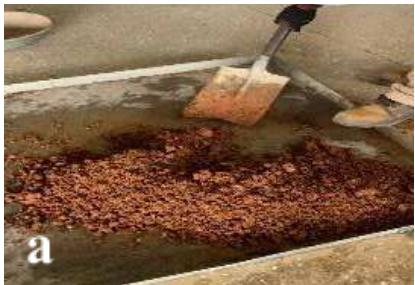
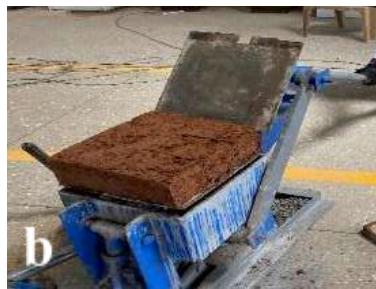
 Fig. 2: Preparation of CEBs: (a) mixing of mortar, (b) moulding of blocks, (c) curing of blocks
3.3 Testing of CEB Specimens
Compressive strength, density, tensile strength, erosion, and water absorption tests were performed to assess the properties of the CEBs. Five replicates were used for each test from each mix batch.
3.3.1 Compressive Strength
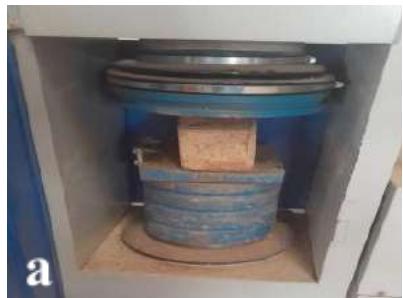
The compressive strength test was conducted following the BS EN 772-1 [52] procedure. 60 CEB specimens were tested for the compressive strength. The electrically controlled ADR 4000 compressive strength machine was used for testing the CEB specimens. To maintain consistent loading, CEB specimens were aligned centrally at the test as shown in Fig. 3a. The load was gradually applied until the CEB specimens were crushed. The highest force at which the CEB specimens were crushed was noted and the strength was calculated using Equation 1:
where fc = compressive strength in N/mm ; F = highest force at which the CEB specimens crushed in N; A = area of the CEB specimens where the force was applied in mm .
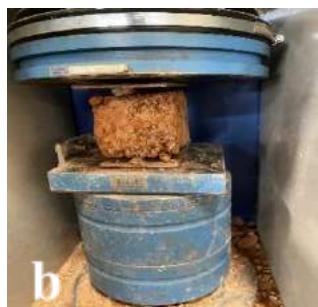
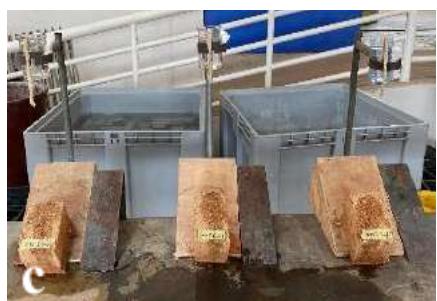 Fig. 3: Testing of CEB specimens: (a) compressive strength, (b) tensile strength, (c) erosion test
3.3.2 Tensile Strength
The tensile strength test was conducted adhering to BS EN 12390-6 [53] procedure. 60 CEB specimens were tested for the tensile strength. The electrically controlled ADR 4000 testing machine was used to test the CEB specimens as shown in Fig. 3b. The CEB specimens were placed on a jig plate on the testing machine, ensuring no bending or twisting occurred. The test machine applied a controlled force on the CEB specimens until it was divided into two. The highest force at which the CEB specimens were divided into two was noted and the strength was calculated using Equation 2:
where ft = tensile strength in N/mm ; P = the highest force where the CEB specimens divided into two in N; L = length of the CEB specimens in mm; and d = width of the CEB specimens in mm.
3.3.3 Erosion Resistance
The drip test method was used to determine the erosion resistance of the 28-day-cured CEB specimens following the procedure of NZS 4298 [54]. 15 CEB specimens were tested for the erosion resistance. The drip test setup was positioned and the CEB specimens were placed at the base at as shown in Fig. 3b. The absorbent Wettex of 16 mm diameter served as a drip to drop the water at a distance of 400 mm onto the slopped CEB specimens for 60 minutes. After 60 minutes, the depth of the pit created in the CEB specimens was measured and the erodability index was determined.
3.3.4 Water Absorption
A water absorption test was carried out on 28-day-cured CEB specimens following the procedure of BS EN 772-11 [55]. 15 CEB specimens were tested for the water absorption. The CEB specimens were oven-dried at 105 °C for overnight. An empty tray was placed on level ground with strips of plywood placed at the bottom. The CEB specimens were weighed and the weights were recorded. The CEB specimens were placed on the plywood strips in the tray and water was gently poured to 10 mm above the plywood strips. The CEB specimens were removed after 20 minutes, weighed and the partially absorbed weight was recorded. Water absorption of the CEB specimens was determined using Equation 3:
where WA = is water absorption by capillary in%; = weight of the CEB specimens after oven-drying in kg; and = the weight of partially absorbed CEB specimens in kg.
The density of the CEB specimens was assessed adhering to the BS EN 771-1 [56] procedure. The 45 CEB specimens used for the compressive strength test were first weighed to determine the density of the blocks. The CEB specimens were weighed and oven-dried at 105 °C for overnight. The dried CEBs were weighed and their volume was determined. The density of the CEB specimens was calculated using Equation 4:
where is water absorption by capillary in%; weight of the CEB when oven-drying in kg; and the weight of partially absorbed CEB specimens in kg.
3.3.5 Microscopic Morphology and Elemental Content Examination
A Zeiss scanned electron microscopy (SEM) was used to analyse the eggshells' microscopic morphology and elemental content of the CEB specimen. A CEB specimen was broken into pieces and prepared before the SEM examination. After preparation, it was placed on a holder in the Zeiss SEM machine for microscopic viewing and elemental composition measurement. The viewed images and the chemical elemental composition were captured and analysed.
3.3.6 Analysis of Data
The data obtained were computed and presented in figures and tables with the help of Microsoft Excel software. An ANOVA test was used to assess the significant variations and differences between the test results. To determine the existence of any significant difference in different test groups, Sigma Plot software was used.
IV. RESULTS AND DISCUSSION
The results obtained from the physical properties of earth and eggshell (particle size distribution test, dry density, water absorption), mechanical properties (compressive and tensile strengths), durability properties (water absorption and erosion), and SEM and EDS analysis tests are presented in detail below.
4.1 Physical Properties
The particle size distribution curve of the lateritic soil and eggshells is illustrated in Fig. 4. The particle size distribution analysis of both eggshells and lateritic soil indicates that a significant portion of the particles are relatively large. For eggshells, 85.77% of the particles are larger than 5 mm as compared with lateritic soil, which is 61.68%. This suggests that both materials consist of coarse particles, with eggshells having a slightly finer distribution compared to lateritic soil. The inclusion of lime which has finer particles will compensate for the less quantities of earth and eggshell fine particles in the mix and also serve as additional binder.
Dry Density: Fig. 5 shows the density of the blocks which was measured throughout the 28-day curing period, with varying eggshell stabiliser concentrations. On day 7 of curing, the density ranged from 1677.949 to 1700.000 kg/m exhibiting a minimal variation between stabiliser percentages. This suggests minimal impact from the eggshell stabiliser at this early curing stage. On day 14 of curing, density readings varied little. The range was 1671.538–1714.487 kg/m . Interestingly, the density rose with eggshell stabiliser content, peaking at 1%. On day 21 of curing, density ranged from 1692.667 to 1721.282 kg/m . The percentage of eggshell stabilisers increased the density as Zamani et al [57] found. The density ranged from 1704.615 to 1740.256 kg/m on day 28 of curing. As eggshell and lime stabiliser content increased, density increased. These findings indicate that curing time and eggshell and lime stabiliser concentration affect material density. As curing time increased, the density either stabilised or increased slightly. Moreover, the addition of eggshells and lime consistently contributed to higher densities, particularly at later curing stages. The increasing density with higher eggshell and lime content, along with the continued rise or stabilisation in density with curing time, can be attributed to the filling effect and pozzolanic reaction. As the amount of eggshells and lime increases, more particles pack into the voids between the soil particles, leading to a denser matrix [47, 58]. Additionally, lime, a common stabiliser, undergoes a pozzolanic reaction with water, forming calcium silicate hydrate (CSH) gels that further densify the mixture over time [41, 58].
{"image_source":{"path":"images/013ec061a47d29c5fb7718a183749ada834a3df0624e1435286f3ffbb9b5f957.jpg"},"content":"","chart_caption":[{"type":"text","content":"Fig. 4: Particle size distribution of both laterite and eggshell"}],"chart_footnote":[]} {"image_source":{"path":"images/d8a2eba425c4574ebe344037aca8c03fd1ad01ef9d8757ac10c08f9bcc3ae583.jpg"},"content":"","chart_caption":[{"type":"text","content":"Fig. 5: Density of CEB with eggshell and lime"}],"chart_footnote":[]}
Water absorption: Fig. 6 illustrates the average water absorption of eggshell and lime samples cured at different times. This study used eggshell content of 0, 0.25, 0.50, 0.75, and 1% with curing days of 7 and 28. The results showed reduced water absorption with increased eggshell and lime content. The water absorption percentages at 28 days of curing, the water absorption were 4.62, 4.27, 3.53, 3.32, and 2.60% for eggshell content of 0, 0.25, 0.5, 0.75, and 1% respectively. This supports prior research on eggshell powder and concrete water absorption [59, 60]. The reduction in water absorption observed with increasing eggshell and lime content can be attributed to the combined effects of particle packing and pores filling. Eggshell powder, with its finer particle size compared to the traditional lime stabiliser, fills the voids between soil particles, reducing the total porosity and thereby water absorption capacity [60]. Additionally, eggshells contain calcium carbonate (CaCO ), which can react with water to form a gel filling even smaller pores [61]. While Danso [12] and Obianyo et al. [62] specifically focused on the mechanical properties of lime-stabilised lateritic soils, their findings on pores filling by hydration support this explanation. The denser microstructure created by eggshell powder, along with its potential pozzolanic reaction (where it reacts with calcium hydroxide to form additional cementitious compounds), significantly reduces water absorption in the CEBs. The difference in water absorption values between the control group (0% eggshell) and the group with the highest eggshell stabiliser content (1%) was significant, with a reduction in water absorption from 4.62 to 2.60%. This represents about 78% water absorption reduction, indicating a clear impact of the eggshell and lime stabiliser in reducing the uptake of water by the CEB. Water absorption sturdily affects the mechanical and durability of CEBs [63].
{"image_source":{"path":"images/409fdb6963bc67fb48536fb7a0f111a68b6209a769cb961e7adce157fd3e0cc0.jpg"},"content":"","chart_caption":[{"type":"text","content":"Fig. 6: Water absorption of CEB with eggshell and lime"}],"chart_footnote":[]}
4.2 Mechanical Properties
Compressive and tensile strength test results were used to assess the mechanical properties of the CEBs stabilised with eggshell and lime.
Compressive strength: Fig. 7 shows the earth blocks stabilised with 0, 0.25, 0.5, 0.75, and 1% eggshells and lime after curing for 7, 14, 21, and 28 days' result. The result illustrates that as the eggshell content and the lime increased the strength also increased for all the curing ages. CEBs with 1% eggshells and lime achieved the highest compressive strength of as compared with the control group of at 28 days of curing, which represents a 21% increase in compressive strength. The compressive strengths of CEBs between 1.054 and obtained from this study were above the recommended minimum value for use in building applications according to TS 704 [64] recommendation of 1 MPa. The result indicates that the highest eggshell content and the lime achieved the maximum strength, which implies that further addition of the eggshell content could result in additional strength. Similar studies by Kaur et al. [65] and Singh et al. [66] on earth block strength and curing and stabilisers' results indicated that as the curing time increased, the compressive strength of the blocks increased. The improved strength result could be attributed to the eggshell's increased compaction with the earth block [67] and the lime's chemical reaction in the CEBs. The lime acts as a binder in the matrix such that the calcium oxide, silica, and alumina composition propels hydration reaction with the soil particles in order to seal the voids in the composite [39]. The One-Way ANOVA test on results from three replicates of each mix design at 95% confidence interval was conducted on the 28-day compressive strength result for the control and the 1% eggshell and lime CEBs. It was found that the p-value was 0.016 which implies a statistically significant difference between the highest and the lowest compressive strength of the CEBs.
{"image_source":{"path":"images/27d3f5a7ffc7283750dbd24478a19b777a1a140c9d102aadc64330296073940f.jpg"},"content":"","chart_caption":[{"type":"text","content":"Fig. 7: Compressive strength CEBs with eggshell and lime"}],"chart_footnote":[]}
Tensile strength: CEBs' resistance to crack development in walls depends on their split tensile strength. This study assessed the average CEBs' split tensile strength for different curing days and eggshell and lime stabiliser concentrations. Fig. 8 shows that CEBs' split tensile strength increases with curing days and eggshell stabiliser content. The result shows a progressive increase in strength from 0.138 N/mm (0.25% eggshell) to 0.173 N/mm (1% eggshell) after 28 days of curing. Notably, the group with 1% eggshell stabiliser exhibited a 20% increase in split tensile strength compared to the control group (0.138 N/mm ). The result supports prior studies' results that found that eggshell powder strengthens crushed earth blocks [68, 69]. The increased tensile strength can be attributed to the eggshells' ability to adhere to the soil particles and the lime. Furthermore, the binding characteristics of lime boost chemical reactions in the mixture, which contributes to improved strength development [39]. There was no statistically significant difference in mean values between treatment groups (p = 0.333), therefore random sampling variability could explain the discrepancy as indicated by an ANOVA test result.
It could be observed that both compressive strength and tensile strength of the eggshell and lime stabilised CEBs increased with increased quantities of eggshell with 1% eggshell emerging as the highest in terms of mechanical properties. This implies that increasing the 1% eggshell quantities in the CEBs could result in a further increase in the mechanical properties beyond the 1%.
{"image_source":{"path":"images/d35c2ed13a62329c3178fc019ff3a6a0f1e7afc7954f8ba8cf526b1b7bb2f8ed.jpg"},"content":"","chart_caption":[{"type":"text","content":"Fig. 8: Split tensile strength of CEBs with eggshell and lime"},{"type":"text","content":"Enhancing Compressed Earth Blocks with Eggshell and Lime: Effects on Mechanical and Physical Properties"}],"chart_footnote":[]}
4.3 Durability Properties
Erosion resistance: The drip test method was used to assess the erosion resistance of CEBs with and without eggshells and lime stabilisers and the result is shown in Table 3. The purpose of this test was to evaluate the CEBs' ability to withstand water (rainfall) when applied externally to wall surfaces. The control samples experienced erosion with depths ranging from 6 to 12 mm and diameters ranging from 15 to 18 mm, which is consistent with findings from Ajayi et al. [68] who reported similar erosion in compressed stabilised laterite blocks. Another study by Danso [12] reported a similar trend of erosion when natural fibres from agricultural waste were used to reinforce CEBs. In contrast, no erosion was observed in any of the samples containing eggshell and lime stabilisers, regardless of the concentration. This suggests that eggshell and lime stabilisers are effective in enhancing the erosion resistance of CEBs, corroborating the findings of Ajayi et al. [70], Danso and Manu [39], Elavarasan et al. [47] and Jannat et al. [49] on the use of eggshell powder, coconut fibres, ash, and lime as soil stabiliser in CEBs.
Table 3: Erosion of CEBs with eggshell and lime
| Eggshell Content (%) | 0 | 0.25 | 0.50 | 0.75 | 1 |
| Depth range (mm) | 6 - 12 | 0 - 0 | 0 - 0 | 0 - 0 | 0 - 0 |
| Diameter range (mm) | 15 - 18 | 0 - 0 | 0 - 0 | 0 - 0 | 0 - 0 |
4.4 SEM and EDS Analysis
Running scanning electron microscopy (SEM) and energy-dispersive X-ray spectroscopy (EDS) analyses on eggshell and lime-compressed earth blocks can provide valuable insights into their microstructural, elemental, and chemical compositions.
CEBs with eggshell and lime morphology: Multidimensional SEM examinations of eggshell and lime CEB samples revealed their microstructure details including surface texture, pore distribution, and mineralized structural arrangement as shown in Figs. 9a and 9b. The blend of earth, lime, and eggshell showed soil particle and aggregation patterns, which reveal structure, lime particle crystal shape, crack distribution, and surface properties.
Crushed eggshells and lime CEB's chemical characteristics: CEB with eggshell and lime chemical compositions were determined using energy-dispersive X-ray spectroscopy. Fig. 9c shows the elemental composition of the CEBs. The main elements revealed are iron (26%), titanium (22%), calcium (20), silicon (14%), aluminium (13%), oxygen (8%), and carbon (6%). The mixture of lime, earth, and eggshell revealed high calcium percentages and had elemental compositions that improved CEB strength and other mechanical properties. CEBs' main binding agent is calcium silicate hydrates that improve strength [71]. Pozzolanic silica fume strengthens and lowers permeability [72]. Aluminium compounds such as tricalcium aluminate affect early strength [73]. Iron compounds, notably ferrite phases, make CEBs strong and colourful [74]. Magnesium compounds affect CEBs strength and durability [75]. Gypsum and other sulphates alter CEB curing time and strength [76]. Phosphate-based additions can boost early strength [77]. Calcium chloride accelerates strength gain [78]. Therefore, it is not surprising that the eggshell and lime CEBs had greater strength analysis than the control blocks without lime and eggshells.
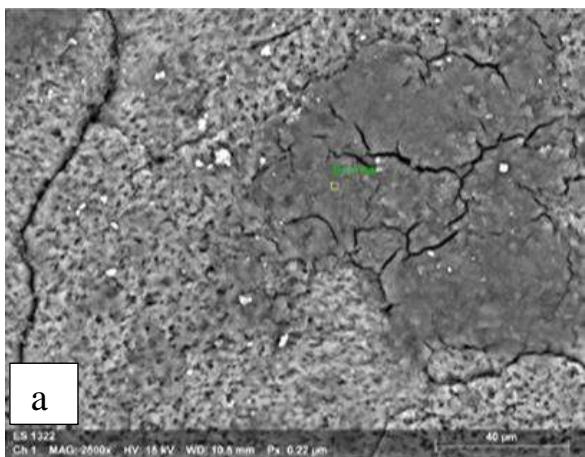
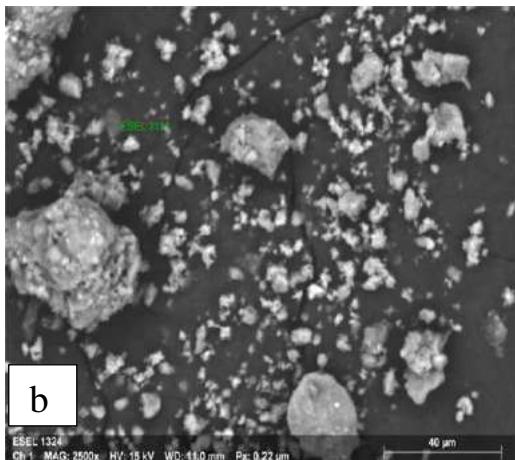
Fig. 9: SEM and EDS images of CEBs with eggshell and lime: (a) surface texture, pores and cracks distribution, (b) mineralized structural arrangement, and (c) elemental composition
| Element | At. No. | Netto | Mass [%] | Mass Norm. [%] | Atom [%] | abs. error [%](1 sigma) | rel. error [%](1 sigma) |
| Carbon | 6 18273 | 9.43 | 19.58 | 28.36 | 1.25 | 13.22 | |
| Oxygen | 8 49651 | 26.54 | 55.10 | 59.90 | 3.16 | 11.89 | |
| Aluminium | 13 9049 | 1.40 | 2.90 | 1.87 | 0.09 | 6.67 | |
| Silicon | 14 8954 | 1.19 | 2.47 | 1.53 | 0.08 | 6.51 | |
| Calcium | 20 55722 | 8.05 | 16.71 | 7.25 | 0.27 | 3.32 | |
| Titanium | 22 1607 | 0.77 | 1.60 | 0.58 | 0.06 | 7.32 | |
| Iron | 26 742 | 0.79 | 1.63 | 0.51 | 0.07 | 8.27 | |
| C | Sum 48.17 | 100.00 | 100.00 | ||||
V. CONCLUSION
This study demonstrates the significant potential of utilising eggshells and lime as sustainable stabilisers for compressed earth blocks (CEBs). The inclusion of eggshell and lime stabilisers at varying concentrations (0.25%, 0.5%, 0.75%, and 1%) consistently enhanced the physical, mechanical, and durability properties of the CEBs. At 28 days of curing, the 1% eggshell and 10% lime-stabilised compressed earth blocks recorded compressive strength of 1.331 N/mm compared with the unstabilised compressed earth blocks' strength of 1.054 N/mm , which represents a 21% increase in compressive strength, and the difference was found be statistically significant (p = 0.016). At 28 days of curing, the 1% eggshell and 10% lime-stabilised compressed earth blocks' tensile strength was 0.173 N/mm compared with the unstabilised compressed earth blocks' strength of 0.138 N/mm , which represents a 20% tensile strength increase. The eggshell and lime-stabilised compressed earth blocks also exhibited reduced water absorption of 3.32% compared to unstabilised blocks of 4.62%. SEM analysis revealed the earth particle structure, lime particle crystal shape, crack distribution, and surface properties of the CEBs. EDS analyses further confirmed the presence of key elements like iron, titanium, calcium, silicon, aluminium, oxygen, and carbon in the CEBs. The study, therefore, concludes that the presence of eggshells and lime in the earth matrix enhanced the properties of the compressed earth blocks for construction applications. The overall findings strongly support the use of eggshells and lime as eco-friendly and effective stabilisers for producing acceptable CEBs, presenting a promising avenue for sustainable construction practices. The waste eggshells can be obtained with no cost and therefore promote low-cost construction materials usage. The use of waste eggshells and lime in CEBs has the potential to encourage affordable and eco-friendly alternative construction material for low-income communities. It is recommended that block manufacturers to improve the properties of the compressed earth blocks should use 1% eggshell and 10% lime. It is further recommended that future studies explore different types of lime, varying the proportions of eggshells, especially beyond 1%, or test the blocks in different environmental conditions. Future studies should also consider long-term durability studies to confirm the effectiveness of the eggshell lime CEBs under real-world conditions.
Declarations
Funding Statement
This research did not receive any specific grant from funding agencies in the public, commercial, or not-for-profit sectors. Data Availability Data available on demand. Declaration of interest's statement The authors declare no conflict of interest.
Additional Information
No additional information is available for this paper.
Conflict of Interest
The authors declare no conflict of interest.
Ethical Approval
Not applicable
Data Availability
The datasets used in this study are openly available at [repository link] and the source code is available on GitHub at [GitHub link].
Funding
This work did not receive any external funding.
References
Cite this article
Related Research




Special Issue
Launch a focused special issue to highlight research, emerging trends, and expert insights in your academic field.
