




IntelliPaper
Abstract
The following documentary review article analyzes the risks and socio-economic consequences of money laundering in the border area between Colombia and Venezuela (Norte de Santander - Táchira), through text mining and documentary exploration with the purpose of identifying the main negative effects that money laundering has on the country's development and the adverse consequences that this activity has for the economic growth of the region. Specific factors are characterized regarding the underground economy and the unfavorable effects on the development of society, concluding that border areas are more affected by this criminal practice since smuggling has become a frequent means of money laundering and is more present than it would be in central areas of the country. This situation may occur due to the difficulty for the state to audit bilateral border operations and/or the imminent presence of underground economies in this area of the country.
Explore Digital Article Text
El siguiente artículo de revisión documental analiza los riesgos y consecuencias socioeconómicas del lavado de activos en la zona fronteriza de Colombia y Venezuela (Norte de Santander - Táchira), por medio de minería de textos y exploración documental con la finalidad de identificar los principales efectos negativos que trae consigo el blanqueo de capitales en el desarrollo del país y las consecuencias adversas que dicha actividad acarrea para el crecimiento económico de la región; se caracterizan factores específicos en cuanto a la economía subterránea y los efectos desfavorables para el desarrollo de la sociedad, llegando a la conclusión de que las zonas fronterizas tienen mayor incidencia a esta práctica delictiva ya que el contrabando se ha convertido en un móvil frecuente de blanqueo de capitales y está más presente de lo que estaría en zonas céntricas del país. Esto puede producirse debido a la dificultad por parte del estado al auditar las operaciones bilaterales fronterizas y/o la inminente presencia de las economías subterráneas en esta zona del País.
I. INTRODUCCIÓN
Las relaciones entre las ciudades fronterizas significan en gran parte el entrelazamiento del comercio, las políticas y la cultura de sus actores. Las dificultades empiezan a presentarse cuando en estas zonas hay problemáticas sociales y se crea un espacio más amplio para actos delincuenciales y dificultando cada vez más las políticas de control y el ejercicio de las autoridades. Siendo uno de estos problemas la economía subterránea.
El objetivo de esta investigación es poder analizar las circunstancias en cuanto a la economía local debido al blanqueo de capital en la ciudad fronteriza de Cúcuta desde el año 2018 hasta el 2021, utilizando el método de investigación descriptivo se demostrará como se ven afectados los sectores económicos por dicha problemática, y cómo esto repercute en el desarrollo de la sociedad.
El desarrollo de las capitales es un fenómeno que altera no solo la economía pública colombiana, sino que su materialización conlleva a problemáticas que afectan la integridad bancaria, involucra el crecimiento desmedido en la desigualdad de distribución económica del país (Bayona-Rodríguez, 2019). Sus efectos y consecuencias parecen ser desconocidas o infravaloradas a pesar de ser una limitante para el crecimiento socio-económico de una Nación. Esta problemática viene en aumento debido a la facilidad y rapidez con la que se fortalecen las instituciones criminales organizadas para este delito. El problema tiene un trasfondo más inquietante, ya que la principal finalidad del "blanqueo de dinero" es eliminar cualquier huella que facilite encontrar el nacimiento ilegal de los activos.
El presente artículo de investigación hace referencia al impacto socioeconómico generado por el lavado de activos, que es el instrumento utilizado por la delincuencia organizada para "legalizar" y evadir declarar el dinero obtenido de forma ilícita, haciendo un enfoque en los riesgos y las consecuencia que ha generado dicha actividad en la frontera Colombo Venezolana.
Podemos decir que en el observatorio de lavado de activos y extinción de dominio de la Universidad del Rosario UR-LAFT, las normativas relacionadas con el lavado de activos se constituyen en documentos de obligatoria e indispensable observancia para el Estado Colombiano, con el fin de conceptualizar el blanqueo de capitales y de ejercer acciones de prevención, control, detección, y de ser necesaria una respectiva judicialización tanto en el delito de LAFT como sus delitos subyacentes
Según Eduardo G 2020, El blanqueo de capitales data de 1920 con origen en Estados Unidos, y podemos decir que este fenómeno fue uno de los efectos negativos derivados de la acelerada globalización y el auge del narcotráfico en los años 70, siendo así el lavado de activos una herramienta popular entre la delincuencia organizada para burlar a las autoridades financieras.
En la Frontera Colombo Venezolana el lavado de activos es un tema de conocimiento público casi normalizado pero que lamentablemente pasa desapercibido o es ignorado por la comunidad. Se ha tomado como un tema de impresión momentánea y no como una verdadera amenaza o preocupación en los sectores productivos y comerciales del departamento. Pero ¿Por qué esta problemática debería tener más visibilidad? Para identificar las respuestas a esta problemática primero se deben conocer sus antecedentes y destacar la magnitud del problema.
II. METODOLOGÍA
Para realizar el presente artículo sobre el lavado de activos en la frontera colombo venezolana se utiliza una metodología de investigación cualitativo con enfoque descriptivo, la revisión bibliográfica permite analizar las diferentes bases de datos como scopus, scielo, legiscomex, redalyc, ebscohost, repositorios, revistas institucionales de la cuales se establecen las acciones que se seleccionaron en artículos, publicaciones, reportes económicos e informes sectoriales.
En ese sentido, se inicia con una investigación de la bibliografía referente a la frontera colombo-venezolana donde se hace un análisis desde lo general hacia lo específico enfocándonos en los riesgos y consecuencias socioeconómicas. Luego se procede a realizar un diagnóstico del objeto de estudio a través de fuentes de información secundarias que permitan estudiar la realidad de esta zona fronteriza.
Su diseño de investigación exploratorio con un enfoque documental. Se analiza la problemática de la economía sumergida, y los riesgos como también consecuencias del lavado de activos por medio de una investigación de documentos. Para realizar dicha investigación, se realiza un análisis de texto que permite evidenciar la estructura basada en textos, explicándoles claramente para así tener observaciones más relevantes en los documentos.
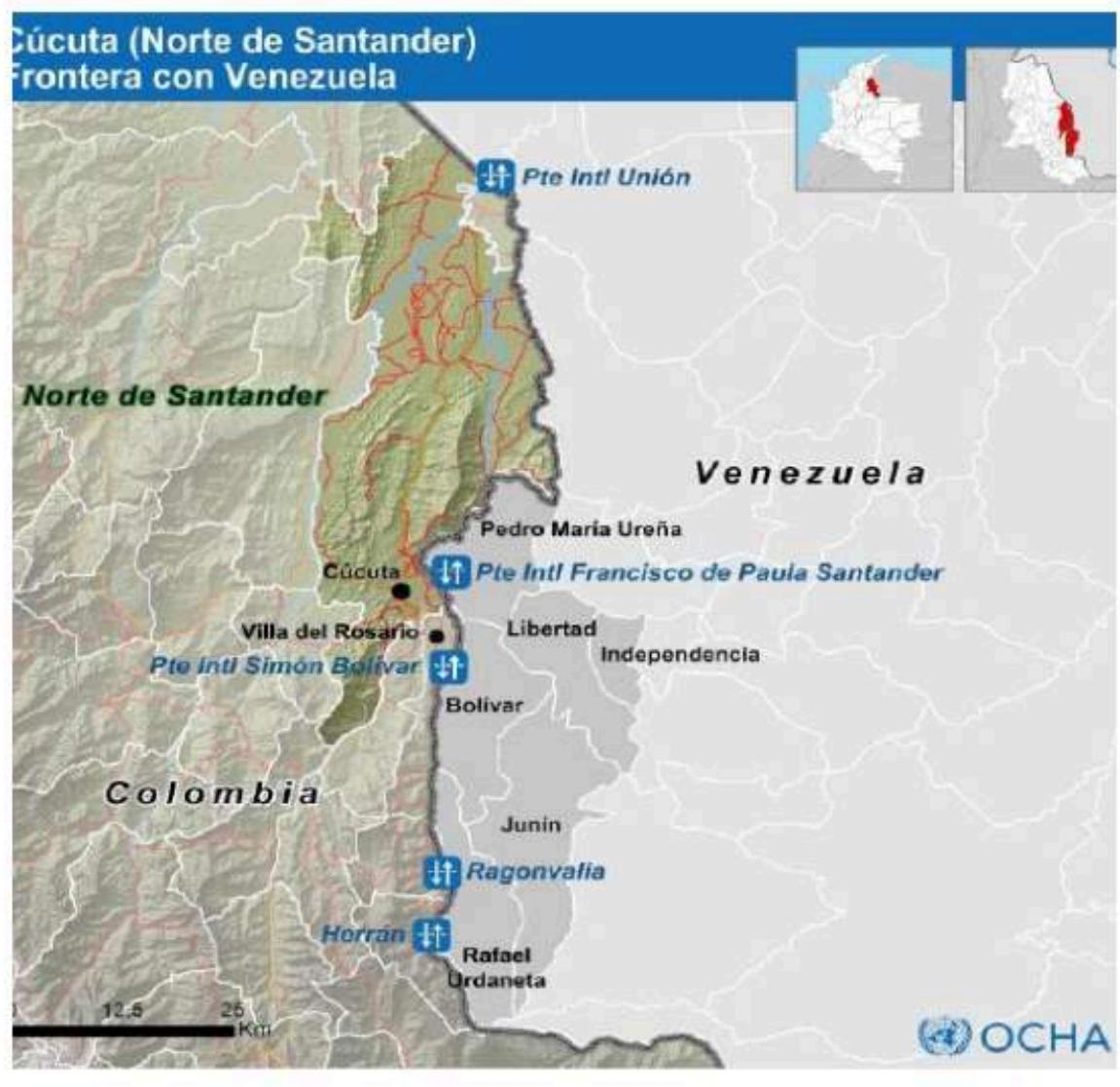
La población analizada se encuentra en los puentes internacionales ubicados en la frontera de Cúcuta en Norte de Santander en los sectores El
Escobal, Puente Unión en el municipio de Puerto Santander y La Parada que es un municipio de Villa del Rosario; y en Venezuela se encuentra el municipio de Ureña ubicado en San Cristóbal, Población Boca de Grita en el estado Táchira y el Puente Internacional Simón Bolívar que está en San Antonio del Táchira.
 Fuente: Oficina de Naciones Unidas para la Coordinación de Asuntos Humanitarios OCHA (2018) https://www.unocha.org/
Figura 1: Mapa de la frontera de Cúcuta, Norte de Santander con Venezuela en el estado Táchira
La presente investigación está orientada en temas referentes a la economía subterránea, en donde se ubica el blanqueo de activos, la financiación del terrorismo, la participación bancaria y los riegos y consecuencias para el crecimiento de un país. Asimismo, dicha información está apoyada o soportada por publicaciones previas en diferentes bases de datos como scopus, scielo, redalyc, ebsco host, reportes económicos e investigaciones académicas.
III. ANTECEDENTES
3.1 Economía Subterránea en Colombia
La economía subterránea se define como una sociedad que se caracteriza por implementar ejercicios por fuera de la legalidad de una nación, y en Colombia esta economía oculta toma fuerza por la influencia del narcotráfico, la informalidad, la evasión de impuestos y por último el lavado de activos. (Villar, L., Steiner, R., Taboada, B., Jaramillo-Vallejo, J., Villamizar, M., & Carrasquilla, A. - 2022).
Según L. Medina (2018), la economía oculta (subterránea) minimiza la confiabilidad de los datos estadísticos oficiales, esto perjudica la capacidad para medir la actividad económica y su incremento puede conducir a un ciclo de recesión en la economía del país. Lo anterior influye en el poco desarrollo y crecimiento de diferentes sectores económicos Zabala T. (2020)
De acuerdo con Cortés G. (2018), el blanqueo de capitales actualmente es un problema que afecta a todo el mundo, la cual repercute en diferentes países a nivel mundial y ha aumentado su importancia en las economías internas. Según Osorio J (2020) Este es uno de los medios por el cual los grupos ilegales introducen dineros ilícitos en las economías para continuar financiando sus actividades criminales a través de transferencias para blanquear el efectivo por medio de negocios que son fachada.
Según Gómez Diaz (2020), los departamentos que se encuentran en zonas fronterizas son más propensos al flujo de capitales producto del narcotráfico, lavado de activos y contrabando, por la presencia de grupos delincuenciales en dichas zonas y la facilidad de estos para desplazarse a través de los límites fronterizos que no son controlados por las autoridades aduaneras.
En Colombia, González (2018) afirma que se implementan medidas cautelares con el blanqueo de capitales por medio de organismos como la Superintendencia Financiera del país con SARLAFT (Sistema de Administración del Riesgo de Lavado de Activos y de la Financiación del Terrorismo), con BASC (Business Alliance for
Secure Commerce) para el comercio y la UIAF (Unidad de Información y análisis financiero).
3.2 Lavado de activos- riesgos y consecuencias socioeconómicas
Se puede decir que como parte de la economía sumergida, el blanqueo de capital es una problemática que, aunque es difícil de cuantificar con datos puntuales su efecto en el desarrollo económico de un país, es posible identificar a grandes rasgos las consecuencias socioeconómicas que trae consigo.
El blanqueo de capitales perjudica la estabilidad económica del país puesto que contribuye al aumento de actos violentos, desplazamientos, aumento de la brecha de desigualdad social y económica, disminución de los recursos públicos, falta de empleo y así mismo, la corrupción (H. Rangel; G. Barrera; O. Gómez, 2019). Para el estado colombiano es crucial identificar los delitos ocasionados por el blanqueo de capitales y la financiación del terrorismo (LAFT) puesto que el dinero filtrado por medio de fachadas son en su mayoría provenientes de actividades ilícitas que tienen relación con el Narcotráfico (cultivo y distribución de drogas y armas) tráfico de personas, sobornos y corrupción Daza, N. (2019). Para identificar dichos delitos el estado ha establecido nuevas políticas en contra del financiamiento del terrorismo y en contra de la multiplicación de armamentos de destrucción masiva por medio el sistema CONPES 4042 (UIAF, 2021)
La problemática de blanqueo de Capitales repercute directamente en el ámbito social aumentando la inseguridad jurídica de la sociedad, promoviendo la violencia, los desplazamientos, la pobreza y afectando también el sector inmobiliario debido a la incautación de bienes desde la presunción del delito ya que inhabilita el inmueble del mercado, o por el contrario formando una burbuja inmobiliaria debido la masiva adquisición de propiedades, generando un falso incremento de precios lo cual resulta en un aumento de la dificultad para el resto del país al momento de adquirir vivienda (J.A. Nuñez, 2020).
La integridad bancaria del país también se ve afectada ya que para la ejecución del delito LAFT es inminente la participación y colaboración de funcionarios de la banca, los cuales son incorporados al fraude fiscal por medio del efecto cadena a cambio de comisiones o sobornos que de igual manera entran a hacer parte de la economía subterránea. En caso de que alguna entidad bancaria sea sorprendida en flagrancia, será acusada por participación en blanqueo de capitales, generando pánico bancario y colapso en el sistema financiero del país, aumentando la desconfianza de los inversores extranjeros. (J, Osorio. 2020)
En cuanto a los riesgos económicos, el lavado de activos puede generar distorsiones en el mercado al aumentar la demanda de dinero, haciendo ineficientes las políticas monetarias implementadas en la estabilización de los precios y disponibilidad de dinero circulante (La República, 2018). Así mismo, al no tener un control y conocimiento real de los datos estadísticos del país, se genera un desafío mayor para los inversores al momento de querer realizar estudios de mercado o estimaciones puesto que información inexacta genera desconfianza y mayor riesgo.
El aumento de la desigualdad también es un riesgo inminente a causa de la ventaja competitiva con la que cuentan los comercios financiados con dineros ilícitos ya que es difícil para para las empresas legítimas competir en condiciones desiguales y limitando la participación de nuevos competidores.
IV. DISCUSIÓN
4.1 Comparación de la economía subterránea a nivel internacional
Según López E. (2019) la economía informal se evidencia en mayor medida en los países en vía de desarrollo en los cuales la precariedad de la economía y la deficiencia en la política laboral obliga a los trabajadores a ejercer puestos que no cuentan con prestaciones laborales o seguridad social y a menudo carecen de condiciones dignas.
En su mayoría hablamos de la prostitución, ventas ambulantes, servicio doméstico, reciclaje informal y todo aquello que se constituyente como una actividad económica irregular o invisible pero que significa la única forma sustento de parte de la población.
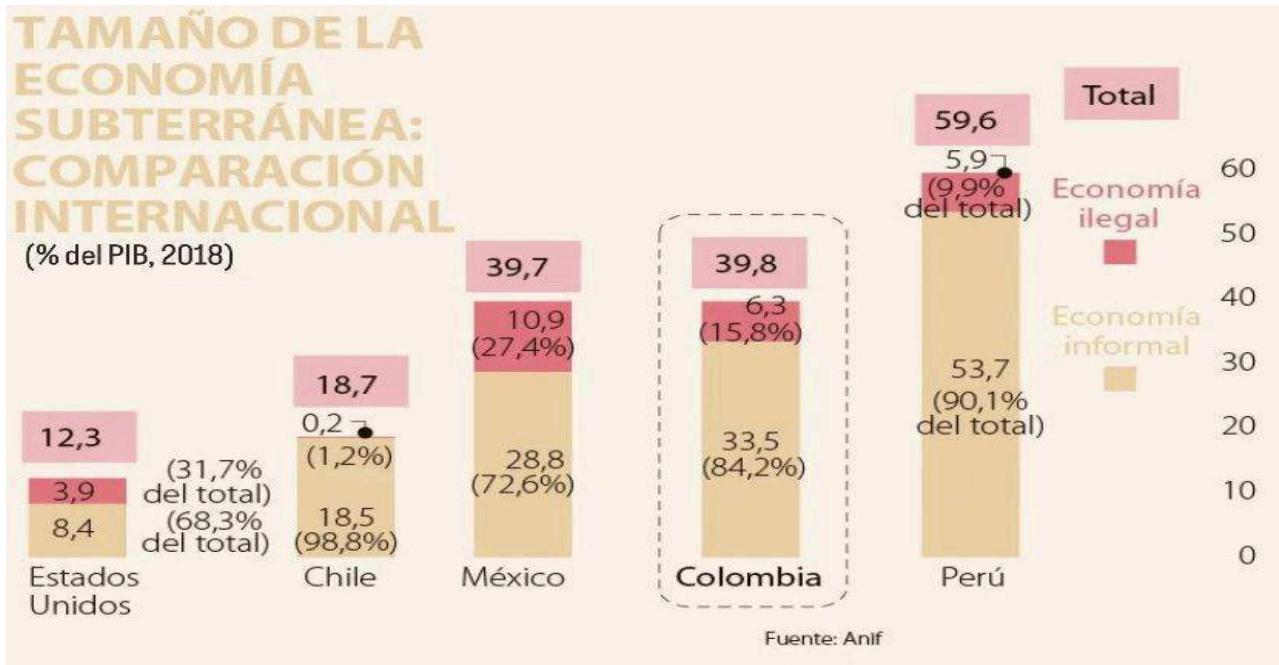 Fuente: Tomado de, Anif 2018 Centro de Estudios Económicos(mayo 2018) havocscope global market information https://www.anif.com.co/ Figura 2: Tamaño de la Economía Subterránea: Comparación Internacional
Según la Anif (2018), las tendencias de la economía subterránea significan la suma de la economía informal más la economía ilegal, Con lo cual en Colombia representa el 40% del Producto Interno Bruto que es igual al 33,5% de economía no formal más el 6,3% de economía ilegal, con similitud con el país mexicano el cual presenta la economía ilegal más alta de las demás comparativas con un 10,9% con respecto al 39,7% de su contribución al PIB. En comparación Perú y Chile muestran los índices más altos de informalidad con un 90,1% y 98,8% de tasa de economía informal con respecto a su PIB. Según Índices anteriores, las razones en su mayoría son las drogas, la poca eficacia tributaria, y el mayor uso de dinero en efectivo.
Hoyos N. (2018) Afirma que todos los instrumentos financieros son propensos a amenazas y malversación lo cual propicia su utilización en el blanqueo de capitales, y como medida preventiva sean necesarias las instituciones cuyo objetivo principal es tener un control y orden de actividades ilegales; dichos organismos constantemente están creando normativas encaminadas al perfeccionamiento de los instrumentos actuales.
4.2 Economía subterránea: Lavado de activos en la frontera colombo-venezolana
Específicamente la frontera colombo-venezolana a través de la historia se ha caracterizado por ser una región con mucho dinamismo económico gracias a la proximidad de sus fronteras y la diferencia en sus modelos de gobierno. Hasta el 2013, disponía de una actividad comercial considerablemente valiosa para la región, Con un valor en exportaciones de USD37,7 millones (Pabón, Arenas y Sepúlveda, 2019).
Pese a que la zona fronteriza es un punto fundamental en el desarrollo económico del país gracias a la relevancia de la industria petrolera generada en su mayoría por Venezuela (Niño, Camargo y Cañizares, 2019), el panorama económico de la región fronteriza es desalentador, puesto que la escasa presencia de entes estatales reguladores dificulta la ejecución de políticas públicas en pro del desarrollo y la integración económica.
En el ámbito de la ilegalidad es de suma importancia incluir no solo el contrabando de víveres o combustibles que son los más comunes, sino también el de personas, medicinas, ganado y oro como una problemática con consecuencias en todos los aspectos económicos, políticos y sociales imaginables.
La industria ilegal en esta zona es principalmente dirigida por el grupo al margen de la ley "Clan del Golfo", que se encuentra y moviliza hacia el Táchira por los enfrentamientos con el ELN (Ejército de Liberación Nacional), los cuales compiten y disputan por quedarse con el dominio de la zona que anteriormente era controlada por las FARC (Fuerzas Armadas Revolucionarias de Colombia) cuando se desmovilizaron (La Opinión, 2018). Así mismo, surgen enfrentamientos con grupos ilegales y delincuencia organizada de Venezuela y Colombia para quedarse con las mejores rutas usadas en el contrabando y todo tipo de actividades ilegales (El Tiempo, 2018).
La presencia del narcotráfico tiene una gran incidencia en el desarrollo del lavado de activos de las regiones. Como se muestra en la gráfica (Fig.3) Los departamentos con mayor cultivo e instalación permanente de Coca en el país se encuentran principalmente en las periferias
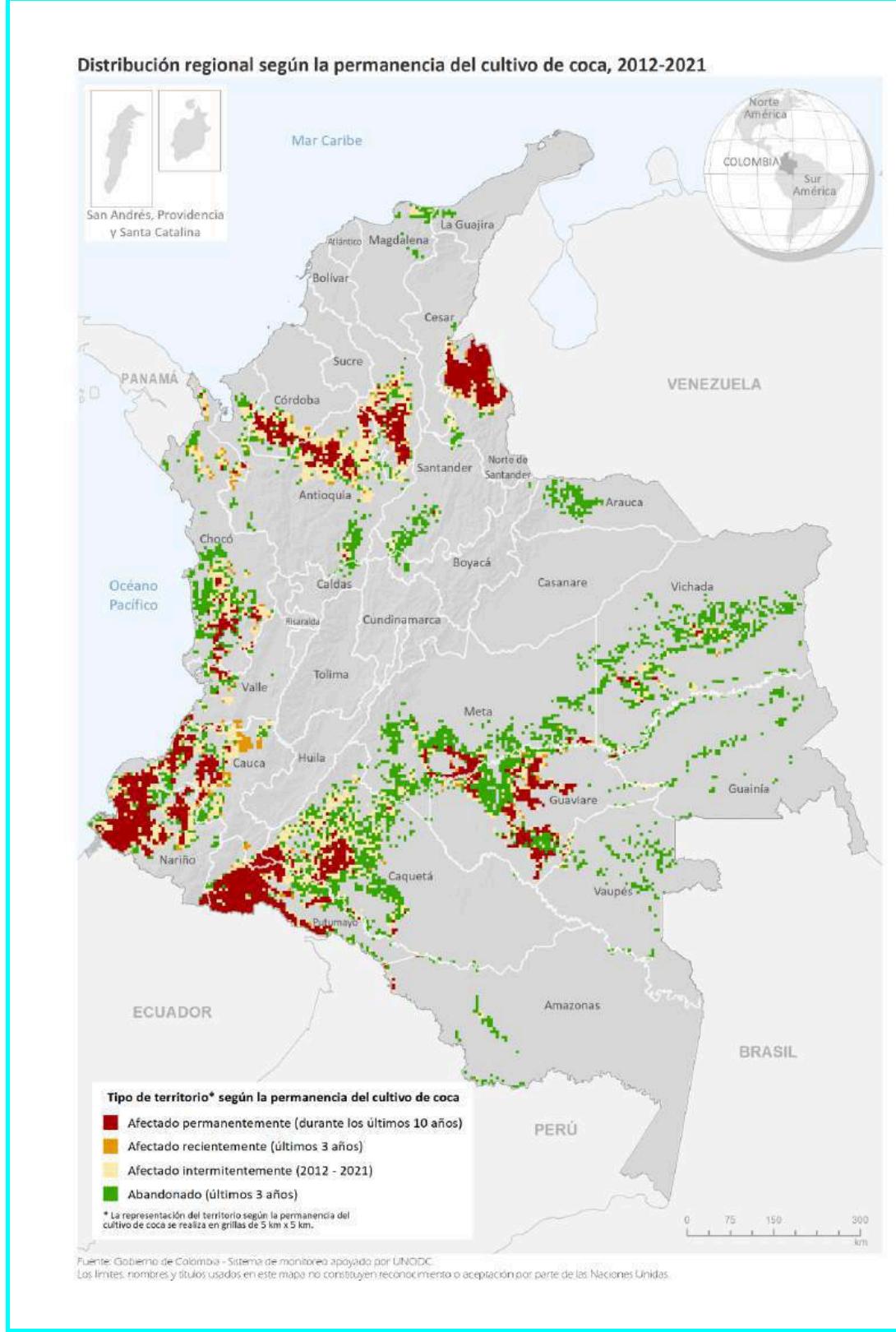 Figura 3: Mapa Distribución regional según la permanencia del cultivo de coca, 2012-2021 Fuente: Metadatos UNODC - SIMCI
Según el director de Fiscalías de Norte de Santander (2021): "En las declaraciones de exportaciones a Venezuela se podría evidenciar un aumento en el lavado de activos, debido a que
Colombia no cuenta con relaciones diplomáticas con dicho país, por lo tanto, no hay cómo corroborar los soportes contables, por eso, en un caso hipotético una persona se dirige a los bancos
Colombianos afirmando que recibirá un giro de millones de dólares de unas exportaciones que hizo a Venezuela, de cualquier producto, y la DIAN debe creerle, porque no se puede solicitar al gobierno venezolano, si esa factura es real o no".
De acuerdo con Daniel T.(2021), las denuncias de las exportaciones ficticias y el ejercicio ilícito de abrir cuentas bancarias a personas ajenas a las operaciones para que reciban grandes sumas de dinero sin conocer su procedencia o destino, recibiendo a cambio un pago por esa operación que se constituye como blanqueo de capital hacen que Cúcuta sea vista como un refugio fiscal para los narcotraficantes.
Las buenas prácticas para prevenir el lavado de activos normal son obligatorias pero si son recomendables por la Oficina de las Naciones Unidas contra la Droga y el Delito (UNODC) y Cámara de Comercio de Bogotá (CCB) en pro del buen desarrollo de la nación.
V. CONCLUSIONES
Esta investigación parte desde la conceptualización del lavado de activos o también llamado blanqueo de capital como parte de la economía subterránea. Tal como lo demuestran los resultados, las zonas fronterizas tienen mayor incidencia a esta práctica delictiva puesto que el contrabando, que es una forma frecuente de blanquear capital está más presente de lo que estaría en zonas céntricas del país. Esto puede producirse debido a la dificultad por parte del estado al auditar las operaciones bilaterales fronterizas.
La presencia del Narcotrafico es un factor directamente relacionado con el aumento del Lavado de activos y por ende la financiacion del terrorismo en una región. las organizaciones criminales así como cualquier otra organización necesitan capital para continuar con sus actividades y dicho capital producto de hechos delictivos puede ser introducido al mercado por medio de la economía sumergida y las operaciones no reguladas, esto hace que para el estado sea cada vez más difícil detectar el blanqueo de capitales.
En cuanto a la influencia del lavado de activos en el desarrollo socio-económico de una región es necesario conocer el trasfondo que deriva a esta actividad, ya que la delincuencia organizada necesita financiarse para seguir funcionando y para ello utiliza no solo la violencia sino también la participación de entidades financieras o la ciudadanía, ya sea de forma voluntaria o por el contrario aprovechando su poder sobre la seguridad de las zonas vulnerables.
Si bien, los riesgos y consecuencias del lavado de activos van desde la violencia, los desplazamientos forzosos, la inseguridad social, el crecimiento de la delincuencia, la financiación del terrorismo y el contrabando de mercancías no reguladas que afectan directamente a los consumidores, podemos observar que dicho blanqueo de capitales incide negativamente en la reputación de una región y hace que para el resto del mundo sea más riesgosa y menos atractiva la inversión al momento de analizar las estadísticas oficiales.
La difícil relación entre Colombia y Venezuela y la deficiencia de políticas y acuerdos bilaterales de seguridad en la zona fronteriza genera mayor dificultad al momento de ejercer control y querer esclarecer las operaciones comerciales de la ciudadanía de ambas naciones. Así, por cuenta del contrabando y el narcotráfico se sigue prolongando la precariedad en la zona y se hace cada vez más presente el blanqueo de capitales.
Conflict of Interest
The authors declare no conflict of interest.
Ethical Approval
Not applicable
Data Availability
The datasets used in this study are openly available at [repository link] and the source code is available on GitHub at [GitHub link].
Funding
This work did not receive any external funding.
References
Cite this article
Related Research



Special Issue
Launch a focused special issue to highlight research, emerging trends, and expert insights in your academic field.
