


IntelliPaper
Abstract
This paper investigates potential architectural configurations for mobility infrastructure in the Anhangabaú Valley – São Paulo’s preeminent historic public space – by critically engaging with its extensive urban accessibility and framing mobility networks as the foundational structuring element of metropolitan urban cores. The analysis foregrounds the historical significance of the Anhangabaú and its environs, acknowledged as the inaugural modern centrality within São Paulo and a constitutive component of the metropolitan mobility network. Addressing mobility within the Anhangabaú demands a critical examination of the different urban levels and the stratified spatial flows converging upon this pivotal public realm. A coherent articulation between this structural framework and the existing vehicular and pedestrian networks, particularly those channeling movement toward public transit nodes, must be established.
Consequently, the hypothesis advanced herein posits that the site’s latent accessibility can engender an integrated "mobility environment," supplanting the prevailing paradigm of fragmented transport interchanges. The inquiry engages with prior transformative interventions assimilated into the valley’s morphology, notably the vehicular underpass and peripheral Metro stations, which remain spatially and functionally disjunct from the Central Area’s urban fabric. The imminent introduction of Metro Line 19-
Celeste, with two new stations within the Anhangabaú, assumes critical importance within this proposition, given the catalytic potential of a metro infrastructure in reasserting the site’s metropolitan scale. Thus, the metro system is theorized as an agent of urban transformation. The methodological approach underscores
the imperative of measured intervention within a consolidated urban tissue. Architectural design is operationalized as an epistemic instrument, with projective experimentation serving as an analytical mechanism to diagnose constraints inherent to antecedent schemes. Representational techniques, deployed as critical mediations, facilitate the analysis of kinetic, topographic, and circulatory dynamics, reinforcing design’s constitutive role within an iterative process of urban inquiry.
Explore Digital Article Text
I. A QUESTÃO DO ESPAÇO URBANO DO ANHANGABAÚ CONTEMPORÂNEO
A organização urbana da Área Central de São Paulo influenciou diretamente a formação da rede viária, majoritariamente composta por vias radiais (configuração radioconcêntrica). A conexão dessa rede com o tecido urbano do centro, considerando os desafios impostos pelo crescimento da metrópole, tem sido um problema recorrente em projetos ao longo das últimas décadas. Ao longo do século XX, para atender a essa demanda, foram implantados dois anéis viários perimetrais para garantir a acessibilidade em larga escala ao centro. A dimensão central da área é reforçada pelo transporte público metropolitano, com os inúmeros pontos onde realizam-se transbordos modais ou das muitas linhas que por ela passam. Observa-se, entretanto, um problema de falta de integração entre os terminais de ônibus, as sete estações de metrô localizadas no centro (com a previsão da Linha 19-Celeste, para 2029 ), além das linhas de trem que atendem a região, faz com que um numeroso contingente de pessoas que cruzam ou desembarcam no centro tenha de realizar, de forma compulsória, longas travessias diárias ou penosos transbordos modais. Diferentemente do Perímetro de Irradiação, que promoveu a integração e o aproveitamento do centro novo, as intervenções viárias posteriores passaram a tratar a área central como simples ponto de conexão na malha metropolitana, priorizando o fluxo de veículos em larga escala e reduzindo a acessibilidade às regiões atravessadas. A implantação de estruturas como viadutos, elevados e vias de fundo de vale contribuiu significativamente para a degradação do entorno do centro histórico, atingindo inclusive bairros anteriormente valorizados, como Campos Elíseos, Santa Cecília, Bela Vista e Liberdade (NAKANO et al, 2004). Diversos autores apontaram problemas causados pelas sucessivas abordagens rodoviaristas, em São Paulo. Problemas não somente de mobilidade, mas econômicos, ambientais, e de direito à cidade. Destaca-se o recente processo de transformação pelo qual passou o Anhangabaú, processo que não promoveu uma transformação estrutural de forma a desempenhar funções de uma centralidade metropolitana contemporânea, isto é, com elementos de um equipamento de mobilidade congruente com sua importância e acessibilidade urbanas. O pensamento em torno de infraestruturas de mobilidade no Vale, portanto, se mostra urgente.
A natureza do espaço do Anhangabaú compreende uma complexidade urbana possível de ser organizada quatro camadas principais: a)
Subterrânea: A presença das águas do Rio Anhangabaú, formado pelo encontro das águas dos rios Saracura, Bixiga e Itororó, além de importantes infraestruturas de transporte, como linhas de metrô e o Corredor Norte-Sul, uma galeria viária que passa 9 metros abaixo da esplanada do Vale.
b) Chão urbano: A malha urbana imediata, a importante esquina do Vale com a Avenida São João e seus calçadões, as ruas Formosa e Anhangabaú, o histórico edifício da Agência Central dos Correios e a articulação urbana realizada pela Praça das Artes. O chão da colina histórica com os prédios das duas bolsas de valores e mercadorias, a Praça e Catedral da Sé, a Biblioteca Municipal, os calçadões do centro velho, as galerias comerciais do centro novo.
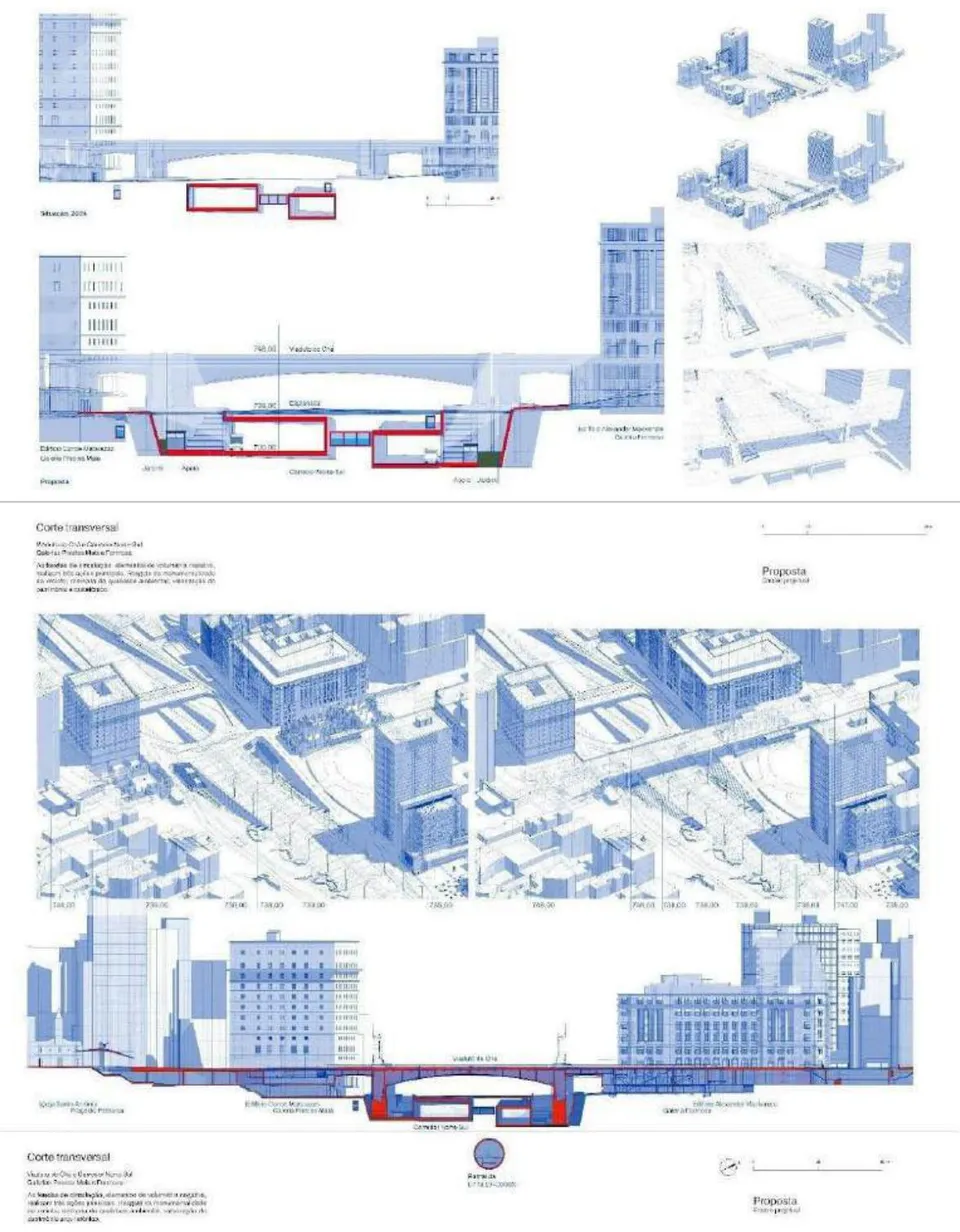
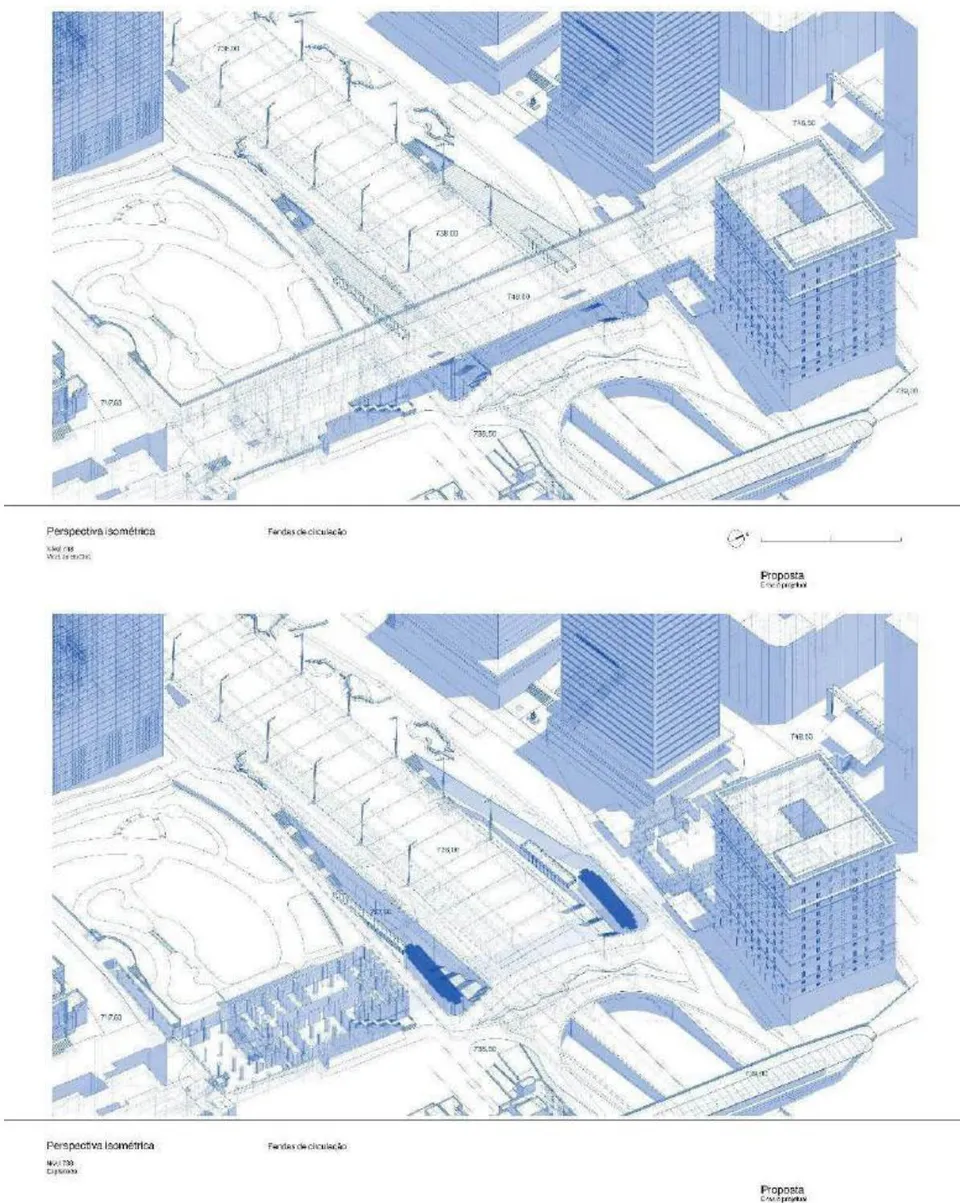
c) De ligação: Inclui elementos de transposições verticais, como as galerias Prestes Maia e Formosa, escadarias, ladeiras e praças inclinadas (como a Ramos de Azevedo). Esses elementos facilitam a circulação entre diferentes níveis urbanos, embora muitos estejam subutilizados.
d) Aérea: Formada por viadutos (Chá, Santa Ifigênia) e passarelas que ligam o tecido urbano fragmentado às plataformas de embarque dos terminais. Representam soluções urbanas simbólicas frente às barreiras físicas do centro. Sua condição precária e os penosos caminhos que realizam serão objeto de intervenção no ensaio proposto adiante. Essas camadas distribuem-se em diferentes cotas de altitude que vão de cerca de 722m a 748m relativos ao nível do mar, o que explicita a complexidade topográfica e funcional do centro de São Paulo.
Entre o período pós-guerra e 1980, São Paulo cresceu em ritmo vertiginoso. O Vale do Anhangabaú abrigava então uma intensa vida urbana. Isso rapidamente gerou conflitos entre carros e pedestres, condição que motivou uma série de projetos (passagens subterrâneas, passarelas aéreas, transposições em nível, etc.) . Isso culminou em um concurso de projetos. A proposta vencedora foi inaugurada em 1992, com a criação da grande laje pedestrianizada que hoje lá se encontra. Essa configuração resolveu o problema dos conflitos e atropelamentos, mas desencadeou outros, em âmbitos distintos. Por isso, entre 1996 e 2013, dada a nova complexidade do contexto, uma função urbana não evidente, o estado de degradação, a ausência de articulações qualificadas do solo urbano com os equipamentos de transporte público, um expressivo conjunto de propostas projetuais e críticas ilustra de modo abundante o pensamento urbanístico para o Vale do Anhangabaú naquele momento.
O projeto, realizado na década de 80, deixou patente que, no que diz respeito às transformações urbanas, a via expressa é menos impactante pelos territórios distantes que conecta do que pelos espaços e sistemas locais que desconecta (...) O espaço resultante correspondendo à cobertura do sistema viário não esconde a impotência de uma "praça" cujo programa apoia-se exclusivamente nas questões que marcam as relações conflitantes entre pedestre e veículo. Assim, uma vez enfrentado o problema e separadas as funções, veículos embaixo e pedestres em cima, ocorreu a indesejável "inundação de espaço" que carregou consigo a força articuladora de espaços, funções e símbolos do antigo Vale do Anhangabaú. O Viaduto do Chá, amesquinhado na sua escala monumental pelas obras de acomodação do sistema viário subterrâneo, flutua sobre um espaço que já não requer "seus serviços" (MEYER, 1999, p.6-7, grifo nosso).
Se o tempo do conflito entre pedestres e carros havia sido superado, "um novo significado para aquele espaço precisaria ser definido", até os dias de hoje, "quinze anos após sua inauguração, nenhum tipo de apropriação conseguiu imprimir um novo caráter àquele recinto" (HEREÑU, 2007, p. 325). Essa busca por soluções, apesar de existir, não continha um direcionamento coerente:
O modo como essas críticas são estruturadas, e os argumentos que utilizam, permitem ver que as relações de causa e efeito dos problemas alegados ainda não foram bem assimiladas. A impressão que se tem é que o projeto implantado é totalmente descolado do discurso utilizado para justificá-lo. Se, por um lado, a obra resolveu o problema dos atropelamentos e melhorou minimamente o desempenho viário do "Sistema Y", por outro, empobreceu o espectro de relações urbanas que caracterizavam o vale e criou um imenso espaço residual que não agregou novos valores à área central (HEREÑU, op. cit. loc. cit.).
Junto disso, há uma relevante transformação demográfica na região central a partir dos anos 2000. O que se observa nos estudos especializados é uma notável diminuição de renda do perfil médio dessa população (VILLAÇA, 1999; KARA-JOSÉ, 2010), a partir dos anos 1970, decorrente da evasão de empresas e de pessoas da região em direção a novos centros financeiros. "A degradação dos espaços e dos edifícios foi decorrência do abandono do Centro, deixado a se deteriorar, e não sua causa" (VILLAÇA, op. cit., p.28). A partir dessa década, os projetos municipais passaram a incluir referências à "revitalização", o que deu origem a algumas iniciativas pontuais e dispersas. Na década de 1990, uma série de circunstâncias, muitas delas impulsionadas por pressões de grupos da sociedade civil, fez com que o Centro passasse a ocupar um lugar de maior relevância na agenda do poder público. Isso levou à criação das mencionadas estratégias, planos e projetos implementados a partir do final dessa década e continuados até os anos 2010 (KARA-JOSÉ, op. cit.).
Para além de sua função social, o Anhangabaú manifesta uma tensão entre sua carga simbólica, historicamente construída como espaço de expressão política, celebrações populares e representação da centralidade urbana, e sua efetiva capacidade de operar como equipamento público estruturador na dinâmica metropolitana da cidade. Essa contradição se evidencia, por um lado, no discurso institucional que busca reafirmar o Vale como um marco da identidade da cidade, e, por outro, nas dificuldades recorrentes de integração funcional do espaço com os fluxos e necessidades cotidianas da metrópole. A requalificação urbana promovida em diferentes momentos, embora tenha valorizado aspectos formais e simbólicos, nem sempre resultou na apropriação ampla e diversificada por parte da população.
As duas dimensões [...] são interdependentes. Ele ganha escala metropolitana na mesma medida em que existe como local reconhecível para a metrópole. Dessa relação somada a forte expressão do lugar advém o seu caráter simbólico, o 'cartão postal' de São Paulo, como elemento que lhe confere identidade [...] No Anhangabaú atual essas duas dimensões se interferem destrutivamente e se anulam. Isso decorre da opção pelo 'túnel', que rouba da metrópole a percepção do Anhangabaú e, inversamente, rouba dele a dimensão metropolitana. Por isso, com a implantação desse projeto, a dimensão simbólica metropolitana do Anhangabaú deixou de existir por completo. (BUCCI, 1998, p.102)
Entre as décadas de 2000 e 2010, por coincidência ou não, o que se observou foram sucessivas reformas e serviços de manutenção, sem referência aos projetos originais, que aos poucos transformam o espaço do Vale, modificando-o gradualmente e de maneira quase imperceptível. Como resultado dessas ações, as conexões com o espaço se tornaram superficiais, sem vínculos profundos, abrindo caminho ao surgimento repentino de soluções simplistas. Nesse sentido, o projeto dos espaços livres públicos não deve se limitar à estética ou ao tratamento (do Vale) apenas como uma grande "praça", mas, é necessário sobretudo que seja pensado de forma associada aos elementos de mobilidade metropolitana e estar permeado por um compromisso social e uma ética própria de direito à cidade, que deve ser continuamente reaffirmada e renovada, especialmente no contexto de uma metrópole tão marcada por desigualdades socioespaciais e fragmentação territorial.
II. ENSAIO PROJETUAL
Para a ação projetual serão consideradas as intervenções decisivas já assimiladas ao Vale, como a galeria viária subterrânea e as estações de Metrô, que, embora isoladas nas extremidades sudoeste e nordeste, poderão ter melhores articulações físico-espaciais e funcionais com o tecido urbano da Área Central. A chegada da Linha 19-Celeste do Metrô ao Anhangabaú é vista como fundamental ao exercício proposto. Entende-se sua implementação como um dos aspectos mais relevantes da abordagem, dado o potencial transformador que a chegada de uma linha de metrô oferece à cidade, reafirmando na escala local a dimensão metropolitana. O metrô é entendido como propulsor de mudança, e, nesse contexto, apoiadas em algumas premissas, serão examinadas e ensaiadas potencialidades de arquitetura .
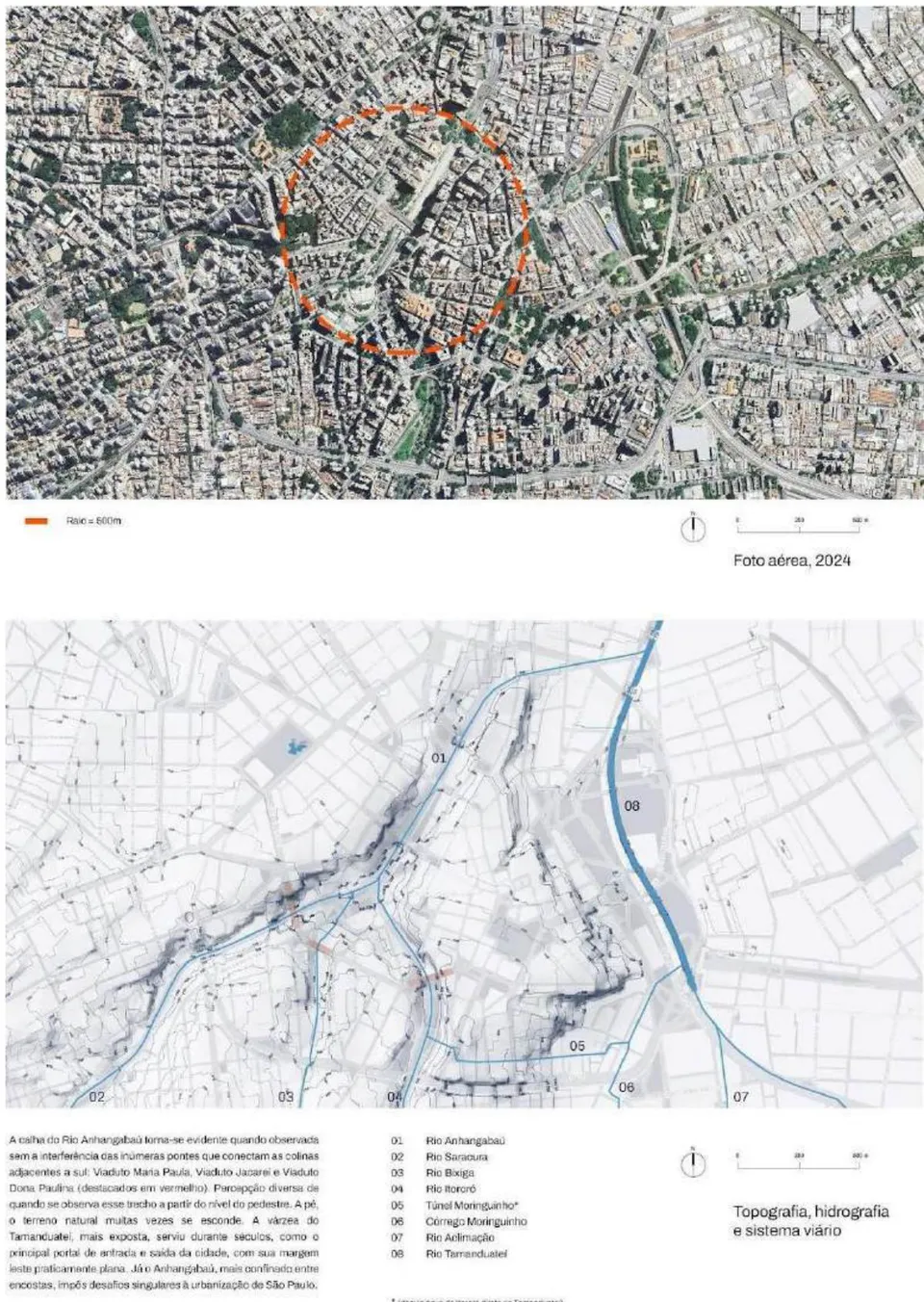
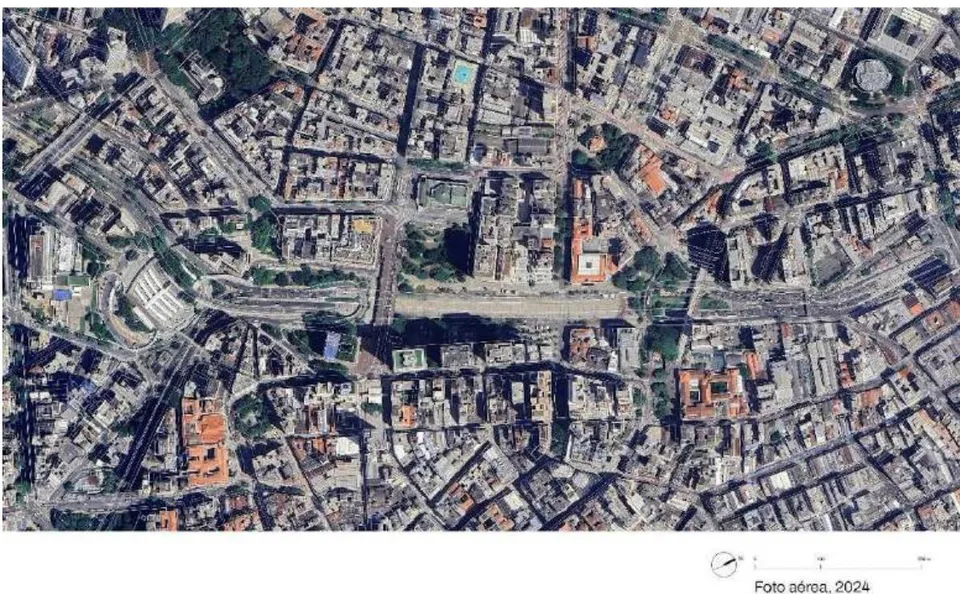
Pretende-se construir uma leitura urbana sobre o lugar . Analisam-se os fluxos, mas sobretudo, as conexões entre eles. Os pontos de contato dos caminhos de pedestres, sejam eles entre modais de transporte, ou os múltiplos percursos possíveis nos espaços de acesso livre analisados. Algumas características se destacam na análise, como o perímetro reduzido de escopo dos projetos analisados , que certamente resulta de uma série de fatores e condicionantes ao longo do tempo (figura 3).
O artigo problematiza o grau de violação ao recinto do Vale, causado pela presença do sistema de vias expressas (figura 5). As alças viárias invadem contundentemente as duas extremidades norte e sul do recinto, "comprimindo" sua extensão longitudinal. Isso compele o pedestre que sai da Estação São Bento do metrô rumo à esplanada do Vale, por exemplo, a passar por uma estreita passagem, estrangulada pela alça viária da Avenida Prestes Maia. Essa estação é o equipamento de mobilidade mais direta e satisfatoriamente conectado à cota do vale, entretanto, no nível da esplanada, essa conexão se faz "de canto". Sem a presença da via ao menos nesse nível, essa ligação poderia se dar de modo mais franco e direto. Na porção sul, a situação é agravada: com a alça de retorno da Avenida 23 de Maio e a presença aflorada das vias expressas dos "braços" do Sistema Y, a Estação Anhangabaú ficou afastada, no meio do caminho entre a esplanada do Vale e o Terminal Bandeira (distante aproximadamente 200 metros de cada). Essa "invasão", resultou no perímetro reduzido (figura 3, acima ), se comparado a versões passadas do recinto do Vale. Reconhece-se que as vias expressas do Plano de Avenidas, o Sistema Y, implantado em 1942, foram pioneiras em efetuar o corte mais radical do recinto em dois. E, mesmo com a construção da laje, em 1992, observa-se a "herança" do plano na dimensão do perímetro do Anhangabaú. Essa condição motiva algumas diretrizes, que fazem uso desse grande espaço desperdiçado, com proposta de passagens e programas de interesse, por entre os equipamentos de mobilidade mencionados. Destaca-se a potencialidade de que essas fraturas, nas duas porções mencionadas do Vale, seriam menos violentas ao recinto livre do Anhangabaú, se o início e fim do túnel tivessem ocorrido mais distantes da esplanada , com túneis mais extensos, dado que já lá estão. Uma proposta de diminuição do impacto do Sistema Y no Vale, análoga à de Lina Bo Bardi , com pistas elevadas 30 metros sobre a esplanada, no entanto, espelhada no eixo horizontal.
Importantes questões são o isolamento do Terminal Bandeira em relação ao tecido urbano, assim como a falta de integração entre o Metrô e a SPTrans, especialmente na futura estação Anhangabaú da Linha 19. Apesar de o metrô estar projetando uma estação no subsolo do Terminal, a SPTrans não prevê melhorias nas áreas adjacentes, evidenciando a ausência de planejamento conjunto. É essa lacuna que o ensaio projetual propõe abordar. Hoje, a conexão entre metrô e terminal de ônibus é marcada por longos trajetos, desarticulados e desconfortáveis, exigindo penosos deslocamentos verticais e horizontais. O artigo defende a necessidade de reduzir distâncias e tempos de travessia, ou, quando isso não for viável, ao menos qualificar os percursos com soluções mais confortáveis e diretas. A futura integração subterrânea entre as linhas Vermelha e Celeste do metrô na estação Anhangabaú solucionará os atuais deslocamentos desnecessários entre o metrô e o Terminal Bandeira. No entanto, a conexão do terminal com o entorno do Anhangabaú ainda precisa ser repensada e qualificada. Essa ligação é estratégica, pois articula o terminal com importantes pontos do centro, como a Estação São Bento, o túnel do Sistema Y e o Viaduto do Chá. Destaca-se a carência de soluções adequadas para os deslocamentos verticais no terminal, presentes desde sua reforma em 1996. Apesar da complexidade dos fluxos, há potencial para melhorar significativamente a mobilidade urbana com intervenções que unifiquem e qualifiquem os espaços, seguindo o exemplo de cidades que integram funções urbanas em diferentes níveis para promover circulação eficiente e vida urbana qualificada.
Entende-se o Projeto de Arquitetura como forma de produção de conhecimento. Durante a pesquisa, a ação projetual foi a principal ferramenta de análise, permitindo verificar os desafios enfrentados pelos projetos precedentes. O desenho é empregado como filtro crítico, aspectos como fluxos, desníveis, acessos, passagens, alturas e capacidades são mais bem compreendidos, assim como a visão crítica do pesquisador, quando aliados à investigação projetual . A hipótese que norteia esse estudo é que a criação de um ambiente de mobilidade urbana no Vale do Anhangabaú poderia promover, conjuntamente com uma estratégia de adensamento em quarteirões adjacentes, a qualificação do espaço urbano e o desenvolvimento socioeconômico da Área Central. Serão exploradas possibilidades para uma arquitetura de infraestrutura de mobilidade, como foco na ampla acessibilidade urbana que dispõe essa importante unidade espacial, considerando sobretudo a rede de mobilidade como elemento fundamental na estruturação de centros urbanos. Para construir essa hipótese foi, e continua sendo necessário apontar para a função que o Anhangabaú e seus arredores diretos possuem tradicionalmente, como primeira centralidade moderna e a da rede de mobilidade metropolitana da cidade. Não é possível falar em "ambiente de mobilidade" sem examinar cuidadosamente a estrutura das diversas cotas que fluem para o Anhangabaú e seu entorno. É necessário articular tal estrutura com todas as redes viárias e de convergência de fluxos de pedestres rumo aos transportes públicos que o atravessam. Serão apresentados desenhos que fomentam reflexões sobre o problema analisado. O ensaio busca explorar potencialidades que podem se transformar em um programa e apontar diretrizes estruturadas a partir de algumas premissas. Trata-se de um processo de experimentação, estudo e reflexão analítica e propositiva, comprometido com a descoberta de caminhos possíveis e com sua validação espacial. O projeto é entendido como processo, não como produto acabado.
Propõem-se diretrizes arquitetônicas que respondam às demandas reais do Anhangabaú, considerando-o não como um espaço isolado, mas como parte essencial da rede de mobilidade da cidade. A recente reforma do vale falhou ao abordar o espaço de forma fragmentada e autocentrada, sem articular-se adequadamente ao entorno e aos fluxos urbanos, resultando em abandono e perda de sentido urbano. O ensaio, portanto, busca inverter essa lógica, partindo do contexto e redes de transporte coletivo, configurados por "energias que vão do núcleo às bordas" . O objetivo é pensar o Anhangabaú como elemento articulador entre o espaço público local e os sistemas de transporte de alta capacidade, criando conexões eficientes entre os equipamentos e o tecido urbano. A proposta defende intervenções pontuais, mas estrategicamente posicionadas, capazes de gerar efeitos sistêmicos, para estimular a requalificação social, econômica e funcional do centro da cidade.
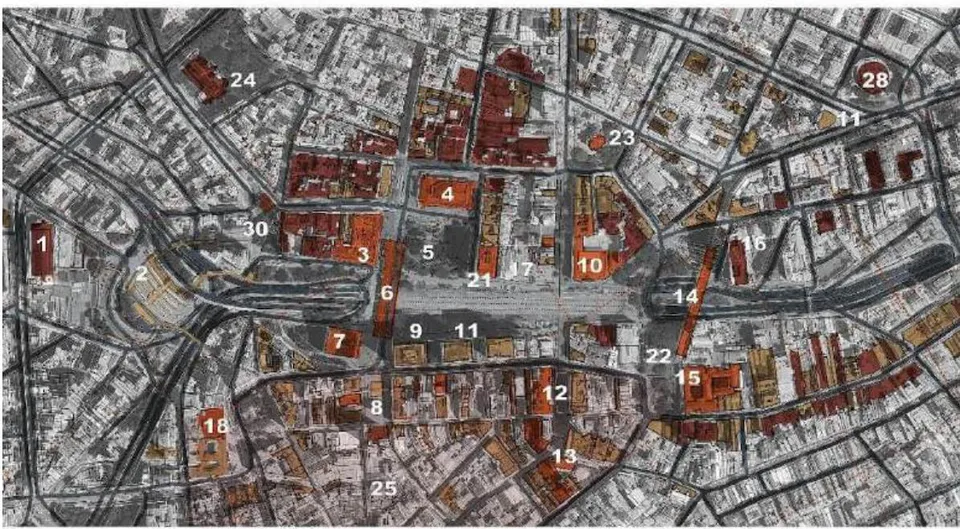
- Fátino Archetta Carrato Municipa, 1982
- Novo Termis Rendinos, 1986
- Edificio Alexandre Mackenzie Shopways Light, 1920
- Teatro Municipal, 1951
- Próprio Pintos de Arevalo, 1911
- Primario Vidalto Chá, 1992
- Novo Vidalto Chá, 1998
- Edificio Dorso Luiz Eduardo Matrazano sede preferatura, 1999
- Abertura Plaza Patriana, 1922
- Edificio Duarte de Parais, 1966
- Edificio Correza e Portugas, 1992
- Edificio Marcanti Fruta, 1974
- Edificio Marinielli, 1990
- Edificio Alba Anestes andro Basarago, 1946
- Vadastro Santa Miguel, 1923
Figura 2: Análise urbana
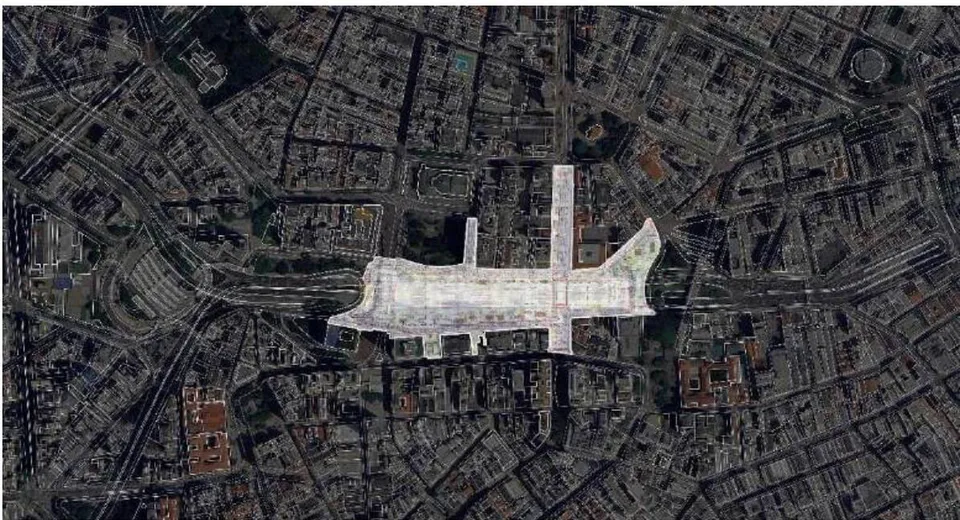
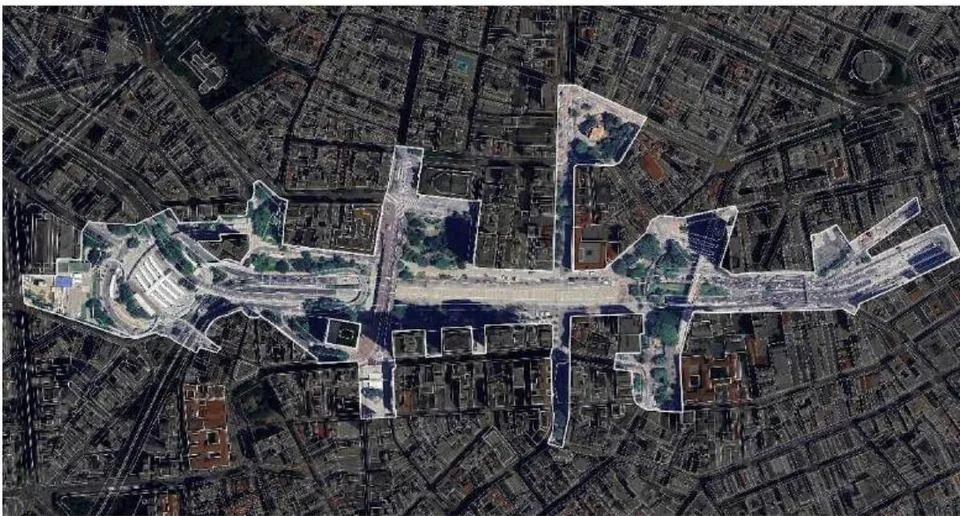
Figura 3: Análise urbana
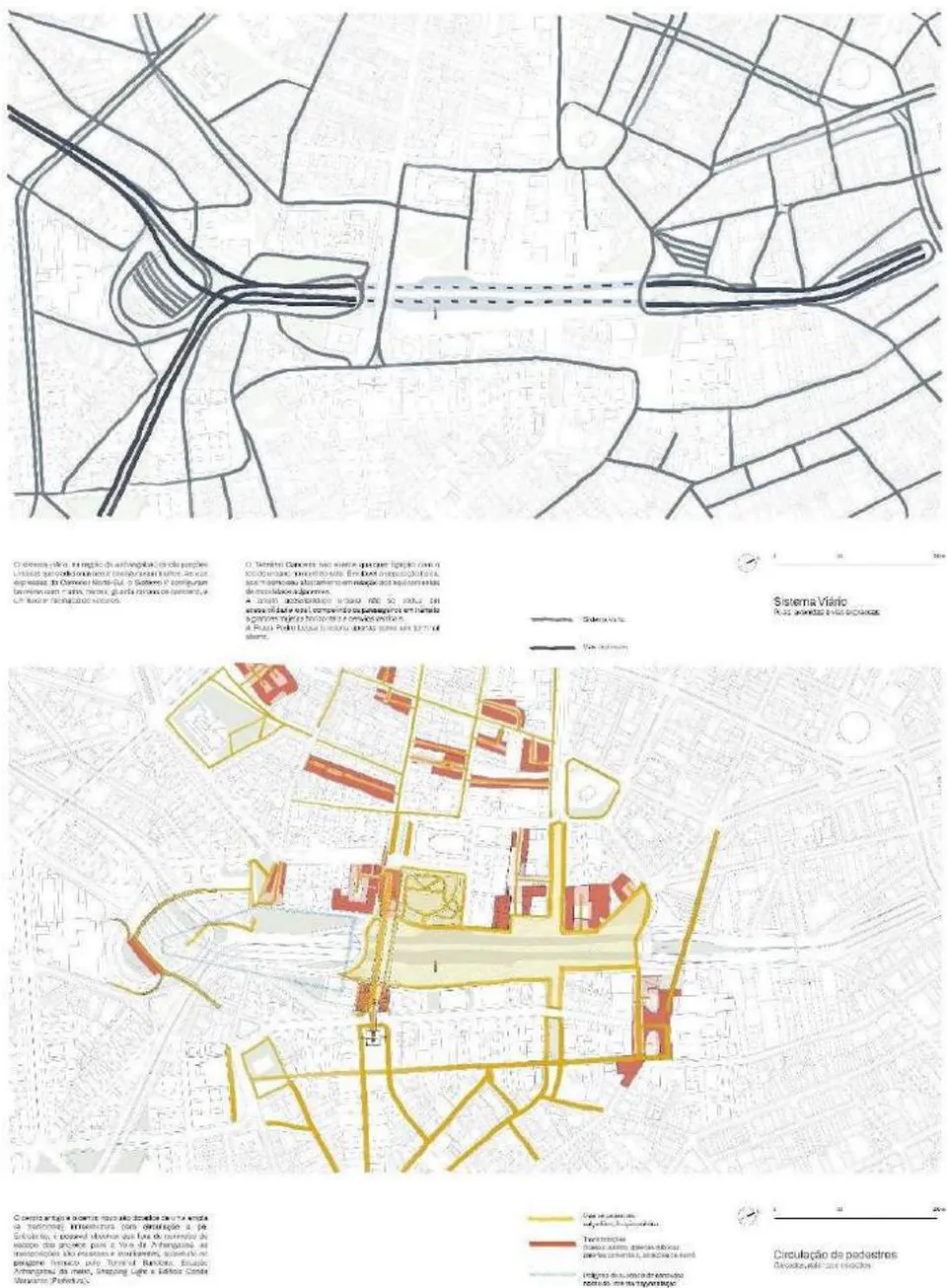

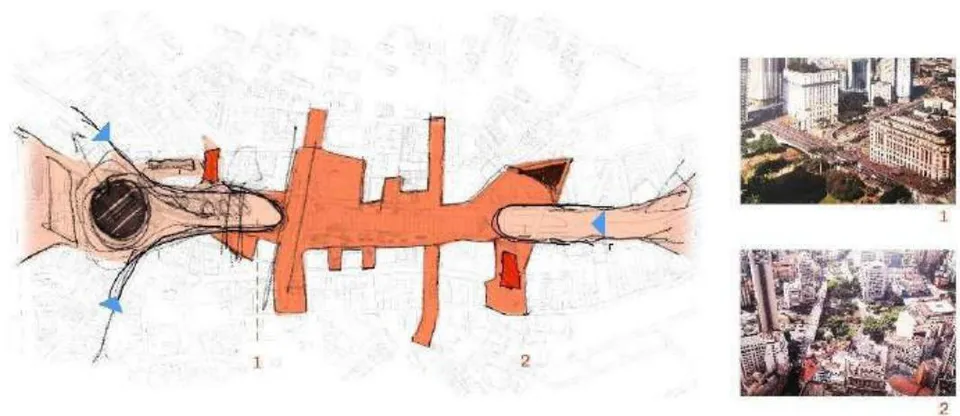
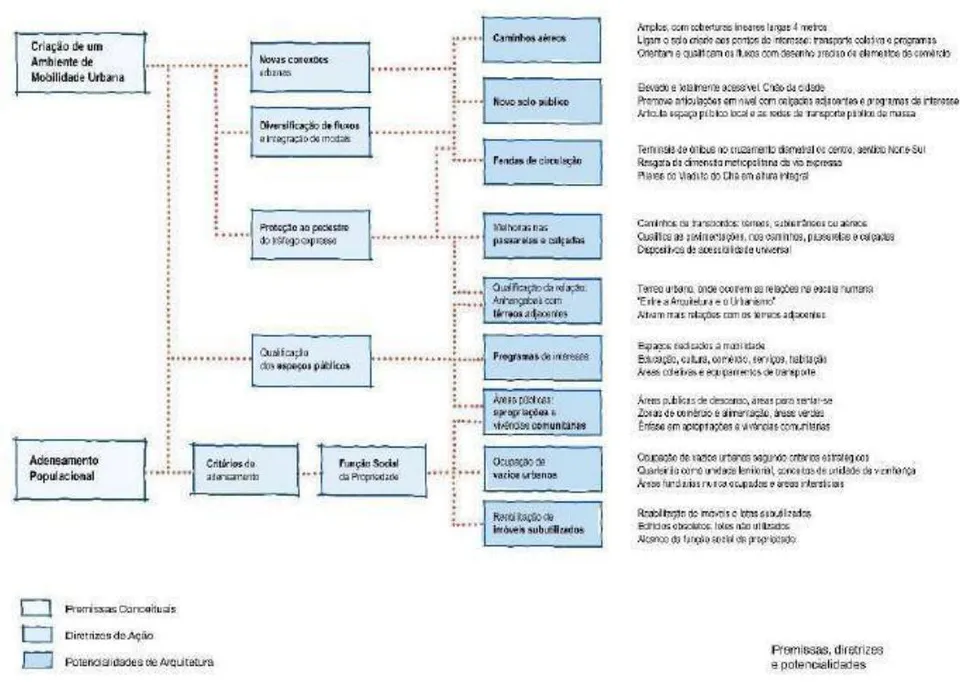
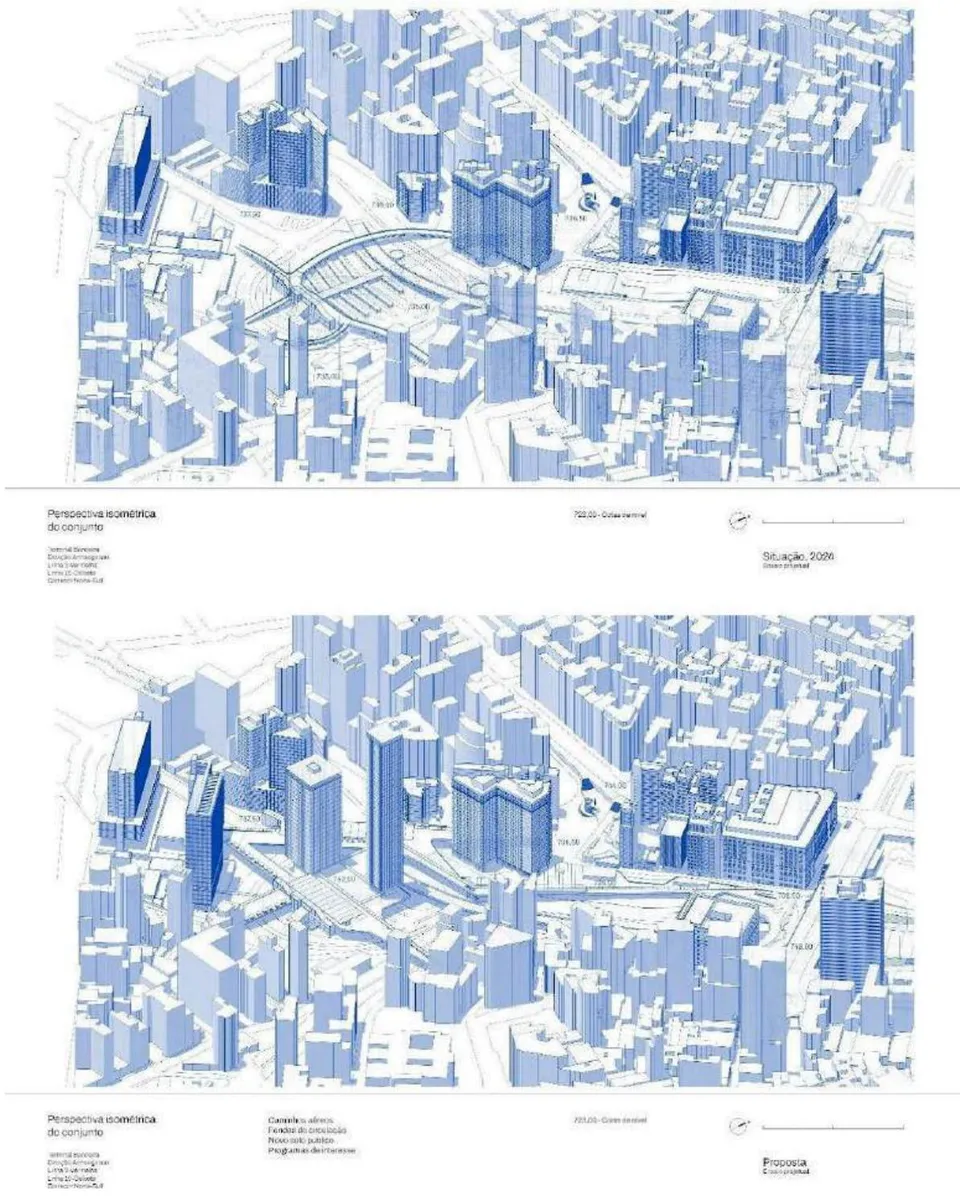
Figura 6: Ensaio projetual. Terminal Bandeira. Criação de um ambiente de mobilidade urbana
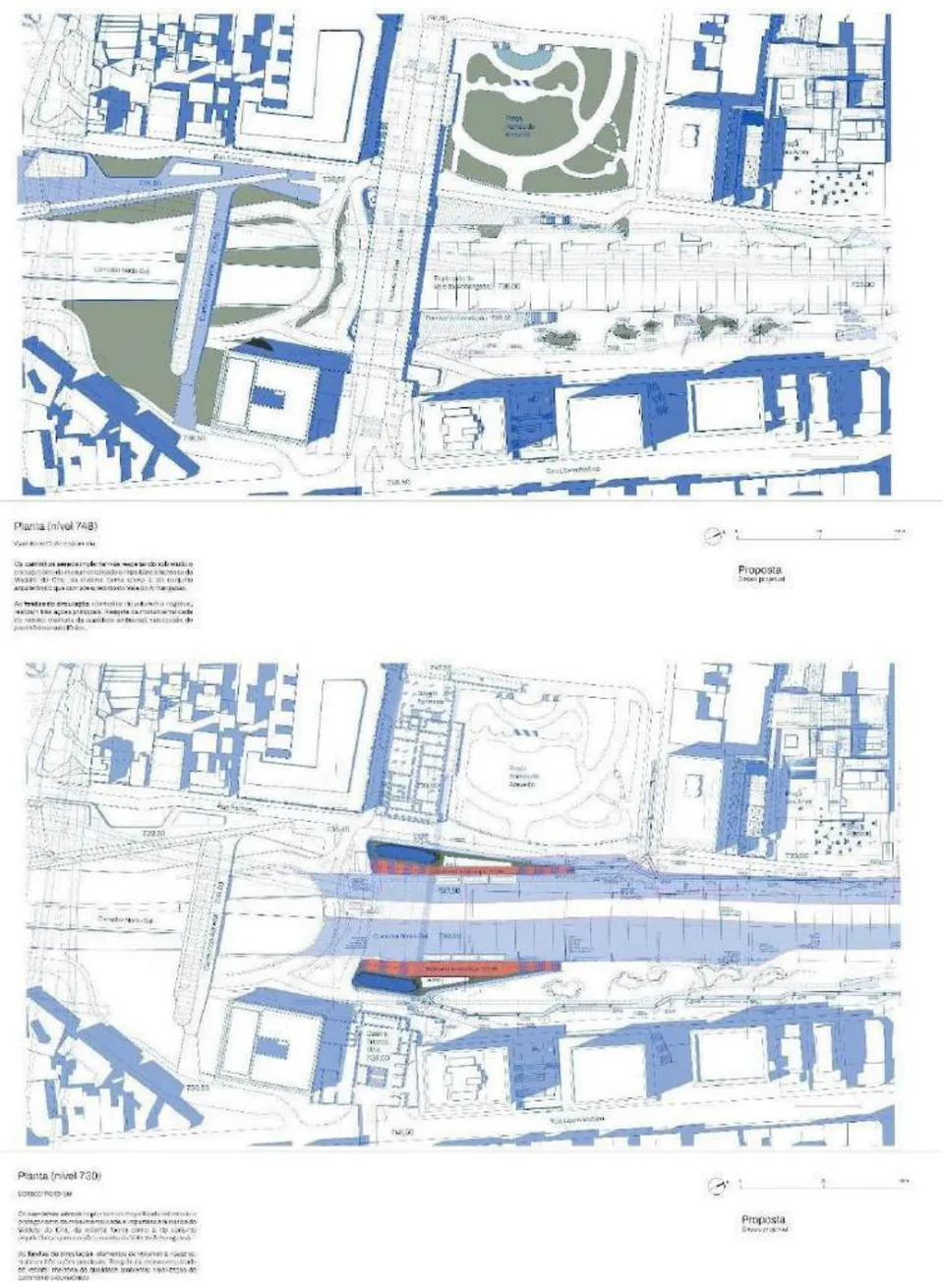
Figura 7: Ensaio projetual. Fendas de circulação. Conexão entre as cotas do Corredor Norte-Sul (730m), esplanada do Vale (738m) e colinas (748,50m) através das (e as reativando) galerias Formosa e Prestes Maia
Fonte: autor
Figura 9: Ensaio projetual. Fendas de circulação. Conexão entre as cotas do Corredor Norte-Sul (730m), esplanada do Vale (738m) e colinas (748,50m) através das (e as reativando) galerias Formosa e Prestes Maia
4. ASSOCIAÇÃO VIVA O CENTRO. Os Centros das metrópoles: reflexões e propostas para a
Conflict of Interest
The authors declare no conflict of interest.
Ethical Approval
Not applicable
Data Availability
The datasets used in this study are openly available at [repository link] and the source code is available on GitHub at [GitHub link].
Funding
This work did not receive any external funding.
References
Cite this article
Related Research


Special Issue
Launch a focused special issue to highlight research, emerging trends, and expert insights in your academic field.