



Abstract
Background: The prevalence of obesity in students is currently increasing and it can lead to metabolic syndrome at such a young age. The habit of students who have bad sleeping pattern, night eating syndrome, and excessive SSB consumption can increase the risk of metabolic syndrome in obese students.
Purpose: The purpose of this research was to analyze the differences of night eating syndrome, sleeping pattern, and consumption habit of sugar-sweetened beverage based on metabolic types in obese students.
Method: The research was conducted in July-September 2020 with female students in Semarang City as subjects. This research used a case-control design, as many as 52 subjects aged 19-24 years were selected by consecutive sampling method. The collected data included: body weight using digital scales, height using a microtoise, waist size using a medline, blood pressure using a tensimeter, and a laboratory tests was conducted to check triglyceride levels, HDL cholesterol, fasting blood glucose, as well as insulin. The used instruments were The Night Eating Questioner (NEQ) to assess the night eating syndrome, Pittsburg Sleep Quality (PSQI) to assess sleeping pattern, and Semi-Quantitative Food Frequency Questionnaire (SQFFQ) to see the subject's consumption of sugar-sweetened beverage during the last one month. The data were analyzed using Chi-Square test.
Result: The research showed that majority of the subjects who experienced night eating syndrome (46,2%) and bad sleeping pattern (61,5%) were subjects with Metabolically Unhealthy Obesity (MUO). Meanwhile, for sugar-sweetened beverage consumption in Metabolically Healthy Obesity (MHO) and Metabolically Unhealthy Obesity (MUO) were still within the normal range (86,4%). A difference between night eating syndrome (p=0,006) and sleeping pattern (p=0,012) on Metabolically Healthy Obesity (MHO) and Metabolically Unhealthy Obesity (MUO) was also observed.
Conclusion: Students with Metabolically Unhealthy Obesity (MUO) type were experiencing more night eating syndrome and bad sleeping pattern compared to the students with Metabolically Healthy Obesity (MHO) type.
Explore Digital Article Text
Latar Belakang: Prevalensi obesitas pada mahasiswa semakin meningkat dan dapat menyebabkan sindrom metabolik di usia muda. Kebiasaan mahasiswa yang mempunyai night eating syndrome, pola tidur yang buruk, serta konsumsi sugar sweetened beverage yang berlebih dapat meningkatkan risiko sindrom metabolik pada mahasiswa obese.
Metode: Penelitian dilakukan pada bulan Juli-September 2020 dengan subjek mahasiswi di Kota Semarang. Penelitian ini menggunakan desain case control, subjek sebanyak 52 orang dengan rentang usia 19-24 tahun dipilih dengan metode consecutive sampling. Data meliputi berat badan menggunakan timbangan digital, tinggi badan menggunakan microtoise, lingkar pinggang dengan menggunakan medline dan tekanan darah menggunakan tensimeter serta melakukan uji laboratorium untuk pemeriksaan kadar trigliserida, kolesterol HDL, glukosa darah puasa dan insulin. Instrumen yang digunakan adalah The Night Eating Questioner (NEQ) untuk menilai night eating syndrome, Pittsburg Sleep Quality (PSQI) untuk menilai pola tidur, dan Semi Quantitative Food Frequency Questionnaire (SQFFQ) untuk melihat konsumsi sugar-sweetened beverage subjek selama 1 bulan terkahir. Data dianalisi dengan uji Chi Square
Hasil: Penelitian ini menunjukkan bahwa mayoritas subjek yang mengalami night eating syndrome (46,2%) dan pola tidur yang buruk (61,5%) terjadi pada subjek metabolically unhealthy obese (MUO). Konsumsi sugar sweetened beverage pada kelompok metabolically healthy obese (MHO) dan metabolically unhealthy obese (MUO) masih sama dalam batas normal (86,4%). Terdapat perbedaan night eating syndrome (p=0,006) dan pola tidur (p=0,012) pada mahasiwa dengan tipe metabolik metabolically healthy obese (MHO) dan metabolically unhealthy obese (MUO)
Simpulan: Mahasiswa dengan tipe metabolik metabolically unhealthy obese (MUO) lebih banyak yang mengalami night eating syndrome dan gangguan pola tidur jika dibandingkan dengan mahasiswa yang mempunyai tipe metabolik metabolically healthy obese (MHO).
I. PENDAHULUAN
Obesitas merupakan suatu keadaan dimana terjadi penumpukan lemak berlebih di dalam tubuh. Saat ini obesitas menjadi salah satu masalah kesehatan di seluruh dunia. Namun tidak semua orang obese mempunyai metabolik yang buruk. Berdasarkan fenotipe obesitas terbagi menjadi metabolically healthy obese (MHO) dan metabolically unhealthy obese (MUO). Prevalensi obesitas sentral di Indonesia menurut Riskesdas 2018 mengalami peningkatan setiap tahunnya. Prevalensi obesitas sentral pada umur ≥15 tahun yaitu sebanyak 31%. Berdasarkan penelitian di Semarang tahun 2015 menunjukkan bahwa prevalensi sindrom metabolik pada remaja obesitas sebanyak 68,4%. Penelitian yang dilakukan pada mahasiswa Universitas Diponegoro menunjukkan bahwa dari 37 mahasiswa yang dijadikan responden, terdapat 24,3% yang mengalami obesitas sentral, hal tersebut membuktikan kejadian obesitas sentral di kalangan mahasiswa tergolong tinggi.
Pengertian obesitas secara umum ialah penimbunan jaringan lemak tubuh secara berlebihan yang memberikan efek buruk pada kesehatan. Sindrom metabolik tidak hanya terjadi pada orang dewasa, tetapi juga terjadi pada remaja. Permasalahan sindrom metabolik pada remaja menunjukkan pentingnya deteksi dan manajemen dini. Penyakit jantung, penyakit pernapasan, tekanan darah tinggi dan diabetes mellitus sering dihubungakan dengan obesitas. Risiko dari penyakit-penyakit tersebut tergantung pada subjek memiliki obesitas dengan metabolik sehat - MHO atau obesitas dengan metabolik tidak sehat - MUO. Orang dengan MHO berisiko lebih rendah untuk terkena DM tipe 2 dan penyakit kardiovaskular dibandingkan orang dengan MUO. Komponen sindrom metabolik antara lain seperti tekanan darah sistolik dan diastolik yang tinggi, trigliserid tinggi, HDL rendah, GDS tinggi dan lingkar pinggang yang besar. Kriteria MHO yaitu memiliki IMT kg/m , tetapi tidak mengalami dislipidemia dan hipertensi, sedangkan MUO memiliki IMT kg/m dan memiliki 3 dari 5 kriteria komponen sindrom metabolik.
Beberapa penelitian menemukan bahwa pola tidur memiliki kontribusi terhadap meningkatnya obesitas terutama tidur yang kurang. Tidur yang kurang diduga akan menyebabkan gangguan regulasi hormonal terutama pengeluaran hormon leptin dan ghrelin yang berdampak pada pengaturan nafsu makan dan jumlah asupan makan. Suatu penelitian menyebutkan, bahwa tidur kurang dari 6 jam perhari dikaitkan dengan peningkatan lingkar pinggang, dan tidur lebih dari 10 jam dapat terjadi peingkatan trigliserida dan peningkatan gula darah puasa (GDP) pada wanita. Menurut National Sleep Foundation (NSF) pada tahun 2012 di Amerika, sekitar seperempat populasi orang dewasa mengalami masalah tidur, dan sekitar 6-10% memiliki gangguan insomnia. Survei selanjutnya yang diadakan oleh Behavioral Risk Factor Surveillance System (BRFSS) pada tahun 2008 dan 2009 melaporkan bahwa 35,3% dari 74.571 orang dewasa di 12 negara bagian Amerika Serikat tidur kurang dari 7 jam dalam sehari. Kebutuhan durasi tidur pada orang dewasa kurang lebih 8 jam perhari. Sebanyak 70,6% mahasiswa di Indonesia rata-rata mempunyai durasi tidur kurang dari 8 jam dalam sehari.
Mahasiswa pada umumnya memiliki aktivitas yang padat baik dalam bidang akademik maupun non akademik, sehingga seringkali menyebabkan tidur larut malam. Hal ini dapat meningkatkan risiko mengonsumsi makanan lebih banyak pada malam hari karena waktu sebelum tertidur yang lebih panjang. Kebiasaan makan di malam hari dapat memungkinkan terjadinya Night Eating Syndrome (NES) yang diartikan sebagai sindrom yang berpotensi menjadi salah satu jenis perilaku makan menyimpang baru. Night Eating Syndrome ditandai dengan tidak sarapan pagi, makan banyak pda malam hari yaitu mengkonsumsi 50% atau lebih dari asupan makan setelah jam 7 malam, dan insomnia. Penelitian di Swedia menyebutkan prevalensi orang yang mengalami NES pada orang obesitas sebanyak 8,4% pria dan 7,5% pada wanita. Makan malam dinilai lebih berperan menyebabkan kegemukan dibandingkan sarapan dan makan siang.
Saat ini sedang tren konsumsi minuman manis kekinian yang mewabah di kalangan mahasiswa atau dikenal sebagai sugar-sweetened beverage (SSB) yang merupakan minuman ringan dalam kemasan yang menambahkan pemanis berkalori tinggi sebagai salah satu bahan dalam minuman. Asupan dari SSB yang tinggi (>50 g/hari) diketahui berhubungan postif dengan peningkatan lingkar pinggang, trigliserida dan GDS. Ada beberapa studi menyatakan bahwa ada perbedaan konsumsi jenis makanan tertentu pada kelompok MHO dan MUO. Orang dengan MHO memiliki tingkat asupan gula yang lebih rendah dan minuman dengan penambahkan gula yang rendah dibandingkan orang dengan MUO. Pada salah satu penelitian cross-sectional pada 59 remaja berusia 15-18 tahun, ditemukan 72,9% subjek memiliki asupan tinggi SSB, 62,7% subjek memiliki trigliserida yang tinggi, dan 44,11% subjek memiliki lingkar pinggang yang besar.
Kebiasaan mahasiswa yang mempunyai pola tidur yang buruk, night eating syndrome serta konsumsi SSB yang berlebih dapat meningkatkan risiko sindrom metabolik pada mahasiswa obese. Namun sayangnya penelitiaan yang fokus meneliti tipe metabolik yang kaitannya dengan night eating syndrome, pola tidur, dan kebiasaan konsumsi sugar-sweetened beverage masih jarang di Indonesia. Berdasarkan latar belakang tersebut maka peneliti tertarik untuk meneliti perbedaan night eating syndrome, pola tidur, dan kebiasaan konsumsi sugar-sweetened beverage berdasarkan tipe metabolik pada mahasiswa obese.
II. METODE
Penelitian ini merupakan penelitian dalam lingkup gizi masyarakat yang menggunakan metode observasional dengan rancangan penelitian case control. Pengumpulan data dilakukan dalam rentang waktu Juli 2020 hingga September 2020. Pengambilan data dilakukan di Laboratorium Klinik CITO Setiabudi, Semarang. Penelitian ini telah memperoleh ethical clearance dari Komisi Bioetika Penelitian Kedokteran/Kesehatan Fakultas Kedokteran Universitas Islam Sultan Agung Semarang dengan No. 242/VII/2020/Komisi Bioetik.
Pengambilan data penelitian ini berlangsung saat masa pandemi, oleh sebab itu jaringan komunikasi untuk mencari subjek dilakukan melalui social media. Skrining subjek pada penelitian ini sebanyak 58 mahasiswa, kemudian dipilih 52 mahasiswa yang memenuhi kriteria inklusi pada kelompok kontrol dan kelompok kasus. Terdapat 6 subjek drop out dikarenakan perbandingan jumlah subjek antara kelompok kasus dan kelompok kontrol harus sama, 6 subjek tersebut merupakan subjek dengan tipe metabolik MHO. Populasi target adalah seluruh mahasiswa di Jawa Tengah. Populasi terjangkau pada penelitian ini adalah mahasiswa di Kota Semarang. Penentuan besar subjek minimal berdasarkan rumus untuk penelitian case control yaitu dengan jumlah subjek minimal 22 mahasiswa dengan perkiraan drop out 10 menjadi 25 subjek. Pengambilan sampel dengan teknik consecutive sampling, yaitu dengan menetapkan subjek yang memenuhi kriteria penelitian dimasukkan dalam penelitian hingga kurun waktu tertentu hingga jumlah responden terpenuhi. Sampel dipilih berdasarkan kriteria inklusi yaitu bersedia menjadi subjek penelitian, berusia 19-24 tahun, tidak mengonsumsi alkohol, tidak merokok, memiliki Indeks Massa Tubuh ≥25 kg/m2 yang memiliki tiga atau lebih gejala kelainan metabolik seperti lingkar pinggang >80 cm, kadar trigliserida ≥150 mg/dl, kadar kolesterol HDL <50 mg/dl, tekanan darah ≥130/85 mmHg, dan kadar glukosa darah puasa ≥110 mg/dl serta resistensi insulin sebagai kelompok kasus dan kelompok kontrol dengan Indeks Massa Tubuh ≥25 kg/m2 memiliki kurang dari 2 atau tanpa memiliki gejala kelaianan metabolik. Kriteria eksklusi yaitu mengundurkan diri selama penelitian dan sakit selama penelitian. Berdasarkan kriteria eksklusi yang disebutkan tidak ada subjek yang masuk dalam kriteria eksklusi tersebut.
Prosedur penelitian diawali dengan mengumpulkan mahasiswa di Kota Semarang dengan menyebarkan google form kemudian melakukan skrining awal untuk mencari subjek penelitian yang memenuhi kriteria yaitu mahasiswa di Kota Semarang dengan Indeks Massa Tubuh (IMT) ≥25 kg/m2. Jika dari hasil skrining awal terdapat subjek yang memenuhi kriteria penelitian maka subjek tersebut akan diberikan sosialisasi penelitian, pengisian informed consent sebagai bentuk kesediaan untuk menjadi responden dalam penelitian yang dilakukan dan mengisi kuesioner identitas diri. Lalu, melakukan pengukuran antropometri berat badan menggunakan timbangan digital, lingkar pinggang dengan menggunakan medline dan tekanan darah menggunakan tensimeter serta melakukan uji laboratorium untuk pemeriksaan kadar trigliserida, kolesterol HDL, glukosa darah puasa dan insulin untuk melihat adanya kelainan metabolik. Selanjutnya mengelompokkan subjek dengan kelompok IMT obese tanpa kelainan metabolik dan IMT obese dengan tiga atau lebih kelainan metabolik. Setelah mengelompokkkan subjek kemudian memberikan The Night Eating Questioner (NEQ) untuk menilai night eating syndrome, Pittsburg Sleep Quality (PSQI) untuk menilai pola tidur, dan Semi Quantitative Food Frequency Questionnaire (SQFFQ) untuk melihat konsumsi sugar sweetened beverage subjek selama 1 bulan terkahir.
Data yang telah terkumpul dilakukan uji Chi Square. untuk mengetahui perbedaan night eating syndrome, pola tidur, dan konsumsi sugar sweetened beverage pada individu MHO dan MUO dilakukan uji Chi Square. Tingkat ketelitian dalam analisis data yaitu sebesar 95% atau p value 0,05.
III. HASIL PENELITIAN
3.1 Karakteristik Subjek
Jumlah mahasiswa yang melakukan skrining pada penelitian ini berjumlah 58 subjek. Sampel yang didapatkan sesuai kriteria inklusi sebesar 52 orang dengan setiap kelompok sebesar 26 orang. Pada kelompok kontrol didapatkan sebanyak 26 mahasiswa dengan Indeks Massa Tubuh obese ( 25 kg/m ) dengan memiliki kelainan metabolik kurang dari 2 atau tanpa adanya kelainan metabolik sedangkan kelompok kasus didapatkan sebanyak 26 mahasiswa dengan Indeks Massa Tubuh obese ( 25 kg/m ) dengan setidaknya memiliki 3 atau lebih kelainan metabolik. Pada penelitian ini seluruh subjek berjenis kelamin perempuan.
{"image_source":{"path":"images/02fcc1f6cc869b8681579a1cb3bc809edb422f0e4fdb8033662991d5b85da829.jpg"},"content":"","chart_caption":[{"type":"text","content":"Diagram 1: Jumlah Subjek Berdasarkan Kategori MHO"}],"chart_footnote":[]}
Berdasarkan diagram 1. subjek obesitas dengan tipe metabolik MHO tidak ada yang memiliki o resiko, sebagian besar subjek mempunyai 2 kelainan komponen sindrom metabolik yaitu sebanyak 52% (13 subjek). Kelainan metaboliknya yaitu lingkar pinggang >80 cm dan resistensi insulin.
{"image_source":{"path":"images/fdf23ece0ac7364da4fbb51af6f1961cd6040f18857233ebd13fd2053095897b.jpg"},"content":"","chart_caption":[{"type":"text","content":"Diagram 2: Jumlah Subjek Berdarkan Kategori MUO"}],"chart_footnote":[]}
Berdasarkan diagram 2. Subjek dengan tipe metabolik MUO sebagian besar mempunyai 3 kelainan metabolik yaitu sebanyak 48% (13 subjek), kelaian metabolik paling sering dialami yaitu lingkar pinggang >80 cm, tekanan darah tinggi, resistensi insulin, dan profil HDL yang rendah.
Tabel 1: Rerata, Std.deviasi, median, dan p value Indeks Massa Tubuh (IMT), dan komponen sindrom metabolik
| Variable | Rerata ± SD | Median | p value | ||
| MHO | MUO | MHO | MUO | ||
| IMT (kg/m2) | 26,8±1,5 | 31,2±4,4 | 26,7 | 30,9 | *0,000 |
| Lingkar pinggang (cm) | 86,7±4,6 | 92,8±9,5 | 85,0 | 91,0 | *0,004 |
| TD sistolik (mmHg) | 114,7±7,9 | 126,5±8,7 | 115,0 | 130,0 | *0,000 |
| TD diastolik (mmHg) | 78,2±7,6 | 86,7±9,1 | 77,0 | 84,5 | *0,001 |
| Gula darah puasa (mg/dL) | 89,9±6,8 | 97,7±6,7 | 89,0 | 97,0 | *0,000 |
| HDL (mg/dL) | 63,2±9,1 | 49,9±9,3 | 60,5 | 48,5 | *0,000 |
| Trigliderida (mg/dL) | 85,1±20,2 | 126,7±69,9 | 81,0 | 107,0 | *0,005 |
| HOMA-IR (uU/ml) | 2,8±1,2 | 4,2±1,8 | 2,7 | 4,1 | *0,002 |
Berdasarkan tabel 1. Seluruh subjek baik MHO dan MUO mempunyai lingkar pinggang >80 cm, rata-rata subjek dengan tipe MUO mempunyai IMT lebih besar, mempunyai tekanan darah diastolik 86,7 mmHg yang mana melewati ambang batas risiko sindrom metabolik yaitu 85 mmHg, selain itu juga mempunyai HDL buruk dibawah 50 mg/dL dan resistensi insulin.
Tabel 2: Karakteristik Subjek Berdasarkan Komponen Sindrom Metabolik
| Variabel | n (%) | |
| MHO (n=26) | MUO (n=26) | |
| Lingkar Pinggang | ||
| Normal (< 80 cm) | 0 (0%) | 0 (0%) |
| Obesitas Sentral | 26 (100%) | 26 (100%) |
| Tekanan Darah Sistolik | ||
| Normal (< 130 mmHg) | 25 (96,2%) | 11 (42,3%) |
| Tinggi | 1 (3,8%) | 15 (57,7) |
| Tekanan Darah Diastolik | ||
| Normal (< 85 mmHg) | 21 (80,8%) | 13 (50%) |
| Tinggi | 5 (19,2%) | 13 (50%) |
| Gula Darah Puasa | ||
| Normal (60 -110 mg/dL) | 26 (100%) | 25 (96,2%) |
| Hiperglikemia | 0 (0%) | 1 (3,8%) |
| HDL | ||
| Normal (50 – 59 mg/dL) | 26 (100%) | 12 (46,2%) |
| Rendah | 0 (0%) | 14 (53,8%) |
| Trigliserida | ||
| Normal (< 150 mg/dL) | 26 (100%) | 18 (69,2%) |
| Hipertrigliseridemia | 0 (0%) | 8 (30,8%) |
| Resistensi Insulin | ||
| Normal (< 3,16 uU/mL) | 18 (69,2%) | 7 (26,9%) |
| Resisten | 8 (30,8%) | 19 (73,1%) |
Berdasarkan tabel 2. Semua subjek mengalami obesitas sentral dan lebih dari 50% subjek dengan tipe metabolik MUO mempunyai tekanan darah sistolik dan diastolik tinggi, HDL rendah, serta mengalami resistensi insulin.
Tabel 3: Perbedaan Night Eating Syndrome, Pola Tidur, dan Konsumsi Sugar Sweetened Beverage
| Variabel | n(%) | p value | |
| MHO (n 26) | MUO (n 26) | ||
| Night Eating Syndrome | |||
| Normal (skor: ≥11) | 23 (88,5) | 14 (53,8) | *0,006 |
| NES | 3 (11,5) | 12 (46,2) | |
| Pola tidur | |||
| Baik (skor: ≥4) | 19(73,1) | 10(38,5) | *0,012 |
| Buruk | 7(26,9) | 16(61,5) | |
| Konsumsi SSB | |||
| Normal (<50 gram/hr) | 21(80,8) | 22(84,6) | 0,714 |
| Berlebih | 5(19,2) | 4(15,4) | |
Berdasarkan Tabel 2. Sebagian besar subjek dengan tipe metabolik MUO lebih banyak mengalami night eating syndrome dan pola tidur yang buruk. Terdapat perbedaan night eating syndrome yang signifikan pada kedua kelompok subjek (p=0,006). Terdapat perbedaan pola tidur yang signifikan pada kedua subjek (p=0,012). Sedangkan konsumsi SSB pada kedua kelompok subjek tidak ditemukan adanya pebedaan yang signifikan.
Subjek MUO banyak mengalami night eating syndrome dikarenakan subjek tidak sarapan pagi dan lebih banyak asupan makan setelah jam 7 malam. Mahasiswa obese dengan tipe metabolik MUO juga lebih banyak yang mengalami pola tidur yang buruk dikarenakan jadwal tidur yang tidak menentu, subjek lebih banyak menghabiskan waktu di malam hari untuk mengerjakan tugas hingga larut malam. Berbeda dengan konsumsi SSB pada kedua subjek, mereka sudah ada pemahaman untuk mengurangi penggunaan pemanis di dalam minuman.
IV. PEMBAHASAN
4.1 Karakteristik Subjek
Subjek dalam penelitian ini merupakan mahasiswi putri dengan rentang usia 19-24 tahun yang memiliki IMT ≥25 kg/m2 dengan mengelompokkan subjek berdasarkan komponen kelainan metabolik yang dimiliki, yaitu obesitas dengan tipe MHO dan MUO. Terdapat perbedaan yang signifikan pada komponen sindrom metabolik antara kedua kelompok. Berdasarkan hasil penelitian, subjek dengan tipe MUO memunyai IMT yang lebih besar, hal tersebut sejalan dengan penelitian Sugondo, bahwa IMT sangat berkaitan dengan sindrom metabolik dikarenakan persebaran lemak tubuh. Besarnya persebaran lemak sangat berkaitan dengan tingkat morbiditas dan mortalitas di berbagai populasi. Diketahui juga semua subjek memiliki lingkar pinggang >80 cm yang berarti semua subjek mengalami obesitas sentral, dimana obesitas sentral merupakan faktor utama yang mendasari sindrom metabolik. Lingkar pinggang berhubungan dengan jaringan lemak subkutan dan jaringan intraabdomen Selain lingkar pinggang yang besar, cukup banyak juga subjek yang mengalami resistensi insulin dan profil HDL rendah yang berhubungan erat dengan diabetes mellitus tipe 2 dan penyakit kardiovaskuler. Lebih dari setengah subjek dengan tipe metabolik MHO (52%) mempunyai 2 kelainan metabolik, yang mana subjek tersebut mendekati ambang batas kriteria tipe metabolik MHO.
4.2 Perbedaan Night Eating Syndrome, Pola Tidur, dan Konsumsi Sugar Sweetened Beverage
Pada analisis bivariat menunjukkan menunjukkan terdapat perbedaan night eating syndrome antara mahasiswa tipe MHO dan MUO (p value o,006). Hal ini sejalan dengan penelitian yang dilakukan oleh Junko Yoshida, dimana perempuan dengan kebiasaan makan malam memiliki kemungkinan sindrom metabolik lebih tinggi dibandingkan dengan mereka yang tidak memiliki kebiasaan tersebut. Rata-rata asupan energi subjek dengan MUO 1894 kkal lebih tinggi daripada subjek MHO yaitu 1675 kkal. Kebanyakan subjek dengan tipe MUO mengasup makanan diantara jam 811 malam, contohnya berupa makan besar, cemilan seperti martabak, roti bakar, seblak, dll. Rata-rata subjek membeli makanan jadi baik langsung atau lewat aplikasi pesan antar dikarenakan hampir semua subjek tinggal di rumah kost. Mereka lebih aktif makan di malam hari dikarenakan sibuknya jadwal perkuliahan yang membuat mereka tidak sarapan pagi, dan tidur sampai larut malam untuk mengerjakan tugas. Makan larut malam dapat menyebabkan pengurangan pengeluaran energi (penurunan kadar leptin) peningkatan sensasi nafsu makan, dan penambahan berat badan. Orang yang mengalami night eating syndrome juga memiliki durasi tidur yang lebih pendek, dan sering menunda waktu sarapan dan makan malam. Saat seseorang mengkonsumsi makanan di malam hari kadar glukosa, insulin, dan trigliserid meningkat secara signifikan, yang mengakibatkan berkurangnya sensitivitas insulin. Oleh karena itu, direkomendasikan makan tidak lebih dari jam 7 malam dan merencakan jadwal makan sebagai rutinitas keseharian untuk memutus siklus perilaku tidak sehat guna mencegah sindrom metabolik dan komponenya.
Terdapat perbedaan pola tidur antara mahasiswa tipe MHO dan MUO(p-value 0,012). Berdasarkan hasil pengukuran menunjukkan rata-rata pada kedua kelompok memiliki pola tidur yang buruk dilihat dari jumlah skor >5, namun ditemukan kelompok mahasiswa tipe metabolically unhealthy obese memiliki skor >5 lebih banyak jumlahnya yaitu sebanyak 16 mahasiswa, dibandingkan dengan mahasiswa tipe metabolically healthy obese yaitu sebanyak 7 mahasiswa. Pola tidur yang buruk pada kelompok mahasiswa tipe metabolically unhealthy obese disebabkan karena pada mahasiswa secara tidak sengaja terbentuk kebiasaan pola tidur dan pola makan kurang tepat yang menjadi sebuah kebiasaan. Mahasiswa sering tidur larut malam, bermain game, menonton serta kebiasaan tidur larut dan kemudian harus bangun pagi hari untuk kuliah, namun proporsi yang paling mengganggu jam tidur mahasiswa yaitu begadang mengerjakan tugas kuliah. Hal ini sejalan dengan penelitian yang dilakukan oleh Thirumagal, dkk pola tidur yang buruk menghasilkan konsekuensi metabolik, salah satunya yaitu penggunaan glukosa di malam hari yang dapat meningkatkan resistensi insulin dan meningkatkan risiko diabetes. Penelitian lain juga menyebutkan bahwa pola tidur yang buruk berhubungan dengan obesitas, tekanan darah dan diregulasi glukosa.Orang dengan tipe metabolically unhealthy obese secara teratur terbangun pada malam hari(yaitu 16-20 kali sebulan), merasa tidak tenang di siang hari, merasa mengantuk di siang hari, dan kesulitan tidur.Pola tidur yang buruk dapat memengaruhi irama sirkadian. Irama sirkadian dalam keadaan normal berfungsi mengatur siklus biologi irama tidur sampai bangun, sepertiga waktu untuk tidur dan dua pertiga untuk aktifitas, siklus irama sirkadian dapat mengalami gangguan apabila irama tersebut mengalami pergeseran. Jika siklus tidur sampai bangun sesuai dengan irama sirkadian akan menghasilkan kualitas tidur yang baik, begitu pula sebaliknya.National Sleep Foundation pada usia dewasa muda dianjurkan untuk tidur dengan waktu 7-9 jam/hari pukul 10 malam, dikarenakan pola tidur yang buruk berdampak pada penurunan leptin sebesar 18% dan peningkatan ghrelin 28% yang mengakibatkan meningkatnya rasa lapar, selanjutnya jika nafsu makan meningkat juga akan membuat glukosa, insulin dan trigliserid meningkat. Bila hal tersebut terjadi terus-menerus akan mengakibatkan berkurangnya sensitivitas insulin.
Berdasarkan hasil penelitian menunjukkan tidak terdapat perbedaan bermakna konsumsi sugar sweetened beverage (SSB) antara mahasiswa tipe
MHO dan MUO (p-value 0,714). Hal tersebut mungkin terjadi dikarenakan pengambilan data asupan SSB dilakukan saat pandemi covid19 yang mengakibatkan mahasiswa jarang mengunjungi cafe atau tempat untuk nongkrong, dimana biasanya mereka memesan kopi, milk boba, minuman bersoda dll. Baik tipe metabolik MUO maupun MHO rata-rata mengkonsumsi SSB 40 gram/hari. Responden berjenis kelamin perempuan semua dimana mereka juga sudah ada pemahaman untuk mengurangi penggunaan pemanis di dalam minuman. Menurut Won O.Song lemak merupakan kontribusi utama tinginya asupan energi total, namun untuk kontribusi energi dari SSB memiliki kecenderungan tidak berhubungan dengan tingginya asupan energi total yang melebihi angka kecukupan asupan energi yang dianjurkan. Energi dari asupan SSB termasuk tinggi jika ≥10% dari asupan energi total atau >50 gram/hari dan normal jika <10% dari asupan energi total. Asupan SSB secara independen mempengaruhi lingkar pinggang dengan cara meningkatkan massa lemak tubuh. Energi yang berasal dari SSB yang diketahui berbentuk cairan tidak memberi rasa kenyang dibandingkan energi dari makan padat, sehingga banyak orang yang tetap mengkonsumsi banyak makanan walaupun sudah mengkonsumsi banyak minuman manis yang akan menyebabkan makan secara berlebihan. Pada saat itulah energi meningkatkan sintesis lemak tubuh. Meningkatnya lemak dalam tubuh dapat mempengaruhi terjadinya peningkatan lingkar pinggang. Asupan SSB meningkatkan konsentrasi insulin di sirkulasi.
Kadar insulin yang tinggi serta rendahnya glukagon plasma merangsang uptake glukosa ke sel dan asam lemak menurunkan oksidasi lemak di dalam otot, sel adiposa, dan sel hati. SSB mengandung 150 kkal/porsi yang jika dikonsumsi berlebihan akan memperngaruhi keseimbangan energi dan dapat meningkatkan berat badan. Konsumsi SSB sebelum makan akan menyebabkan konsumsi energi yang lebih besar. Diet tinggi fruktosa tidak menstimulasi leptin, sehingga orang yang konsumsi tinggi fruktosa akan mengeluh akan makan lebih banyak energi yang akan meningkatkan berat badan secara cepat. Hasil penelitian menyatakan bahwa pemberian fruktosa menyebakan resistensi leptin, peningkatan akumulasi lemak intra abdominal, dan kelebihan berat badan. Hormon leptin berfungsi mengatur keseimbangan energi dan berat badan melalui interaksi dengan nukleus hipotalamus sehingga terjadi penurunan asupan makanan dan pengeluaran kelebihan energi.
V. KESIMPULAN
Pada kelompok MUO lebih banyak yang mengalami pola tidur yang buruk dan night eating syndrome. Sedangkan konsumsi sugar sweetened beverage pada kelompok MHO dan MUO masih tergolong normal. Salah satu upaya protektif pada remaja dalam menjaga metabolisme tubuh yaitu mengatur jadwal makan supaya tidak makan diatas jam 7 malam, merencakan jadwal makan sebagai rutinitas keseharian dan tidur 7-9 jam/hari pukul 10 malam serta membatasi konsumsi asupan gula dari minuman < 50 gram/hari.
Ucapan Terima Kasih
Terima kasih ditujukan kepada Penelitian Dasar Unggulan Perguruan Tinggi (PDUPT) Kemenristekdikti tahun 2020 yang telah memberikan dana untuk penelitian ini, Laboratorium Cito Setiabudi Semarang, mahasiswi di Kota Semarang yang telah bersedia menjadi subjek penelitian ini.
DAFTAR PUSTAKA
KOMISI BIOETIKA PENELITIAN KEDOKTERAN/KESEHATAN FAKULTAS KEDOKTERAN UNIVERSITAS ISLAM SULTAN AGUNG SEMARANG Sekretariat: Gedung C Lantai I Fakultas Kedokteran Unissula Jl. Raya Kaligawe Km 4 Semarang, Telp. 024-6583584, Fax 024-6594366
Ethical Clearance
No. 242/VII/2020/Komisi Bioetik
Komisi Bioetika Penelitian Kedokteran/Kesehatan Fakultas Kedokteran Universitas Islam Sultan Agung Semarang, setelah melakukan pengkajian atas usulan penelitian yang berjudul:
PERBEDAAN NIGHT EATING SYNDROME, POLA TIDUR, DAN KEBIASAAN KONSUMSI SUGAR-SWEETENED BEVERAGE BERDASARKAN TIPE METABOLIK PADA MAHASISWA OBESE
Peneliti Utama
: Anindita Putri Leksono
Pembimbing
: Fillah Fithra Dieny, S.Gz, M.Si
Dr. Etika Ratna Noer, S.Gz, M.Si
Tempat Penelitian: Universitas Diponegoro dengan ini menyatakan bahwa usulan penelitian diatas telah memenuhi prasyarat etik penelitian. Oleh karena itu Komisi Bioetika merekomendasikan agar penelitian ini dapat dilaksanakan dengan mempertimbangkan prinsip-prinsip yang dinyatakan dalam Deklarasi Helsinki dan panduan yang tertuang dalam Pedoman Nasional Etik Penelitian Kesehatan (PNEPK) Departemen Kesehatan RI tahun 2004.
Semarang, 30 Juli 2020
Komisi Bioetika Penelitian Kedokteran/Kesehatan
Fakultas Kedokteran Unissula

Ketua, (dr. Sofwan Dahlan, Sp.F(K))
PERNYATAAN KESEEDIAAN MENJADI SUBJEK PENELITIAN (INFORMED CONSENT)
Yang bertanda tangan di bawah ini, saya:
Nama: ANGGARDHA AYU P
Umur/TTL: 22/Wonogin 3 Januan 1998
Alamat: JI Tembalang Selatan v
No Telepon/HP: 089 5800 246560
Bersedia berpartisipasi menjadi responden/subjek penelitian terkait "Asupan makan, aktifitas fisik, dan pola tidur pada mahasiswa dengan sebagai tipe metabolik" yang akan dilakukan oleh:
Nama: 1. Permata Laila Kurniastuti
Alamat: Tembalang
Instansi: Program Studi Ilmu Gizi Fakultas Kedokteran Universitas Diponegoro Semarang
No. HP: 089671982166
Demikian pernyataan ini saya buat dengan sesungguhnya tanpa ada paksaan siapapun. Mengetahui, Peneliti Peneliti Peneliti
Permata Laila Kurniastuti

Semarang, Agustus 2020
Junita Devianty Nainaho
(ANEGAROHA AYU P)
Anindita Putri Leksono
| No | Nama | BB | TB | IMT | Ling, Ping g ang | Tekana n Darah | GDP | HDL | LDL | Triglis erida | Insulin | HOMA -IR | Pola Tidur | Energi SSB | NES |
| 1. | DK | 64,9 | 160,85 | 25,08 | 80 | 111/81 | 78 | 66 | 102 | 76 | 10,67 | 2,05 | normal | 144,2 | normal |
| 2. | AMA | 66,2 | 162,05 | 25,21 | 87 | 129/90 | 88 | 60 | 105 | 80 | 7,27 | 1,58 | normal | 234,6 | normal |
| 3. | SKD | 64,5 | 158,8 | 25,58 | 84 | 124/73 | 93 | 58 | 86 | 50 | 4,59 | 1,05 | normal | 101,7 | normal |
| 4. | RS | 64 | 159 | 25,3 | 85 | 114/77 | 87 | 85 | 101 | 93 | 9,23 | 1,98 | sleep disorder | 132,7 | NES |
| 5. | AAS | 73 | 167,5 | 26,02 | 85 | 117/69 | 88 | 71 | 128 | 71 | 6,03 | 1,31 | normal | 366,3 | normal |
| 6. | ES | 58,2 | 146,55 | 27,1 | 85 | 117/82 | 93 | 71 | 123 | 57 | 5,7 | 1,31 | normal | 25,5 | normal |
| 7. | AAED | 77,8 | 168,5 | 27,38 | 92 | 119/82 | 81 | 59 | 118 | 125 | 7,83 | 1,56 | normal | 110 | normal |
| 8. | SSA | 58,6 | 145,5 | 27,68 | 85 | 109/74 | 89 | 58 | 109 | 120 | 10,29 | 2,26 | sleep disorder | 97,3 | normal |
| 9. | SY | 65,5 | 151,55 | 28,52 | 94 | 111/72 | 99 | 51 | 131 | 74 | 8,65 | 2,11 | normal | 175,5 | NES |
| 10. | AE | 64,4 | 150,4 | 28,4 | 89,2 | 120/71 | 97 | 53 | 87 | 106 | 8,58 | 2,05 | sleep disorder | 103 | normal |
| 11. | MR | 66,2 | 160,1 | 25,8 | 94,1 | 107/81 | 99 | 66 | 94 | 81 | 8,92 | 2,18 | normal | 257,5 | normal |
| 12. | KB | 59,4 | 153 | 25,4 | 85 | 116/76 | 98 | 58 | 121 | 85 | 9,17 | 2,22 | normal | 110 | normal |
| 13. | HR | 54,8 | 148 | 25 | 81 | 106/76 | 84 | 83 | 125 | 73 | 14,06 | 2,91 | normal | 170 | normal |
| 14. | RIS | 62,8 | 158,5 | 25 | 82 | 120/87 | 99 | 63 | 114 | 80 | 15,98 | 3,9 | normal | 130 | normal |
| 15. | APW | 70,1 | 166,55 | 25,2 7 | 81 | 123/77 | 99 | 77 | 140 | 58 | 20,93 | 5,11 | normal | 173 | NES |
| 16. | SSW | 61,5 | 154,5 | 25,76 | 80 | 103/63 | 91 | 53 | 140 | 79 | 22,05 | 4,95 | normal | 98 | normal |
| 17. | J | 64,5 | 157 | 26,17 | 85 | 100/69 | 97 | 76 | 130 | 90 | 13,58 | 3,25 | normal | 256,2 | normal |
| 18. | NAR | 65,2 | 155 | 27,14 | 90 | 103/73 | 76 | 67 | 51 | 99 | 15,91 | 2,98 | sleep disorder | 162,4 | normal |
| 19. | URK | 64,7 | 154,5 | 27,08 | 85 | 113/74 | 88 | 59 | 120 | 106 | 20,06 | 4,35 | sleep disorder | 207 | normal |
| 20. | KM | 70,3 | 159,5 | 27,61 | 91 | 116/82 | 86 | 73 | 77 | 81 | 18,88 | 4,01 | sleep disorder | 97 | normal |
| 21. | FA | 71,3 | 158,5 | 28,38 | 92 | 112/81 | 82 | 61 | 134 | 92 | 14,5 | 2,93 | normal | 121 | normal |
| 22. | NLAR | 76,3 | 163,45 | 28,5 6 | 95 | 119/69 | 89 | 51 | 101 | 55 | 11,96 | 2,63 | sleep disorder | 109 | normal |
| 23. | ANR | 77,4 | 162 | 29,49 | 90 | 122/78 | 85 | 66 | 133 | 93 | 16,62 | 3,48 | normal | 130 | normal |
| 24. | VMI | 69,4 | 153,25 | 29,55 | 89 | 111/85 | 97 | 55 | 136 | 117 | 11,55 | 2,76 | normal | 129 | normal |
| 25. | AN | 67 | 153,5 | 28,4 | 86,1 | 107/73 | 97 | 57 | 126 | 93 | 12,3 | 2,94 | normal | 101 | normal |
| 26. | IDP | 55,6 | 146,95 | 25,75 | 81 | 132/89 | 86 | 63 | 113 | 104 | 16,69 | 3,54 | normal | 108 | normal |
| 27. | PI | 60,5 | 153 | 25,82 | 85 | 131/98 | 90 | 59 | 87 | 65 | 22,24 | 4,94 | normal | 225,4 | NES |
| 28. | MMA | 97,5 | 160 | 38,09 | 109 | 138/94 | 96 | 52 | 101 | 106 | 18,75 | 4,44 | sleep disorder | 122 | normal |
| 29. | JA | 78,9 | 162,65 | 29,9 | 93 | 142/79 | 94 | 69 | 98 | 77 | 14,76 | 3,42 | normal | 109 | normal |
| 30. | RSO | 97,5 | 157,5 | 39,3 | 92 | 130/98 | 104 | 54 | 136 | 108 | 19,78 | 5,07 | sleep disorder | 105 | NES |
| 31. | CZL | 77,1 | 162,5 | 29,2 | 95 | 116/81 | 101 | 67 | 168 | 79 | 11,95 | 2,98 | sleep disorder | 122 | normal |
| 32. | AZ | 92,5 | 164 | 34,39 | 101 | 115/76 | 105 | 41 | 150 | 135 | 22,41 | 5,8 | normal | 120 | NES |
| 33. | EP | 57,5 | 148,05 | 26,23 | 81 | 116/82 | 95 | 48 | 175 | 91 | 9,73 | 2,28 | sleep disorder | 123 | NES |
| 34. | R | 65,7 | 160,5 | 25,5 | 82 | 108/72 | 96 | 44 | 119 | 34 | 0,93 | 2,2 | normal | 85 | normal |
| 35. | SD | 91,3 | 154,5 | 38,23 | 104 | 130/100 | 101 | 64 | 147 | 80 | 18,45 | 4,6 | sleep disorder | 140,4 | NES |
| 36. | AMLA | 69,7 | 149,75 | 31,08 | 91 | 131/80 | 101 | 56 | 157 | 29 | 11,11 | 2,77 | sleep disorder | 80 | normal |
| 37. | ETA | 77,8 | 157 | 31,6 | 91,9 | 137/85 | 97 | 56 | 170 | 89 | 10,03 | 2,4 | sleep disorder | 101 | normal |
| 38. | ESR | 73,6 | 151,2 | 32,1 | 83,8 | 111/81 | 97 | 48 | 88 | 135 | 34,86 | 8,34 | sleep disorder | 103 | NES |
| 39. | P | 66 | 153,45 | 28,03 | 83 | 130/90 | 95 | 37 | 129 | 97 | 14,8 | 3,47 | sleep disorder | 169 | NES |
| 40. | CFR | 89,5 | 158 | 35,9 | 112,1 | 130/106 | 100 | 60 | 155 | 90 | 17,71 | 4,37 | normal | 152,7 | NES |
| 41. | SR | 92,8 | 155 | 38,6 | 108,8 | 130/84 | 90 | 53 | 135 | 115 | 18,48 | 4,1 | normal | 142.1 | normal |
| 42. | FR | 62,3 | 140 | 31,8 | 85,7 | 130/80 | 110 | 62 | 97 | 60 | 18,45 | 5,01 | sleep disorder | 92 | NES |
| 43. | VS | 82,3 | 164 | 30,6 | 90 | 126/77 | 83 | 40 | 172 | 79 | 12,5 | 2,56 | normal | 21,1 | normal |
| 44. | YTA | 64,25 | 154,5 | 26,9 | 88 | 131/85 | 91 | 50 | 137 | 211 | 12,91 | 2,9 | sleep disorder | 138,2 | normal |
| 45. | SM | 65,8 | 144 | 31,73 | 91 | 130/81 | 94 | 49 | 81 | 58 | 17,91 | 4,15 | sleep disorder | 119 | normal |
| 46. | NJ | 71,6 | 159,1 | 28,3 | 86,6 | 112/90 | 92 | 38 | 114 | 193 | 28,32 | 6,43 | normal | 153 | normal |
| 47. | RK | 70,25 | 158 | 28,14 | 89 | 123/92 | 84 | 48 | 120 | 286 | 25,95 | 5,38 | normal | 201,3 | normal |
| 48. | GGAW | 58,4 | 152,3 | 25,18 | 82 | 124/89 | 95 | 40 | 174 | 117 | 12,78 | 2,99 | normal | 102 | NES |
| 49. | DP | 65,5 | 159 | 25,9 | 81,6 | 135/108 | 107 | 46 | 101 | 154 | 15,89 | 4,19 | sleep disorder | 204 | NES |
| 50. | K | 74,5 | 155,4 | 30,8 | 102,2 | 131/83 | 106 | 56 | 141 | 177 | 25,04 | 6,55 | sleep disorder | 197 | normal |
| 51. | KC | 90 | 163,4 | 33,7 | 104,1 | 126/79 | 107 | 39 | 157 | 299 | 28,71 | 7,58 | sleep disorder | 180 | NES |
| 52. | AMK | 91,5 | 163 | 34,4 | 100 | 126/91 | 100 | 41 | 190 | 197 | 14,61 | 3,6 | sleep disorder | 178 | normal |
Lampiran 4: Kuisioner Data Diri Subjek
Kuisioner Identitas Subjek Penelitian Kode Subjek: Tanggal Pengukuran:
A. Identitas Subjek Penilitian Nama: Jenis Kelamin: Tanggal Lahir: Usia: Alamat: No HP: Fakultas/Jurusan:
B. Data Antropometri Tinggi Badan (TB): cm Berat Badan (BB): kg Lingkar Pinggang: cm Tekanan Darah: mm/Hg
Lampiran 5: Kuisioner Pola Tidur
Pittsburg Sleep Quality Index (Psqi)
Kuesioner Pola Tidur
PETUNJUK
Pertanyaan berikut ini berkaitan dengan kebiasaan tidur yang biasa Anda lakukan selama seminggu lalu. Dimohon Anda menjawab semua pertanyaan
A. JAWABLAH PERTANYAAN BERIKUT INI PADA TITIK-TITIK YANG DISEDIAKAN!
Selama sebulan terakhir, kapan (jam berapa) biasanya Anda tidur pada malam hari?
Selama sebulan terakhir, berapa lama (dalam menit) Anda perlukan untuk dapat tertidur tiap malam?
......
- Selama sebulan terakhir, kapan (jam berapa) biasanya Anda bangun di pagi hari?
......
- Selama sebulan terakhir, berapa jam lama tidur Anda yang sebenarnya tiap malam? (hal ini erbeda dengan jumlah jam yang Anda habiskan di tempat tidur)
B. BERIKAN TANDA (V) PADA SALAH SATU JAWABAN YANG ANDA ANGGAP SESUAI!
| No | Pertanyaan | Tidak Pernah | 1x seminggu | 2x seminggu | ≥3x seminggu |
| 5a. | Selama seminggu yang lalu,seberapa sering Anda mengalamitidak dapat tidur di malam hari dalam waktu 30 menit | ||||
| 5b. | Selama seminggu yang lalu,seberapa sering Anda mengalami bangun tengah malam atau dini hari | ||||
| 5c. | Selama seminggu yang lalu,seberapa sering Anda mengalami harus bangun di malam hari untuk ke kamar mandi | ||||
| 5d. | Selama seminggu yang lalu,seberapa sering Anda mengalami tidak dapat bernapas dengan nyaman saat tidur di malam hari | ||||
| 5e. | Selama seminggu yang lalu,seberapa sering Anda mengalami batuk atau mendengkur keras saat tidur di malam hari | ||||
| 5f. | Selama seminggu yang lalu,seberapa sering Anda merasa kedinginan atau menggigil demam saat tidur di malam hari | ||||
| 5g. | Selama seminggu yang lalu,seberapa sering Anda merasa terlalu kepanasan saat tidur di malam hari | ||||
| 5h. | Selama seminggu yang lalu,seberapa sering Anda mengalamimimpi buruk saat tidur di malamhari | ||||
| 5i. | Selama seminggu yang lalu,seberapa sering Anda merasakesakitan saat tidur di malamhari (misal: kram, pegal, nyeri) | ||||
| 5j. | Selama seminggu yang lalu,seberapa sering Anda mengalami hal lain yang membuat Andaterganggu di malam hari, tolongjelaskan:.................Berapa sering Anda mengalamikesulitan tidur karena alasantersebut? | ||||
| 6. | Selama seminggu yang lalu,seberapa sering Andamengonsumsi obat yang bisa menyebabkan rasa kantuk?(diresepkan oleh dokter atauobat bebas) | ||||
| 7. | Selama seminggu yang lalu,seberapa sering Anda mengalamikesulitan untuk tetapterjaga/segar/tidak merasangantuk ketika makan ataumelakukan aktivitas lain? | ||||
| No. | Pertanyaan | Tidak Antusias | Kecil | Sedang | Besar |
| 8. | Seberapa antusias Anda ingin menyelesaikan masalah yang Anda hadapi |
Lampiran 6: Kuisioner Night Eating Syndrome
| No. | Pertanyaan | Sangat Baik | Baik | Kurang | Sangat Kurang |
| 9. | Bagaimana kualitas tidur Anda selama 1 minggu yang lalu |
Night Eating Diagnostic Questionnaire (Nedq) Kuesioner Night Eating Syndrome Silakan Anda menjawab dengan angka atau memberi contreng pada pilihan yang tersedia atau coret yang tidak perlu pada pertanyaan dengan tanda (*)
| No. | Pertanyaan | Jawaban |
| 1. | Jam berapa biasanya Anda tidur (mematikan lampu untuk tidur)? | |
| 2. | Jam berapa biasanya Anda bangun pada pagi hari? | |
| 3. | Apakah Anda sering kehilangan nafsy makan pada pagi hari? | Ya/Tidak* |
| 4. | Seberapa sering Anda sarpan pagi? (setelah bangun tidur) | ____kali/minggu |
| 5. | Pukul berapa biasanya Anda makan pertama kali? | |
| 6. | Berapa banyak makanan yang Anda konsumsi setelah jam 7 malam?Nyatakan dalam persen dari o sampai 100 (diminta spesifik, misal 15%) | ____% |
| 7. | Jam berapa biasanya Anda makan malam? | |
| 8. | Berapa banyak makanan yang Anda konsumsi setelah makan malam?Nyatakan dalam persen dari o sampai100? (diminta spesifik, misal 15%)a. Sudah berapa lama Anda mengkonsumsi makanan seperti yang disebutkan di atas setelah makan malam? | ____%%____tahun____bulan |
| 9. | Apakah Anda sering merasakan keinginan unuk makan pada waktu setelah makan malam dan sebelum tidur atau selama malam hari? | Ya/Tidak* |
| 10. | Apakah Anda mempunyai masalah tidur?a. Jika Ya, berapa kali dalam seminggu? | Ya/Tidak****kali/minggu |
| 11. | Apakah Anda mempunyai masalah dalam mempertahankan tidur?a. Jika Ya, berapa kali seminggu?b. Jika Ya, berapa kali dalam seminggu Anda bangun dari tempat tidur Anda setelah bangun? | Ya/Tidak****kali/minggu____kali/minggu |
| 12. | Berapa kali dalam seminggu Anda bangun dari tidur untuk menggunakan kamar mandi? | ____kali/minggu |
| 13. | Apakah Anda terbangun dari tidur malam dan setelahnya Anda makan malam?Jika Tidak, lanjut ke pertanyaan nomor 14a. Jika Ya, berapa kali dalam seminggu?b. Sudah berapa lama Anda terbangun dari tidur malam untuk makan?c. Apakah Anda percaya bahwa Anda harus makan agar dapat tidur kembali setelah terbangun pada malam hari?d. Seberapa sadarkah Anda akan kebiasaan makan pada malam hari?e. Seberapa sering Anda mengingat apa yang Anda makan selama malam hari pada keesokan harinya? | Ya/Tidak****kali/minggu____tahun____bulanYa/Tidak* |
| Tidak sama sekali/Sedikit /Sangat*Tidak sama sekali/Sedikit /Sangat* | ||
| 14. | Apakah Anda menganggap diri Anda sebagai night eater?Jika Tidak, lanjut ke pertayaan nomor 15a. Jika Ya, seberapa kecewanya Anda tentang kebiasaan tersebut?b. Jika Ya, seberapa menggangunya kebiasaan tersebut terhdapa diri Anda atau kehidupan keseharian Anda?c. Sudah berapa lama Anda mengalami kebiasaan makan pada malam hari ini? | Ya/Tidak*Tidak sama sekali/Sedikit /Sangat*Tidak sama sekali/Sedikit /Sangat*__Kurang dari 3 bulan__3-6 bulan--6-12 bulan__lebih dari 1 tahun |
| 15. | Apakah Ada mempunyai riwayat henti nafas saat tidur? | Ya/Tidak* |
| 16. | Apakah Anda pernah merasa depresi atau murung dikebanyakan hari? | Ya/Tidak* |
| 17. | Secara umum, kapan Anda merasa depresi atau murung yang paling parah dalam sehari? | ____saat pagi hari____saat siang hari____saat malam hari____tidak dapat dijelaskan |
| 18. | Apakah sekarang Anda sedang menjalani diet untuk menurunkan berat badan? | Ya/Tidak * |
| a. Jika Ya, berapa banyak berat badan yang berhasil Anda turunkan dalam waktu 3 bulan? | ____kg | |
| 19. | Berapa berat badan dan tinggi Anda sekarang? | ____cm____kg |
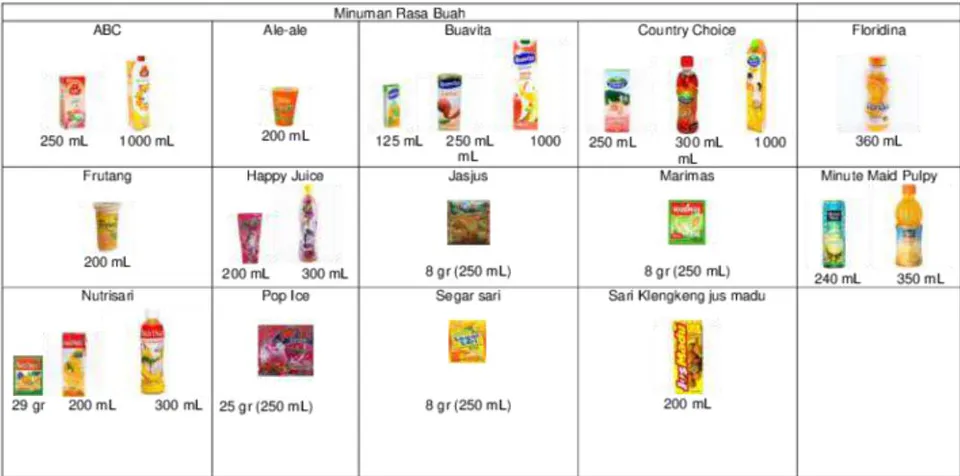
Lampiran 7: Kuesioner Konsumsi Sugar Sweetened Beverage
Semi-Quantitative Food Frequencu 1 Bulan Terakhir Kuesioner Konsumsi Sugar Sweetened Beverage Isilah kolom di bawah ini sesuai dengan frekuensi komsumsi Anda
| Jenis Minuman | Ukura n | Frekuensi | Jumlah yg dikosumsi | Rata -rata x/H | Bera t (g/H) | Total kalori (Kkal) | |||||
| x/ H | x/ M | x/ B | Tidak Perna h | Ukura n | m L | ||||||
| Minuman rasa buah | |||||||||||
| ABC | 250 mL | ||||||||||
| 1000 mL | |||||||||||
| Ale-ale | 200 mL | ||||||||||
| Buavita | 125 mL | ||||||||||
| 250 mL | |||||||||||
| 1000 mL | |||||||||||
| Country choice | 250 mL | ||||||||||
| 200 mL | |||||||||||
| 1000 mL | |||||||||||
| Floridina | 360 mL | ||||||||||
| Frutang | 200 mL | ||||||||||
| Happy juice | 200 mL | ||||||||||
| 300 mL | |||||||||||
| Jasjus | 250 mL | ||||||||||
| Marimas | 8 g | ||||||||||
| Minute maid pulpy | 240 mL | ||||||||||
| 350 mL | |||||||||||
| Nutrisari | 29 g | ||||||||||
| 200 mL | |||||||||||
| 300 mL | |||||||||||
| Pop ice | 25 g | ||||||||||
| Tebs | 330 mL | ||||||||||
| 500 mL | |||||||||||
| Jenis Minuman | Ukura n | Frekuensi | Jumlah yg dikosumsi | Rata -rata x/H | Bera t (g/H) | Total kalori (Kkal) | |||||
| x/ H | x/ M | x/ B | Tidak Perna h | Ukura n | m L | ||||||
| MINUMAN RASA BUAH | |||||||||||
| Oki jeli drink | 150 mL | ||||||||||
| 220 mL | |||||||||||
| UC 100 | 140 mL | ||||||||||
| 600 mL | |||||||||||
| Sari kacang hijau | 150 mL | ||||||||||
| 250 mL | |||||||||||
| Sari kelengkeng | 200 mL | ||||||||||
| TEH | |||||||||||
| Frestea | 350 mL | ||||||||||
| 500 mL | |||||||||||
| Fruit tea | 200 mL | ||||||||||
| 300 mL | |||||||||||
| 500 mL | |||||||||||
| Futami 17 | 485 mL | ||||||||||
| Joytea | 500 mL | ||||||||||
| Mirai ocha | 450 mL | ||||||||||
| Mountea | 200 mL | ||||||||||
| NU green tea | 500 mL | ||||||||||
| Pucuk harum | 480 mL | ||||||||||
| 350 mL | |||||||||||
| Teh kotak | 300 mL | ||||||||||
| Teh sosro | 200 mL | ||||||||||
| 450 mL | |||||||||||
| Teh gelas | 250 mL | ||||||||||
| 350 mL | |||||||||||
| 500 mL | |||||||||||
| Thai tea | 400 mL | ||||||||||
| 500 mL | |||||||||||
| Jenis Minuman | Ukuran | Frekuensi | Jumlah yg dikosumsi | Rata -rata x/H | Bera t (g/H) | Total kalori (Kkal) | |||||
| x/ H | x/ M | x/ B | Tidak Perna h | Ukura n | mL | ||||||
| KOPI | |||||||||||
| ABC white coffee | 27 g | ||||||||||
| Good day | 20 g | ||||||||||
| 200 mL | |||||||||||
| 250 mL | ||||||||||
| Indocafe coffemix | 20 g | |||||||||
| Kapal api | 7 g | |||||||||
| Kopiko 78C | 250 mL | |||||||||
| Luwak white coffee | 20 g | |||||||||
| Nescafe | 200 mL | |||||||||
| Torabika | 28 g | |||||||||
| Top coffee | 31 g | |||||||||
| 240 mL | ||||||||||
| SOFT DRINK | ||||||||||
| A&W | 355 mL | |||||||||
| Big cola | 535 mL | |||||||||
| 3100 mL | ||||||||||
| Calpico soda | 320 mL | |||||||||
| Coca-cola | 250 mL | |||||||||
| 330 mL | ||||||||||
| 425 mL | ||||||||||
| 1500 mL | ||||||||||
| Fanta | 250 mL | |||||||||
| 330 mL | ||||||||||
| 425 mL | ||||||||||
| 1500 mL | ||||||||||
| Sprite | 250 mL | |||||||||
| 330 mL | ||||||||||
| 425 mL | ||||||||||
| Jenis Minuman | Ukura n | Frekuensi | Jumlah yg dikosumsi | Rata -rata x/H | Bera t (g/H) | Total kalori (Kkal) | ||||
| x/ H | x/ M | x/ B | Tidak Perna h | Ukura n | m L | |||||
| MINUMAN ISOTONIK/ENERGY DRINK | ||||||||||
| Iso plus | 350 mL | |||||||||
| Coolant | 350 mL | |||||||||
| Mizone | 250 mL | |||||||||
| Pocari | 330 mL | |||||||||
| 350 mL | ||||||||||
| 500 mL | ||||||||||
| 2000 mL | ||||||||||
Lampiran 8: Output Analisis Statistik Crosstab NES
| Tipe Metabolik | Total | |||
| MHO | MUO | |||
| nes | normal nes | 23 | 14 | 37 |
| 3 | 12 | 15 | ||
| Total | 26 | 26 | 52 | |
Chi-Square Tests NES
| Value | df | Asymp. Sig.(2sided) | Exact Sig.(2sided) | Exact Sig. (1sided) | |
| Pearson Chi-Square | 1 | ,006 | |||
| 5,996 | 1 | ,014 | |||
| Likelihood Ratio | 7,994 | 1 | ,005 | ||
| Fisher's Exact TestLinear-by-Linear | 1 | ,013 | ,006 | ||
| Association | 7,443 | ,006 | |||
| N of Valid Cases | 52 |
Crosstab Pola Tidur
| Tipe Metabolik | Total | ||
| MHO | MUO | ||
| Pola Tidur | 19 | 10 | 29 |
| baik buruk | 7 | 16 | 23 |
| Total | 26 | 26 | 52 |
Chi-Square Tests Pola Tidur
| Value | df | Asymp. Sig. (2 sided) | Exact Sig. (2 sided) | Exact Sig. (1 sided) | |
| Pearson Chi-Square | 1 | ,012 | |||
| Continuity Correctionb | 4,990 | 1 | ,026 | ||
| Likelihood Ratio | 6,457 | 1 | ,011 | ||
| Fisher's Exact Test | ,025 | ,012 | |||
| Linear-by-Linear Association | 6,193 | 1 | ,013 | ||
| N of Valid Cases | 52 |
Crosstab SSB
| Tipe Metabolik | Total | |||
| MHO | MUO | |||
| ssb | normal berlebih | 21 | 22 | 43 |
| 5 | 4 | 9 | ||
| Total | 26 | 26 | 52 | |
Chi-Square Tests SSB
| Value | df | Asymp. Sig. (2 sided) | Exact Sig. (2 sided) | Exact Sig. (1 sided) | |
| Pearson Chi-Square | 1 | ,714 | |||
| Continuity Correctionb | ,000 | 1 | 1,000 | ||
| Likelihood Ratio | ,135 | 1 | ,714 | ||
| Fisher's Exact Test Linear-by-Linear Association | ,132 | 1 | ,717 | 1,000 | ,500 |
| N of Valid Cases | 52 |
Conflict of Interest
The authors declare no conflict of interest.
Ethical Approval
Not applicable
Data Availability
The datasets used in this study are openly available at [repository link] and the source code is available on GitHub at [GitHub link].
Funding
This work did not receive any external funding.
References
Cite this article
Related Research

Special Issue
Launch a focused special issue to highlight research, emerging trends, and expert insights in your academic field.