




IntelliPaper
Abstract
The current study examined the extent to which graphic designers in Oman rely on artificial intelligence software and it highlighted full-time and freelance designers specifically. Artificial intelligence has advanced tremendously in the last several years, and this has had an impact on human life in general. In other words, artificial intelligence is a tool that recognizes patterns and assists humans in problem-solving. From this perspective, AI can serve as a designer's aide. This study aims to measure the extent to which graphic designers use AI software to accomplish their design tasks and to identify the most frequently used AI programs among graphic designers in Oman. This research utilized a quantitative method, collecting data through an online survey questionnaire. By exploring the familiarity of designers with AI programs in graphic design within Oman, this study provides a foundational resource for future research. It is among the few studies that focus on this specific target group. Future research could investigate the long-term effects and evolving practices of users as AI tools become increasingly integrated into design workflows.
Explore Digital Article Text
I. INTRODUCTION
Artificial Intelligence (AI) involves creating advanced machines capable of performing specific tasks with greater proficiency than humans (Ali Elfa & Dawood, 2023). Artificial intelligence has advanced tremendously in the last several years, and this has had an impact on human life in general (al-Dulaimi, 2024). In other words, artificial intelligence is a tool that recognizes patterns and assists humans in problem-solving. From this perspective, AI can serve as a designer's aide (Huo & Wang, 2022). The use of computer-based software to support design modeling, analysis, review, and documentation is known as computer-aided design (CAD). The advantages of CAD can be significantly improved by integrating it with artificial intelligence (AI), augmented reality, and manufacturing technologies. AI can generate an intelligent graphics interface and transform laborious design processes into sophisticated ones (Hunde & Woldeyohannes, 2022). Integrating artificial intelligence theory into computer-aided art design is an emerging research focus and a contemporary trend in the modernization of industrial design. This approach not only incorporates AI research findings into computer-aided art design but also broadens the scope of AI applications, creating a complementary relationship that fosters mutual advancement. The field of computer art has grown significantly with the advancement of artificial intelligence technology, and a vast amount of new works are produced every year (Deng & Chen, 2021).
Graphic design is not an exception to the fast-expanding field of artificial intelligence (AI), which is already starting to alter many other industries. The creation of new tools and methods that are revolutionizing the creation and experience of graphic design is a result of AI's capacity to learn from and comprehend enormous volumes of data (Mustafa, 2023). Design can be seen as an intentional act of creation (Huo & Wang, 2022). In the modern world, graphic design has become the most significant industry since it improves user experiences across the board, including communication, marketing, product advertising, brand logo creation, game design, applications, and website layouts (Sindhura & Abdul, 2021). By the way, Instead of being passive consumers of AI tools, graphic designers are active learners who are always improving their abilities to successfully integrate AI into their design processes (Munzier et al., 2024). It's a field largely focused on inventiveness, imagination, and the capacity of the designer to produce the best designs (Sindhura & Abdul, 2021).
II. PROBLEM STATEMENT
To keep pace with developments in technology and with the global trend in the use of artificial intelligence and its employment in various fields, this research focuses on one of the significant areas that are considered at the forefront in the use of artificial intelligence techniques and tools in Oman, which is graphic design. Artificial intelligence applications that serve the graphic designer are among the indispensable applications, especially since they play a major role in facilitating tasks and saving the designer's time. Therefore, it is necessary to shed light on the extent of the graphic designer's need and reliance on using artificial intelligence tools to complete his work. This study also reveals the most prominent artificial intelligence programs used by the designer to complete his design work. Thus, studying the designer's need to develop his skills in these particular programs based on his focus on them in professionally completing his tasks. In addition, that leads to enriching the design process and also offering unique and engaging visual content.
III. RESEARCH OBJECTIVES
The main goal of this research is to investigate the extent to which graphic designers in Oman need to resort to using artificial intelligence tools instead of non-AI tools software in the design process. In addition to highlighting the software that graphic designers prefer to use the most. Through the aforementioned objectives, this study addressed two questions. First, to what extent do graphic designers rely on AI software to accomplish their design enterprises? Second, what are the most used AI software by graphic designers in Oman?
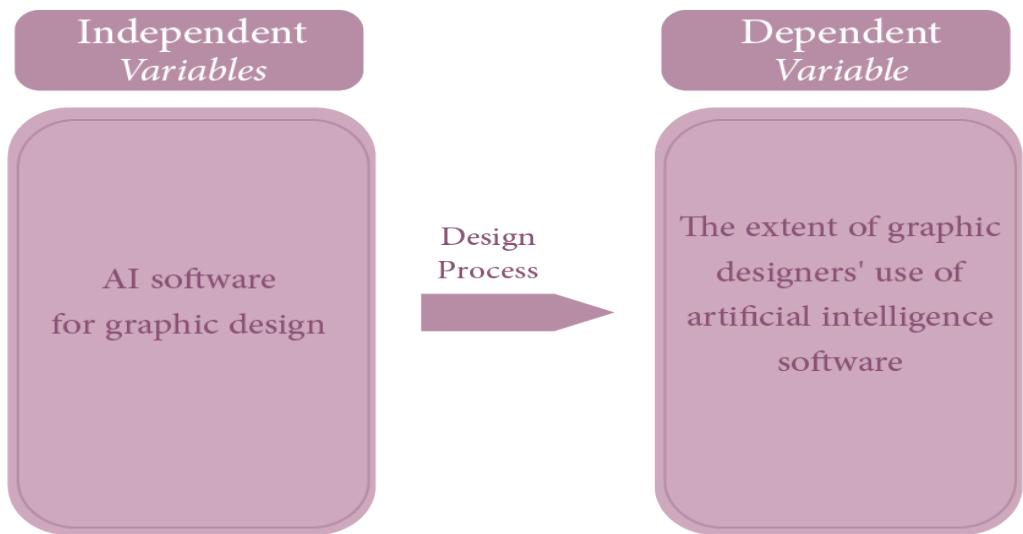
 Fig. 1: Framework of the study
IV. LITERATURE REVIEW
4.1 Artificial Intelligence as a Design Material
Implementing AI in graphic design is a complicated process that involves major investment and careful consideration of ethical and technological constraints (Mustafa, 2023). Design is a reflective discipline in which designers engage in a "conversation with materials" to imagine things that do not currently exist. Materials "talk back" to designers, suggesting potential and limitations [...] previous research on AI as a design material revealed that designers who had created a high number of "designedly abstractions" of AI's capabilities were more successful and comfortable working with AI. These designers were able to engage in reflective conversations with AI, and they used data scientists' technical expertise to "talk back" on what is conceivable (Yildirim et al., 2022). AI technology is revolutionizing the creation of visual content by enhancing the accessibility and efficiency of design tools. AI-powered tools, such as AI Image Generators, allow for easy creation of high-quality graphics for marketing, entertainment, and personal usage. These programs use powerful algorithms to generate images based on user input, themes, styles, and preferences (Rivas, 2024).
4.2 AI Software in Graphic Design
While amateur graphic design tools primarily rely on templates, AI in professional graphic design software has tended to focus on automating arduous chores, which creatively driven professional graphic designers appreciate. For instance, Photoshop has long included "actions" to automatically apply duplicate editing effects to many photos in addition to features like the "healing brush" that make isolated, difficult compositing work easier. Professional graphic design software tools are still mostly unaffected by artificial intelligence (AI), except certain focused applications of the technology. Professional graphic design software does, in fact, often highlight its capacity to provide designers exact control over the creative process, including step-by-step adjustments to color management and type kerning. It is therefore clear that automating the more tiresome and repetitive "art working" duties associated with creating graphic designs would be beneficial to experts and provide them "more opportunity and time to concentrate on the creative side of projects" (Meron, 2022). By the way, The year 2023 has seen an unparalleled increase in the demand for AI design tools. Google Trends indicates that the amount of searches for software and tools linked to AI design has increased by just between 2022 and 2023 (Loewy, 2024).
The research community consists of a diverse group of artificial intelligence applications that are used in graphic design, and because of the large number of applications, the researcher intentionally chose five of them due to their diversity in graphic design work and because of their frequent use in graphic design alone. The design software chosen in this research are Adobe Firefly, Microsoft Designer, DALL-E, Midjourny, and Canva.
4.2.1 Adobe Firefly
Firefly is a logical extension of Adobe's technology developed over the last 40 years, inspired by the principle that people should be able to put their ideas into the world exactly as they envision them. The standalone web application Adobe Firefly can be accessed at firefly.adobe.com. It is safe for commercial usage and uses generative AI to greatly improve creative workflows while providing new methods to create, communicate, and brainstorm. Adobe offers the Firefly web app in addition to the larger Firefly family of creative generative AI models, as well as Firefly-powered features in Adobe Stock and its flagship applications (Get Started, 2024).
Adobe made some significant announcements regarding Adobe Firefly during Adobe MAX in October 2023. Among these is the switch to Adobe Firefly picture 2, a new version of the picture generator. The upgraded algorithm recognizes more landmarks and cultural symbols and comprehends text prompts better. It also has new Share from Firefly and Save to Library functions, as well as Prompt Guidance, which teaches users to rewrite or expand prompts (Coleman, 2023).
Jonathan Wernersson and Rickard Persson, from Jönköping University in Sweden, mentioned in their thesis titled Exploring the Potential Impact of AI on the Role of Graphic Content Creators: Benefits, Challenges, and Collaborative Opportunities (2023) that: "Firefly is a bot developed by Adobe that allows users to send prompts in the chat, which the bot then uses to generate a graphic. While similar to DALL-E 2 in some ways, Adobe Firefly provides unique 10 features and capabilities that are relevant for the research on the use of AI in the graphic design industry. Those features include typography treatments and different design modes such as "art", "photography" or "graphic". Fig.2 represents a design made by Adobe Firefly software generated using the prompt: Pastel painting, parrot, among colorful tropical flowers, pastel painting technique, pastel texture, light blending, intricate details, soft, vibrant, layered, beautiful.
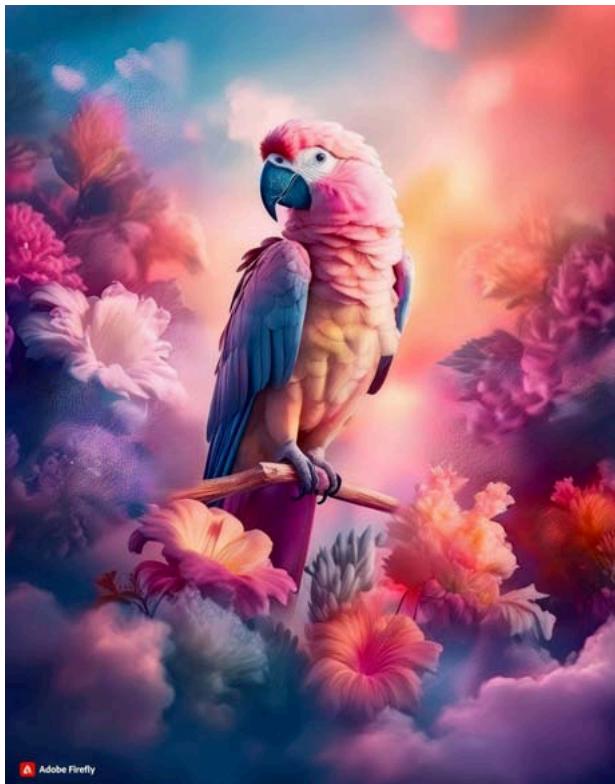 Fig. 2: An image made by Adobe Firefly software
4.2.2 Microsoft Designer
Microsoft Designer is an artificial intelligence-powered graphic design and photo editing application (Microsoft Designer, n.d). Microsoft Designer's Image Creator is powered by Open AI's most advanced image-generation model, DALL-E 3. It has the same quality findings as DALL-E, but it is free. Another significant advantage of this AI generator is that you can use it from the same location as Microsoft's AI chatbot, Copilot (previously Bing Chat). This implies that, in addition to visiting Image Creator's standalone website, you may instruct it to make photos for you in Copilot. To render a picture, simply ask Copilot to draw you the image you want (Ortiz, 2024). Microsoft Designer is now accessible as a standalone app, but it may also be accessed using Copilot in applications such as Word and
PowerPoint. With the Copilot Pro subscription, the users may generate pictures and designs in Word and PowerPoint (Mishra, 2024). Fig.3 represents a design made by Microsoft Designer using the description: a man from Oman walking in the mart, wearing an Omani traditional outfit, holding his goat.
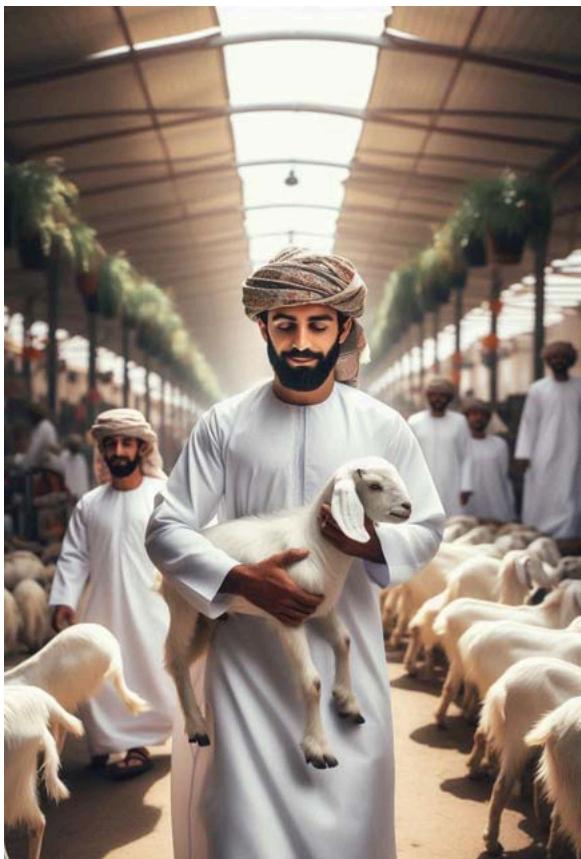 Fig. 3: An image made by Microsoft Designer software
4.2.3 DALL-E
DALL-E 3 is the upgraded version of DALL-E 2. What makes it one of the best free AI image generation tools is its increased power. It is designed to turn the user's words into detailed, highly realistic images (Saad, 2024). DALL-E, a 12-billion parameter version of GPT-3, was trained to produce images from text descriptions. It was discovered that it is capable of a wide range of tasks, such as anthropomorphizing animals and objects, putting disparate ideas together in logical ways, and altering already-existing images (Hanna, 2023).
4.2.4 Midjourny
Midjourney is a software system that generates digital images depending on text parameters. It was built by a team led by David Holz using the high-level programming language Python (Jaruga-Rozdolska,2022). Midjourney is an AI art service that generates artwork using input prompts from a Discord channel [...] The reason Midjourney's approach can draw so precisely is that it understands the rules of painting and art and has learned from millions of art boards that have been entered into its program (Hanna,2023). Midjourney has surely gained popularity among many online groups who use the Discord platform to connect with it. It has earned a reputation as the industry leader in image generation, due to significant improvements in its capabilities in a relatively short period (Loewy, 2024).
4.2.5 Canva
One of the most widely used and easily accessible graphic design tools available is Canva, which makes it simple to generate a wide range of materials, including presentations, social media posts, posters, and brochures. It features an easy-to-use drag-and-drop interface, a big library of free photos, and pre-made designs (Garrett, 2024). Canva had more than 60 million active users worldwide by September 2021, suggesting its popularity among non-professional designers and small enterprises. Canva has found success in recent years, despite the challenges that other tools and organizations have faced (Loewy, 2024).
4.3 Future impacts of artificial intelligence technologies in graphic design
Generative AI tools are shaping the future of graphics design. Generative AI refers to AI technologies that generate visual or written content based on text input (Fatima, 2023). There is a lot of interest in how AI will affect the graphic design sector. Increased productivity is one of the main benefits since it is thought to expedite the entire design process. However, there's a chance that AI will affect design quality overall by possibly reducing human creativity and leading to more homogenized and predictable design. While AI may not be as creative as a human designer, it can be extremely adept at carrying out a human designer's vision. Although artificial intelligence (AI) might not be able to produce completely original designs, it can automate the design process and speed it up, giving designers more time to concentrate on creativity and innovation. Instead of trying to replace people, the emphasis should be on incorporating AI systems into the design process (Fatima, 2023).
Future AI applications are predicted to prioritize speed and optimization. The software's features, including data analysis and design ideas, enable designers to generate designs faster and with fewer resources. When a designer develops a design draft, artificial intelligence analyzes the data to generate the most effective design to give to the designer. It helps designers make better decisions by providing alternate designs. Rearranging data allows designers to complete projects (ÇEKEN & AKGÖZ, 2024).
V. METHODOLOGY
This study has used a quantitative research method. The quantitative approach is represented in an online questionnaire survey. Quantitative research is an effective way to acquire trustworthy and accurate quantitative data. Data is collected, evaluated, and presented numerically, therefore the results are extremely dependable and objective (Fleetwood, 2024).
4.1 Data Collection Instrument
To collect data a Survey was prepared and distributed. The questionnaire was prepared based on the literature review of the study. It was designed using Google Forms and it consists of three types of questions and they are Likert scale, checkboxes, and short answer text questions. The questionnaire was divided into Three sections which are as follows in order: (1) Demographic Details, (2) The extent to which graphic designers prefer to use AI software to accomplish design enterprises, (3) The most used AI programs by graphic designers. This survey was conducted in Arabic and English languages based on the target group so that Arabic is their mother tongue. Moreover, it facilitates answering questions for the target group and also reaches a larger number of respondents.
4.1.1 Instrument Test
A pilot test was conducted for this study as a scale to test the plan and method of research, in addition to testing the feasibility, reliability, and validity of the study design. To complete this task, a lecturer at the College of Education at Sultan Qaboos University, who specializes in graphic design tested the questionnaire. Moreover, research assistants from the Omani Studies Center were utilized to test the questionnaire and verify its validity and suitability for research purposes.
4.2 Population and Sample
This study targeted graphic designers in the age groups over 18 years both males and females. Specifically, it targeted graphic designers from Oman who work regularly in the government and private sectors, in addition to freelance designers. The number of respondents to the questionnaire reached 30 from various educational levels, starting from high school to doctorate.
4.3 Data Analysis
The data collected was examined through descriptive statistics. Descriptive analysis transforms raw data into information that is simple to analyze and understand. It rearranges, orders, and manipulates data to produce short summaries that demonstrate what occurred during a study. Descriptive statistics summarize and explain the characteristics of a given data set by providing brief descriptions of the sample and data measurements (Hayes,2024).
VI. FINDINGS AND DISCUSSIONS
Most of the respondents to the questionnaire were female, with the percentage reaching 80%, which is more than three-quarters of the respondents. Moreover, the majority of the respondents belong to the age group (25-34) constituted 60%, while the rest of them lie in the (34-44) age bracket. This shows the modernity of the field of artificial intelligence and the category that keeps up with it. Most of the respondents have bachelor's degrees, representing 83.3%. While respondents who have a diploma or its equivalent come in second place with a percentage of 10%. Respondents holding Masters and Doctorate degrees have obtained the same percentage, which is 3.3%. Regarding the employment status of respondents, the percentage of full-time employed as graphic designers was exactly 66.7%. While the percentage of respondents who were freelance designers was approximately 33%.
5.1 To what extent do graphic designers rely on AI software to accomplish their design enterprises?
Fig 4 represents bar charts of the results which show the extent to which graphic designers prefer to use AI software to accomplish design enterprises. About 50% of the participants indicated that they sometimes use artificial intelligence software (AI) in different tasks. The statement is general, and it does not specify whether the AI programs belong to the field of graphic design. This is to estimate how familiar graphic designers in Oman are with AI software in general, regardless of their field. According to a Pew Research Center study of 11,004 people in the United States conducted December 12-18, 2022, 27% say they use AI at least many times a day, while another 28% say they connect with it once a day or several times each week. According to this self-reported statistic, 44% believe they do not regularly use AI software (Kennedy et al., 2023). The same percentage which is 50% was obtained from the second statement which is: "I use artificial intelligence software when I design" and most respondents chose the option: "sometimes". Around 36% of the designers sometimes prefer using software with artificial intelligence tools instead of software which is without artificial intelligence tools while only 20% always prefer that, and they constitute the second-highest percentage. About 40% of the respondents sometimes entirely rely on artificial intelligence to complete a task in graphic design, while only one respondent answered with "always" approximately 3%. However, the low percentage is considered a positive indicator that the designer does not rely entirely on artificial intelligence programs, and thus he gives space to show some of his creativity in the work. Nicole Steinberg (2023) a former graphic designer mentioned in her article titled "Why designers should embrace AI (and not fear it)" that:
People have a unique ability to think creatively and generate novel ideas. While AI may develop designs using specified parameters, it cannot compete with human designers' creativity and originality.
The results show that About 30% of the respondents are always up-to-date on the latest updates in artificial intelligence programs and tools in graphic design, while only one of the respondents indicated that he is not at all aware of the latest developments in artificial intelligence. Keeping up with the latest developments allows people to stay ahead of the curve and spot possibilities for innovation.
Rate the extent to which you use artificial intelligence software قيم مدي استخدام لبرامج الذكاء الاصطناعي {"image_source":{"path":"images/a11d9b69e000bba47d00cfb165bd3a16ec42102ccd64553a8881d60674ea706f.jpg"},"content":"","chart_caption":[{"type":"text","content":"Fig. 4: Bar charts of the results which show the extent to which graphic designers prefer to use AI software"}],"chart_footnote":[]}
As for the statement "I am interested in taking courses in artificial intelligence design software", about 33% of the respondents responded with "always" and those who responded with "often" got a similar ratio which is 33%. These high percentages demonstrate the extent to which designers are susceptible to learning and acquiring knowledge in the field of artificial intelligence.
5.2 What are the most used AI software by graphic designers in Oman?
This section consists of five questions, three of which allow the respondent to answer more than one choice per question. The last two questions require the respondent to give short answers.
(A) The software in the questions were chosen due to their global popularity among users in general and designers in particular. The programs mentioned in the questions as options to choose from are: Adobe Firefly, Microsoft Designer, DALL-E, Midjourney, and Canva. There are also two more options, which are: All of the above and None of the above. Table 1 represents the results of three (choose multiple) questions with the results.
Table 1: The extent of the respondent's knowledge and use of specific AI programs
| Questions | Number of the Responses out of 30 | ||||||
| Adobe Firefly | Microsoft Designer | DALL-E | Midjourney | Canva | All of the above | None of the above | |
| 1- Which of the following AI programs have you already heard of? | 15 | 7 | 2 | 7 | 20 | 5 | 2 |
| 2- Which of the following AI software have you already tried? | 13 | 4 | 3 | 9 | 15 | - | 4 |
| 3- Which of the following AI programs do you usually use? | 8 | 3 | 1 | 4 | 11 | - | 9 |
-
From table 1, it is clear that Canva software has the highest reputation among graphic designers in Oman compared to other software, while Adobe Firefly software ranks second.
-
The results indicate that designers have tried using the following AI programs more than others, and they are, in order from the most to the least, as follows: Canva, Adobe Firefly, Midjoyrney, Microsoft Designer, and DALL-While there are about 4 designers who have not tried any of the mentioned software.
-
According to the results, most of the designers usually and regularly use Canva software in their design works, while a large number of them do not rely on this specific software to do their daily work in design.
The results indicate that there is still some reservation from some designers about using programs that contain artificial intelligence tools for several reasons, the most important of which is that there are more professional software that preceded these software that give real results without relying on machines to accomplish tasks. The other reason is the lack of quality of some artificial intelligence programs in giving results, so they do not meet the expectations of the designer. In addition, most programs still do not recognize some cultures in generating images.
(B) The software mentioned in table 2 are based on the respondent's opinion and no specific options have been set in the questionnaire. The respondent was asked to write a short answer about his favorite AI software and then the reason why he preferred this specific software.
Table. 2: Favorite AI software according to survey respondents.
| Suggested software | Number of Respondents | Reasons for choosing this particular software |
| Adobe Firefly | 2 | - easy to use- easy to understand |
| Microsoft designer | 2 | - easy to use- meets design needs |
| Midjourny | 4 | - accurate in extracting data- high quality and gives amazing results.- It gives more expectations than I expected in terms of creativity and inspiration.- It facilitates the process of extracting the idea, saves time, and is sometimes effective.- Helps generate ideas. |
| Canva | 8 | - Easy to use- provides different templates (variety in templates in different fields) |
| Photoshop | 3 | - Get used to using this software before the advent of AI tools |
| Illustrator | 1 | - Get used to using this software before the advent of AI tools |
| Vidnoz AI | 1 | - It has most of the design tools I need. |
| Leonardo | 1 | - Helps generate ideas. |
| Nothing | 7 | - I don't use AI software, I don't have enough knowledge |
The results in table 2 indicate that the largest number of respondents prefer to use Canva software due to its ease of use and also because of the availability of various design templates. Canva's ease of use leads to high user satisfaction, making it a valuable tool for proper design. Canva promotes user creativity, which is an essential component of graphic design (Bimantoro & Fitriarti, 2024).
By the way, the designers who do not prefer to use AI programs are seven out of thirty designers with different educational levels between diploma, bachelor's, and doctorate. Only two of them are freelance designers while the rest work full-time. It is clear here that most of the designers who work full-time are bachelor's degree holders and this category is usually specialized in the field and has an academic certificate in design. This means that they have studied and practiced using professional design programs before adding AI tools. Therefore, it is likely that they will not accept new, less professional programs that may not give them the expected results. While AI design tools are capable of comprehending and reproducing the more conventional rules, their comprehension of context and subtleties is still lacking (Vettorino, 2023). Applications like Canva are essential in helping people without specialized training to create graphics. However, a grasp and implementation of fundamental design principles are still required to produce a powerful and distinctive visual identity. This demonstrates that even with Canva's value as a tool, graphic designers must still adhere to fundamental design principles to produce truly original work with a distinctive visual style. AI designers could not have the same originality and intuition as human designers, even though they can follow rules exactly every time. They are unable to produce original and inventive designs.
VII. CONCLUSION
In summary, Keeping up with modernity and accepting change requires a period that is not short. This study has proven that several designers are still not confident in using artificial intelligence programs in their work. The reasons may be due to a lack of awareness of using these tools in a correct way that increases their efficiency instead of considering them as tools that may replace their jobs. Artificial intelligence technology is constantly evolving, leading to the creation of new technologies and algorithms that facilitate computer-aided design. These advancements not only increase the efficiency and quality of the design process but also indicate the direction in which artificial intelligence technology is headed. While some tasks in graphic design may be automated by AI, it is unlikely to ever fully replace human creativity and knowledge. While AI can improve productivity and optimize processes, human interaction is still essential for creativity, problem-solving, and quality assurance. As we move forward, the harmonic cooperation of human intellect with artificial intelligence will continue to push the boundaries of design innovation. Future research could look into the long-term effects and future evolution of user practices as AI tools become more integrated into design workflows.
VIII. RECOMMENDATIONS
Based on foregoing findings and conclusions, the following recommendations were advanced:
-
Including the subject of artificial intelligence in design within the academic study of graphic design in universities. This is due to its great importance in keeping pace with the achievements of institutions working in this modern field of knowledge and also opening up to what has been achieved.
-
Providing finance support for full-time designers by their institutions to engage in AI-related training courses in graphic design.
-
Providing a database for independent designers in Oman and facilitating their joining training courses in the field of artificial intelligence in design. In addition, guiding them to the necessity of using artificial intelligence to keep pace with modernity.
Conflict of Interest
The authors declare no conflict of interest.
Ethical Approval
Not applicable
Data Availability
The datasets used in this study are openly available at [repository link] and the source code is available on GitHub at [GitHub link].
Funding
This work did not receive any external funding.
References
Cite this article
Related Research



Special Issue
Launch a focused special issue to highlight research, emerging trends, and expert insights in your academic field.
