


IntelliPaper
Abstract
This article introduces the Ombudsmus Council as a proposed Fourth Branch of Government—Quarta Politica—designed to protect citizens from government failures and strengthen democratic accountability. Expanding on the traditional ombudsman model, the Council would be constitutionally independent from the legislative, executive, and judicial branches, with the authority to investigate, rule on, and enforce remedies against abuses of power and policy failures. While existing democratic systems rely on checks and balances among the three traditional branches, they often lack a formal, independent institution dedicated specifically to defending citizens when those branches fall short. Unlike the media—which faces growing political and economic pressures—the Ombudsmus Council would be structurally embedded in the constitution as a permanent watchdog with public oversight functions. Its tasks would include monitoring state conduct,
launching inquiries, issuing binding decisions, and promoting civic education on democratic participation. This proposal is original in its call for a constitutionally mandated citizen defense mechanism, advancing current debates on democratic renewal, accountability, and institutional innovation. It builds upon and moves beyond global experiments in ombuds-type offices by formalizing their role within the constitutional architecture.
Potential challenges include resistance from entrenched powers, legal questions about separation of powers, and the need for broad political consensus. Nonetheless, the model is adaptable across varied political contexts—especially where democratic backsliding or institutional distrust is prevalent—offering a replicable framework for enhancing participatory democracy and state responsiveness worldwide.
Explore Digital Article Text
I. INTRODUCTION
The doctrine of separation of powers, first elaborated by Montesquieu in The Spirit of the Laws (1748) [1], posited a tripartite division—legislative, executive, and judicial—to prevent tyranny and protect liberty. Yet Montesquieu's ideas built on earlier liberal thought, including Locke's emphasis on legislative primacy and limited executive discretion [2], and were further institutionalized in the USA by Madison, who viewed separation and checks as essential to preventing factional dominance [3]. This classical Trias Politica structure remains foundational to constitutional democracies, but evolving governance challenges have exposed its limits.
The rise of complex state bureaucracies and new forms of public authority has led theorists and practitioners to explore hybrid or supplementary institutional forms. In this context, the
Ombudsman institution has emerged as a key mechanism of administrative justice and good governance, offering an accessible, independent, and often informal route for citizens to seek redress when harmed by state action or inaction . Rooted in the Swedish model of 1809, the Ombudsman has since proliferated globally, adapting to diverse political and legal cultures—from New Zealand and Canada to African and Latin American democracies .
Despite its expansion, the Ombudsman's reliance on "soft power"—investigations, reports, and persuasion—limits its enforcement capacity, particularly when state agencies refuse to comply. Scholars like Beyer [7] have criticized it as a "relic of absolutism," lacking structural authority to challenge entrenched power dynamics.
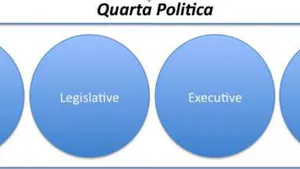
In response, this article proposes a constitutionally enshrined Ombudsmus Council (OC) as a fourth branch of government—Quarta Politica—equipped with binding powers to hold both legislative and executive actors accountable (See below the graphic representation of the transition from Montesquieu's classic separation of powers, Trias Politica, to the Quarta Politica). This builds on global debates about transparency, digital governance, and the democratic legitimacy crisis, where citizens increasingly demand faster, rights-based remedies, facilitated by open data and participatory platforms .
{"image_source":{"path":"images/a07b3c86b9eac8c31c4d227b08635e092a0c0a0bd460d345de3e385aa26c1b98.jpg"},"content":"","chart_caption":[],"chart_footnote":[]} {"image_source":{"path":"images/108c3de9d7fd3cad1057887eacce1b6f499fa72d8174a2340fbf3c1cdfdc9e08.jpg"},"content":"","chart_caption":[{"type":"text","content":"Graphic representation of the transition from Montesquieu's classic separation of powers, Trias Politica, to the Quarta Politica."}],"chart_footnote":[]}
Constitutionalizing the OC thus not only strengthens the democratic fabric but reflects a broader evolution in global public law—where new institutional forms are required to match the complexity of 21st-century governance and citizens' expectations for dignity, fairness, transparency, and real-time accountability. In line with contemporary understandings of gender inclusivity, the term Ombudsmus will be used throughout, replacing the traditional term Ombudsman.
II. THE OMBUDSMUS COUNCIL: THE FOURTH POWER OF GOVERNMENT
While traditionally reactive, some modern Ombudsmus institutions have adopted a proactive stance, initiating investigations and addressing systemic issues without waiting for formal complaints . Building on this evolution, this article offers a normative constitutional proposal for the establishment of an OC endowed with executive investigatory and corrective powers. The aim is to safeguard democratic participation and enhance institutional accountability by positioning the OC as a structurally independent oversight body—potentially amounting to a "fourth branch of government" [10].
This proposal is intended to provoke further reflection on the deeper constitutional challenges that would arise from granting the OC executive functions. It explores the implications of such a transformation for judicial review, parliamentary oversight, and the role of existing accountability institutions, such as audit courts, ethics commissions, and human rights bodies. A key normative concern is how to constitutionally embed the OC in a way that enhances systemic responsiveness without undermining democratic legitimacy or institutional coherence.
To this end, the powers of the OC should be clearly defined and delimited to prevent overlap with the functions of the legislative, executive, or judicial branches. Its role should center on the investigation of maladministration, institutional failures, and systemic democratic deficits—without overstepping into adjudication or direct policy-making. Its status as an independent yet integrated body would reinforce the system of checks and balances, enabling it to act as a democratic catalyst rather than a political actor.
Given the risks inherent in establishing an institution with quasi-sovereign authority, it is crucial to design mechanisms to hold the OC itself accountable. These could include mandatory parliamentary reporting, strict public transparency protocols (including open-access case tracking and whistleblower protections), and the creation of citizen oversight panels selected through sortition to provide democratic legitimacy and counterbalance technocratic tendencies . Periodic audits by independent ethics commissions would further bolster internal integrity and public trust.
In parallel, the effectiveness of the OC could be significantly enhanced through the constitutional authorization of digital tools. These would include AI-assisted investigative systems, real-time data dashboards, and interactive e-governance platforms that allow citizens to flag systemic concerns efficiently and securely . When responsibly governed, these technologies can empower the Council to take proactive, data-driven action, reduce bureaucratic inertia, and improve resource allocation.
Finally, to safeguard the institutional independence of the OC, additional innovations are required beyond the conventional guarantees of appointment and tenure. These may include public nomination procedures with civic vetting, international benchmarking based on standards such as the Paris Principles for national human rights institutions, and deliberative citizen assemblies tasked with vetting or advising on appointments and strategic priorities .
In conclusion, a constitutionally enshrined and digitally empowered OC could play a transformative role in democratic governance by combining reactive redress with proactive oversight. If robust accountability and independence safeguards are in place, this fourth branch of government could serve as a vital bulwark against democratic erosion and as a key enabler of responsive, participatory governance in the 21st century.
III. POWERS AND STRUCTURES OF THE OMBUDSMUS COUNCIL
3.1 Constitutional Foundation
The elevation of the OC to constitutional status is justified by the inadequacy of existing accountability structures to respond to systemic governance failures and democratic erosion. Conventional oversight mechanisms—such as parliamentary committees, courts, and audit offices—often lack either the operational capacity, independence, or mandate to initiate broad-based investigations or ensure structural redress . Codifying the Council within the constitution would grant it legal autonomy and normative legitimacy, thereby enabling it to operate above partisan politics and executive control. Far from complicating the constitutional order, this move would complement existing institutions by addressing accountability gaps, ensuring rights-based governance, and strengthening the infrastructure of participatory democracy .
3.2 Scope of Powers
The OC shall be endowed with the following graduated powers to balance authority with proportionality:
Investigative Authority: The Council may initiate investigations ex officio or upon complaints, with the power to subpoena documents, summon officials, and access public and private institutions, regardless of jurisdictional boundaries [6].
Preventive Measures: In urgent cases, the Council may impose temporary measures to avert imminent harm, such as halting the implementation of contested administrative actions.
Corrective Orders: It may issue binding instructions to executive bodies to modify policies, halt rights-violating programs, or implement specified remedies.
Sanctions and Exclusions: In cases of severe or repeated violations, the Council may recommend exclusion from international programs or funding mechanisms, subject to international agreements.
Field Interventions: With local consent, the Council may deploy intervention teams in cooperation with civil society and authorities.
Civic Education and Assistance: The Council shall conduct outreach programs and offer legal guidance to marginalized groups to promote awareness and access to remedies.
The binding decisions may require:
Monetary compensation to affected individuals,
Institutional restructuring or administrative reform,
Public accountability measures, such as formal apologies or policy repeals.
These powers are to be tiered based on severity and scope—from non-binding recommendations and provisional measures to binding directives and sanctions—ensuring escalation is legally justified and context-sensitive.
3.3 Enforcement and Compliance Mechanisms
To ensure compliance, the Council shall be empowered with:
Contempt powers equivalent to those held by courts in administrative jurisdictions;
Publication of non-compliance lists to leverage reputational pressure;
Referral powers to higher domestic courts or international human rights mechanisms;
Escalation procedures to refer egregious violations to legislative or international bodies.
3.4 Checks and Internal Safeguards
To prevent overreach and ensure procedural fairness:
All Council actions must be transparent, with open reporting of decisions and rationale;
Investigations and directives must follow due process, including rights of response and hearings;
Binding measures must be subject to judicial review by a constitutional or administrative court [17];
An independent ombuds panel shall handle complaints against the Council itself;
Decisions shall be logged in a publicly accessible digital registry, allowing traceability and oversight.
This multi-layered system of internal checks and external accountability ensures that the Council's power remains grounded in legality and proportionality.
3.5 Structure and Composition
The Council shall comprise five members, including a President and Vice-President, appointed for staggered, non-renewable terms to ensure continuity, institutional memory, and to prevent the undue concentration of power. Members shall be selected to reflect diversity in terms of gender, ethnicity, and professional expertise, ensuring broad representation of the civic landscape. The Council shall be constitutionally recognized as a fourth power of the democratic state, standing alongside the legislative, executive, and judicial branches. Decisions shall be made by majority vote, and dissenting or concurring opinions shall be published to guarantee transparency and public accountability.
3.6 Appointment and Removal Procedures
Appointments to the OC shall be conducted through a transparent, participatory, and merit-based process grounded in constitutional provisions. Members are not appointed by the legislature or executive, but rather by civic society through a multilayered mechanism. This includes a citizen nomination process, public hearings, and evaluation by an independent Selection Panel comprised of representatives from accredited civil society organizations (CSOs), professional associations, and academic institutions. Eligibility criteria include demonstrated commitment to democratic values, a track record in public service or civic engagement, and independence from partisan interests.
This civic-led appointment mechanism reflects the Council's role as an institutional embodiment of the people's sovereignty and its function as a check on all other branches of power. The participatory model is essential to ensure democratic legitimacy and public trust [14, 16, 18].
Members may be removed only in cases of serious misconduct or permanent incapacity, based on a constitutionally defined process conducted by a Judicial Oversight Committee, independent of both the Council and the other three powers. Removal proceedings must adhere to due process standards and be open to public scrutiny.
3.7 Collaboration and Institutional Integration
To avoid jurisdictional conflict and maximize legitimacy, formal channels for collaboration shall be embedded:
Memoranda of understanding with national human rights commissions, anti-corruption bodies, and international treaty mechanisms;
Participation in peer-review mechanisms under global good governance frameworks;
Joint investigations and information exchange protocols to encourage institutional synergies.
These provisions reinforce the Council's subsidiarity, complementarity, and legitimacy within the broader ecosystem of accountability.
IV. CITIZENS' RIGHTS TO POLITICAL PARTICIPATION
The right of citizens to participate politically is a cornerstone of democratic governance, empowering individuals to influence political processes and decisions that affect their lives. This right is enshrined in international human rights law. Article 21 of the Universal Declaration of Human Rights (UDHR), adopted by the United Nations in 1948, affirms that [19],
"Everyone has the right to take part in the government of his country, directly or through freely chosen representatives."
This principle is further elaborated in the International Covenant on Civil and Political Rights (ICCPR), which underscores every citizen's right to [20] "take part in the conduct of public affairs, directly or through freely chosen representatives" and to
"vote and be elected in genuine periodic elections by universal and equal suffrage..."
These international instruments establish a normative framework obligating states to respect and protect citizens' political participation. However, operationalizing these rights faces significant challenges in contexts marked by authoritarian drift, electoral manipulation, and systemic discrimination. In such settings, even where formal democratic institutions exist, they may be hollowed out by informal power structures, restrictive legal environments, or repressive security apparatuses that curb genuine participation [21,22].
While the legislative branch is responsible for enacting laws and regulations that uphold these rights, and the executive branch is tasked with their implementation, the OC serves as a meta-institution tasked with oversight of both, especially where democratic procedures are at risk. It is mandated to monitor the actual realization of participatory rights and intervene when malfunction, suppression, or circumvention of these rights occurs. Importantly, such interventions must be sensitive to institutional mandates, respecting the autonomy of legislatures and executives while filling accountability gaps that arise when these institutions are unable or unwilling to protect fundamental political freedoms.
4.1 Types of Political Participation
Political participation can take many forms, each contributing to the democratic process. While voting in free, fair, and transparent elections remains the most widely recognized method, deliberative, direct, and participatory democracy offer complementary avenues.
Deliberative democracy emphasizes reasoned discussion and civic dialogue, while direct democracy involves referendums or citizens' initiatives. Participatory democracy, on the other hand, promotes broader engagement beyond elections—especially among marginalized communities.
While representative democracy is practical in complex societies, it often risks alienating the public from decision-makers . Strengthening non-electoral forms of participation can mitigate such democratic deficits and foster popular sovereignty, where political authority genuinely reflects the people's will .
Technological developments, particularly digital platforms, have also broadened participatory opportunities. However, these technologies may also be weaponized to spread disinformation or manipulate public opinion—requiring critical digital literacy and strong institutional safeguards .
4.2 Achieving Political Participation
Ensuring meaningful participation requires proactive efforts, particularly in contexts with entrenched structural inequities. Core measures include:
Inclusive Electoral Systems – Guaranteeing universal suffrage, removing discriminatory barriers (e.g., against ethnic minorities, migrants, or people with disabilities).
Freedom of Speech, Assembly, and Association – Enabling civil society to organize, advocate, and mobilize without fear of repression.
Access to Information – Ensuring citizens are well-informed via independent media and public transparency.
The OC should establish an early warning system—integrating traditional reporting with big data analytics—to detect patterns of voter suppression, administrative abuse, or civic space closures. In contexts marked by democratic backsliding, the Council could issue non-binding recommendations, convene inclusive dialogues, and document violations for public record or international attention.
4.3 Legal Protection of Political Participation
Robust legal frameworks are essential for safeguarding participatory rights. These include:
Constitutional guarantees for suffrage and public office.
Electoral laws protecting the integrity of voting and candidacy.
Legal protections for free expression, assembly, and association.
Anti-discrimination statutes ensuring equality in political access.
Independent judiciaries for legal redress and enforcement.
The OC may also act as a neutral convener during electoral crises or political impasses, facilitating mediation among political actors, civil society, and public institutions. However, its interventions must be carefully calibrated to avoid perceptions of partisan bias or institutional overreach .
The Council must adhere to procedural neutrality, transparency, supporting rather than replacing national mechanisms.
Ultimately, the legitimacy of the OC hinges on its credibility, independence, and consistency. While it plays a crucial role in bridging the gap between legal guarantees and real-world practices, its effectiveness depends on public trust and clear procedural boundaries that prevent accusations of politicization or foreign interference.
V. DISCUSSION
The classical doctrine of the separation of powers, Trias Politica, articulated by Montesquieu [1], structured modern government into three distinct branches: the legislative, executive, and judicial. However, the complexity of contemporary democracies—marked by multilayered bureaucracies, digital disinformation, and declining public trust—demands a rethinking of this tripartite architecture. As part of this evolution, a fourth institutional pillar of accountability is emerging: Quarta Politica.
This article proposes that the OC, not the media, be recognized as the institutional embodiment of Quarta Politica, charged with the active protection of democratic political participation. In contrast to the media, which traditionally functioned as the "fourth estate," the OC is a publicly mandated, legally constituted organ dedicated to administrative justice, institutional accountability, and participatory integrity.
The media has historically served as an informal check on government power, often sparking public debates and spotlighting abuses. Yet, as scholars like McChesney and Herman & Chomsky argue, media systems are increasingly captured by commercial imperatives, elite interests, and algorithmic gatekeeping. These distortions contribute to polarization, misinformation, and the erosion of democratic discourse . In this context, relying solely on the media to safeguard democratic participation is insufficient and unreliable.
Rather than displacing the media, the OC should complement it, coexisting as part of a broader ecosystem of democratic accountability. Informed by postmodern theories of governance that emphasize decentralization, networked oversight, and reflexivity , this model envisions a multi-layered accountability regime—one that integrates both formal institutions (like ombuds offices, electoral commissions, and courts) and informal mechanisms (including watchdog journalism, independent fact-checkers, and civic tech initiatives).
The OC, in this regard, would not only monitor public authorities but also collaborate with independent media and civil society organizations to counteract disinformation, enhance transparency, and uphold the integrity of public discourse. Such collaboration could involve co-developing real-time fact-checking protocols, maintaining open databases of administrative grievances, or convening joint inquiries into threats to political participation. This model reflects a post-Weberian conception of the state—no longer a monolithic apparatus, but a pluralistic governance arena mediated by hybrid institutions .
While the Council's institutional status offers key advantages—such as legal mandate, procedural rigor, and enforceability—it must also confront significant normative and practical critiques:
Democratic legitimacy: As an appointed body, the OC may be accused of lacking popular accountability. Yet, its legitimacy derives from constitutional authorization, operational transparency, and a clear mandate to uphold rights-based governance—not to wield political power but to check it [6, 32].
Bureaucratic overreach: There is a risk that the Council could expand its scope unchecked, duplicating or undermining other institutions. To mitigate this, clear procedural boundaries, subsidiarity principles, and periodic review mechanisms must be enshrined to preserve institutional balance and maintain public trust.
Instrumentalization risks: Like any institution, the OC could be politicized or co-opted. Safeguards must include independent appointment processes, multi-stakeholder advisory boards, and insulation from executive interference.
Moreover, in the digital age, where traditional media ecosystems are weakened and algorithmic platforms fragment public discourse, the OC could play a crucial role in counteracting disinformation and digital manipulation. By partnering with civic data labs, university consortia, and digital rights NGOs, it could monitor political communication ecosystems, investigate coordinated influence operations, and issue corrective advisories in defense of electoral integrity and fair participation .
Crucially, this vision aligns with the broader shift toward postmodern governance—a regime in which power is distributed, accountability is networked, and legitimacy stems not only from majoritarian consent but from the capacity to protect democratic dignity and voice in increasingly complex political terrains [34].
In this light, Quarta Politica is not a call to centralize authority in a new bureaucratic elite, but a normative and institutional innovation to recalibrate democracy in the 21st century. It demands that the state not only permit participation but enable and defend it. The OC, as an architect of this new model, offers a formalized, rights-based, and responsive mechanism to fill the accountability vacuum left by market-driven media and partisan deadlock.
VI. FUNDING
The authors received no financial support for the research, authorship, and/or publication of this article.
Declaration of Conflicting Interests
The authors declare no potential conflicts of interest with respect to the research, authorship, and/or publication of this article.
Ethics Statement
Not applicable.
Conflict of Interest
The authors declare no conflict of interest.
Ethical Approval
Not applicable
Data Availability
The datasets used in this study are openly available at [repository link] and the source code is available on GitHub at [GitHub link].
Funding
This work did not receive any external funding.
Cite this article
Related Research


Special Issue
Launch a focused special issue to highlight research, emerging trends, and expert insights in your academic field.