



IntelliPaper
Abstract
This research paper aims to examine the basic principles of democratic governance, primarily focusing on the right of citizens to ask questions, a crucial mechanism for accountability. Drawing upon the Social Contract Theory, the study explores whether questions arising about the electoral system—a vital component of democracy—suggest a violation of the government's responsibility and the terms of the contract with the people. Specifically, the paper analyzes public opinion regarding the democratic contract following the 2024 Indian parliamentary general elections, when serious allegations about electoral transparency emerged. It investigates the sovereign public's actual perceptions of the allegations and counter-allegations among the Election Commission, the government, and the opposition, recognizing that these controversies not only fuel political dispute but also pose a significant challenge to public trust. Furthermore, the research examines how these events affect citizens' faith in the electoral system and their future democratic participation. It also studies the perceived necessity of post-election scrutiny and the importance of addressing the public's concerns to maintain democratic credibility. Ultimately, the paper argues that the longevity of a democracy depends not on the absence of questions, but on the system's ability to resolve those questions transparently, thereby reaffirming the contract between the state and its citizens.
Explore Digital Article Text
I. INTRODUCTION
The most important feature of a democratic government is that it gives people the right to ask questions. This is why democracy is the most popular form of government in the world. However, if a democracy is flawed or if a government comes to power unfairly, this right to question can be lost, and the democracy can slowly end. Therefore, a pure and honest democracy is essential. For such a democracy to exist, we need sensible and well-informed public opinion. This is why the Indian Constitution, under Article 326, grants the right to vote to every citizen except those of "unsound mind." This means that a person who is not mentally sound should not vote. But the real question is: is this rule actually checked? It cannot be said that every person who votes is sensible or well-informed. When people are not sensible, they may not understand how they are being manipulated. That is why an aware and intelligent public is so important in a democracy.
Another important point comes from philosophers like Hobbes, Locke, and Rousseau. They explained why we created governments with a simple idea: people came together and elected leaders through a kind of "contract." This contract had two main conditions: The elected leaders must protect the people's lives, property, and liberty. If the leaders fail to do this, the people have the right to change them. So, while a democratic government holds immense power, it is also entrusted with great responsibility. If the government abuses its power and neglects its duties, people naturally begin to doubt the system. They start asking questions to clear their doubts and hold the government accountable.
Two major issues are currently being discussed widely in India: the conscience of the people and doubt about the functioning of the system. Discussion of both these concerns seems to have increased significantly following the 2024 general elections. On the one hand, public suspicion is growing. On the other hand, Rahul Gandhi, the Congress leader and Leader of the Opposition in the Lok Sabha, held a press conference where he presented evidence to journalists and the public. This presentation further strengthened the doubts that were already present in the minds of the people.
Rahul Gandhi has intensely questioned the government and the Election Commission (EC) regarding alleged "vote theft" and irregularities in the 2024 elections, presenting evidence in a press conference that revealed issues like fake addresses and multiple voters at single residences. He challenged the EC's transparency, demanding to know why voter lists are not available in a digital, machine-readable format and why CCTV footage is being destroyed, claiming that access to the machine-readable data would expose the full extent of the scam. In response, the EC dismissed the possibility of verification by claiming it would take 3,600 years and has largely failed to provide satisfactory answers to Mr. Gandhi's specific concerns about electoral integrity and transparency.
The controversy ignited by Rahul Gandhi's allegations of "vote theft"-supported by evidence like fake voter entries-and the Election Commission's (EC) defensive, non-committal response has led to significant public doubt, with survey data indicating a substantial erosion of public trust in the EC. Instead of definitively resolving the conflict between Mr. Gandhi's demand for machine-readable data and the EC's claim that verification would take 3,600 years, the exchange has intensified concerns over electoral transparency, fueling a narrative that the EC has prioritized institutional defensiveness over fully addressing the quantifiable vulnerabilities and procedural anomalies that cast a shadow on the legitimacy of the results.
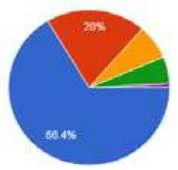
According to the survey, of participants watched Rahul Gandhi's entire press conference, while only saw news highlights. When asked if the evidence he presented was credible, of respondents found it fully credible, considered it somewhat credible, and did not believe it. Meanwhile, were uncertain, and about stated that its truth could not be confirmed without a formal affidavit.
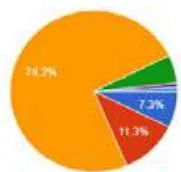
The survey also asked respondents if their doubts were cleared by the clarification Rahul Gandhi provided in his press conference. In response, a significant majority of 74 percent stated that their doubts were not cleared at all. In contrast, 11 percent felt their doubts were partially resolved, and only 7 percent reported that their doubts were fully cleared.
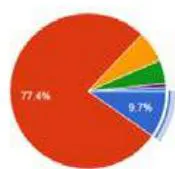
Following the press conferences by both Rahul Gandhi and the Election Commission, the survey asked respondents whether their trust in the election process had increased or decreased. The results show that a large majority of 77 percent reported a decrease in their trust. In contrast, 9.7 percent said their trust had increased, 6.5 percent stated it had remained the same, and 4.8 percent reported no change in their level of trust.
When participants were asked the critical question of whether the answer provided by the Election Commission (EC) was correct and satisfactory, the overwhelming majority expressed dissatisfaction. Specifically, 68 percent of respondents unequivocally stated that the EC's answer was not satisfactory at all. In contrast, a smaller portion, 15 percent, indicated that they found the response to be correct and satisfactory. Additionally, 8 percent felt the EC's response was sufficient, suggesting a level of acceptance or satisfaction, even if it was not wholly convincing to them.
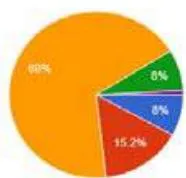
The most significant question in the discussion was whether people believed Rahul Gandhi raised his objection for political gain. On this issue, a majority of 59 percent of respondents said "no," while 13 percent said "yes." A further 21 percent also expressed doubt by leaning towards "yes," indicating a degree of skepticism about his motives.
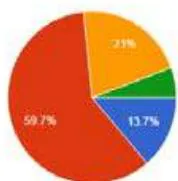
We also asked voters whether raising objections to the election process, as Rahul Gandhi did months after the elections, is necessary in a democracy. In response, an overwhelming 82 percent of people stated that such objections are necessary to ensure a responsible government is elected, while 12 percent believed it depends on the specific situation at the time, according to the survey's findings.
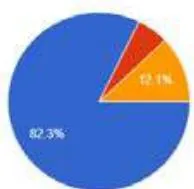
The survey also examined the impact of these events on people's willingness to vote. It found that while 39 percent of respondents said they would definitely vote, a larger group of 43 percent reported that their willingness to vote had decreased. Meanwhile, 12 percent stated that these developments made no difference and they would vote as usual.
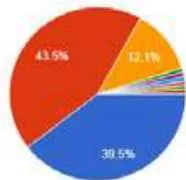
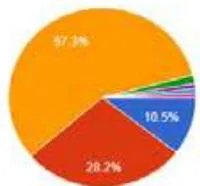
Following these controversies, the survey also assessed how safe and trustworthy people find India's electoral system. The results show that a majority of 57 percent of respondents believe the system is not safe or trustworthy. In contrast, 28 percent feel it is safe but needs improvement, while only 10 percent find the process very safe and trustworthy.
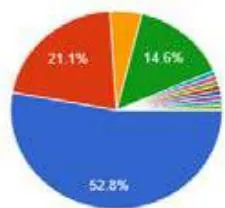
When asked what steps are needed to strengthen trust in India's democracy and electoral process, the public suggested several key measures. A majority of 53 percent advocated for a return to voting directly on ballot paper instead of using Electronic Voting Machines (EVMs). Furthermore, 21 percent called for greater transparency from the Election Commission and 14 percent emphasized the need to create more awareness among voters. A smaller group, comprising 4 percent, believed that objections to the electoral process should not be raised after an election is concluded.
II. CONCLUSION
Ultimately, the information and data obtained from this survey lead to a clear and conclusive answer: Indian voters harbor serious doubts about the fairness and transparency of their elections. While their doubts have raised many questions, they also feel they are not receiving adequate answers, indicating a form of administrative system failure. In a democracy, when citizens genuinely feel that the tools they use to hold the government accountable are being blocked, the fundamental 'social contract' between the people and the government weakens. To strengthen Indian democracy, an urgent change in approach is required. The government and the Election Commission must stop simply asserting that 'the elections were fair.' Instead, they must demonstrate this by being completely open with voters and answering every question raised. The future of India's democracy hinges on restoring the people's trust, which necessitates providing proper answers to all their questions and doubts. Voters possess the fundamental right to ask questions in a democracy, a voice reinforced by the social contract. Crucially, if the government fails to protect the fundamental rights of the people, the sovereign populace has the right to change the government; if this right is nullified, the social contract effectively terminates. This present research paper, in examining this contract, concludes that the doubts and questions raised about India's electoral system are serious, and the people have not received proper answers, as clearly evidenced by this survey.
Conflict of Interest
The authors declare no conflict of interest.
Ethical Approval
Not applicable
Data Availability
The datasets used in this study are openly available at [repository link] and the source code is available on GitHub at [GitHub link].
Funding
This work did not receive any external funding.
Cite this article
Related Research

Special Issue
Launch a focused special issue to highlight research, emerging trends, and expert insights in your academic field.