





IntelliPaper
Abstract
Perception is generated through the sensation captured by the sensors in a transcendental way, as well as through apperception in animmanent way as a result of memories; Bothsenses are valued in sensitivity and generate the first cognitive perceptual image. In everyday life, as well as in scientific and technological life, perceptions-emotions are based on actsacquired by teaching and learning, both; family, educational, social coexistencesuch as laws, rites, percepts and norms. Hencetheexpressions in reality that are embodied in matter in time and spaceon the basis of perceptions – emotions called "precepts" that express the modes of social being of human groups in certain sociocultural conditions. The seexpressions will be interpreted a posteriori by apperceptions that are the product of cognitive, perceptive, emotional and volitionalsyn theses, which are kept in the "cognitive balance". From where, what is expressed and represented in reality is understood by what iskept in the cognitive balance, which can be accepted orrejected, but, if there is acceptance, a significant transcendental and immanent fulfill mentisobtained, which can lead in its maximum expression to a mental rapture, both; scientific, aesthetic, mystical, as well as spiritual.
Explore Digital Article Text
Perception is generated through the sensation captured by the sensors in a transcendental way, as well as through apperception in an immanent way as a result of memories; Both senses are valued in sensitivity and generate the first cognitive perceptual image. In everyday life, as well as in scientific and technological life, perceptions-emotions are based on acts acquired by teaching and learning, both; family, educational, social coexistence such as laws, rites, percepts and norms. Hence the expressions in reality that are embodied in matter intime and space on the basis of perceptions – emotions called "precepts" that express the modes of social being of human groups in certain sociocultural conditions. These expressions will be interpreted a posteriori by apperceptions that are the product of cognitive, perceptive, emotional and volitional syntheses, which are kept in the "cognitive balance". From where, what is expressed and represented in reality is understood by what is kept in the cognitive balance, which can be accepted or rejected, but, if there is acceptance, a significant transcendental and immanent fulfillment is obtained, which can lead in its maximum expression to a mental rapture, both; scientific, aesthetic, mystical, as well as spiritual.
La percepción es generada a través de la sensación que captan los sensores de manera trascendental, como también por medio de la apercepción de manera inmanente producto de los recuerdos; ambos sentidos son valorados en la sensibilidad y generan la primera imagen cognitiva perceptiva. En la vida cotidiana, como también la científica y tecnológica, las percepciones-emociones son parte de actos adquiridos por enseñanzas y aprendizajes, tanto; familiares, educativos, sociales de convivencia como leyes, ritos, perceptos y normas. De donde las expresiones en la realidad son plasmadas en la materia en el tiempo y el espacio en base de percepciones – emociones denominadas "preceptos" que expresan los modos de ser social de los grupos humanos en determinadas condiciones socioculturales. Estas expresiones serán interpretadas a posteriori por apercepciones producto de síntesis cognitivas, perceptivas emotivas y volitivas, que esta guardadas en el "equilibrio cognitivo". De dónde, lo expresado y representado en la realidad es comprendido por lo guardado en el equilibrio cognitivo, que puede ser aceptado o rechazado, más, si hay aceptación sé obtiene un cumplimiento significativo trascendental e inmanente , que puede llevar en su máxima expresión a un rapto mental, tanto; científico, estético, místico, como espiritual.
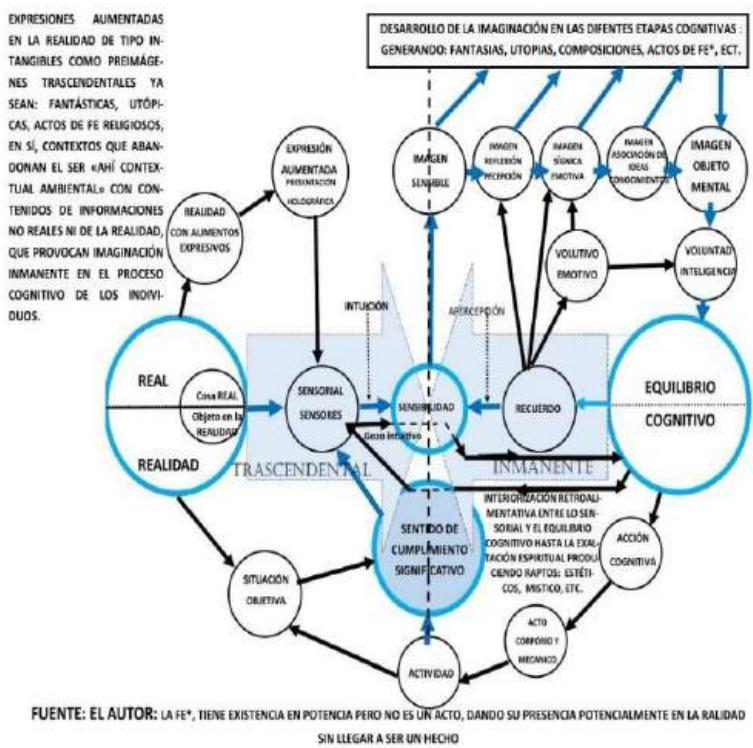
La percepción trascendental permite la captación del mundo real y la realidad sociocultural artificial humana, gracias a los sentidos y su capacidad como sensores que transmiten la información trascendental a la mente, como sensaciones que llegan a la sensibilidad como primer paso cognitivo. En la sensibilidad se generar la primera idea gracias a la percepción inmanente, que interpreta los datos enviados trascendentalmente de manera aperceptiva; esta primera confrontación de las percepciones trascendente e inmanente es un acto sémico . Este acto sémico es el primer paso producto de la interpretación inicial inmediata por la percepción inmanente gracias a la apercepción. De este primer paso se iniciará los siguientes procesos cognitivos que concluirán en el equilibrio cognitivo que almacenará las informaciones como una memoria del recuerdo que tendrá la cualidad de irse ajustando según llegan nuevos datos ya sea de conceptos o perceptos que serán valorados por: la emoción, la voluntad y la inteligencia. Algunos datos que llegan al equilibrio cognitivo pueden corregir datos anteriores o aumentar nuevos datos en un continuo de retroalimentación de manera de compensación. En base los estudios de reducciones esenciales fenomenológicas y sus campos llegó en 1974 , se logró comprender el equilibrio cognitivo como el último reducto esencial en la correalidad mental , estos estudios permitieron comprender el continuo retroalimentar de las esencias en el tiempo y el espacio de manera cognitiva, como se explicará posteriormente en los esquemas de los campos esenciales fenomenológicos que integran una constante valorización entre los campos esenciales dentro de la correalidad, que son; intelectual, emotivo y volitivo genera la base de la percepción inmanente que participará en la sensibilidad con la apercepción que interpreta los datos trascendentales gracias al acto sémico, generándose la primera idea sensible-aperceptiva que iniciará el proceso cognitivo para volver a llegar finalmente al equilibrio cognitivo. Sin embargo, al comparar los estudios y las afirmaciones de Jean Piaget, en año 2020 se encontraron similitudes de lo que consideró el equilibrio cognitivo en una constante valorización entre lo intelectual, emotivo y volitivo. Donde afirma la continua y constante equilibración del equilibrio cognitivo , gracias a estos estudios publicados por Jean Piaget se afinaron más los alcances del equilibrio cognitivo.
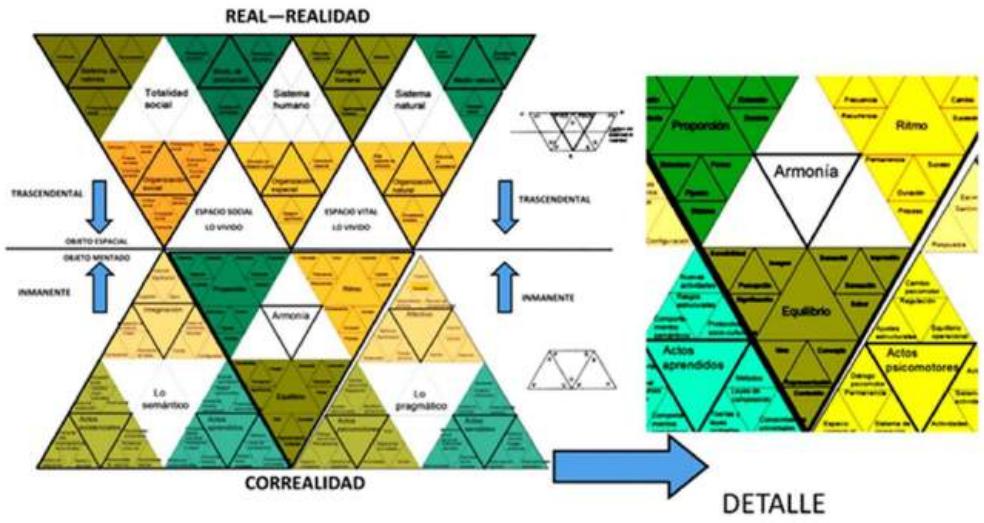
FUENTE AUTOR.
Estudios fenomenológicos de: lo real, realidad y correalidad, Que fueron Iniciados en 1974, Practicados en la XII Confrontación de escuelas de arquitectura de la Unión Internacional de Arquitectos en Varso-via Polonia 1999, y publicados en el año 2000 en el libro "Hacia una teoría del espacio. Reflexión fenomenológica del ambiente; Editorial Universidad Iberoamericana Puebla y Benemérita Universidad Autónoma de Puebla. Después en el año 2005 en el libro "Espacio Sémico urbano arquitectónico; Editado por la UTO de Loja Ecuador.
I. EL EQUILIBRIO COGNITIVO
El equilibrio cognitivo está en un continuo proceso de desarrollo compensatorio de lo anteriormente aprendido y lo que en ese momento se está asimilando por medio del proceso cognitivo de enseñanza-aprendizaje, por lo que, el ser humano sociocultural que es sujeto/objeto/corpóreo evalúa la realidad y genera una continua retroalimentación de los datos obtenidos en la práctica psicomotriz, los cuales son enviados por la percepción trascendental a la mente del sujeto, donde serán valorados por juicios del proceso cognitivo hasta ser asimilados en el equilibrio cognitivo de manera inmanente, produciéndose un estado de continua retroalimentación trascendente e inmanente. Ante lo expuesto se puede afirmar que la percepción trascendental producida por las sensaciones que captan el mundo exterior de la realidad son enviadas a la sensibilidad mental de los individuos retroalimentando un proceso mental cognitivo continuo que interpreta los fenómenos de la realidad y abastecen la imaginación y en algunos casos las ilusiones, pero, son movimientos continuos cognitivos , que retroalimentan al equilibrio cognitivo.
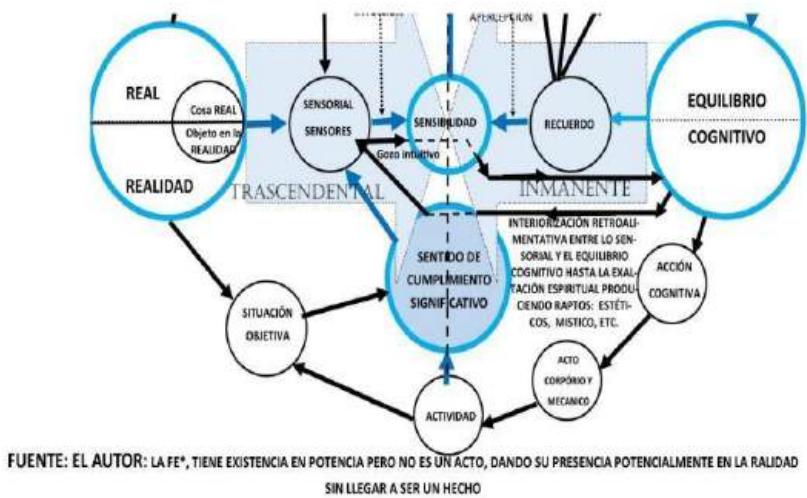
El equilibrio cognitivo es el resultado de todos los procesos mentales como son los emotivos-sentimentales, volitivos y conceptuales del conocimiento. Al sumarse todos esos contenidos de conocimiento-emociones-voluntades gracias a procesos cognitivos de concatenación lógica que se guardan en el recuerdo como una memoria que permitirá comprender y entender los que en lo real natural como en la realidad se nos presenta, y se convierte todos estos recuerdos en la percepción inmanente que explica todo lo que la percepción trascendente envía a la mente. Cuando los recuerdos identifican y comprende lo que se presenta en la percepción trascendente se obtiene una comprensión plena lográndose el equilibrio significativo, en este momento se genera una plana comprensión entre lo real, la realidad y la correalidad mental. El equilibrio cognitivo planeará acciones mentales que generaran actos y actividades psicomotoras que actuaran en la realidad; si las nociones del equilibrio cognitivo interpretan a la realidad de manera plena o por partes se genera un sentido de cumplimiento significativo al operarlas las acciones mentales en la realidad de manera psicomotora se obtenga una interpretación inmanente en respuesta trascendente en la realidad, generándose el sentido de cumplimiento significativo. Este cumplimiento significativo regresará trascendentalmente a la sensibilidad.
Para que el equilibrio cognitivo compense y calibre sus anteriores interpretaciones con nuevas, requiere de nuevos datos enviados por la percepción trascendente que son producto de vivencias valoradas en la realidad de la vida cotidiana sociocultural, o sea, valoradas por las enseñanzas de los ciclos de educación-aprendizaje, como son: protocolos, ritos, normas, leyes, procesos sociales, contenidos de conocimiento etc., los que se aceptan como conceptos o perceptos nuevos, para ser asimilados por el equilibrio cognitivo. Al generarse un cumplimiento significativo trascendental-inmanente como sujeto/objeto/corpóreo se retroalimenta el equilibrio cognitivo generando una equilibración cognitiva, que serán guardados en la memoria. Cuando se obtiene un cumplimiento significativo trascendental-inmanente se produce una empatía de gozo cognitivo, que busca aumentar las motivaciones del gozo y regresa a la sensibilidad absorbiendo más sensaciones de los sensores provocadores de gozo, hasta obtenerse un rapto cognitivo. En el acto de fe religioso, se hace presente este cumplimiento significativo en la sensibilidad entre la percepción trascendente y la percepción inmanente a través de la educación religiosa que el individuo tiene; y que se provocan por el espacio-tiempo arquitectónico de las edificaciones religiosas. La arquitectura busca por medios fenoménicos producir sensaciones que lleven a provocar raptos mentales, también se aúnan a estas sensaciones fenoménicas esencias fenomenológicas religiosas de escenas motivadoras de arte sacro que provocan recuerdos aprendidos. El conjunto de estímulos genera un rapto místico y religioso, que estimulan la exaltación espiritual.
En el acto de fe religioso se presentan las características anteriormente mencionadas, en base de juicios de reconocimiento religioso que identifican los recuerdos aprendidos y fijados inmanentemente por la educación religiosa y sociocultural, generando embellecimientos tan plenos que provocan el rapto místico o religioso tanto mental como corpóreo. Lo fenoménico pueden ser estímulos provocadores de sensaciones, como: olores, sonidos o luces o cambio de luces, etc., que se presentan en la realidad y que evocan contenidos inmanentes del equilibrio cognitivo generando un cumplimiento significativo interpretado y condicionando a las enseñanzas religiosas o socioculturales. De esta manera cualquier fenómeno natural que se presente accidentalmente y de improviso puede provocar gracias a los contenidos inmanentes del equilibrio cognitivo exaltaciones: religiosas, emotivas, amorosas, etc.
En el arte se plasman en la materia modalidades del ser social, obteniéndose objetos artísticos generados por un ser humano-artista perceptivo, que plasma los modos el ser social del momento y genera expresiones que al ser percibidas por seres sociales al mismo momento sociocultural valoraran la expresión a posteriori con juicios mentales en base contenidos y perceptos guarda dos en el equilibrio cognitivo inmanente. Este fenómeno tiene dos fases en el proceso cognitivo, la primera fase se realiza en la sensibilidad y participa la percepción trascendente y la apercepción inmanente producto de los recursos guardados en el equilibrio cognitivo y es un juicio inmediato que da un primer resultado de cualidades estéticas, como son; Belleza, Majestuosidad, grandeza, etc., en un segundo momento del proceso cognitivo se van realizando juicios de esencias estéticas como son: equilibrio, ritmo, proporción que concluyen en armonía de todas las modalidades del ser plasmadas en la materia. El objeto de arte es la materia trasformada plásticamente como medio de expresión perceptiva-emotiva de los modos de ser sociales en un momento histórico, su expresión no va a reportar utilidad ni otro tipo de función, solo reporta esenias plasmadas en la materia de tipo perceptivo – emotivo.
Cuando el objeto artístico tiene incluidos aspectos que reportan utilidad de cualquier tipo será necesario valorar por separado las expresiones perceptiva-emotiva por un lado y las expresiones utilitarias de tipo funcional por otro lado como ese el caso del objeto arquitectónico. Sin embargo, con relación al equilibrio cognitivo que valora los contextos urbanos-arquitectónicos no solo se valorará; lo estético, lo constructivo, lo ambiental, en si el confort de vida que genera un contexto vivencial, tanto; natural, artificial constructivo utilitario, emotivo, estético etc., es un ambiente contextual completo como se da en la realidad y que incluyen lo real natural. "Los movimientos actuales se presentan dentro de interés ambientalistas, que exigen un cambio de paradigma de pensamiento que pasa del racionalismo-funcionalista al ambientalista considerando al ser humano con existencia y modos de ser para su permanencia que son relacionados a un ambiente contextual, siendo un ser que es sujeto/objeto/corpóreos, y su relación es un contexto ambiental integrándose a lo real-natural y a la realidad sociocultural que se convive en la vida cotidiana diaria por lo que es una parte del contexto ambiental dentro de una simbiosis biótica, abiótica sostenible donde para su existencia de sus modos de ser se generan esencias de vida y existencia. Como sujeto una participación activa dado su capacidad de reflexión como objeto es un cuerpo más entre todo un sistema de cuerpos del contexto y como corpóreo es un cuerpo que exige ciertas condiciones para existencia de ambiente como son condiciones necesarias para vivir y para comer y reproducirse etc." (Objeto de la arquitectura p. 2)
El equilibrio cognitivo será el que contextualice los ambientes arquitectónicos provocados por exaltaciones fenoménicas de la materia en sus cualidades y cantidades como son; sonidos, luces, cambio de colores, sensaciones dérmicas etc. Pero también se provoca al equilibrio cognitivo con esencias socioculturales de los modos de ser sociales de los individuos en su convivencia en la realidad, como son; conductas, costumbres y tradiciones, que serán exaltadas en el tiempo y el espacio, tanto: urbano, arquitectónico, como artístico. Para entender el contexto espacial-temporal de la arquitectura se generan programas arquitectónicos tanto particulares como generales. De esta manera los programas particulares serán la comprensión del momento histórico sociocultural técnico, científico y artístico que se está viviendo. En el programa arquitectónico general se analizan las áreas y sitios que integrar superficies métricas, mobiliarios antropométricos una forma arquitectónica, definiendo áreas, y espacialidades ergonómicas.
II. EL PROCESO ENTRE LA PERCEPCIÓN TRASCENDENTAL Y LA PERCEPCIÓN INMANENTE
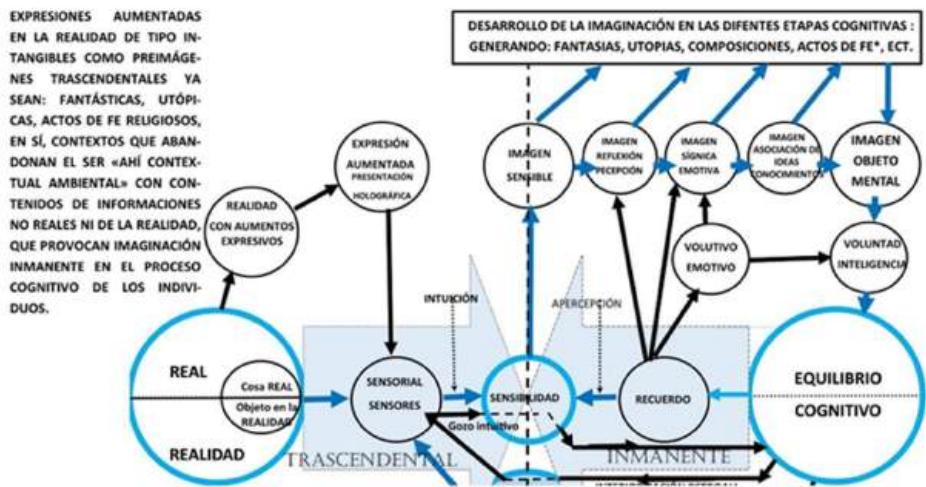 Desarrollo cognitivo de la imaginación y del equilibrio cognitivo y su impacto en la percepción inmanente.
La percepción inmanente en planeamiento del pensamiento de Edmundo Husserl, "Es el regreso de la conciencia pura del recuerdo a la conciencia empírica. lo que se llama reflexión fenomenológica, o percepción inmanente. Para obtener el recuerdo se logra partiendo del residuo producto de las reducciones mentales que quedan inalterables, y las cuales se identifican dentro de un campo esencial producto de las interrelaciones de los elementos esenciales puros para obtener una unidad coherente como un campo estructurado de los elementos puros en un mismo nivel de reducción donde los elementos esenciales se complementan en una unidad estructurada, evitándose seguir reduciendo y constituyen un unidad -(epojé)- que se convierte en recuerdo que será almacenado en la memoria. (...) Cuando se logra que el objeto mental del recuerdo se relacione con el objeto en la realidad se obtiene el sentido significativo." (Camacho Cardona, Hacia). Dentro de la memoria participan lo emotivo y lo volitivo, generando los contenidos del equilibrio cognitivo que se ha empleado en este artículo. "La distinción entre esencias trascendentes y esencias inmanentes. exactamente como por respecto a las objetividades individuales hay la distinción entre inmanentes y trascendentes, también la hay para las respectivas esencias." (Husserl, Ideas I, § 60, pp. 137-138)
El mundo artificial realizado por el hombre como un ser en el ambiente contextual tanto real natural como en la realidad generada socioculturalmente, que es todo lo artificial del hábitat humano, los sitios, áreas, locales muebles, lugares de esparcimiento etc.
III. CUMPLIMIENTO SIGNIFICATIVO ENTRE CONVIVENCIA EN LA REALIDAD Y EQUILIBRIO COGNITIVO
Partiendo del cumplimiento significativo que se genera entre la percepción inmanente y la percepción trascendente y la obtención del equilibrio cognitivo del sujeto percipiente, el cual es un proceso dinámico en una continua asimilación de la realidad en base la convivencia con ella, los que produce en la mente juicos basados en: lo volitivo, lo intelectual, lo emotivo y afectivo , que van generando contenidos conceptuales como son los conceptos y los perceptos. "cuando una nueva información no resulta inmediatamente interpretable basándose en los esquemas preexistentes, el sujeto entra en un momento de crisis y busca encontrar nuevamente el equilibrio (por esto en la epistemología genética de Piaget se habla de un equilibrio fluctuante), para esto se producen modificaciones en los esquemas cognitivos del niño, incorporándose así las nuevas experiencias." (Desarrollo cognitivo). Cuando se logra el sentido del cumplimiento significativo entre equilibrio cognitivo y las actividades realizadas en la realidad se provoca un proceso cognitivo que regresa trascendentalmente a lo sensorial exaltando la sensibilidad y los sensores que participaron en ese proceso de cumplimiento significativo que retroalimenta la exaltación mental.
El proceso que se realiza de equilibrio cognitivo genera acciones cognitivas que plantean los actos corpóreos y mecánicas del cuerpo biológico hasta obtener las actividades que harán presentes en la situación objetiva de la realidad, en ese momento se puede generar el cumplimiento significativo donde se estimará lo percibido trascendental y la apercepción inmanente que participa sensorialmente en la sensibilidad generán dose los gozos producto del cumplimiento significativo.
"Ahora bien, esa equilibración progresiva se modifica continuamente debido a las actividades del sujeto, y éstas se amplían de acuerdo a la edad. Por lo tanto el desarrollo cognitivo sufre modificaciones que le permiten consolidarse cada vez más. (...) Piaget, de acuerdo con Claparede, dice que toda actividad es impulsada por una necesidad, y que ésta, no es otra cosa que un desequilibrio, por lo tanto toda actividad tiene como finalidad principal recuperar el equilibrio." (...) Para Piaget asimilar es: (...) incorporar las cosas y las personas a la actividad propia del sujeto y, por consiguiente (...) 'asimilar' el mundo exterior a las estructuras ya construidas" (Desarrollo cognitivo, pp. 8-9).
Existen objetos artificiales hechos por el hombre que desde su realización tienen en sus formas rasgos evocadores de los modos de ser humanos producto del contexto ambiental sociocultural del momento y que son plasmados en las formas de los objetos artificiales que realiza el hombre y que expresan en su representación formal rasgos que evocan los modos de ser a los valores que están dirigidos los objetos artificiales, como es el caso de los objetos y espacio-tiempo religioso que presentan rasgos que fueron anteriormente enseñados en la religión en su catequización y sostenidos por las vivencias familiares y sociales en las costumbres y las tradiciones generando recuerdos que son ya estimados dentro del equilibrio cognitivo y fijados en la memoria para ser empleados cuando el observador capta en las figuras esos rasgos evocadores. "Esta comunicación es a posteriori de manera mental en la correalidad (-donde lo trascendental es la realidad y lo inmanente es la correalidad-) gracias a los procesos de sensación-intuición-percepción que generan varias imágenes en el proceso cognitivo hasta obtener objetos mentales producto de categorías y campos esenciales basados en los modos del 'ser ahí en el contexto ambiental de la realidad'. Al lograrse la correalidad mental se completa el ciclo de modos de ser dando comunicaciones continuas entre la realidad y la correalidad partiendo de lo real." (Camacho Cardona, El ente y el ser, p.1), En sí, es una comunicación anteriormente enseñada y valorada en el equilibrio cognitivo de manera inmanente, que serán reconocidas en las representaciones en la realidad y que serán enviadas por la percepción trascendental y estimadas por la percepción inmanente aceptándolas por ser anteriormente ya incluidas en el proceso de equilibración de manera inmanente en el equilibrio cognitivo.
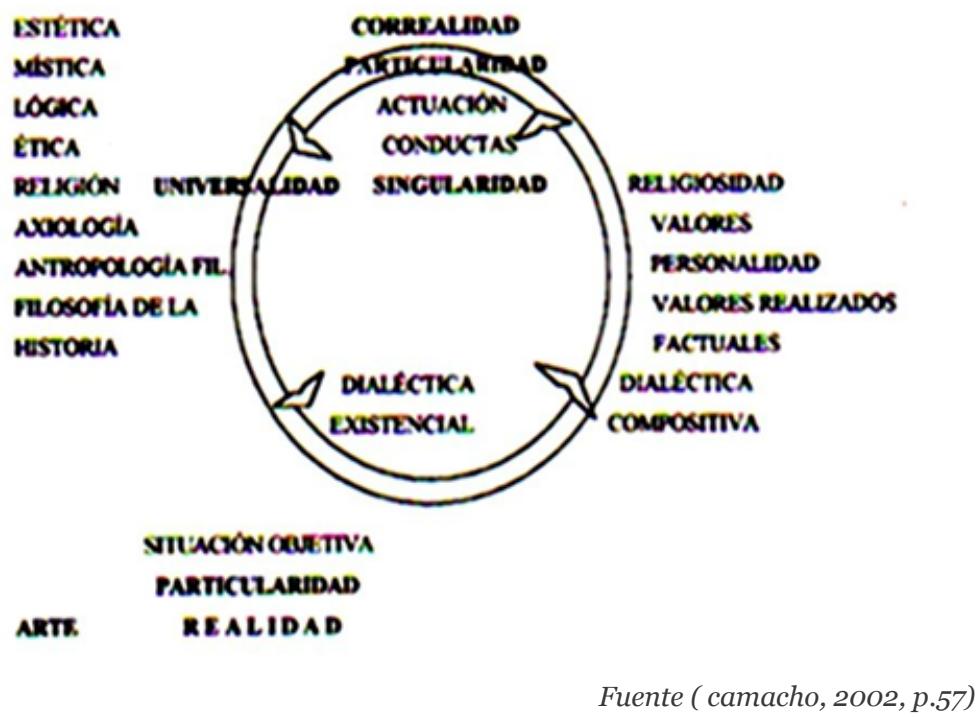 Figura 1: Relación Entre realidad y cor realidad en el ambiente contextual humano
Los actos de fe religiosos, en sí son, contenidos que evocan al ser ahí dentro de un contexto de alta connotación inmanente producto de la educación religiosa. Cuando los objetos en la realidad expresan rasgos evocadores de los modos de ser religiosos, y son estos rasgos formales ya anteriormente aceptados por la percepción inmanente, siendo ya parte de los contenidos del equilibrio cognitivo y de los juicios cimentados en la educación tradicional religiosa, son identificados estos rasgos sémicos en las formas y objetos en la realidad, de inmediato por la apercepción inmanente se identifican. Lo mismo sucede en relación a los grupos sociales cara-cara que establece códigos y define roles de actuación definidos dentro del grupo y externamente del grupo se buscan acciones sociales que generan actividades en beneficio al grupo, de esta manera los grupos simbólicos sociales determina las acciones, actos y actividades a realizar, definiendo este fenómeno de convivencia social como campos simbólicos sociales. Estos grupos de campos simbólicos sociales serán los que definen los modos de ser social y sus formas de vida determinando las características de la creación del arte, arquitectura y el urbanismo .
IV. CONCLUSIÓN
Los en la religión católica están llenos de representaciones sémicas, que son representativos de actos o pasajes religiosos, como son: figuras iconográficas alusivas a personajes o a escenas religiosas acompañadas de atributos simbólicos, como son: símbolos, iconos, señales que se incluyen en todo tipo de representaciones en la realidad, como: objetos o esculturas o pintura o efectos fenoménicos que exaltan los sentidos. En sí, son figuras simbólicas que provocan la imaginación mística o religiosa, en base de la interpretación apoyada en las enseñanzas religiosas de la iglesia o las actividades socioculturales tradicionales o costumbristas, si los datos sémicos contienen nuevas interpretaciones entran en la equilibración cognitiva para ser aumentados en el equilibrio gracias a los actos pedagógicos de tipo endocultural que dará nuevos aspectos a los existentes reforzando y actualizando.
En la realidad se pueden evocar la imaginación al realizar; modelos iconográficos, que motivan exaltaciones sensoriales fenoménicas, como también se hacen presentes en las realidades aumentadas o exposiciones virtuales de holo gramas u otro tipo de exaltaciones que puedan tener una representación en la realidad.
Las figuras que se representan en la realidad, y que tiene cargas de contenidos evocadores inmanentes de los modos de ser religiosos en las formas de estos, como son rasgos formales apoyados en la enseñanza - aprendizaje religiosa y cumplen con su cometido de exaltación preceptiva, tanto trascendente como inmanente respondiendo a un acto o varios actos de fe. En sí, son objetos reales con representaciones de rasgos inmanentes. La percepción trascendente ya lleva evocaciones inmanentes desde su presencia en la realidad, que solo pueden ser interpretados por la percepción inmanente de un sujeto que tenga contenidos: intelectuales, emotivos y volitivos generados por la enseñanza – aprendizaje religioso. Como es el caso de la siguiente figura, que representa a Jesucristo en su proceso de reencarnación y está saliendo de su tumba atravesando la piedra que la sellaba su tumba y va acompañado del espíritu santo. En escena que solo el que sepa del nuevo testamento puede interpretar los símbolos que contiene esta escultura y entenderá y comprenderá, gracias a su apercepción inmanente los contenidos y rasgos que evocan su memoria ya adaptada por el equilibrio cognitivo y de esta manera podrá aperceptivamente comprender la escultura.
Escultura en el exterior de la parroquia de los santos Cosme y Damián, en la calle Serapio Rendon 5 de la Colonia San Rafael, Ciudad de México.
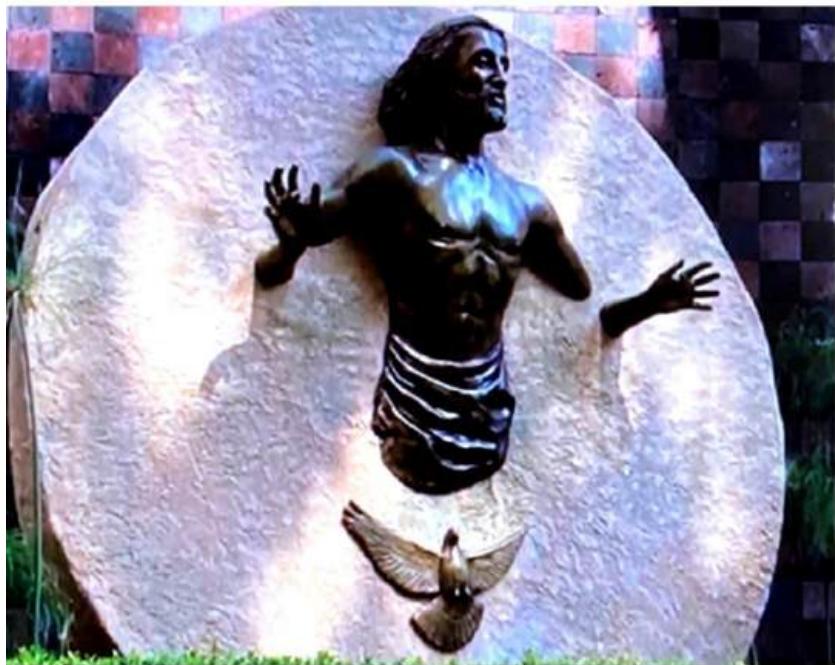
FOTOGRAFÍA DEL AUTOR
Como ejemplo también la bóveda de Santa María Tonantzintla, Municipio de San Andrés Cholula estado de Puebla, México.
Se encuentra un pinjante o pinjante que en su parte inferior esta una paloma que representa al Espíritu Santo, rodeada ésta con figuras en color dorado, que al ir acercándose a ellas se perciben círculos decorativos de ángeles, querubines, flores, etc. La bóveda en su intradós se remarca en base de gajos que van generando el cuerpo de la cúpula, formando sectores de esta. En el primer círculo de ángeles aparecen envueltos entre roles y giros, flores y elementos decorativos; hasta llegar al arranque de la cúpula donde hay ángeles con cascos. Lo mismo sucede en las partes superiores de los vanos tipo lucarnas de la bóveda, donde también hay querubines que emanan de flores.
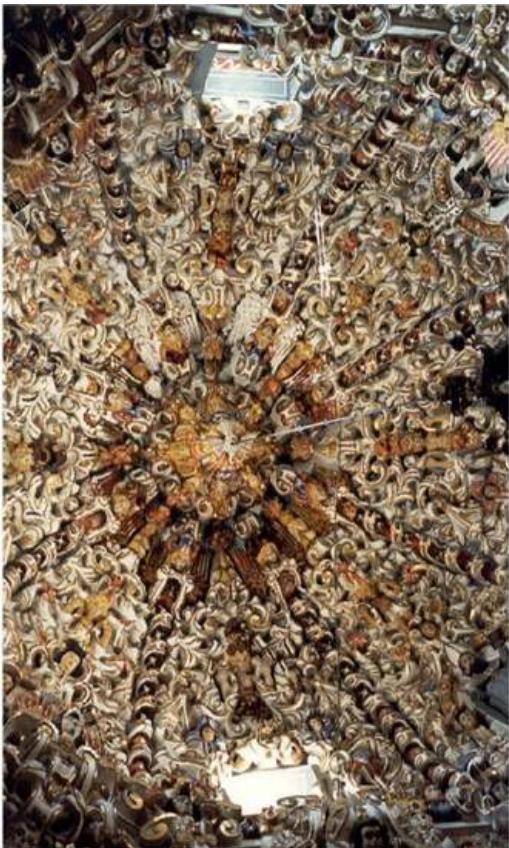 FOTOGRAFÍA DEL AUTOR Bóveda de Santa María Tonantzintla, Puebla, México.
Libros
- Estos contenidos se dieron a conocer de manera pública hasta el año 2000 que se publicaron en el libro “Hacia una teoría del espacio, Reflexión fenomenológica del ambiente”, editorial Universidad Iberoamericana Puebla y BUAP, también se publicaron en 2005 en el Libro “Espacio sémico urbano arquitectónico” editado por la UTP de Loja Ecuador. (p.4) ↩
- “Correalidad; f. Concepto empleado por Max Bense, relacionado con el término estético que designa lo ontológico de la belleza como un trascender de la realidad en el acto estético, de donde la belleza necesita de la realidad para sostener su trascendencia. Dentro de las teorías clásicas del modo de ser, elaborada por Nicolai Hartmann, se presenta la necesidad, la realidad, la posibilidad, así como sus formas negativas, -según Oskar Becker- la conecesidad -(la existencia matemática constructiva o intuitiva)-y al coposibilidad -(existencia matemática dentro de una teoría matemática ideal o abstracta)-. Bense planteó la correalidad de manera aumentativa a los anteriores modos.”; (Camacho Cardona. M.; Diccionario, p, 2026.) En sí, el concepto de correalidad es que es empleado en este texto tiene una base ontológica de la relación realidad-correalidad, donde lo trascendental es la realidad y lo inmanente es la correalidad. El espacio ambiental humano se integra de lo real, la realidad y la correalidad como modalidades del ser ambiental: Lo real se sustenta por Entes de organización natural integrada por sistemas naturales denominados ecosistemas, generados por lo natural y verdadero, tanto biótico como abiótico, definidos por las condiciones geográficas, en estos emplazamientos geográficos las sociedades humanas sé adaptan generando ecosistemas analizados por la ecología humana, que define procesos sistémicos sostenibles que requieren las sociedades humanas para sus sostenimientos, reproducción y evolución. La realidad se establece por la acción humana que participa en el tiempo y el espacio por medio de acciones, actos y actividades humanas que dan organizaciones espaciales-temporales, tanto: regionales-urbanas-arquitectónicas, siendo estas los hábitats humanos, en sí, es el espacio significado. La correalidad considerada como una modalidad trascendental de la realidad, en sí es, una modalidad trascendental de condición cognitiva, por lo que, tienen las mismas composiciones de la realidad, pero en su valoración trascendental cognitiva, siendo: volitiva, emotiva, perceptiva y conceptual, ya que son juicios y valorizaciones mentales que realiza el sujeto como individuos socializados, en sí, con cualidades del sujeto que percibe la realidad. Nos genera la posición de cualquier individuo socializado en sus condiciones de sujeto pensante. La comunicación entre realidad y correalidad será por medio de conceptos de conocimientos, de perceptos del proceso perceptivo, de emociones por medio la inteligencia emocional. (p.4) ↩
- El equilibrio según Jean Piaget es la conclusión del sistema intelectual o cognitivo que regula las interrelaciones del sujeto ahí en el ambiente en su realidad, y su proceso intelectual o cognitivo. Generando un proceso equilibración a través de tres niveles: 1.- Equilibrio del sujeto ante los acontecimientos externos en la realidad que convive. 2.- Equilibrio cognitivo del sujeto en su mente. 3.- Equilibrio que ordena jerárquicamente las asimilaciones mentales. “Piaget propone la ‘teoría constructivista del aprendizaje’ en la cual hace notar que la capacidad y la inteligencia se encuentra estrechamente ligadas al medio social y físico, así considera que los dos procesos que caracterizan a la evolución y adaptación del psiquismo humano son la asimilación y acomodación, (...) Asimilación: consiste en la interiorización o internalización de un objeto o un evento a una estructura comportamental y cognitiva preestablecida. (....) Acomodación: consiste en la modificación de la estructura cognitiva o del esquema comportamental para acoger nuevos objetos y eventos que hasta el momento eran desconocidos para el aprendiz.” (Valdez Velázquez; p. 2.) (p.5) ↩
- Jean Piaget: plantea que el equilibrio cognitivo se relaciona a dos procesos complementarios: La Asimilación y la Acomodación; donde la Asimilación es la respuesta a estímulos que recibe el sujeto ahí en el ambiente contextual de la organización social de la realidad. La acomodación es la respuesta que modifica el ambiente de la organización social. De tal manera que la asimilación y la acomodación participan en el proceso de la equilibración o ajustándose el sujeto a las condiciones externas a él, obteniendo un equilibrio regulando un continuo de reestructuración cognitiva, que ajustaran coordinadamente a los procesos de asimilación. (p.5) ↩
Conflict of Interest
The authors declare no conflict of interest.
Ethical Approval
Not applicable
Data Availability
The datasets used in this study are openly available at [repository link] and the source code is available on GitHub at [GitHub link].
Funding
This work did not receive any external funding.
References
Cite this article
Related Research



Special Issue
Launch a focused special issue to highlight research, emerging trends, and expert insights in your academic field.
