



Abstract
Olfactory Neuroblastoma (ON) A rare malignant tumor originating from the olfactory epithelium of the sinonasal tract, first described by Berger and Richard in 1924. Common symptoms patients typically present with unilateral nasal obstruction (70%), epistaxis (50%) and may also experience headaches, pain, excessive tearing, rhinorrhea, anosmia, and visual symptoms. Incidence Occurs at a rate of 0.1 per 100,000 in the pediatric population, making it particularly rare in toddlers. Imaging is crucial for staging the disease; both Computed Tomography (CT) and Magnetic Resonance Imaging (MRI) are used for diagnosis and assessment. Treatment Multimodal approach often recommended, including surgical resection, chemotherapy, and sometimes radiotherapy. The role of neoadjuvant chemotherapy in facilitating complete surgical resection requires further study. Prognosis Depends on the stage of the disease, including locoregional extension and presence of distant metastasis.
Explore Digital Article Text
I. INTRODUCTION
Olfactory Neuroblastoma (ON) A rare malignant tumor originating from the olfactory epithelium of the sinonasal tract, first described by Berger and Richard in 1924. Common symptoms patients typically present with unilateral nasal obstruction , epistaxis , and may also experience headaches, pain, excessive tearing, rhinorrhea, anosmia, and visual symptoms. Incidence Occurs at a rate of 0.1 per 100,000 in the pediatric population, making it particularly rare in toddlers. Imaging is crucial for staging the disease; both Computed Tomography (CT) and Magnetic Resonance Imaging (MRI) are used for diagnosis and assessment. Treatment Multimodal approach often recommended, including surgical resection, chemotherapy, and sometimes radiotherapy. The role of neoadjuvant chemotherapy in facilitating complete surgical resection requires further study. Prognosis Depends on the stage of the disease, including locoregional extension and presence of distant metastasis.
II. CASE REPORT
A 1 year 9 months old boy presented with persistent fever, protrusion of the right eye, and visual disturbances lasting for a month, along with lethargy and poor oral intake. He did not have weight loss, night sweats, or nosebleeds. Clinical examination revealed right eye bulging and a bony prominence on the right frontal skull. There were no masses or swollen lymph nodes in the head and neck, and other systemic examinations were normal. Suspected Foster-Kennedy Syndrome led to a CT scan, which showed a diffuse periosteal reaction with a sunburst pattern affecting the sphenoid, frontal, and parietal bones. There was a thick mass in the right frontoparietal region causing brain compression, with extension into the sphenoid and ethmoid sinuses and the orbital space. The optic nerves appeared compressed by the mass.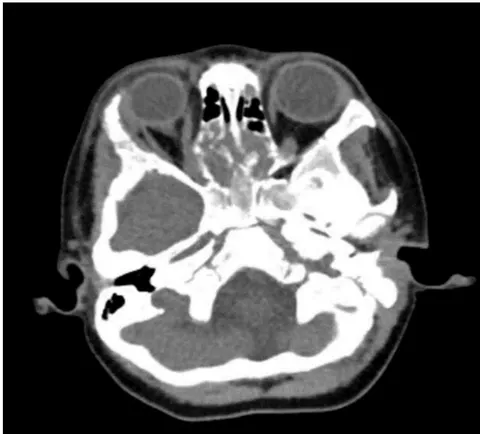
Figure 1: Axial View Shows Enhancing Soft Tissue (Blue Arrow) Component in the Extra-Axial Space of Anterior Middle Cranial Fossa 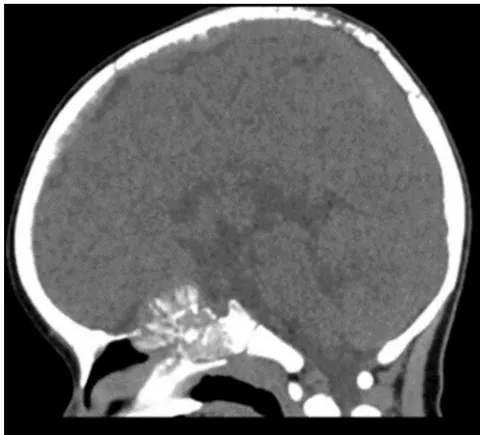
Figure 2: Sagittal View Shows Sunburst Appearance (Blue Arrow) at The Sphenoid Bone 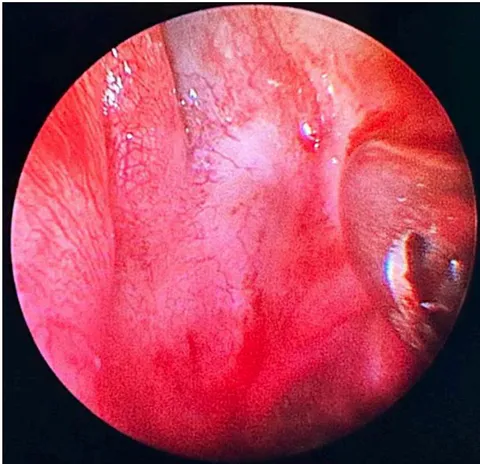
Figure 3: Intra-Operative Endoscopic View of Anatomical Landmark for Right Posterior Ethmoidectomy Figure 4: Endoscopic View of Tumour (Blue Arrow) in the Right Posterior Ethmoid Sinus Cavity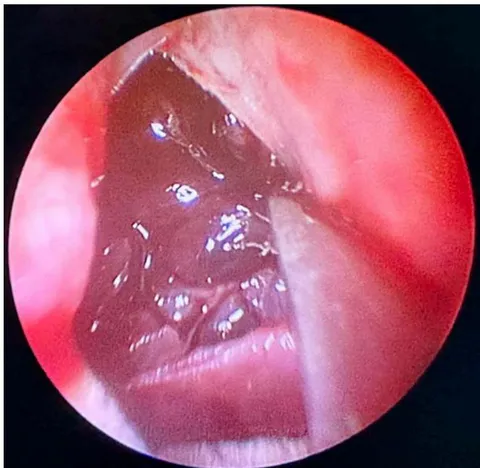
BE: Bulla Ethmoidalis, Bl: Basal Lamella, Mt: Middle Turbinate A biopsy was performed via endoscopic transnasal and transeithmoidal surgery. The biopsy revealed a fleshy bluish mass in the right posterior ethmoid sinus. 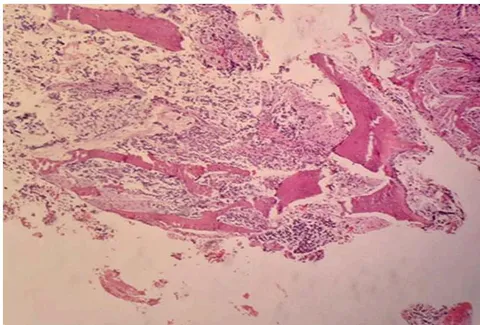
Figure 5: Microscope View at 200x Magnification Shows Loose Aggregates and Small Sheets of Tumour Cells 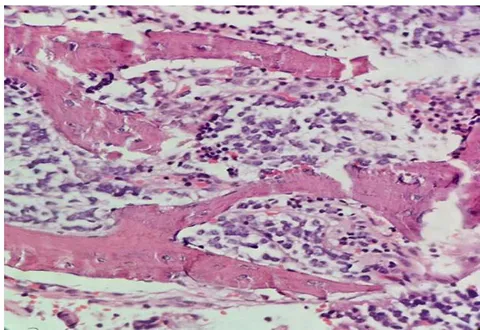
Figure 6: Microscopy at 400x Magnification Shows Tumour Cells with Round to Ovoid Nuclei, Granular to Stippled Chromatin Pattern and Scanty Cytoplasm
Histopathology showed fibrocollagenous tissue with respiratory epithelium and tumor cells with round to oval nuclei, granular chromatin, and moderate nuclear pleomorphism. Immunohistochemical tests showed the tumor cells were positive for synaptophysin (Figure 7), chromogranin (Figure 8), and CD56 (Figure 9), but negative for various other markers. The Ki-67 proliferation index was high at .
The findings confirmed to be ON and the patient was referred to a Pediatric Oncology Team for treatment.
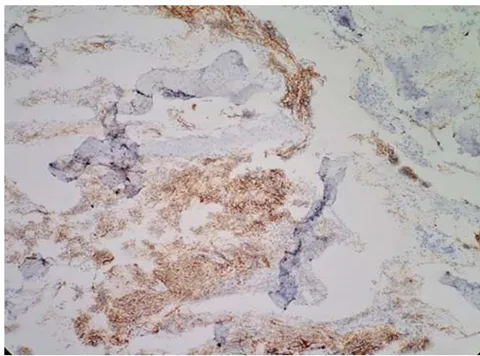
Figure 7: 100x Magnification; Positive Stain For Synaptophysin
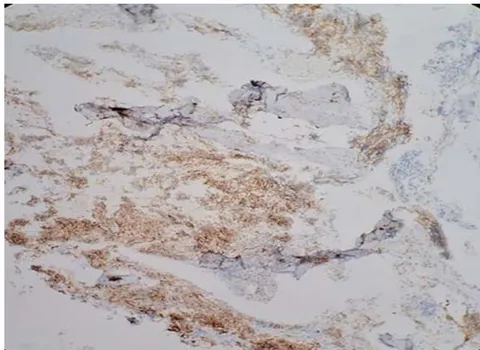
Figure 8: 100x Magnification; Positive Stain for Chromogranin
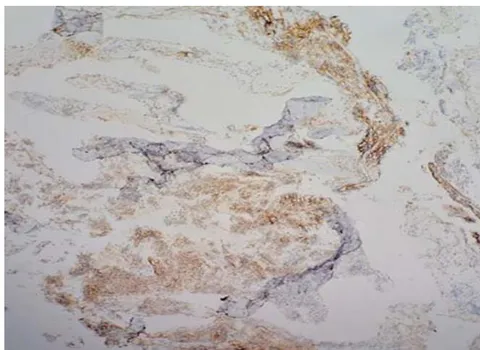
Figure 9: 100x Magnification; Positive Stain For CD56
III. DISCUSSION
Naturally ON is a locally aggressive malignant neoplasm originating from the olfactory neuroepithelium, which spans the roof of the nose, superior turbinates, and part of the nasal septum [6]. Malignancies here can invade the cribriform plate and spread to intracranial structures. Historical Context First described by Berger et al. in 1924, with around 1000 cases reported. ON occurs across various age groups, with a higher frequency in those aged 10-20 and 50-60. Its rarity in children makes it particularly challenging.
Pediatric incidence extremely rare in children, with an incidence of 0.1 per 100,000. Despite this, ON is noted as the most common malignancy of the paranasal sinuses in this age group. Localized lesions often present with symptoms of unilateral nasal obstruction and epistaxis. Advanced cases might exhibit neurologic, oral, facial, cervical, and ophthalmologic symptoms. Systemic examination is crucial to rule out distant metastases.
Role of Imaging CT imaging is crucial for staging, identifying locoregional extension, and differentiating from other conditions. MRI provides better tumor delineation.
Staging Systems Kadish's system (1976) classifies ON into [1,10]:
A modified stage D for distant metastases was added by Morita et al. in 1993 [4].
Histopathological Features ON typically shows nests of small, round cells with scant cytoplasm in a vascularized stroma. The presence of neuroblastic pseudorosettes is characteristic. Immunohistochemistry is essential for diagnosis, ON typically expresses neuroendocrine markers like synaptophysin, chromogranin, and NSE [3]. The diagnosis is confirmed through specific staining patterns.
Multimodal Treatment Combining surgery (craniofacial or endoscopic) with radiotherapy and chemotherapy has shown improved survival rates and reduced recurrence. However, the aggressive nature of treatment poses risks, particularly in children, including potential complications from surgery and long-term effects of radiotherapy.
Surgical resection in children can be challenging and is complicated by the delicate craniofacial anatomy, and radiotherapy can impact quality of life due to potential growth impairment and other side effects. Chemotherapy has shown promise in reducing tumor size preoperatively but requires more research to determine optimal regimens.
Further studies are needed to refine treatment protocols, especially regarding the effectiveness and safety of Intensity-Modulated Radiation Therapy (IMRT) and chemotherapy regimens tailored for pediatric patients. More data is required to establish standardized treatment guidelines and improve patient outcomes.
IV. CONCLUSION
ON is an exceptionally rare malignant tumor affecting all age groups, with no established gold standard for treatment due to the limited number of cases. Further research is needed to evaluate the effectiveness of various treatment options in improving patient outcomes. Future studies should also investigate the potential benefits of IMRT for treating ON in children.
Conflict of Interest
The authors declare no conflict of interest.
Ethical Approval
Not applicable
Data Availability
The datasets used in this study are openly available at [repository link] and the source code is available on GitHub at [GitHub link].
Funding
This work did not receive any external funding.
Cite this article
Related Research

Special Issue
Launch a focused special issue to highlight research, emerging trends, and expert insights in your academic field.