




Abstract
In various stories from the oral tradition, we see water taking on different roles. A notable example is the role of water in Charles Perrault’s fairy tale “The fairies”, published in Tales of mother goose or stories of ancient times (1697). This work was given a Spanish edition, Tales of yesteryear (1986), which contains drawings by Gustave Doré. In the drawing of “The fairies”, you can see the image of a young woman holding a huge pitcher under the tap of a natural spring of water that represents feminine pain and purity. In the 20th century, the Uruguayan writer and poet Juana de Ibarbourou used the theme of water extensively in her work, such as in the prose poetry of The fresh pitcher (1920) and in “Triptych”, a series of three poems from Dualism (1953). The aim is to carry out a comparative reading of a contrastive and qualitative nature between these three authors based on the idea of a “new comparatism” (Coutinho, 2016). Subsequently, the aim is to reflect on how this emerging new comparatism can be realised in Spanish language teaching in Brazilian schools through a “new humanism” (Coutinho, Palermo & Schmidt, 2021) in rural Latin American communities, such as Sopa, a rural community located in the Jequitinhonha Valley in Minas Gerais, Brazil. This new relationship established with comparative literature and its teaching can give new meaning to the relationships that young Brazilian readers have with foreign literature, as well as to the way teachers relate to this little-known literature in Brazil.
Explore Digital Article Text
I. INTRODUCTION: THE ROLE AND SYMBOLISM OF WATER IN LITERATURE AND THE ARTS
Between July and October 1889, the Cuban writer José Martí published four issues of a magazine dedicated to Latin American children, entitled The golden age: a monthly publication of recreation and instruction dedicated to the children of America . Each issue consisted of 32 illustrated pages and the texts were varied in nature. Stories, essays and poetry taught moral values to the little ones in a continent that was at a delicate geopolitical moment: the expanding North American domination of lands and peoples then colonised by Spain. The four issues of the magazine were collected in book form for the first time in Costa Rica in 1921, with the same title, The golden age.
In the dedication to the first issue, one of its aims is "to tell you how the world is made: let's tell you everything that men have done so far" (Martí, 1997, p. 1). To show the world as it is seen, or as it exists, is one of the most praiseworthy notes we can make of the Cuban writer's endeavour. In delightful pages, Martí (1997) delves into details of nature and forms that the most ordinary things in our lives have acquired throughout history. This is the case of the text "History of the spoon and fork" , which was published in the last issue of the magazine.
As he begins his description of how these two everyday objects are produced, Martí (1997) draws attention to the fact that it is imperative to understand what we see and have around us: "the truth is that it is painful to see something and not understand it, and man must not rest until he understands everything he sees" (Martí, 1997, p. 175). In his humanist and idealist vision, Martí (1997) goes on to describe the industrial manufacture of the two objects, the spoon and the fork, without first noting that those who don't think and don't work, "living off what others work on, these eat and drink like other men, but in truth, these are not alive" (Martí, 1997, p. 175).
In other words, to live humanely is to be deeply involved with the world around you, that vast world that Carlos Drummond de Andrade sang about in "Poem of seven faces" from Some poetry (1930), but this involvement is not complete either. Our world is vastly larger: it includes everything we look at and don't look at, and what we imagine but doubt its real existence. Our gaze does not convey absolutely everything that is in the world, because it only captures an image of the world.
If art is also an expression that speaks deeply to us, allowing us to look at and image of the world, then every piece made by human beings is, also a small, individualised image of the world, and the entire manufacturing process is the result of the power of nature's materials to adapt to the techniques invented and tested by man throughout history to pass from one state to another. This is the case with production of the spoon and fork that Martí (1997) describes so beautifully in his text. To these metallic objects, many steps are necessary. The metals were boiled and mixed, cooled and flattened into sheets for cutting and modelling on large tables, then passed through cutting and polishing machines, so that they could finally be bathed in liquid silver1 and lined up in a wooden cabinet.
At every stage of industrial or craft production, the four elements that make up the universe (water, earth, air and fire) have served man for his feats and imaginations. Marti's (1997) detailed description of the production and care of raw material is one of those rare moments when we see a writer dedicate himself to the minutiae of life, paradoxically, because what seems like a trifle can become in a great learning experience to little readers, as is the case with the widespread use of water.2
Machines ran on steam, which came from heating water. It was water that started and ended production, as the whole process culminated in a bath34 of liquid silver in a huge boiler. This water was stimulated by a shock of electricity, as described by Martí:
There's the spoon. Then they file it down and decorate it, jump on it like a fork and take it to the silver bath, because it's a real bath, where the silver is in the water, undone, with a mixture called potassium cyanide - all the chemical names are like that! And into this bath comes electricity, which is a power that we don't know what it is, but it gives light and colour, and movement, and strength, and changes and decomposes metals in an instant, and some it separates, and others it joins together, like in this silver bath which, while the electricity enters and mixes it , puts all the silver in the water onto the spoons and forks hanging in it. They remove them by dripping. (1997, p. 180).
What is this mystery that bathes cutlery in such a way as to transform it into shiny objects that will embellish our domestic tables? Electricity, we know, is an energy that has the capacity to attract and repel particles, just use it for the purpose you want.
According to Martí (1997), electricity causes the liquid silver to detach from the water and cling to the object immersed in the boiler, in other words, it joins two materials to form a third. If the silver coating illuminates, colours, moves and gives strength to the objects, enlivening them, they acquire a greater power of meaning in the text. Thus, these real objects can be read/seen as artistic objects, since they carry a new nature: a real transformation that activates a beautiful and meaningful image in the reader/appreciator.
This mysterious transformation takes place when we read books that thematise the elements of the universe, such as water, which has been widely used as a medium and inspiration for many stories in the oral tradition since Ancient Greece.
In the Modern Age, Charles Perrault (1628-1703) thematised water in his fairy tale "The fairies" , published in Tales of mother goose or stories of ancient times (1697). This work was given a Spanish edition, Tales of yesteryear (1986), which contains drawings by Gustave Doré (1832-1883). In the drawing of "The fairies", you can see the image of a young woman holding a huge pitcher under the tap of a natural spring of water that represents pain and feminine purity. Doré is faithful to the story, focussing his gaze on the fountain and the pitcher under the tap, while the young woman holds on and looks to the side, at the fairy who disguises herself as an old woman in the woods. In the 20th century, the Uruguayan writer and poet Juana de Ibarbourou (1892-1979) also thematised water extensively in her work, as in the prose of The fresh pitcher (1920) and in "Triptych" , a series of three poems from Dualism (1953), in which this element takes on different characters.
In view of this marked presence of water in the three authors, namely Perrault, Doré and Ibarbourou, the aim is to carry out a comparative reading of a contrastive and qualitative nature between the three authors based on the idea that there is a "new comparatism" (Coutinho, 2016) in comparative studies that is necessary for understanding literature in Latin American territory. Subsequently, the aim is to reflect on how this new emerging comparatism can take place in Spanish language teaching in Brazilian schools through the idea that there is a "new humanism" (Coutinho, Palermo & Schmidt, 2021) in Portuguese language classes in Elementary School II at a public school in the rural community of Sopa, a district in the historic city of Diamantina in the Jequitinhonha Valley in Minas Gerais, Brazil. In this school, teaching and extension projects took place between 2023 and 2024: PIBID (between May 2023 and March 2024) and PIBEX (during the year 2024), coordinated by the author, in which the focus was on literacy in Spanish for students in the four grades of primary school in Portuguese language classes. This new relationship established between comparative literature and its teaching can give new meaning to the relationship that young readers have with foreign literature, as well as to the way in which Brazilian teachers relate to this little-known literature in Brazil.
II. THE ROLE AND SYMBOLISM OF WATER IN CHARLES PERRAULT, GUSTAVE DORÉ AND
The element of water has been highly thematized in literature. To take just one iconic example from the history of literature, let's mention the role and symbolism of water in the legends of King Arthur. Belonging to the Welsh oral tradition, the first author to format them into an imaginative text was the French cleric Chrétien de Troyes (c. 1135-c. 1190), considered more of an artist than a poet. (Carpeaux, 2011).
The author of the first chivalric romances, Troyes composed five poems in octosyllabic verses, the last of which, Percival or the tale of the Grail (1182), which he dedicated to Count Philip of Flanders (1143-1199), was left unfinished. This novel has a plot that is symptomatic of its role and symbolism of water, which appears in the image of an enchanted fountain. After listening to an experienced knight, Calogrenant, at Arthur's court, Iwein sets off towards the fountain that the old knight had described, soon recognising two elements of the story: the water and the magic stone. Determined, he pours the water over the stone and begins to wait for the Black Knight, guardian of the fountain. Then the sky is overtaken by a dense storm and the Black Knight appears to defend the fountain, but Iwein bravely defeats him and marries Queen Laudine. Iwein's entry into Laudine's castle represents the character's entry into a new fantasy universe, that of the fairies, in which Iwein is elevated to the rank of king and lord under the magical power of the fairy Lunete.
Almost 500 years after the publication of this novel, Perrault introduced the element of water in the tale "The fairies". A widowed mother and two daughters who are opposites in character live together in a house, but the youngest daughter, who is beautiful and virtuous, is constantly demanded by her mother. One of her many domestic duties is to fetch a large pot of water from a spring half a kilometre from the house. One day, an old woman (who used to be a fairy) appears in the woods asking her to give her a drink. After showing her generosity by offering her water in the pot, the fairy disguised as an old woman promises her a gift, which soon manifests itself in the young girl: "with every word you say, a flower or a precious stone will spring from your mouth" (Perrault, 1986, p. 135). This gift positively surprised her mother when she returned home. It wasn't the same happened to the proud older sister. On her mother's advice, she took a silver jug with her and went to the fountain. This time, the fairy was dressed like a princess. But the girl's pride prevented the fairy from granting her a fortunate gift. Unlike her sister, she was given the gift of expelling "a snake or a frog" from her mouth (Perrault, 1986, p. 137).
Paquita's gift was due to the attitude of the poor girl who, threatened, ran away from home - her refuge was a symbolic forest where she met casually a prince, the king's son. The other "went to die in a corner of the woods" (Perrault, 1986, p. 137).
The role of water in the two stories above is very similar: in one, this element becomes an instrument or a means of realising a magic that is to come good or bad. In another, the Black Knight's fountain becomes the favoured place for magical success, symbolising the characters' entry into a magical universe. In any case, the characters in both stories leave the world of human beings and enter the world of fairies.
In this same symbolic context of water, Ibarbourou published several works in which this element is symptomatically present, just as it is in Martí (1997): it is transformed in fiction to give other elements of nature another life. In the text "The water" , from The fresh pitcher, water is life, not only because of its material quality of relieving illnesses that us, such as fever, but because it has the gift of being charitable. It is in the world to serve. In the same way as Martí (1997), Ibarbourou humanises water: "I approach it as a being and I am convinced that it is a creature with a soul like ours; and that it speaks, dreams, sings, kisses, consoles, just like us" (1992b, p. 20). This light and symbolic text is a true religious song to water, because it even has a name: "Sor Charity" .
The water, poured over her head, face and neck, acts as a relief for human pain and sorrow, because "Today I felt her cool fresh fingers breaking the fever at my temples. And your sweetness reached my heart!" (Ibarbourou, 1992b, p. 20). In other words, in Ibarbourou, water becomes a character, unlike the water in the enchanted fountain in the story "The fairies", in which it serves as an instrument the fairy disguised as an old woman or a princess gives the gift of enchanted speech to the younger and older sisters.
So much so that in Perrault's work translated into Spanish, we see the illustration for the story "The fairies" (Fig. 1) drawn by Doré in 1862, in the romantic and impressionist style. The reader's attention is drawn to the distribution of the image in three planes of vision: that of the fountain, that of the younger sister looking at the old woman and the forest. In Doré's illustration for "Cinderella" (Fig. 2), in the same issue, we can also see three planes of vision: the kitchen, the old woman (fairy godmother) and that of Cinderella. Below are the two illustrations in sequence:
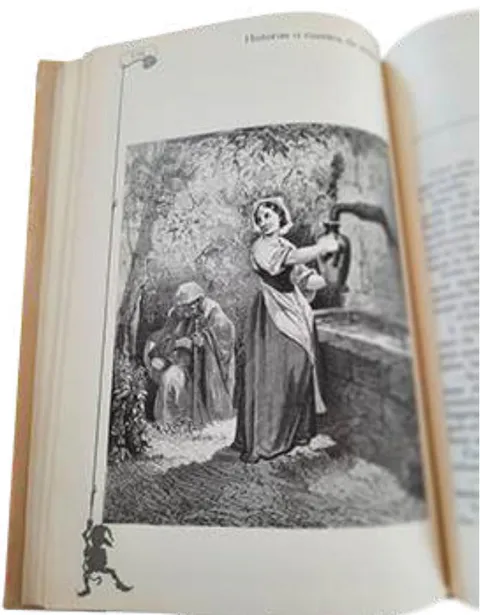
Figure 1: Illustration by Gustave Doré for the short story "The fairies ".
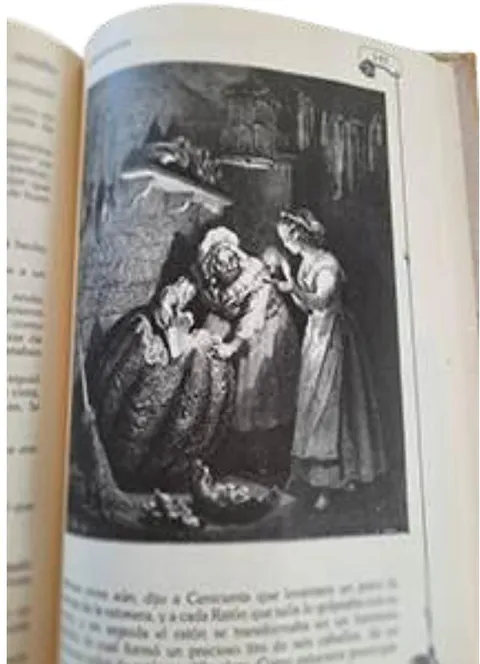
Figure 2: Illustration by Gustave Doré for the short story "Cinderella".
In both images, the predominant technique is that of "light and dark", called chiaroscuro in Italian. It's an innovative technique that Doré used in many illustrations for children's books. The painter also used another painting technique to compose these illustrations: woodcuts. However, in the chiaroscuro technique, the image carries even greater meanings, because black and white show the contrast of light and shadows, and, positioned next to the written text, "increases the contrast and drama of the image" (Bandeira, 2011, p. 47). In both the short story "The fairies" and the short story "Cinderella", chiaroscuro brings a spontaneity and movement to the drawing, without too many demarcations in the shapes. The forest in "The fairies" is impressionistic in that it stands out from the rest of the image: it is clear, indicating that the old woman's presence will bring her younger sister a good gift.
In the view of the fountain, the young woman is holding a pitcher, but she doesn't pay enough attention to the water, a mere instrument, but directs her vision to the plane of the old woman, who suddenly arrives to meet her. The colouring of the fountain is predominantly dark, since going to the fountain is painful and mysterious. When she returns home, she will soon have to go back to the fountain again to maintain food and domestic order. For her, going to the distant fountain is a punishment, an arduous task that her older sister won't appreciate at any time, being proud of it.
The drawing is printed using woodcut, a freehand creation on a wooden base, which allows the painter to maintain spontaneity and movement of the image. Doré's representations of fairy tales manage to capture the magic and mystery of nature in the publications of Perrault's fables, giving plasticity and life to the texts.
Back in Ibarbourou, we have a "Triptych", three poems that, as in Doré's drawings, bring water to life, no longer as an instrument, but as the protagonist. What's more, in each of the poems we have three different types of water: "The mercy of water", "Water in love" and "The avenging water" . These poems are in fact fables, as there are animated beings. In the first, we have a conversation between a child and a thread of water; in the second, a river overflowing with water tries to persuade a willow tree of its passionate love; in the third, we have a first-person account of a water that turns into a vengeful hailstorm. In all three fables, water has the same meaning: it always offers the reader good sensations and images, but with teachings.
In Perrault (1986), Doré (1986) and Ibarbourou (1992a and 1992b), the element of water has a differentiated and complementary role and imagery symbolism that are both differentiated and complementary, in our opinion, since they present a remarkable architecture of images:: while Perrault and Doré emphasise the scenery and the fantasy resulting from the search for water in the enchanted fountain, Ibarbourou is concerned with the plot and the servile nature of water in a text in poetic prose and in three poems that can be read as fables, making water a different character in each text.
In the story "The fairies", we can draw some analogies with the mythical story of Hilas, the young Greek who came to live in the waters of the lagoon of the Naiad nymphs. The fate of the two female characters, the older sister and the younger one, are fantasised, just like Hilas. In order to weave these analogies between the two stories, we'll return to the concept of the word myth, which in the Caldas Aulete digital dictionary has the following meaning: "fanciful narrative, symbolic narrative, usually with supernatural elements, transmitted by the oral tradition of a people" (Aulete, nd). Both stories, although different in nature (one belonging to Greek mythology and the other to fairy tales), are fantastical, since they are created with supernatural elements. In the story of Hilas, oral tradition brings the image of a handsome young man being convinced by the Naiad nymphs, while in the fairy tale, a young and beautiful woman is fancifully transformed by the fairy in order to dignify her: in order to escape from a difficult home life and achieve happiness, she is forcibly removed from her habitat, just as happened to Hilas. So far, we've seen the presence of the element of water and the young, beautiful human being in both stories, but the analogies don't end there: the presence of the jug in both stories brings the mythical meaning of destiny, in other words, fatality is present so that each story takes its course. In them, neither of the two characters imagines their fate or the days to come, but they are well aware that they have a mission to fulfil: to fetch water to provide food for their places of their places of origin: the ship Argo where the Argonauts are, and the house where their widowed mother and her older sister live. As in ancient times life was more difficult than it is now, in the 21st century, the presence of the supernatural element (nymph and fairy) exactly positioned in a fountain or bucolic place containing water, inspired the oral tradition by providing the characters with a magical solution.
Flowers and precious stones come out of the younger sister's mouth, because she has been generous with the fairy disguised as an old woman when the old woman asks her for some water from the jug, unlike her older sister, who was proud of the fairy disguised as a princess when she asked her the same request. In other words, the fairy's gift can be good or bad, and that magical decision will forever define the fate of the characters. Therefore, everything that is ugly, rude and scary cannot correspond to the nobility and cordiality expected of a young, beautiful woman at the court of Louis XIV the Great. In this context, the prince decides to marry the younger sister who had been thrown out of the house and found lost in the woods.
In the story "The sleeping beauty of the forest" evil is shown in the figure of the mother-in-law, who is actually an ogre; in "The fairies" there is no mother-in-law, but a widowed mother. In other words, in both plots, the peace of the family home is governed by a deep threat: the ogre wants to eat the symptomatic children Aurora and Day in "The sleeping beauty of the forest", while the widowed mother wants to boss her youngest daughter around, as if they were living in a vicious circle of bad behaviour that is repeated ad infinitum. In the stories, there is a continuous erasure of future life, as in Manuel Bandeira's verse that declares: "The whole life that could have been and that wasn't" (2013, p. 35), from the poem "Pneumothorax", from Debauchery (1930), because there is a continuous return of the heroines to an empty life, without a real, living demonstration of their personality. Marriage, being an initiation for young women and men, is constantly banned by the widowed mother and the mother-in-law turned into an ogre. While the manifestation of frogs, snakes and lizards is a continual temptation to the lives of both, they will be banished forever from a normal family life. That's why, with magic at work through the fairies, the heroines miraculously manage to maintain their destiny of being wives and mothers: one being rescued by the prince in the middle of the woods; another being saved by the prince from being thrown into the cauldron of hideous beasts. On the contrary, the one who goes into the cauldron is the mother-in-law, who then dies.
In The psychoanalysis of fairy tales (2002), Bruno Bettelheim states that what is most fundamental about fairy tale plots is that they have to end well. Being a genre that serves as a support for human evolution, especially female evolution, the abandoned character has to do well in the end, as is the case with the heroines in question, because by in a dead and meaningless life, the possibility of magic in the tale comes to change the course of things, that's why magic has the characteristic of being sober, moderate, because magic is not the protagonist, but rather the result of it on her youngest daughter.
In Perrault's writing, magic is sober, yet ironically beautiful. It only happens because the aim is to achieve a new family life, not a simple fantasy aimed at children, and the aggressor or adversary, as much as he wants to prevent this new life, is not the bearer of magic, but only the bearer of bad behaviour that will be easily neutralised by magic. That's why magic only appears to circumvent the constant presence of evil and to help the heroine as she goes in search of her new family. Family, then, is the main theme of both fairy tales, "The sleeping beauty of the forest" and "The fairies". In these tales, the mother-in-law and the widowed mother cause insecurity to the heroines, because they themselves find themselves abandoned in their solitary lives. Furthermore, the constant presence of the dense, dark and mysterious forest is not credible either: such is the forest present in the Aeneid (I before Christ) and Metamorphoses (VIII after Christ), because in these works the entrance to the Kingdom of Hades (or the land of the dead) is surrounded by a magical forest. By placing his princesses in this magical forest, Perrault puts the plot of the tale on a borderline, in other words, he takes the genre itself to a borderline space of fictional writing: either the genre is rewritten, or oral stories of enchantment continue to be told, without there actually being a greater and deeper teaching of human behaviour. This is what Perrault bequeaths to posterity.
The two princesses are synonymous with extreme human fidelity and generosity, because they show these qualities in their behaviour and expressions. Sleeping Beauty's extreme fidelity is shown in the scene where the prince arrives at her bedside:
He approached trembling with wonder and knelt down beside her. Then, as the enchantment had come to an end, the Princess woke up; and, looking at him with eyes softer than a first glance can allow, she said: - Is that you, my Prince? I've kept you waiting too long. (Perrault, 1986, p. 105)
The future princess of "The fairies", on the other hand, shows her extreme generosity by giving in, without conditions to the request of the fairy disguised as an old woman:
(...) One day, while he was at the fountain, a poor woman came up to him and begged him to give her a drink.
- Why not, good woman,' said the beautiful young woman.
Then, rinsing out her pitcher, she drew water from the clearest place in the fountain and offered it to her, while supporting the pitcher so that she could drink more to her liking. After drinking, the good woman said:
- You are so beautiful, so good and so courteous, that I can only grant you a gift - for she was a Fairy who had taken the form of a poor peasant girl, to see how far that young woman's courtesy would go. (Perrault, 1986, p. 135)
These behaviours are the ones that, at the end of the tales, Perrault draws attention to in the final moralejas (morals), which is why the readership is, in both cases, the same, the young woman. Thus, the moraleja (moral) of "The sleeping beauty of the forest":
Waiting a prudential amount of time to have a rich, handsome, gallant and affectionate husband is natural; but waiting for him for a hundred years, and sleeping for a hundred years without getting tired, there is no ordinary female who sleeps so long and so peacefully. (Perrault, 1986, p. 111) And the moral of "The fairies": "Pistols and diamonds can do a lot for the Will, but words full of kindness are even more powerful and of greater value and usefulness."32 (Perrault, 1986, p. 138). The moral of the story is clearly aimed at the young woman, waiting for her future husband, transfigured into the character of the prince in both stories, perceiving value in the behaviour and expressions of their (promised or chosen) princess. In addition, there are other common elements of literary fiction in the tales, such as the beginning of the story with Erase una vez (Once upon a time), the logical paradoxes in the figure of an antagonist and a protagonist who are clearly differentiated in their morals and behaviour, and the presence of magical weapons put to use by supernatural beings with no thirst for revenge in order to bring about a happy ending. These textual coincidences are not fatalities, since Perrault, as we have said, is an artist of words, as was Chrétien de Troyes in his day. These full authors of fiction rewrote stories from time immemorial in a French language contemporary to their readers. It is them, then, that the text goes, and not to remain as mere stories from distant times. They are stories to be read and commented on in circles of readers from any time and place. In other words, they are readings to be updated according to their use.
Goethe said that the greatest force in us is the human personality. It's no coincidence not by chance, the symbolism present in Ibarbourou's fictional texts is also an exercise in courage, unlike Perrault's fairy tales, in which there is a test of the female personality and not the presence of a ready-made, decisive personality. For example, in the "Triptych" series, water chooses to be playful, enamoured and vengeful. In all these decisions, water is potentially creative, since she is courageous and willing to assume these moral qualities in public. This makes her more beautiful, because she exercises the virtue she has chosen in each poem. In the first, "The mercy of water", the water strand's response is surprising at the end: "You think I'm lost, but haven't you seen/ How the pink laurel tree/ That you planted by the side of the road dies of thirst?/ I want to give its roots a drink./Before being beautiful, I must be pious." (Ibarbourou, 1992a, p. 63).
In the poem "Water in love", water also puts itself at the service of the willow tree, the object of its passion: "You are so clear, willow tree, and so beautiful!/ Whisper your feather to me. See: I live/ Dependent on your anguish or your joy" . (Ibarbourou, 1992a, p. 64). And in the poem "The avenging water", the water turns into hail, "into destructive pebbles" (Ibarbourou, 1992a, p. 65), to take revenge on the owner of a wheat field who didn't want to be generous to a beggar: "I'll go down and chop up the treasure/ From the hard shoulder denied pity./....../ And the hail wiped out the field of gold." (Ibarbourou, 1992a, p. 65). The dots in the poem are a spatial reference to the destruction of the "field of ripe wheat" (Ibarbourou, 1992a, p. 64) by the hailstorm. In all three poems, the virtue underpinning the human behaviour of the water element is generosity, as seen in the gesture of the protagonist in the short story "The fairies". And also as seen in the text "The water" from The fresh pitcher, in which the individualised I of the text recognises water almost as a nun, "always attentive to providing us with consolation and help" (Ibarbourou, 1992b, p. 20).
The three fictional texts present the element of water as the bearer of meaning, although in Perrault (1986), water served as an instrument of the magical plot. Water is transformed by both Perrault and Ibarbourou in the same way that the enchanted fountain of Iwein or the lion rider of Chrétien de Troyes and the fountain of the Naiads in the story of Hilas acquire symbolic meaning in their plots. In the poetry and poetic prose of Ibarbourou's poetry and poetic prose (1992a and
1992b), water transforms the reality around it, drawing the reader's attention and literally abusing their gaze for what really matters in this life and which is the greatest strength that all of us living human beings have, according to Goethe, which is our own personality. But just having a personality doesn't change our inner and outer world, because it needs to be continually renewed, as primitive men did by renewing cycles created in the era of mythical times (Eliade, 1972). Just as human beings learnt to repaint earthly life until they were able to produce their own kitchen utensils by hand, so man has learnt, by listening to stories, to renew the learning of human virtues, among them, and the strongest of all, in our opinion, courage.
It is the power of courage that moves the younger sister in the story "The fairies" to be generous to the fairy disguised as an old woman and to be generous to herself when she flees a home emptied of human virtues. An interdisciplinary reading between literature and the image seen in the story and in Gustave Doré's woodcut can help us measure how much an element so present in our lives, such as clear, muddy or miraculous water, personified in Ibarbourou's fables in verse, makes us understand the role and symbolism of these elements in literature and the arts, in order to increase the original significance of the works. Reading plays a fundamental role in the beauty of the eye in the formation of the imagination of the reader and art lover. On this Martí's descriptive text is spot on:
And life isn't difficult to understand either. When you know everything that the earth gives, and you know what men have done in the world, you feel the desire to do even more than they have done: and that is life. (1997, p. 175)
The life symbolized in literature and the arts is an eternal possibility of understanding it with nuances than those who came before us. But we are not better than our ancestors, because we will always learn from them with each reading and appreciation. That's why, in the middle of the 21st century, being in contact with the artistic works of different times and places is not only a vital human need, but a beautiful and opportune moment to renew our personality ad infinitum.
We'll see below how the reading and appreciation of these three authors can take place in Spanish language classes in a Brazilian school, and how the theoretical and methodological basis of comparative literature can contribute to the introduction of these works in the teaching of Spanish in Brazil.
III. COMPARATIVE READING TODAY: THE NEW COMPARATISM AND THE NEW HUMANISM IN THE CLASSROOM
Eduardo F. Coutinho, in his article "The new comparatism and the Latin American context" (2016), seeks to develop the idea of a "new comparatism" that goes far beyond binary comparative studies, in which a precise, autonomous object is analysed with its own methodology, in other words, almost a comparatism with a semiotic orientation - that of pure intertextual analysis: searching for textual differences, cultural and literary interrelationships, re-readings of genres and plots, etc. In our comparison of the three authors - Perrault, Doré and Ibarbourou - we have investigated the structuring processes of their works and saw that, basically, the three correspond to very personal worldview projects: in Perrault (1986), we have a project to transform a young, beautiful - and therefore virtuous - woman into a wife; in Doré (1986), we have an impressionistic view of the fountain, between light and dark, giving an air of mystery and magic to Perrault's (1986) tale; in Ibarbourou (1992a and 1992b), as in Martí (1997), we have the Latin American novelty of water placed as the protagonist, as the full agent of the action. In both Latin American authors, water takes an active role in the plots. It acts rather than suffers. If we were to ask ourselves if there is any borrowing between Perrault and Ibarbourou, we would answer no, just as if there is a filiation between Perrault and Ibarbourou: we would answer that there isn't either. Just as there is no borrowing or affiliation between Perrault and Martí. On the contrary, there is a free recreation of the water element in Martí and Ibarbourou, and this can be read as a characteristic of the "new comparatism" that develops Coutinho:
The work will investigate, from a comparative perspective, the transformations that have taken place from the end of the 19th century to the present day with regard to the dialogue between Latin American thought and contributions from the Euro-North American world and will discuss the possibility of constituting what has been called a "Latin American geoculture", i.e. the necessary intersection between reflection, culture and the continent's soil. (2016, p. 182)
Both Martí and Ibarbourou start from the soil of the continent to approach the water element in their works. Martí's aim is to teach children about the reality of life, of the universe, as Carlos Drummond de Andrade sang in his "Poem of seven faces" (1930), one of the poet's most popular compositions by the poet from Minas Gerais, in which, despite the presence of the melancholic tone to express the lyrical self's feelings of inadequacy and loneliness of the lyrical self, he assumes a posture of wanting to be gauche in life, in other words, it would be a metaphor for wanting to be different, unlike the majority. In the poem, we have the personification of the houses: as if they were people, they observe the movement of the streets: "The houses spy on the men/ who run after the women./ The afternoon might be blue,/ if there weren't so many desires."42 (Andrade, 2013, p. 11). This peaceful observation of the lyrical self being in an urban life - Brazilian, therefore Latin American, different from the North American and European, continues in the third stanza, which says: "The tram goes by full of legs:/ legs white black yellow./ Why so many legs, my God, asks my heart./ But my eyes/ don't ask anything." (Andrade, 2013, p. 11). There is awe of the lyrical self, but it is also peaceful, like the gaze in the previous stanza. Alongside this feeling of astonishment, we can mention the feeling of loneliness, which increases: when he looks at the tram, and when he says "Why so many legs?", the lyrical self is using a metonymy (an expressive resource that takes the part for the whole), in other words, what is underlined is the idea that there are many people in the street, a crowd around him, and this is Brazilian culture - and consequently Latin American culture, mestiza, fluid, present. The existence of so many people around him seems to cause a feeling of distress in the lyrical self, who asks God, his only interlocutor: what for? In the next stanza, we have an introspective look at himself. Describing himself as "serious, simple and strong" , he seems to correspond to the image of resilience expected of an adult Latin American man. "The man behind the moustache/ is serious, simple and strong./ He hardly talks./ He has few, rare friends/ the man behind the glasses and the moustache." (Andrade, 2013, p. 11). However, in the next stanza, the lyrical self shows what exists in him beyond this external image, and which corresponds more to a closed individual, incommunicado and quite solitary, even when he's in the middle of a crowd: "My God, why did you abandon me/ if you knew I wasn't God/ if you knew I was weak." (Andrade, 2013, p. 11). The feeling of abandonment by God, in this stanza of the poem, is revealing of our European and even oriental roots, by paraphrasing the words of Jesus Christ when he was being crucified. There is a feeling of helplessness and orphanhood. Without direction, without support either on earth or in heaven, the lyrical self recognizes that it is alone in the world. However, this weak, vulnerable and fallible man grows in the last two stanzas and ends with what we all need to recognize in life: that our earthly life is deeply connected to our cosmos and to the best modus operandi for being and growing up in a lonely, resilient and strong land - the soil of the Latin American continent. A stanza "World world vast world,/ if my name was Raimundo/ it would be a rhyme, would not be a solution./ World world vast world,/ vaster is my heart." (Andrade, 2013, p. 11), is a recognition of the immensity of the world, and it is clear that the lyrical self feels small, insignificant in the face of everything else. In this stanza, we can find a reflection on poetry itself, as in Ibarbourou (1992a and 1992b). Both poets, in the 20th century, one in Brazil and the other in Uruguay, sang about their native land, each in their own way. Carlos Drummond de Andrade, writing that "if my name was Raimundo/ it would be a rhyme, not a solution." (Andrade, 2013, p. 11), it can be inferred from these verses that the subject is poetically declaring that writing poetry doesn't solve his problems with life. Even so, these verses may be a way of accessing his deepest lyrical self, his true ethos, as he then writes: "World world vast world,/ vaster is my heart." (Andrade, 2013, p. 11). Thus, his heart is what defines his being in the world, recognizing that his best state in this vast world is what we read in his final confession to God himself: "I shouldn't tell you/ but this moon/ but this cognac/ make us as moved as the devil." (Andrade, 2013, p. 12). It is the greatest confession of love written by a Brazilian poet for Brazil, not for the national land, but continental, for belonging to a culture other than the North American or European. It is a recognition that the vast world can and should fill the local imagination, especially literary and artistic. So, if the "new comparatism" is also the contestation of the foreign (in this case, French, through
Perrault-Doré), it is because it must first be a "locus of enunciation, of the contextualization of the place of speech" (Bhabha, 1994 apud Coutinho, 2016, p. 184), in order to then be an "intersection between thought, culture and soil" (Palermo, 2005, p. 44 apud Coutinho, 2016, p. 185), in which both the artist and the cultural thinker take a critical stance: from this point of view, Ibarbourou's literary production is nonetheless post-colonial, as she revisits several works aimed for children and young people, stories from both East and West (Natacha's dreams (1945) and Puck (1953), are examples), but she also creates so many other stories from his childhood memories in Chico Carlo (1945) set in his hometown of Melo, in the department of Cerro Largo in Uruguay.
Thus, in postcolonial discourse, we have the constant production of different places of enunciation, as Coutinho explains, postcolonial discourse:
It is, in other words, resistance to Westernization and globalization, and the productive creation of ways of thinking that constantly mark the difference with the process of westernization, or, better still, the constant production of different places of enunciation (Mignolo, 1995, p. 32 apud Coutinho, 2016, p. 186) In view of this brief conceptualization and in order to propose comparative reading in the Spanish language classroom through the teaching of foreign literature with a post-colonial discourse bias, we should first ask ourselves in what situation higher education professors live who train Spanish teachers for Basic Education. At federal universities, especially those located in remote and challenging places, as they are far from large urban centers, at the same time as we have stimulating situations when it comes to thinking about teacher training, we also have situations where everything is lacking, especially in relation to the literary collection available for working with original literary texts in the classroom.
As a lecturer in Hispanic literature, the author has made an individual effort both to compile a literary collection accessible to the students of the Degree Course in Letters (Portuguese and Spanish) at the Interdisciplinary Faculty of Humanities of the Federal University of the Jequitinhonha and Mucuri Valleys - UFVJM, located in the city of Diamantina, Minas Gerais, and to propose teaching, research and extension projects around literary reading by these students, future teachers. Just to mention the most recent ones, from May 2023 to March 2024, the interdisciplinary Portuguese and Spanish subproject was carried out in our region in three core schools of the CAPES Institutional Program for Teaching Initiation Scholarships - PIBID/UFVJM, which covered two schools in the city of Diamantina and a public school in the district of Sopa, a rural community in Diamantina. A number of primary and secondary school students had access, for the first time, to literary literacy in Spanish in their Portuguese classes: Professor Isabel Motta State School, Joaquim Felício dos Santos State School and Sopa Municipal School. In the latter school, which was under our responsibility and that of teacher Maria Vanderlene Costa Gonçalves, who is responsible for the four years of Primary School II (from 6th to 9th grade), a reading schedule was drawn up that covered various literary genres in Spanish, such as the poetry of Spanish writers Federico García Lorca and Juan Ramón Jiménez, an adapted version of Don Quixote made by the government of Mexico for public schools in his country, and even a theater by Ibarbourou that rewrites the fairy tale "Cinderella", first published in Natacha's dreams.
This literary experience in a rural school helped us to draw some conclusions: it is possible to bring literary reading to students in public schools in a region that lacks books and Spanish teachers, because - and this was a request from the students themselves - they all wanted to read the texts directly in the foreign language. There was reciprocity at all stages of the workshops, and the group of students even staged some passages from Don Quixote, and at the end, when the dramatic adaptation of scenes from Ibarbourou's "The sweet miracle" based on "Cinderella" (Cabrera Muñoz, 2024).
The ease with which the Spanish language can be acquired through literature has left the students with a "taste of wanting more", so much so that last year, 2024, the extension project "Literary workshops in Spanish in public and private schools in Diamantina", coordinated by the author, was approved under the Institutional Extension Scholarship Program - PIBEX/UFVJM, in which the experience of the literary workshops held at the Sopa Municipal School to other schools in the city, such as the Professor Gabriel Mandacaru State School, where we had a recent graduate from the Degree Course in Letters teaching Spanish to secondary school students, the teacher Larissa Aparecida Oliveira Santos. In 2025, the same extension project was approved in another PIBEX/UFVJM Call for Proposals, but with a different name: "Literary workshops in Spanish in public schools in the Jequitinhonha Valley", so the project is reaching other municipal and state schools in our vast region of coverage, as we have former students working in these schools teaching Portuguese (Early Years, Elementary I and II and High School). In the district of Mendanha, the workshops began in April 2025, with the help of teacher Liliam Fernandes, who is also a former student of the UFVJM Letters Degree Course. Between May 2023 and April 2025, up to a total of more than 200 students took part in our literary workshops in UFVJM's PIBID and extension projects. Some of the cities in which the project is already taking place in 2025 are: Gouveia, Maria Nunes, Mendanha, São João da Chapada, Senador Modestino Gonçalves and Sopa, and may reach other towns in the Valley in the second semester like Milho Verde.
The aim of these projects is to give continuity to what was already being done in PIBID, but with an important addition: the promotion of Spanish language learning so that there is a literary reading culture in Spanish so that these students have full access to Hispanic cultures. We think that, in a region where Spanish classes are non-existent, a stimulating and very rich scenario opens up to us, especially when we deal with Hispanic literatures from an intercultural dialog within a post-colonial discourse, as proposed in this article through the theme of water in Perrault, Doré and Ibarbourou. In a vast region of Brazil where the presence of water as a natural source in waterfalls predominates, provide the reading of these authors, while escaping from the traditional fairy tale, also opens doors to through a tale such as "The fairies", to enter the suggestive and fanciful world of poetic images that an element such as water can inspire when reading Ibarbourou's children's literature. Primary school pupils have access to Spanish through a theme that makes different authors engage in a fruitful dialogue in the classroom, since it comes from comparative literature, a discipline par excellence that promotes the encounter of cultures and is therefore a place of encounter that produces, in turn, and to quote the suggestive name coined by Laura Taddei Brandini (2021) when revisiting Tânia Franco Carvalhal's theorisation, a "methodology of encounters" (p. 210). If comparative literature is, in the end, a methodology, let it be the encounter of cultures and broader visions of what not only literature is, but its reading, with a view to training the literary reader. That's why revisited textual genres, such as the fairy tale, will always be present in the school environment, because, in a literature teaching plan, it can and should be renewed in authors unknown to the Brazilian reading public, as in the hands of Ibarbourou, one of the great names of Latin American female lyric alongside the Chilean Gabriela Mistral (1889-1957) and the Swiss-Argentine Alfonsina Storni (1892-1938).
So, we asked ourselves: how can this suggestive comparative reading take place in the teaching of Spanish language and its literatures in Brazil? In a round table entitled "Comparative today: state of the art" , the professors taking part in the round table, Zulma Palermo, from the Universidad Nacional de Salta (Argentina), Eduardo de Faria Coutinho (Universidade Federal do Rio de Janeiro/Universidade Federal Fluminense) and Rita Teresinha Schmidt (Universidade Federal do Rio Grande do Sul), mediated by Andrei Cunha (Universidade Federal do Rio Grande do Sul), held during the XVII International Congress of the Brazilian Association of Comparative Literature, on October 4, 2021, reached a consensus that without a "new humanism" comparative literature cannot exist today. Professor Zulma spoke of the idea of communalidad, i.e. that reading literature always involves an act that is more political than cognitive, because it promotes the meeting of people who continually problematise life, whether by writing or reading. These communalities are always creative, since it is in this real reunion of human beings that there is a reciprocal sharing of concerns and desires. When people meet, they aren't just looking for things and motivations outside their own lives, but thoughts and knowledge that reflect their subjectivities. That's why these places of encounter are always places of crossings and transits, and not previously demarcated boundaries, as any so-called nationalising literature would have it. Comparative literature, being a "methodology of encounters", only sets the scene and invites dialogue.
We will always strive for an intercultural encounter in foreign language teaching, because it is in the reader's (and teacher's) decisions that we find the fabric of the student's deep memory. In contemporary education, there is no longer any reason to complain: we either make decisions that will have a lasting impact on the approach to literary reading in the classroom, or we will forever be at the mercy of what others will tell us and select for us. The idea of communality is this: either we think that these are highly creative places, or we let others think and create for us wherever language teaching takes place in our country.
IV. FINAL CONSIDERATIONS
The aim of the article was to highlight the mysterious transformation that takes place when a universal element like water is thematized in literature from time immemorial and how today this literature can be read in local communities where foreign language teaching takes place. This teaching establishes a new relationship not only with this little-known literature known in Brazil, such as Ibarbourou's, but with an innovative imaginary that starts from Latin American soil without any kind of borrowing or foreign affiliation. The role of water in Ibarbourou potentially differs from that of the fairy tale, because, as we've said, water is life and appears humanised in his literature. There is a real religious and profane song present and that can make the Brazilian student, in the Portuguese language classroom in Basic Education language classroom, where Spanish is taught, understand that a natural resource so close to them can acquire not only life in front of them, but true protagonism, and its main teaching is not just to "educate" the literary reader to achieve this or that virtue, as in fairy tales, but to leverage them towards a truly local reading, which begins in the very imagery and symbolic architecture that Ibarbourou prepares in his fictional writing. Thus, the water in Ibarbourou shows not only a freedom to be different from the water in Perrault-Doré, but also a new, non-magical and non-traditional place of enunciation perfectly localise and culturally rich for these young readers who are learning a new foreign language never before heard in the in the Jequitinhonha Valley, so that the empty life of the heroine of the short story "The fairies" is not repeated in the water-characters of Ibarbourou: they all have full lives and are self-assured, because they know where they come from and what they are capable of doing in their own habitat. Everything is seductive and seduces creatively. This shows that writing and reading literature, on Latin American soil, is also to provide a human life with personality, as Martí has been teaching us with his delicious writings in The golden age (1889).
Footnotes
Conflict of Interest
The authors declare no conflict of interest.
Ethical Approval
Not applicable
Data Availability
The datasets used in this study are openly available at [repository link] and the source code is available on GitHub at [GitHub link].
Funding
This work did not receive any external funding.
References
Cite this article
Related Research

Special Issue
Launch a focused special issue to highlight research, emerging trends, and expert insights in your academic field.

